Algebra I Percentages Worksheets
All worksheets are created by the team of experienced teachers at Cazoom Math.
What percentage concepts do Algebra I students learn?
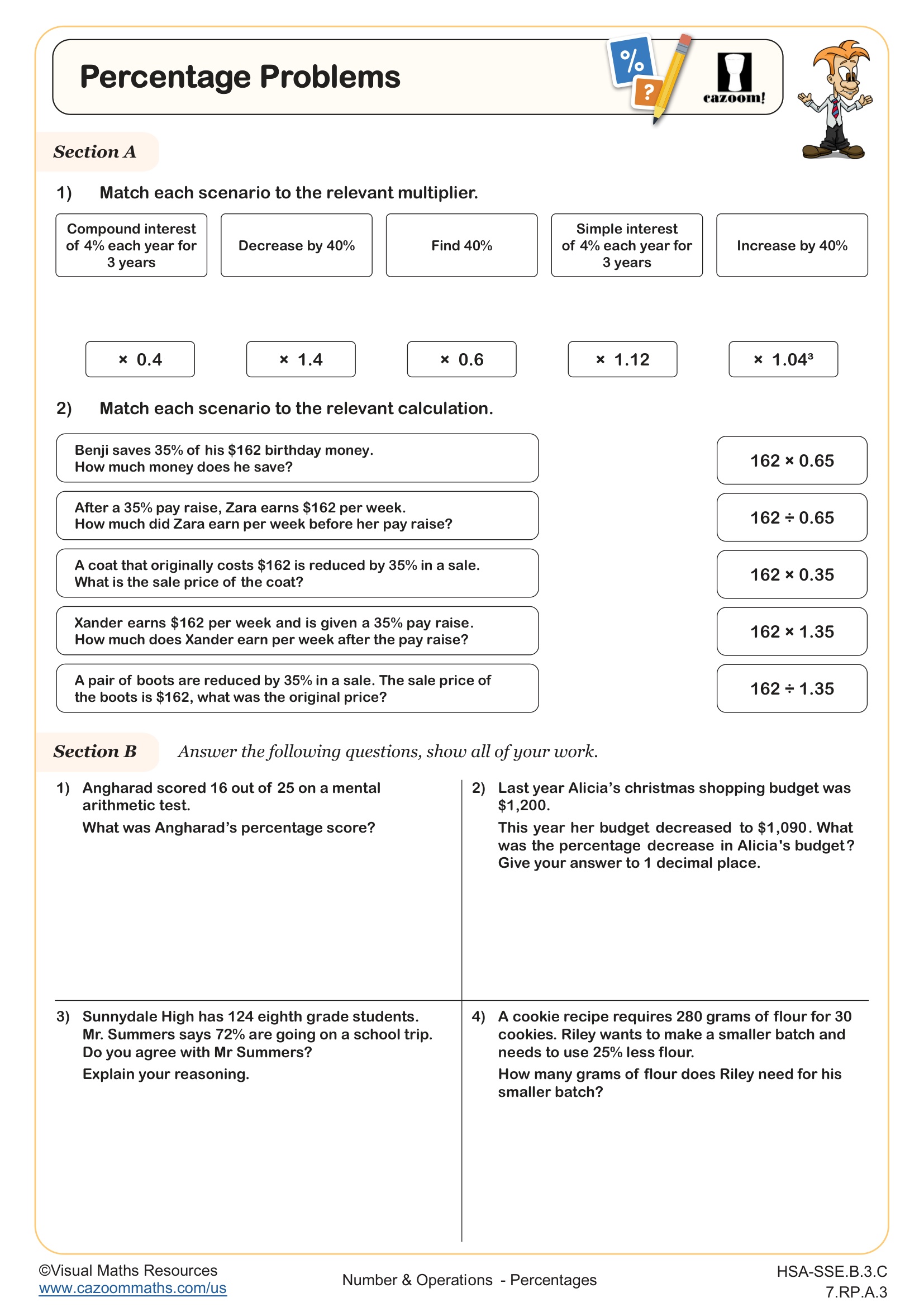
Algebra I percentage work extends beyond basic calculations to include percent change, percent error, markup and discount problems, and compound interest applications. Students convert flexibly between fractions, decimals, and percentages while solving multi-step word problems that require identifying the base amount, rate, and resulting value. The curriculum emphasizes algebraic thinking by having students set up and solve equations rather than relying solely on procedural shortcuts.
Teachers often observe that students lose points when they misidentify which quantity represents the whole in percent change problems. For example, when a $50 item increases by 20%, students sometimes calculate 20% of the new price rather than the original price. Consistent practice with identifying the base amount before calculating helps students avoid this persistent error pattern.
How do percentages appear on the SAT and ACT?
Standardized tests like the SAT and ACT frequently embed percentage problems within data interpretation questions, word problems about sales and discounts, and growth scenarios including compound interest and exponential models. Students need to demonstrate understanding by setting up equations, not just performing calculations, and they must work efficiently without calculators on certain SAT sections. Questions often combine percentages with ratios, proportions, or algebraic expressions.
Students lose points when they round intermediate calculations too early or when they confuse percentage points with percent change. A price increasing from 20% to 25% represents a 5 percentage point increase but a 25% relative increase, and tests deliberately include answer choices that reflect both interpretations. Students who show their setup steps catch these distinctions before selecting answers.
What makes compound interest challenging for Algebra I students?
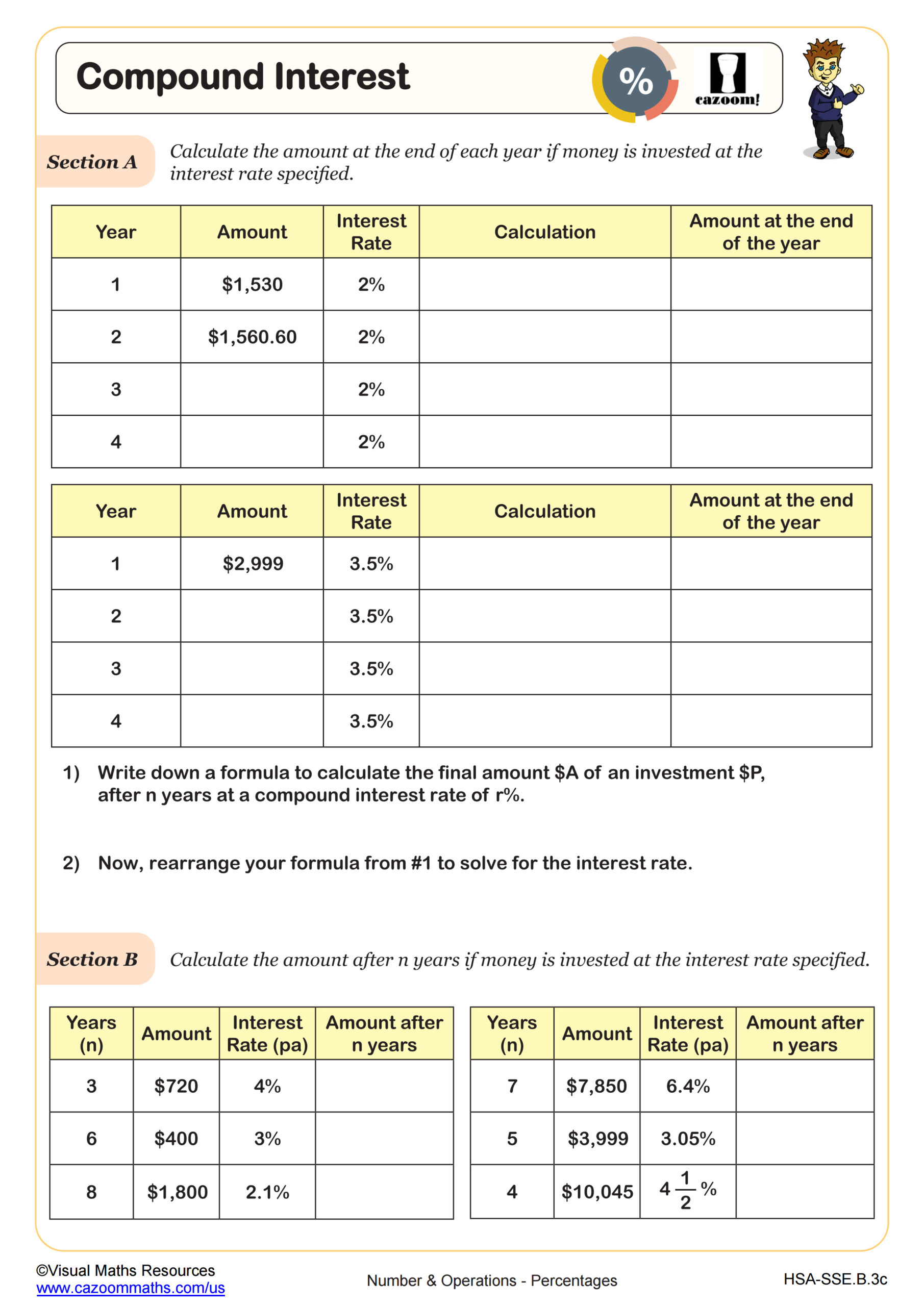
Compound interest problems require students to understand that each calculation period uses the new balance, not the original principal, creating exponential rather than linear growth. Students work with the formula A = P(1 + r/n)^(nt) and must correctly identify variables: principal, annual rate, compounding frequency, and time in years. The challenge lies in distinguishing compound interest from simple interest and recognizing when to apply each formula based on problem context.
This skill connects directly to financial literacy and college readiness as students encounter savings accounts, investment growth, and loan calculations. STEM fields use compound interest principles in population growth models, radioactive decay calculations, and bacterial growth experiments. Understanding that small rate differences compound dramatically over time helps students make informed decisions about student loans, retirement savings, and credit card debt throughout their lives.
How can teachers use these Algebra I percentage worksheets effectively?
The worksheets provide structured practice that builds from conversions and basic calculations toward complex applications like compound interest, allowing teachers to differentiate instruction based on student readiness. Complete answer keys enable students to check their work independently during practice sessions, promoting self-assessment skills and immediate error correction. Teachers can assign specific problem types based on formative assessment results rather than requiring all students to complete identical work.
Many teachers find these worksheets valuable for warm-up routines before financial literacy units, targeted intervention for students struggling with SAT preparation, and review sessions before state assessments. The progression from percentage problems to compound interest mirrors the scaffolding students need before tackling exponential functions later in Algebra I. Paired work where students explain their solution strategies to partners helps surface misconceptions about when to multiply versus divide by percentage rates.