Algebra II Trigonometry Worksheets
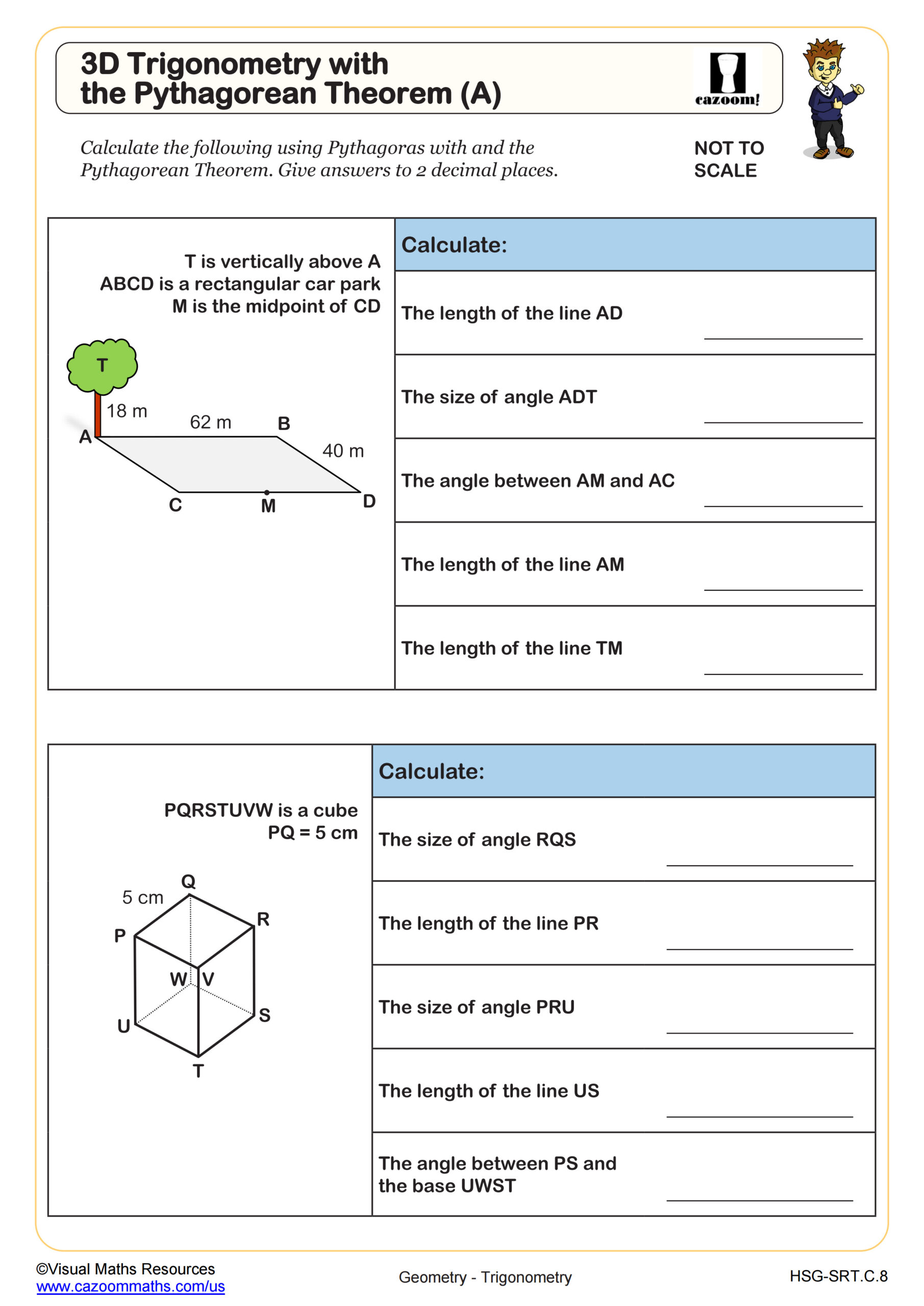
3D Trigonometry with the Pythagorean Theorem (A)
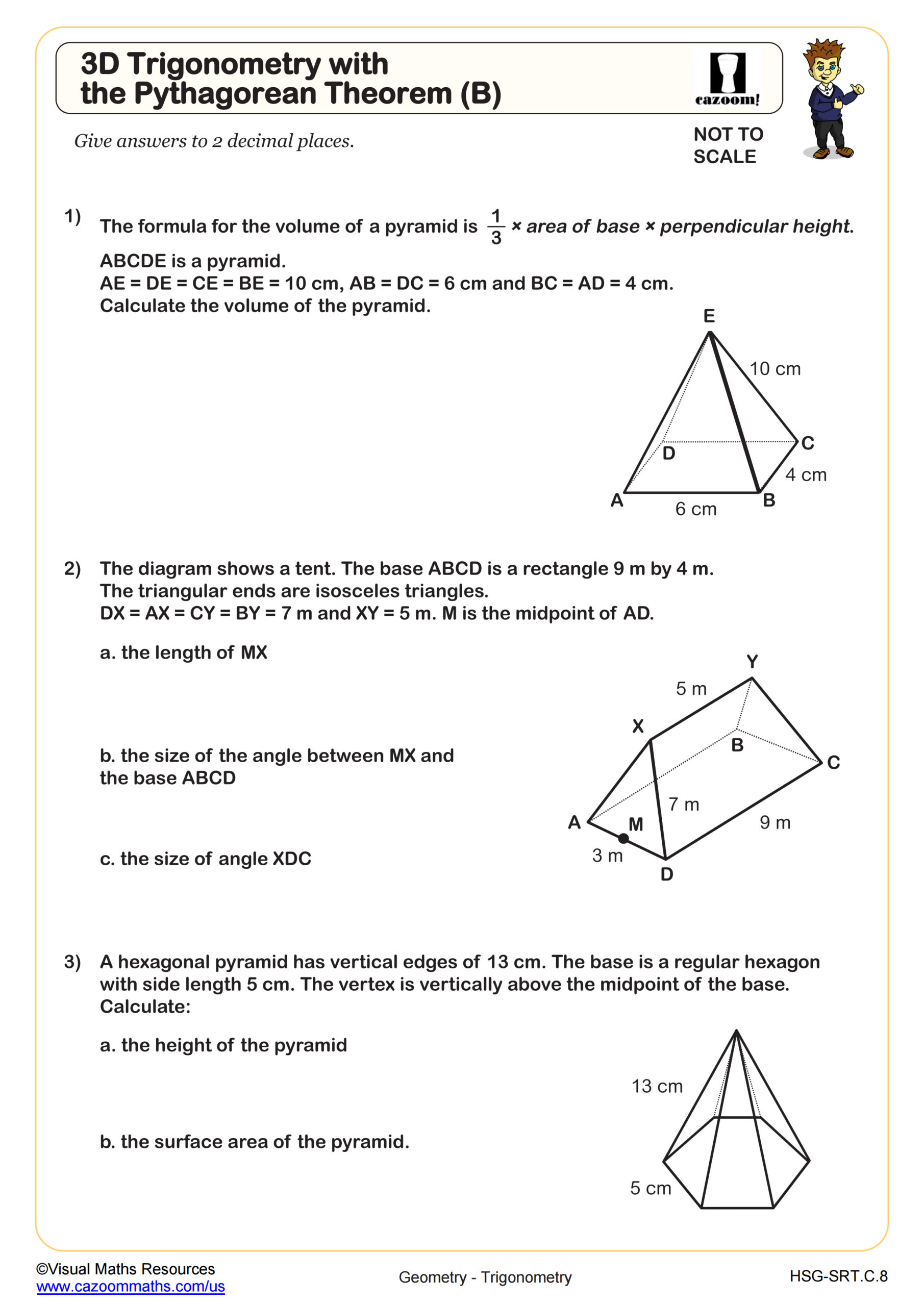
3D Trigonometry with the Pythagorean Theorem (B)
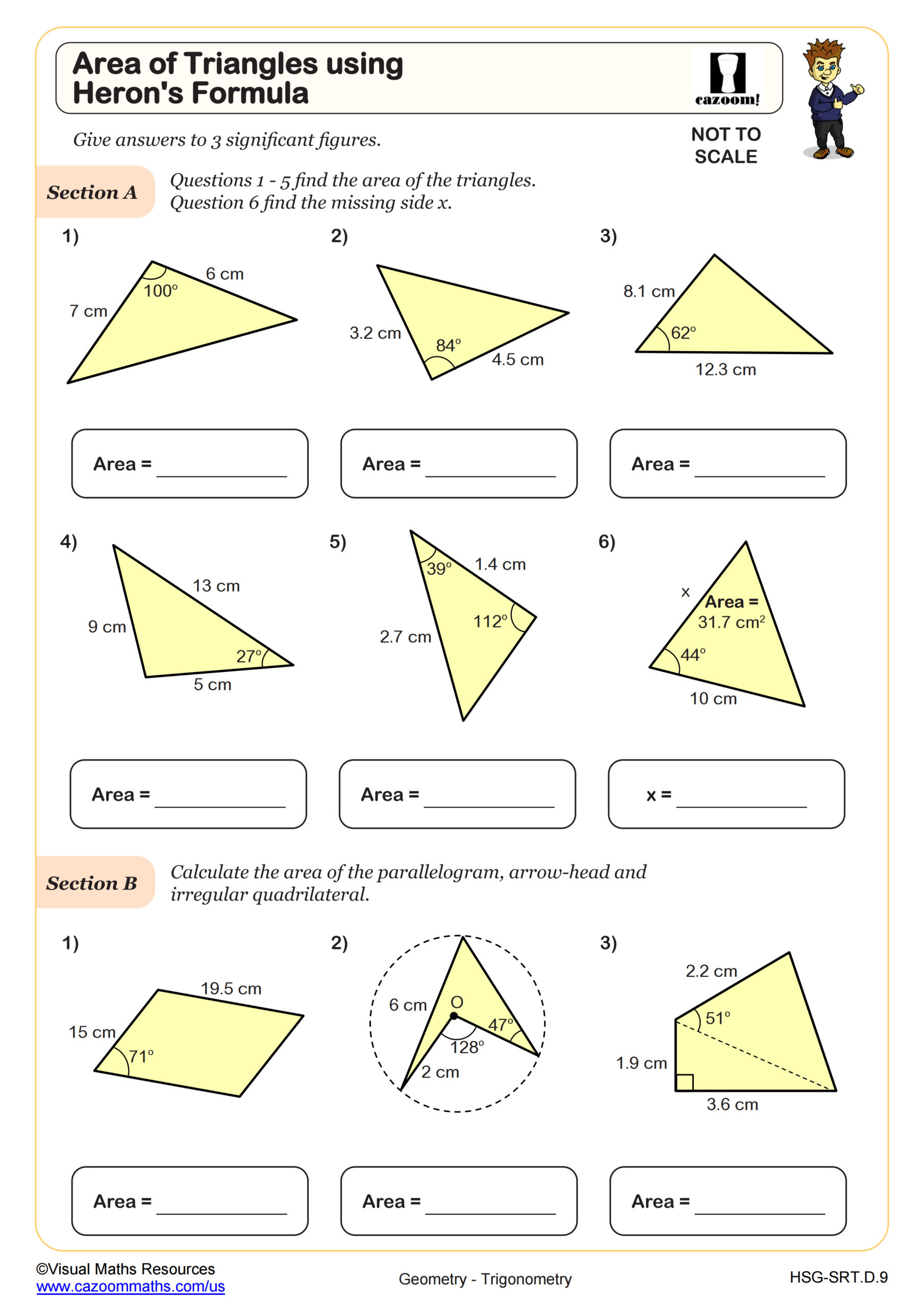
Area of Triangles using Heron's Formula
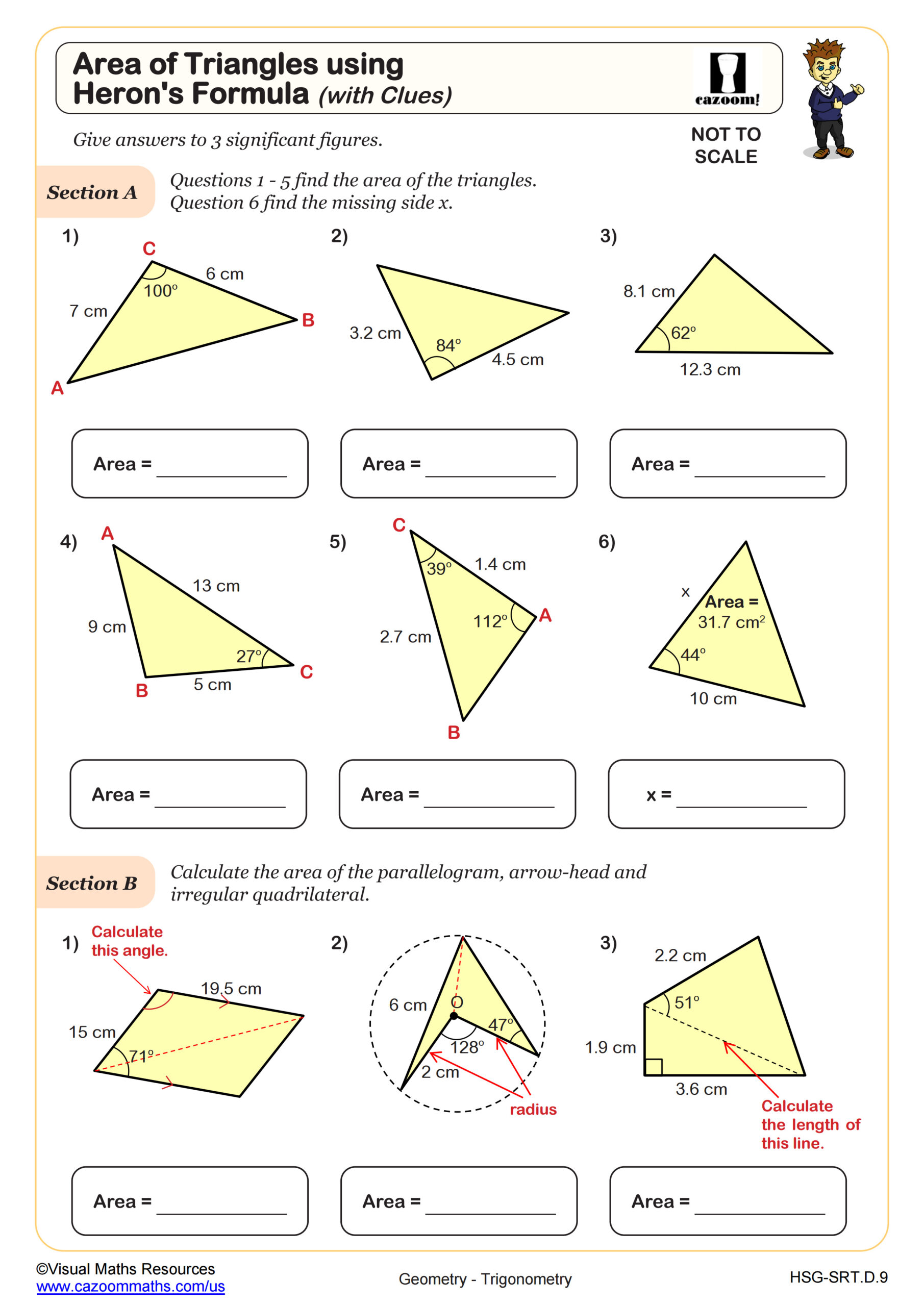
Area of Triangles using Heron's Formula (with clues)
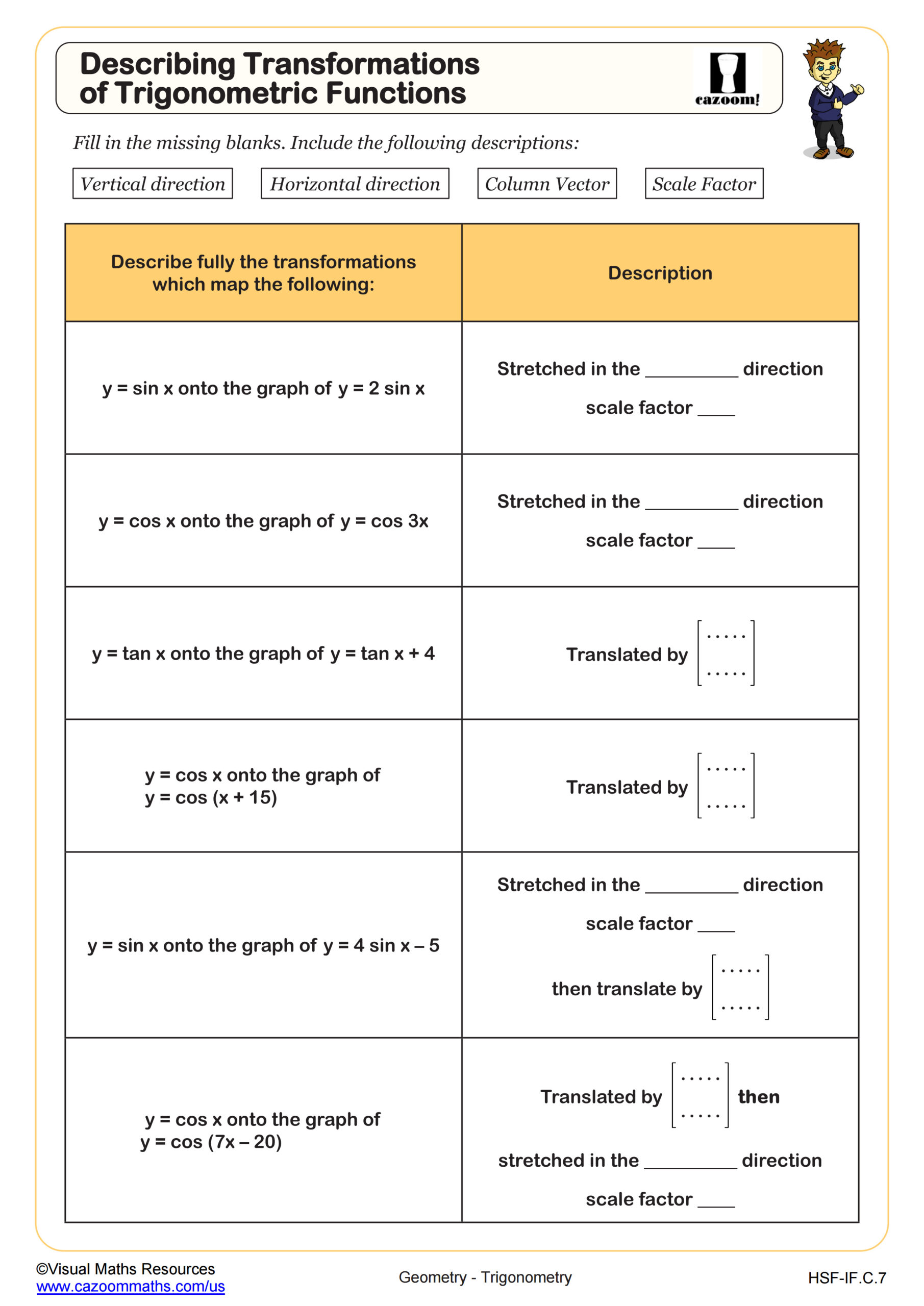
Describing Transformations of Trigonometric Functions
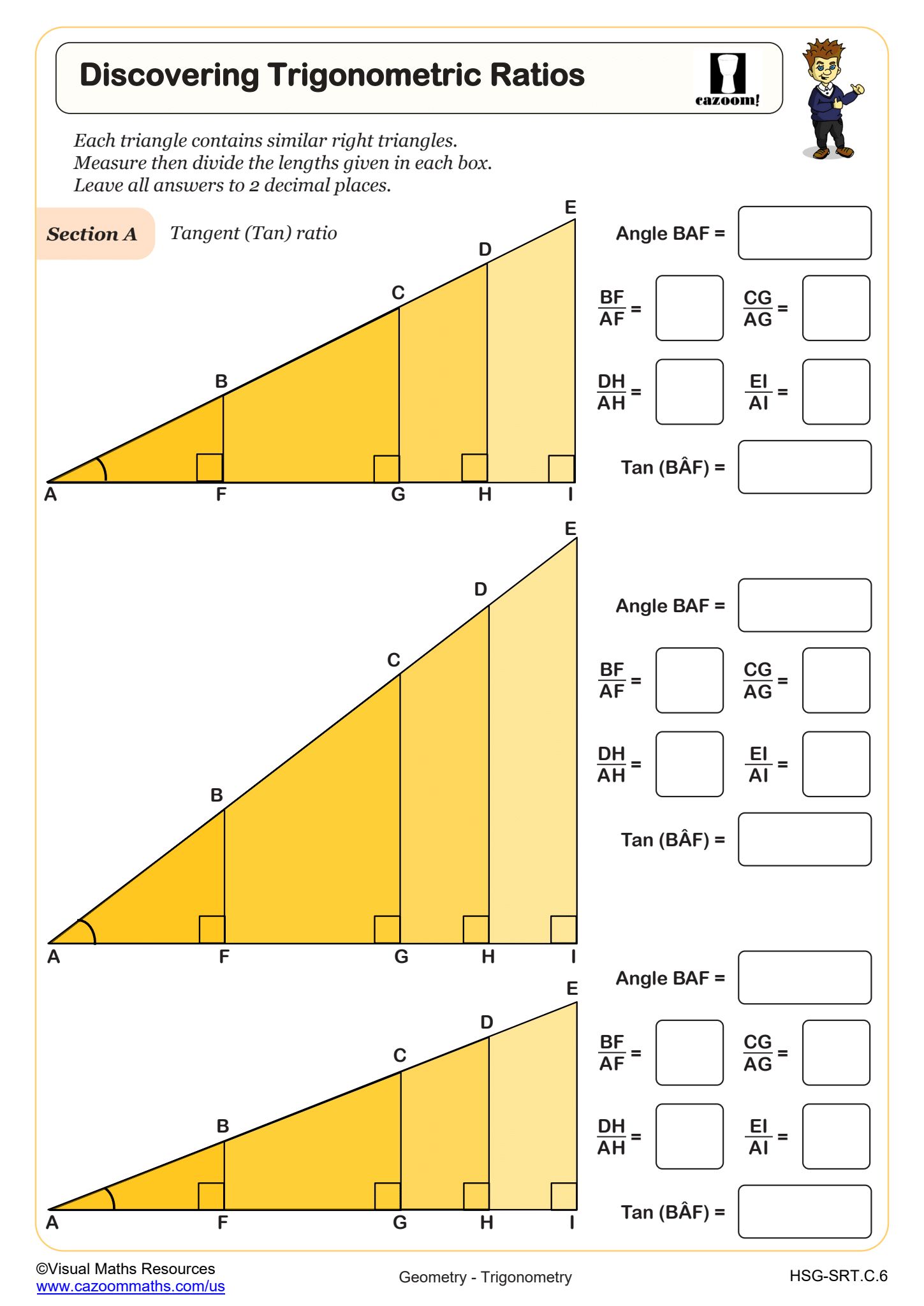
Discovering Trigonometric Ratios
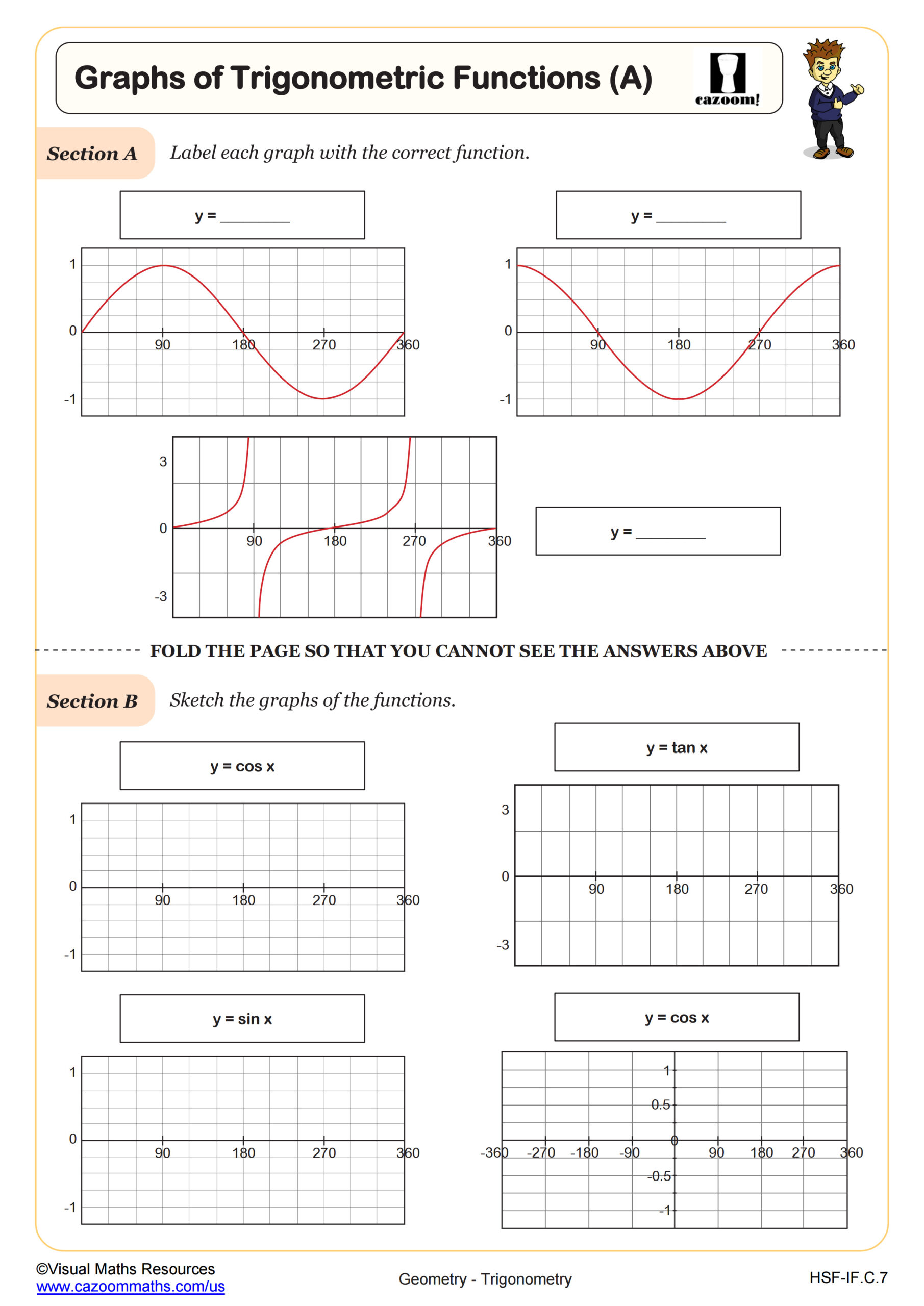
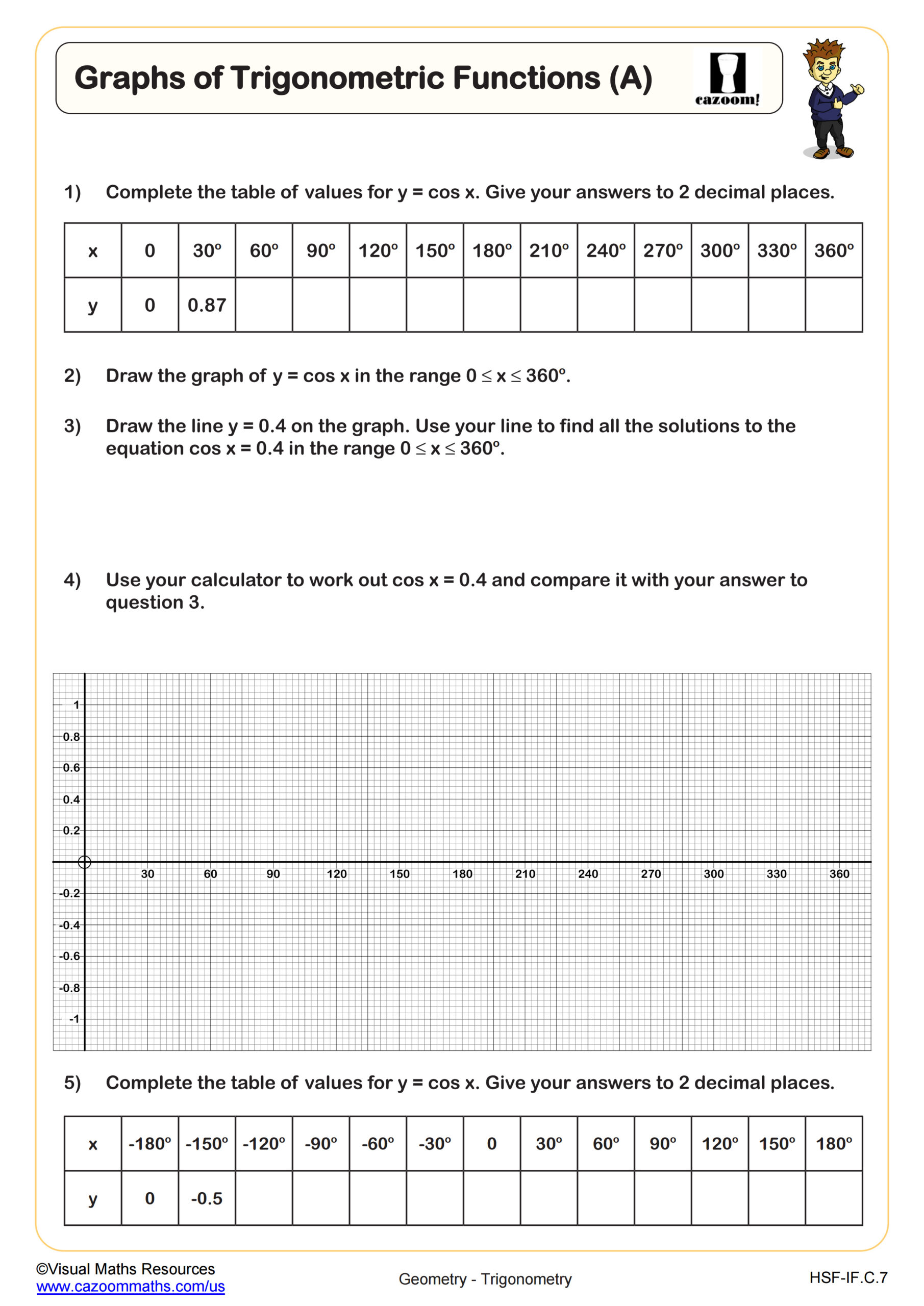
Graphs of Trigonometric Functions (A)
Graphs of Trigonometric Functions (B)
Law of Cosines
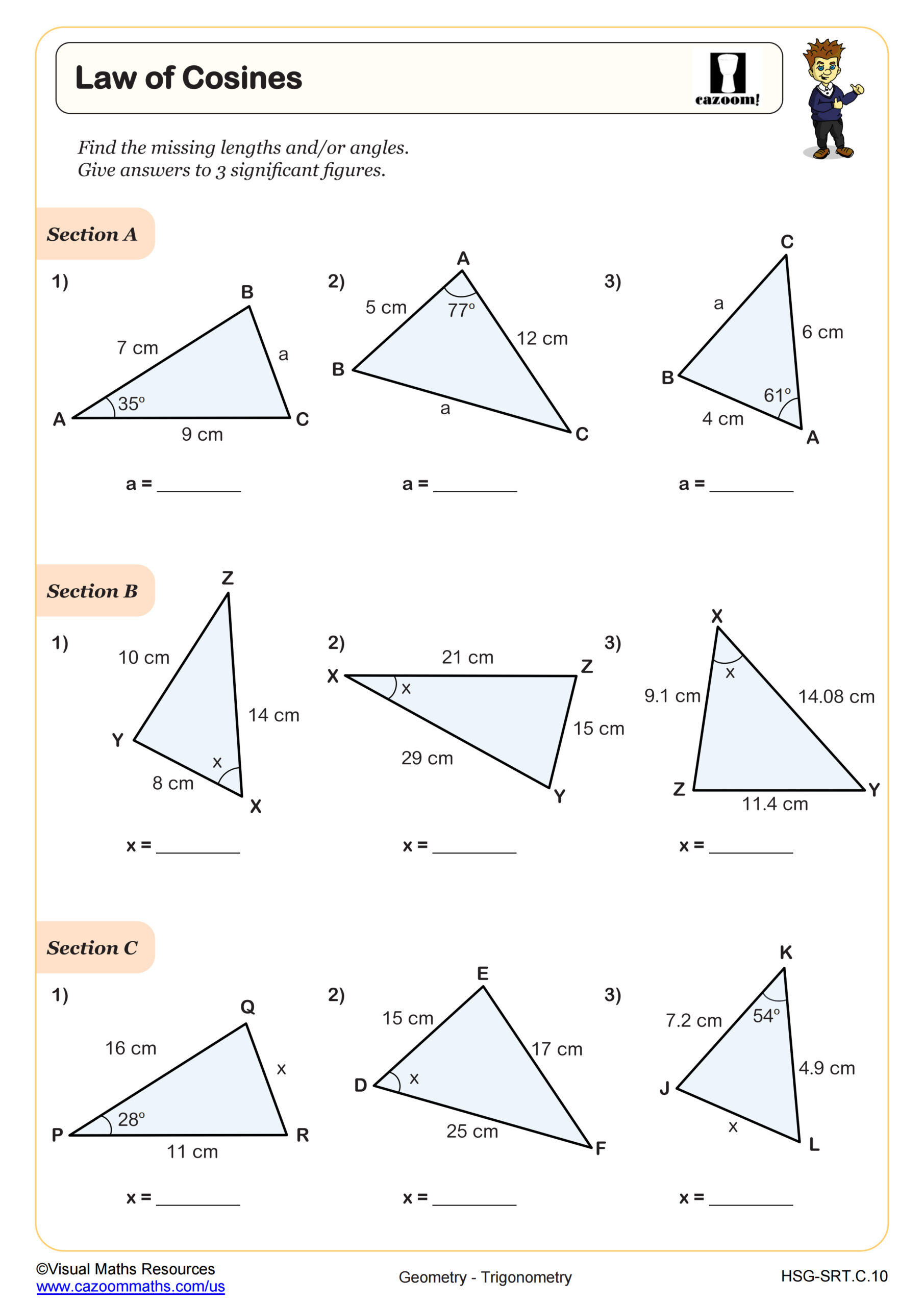
Law of Sines
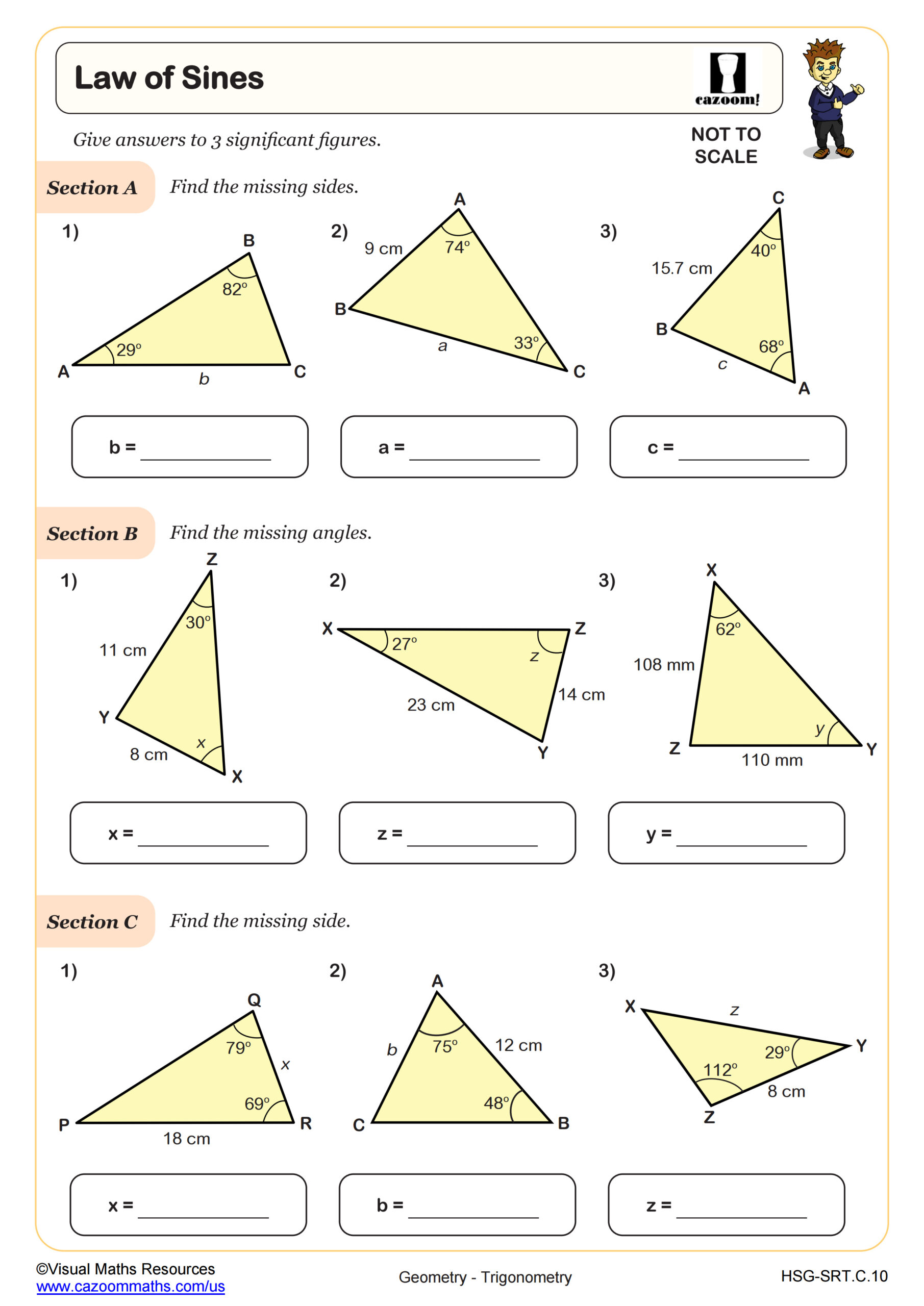
Law of Sines and Cosines; Area of Triangles Mixed Practice
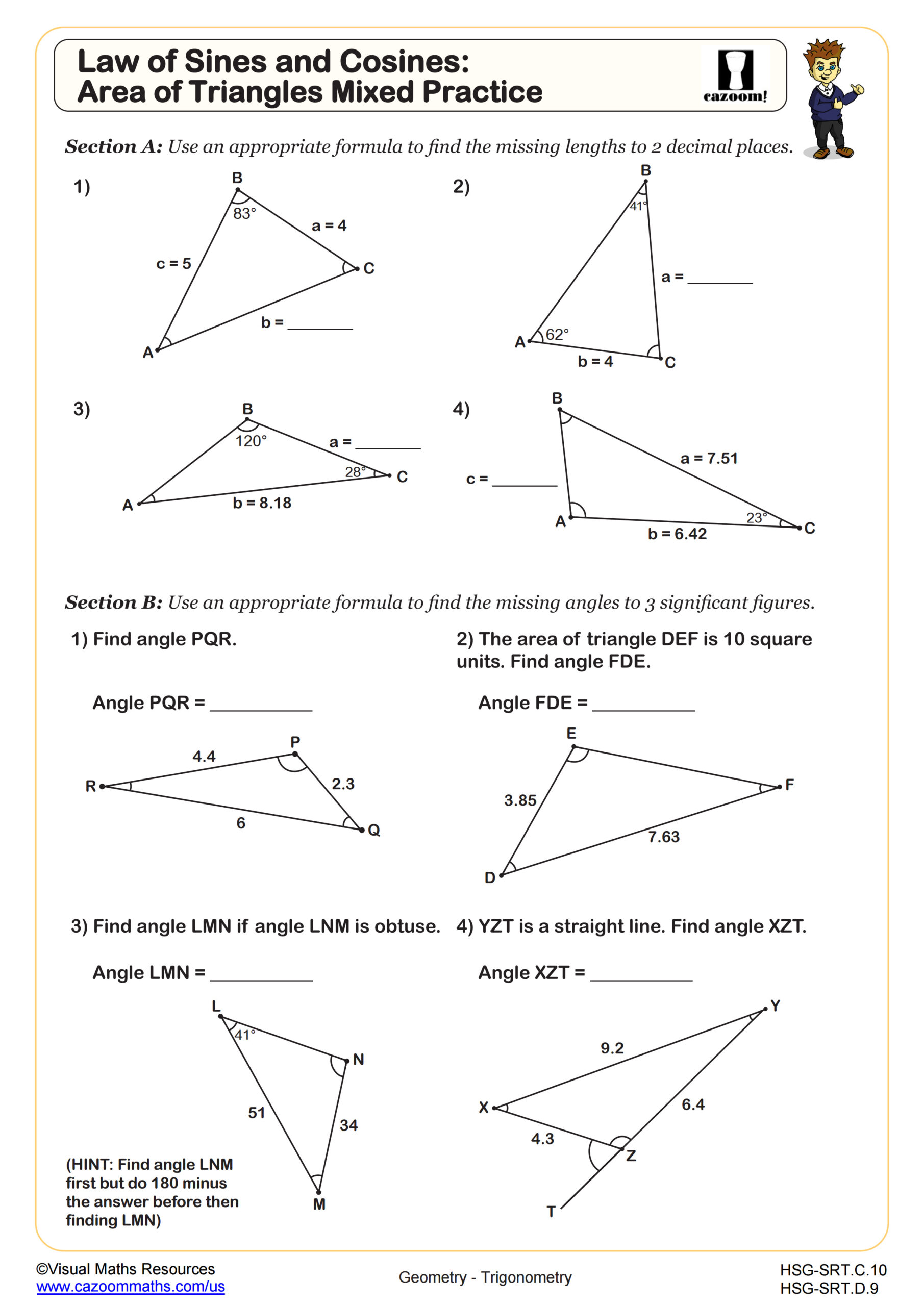
Proving Values of Special Right Triangles
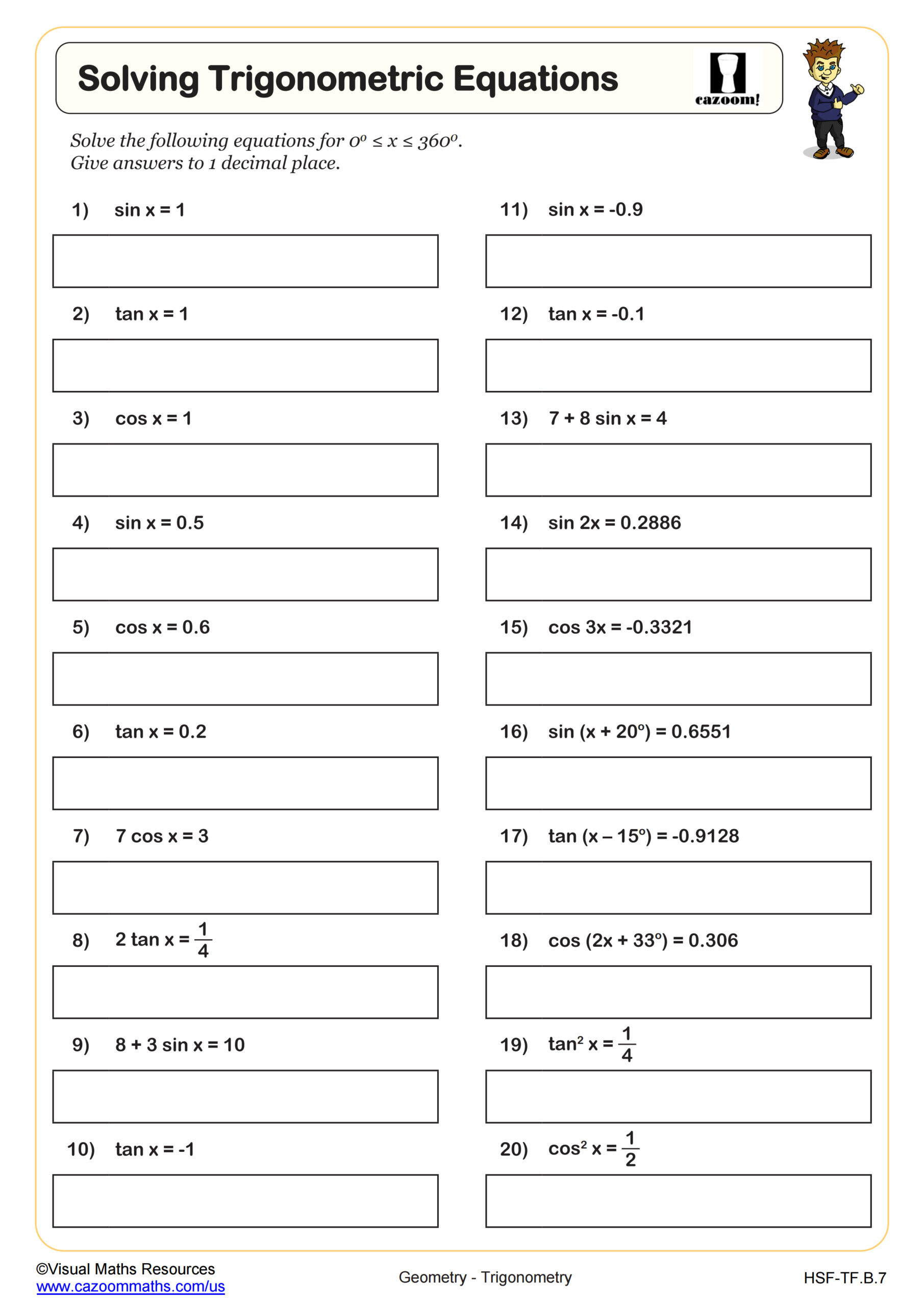
Solving Trigonometric Equations
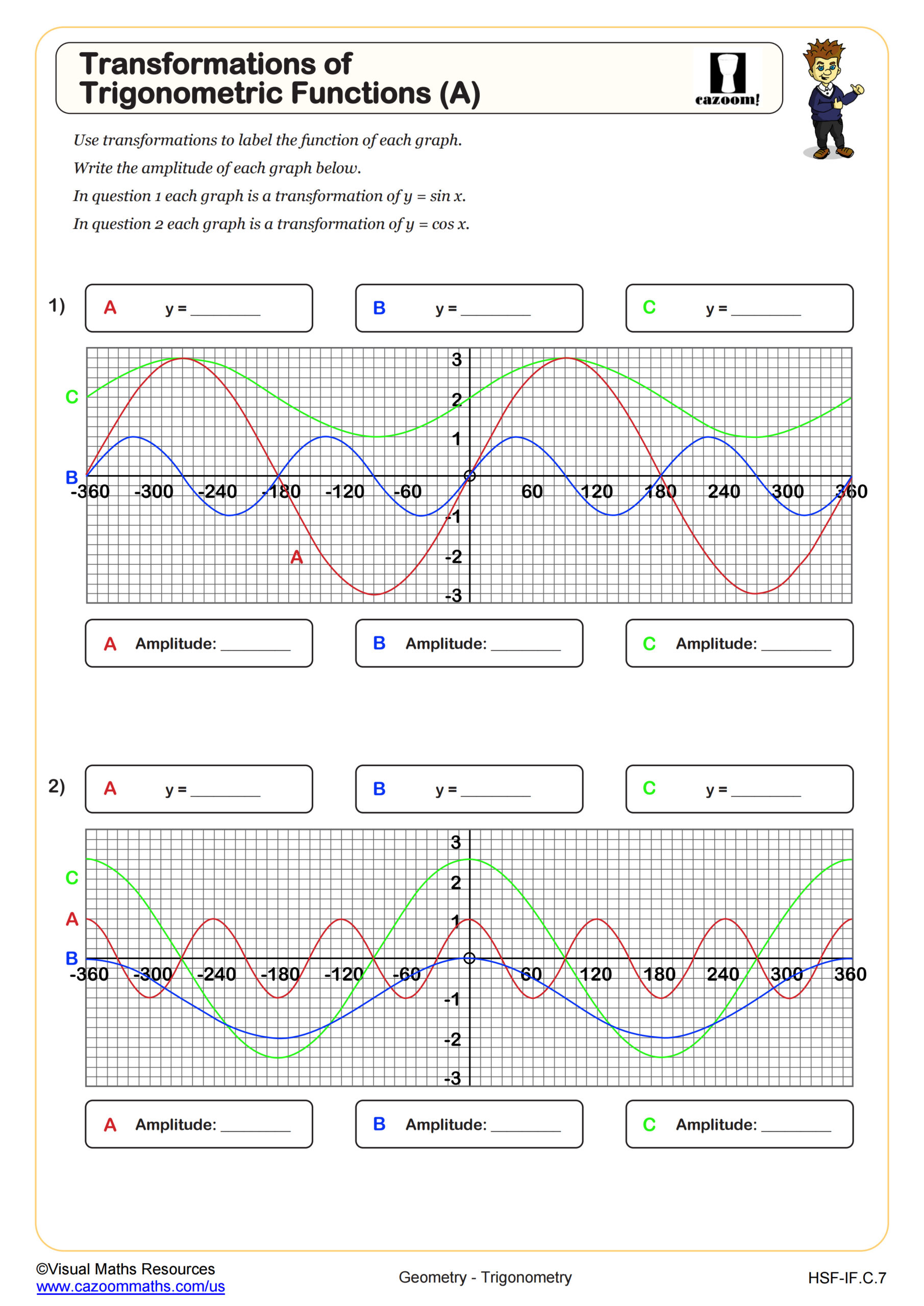
Transformations of Trigonometric Functions (A)
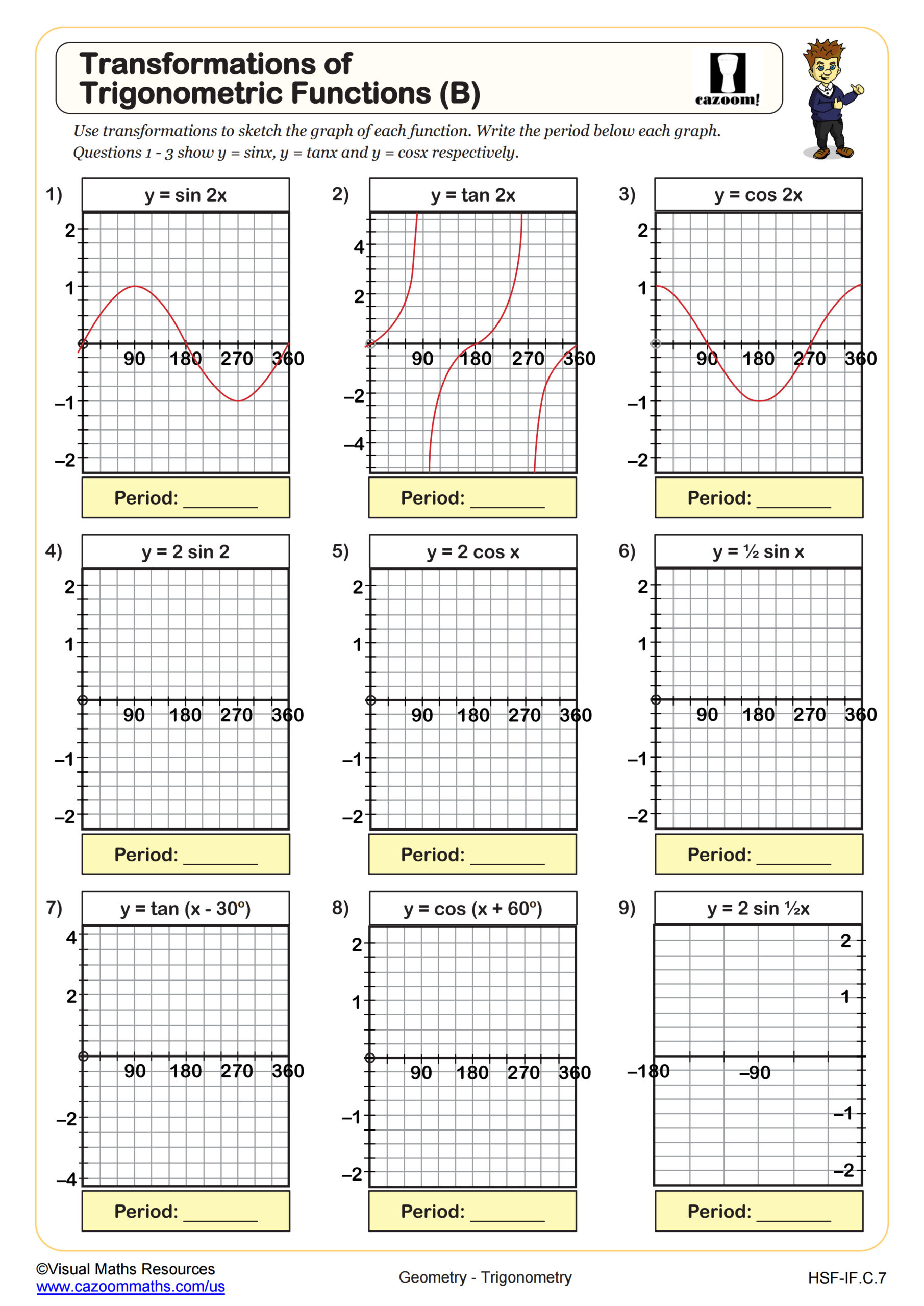
Transformations of Trigonometric Functions (B)
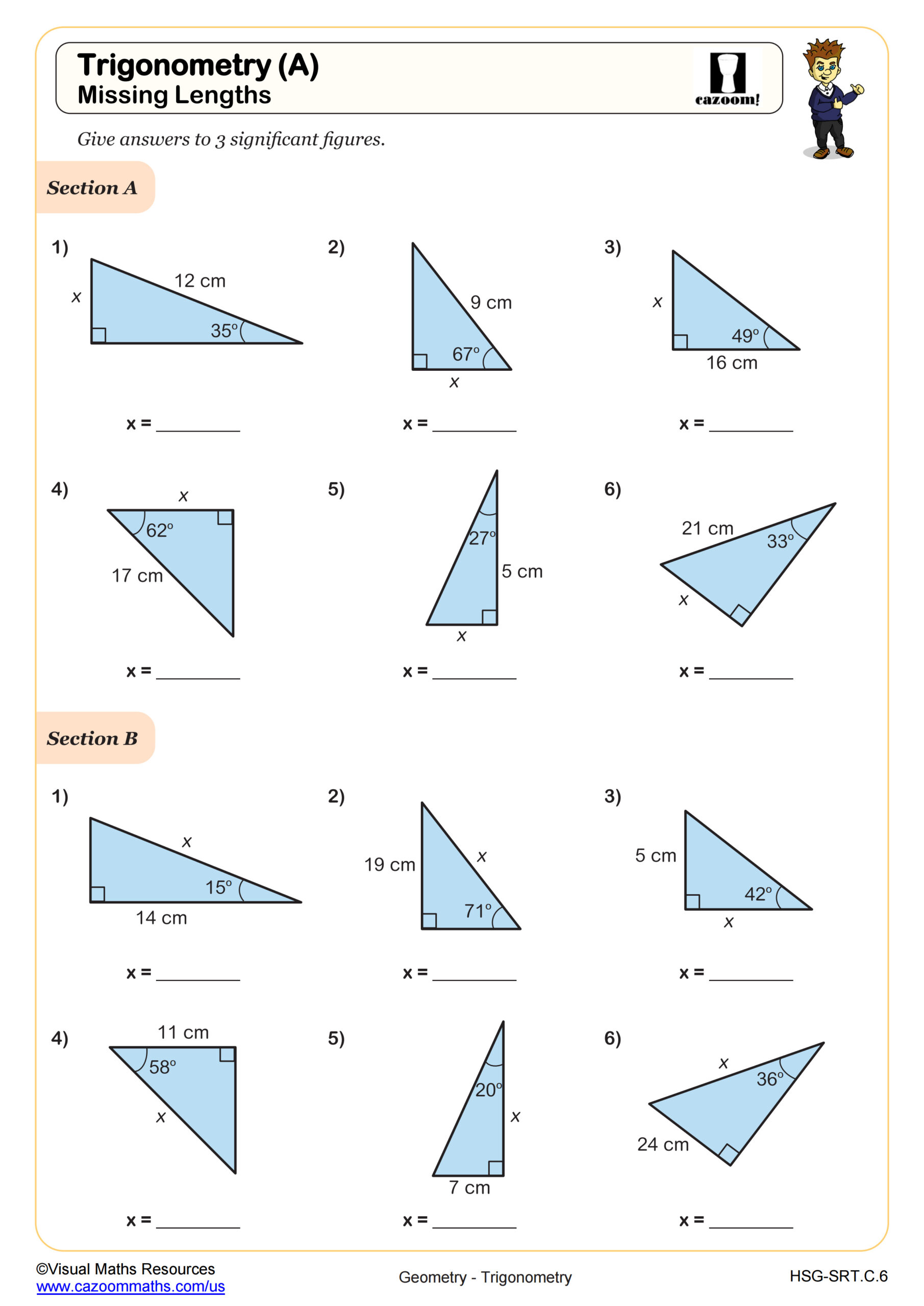
Trigonometic Ratios (SOH CAH TOA): Missing Side Lengths
Trigonometic Ratios (SOH CAH TOA): Word Problems
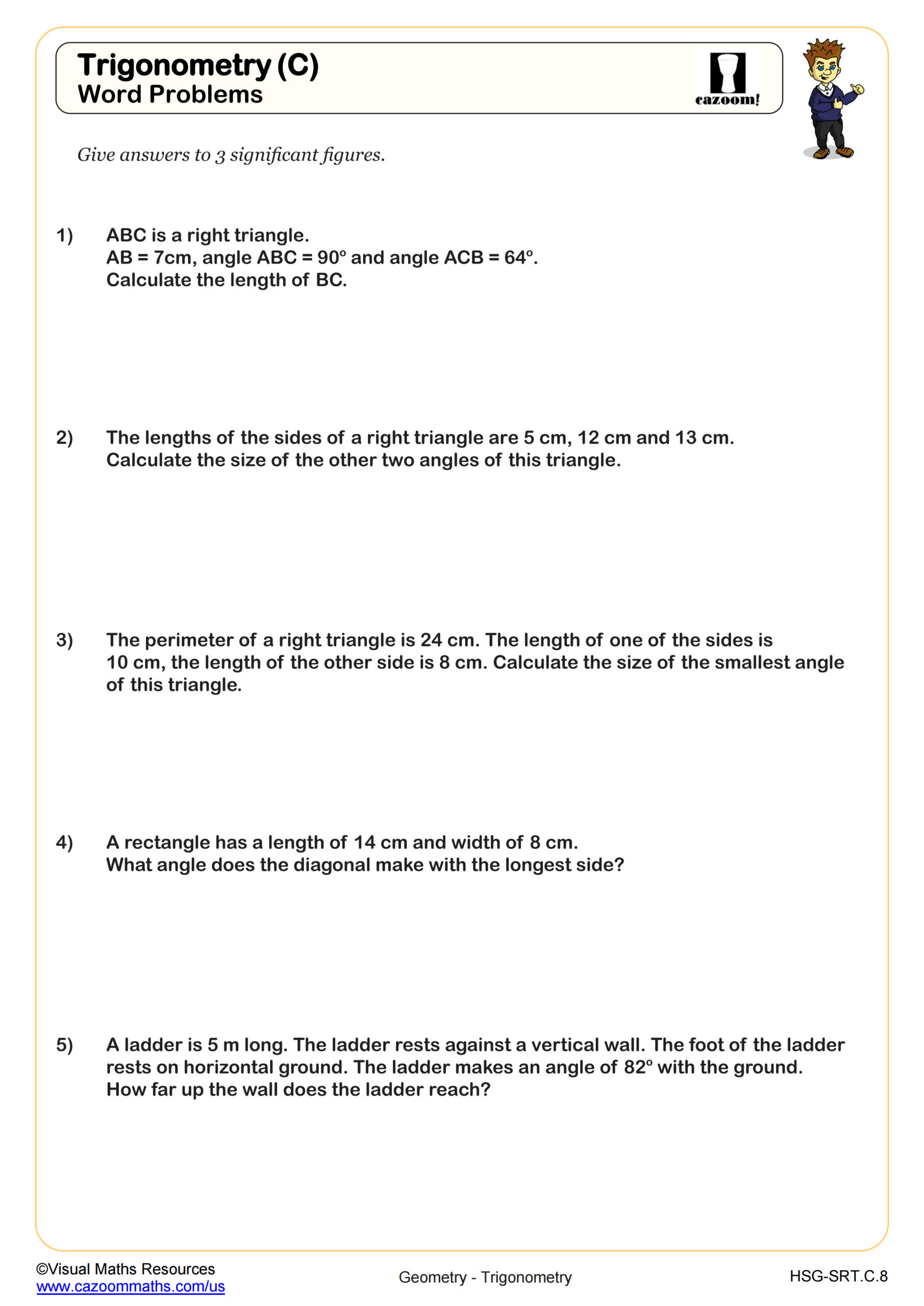
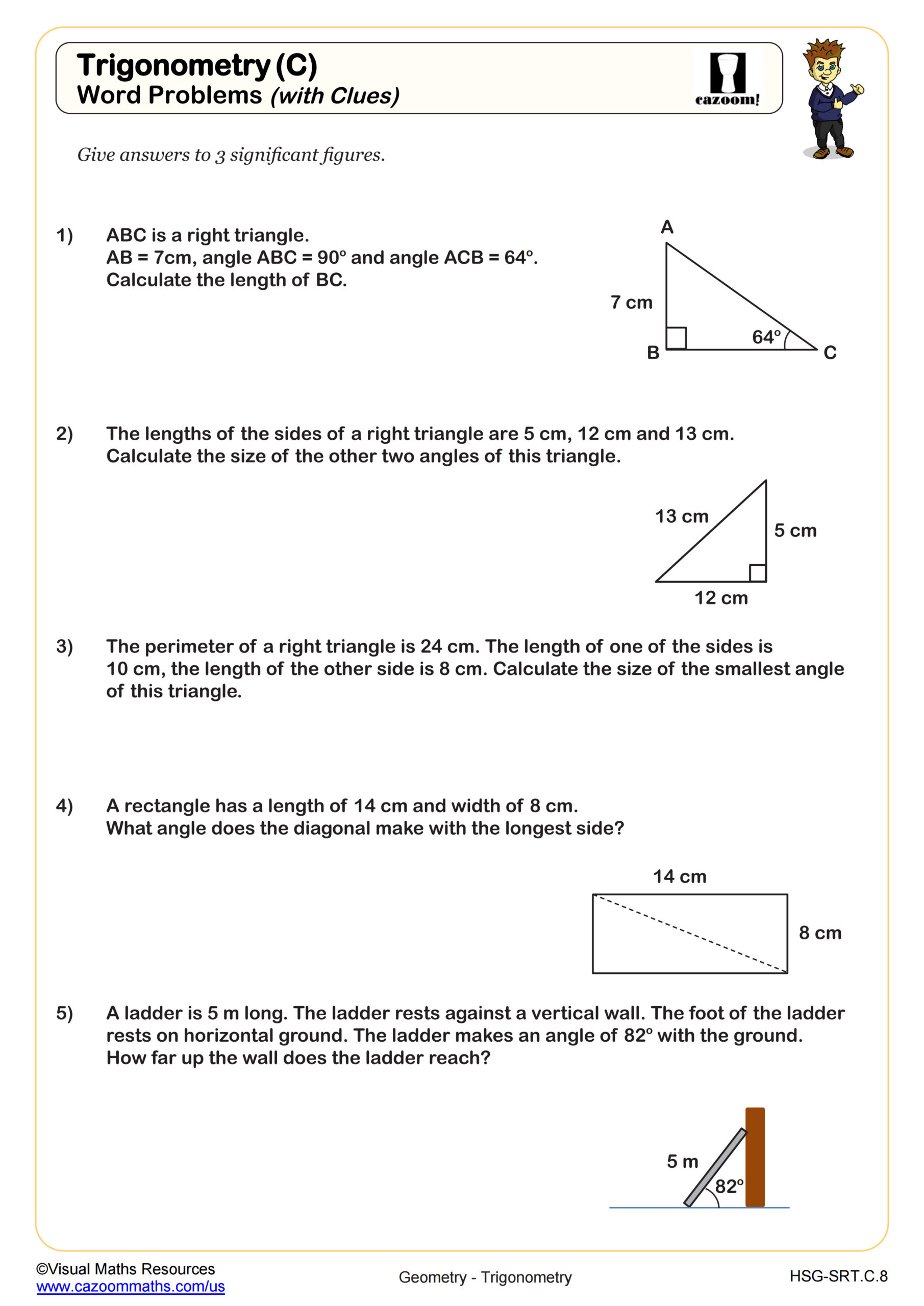
Trigonometic Ratios (SOH CAH TOA): Word Problems (With Clues)
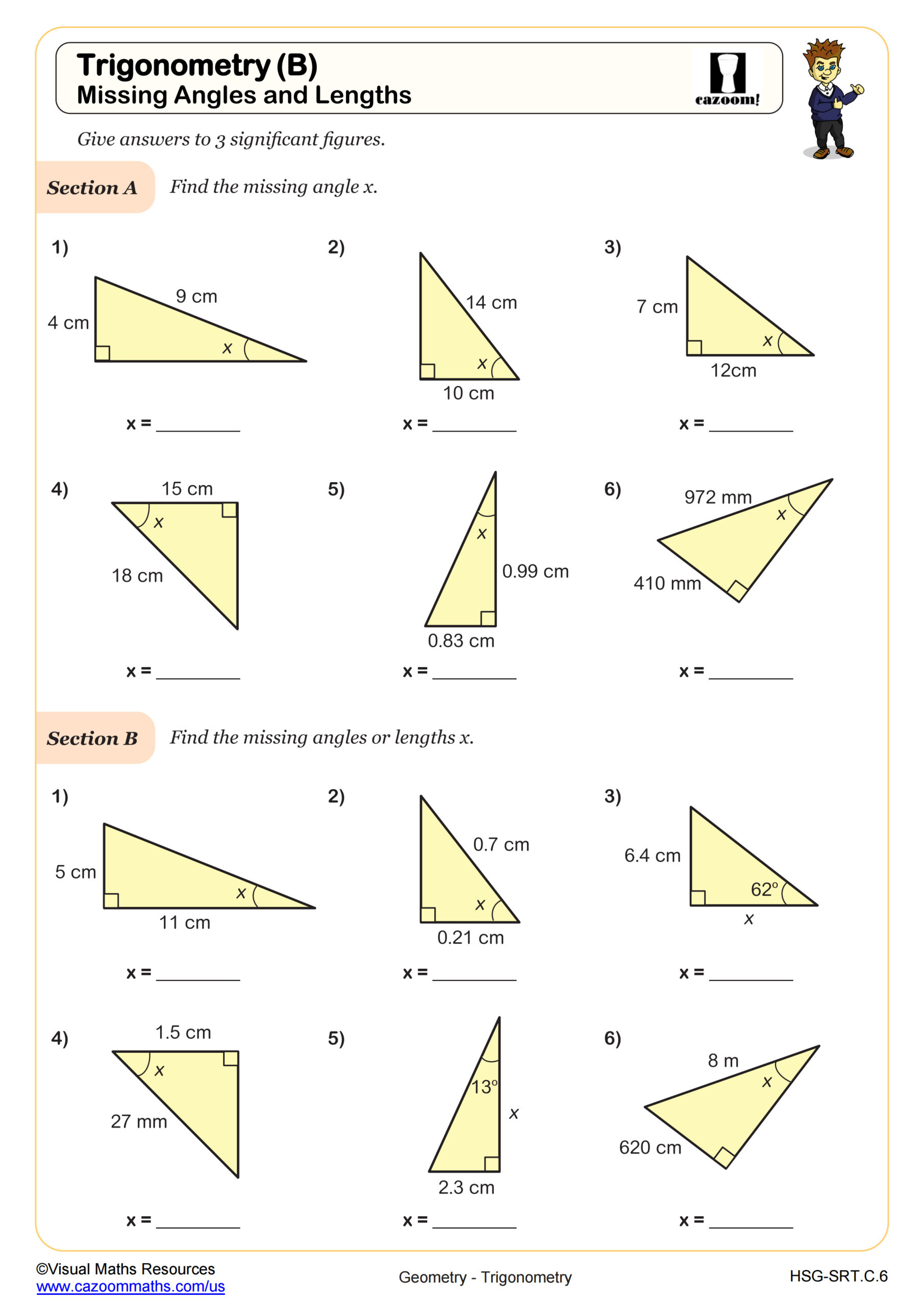
Trigonometric Ratios: Missing Side Lengths and Angle Measures
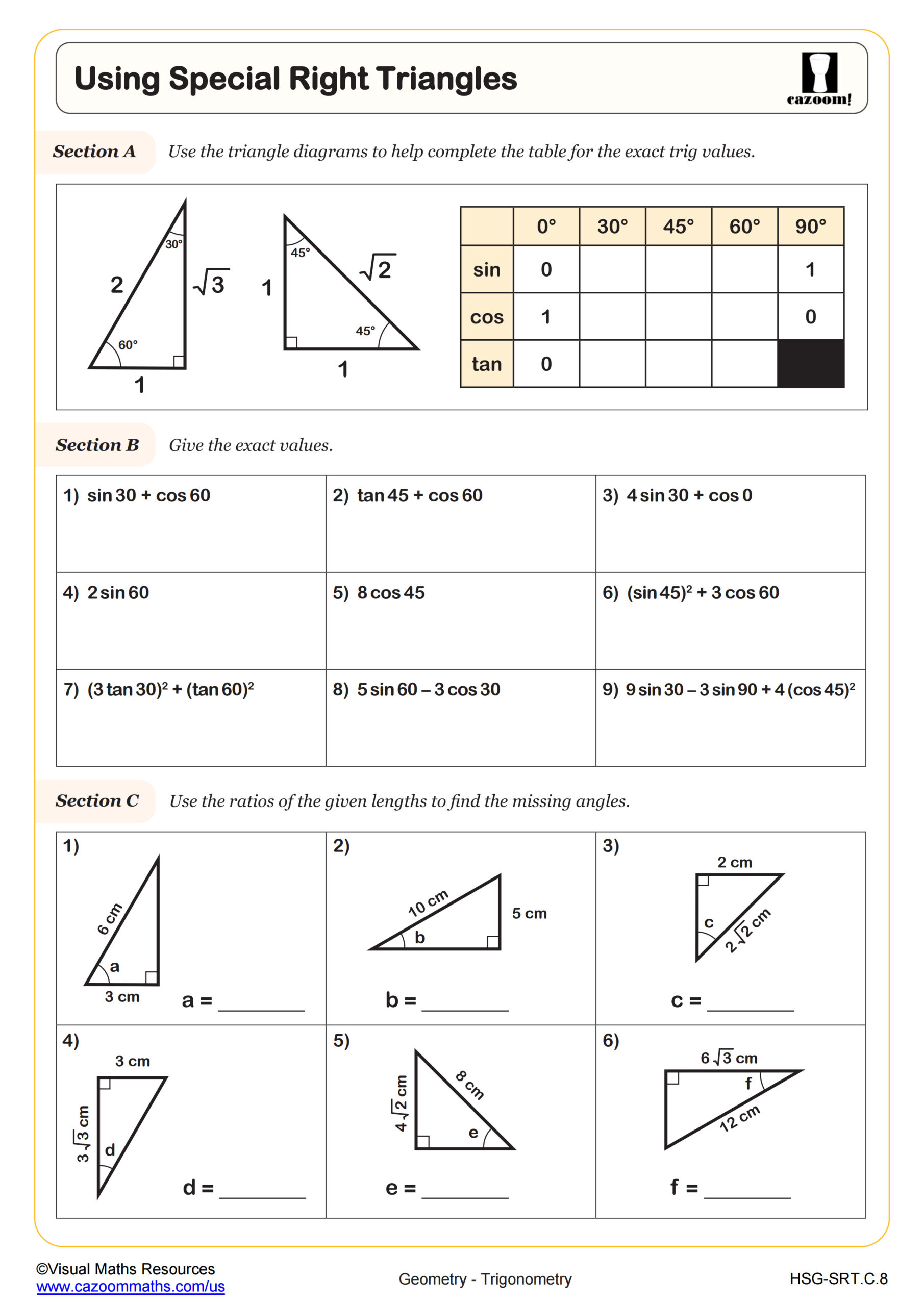
Using Special Right Triangles
All worksheets are created by the team of experienced teachers at Cazoom Math.
What Trigonometry Topics Are Covered in Algebra II?
Algebra II trigonometry extends well beyond the SOH-CAH-TOA memorization from Geometry. Students work with special right triangles (30-60-90 and 45-45-90) to establish exact values without calculators, a skill that appears frequently on the SAT Math section. The curriculum includes the Law of Sines for solving oblique triangles and the Law of Cosines for cases where the Law of Sines creates ambiguous solutions. Teachers often observe that students confidently tackle non-right triangle problems once they recognize which law applies based on given information.
The worksheets also address graphing sine, cosine, and tangent functions with transformations, including amplitude, period, phase shift, and vertical shift. Students encounter Heron's formula for finding triangle area when three side lengths are known, a topic that connects to surveying and engineering applications. A common misconception is believing that trigonometric functions only apply to right triangles. These worksheets systematically build understanding that trigonometry solves problems across all triangle types and extends to periodic functions modeling real-world phenomena.
How Does Trigonometry Appear on the SAT and ACT?
Standardized tests like the SAT expect students to work fluently with special right triangle ratios without calculators, particularly on Grid-In questions where exact answers matter. The ACT Math section includes 4-6 trigonometry questions covering basic ratios, the unit circle, graphing transformations, and occasionally the Law of Sines or Law of Cosines. Students lose points when they rely solely on calculator approximations instead of recognizing exact values like √3/2 or √2/2. Teachers notice that students who practice identifying whether a problem requires sine law, cosine law, or basic right triangle ratios perform significantly better under timed conditions.
Both tests assess understanding of amplitude and period in function graphs, often presenting transformed trigonometric functions and asking students to identify specific values. A breakthrough typically happens when students stop memorizing isolated formulas and instead understand the geometric reasoning behind each law. The mixed practice worksheets mirror this testing approach by requiring students to determine which method applies before solving, building the analytical skills that distinguish strong test-takers from those who struggle with application problems.
Why Do Students Struggle with the Law of Sines and Cosines?
Teachers frequently notice that students memorize the Law of Sines and Law of Cosines formulas but struggle to determine when each applies. The critical distinction lies in recognizing given information: Law of Sines works with angle-side-angle (ASA), angle-angle-side (AAS), or side-side-angle (SSA) configurations, while the Law of Cosines applies to side-side-side (SSS) or side-angle-side (SAS) cases. Students often struggle with the ambiguous case in SSA problems, where two different triangles might satisfy the given conditions. This appears in surveying and navigation contexts where understanding all possible solutions matters for accuracy.
A common error involves attempting to use Law of Sines when the Law of Cosines is required, particularly in SSS triangles where no angles are initially known. This topic becomes easier when students first master identifying triangle configurations before selecting formulas. The worksheets provide systematic practice categorizing problems by given information, then applying appropriate methods. College-bound students benefit from this structured approach since physics, engineering, and calculus courses assume fluency with these laws for solving vector problems and modeling periodic motion.
How Can Teachers Use These Trigonometry Worksheets Effectively?
The 22 worksheets allow teachers to differentiate instruction based on specific skill gaps rather than assigning all trigonometry practice at once. Students confidently tackle graphing transformations once they recognize parent function behavior, so teachers might assign special right triangles worksheets before moving to unit circle applications. The complete answer keys enable students to check work immediately during independent practice, which research shows improves retention more than delayed feedback. Teachers often use the mixed practice worksheets as formative assessments to identify whether students truly understand when to apply each formula or simply memorize procedures.
Many students make the connection between trigonometric functions and real-world applications when they see problems involving Heron's formula for land surveying or Law of Cosines for navigation calculations. Teachers can assign specific worksheets targeting observed weaknesses; for example, if students consistently confuse sine and cosine graphs, the graphing worksheets provide focused practice on amplitude, period, and phase shift. State assessments frequently include multi-step problems combining several trigonometry concepts, so the mixed practice sheets prepare students for this integrated approach while the answer keys help teachers quickly identify common error patterns across the class.