Functions Worksheets
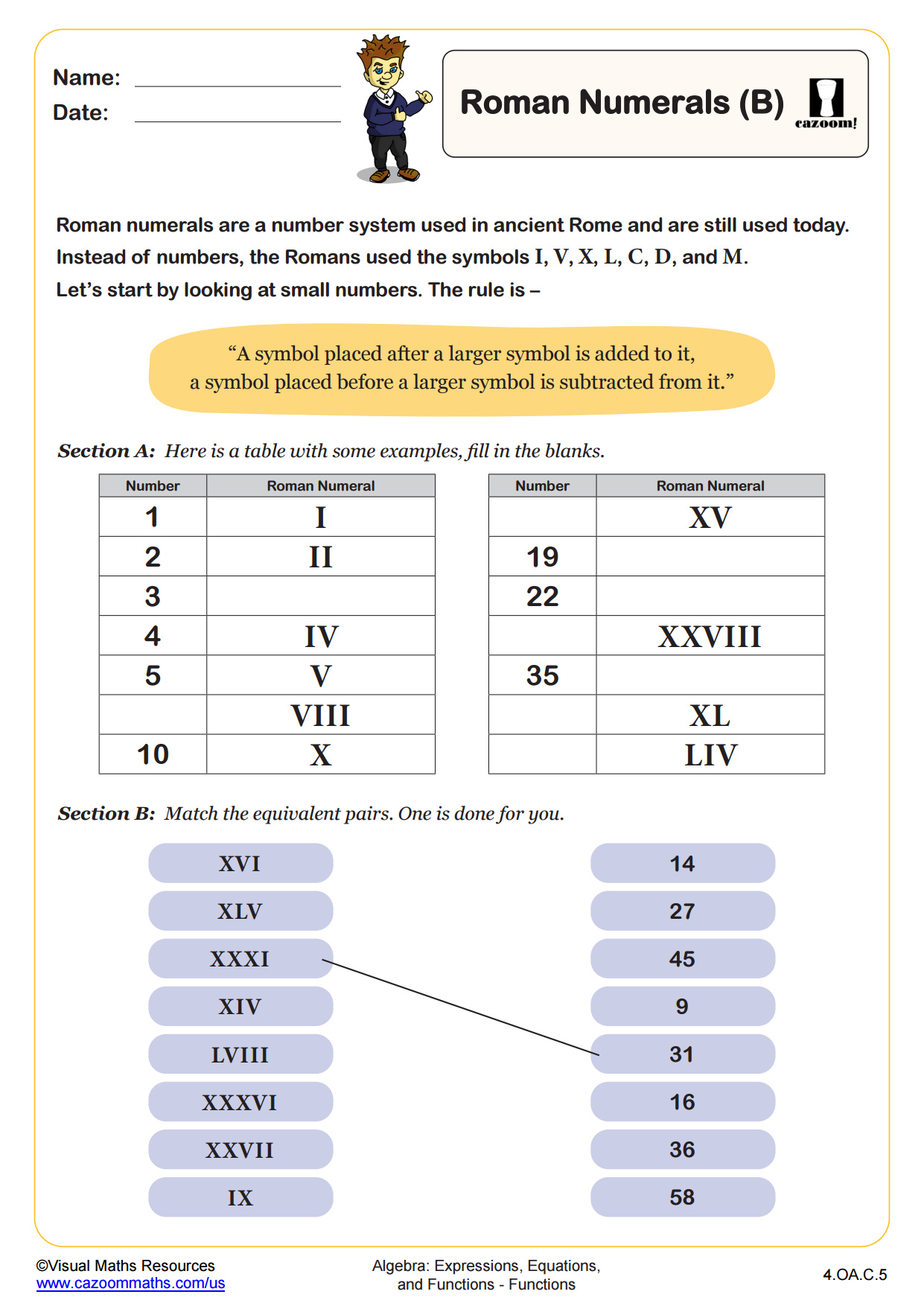
Roman Numerals (B)
Grades: 4th Grade
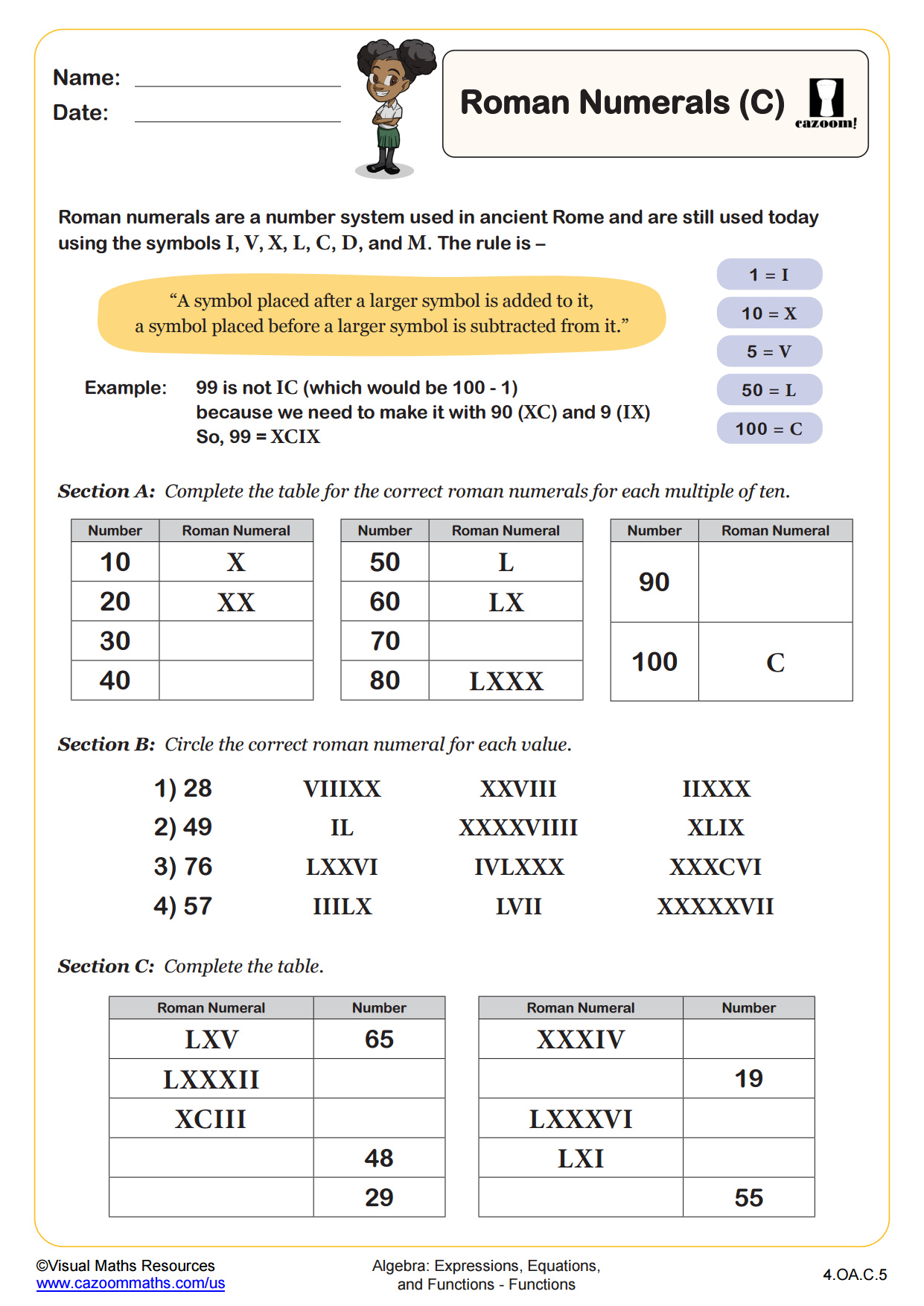
Roman Numerals (C)
Grades: 4th Grade
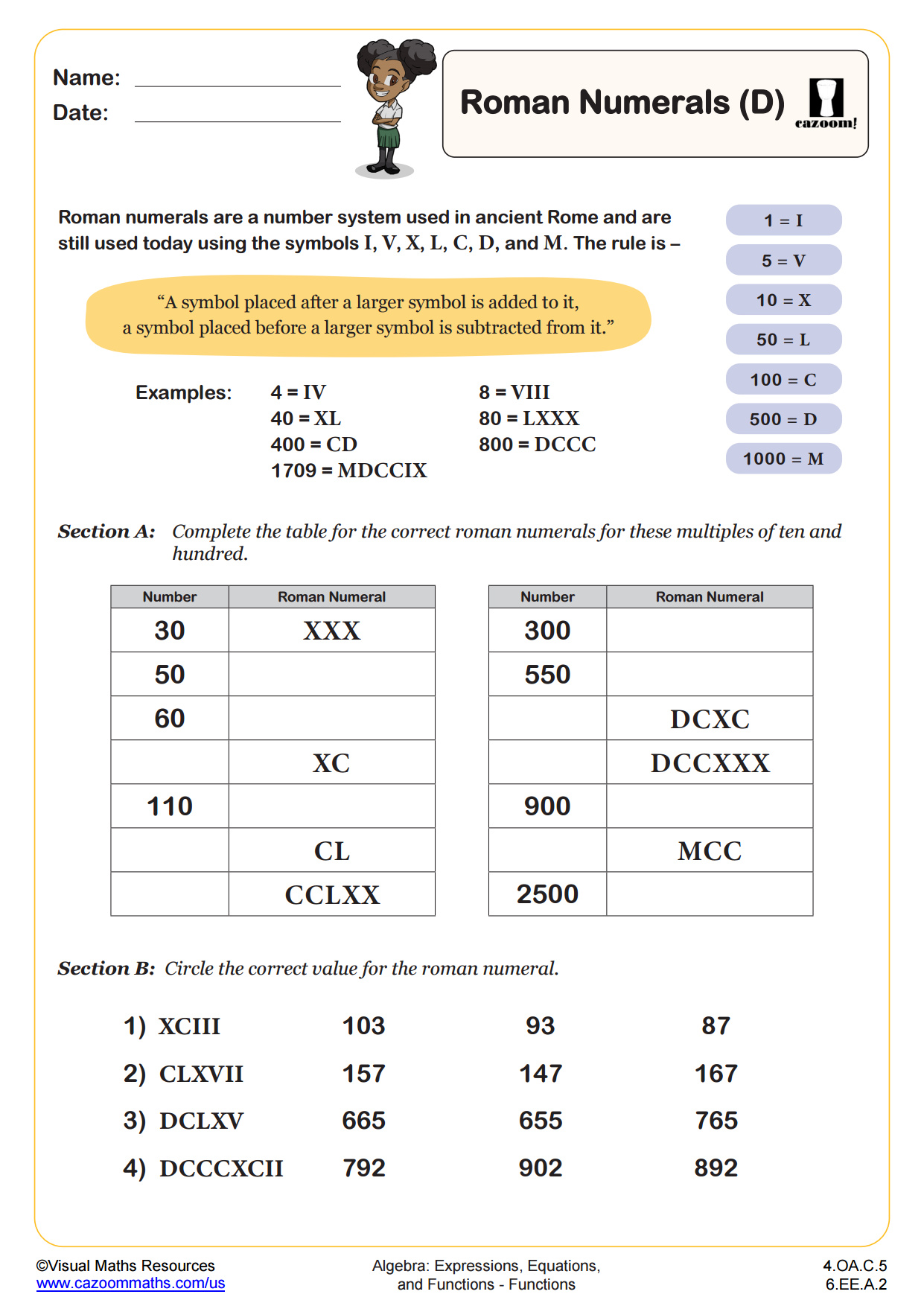
Roman Numerals (D)
Grades: 4th Grade, 6th Grade
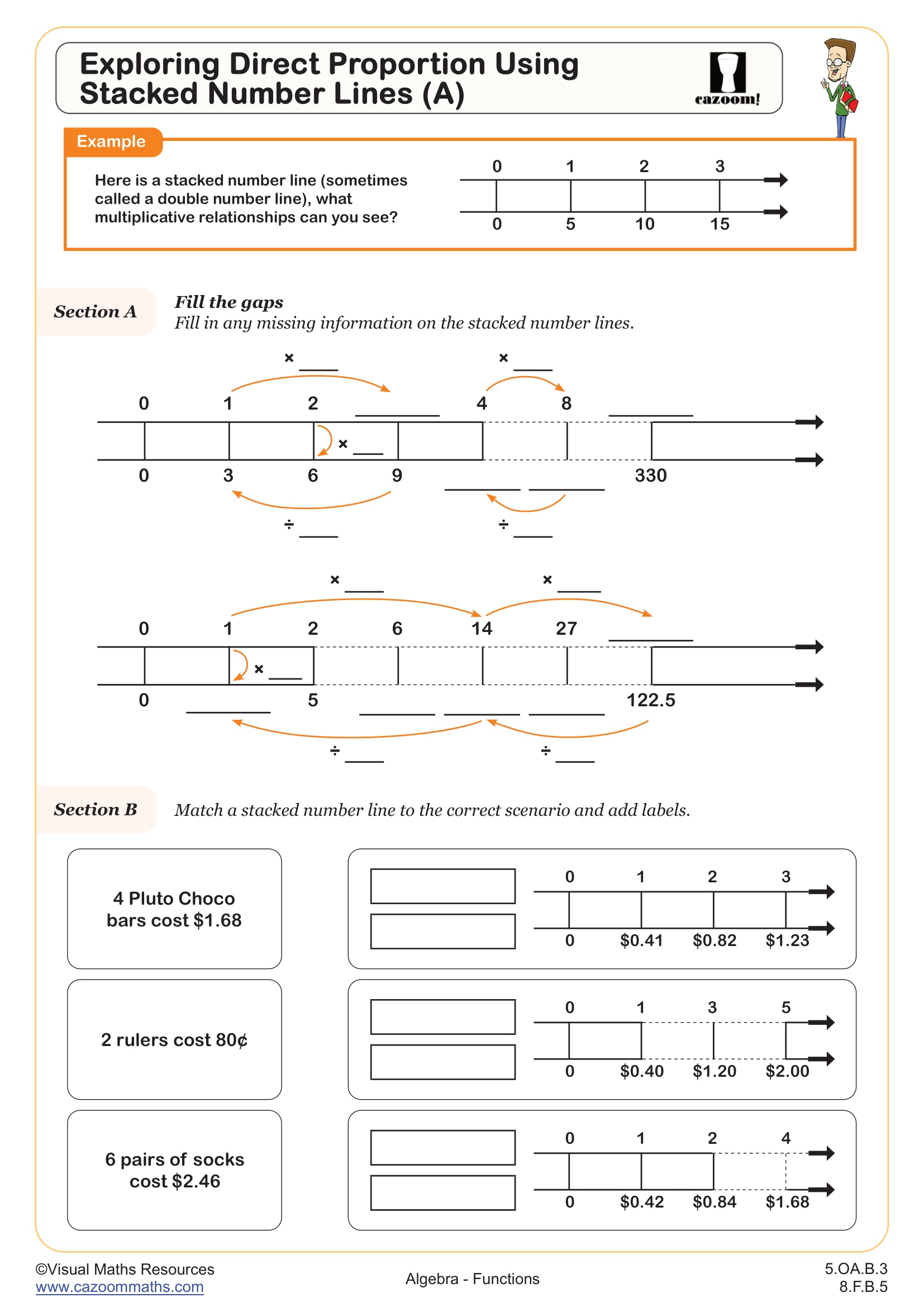
Exploring Direct Proportion Using Stacked Number Lines (A)
Grades: 5th Grade, 8th Grade
Exploring Direct Proportion Using Stacked Number Lines (B)
Grades: 5th Grade, 8th Grade
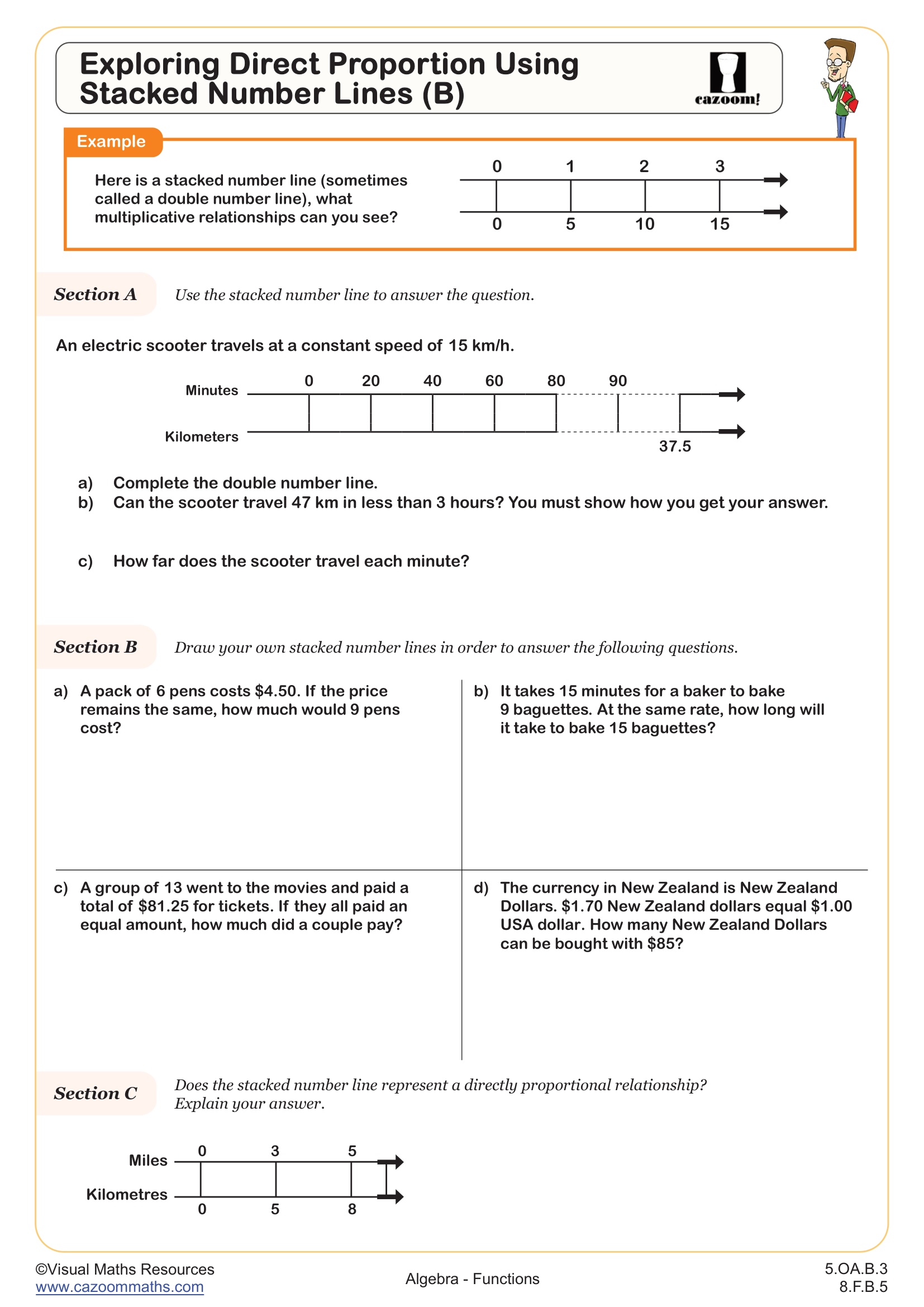
Inputs and Outputs - Two Step Function Machines
Grades: 8th Grade, Algebra I, IM 1
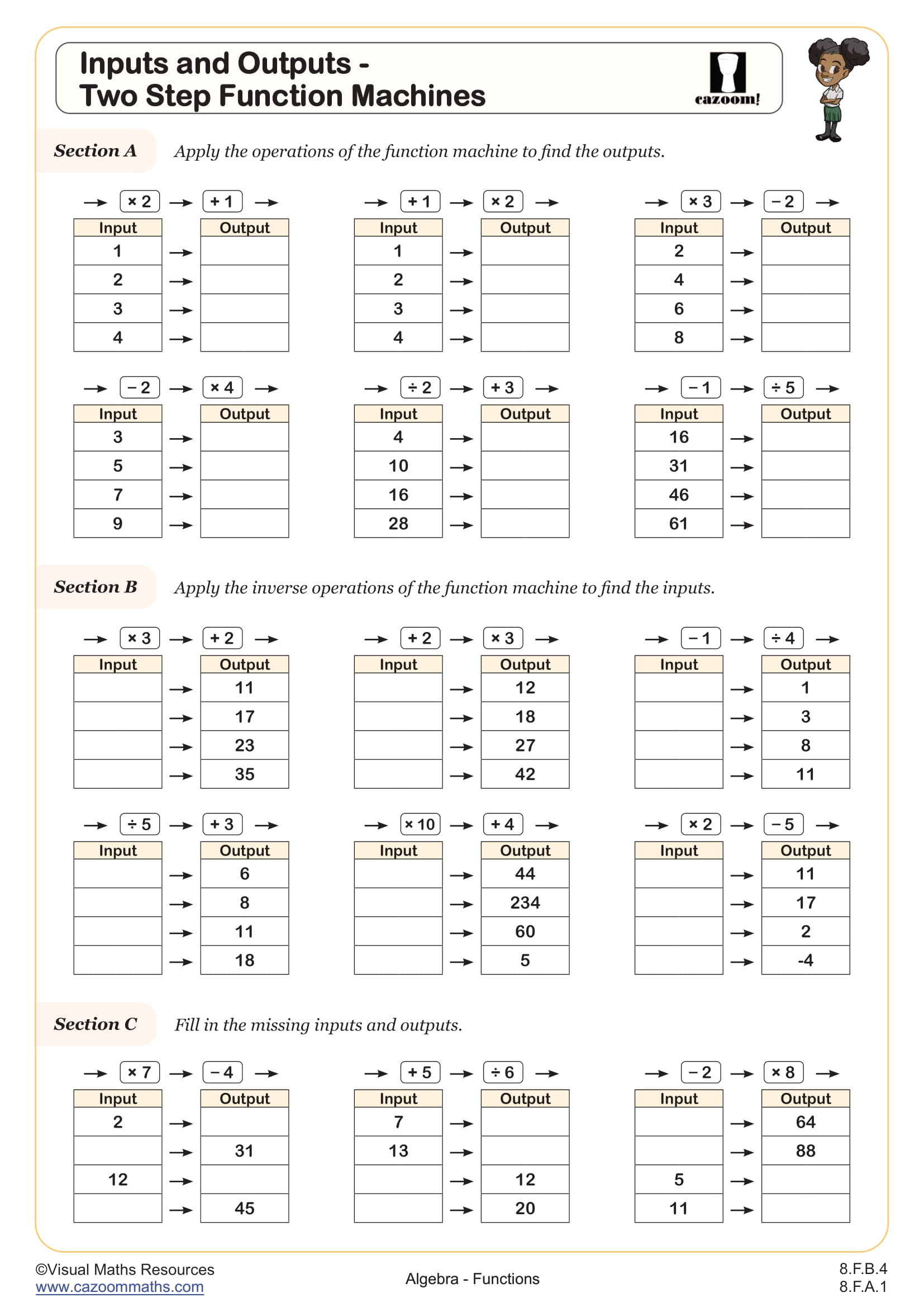
Linear Functions: Card Sort
Grades: 8th Grade
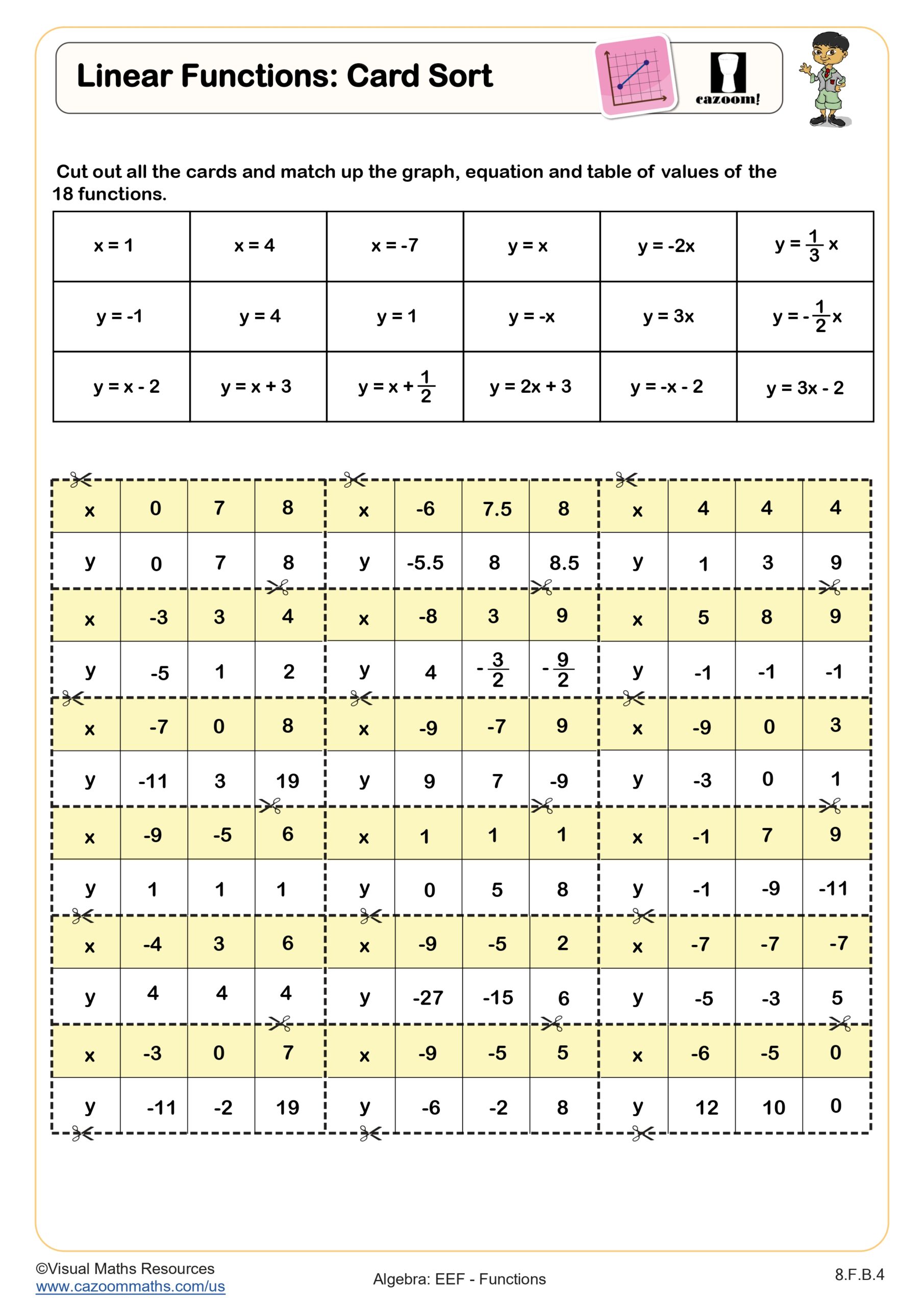
Linear Functions: y = mx
Grades: 8th Grade
Linear Functions: y = x + c
Grades: 8th Grade
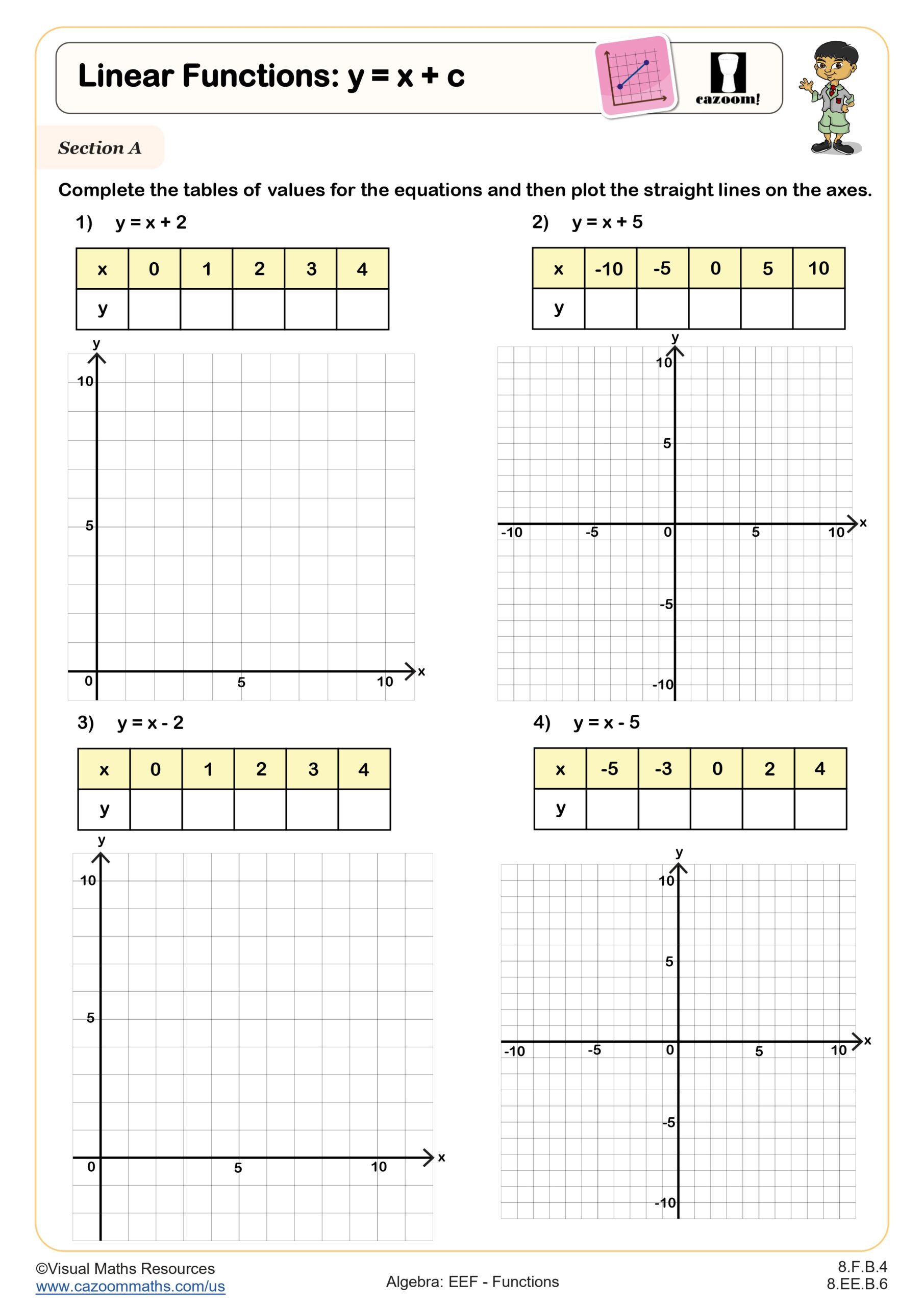
Evaluating Functions Using Graphs (A)
Grades: Algebra I, IM 1
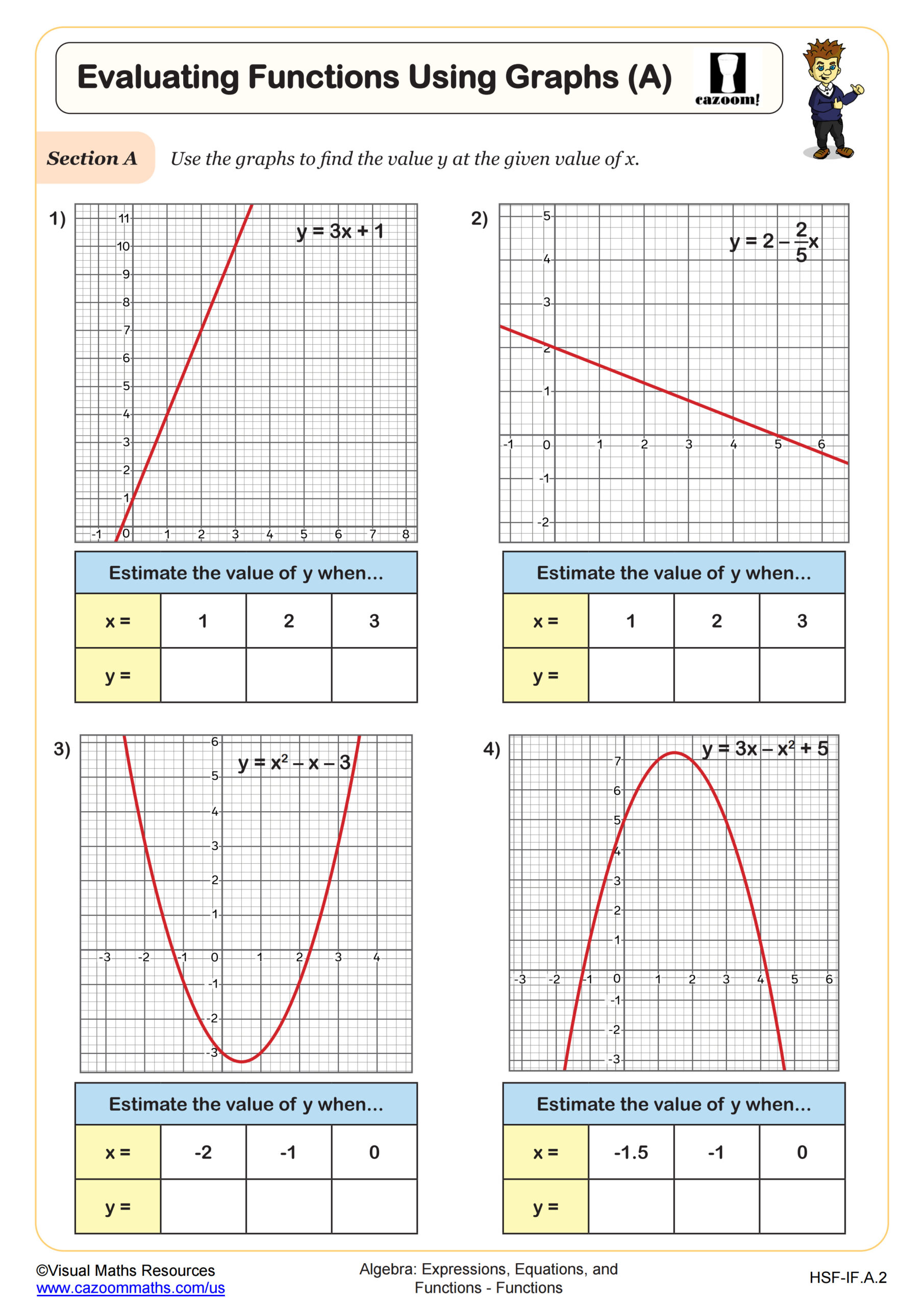
Evaluating Functions Using Graphs (B)
Grades: Algebra I, IM 1
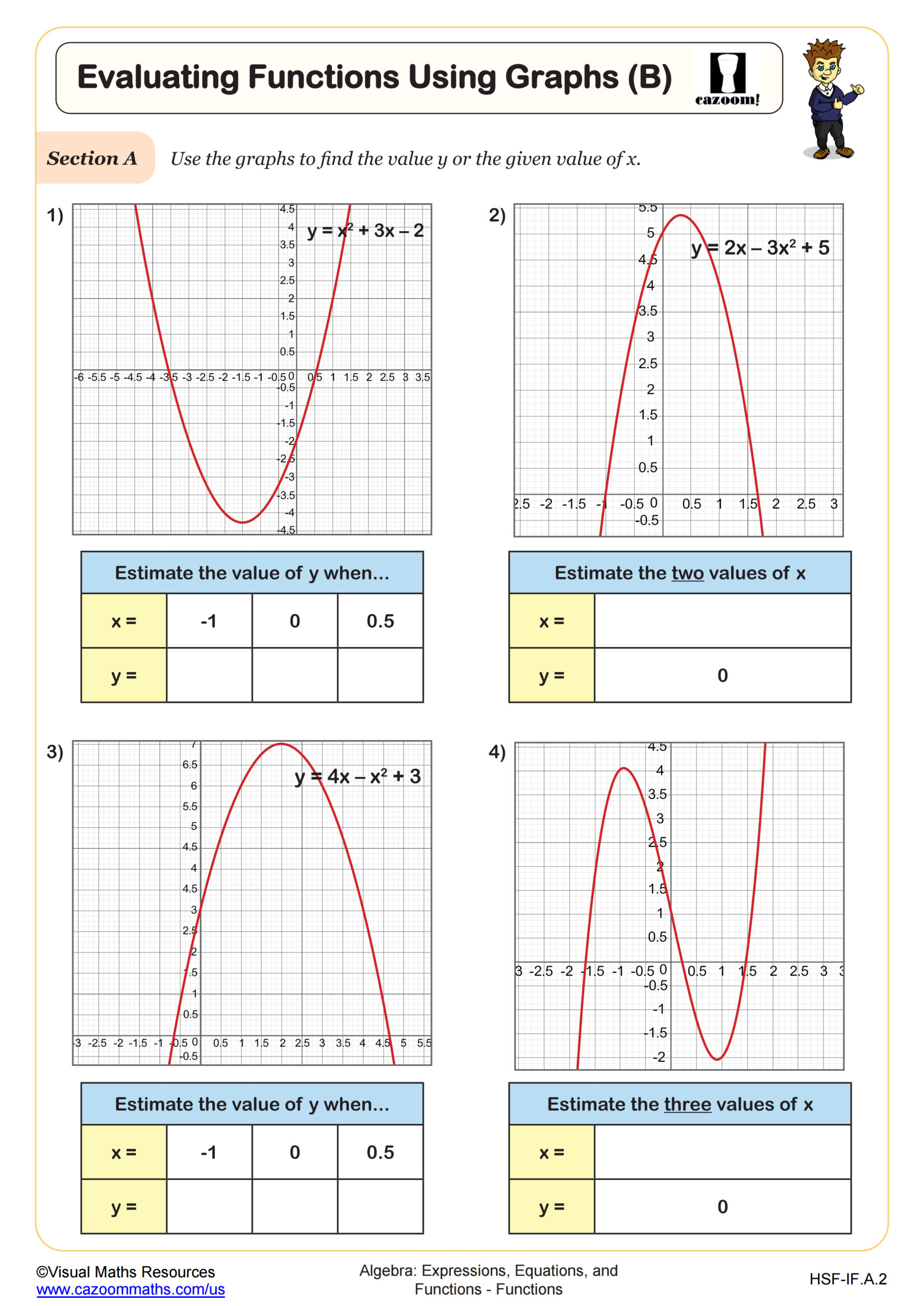
Expressions and Functions
Grades: Algebra I, IM 1
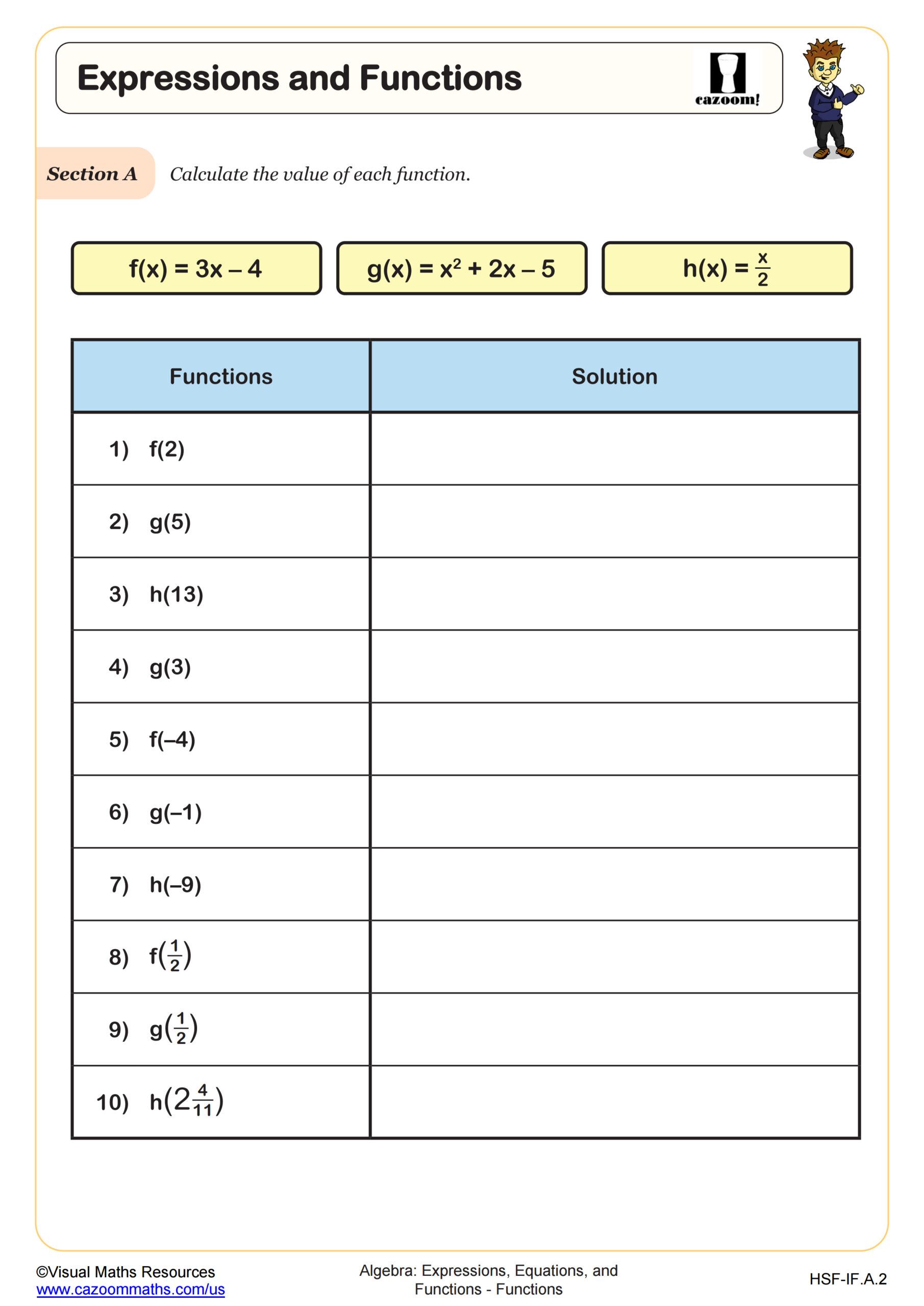
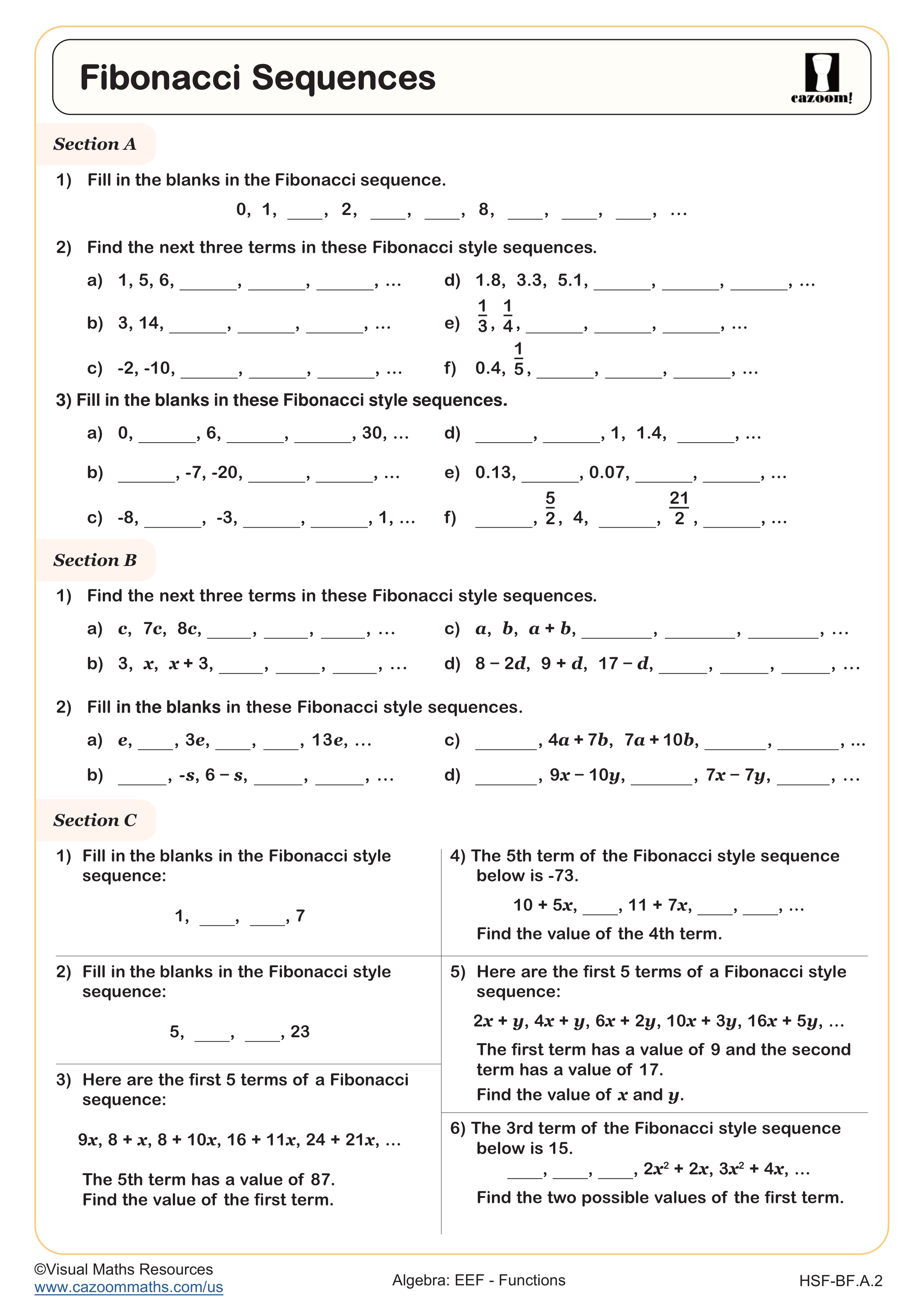
Fibonacci Sequences
Grades: Algebra I, IM 1
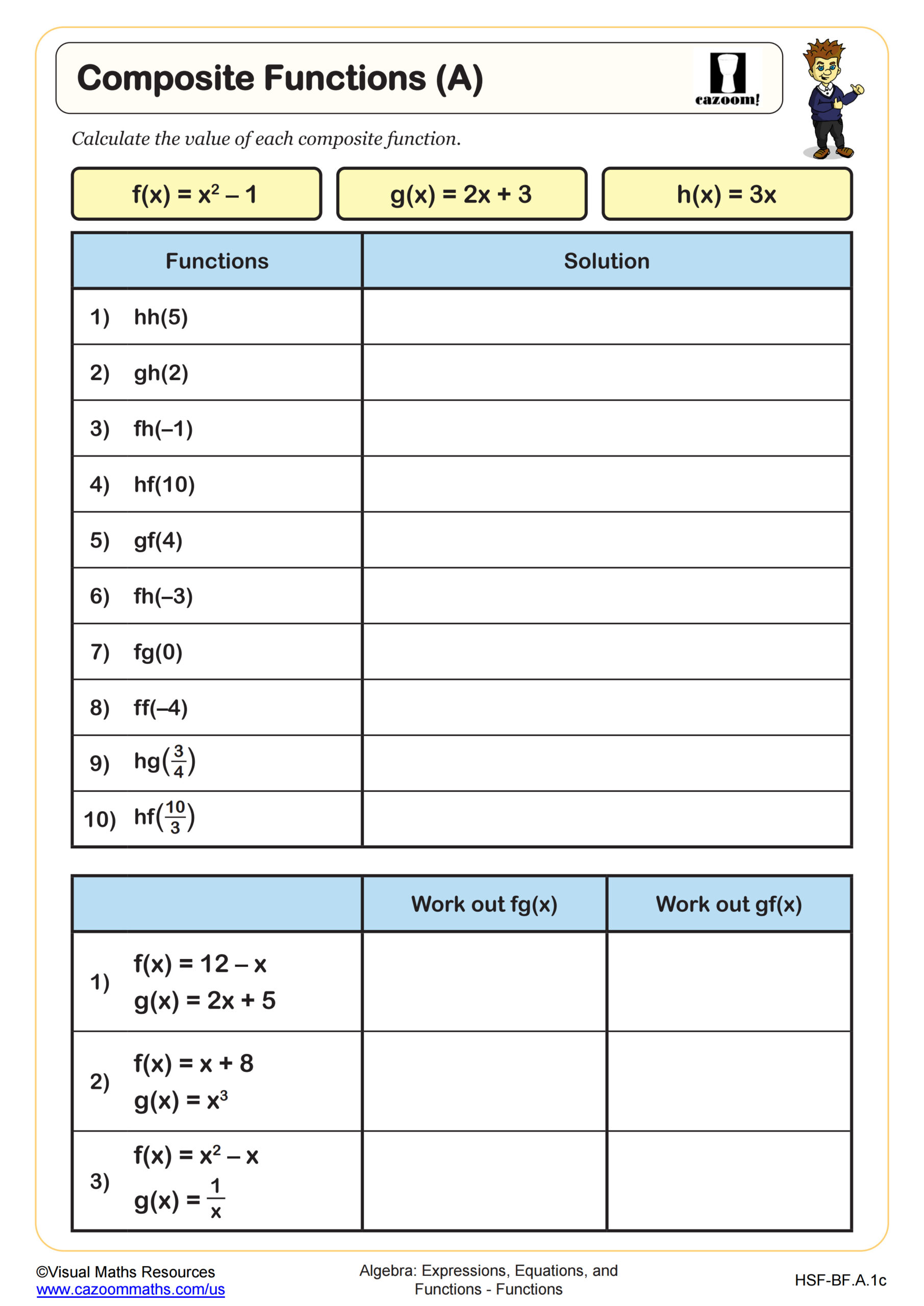
Composite Functions (A)
Grades: Algebra II, IM 3
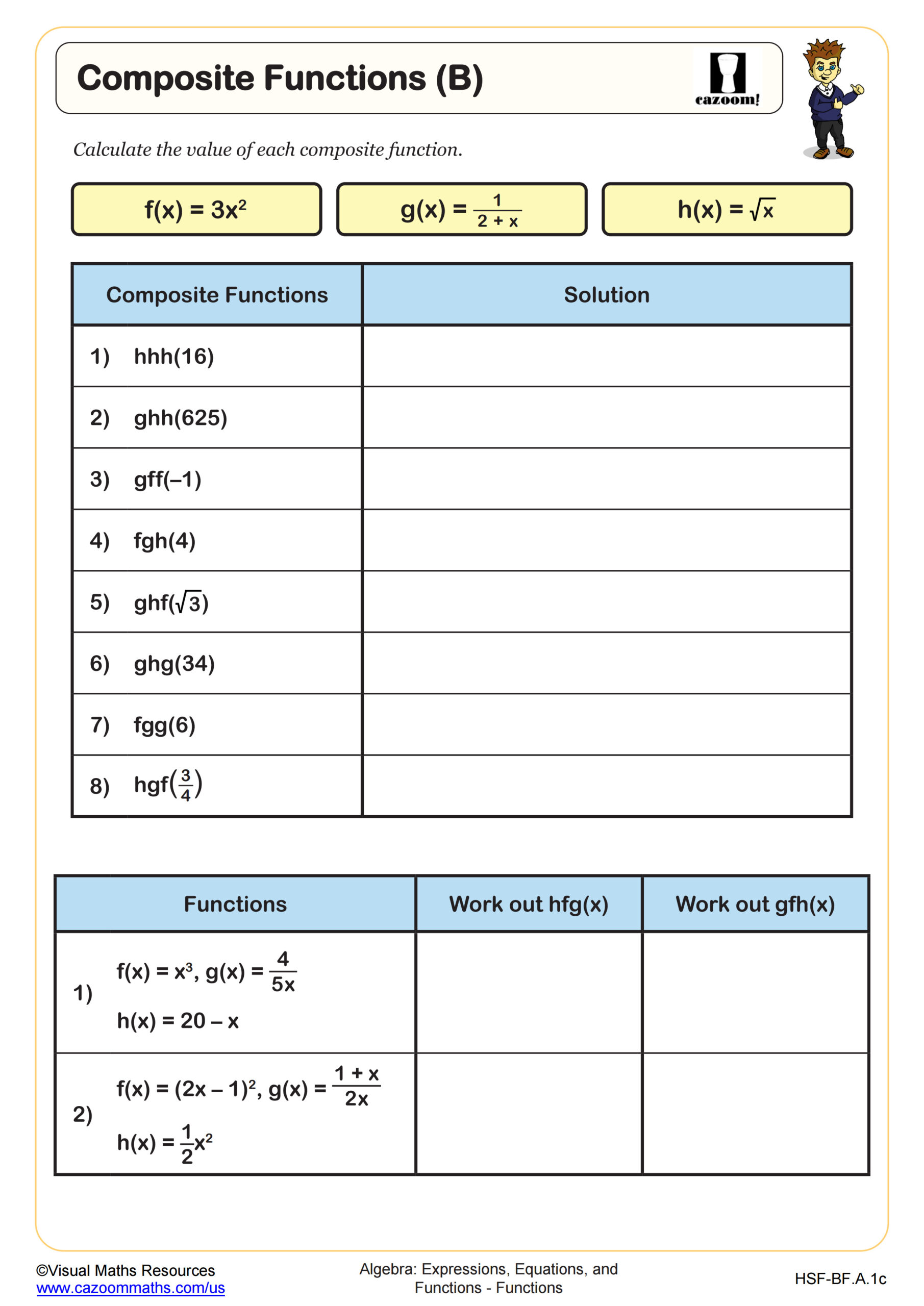
Composite Functions (B)
Grades: Algebra II, IM 3
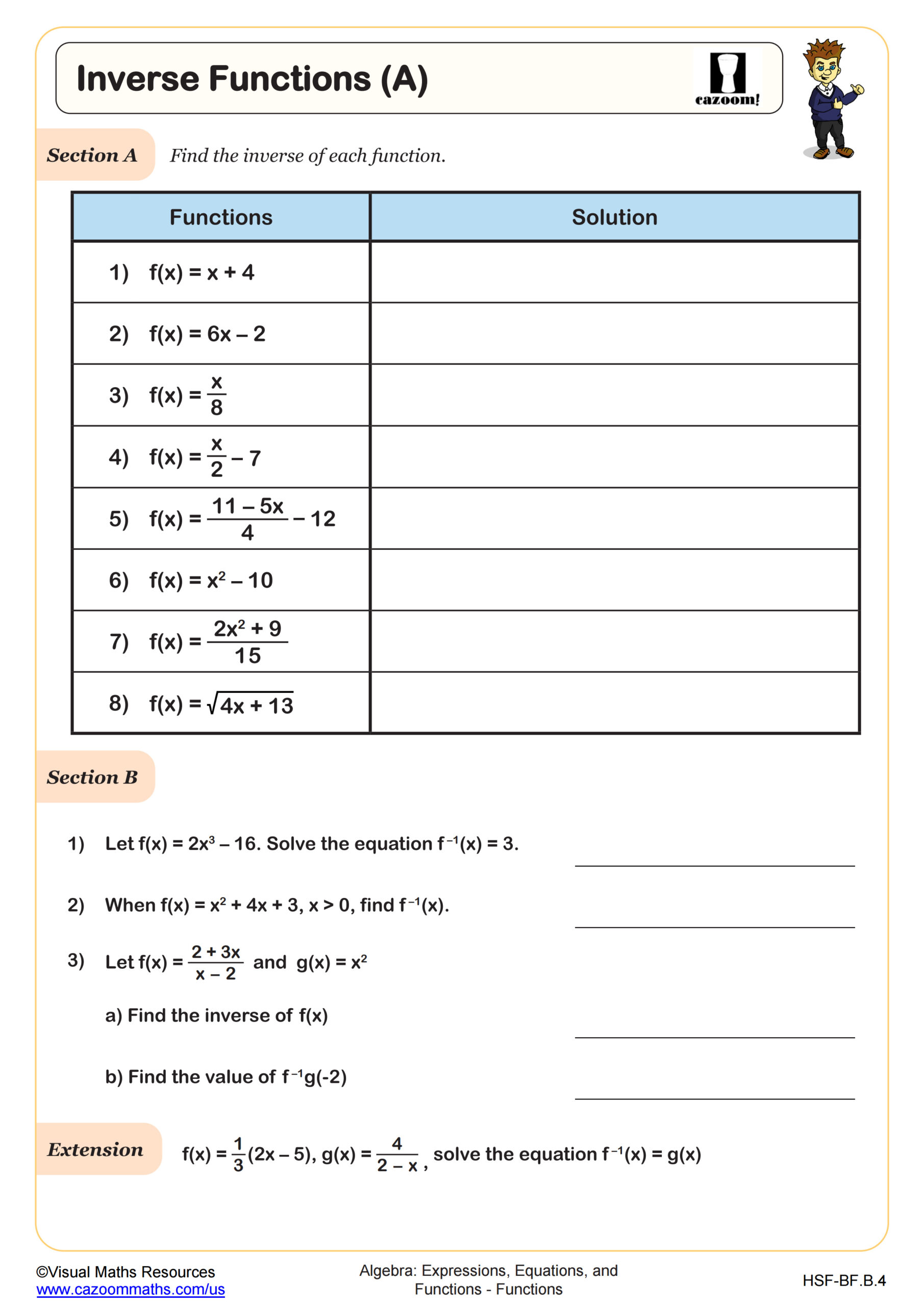
Inverse Functions (A)
Grades: Algebra II, IM 3
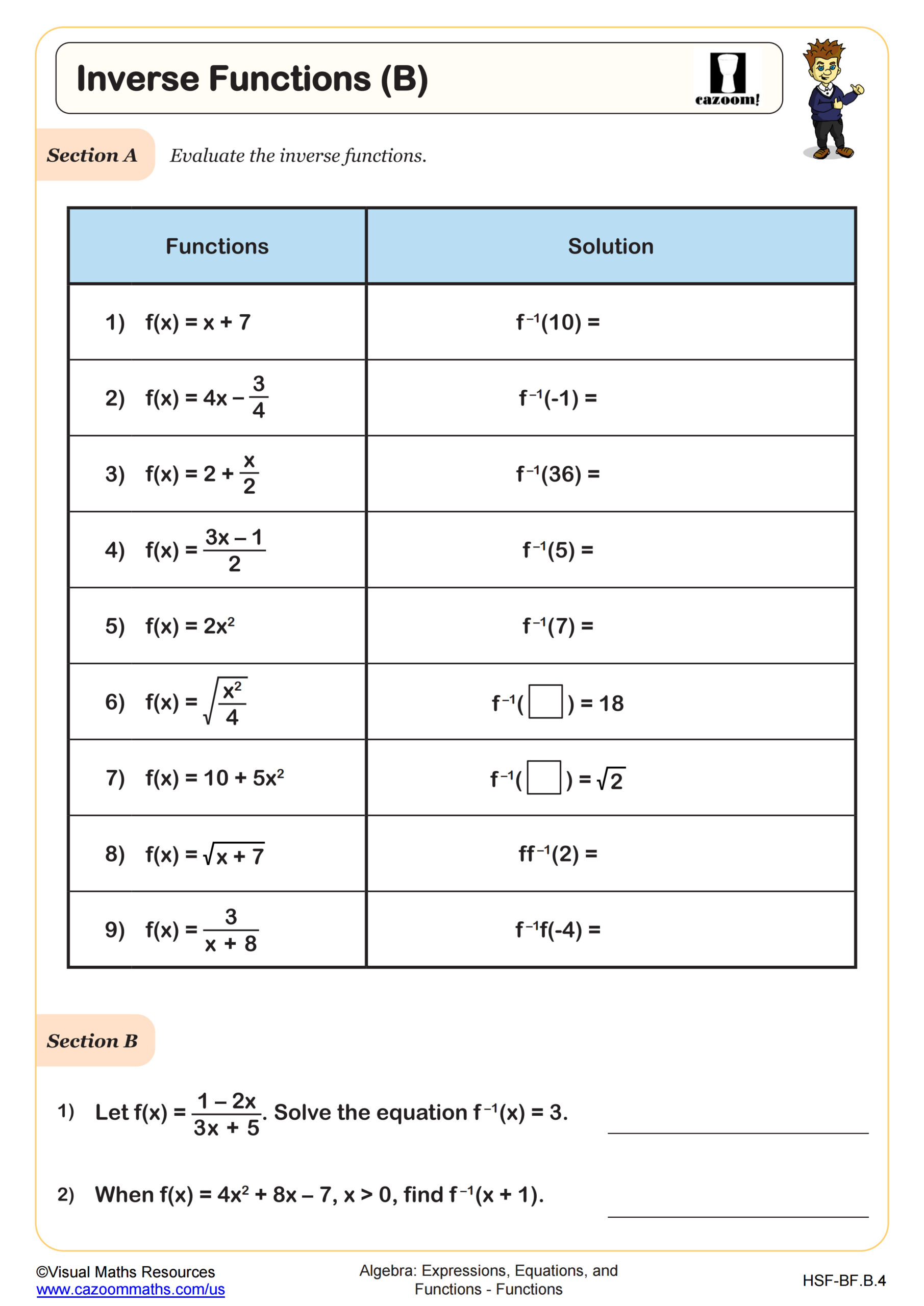
Inverse Functions (B)
Grades: Algebra II, IM 3
All worksheets are created by the team of experienced teachers at Cazoom Math.
What topics are covered in functions worksheets?
Functions worksheets typically cover function notation, domain and range identification, evaluating functions at specific values, graphing linear and quadratic functions, and determining whether relations are functions. Teachers find these algebra and functions worksheets align well with Common Core standards for Algebra 1 and Algebra 2 courses.
Many teachers observe that students initially struggle with function notation, often writing f(x) = 3x + 2 as f × x = 3x + 2. Step function worksheet pdf resources help address this by providing structured practice with piecewise functions, where students must carefully read domain restrictions and apply the correct rule for each interval.
What grade levels use function worksheets?
Function worksheets span multiple grade levels, typically introduced in 8th grade pre-algebra and continuing through Algebra 2. Middle school students begin with basic input-output tables and simple linear functions, while high school students tackle complex composite functions and inverse functions.
Teachers notice that 8th graders often need concrete examples before abstract function notation makes sense. High school algebra teachers find that students who mastered basic function concepts in middle school show stronger performance when learning advanced topics like logarithmic and exponential functions in Algebra 2.
How do step function worksheets help students?
Step function worksheets help students understand piecewise functions by breaking complex problems into manageable parts. These worksheets typically include greatest integer functions, absolute value functions, and custom piecewise functions with multiple rules and domain restrictions.
Teachers observe that students often forget to use open and closed circles correctly when graphing step functions. Many lose points by not carefully reading which inequality symbols apply to each piece of the function. Practice with step function problems helps students develop the precision needed for advanced calculus concepts later.
How can teachers use these function worksheets effectively?
Teachers find function worksheets work best when used as guided practice after introducing new concepts, rather than as standalone learning tools. The answer keys allow teachers to quickly identify which students need additional support before moving to independent practice.
Many algebra teachers use these worksheets for differentiated instruction, assigning basic evaluation problems to struggling students while advanced learners work on composition and inverse functions. Teachers also notice that having students explain their reasoning when checking answers helps identify conceptual gaps that might otherwise go unnoticed during individual work time.