Common Core Aligned Inequalities Worksheets
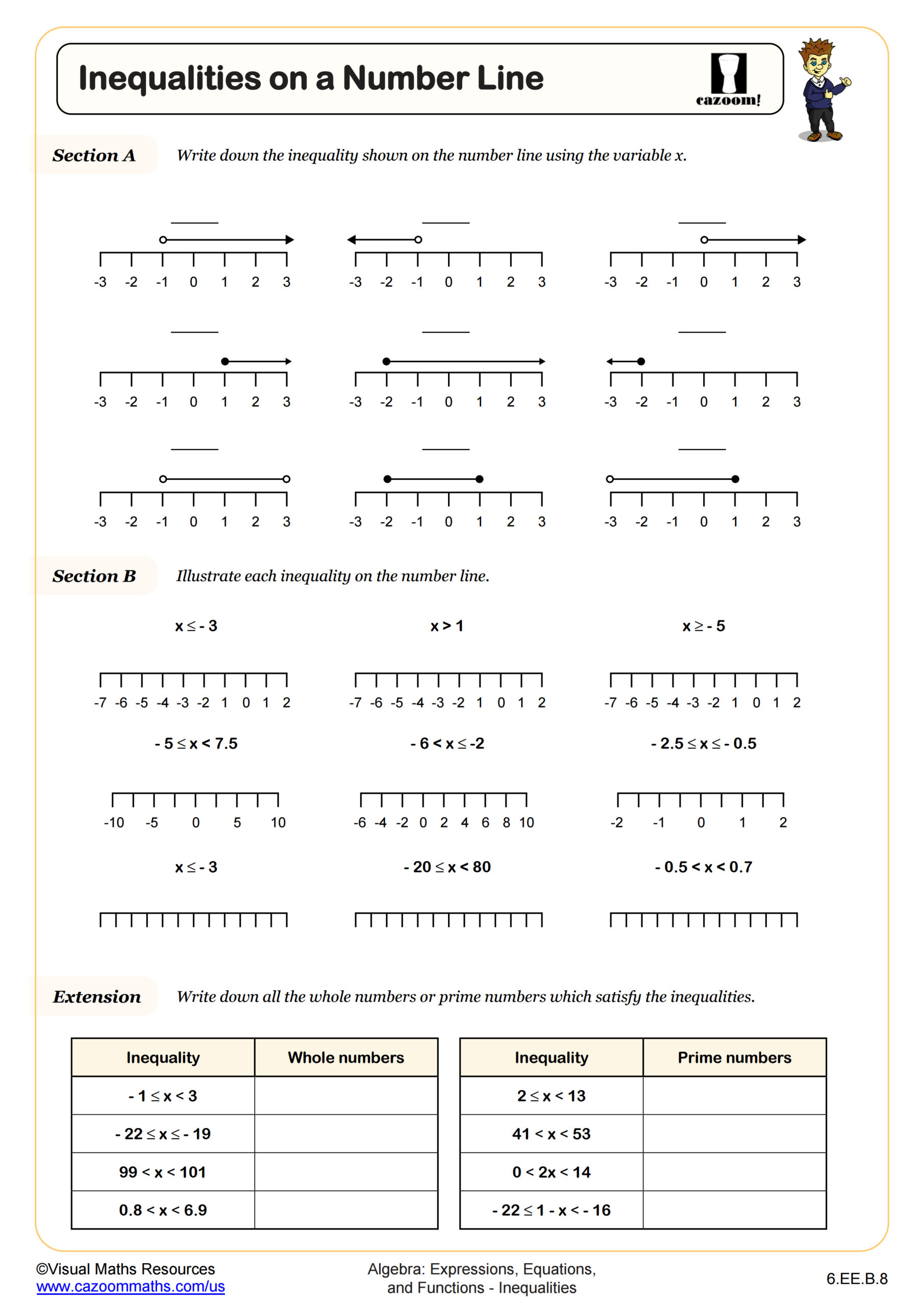
Inequalities on a Number Line
Grades: 6th Grade
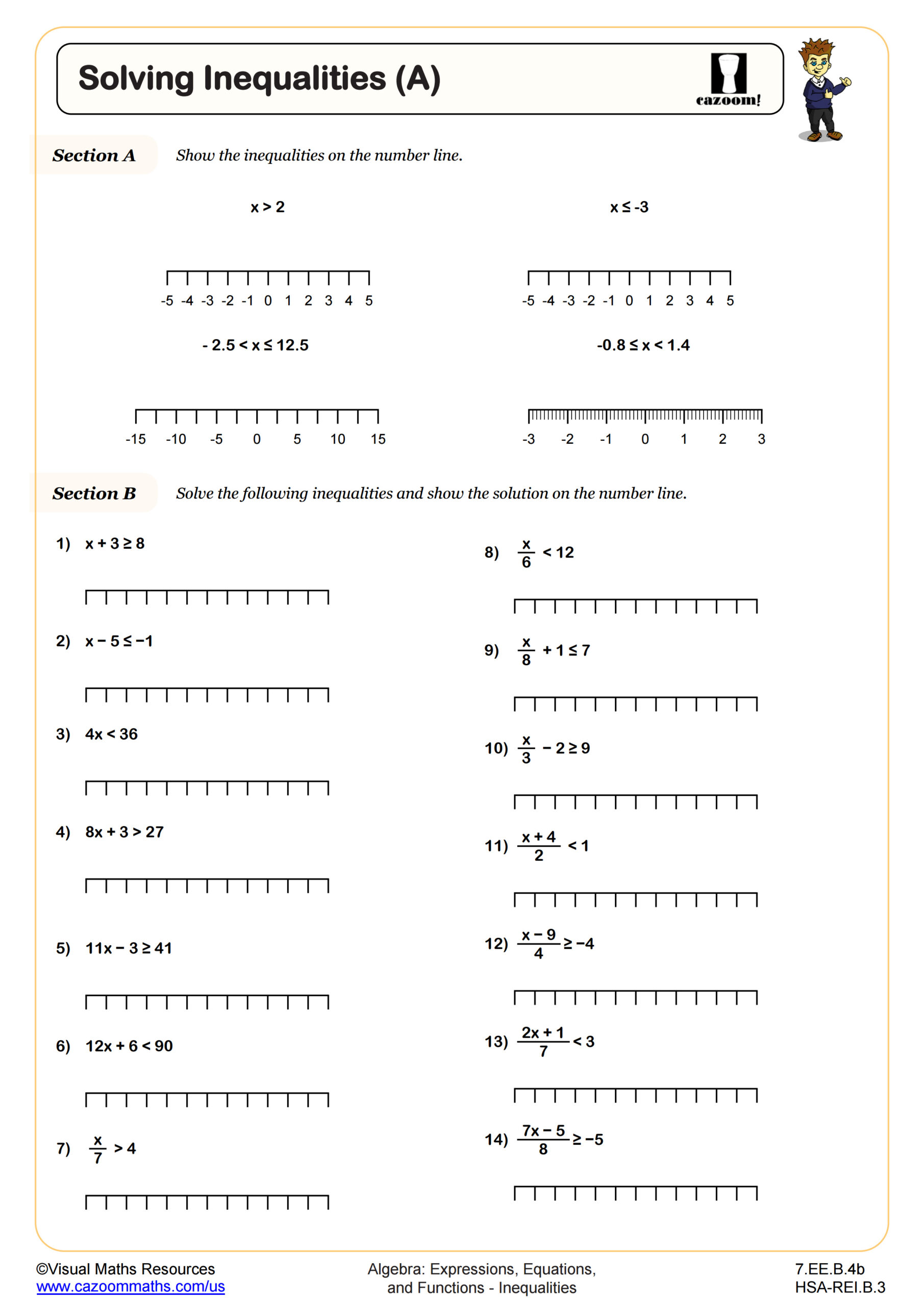
Solving Inequalities (A)
Grades: 7th Grade, Algebra I
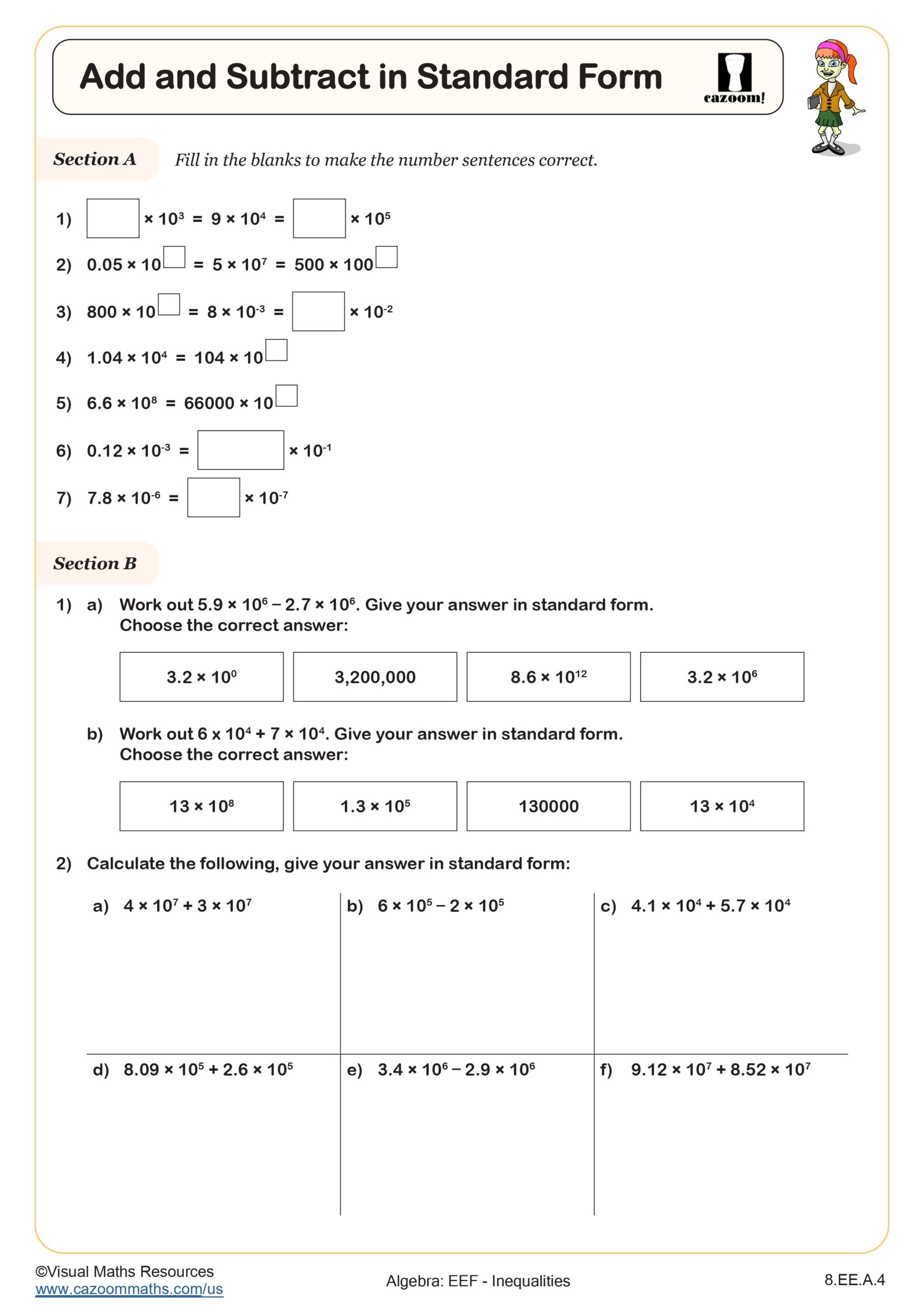
Add and Subtract in Standard Form
Grades: 8th Grade, Algebra I, IM 1
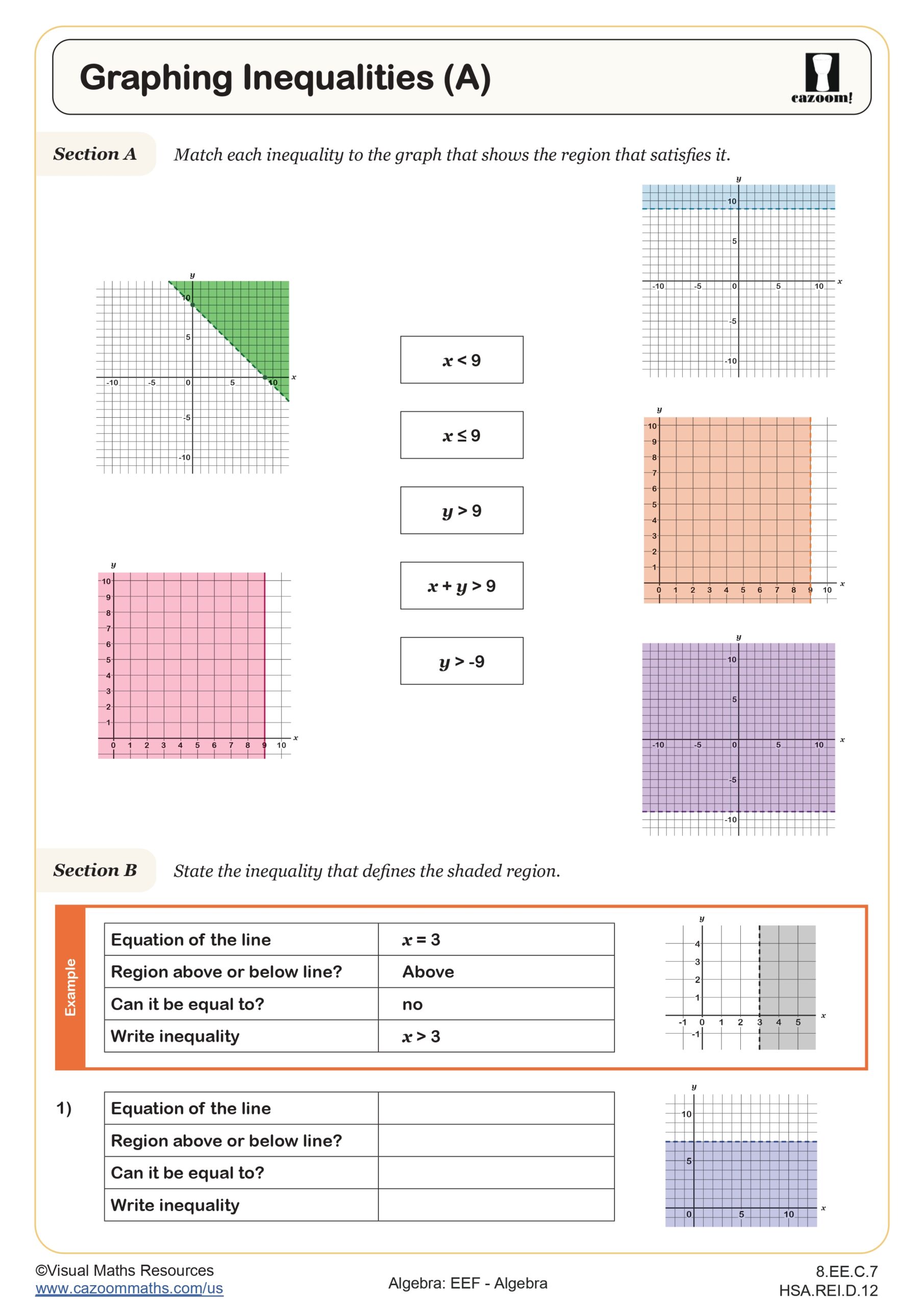
Graphing Inequalities (A)
Grades: 8th Grade, Algebra I, IM 1
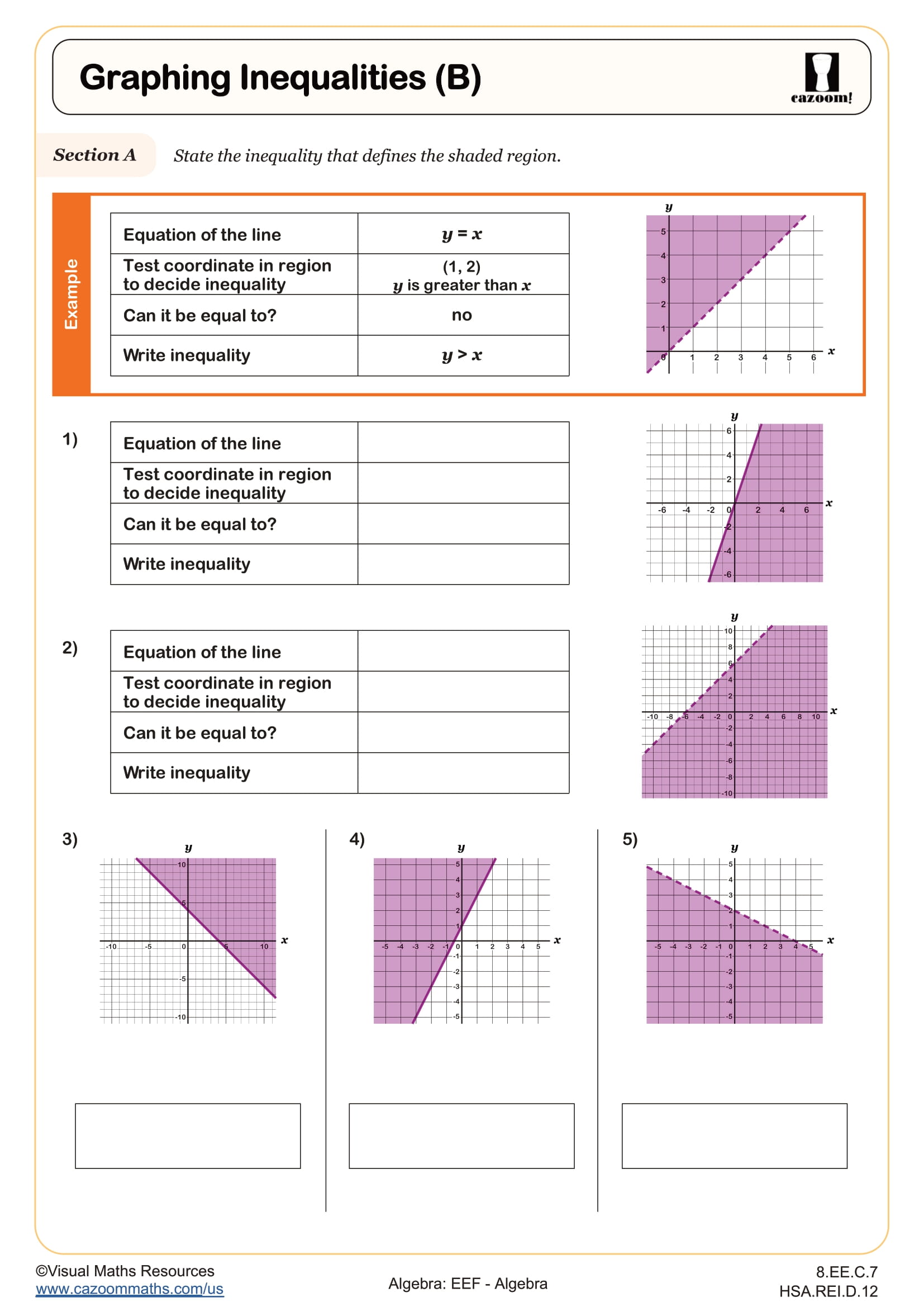
Graphing Inequalities (B)
Grades: 8th Grade, Algebra I
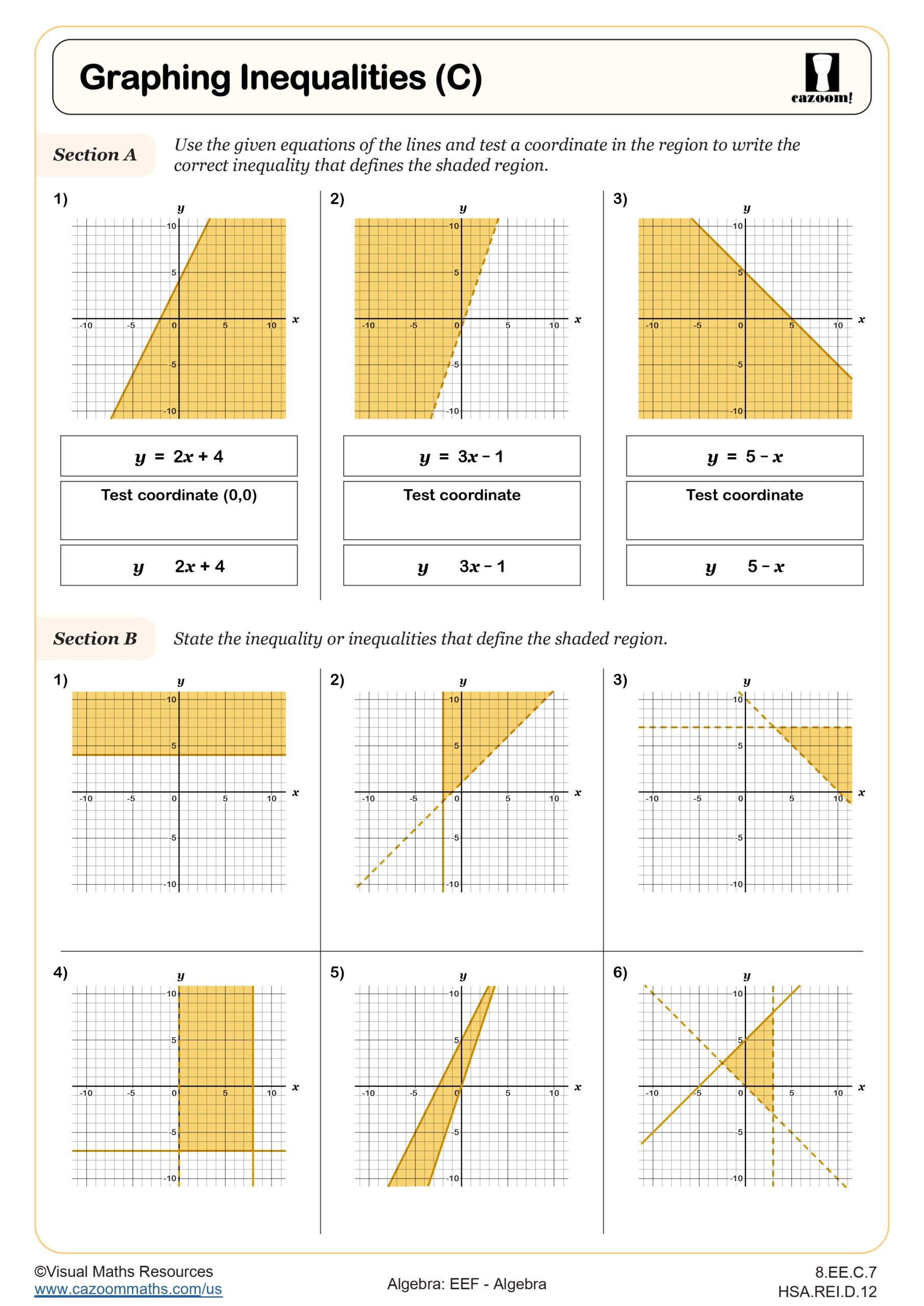
Graphing Inequalities (C)
Grades: 8th Grade, Algebra I, IM 1
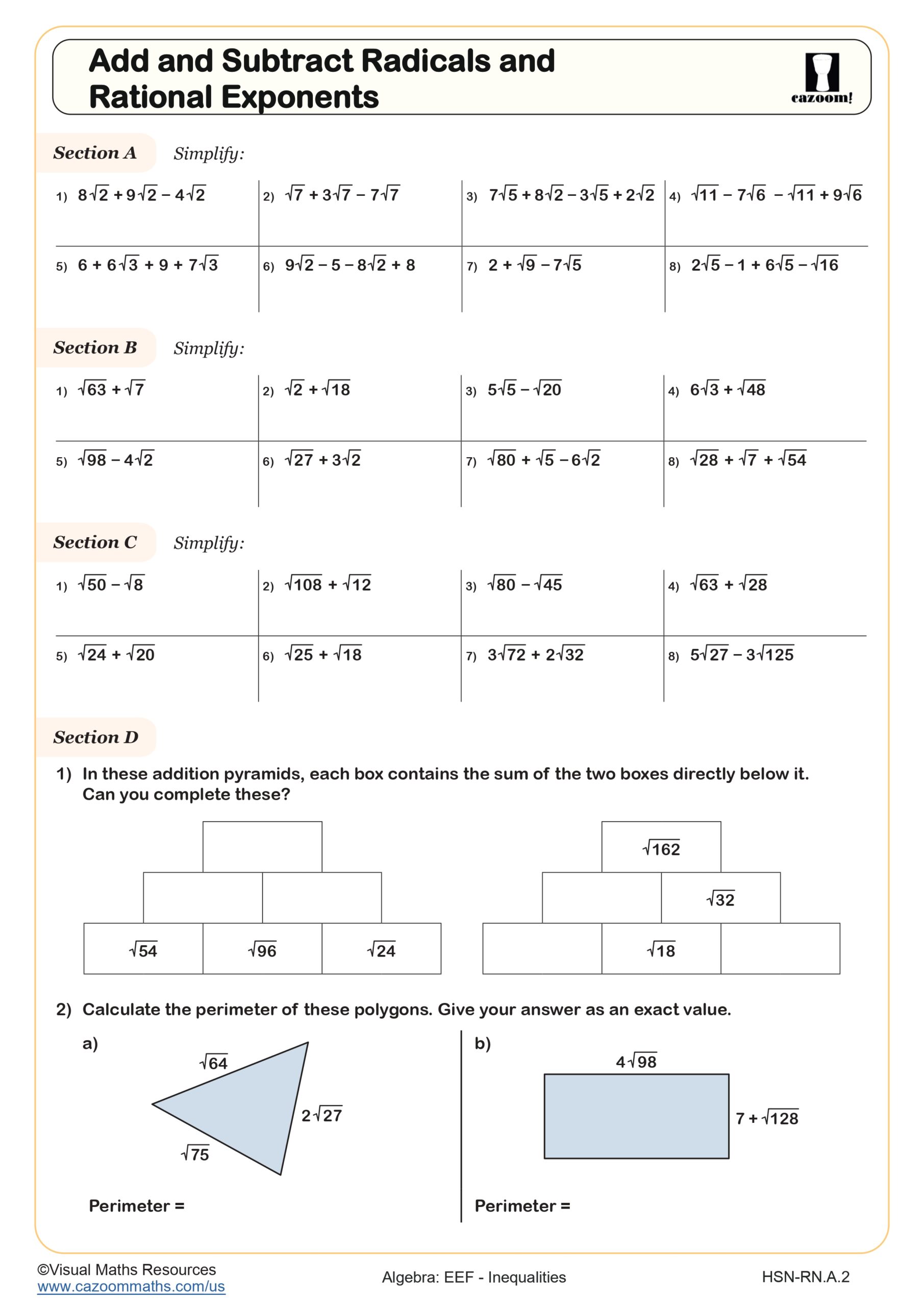
Add and Subtract Radicals and Rational Exponents
Grades: Algebra I, IM 1
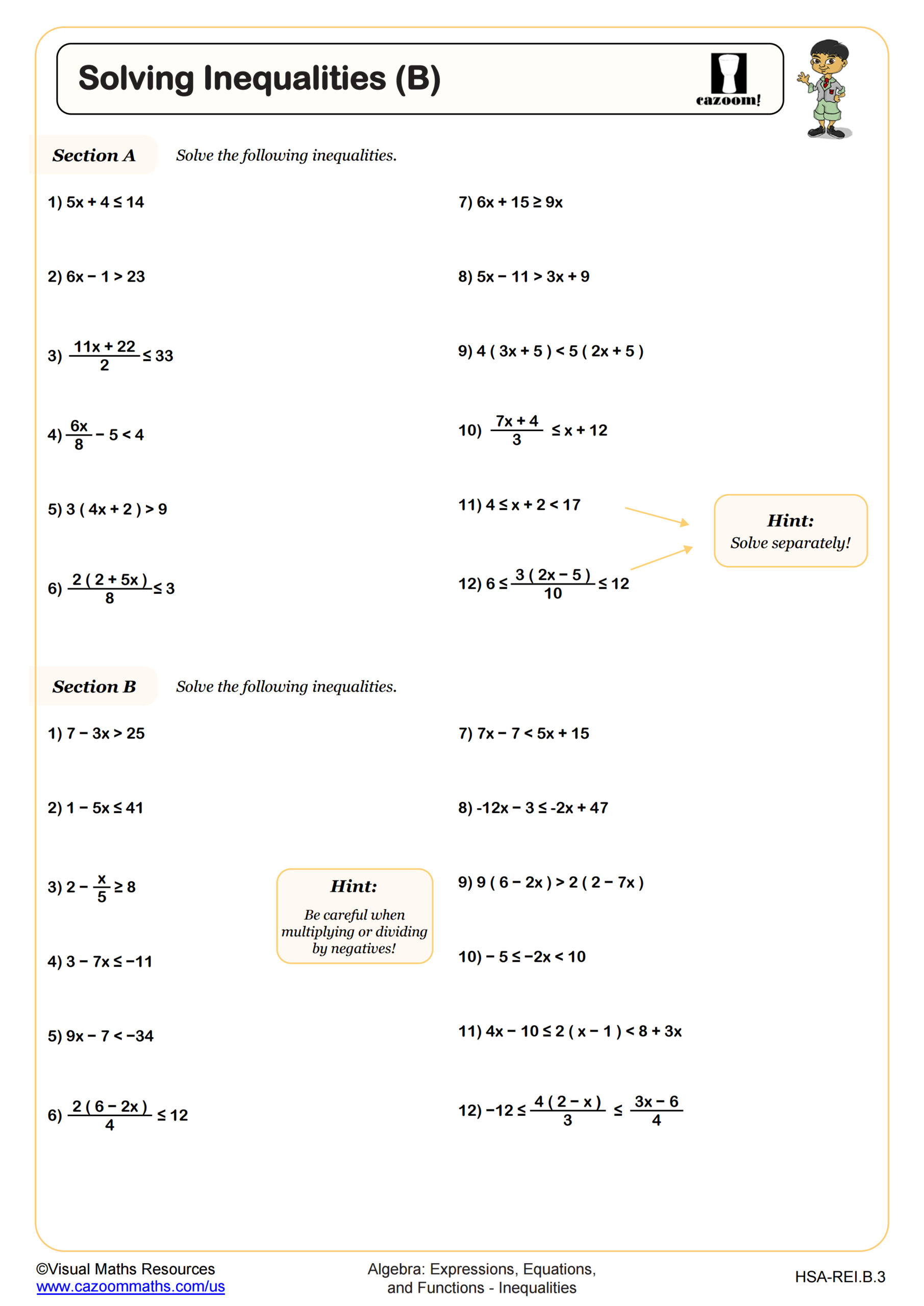
Solving Inequalities (B)
Grades: Algebra I, IM 1
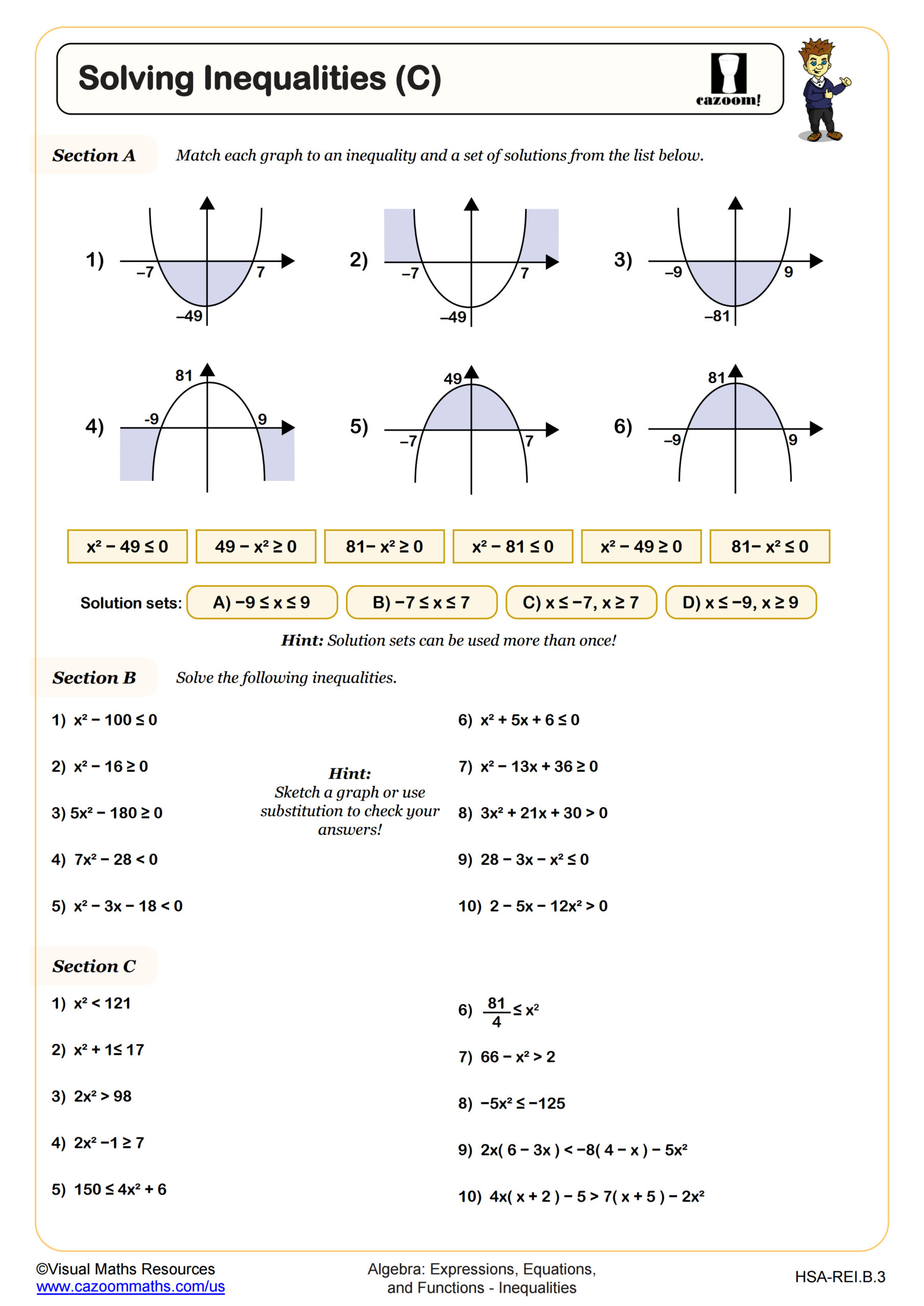
Solving Inequalities (C)
Grades: Algebra I, IM 1
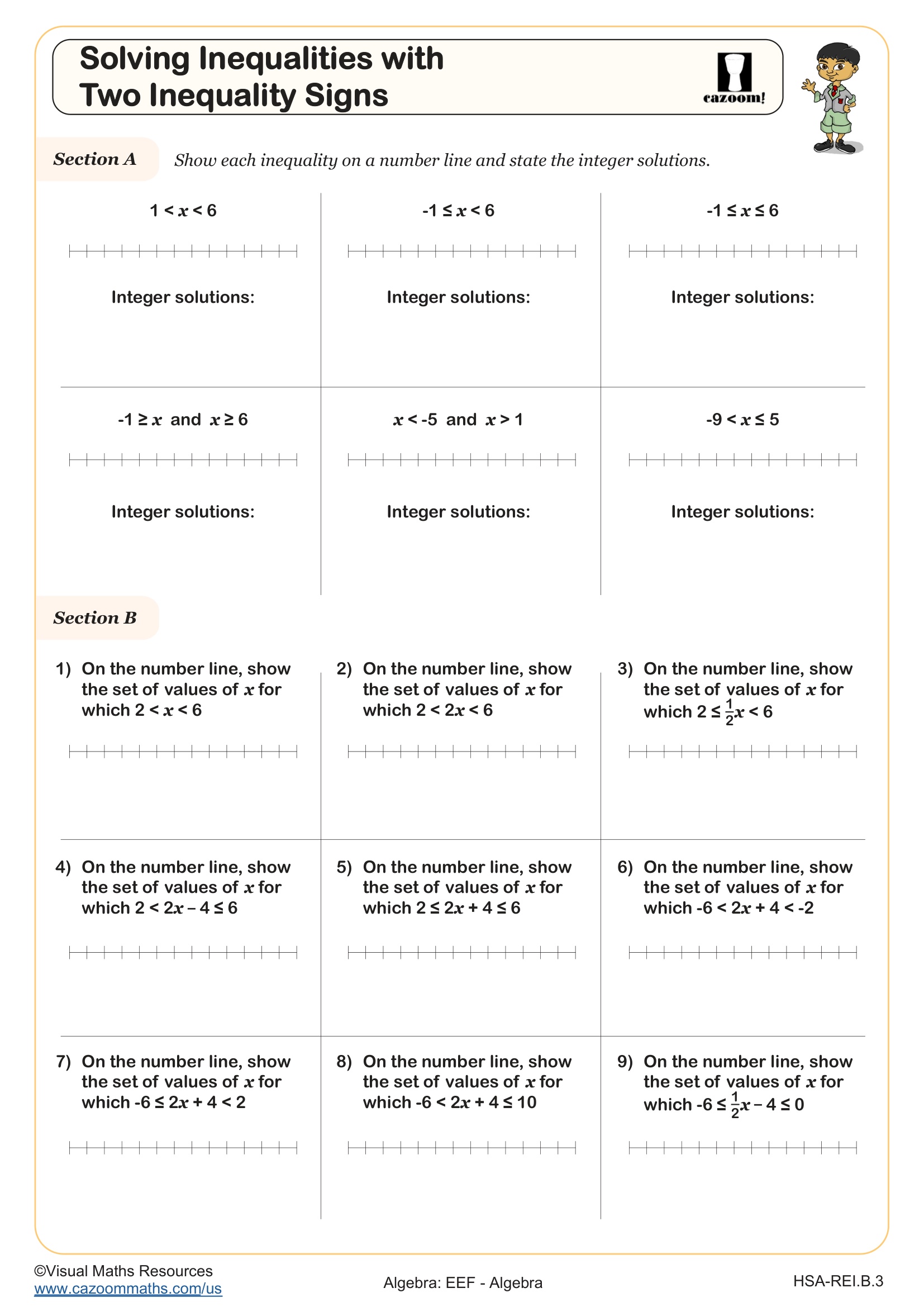
Solving Inequalities with Two Inequalitity Signs
Grades: Algebra I, IM 1
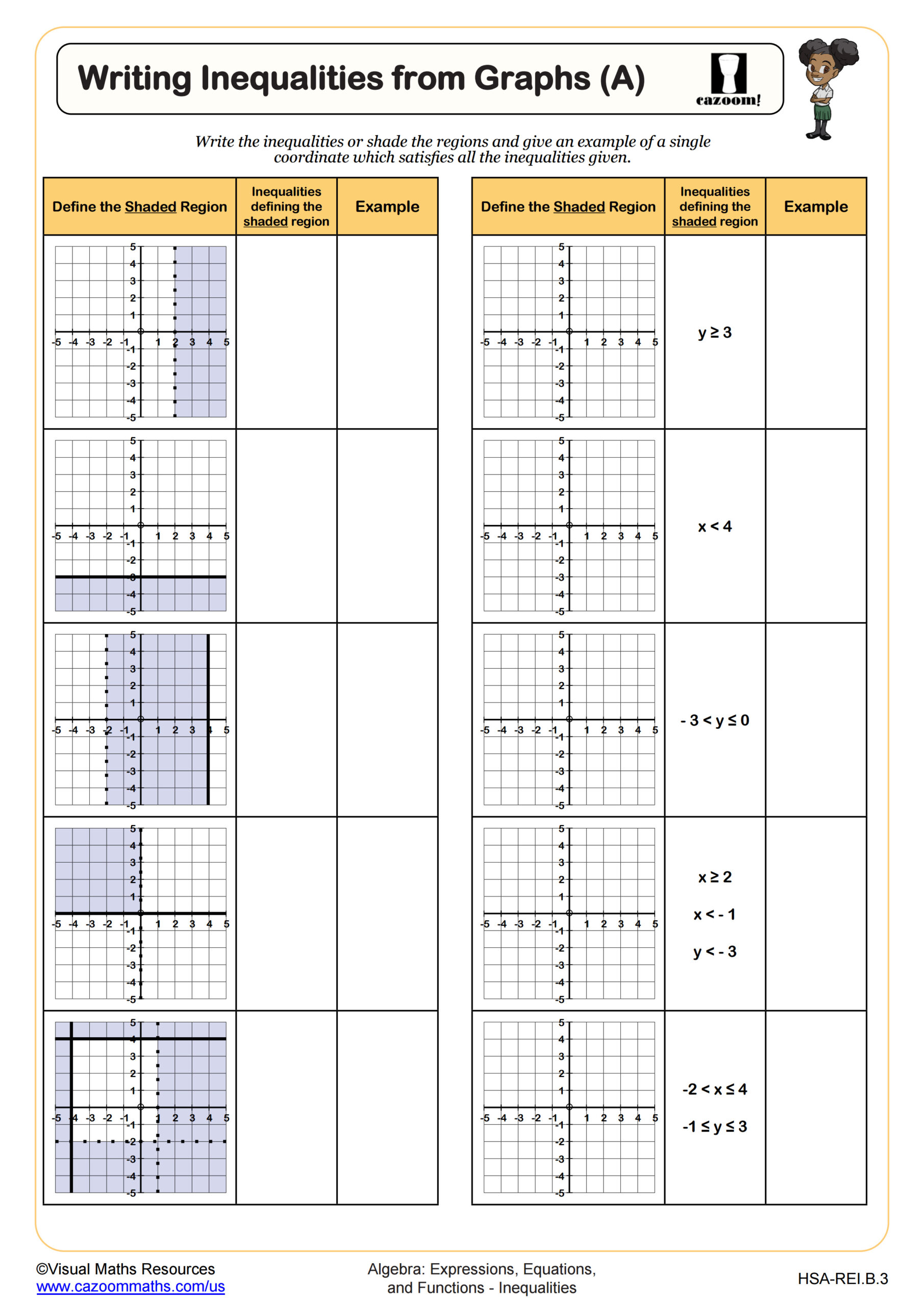
Writing Inequalities from Graphs (A)
Grades: Algebra I, IM 1
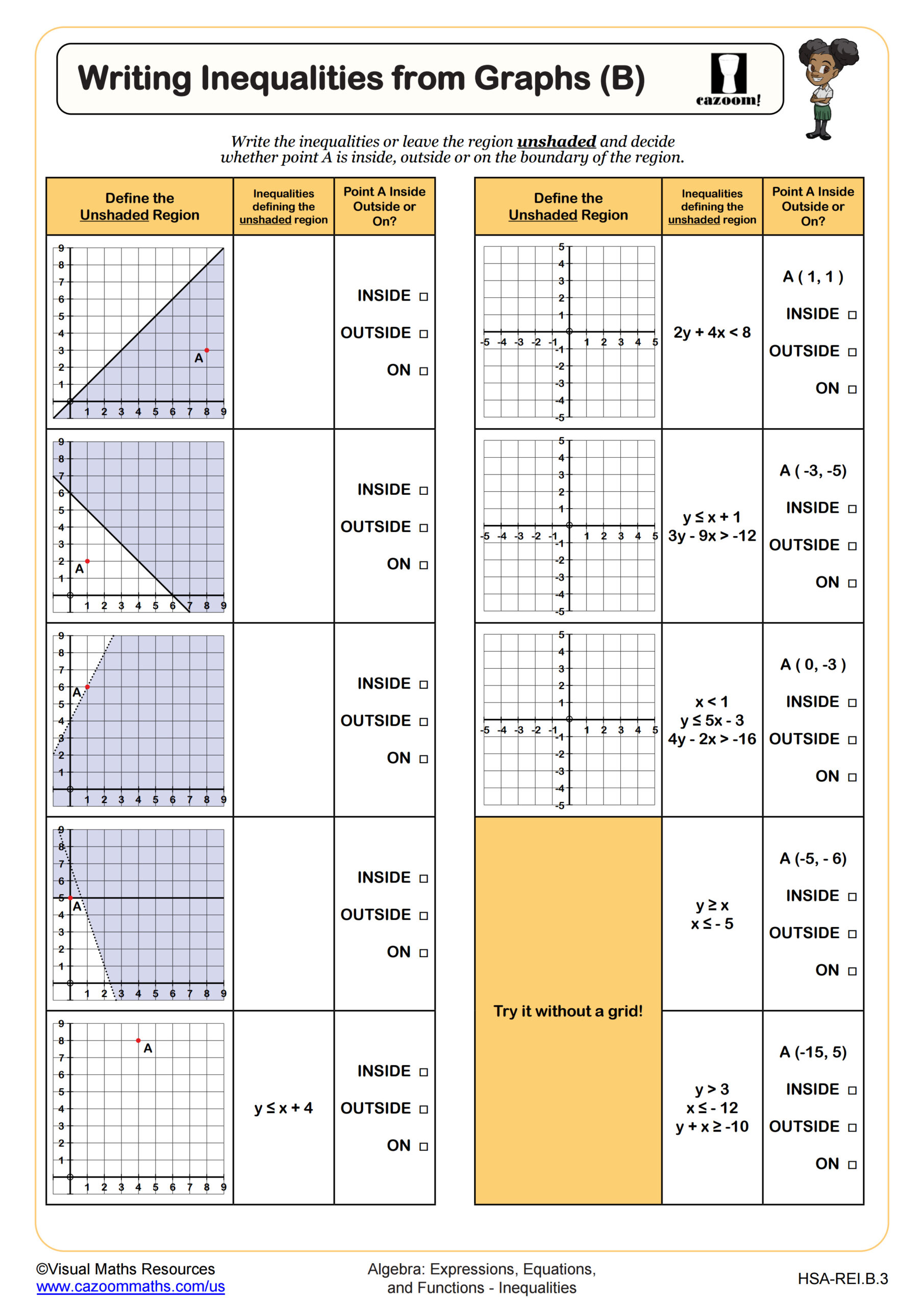
Writing Inequalities from Graphs (B)
Grades: Algebra I, IM 1
All worksheets are created by the team of experienced teachers at Cazoom Math.
What makes a good 6th grade inequalities worksheet with answers?
A quality 6th grade inequalities worksheet should introduce students to basic inequality symbols (<, >, ≤, ≥) through concrete examples before moving to algebraic expressions. The worksheet needs to balance simple one-step problems like x + 3 > 7 with slightly more complex scenarios that require students to think about solution sets rather than single answers.
Teachers consistently observe that students often forget to flip the inequality sign when multiplying or dividing by negative numbers, even at the introductory level. The most effective worksheets include visual representations like number line graphs alongside algebraic work, helping students connect the abstract symbols to concrete ranges of values that make the inequality true.
How do inequality worksheets progress across different grade levels?
Elementary students typically encounter inequalities through comparing numbers and simple word problems, while 6th grade introduces algebraic inequalities with one variable. By 8th grade, students work with multi-step inequalities, compound inequalities, and systems involving both equations and inequalities.
The progression moves from concrete to abstract thinking. Teachers notice that students who master graphing simple inequalities on number lines in 6th grade show stronger performance with more complex inequality systems in high school algebra. This foundational understanding becomes particularly important in advanced topics like linear programming and optimization problems that appear in calculus and real-world engineering applications.
Why do students struggle with graphing inequalities on number lines?
Students frequently confuse the visual representation of inequalities, particularly whether to use open or closed circles on number lines. Teachers observe that many students initially treat inequality graphs like equation solutions, marking single points rather than showing the continuous range of values that satisfy the inequality.
The distinction between strict inequalities (< or >) using open circles and inclusive inequalities (≤ or ≥) using closed circles requires explicit instruction and repeated practice. Students also struggle with determining which direction to shade on the number line, especially when the variable appears on the right side of the inequality symbol rather than the left.
How should teachers use these inequality worksheets for maximum effectiveness?
Teachers find the most success when they use inequalities worksheets as guided practice after demonstrating the connection between inequality symbols and real-world situations. Starting with concrete examples like "more than 5 students" or "at least 10 points" helps students understand the concept before introducing algebraic notation.
The answer keys work best when teachers encourage students to check their solutions by substituting test values back into the original inequality. This verification process helps students recognize when they've made errors with inequality direction or arithmetic, building stronger problem-solving habits that transfer to more advanced algebraic concepts in later courses.
Requisite Knowledge for Learning Inequalities
Before start learning inequalities, your students should be confident with the following skills: • Solving simple one-step equations • Using inverse operations (like undoing addition or subtraction) • Understanding number lines and how to plot values • Adding, subtracting, multiplying, and dividing whole numbers • Working with both positive and negative numbers These skills form the foundation for learning inequalities. Therefore, we have created our worksheets keeping this concept in build on this knowledge with step-by-step support.