PEMDAS Math Worksheets
All worksheets are created by the team of experienced teachers at Cazoom Math.
What makes effective PEMDAS worksheets for classroom instruction?
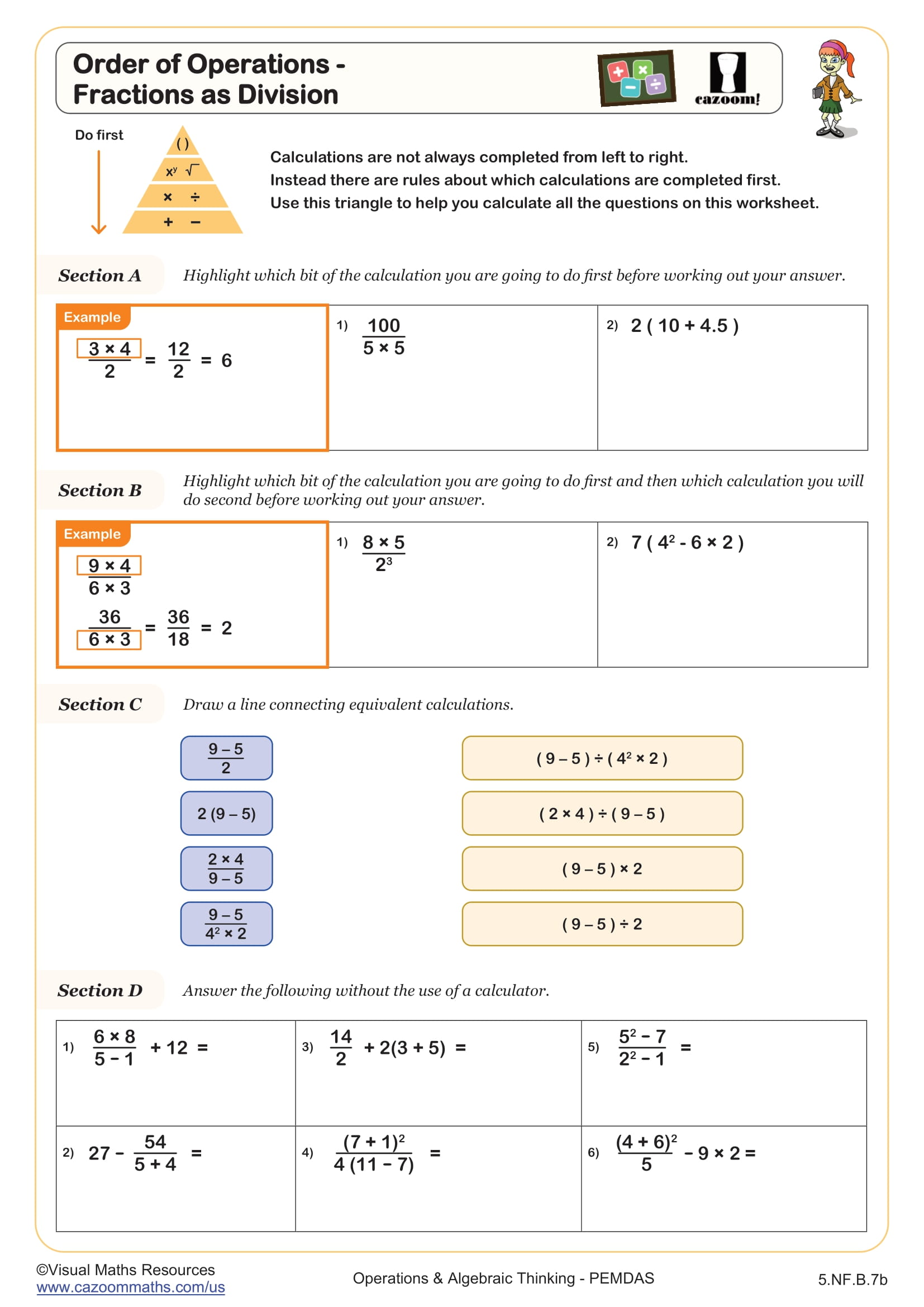
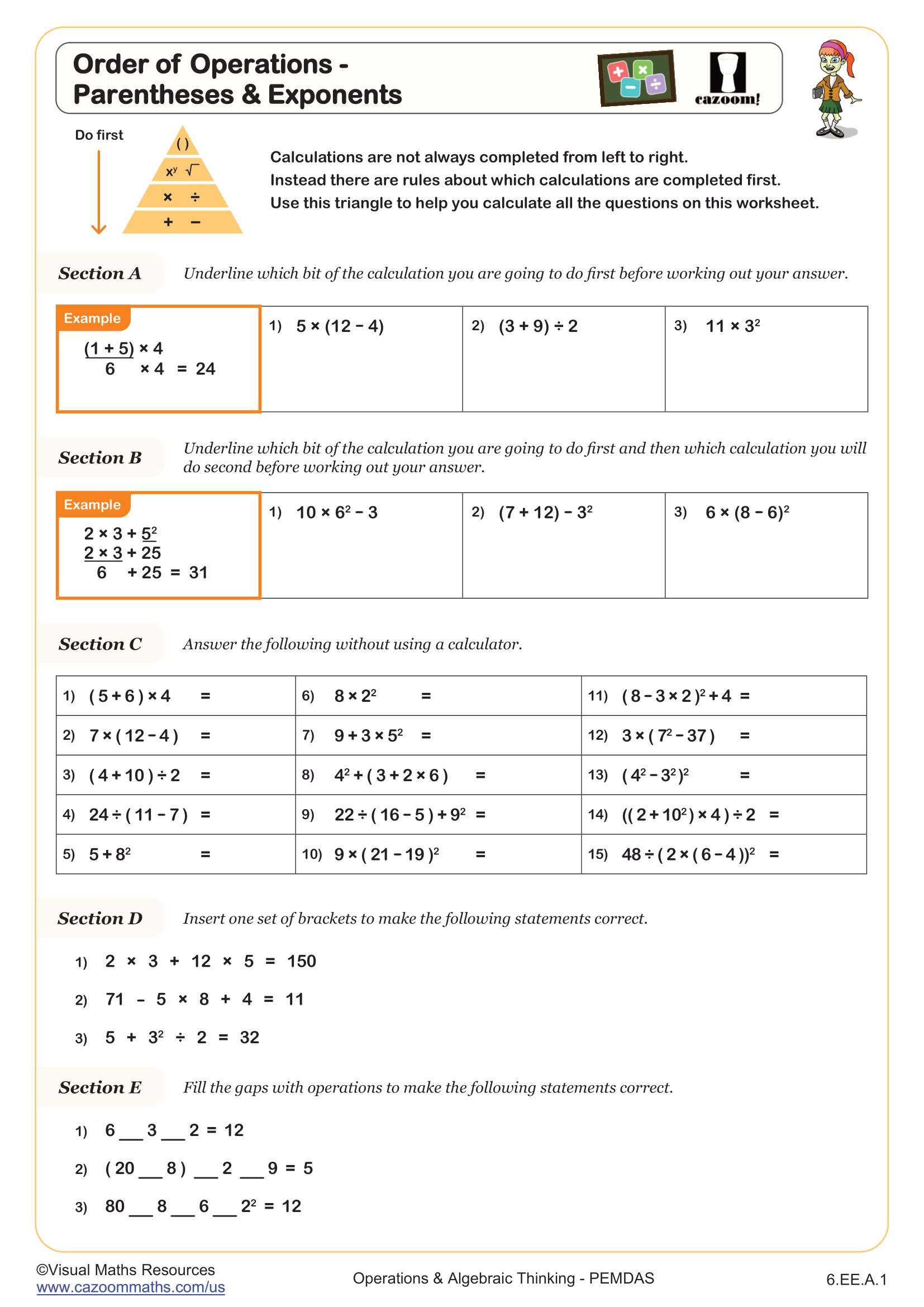
Effective pemdas worksheets scaffold learning by starting with expressions that isolate each operation type before combining multiple steps. They align with Common Core standards across grades 5-8, where order of operations concepts are formally introduced and expanded. The worksheets should include pemdas equations worksheets that progress from numerical expressions like 3 + 4 × 2 to algebraic expressions containing variables.
Teachers notice students benefit most when worksheets provide a mix of problem types within each set. Including expressions with and without grouping symbols helps students recognize when PEMDAS rules apply versus when operations can be performed in sequence. Answer keys become particularly valuable here, as students can trace through each step to identify where their reasoning went off track.
Which grade levels should use PEMDAS worksheets?
PEMDAS instruction typically begins in 5th grade with basic order of operations and continues through middle school algebra courses. Elementary students work with simple expressions involving two or three operations, while middle schoolers tackle complex multi-step problems with nested parentheses and exponents. High school students use these skills as building blocks for factoring, solving equations, and evaluating functions.
The progression matters significantly in student understanding. Fifth graders might practice expressions like 8 + 2 × 3, while seventh graders handle problems such as 4(3 + 2)² - 5 × 3. Teachers find that students who master PEMDAS in elementary grades show greater confidence in algebraic manipulation later, making consistent practice across grade levels worthwhile for long-term mathematical success.
How do PEMDAS worksheets address common student misconceptions?
Students frequently believe that multiplication always comes before division and addition always precedes subtraction, leading to systematic errors in expression evaluation. Quality worksheets deliberately include problems where division appears before multiplication or subtraction comes before addition to challenge this misconception. For example, expressions like 12 ÷ 3 × 2 help students understand that operations of equal priority work left to right.
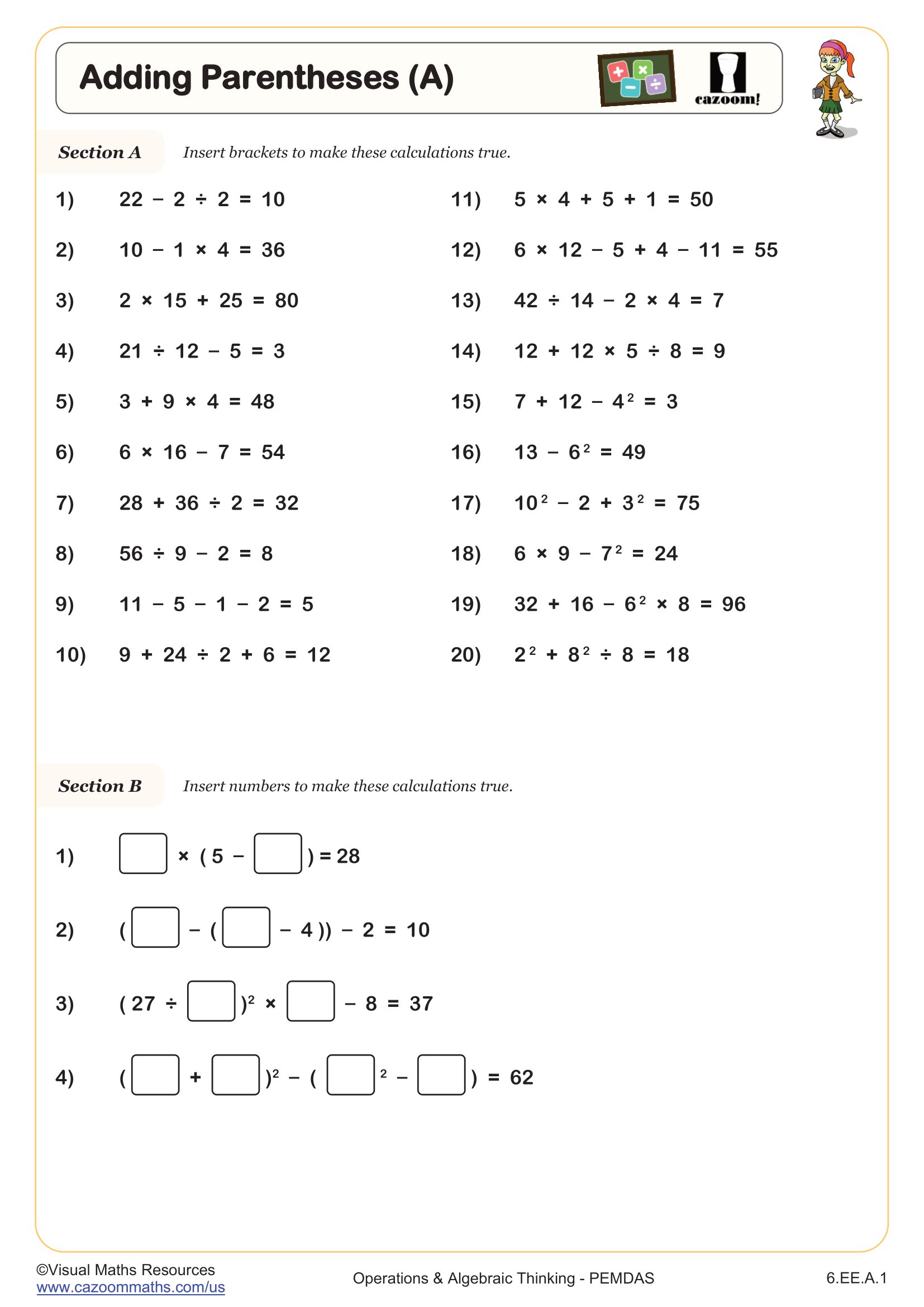
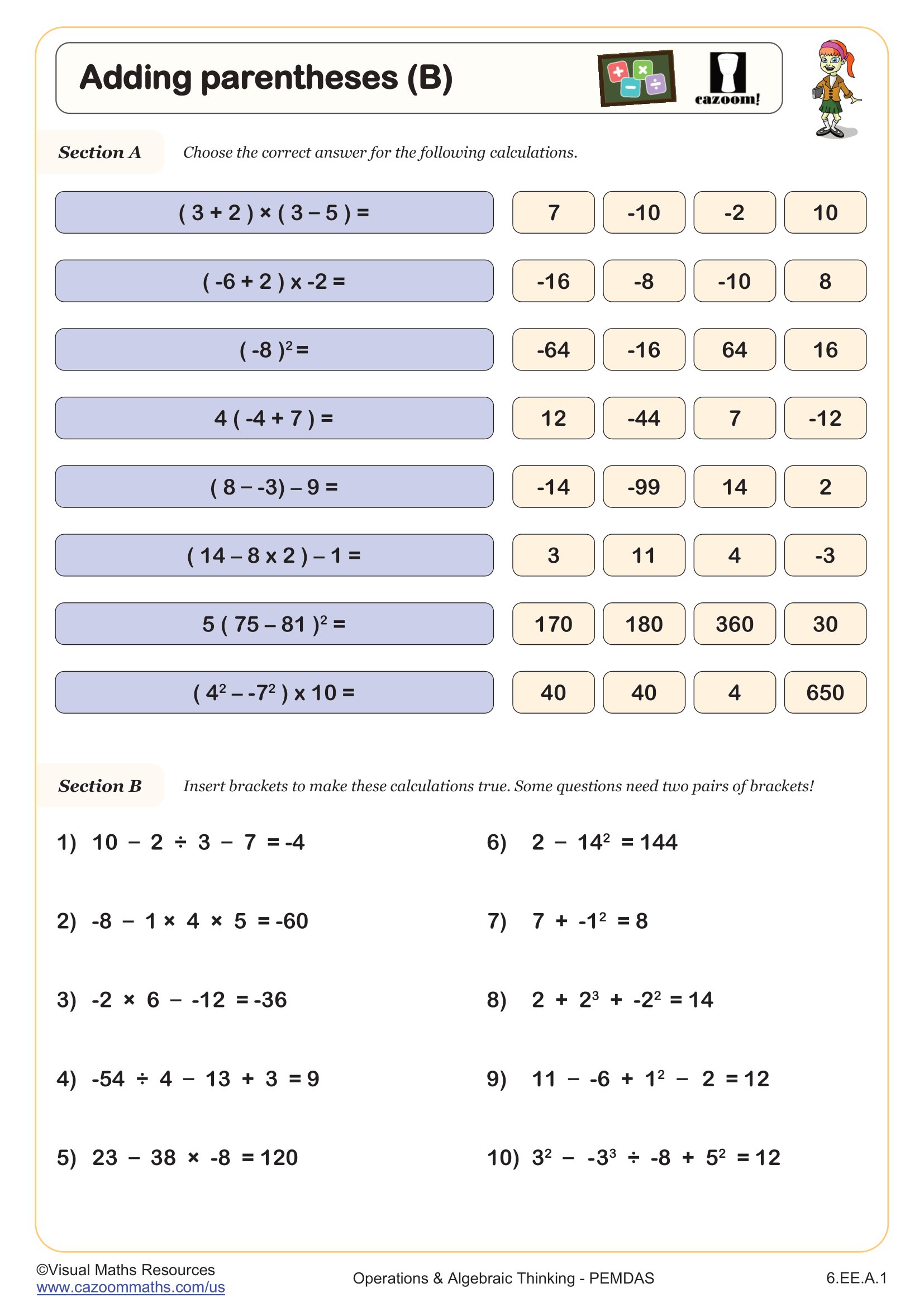
Another persistent error occurs when students ignore grouping symbols or apply operations to only part of what's inside parentheses. Worksheets that feature nested parentheses and expressions like 3(4 + 5) versus 3 × 4 + 5 highlight these distinctions. Teachers report that explicit comparison problems where students evaluate similar expressions with different grouping help solidify correct procedural understanding.
How can teachers maximize learning with PEMDAS worksheet practice?
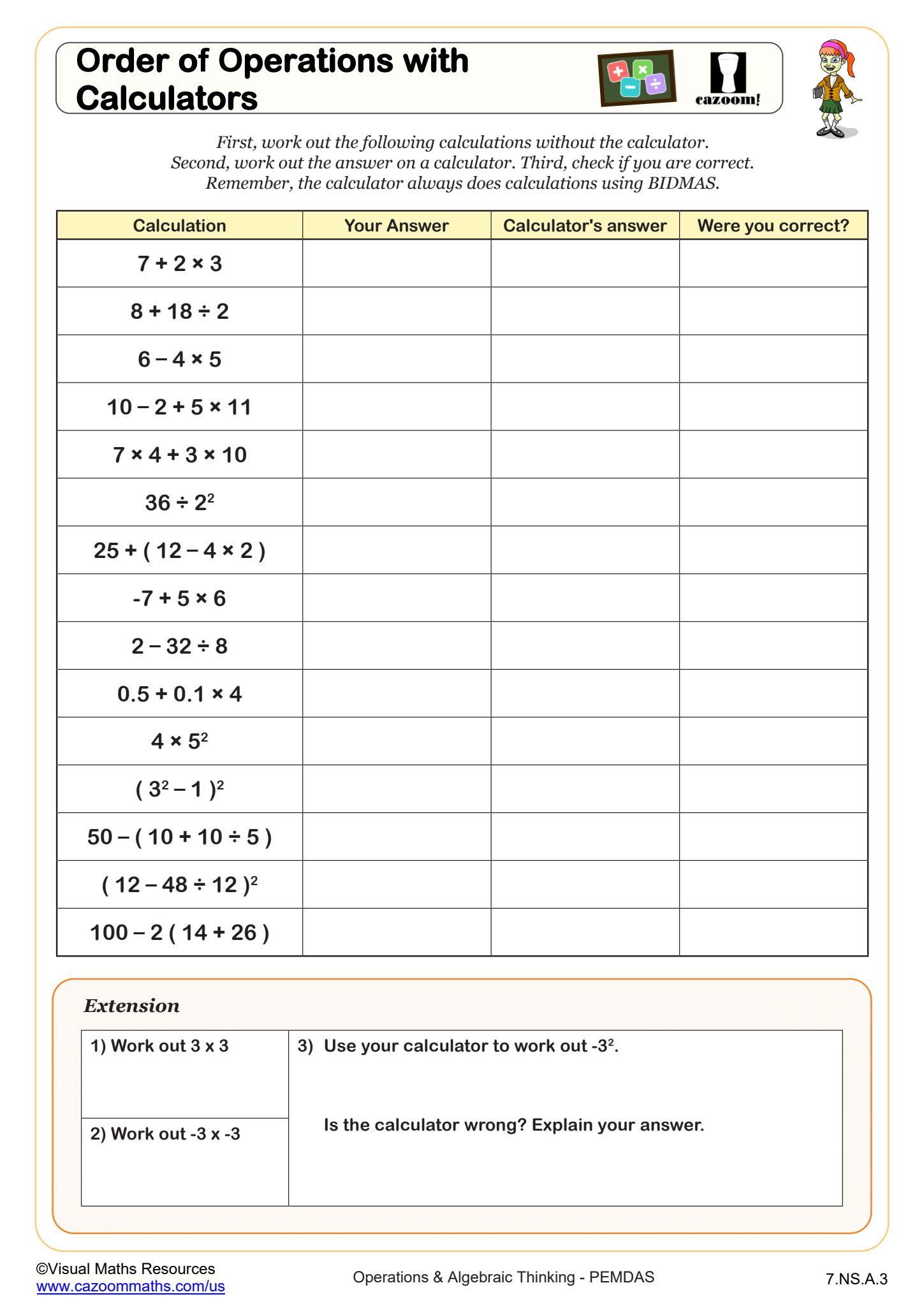
Teachers find success by having students work through problems step-by-step initially, writing out each operation as they apply PEMDAS rules. This explicit process helps identify where errors occur and builds procedural fluency before moving to mental math strategies. Pairing worksheet practice with hands-on activities using physical manipulatives or calculator verification reinforces the abstract concepts.
Implementing peer review sessions where students check each other's work using the provided answer keys builds mathematical discourse and error analysis skills. Teachers often assign different difficulty levels within the same class period, allowing advanced students to tackle complex expressions while others solidify basic skills. This differentiated approach ensures all learners engage meaningfully with order of operations concepts while building toward algebraic readiness.
What Should Students Know Before Learning PEMDAS?
Before learning PEMDAS, students should:
• Know basic math operations (add, subtract, multiply, divide)
• Be familiar with parentheses and simple math expressions
• Understand how to use exponents
• Practice solving one-step and two-step problems
Our worksheets build on these skills, helping students transition smoothly into using the full order of operations in more complex problems.