Sequences Math Worksheets
World Sudoku Day #1
Grades: 4th Grade, 5th Grade
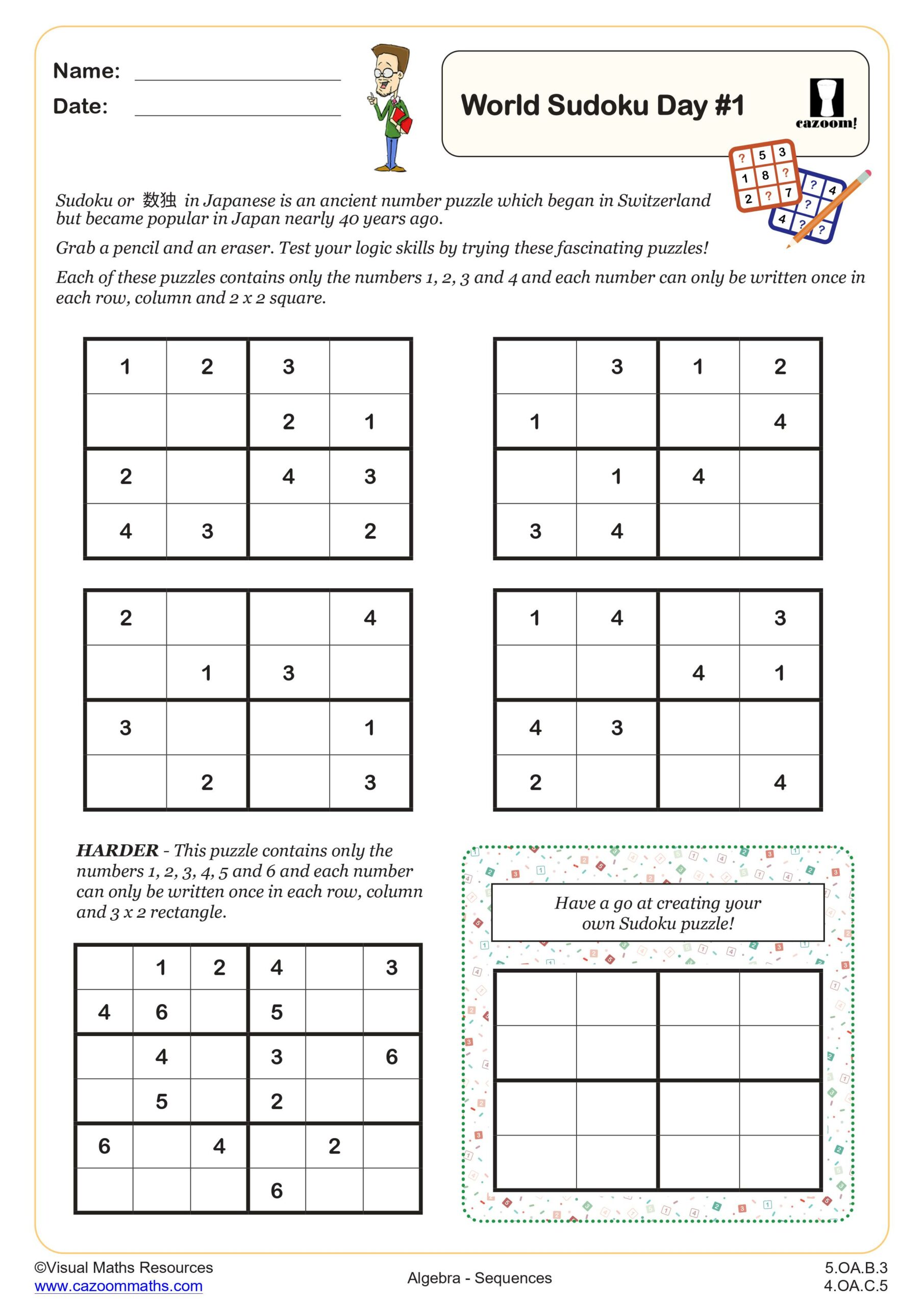
World Sudoku Day #2
Grades: 4th Grade, 5th Grade
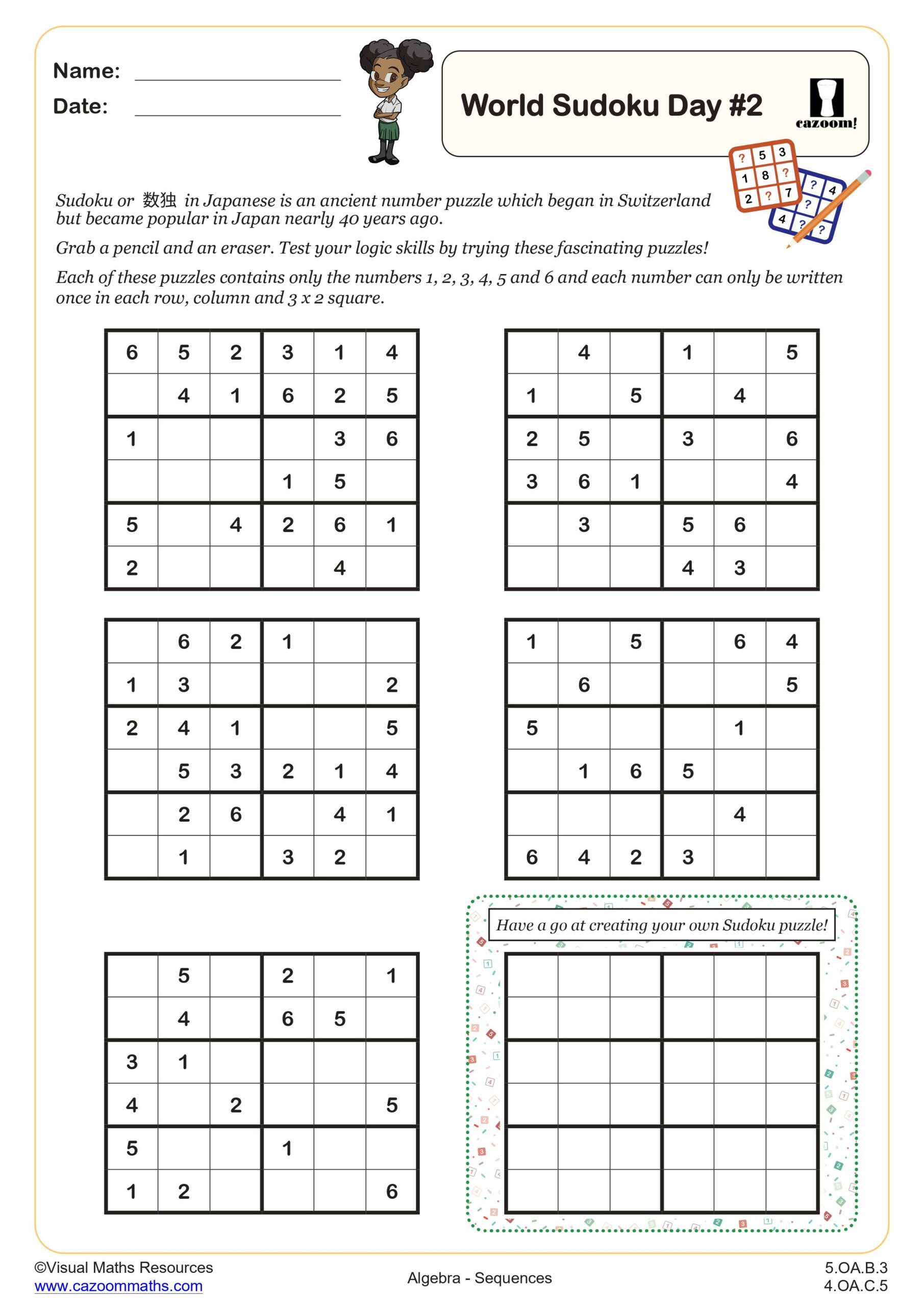
World Sudoku Day #3
Grades: 4th Grade, 5th Grade
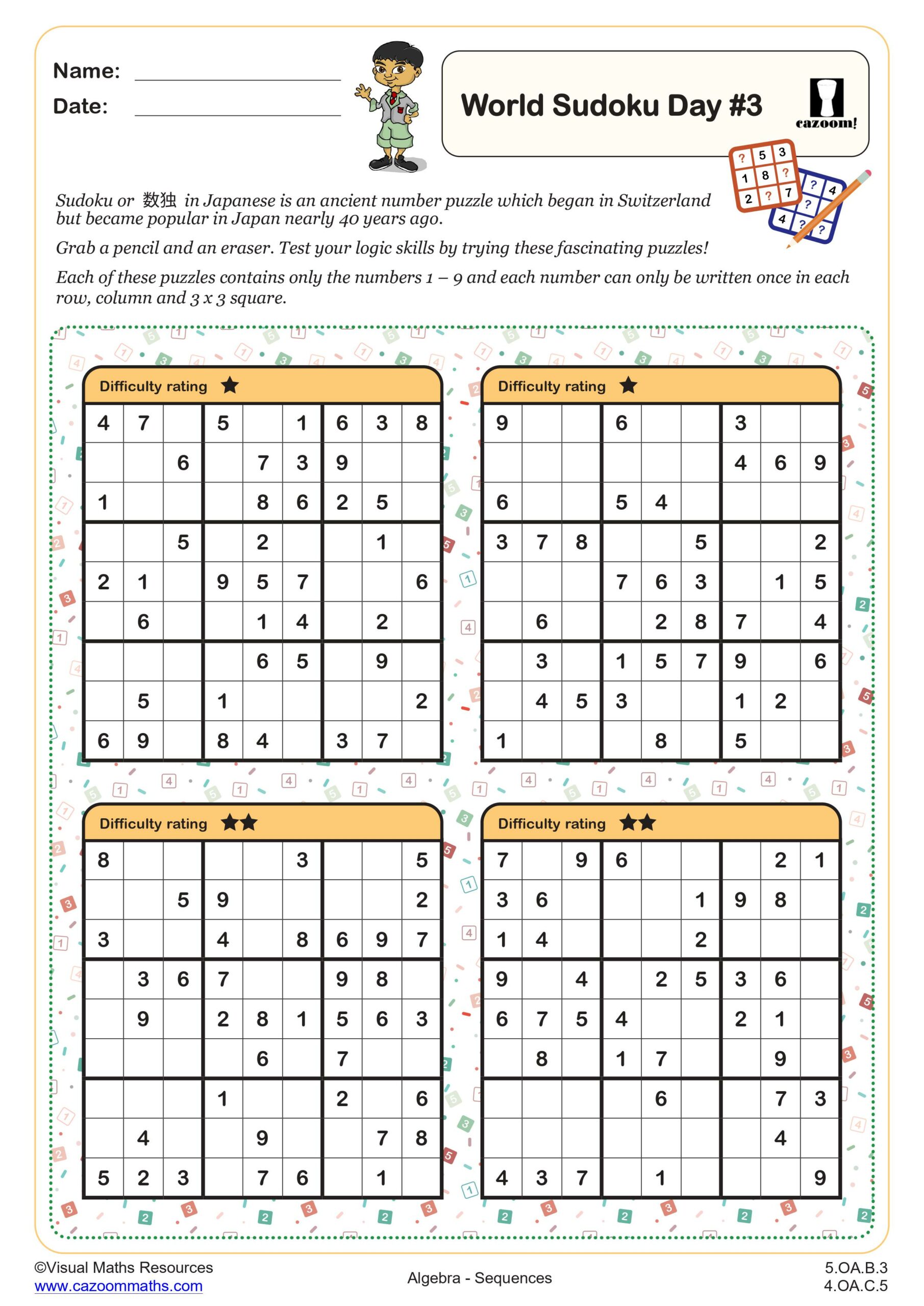
World Sudoku Day #4
Grades: 4th Grade, 5th Grade
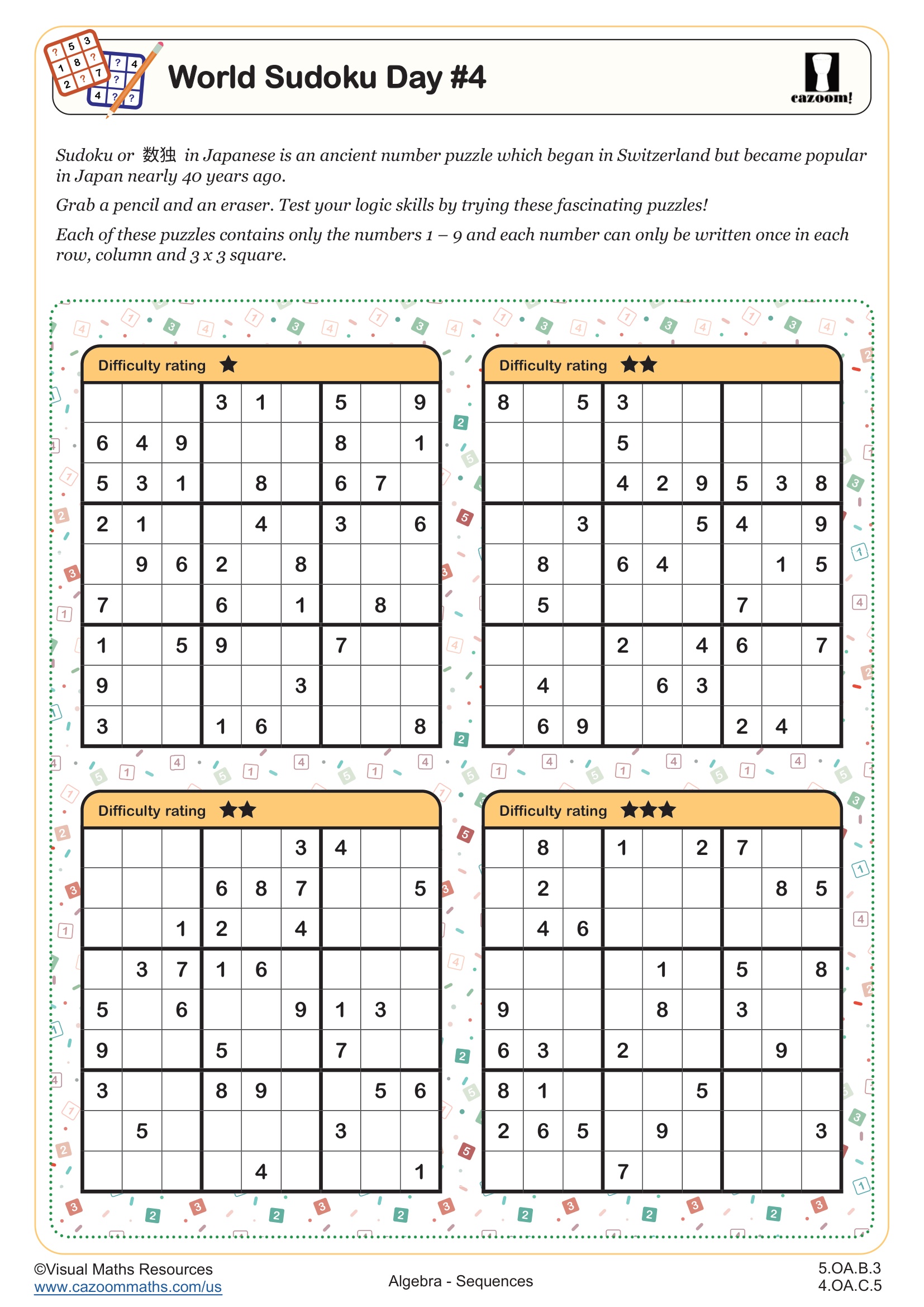
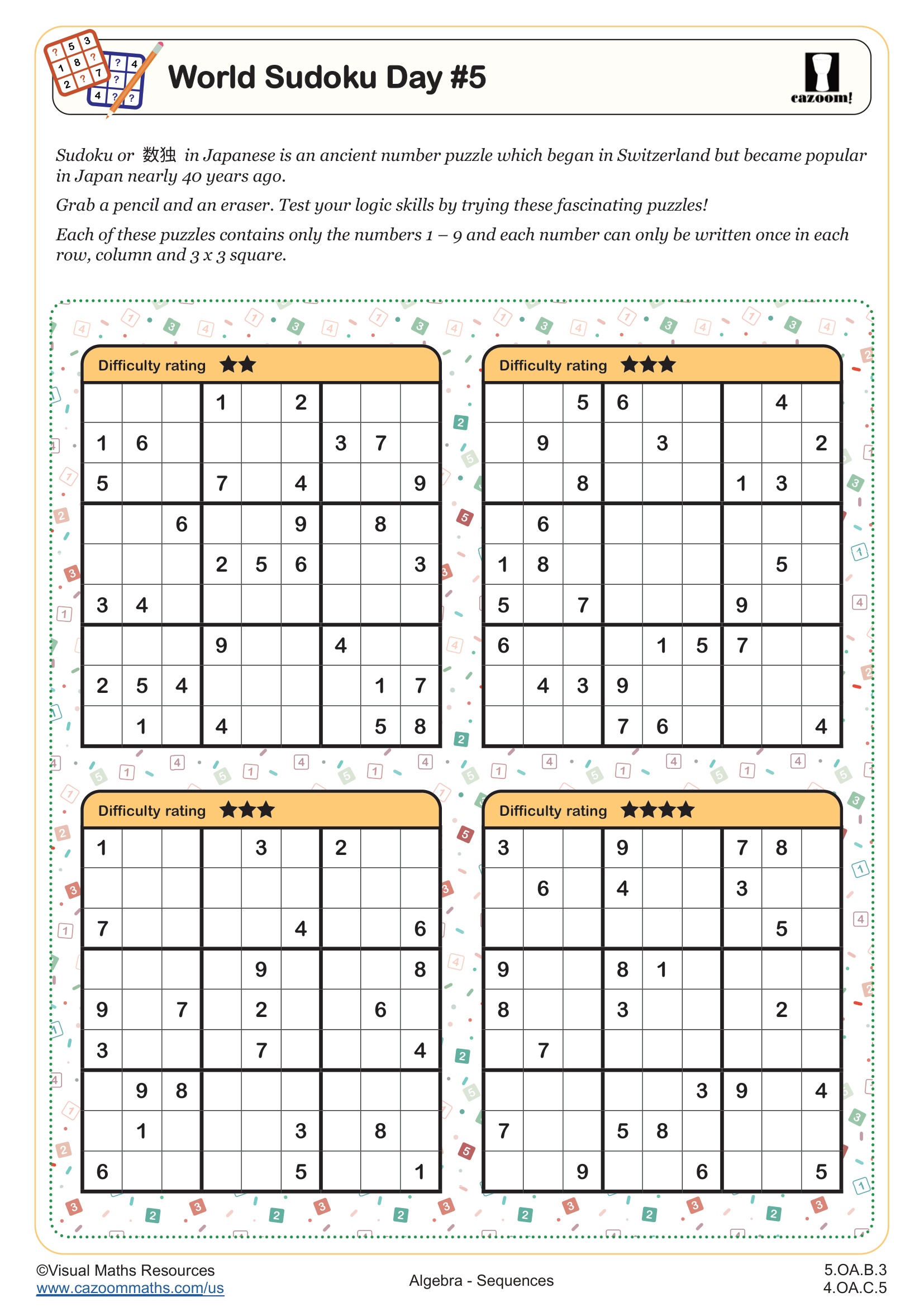
World Sudoku Day #5
Grades: 4th Grade, 5th Grade
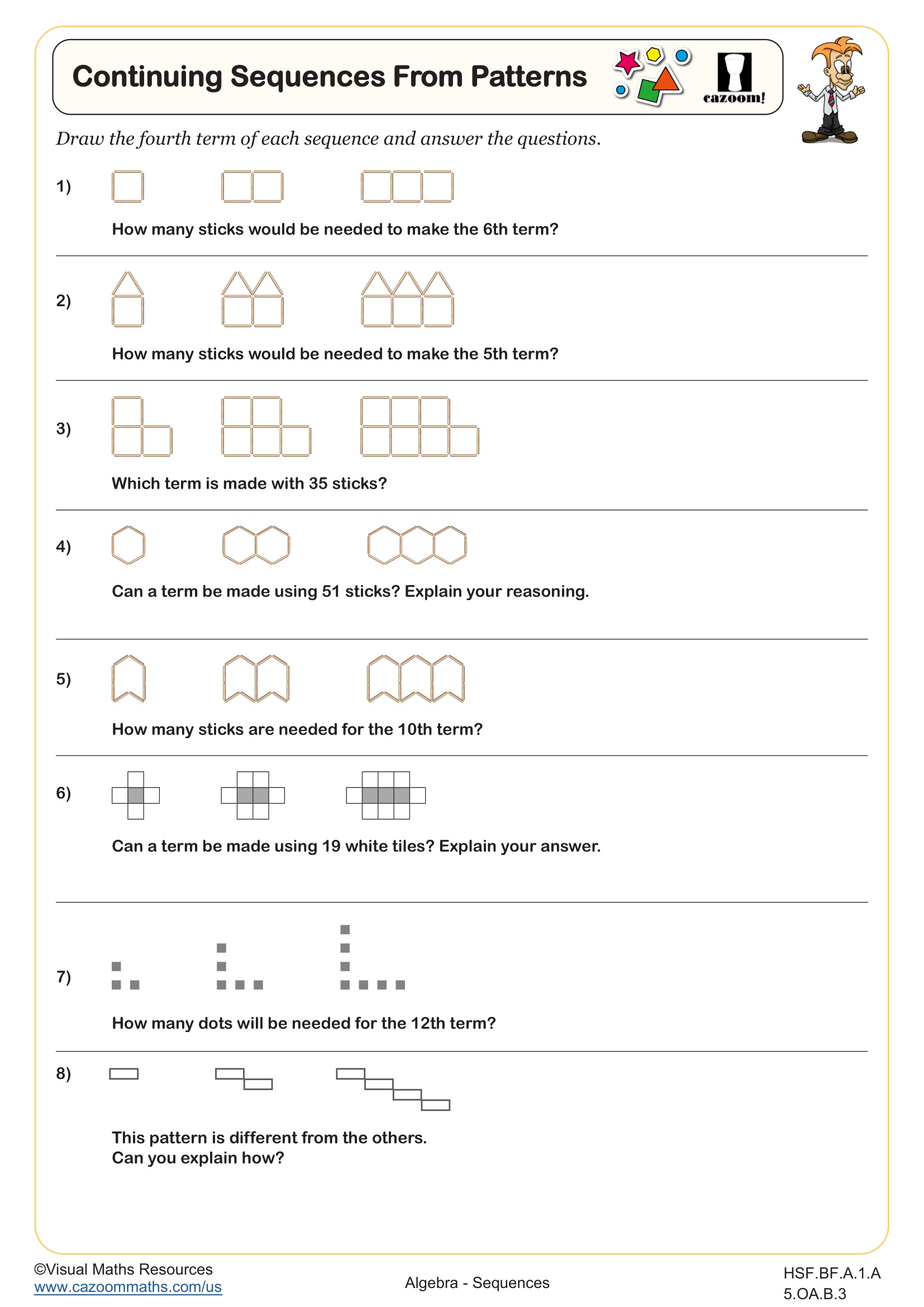
Continuing Sequecnes from Patterns
Grades: 5th Grade, Algebra I, IM 1
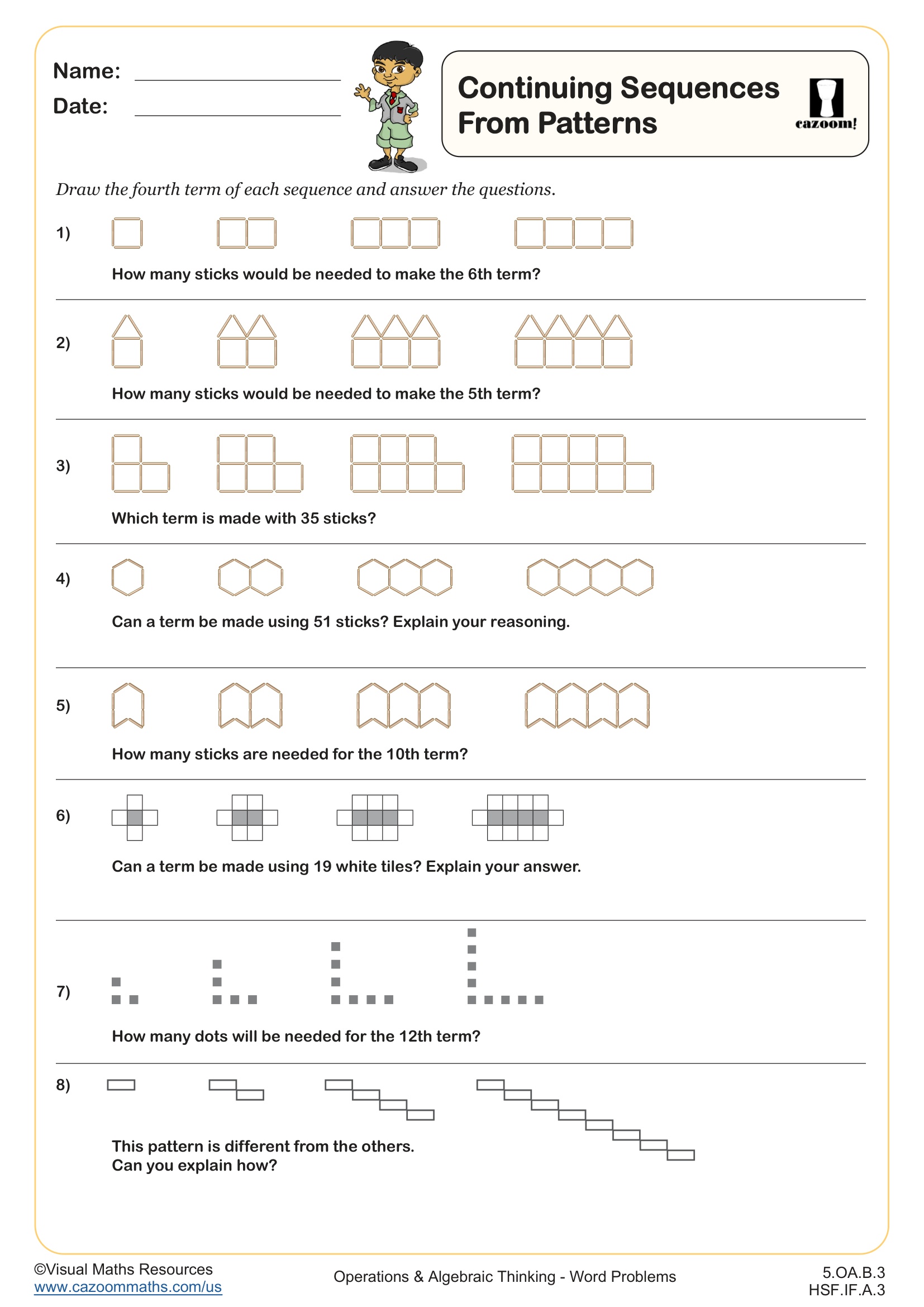
Continuing Sequences from Patterns
Grades: 5th Grade, Algebra I, IM 1
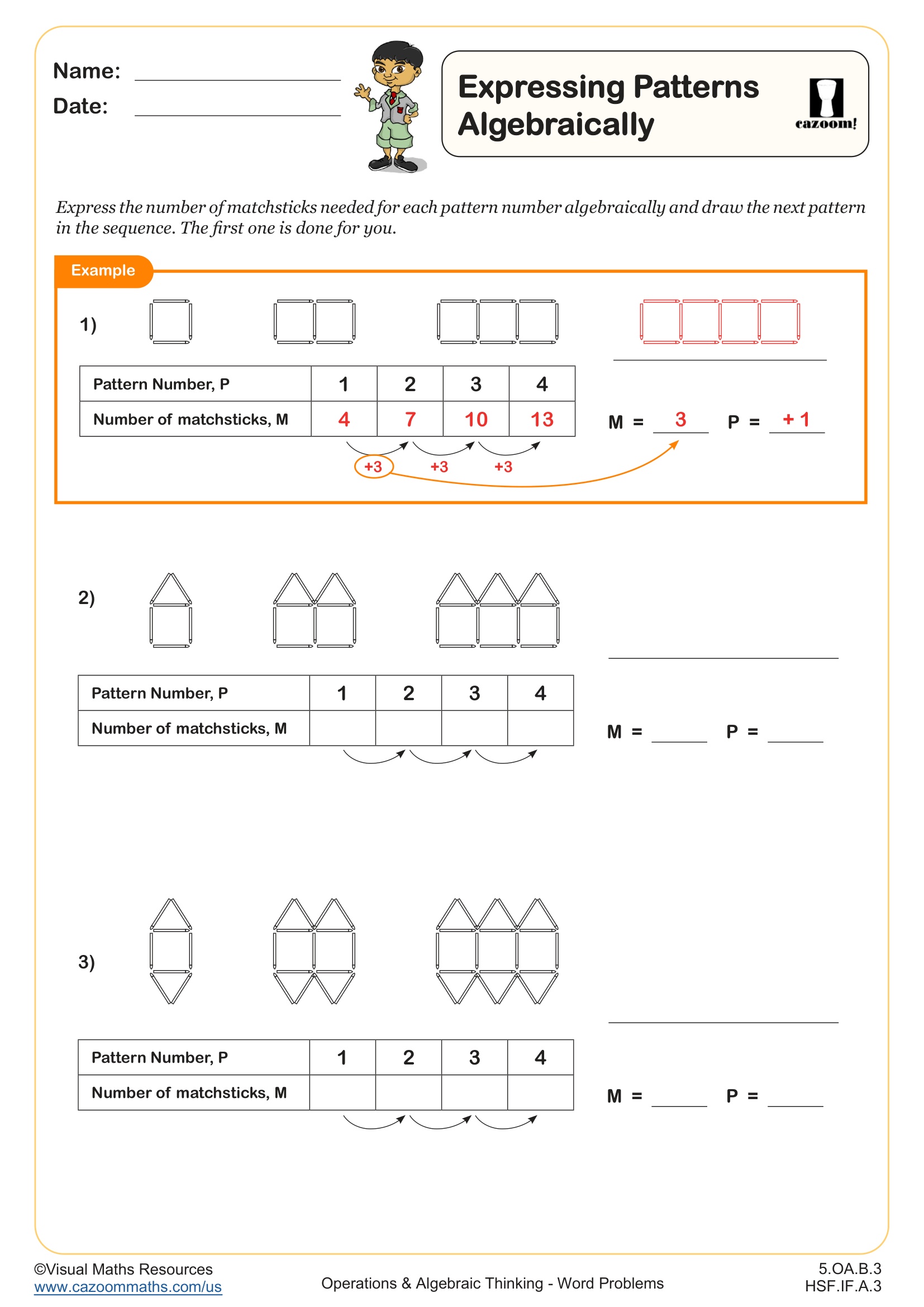
Expressing Patterns Algebraically
Grades: 5th Grade, Algebra I, IM 1
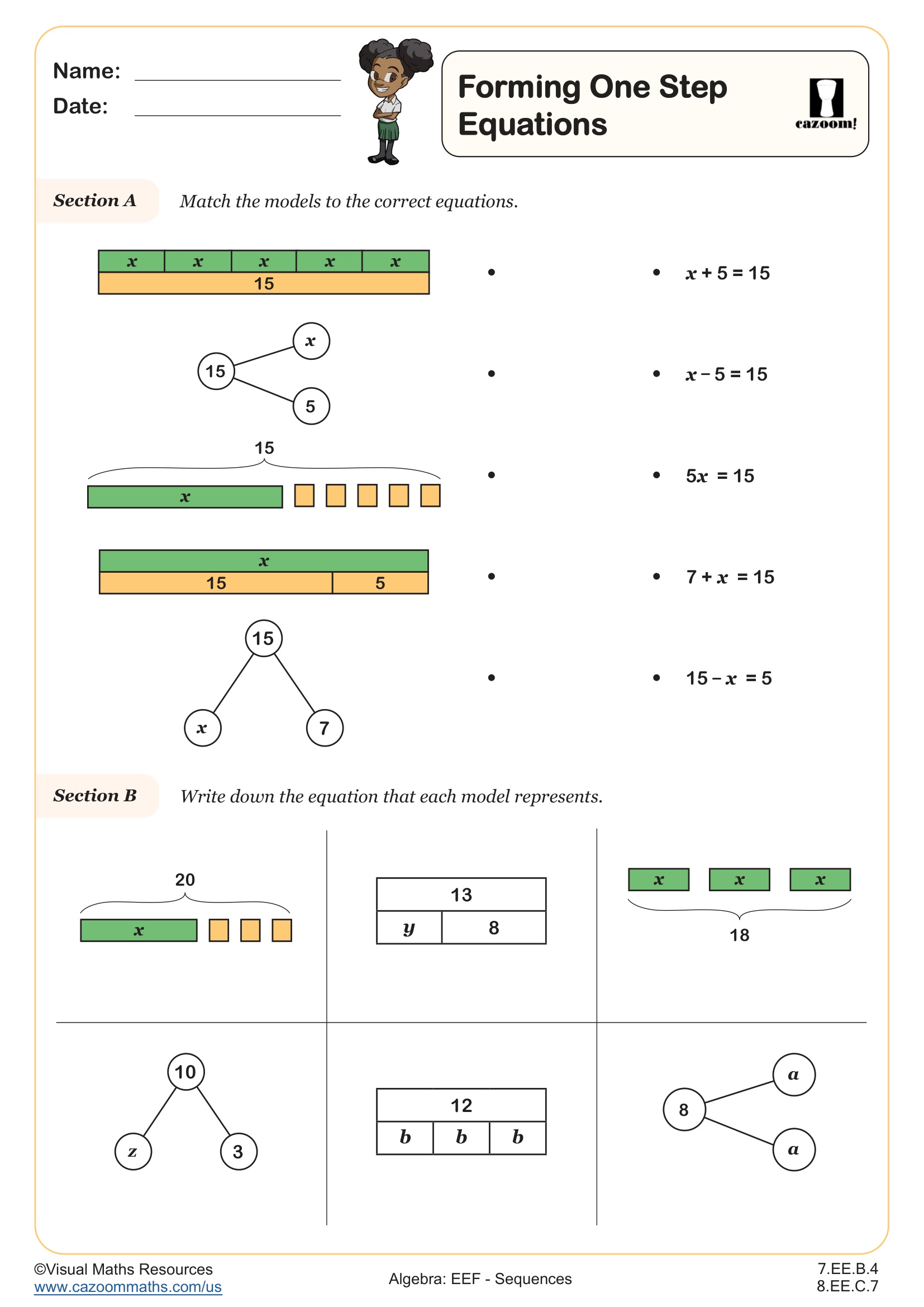
Forming One Step Equations
Grades: 7th Grade, 8th Grade
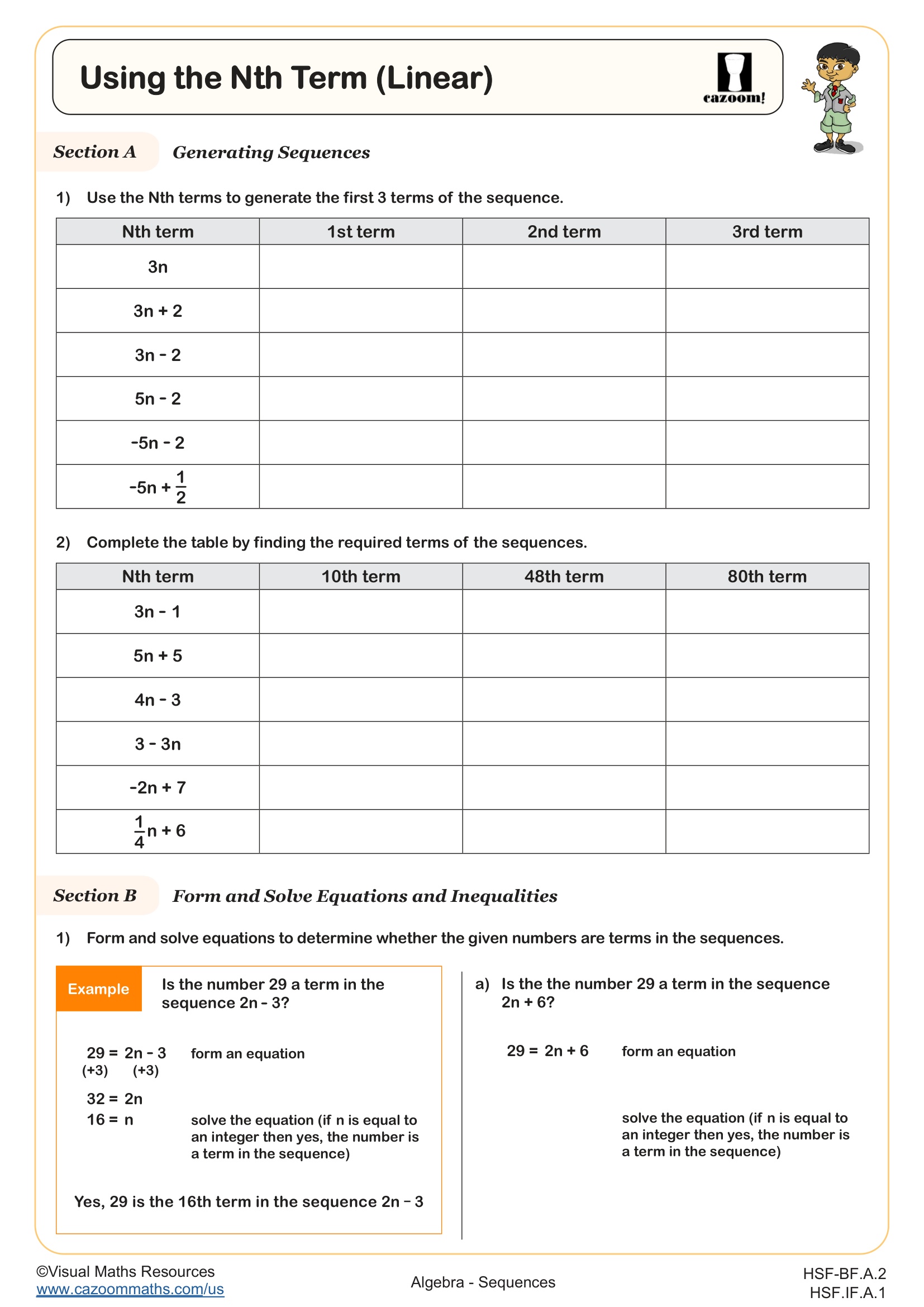
Using the Nth Term (Linear)
Grades: Algebra I, IM 2
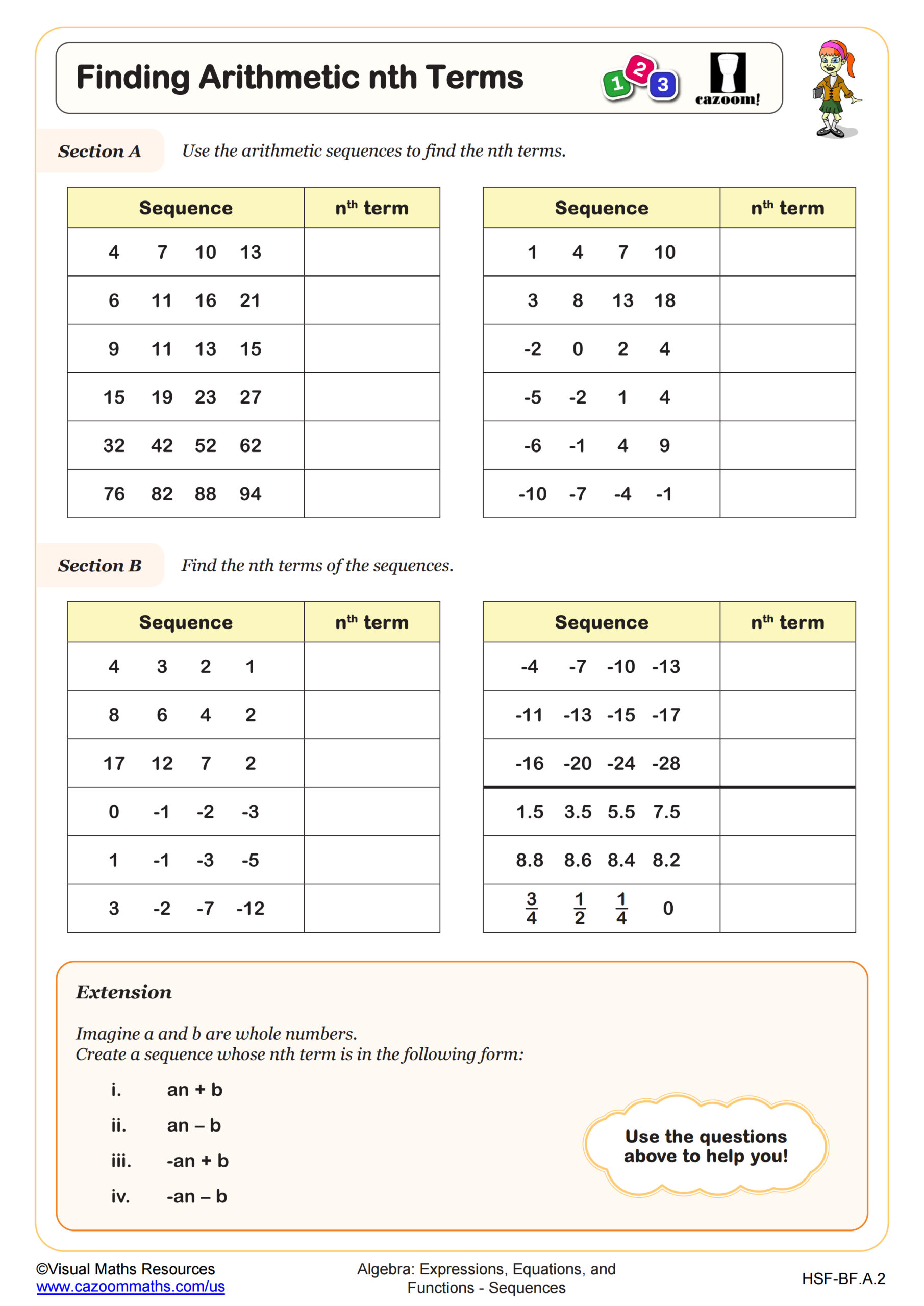
Finding Arithmetic nth Terms
Grades: Algebra II, IM 2
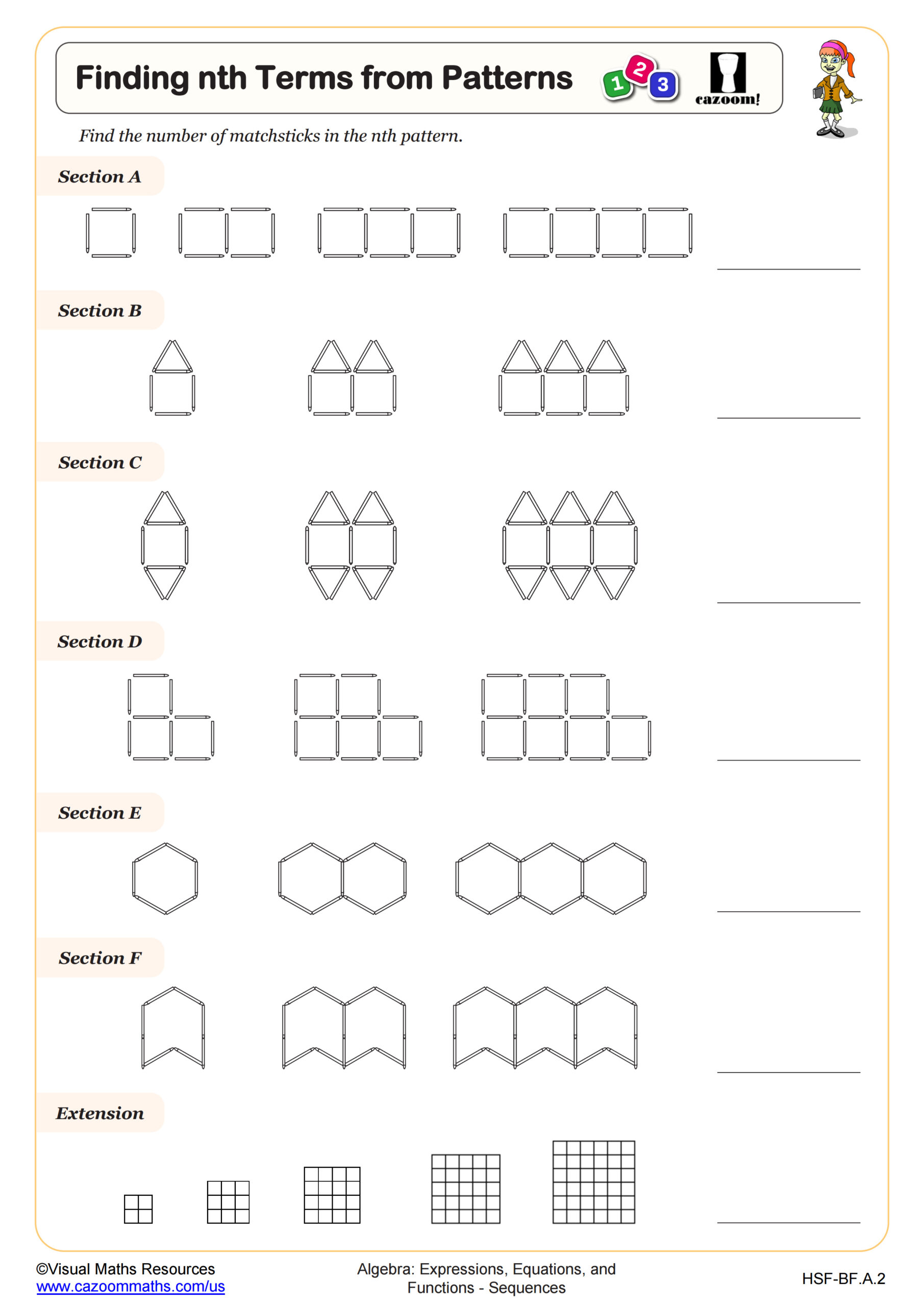
Finding nth Terms from Patterns
Grades: Algebra II, IM 2
Generating Sequences from the Nth Term
Grades: Algebra II, IM 2
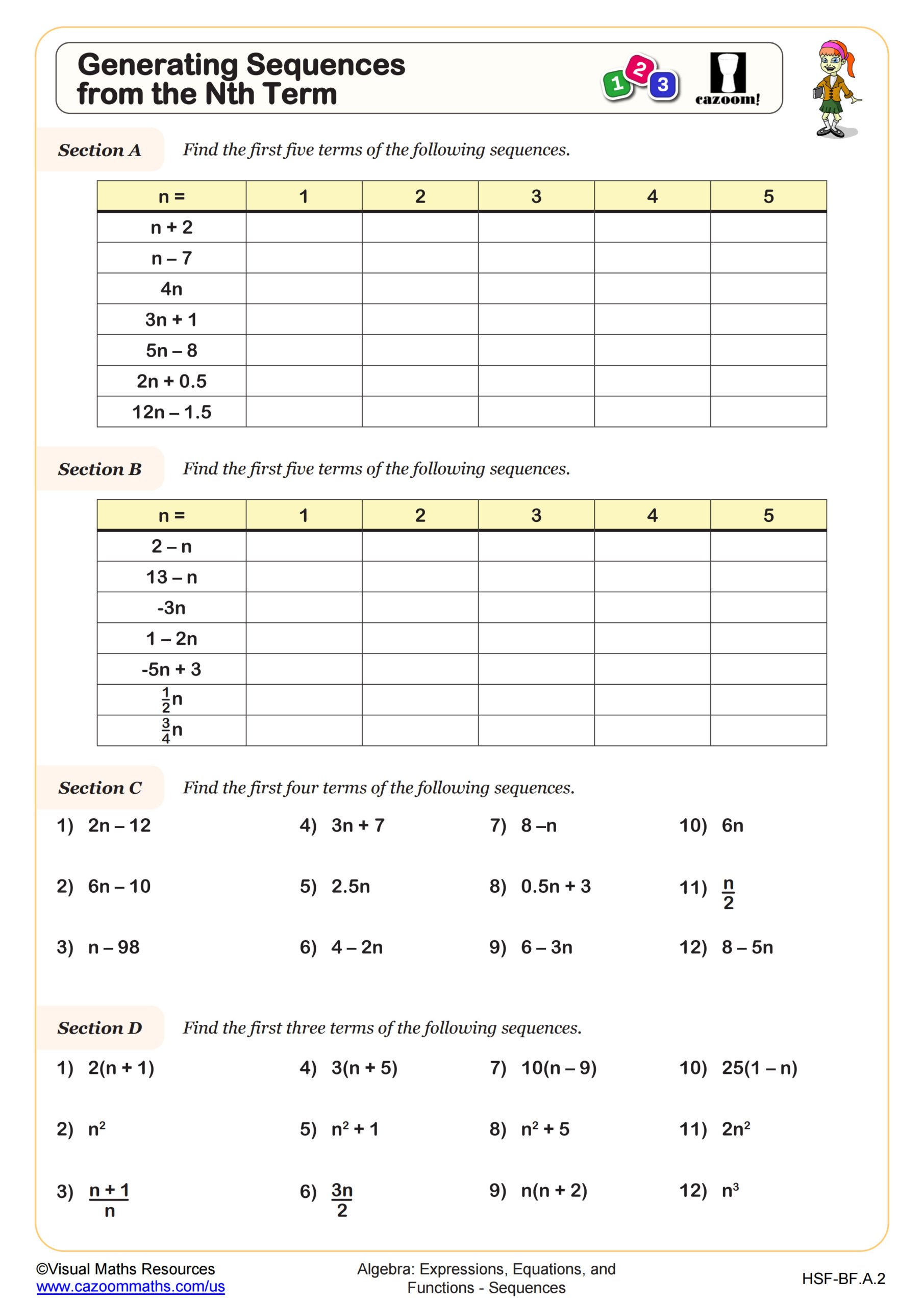
Geometric Sequences
Grades: Algebra II, IM 2
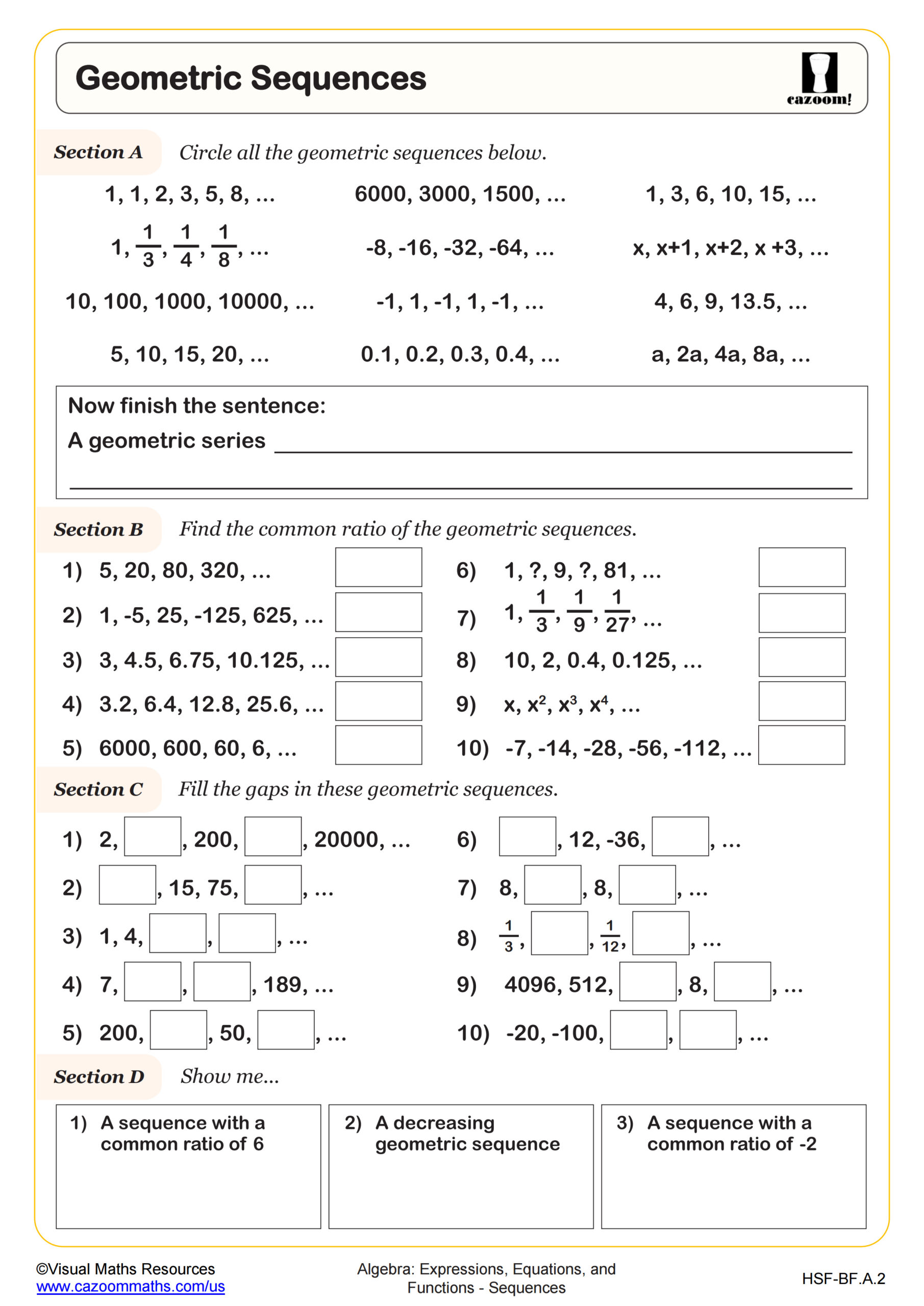
Geometric Sequences (B)
Grades: Algebra II, IM 3
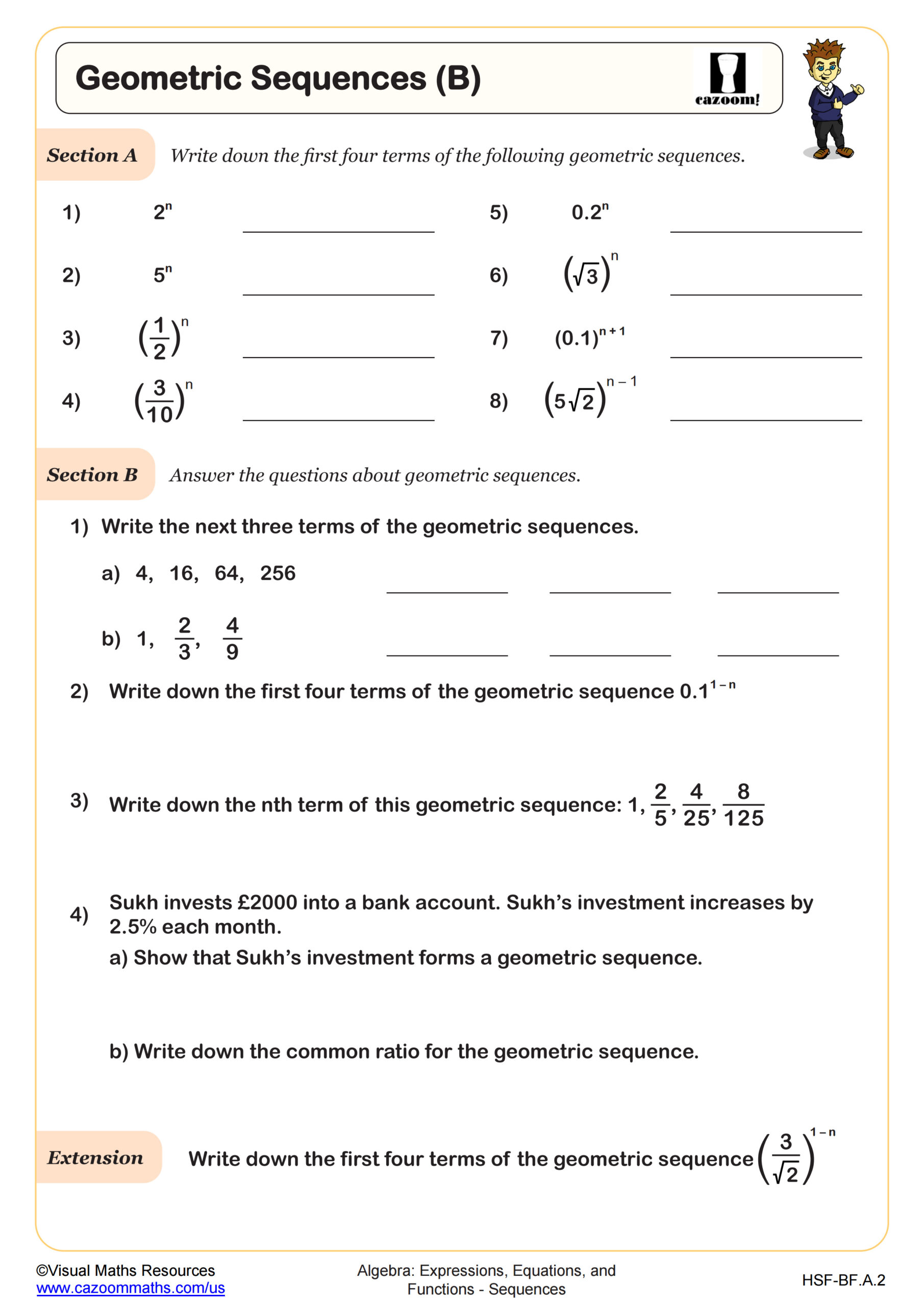
Quadratic Sequences (B)
Grades: Algebra II, IM 2
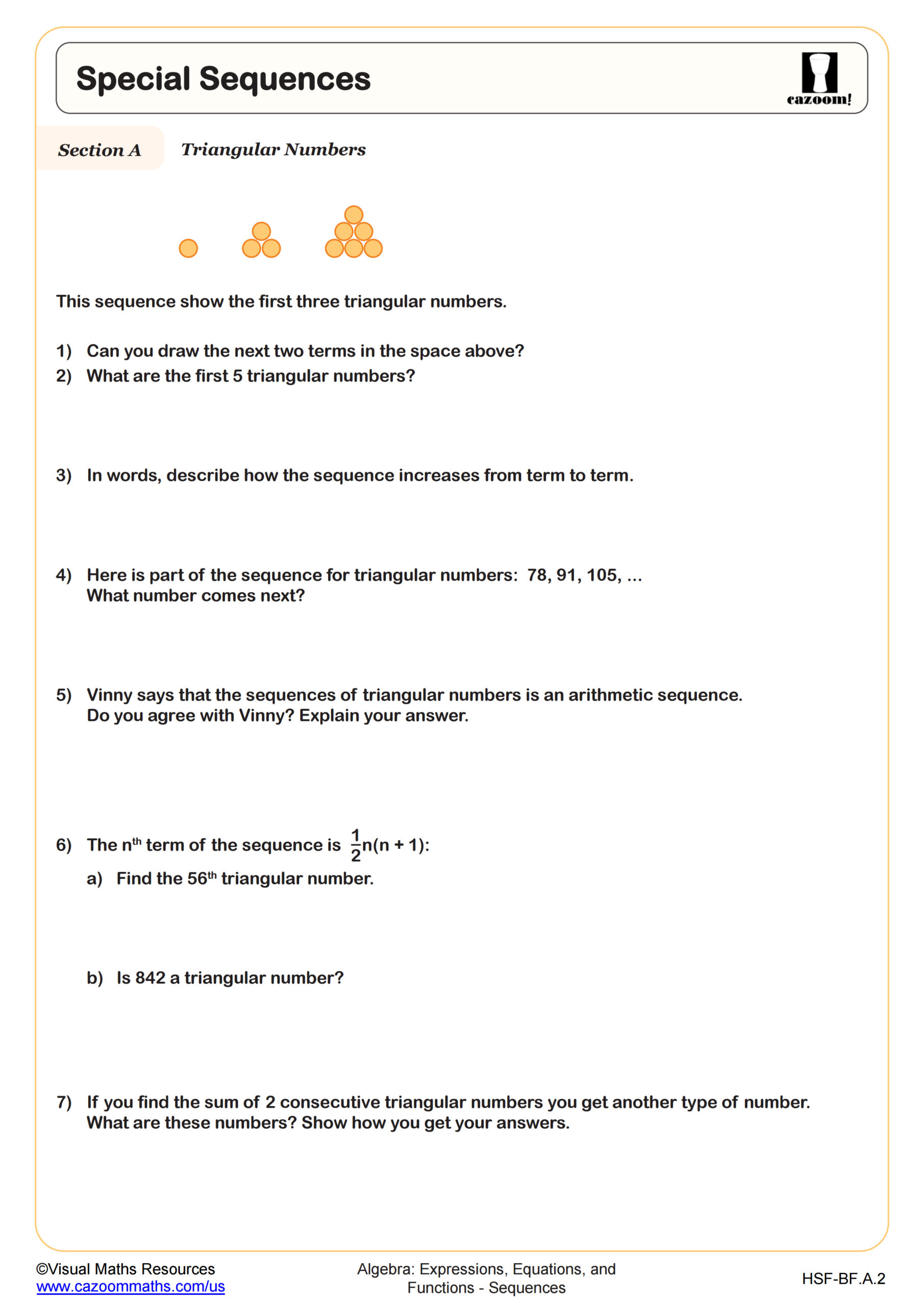
Special Sequences
Grades: Algebra II, IM 2
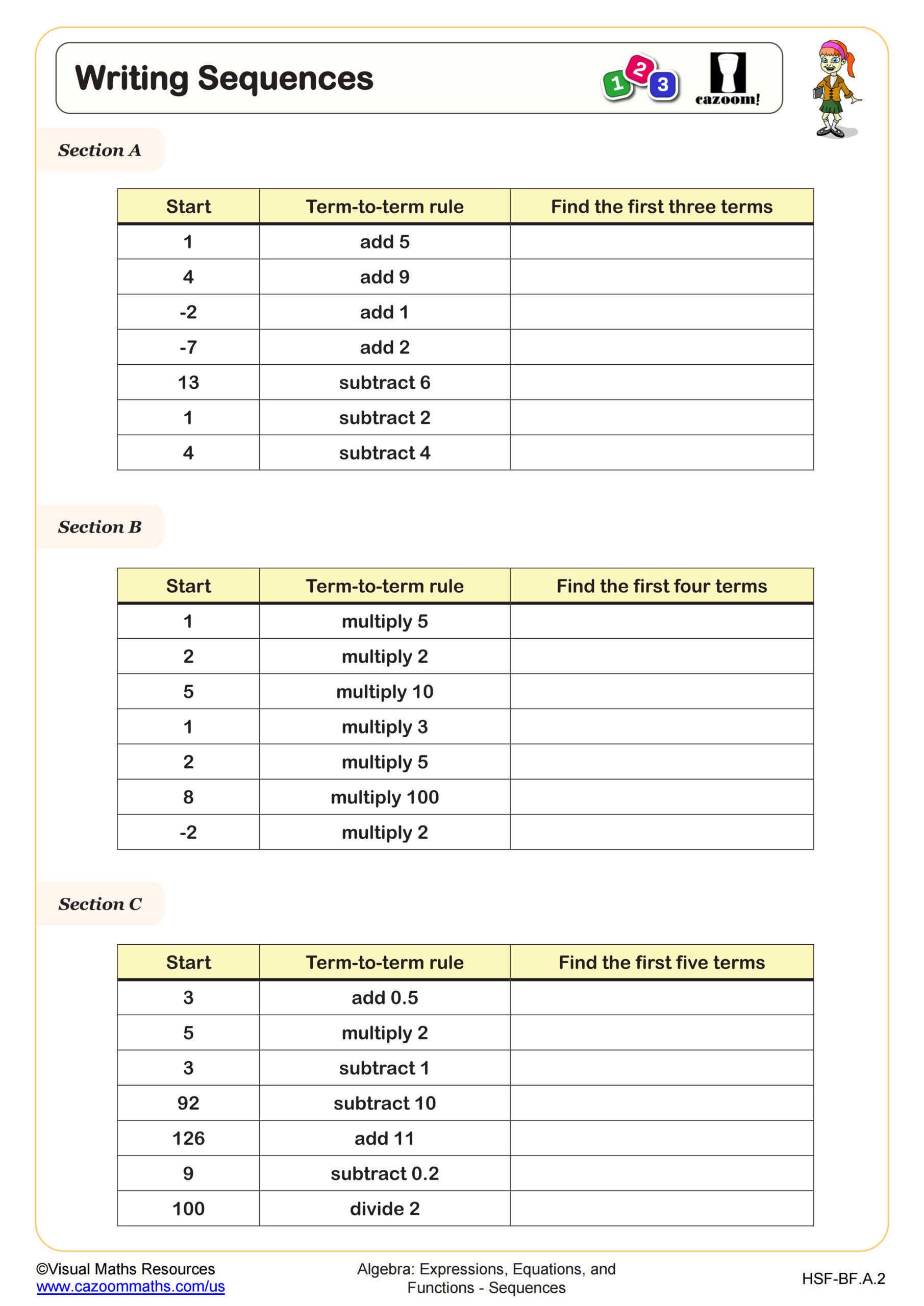
Writing Sequences
Grades: Algebra II, IM 2
All worksheets are created by the team of experienced teachers at Cazoom Math.
What topics are covered in a sequences worksheet collection?
A thorough sequences worksheet set typically includes arithmetic sequences, geometric sequences, Fibonacci patterns, and quadratic sequences. Students work with finding nth terms, identifying common differences and ratios, and writing both recursive and explicit formulas. These materials align with Common Core standards 8.F.3 and HSA-SSE.A.1 for pattern recognition and algebraic expression.
Teachers report that students often struggle most with sequences that don't start at n=1, such as when the third term is given as 17 in an arithmetic sequence. The worksheets address this by providing scaffolded practice where students first identify the pattern, then work backward to find earlier terms before writing the general formula.
Which grade levels use math sequence worksheets most effectively?
Sequence concepts typically begin in middle grades with simple patterns and progress through high school algebra courses. Eighth graders usually start with arithmetic sequences and basic pattern recognition, while high school students tackle geometric sequences, series, and more complex recursive relationships. Advanced students may encounter sequences in precalculus and calculus contexts.
The progression shows clear developmental stages. Middle school students benefit from visual representations and number charts, while high school students can handle abstract algebraic manipulation. Teachers find that introducing sequences through real-world contexts like population growth or loan payments helps students see the practical applications in STEM fields before moving to purely mathematical examples.
How do students learn to write explicit formulas for sequences?
Writing explicit formulas requires students to identify the pattern type first, then determine the rate of change and starting value. For arithmetic sequences, students learn the formula a_n = a_1 + (n-1)d, while geometric sequences follow a_n = a_1 × r^(n-1). The worksheets provide systematic practice moving from pattern recognition to formula construction.
Many teachers observe that students initially write formulas that work for the given terms but fail for other values. For example, seeing the sequence 7, 10, 13, 16, students might write a_n = 3n + 4, which gives 7 when n=1 but doesn't account for the zero position. Worksheets on sequences address this by requiring students to verify their formulas with multiple term positions.
What teaching strategies work best with sequences worksheets?
Successful sequence instruction often begins with concrete examples before moving to abstract formulas. Teachers report better outcomes when students first describe patterns in words, then translate to mathematical notation. Starting with visual patterns using shapes or colors helps students understand the underlying structure before working with pure number sequences.
The answer keys prove particularly valuable for differentiated instruction, allowing students to self-check their pattern identification before attempting formula writing. Teachers can use the worksheets for both guided practice and independent work, with struggling students focusing on simpler arithmetic progressions while advanced learners tackle recursive sequences and mathematical modeling applications.
Prerequisite Knowledge for Sequences
Before learning about sequences, students should feel confident counting forward and backwards, identifying patterns, and performing basic operations like addition and multiplication. They should also be able to recognize differences between numbers and follow simple math rules. A strong foundation in number sense makes it easier to spot changes and build rules. Our worksheets introduce sequences gently and guide students as patterns grow more complex.