Area and Perimeter Math Worksheets
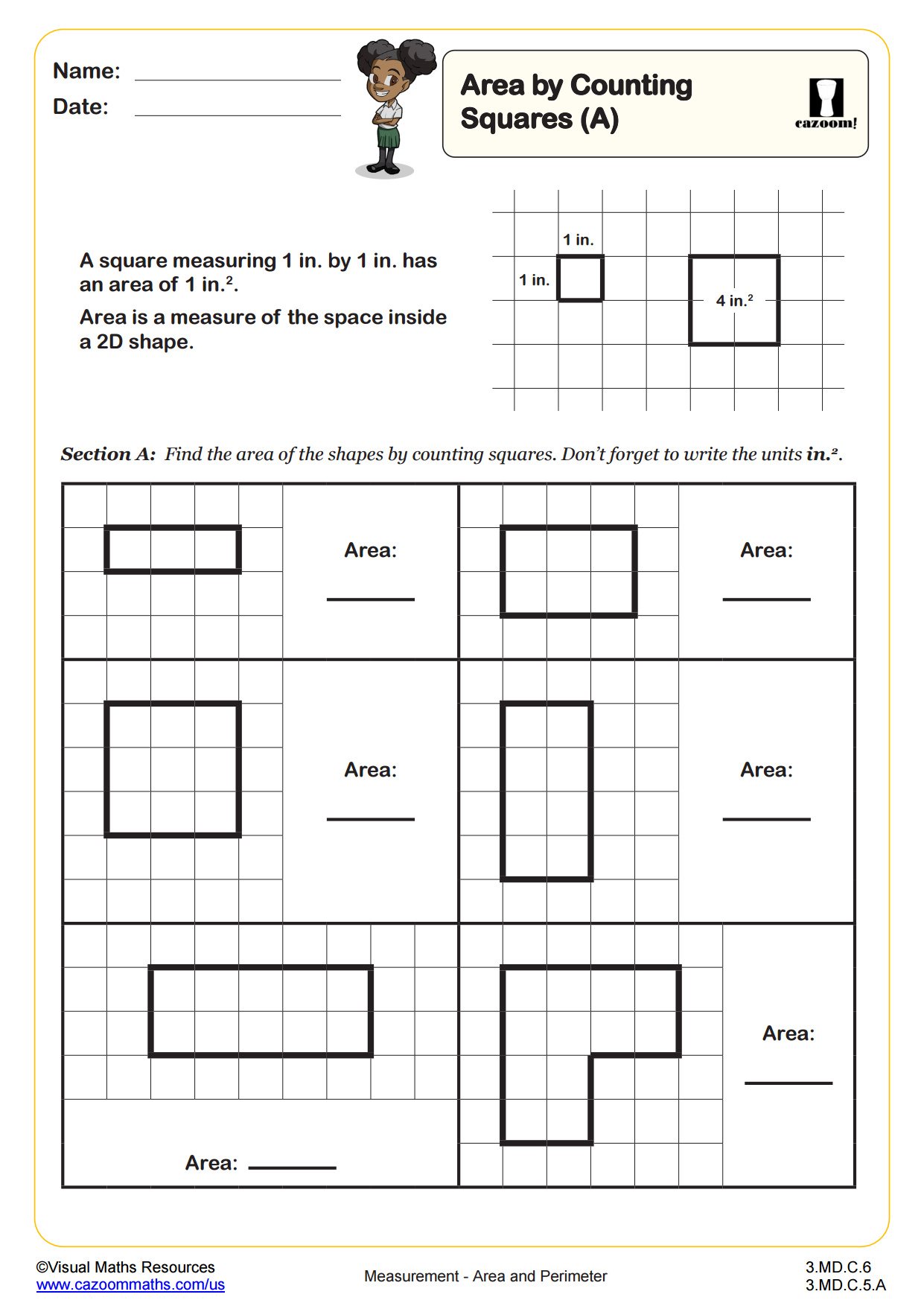
Area by Counting Squares (A)
Grades: 3rd Grade
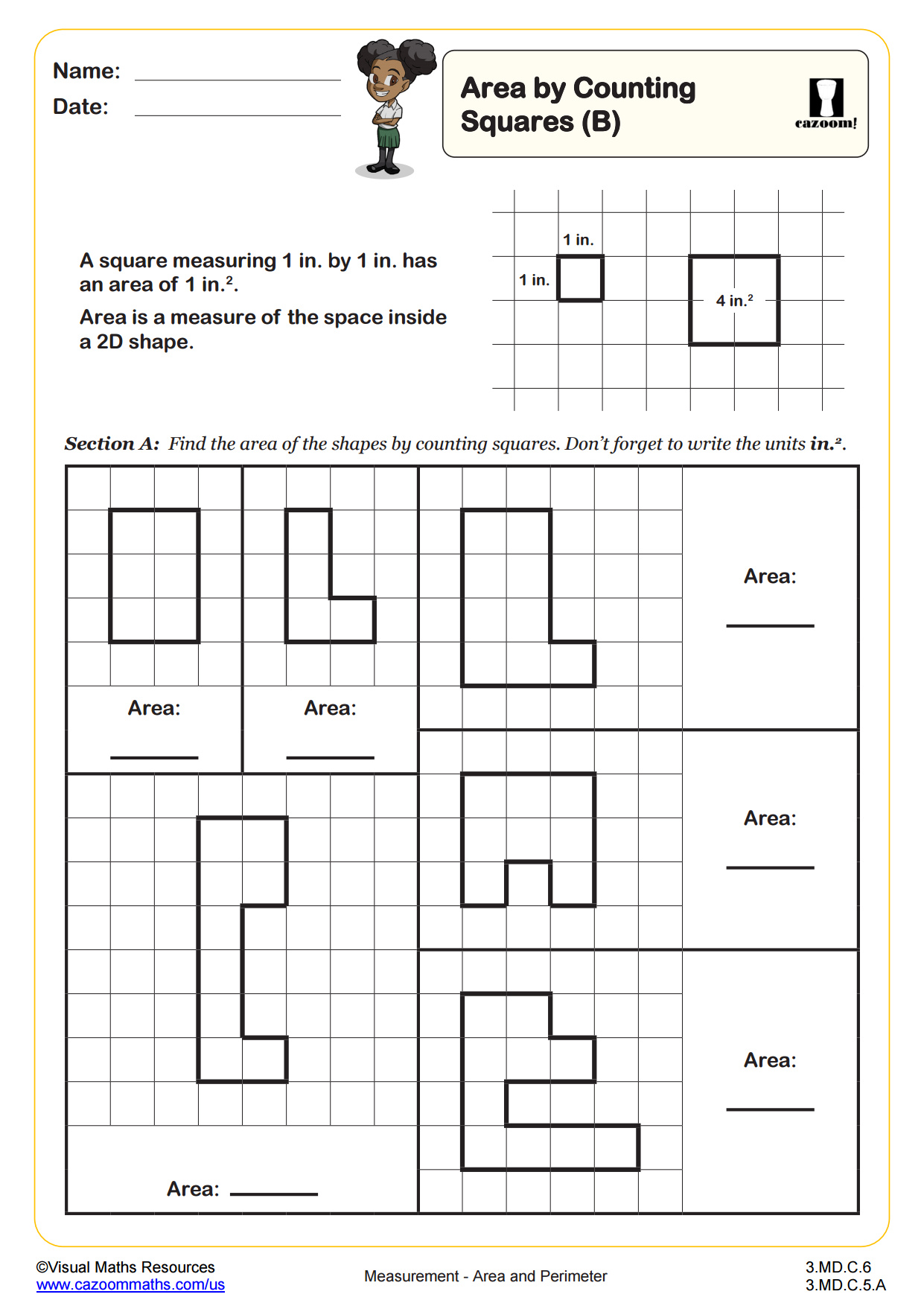
Area by Counting Squares (B)
Grades: 3rd Grade
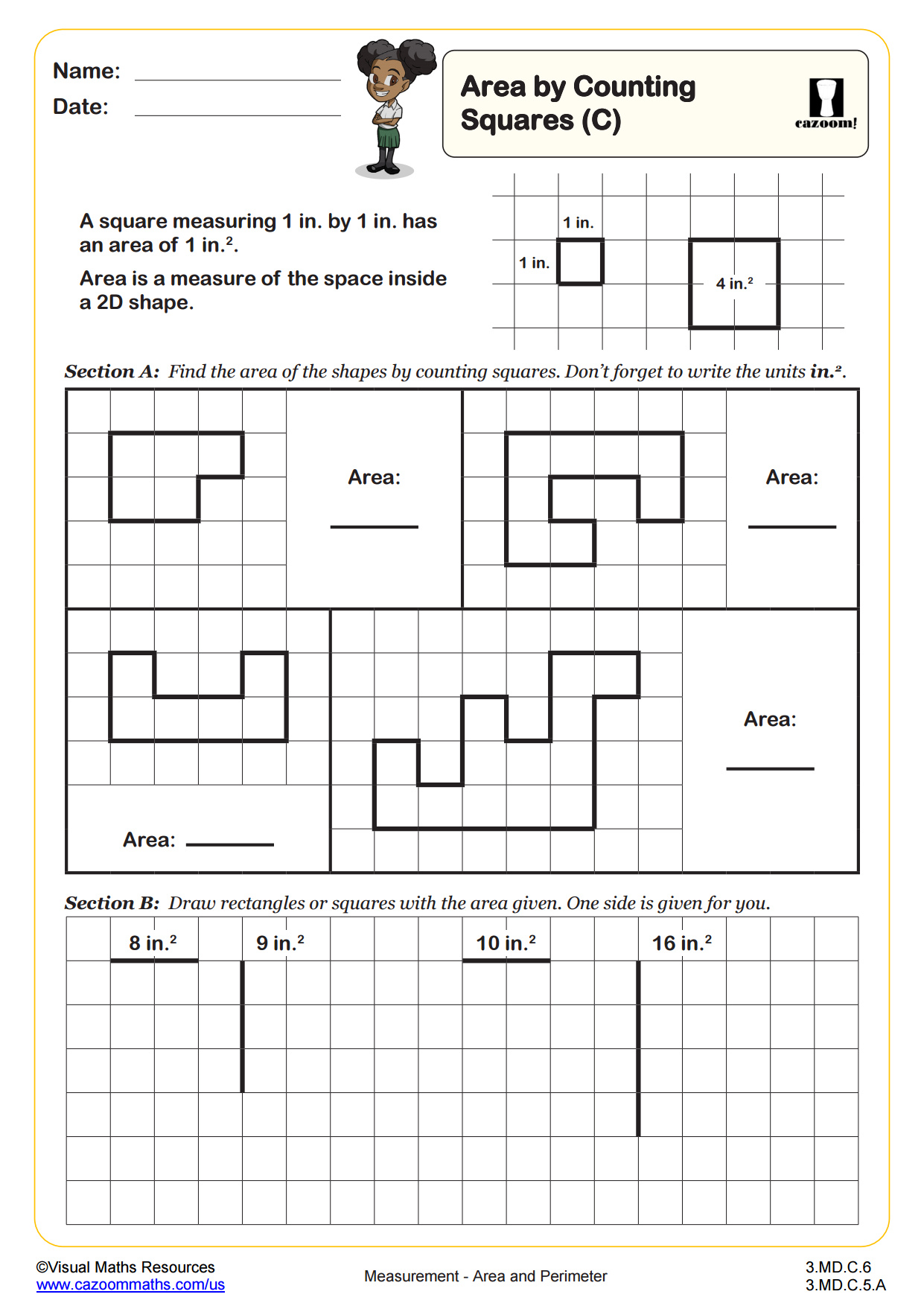
Area by Counting Squares (C)
Grades: 3rd Grade
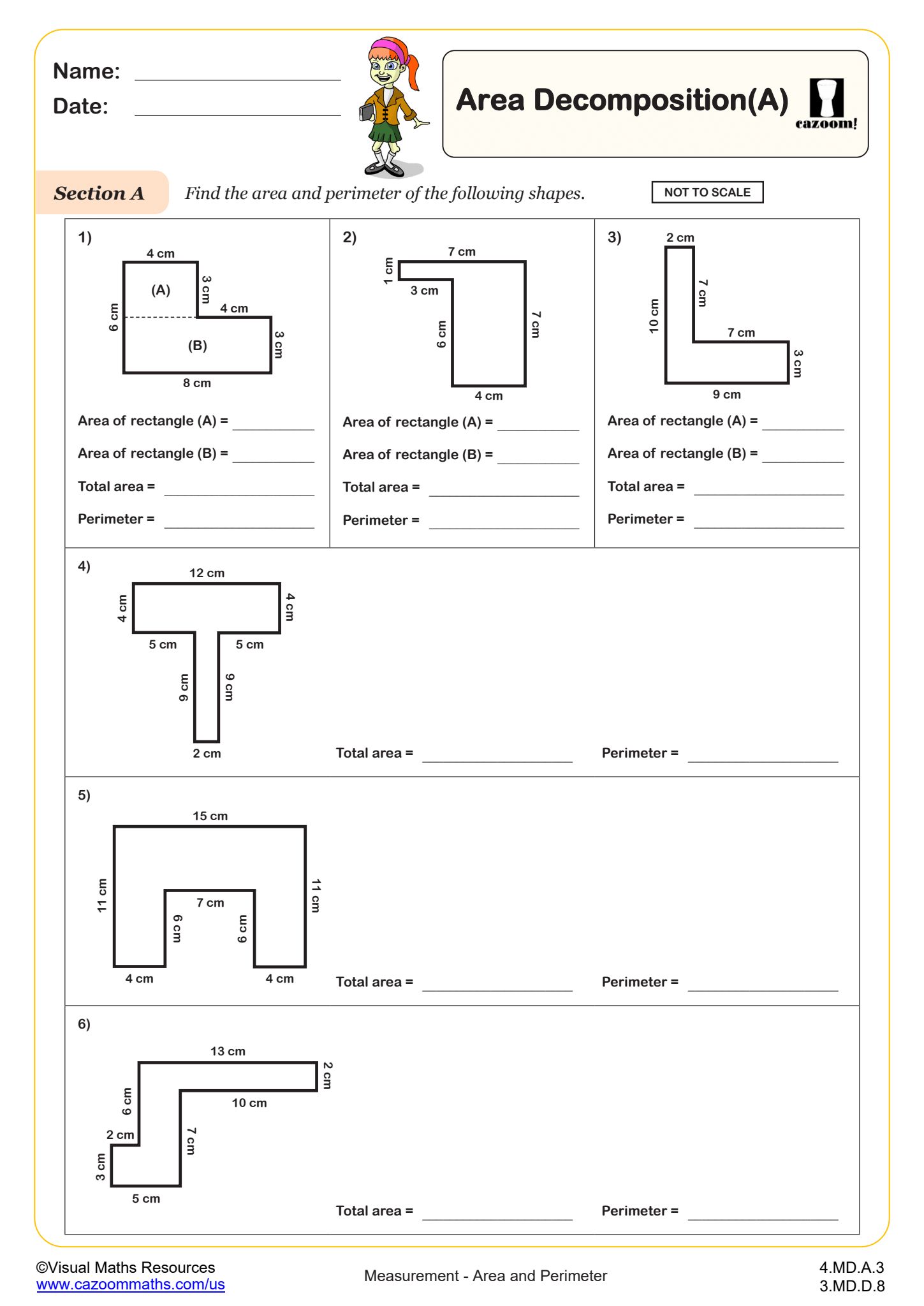
Area Decomposition (A)
Grades: 3rd Grade, 4th Grade
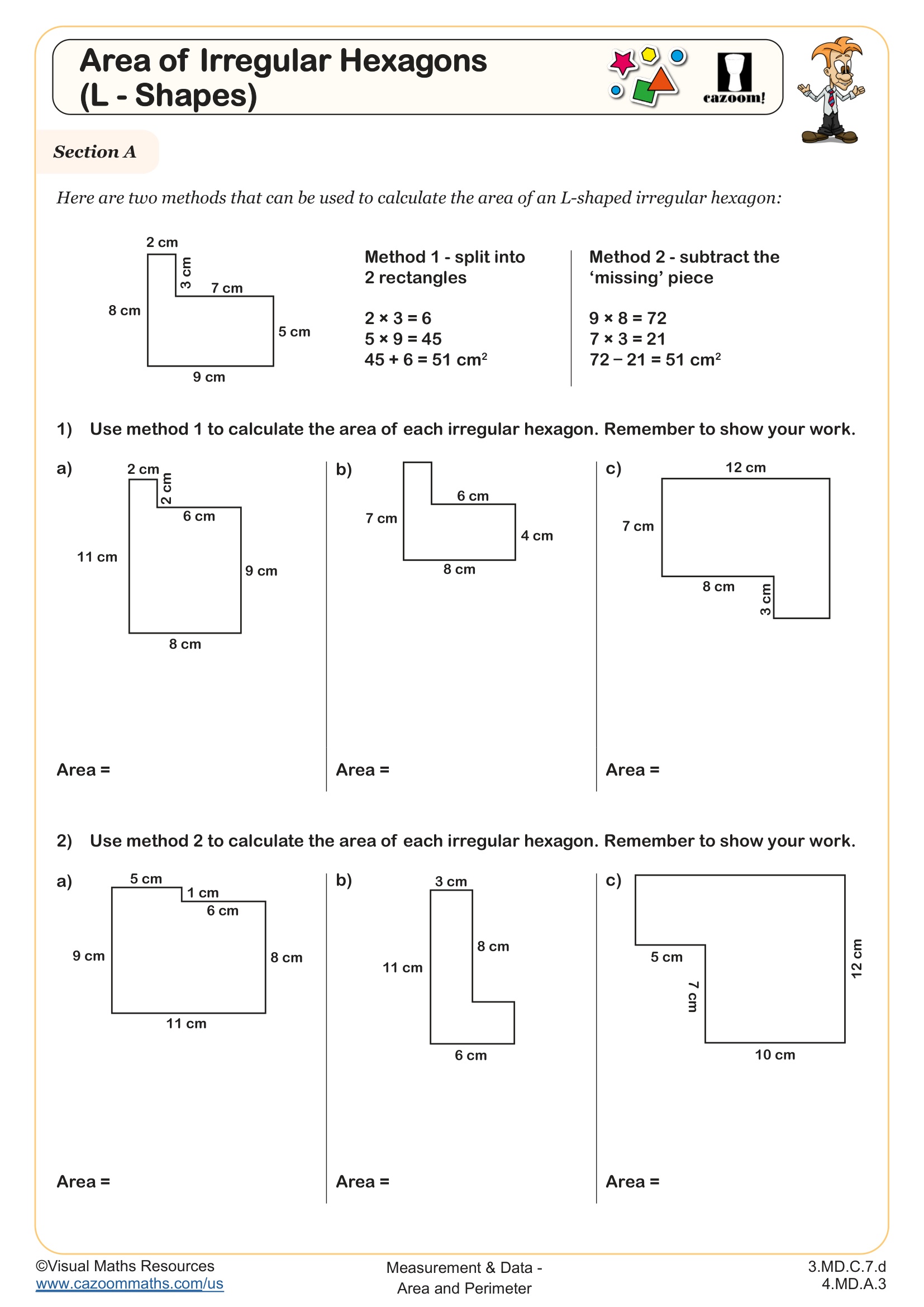
Area of Irregular Hexagons (L - Shapes)
Grades: 3rd Grade, 4th Grade
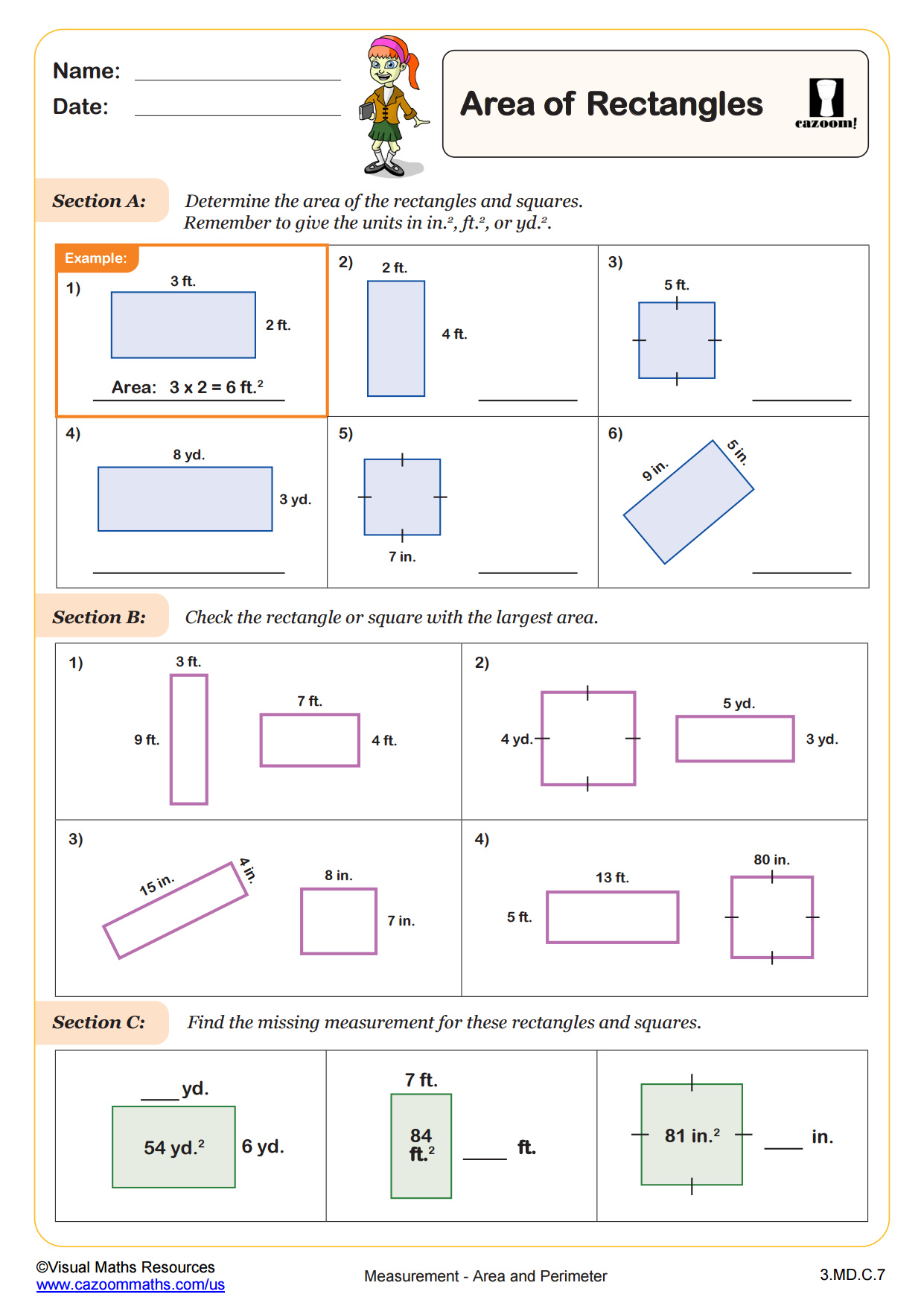
Area of Rectangles
Grades: 3rd Grade
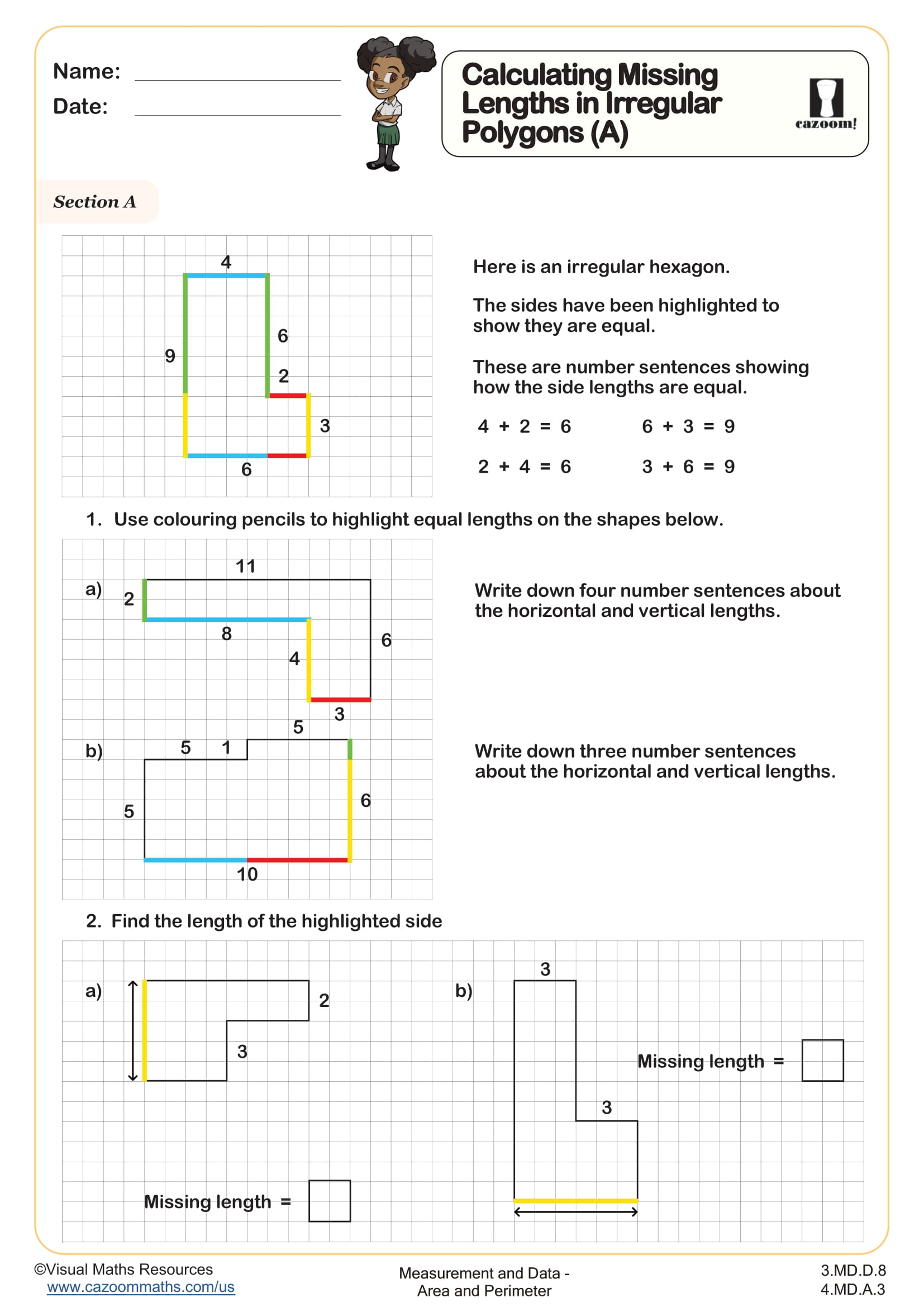
Calculating Missing Lengths in Irregular Polygons (A)
Grades: 3rd Grade, 4th Grade
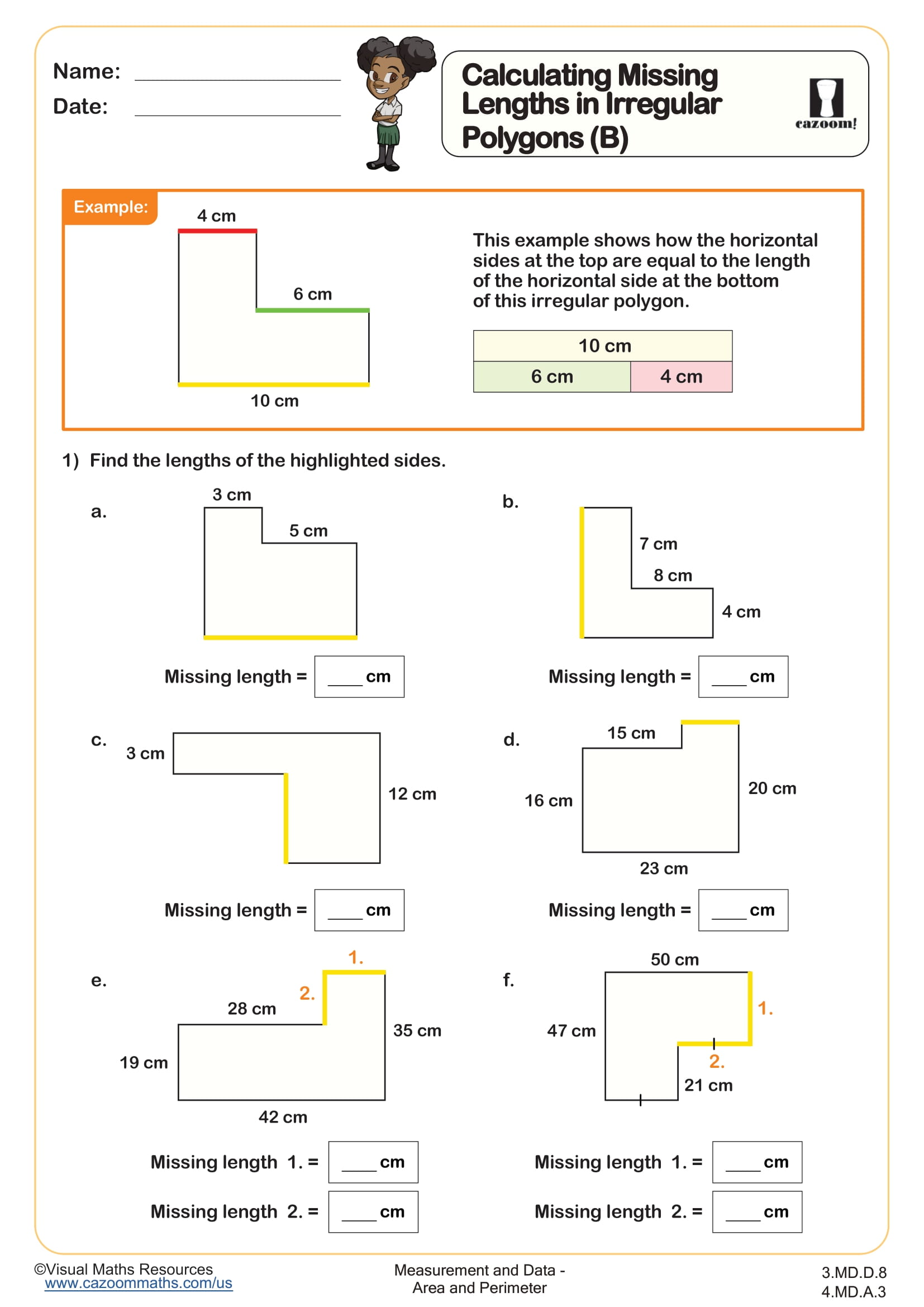
Calculating Missing Lengths in Irregular Polygons (B)
Grades: 3rd Grade, 4th Grade
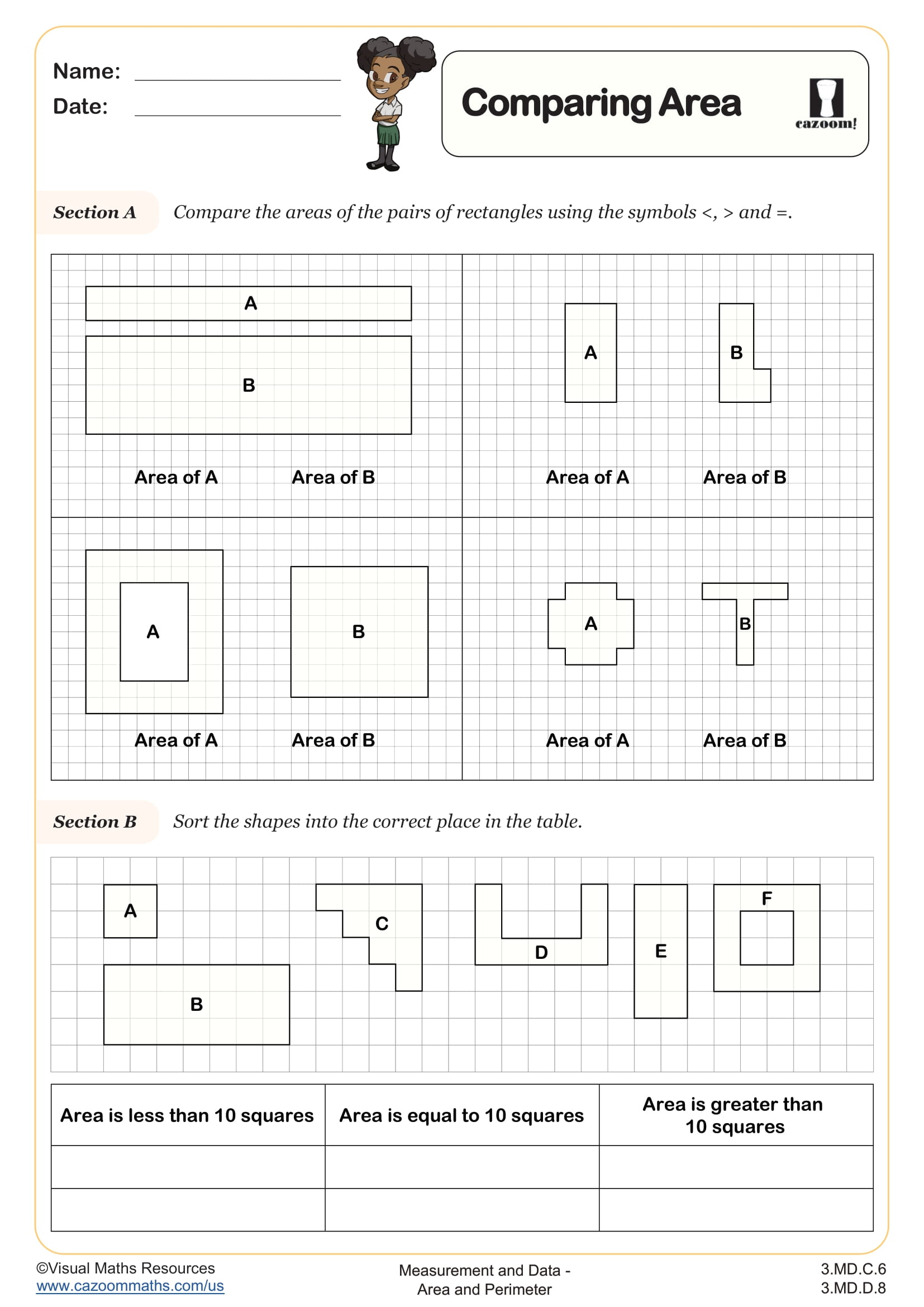
Comparing Area
Grades: 3rd Grade
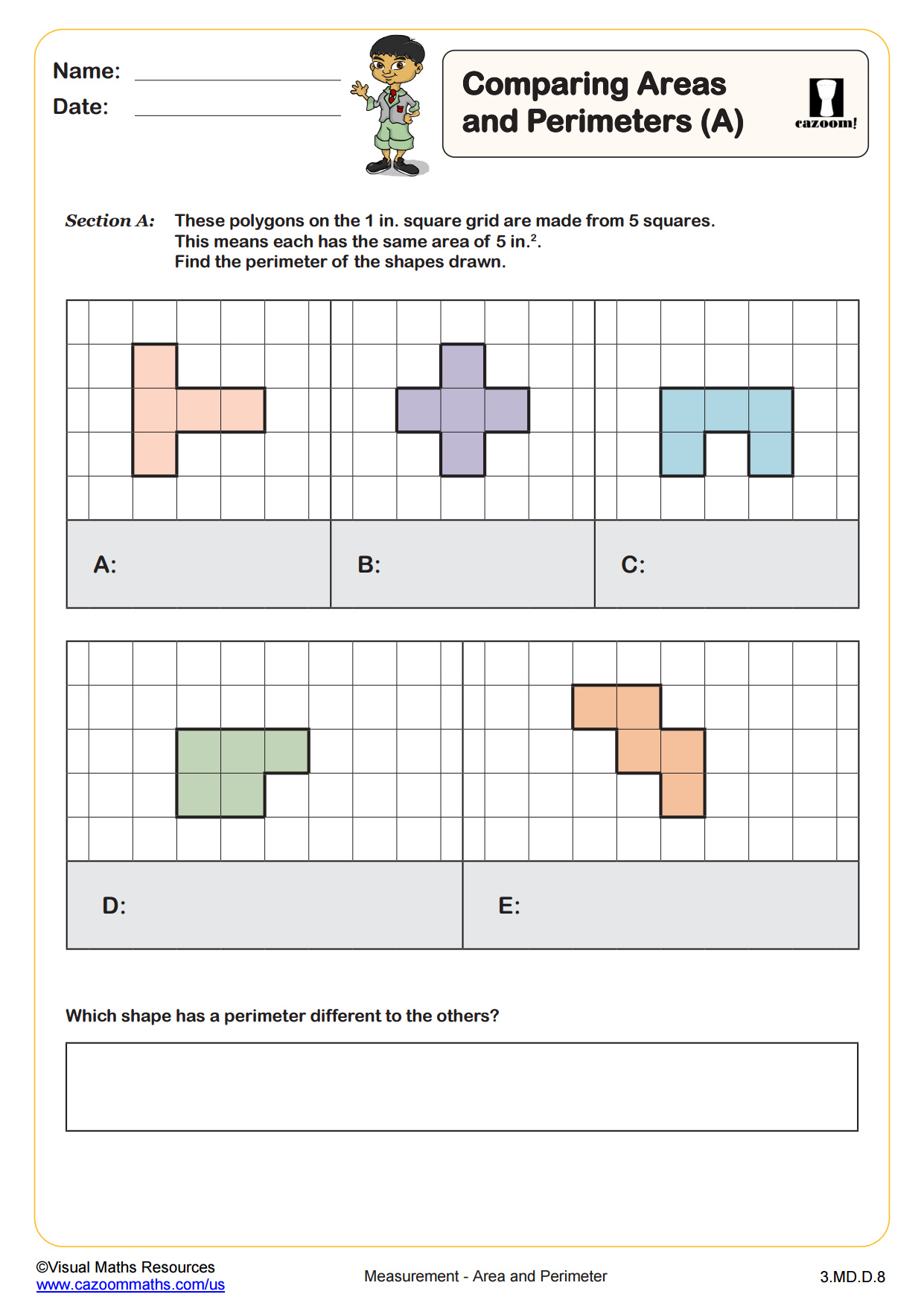
Comparing Areas and Perimeters (A)
Grades: 3rd Grade
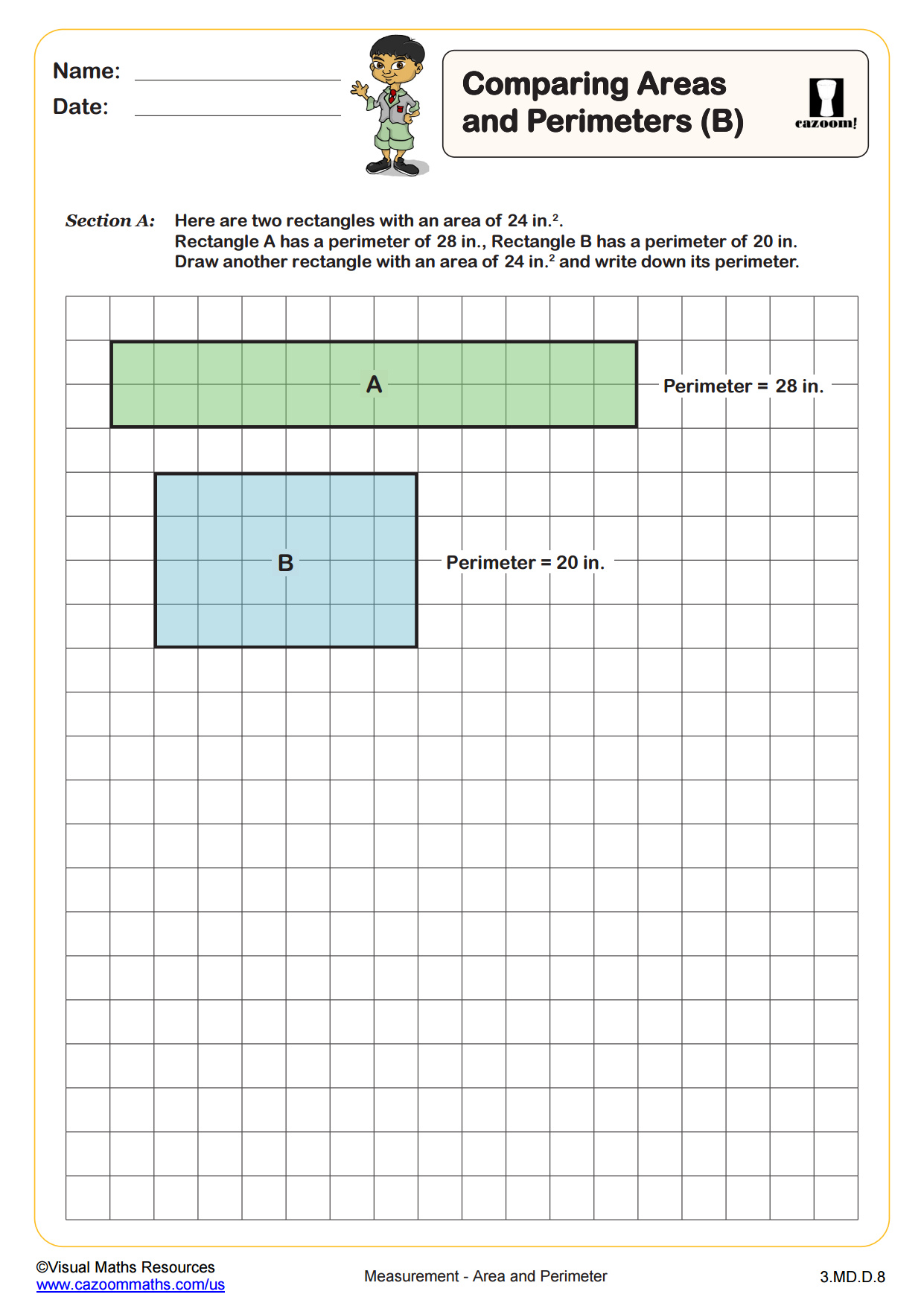
Comparing Areas and Perimeters (B)
Grades: 3rd Grade
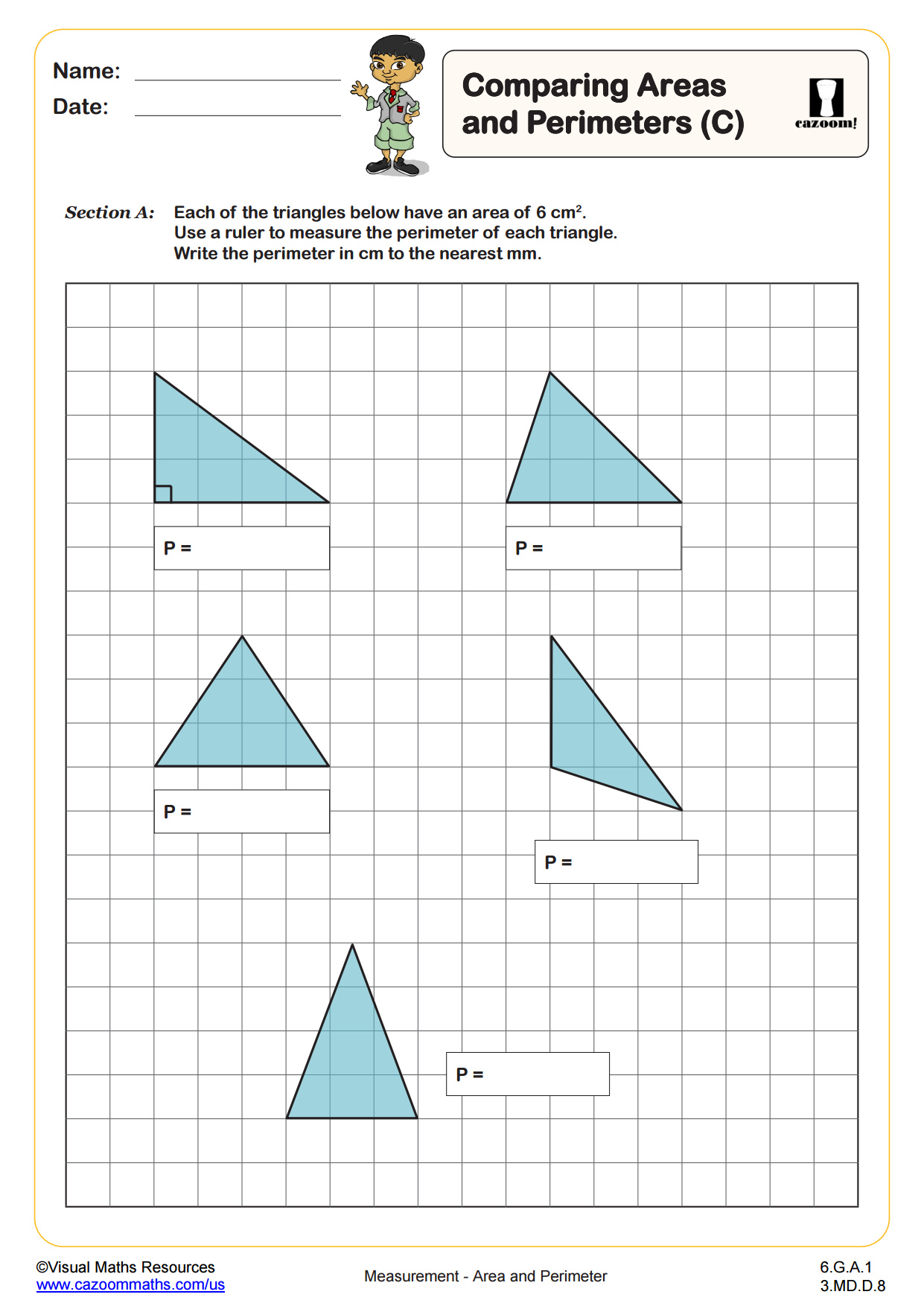
Comparing Areas and Perimeters (C)
Grades: 3rd Grade, 6th Grade
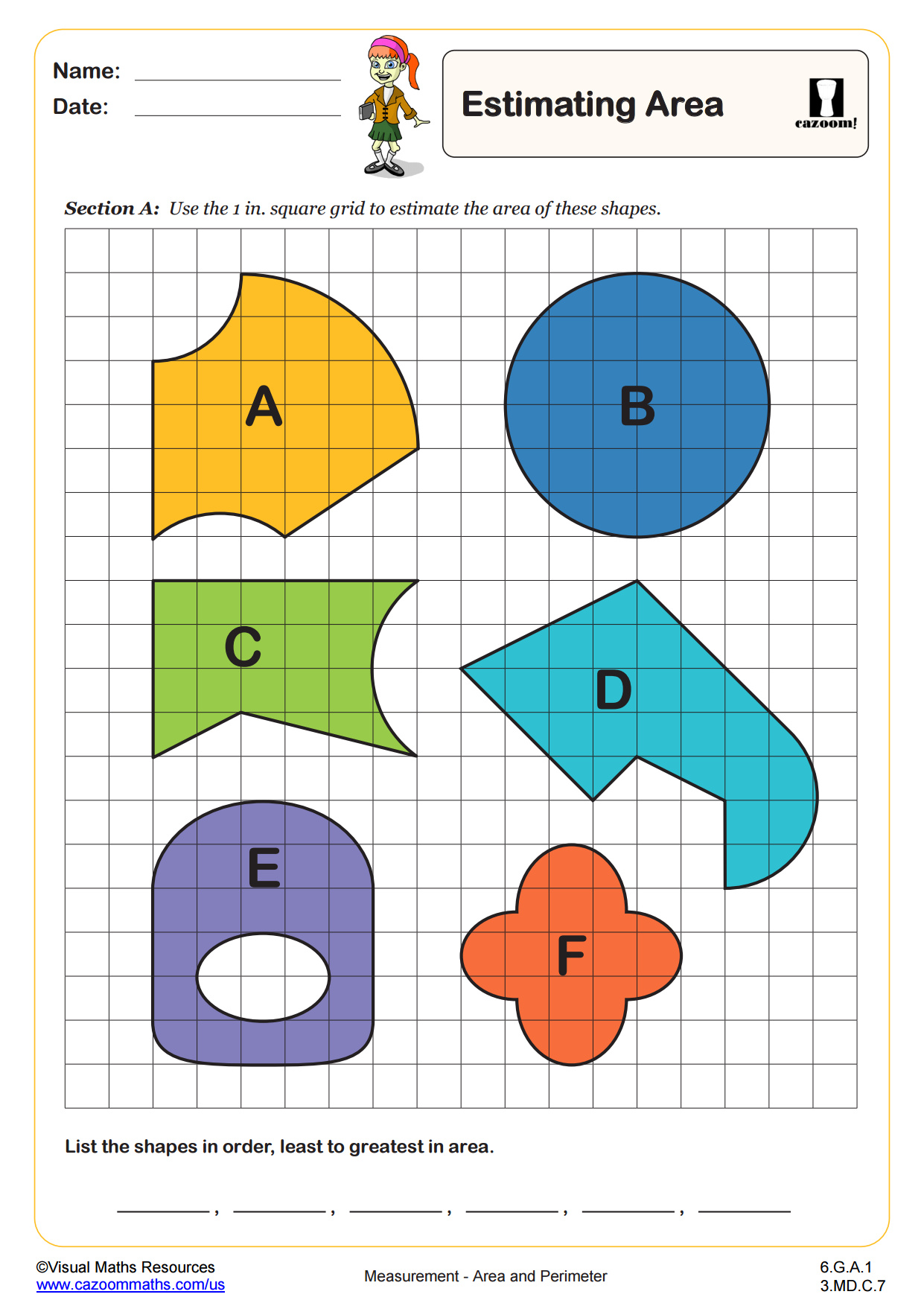
Estimating Area
Grades: 3rd Grade, 6th Grade
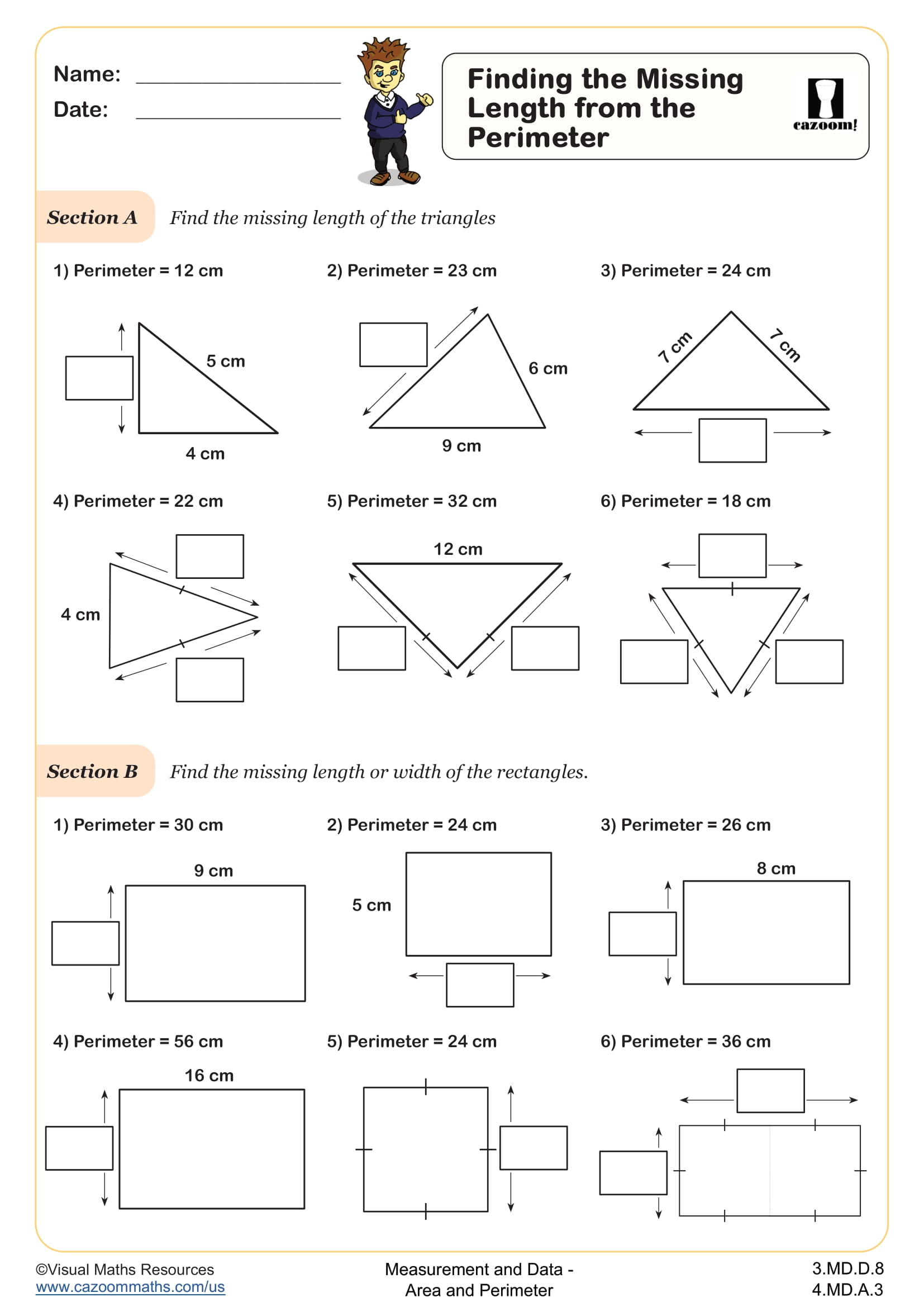
Finding the Missing Length From the Perimeter
Grades: 3rd Grade, 4th Grade
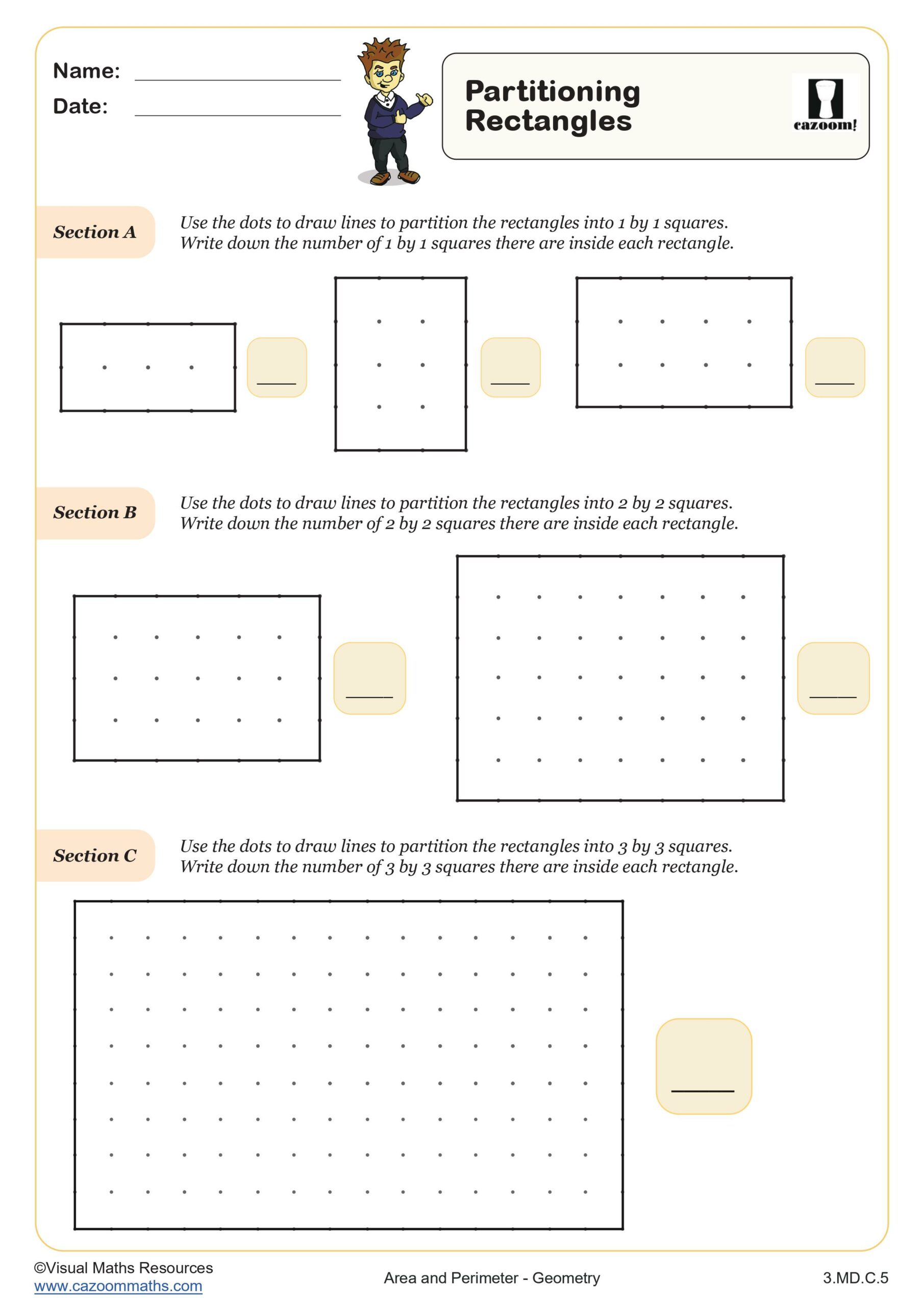
Partitioning Rectangles
Grades: 3rd Grade
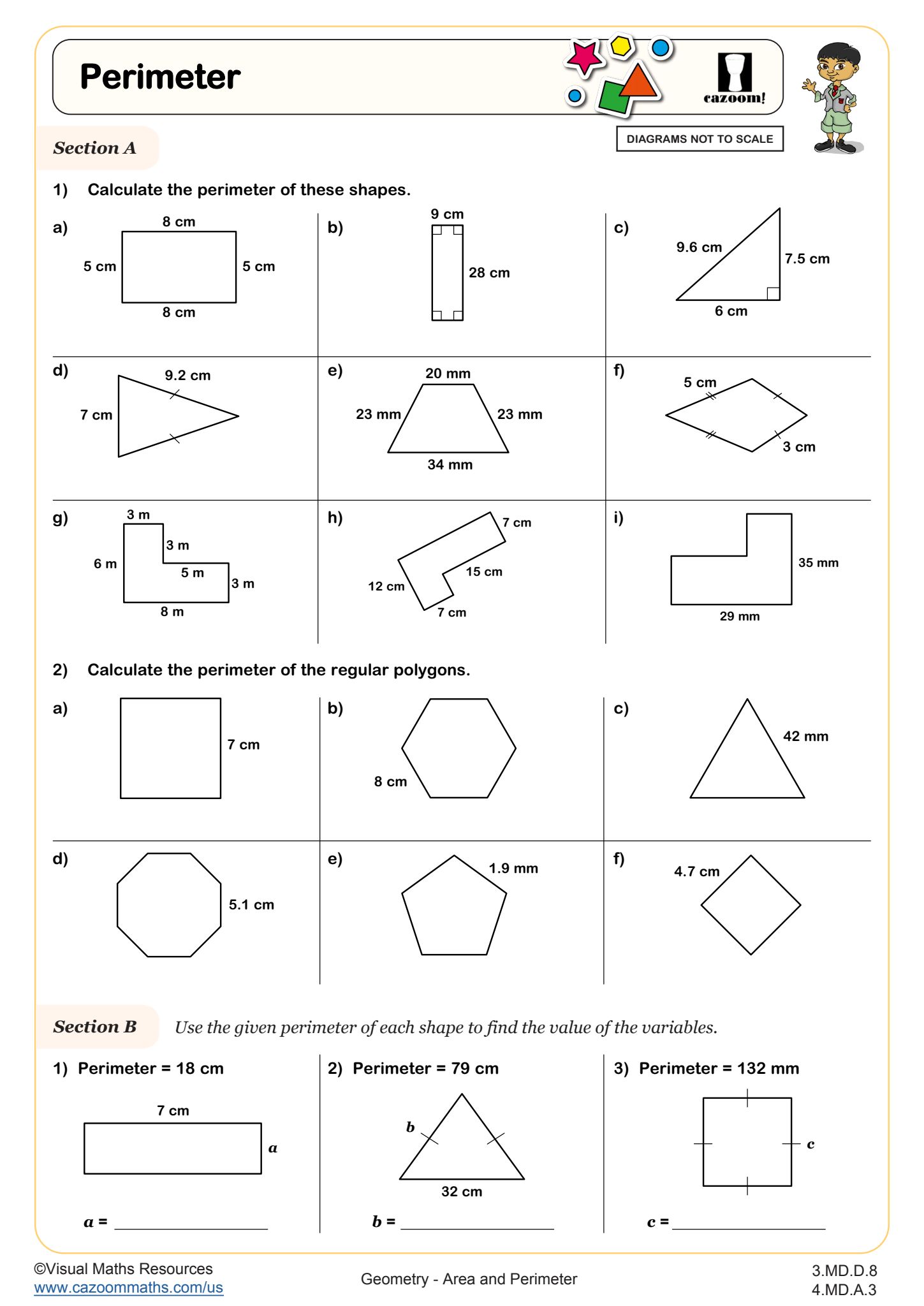
Perimeter
Grades: 3rd Grade, 4th Grade
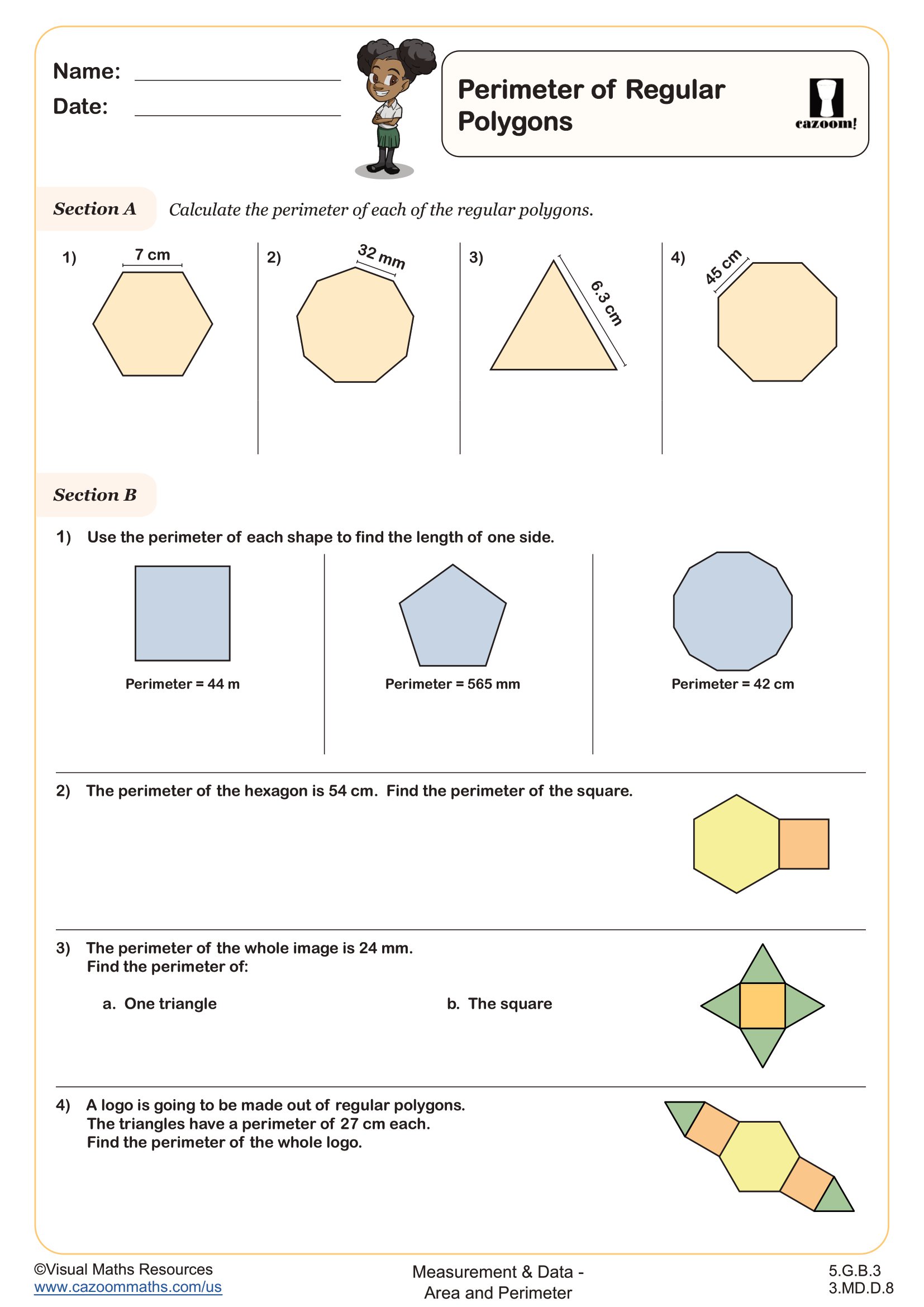
Perimeter of Regular Polygons
Grades: 3rd Grade, 5th Grade
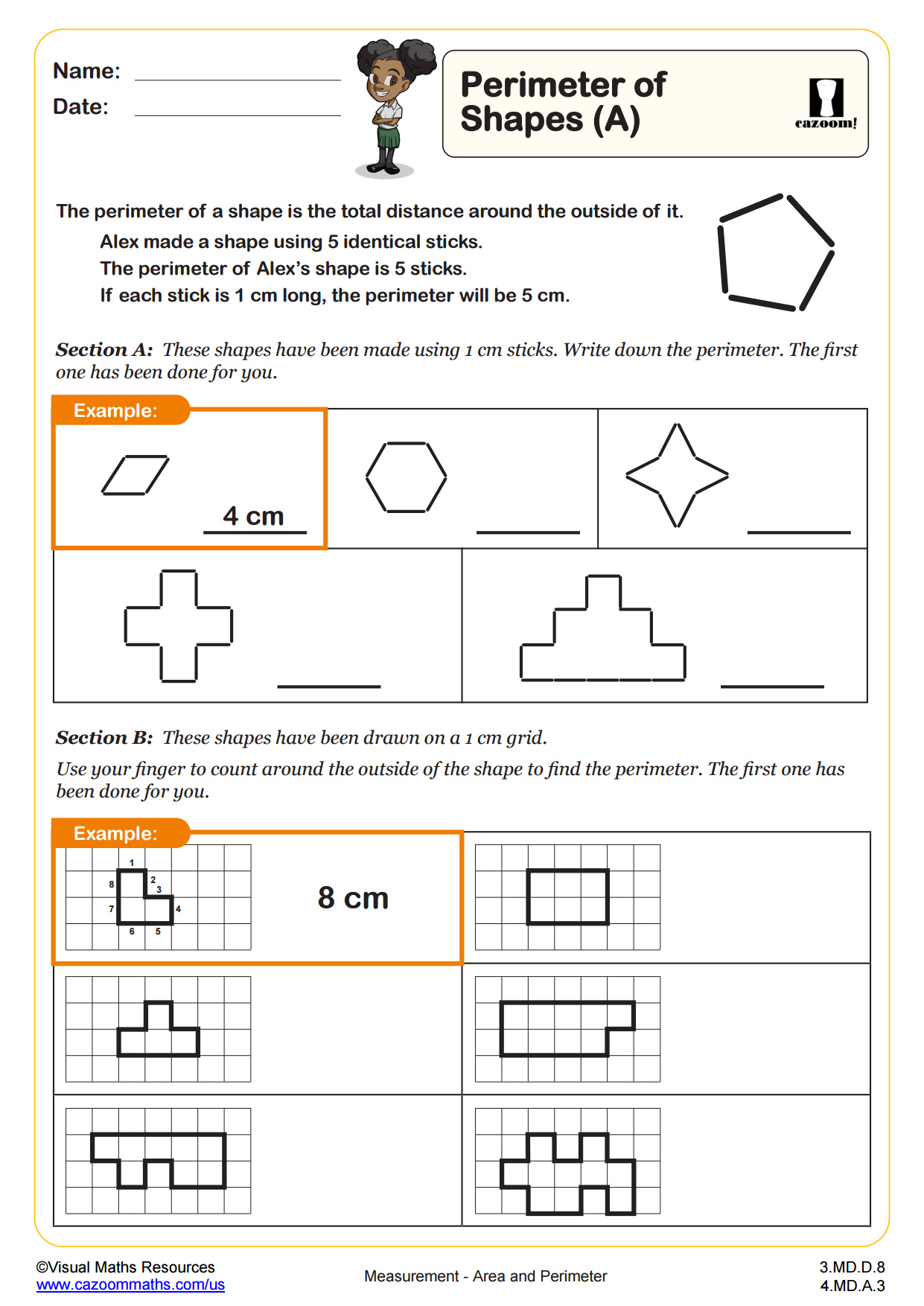
Perimeter of Shapes (A)
Grades: 3rd Grade, 4th Grade
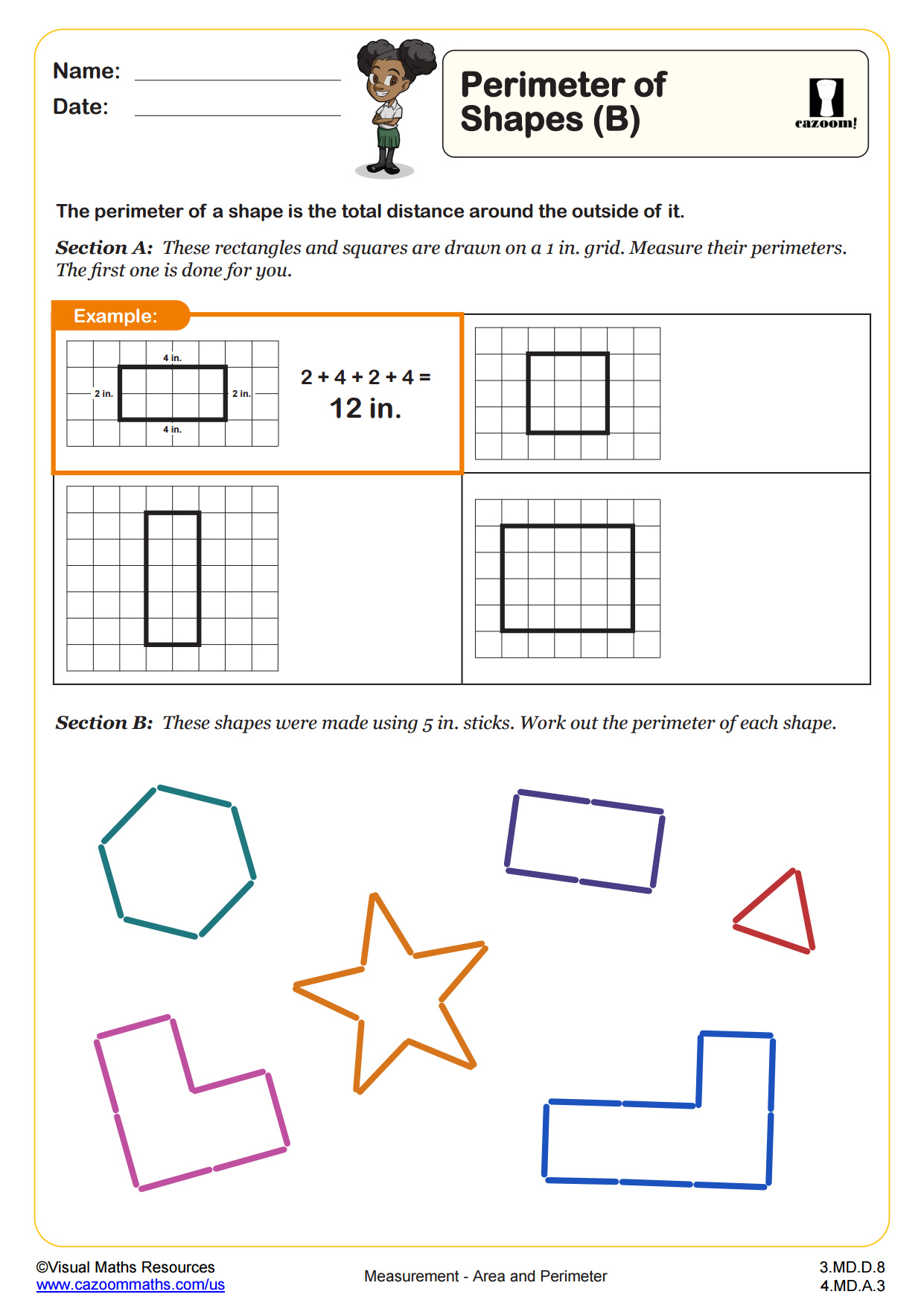
Perimeter of Shapes (B)
Grades: 3rd Grade, 4th Grade
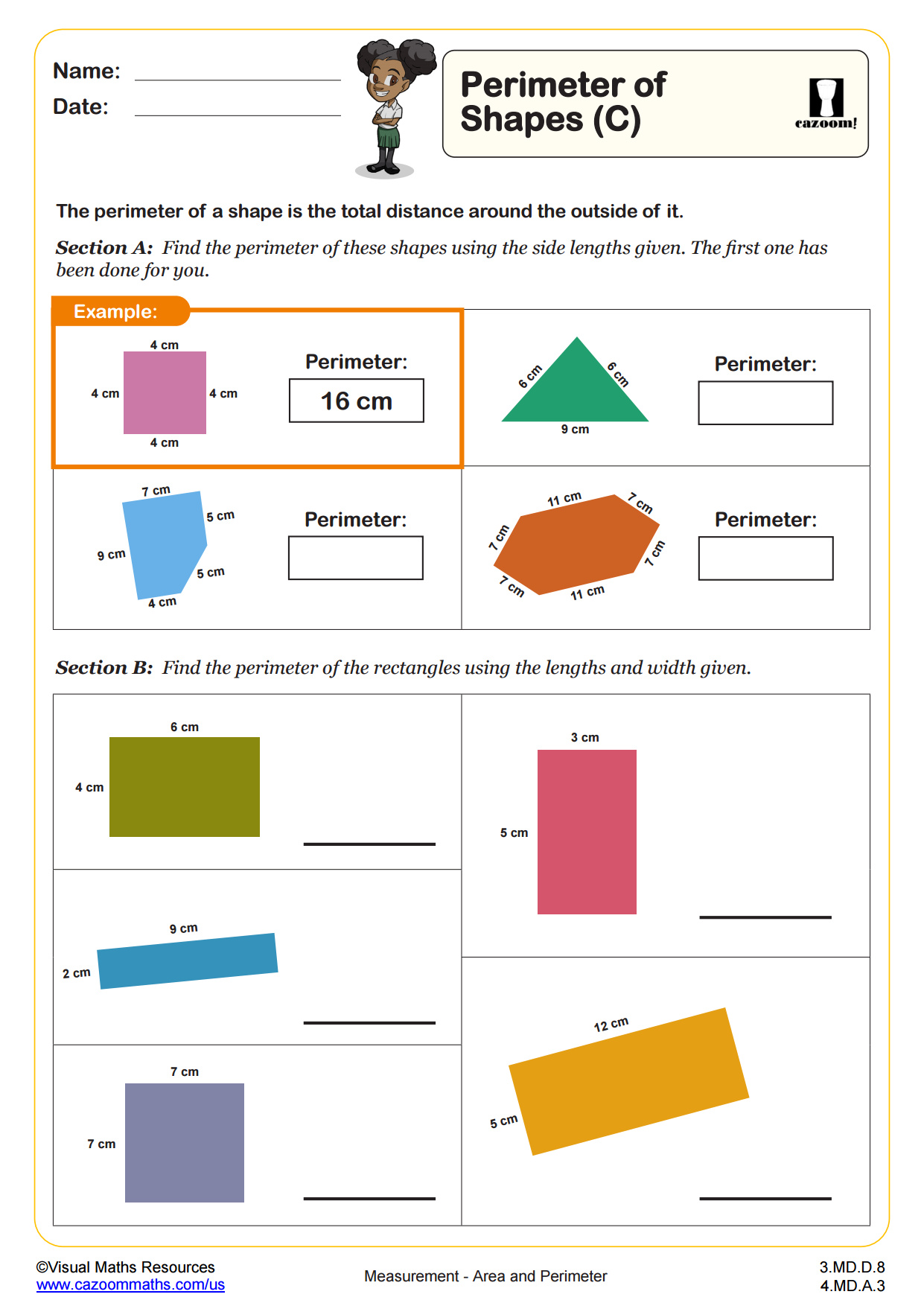
Perimeter of Shapes (C)
Grades: 3rd Grade, 4th Grade
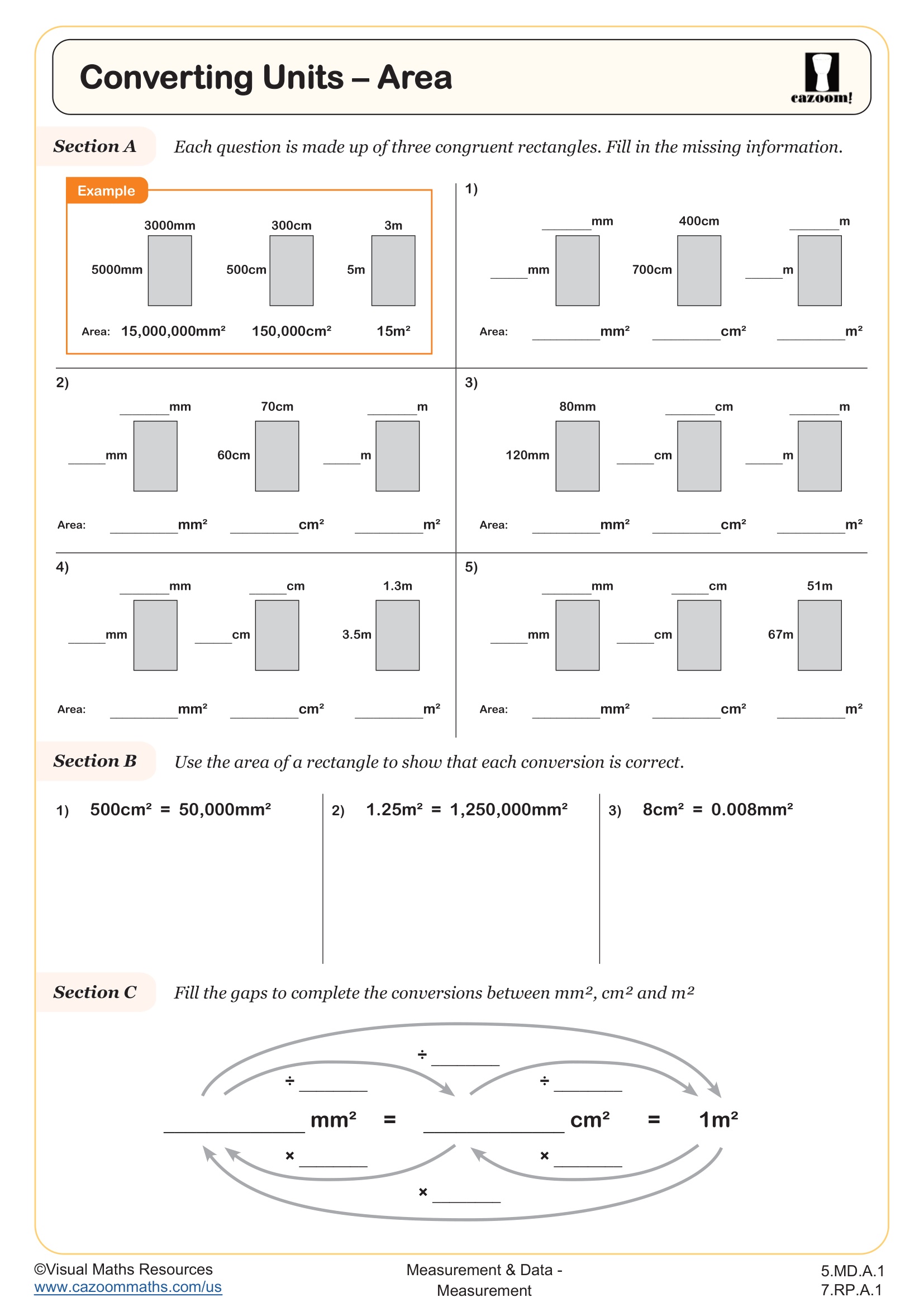
Converting Units - Area
Grades: 5th Grade, 7th Grade
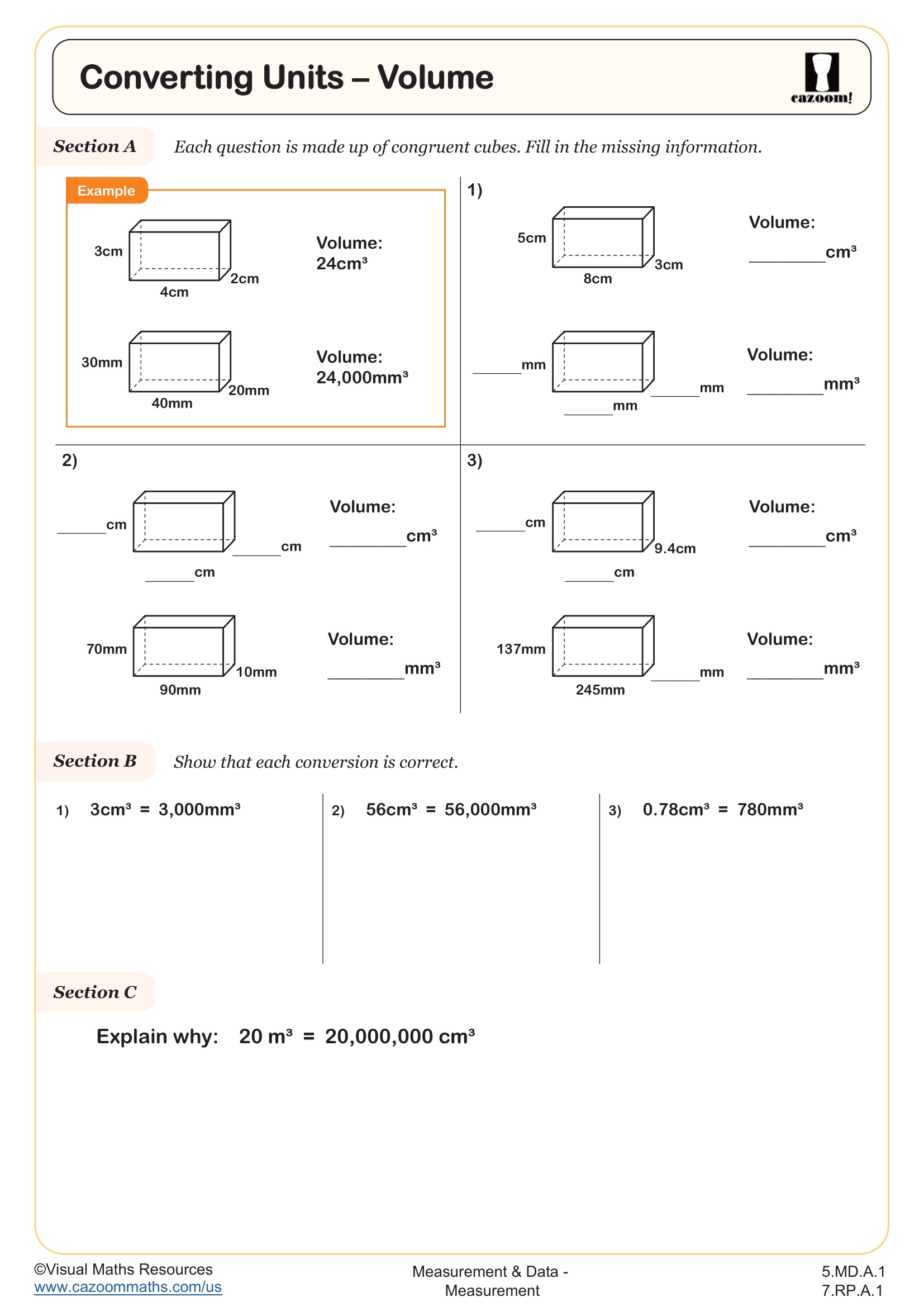
Converting Units - Volume
Grades: 5th Grade, 7th Grade
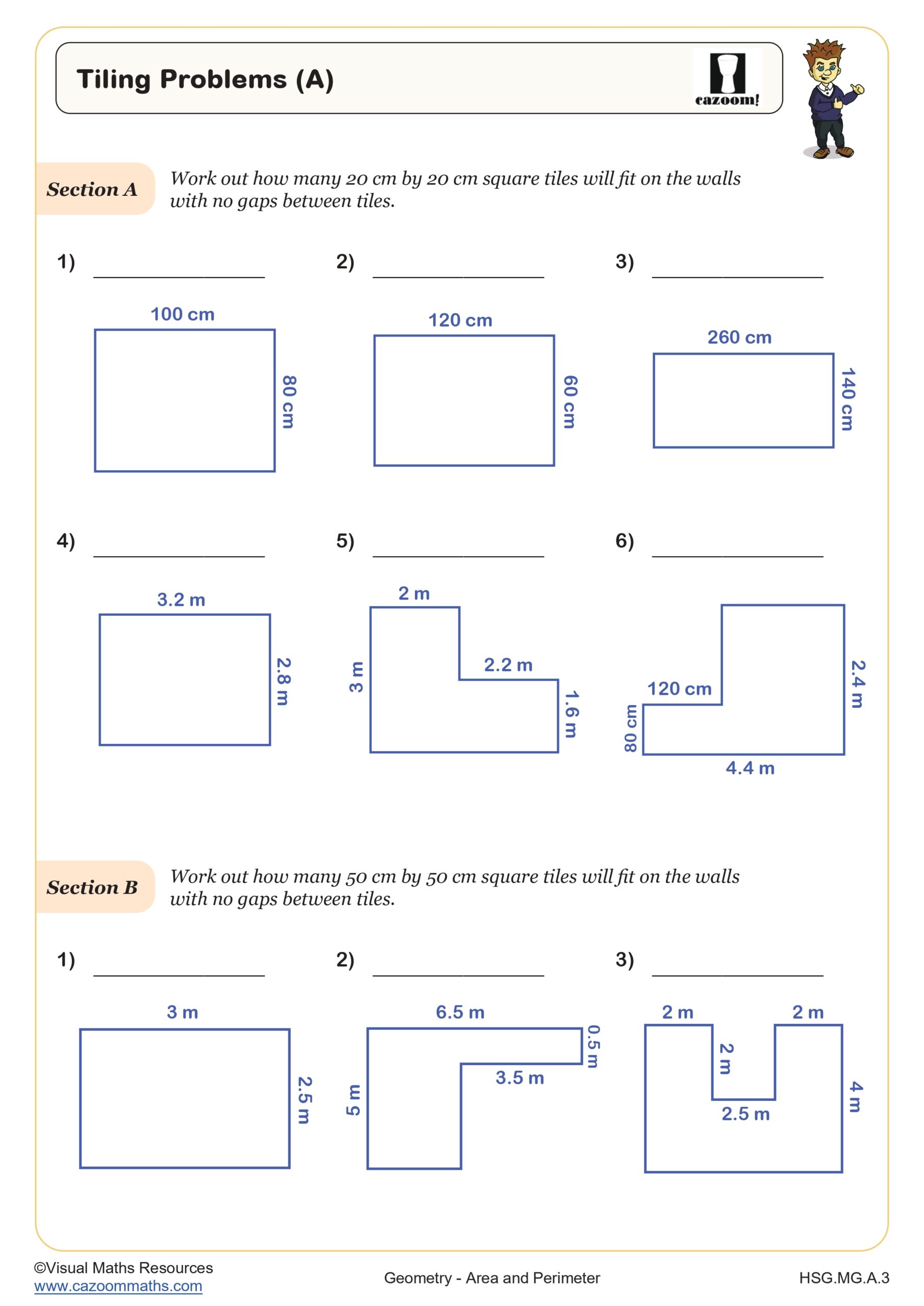
Tiling Problems (A)
Grades: 5th Grade, 6th Grade
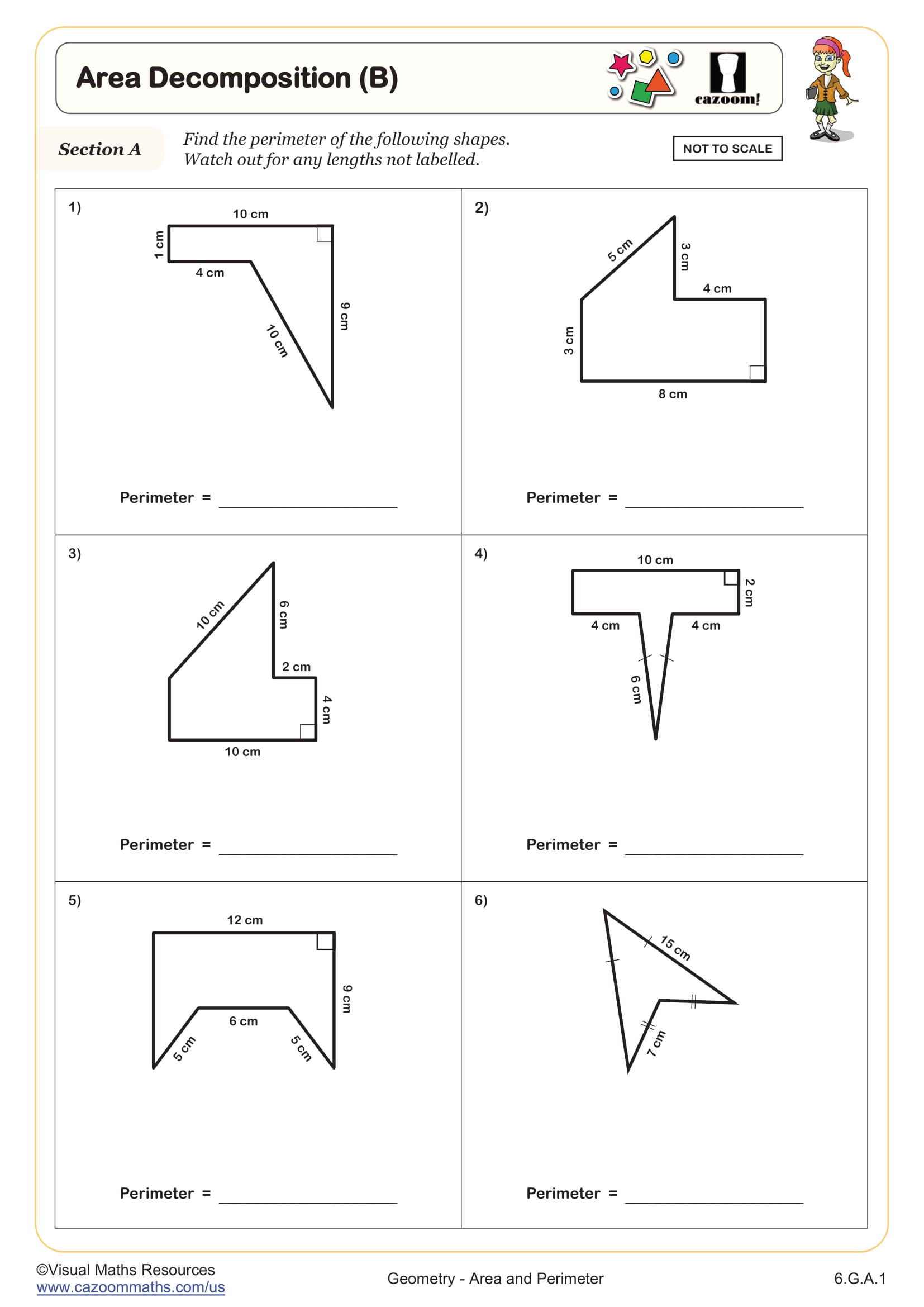
Area Decomposition (B)
Grades: 6th Grade
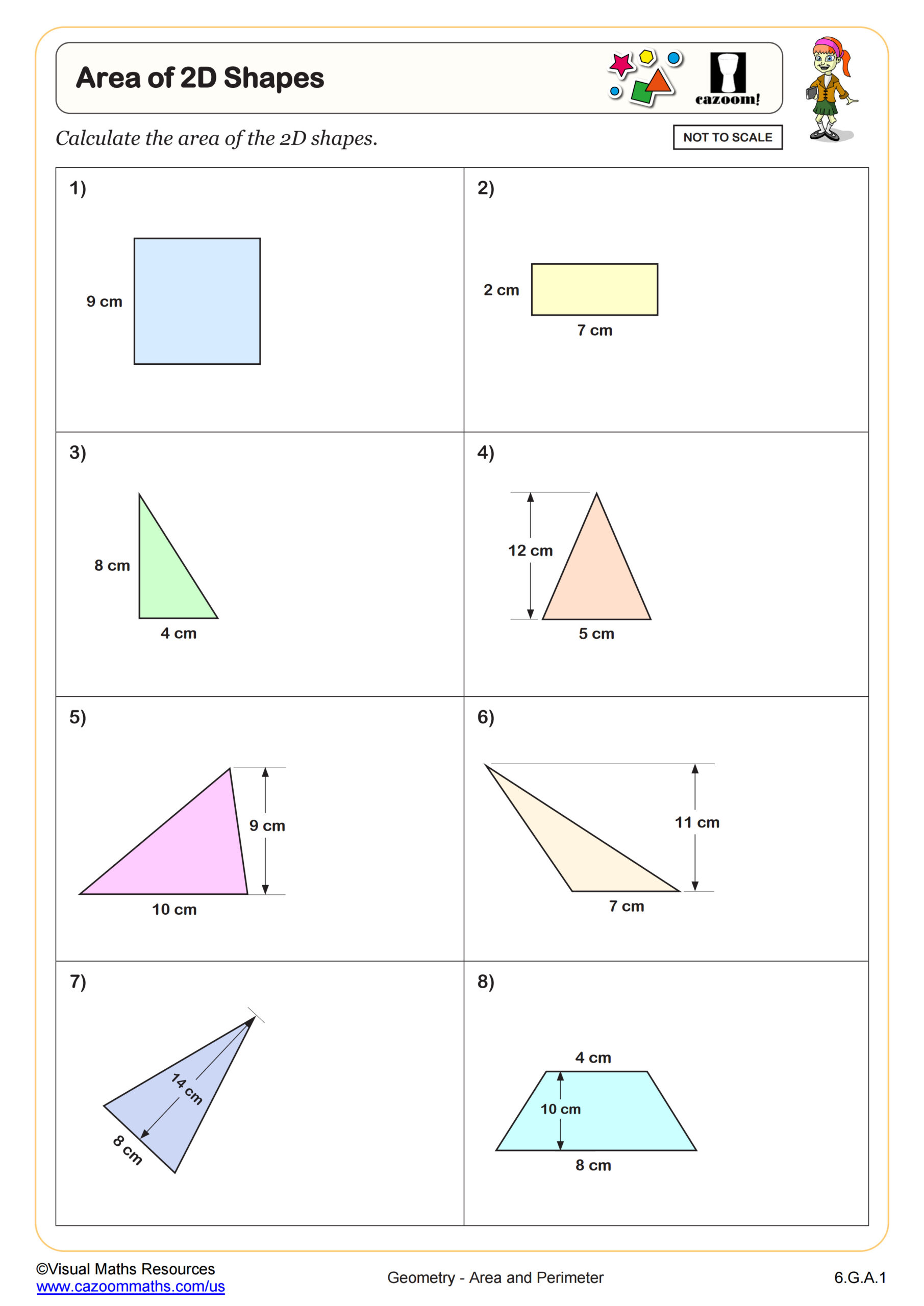
Area of 2D Shapes
Grades: 6th Grade
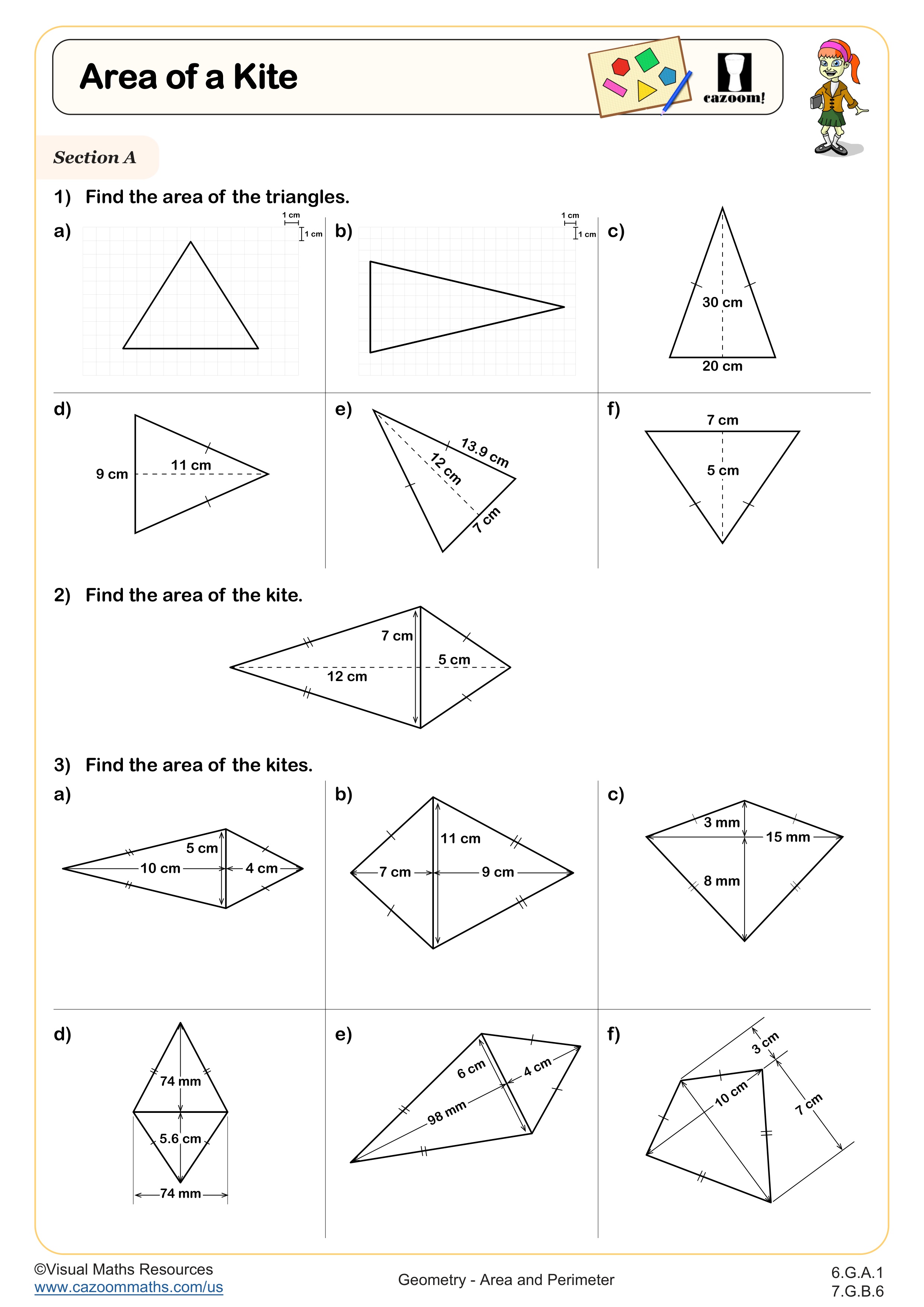
Area of a Kite
Grades: 6th Grade, 7th Grade
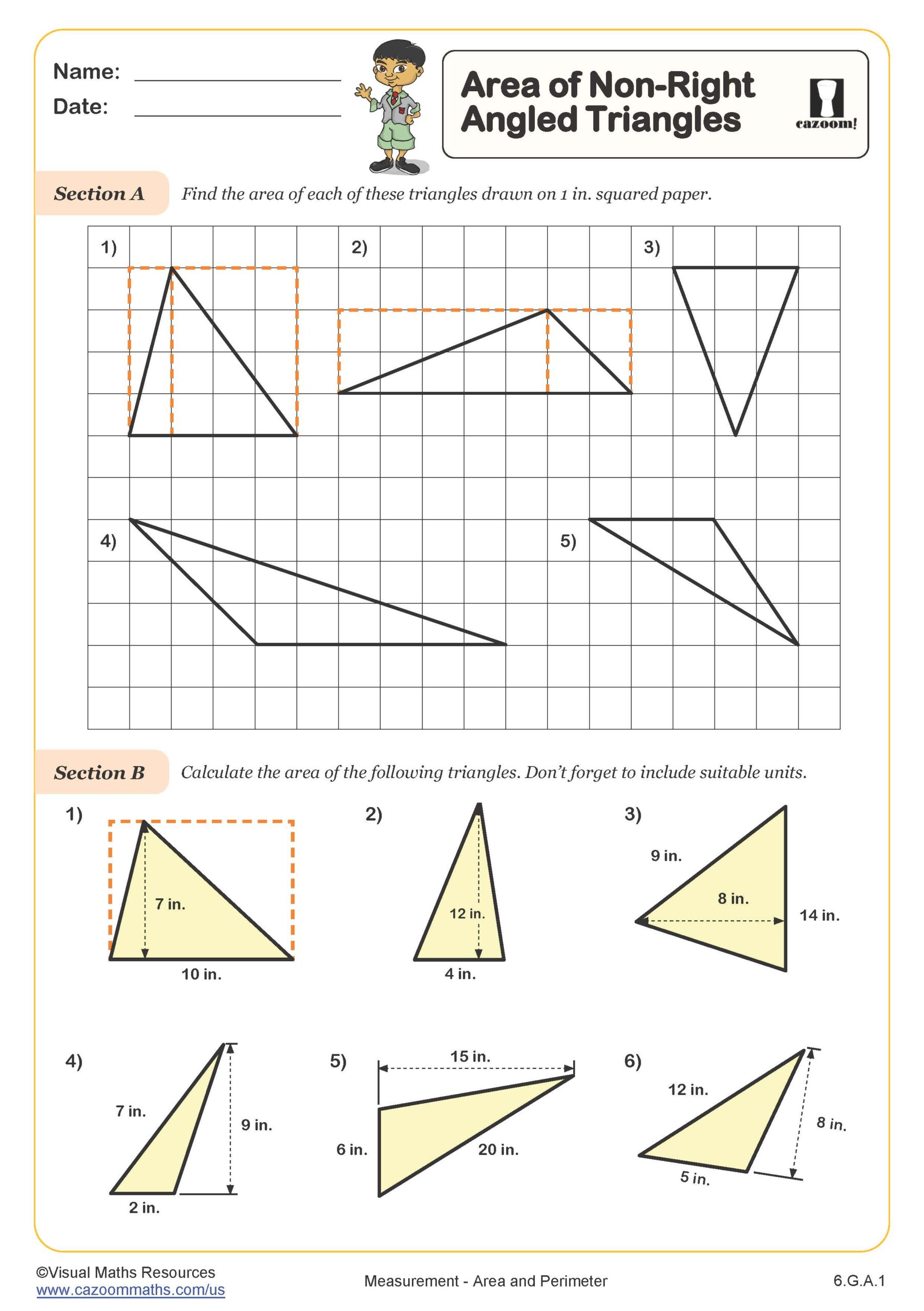
Area of Non-Right Angled Triangles
Grades: 6th Grade
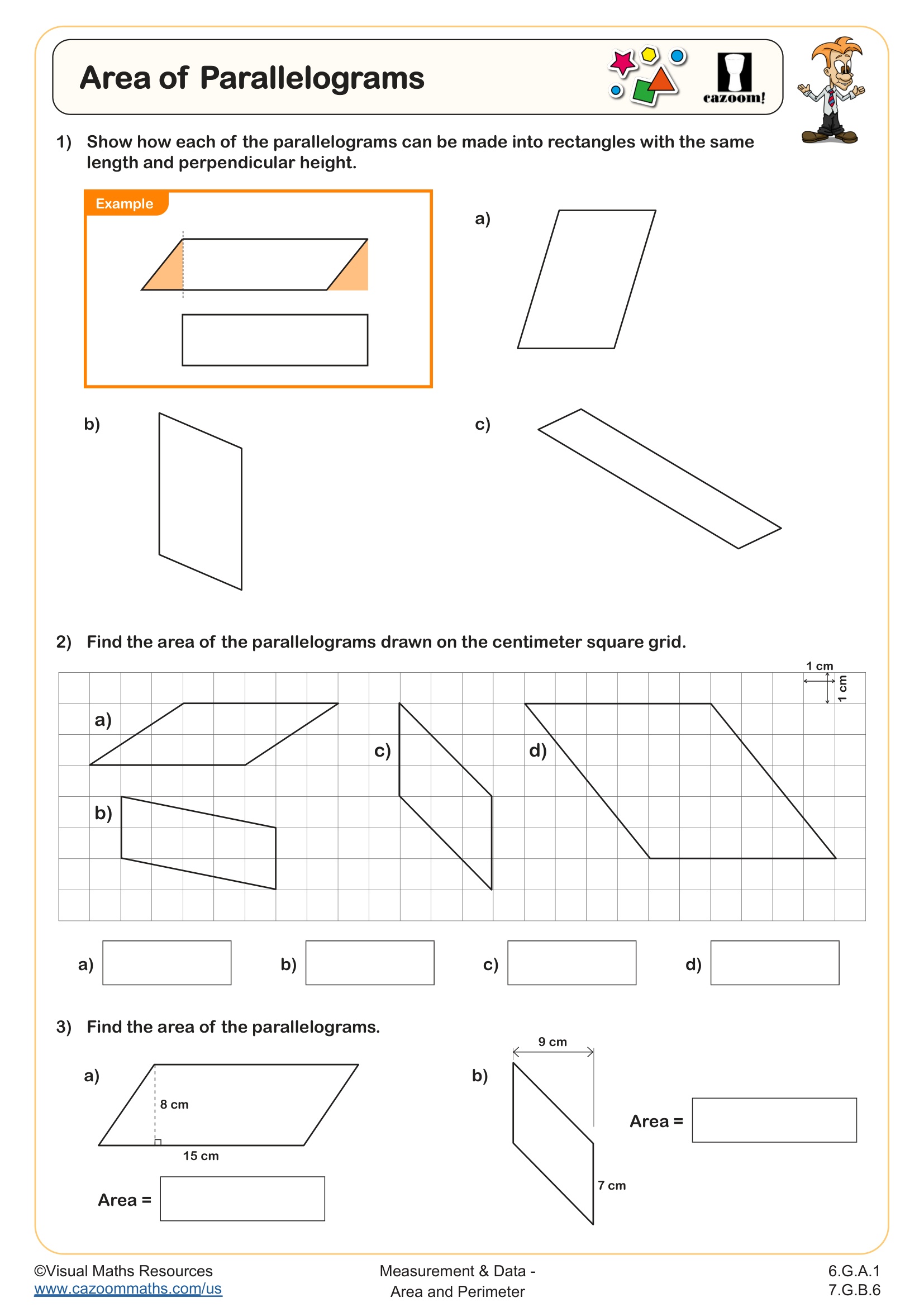
Area of Parallelograms
Grades: 6th Grade, 7th Grade
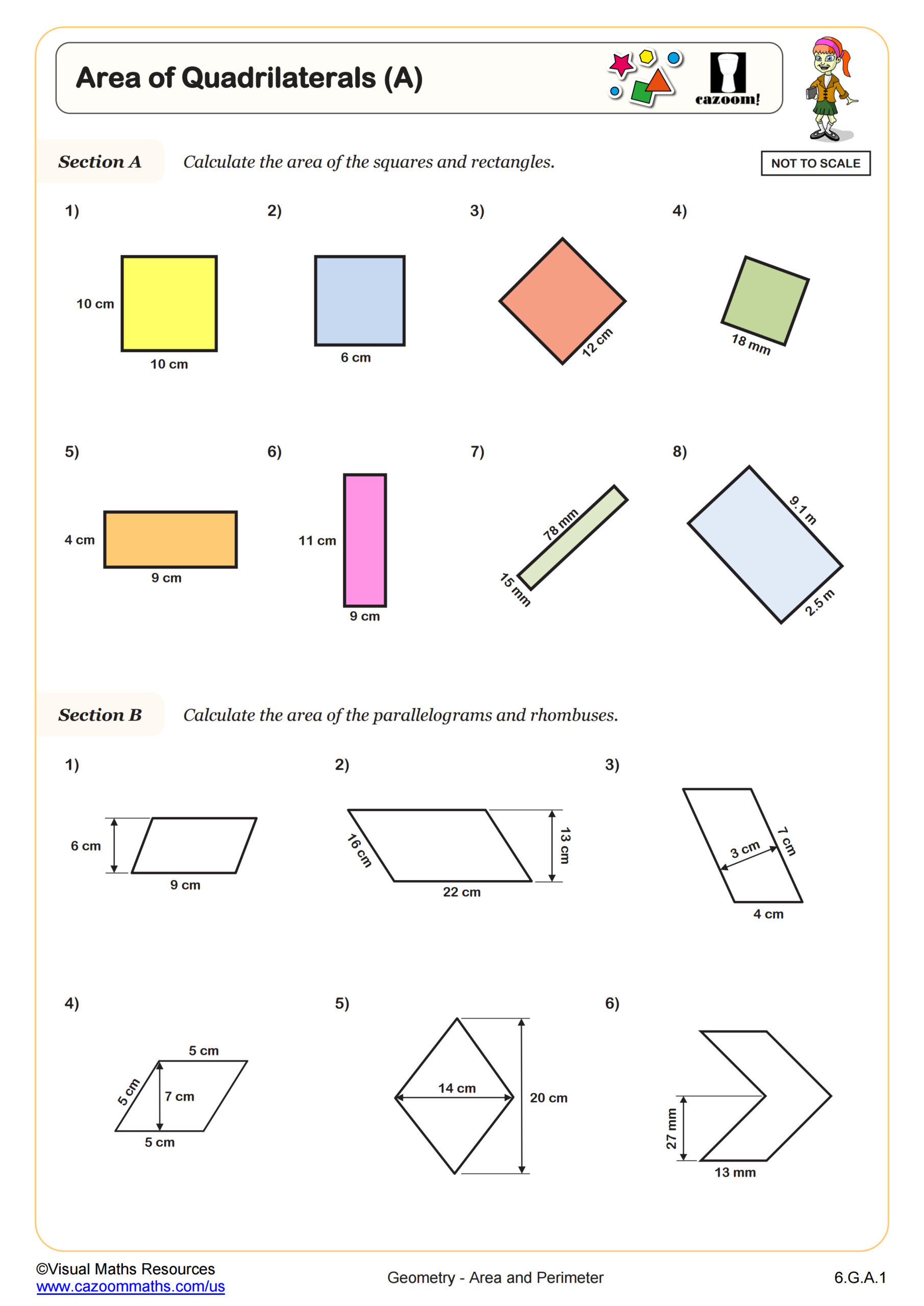
Area of Quadrilaterals (A)
Grades: 6th Grade
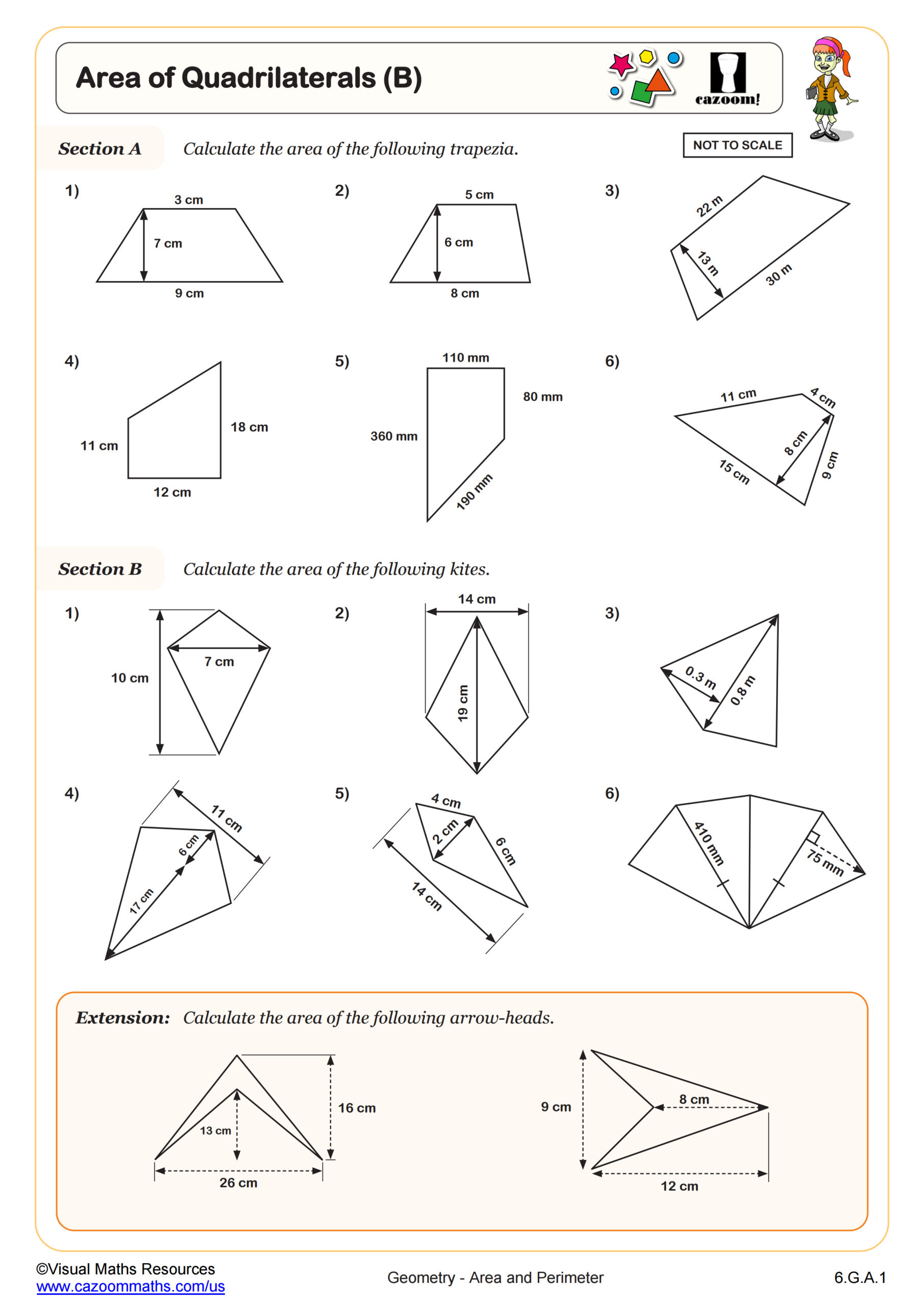
Area of Quadrilaterals (B)
Grades: 6th Grade
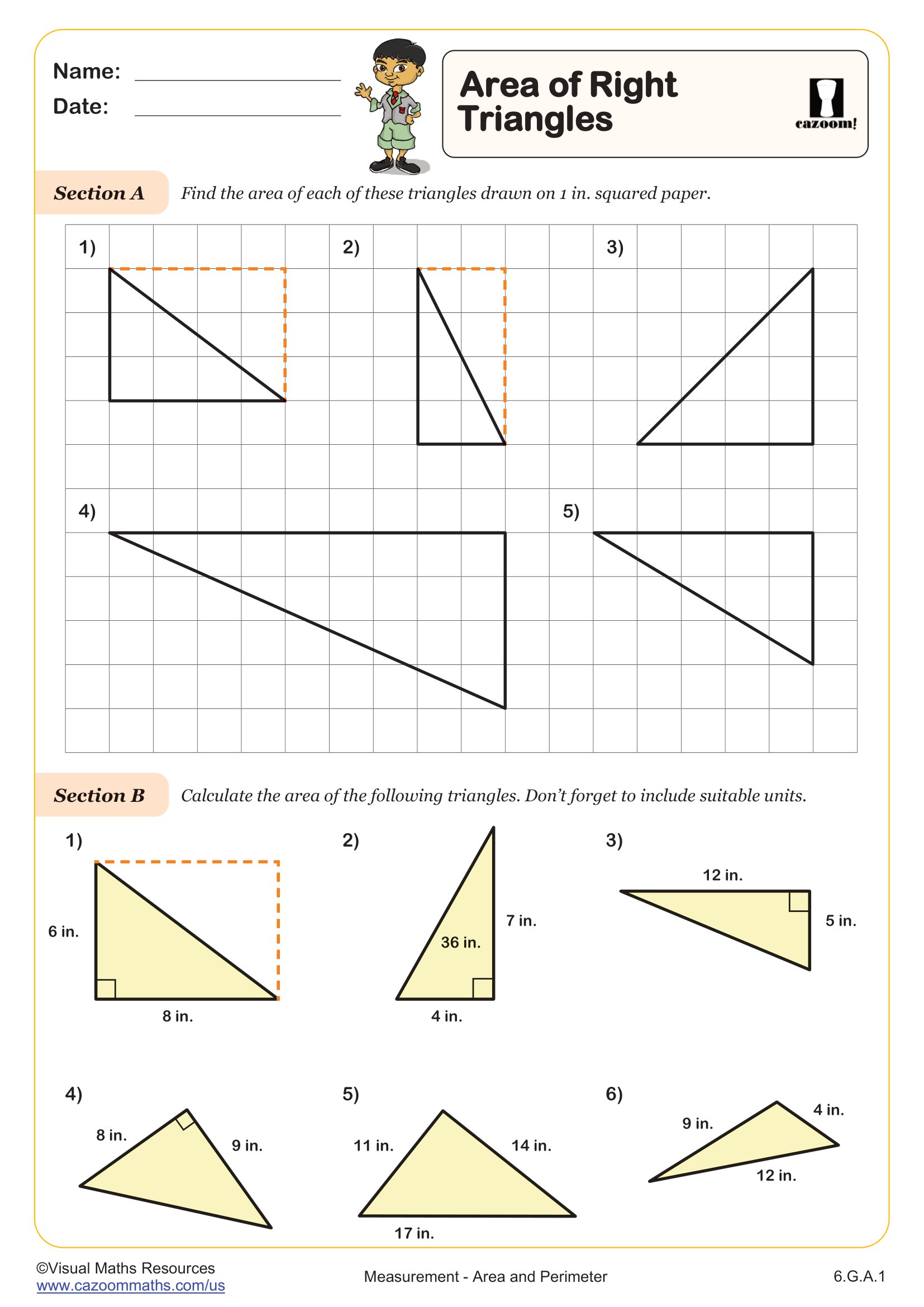
Area of Right Triangles
Grades: 6th Grade
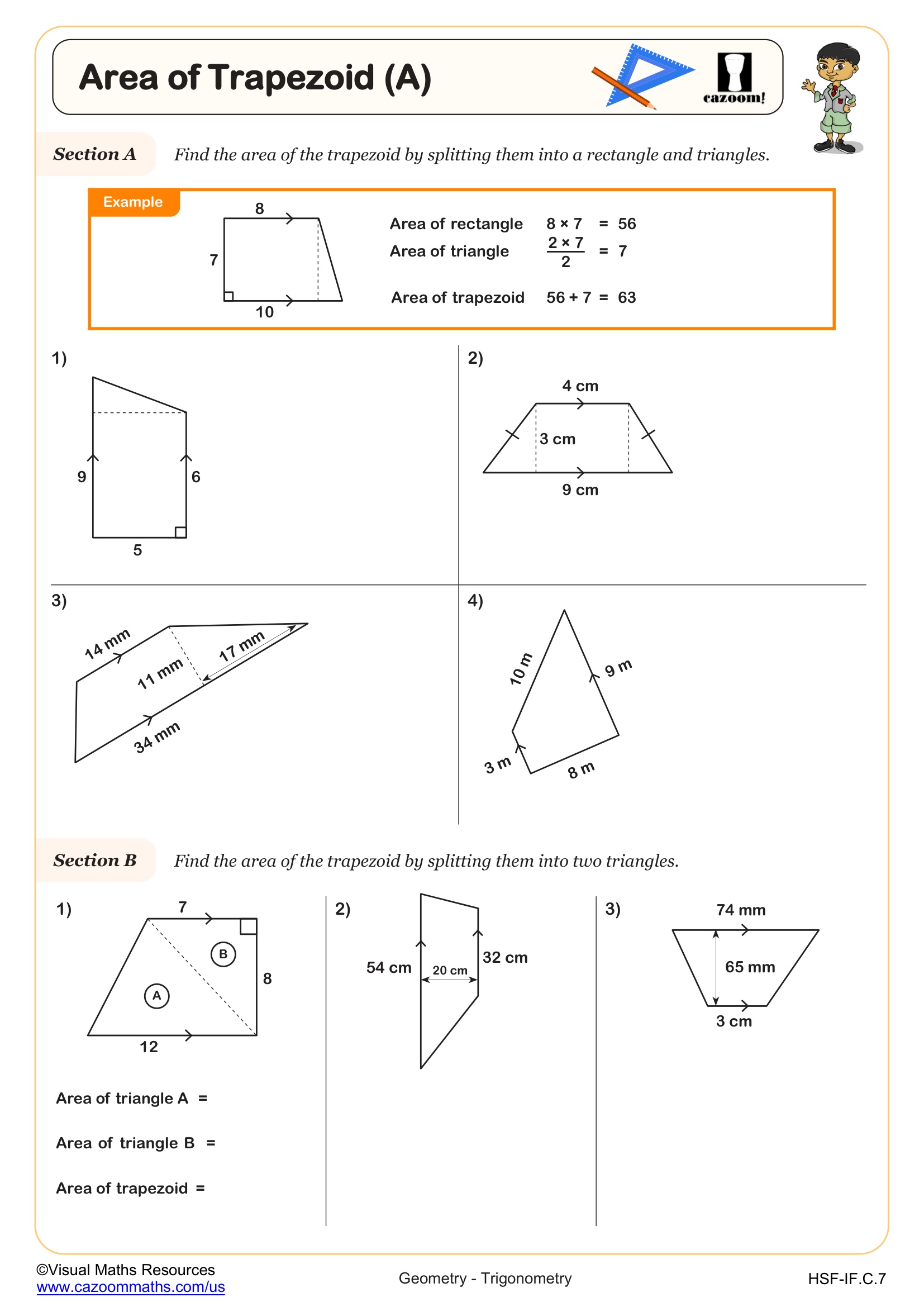
Area of Trapezoid (A)
Grades: 6th Grade
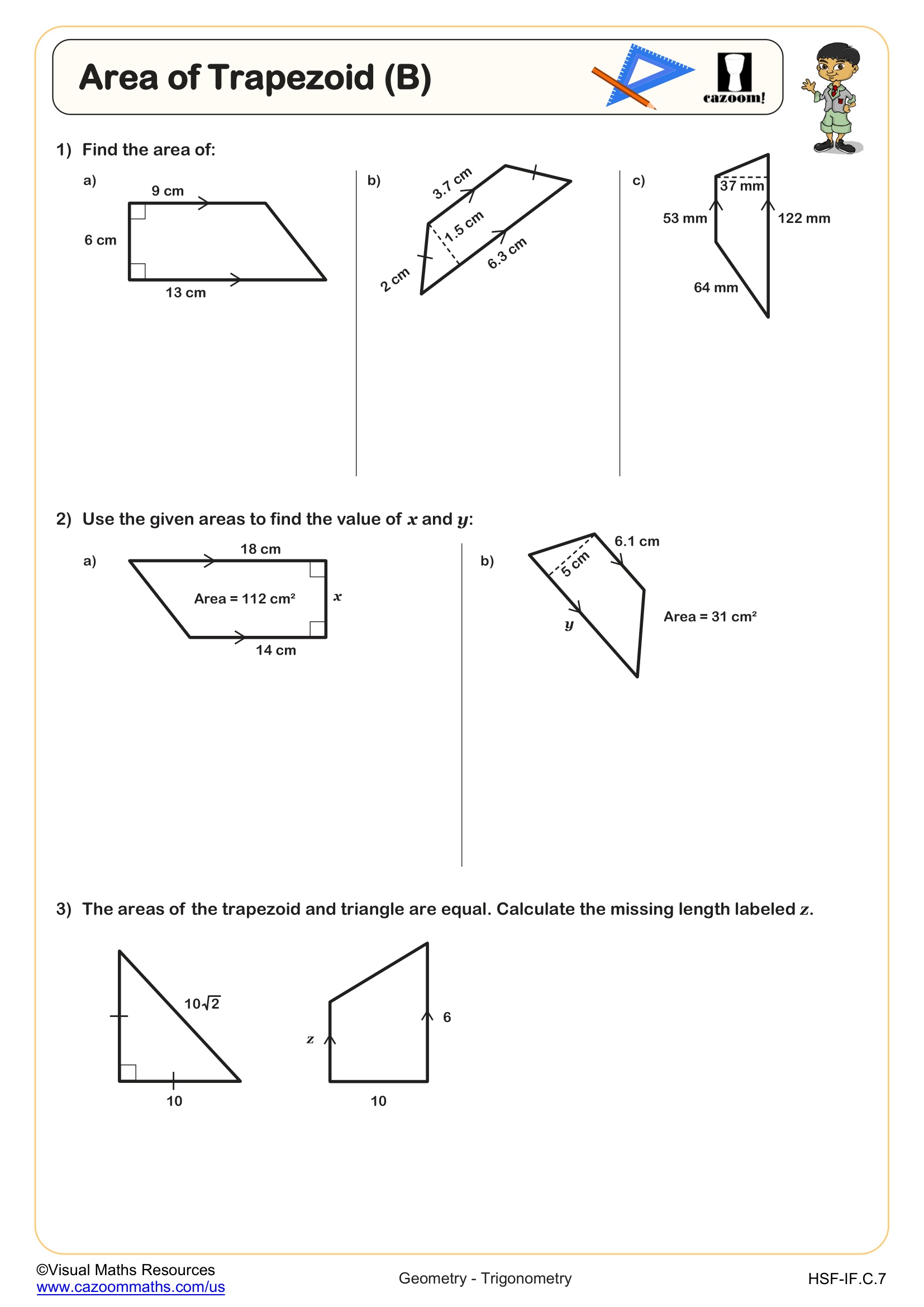
Area of Trapezoid (B)
Grades: 6th Grade
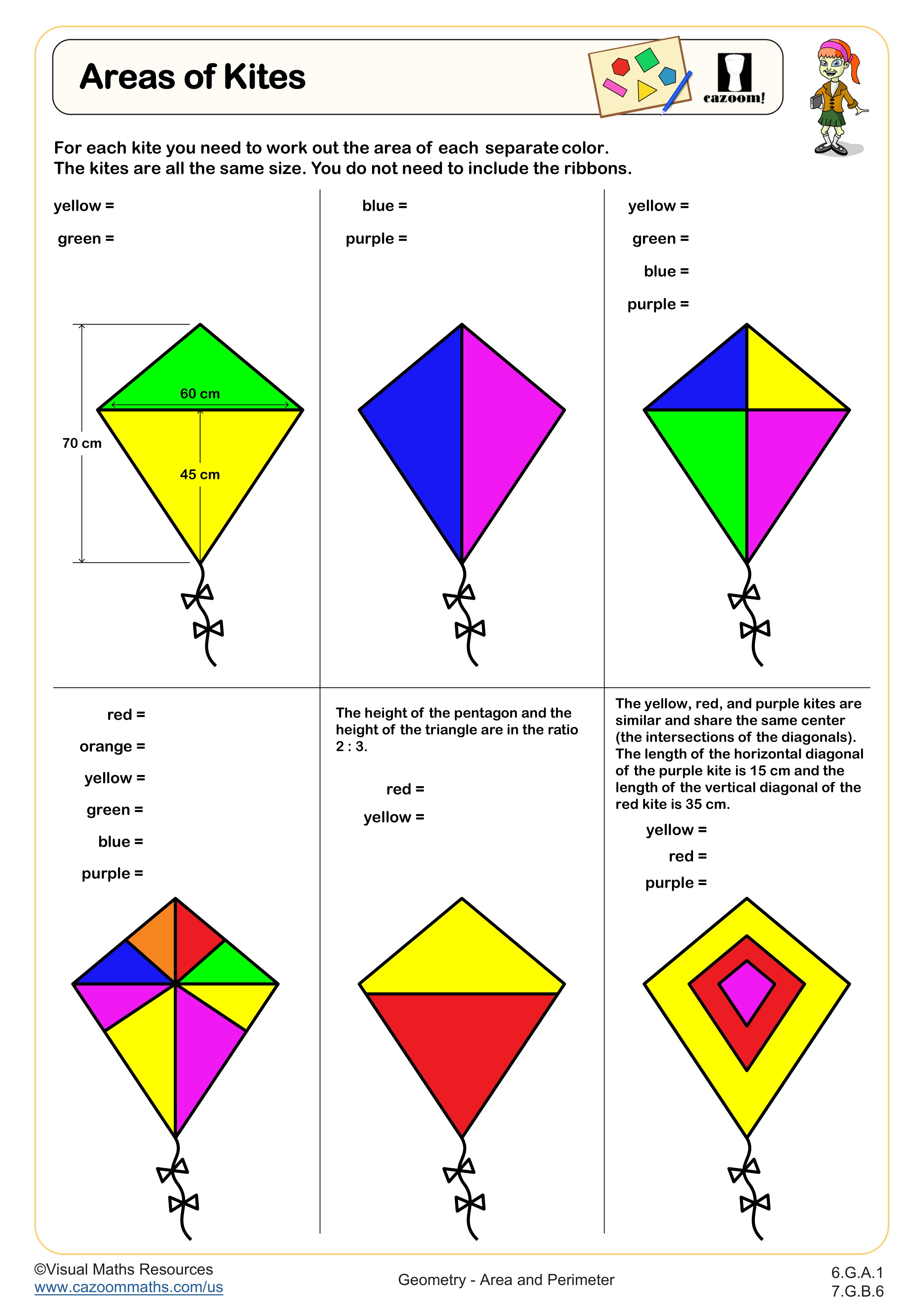
Areas of Kites
Grades: 6th Grade, 7th Grade
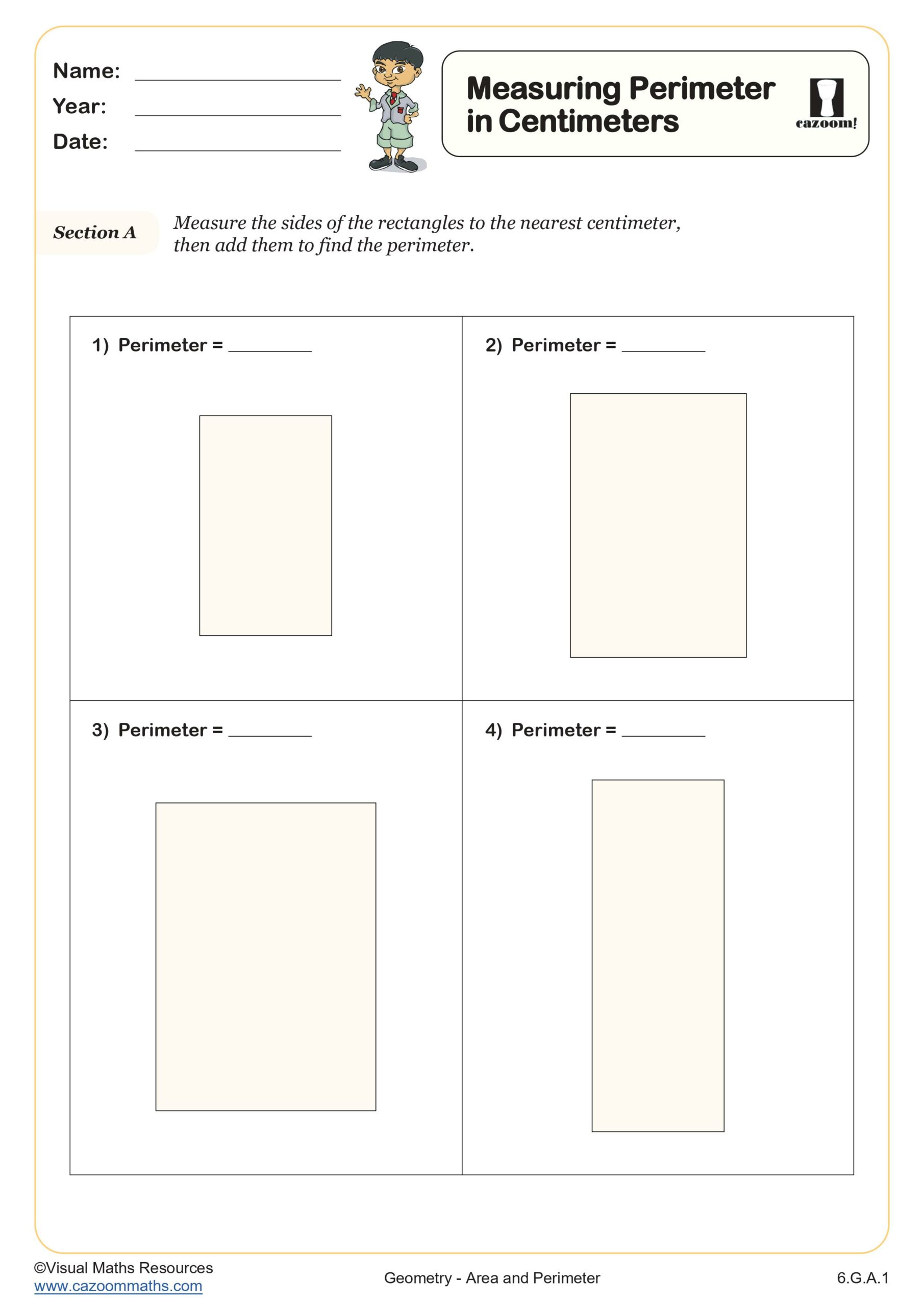
Measuring Perimeter in Centimeters
Grades: 6th Grade
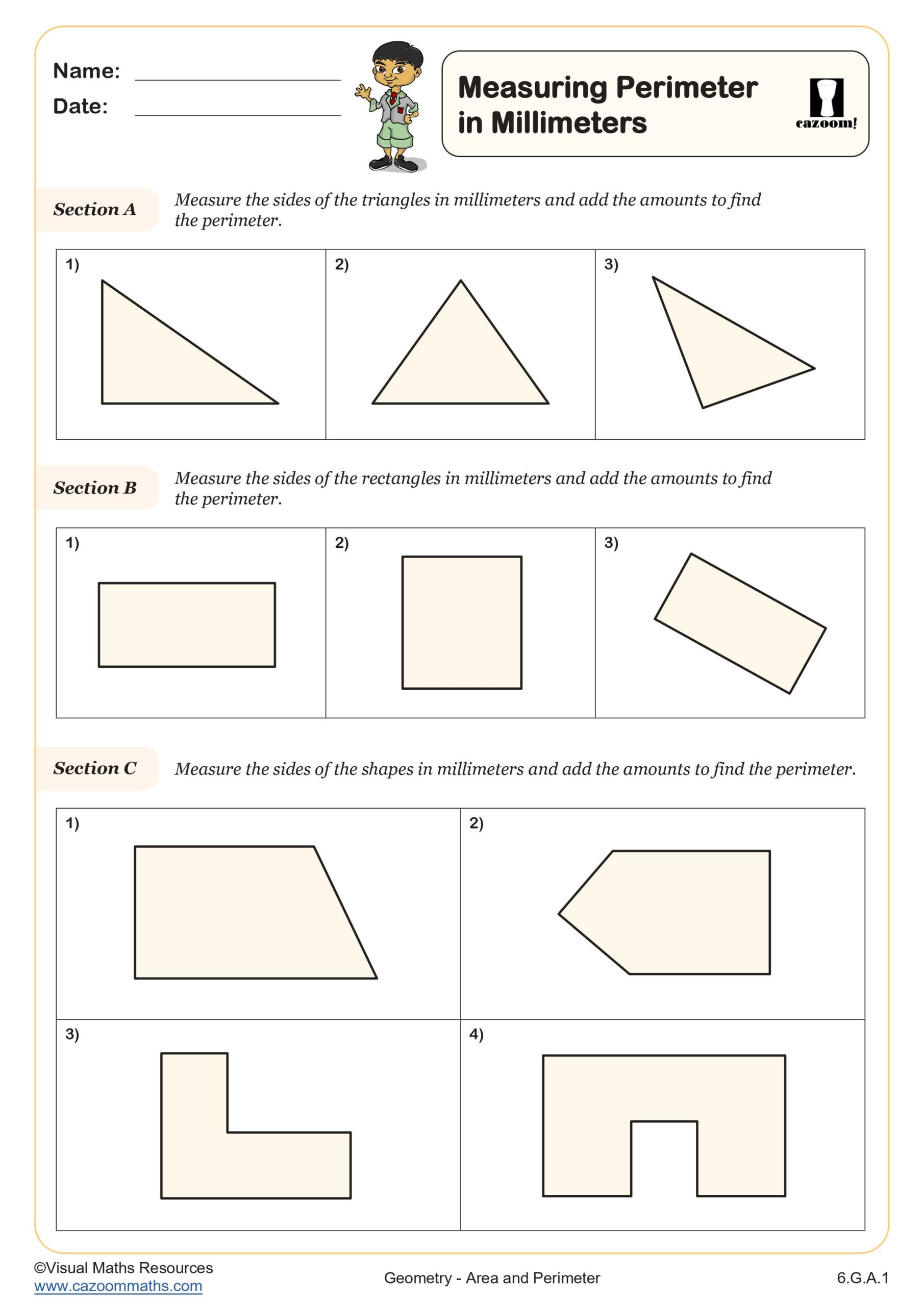
Measuring Perimeter in Millimeters
Grades: 6th Grade
Surface Area of Pyramids
Grades: 6th Grade, 7th Grade
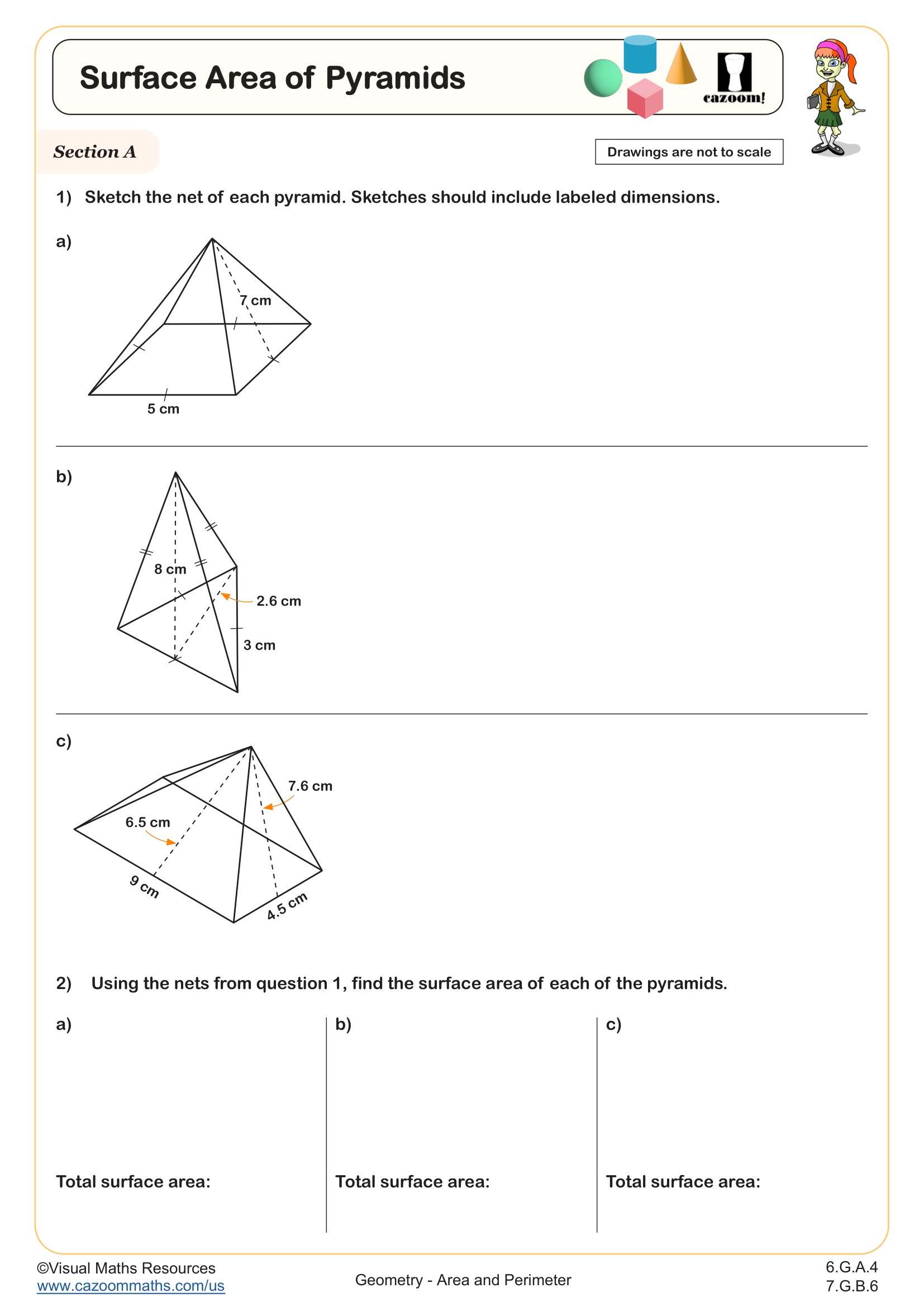
Area and Circumference of Circles
Grades: 7th Grade
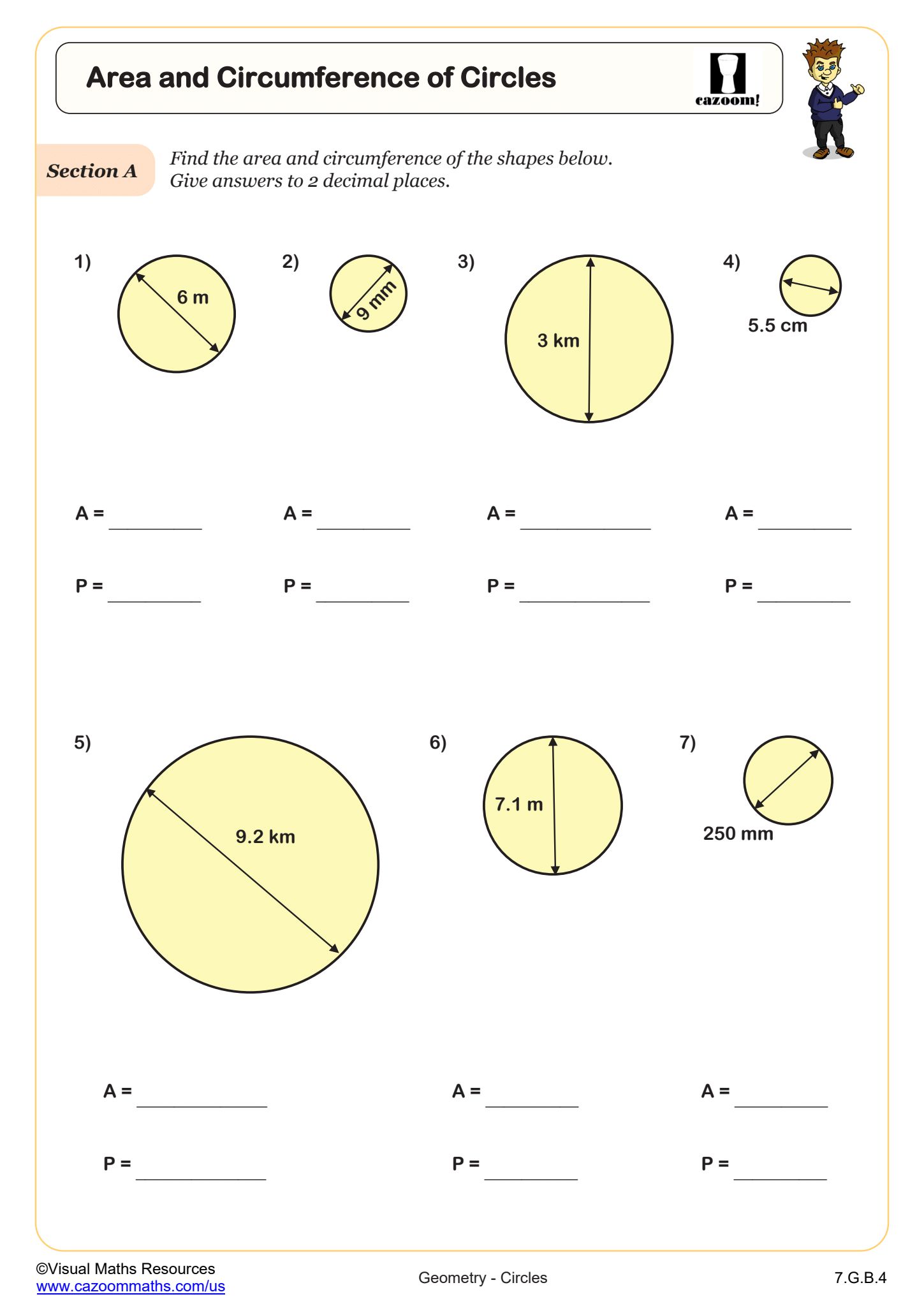
Area of Circle Word Problems
Grades: 7th Grade
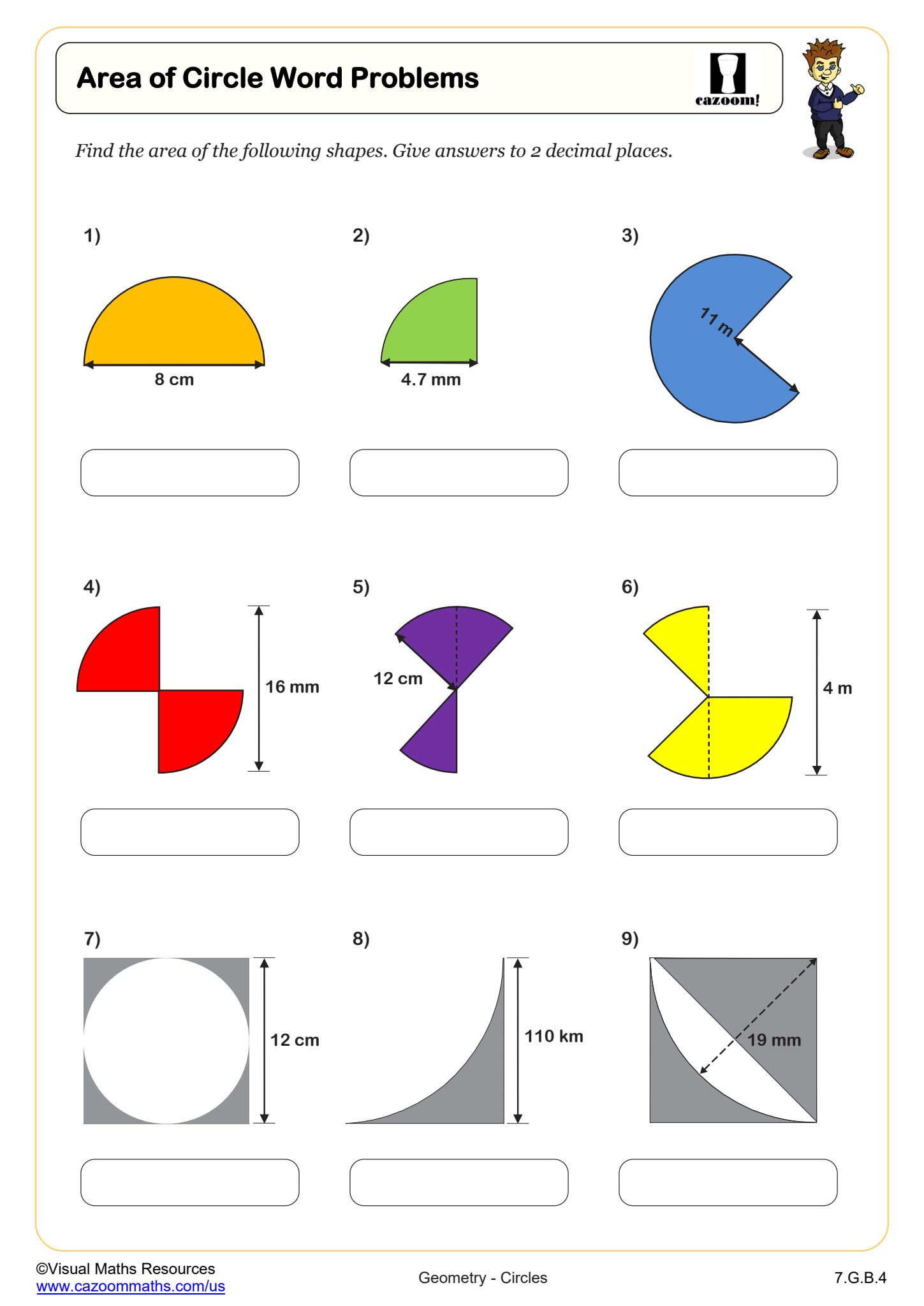
Area of Circles
Grades: 7th Grade
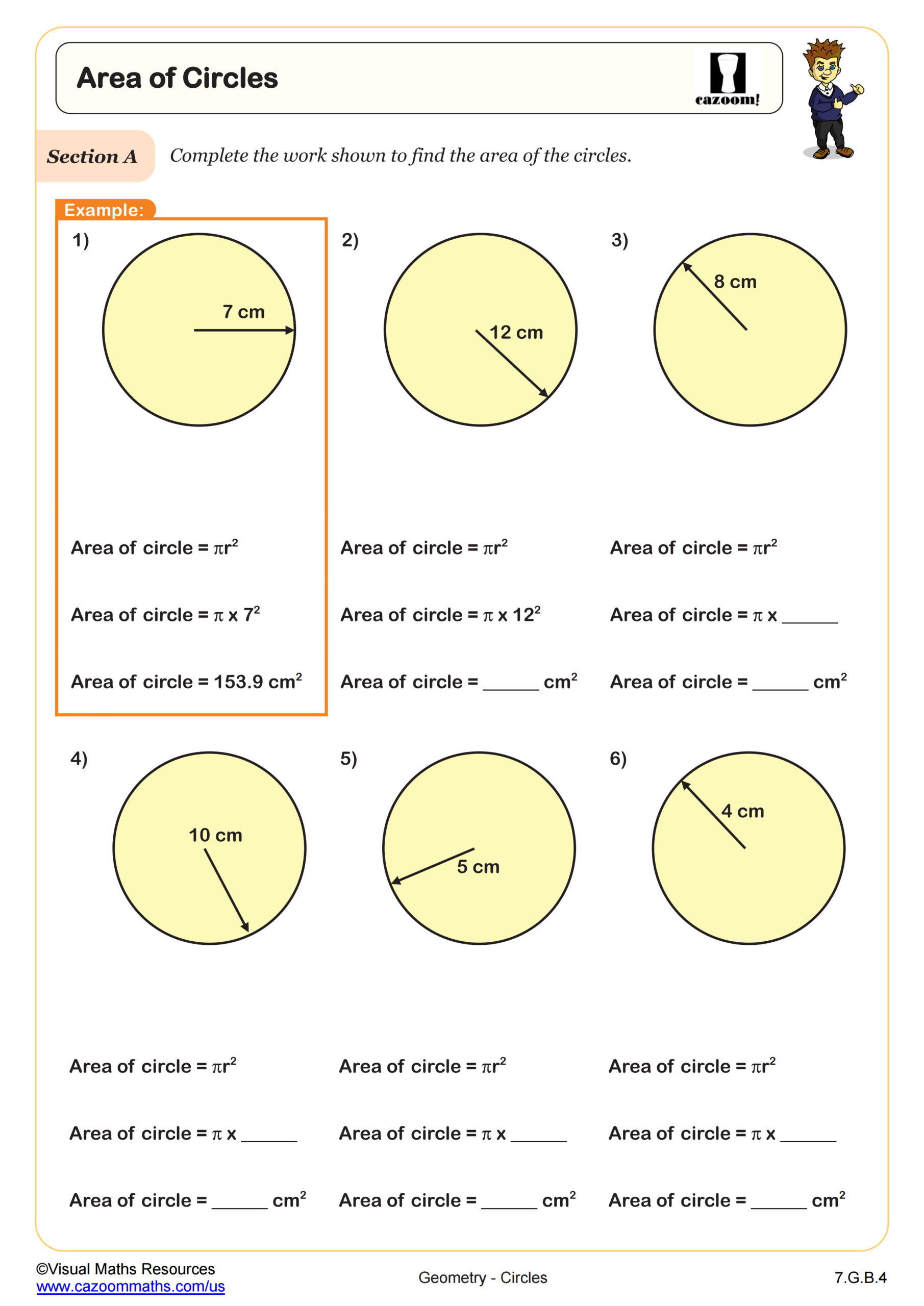
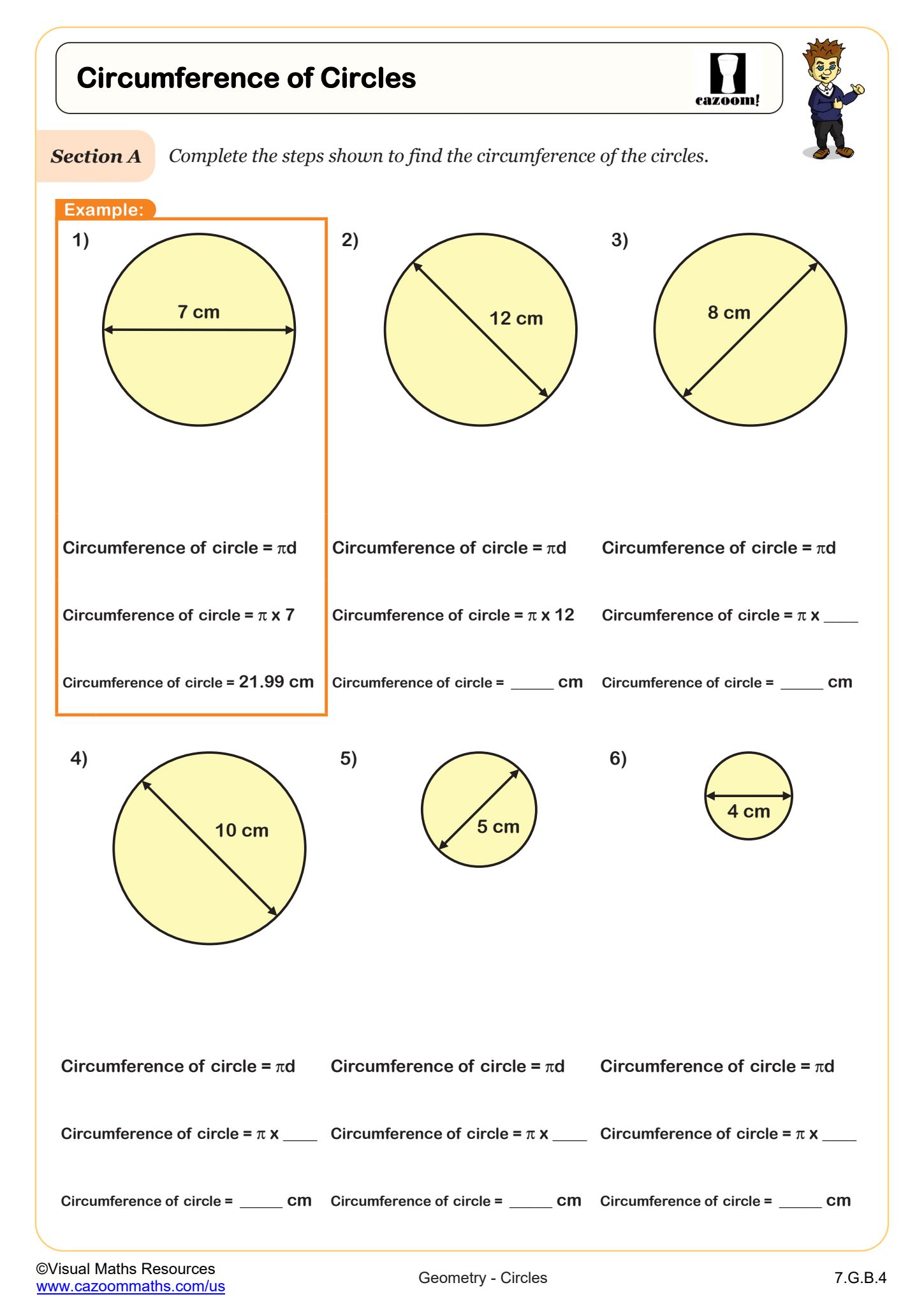
Circumference of Circles
Grades: 7th Grade
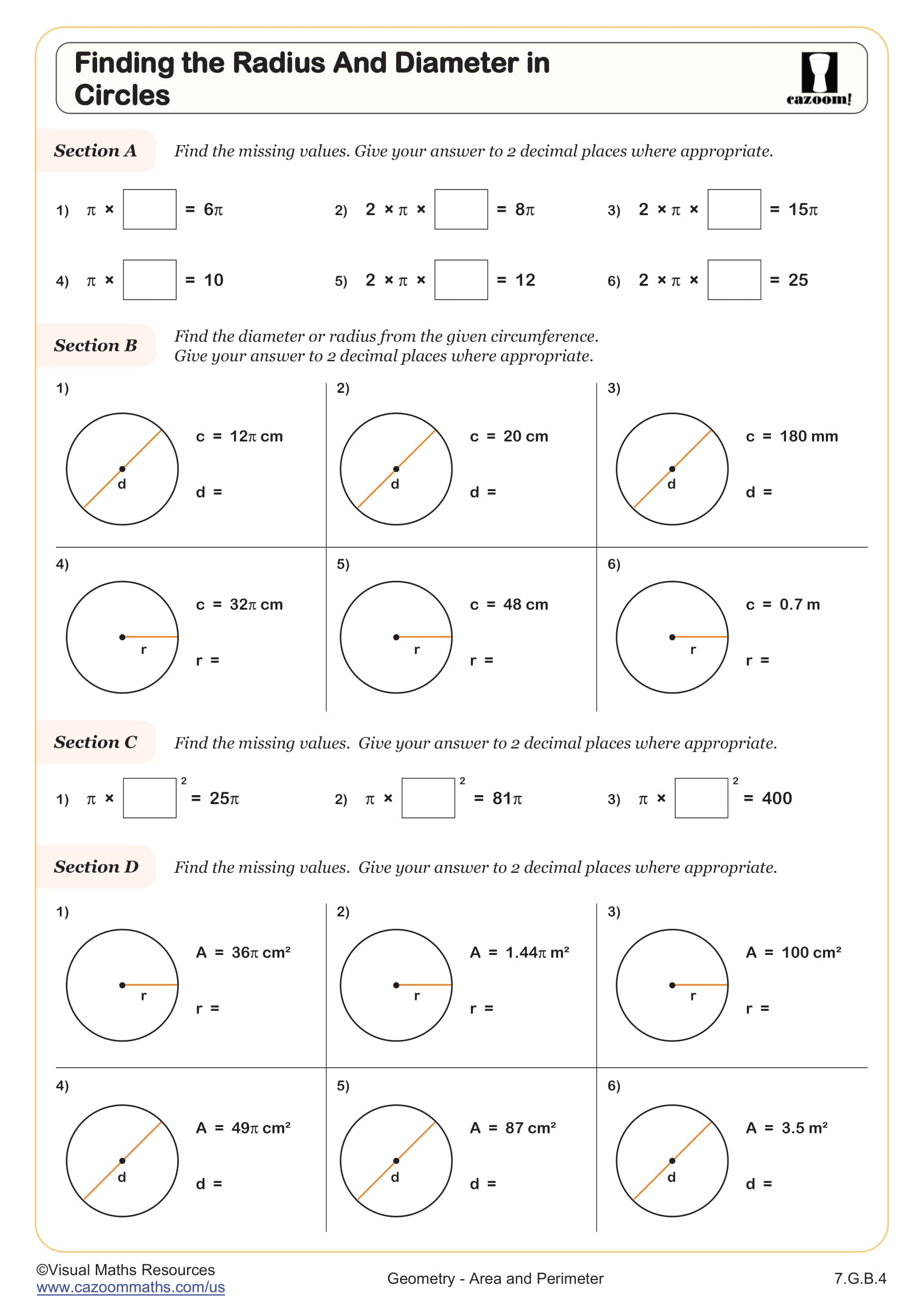
Finding the Radius and Diameter in Circles
Grades: 7th Grade
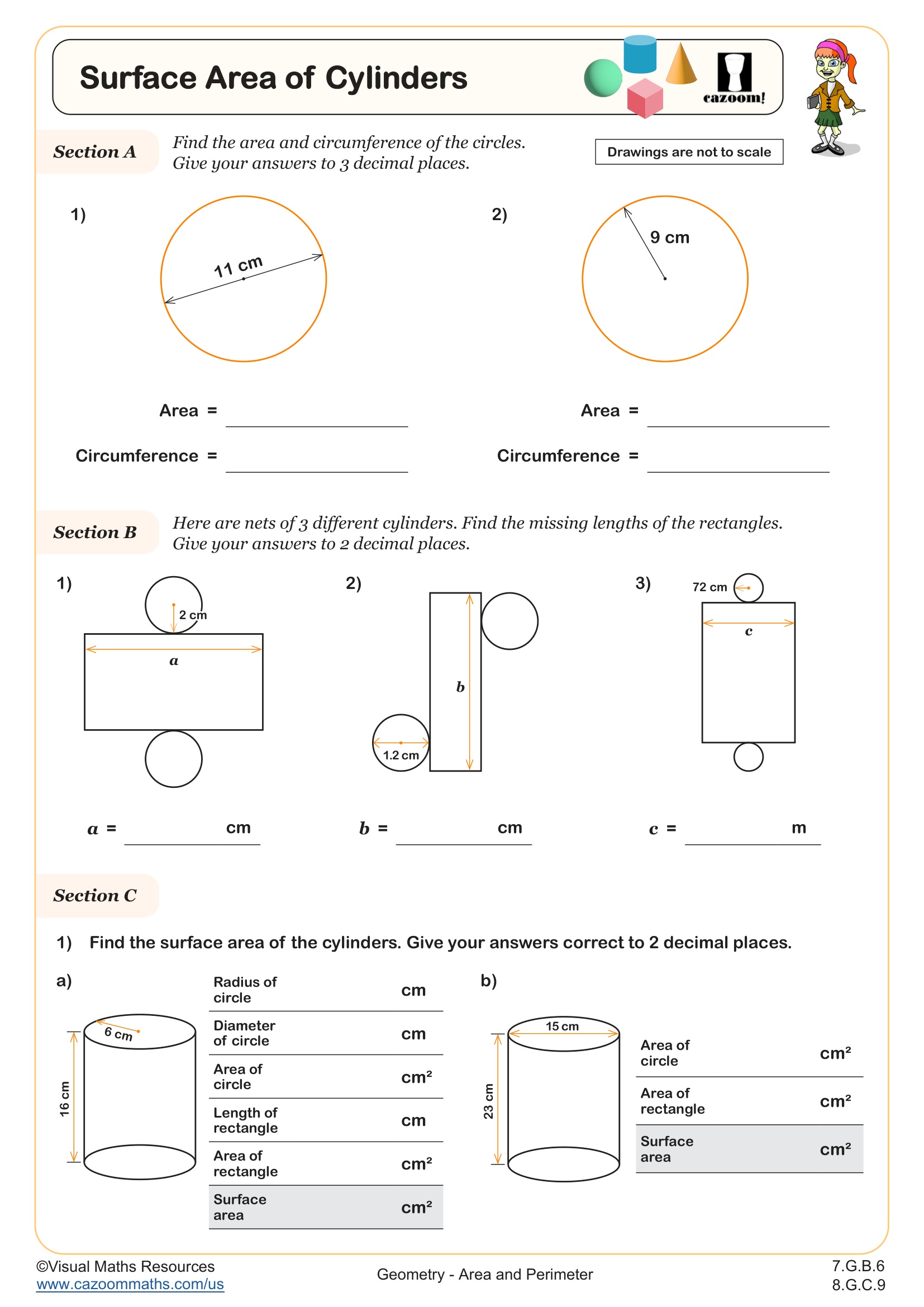
Surface Area of Cylinders
Grades: 7th Grade, 8th Grade
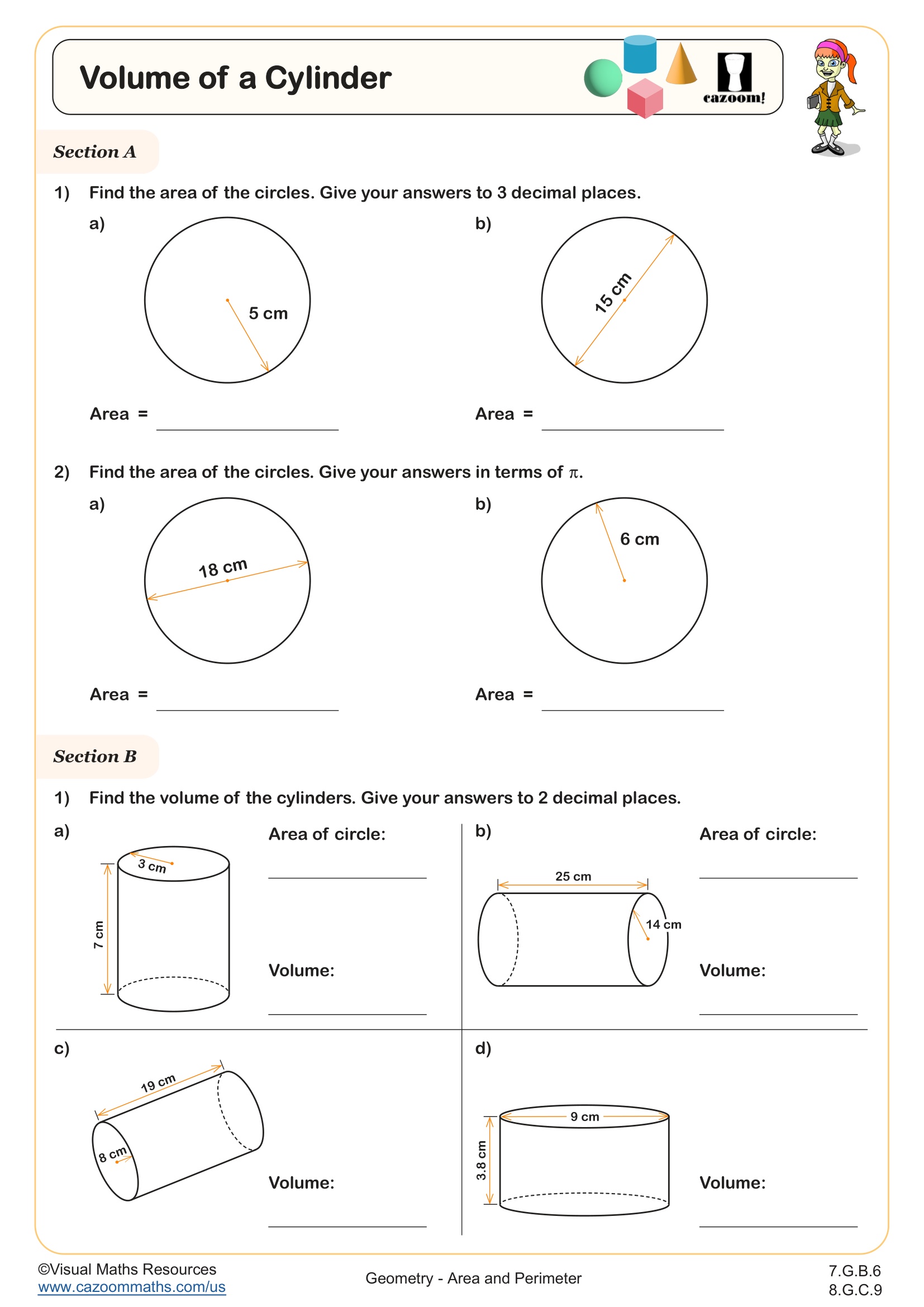
Volume of a Cylinder
Grades: 7th Grade, 8th Grade
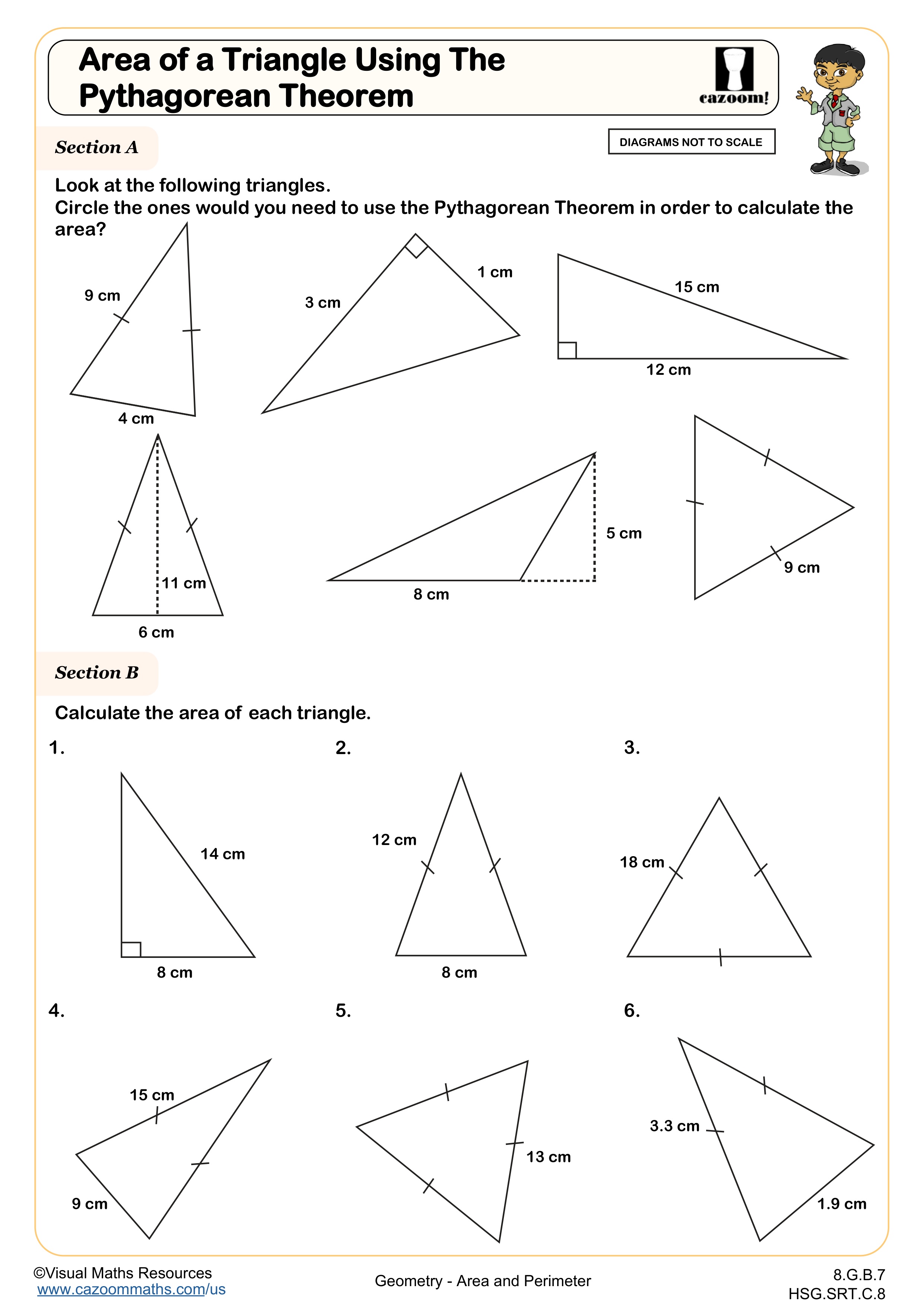
Area of a Triangle Using The Pythagorean Theorem
Grades: 8th Grade, IM 2
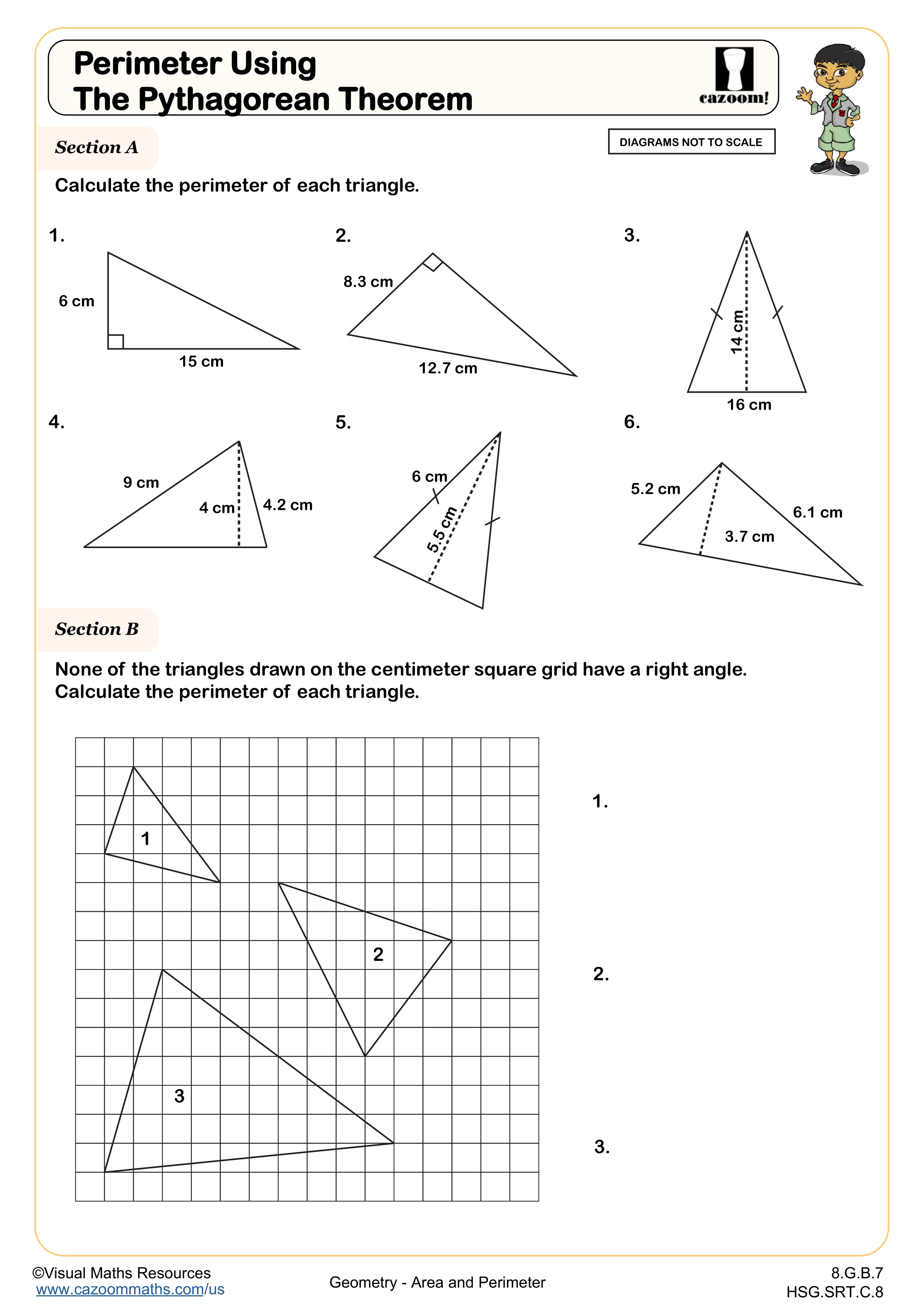
Perimeter Using The Pythagorean Theorem
Grades: 8th Grade, IM 2
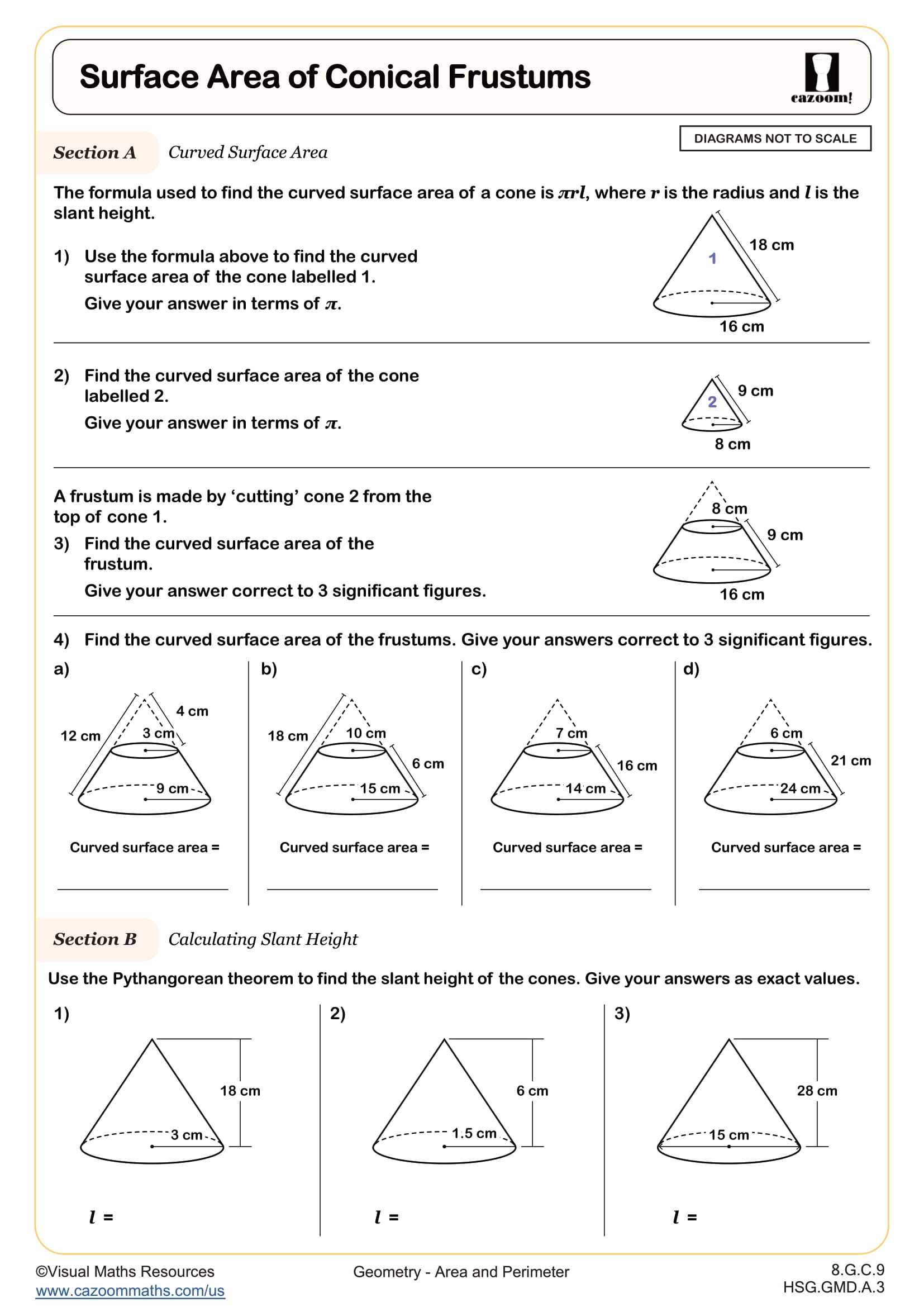
Surface Area of Conical Frustums
Grades: 8th Grade, IM 2
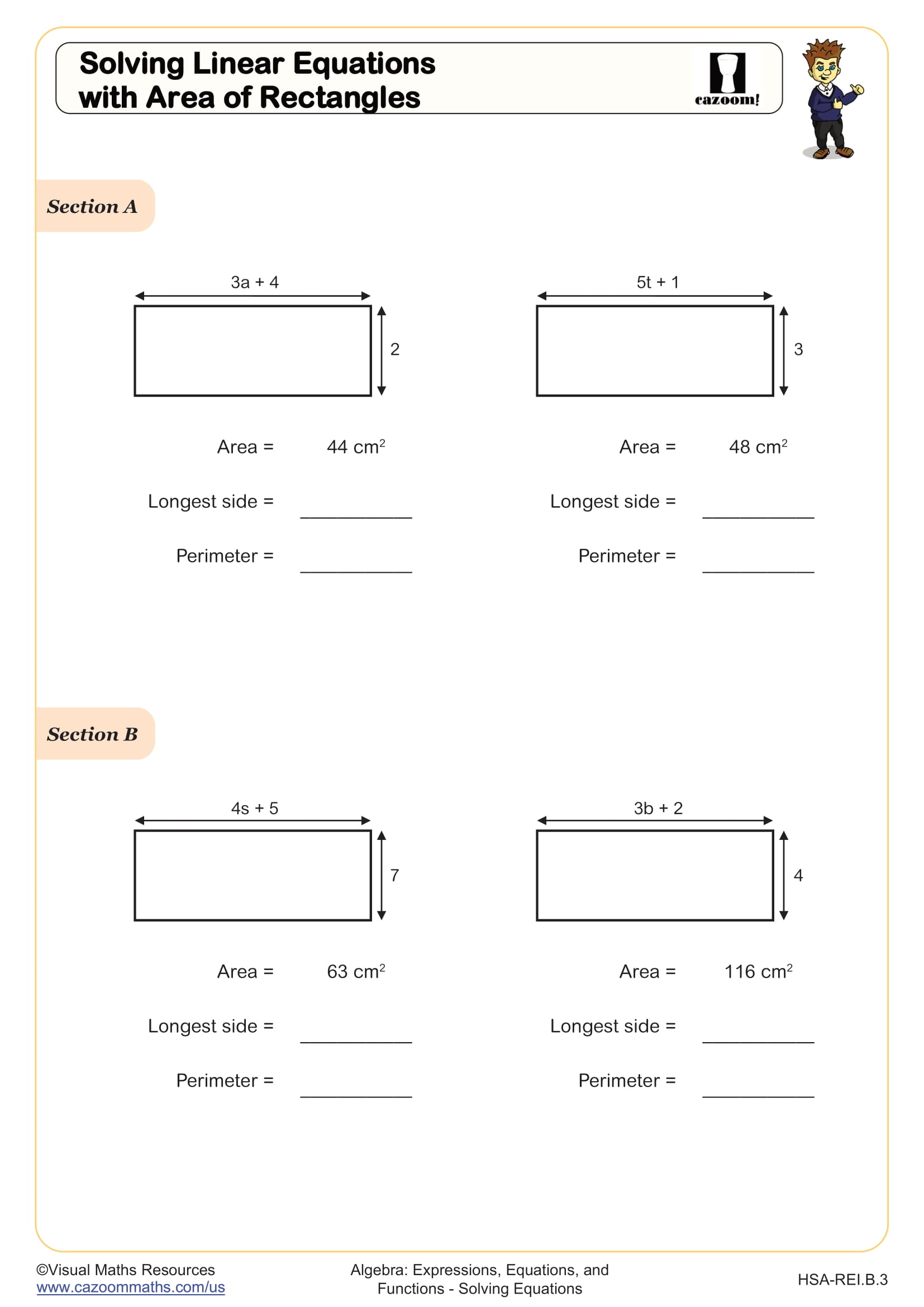
Solving Linear Equations with Area of Rectangles
Grades: Algebra I, IM 1
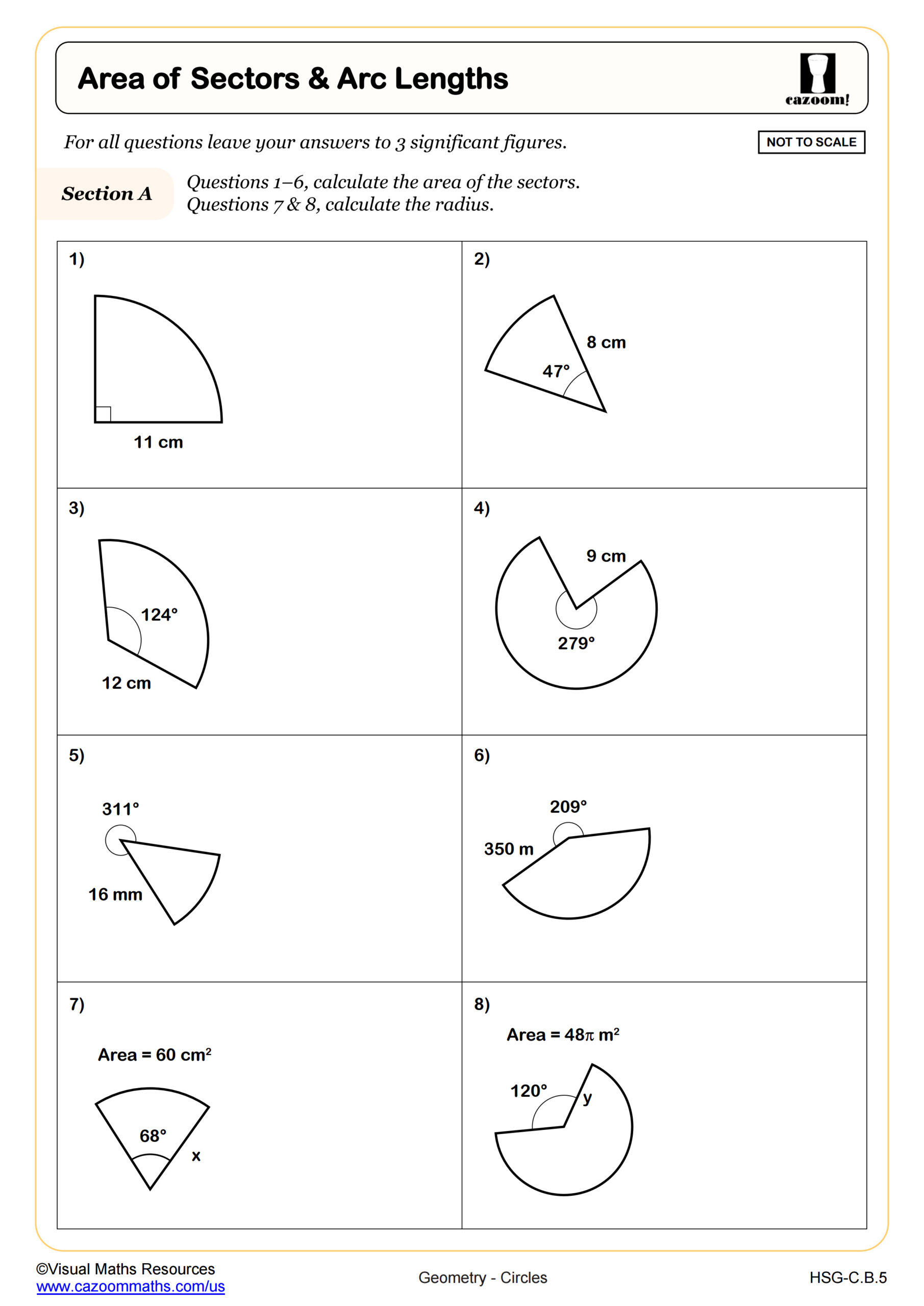
Area of Arc Lengths & Sectors
Grades: Geometry, IM 3
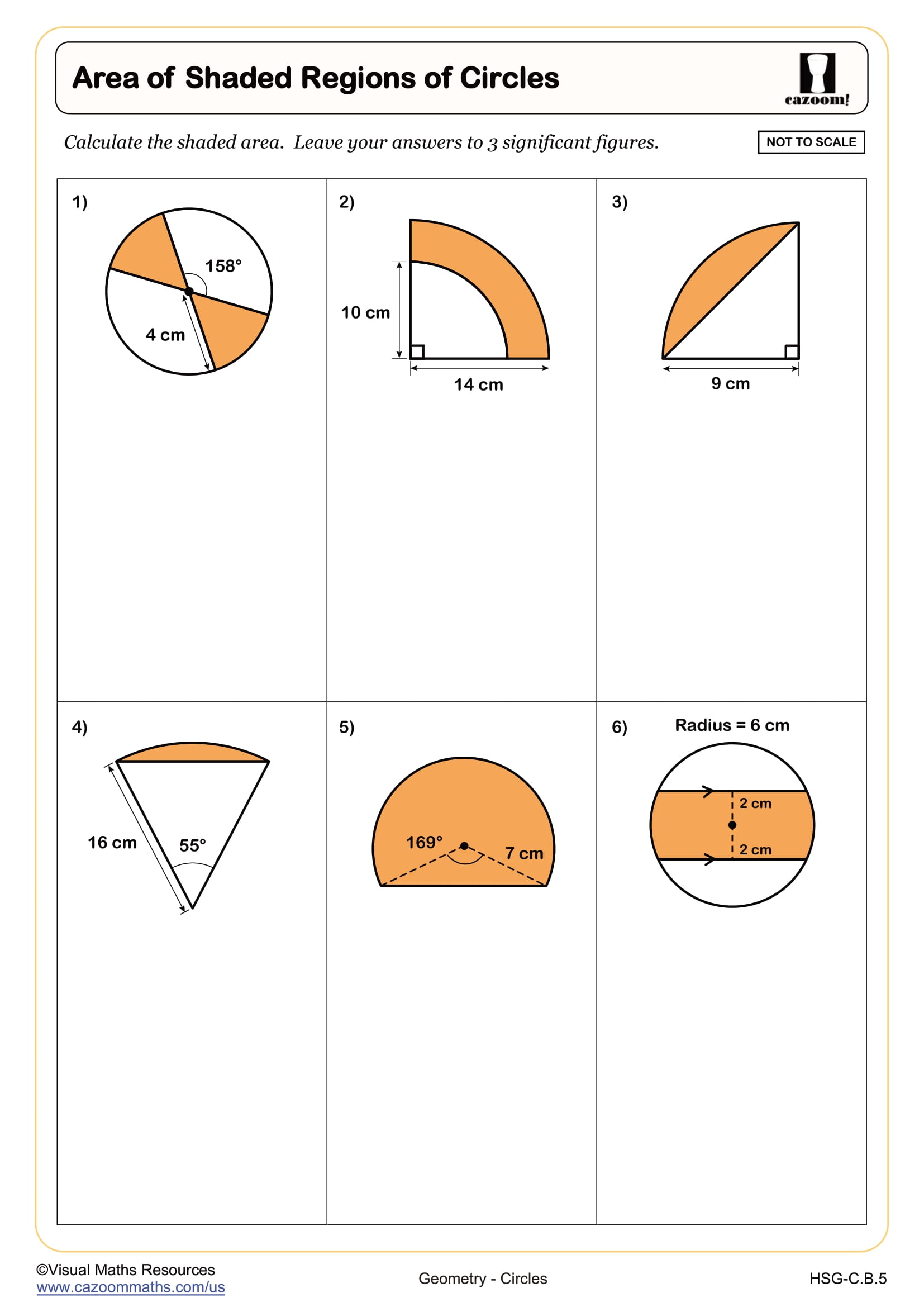
Area of Shaded Regions of Circles
Grades: Geometry, IM 3
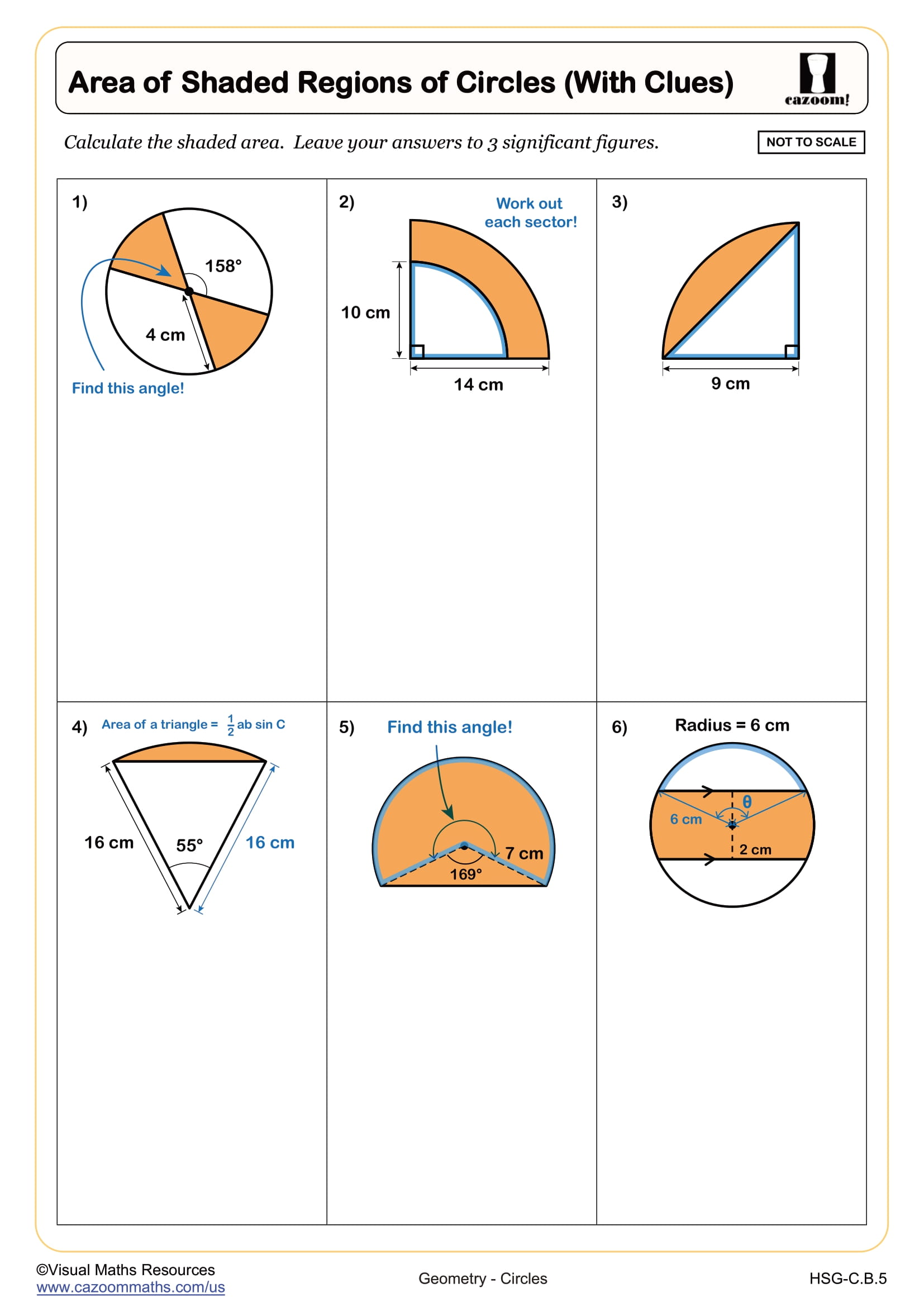
Area of Shaded Regions of Circles (with clues)
Grades: Geometry, IM 3
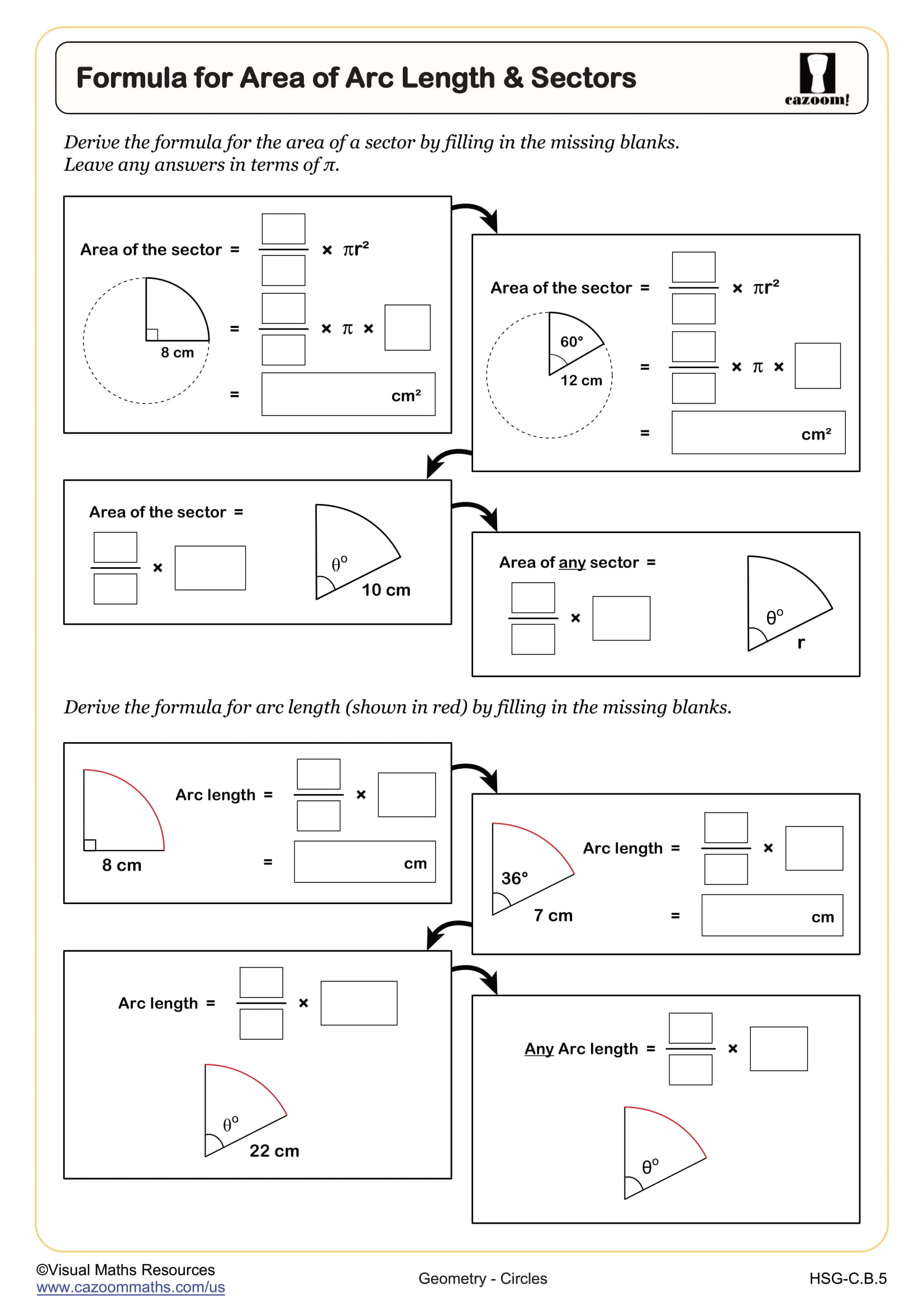
Formula for Area of Arc Length & Sectors
Grades: Geometry, IM 3
All worksheets are created by the team of experienced teachers at Cazoom Math.
What makes area and perimeter worksheets grade 3 effective for elementary students?
Grade 3 area and perimeter worksheets focus on concrete understanding through visual models and grid squares. Students work with rectangles and squares first, using counting strategies before transitioning to formulas. The Common Core State Standards at this level emphasize hands-on exploration and connecting area to multiplication concepts.
Teachers notice that third graders benefit most from worksheets that include visual grids and step-by-step examples. Students often count incorrectly when finding perimeter, missing corners or counting the same unit twice. Successful area perimeter worksheet activities at this level include tracing boundaries with colored pencils and using manipulatives to reinforce the difference between covering space and measuring around edges.
How do area and perimeter concepts progress across different grade levels?
Elementary grades focus on rectangles and squares with whole number dimensions, using visual counting and basic formulas. Middle school students encounter triangles, circles, and composite shapes, often working with decimal measurements and more complex problem-solving scenarios. High school geometry introduces irregular polygons and coordinate plane applications.
Teachers observe distinct progression patterns where fifth graders struggle with decimal perimeters while eighth graders have difficulty decomposing composite figures. Each grade level builds systematically, with perimeter worksheets typically introduced before area concepts. The transition from concrete counting to abstract formula application happens around sixth grade, where students need extra support connecting visual understanding to algebraic thinking.
Why do students struggle with composite shapes in area and perimeter problems?
Composite shapes challenge students because they require decomposition strategies and multiple calculation steps. Teachers frequently see students attempt to apply single formulas to complex figures rather than breaking them into recognizable rectangles, triangles, or other basic shapes. This becomes particularly evident in middle school when shapes include cut-out sections or L-shaped figures.
Successful instruction involves teaching students to outline each component shape with different colors and organize calculations systematically. Many students lose points by forgetting to add or subtract areas correctly, especially when dealing with shapes that have sections removed. Grid-based composite shape problems help students visualize the decomposition process before moving to purely numerical approaches.
How should teachers implement these worksheets for maximum learning impact?
Teachers find success when introducing each worksheet type with guided practice before independent work. Starting with manipulatives and graph paper helps students internalize concepts before moving to abstract calculations. The included answer keys allow for immediate feedback, but teachers should encourage students to check their work by verifying formulas make sense contextually.
Classroom observations show that students benefit from discussing different solution strategies, especially for composite shapes where multiple decomposition methods exist. Teachers often use these worksheets as both initial instruction tools and review materials before assessments. Pairing visual learners with analytical thinkers during worksheet activities creates productive peer learning opportunities and helps address diverse learning styles effectively.