Using a Calculator Worksheets
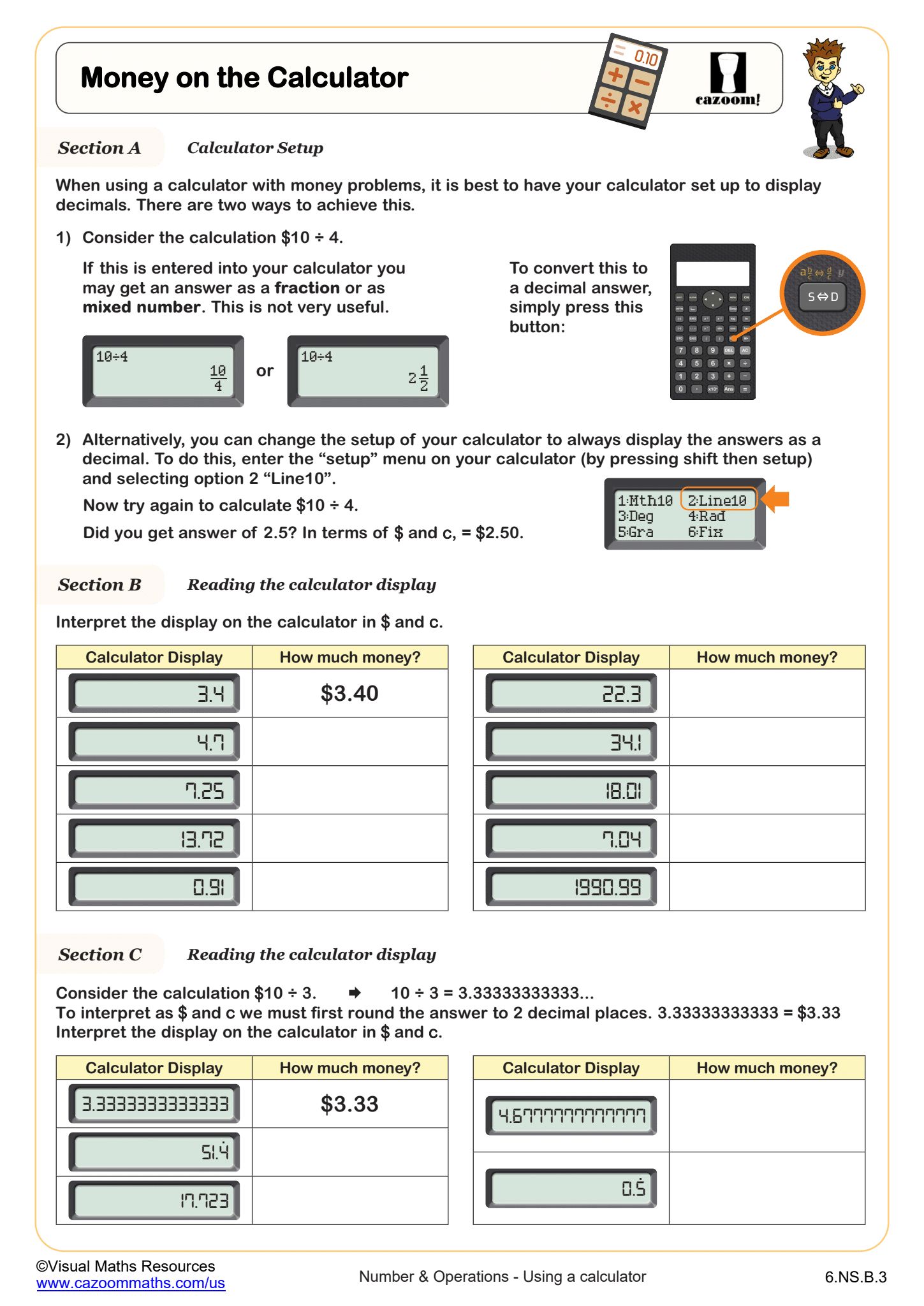
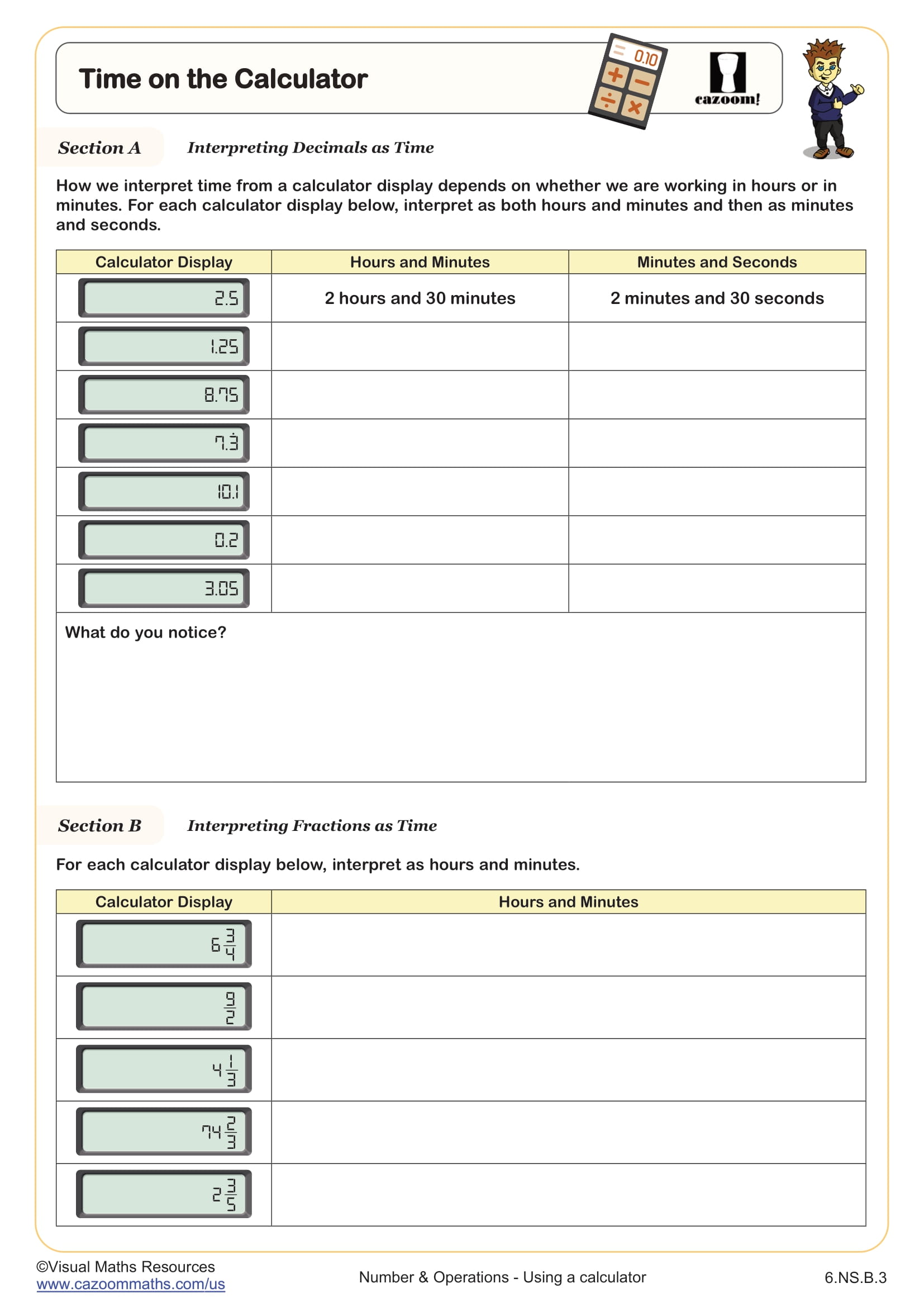
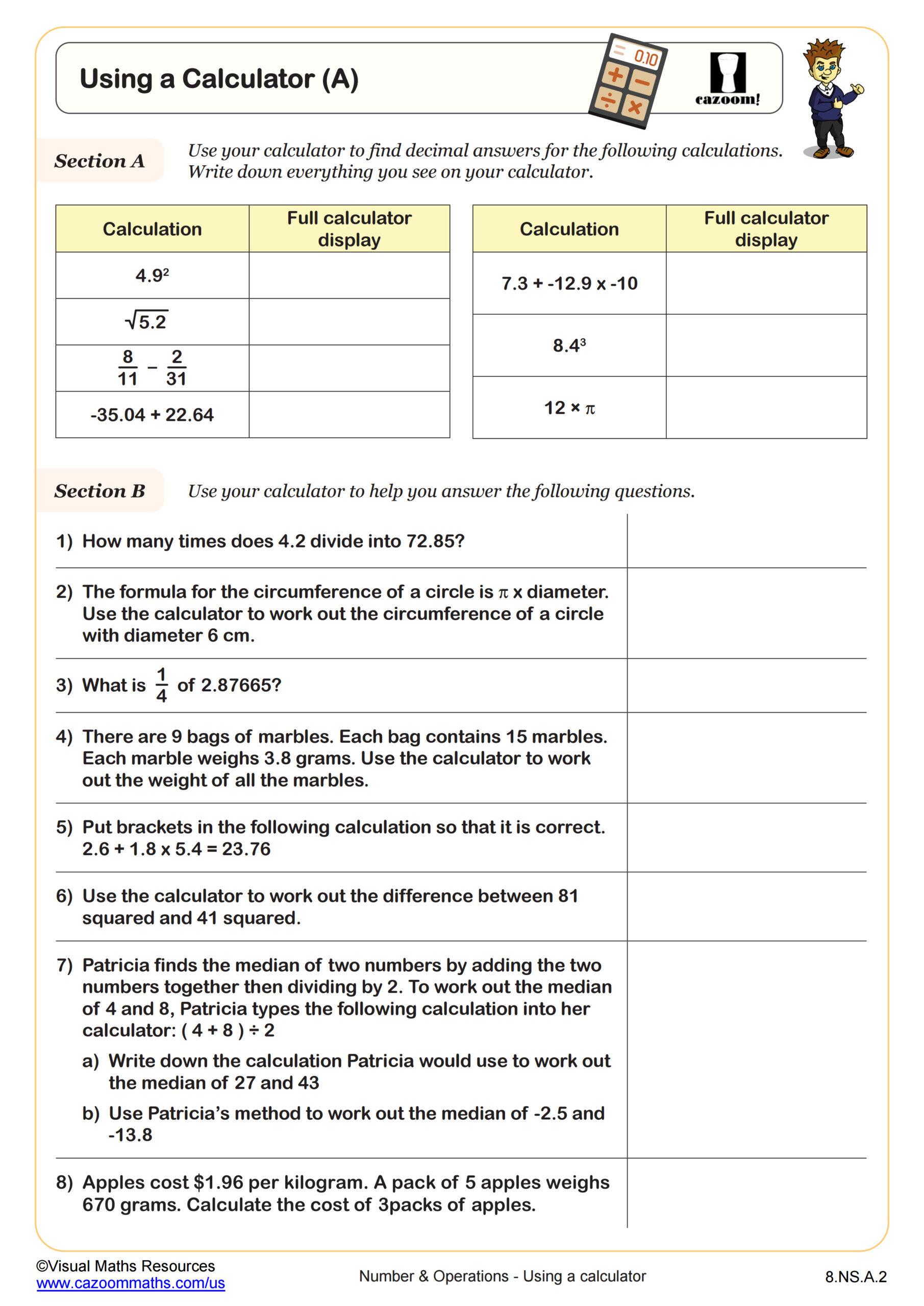
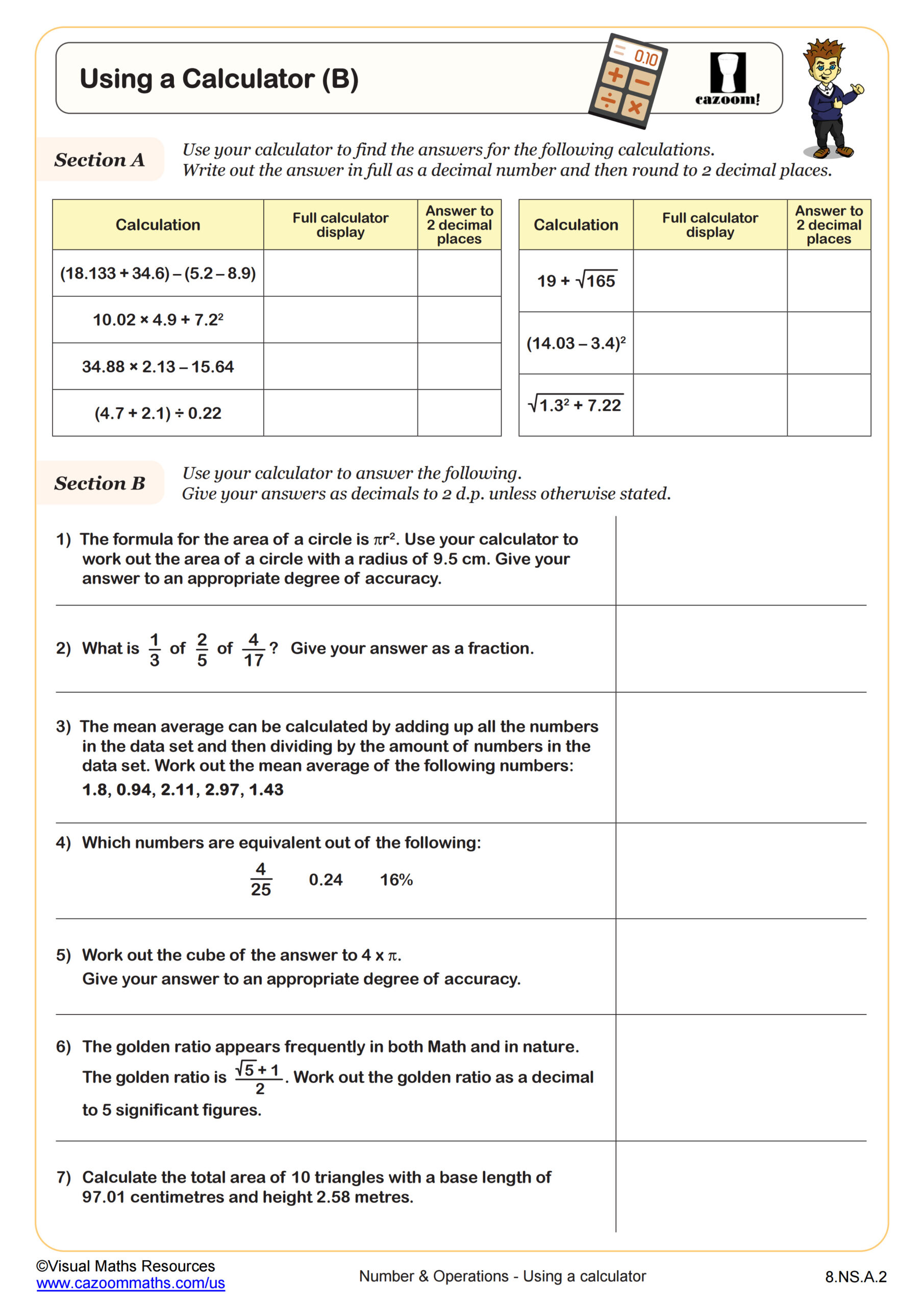
All worksheets are created by the team of experienced teachers at Cazoom Math.
What makes effective calculator practice worksheets for students?
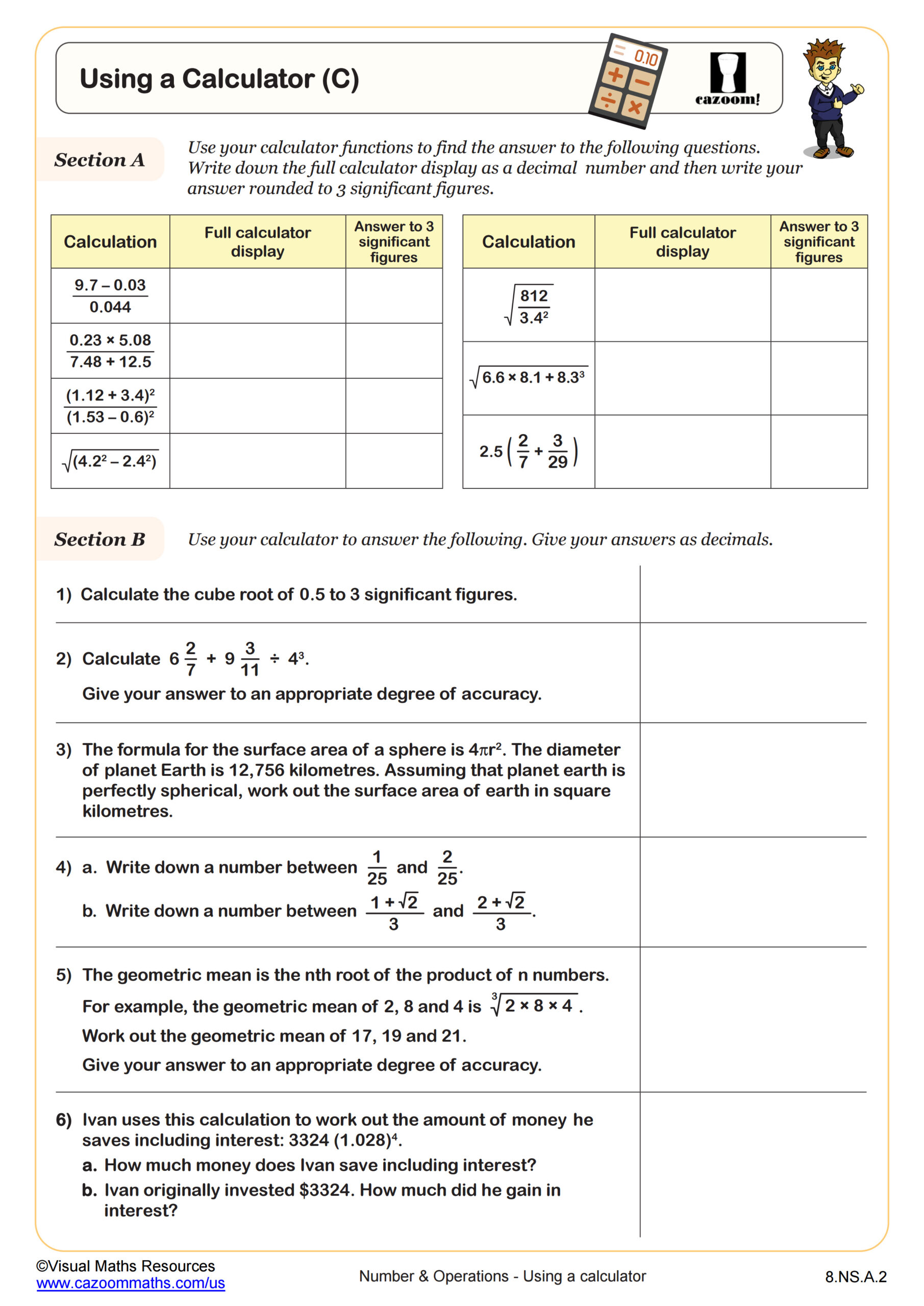
Effective calculator practice worksheets focus on systematic skill development rather than random calculation practice. They should progress from basic four-function operations to scientific calculator features, emphasizing proper entry techniques and error-checking strategies that align with Common Core mathematical practices.
Teachers notice that students often skip the verification step when using calculators, assuming the displayed answer is automatically correct. Quality how to use a calculator worksheet activities include problems where students must estimate first, then calculate, and finally compare results to catch input errors like misplaced decimal points or incorrect operation symbols.
Which grade levels benefit most from structured calculator skills practice?
Calculator instruction typically begins in upper elementary grades around 4th and 5th grade, where students learn basic operations and decimal calculations. Middle school students in grades 6-8 expand to percentage problems, scientific notation, and multi-step expressions that require parentheses and memory functions.
High school students need advanced calculator skills for algebra, geometry, and statistics coursework. Teachers observe that students who master calculator fundamentals in middle school show greater confidence tackling complex problems in advanced mathematics classes, while those with weak calculator skills often struggle with computational accuracy even when they understand the underlying concepts.
How do calculator worksheets address order of operations challenges?
Calculator worksheets specifically target order of operations by presenting expressions that require careful parentheses placement and step-by-step calculation strategies. Students practice translating mathematical expressions into proper calculator syntax, particularly with nested operations and fraction calculations.
Many teachers find that students enter expressions left-to-right without considering mathematical precedence, leading to systematic errors. Using a calculator worksheet that focuses on PEMDAS helps students recognize when calculators follow algebraic logic versus simple left-to-right processing, building critical thinking skills about when and how to use parentheses effectively.
What classroom strategies work best with calculator practice materials?
Teachers report success when combining calculator worksheets with estimation activities and collaborative problem-solving. Students work more carefully when asked to predict answers before calculating, creating natural checkpoints for identifying input errors and building number sense simultaneously.
Pair work proves particularly effective, with one student operating the calculator while another monitors the process and checks entries. This approach helps students verbalize their thinking and catch mistakes in real-time. Teachers also integrate these activities with STEM applications like calculating compound interest, analyzing data trends, or solving engineering problems where calculator accuracy directly impacts real-world outcomes.
Should students get comfortable with using a calculator?
The short answer is yes. By comparing the answer on their estimation to the answer on the calculator, students will understand if their approach to solving the problem is correct. A calculator is a tool that students will use for the rest of their lives, so it is necessary to learn how to use it properly by making math more enjoyable. It is crucial to encourage kids to use a calculator whenever they need to, but not to rely on it all the time. Mental math skills are essential in everyday life, so kids need to learn when they should do the work on their own. Our calculator worksheets will challenge every student to practice and easily master their calculator skills.