Circle Worksheets and Answers
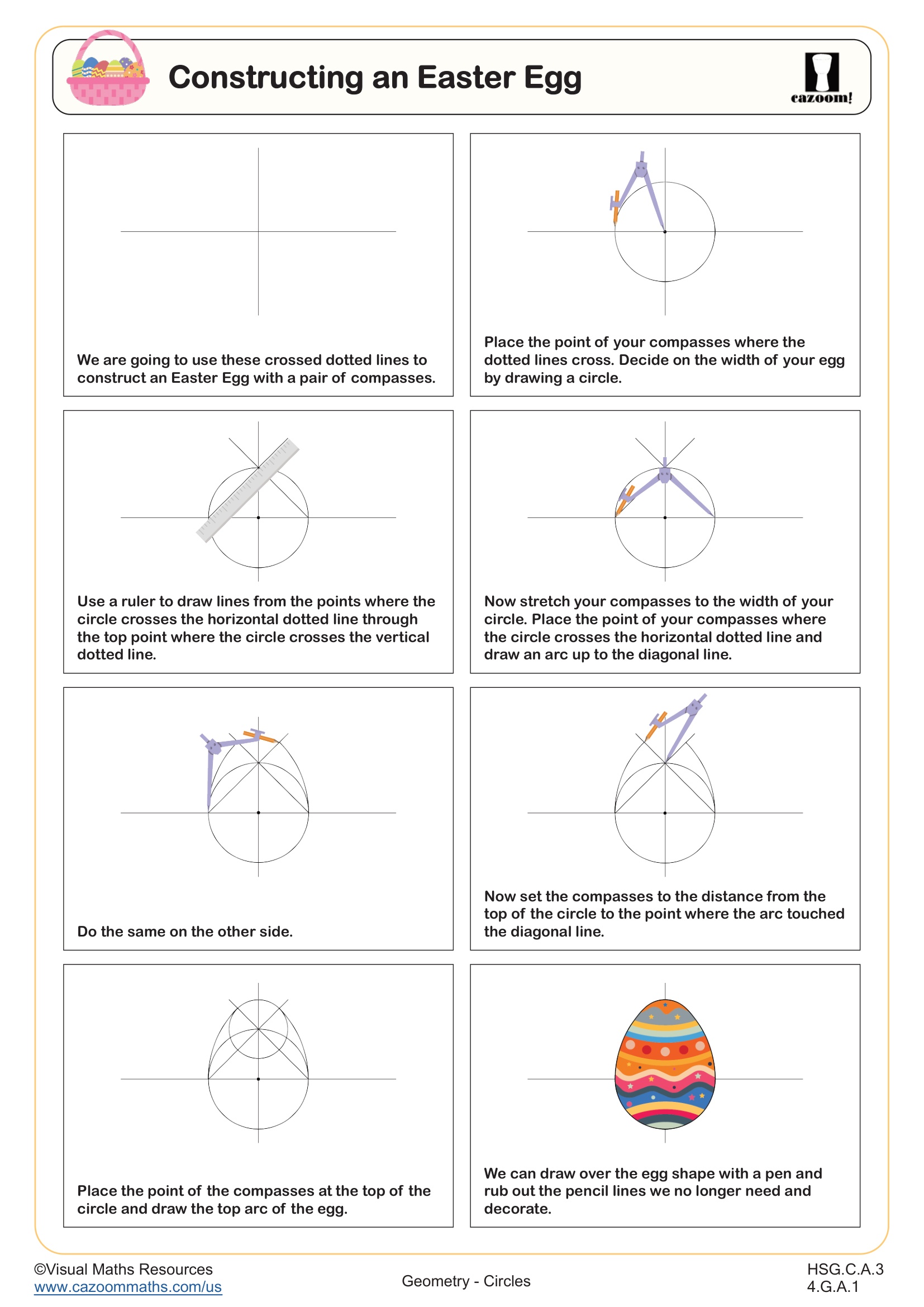
Constructing an Easter Egg
Grades: 4th Grade, Geometry, IM 1
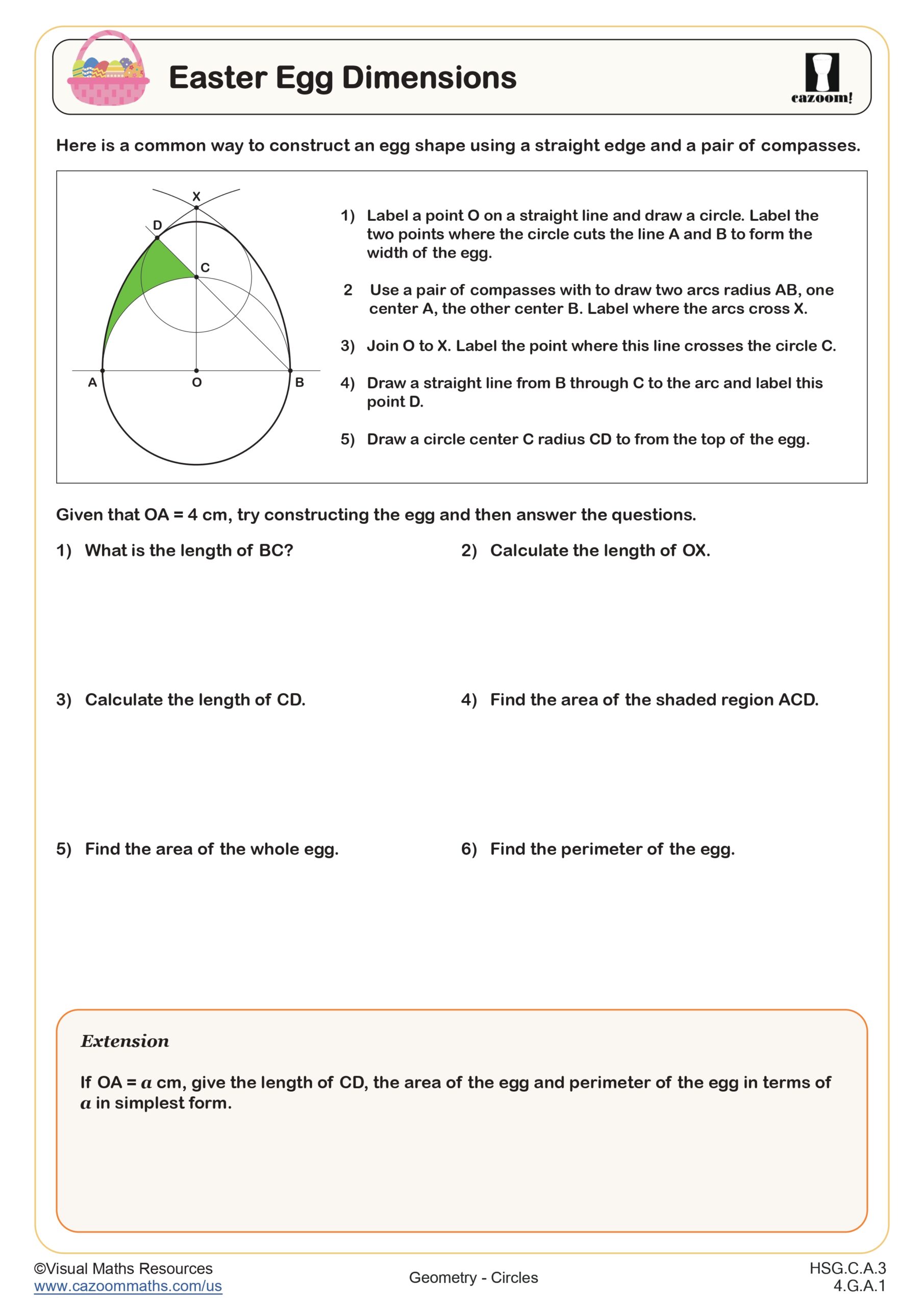
Easter Egg Dimension
Grades: 4th Grade, Geometry, IM 1
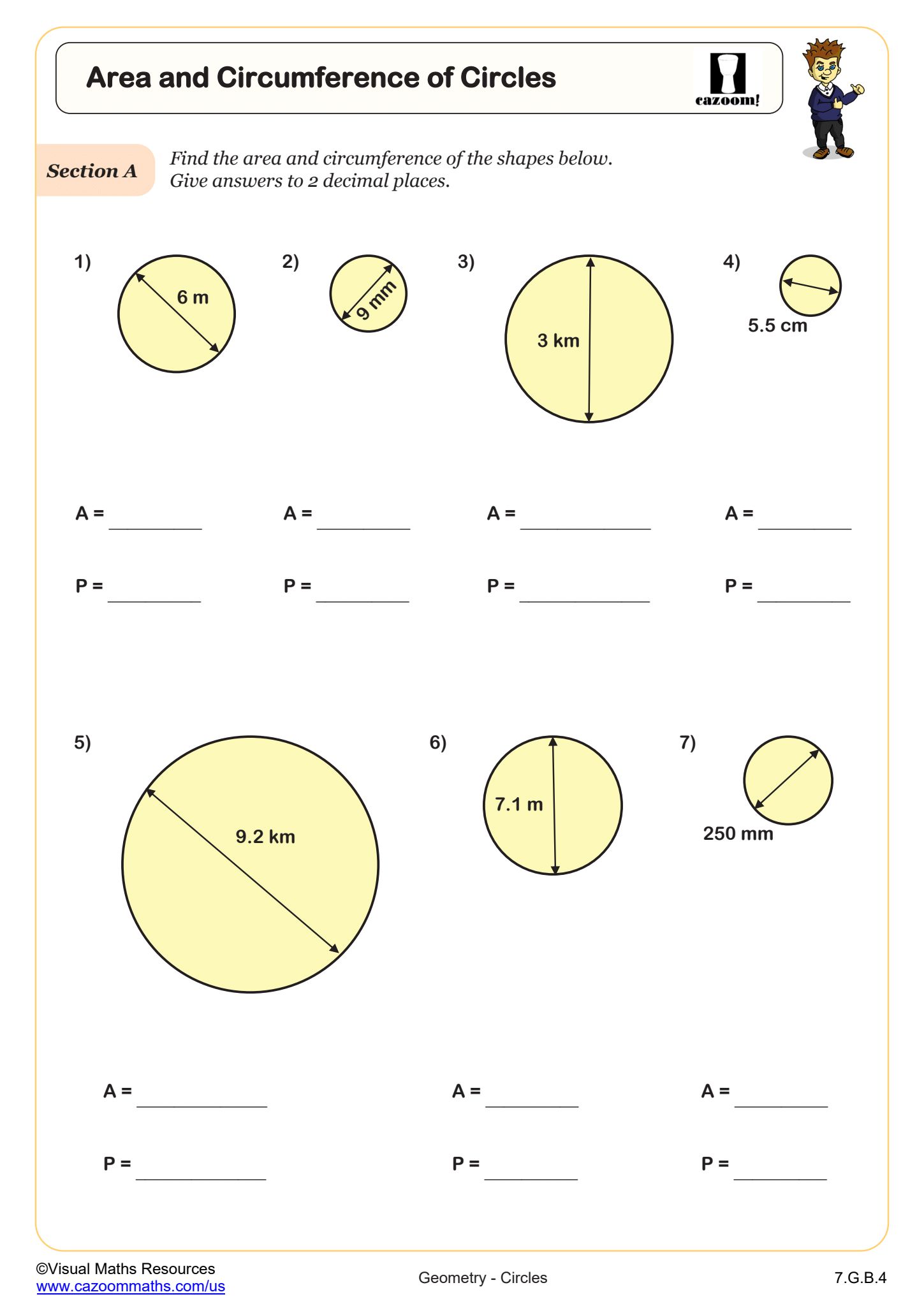
Area and Circumference of Circles
Grades: 7th Grade
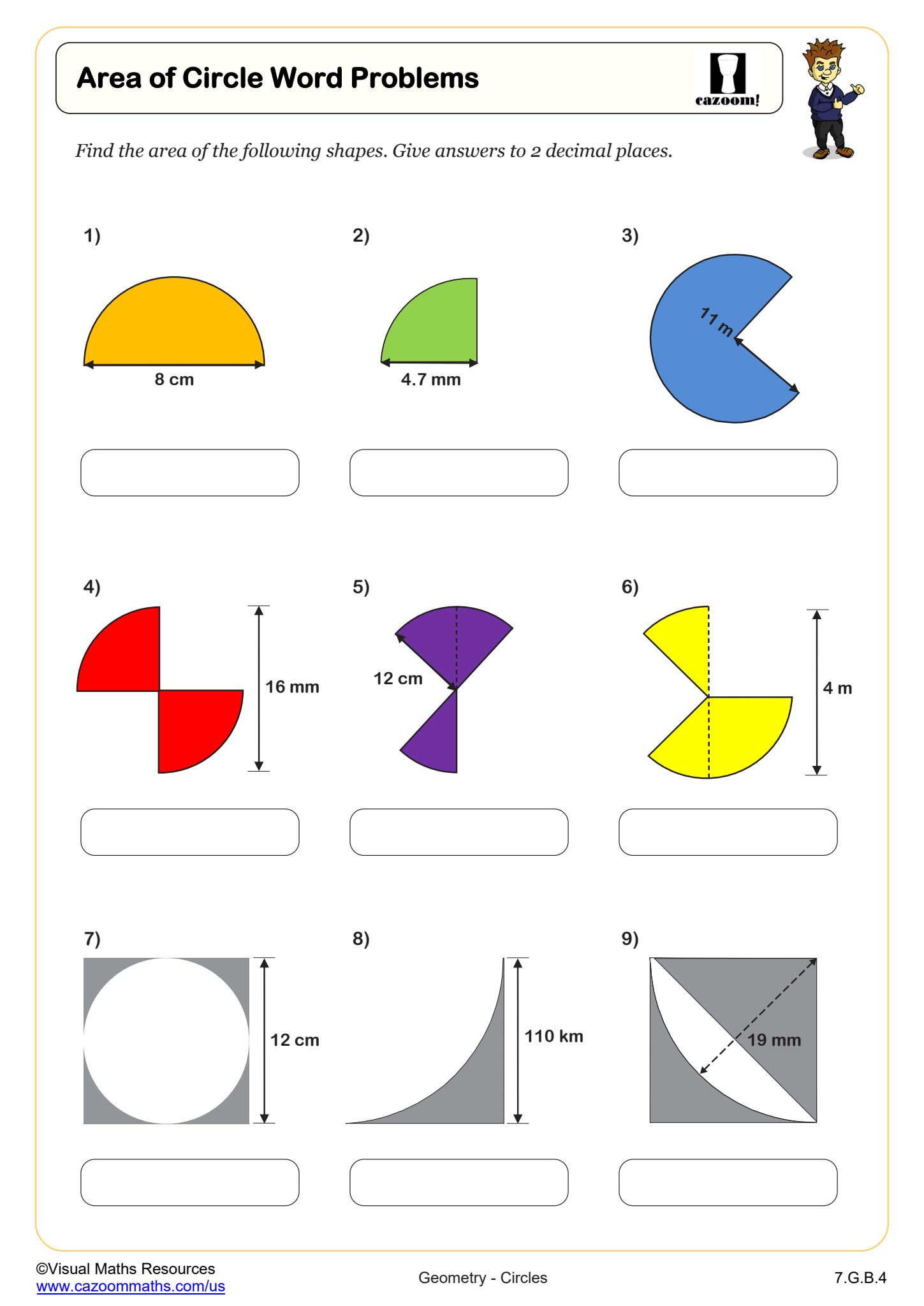
Area of Circle Word Problems
Grades: 7th Grade
Area of Circles
Grades: 7th Grade
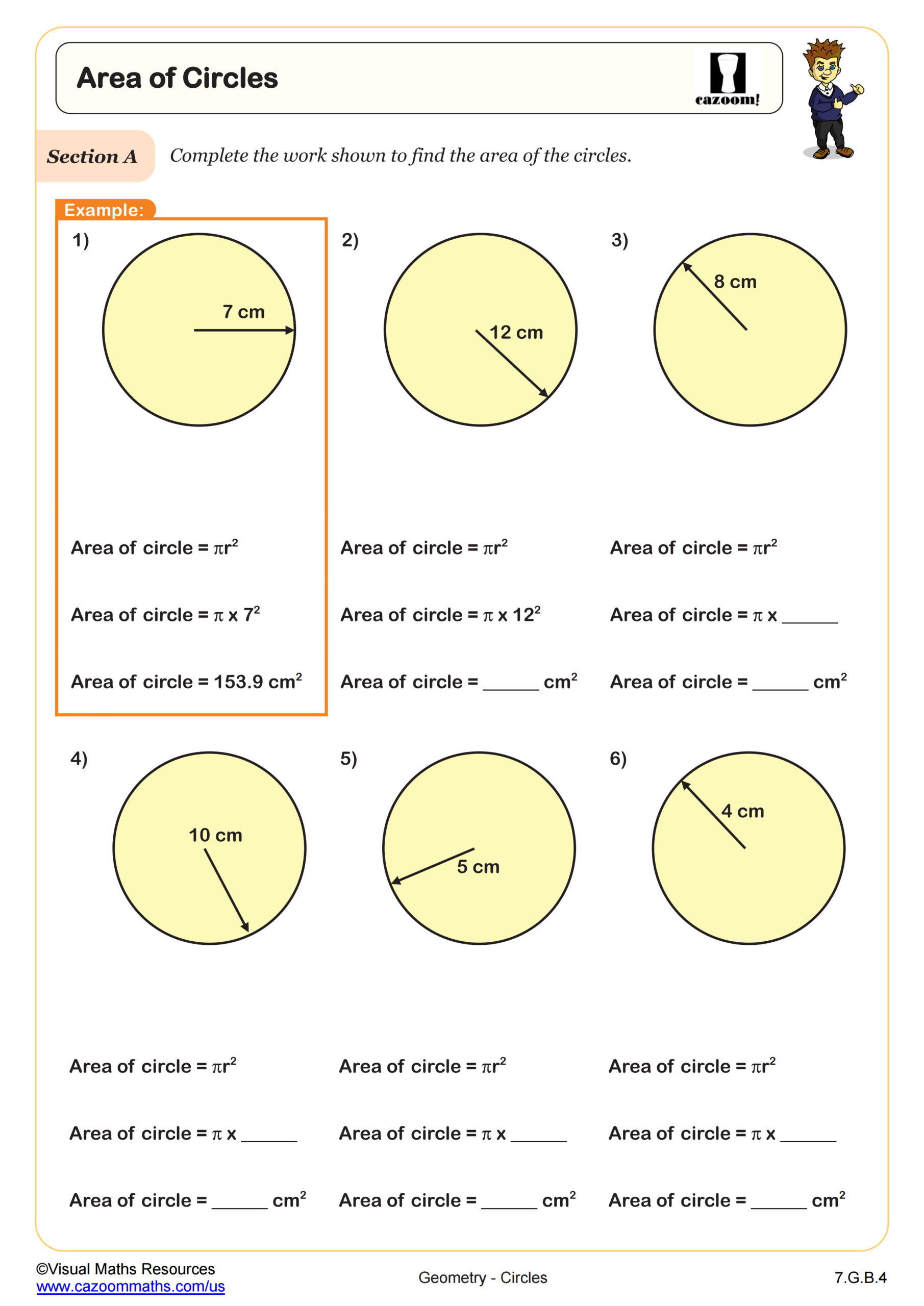
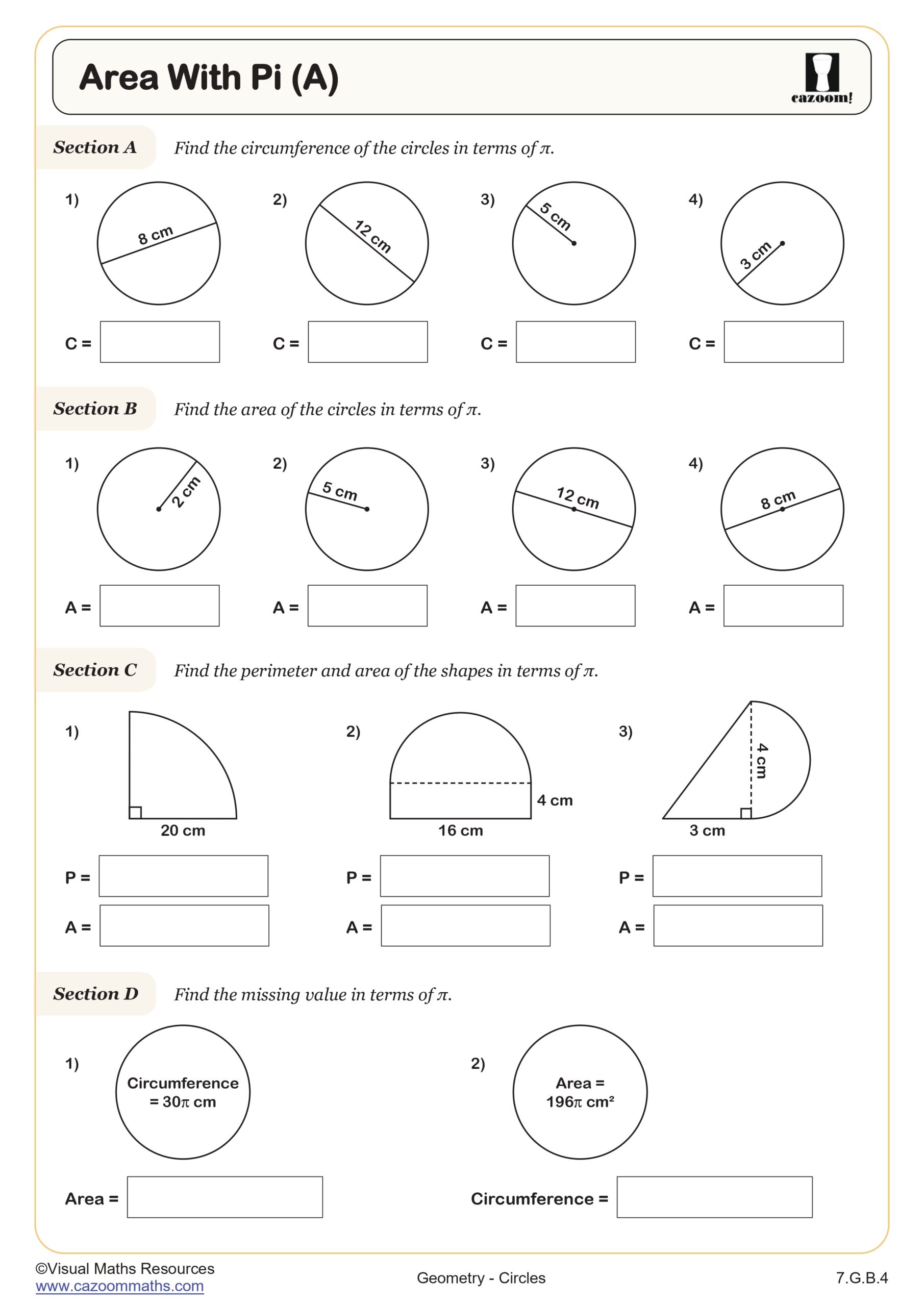
Area With Pi (A)
Grades: 7th Grade, Geometry, IM 2
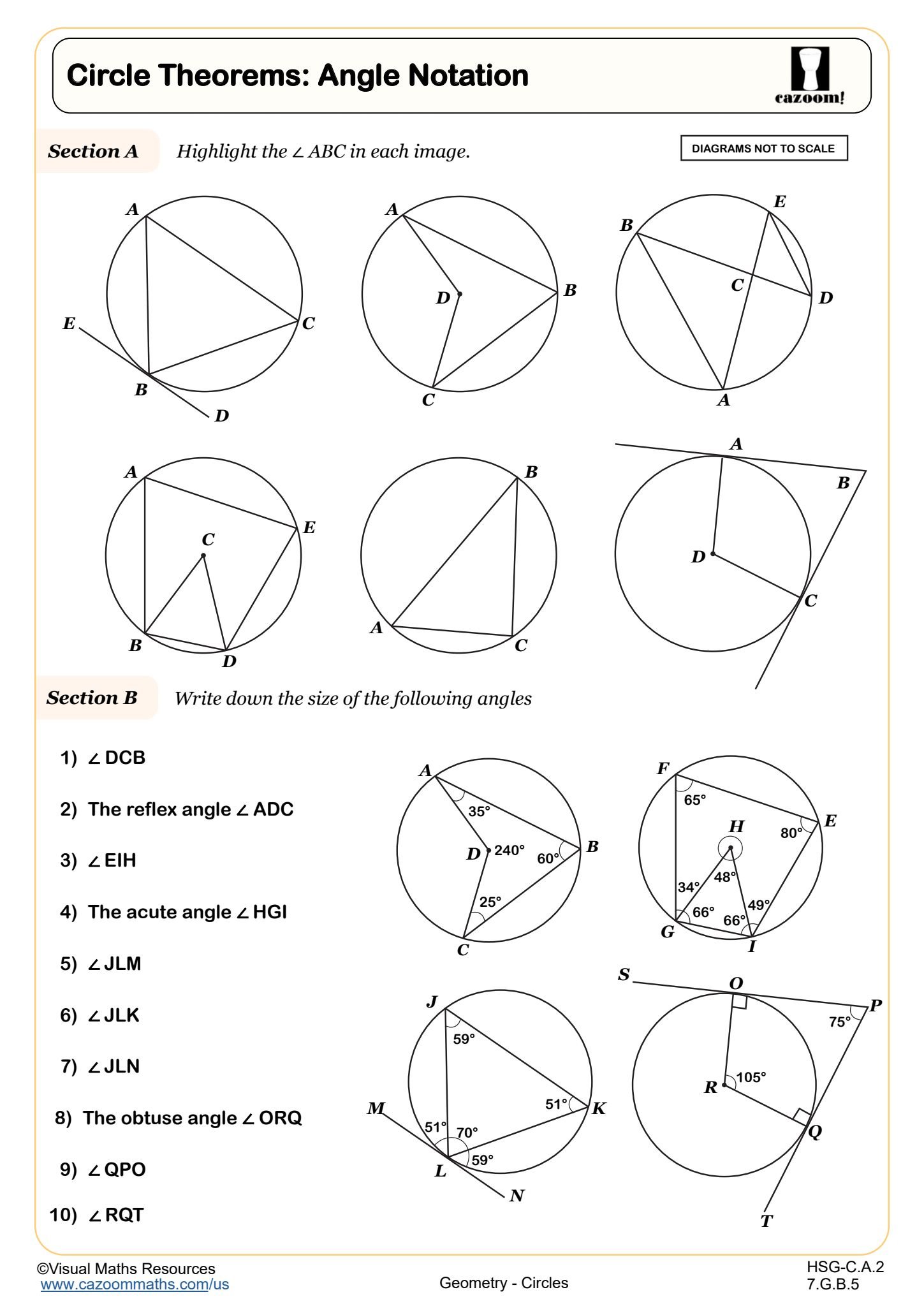
Circle Theorems: Angle Notation
Grades: 7th Grade, Geometry
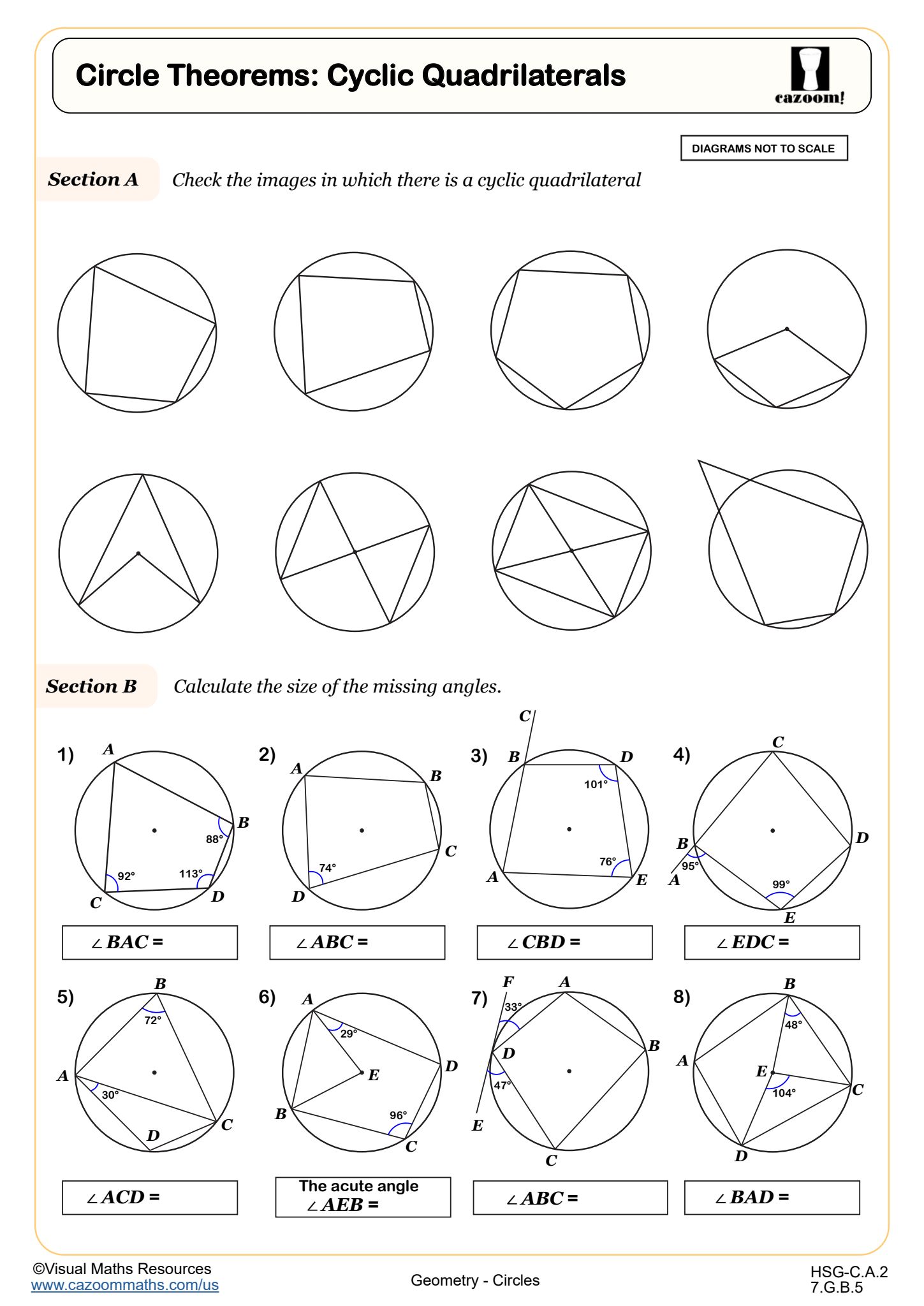
Circle Theorems: Cyclic Quadrilaterals
Grades: 7th Grade, Geometry
Circle Theorems: Triangles in Circles
Grades: 7th Grade, Geometry
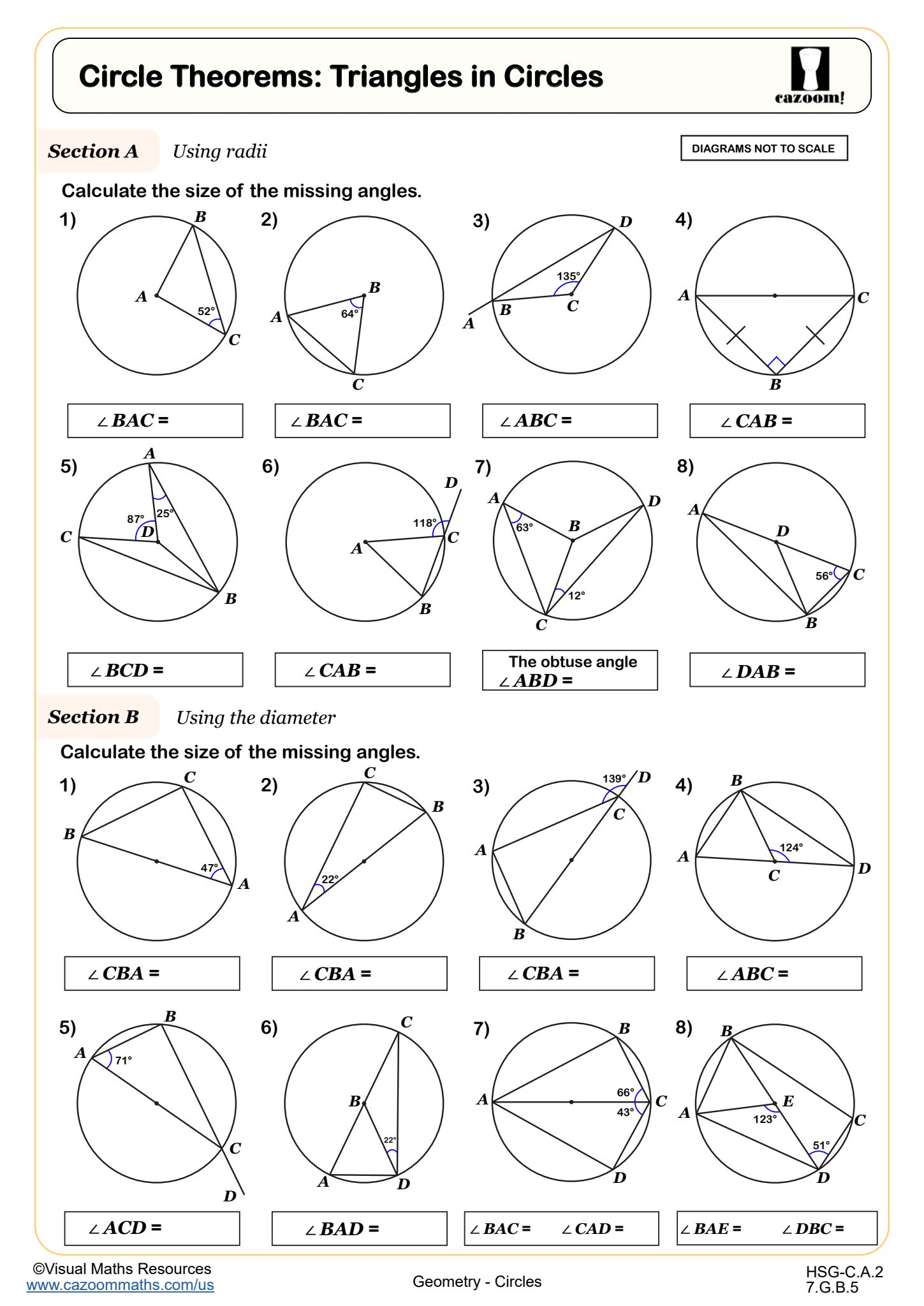
Circumference of Circles
Grades: 7th Grade
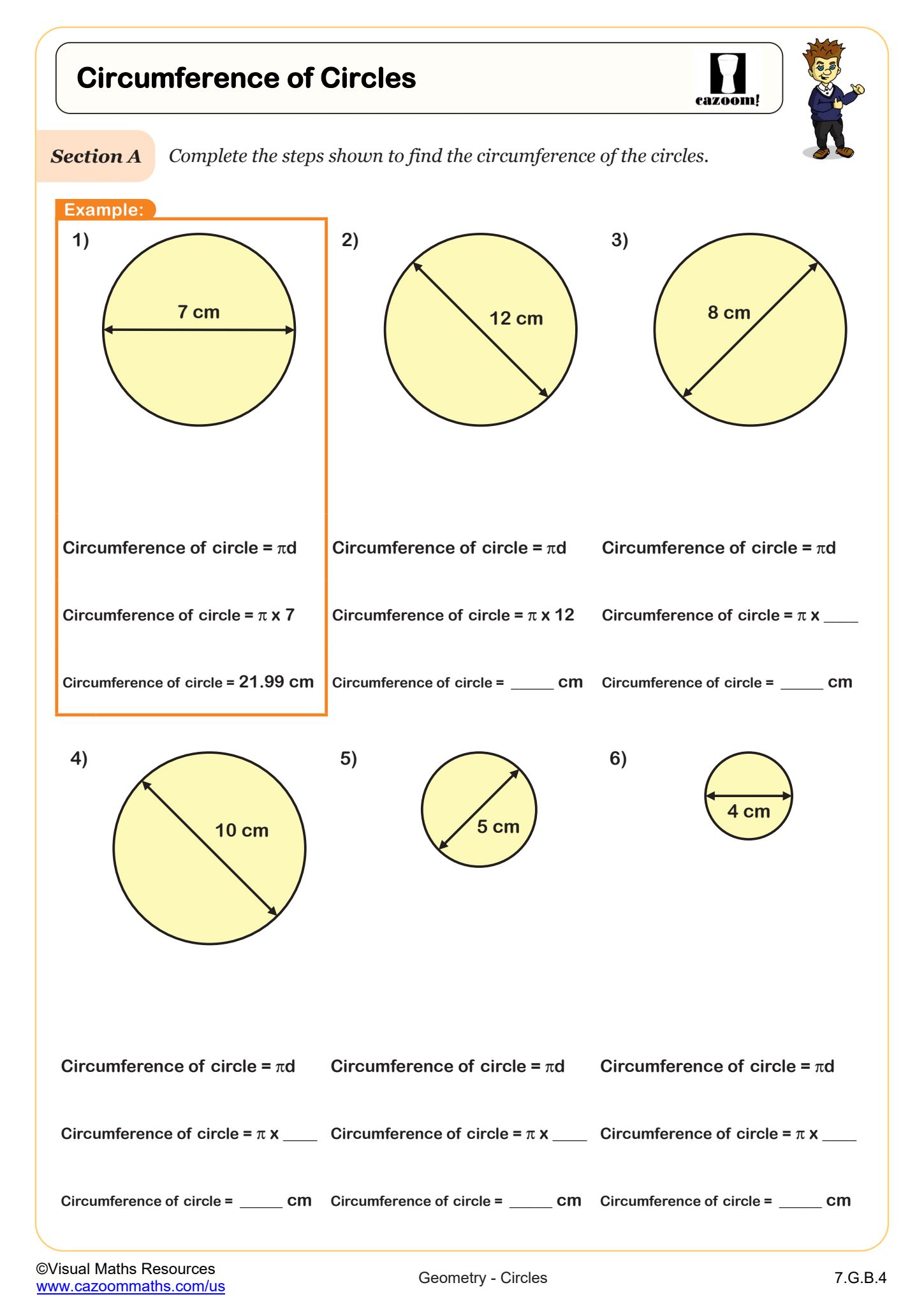
Finding the Radius and Diameter in Circles
Grades: 7th Grade
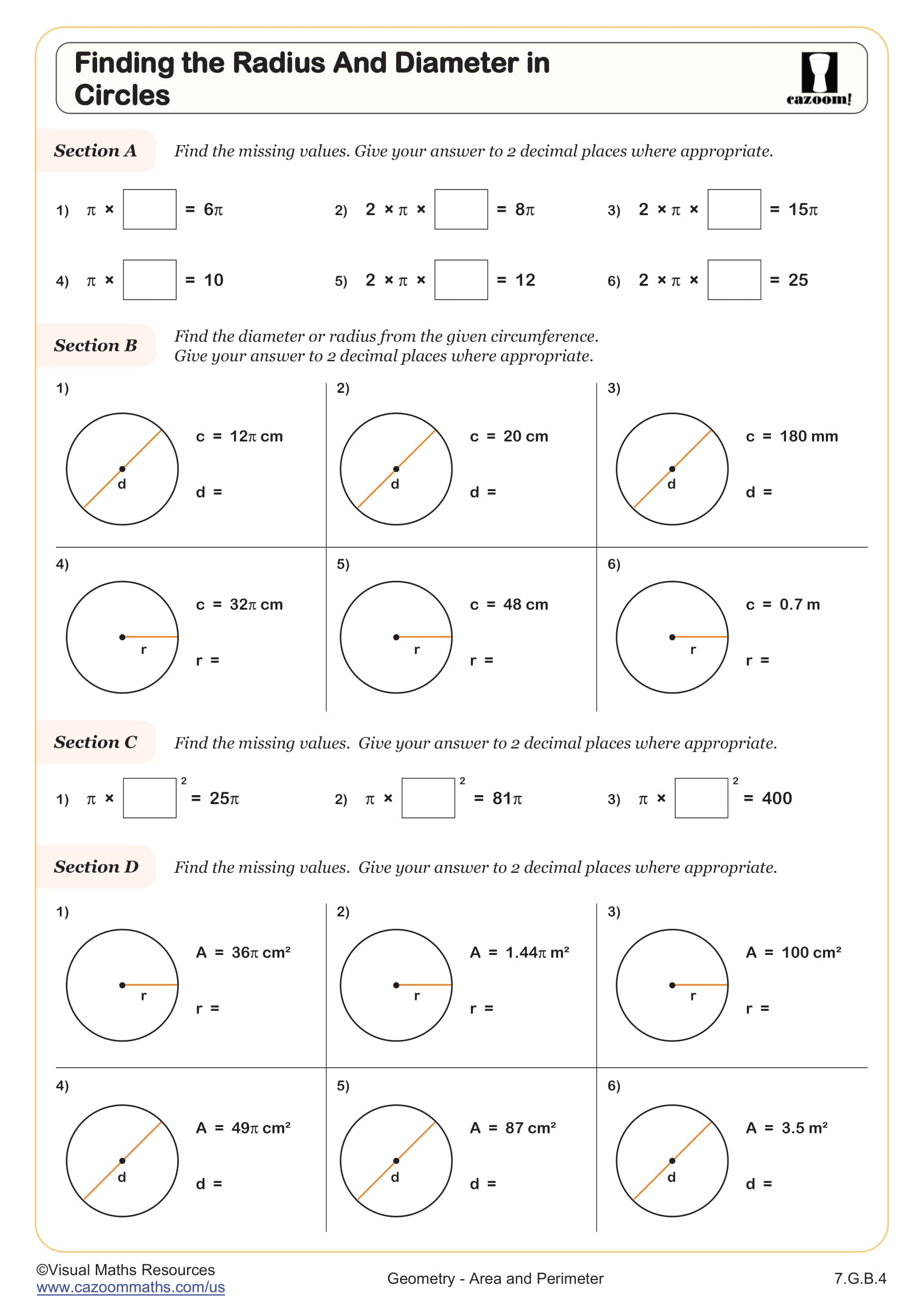
Area of Arc Lengths & Sectors
Grades: Geometry, IM 3
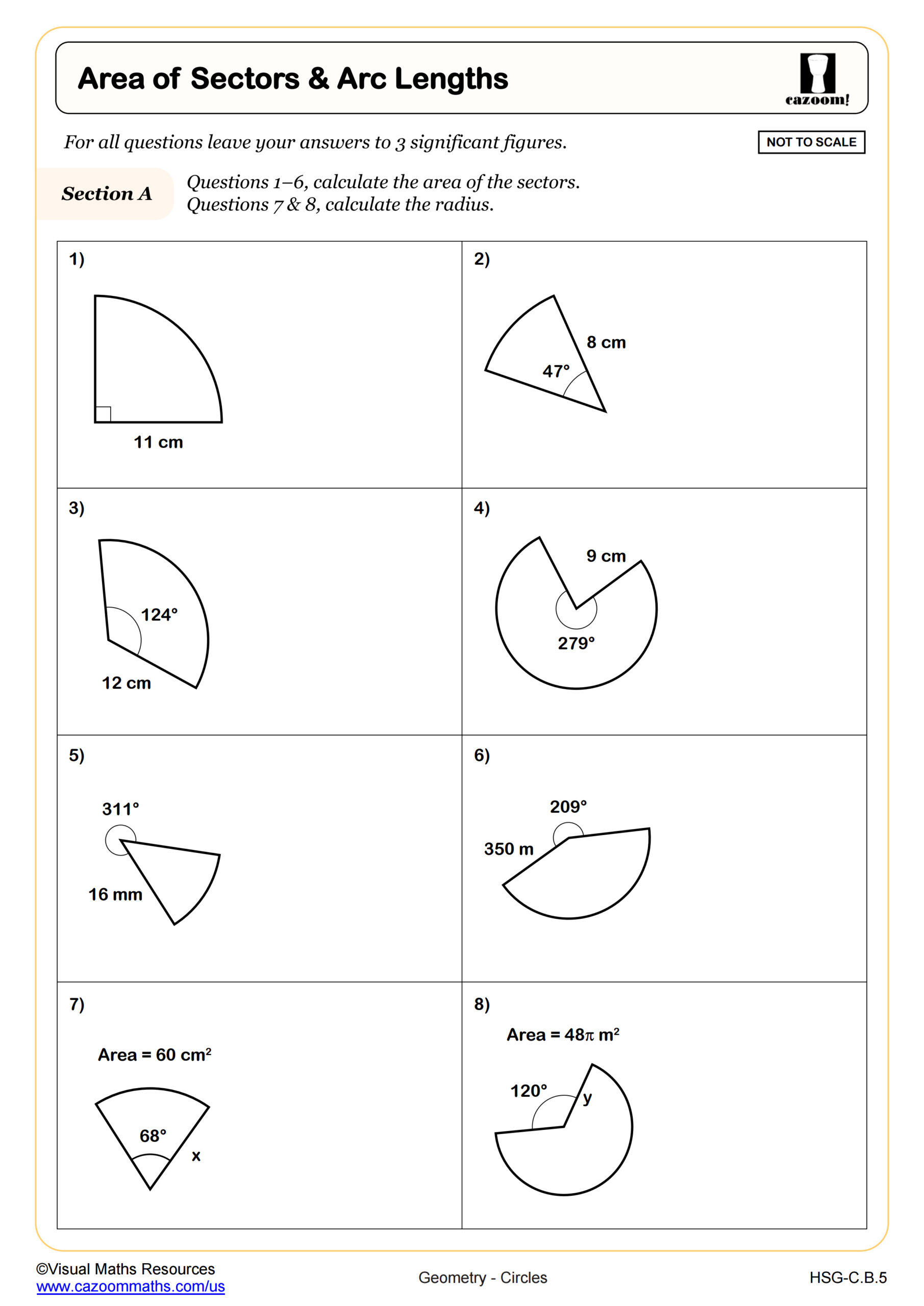
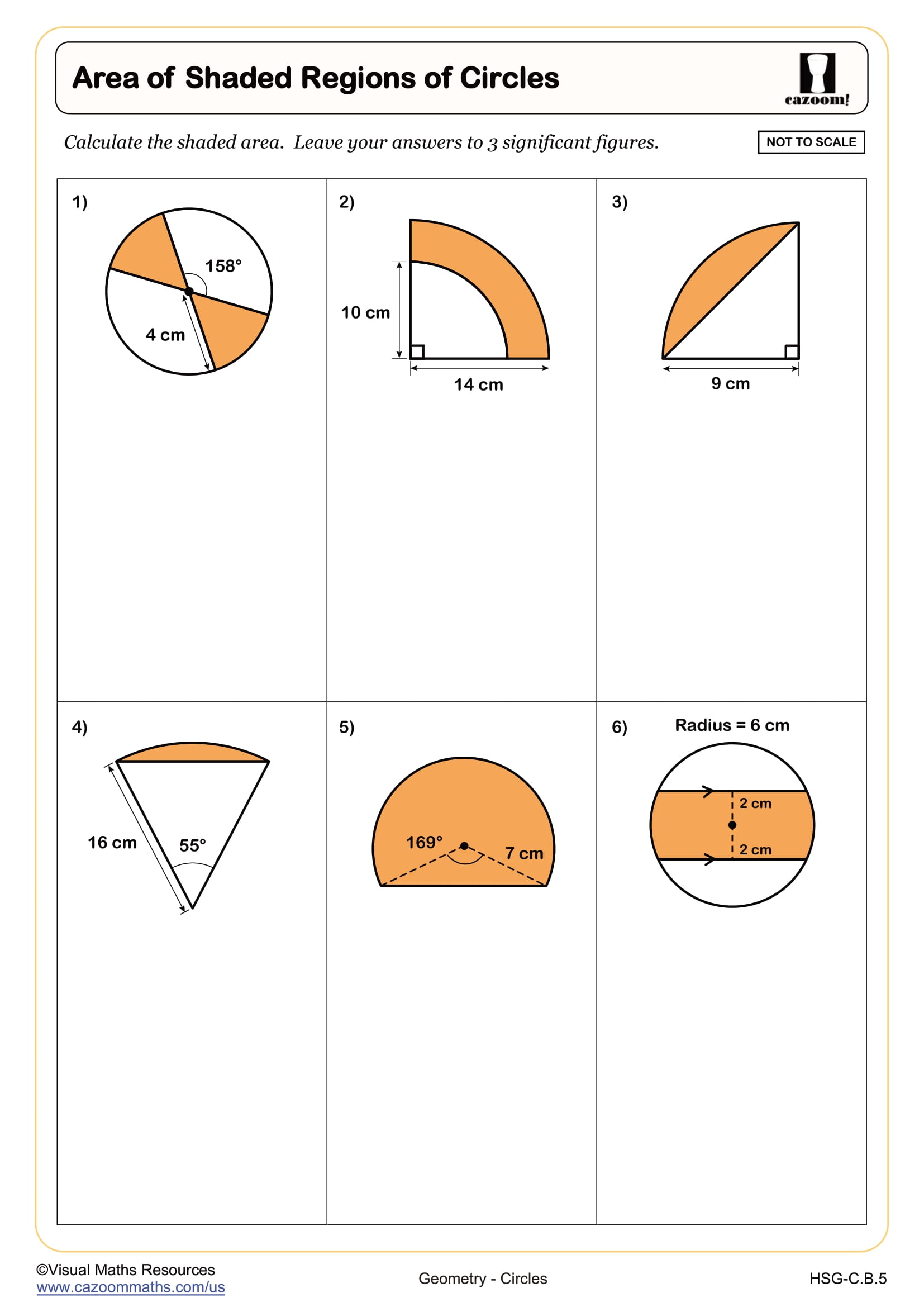
Area of Shaded Regions of Circles
Grades: Geometry, IM 3
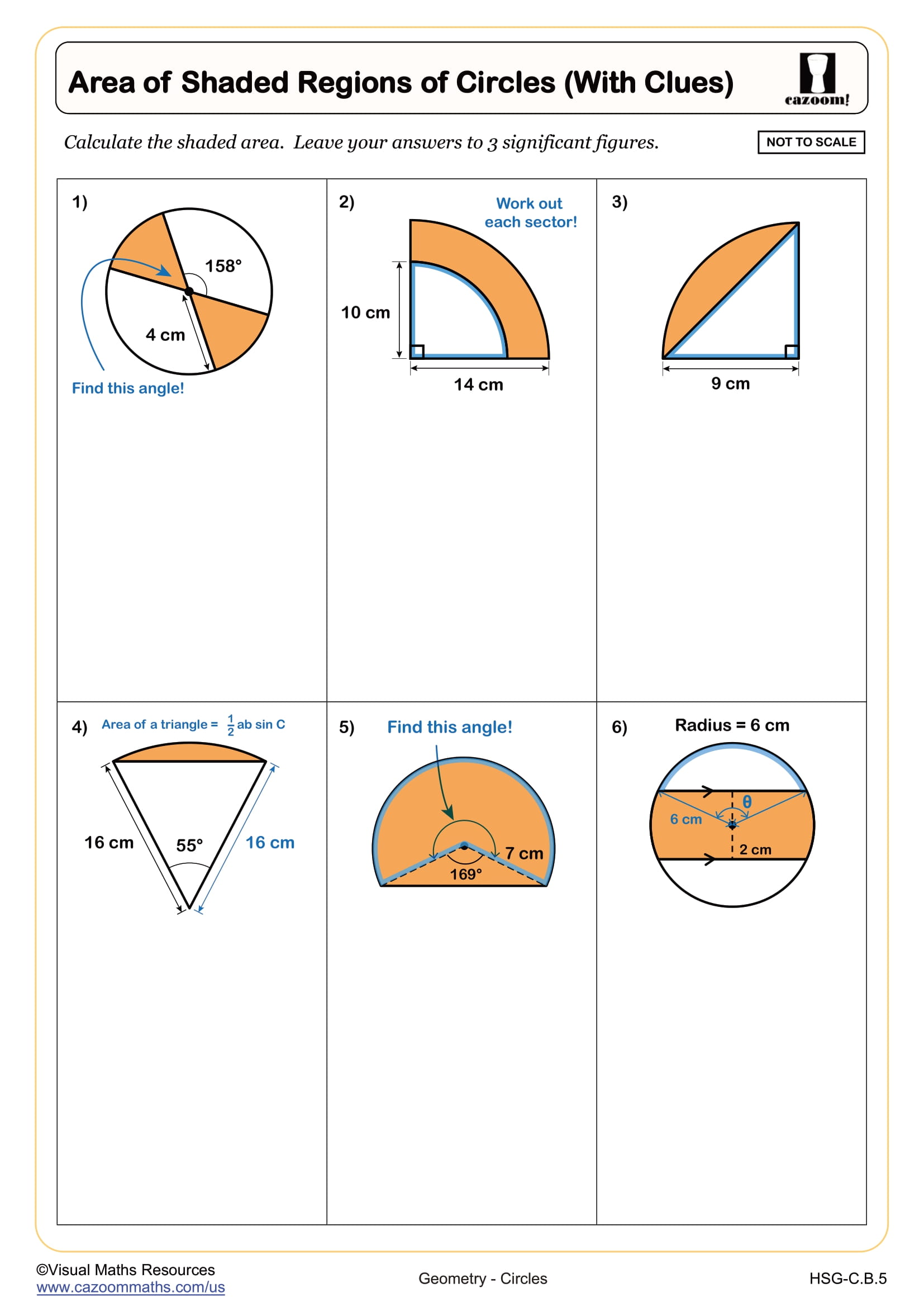
Area of Shaded Regions of Circles (with clues)
Grades: Geometry, IM 3
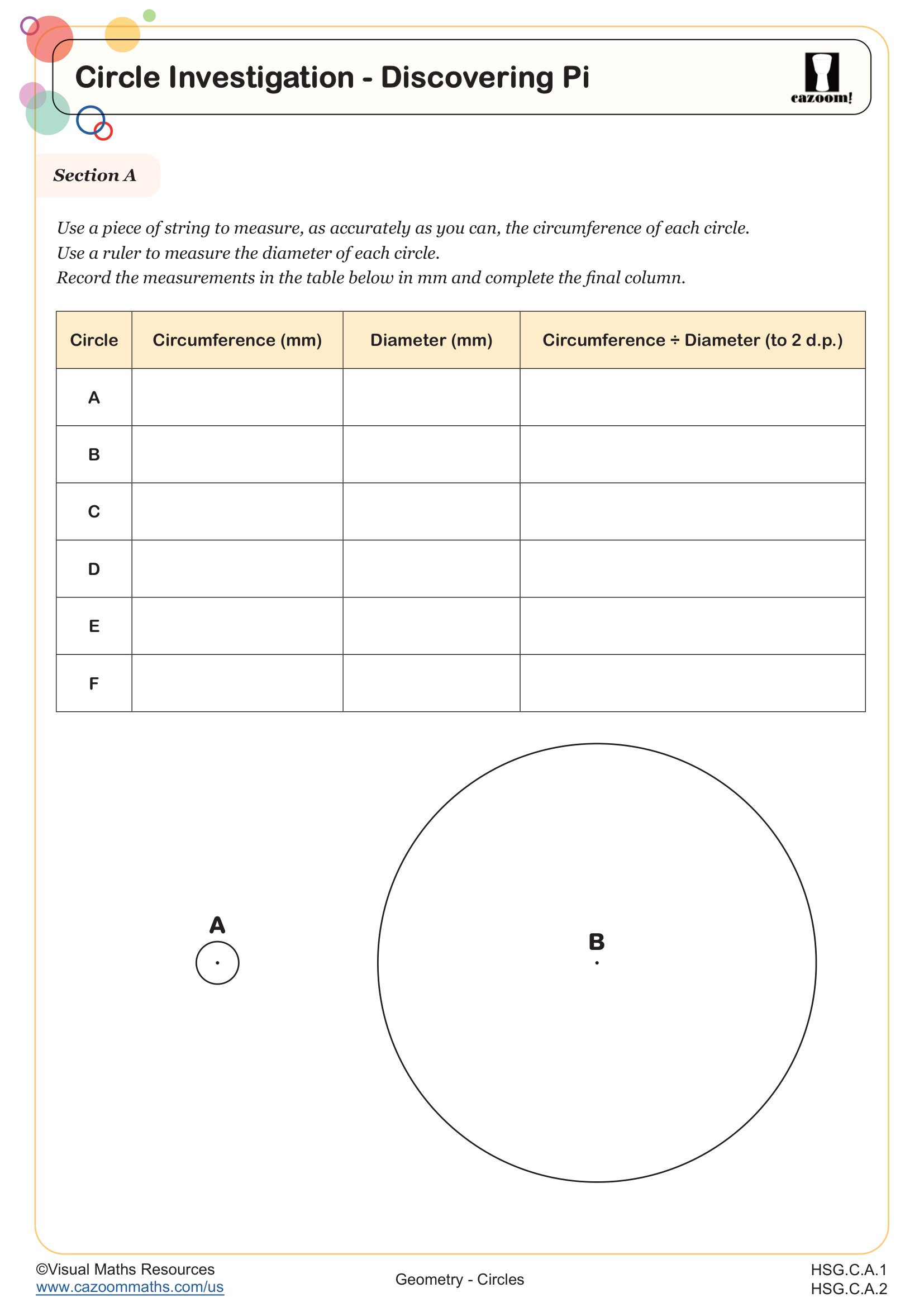
Circle Investigation - Discovering Pi
Grades: Geometry, IM 2
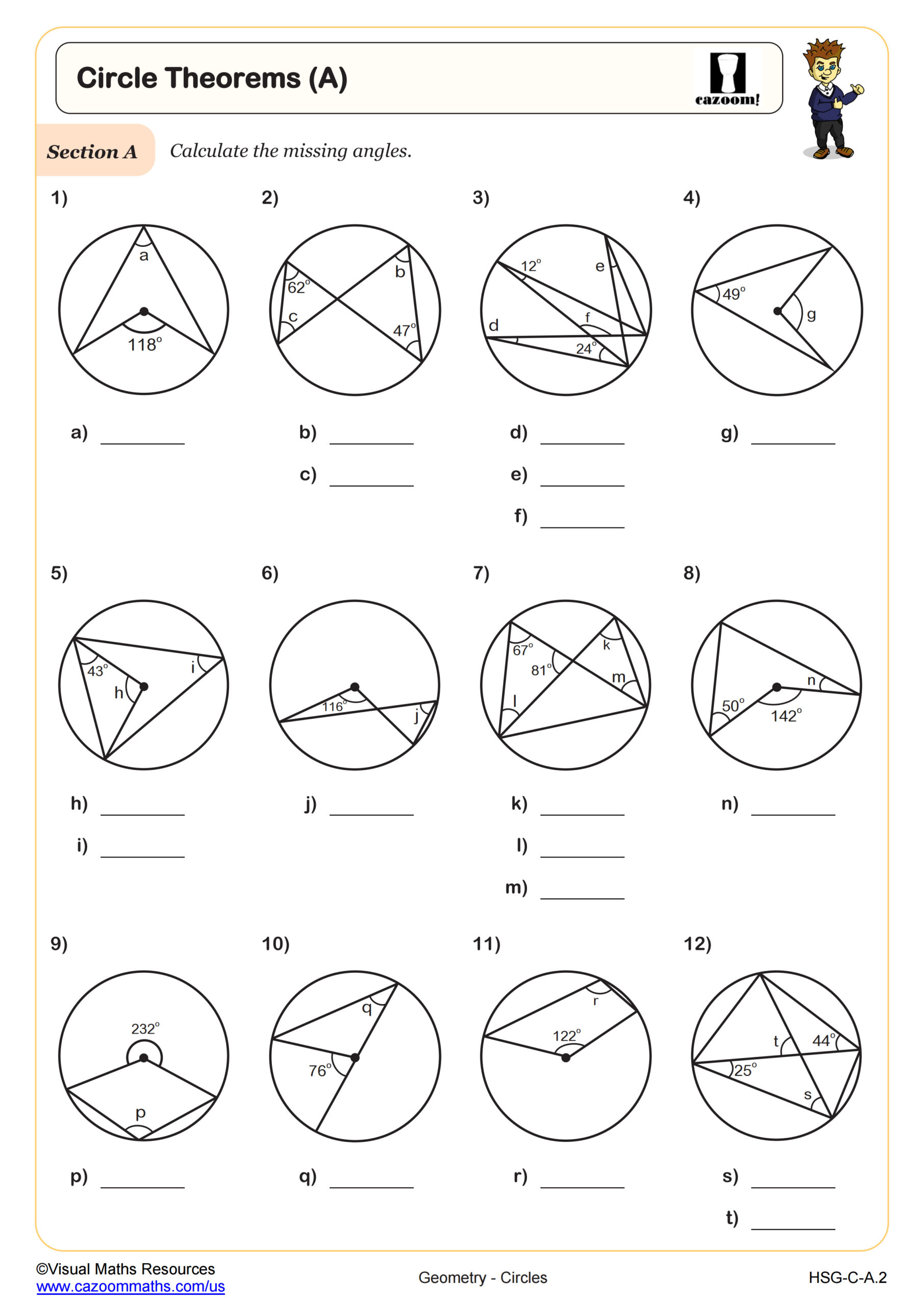
Circle Theorems (A)
Grades: Geometry, IM 3
Circle Theorems (B)
Grades: Geometry, IM 3
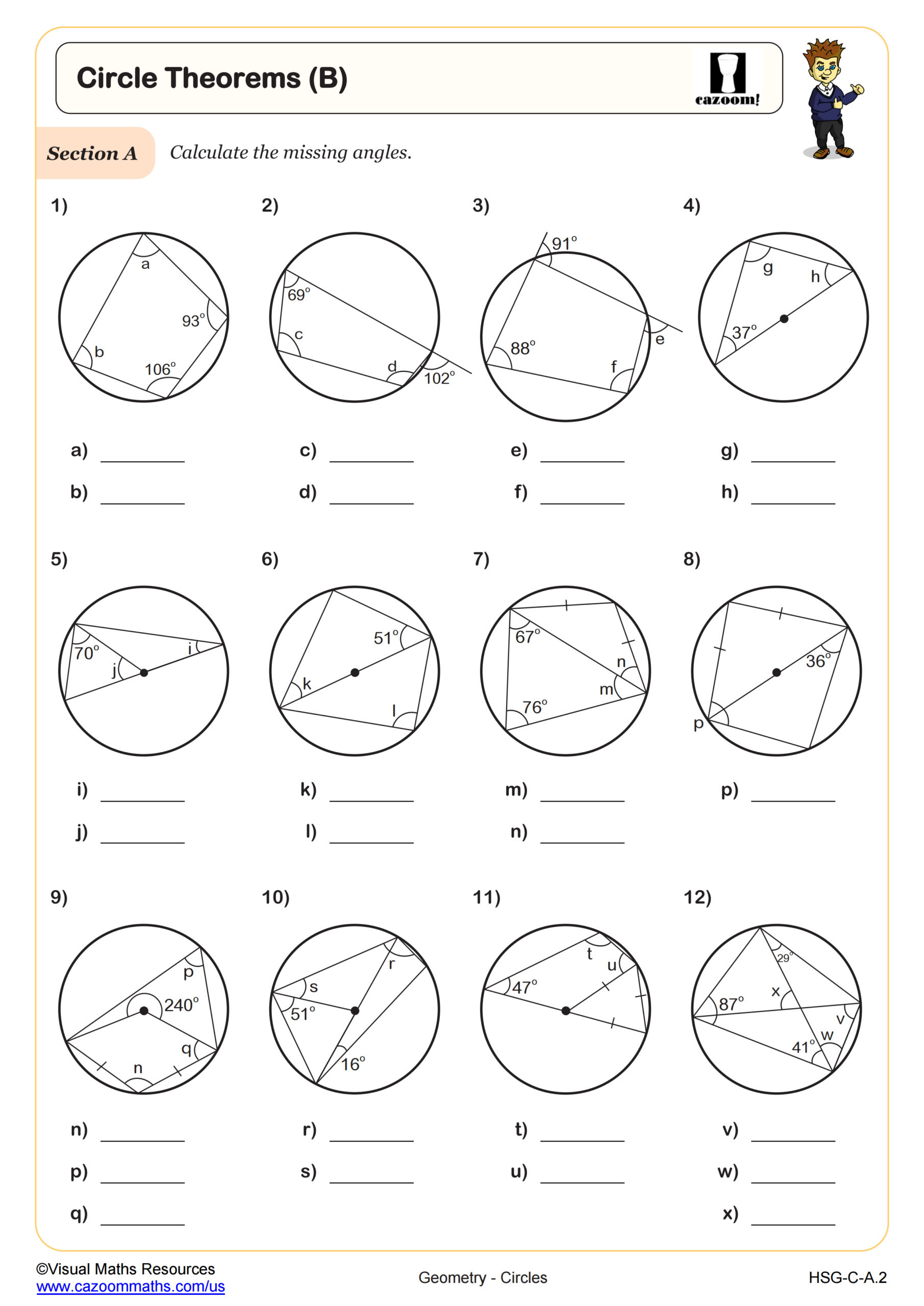
Circle Theorems (C)
Grades: Geometry, IM 3
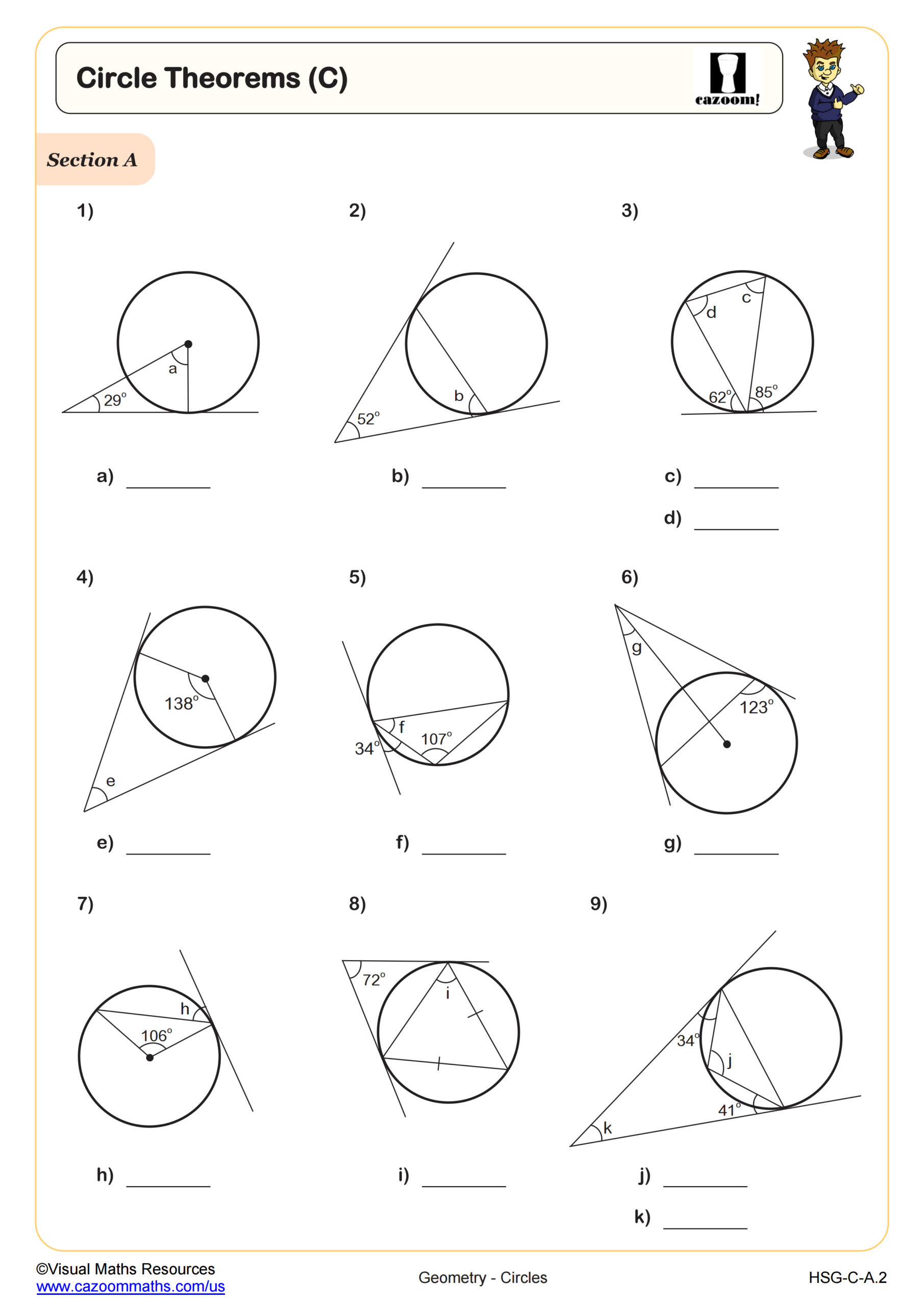
Constructing the Circle Theorems
Grades: Geometry, IM 3
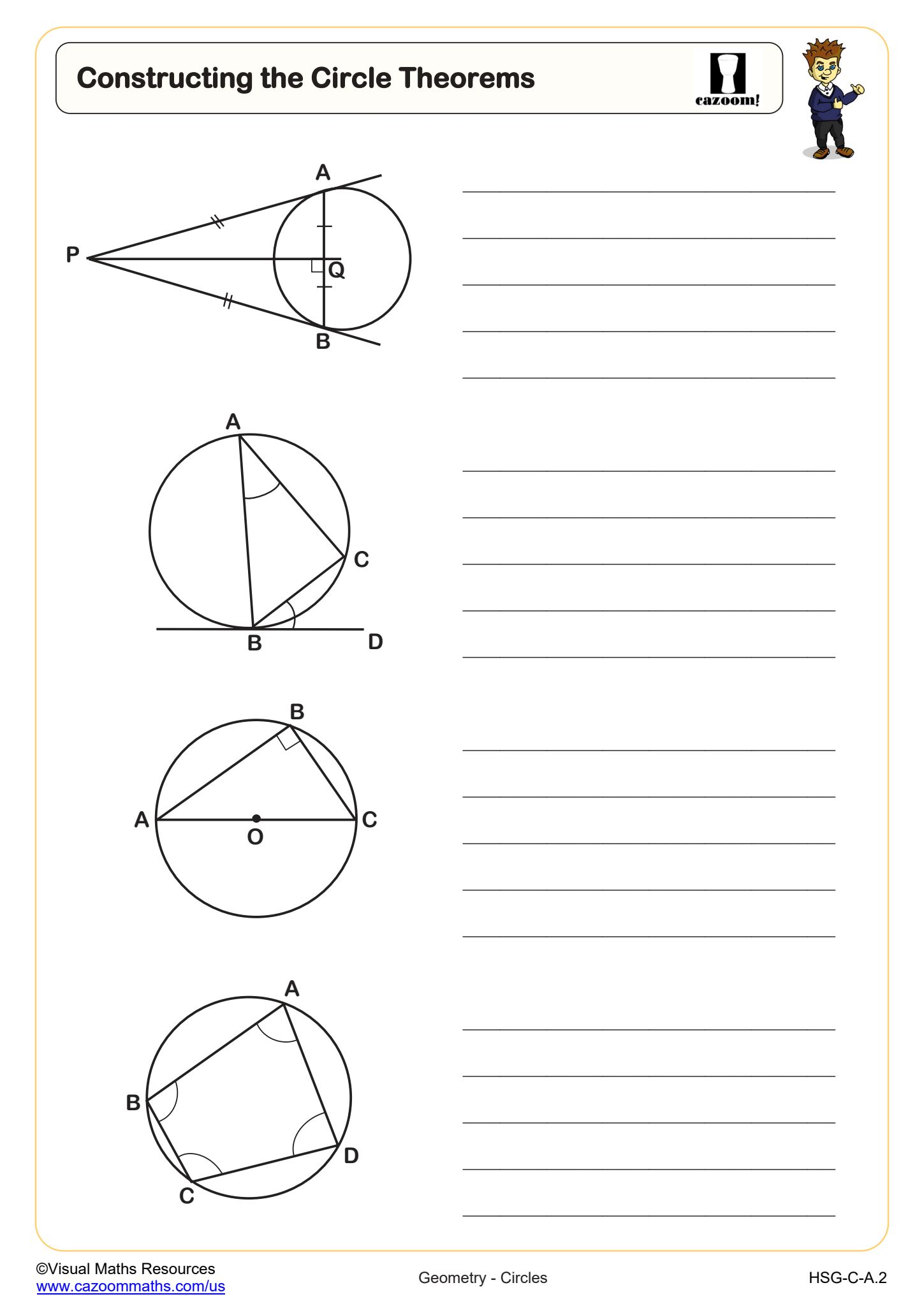
Equations of Circles
Grades: Geometry, IM 3
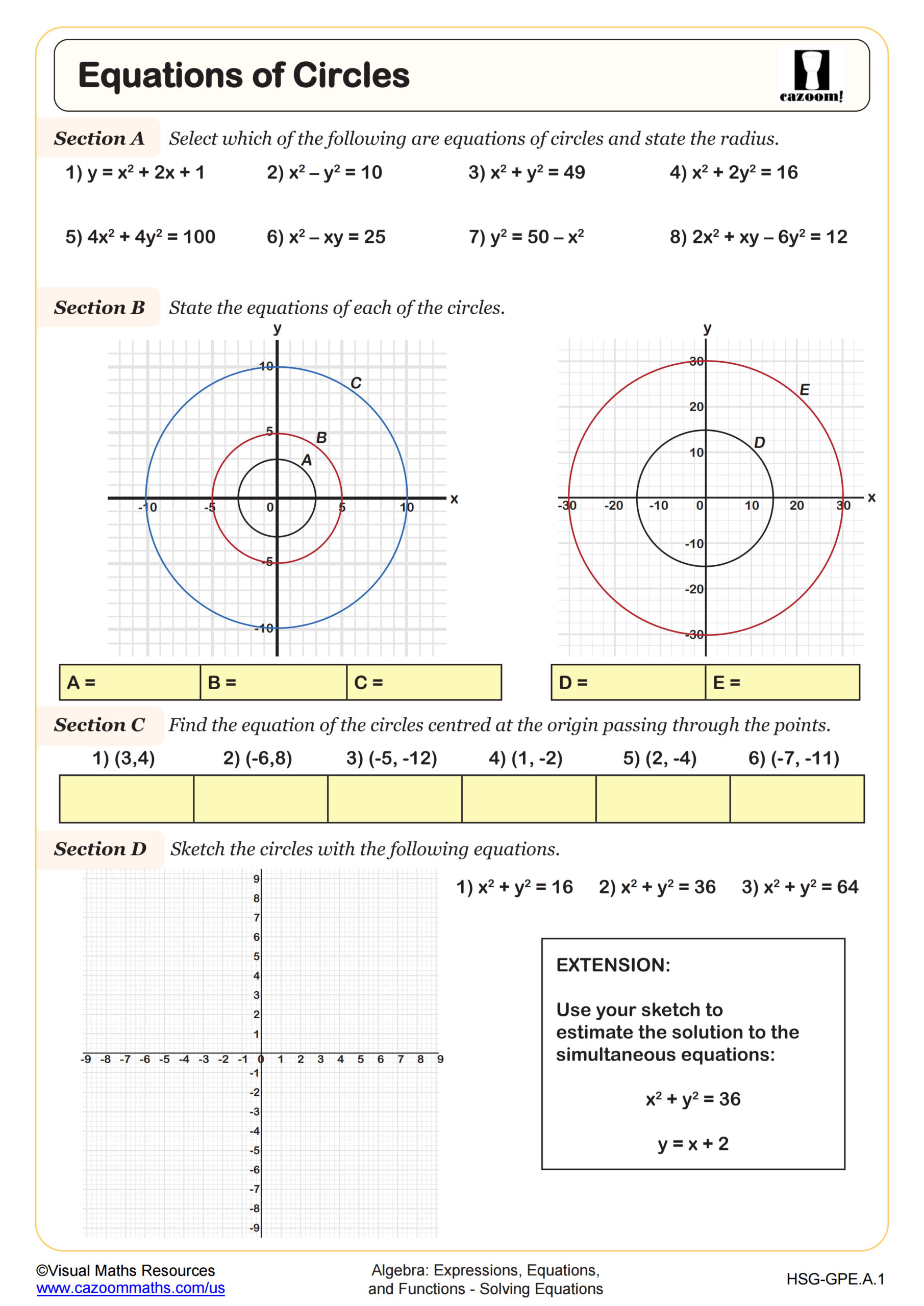
Equations of Lines Tangent to Circles
Grades: Geometry, IM 3
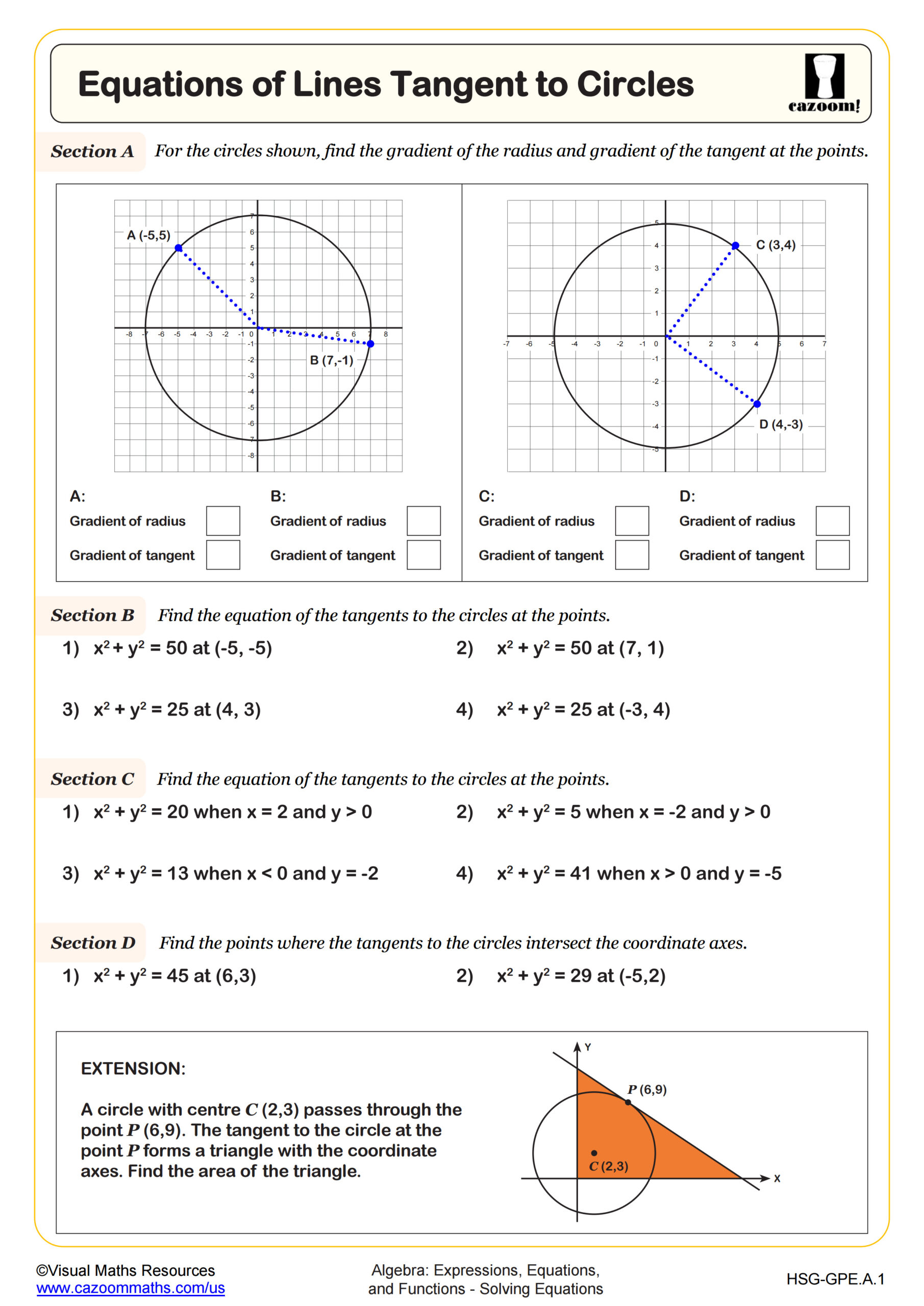
Formula for Area of Arc Length & Sectors
Grades: Geometry, IM 3
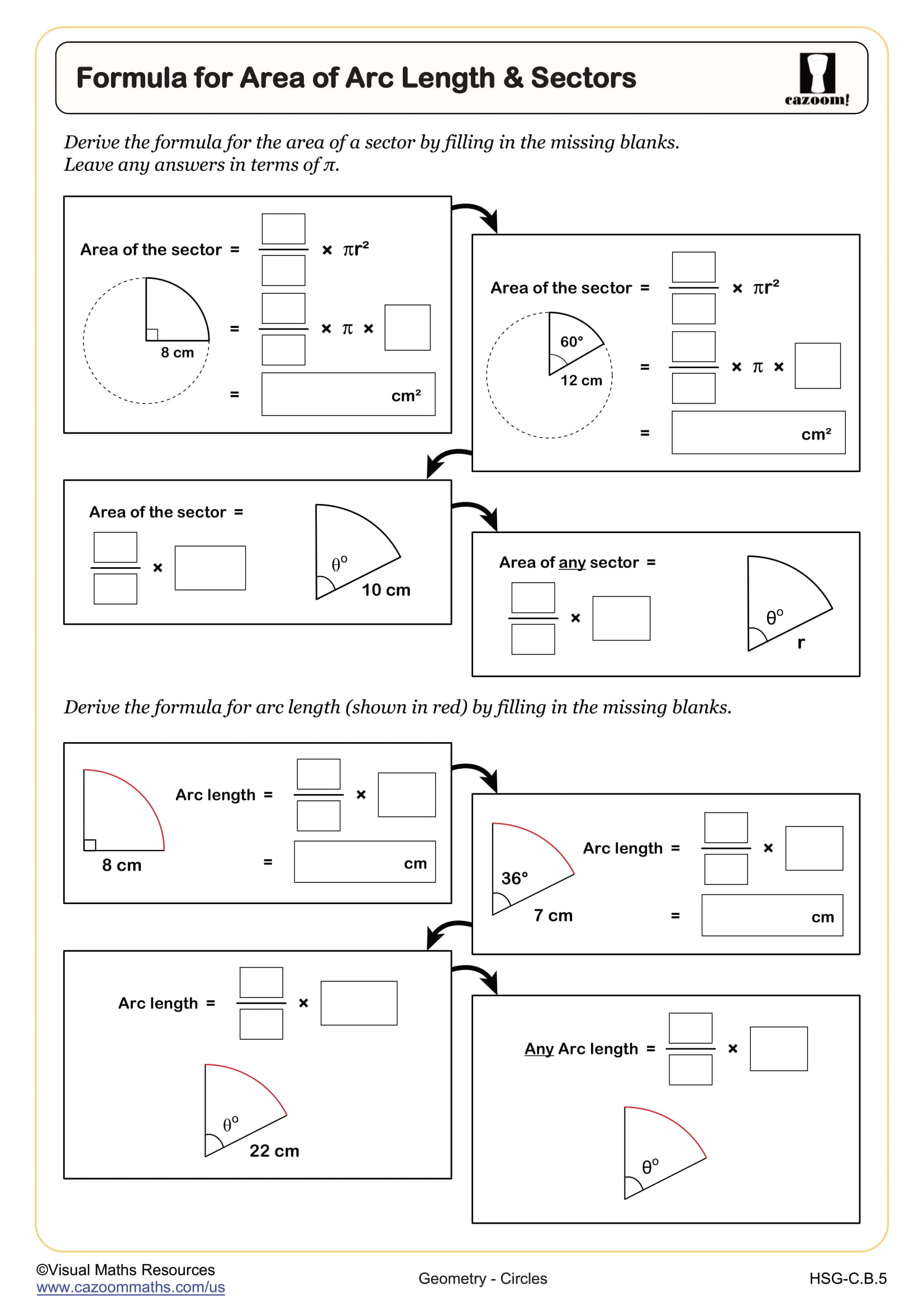
In Terms of Pi (B)
Grades: Geometry, IM 2
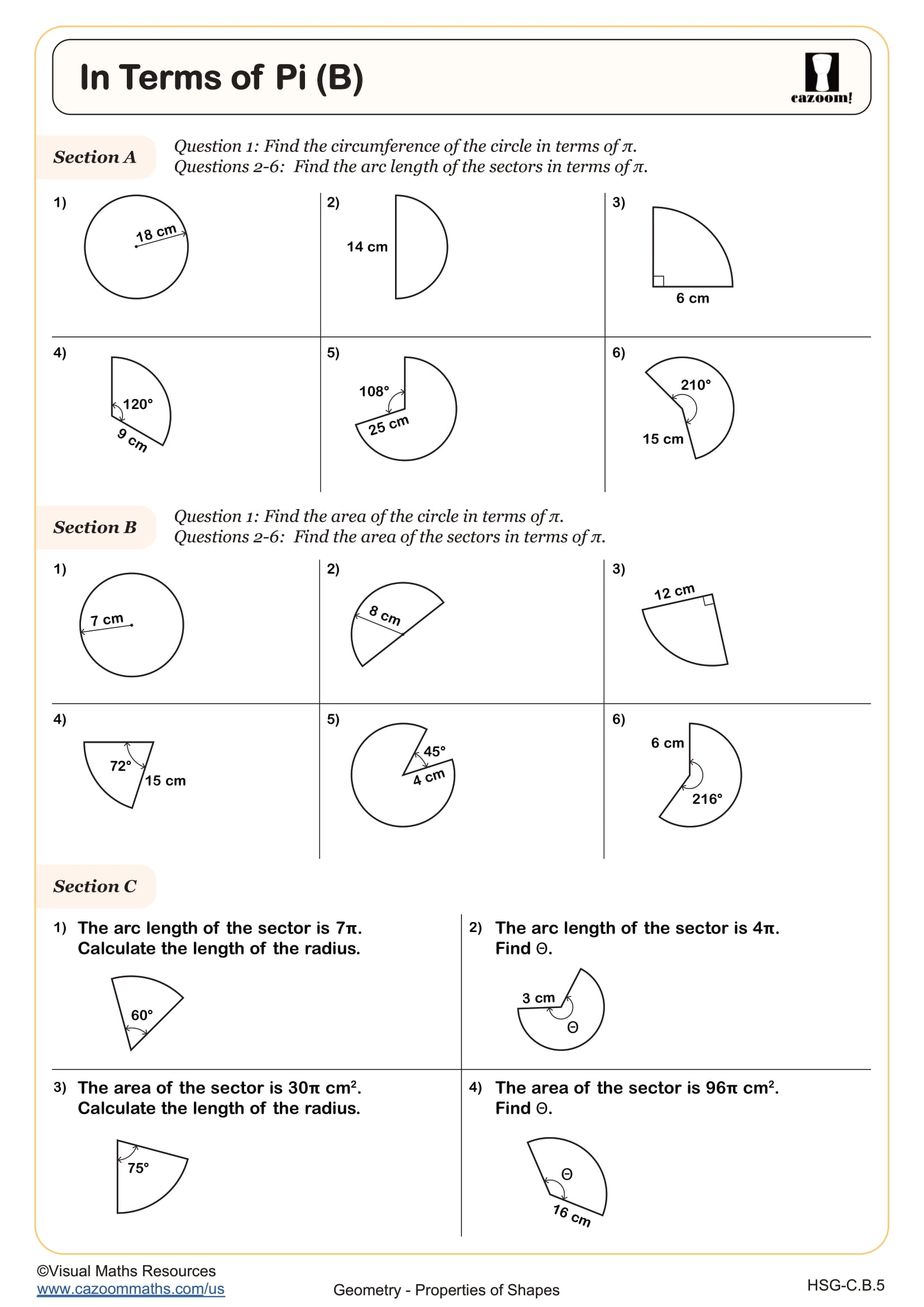
Pi (C)
Grades: Geometry, IM 2
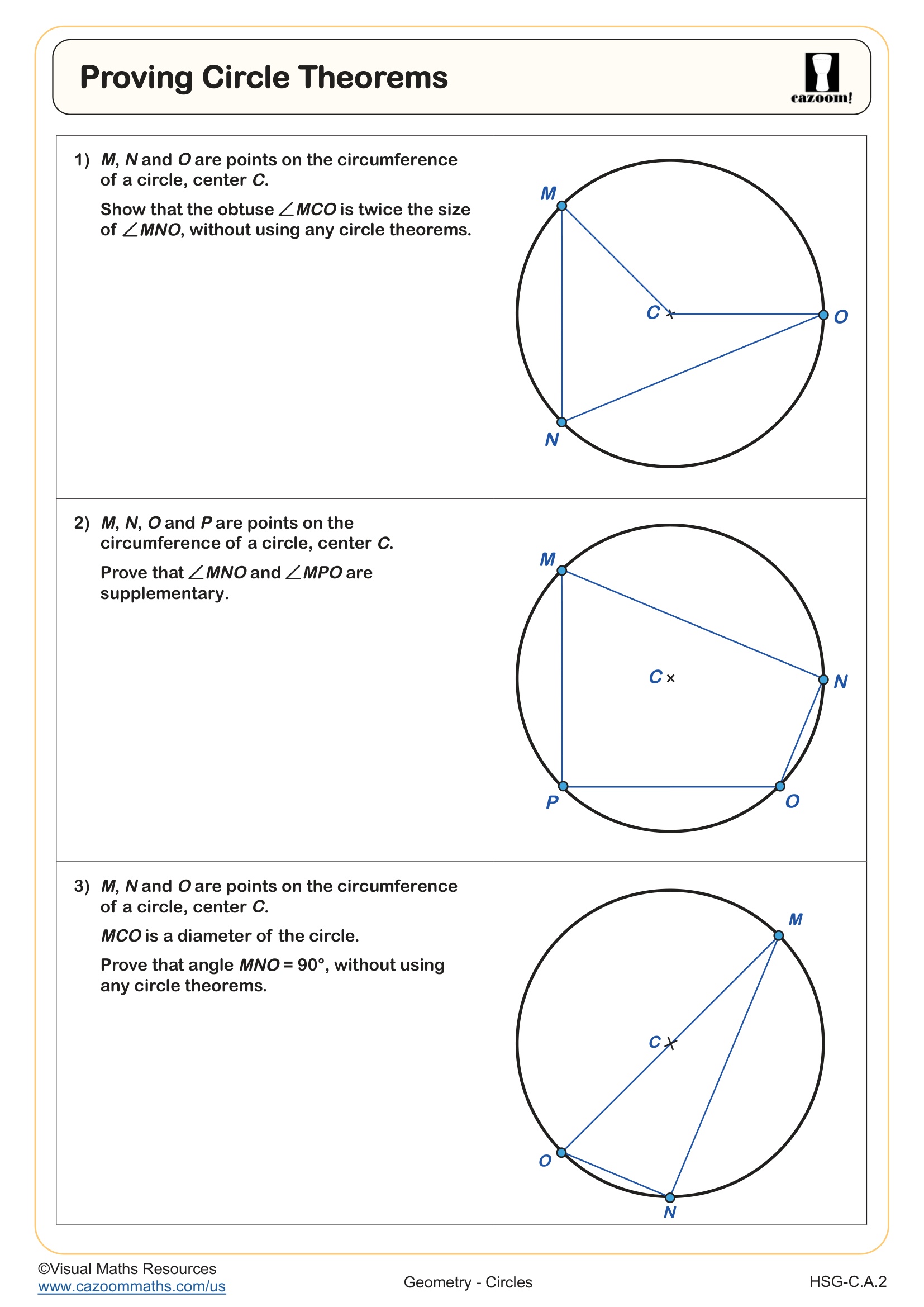
Proving Circle Theorems
Grades: Geometry, IM 2
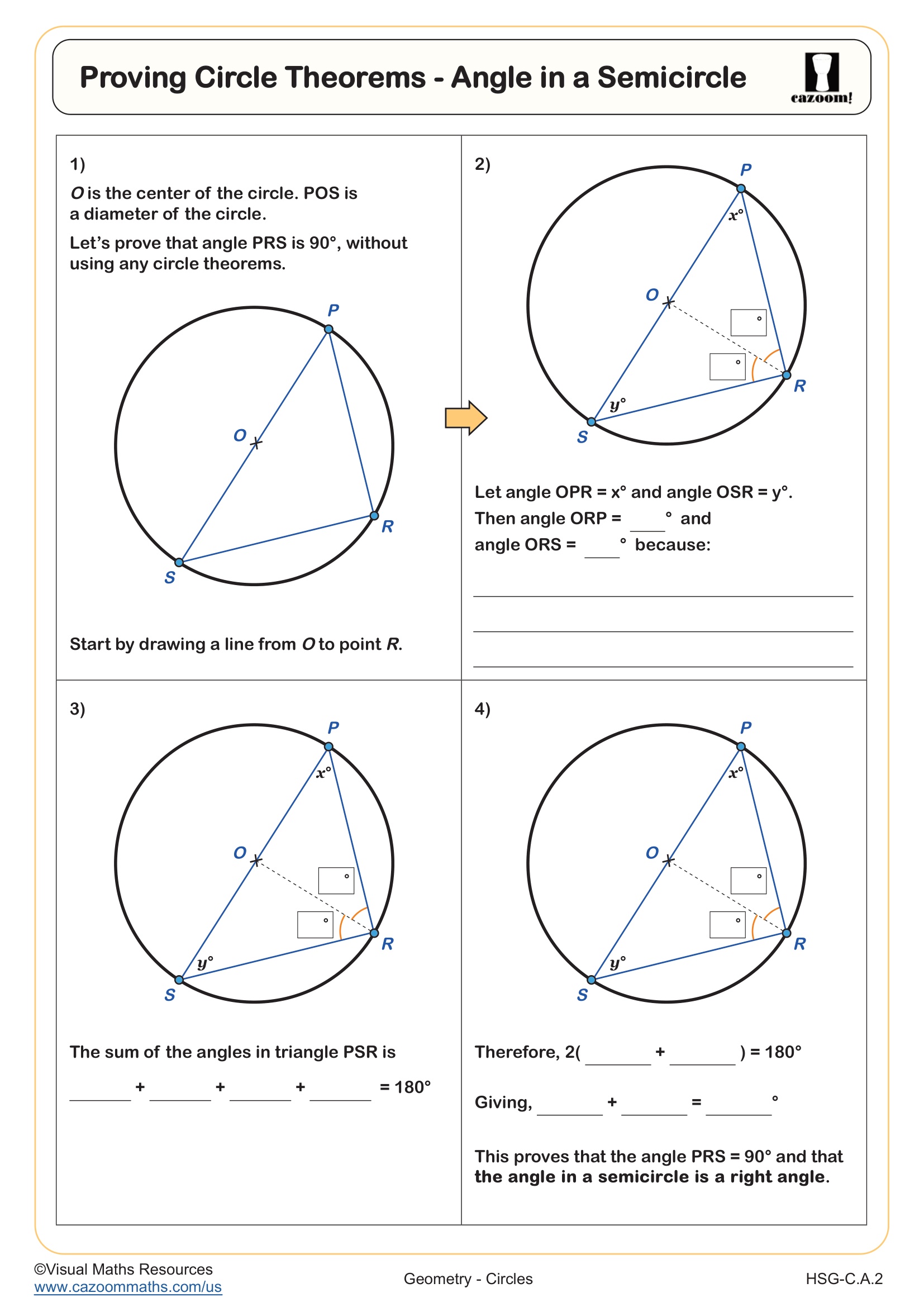
Proving Circle Theorems - Angle in a Semicircle
Grades: Geometry, IM 2
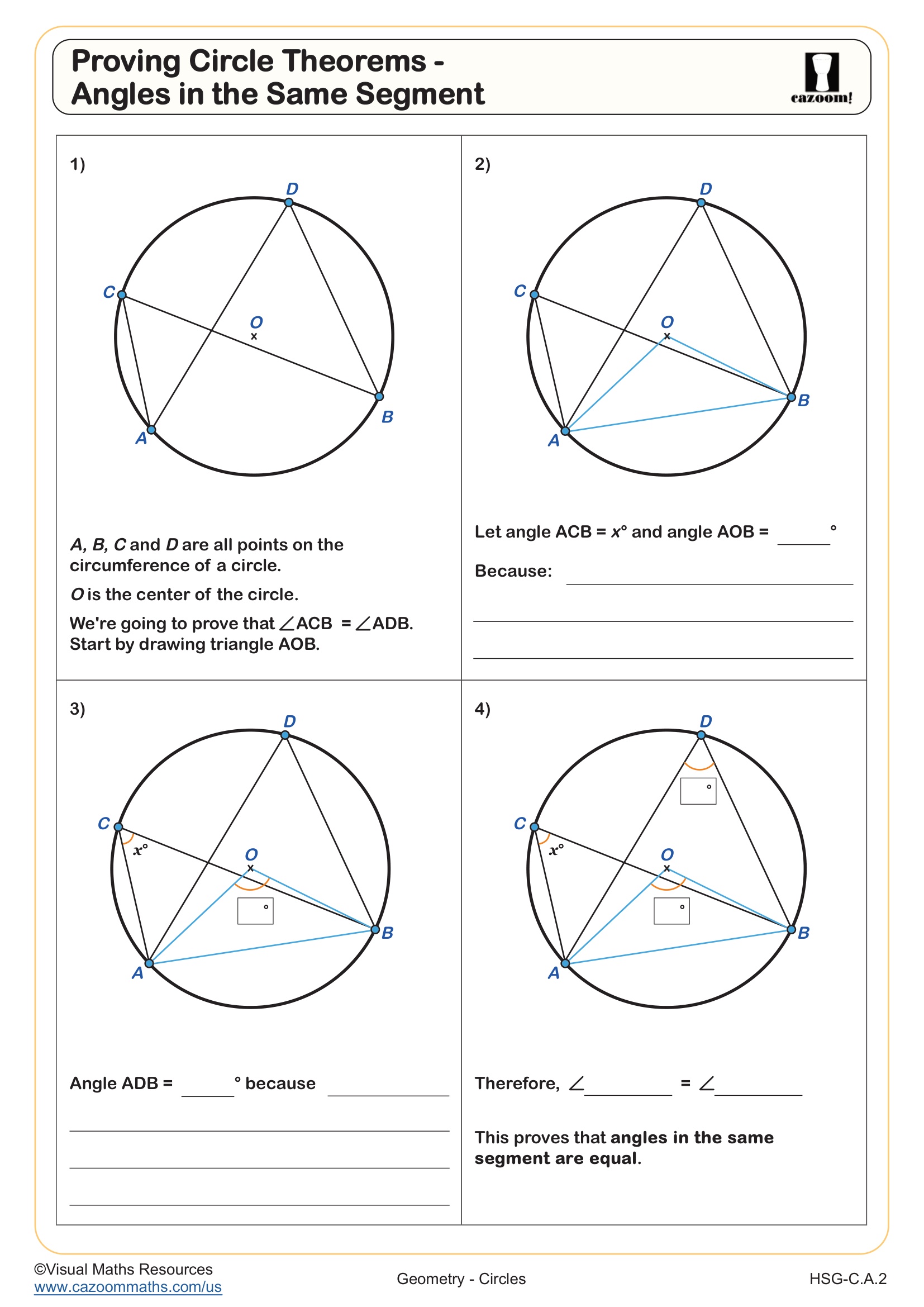
Proving Circle Theorems - Angles in the Same Segment
Grades: Geometry, IM 2
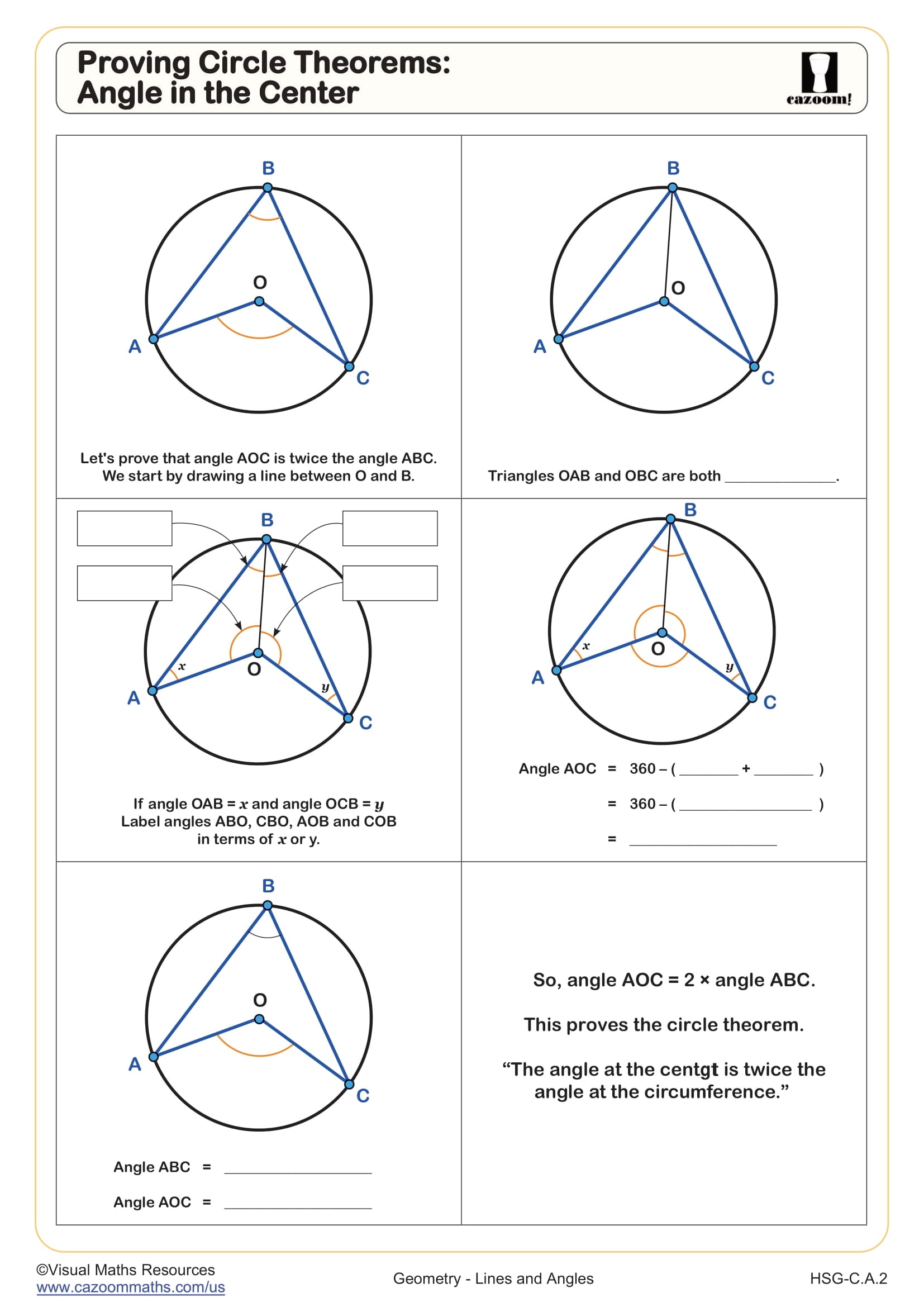
Proving Circle Theorems: Angle in the Center
Grades: Geometry, IM 1
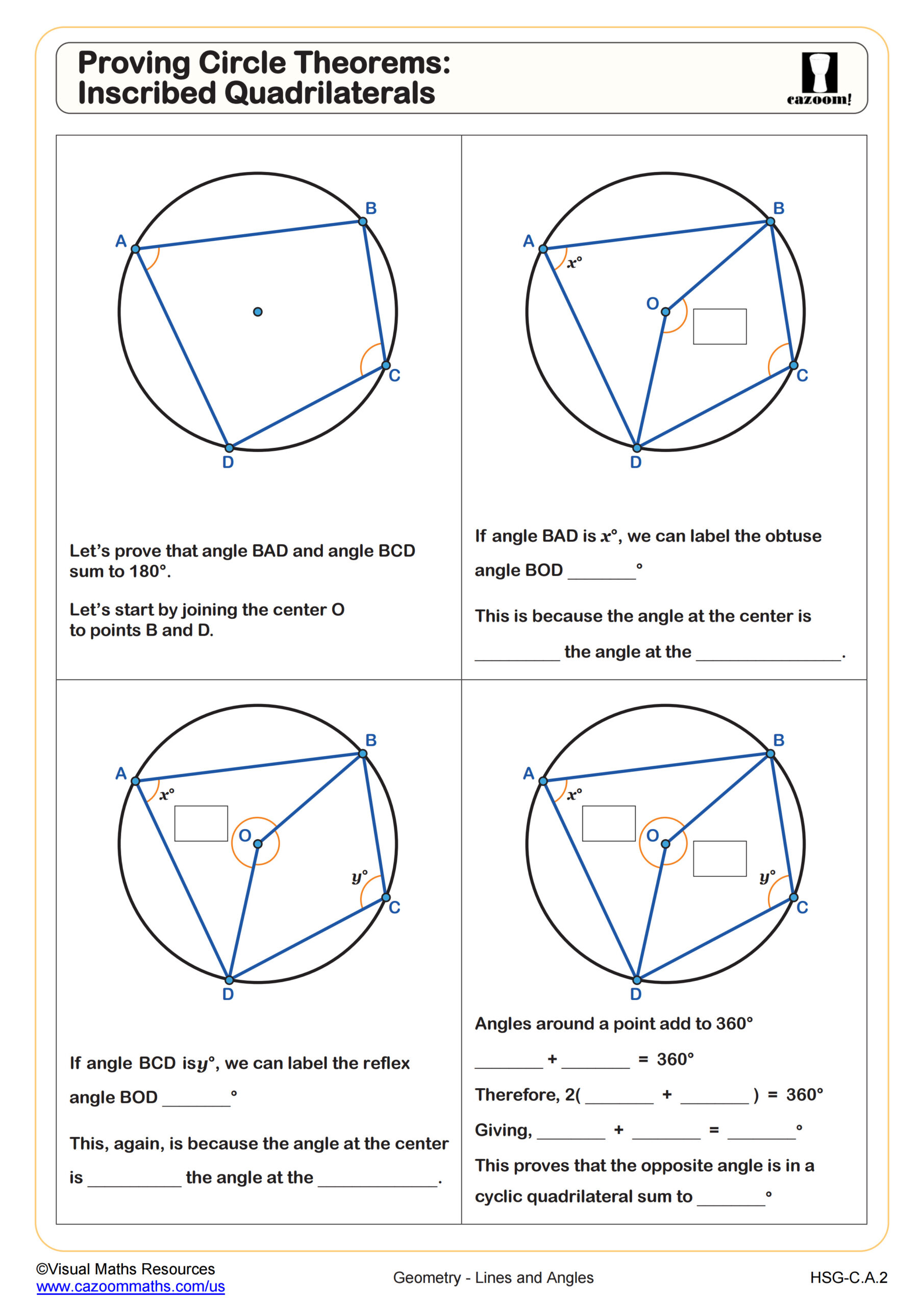
Proving Circle Theorems: Inscribed Quadrilaterals
Grades: Geometry, IM 1
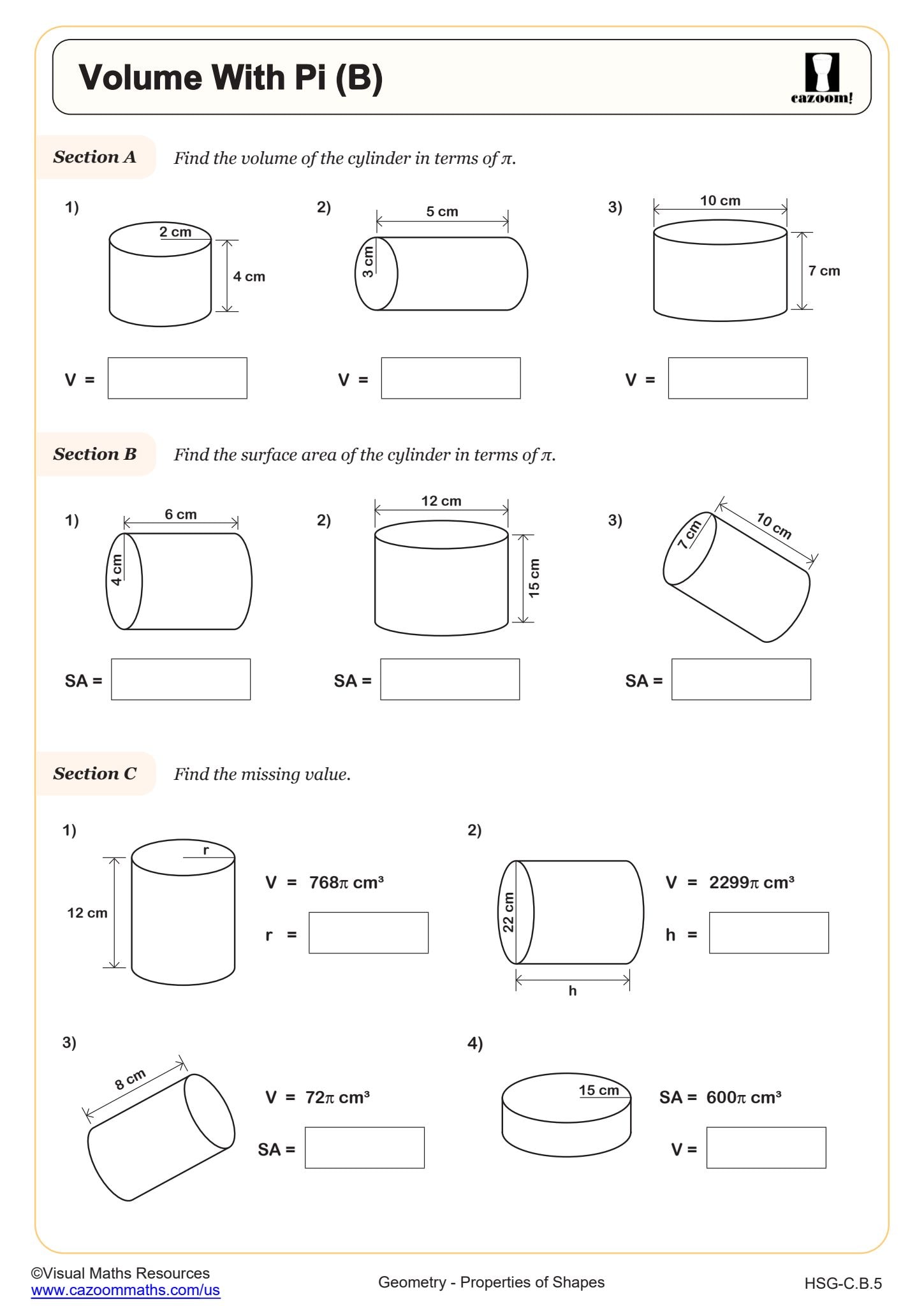
Volume With Pi (B)
Grades: Geometry, IM 2
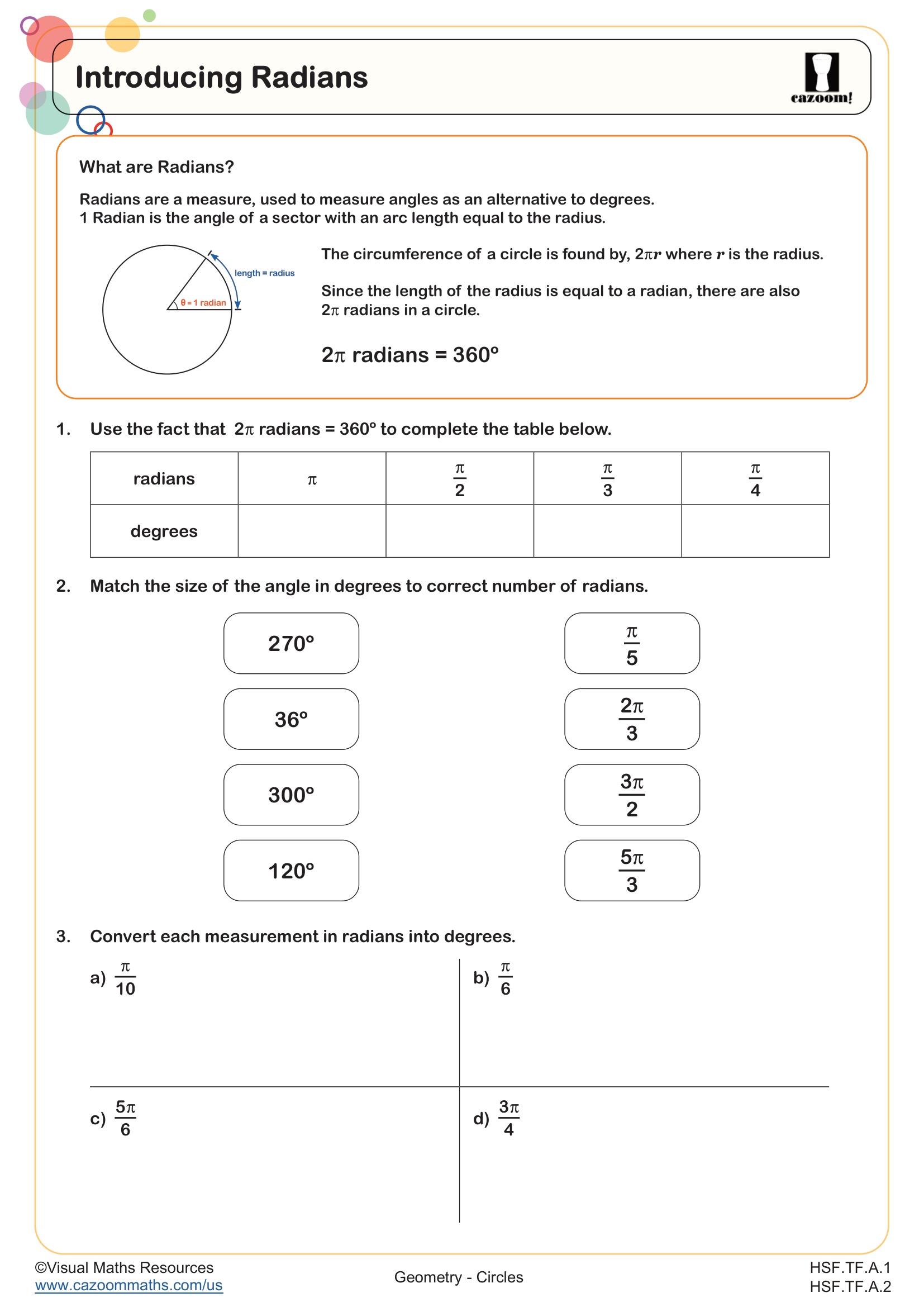
Introducing Radians
Grades: Algebra II, IM 3
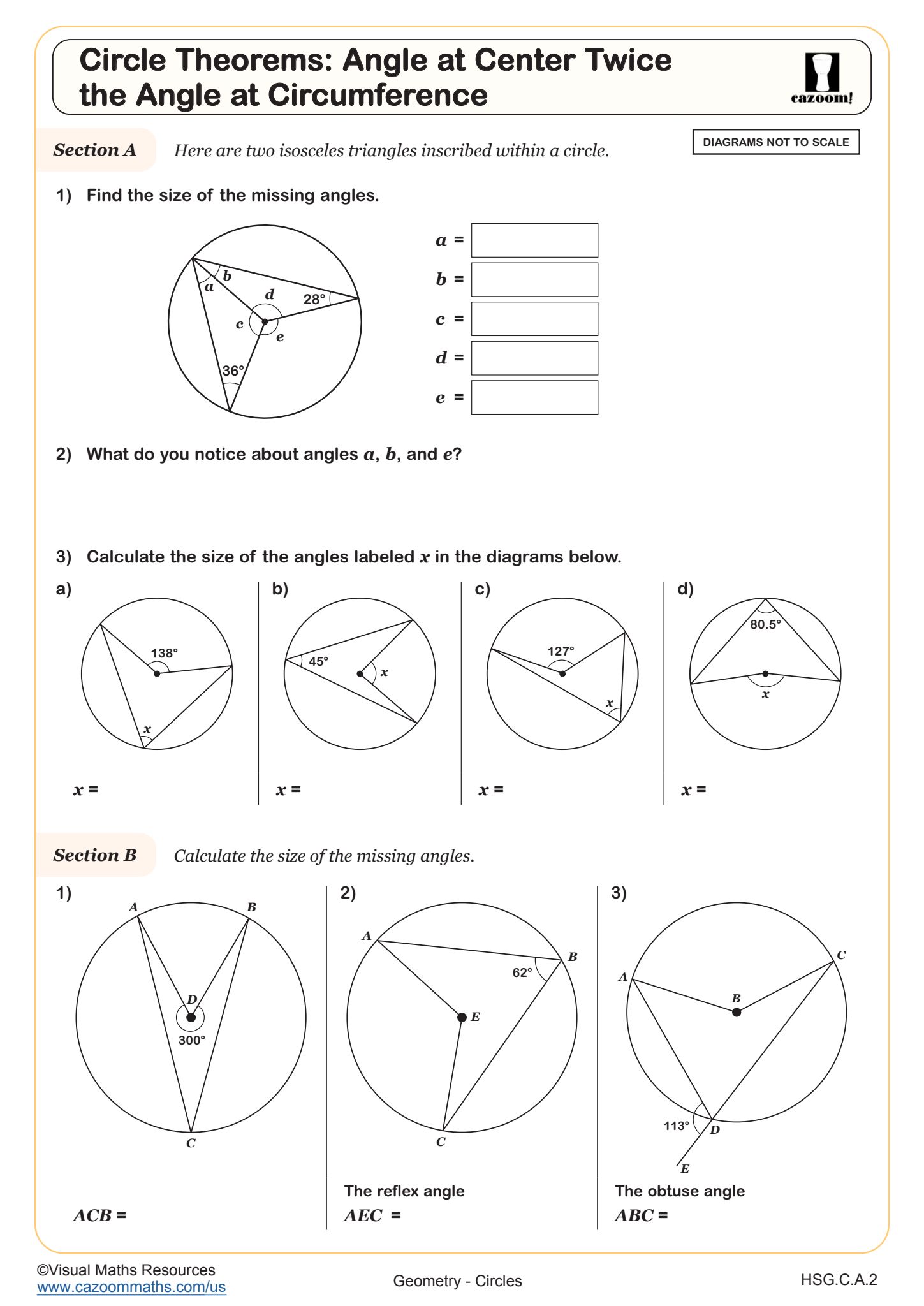
Circle Theorems: Angle at Center Twice the Angle at Circumference
Grades: IM 1
All worksheets are created by the team of experienced teachers at Cazoom Math.
What is the relationship between area of circumference in circle problems?
The area of circumference refers to understanding how these two key circle measurements relate to each other through the radius. While circumference measures the distance around a circle's edge (C = 2πr), area measures the space inside the circle (A = πr²). Both formulas depend on the radius, creating a mathematical relationship students must grasp.
Teachers notice that students often struggle when word problems require finding both measurements or when they need to work backward from circumference to find area. Practice with varied problem types helps students recognize when to apply each formula and understand that doubling the radius quadruples the area while only doubling the circumference.
Which grade levels should use circles worksheets for geometry practice?
Circle geometry worksheets typically begin in grade 6 when students first encounter circumference and area formulas, aligning with Common Core standards 6.G.A.1. Middle school students focus on applying formulas with whole number and simple decimal radii, while high school geometry courses introduce more complex applications including arc length and sector area.
Progression through grade levels shows students moving from basic formula application to multi-step problems involving composite figures and real-world contexts. Teachers find that grade 6 circle worksheet problems should emphasize conceptual understanding before advancing to algebraic manipulation and coordinate geometry applications in later grades.
How should students approach circumference formula problems systematically?
When learning how to find circumference, students should first identify whether they're given the radius or diameter, then select the appropriate formula (C = πd or C = 2πr). Teachers recommend having students write down the known values and chosen formula before substituting numbers, reducing careless errors in multi-step problems.
A common mistake occurs when students use diameter in the radius formula or vice versa. Encouraging students to sketch the circle and label given measurements helps them visualize the relationship between radius and diameter. This systematic approach becomes particularly important when problems involve finding missing measurements or working with composite figures.
What makes these circle worksheets effective for classroom instruction?
Effective circles worksheet design includes varied problem formats, from basic formula application to real-world scenarios like calculating material needed for circular gardens or sports fields. The progression from guided examples to independent practice allows students to build confidence while teachers assess understanding through formative assessment.
Answer keys enable immediate feedback and help teachers identify common error patterns during instruction. Students can check their work independently, while teachers use the solutions to facilitate whole-class discussions about problem-solving strategies. The PDF format ensures consistent formatting across different devices and printing systems, supporting both in-class work and remote learning environments.
WHAT IS THE AREA OF A CIRCLE AND WHO TO CALCULATE IT?
The Area of a circle is the region occupied by the circle. To calculate the area of a circle we need to know the radius and diameter of the circle.
If we know the radius of the circle, we can use the following equation to calculate the area of the circle:
Area of the circle = π x r2
If we know the diameter of the circle, we can use the following equation to calculate the area of the circle:
Area of the circle = π x (r/2)2
Example:
The radius of a circle equals 3,4 cm. Calculate the area of the circle.
Area of the circle = 3,14 x 3,42
Area of the circle = 3,14 x 11,56
Area of the circle = 36,32 cm2
Example:
The diameter of a circle equals 8,2 cm. Calculate the area of the circle.
Area of the circle = 3,14 x (8,2/2)2
Area of the circle = 3,14 x 4,12
Area of the circle = 3,14 x 16,81
Area of the circle = 52,81 cm2