Construction Worksheets with Answers
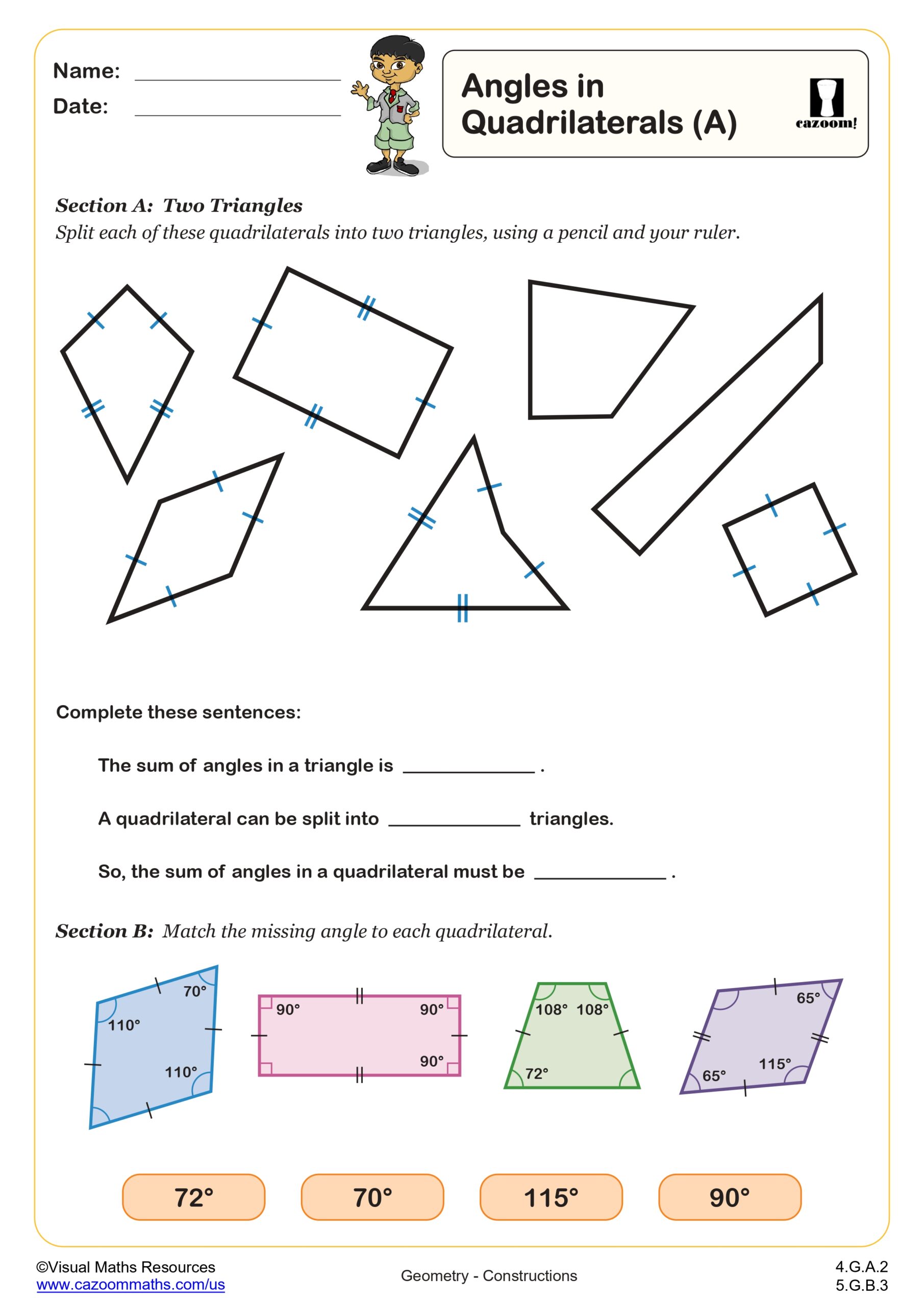
Angles in Quadrilaterals (A)
Grades: 4th Grade, 5th Grade
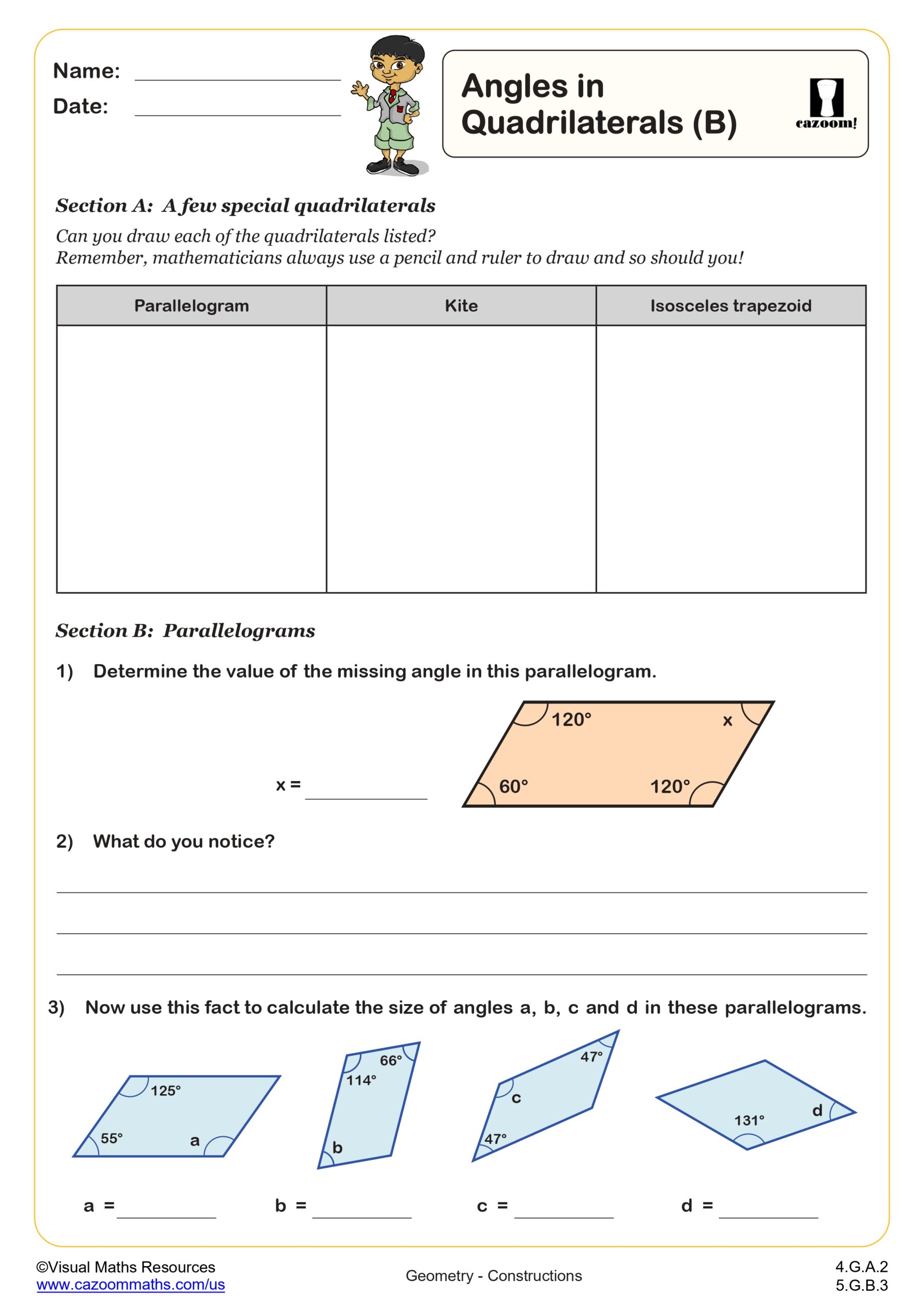
Angles in Quadrilaterals (B)
Grades: 4th Grade, 5th Grade
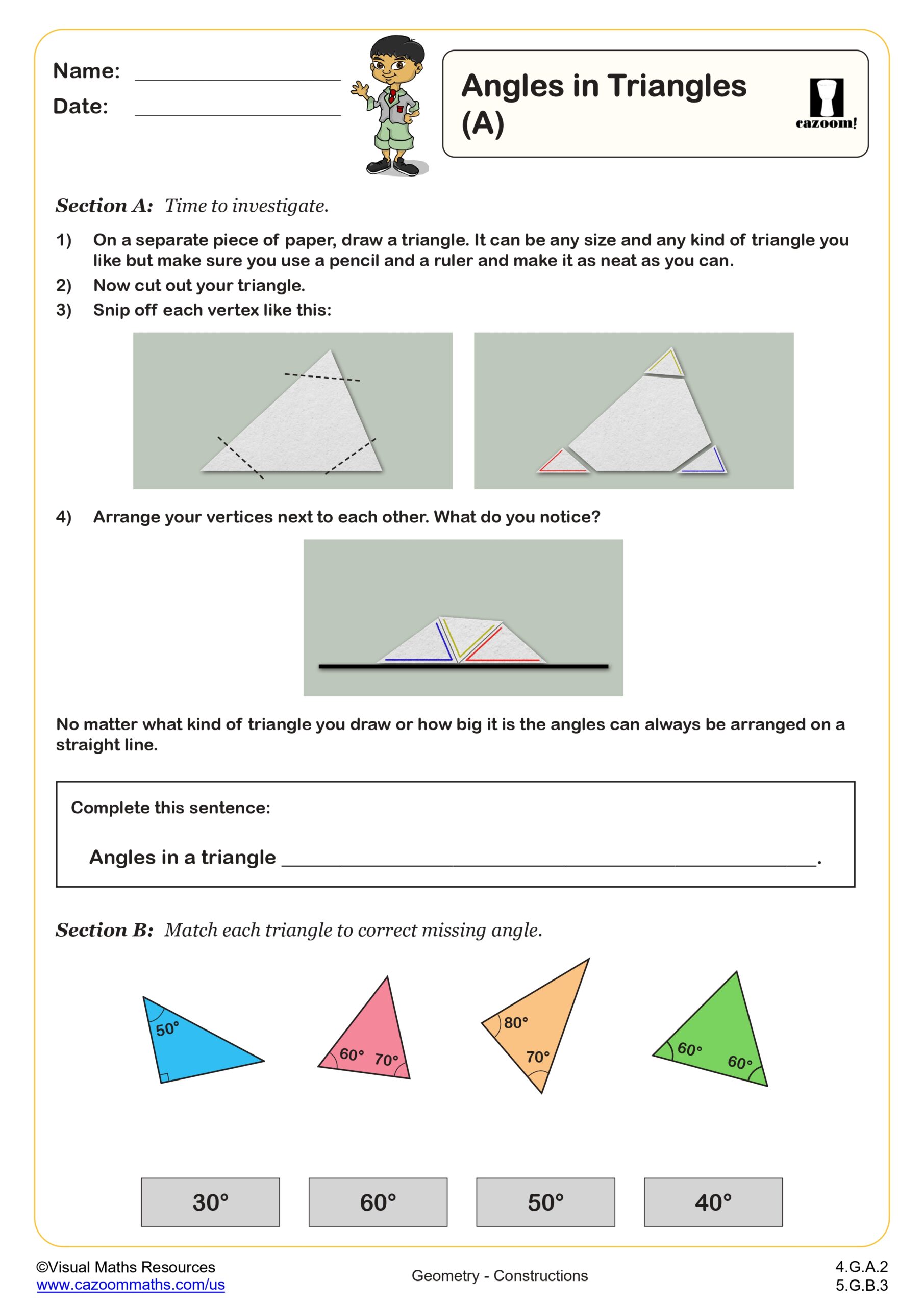
Angles in Triangles (A)
Grades: 4th Grade, 5th Grade
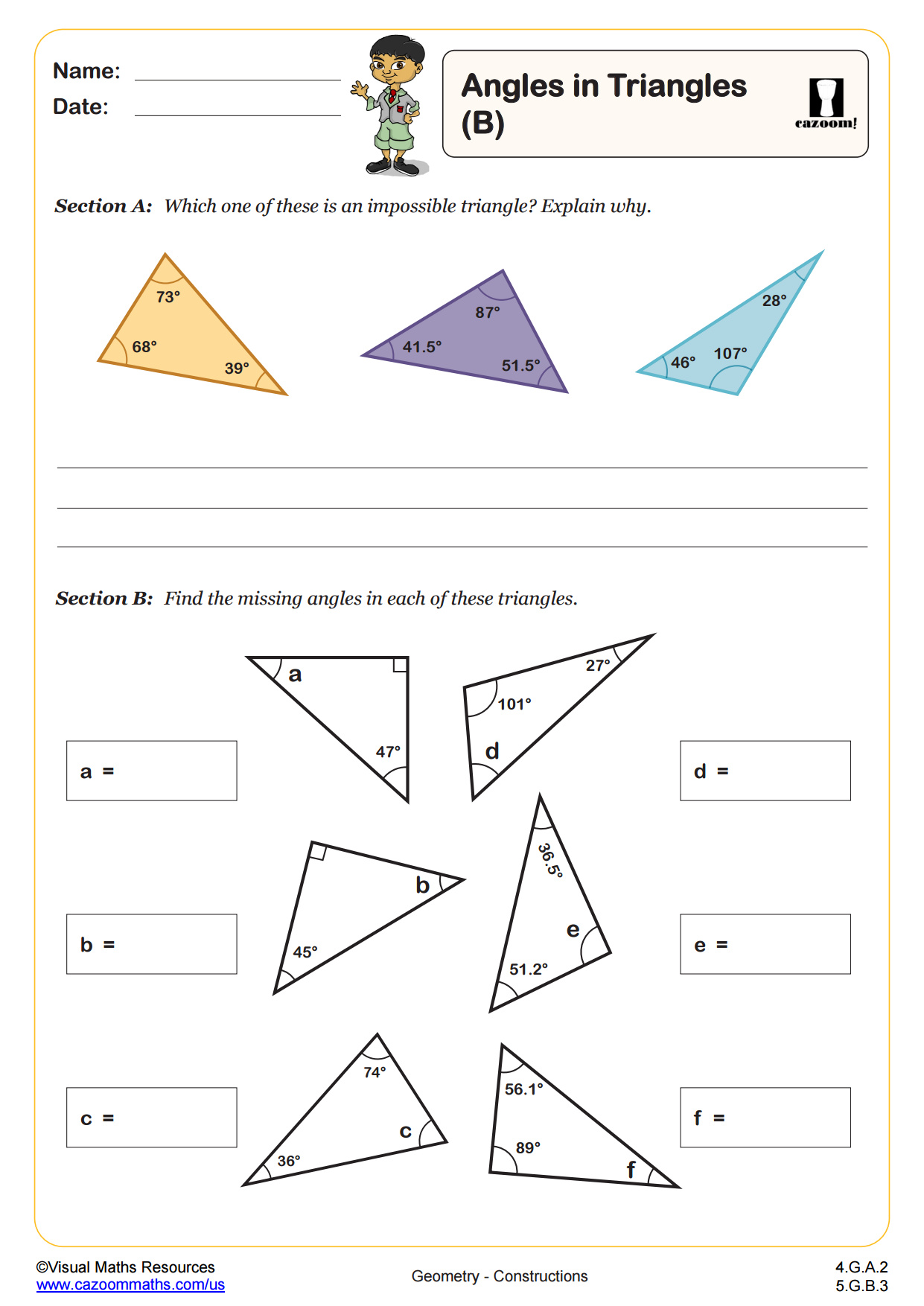
Angles in Triangles (B)
Grades: 4th Grade, 5th Grade
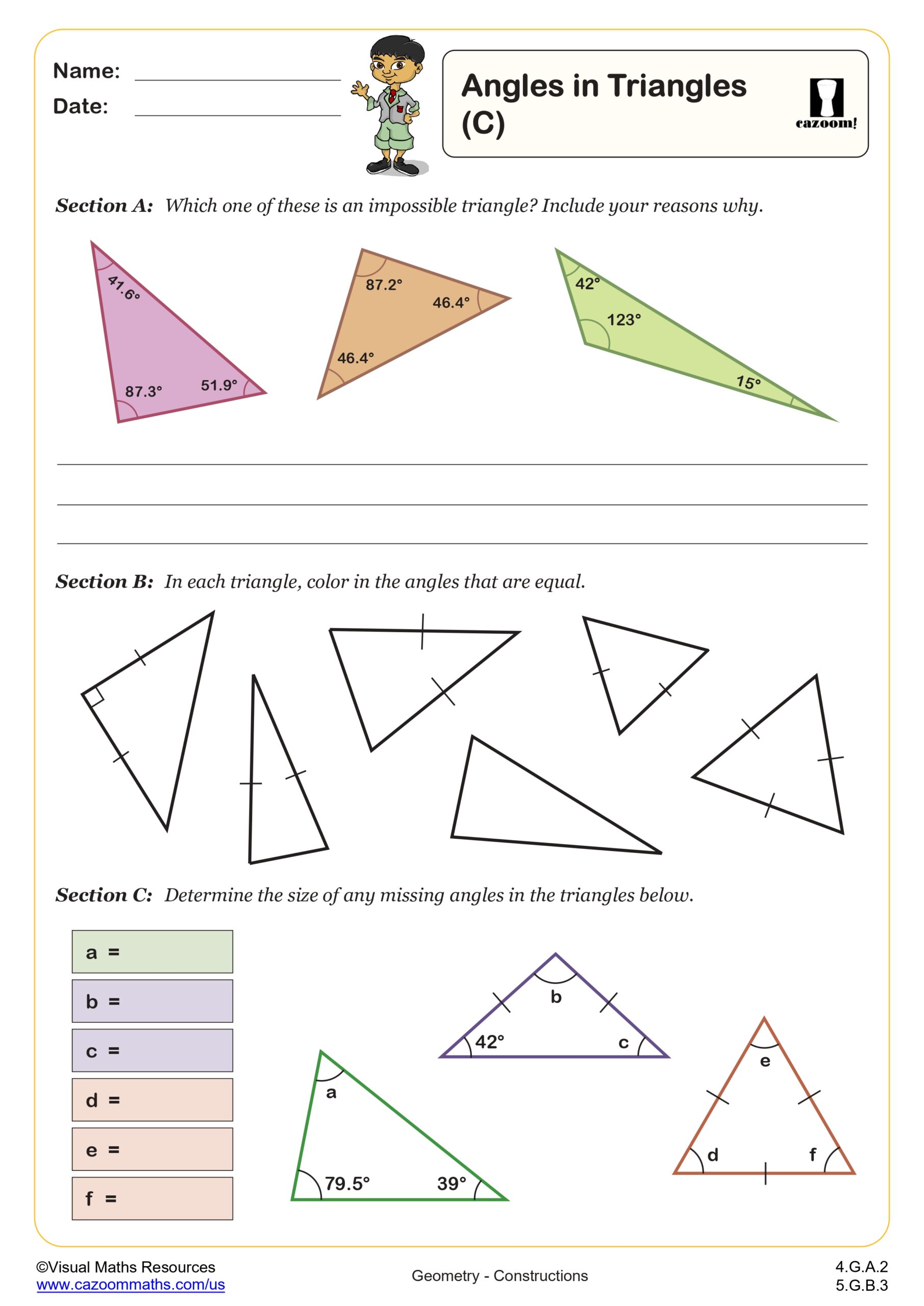
Angles in Triangles (C)
Grades: 4th Grade, 5th Grade
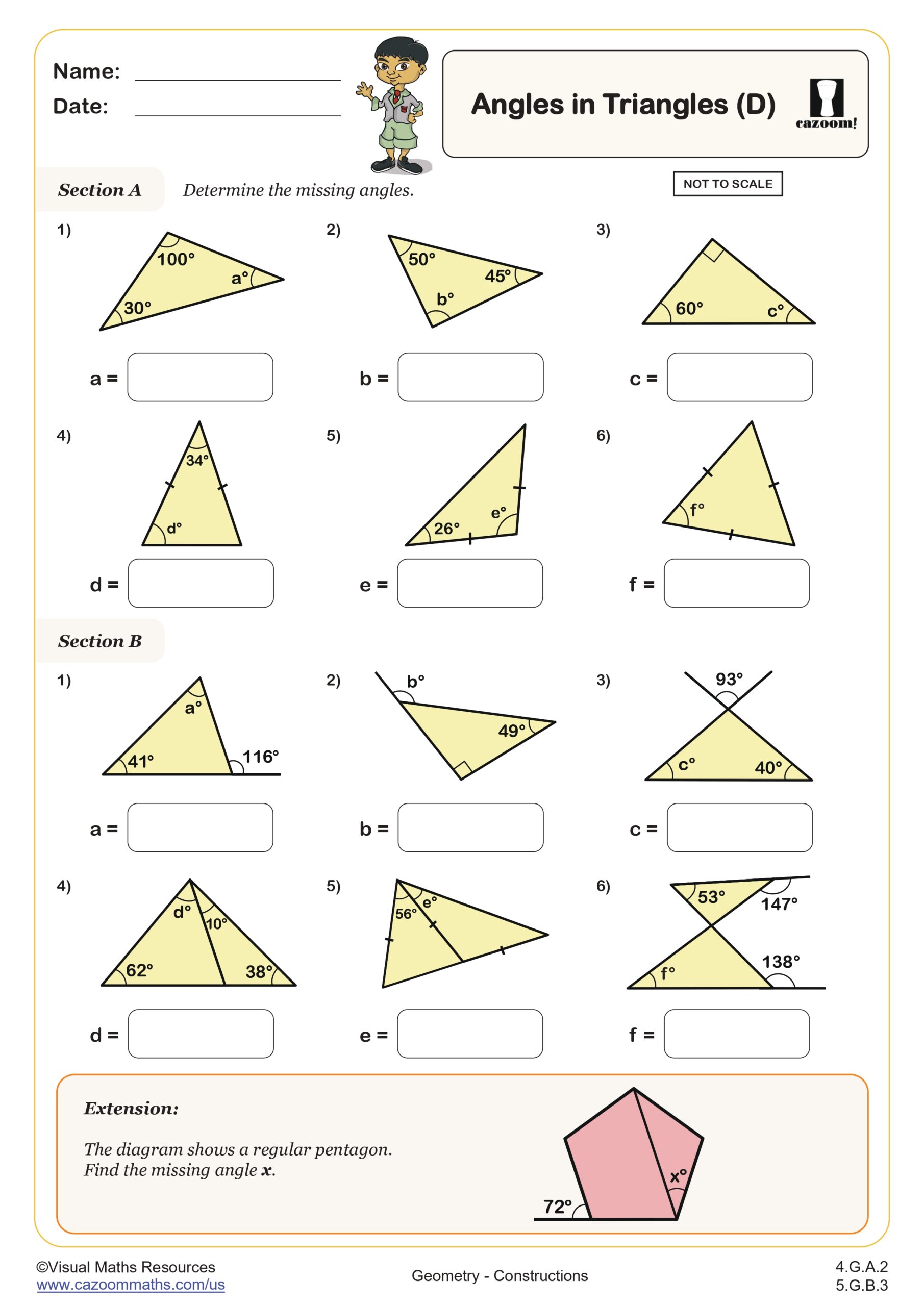
Angles in Triangles (D)
Grades: 4th Grade, 5th Grade
Divisibility Rules (B): 7, 9, 11
Grades: 4th Grade
-7-9-11.jpg?w=3840)
Divisibility Rules (C): Combining Tests for Composite Factors
Grades: 4th Grade
-Combining-Test-%20for-Composite-Factors.jpg?w=3840)
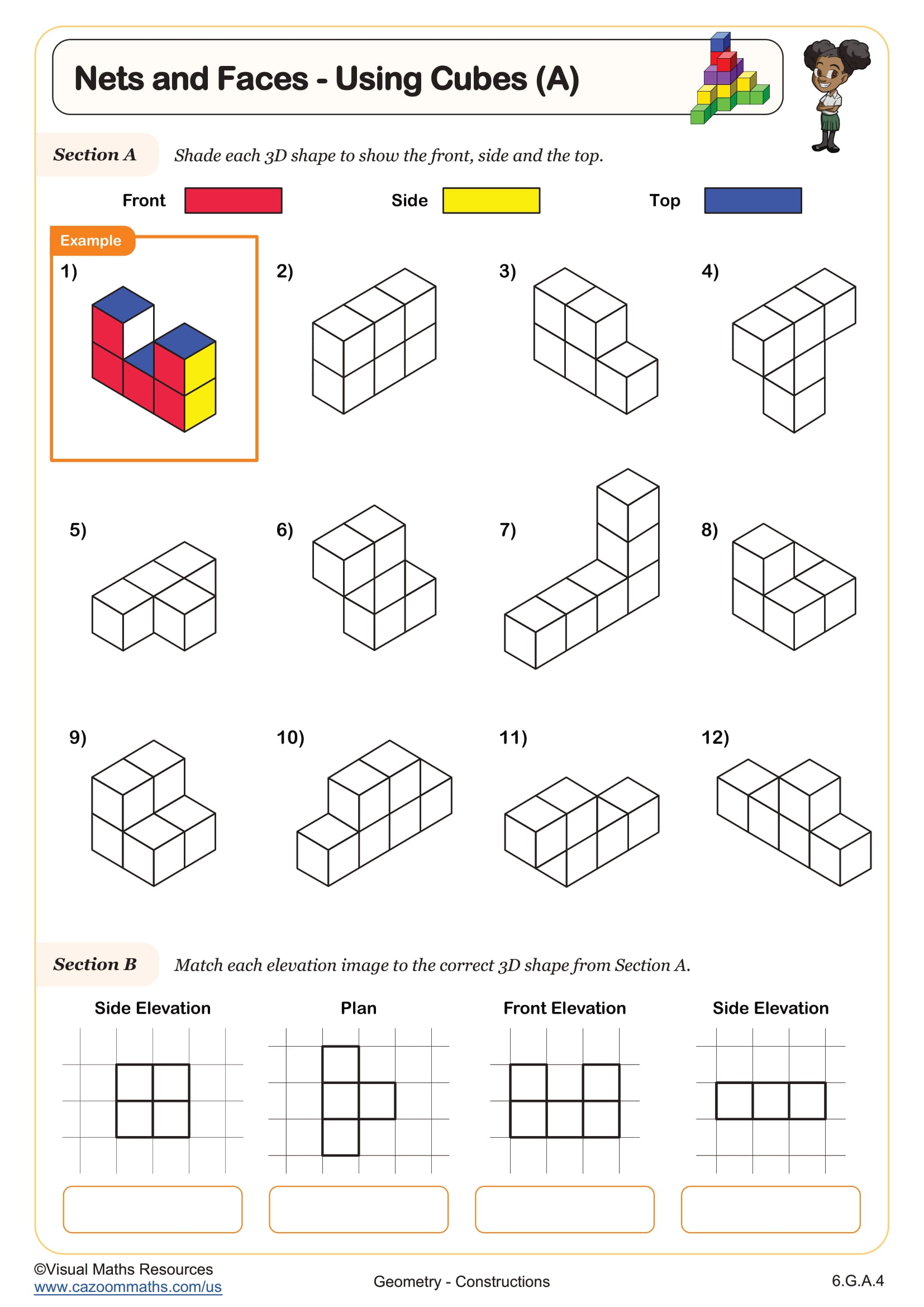
Nets and Faces - Using Cubes (A)
Grades: 6th Grade
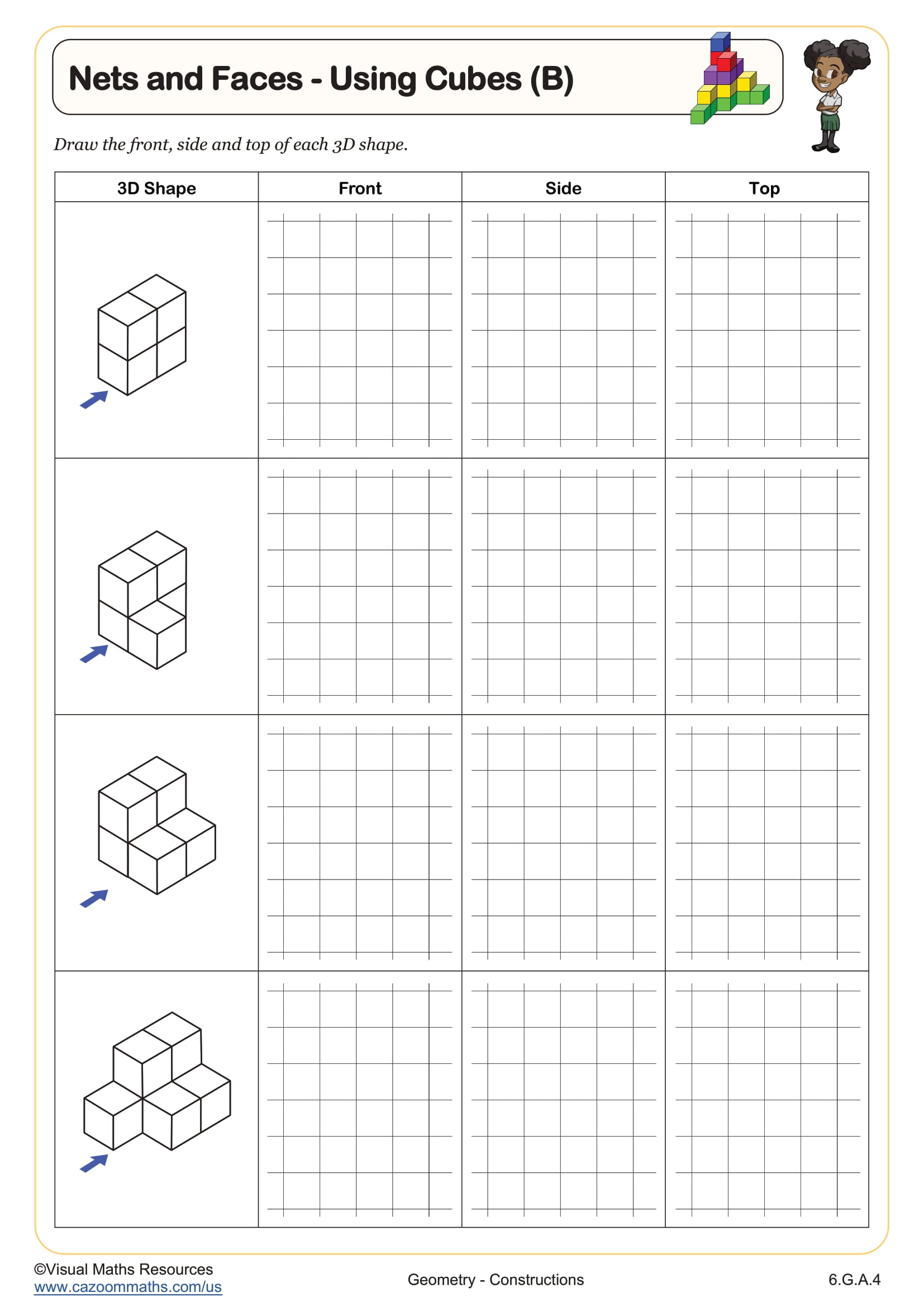
Nets and Faces - Using Cubes (B)
Grades: 6th Grade
Nets and Faces - Using Cubes (C)
Grades: 6th Grade
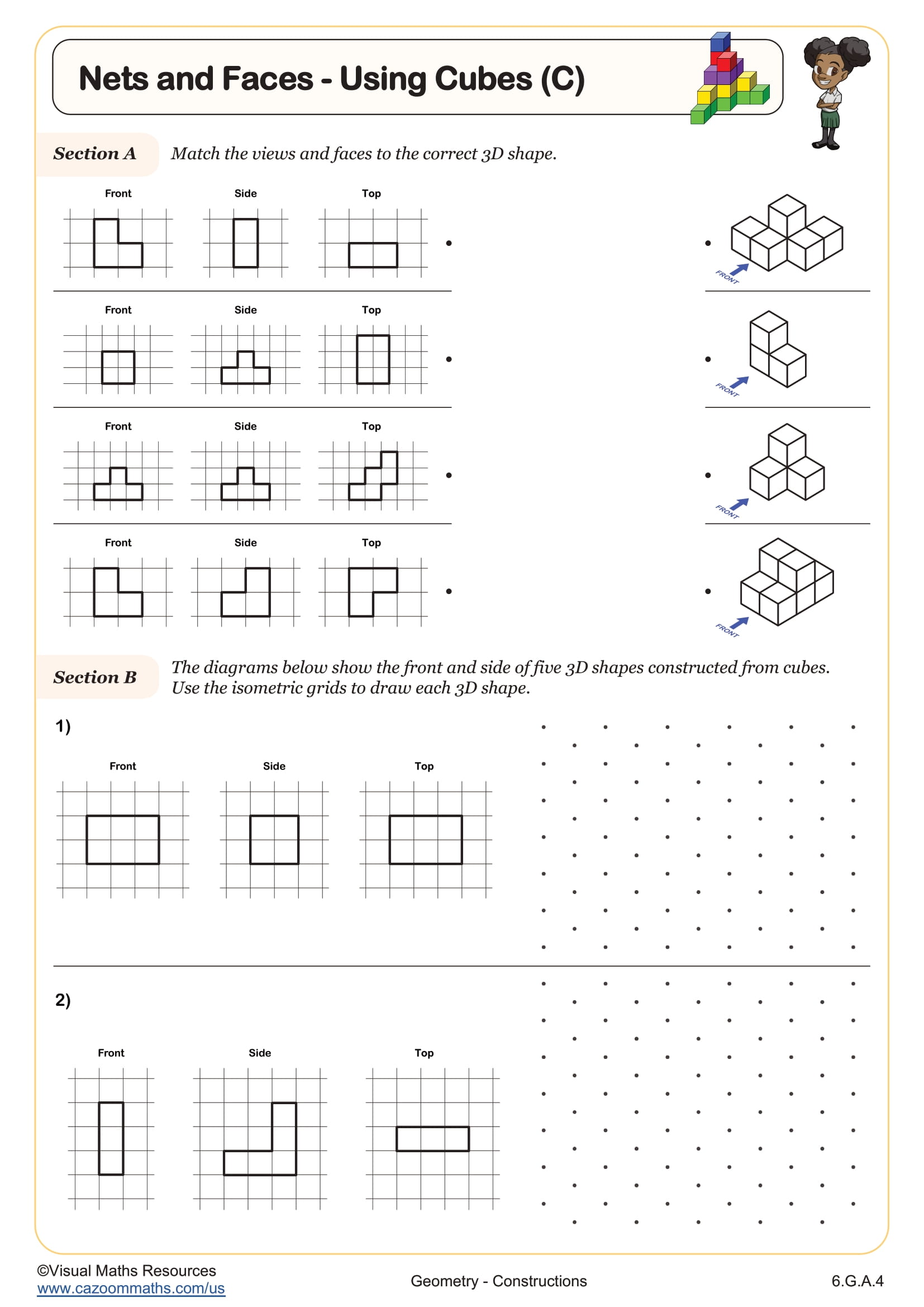
Nets of a Cube
Grades: 6th Grade
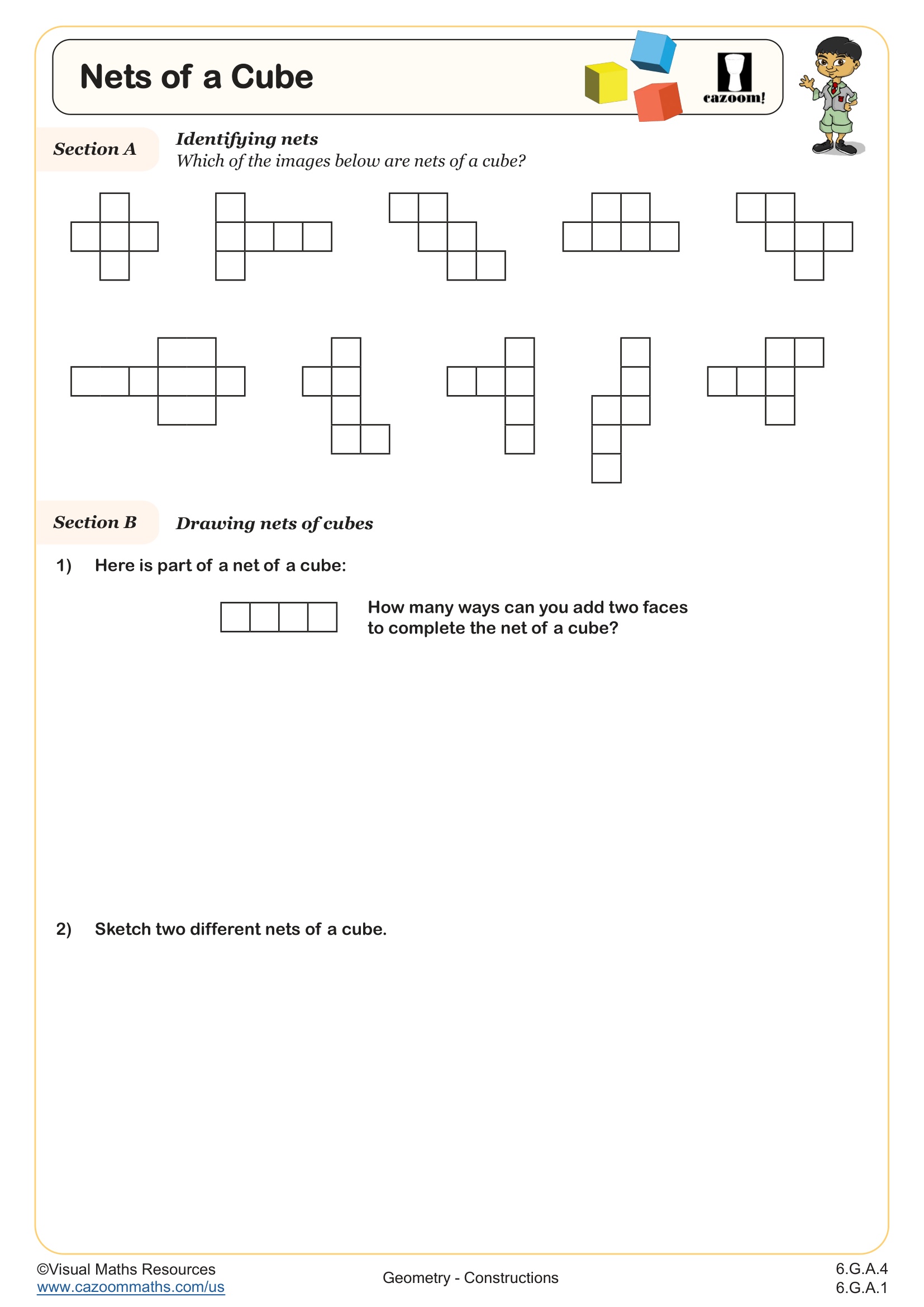
Nets of Cubes and Prisms
Grades: 6th Grade
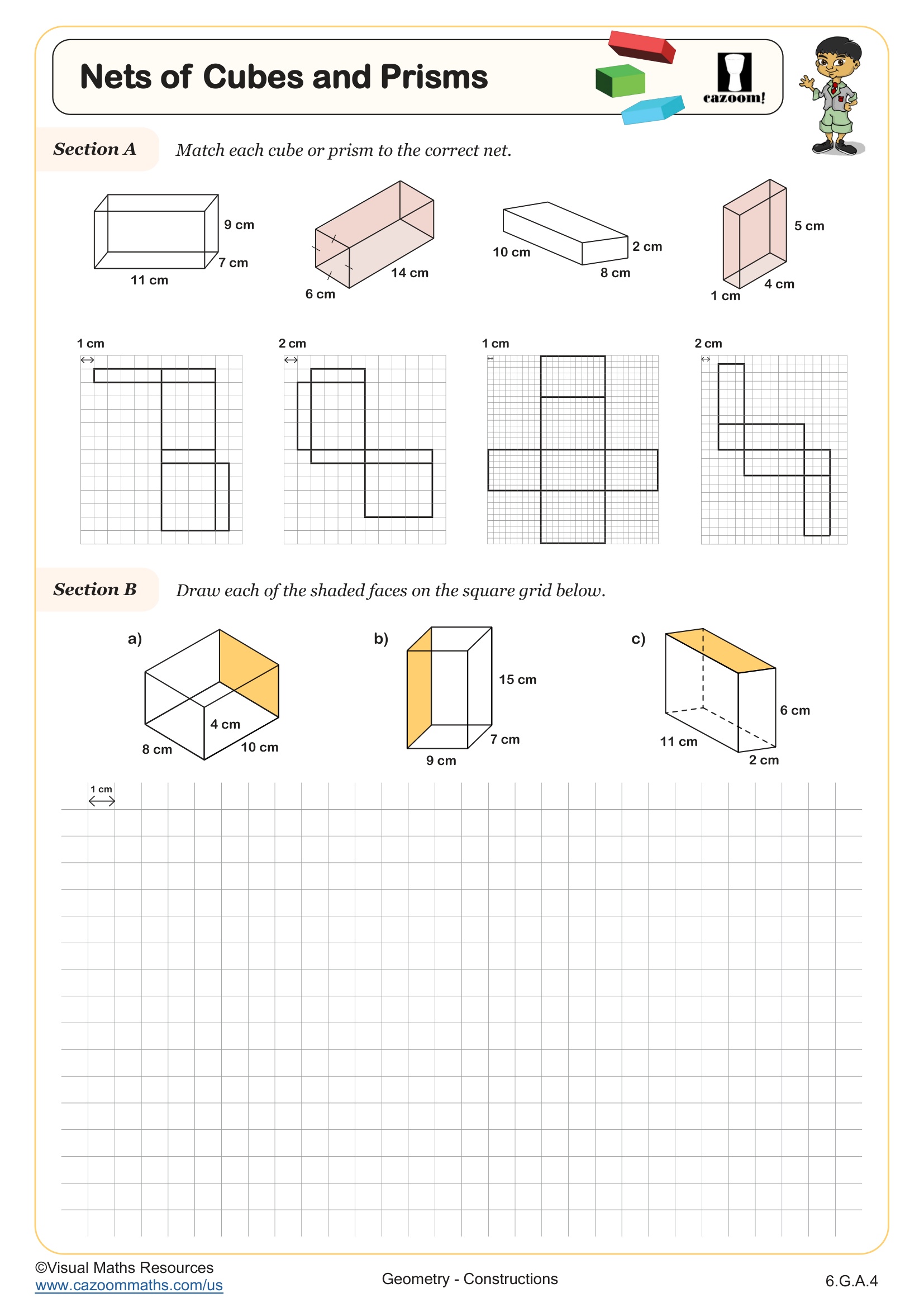
Scale Drawing
Grades: 7th Grade
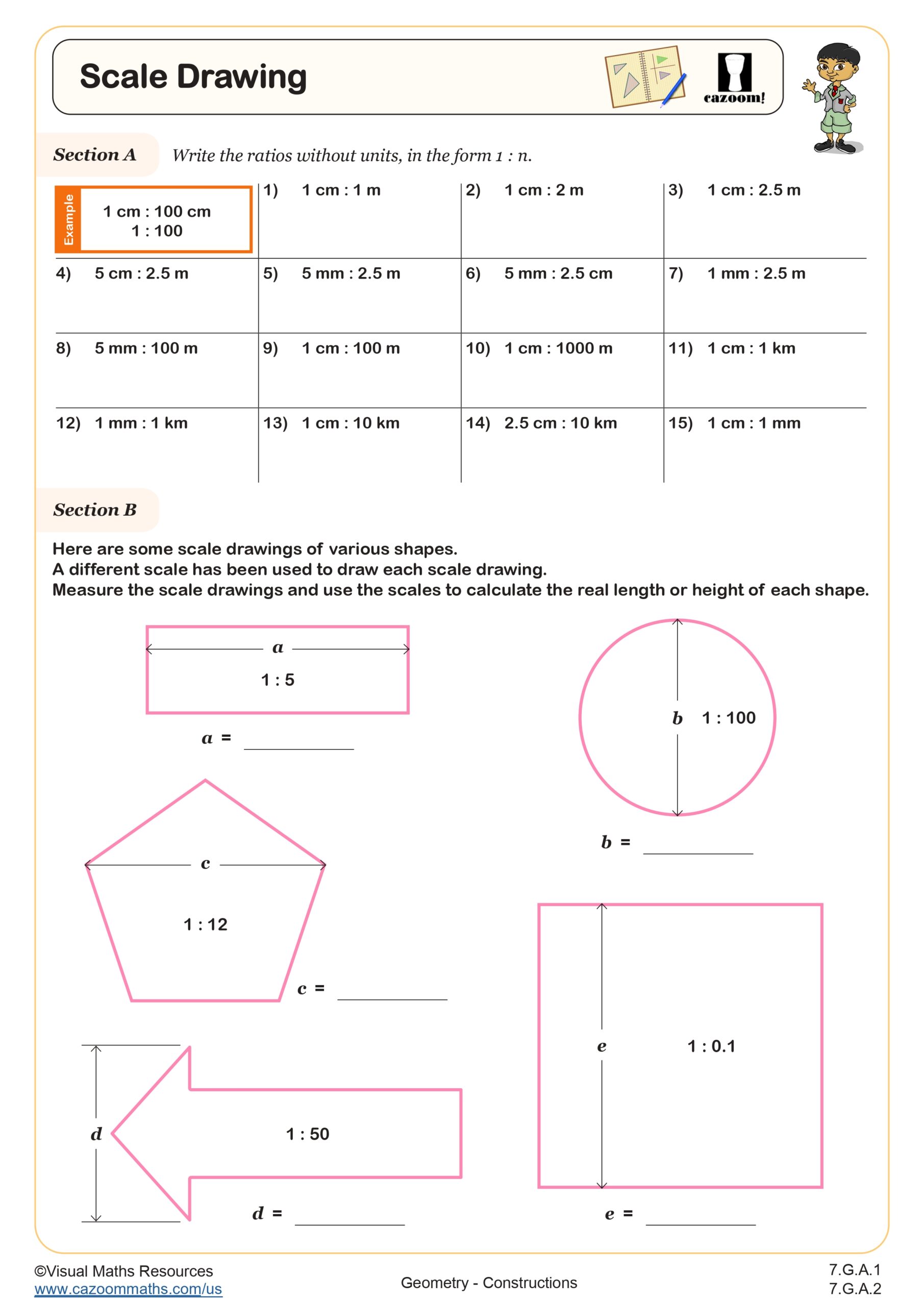
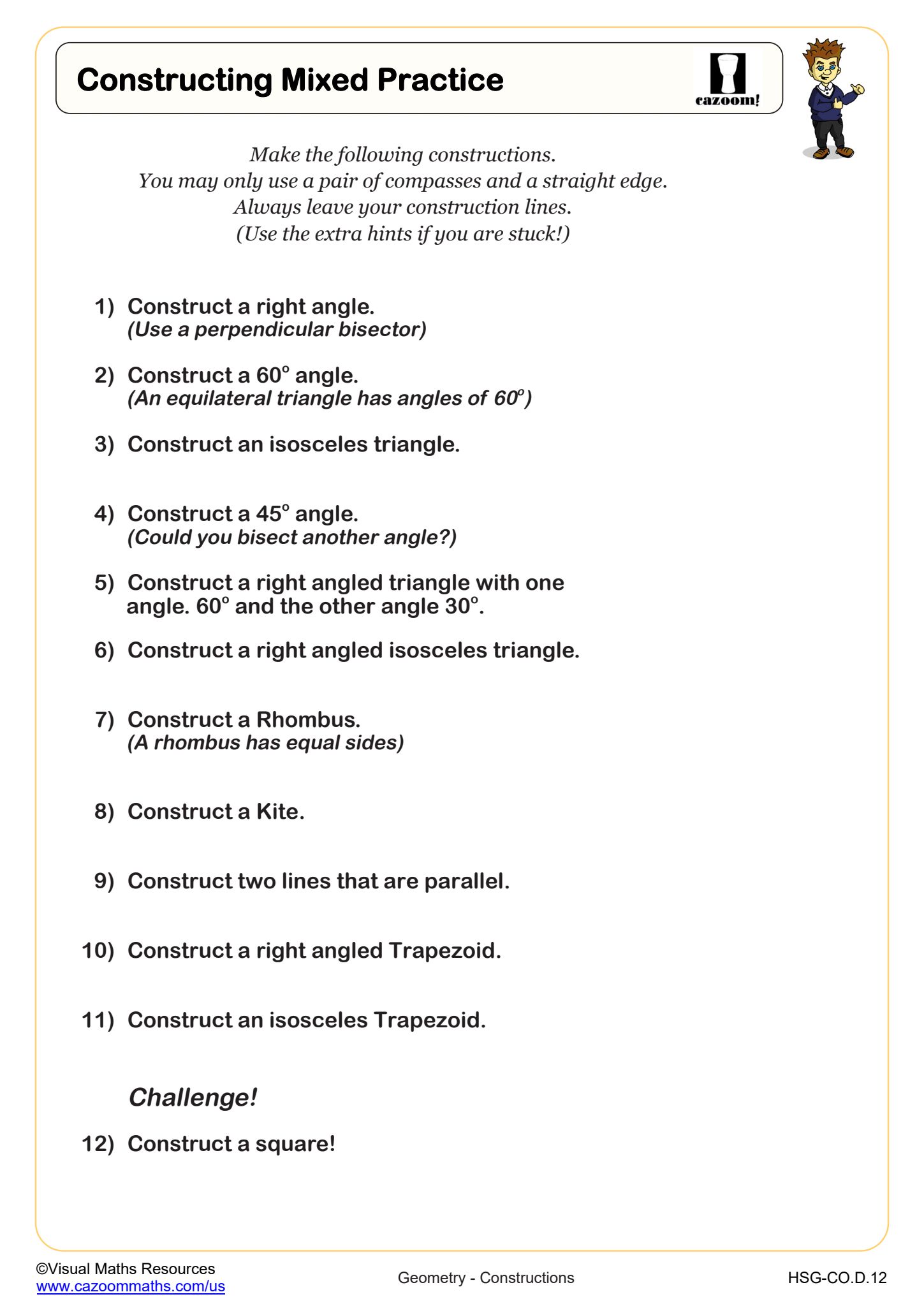
Constructing Mixed Practice
Grades: Geometry, IM 2
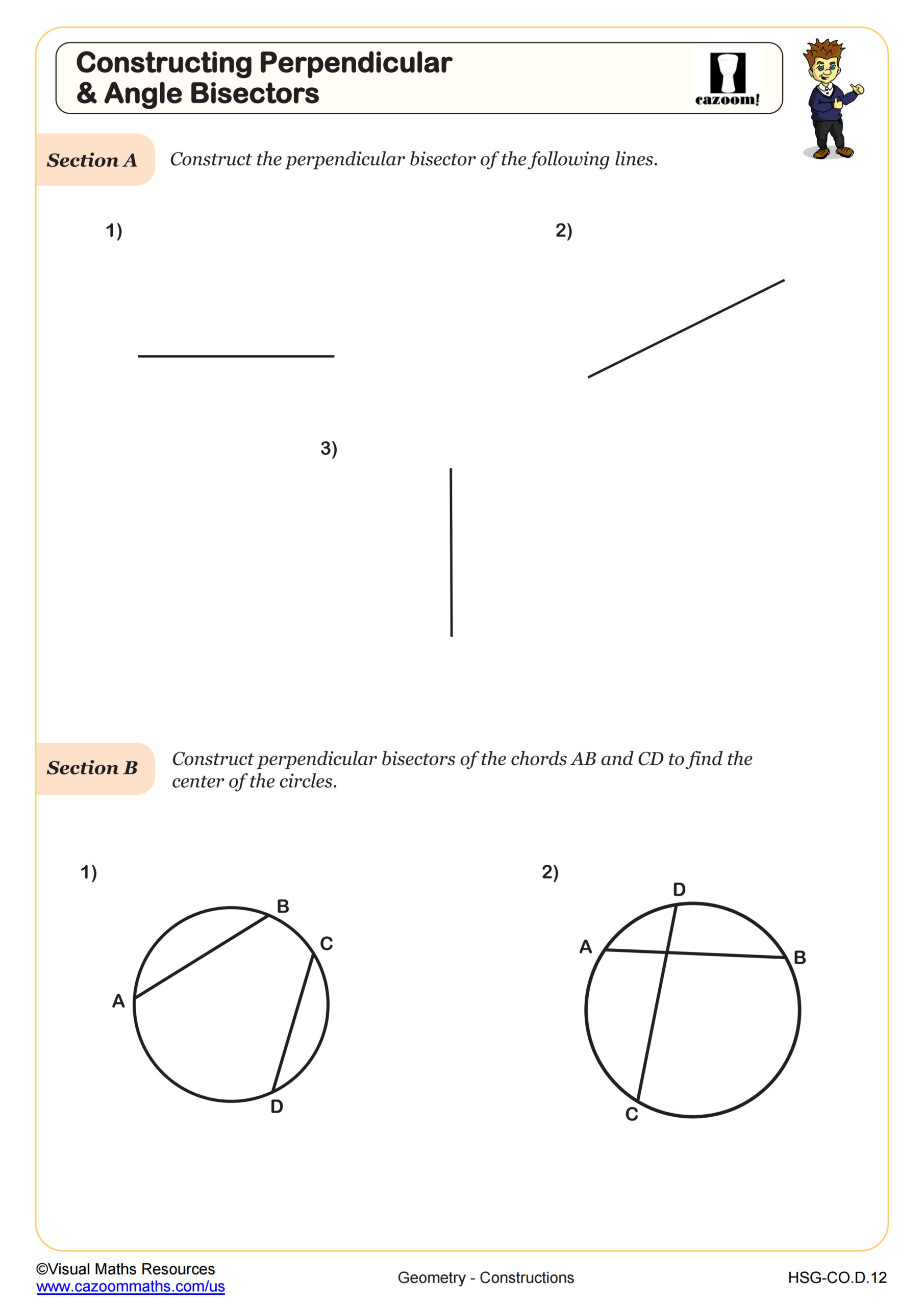
Constructing Perpendicular and Angle Bisectors
Grades: Geometry, IM 2
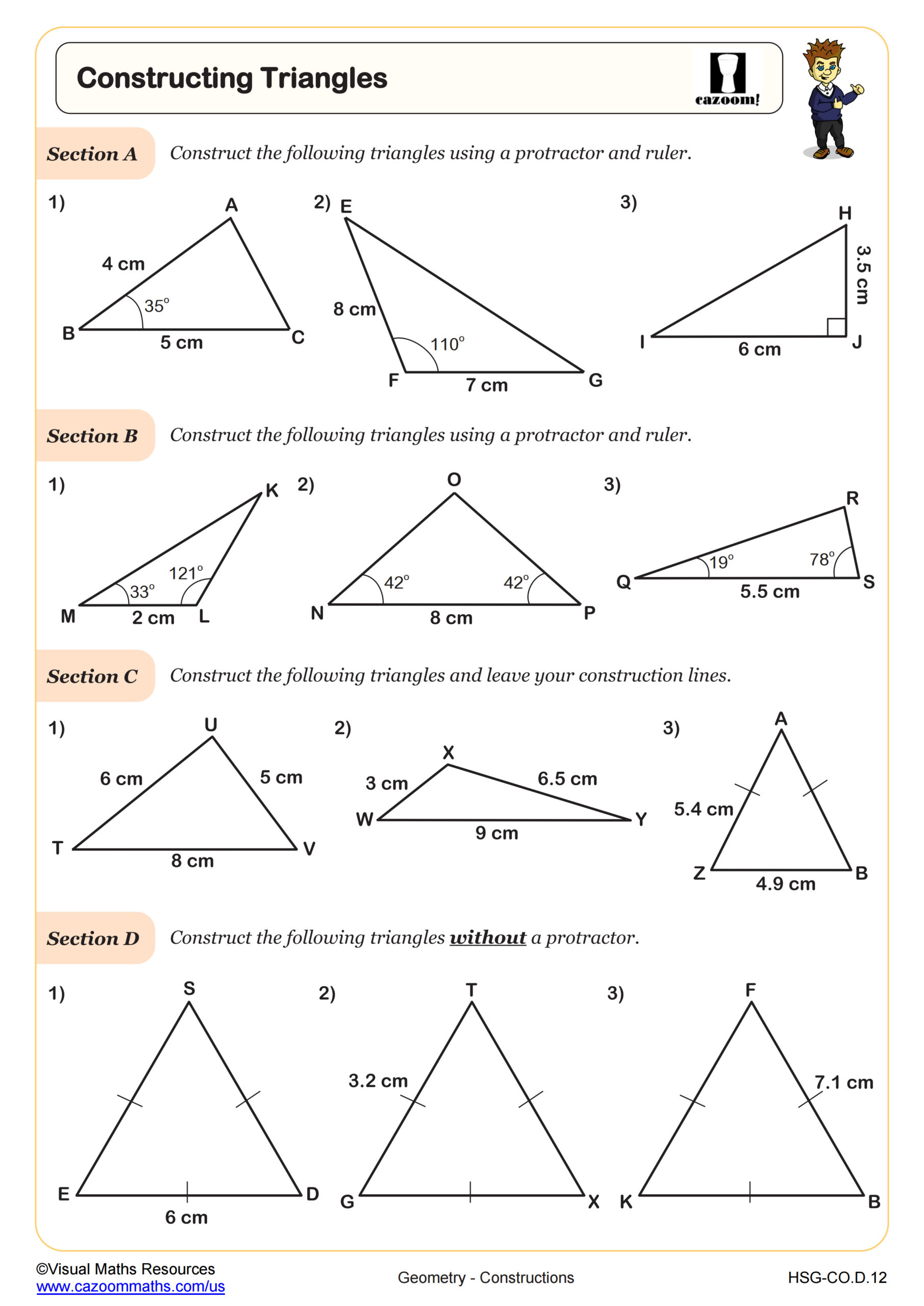
Constructing Triangles
Grades: Geometry, IM 2
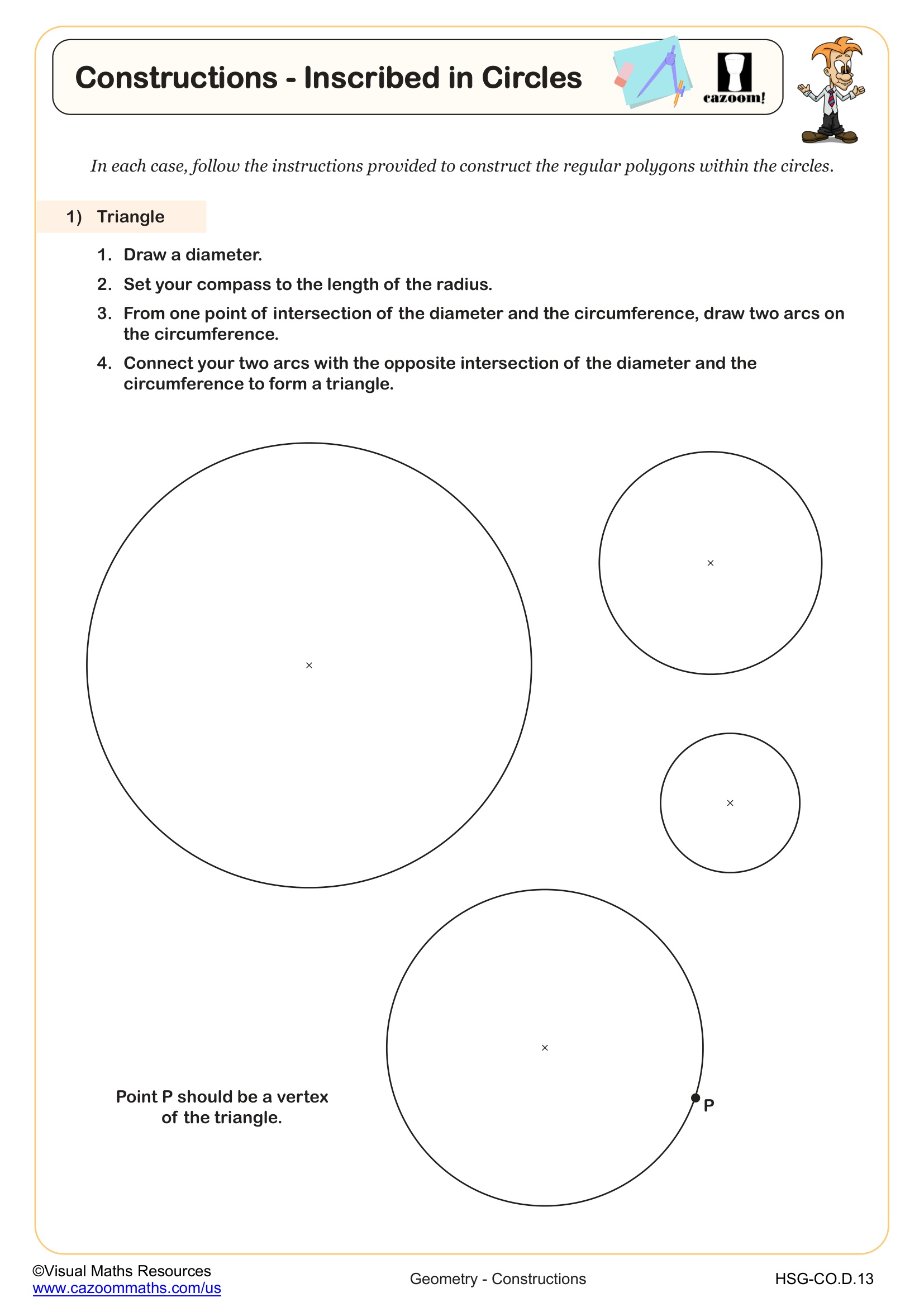
Constructions - Inscribed in Circles
Grades: Geometry, IM 2
All worksheets are created by the team of experienced teachers at Cazoom Math.
Where can teachers find construction math worksheets with answers pdf format?
Teachers can access thorough construction math worksheets with answers pdf through educational worksheet platforms that provide complete solution sets with step-by-step construction marks. These resources align with Common Core geometry standards and include detailed answer keys showing proper compass placement, arc intersections, and final constructions.
Math teachers particularly appreciate having answer keys that display the construction marks, as students often erase their working lines and lose points for not showing their construction process. The PDF format allows teachers to easily project solutions during class review or provide individual copies for student self-checking.
What grade levels use construction worksheets most effectively?
Construction worksheets typically appear in middle school geometry units (grades 6-8) and continue through high school geometry courses. Elementary students may encounter basic constructions like copying line segments, while high school students tackle complex constructions involving inscribed polygons and tangent lines to circles.
Teachers observe that sixth-graders often need significant scaffolding with compass use before attempting formal constructions, while ninth-grade geometry students can handle multi-step construction proofs. The progression from simple copying exercises to complex geometric proofs helps build spatial reasoning skills that transfer to engineering and architectural applications.
How do construction math worksheets address angle bisector constructions?
Angle bisector construction worksheets focus on the fundamental technique of creating two intersecting arcs from the angle's rays, then connecting the vertex to the intersection point. Students practice this valuable construction that forms the foundation for many advanced geometric constructions and proofs.
Math teachers frequently notice students making the error of using different compass widths for the two arcs, resulting in inaccurate bisectors. Successful construction worksheets emphasize keeping the compass width constant and provide multiple practice problems with angles of varying measures to reinforce proper technique and build confidence with this core skill.
What teaching strategies work best with geometry construction worksheets?
Effective teachers demonstrate each construction step-by-step using a document camera or interactive whiteboard before students attempt worksheet problems independently. This visual modeling helps students understand the logical sequence and precision required for accurate geometric constructions.
Teachers report better results when they require students to leave all construction marks visible on their worksheets, as this allows for partial credit and helps identify where students went wrong. Pairing weaker students with construction-confident partners during worksheet practice also improves outcomes, as peer explanation often clarifies concepts more effectively than repeated teacher instruction.
HOW TO DRAW A PERPENDICULAR BISECTOR OF A LINE SEGMENT
1. Open the compass more than half of the distance between a given AB line segment.
2. Scribe arcs of the same radius centered at A and B.
3. Call the two points where the arcs meet C and D and draw a line between those two dots.
4. CD is the perpendicular bisector of the line segment AB.