Printable Decimals Math Worksheets
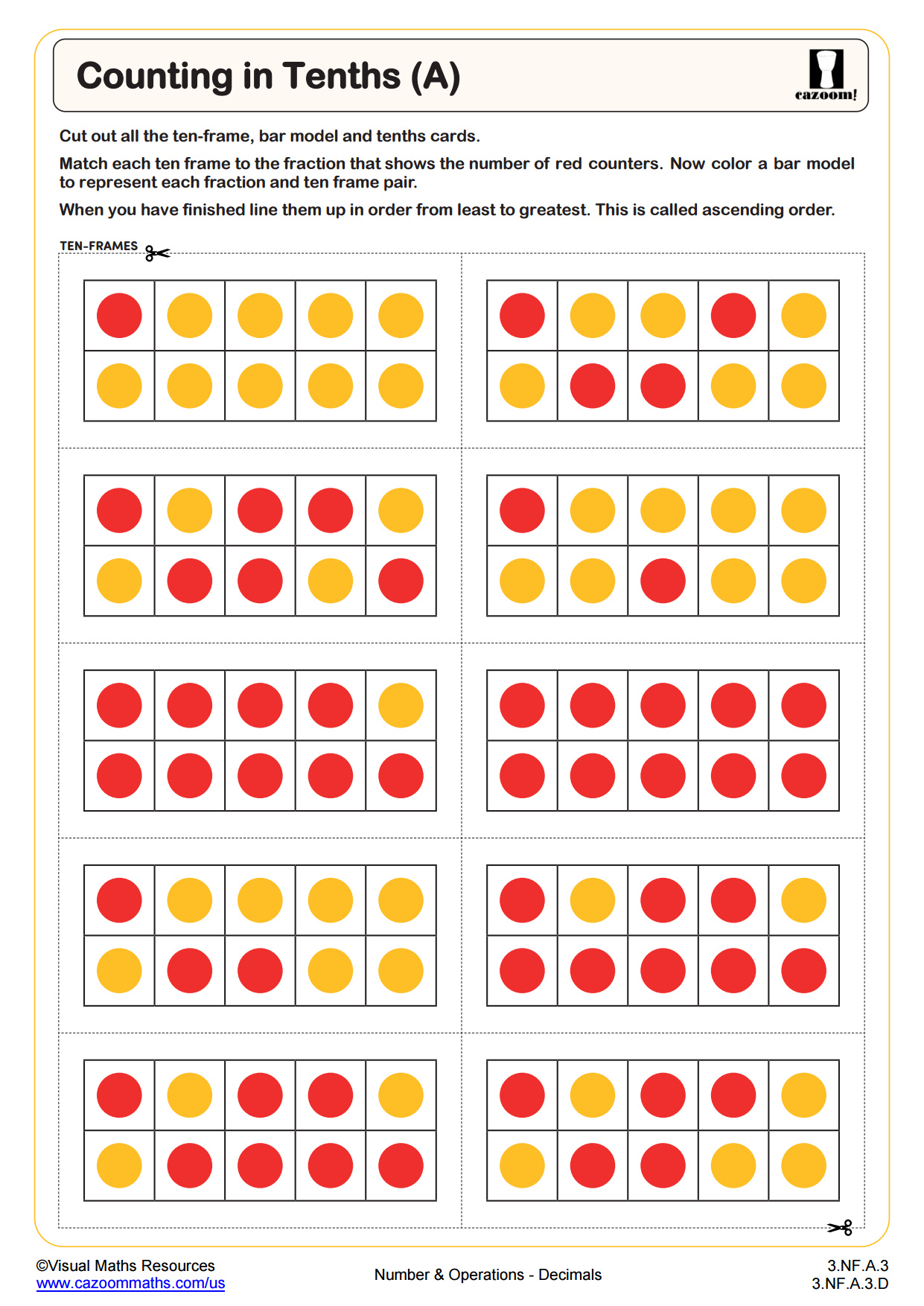
Counting in Tenths (A)
Grades: 3rd Grade
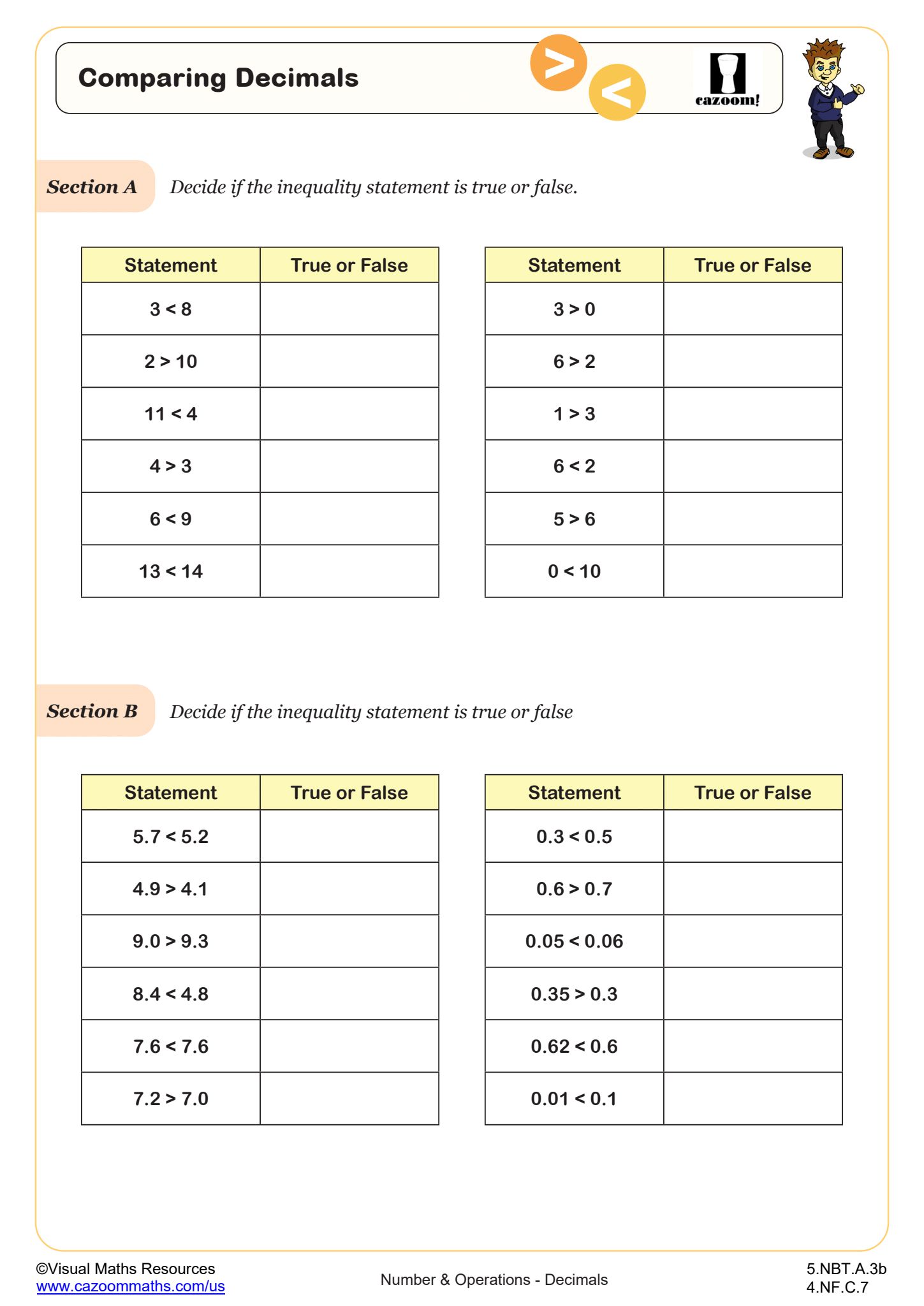
Comparing Decimals
Grades: 4th Grade, 5th Grade
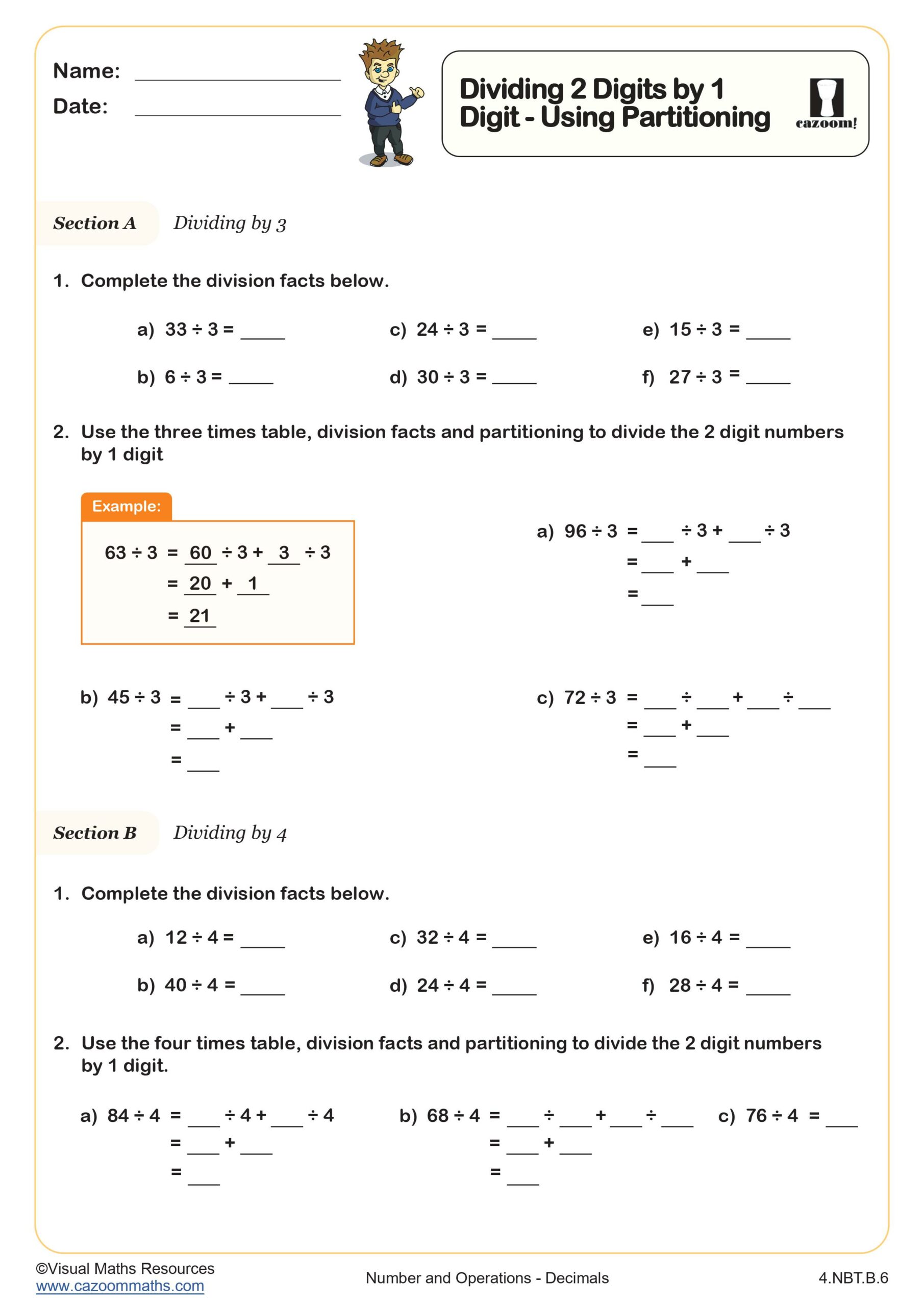
Dividing 2 Digits by 1 Digit - Using Partitioning
Grades: 4th Grade
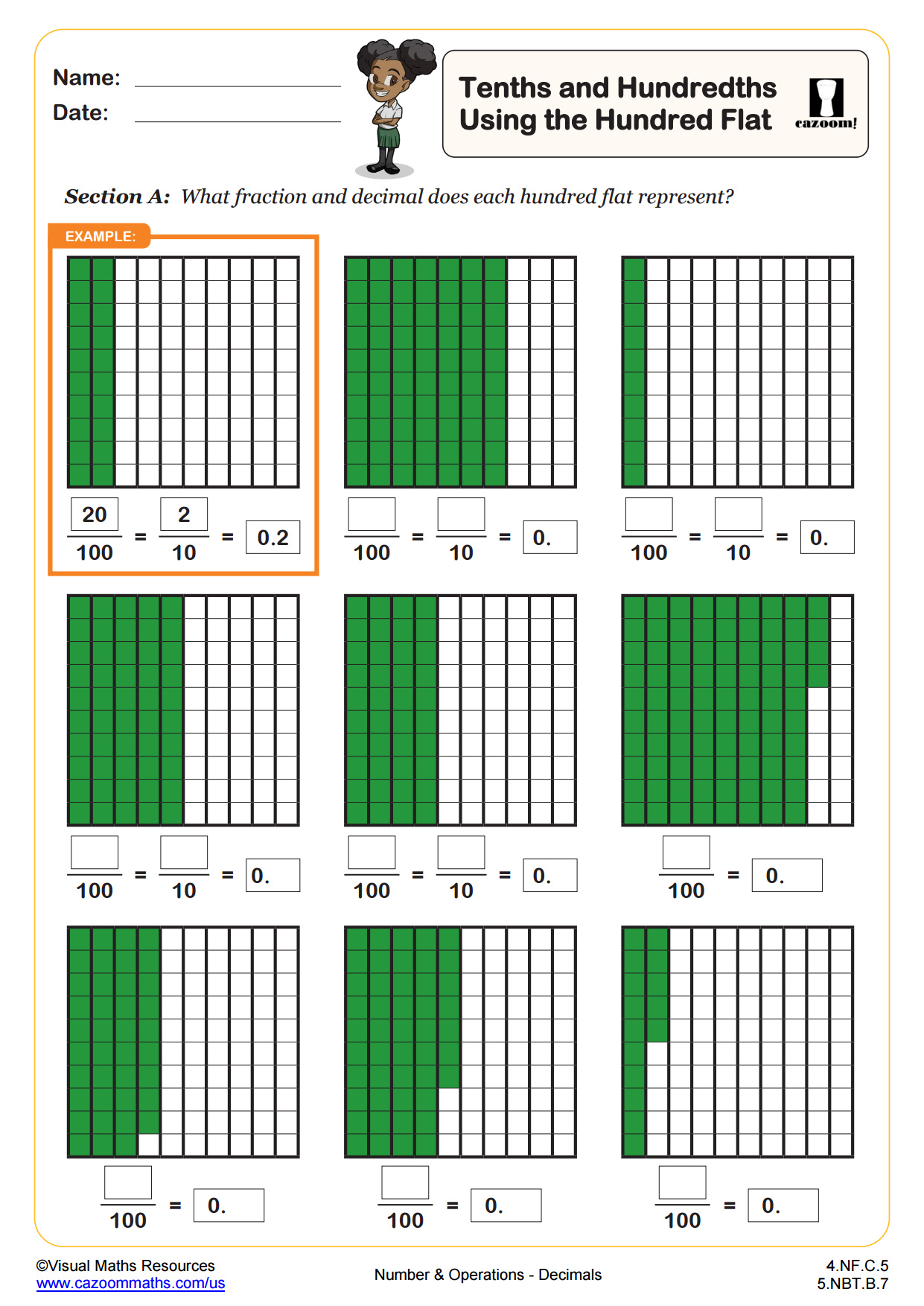
Tenths And Hundredths Using The Hundred Flat
Grades: 4th Grade, 5th Grade
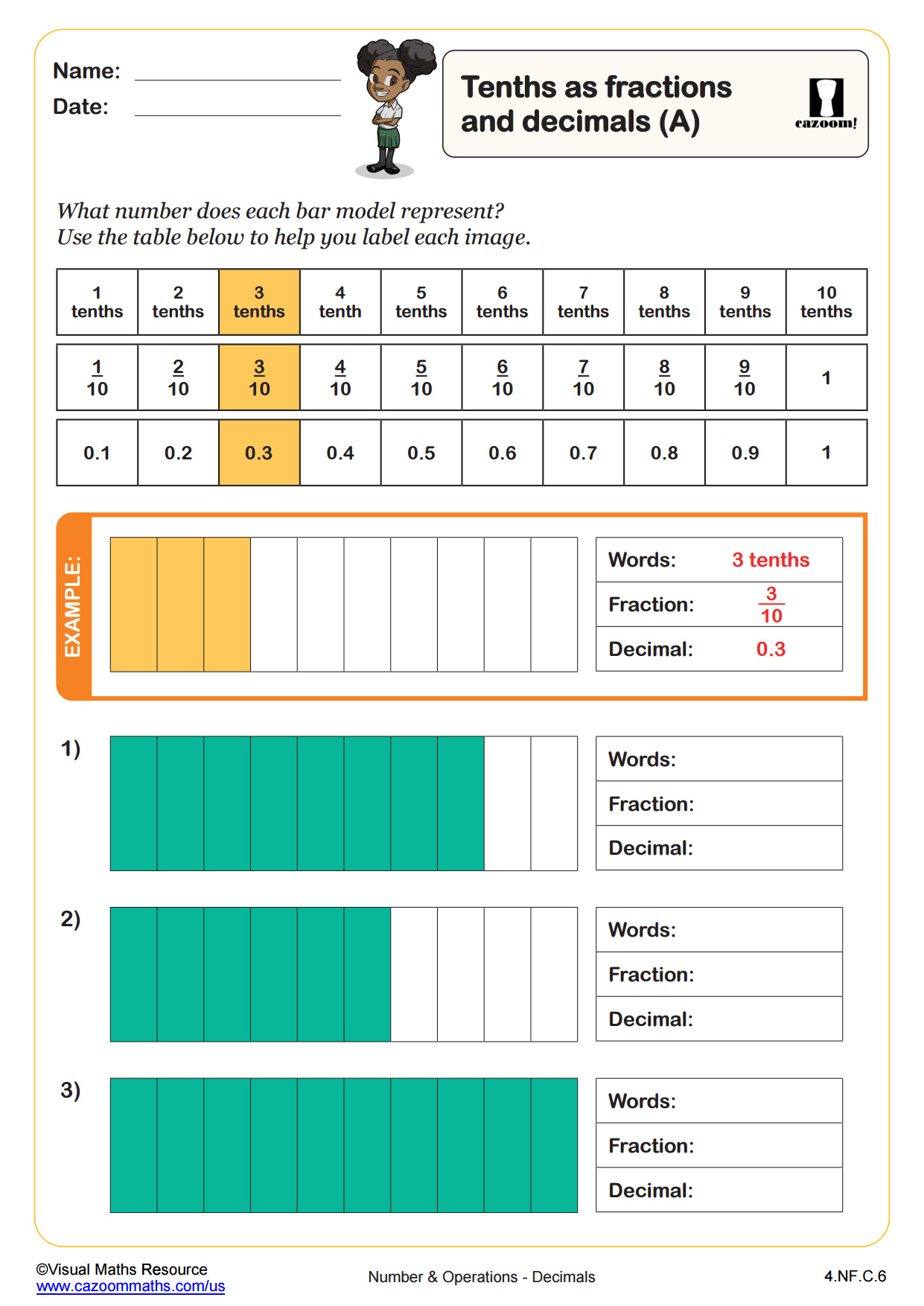
Tenths as Fractions and Decimals (A)
Grades: 4th Grade
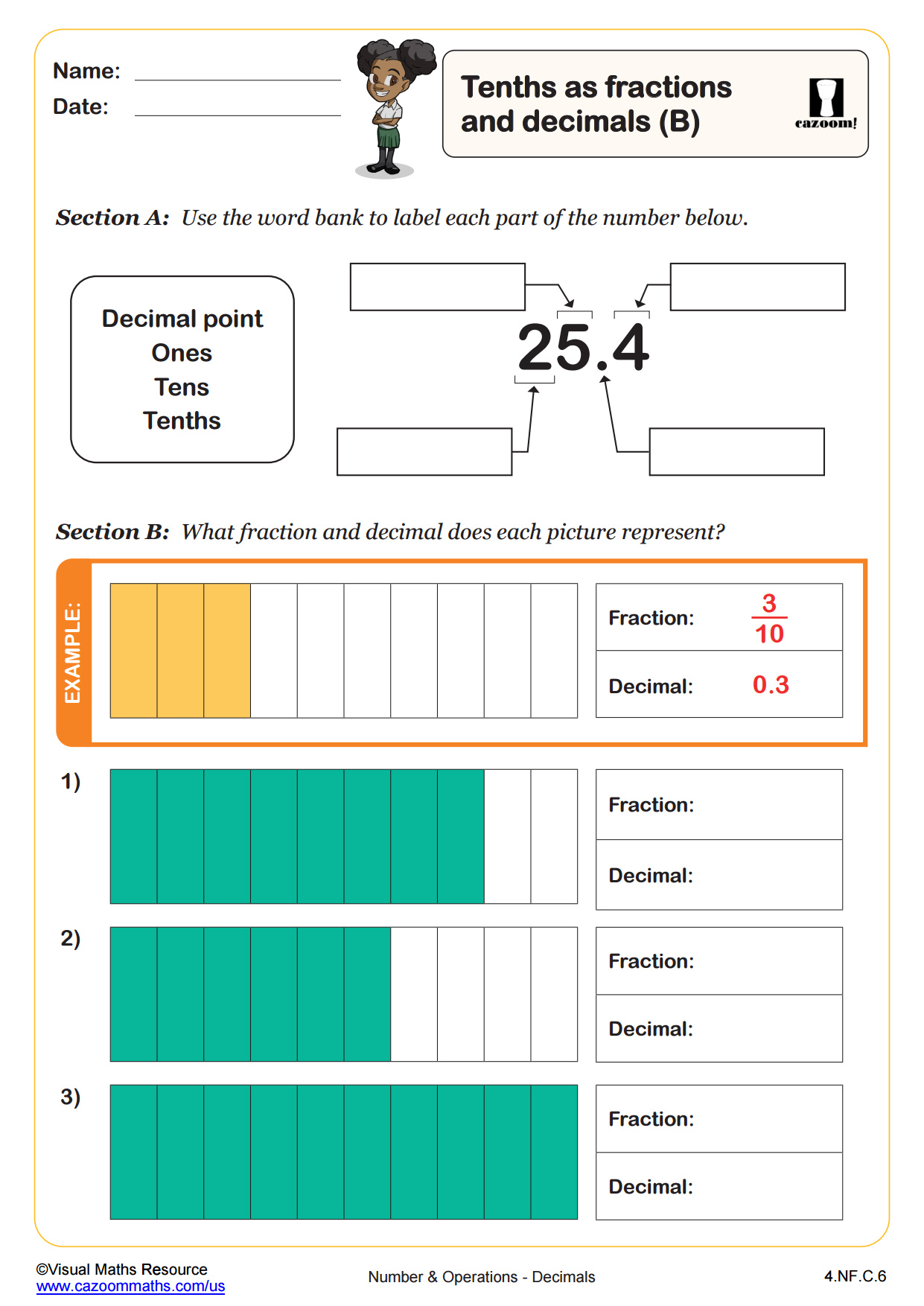
Tenths as Fractions and Decimals (B)
Grades: 4th Grade
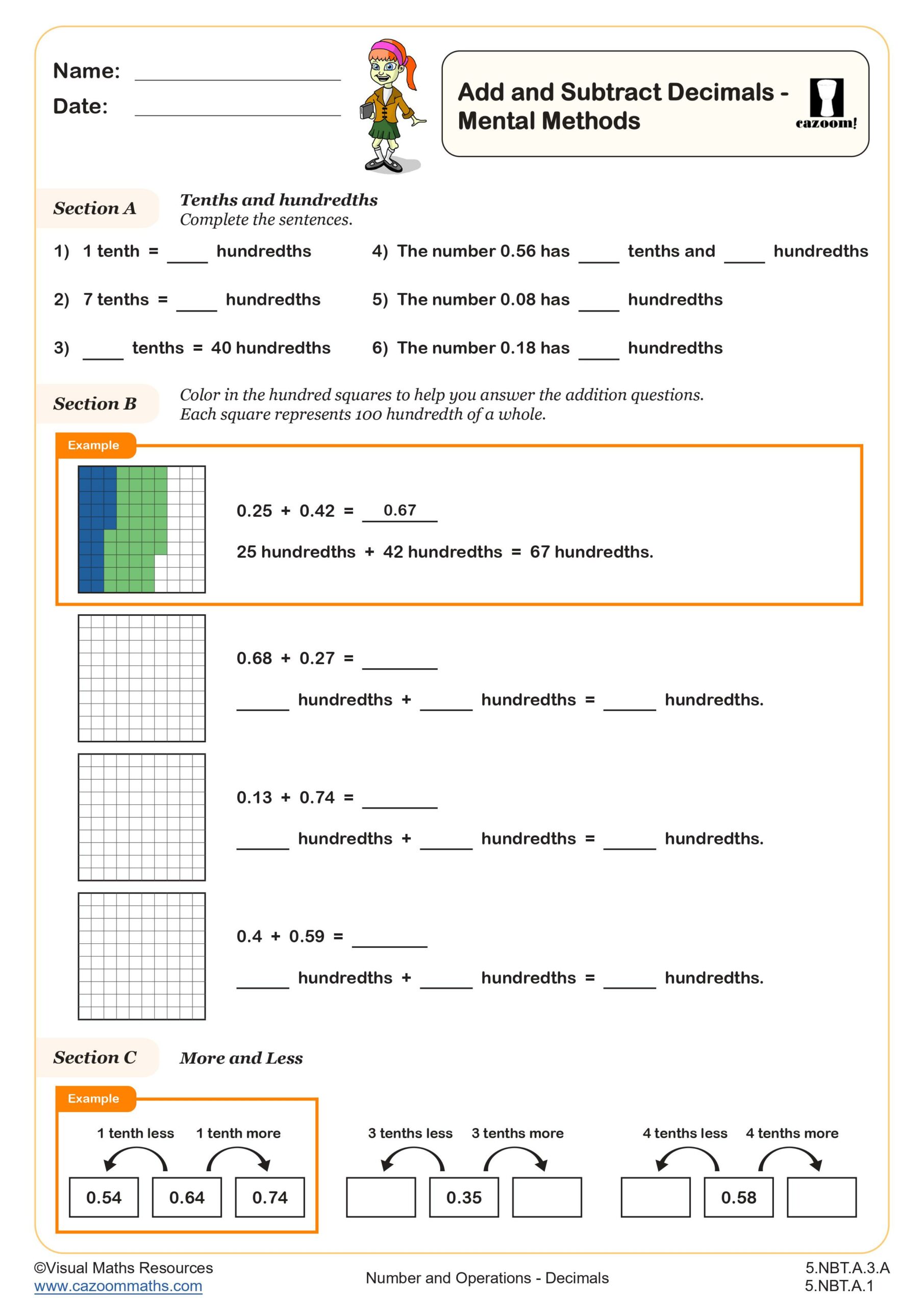
Add and Subtract Decimals - Mental Methods
Grades: 5th Grade
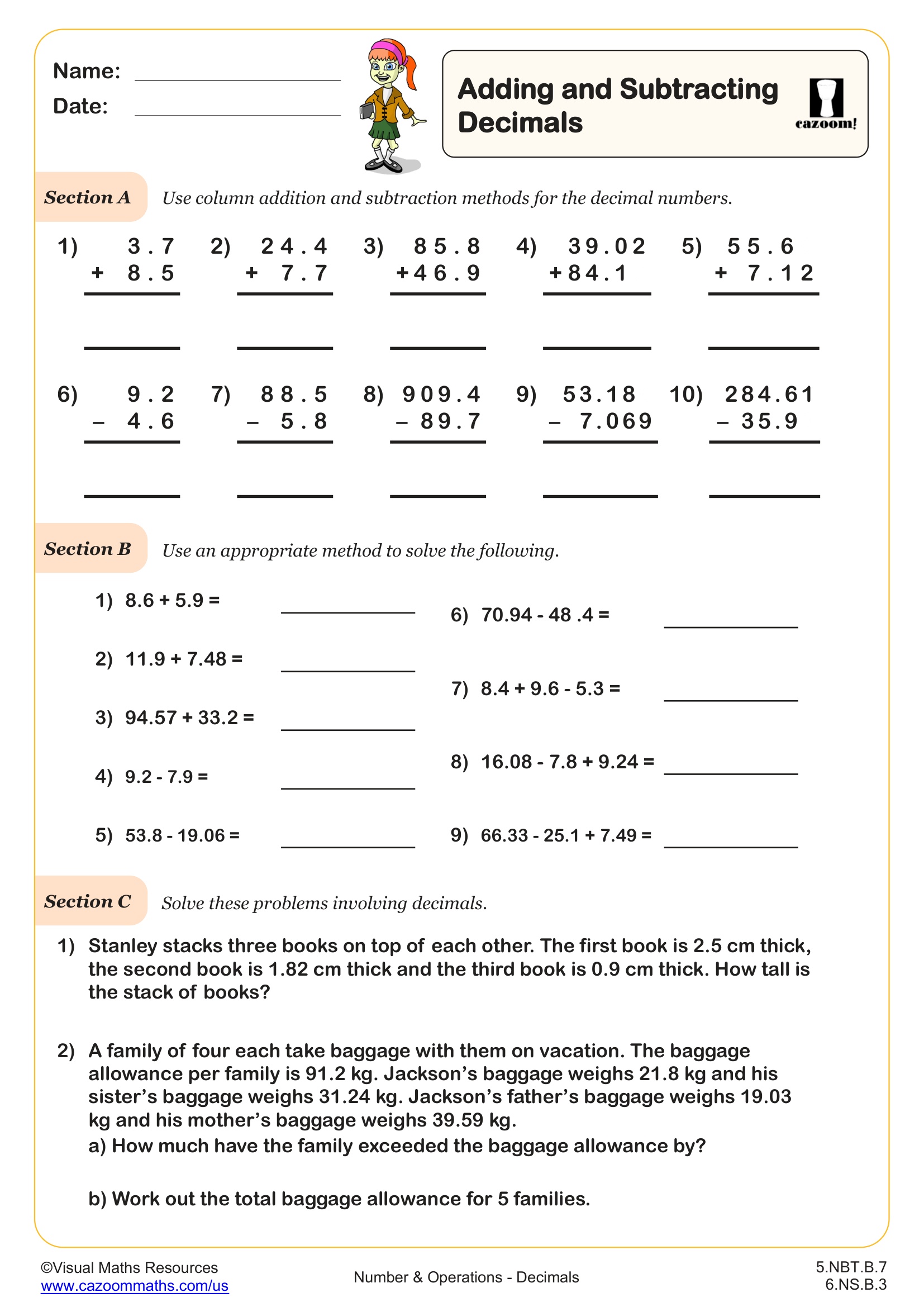
Adding and Subtracting Decimals
Grades: 5th Grade, 6th Grade
Column Addition - Decimals A
Grades: 5th Grade, 6th Grade
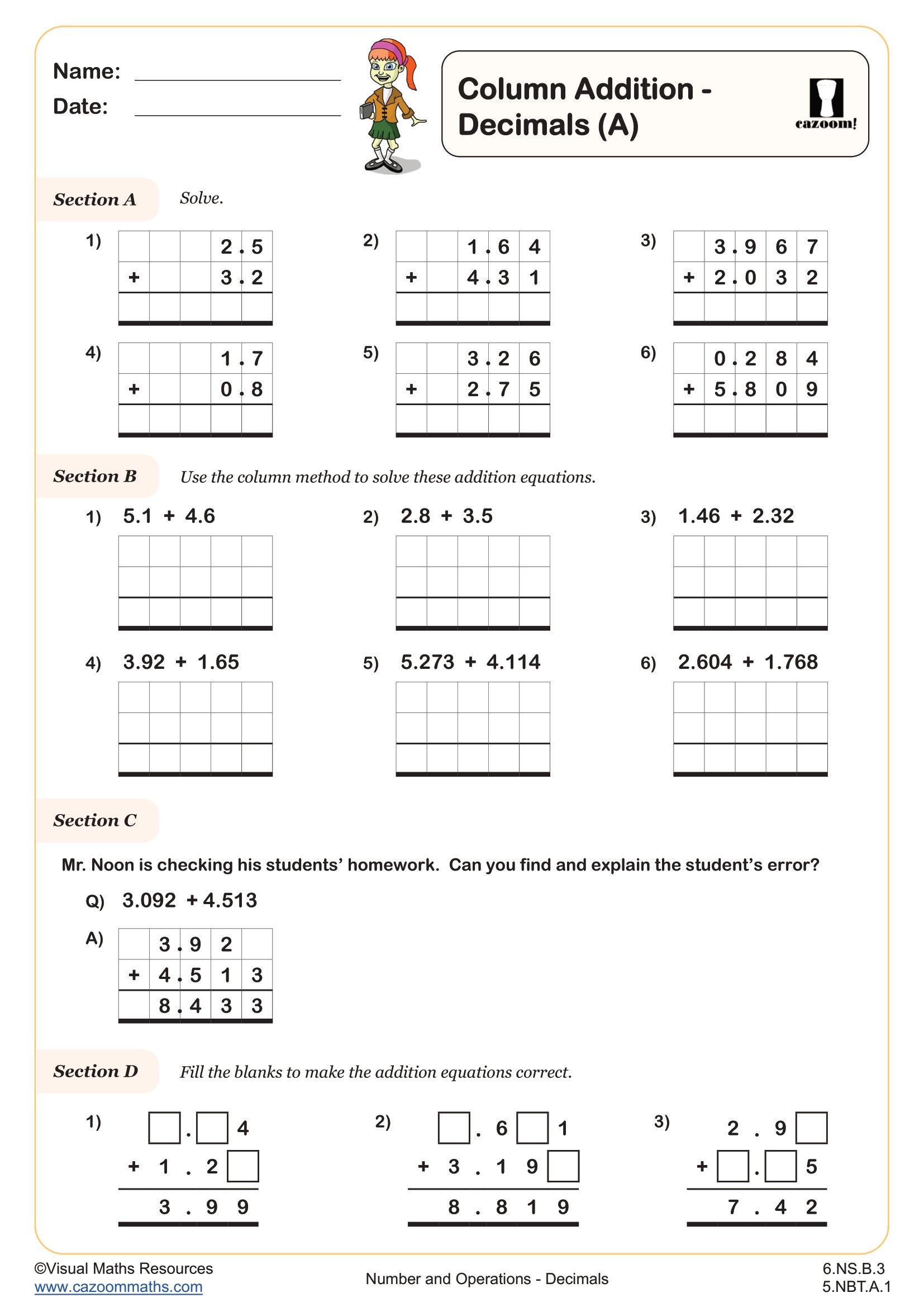
Column Addition - Decimals B
Grades: 5th Grade, 6th Grade
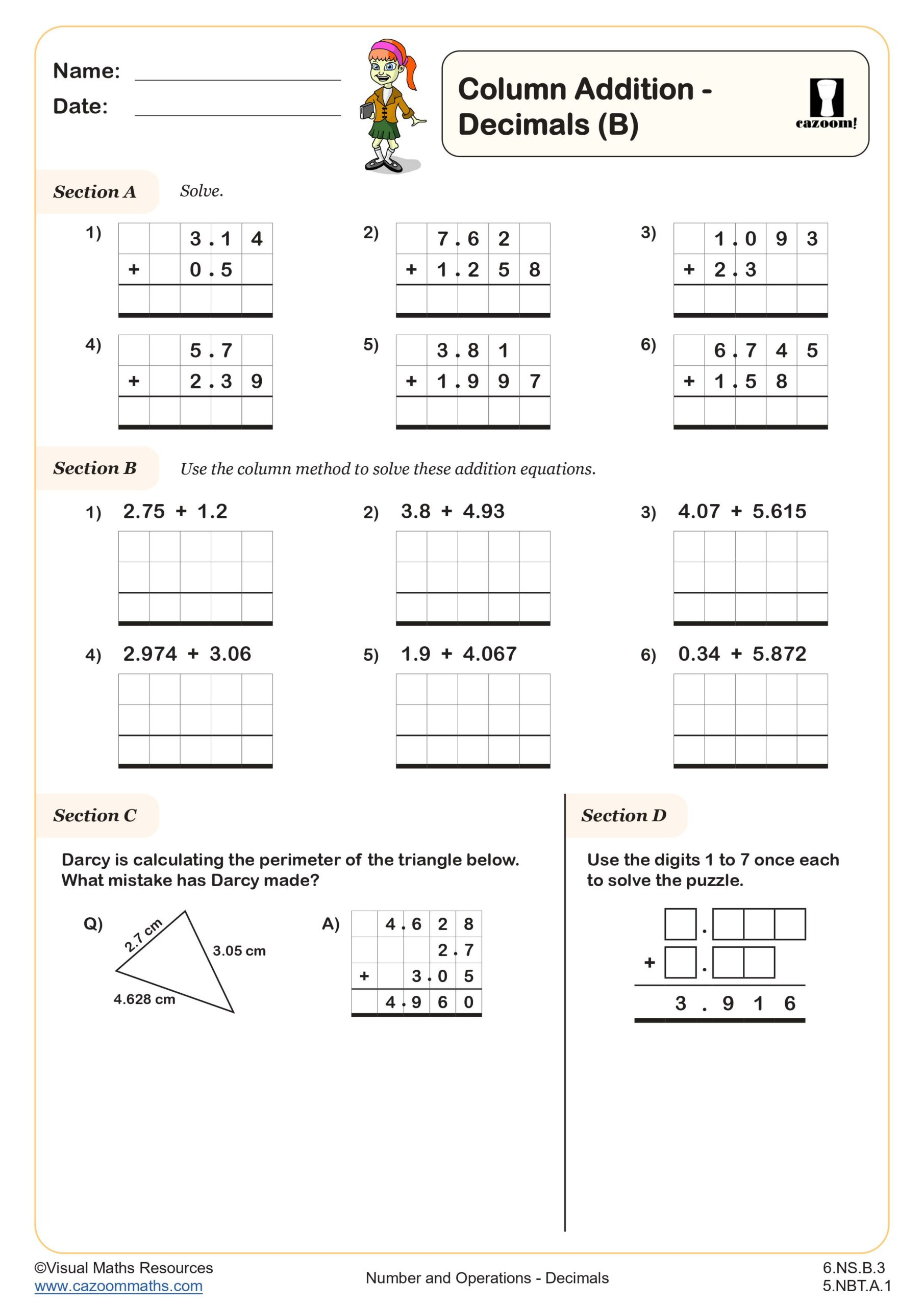
Comparing Decimlas (A)
Grades: 5th Grade
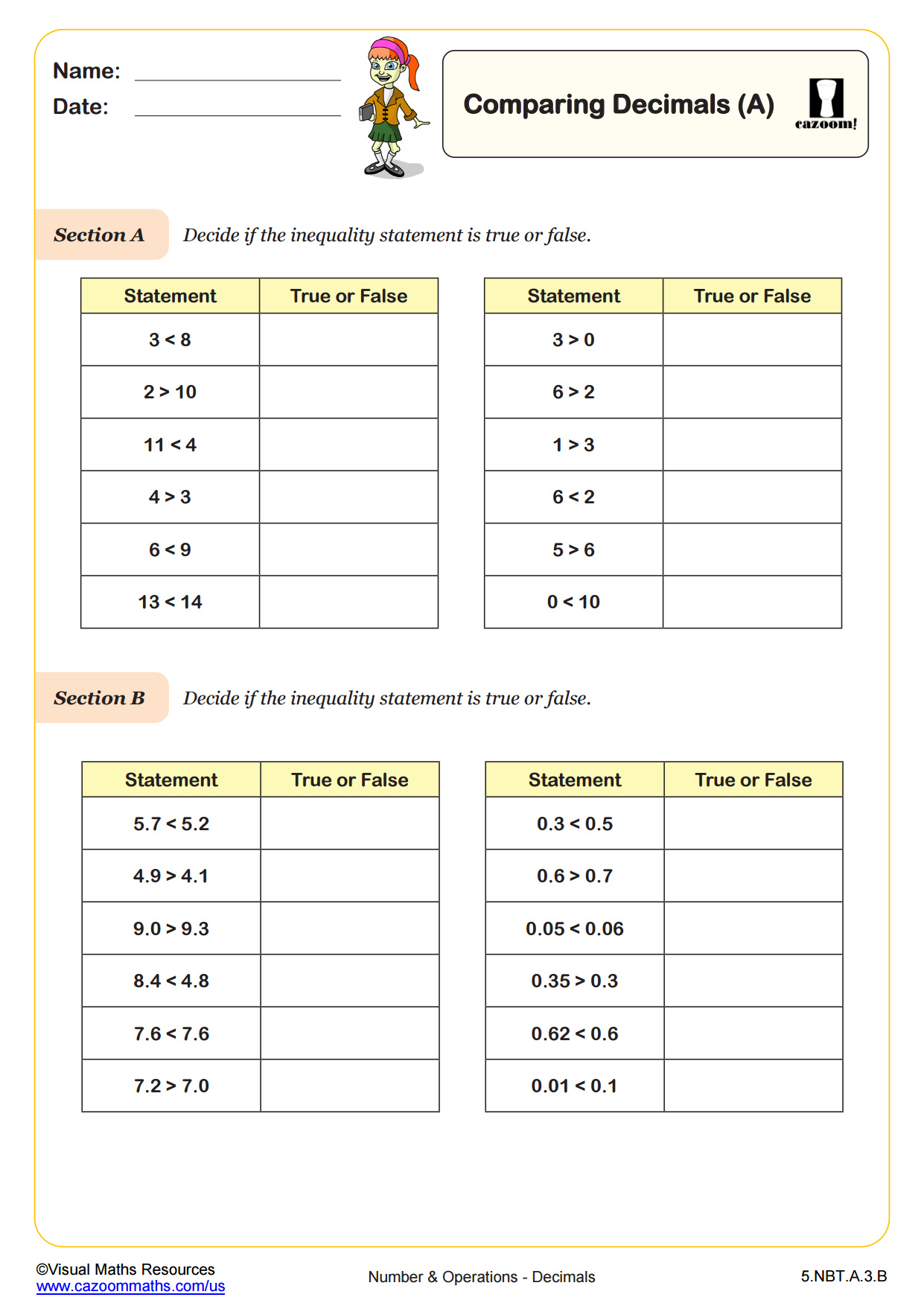
Crack the Code - Decimals
Grades: 5th Grade, 6th Grade
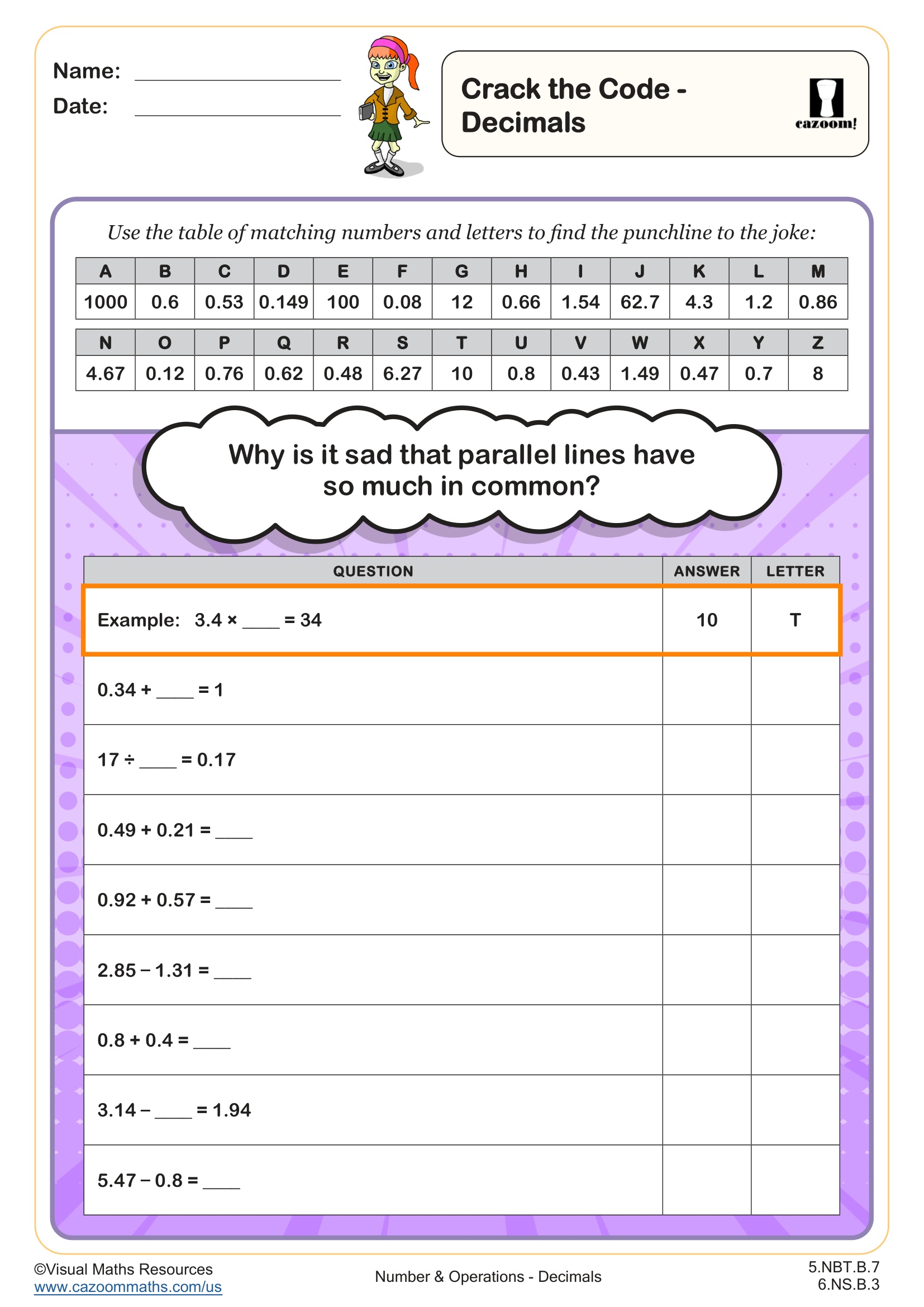
Decimal Operations Mixed Practice
Grades: 5th Grade, 6th Grade
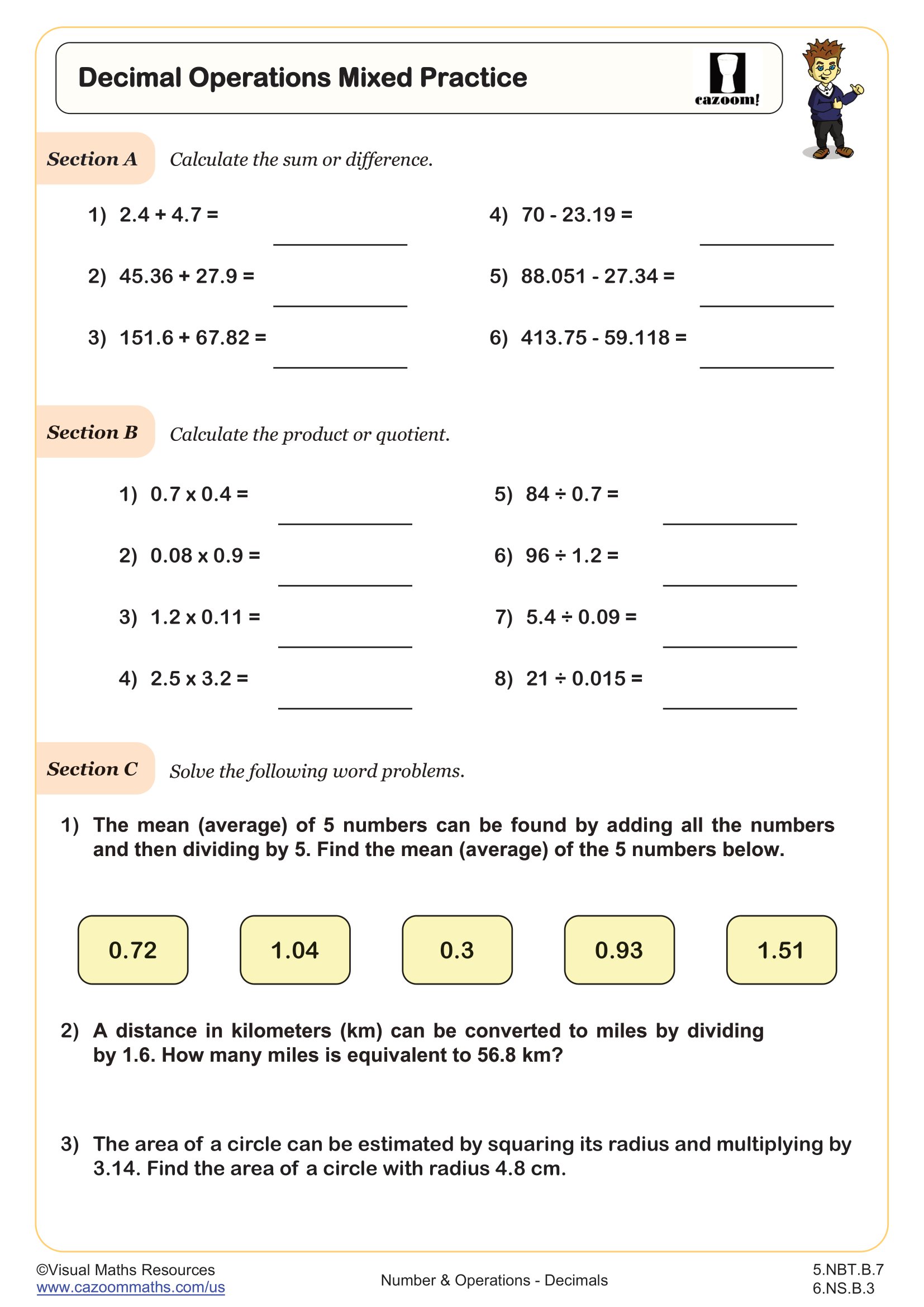
Decimal Operations Ten Minute Challenge
Grades: 5th Grade, 6th Grade
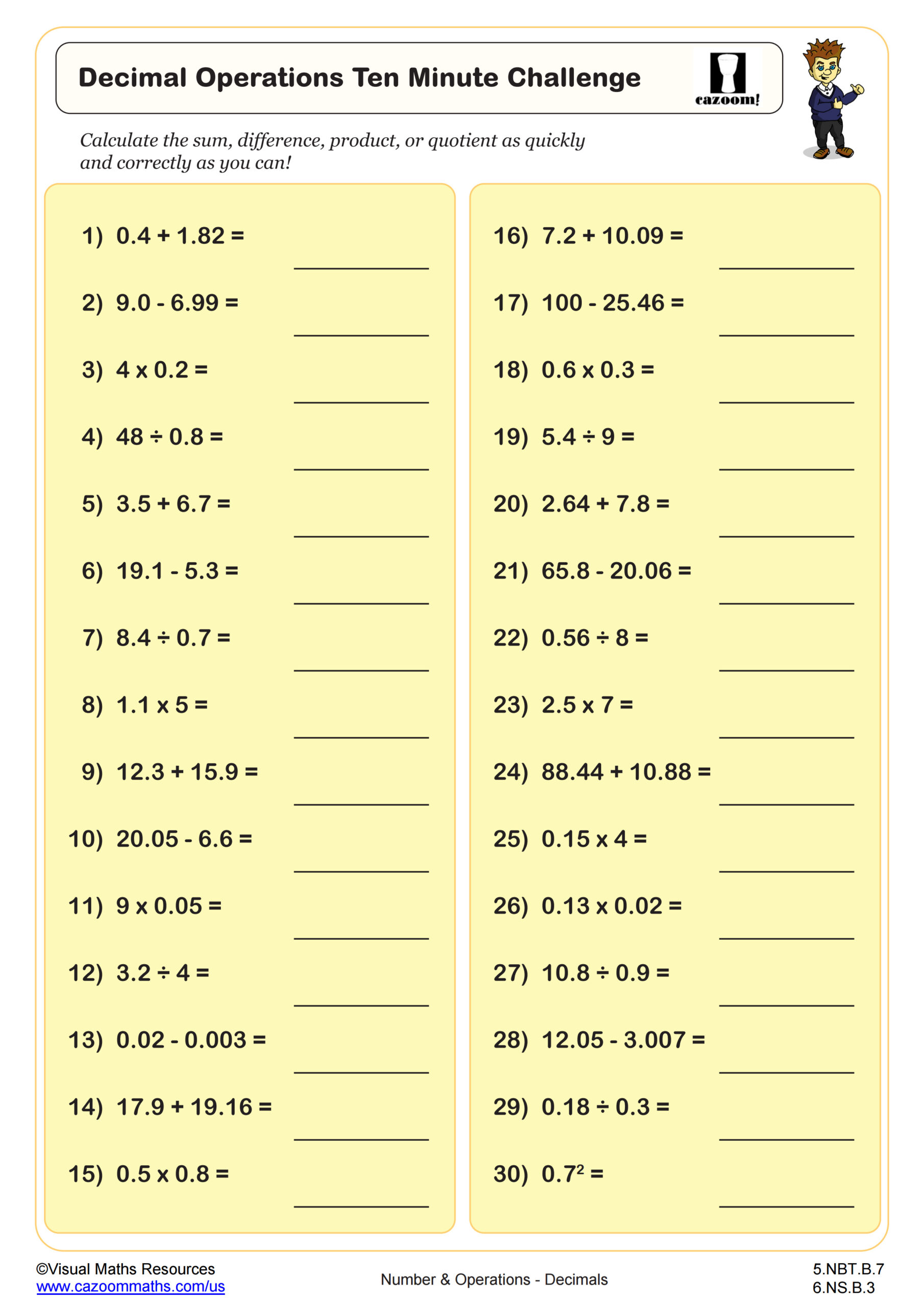
Decimals on Number Lines
Grades: 5th Grade
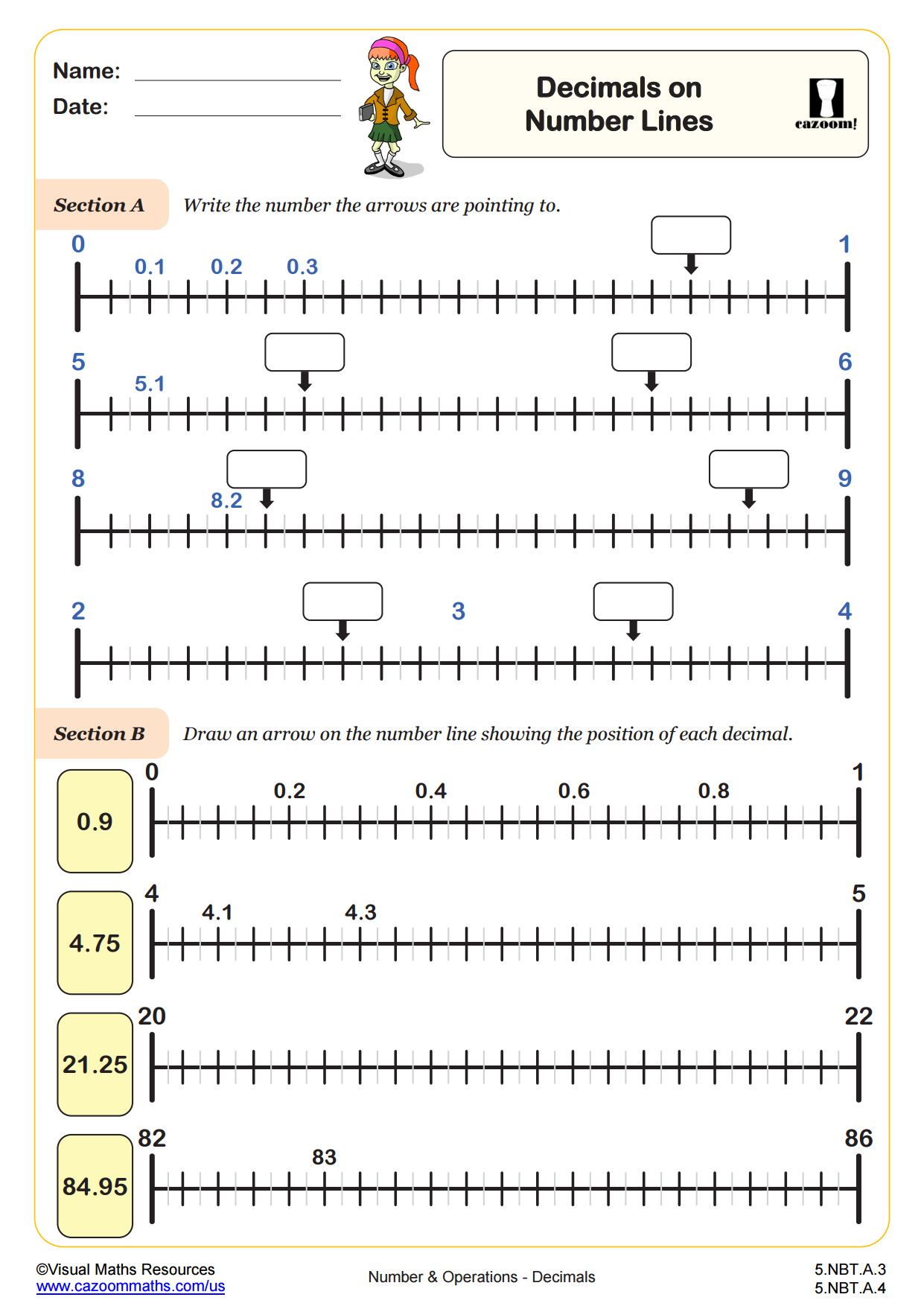
Design Your Own Code Breaker (B)
Grades: 5th Grade, 6th Grade
Divide Decimals by Integers (A)
Grades: 5th Grade, 6th Grade
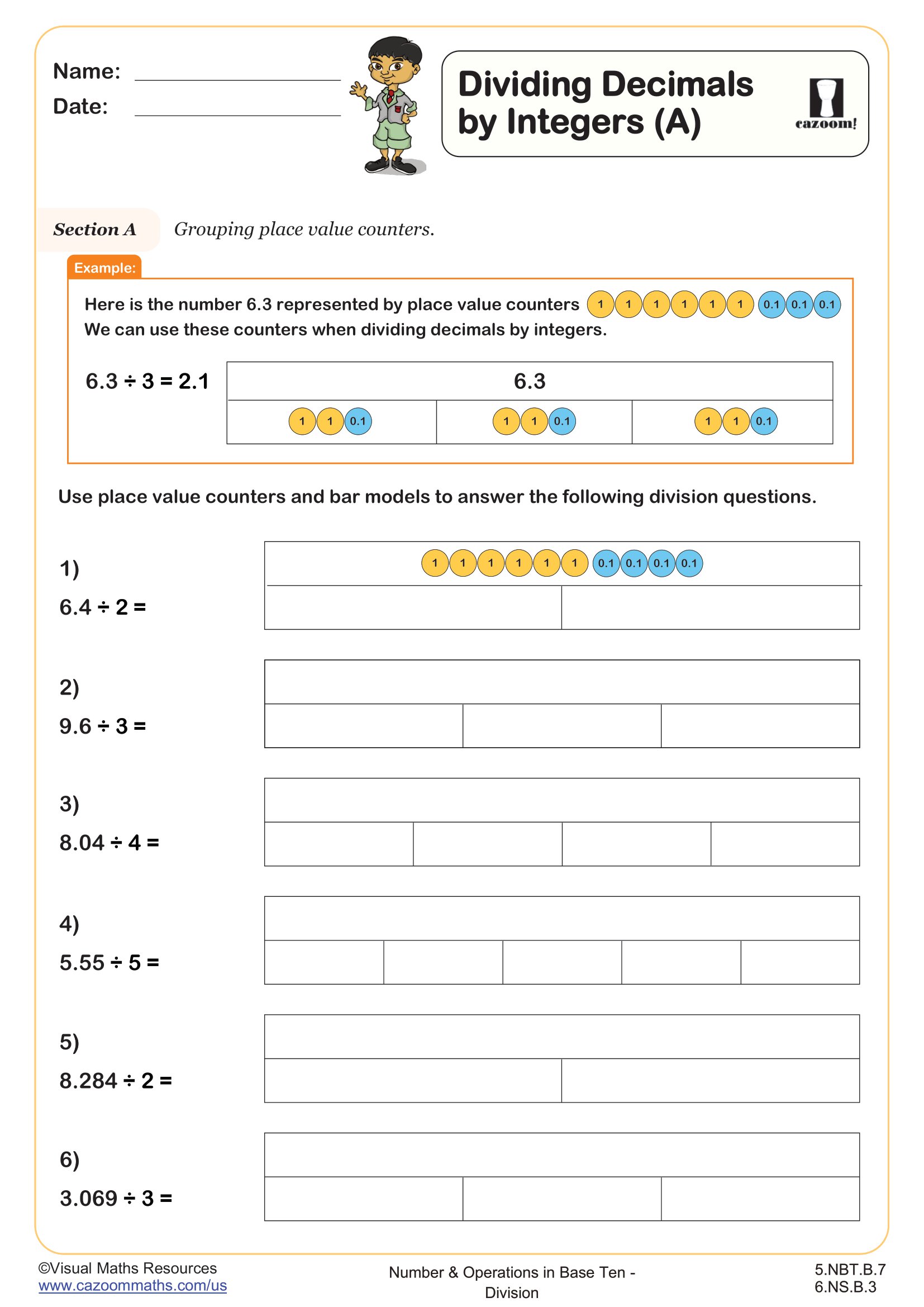
Divide Decimals Using Gattegno Charts by 10, 100, 1000
Grades: 5th Grade, 6th Grade
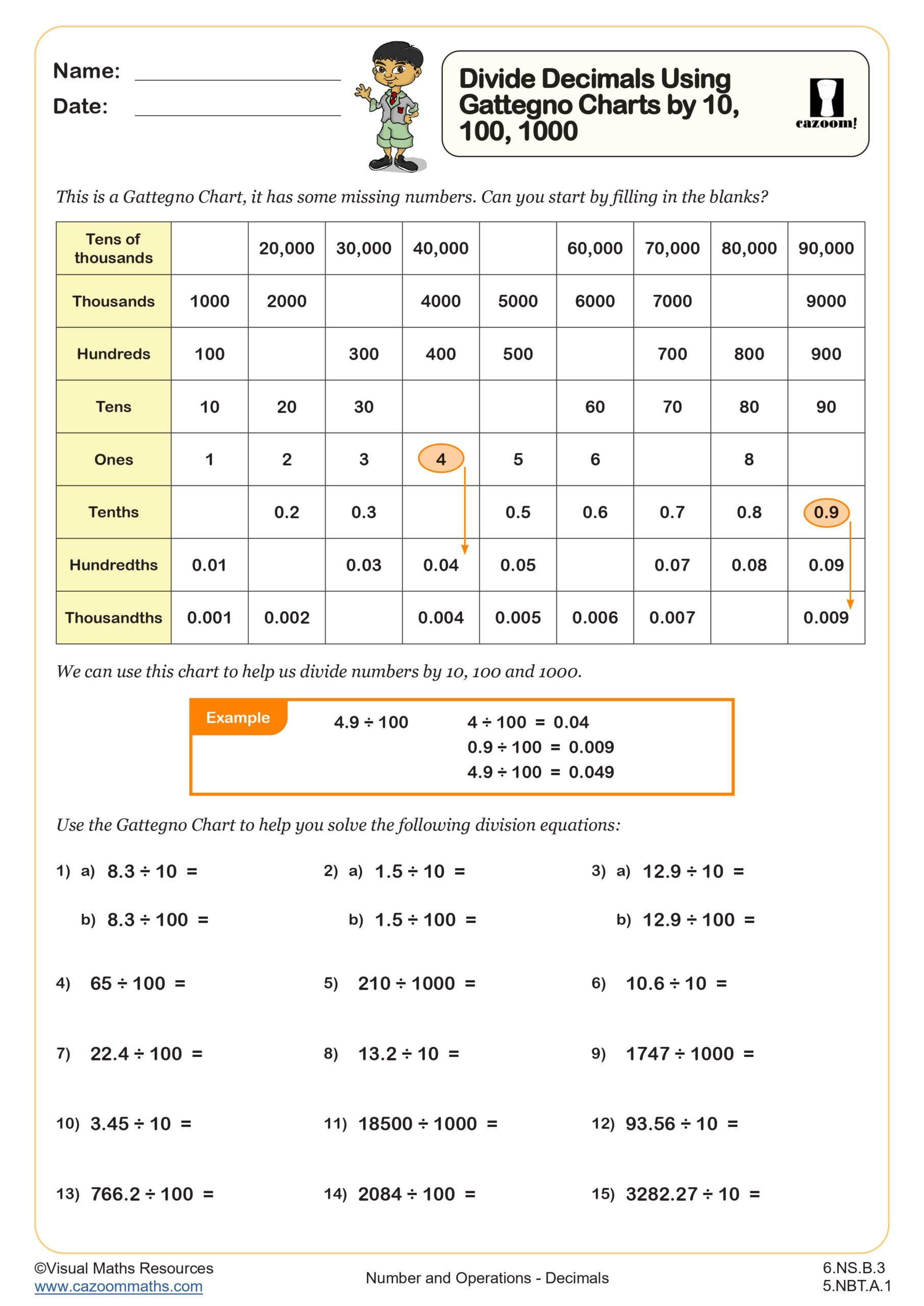
Dividing Decimals (A)
Grades: 5th Grade, 6th Grade
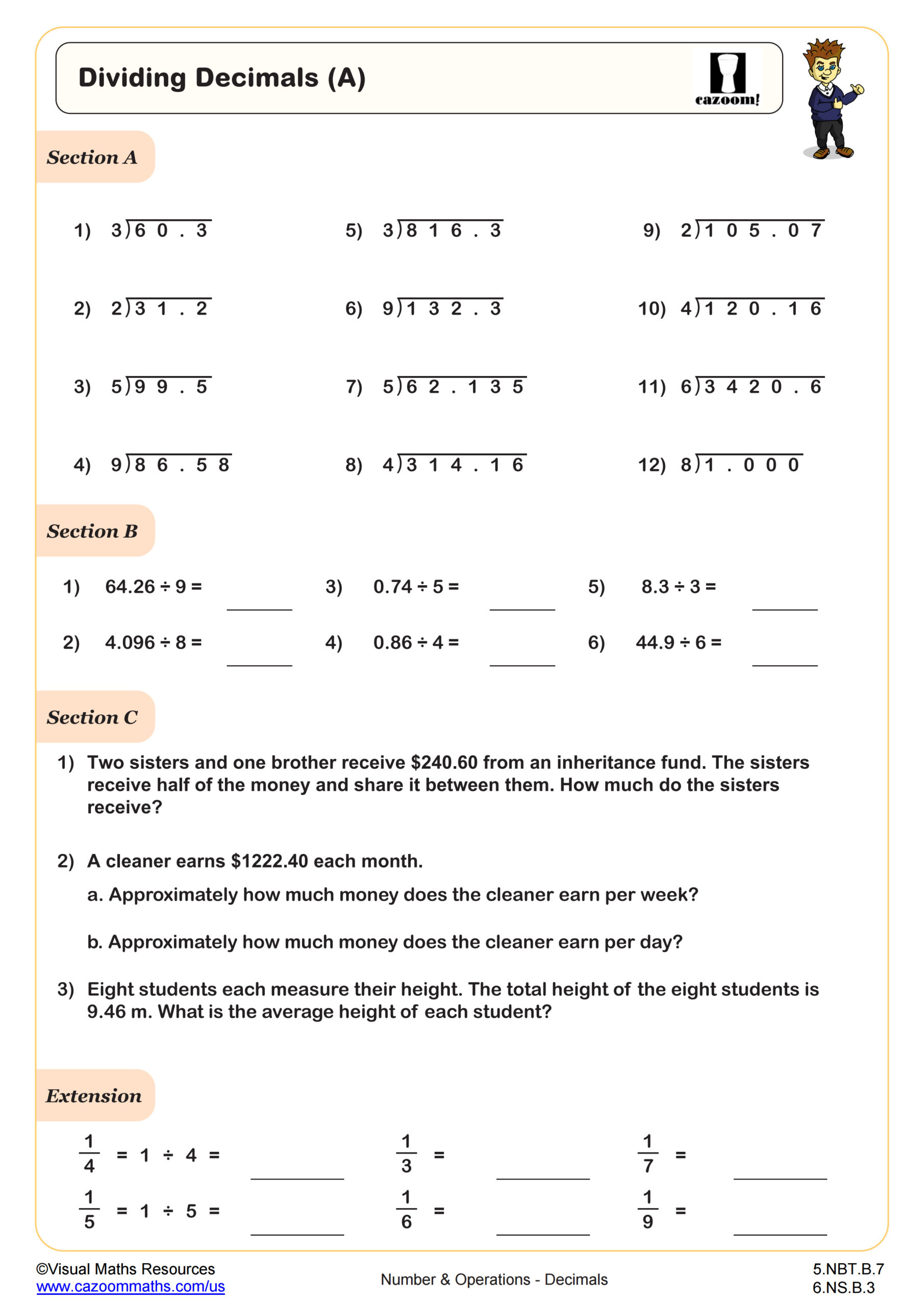
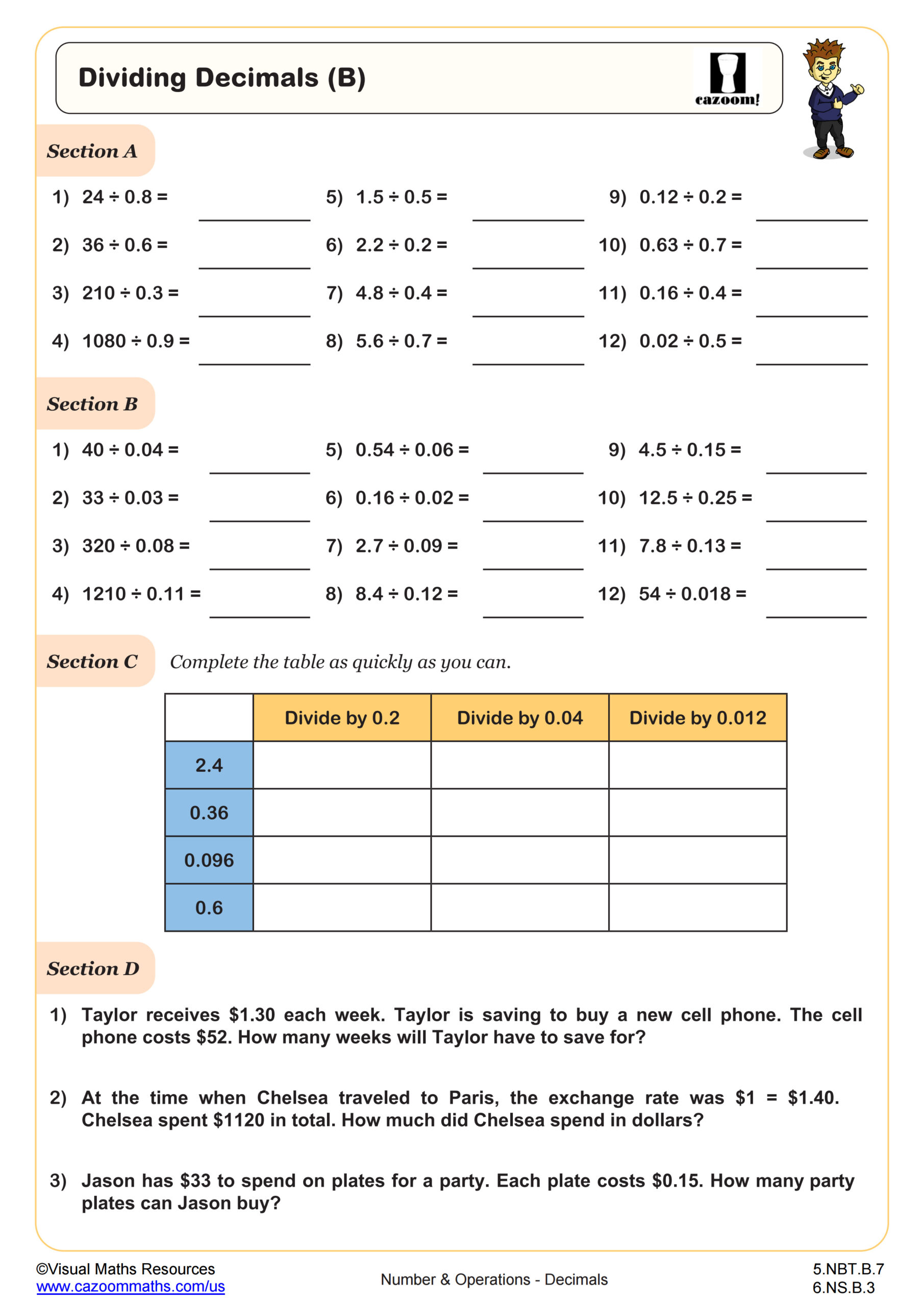
Dividing Decimals (B)
Grades: 5th Grade, 6th Grade
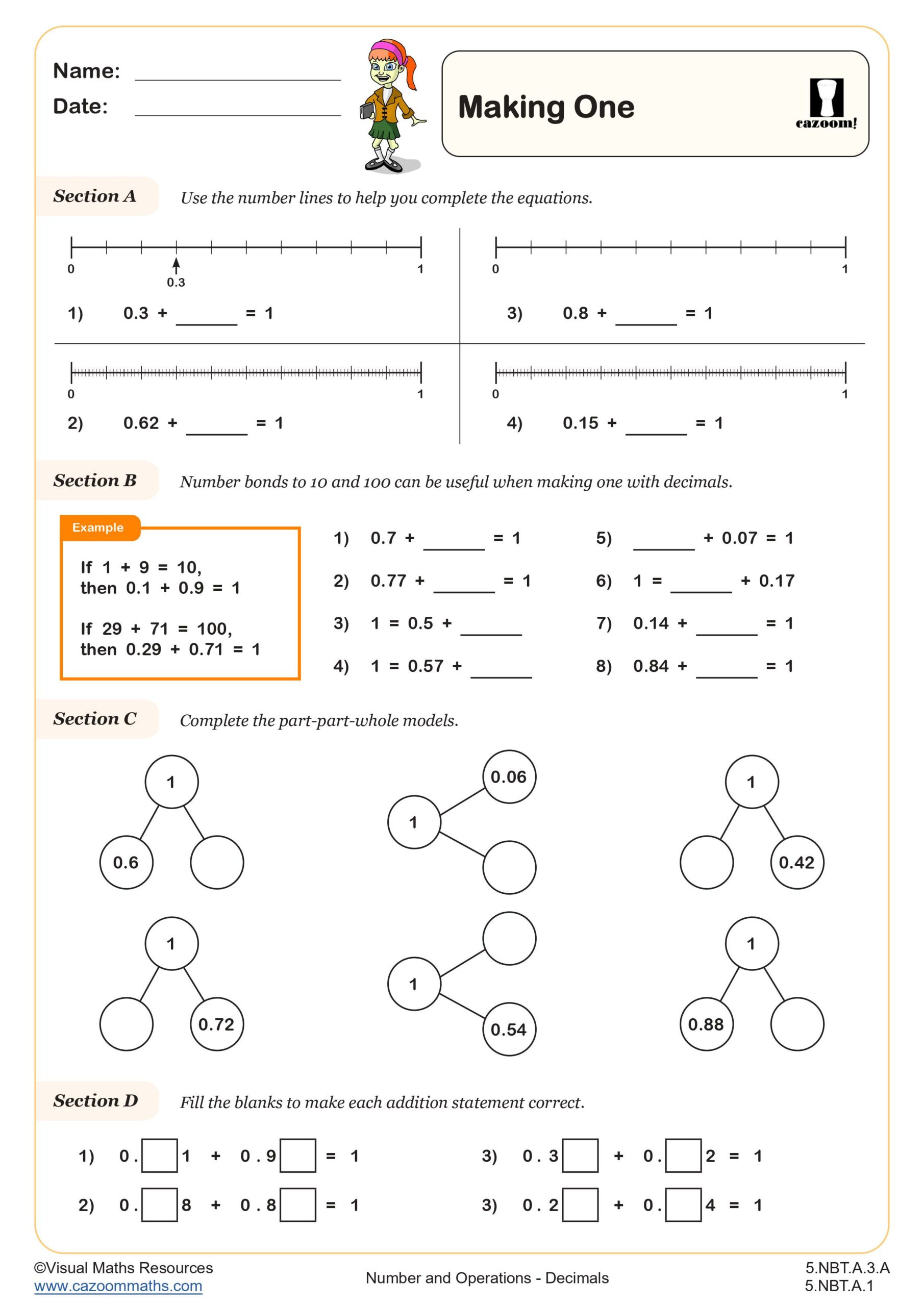
Making One
Grades: 5th Grade
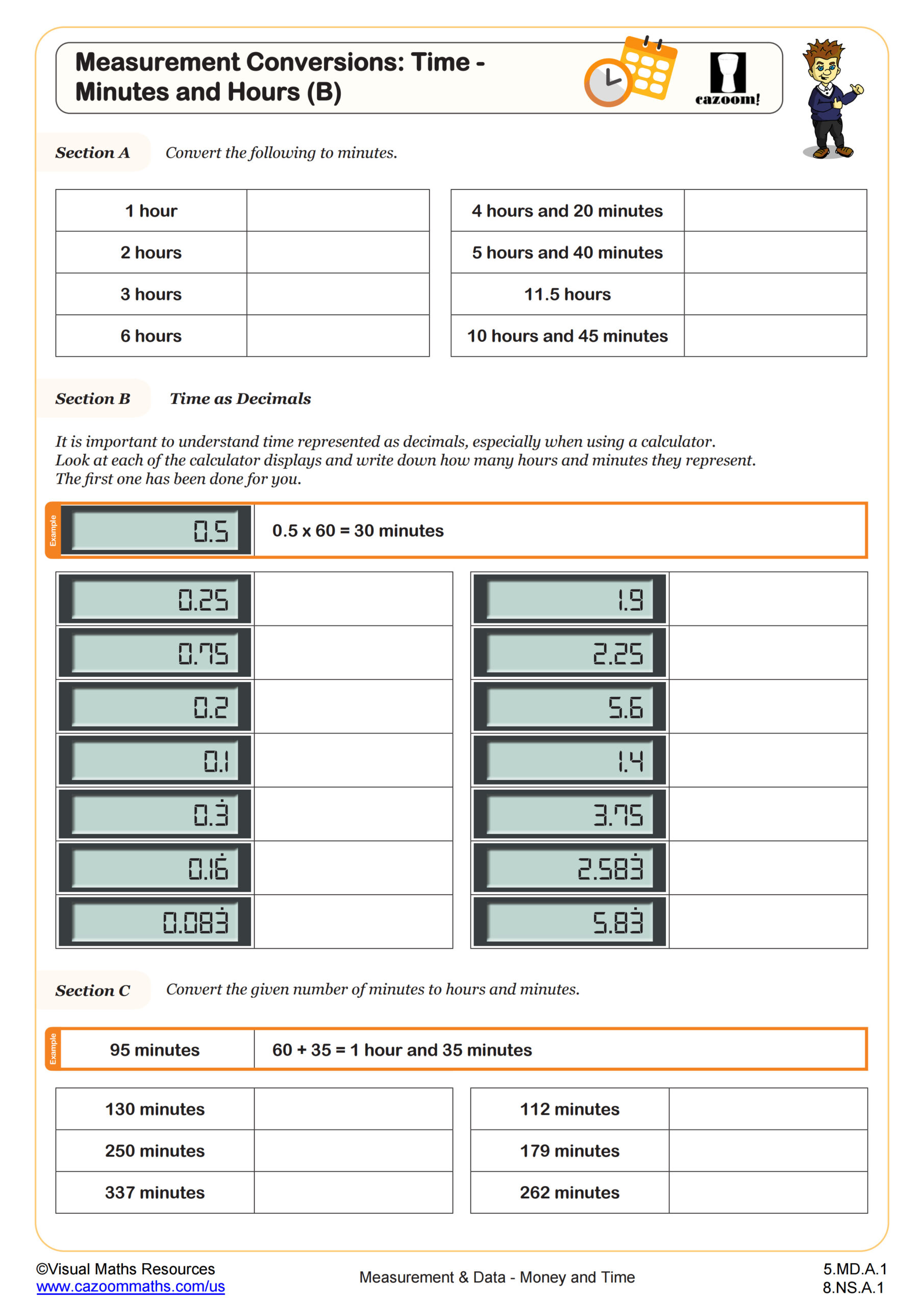
Measurement Conversions: Time - Minutes and Hours (B)
Grades: 5th Grade, 8th Grade
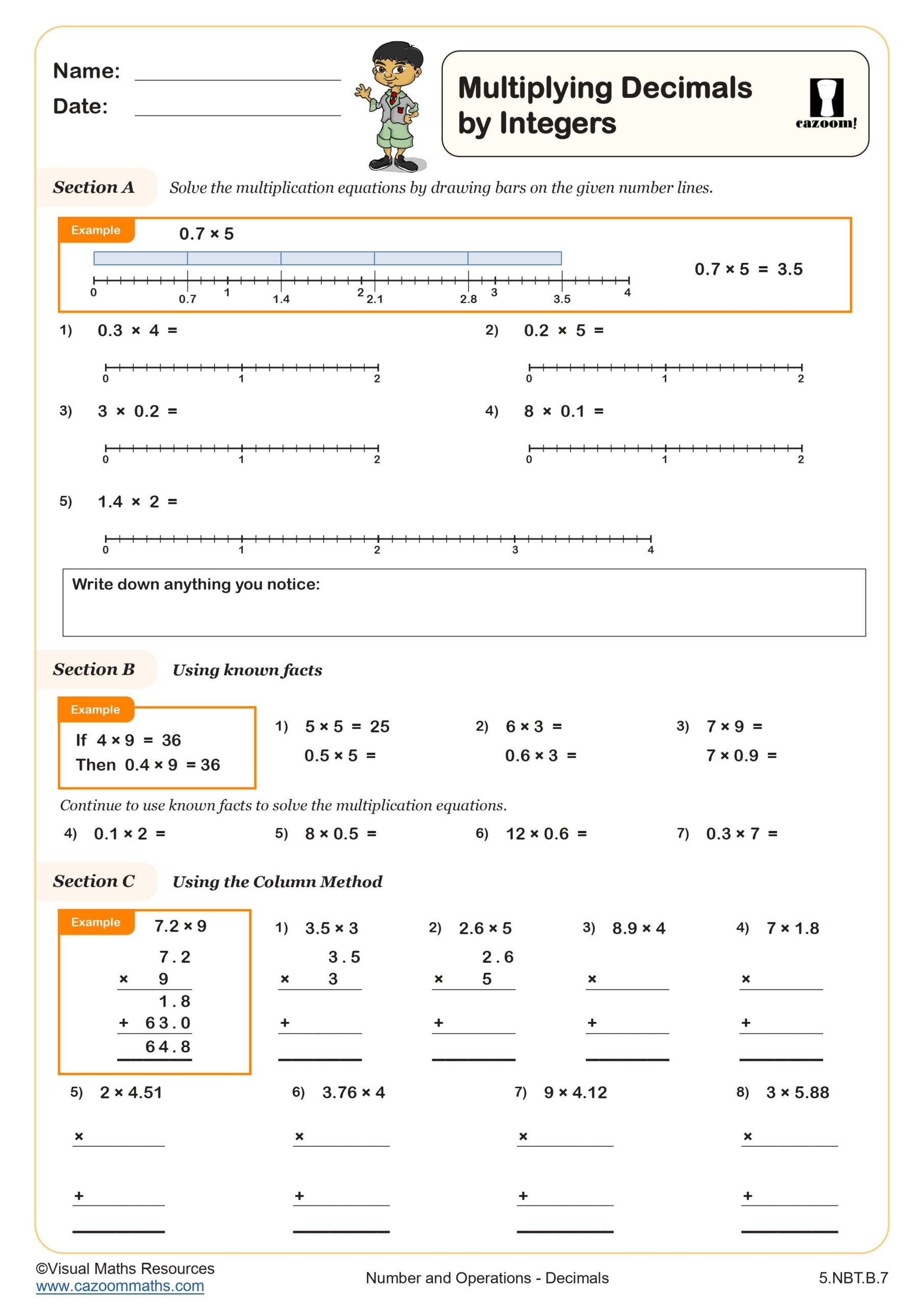
Multiply decimals by integers
Grades: 5th Grade
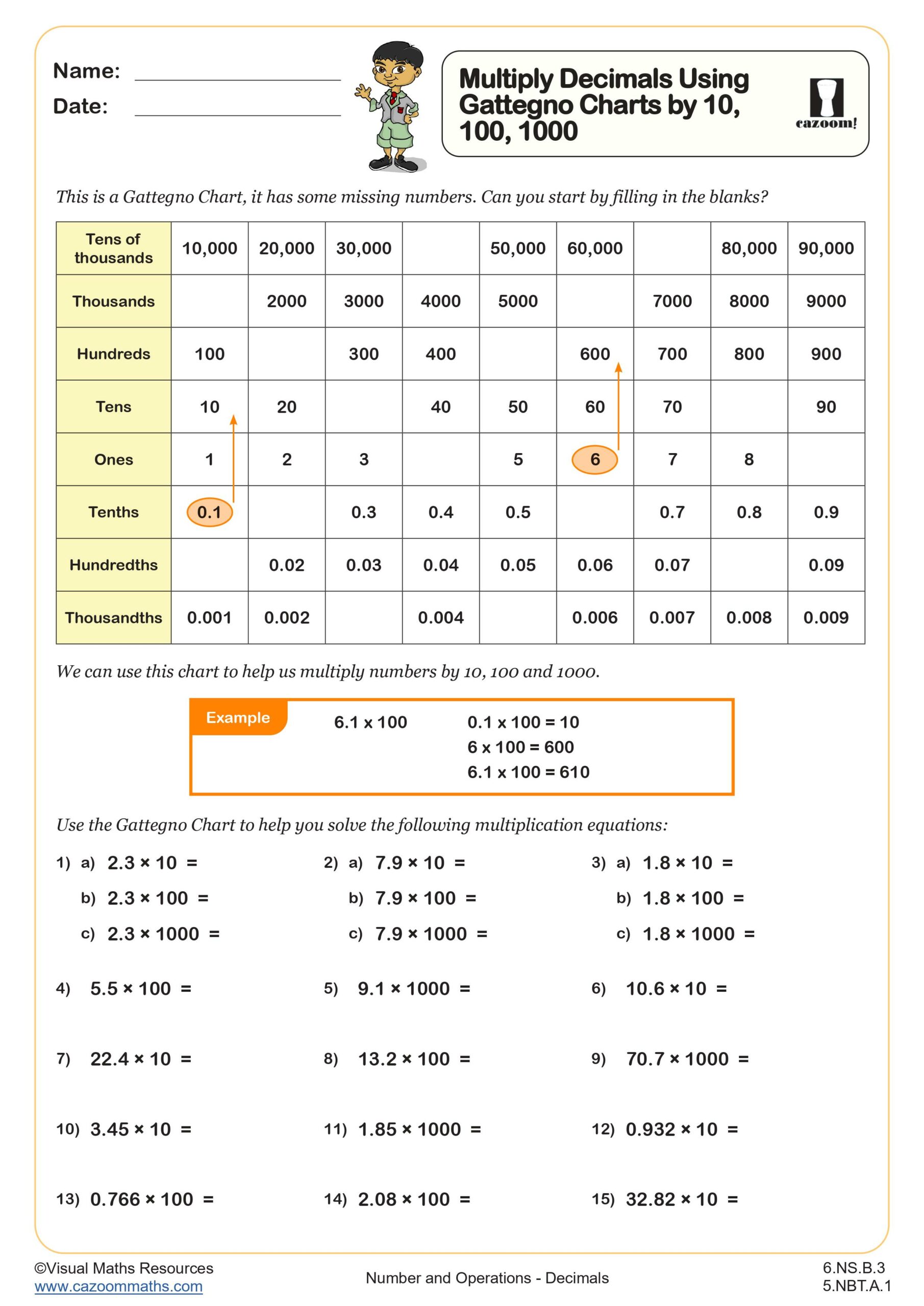
Multiply Decimals Using Gattegno Charts by 10, 100, 1000
Grades: 5th Grade, 6th Grade
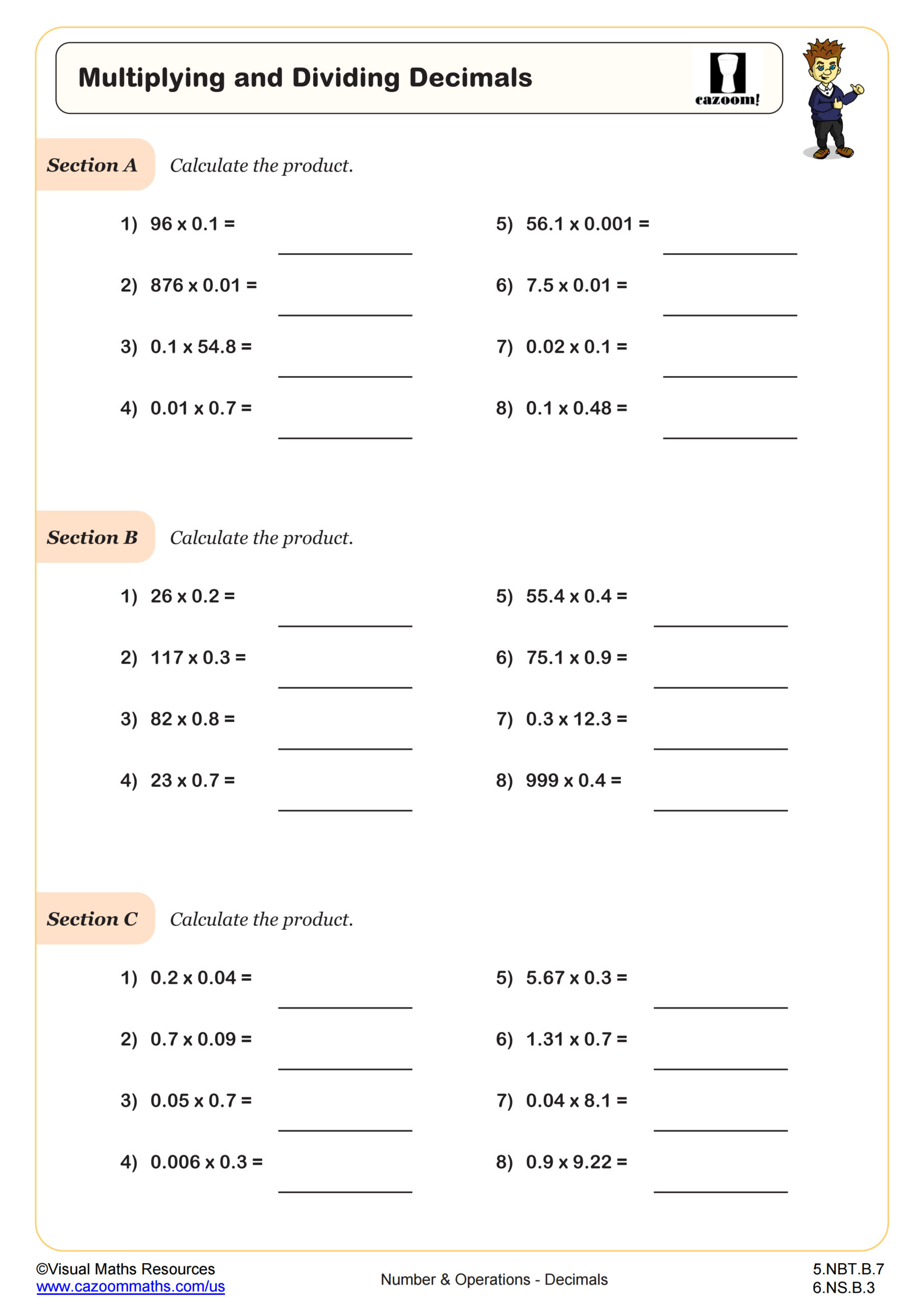
Multiplying and Dividing Decimals
Grades: 5th Grade, 6th Grade
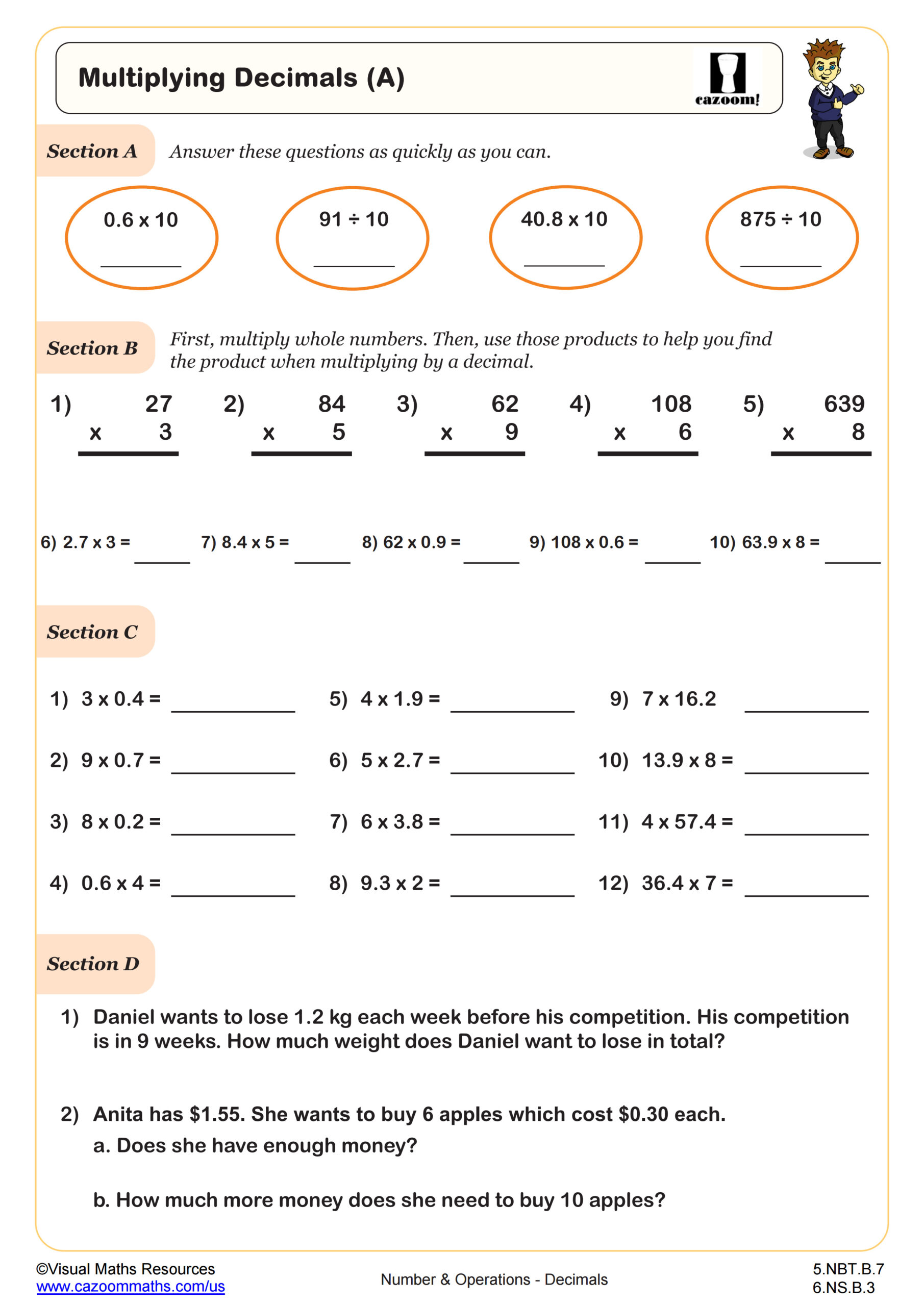
Multiplying Decimals (A)
Grades: 5th Grade, 6th Grade
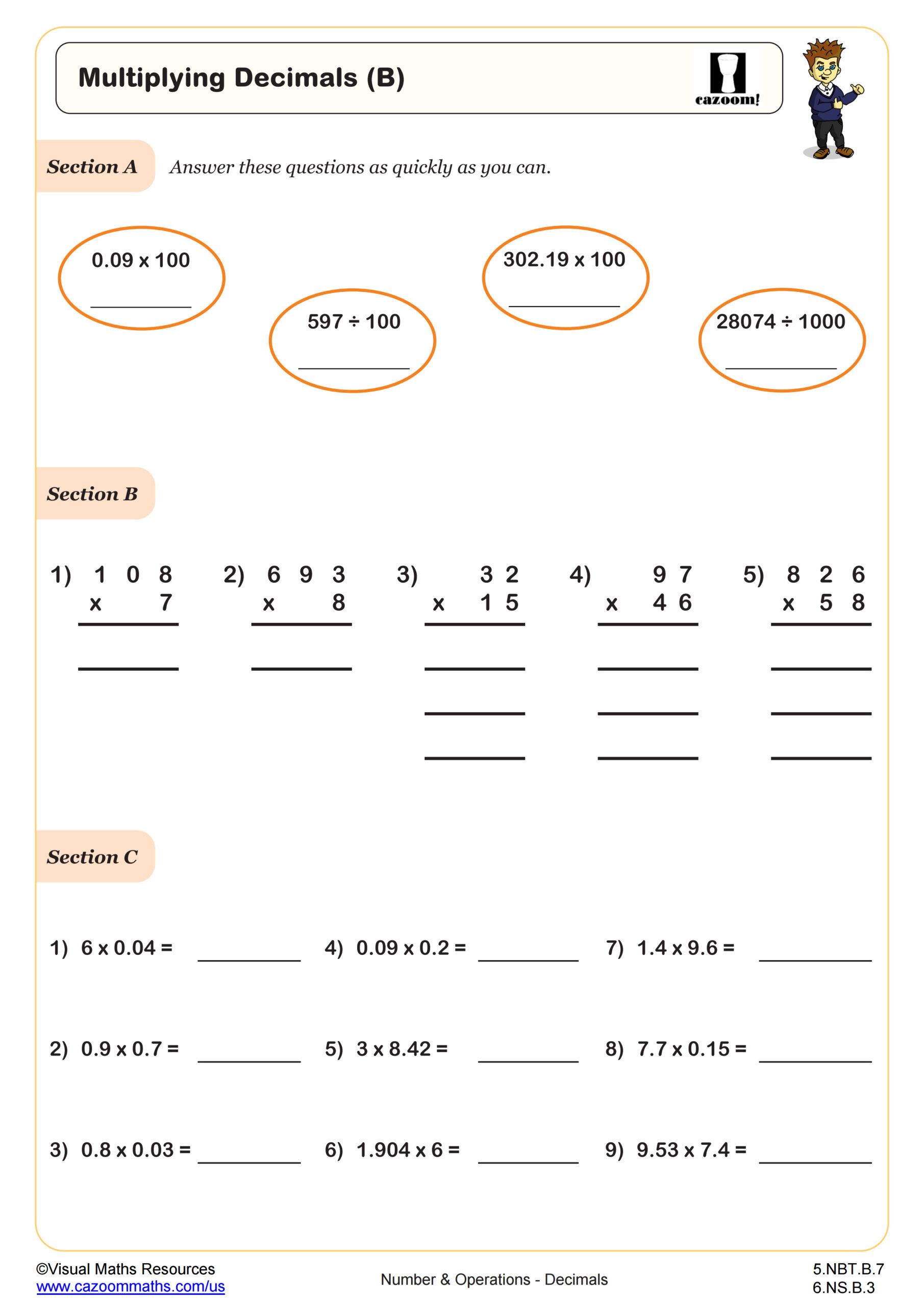
Multiplying Decimals (B)
Grades: 5th Grade, 6th Grade
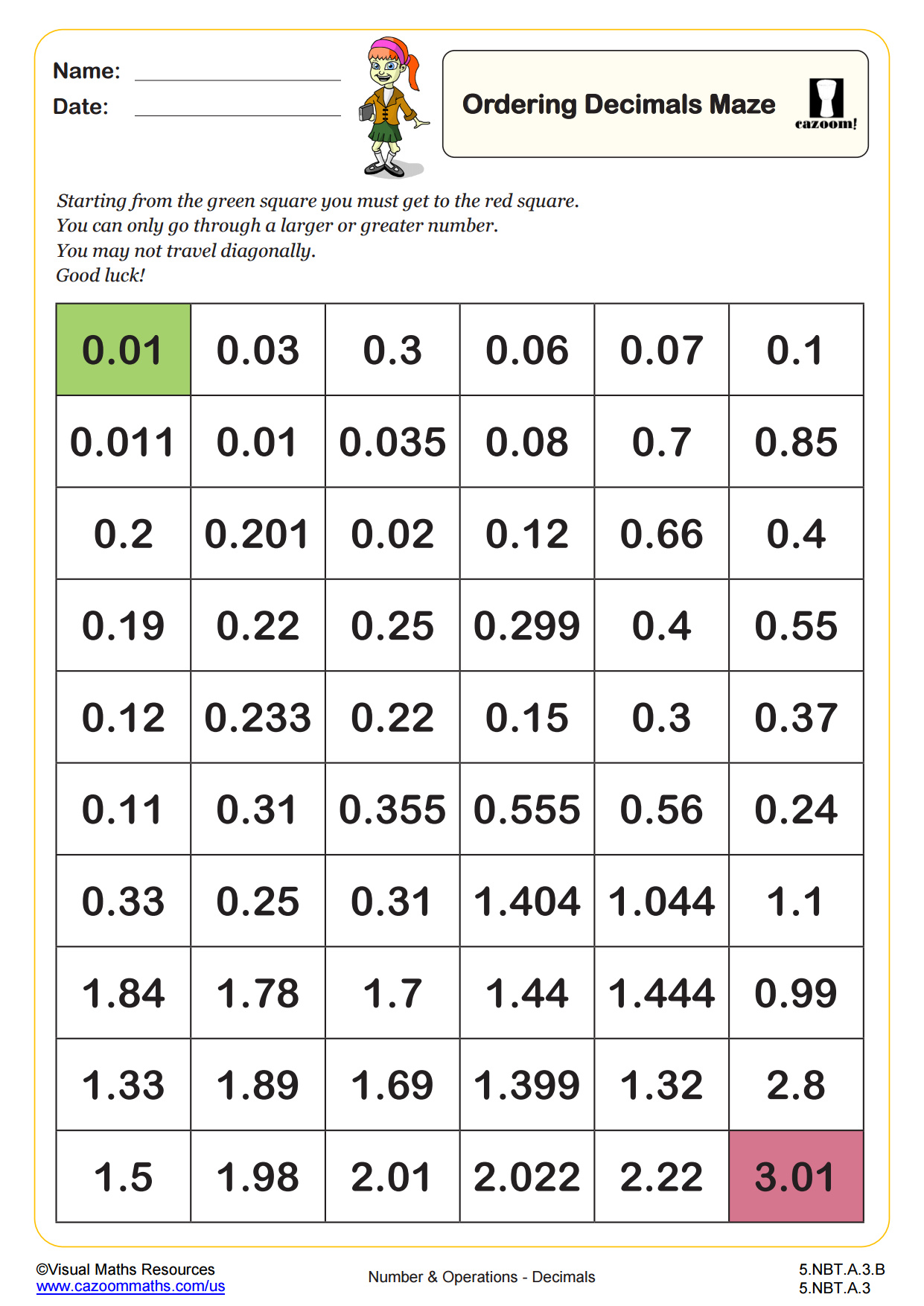
Ordering Decimals Maze
Grades: 5th Grade
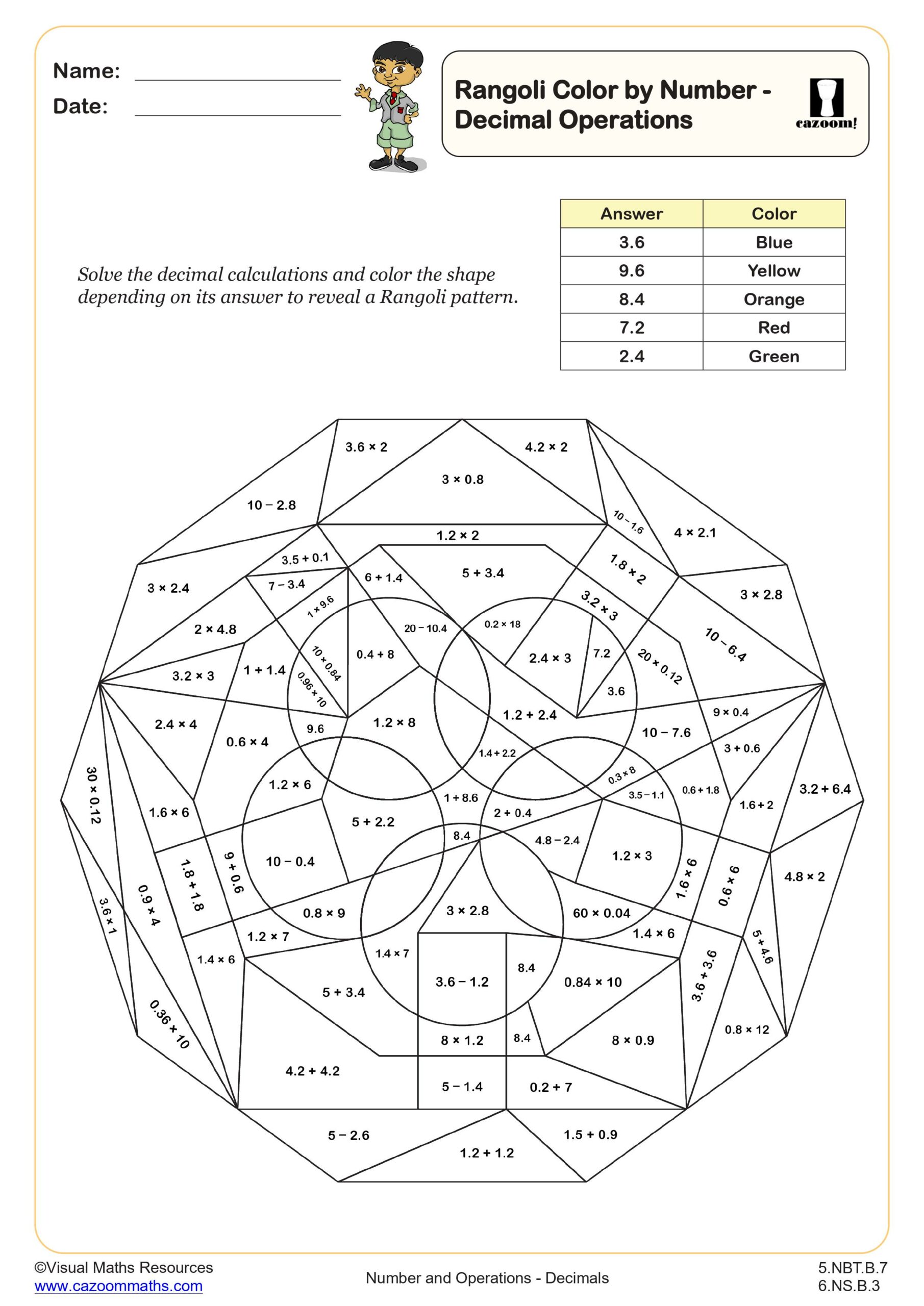
Rangoli Color by Number - Decimal Operations
Grades: 5th Grade, 6th Grade
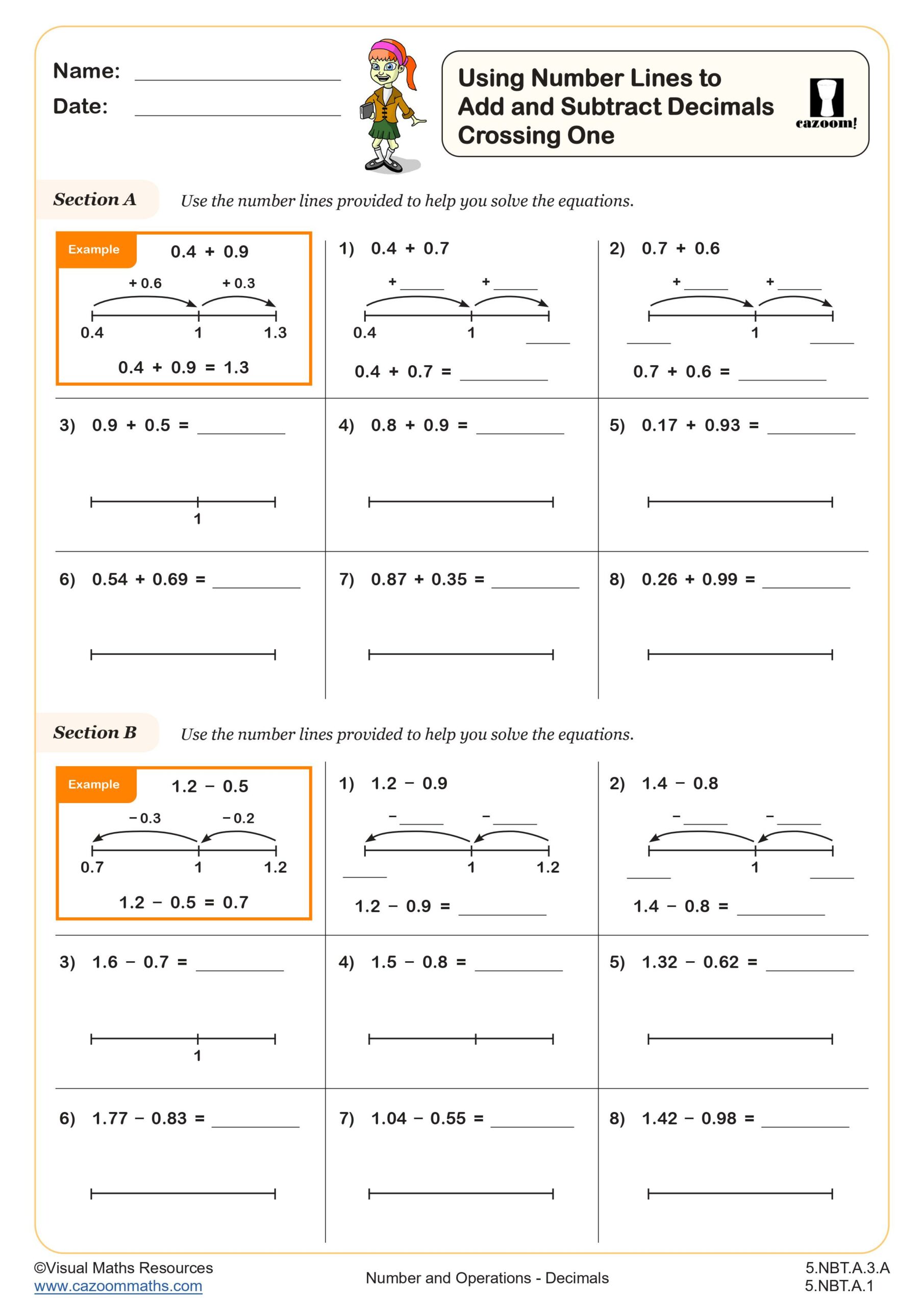
Using Number Lines to Add and Subtract Decimals Crossing One
Grades: 5th Grade
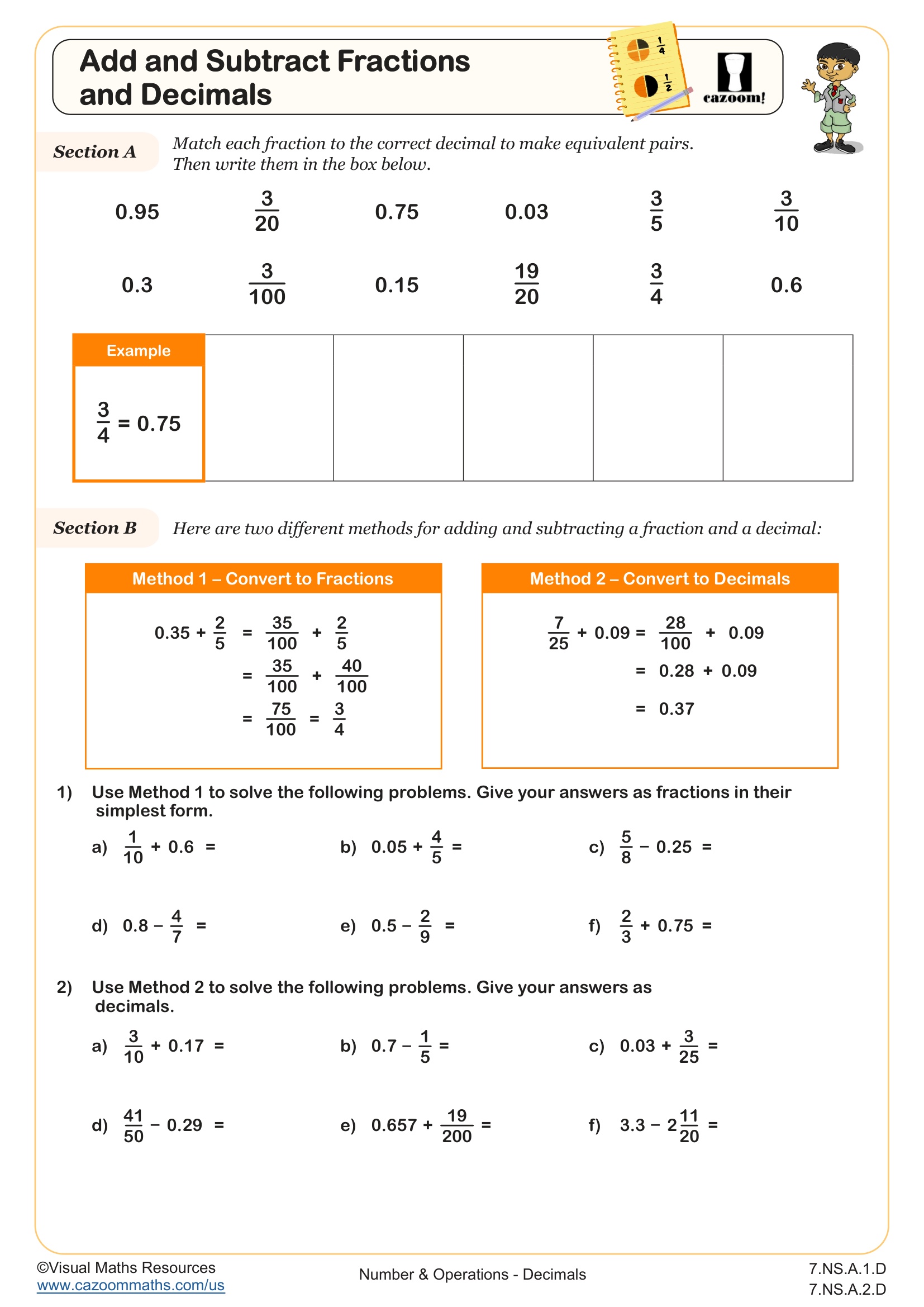
Add and Subtract Fractions and Decimals
Grades: 7th Grade
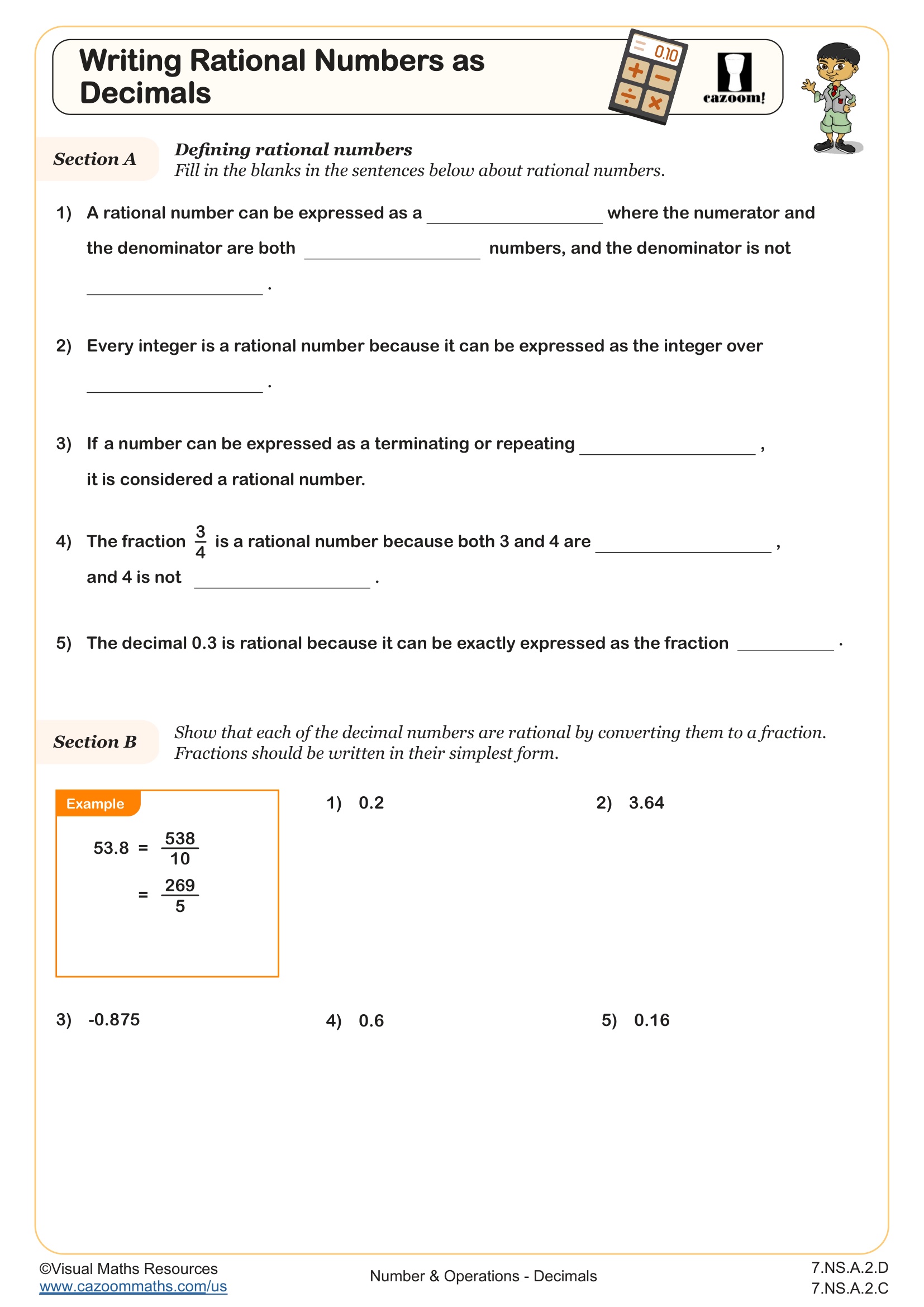
Writing Rational Numbers as Decimals
Grades: 7th Grade
All worksheets are created by the team of experienced teachers at Cazoom Math.
What topics do decimals worksheets typically cover in math classrooms?
Decimals worksheets address core concepts aligned with Common Core State Standards, including decimal place value understanding, reading and writing decimals in standard and word form, comparing and ordering decimal numbers, and performing operations with decimals. Students also practice converting between fractions and decimals, rounding decimals to specified places, and solving real-world problems involving money and measurement.
Teachers frequently notice that students lose marks when working with decimals because they apply whole number rules incorrectly. For example, when comparing 0.8 and 0.75, students might think 0.75 is larger because 75 is greater than 8. Quality math decimals worksheets address this misconception by providing targeted comparison exercises and visual models that reinforce place value concepts.
Which grade levels benefit most from using decimal worksheets for math practice?
Decimal instruction typically begins in fourth grade with basic decimal concepts and continues through eighth grade with advanced operations and applications. Fourth and fifth graders focus on understanding decimal place value, reading decimals, and simple addition and subtraction. Sixth through eighth graders work with decimal multiplication, division, and complex problem-solving scenarios involving decimals in real-world contexts.
Middle school teachers often observe that students who missed foundational decimal concepts in elementary grades struggle significantly with algebra readiness. Working with decimals worksheet practice helps bridge these gaps by reinforcing place value understanding and computational fluency. The progression from concrete decimal models to abstract problem-solving prepares students for high school mathematics and STEM applications where decimal precision is crucial.
How do money problems help students understand decimal concepts better?
Money provides the most relatable context for decimal learning because students naturally understand that $0.25 represents twenty-five cents or one quarter. Teachers use money problems to introduce decimal place value, where the tenths place represents dimes and the hundredths place represents pennies. Questions like how much is 14 dimes help students connect counting skills to decimal notation, as 14 dimes equals $1.40 or 1.4 dollars.
Classroom experience shows that money contexts reduce student anxiety about decimal operations because the problems feel practical and achievable. When students calculate change, add prices, or determine savings, they develop number sense that transfers to abstract decimal work. This connection proves especially valuable when introducing decimal multiplication and division, as students can verify their answers using monetary reasoning and real-world logic.
What makes decimal worksheets most effective for classroom instruction and homework?
Effective decimal worksheets progress systematically from concrete representations to abstract problems, incorporating visual models, number lines, and grid representations alongside computational practice. Teachers find that worksheets work best when they include varied problem types within each skill level, preventing students from memorizing patterns rather than understanding concepts. Answer keys allow teachers to provide immediate feedback and help students identify specific areas needing additional support.
Successful implementation requires teachers to use decimals work as diagnostic tools rather than just practice exercises. Many educators have students explain their reasoning for decimal comparison problems or show their thinking when solving multi-step decimal operations. This approach reveals misconceptions early and helps teachers adjust instruction accordingly. The combination of structured worksheet practice and mathematical discourse creates a learning environment where decimal understanding develops naturally and transfers to new situations.