Describe and Compare Shapes Worksheets
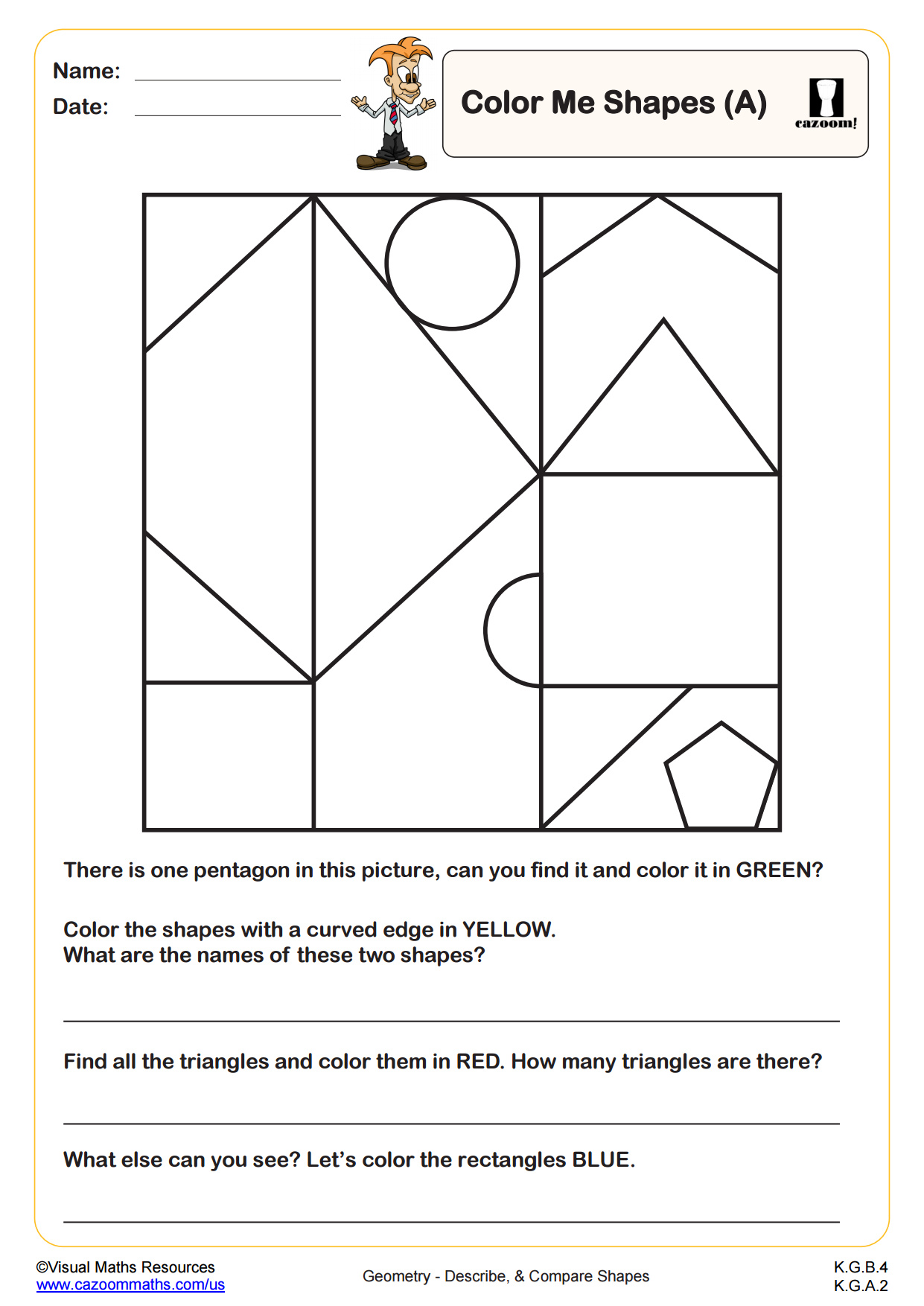
Colour Me Shapes (A)
Grades: Kindergarten
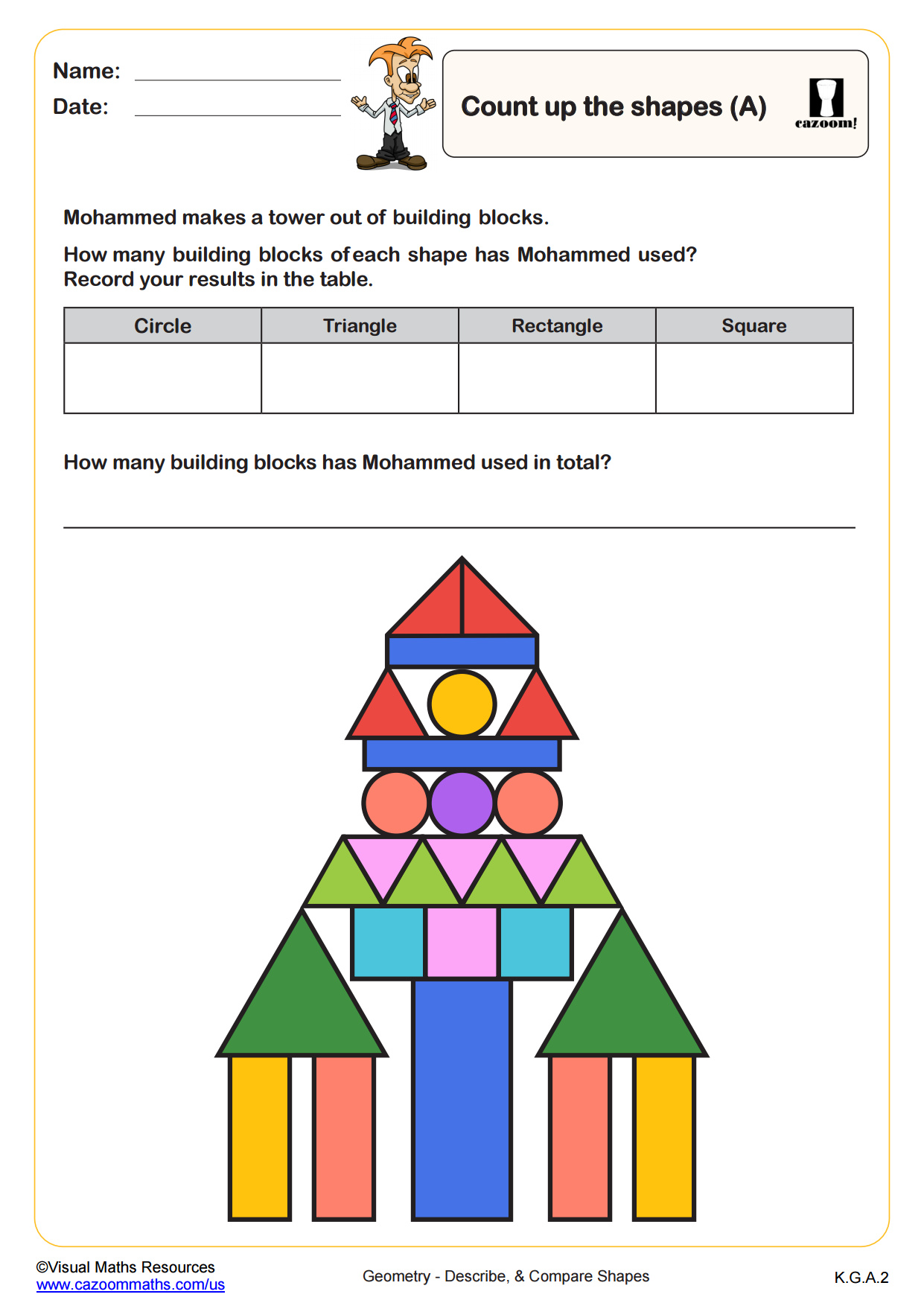
Count up the Shapes (A)
Grades: Kindergarten
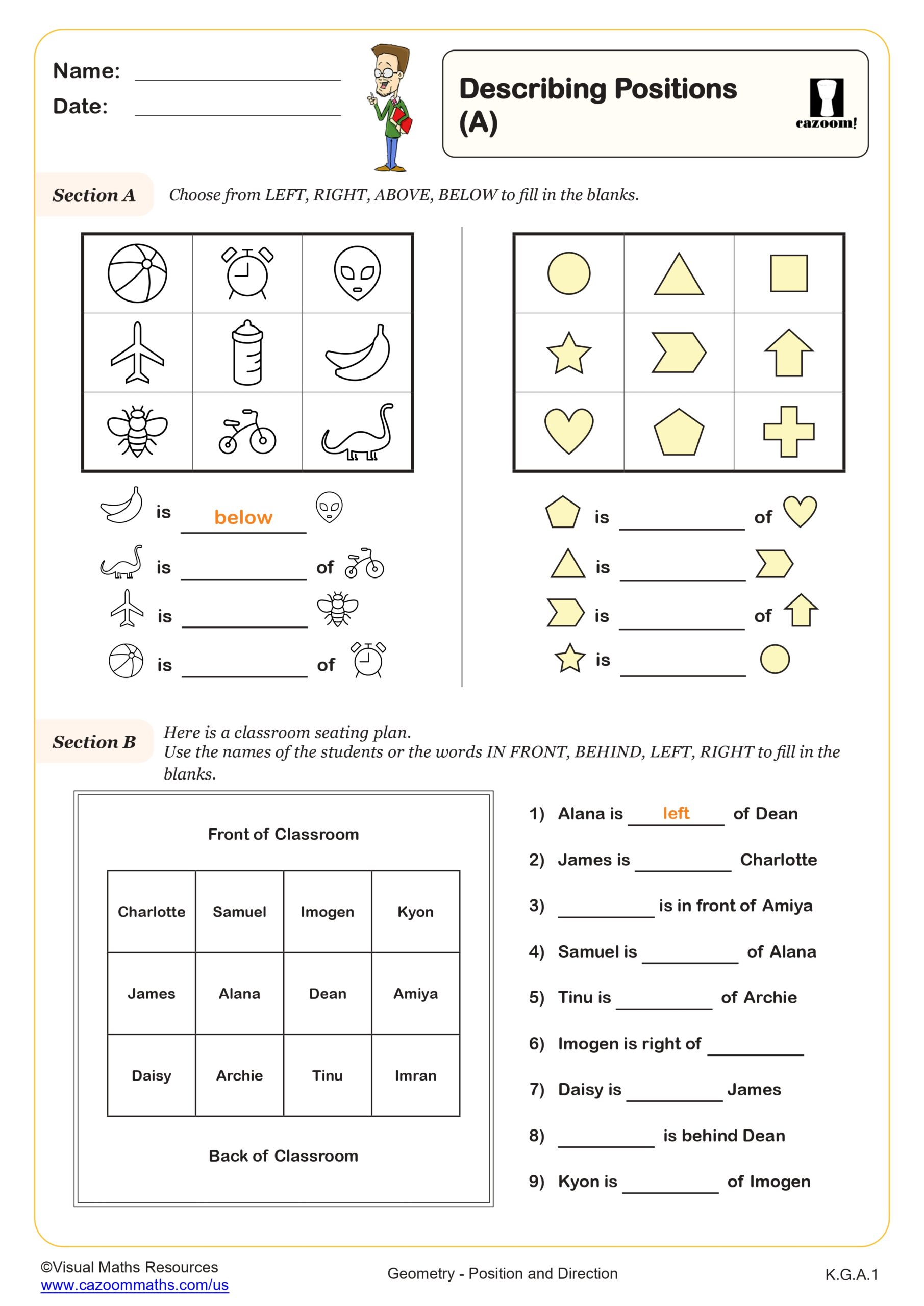
Describing Positions (A)
Grades: Kindergarten
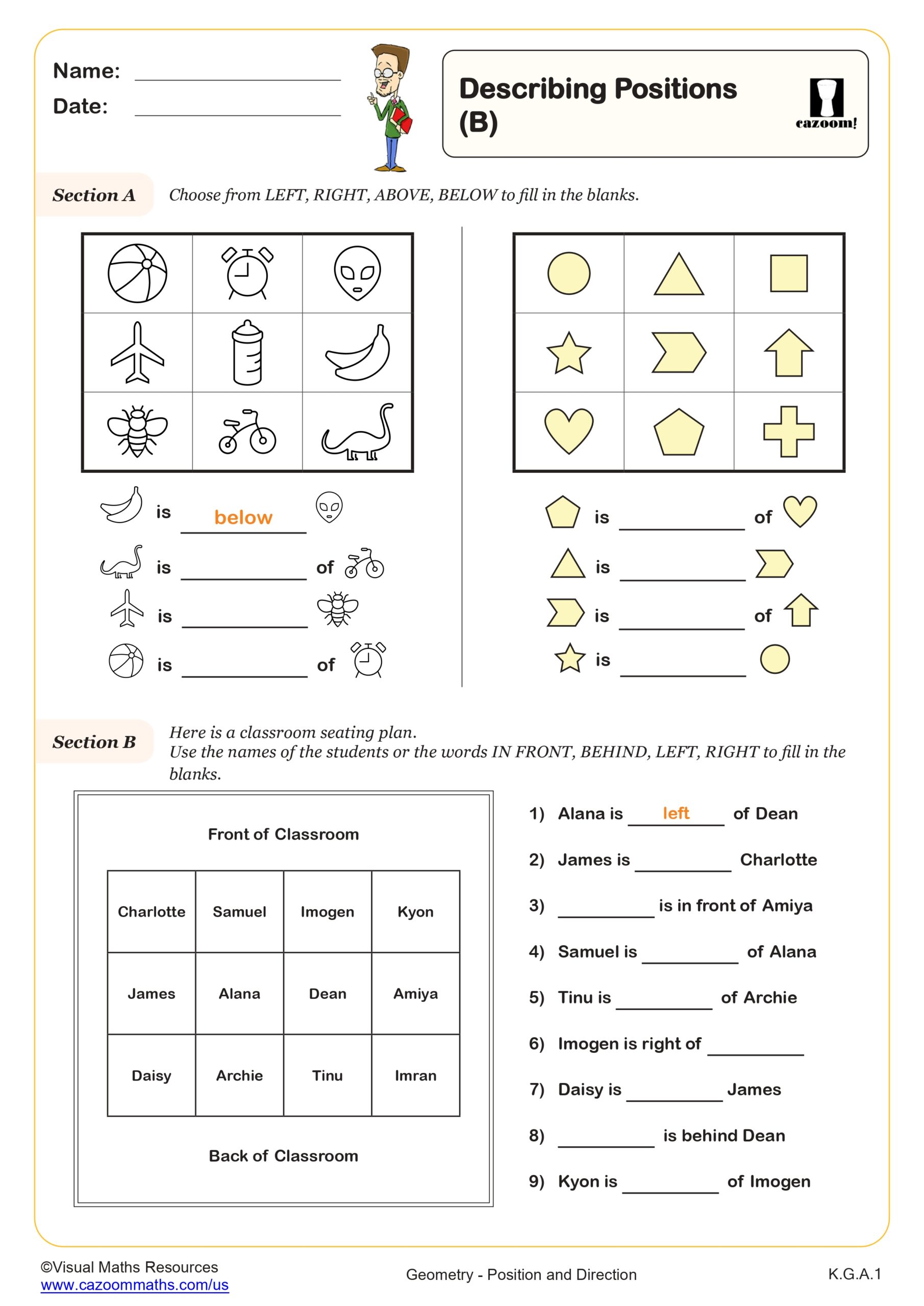
Describing Positions (B)
Grades: Kindergarten
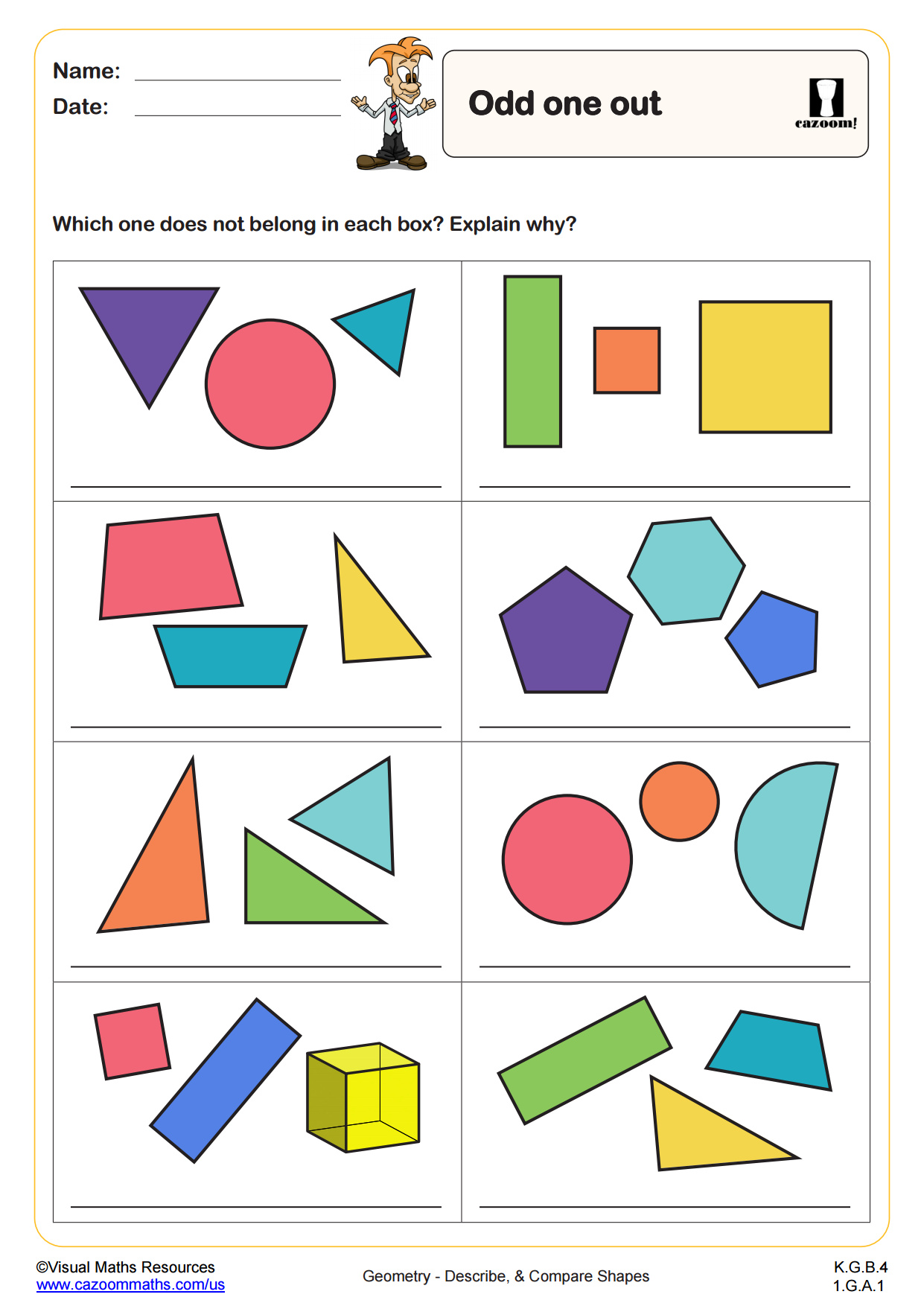
Odd One Out
Grades: Kindergarten, 1st Grade
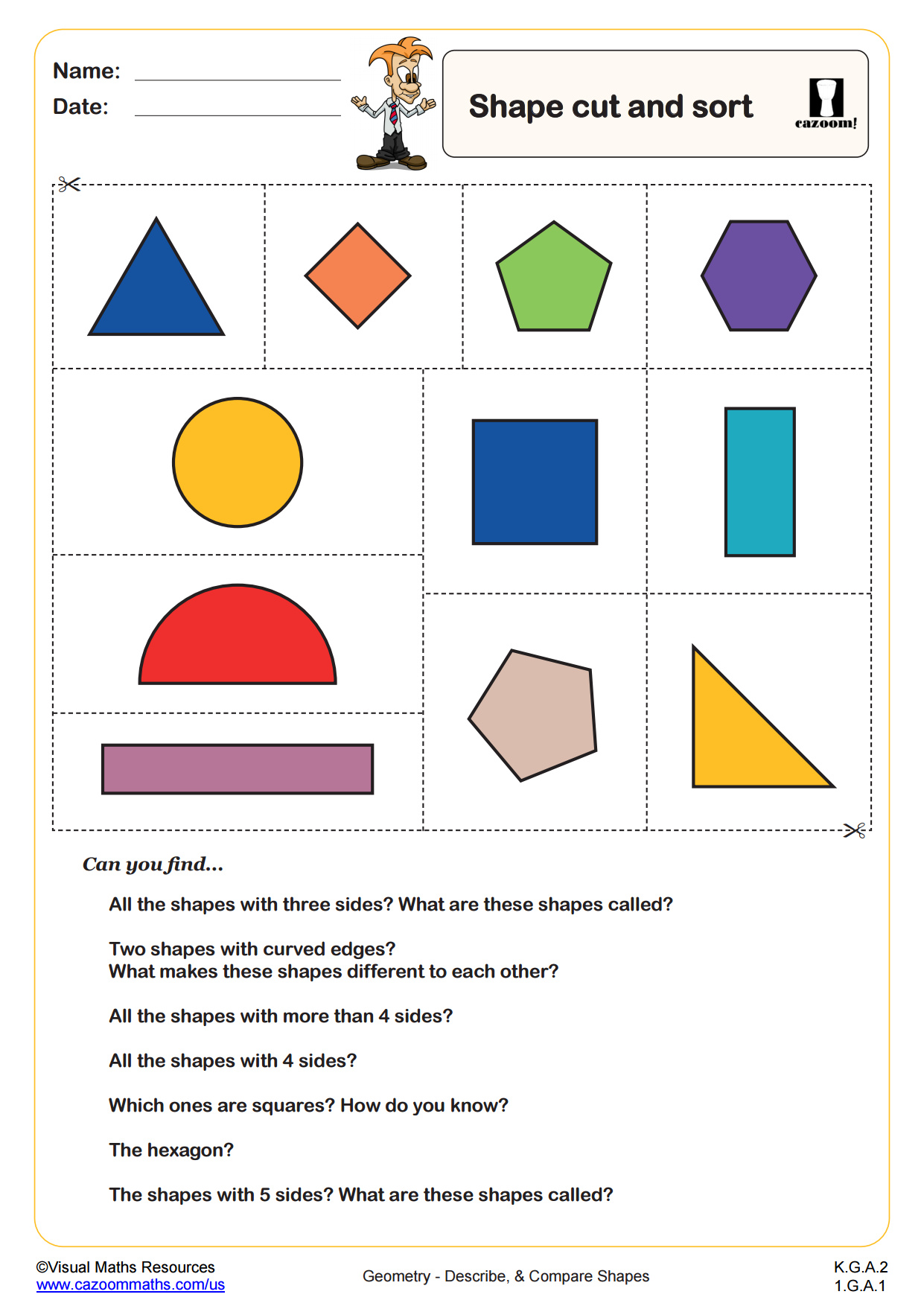
Shape Cut and Sort
Grades: Kindergarten, 1st Grade
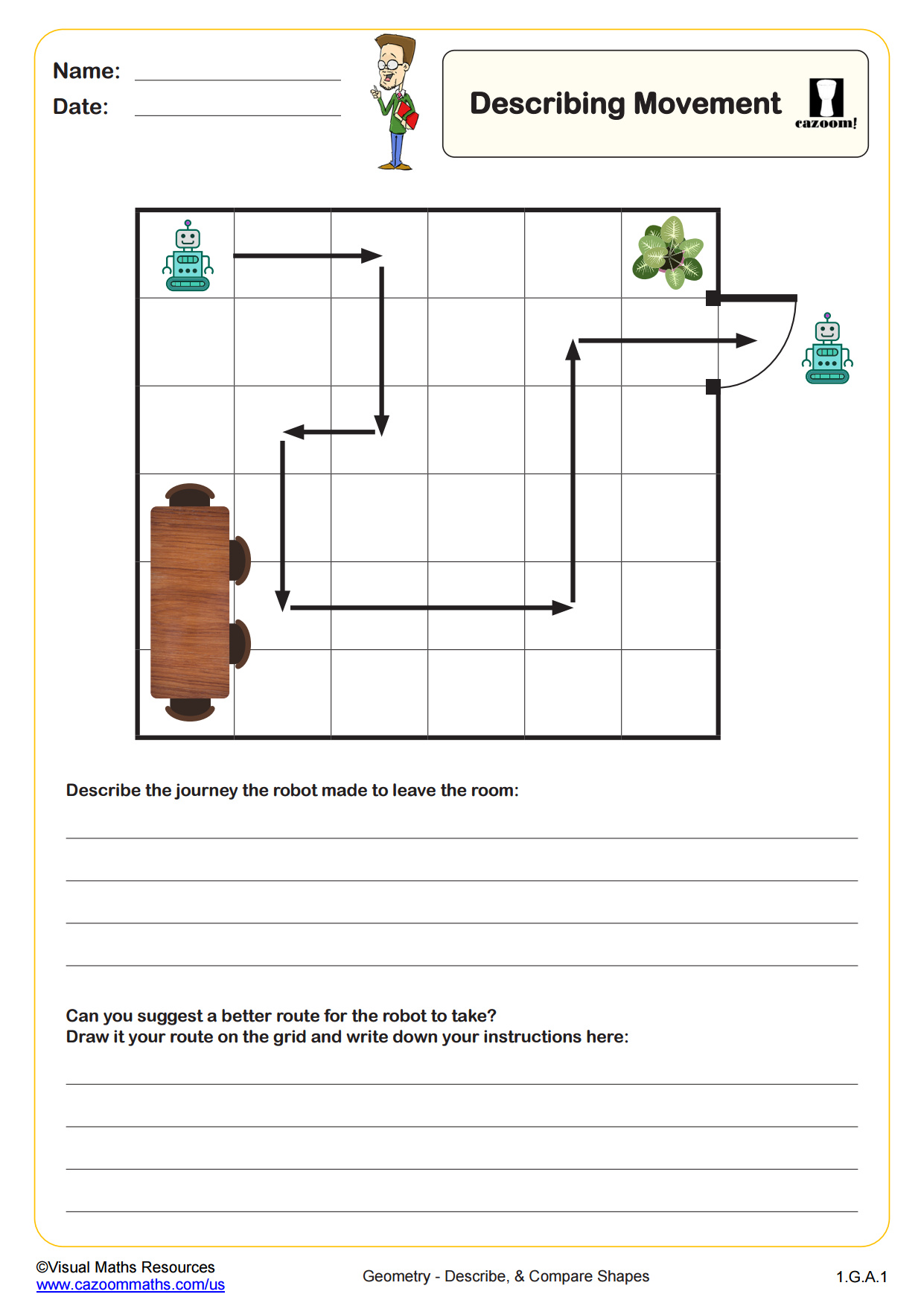
Describing Movement
Grades: 1st Grade
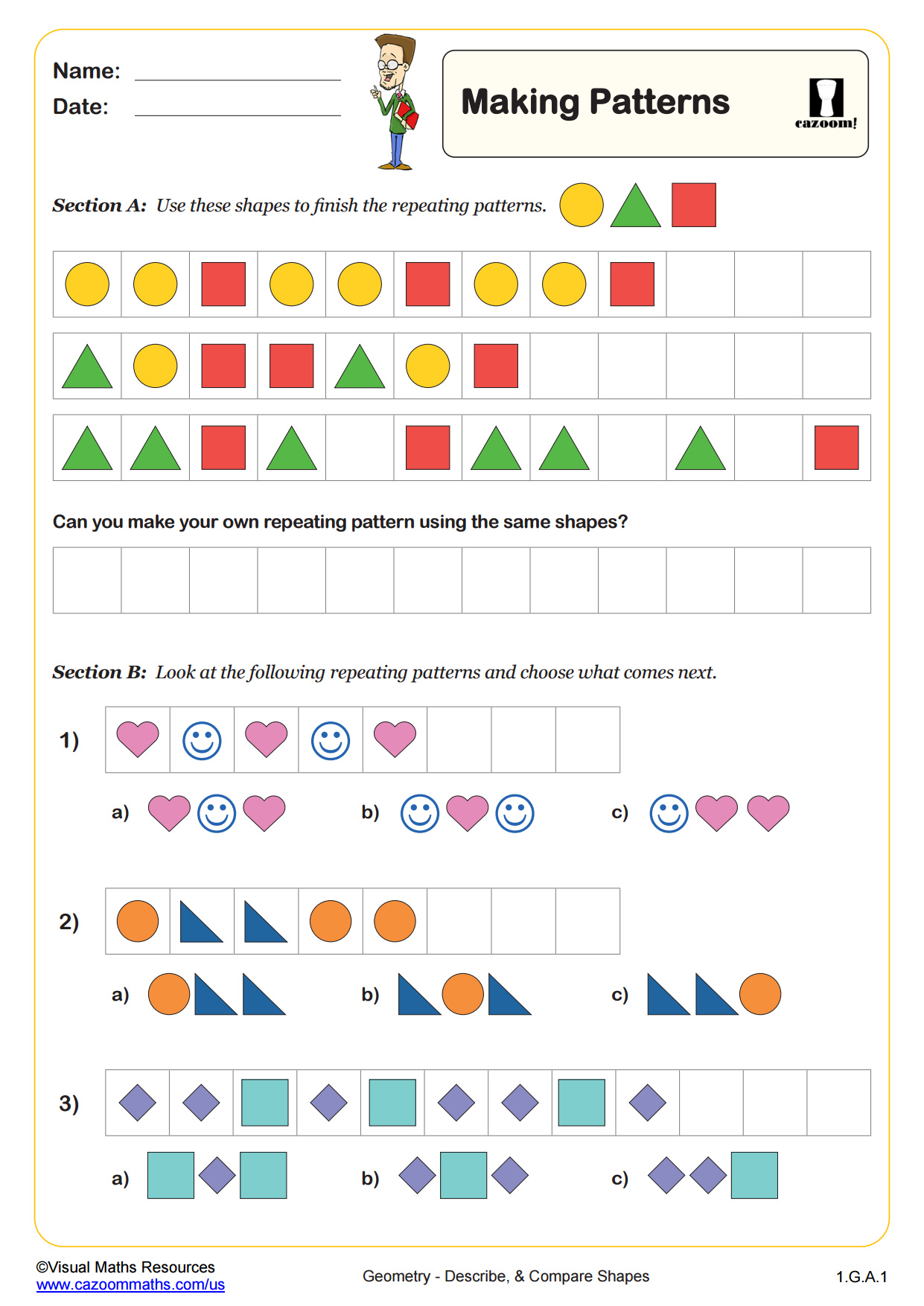
Making Patterns
Grades: 1st Grade
Odd One Out 3D Shapes
Grades: 1st Grade
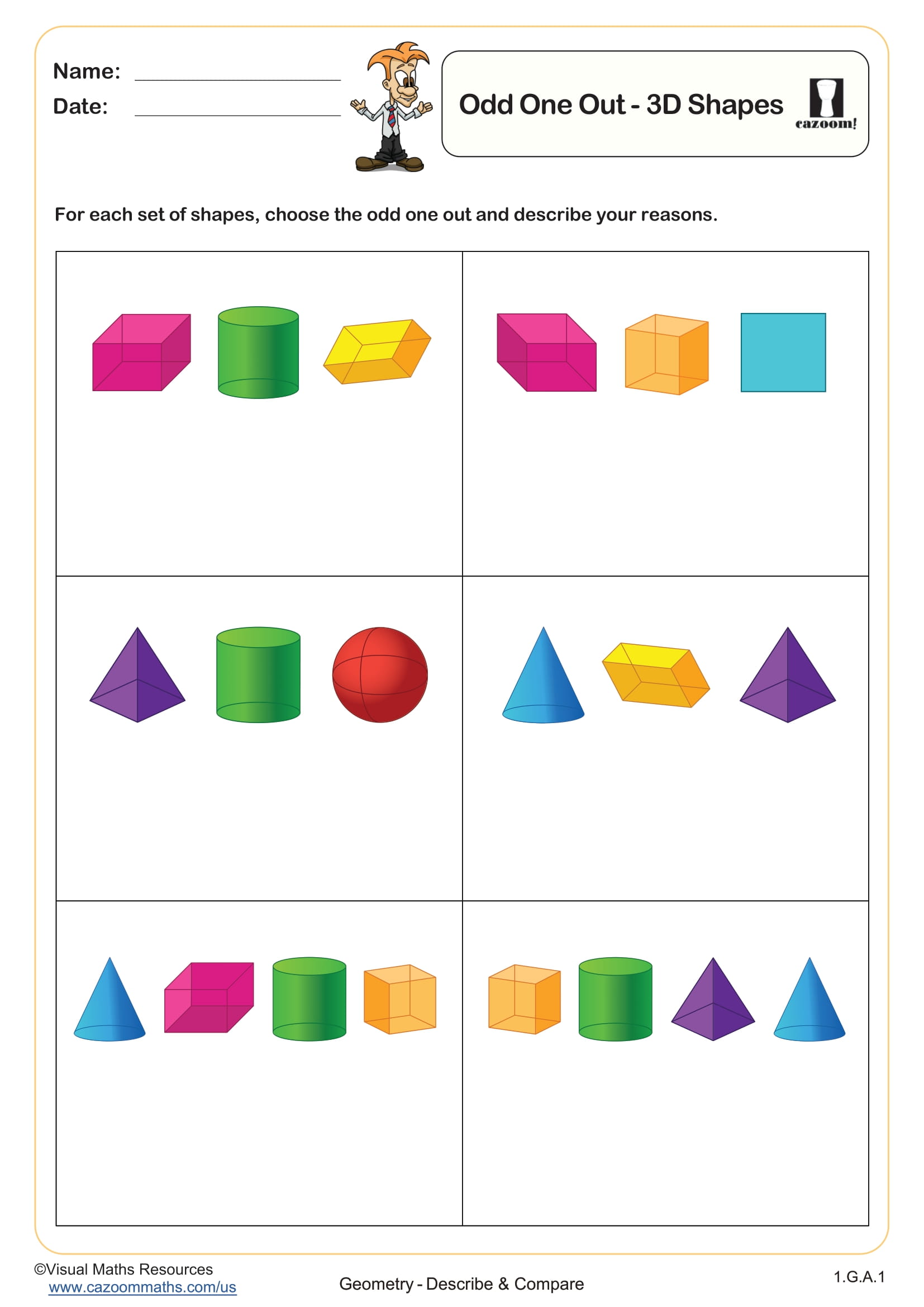
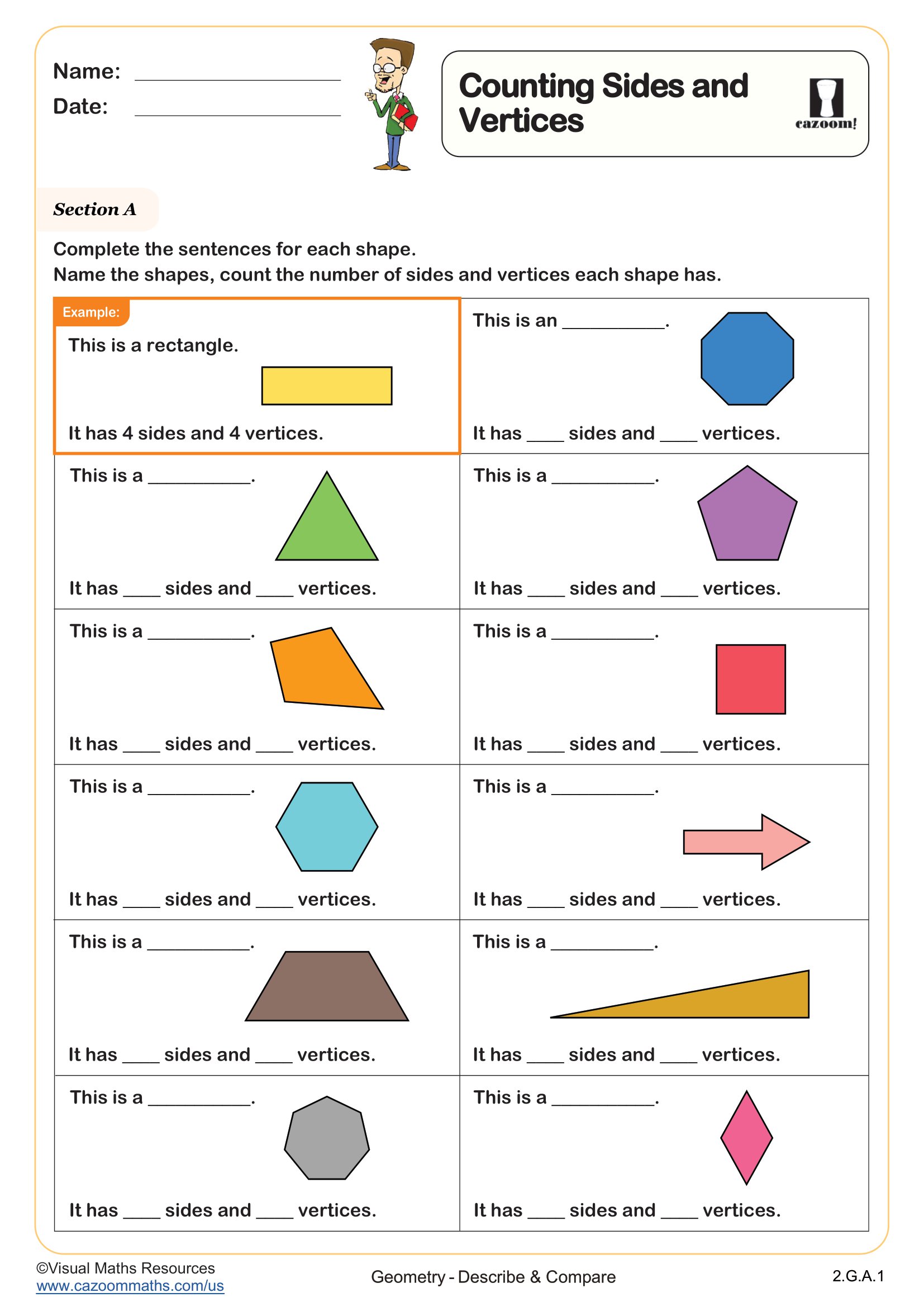
Counting Sides and Vertices
Grades: 2nd Grade
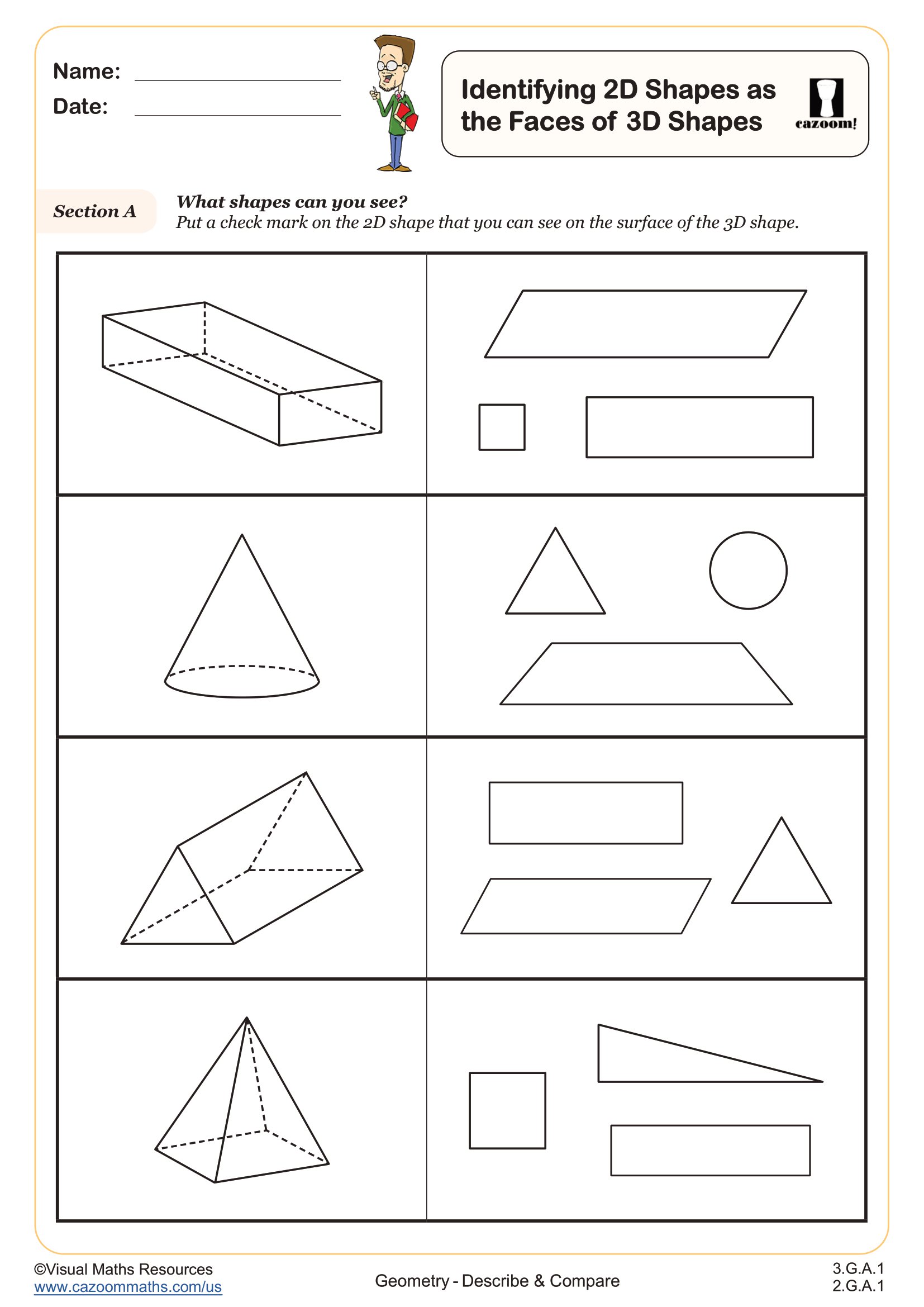
Identifying 2D Shapes as the Faces of 3D Shapes
Grades: 2nd Grade, 3rd Grade
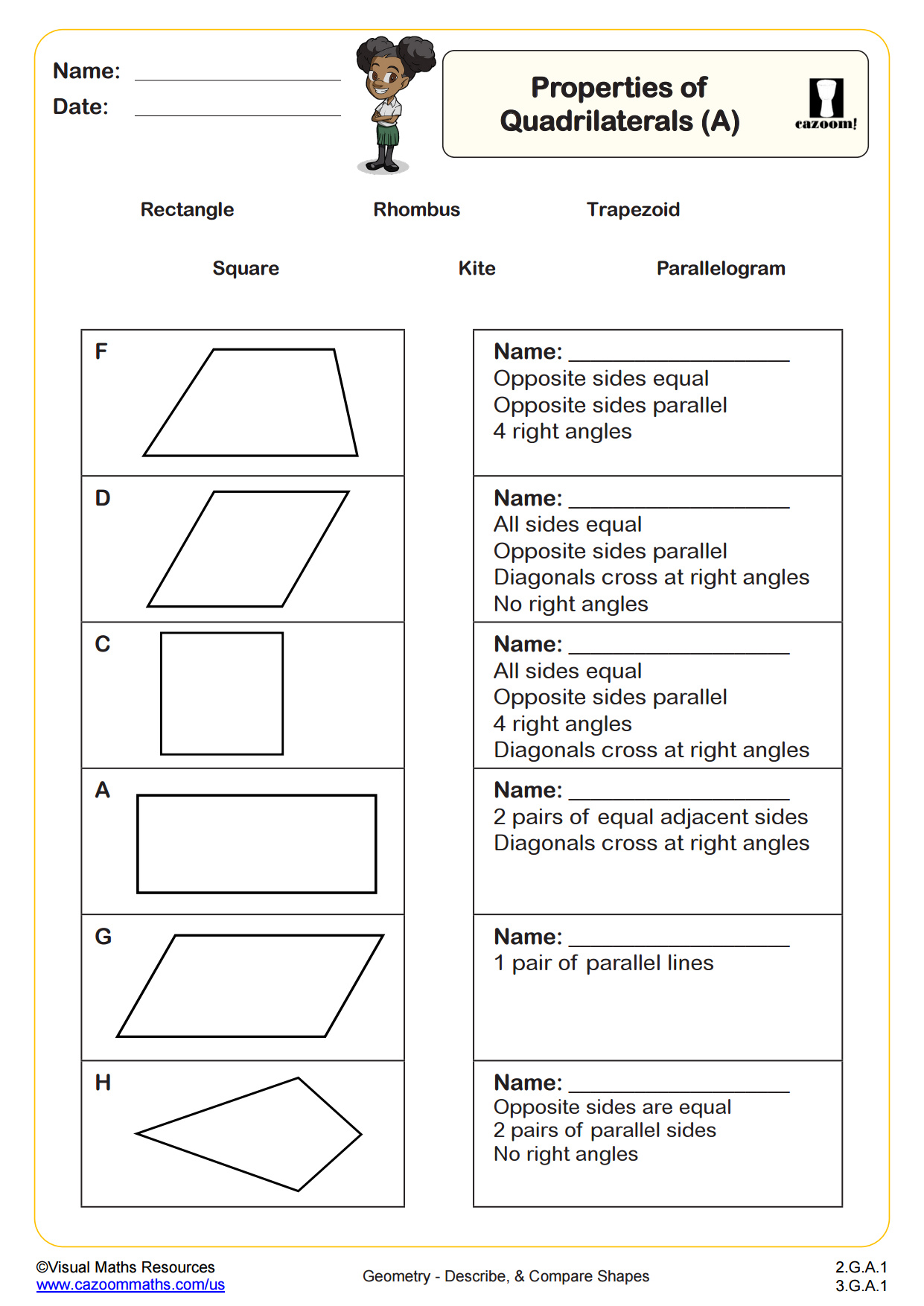
Properties of Quadrilaterals (A)
Grades: 2nd Grade, 3rd Grade
Properties of Quadrilaterals (B)
Grades: 2nd Grade, 3rd Grade
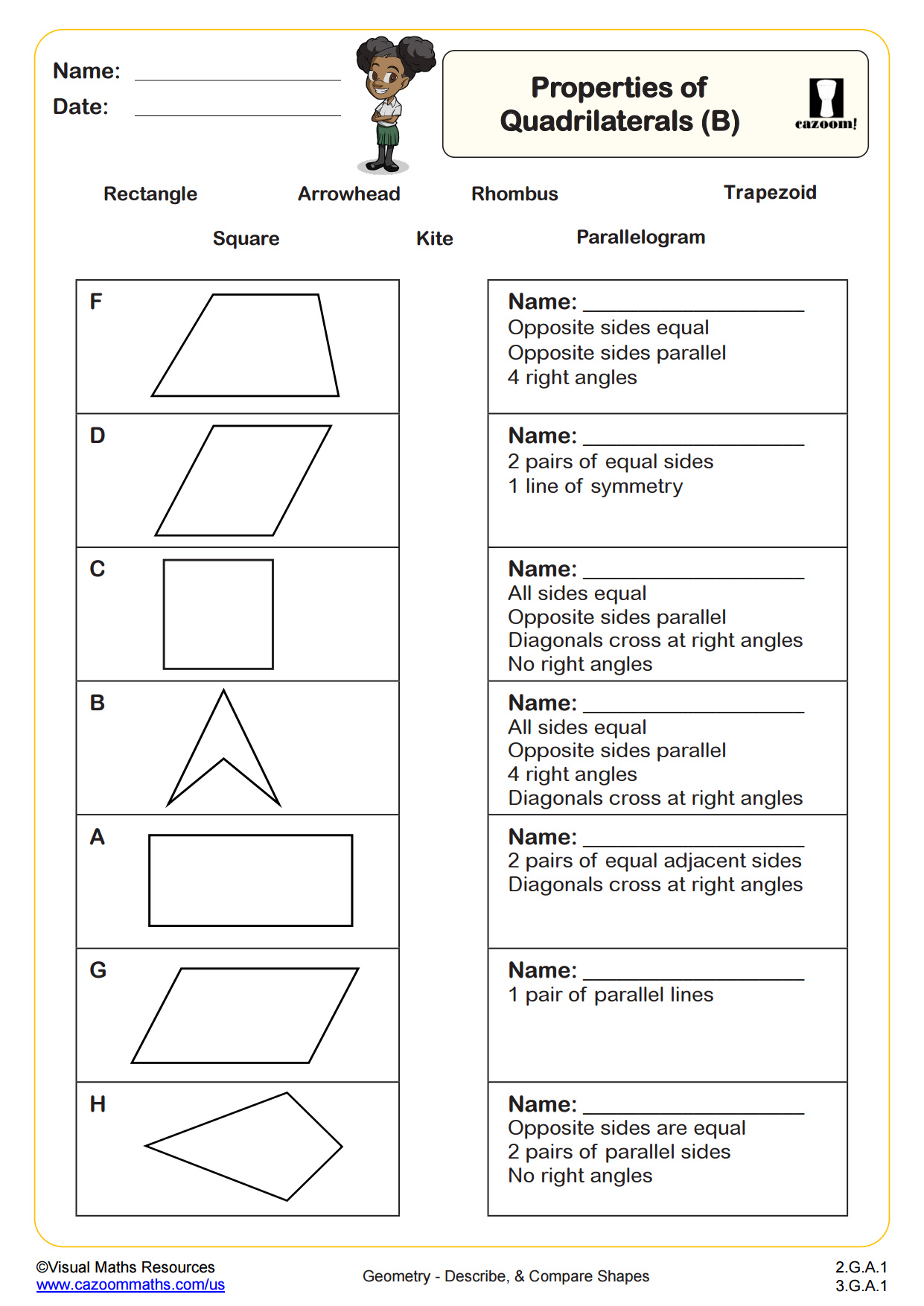
Properties of Quadrilaterals (C)
Grades: 2nd Grade, 3rd Grade
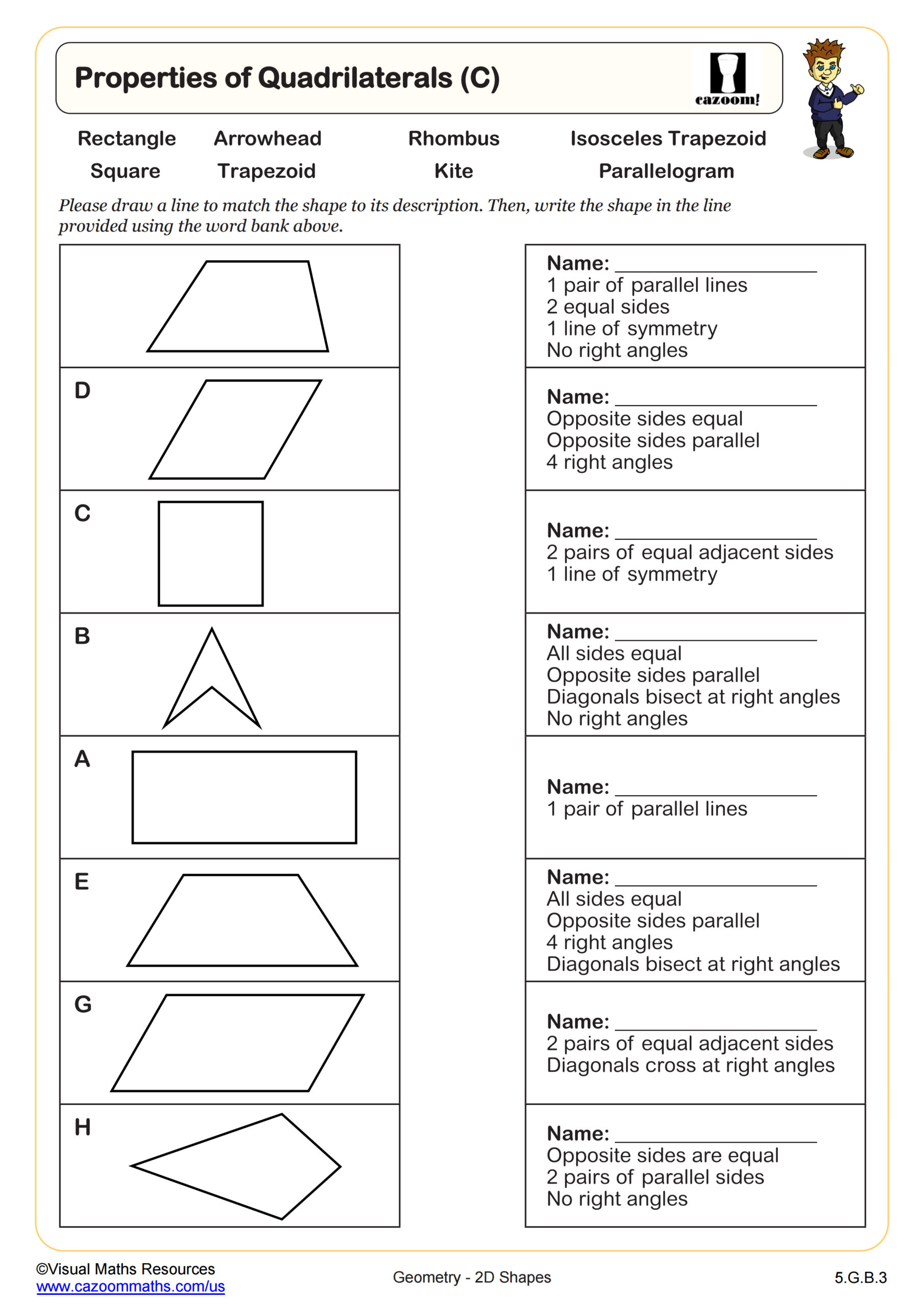
Properties of Quadrilaterals (Same and Different)
Grades: 2nd Grade, 3rd Grade
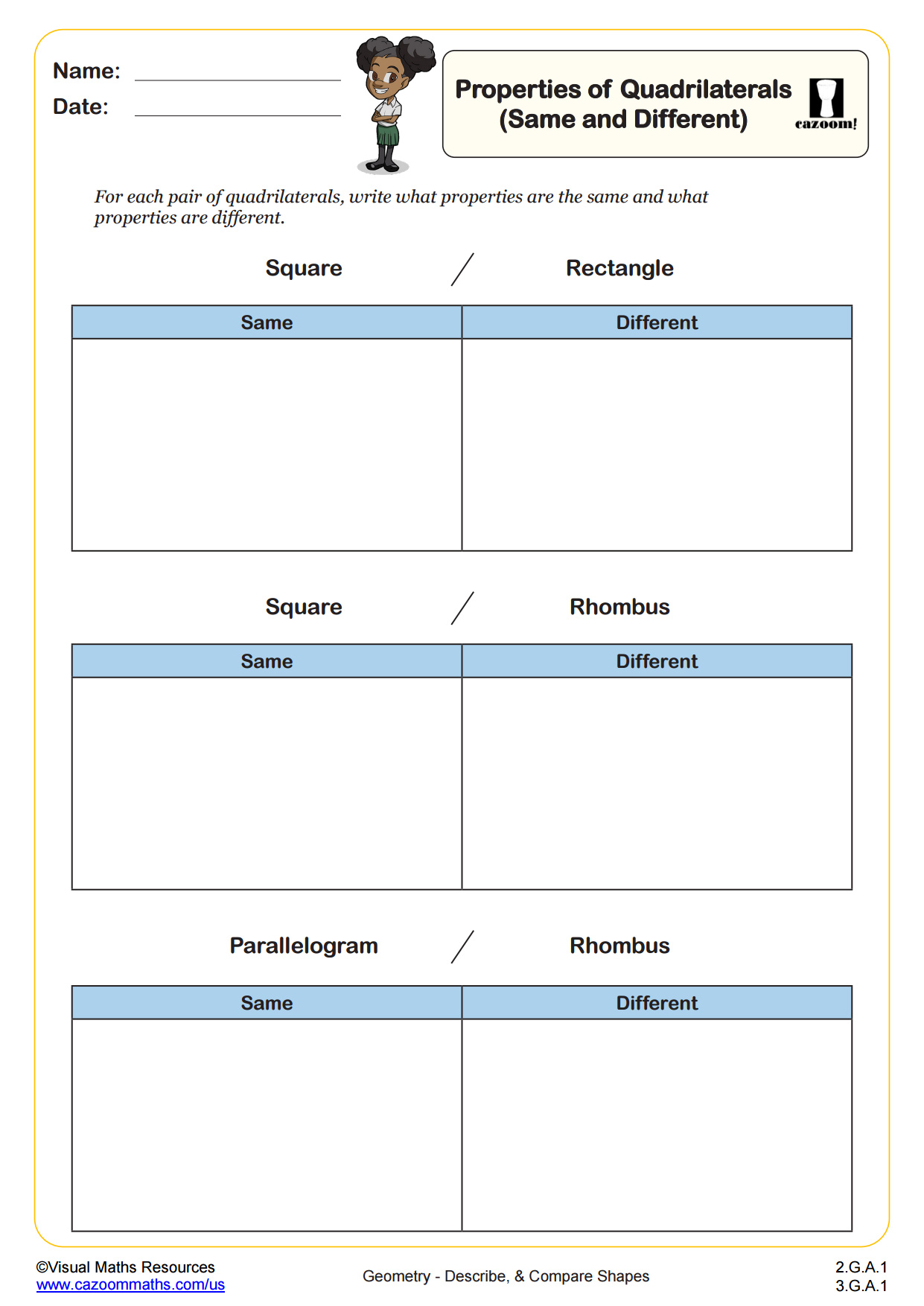
Properties of Quadrilaterals (Same and Different) (with clues)
Grades: 2nd Grade, 3rd Grade
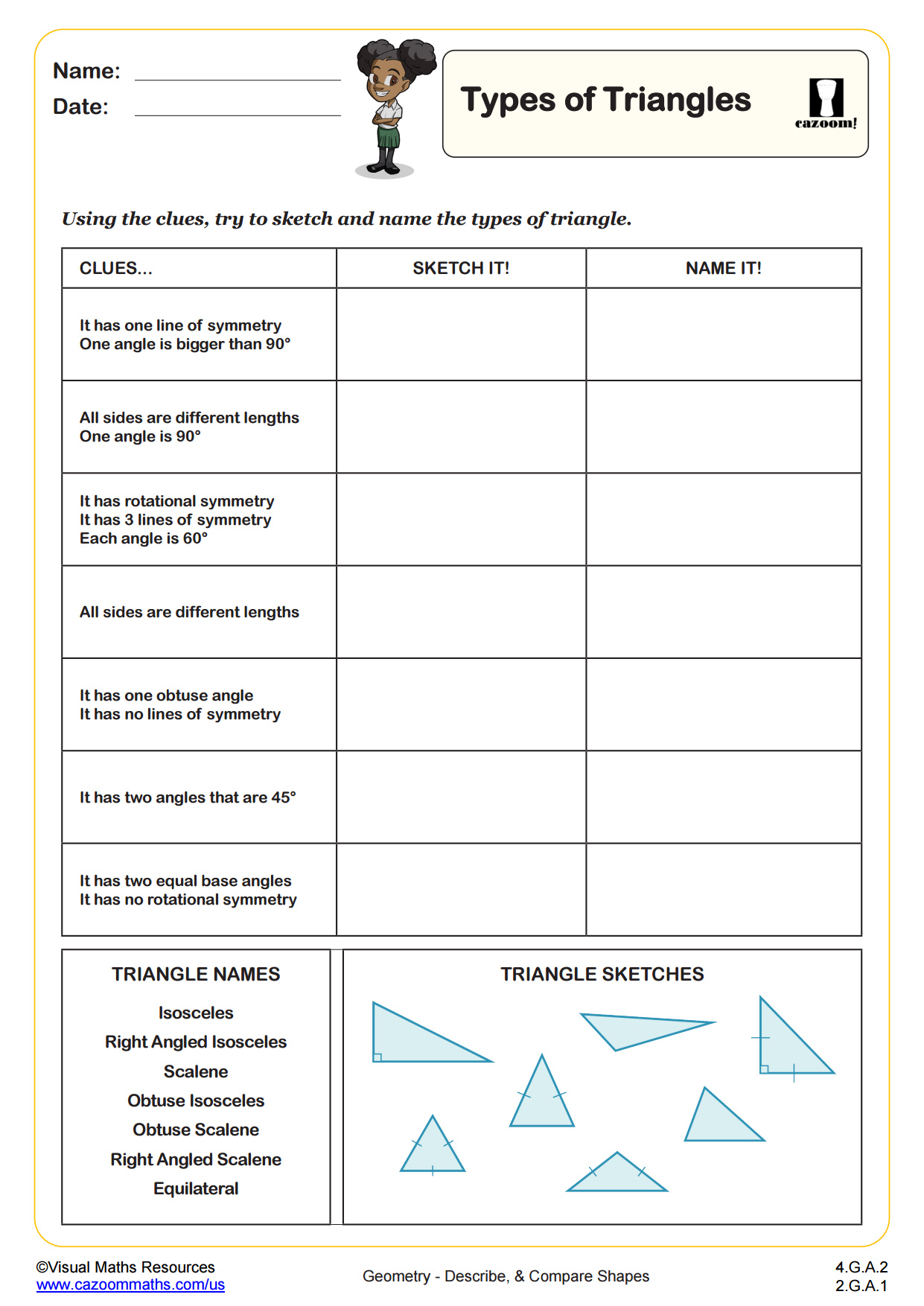
Types of Triangles
Grades: 2nd Grade, 4th Grade
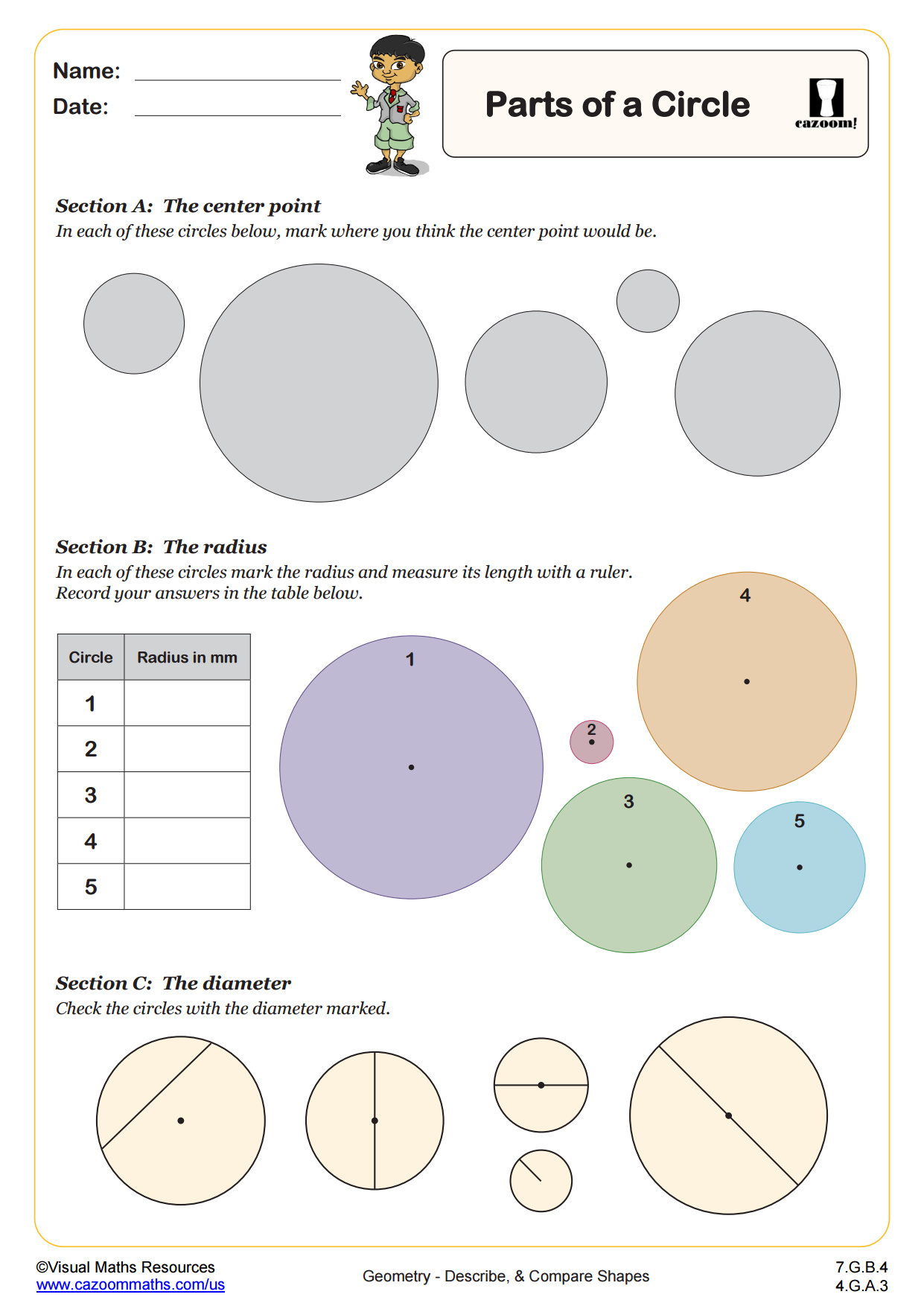
Parts of a Circle
Grades: 4th Grade, 7th Grade
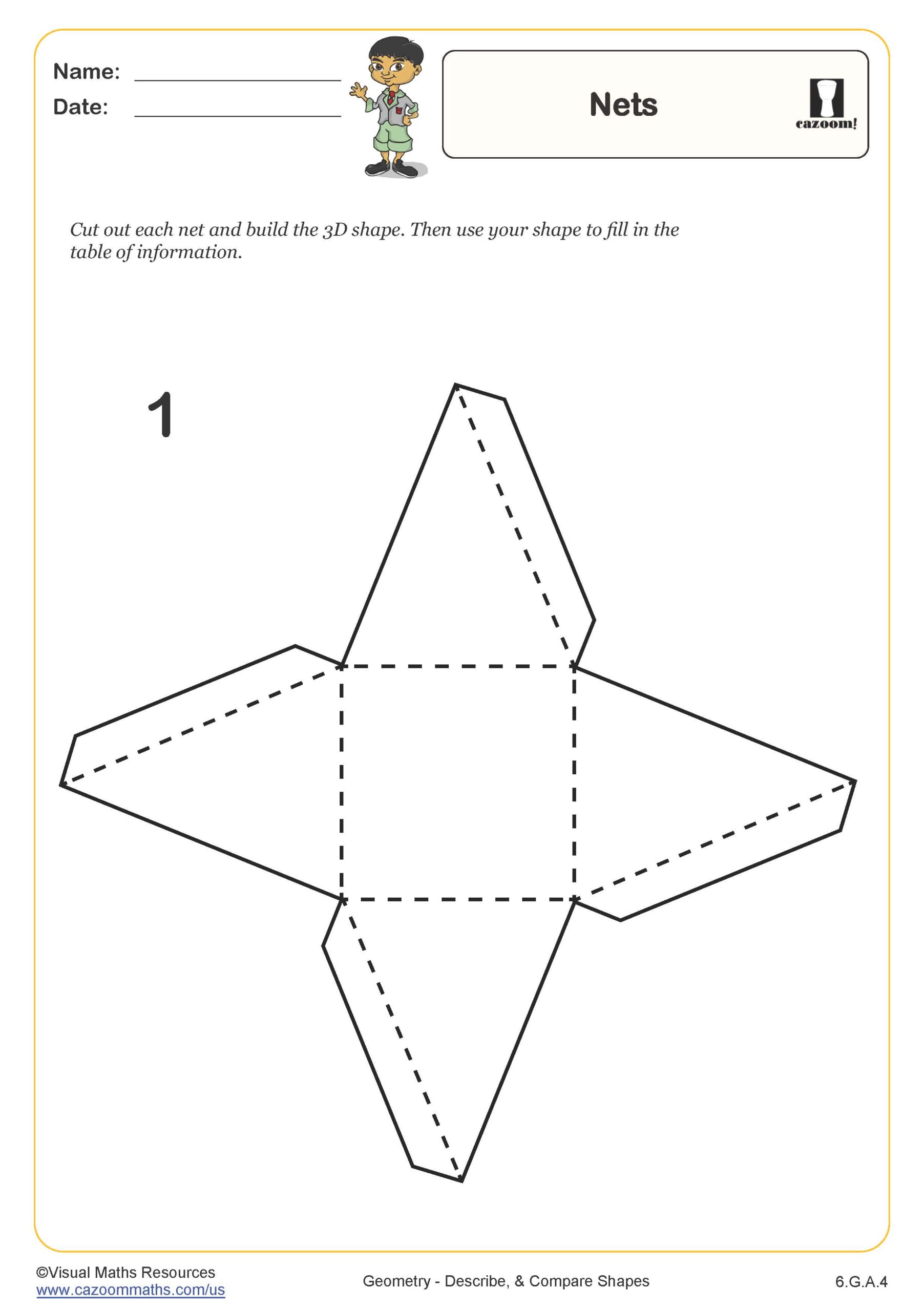
Nets
Grades: 6th Grade
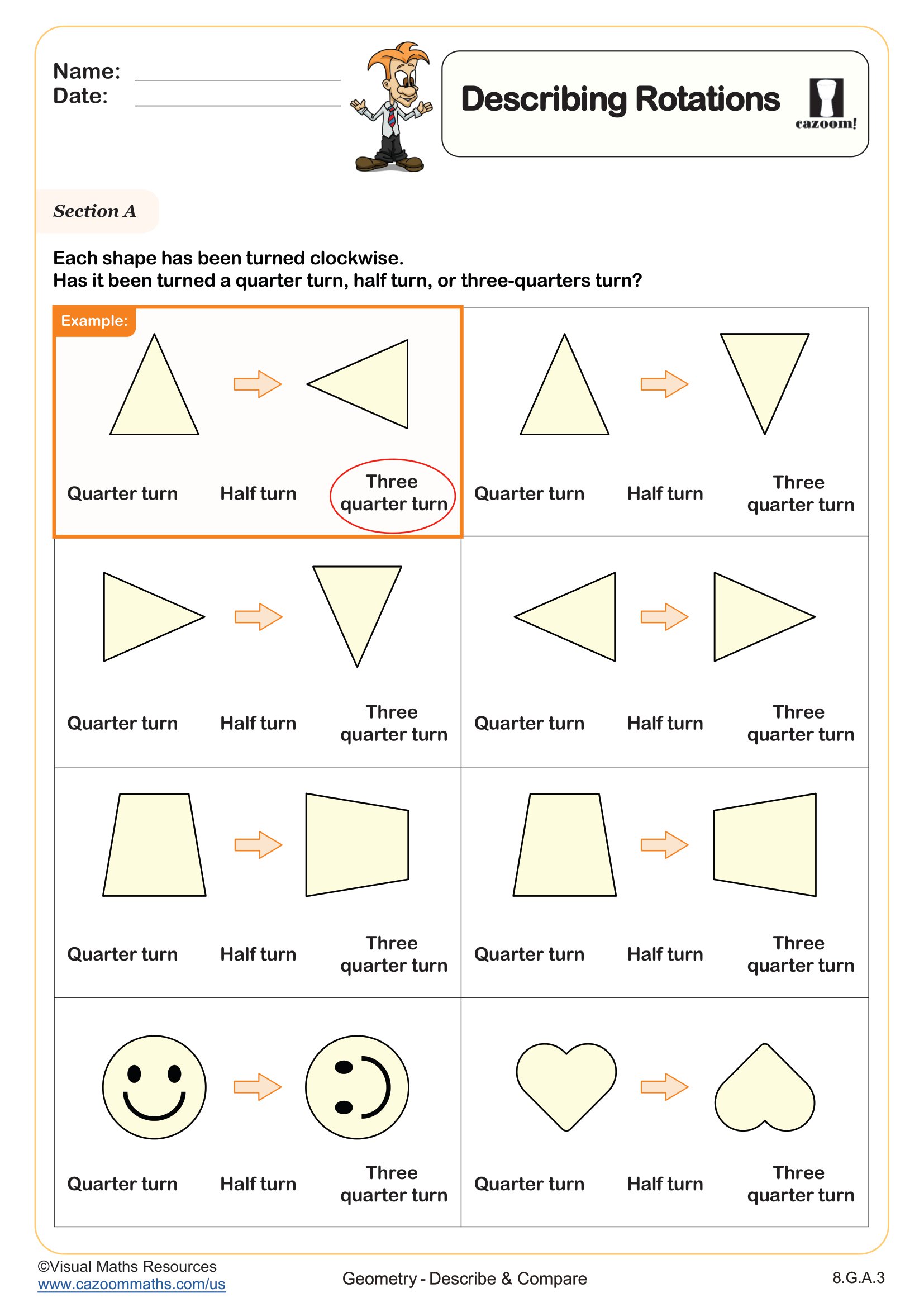
Describing Rotations
Grades: 8th Grade
All worksheets are created by the team of experienced teachers at Cazoom Math.
What makes a comparing shapes worksheet effective for student learning?
An effective comparing shapes worksheet should guide students through systematic analysis of geometric attributes rather than superficial visual comparisons. The best activities prompt students to examine specific properties like the number of sides, types of angles, parallel lines, and symmetry, aligning with Common Core geometry standards across elementary and middle grades.
Teachers frequently observe that students rush through shape comparisons by only looking at size or orientation differences. Quality worksheets include comparison charts and structured questioning that forces students to slow down and consider multiple geometric properties simultaneously, preventing the common error of incomplete analysis.
Which grade levels benefit most from comparing shapes activities?
Shape comparison activities span from kindergarten through middle school, with complexity increasing at each level. Early elementary students focus on basic attributes like counting sides and identifying shapes, while upper elementary students analyze more sophisticated properties like angle types and line relationships. Middle school students extend this to coordinate geometry and transformations.
The progression typically starts with sorting triangles by side length in second grade, advances to comparing quadrilaterals by angle properties in fourth grade, and culminates with analyzing congruence and similarity in middle school. Teachers notice that students who master systematic shape comparison early show stronger performance in high school geometry proofs.
How do students learn to identify key differences between similar shapes?
Students develop discrimination skills through guided practice that highlights specific geometric attributes. Effective instruction teaches students to create comparison matrices, listing properties like side lengths, angle measures, and special characteristics for each shape being analyzed. This systematic approach prevents students from making hasty visual judgments.
Many teachers observe that students struggle most when comparing shapes that look similar but have different mathematical properties, such as rectangles versus parallelograms. Worksheets that include near-miss examples and require students to justify their reasoning help develop the precision needed for advanced geometric thinking and proof writing.
What classroom strategies work best when using these comparison worksheets?
Teachers find success using a think-pair-share approach where students first work individually, then discuss their comparisons with partners before sharing with the class. This structure allows students to verbalize their geometric reasoning and learn from different analytical approaches. Having manipulatives available helps kinesthetic learners physically explore shape properties.
Classroom observations show that students benefit from sentence starters and vocabulary scaffolds when explaining shape comparisons. Teachers often post geometric vocabulary and comparison phrases on word walls, helping students articulate their mathematical thinking more precisely. The answer keys become valuable discussion tools when students compare their reasoning processes.
Requisite Knowledge Before Learning Shape Comparison
Before using these worksheets, students should be able to recognize and name basic 2D shapes like circles, squares, and triangles. They should also be able to count objects and understand words like “big,” “small,” “more,” and “less.” Knowing how to match and sort by color or size helps, too. Our worksheets support these early math skills and gently build toward shape recognition and comparison.