Division Worksheets With Answers
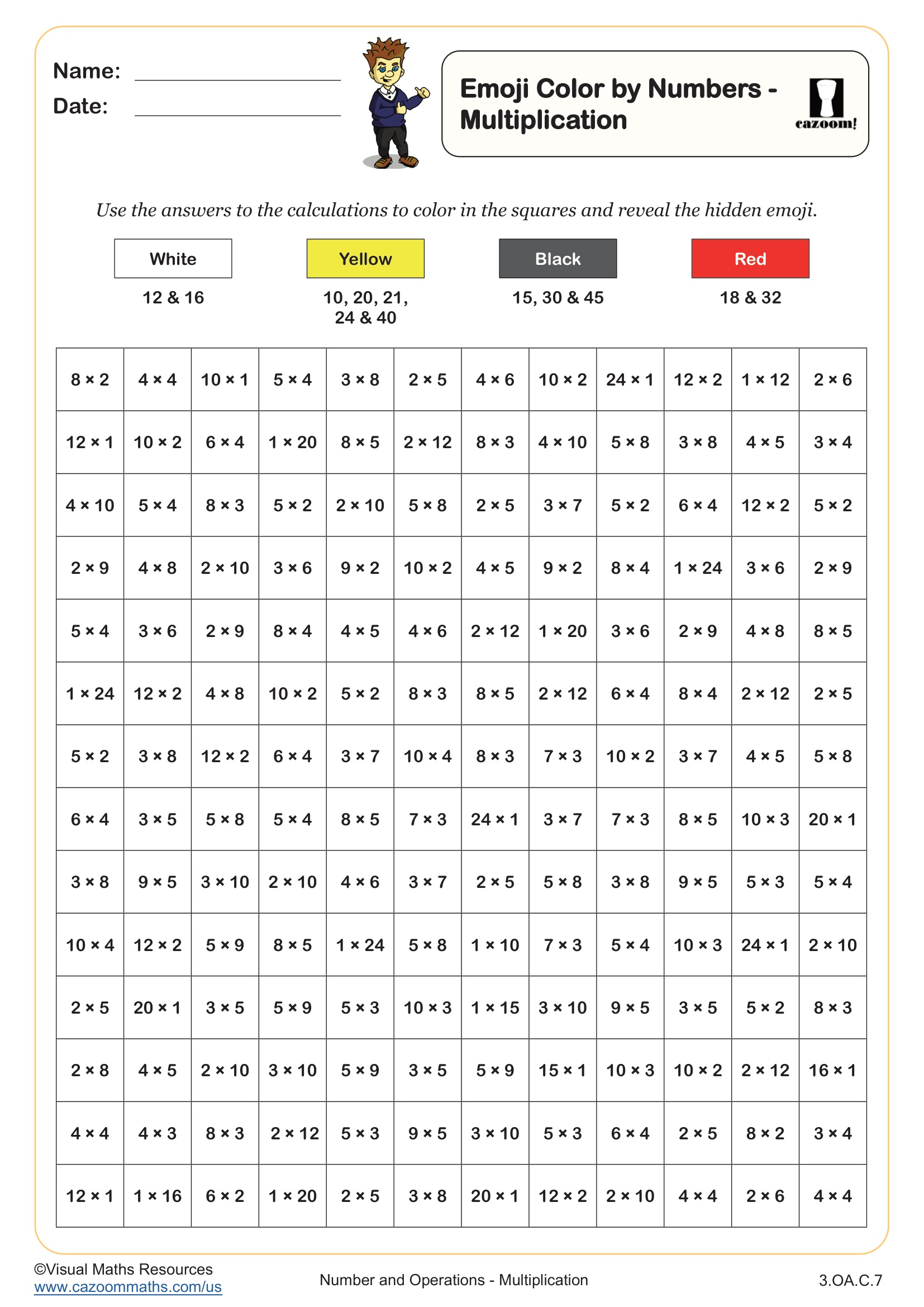
Emoji Colour by Numbers - Multiplication
Grades: 3rd Grade
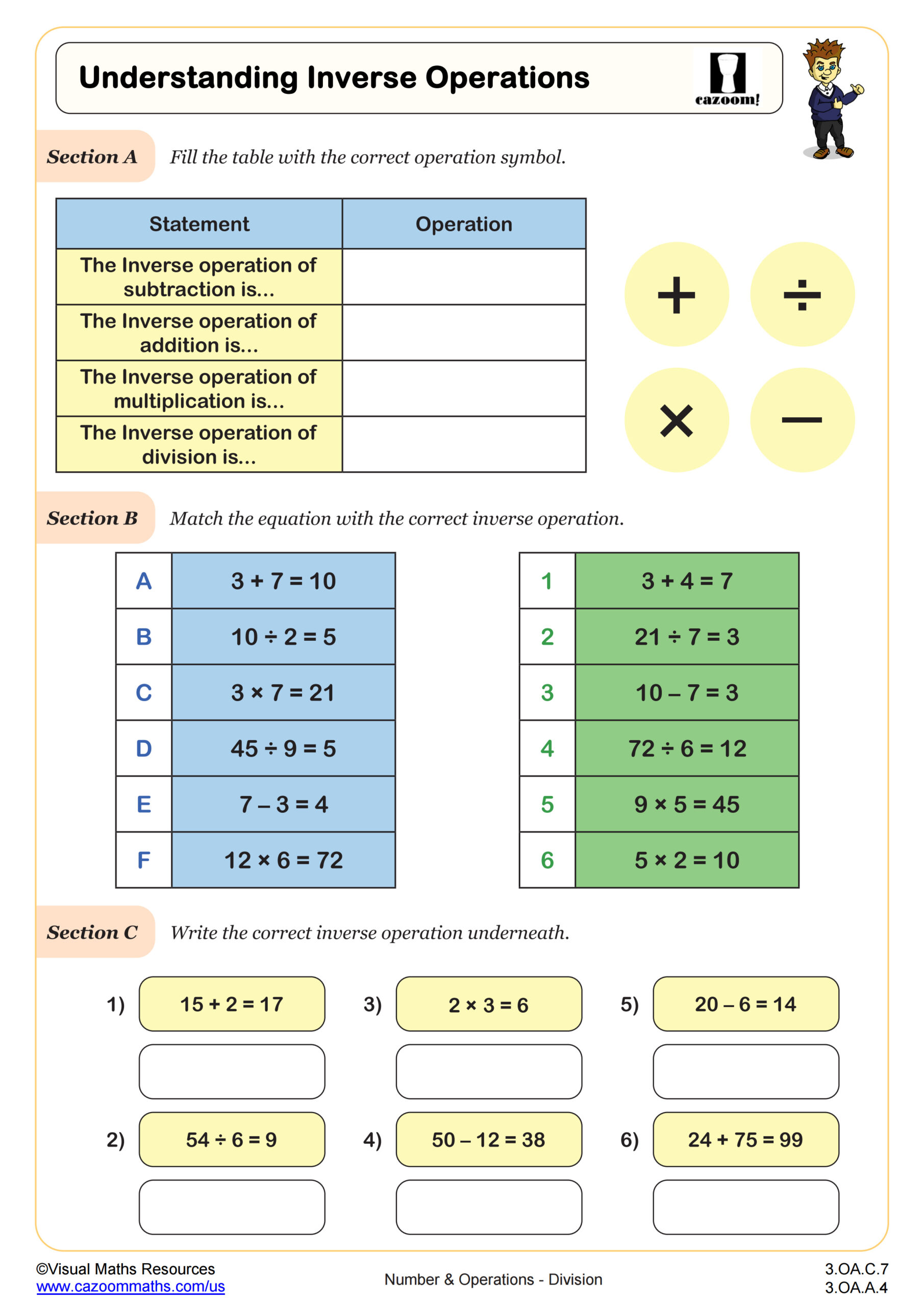
Understanding Inverse Operations
Grades: 3rd Grade
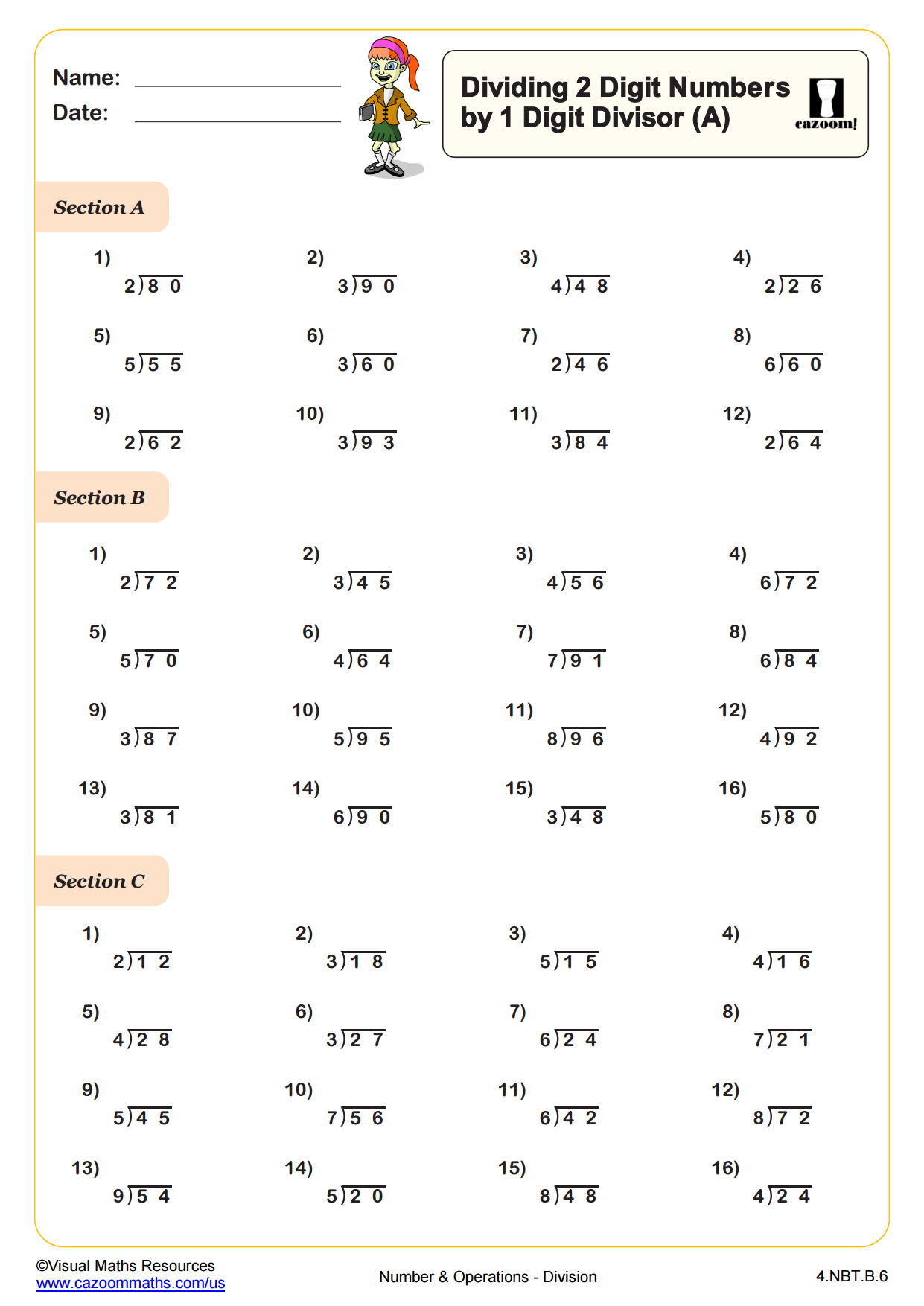
Dividing 2 Digit Numbers by 1 Digit Divisors (A)
Grades: 4th Grade
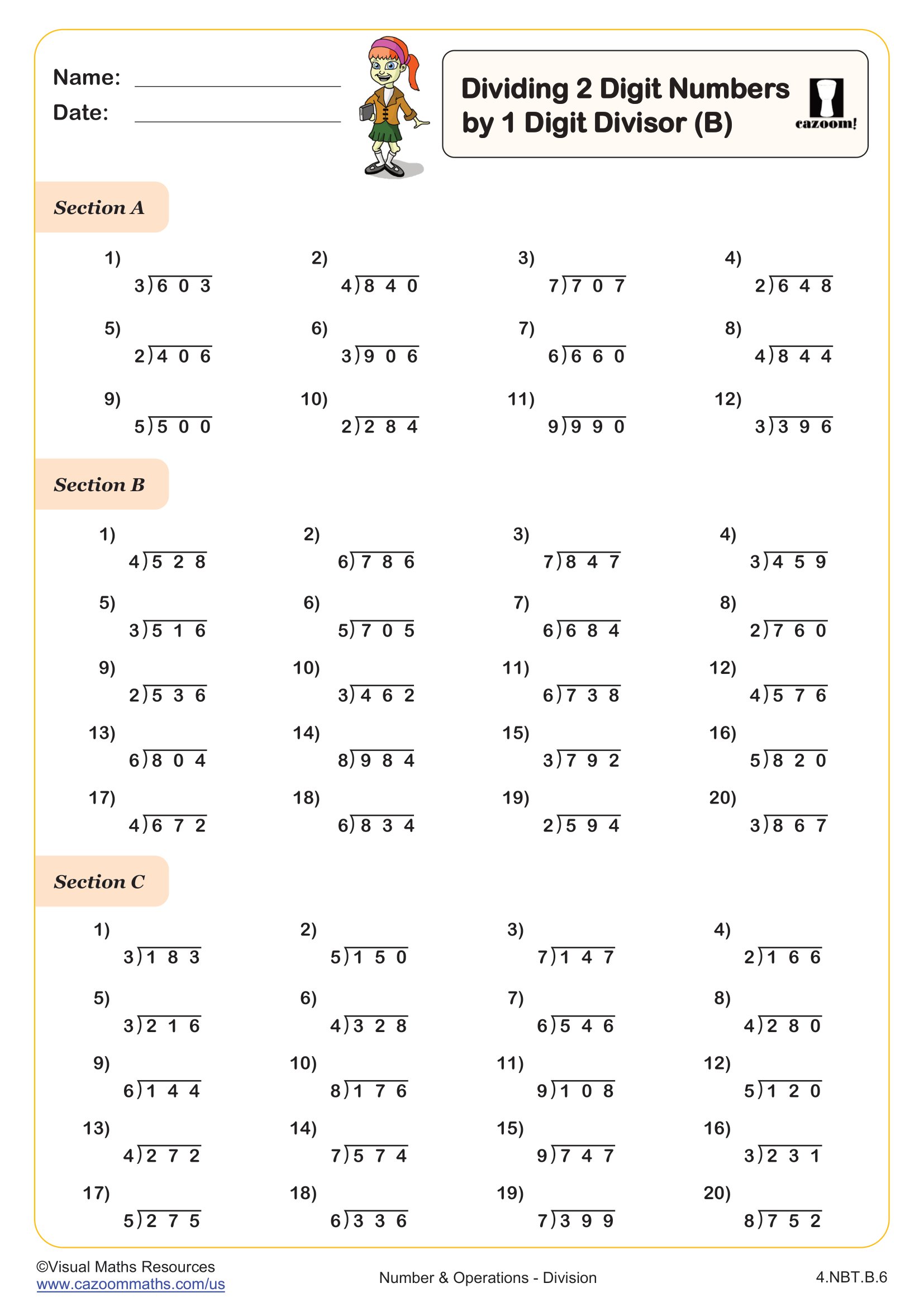
Dividing 2 Digit Numbers by 1 Digit Divisors (B)
Grades: 4th Grade
Dividing 2,3 and 4 Digit Numbers by 1 Digit Divisors (C)
Grades: 4th Grade
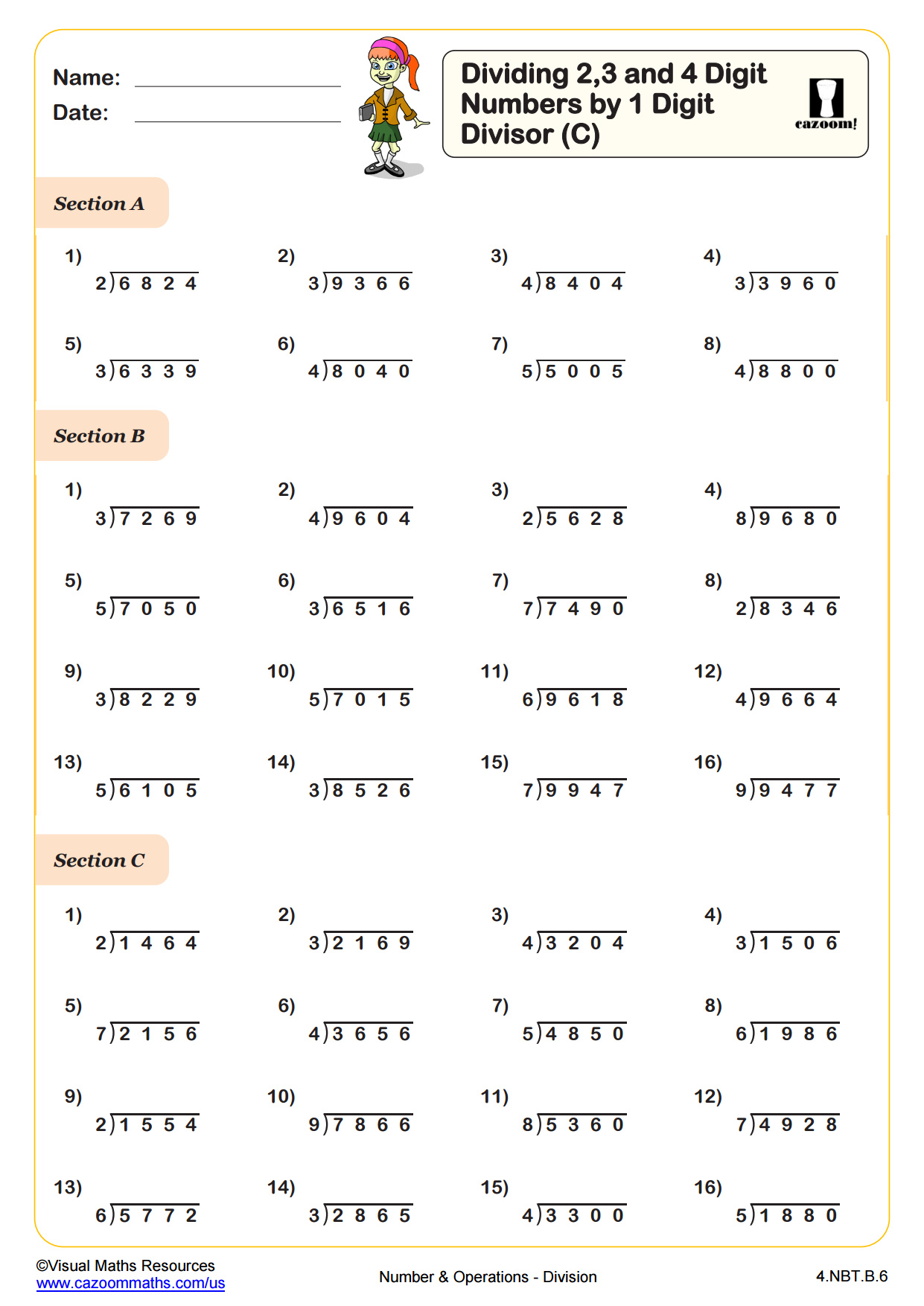
Dividing 4 Digit Numbers by 1 Digit Divisors (D)
Grades: 4th Grade
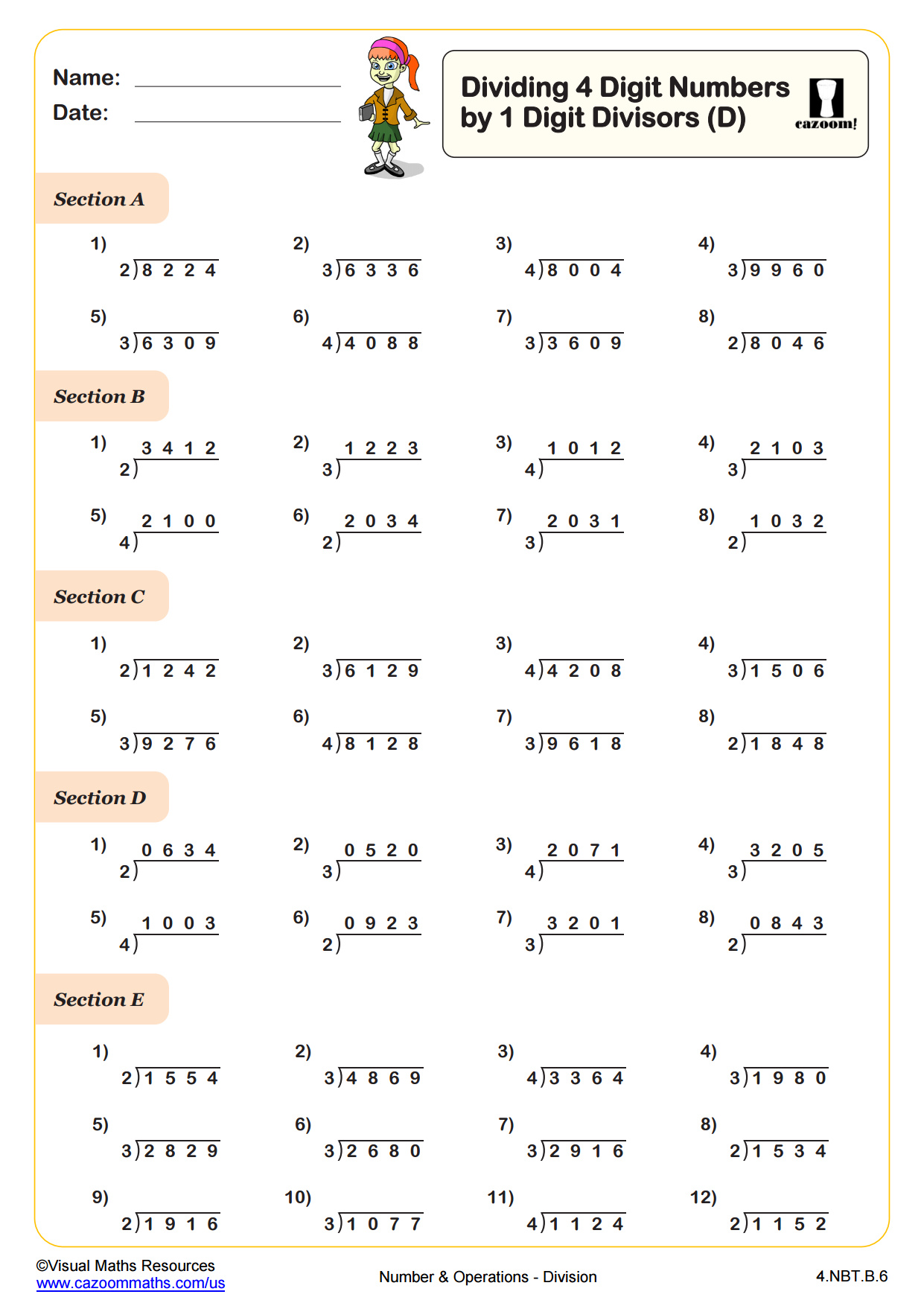
Dividing with One and Two Digit Divisors (A)
Grades: 4th Grade, 6th Grade
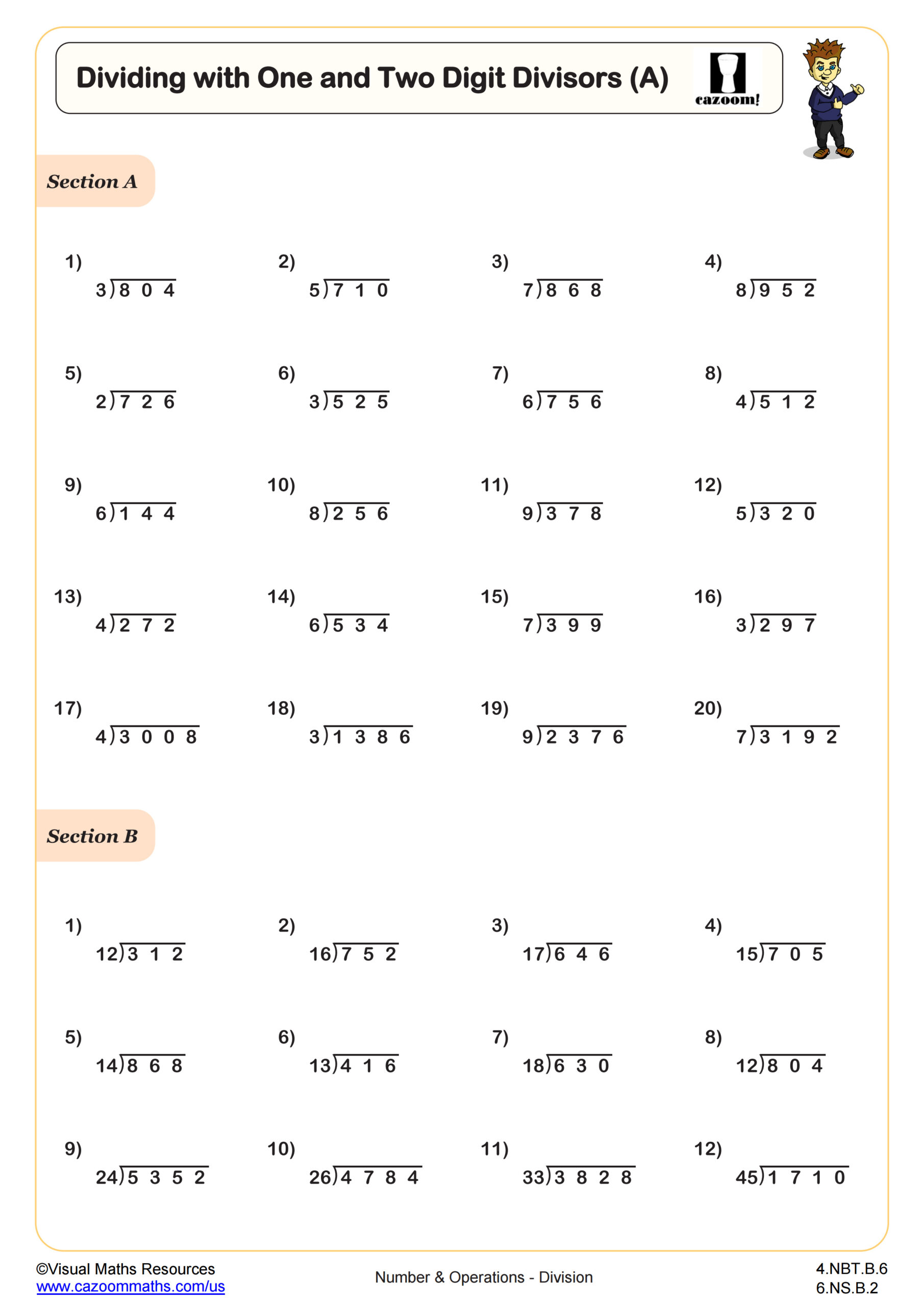
Dividing with One and Two Digit Divisors (B)
Grades: 4th Grade, 6th Grade
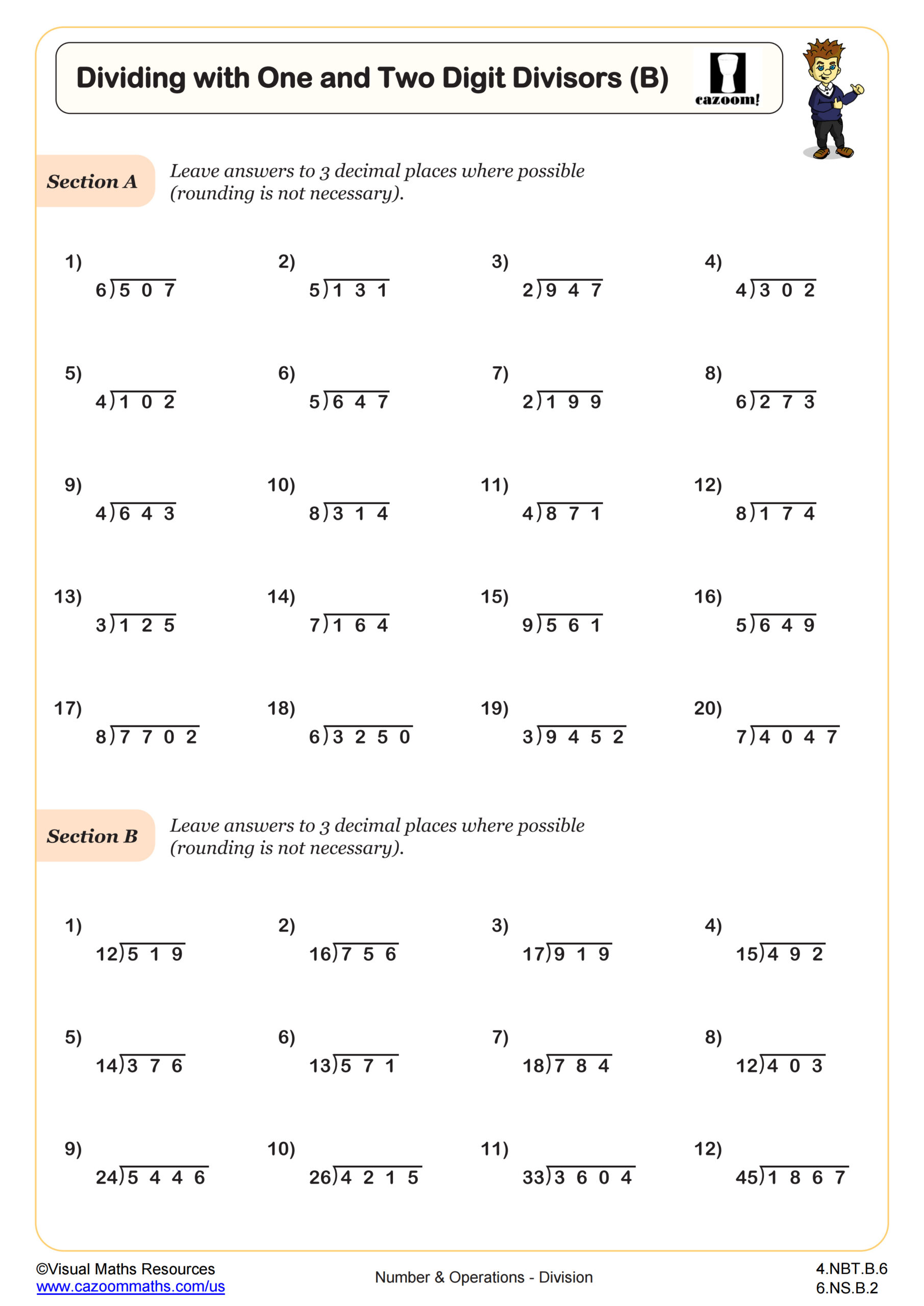
Divisibility Rules (A): 2, 3, 4, 5, 8 & 10
Grades: 4th Grade
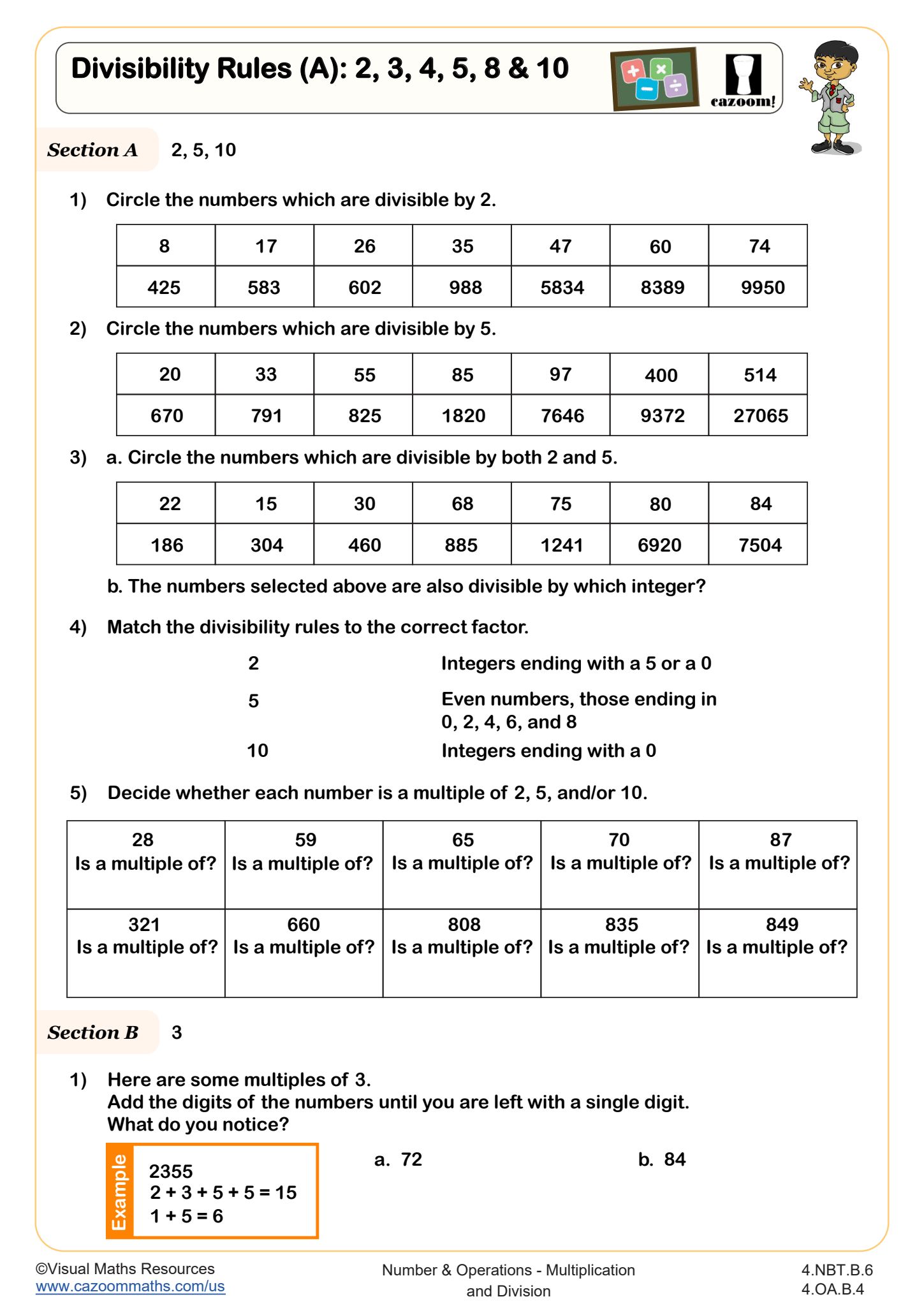
Division A (No Remainders)
Grades: 4th Grade, 5th Grade
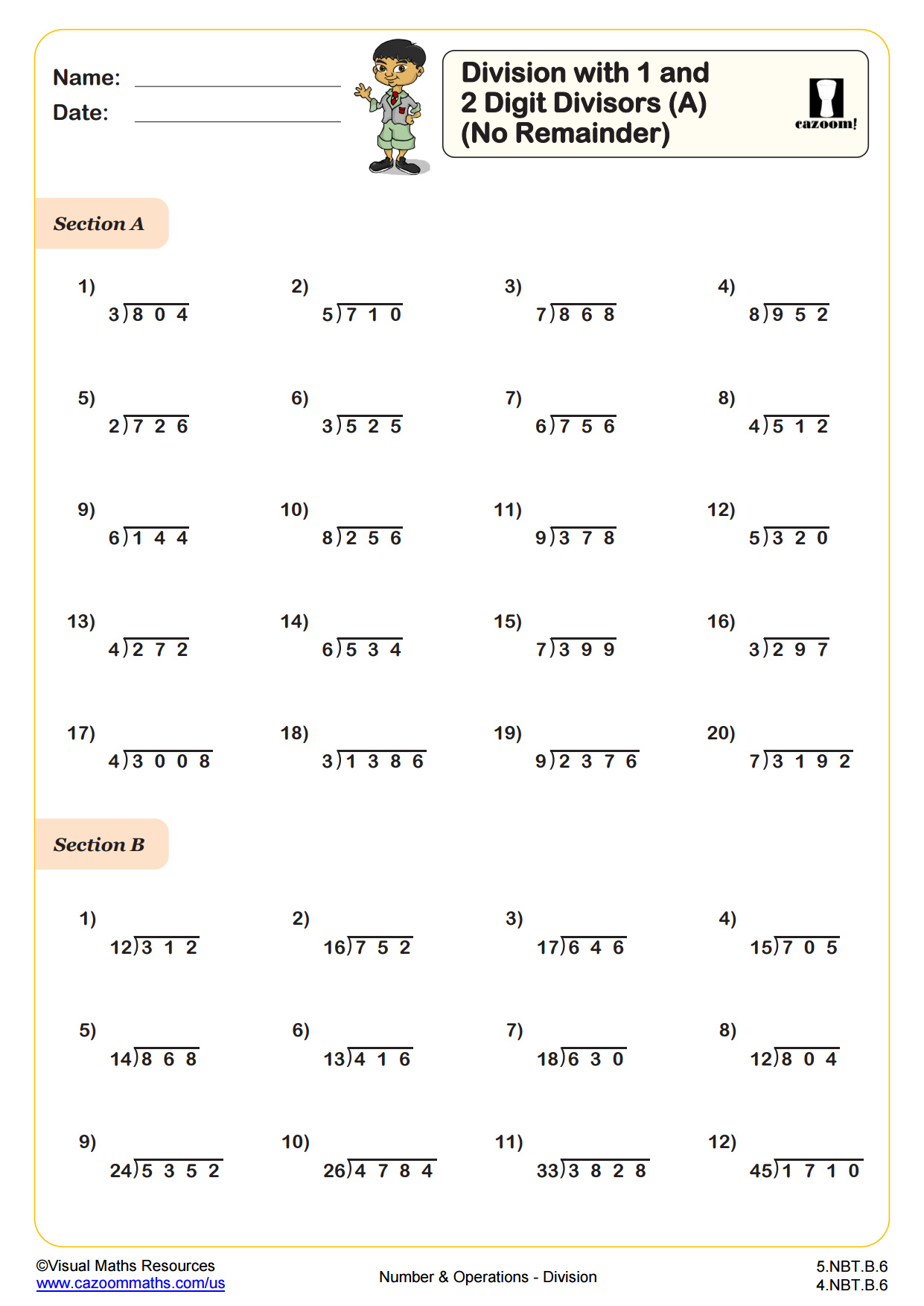
Divide 1 and 2 Digit Numbers by 100
Grades: 5th Grade
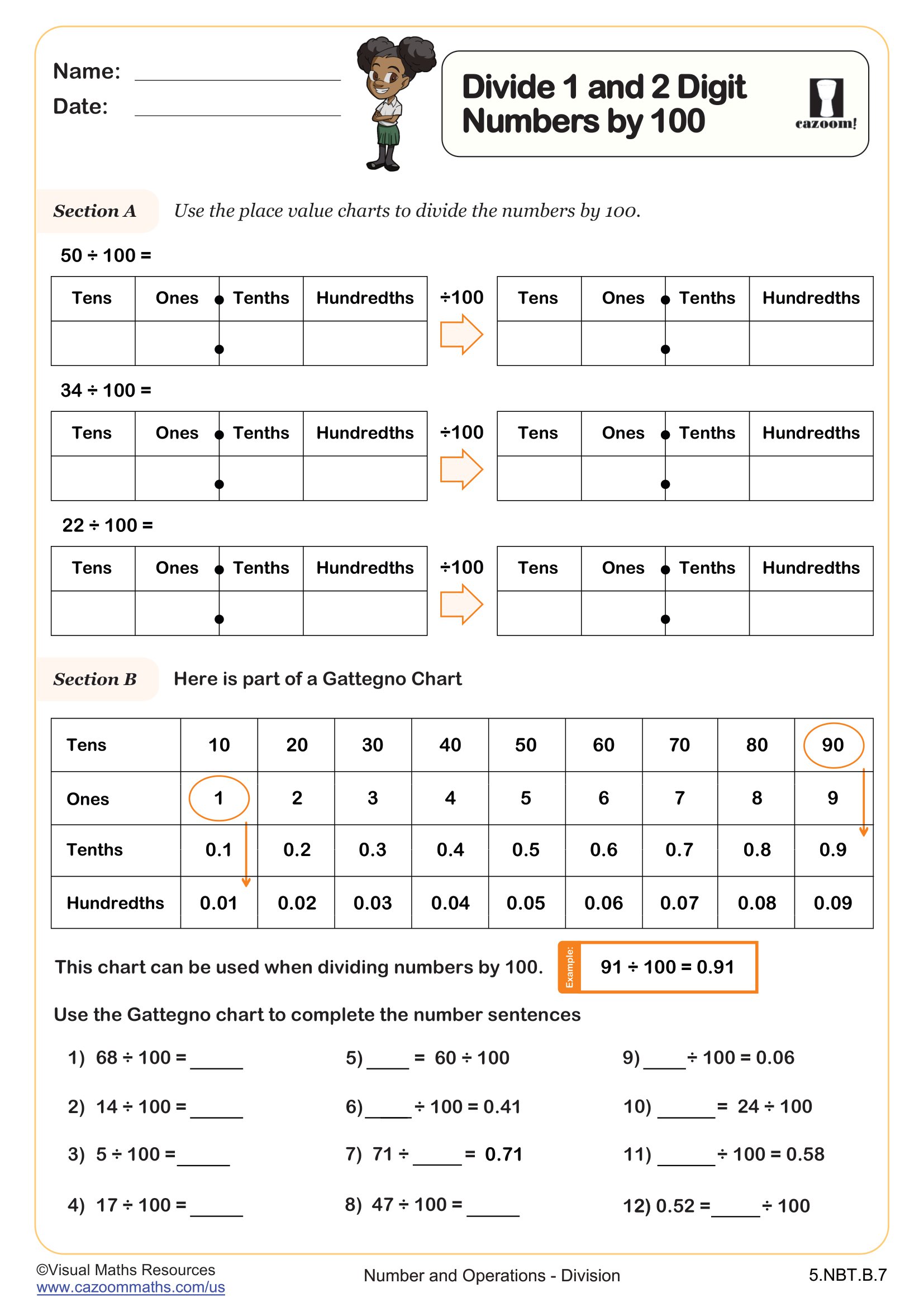
Divide Decimals by Integers (B)
Grades: 5th Grade, 6th Grade
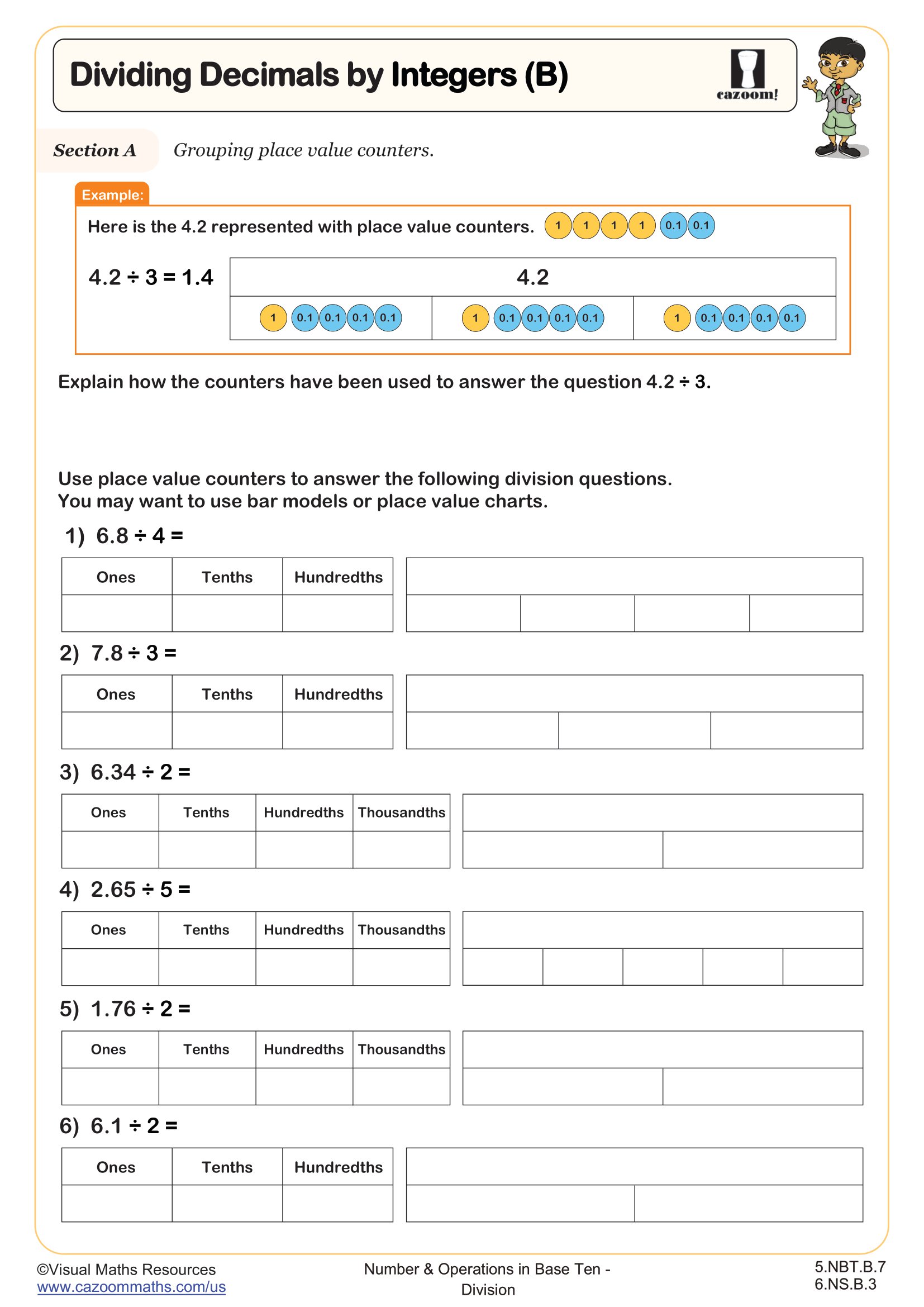
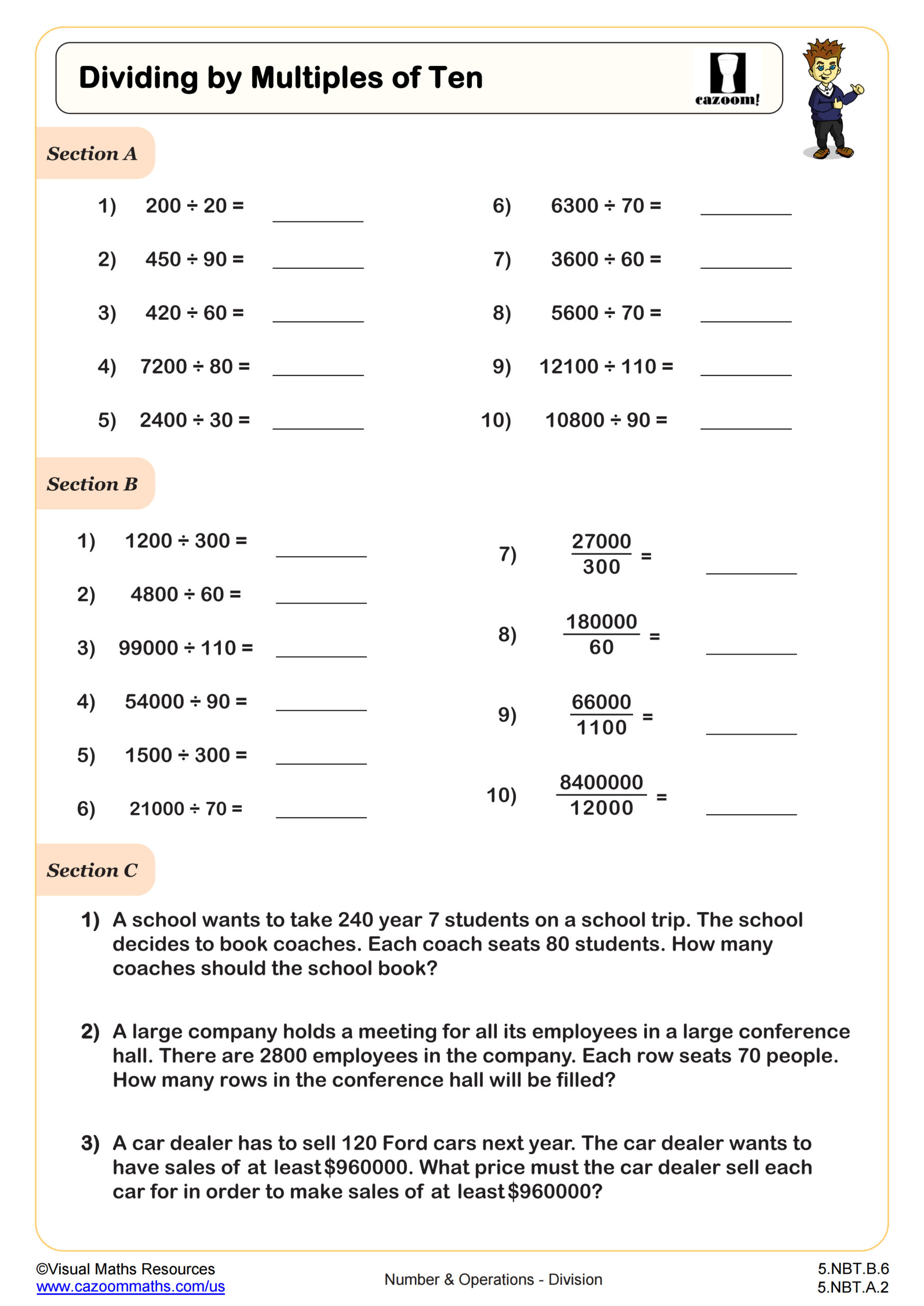
Dividing by Multiples of Ten
Grades: 5th Grade
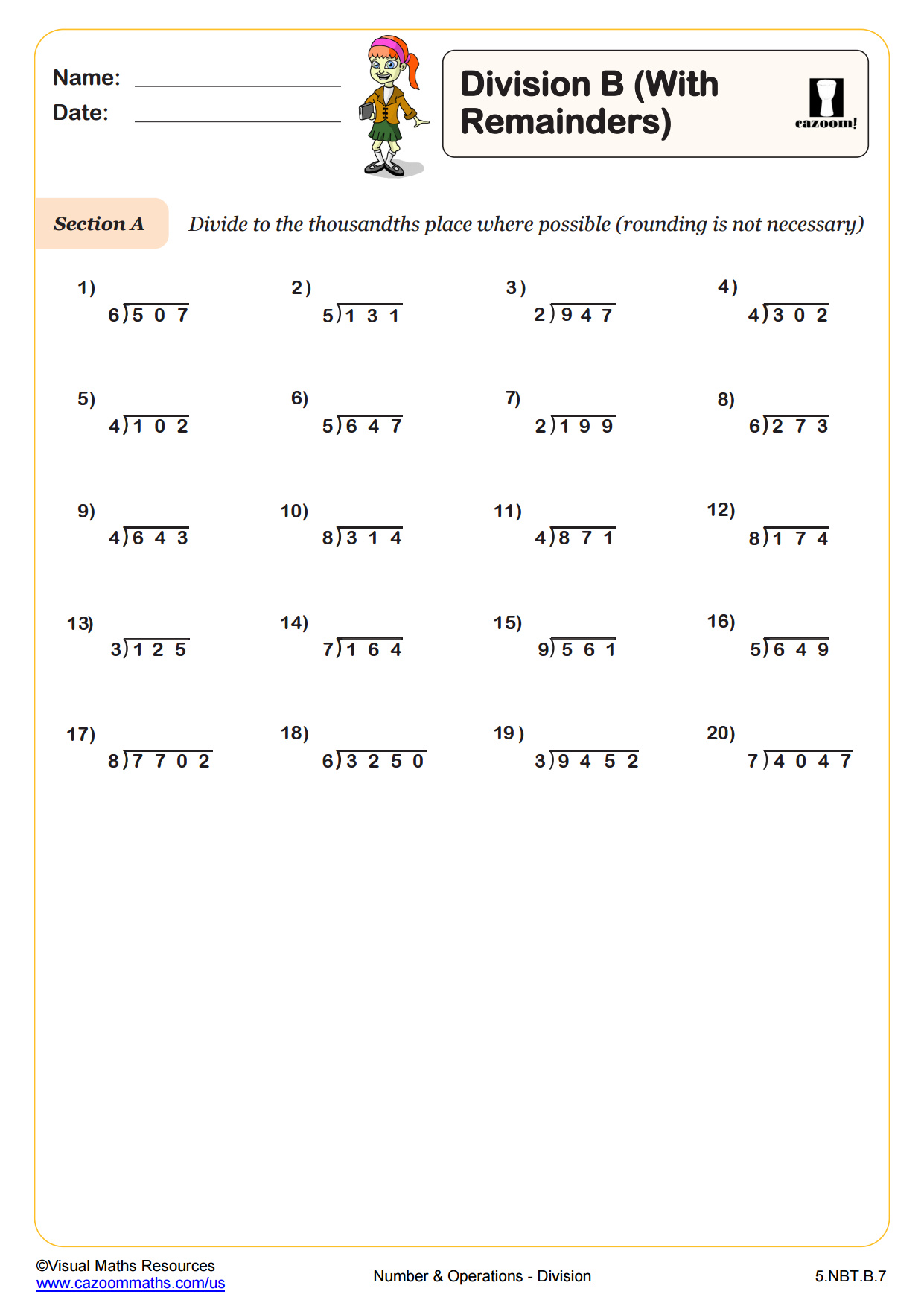
Division B (With Remainders)
Grades: 5th Grade
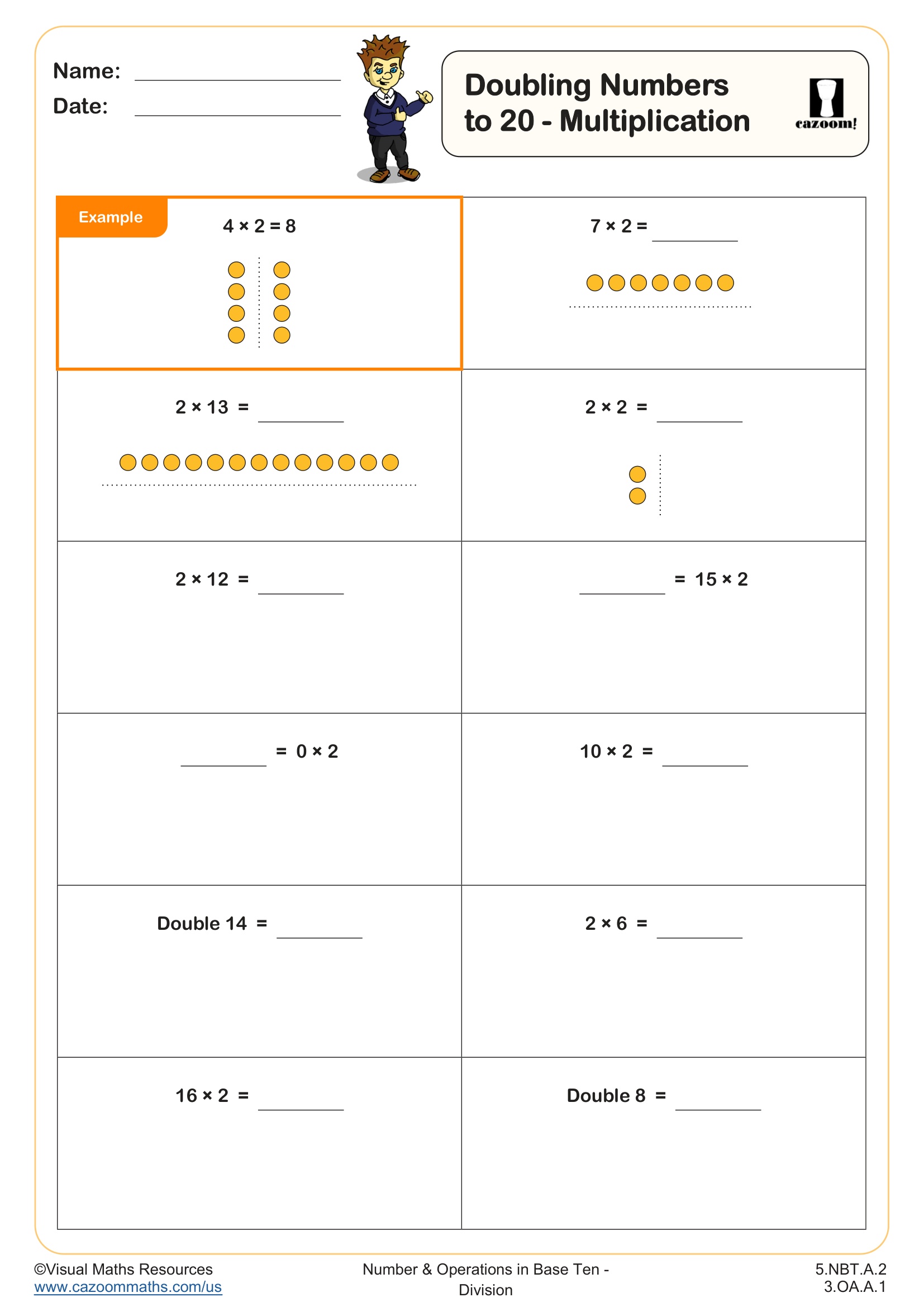
Doubling Numbers to 20 Multiplication
Grades: 5th Grade
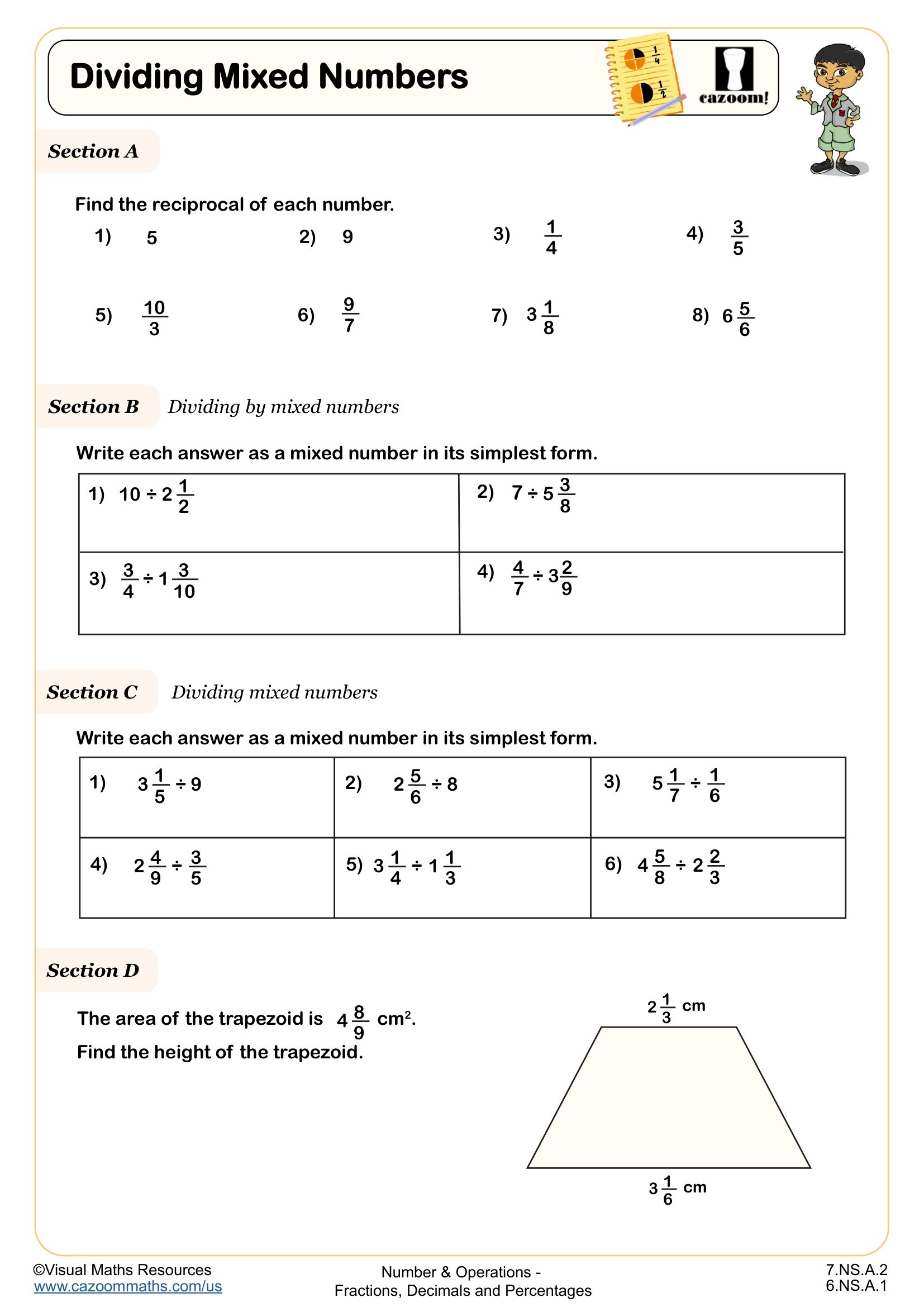
Dividing Mixed Numbers
Grades: 6th Grade, 7th Grade
Squaring Numbers
Grades: 8th Grade
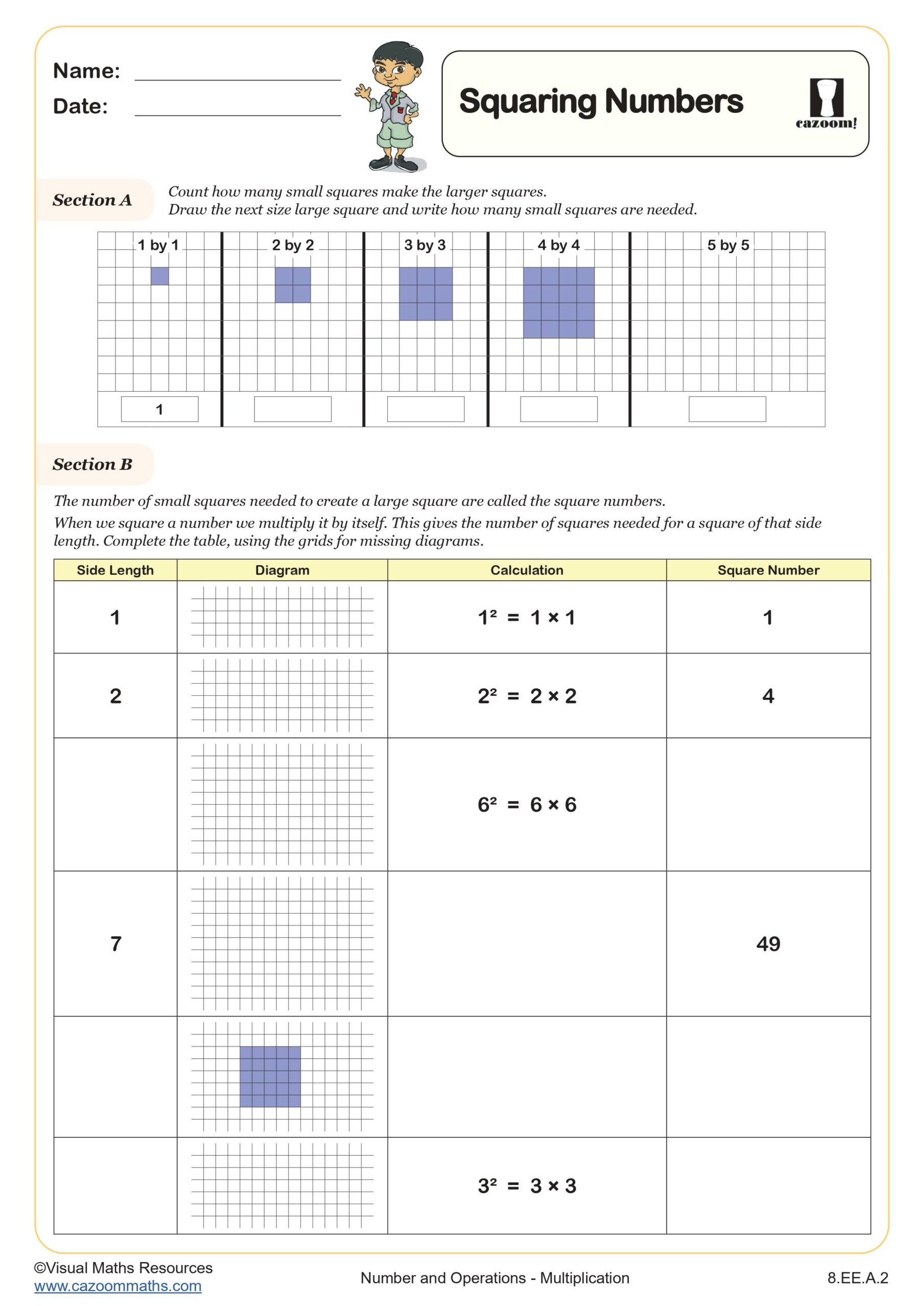
All worksheets are created by the team of experienced teachers at Cazoom Math.
What types of division problems with answers are most effective for classroom use?
Division problems with answers work best when they progress systematically through computational strategies, starting with concrete models and advancing to abstract algorithms. Teachers find that including a mix of exact division and problems with remainders helps students understand when division results in whole numbers versus when quantities don't divide evenly.
Math teachers consistently notice that students benefit from seeing division questions with answers that connect to real scenarios, such as sharing objects equally or determining how many groups can be formed. Problems should include both horizontal and vertical formats to familiarize students with different presentation styles they'll encounter on assessments.
Which grade levels should focus on different division worksheet types?
Elementary teachers typically introduce division concepts in third grade using simple division problems with arrays and equal groups, while fourth and fifth grades emphasize multi-digit division algorithms. By middle school, students work with 2-digit division worksheets with answers that include decimal quotients and more complex remainder interpretations.
Teachers observe that progression matters significantly in division instruction. Students who master single-digit divisors before tackling 2-digit division worksheets with answers pdf format show greater confidence and accuracy. The transition from easy division problems with answers to more challenging multi-step word problems requires careful scaffolding across grade levels.
How do division equations with answers help students understand the relationship between operations?
Division equations with answers demonstrate the inverse relationship between multiplication and division, helping students verify their work through fact family connections. Teachers notice that when students can check division problems using multiplication, they develop stronger number sense and catch computational errors more readily.
Math division problems with answers formatted as equations rather than traditional long division layouts help students recognize division as an operation, not just a procedure. This understanding becomes particularly important when students encounter algebraic thinking and need to solve for unknown factors in mathematical relationships.
What's the most effective way to use division answer sheets in classroom instruction?
Division answer sheets work most effectively when teachers use them strategically for immediate feedback rather than simply for grading. Students can check their work problem by problem, identifying errors while the mathematical thinking is still fresh and making corrections before misconceptions solidify.
Teachers find that providing division packet pdf materials with answer keys allows for differentiated pacing, where advanced students can work through multiple problems independently while teachers provide targeted support to students who need additional guidance. The answer sheets also enable peer tutoring opportunities and self-assessment practices.
Real-Life Uses of Division
We use our knowledge of division in everyday lives, sometimes even without realizeing. Let’s take a few examples- when they split toys with friends, divide money between items, or measure ingredients in a recipe. Our worksheets will help your child connect division to these real-life situations, making learning meaningful and engaging. Students learn that division isn’t just about numbers on a page—it’s a skill they’ll use throughout their lives.
What Should You Know Before Learning Division?
Before working on their division skills, your elementary students should have basic knowledge of these–
• They must be confident with multiplication facts
• They should be able to understand equal groups and repeated subtraction
• They should know how to skip count
• They need to be familiar with basic number sense and place value
These foundational skills are therefore essential and make it easier to understand division. Our wide range of specifically curated division worksheets with answers is designed to support your young learners at every step, maki