Emoji Day Worksheets
Emoji - Find the Value
Grades: 1st Grade
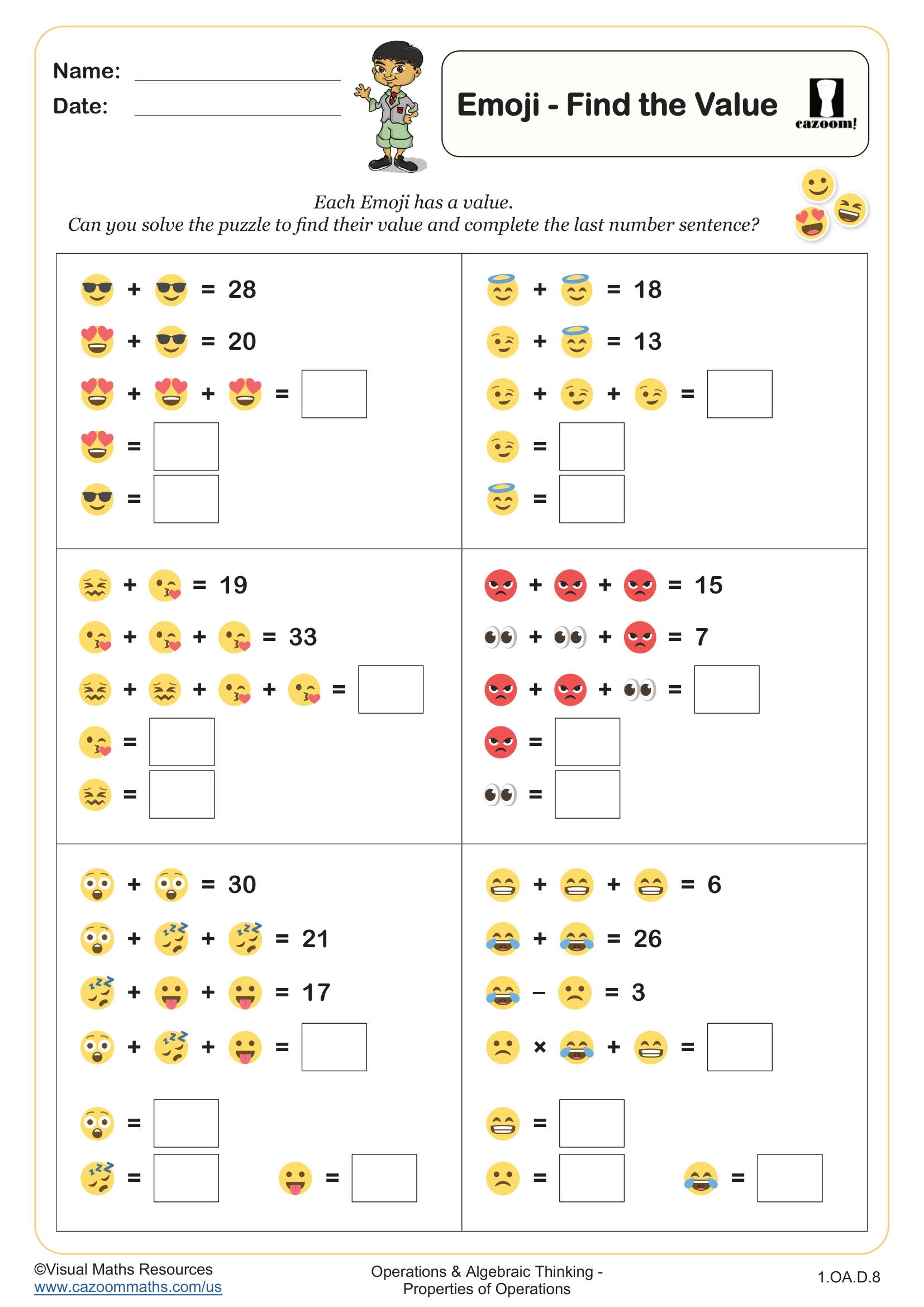
Emoji Colour by Numbers - Addition and Subtraction
Grades: 1st Grade
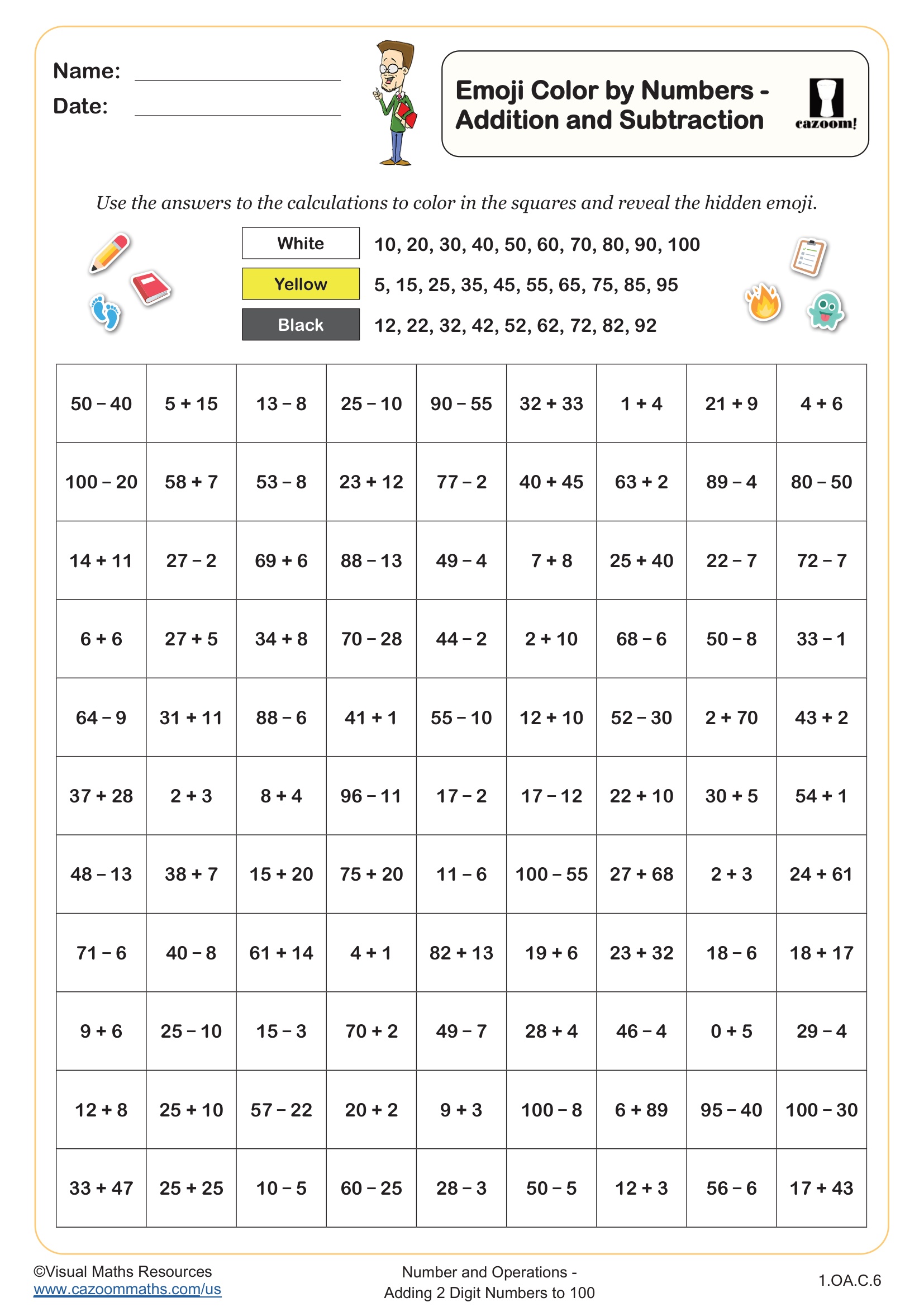
Emoji Number Bonds to 20
Grades: 1st Grade
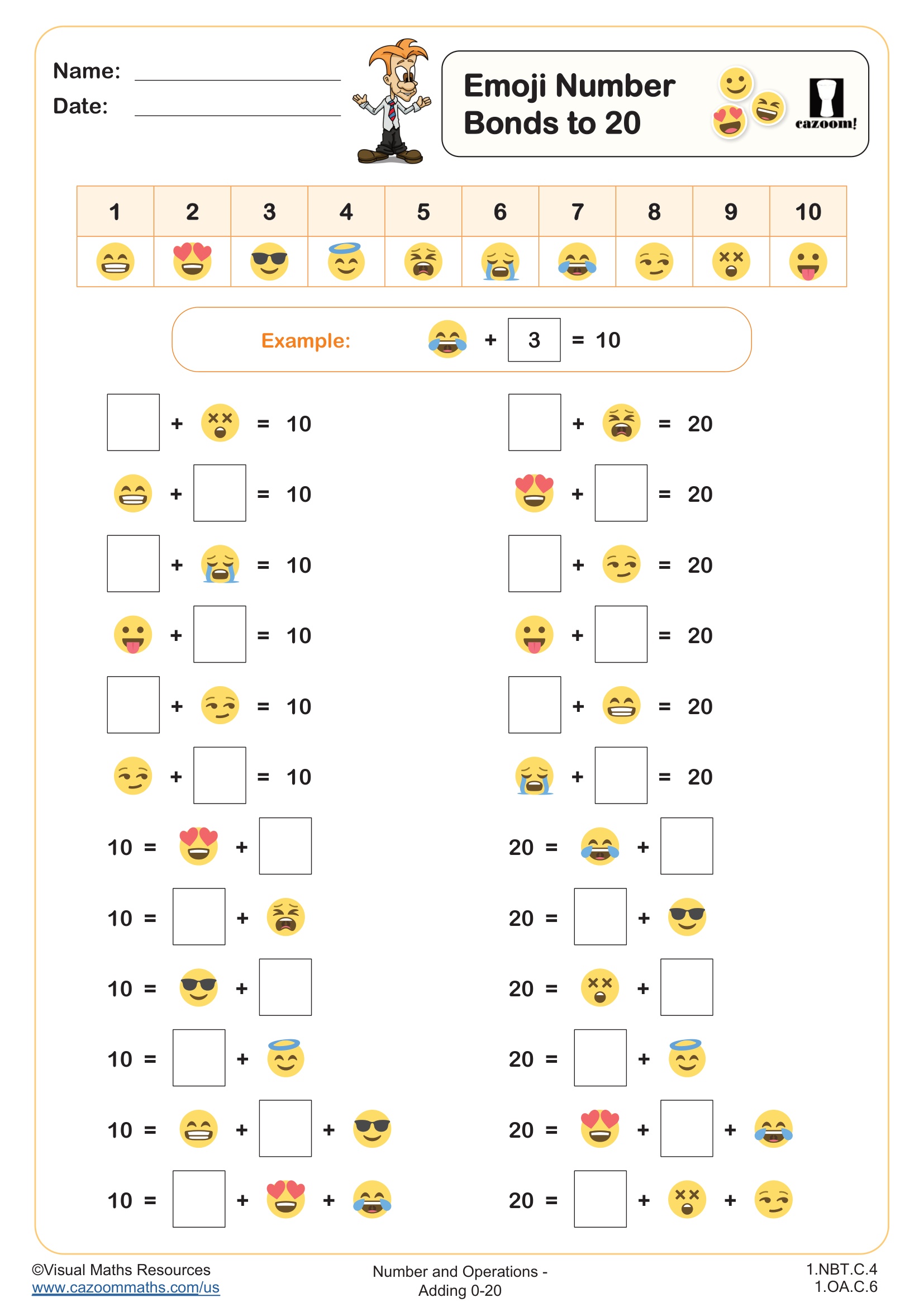
Emoji Colour by Numbers - Multiplication
Grades: 3rd Grade
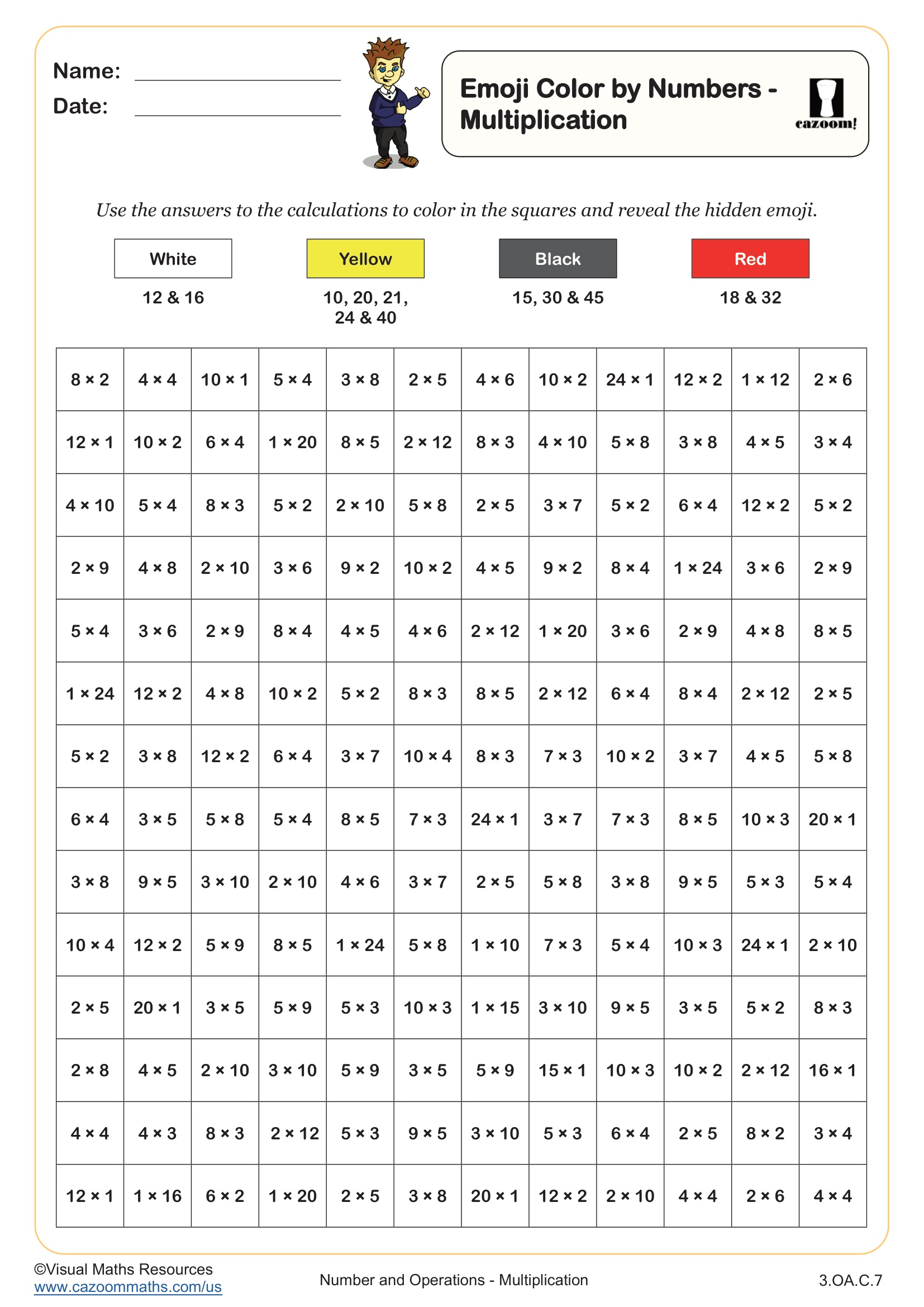
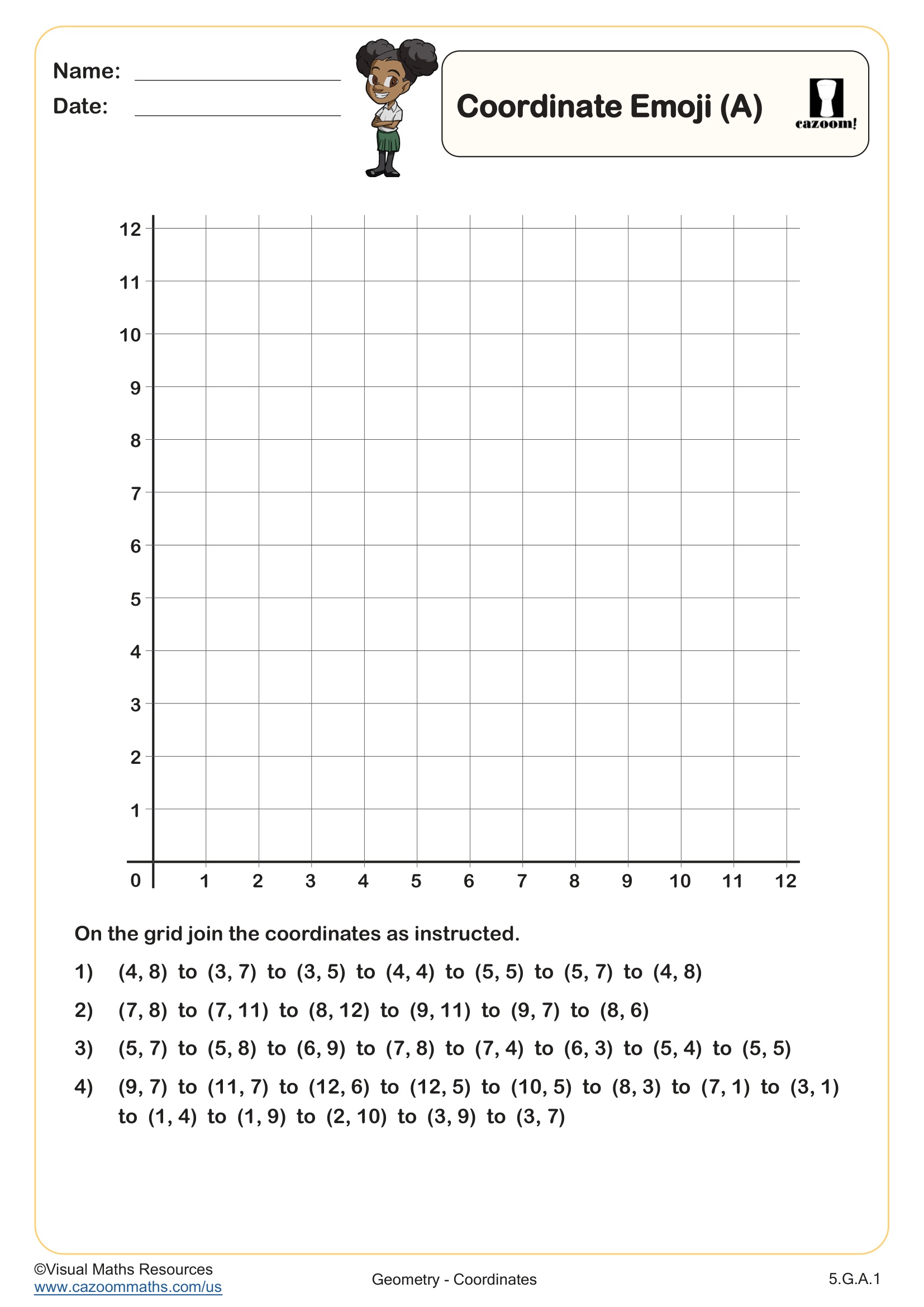
Coordinate Emoji (A)
Grades: 5th Grade
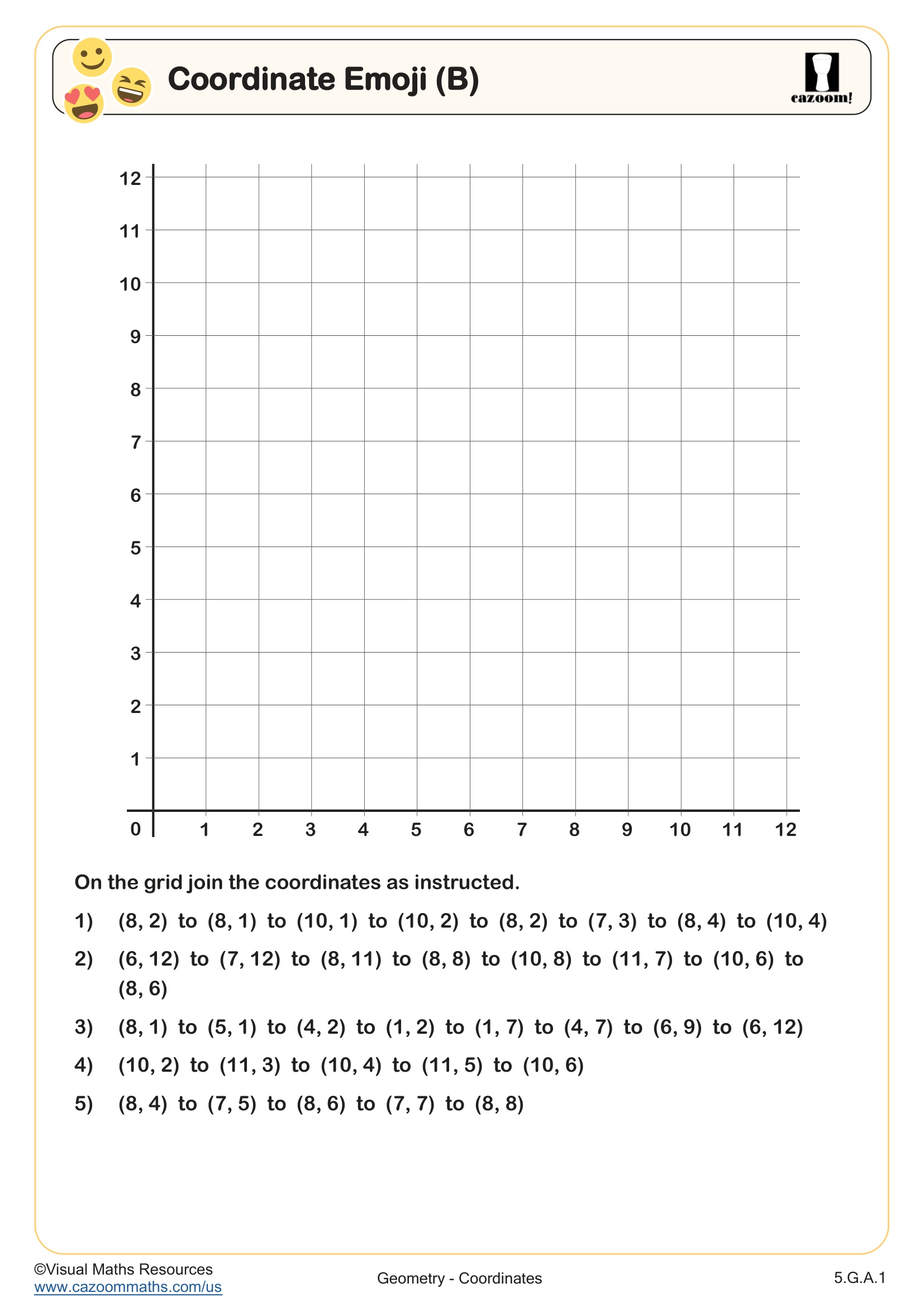
Coordinate Emoji (B)
Grades: 5th Grade
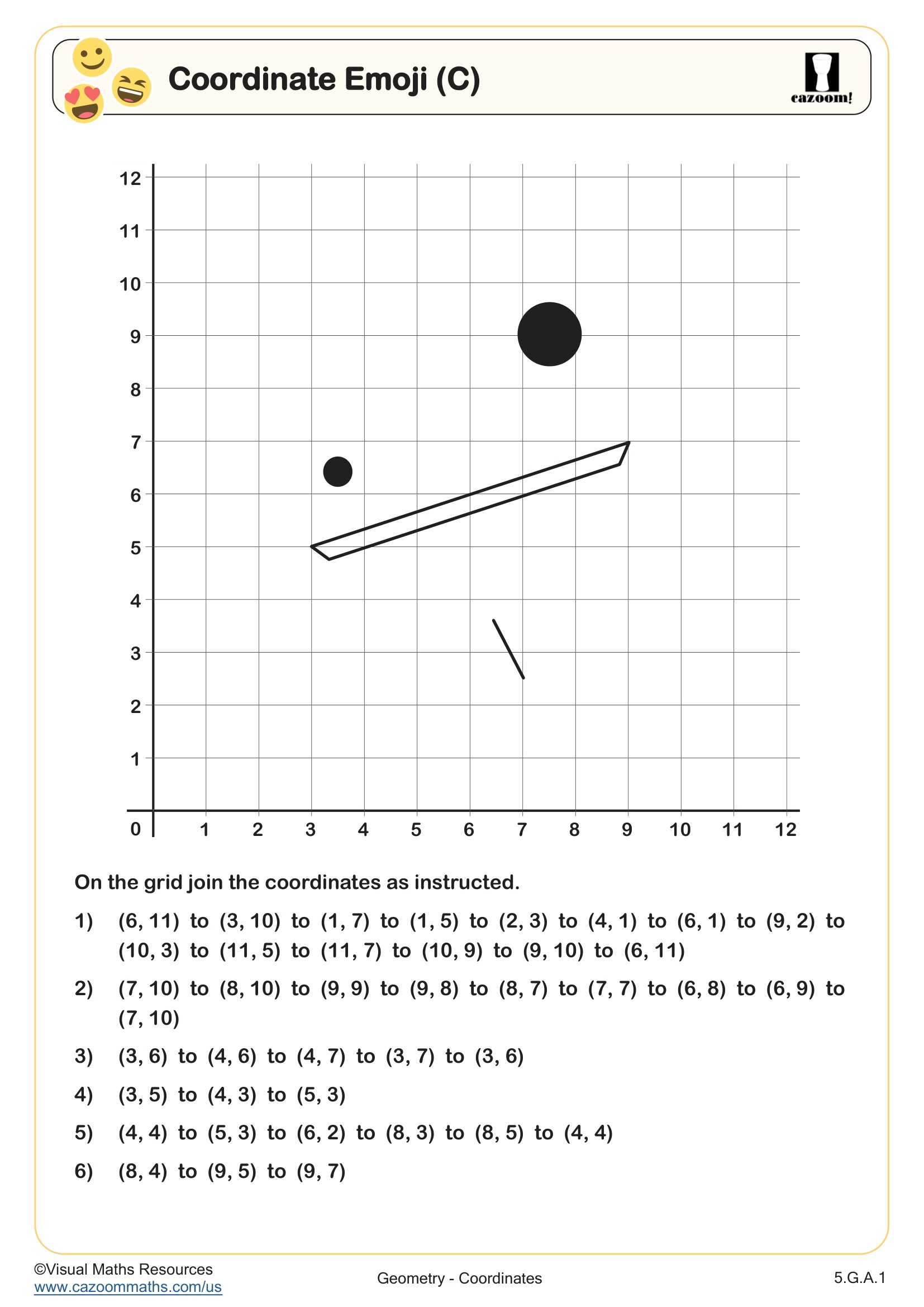
Coordinate Emoji (C)
Grades: 5th Grade
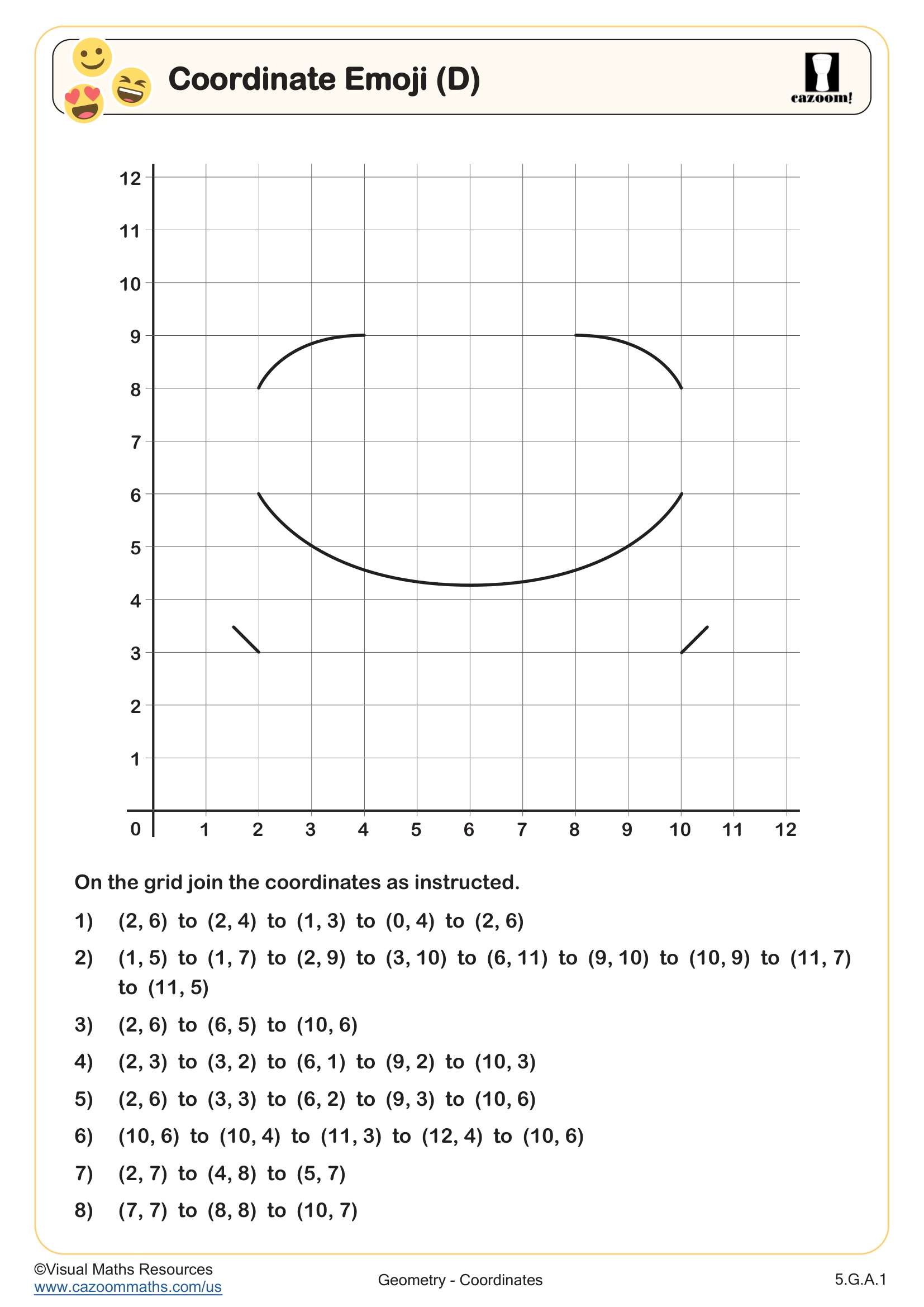
Coordinate Emoji (D)
Grades: 5th Grade
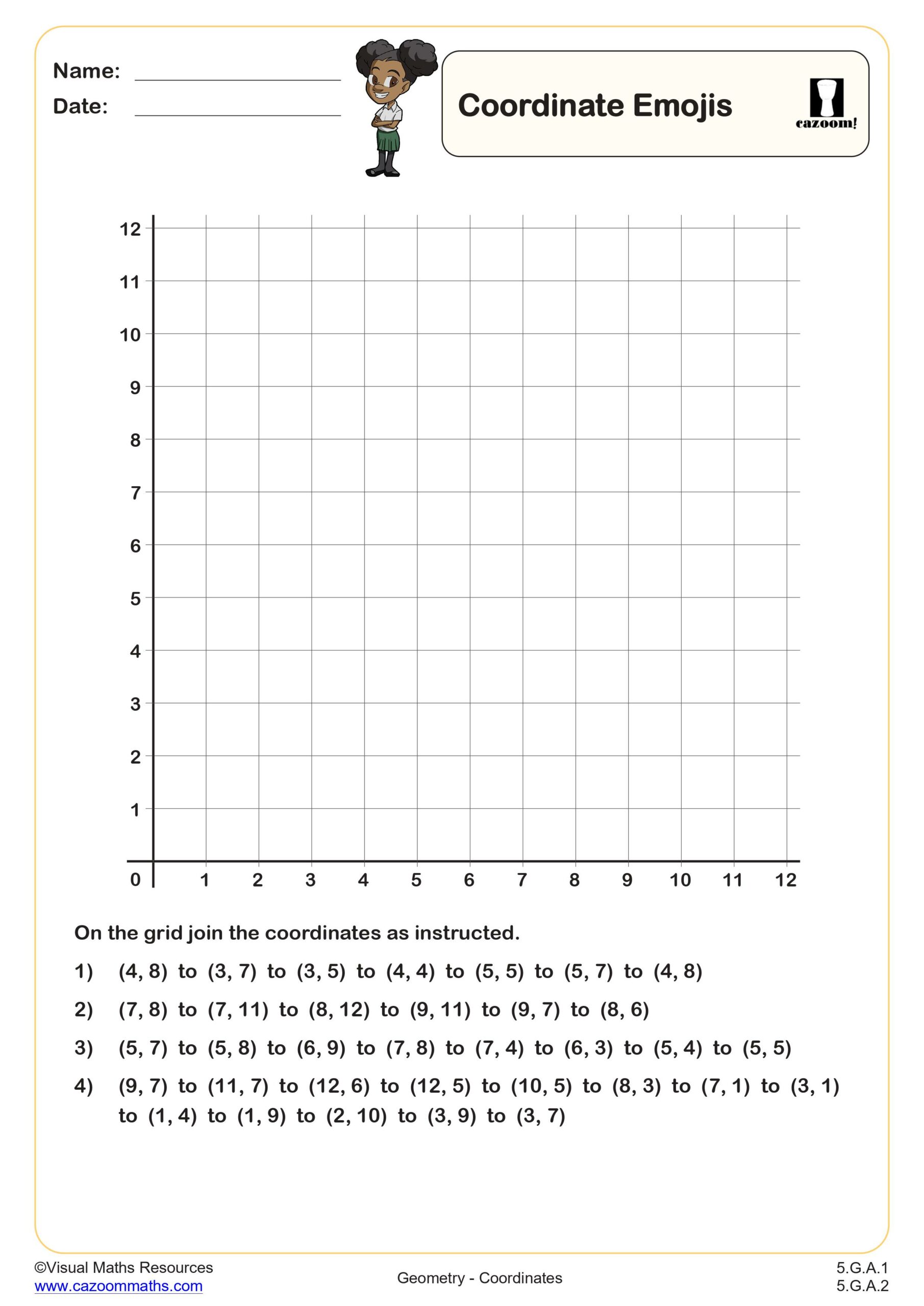
Coordinate Emojis
Grades: 5th Grade
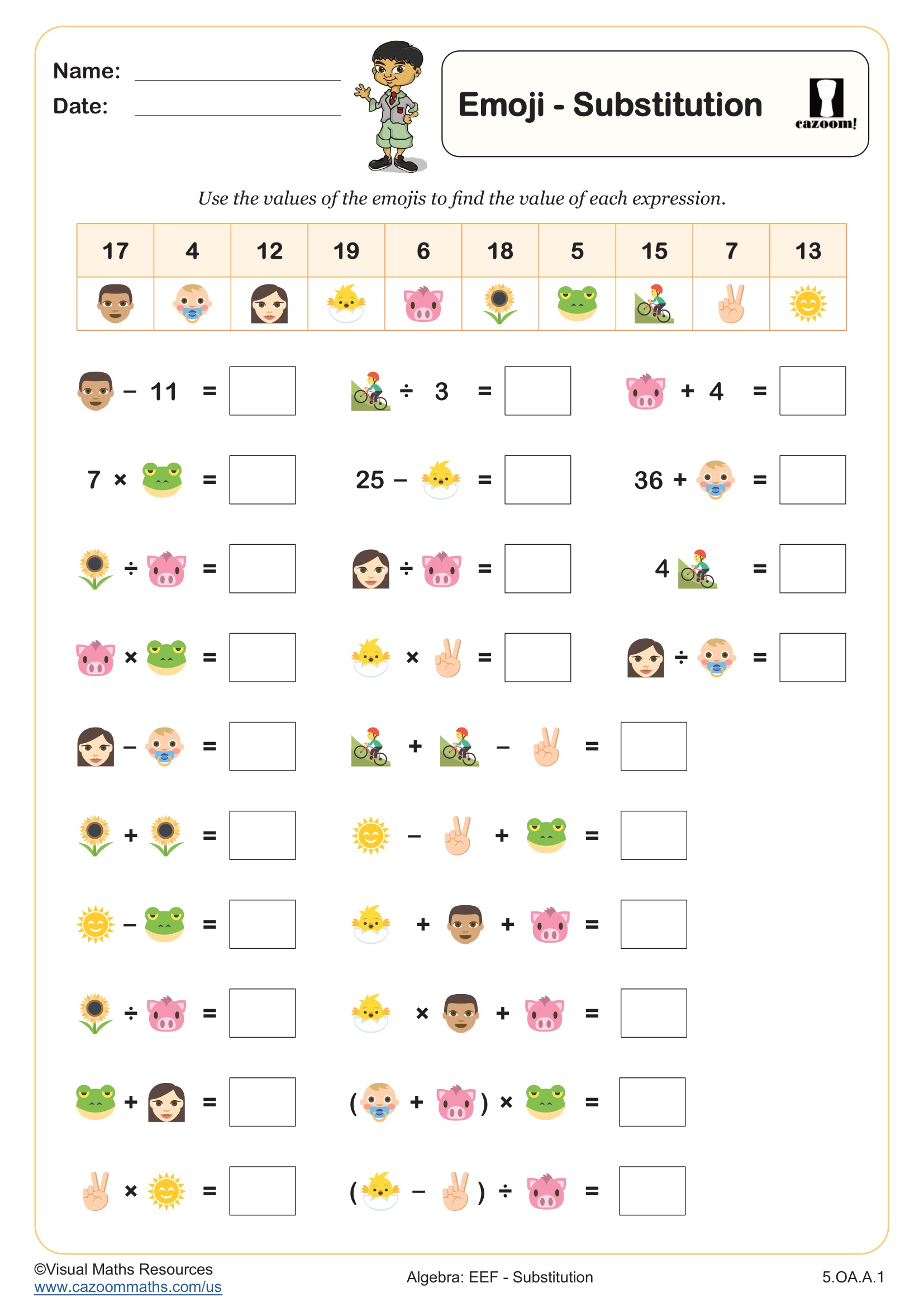
Emoji - Substitution
Grades: 5th Grade
All worksheets are created by the team of experienced teachers at Cazoom Math.
What Makes an Effective Emoji Math Worksheet for Elementary Students?
An effective emoji math worksheet balances visual appeal with clear mathematical learning objectives, typically focusing on basic operations, number sense, or simple algebraic thinking appropriate for the target grade level. These worksheets work best when each emoji consistently represents the same value throughout the problem set, helping students develop systematic problem-solving approaches.
Teachers notice that students often make careless errors when emoji values change mid-worksheet or when too many different symbols appear in a single problem. The most successful emoji worksheets limit the number of different symbols to three or four per page, allowing students to focus on mathematical reasoning rather than visual overwhelm while building confidence in their computational skills.
How Do Emoji Worksheets Adapt Across Different Grade Levels?
Emoji worksheet for grade 1 typically focuses on basic addition and subtraction within 20, using simple one-to-one emoji-to-number relationships that support counting strategies and number recognition. As students progress through elementary grades, these worksheets incorporate multiplication, division, and multi-step problems that require more sophisticated algebraic thinking.
Middle school emoji worksheets often feature systems of equations where students solve for multiple emoji values simultaneously, preparing them for formal algebra concepts. Teachers find this progression particularly effective because the visual nature of emoji problems helps students transition from concrete arithmetic to abstract algebraic reasoning, maintaining engagement while building critical thinking skills needed for higher-level mathematics.
Why Do Students Perform Better on Emoji Math Problems Than Traditional Word Problems?
Students often demonstrate higher success rates with emoji math problems because these worksheets eliminate language barriers and reading comprehension challenges that can interfere with mathematical understanding. The visual symbols create immediate recognition patterns that allow students to focus purely on mathematical relationships and problem-solving strategies.
Classroom observations reveal that English language learners and students with reading difficulties show marked improvement in mathematical confidence when working with emoji formats. The symbols provide consistent visual cues that support memory retention and pattern recognition, skills that transfer effectively to traditional numerical problems once students have mastered the underlying mathematical concepts through this engaging format.
How Can Teachers Maximize Learning Outcomes with Emoji Math Activities?
Teachers achieve the best results when they use emoji worksheets as stepping stones toward traditional mathematical notation, gradually transitioning students from visual symbols to standard algebraic expressions. Introducing emoji problems during warm-up activities or intervention time helps struggling students build confidence before tackling more abstract concepts.
Successful implementation involves having students explain their reasoning process aloud, helping them articulate the mathematical thinking behind emoji problem solutions. Teachers report that this verbal component strengthens conceptual understanding and helps identify misconceptions early. The included answer keys support immediate feedback, but encouraging students to check their work by substituting values back into original problems reinforces mathematical validation skills valuable for future success.