Factors & Multiples Worksheets With Answers
Count in 2s Maze
Grades: 1st Grade, 2nd Grade
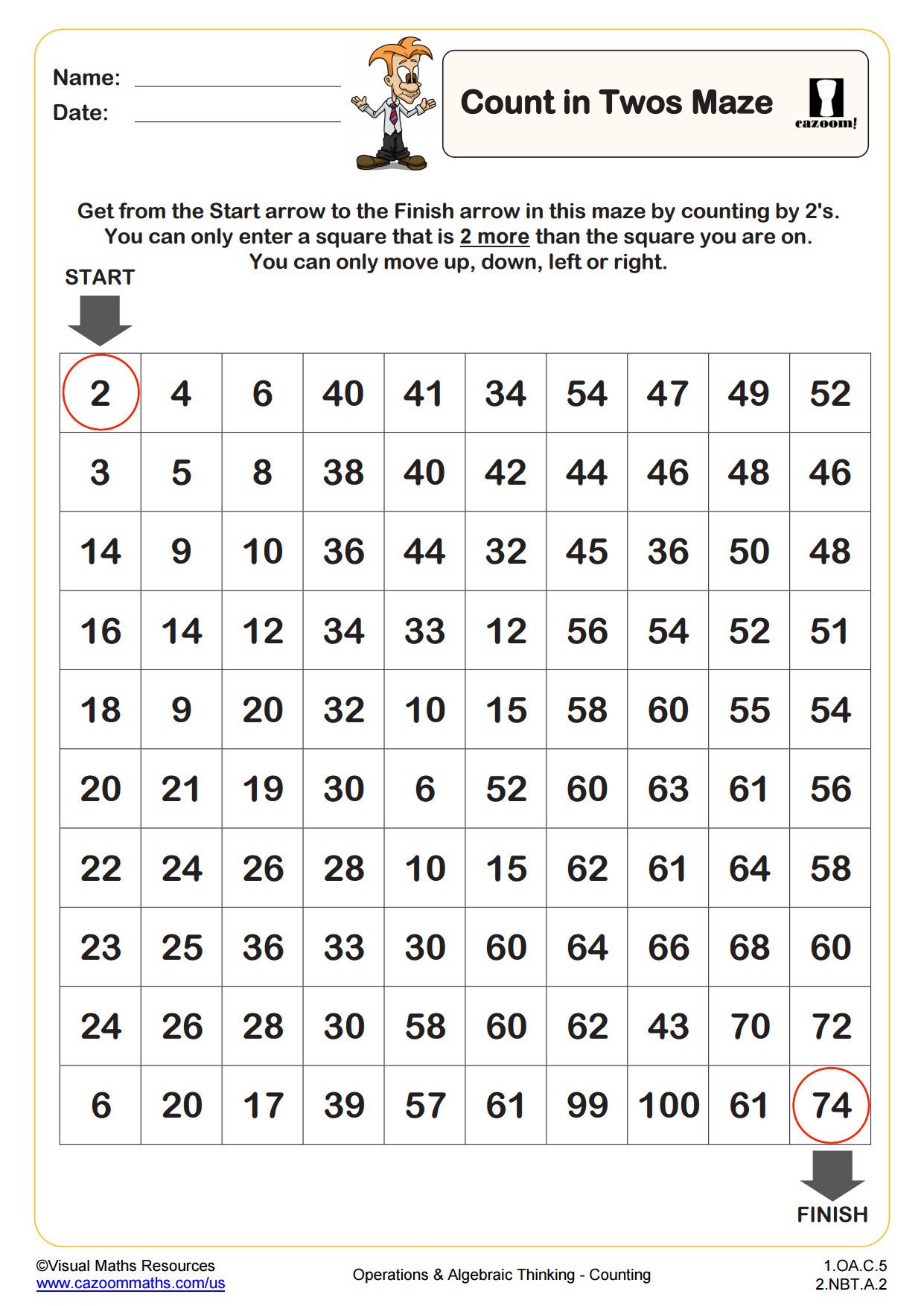
Count in 3s Maze
Grades: 1st Grade, 2nd Grade
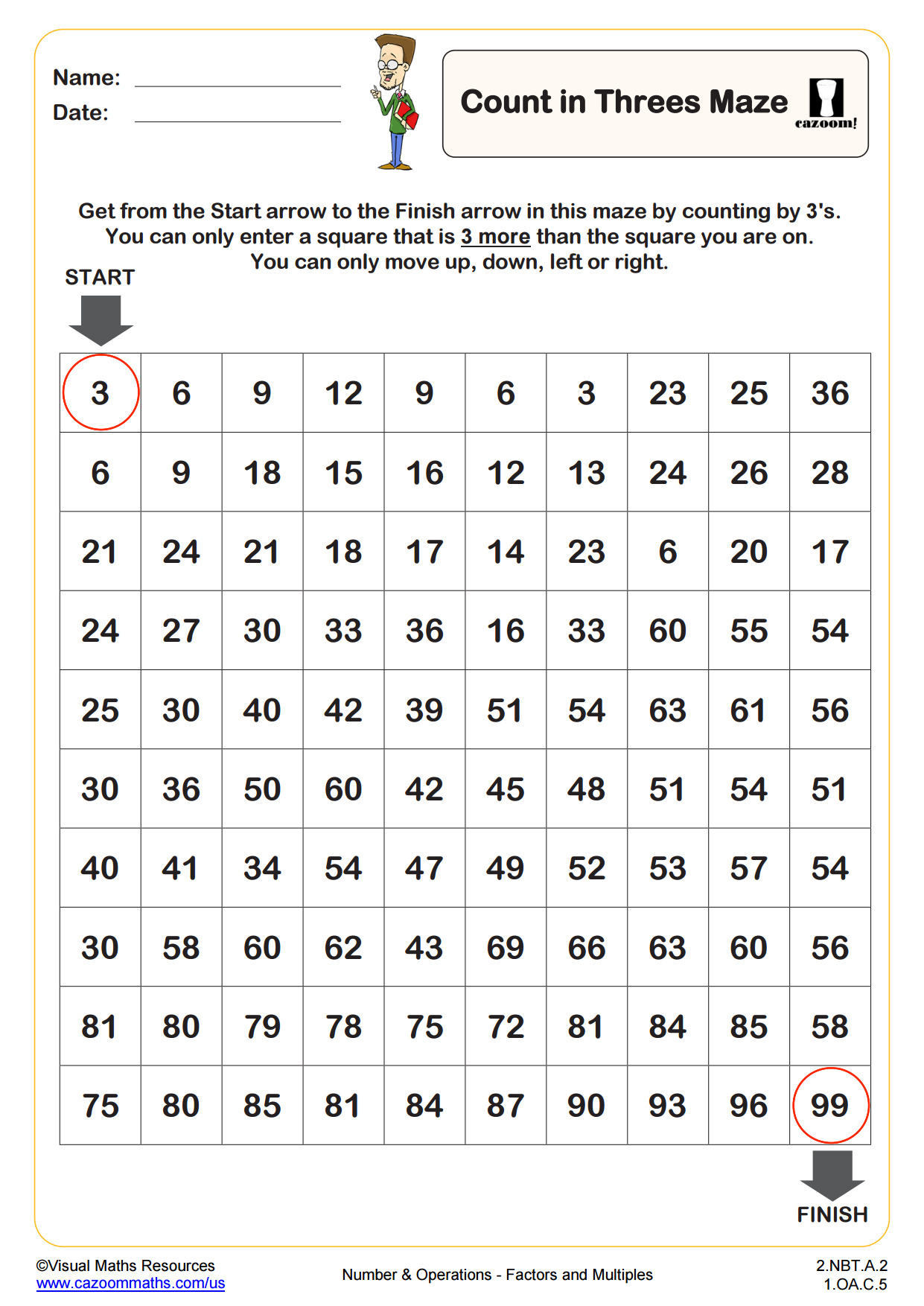
Count in 5s Maze
Grades: 1st Grade, 2nd Grade
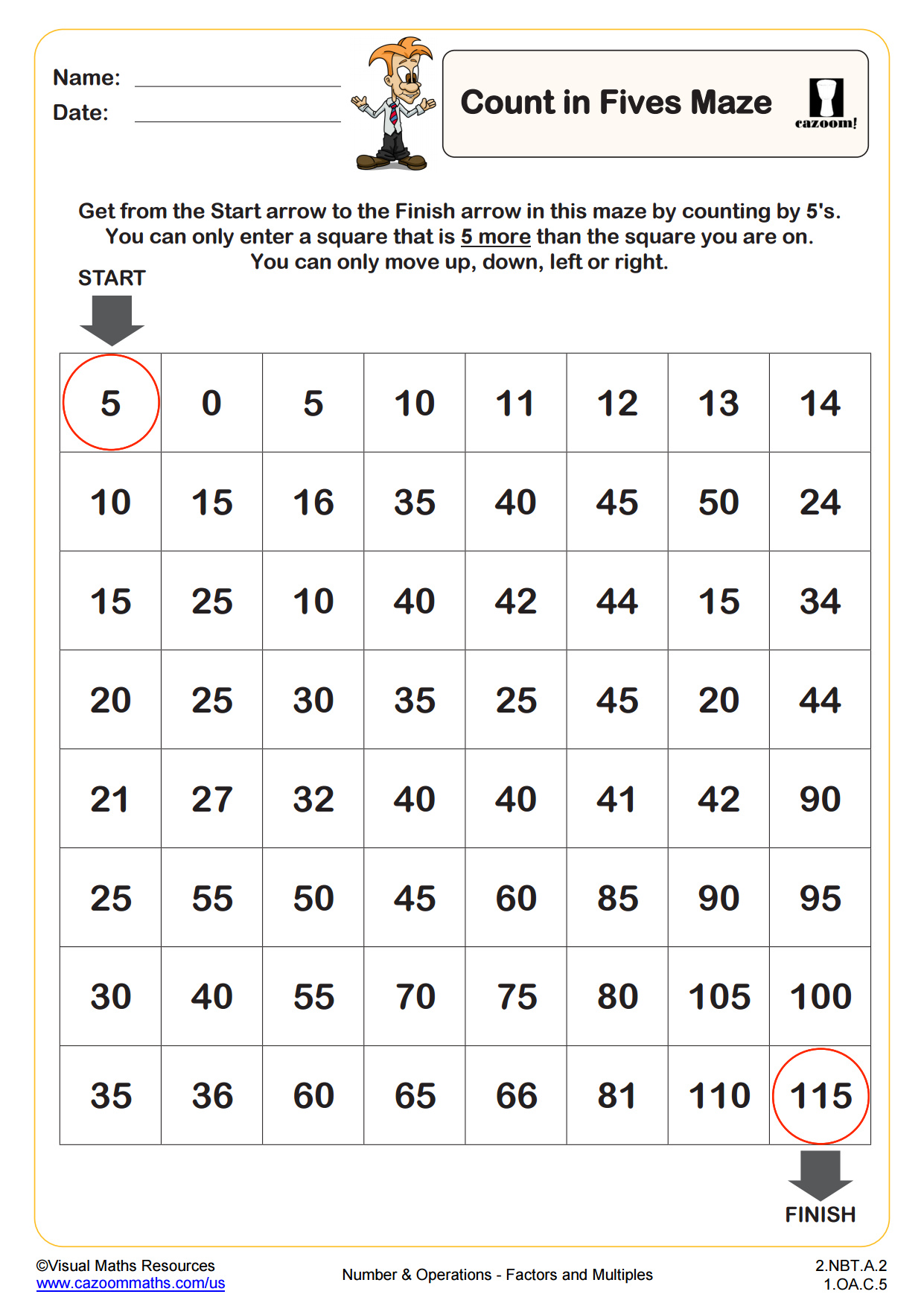
Skip Counting (count by 2s)
Grades: 1st Grade, 2nd Grade
Skip Counting (count in 10s)
Grades: 1st Grade, 2nd Grade
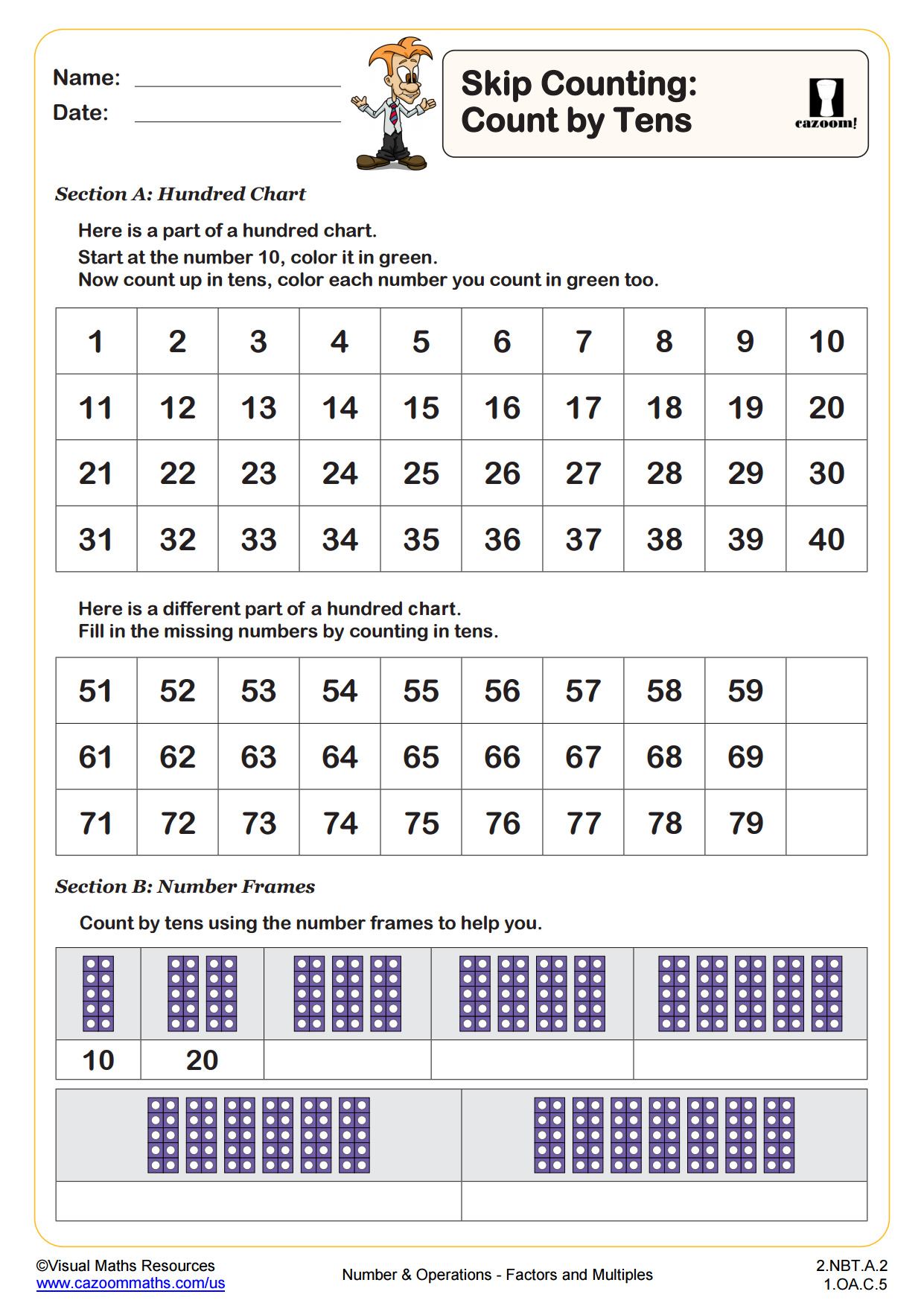
Skip Counting (count in 5s)
Grades: 1st Grade, 2nd Grade
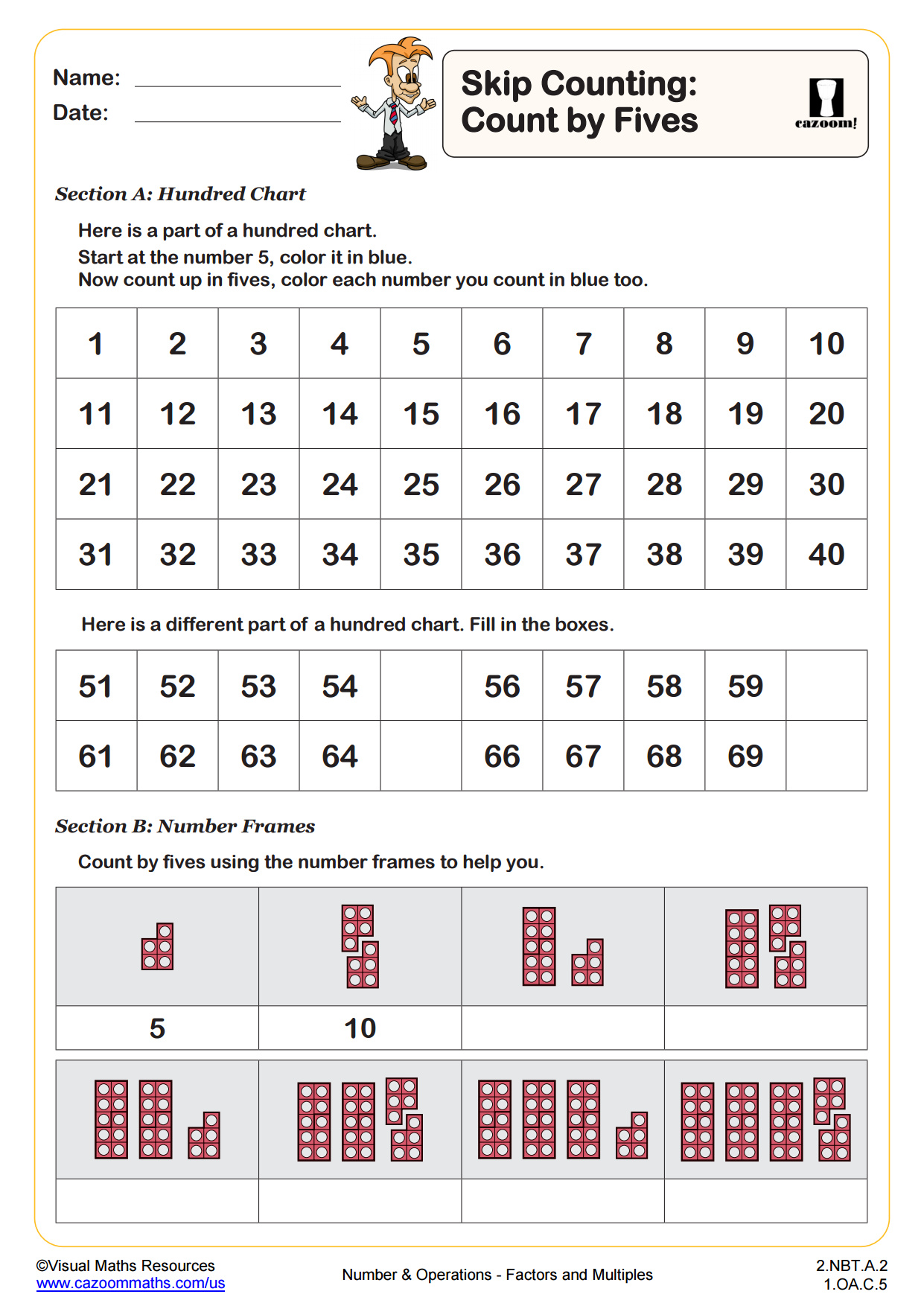
Factors (A)
Grades: 4th Grade, 6th Grade
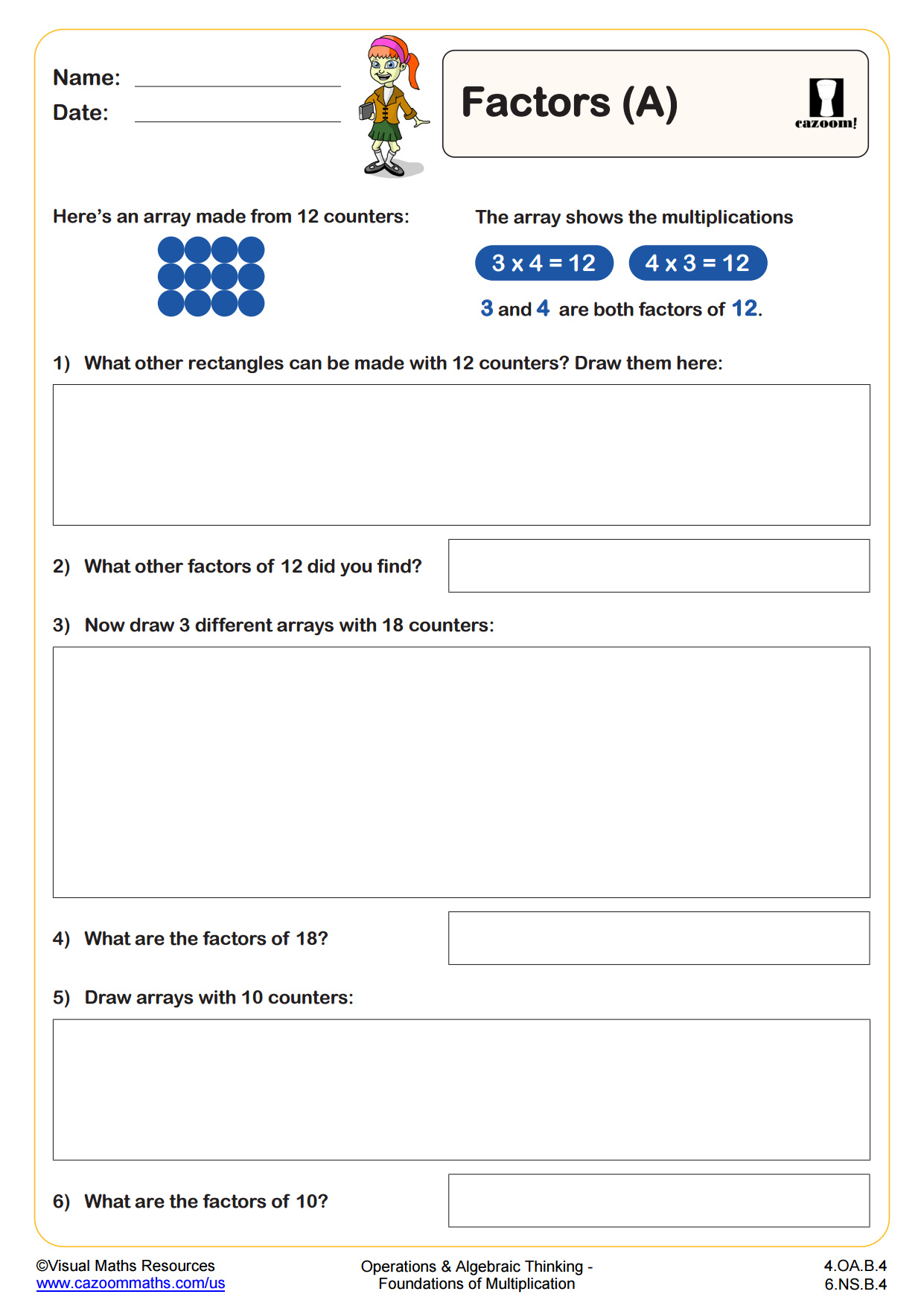
Factors (B)
Grades: 4th Grade, 6th Grade
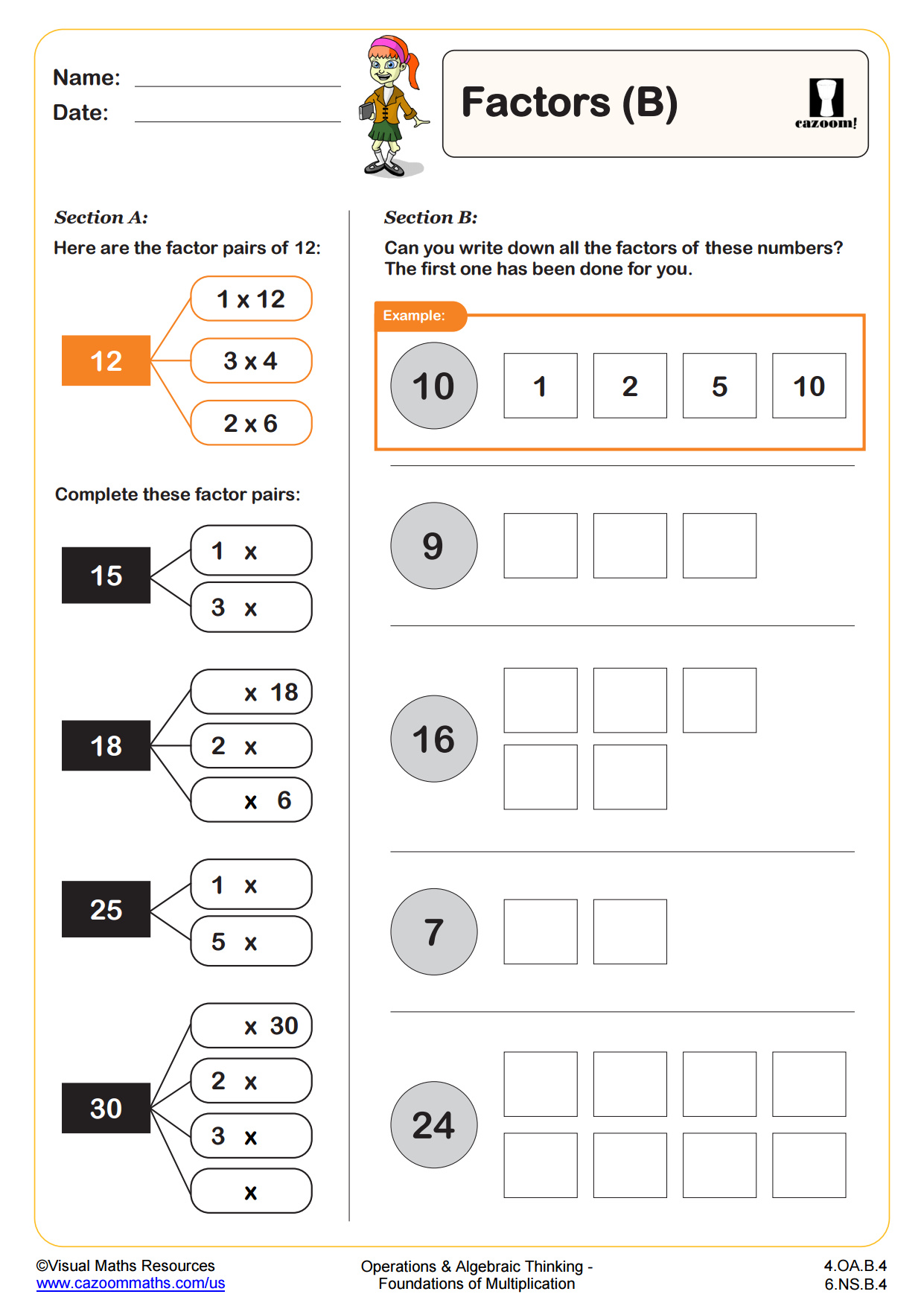
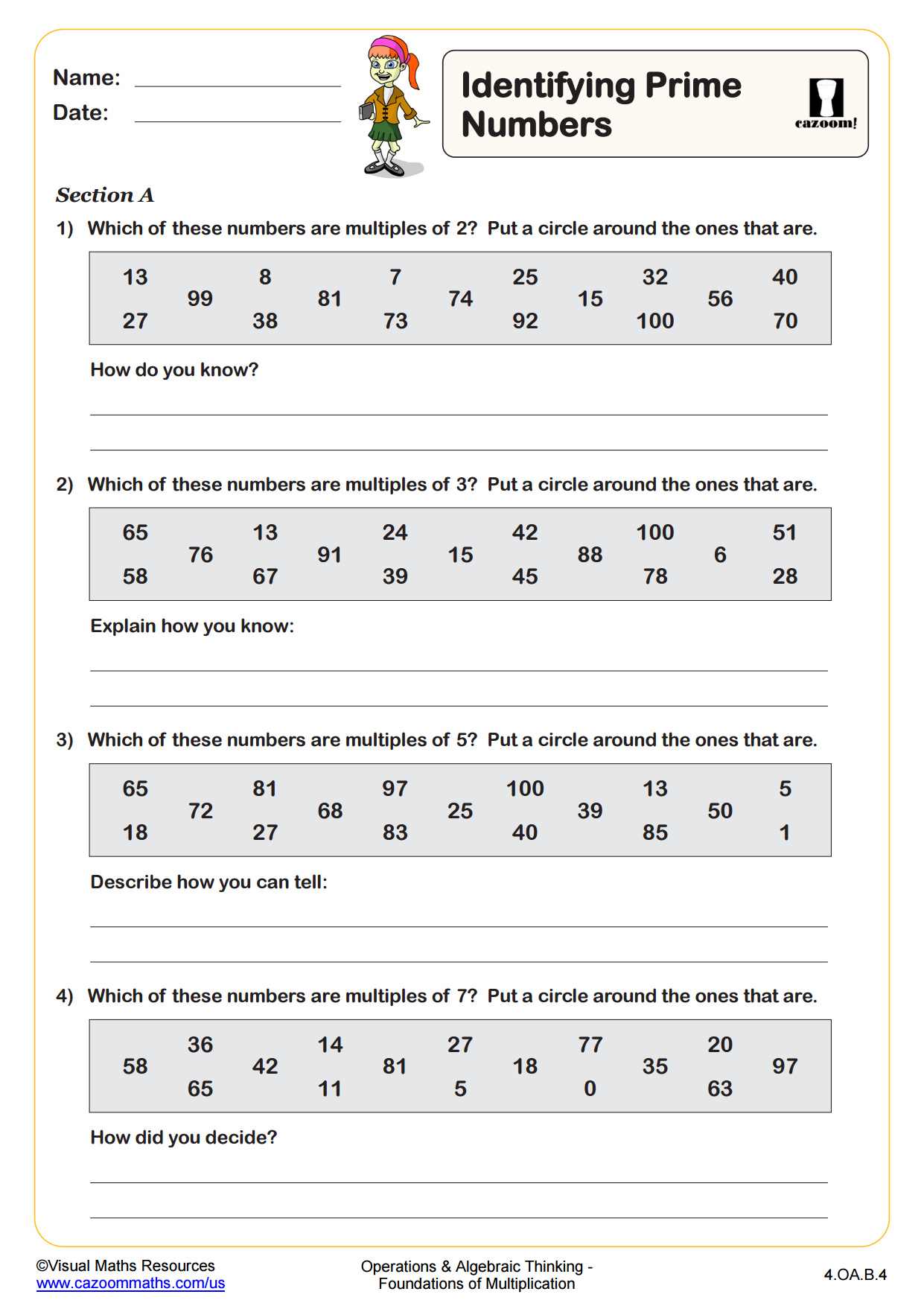
Factors and Multiples
Grades: 4th Grade, 6th Grade
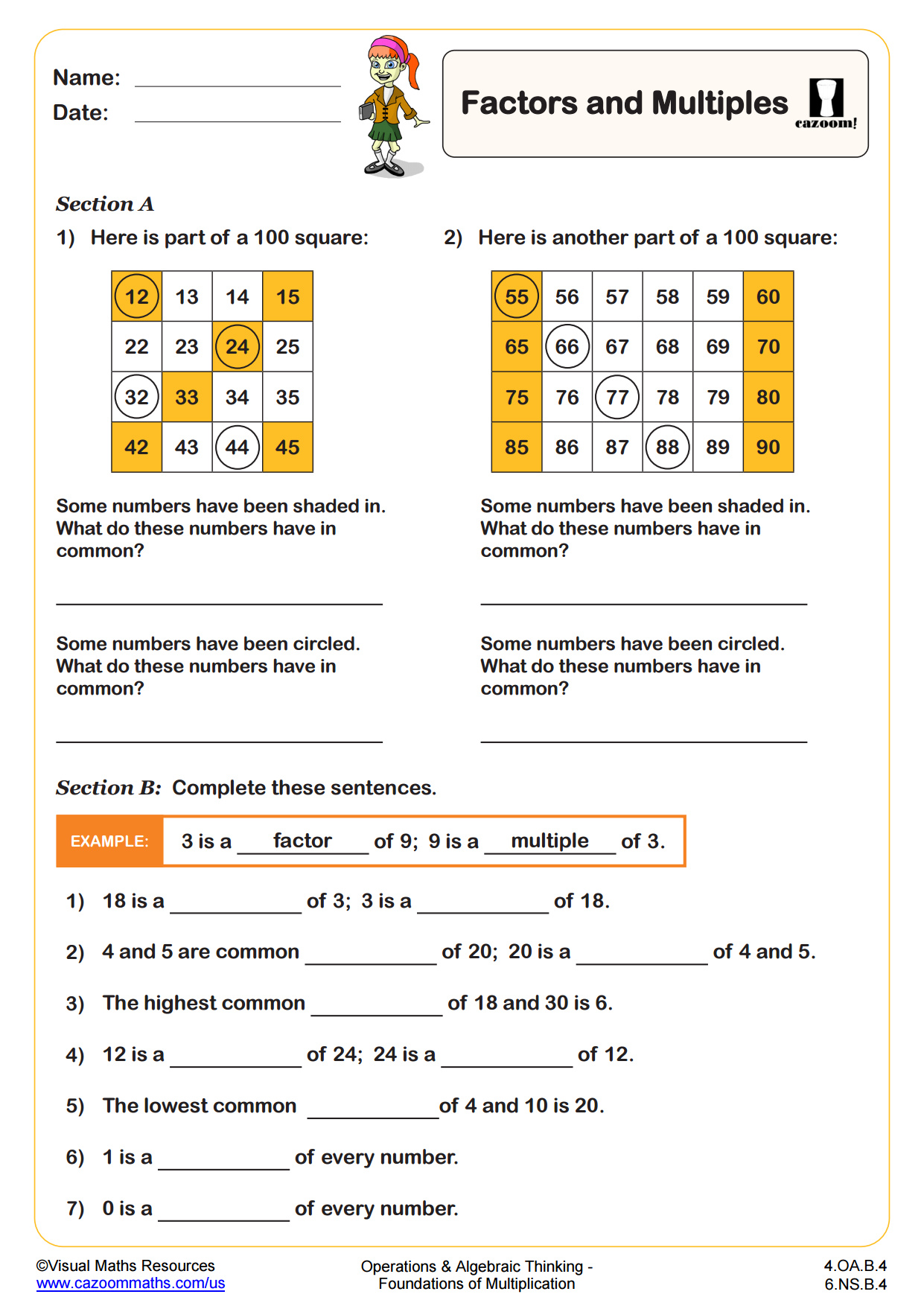
Factors and Prime Numbers
Grades: 4th Grade
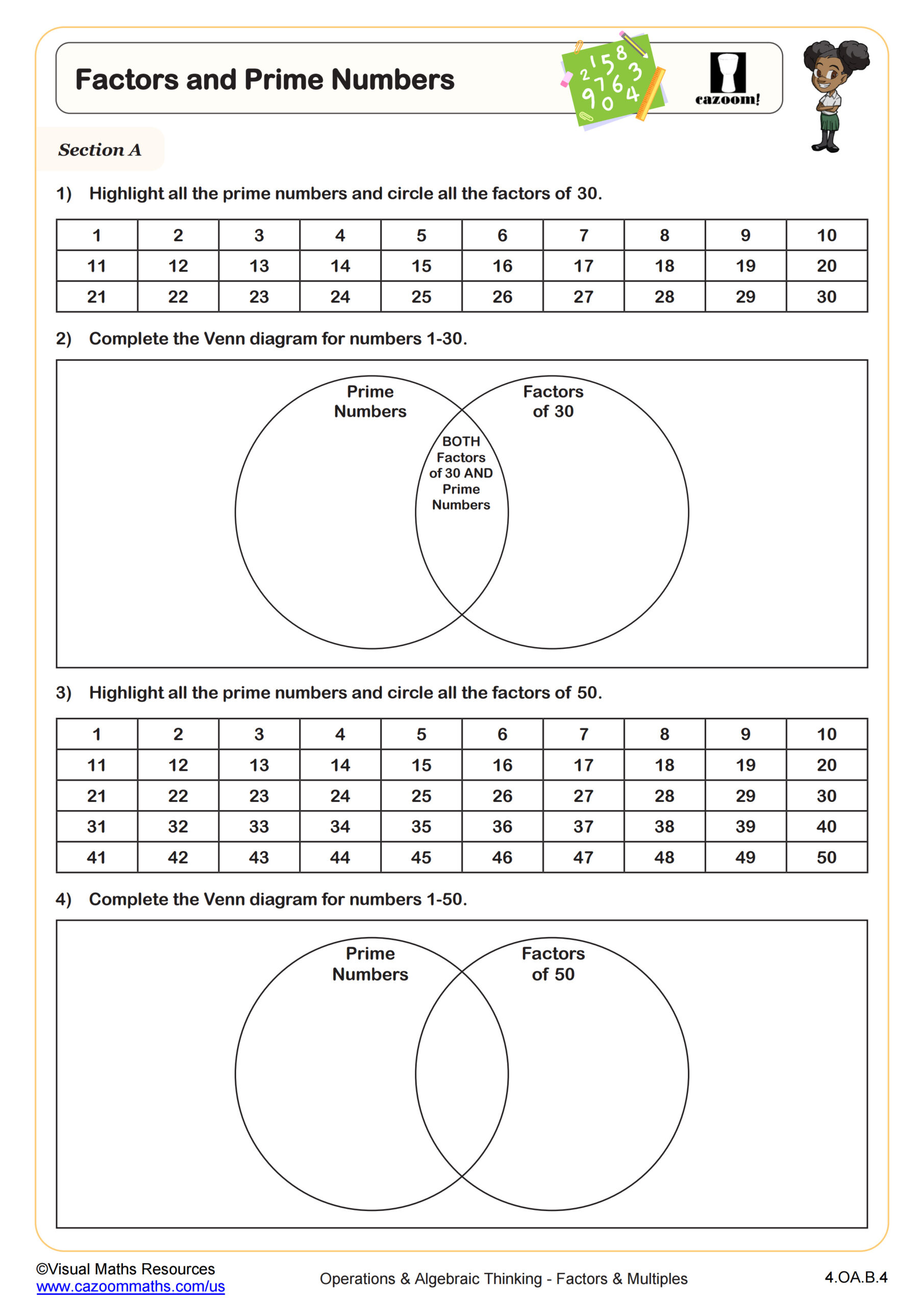
HCF (Highest Common Factor)
Grades: 4th Grade
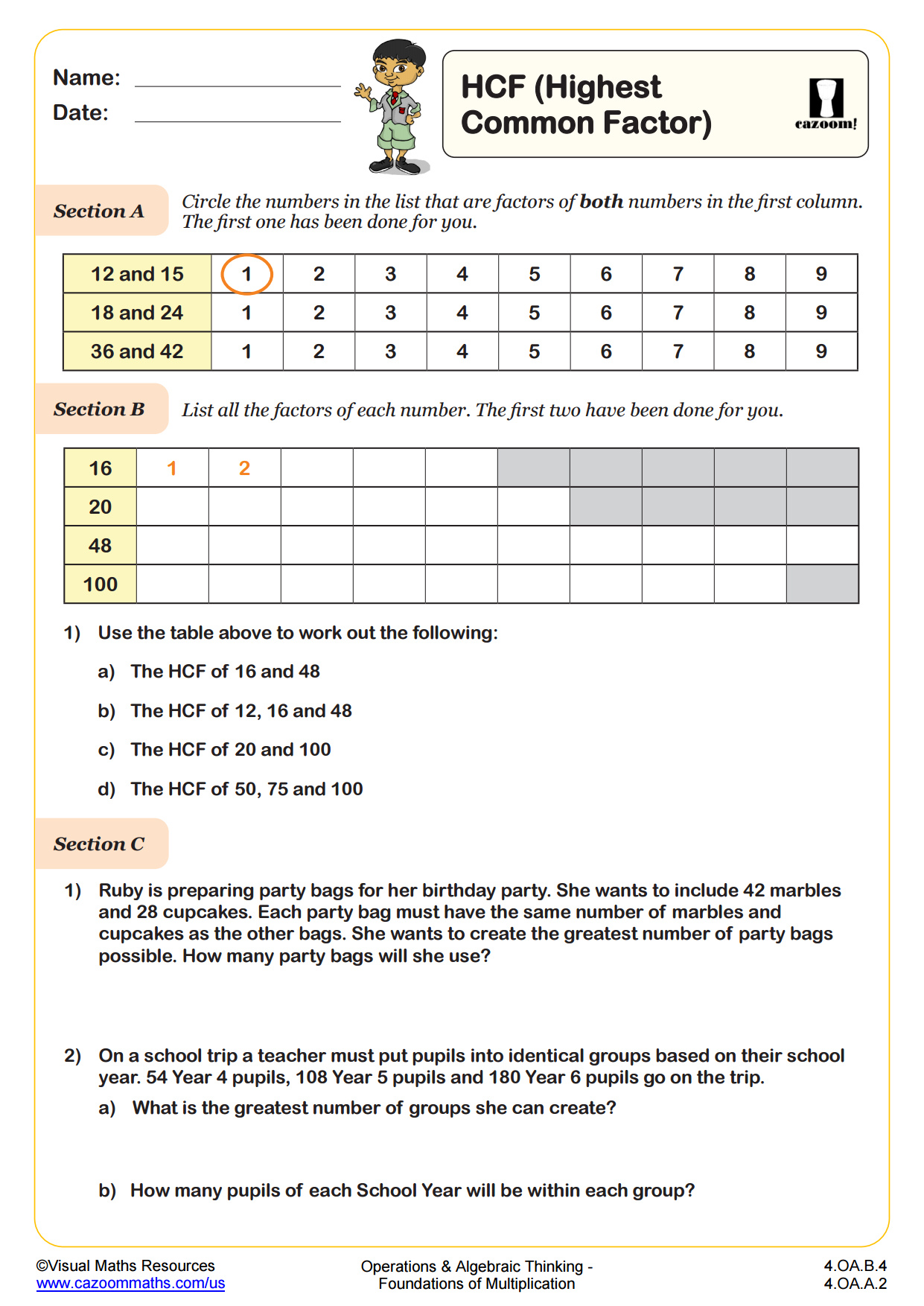
Identifying Prime Numbers
Grades: 4th Grade
LCM (Lowest Common Multiple)
Grades: 4th Grade
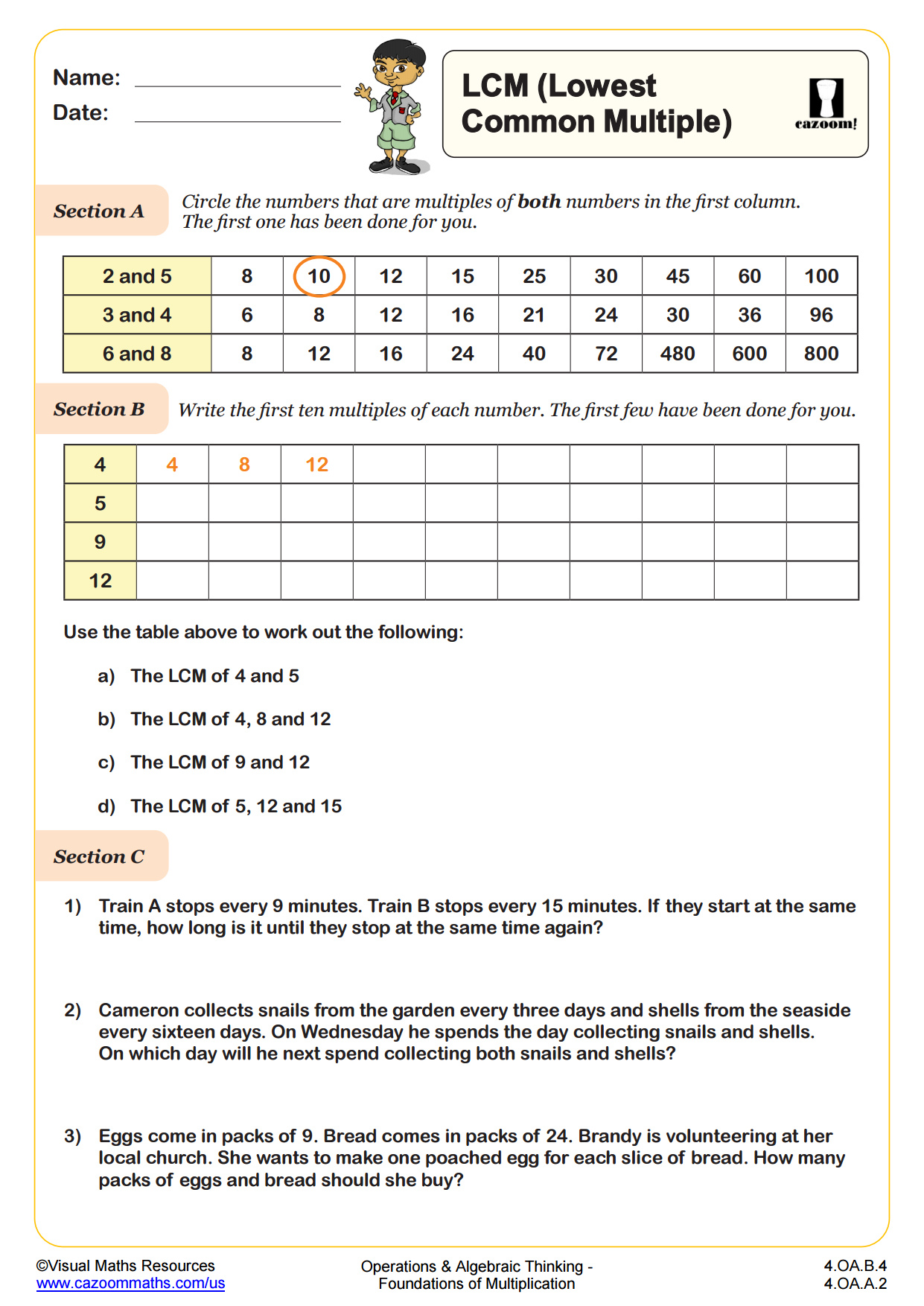
Prime Factor Decomposition - Using the Short Division Method
Grades: 4th Grade, 6th Grade
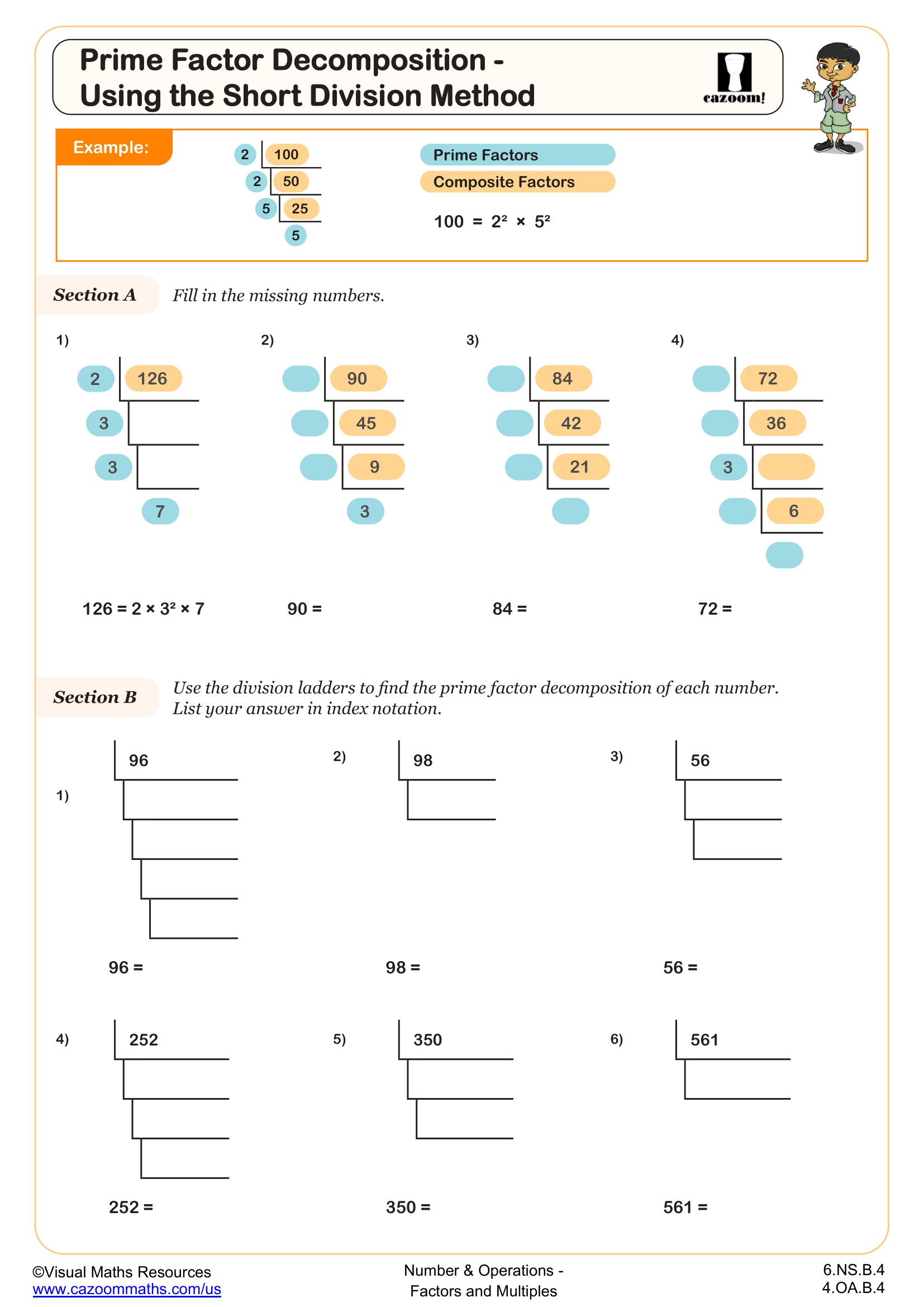
Prime Number Maze
Grades: 4th Grade
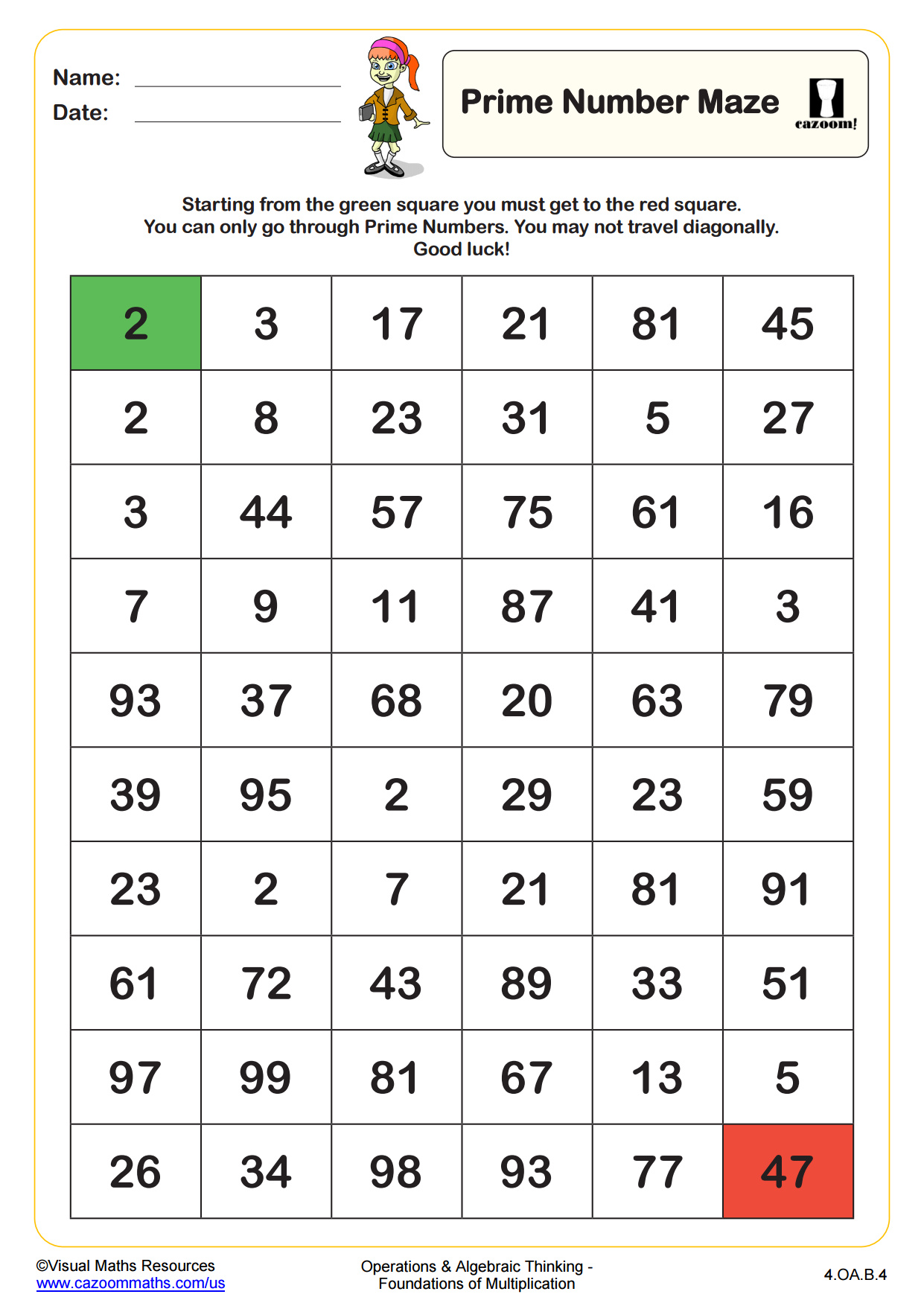
Finding the GCF and LCM using Venn Diagrams
Grades: 5th Grade, 6th Grade
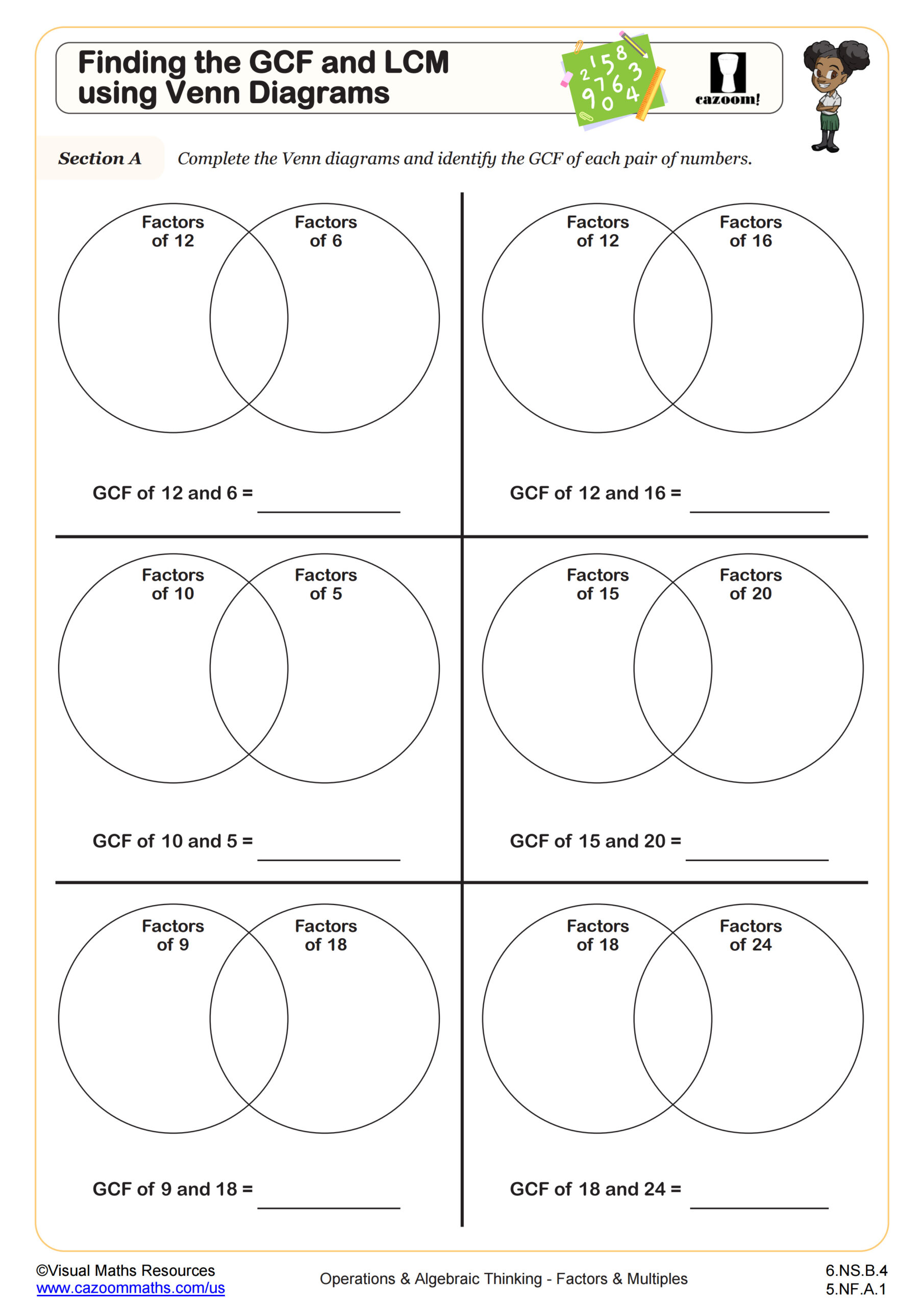
Greatest Common Factor (GCF)
Grades: 5th Grade, 6th Grade
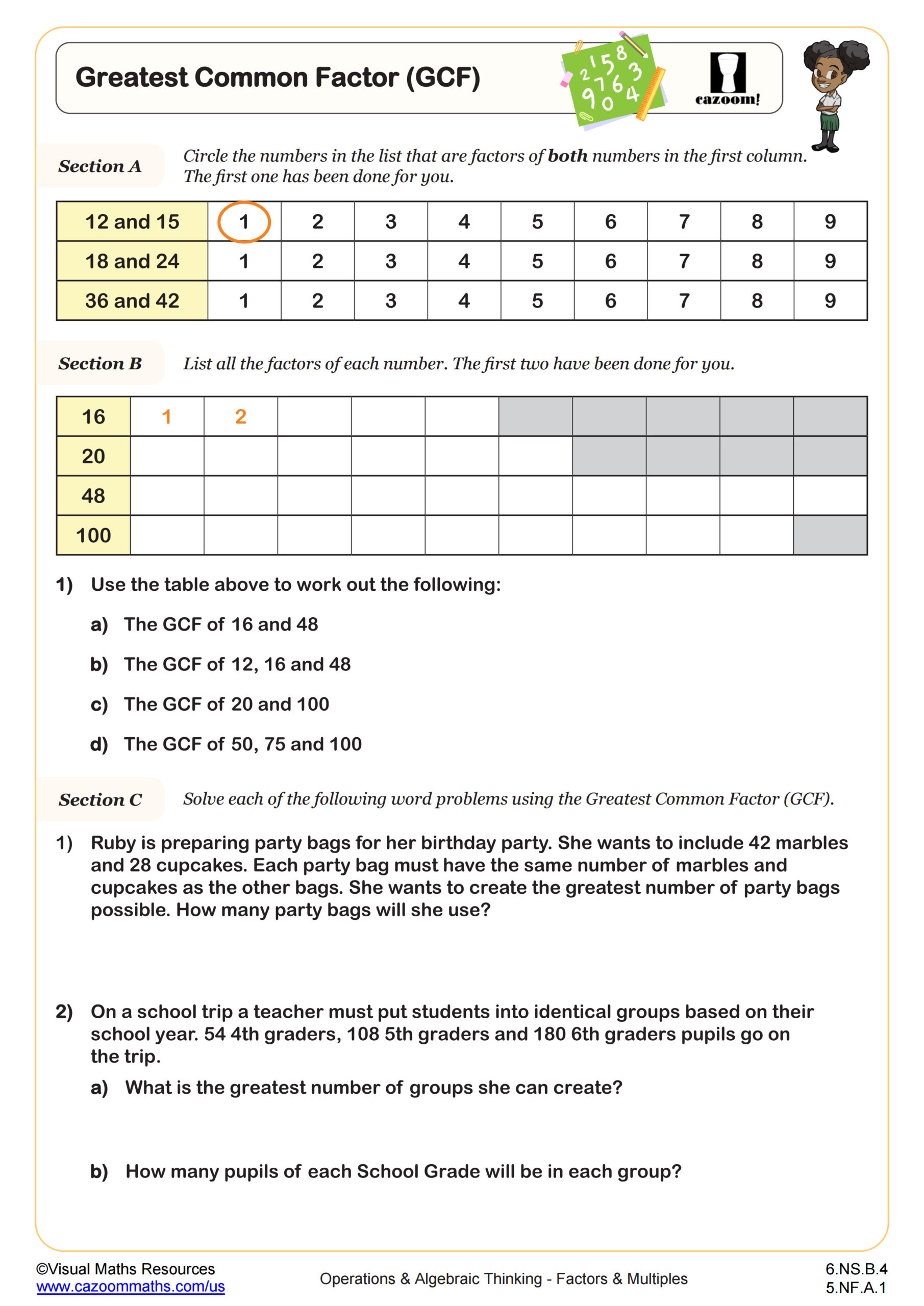
Least Common Multiple (LCM)
Grades: 5th Grade, 6th Grade
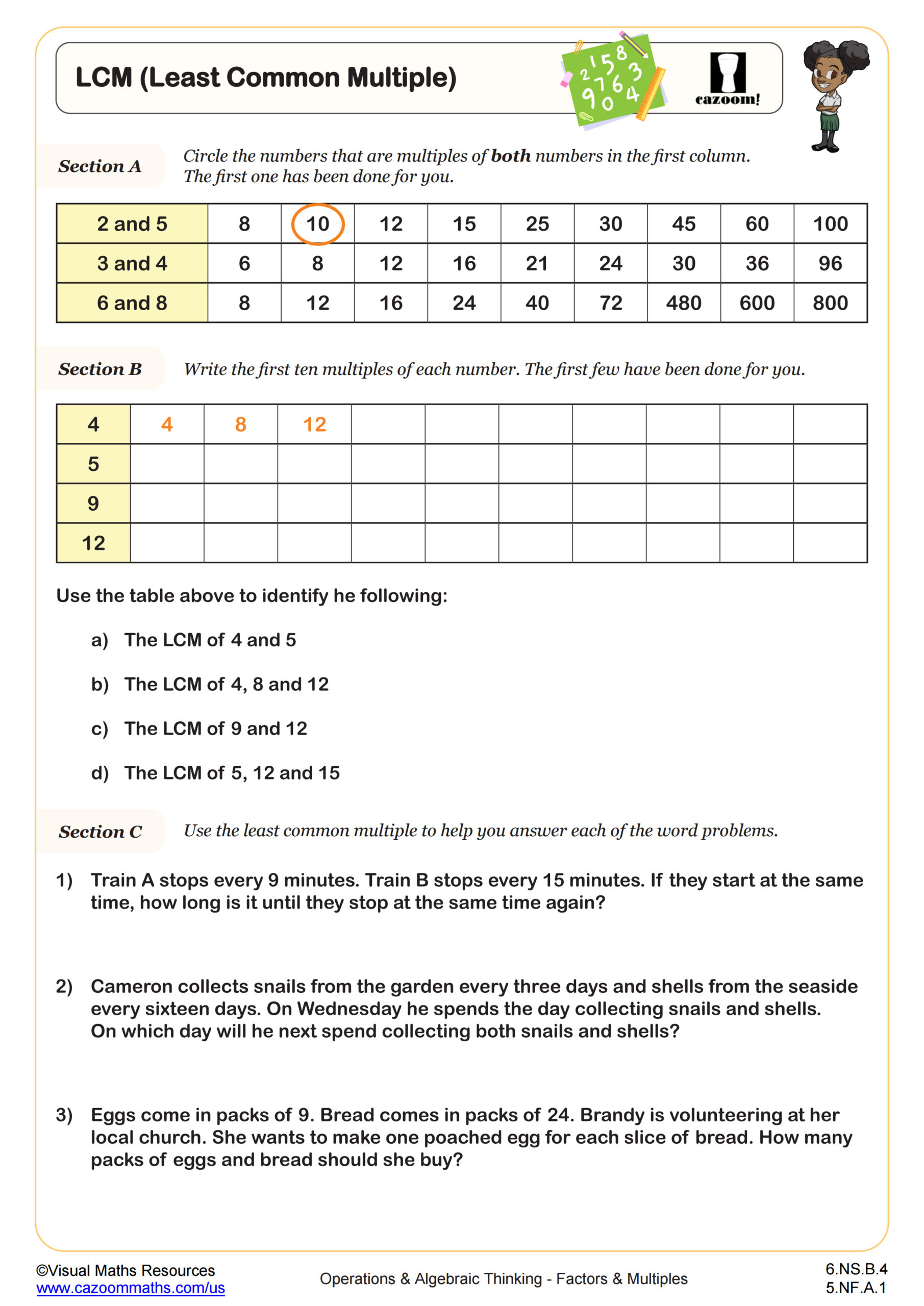
Prime Factorization for GCF and LCM (A)
Grades: 6th Grade
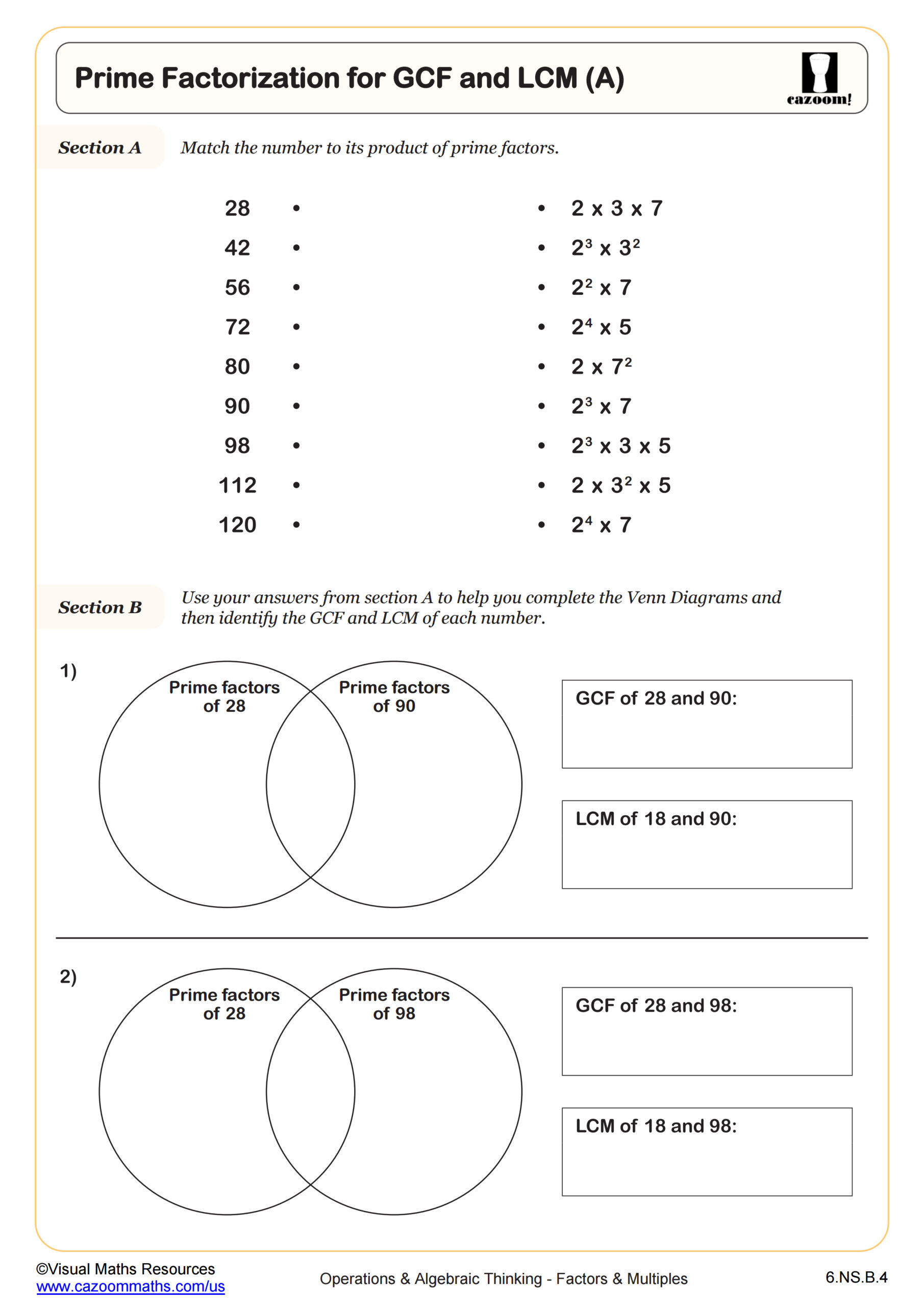
Prime Factorization for GCF and LCM (B)
Grades: 6th Grade
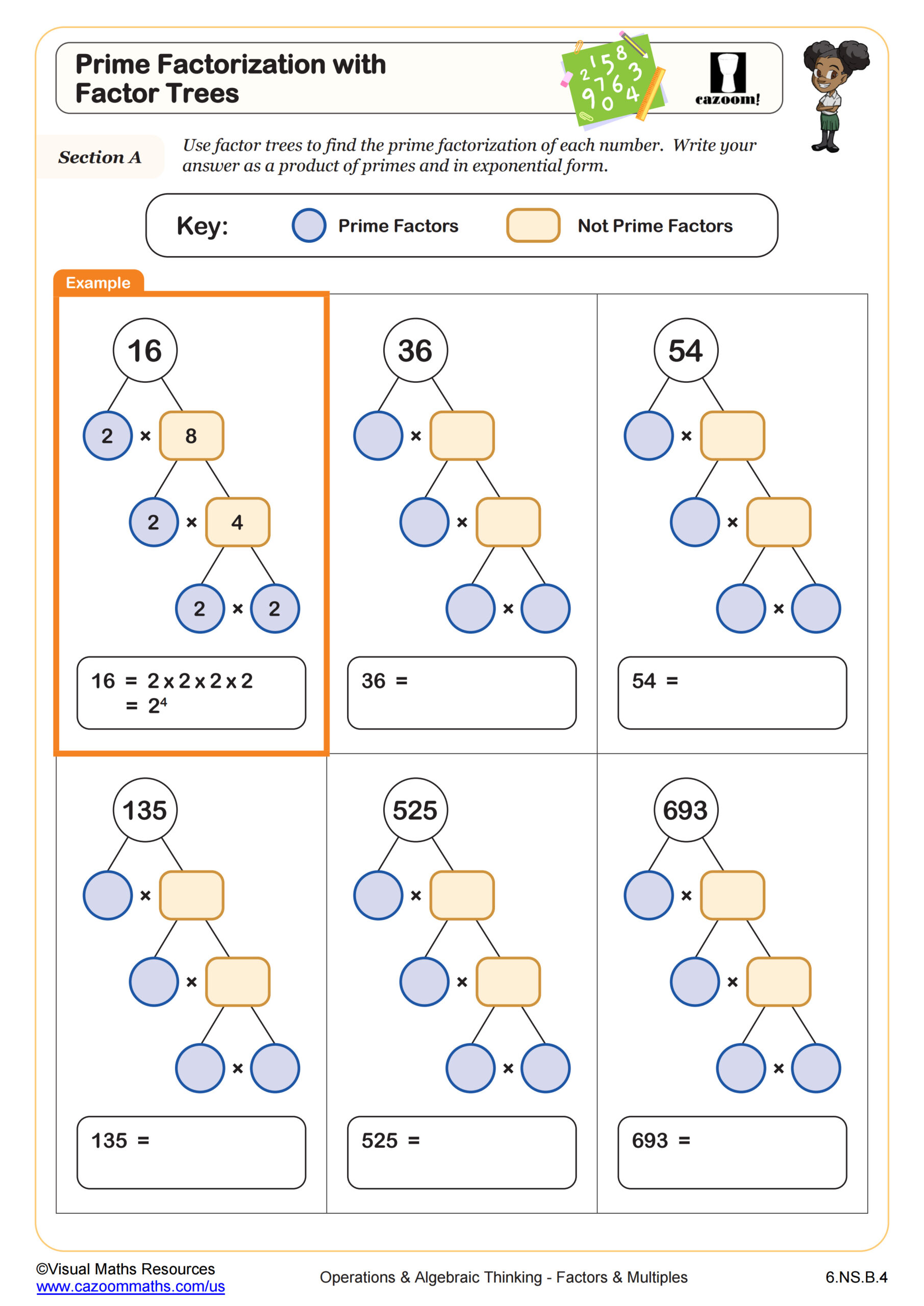
Prime Factorization with Factor Trees
Grades: 6th Grade
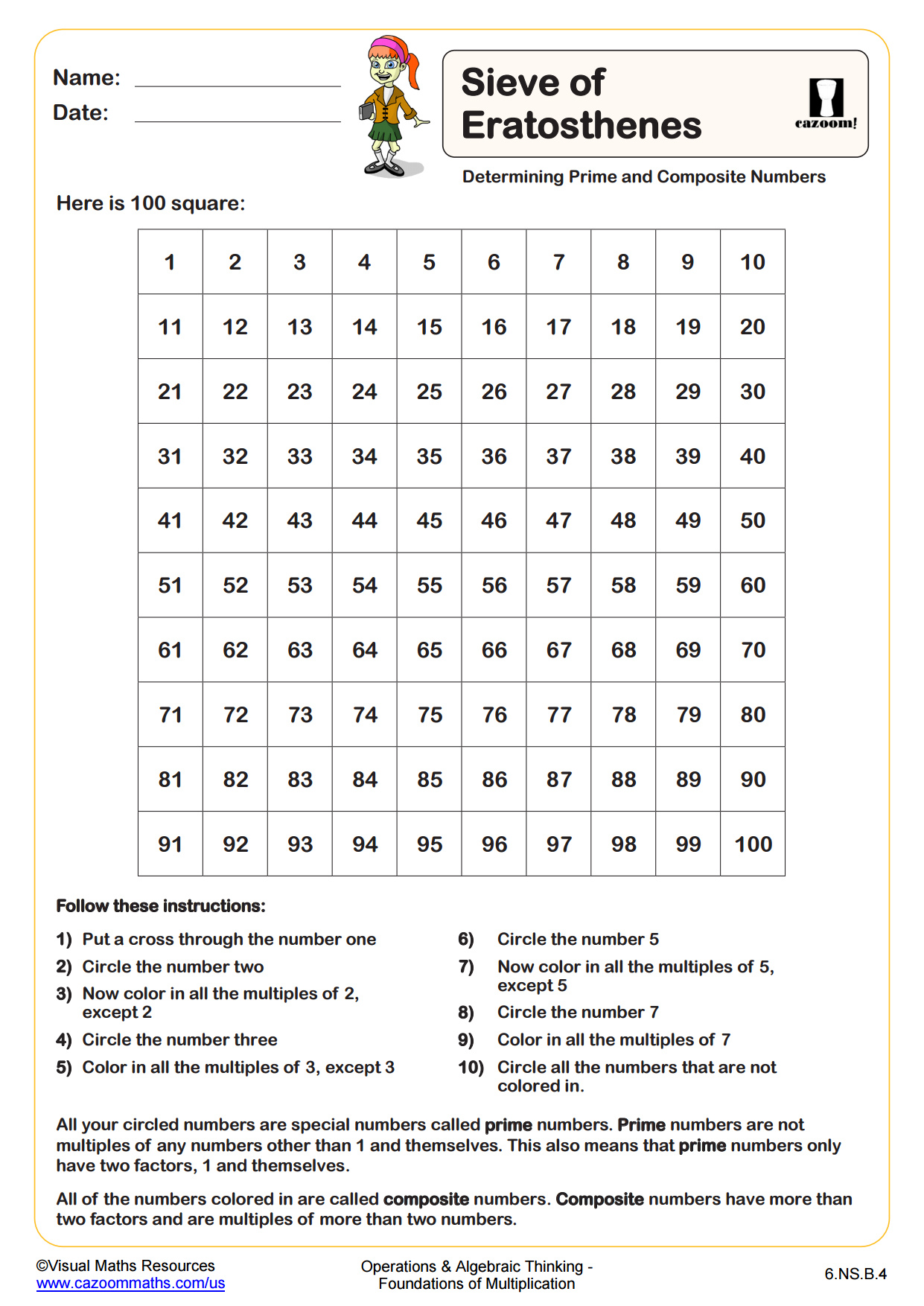
Sieve of Eratosthenes
Grades: 6th Grade
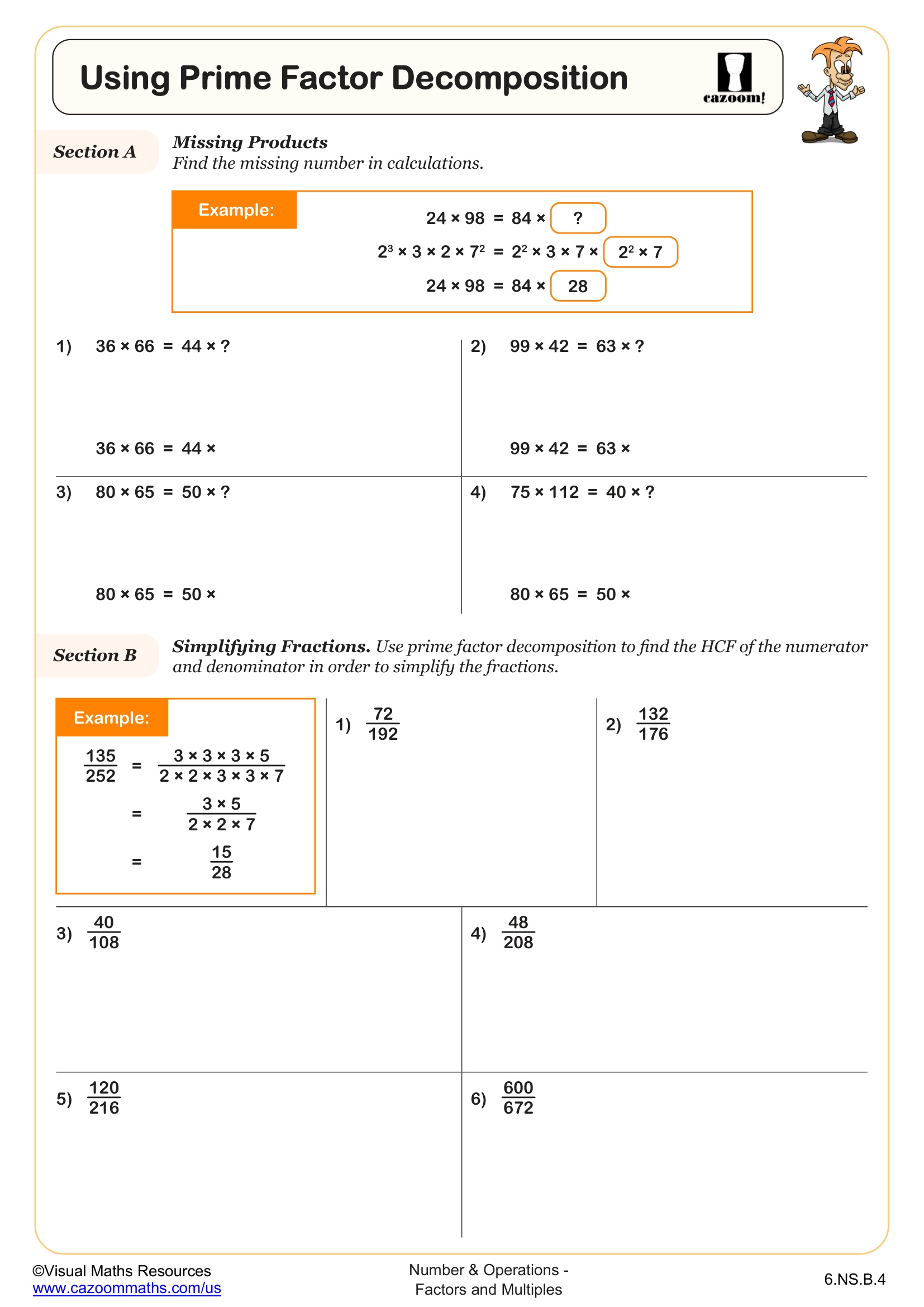
Using Prime Factor Decomposition
Grades: 6th Grade
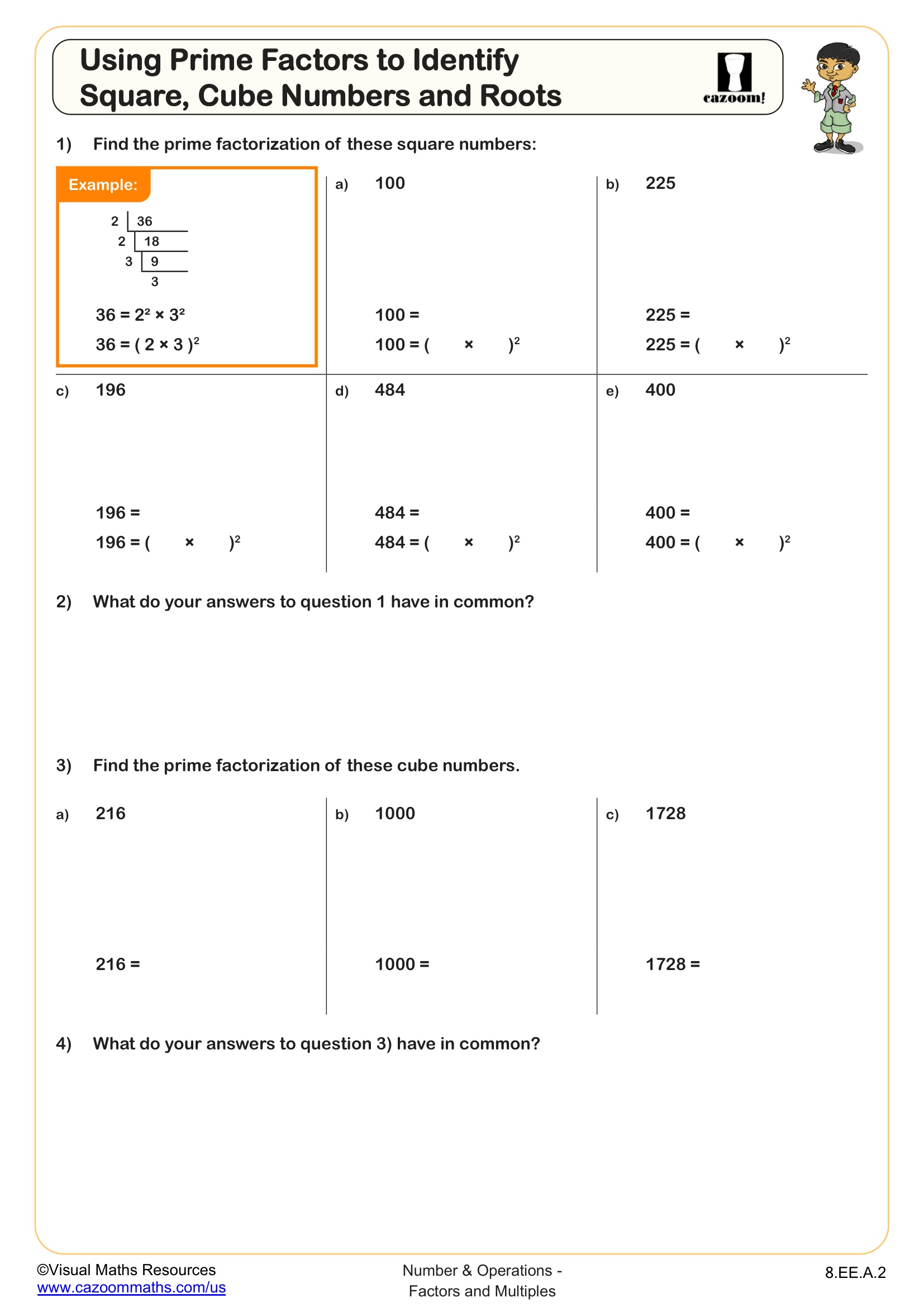
Using Prime Factors to Identify Square, Cube Numbers and Roots
Grades: 8th Grade
All worksheets are created by the team of experienced teachers at Cazoom Math.
What skills do students develop with a factors and multiples worksheet?
A factors and multiples worksheet develops students' ability to find all factors of a given number, identify multiples within specified ranges, and determine greatest common factors and least common multiples. These skills align with Common Core standards across grades 4-8, building from basic factor identification to complex problem-solving involving prime factorization. Students also practice recognizing factor pairs and understanding the relationship between multiplication and division.
Teachers frequently observe that students struggle most when transitioning from concrete examples to abstract problems, particularly when finding factors of numbers larger than 50. Many students initially attempt to list multiples instead of factors, or they miss factor pairs by working unsystematically. Providing factors worksheet with answers allows students to verify their systematic approaches and identify gaps in their reasoning.
Which grade levels benefit most from factors and multiples worksheets?
Factors and multiples concepts span grades 4 through 8, with increasing complexity at each level. Fourth graders typically begin with finding factor pairs and simple multiples, while fifth graders work with prime and composite numbers. Middle school students tackle greatest common factors, least common multiples, and applications involving multiple numbers simultaneously.
The progression requires careful scaffolding since students often master basic factor identification but struggle with systematic approaches to finding all factors. Teachers notice that sixth graders particularly benefit from repeated practice with factors, multiples and primes worksheet with answers because this grade level introduces prime factorization methods. Students need extensive practice connecting these concepts to fraction operations and pre-algebraic thinking.
How do factors and multiples worksheets address prime factorization?
Prime factorization worksheets guide students through systematic methods for breaking down composite numbers into their prime factor components. Students practice using factor trees, division methods, and systematic checking to identify prime factors. These worksheets typically progress from simple two-factor numbers to complex multi-digit composite numbers requiring multiple prime factors.
Teachers consistently observe that students initially struggle with distinguishing prime numbers from composite numbers, particularly with numbers like 51 or 91 that appear prime but aren't. Students often forget to continue factoring until all factors are prime, stopping at intermediate composite factors. The factors and multiples worksheet answers help students verify their factorization trees and identify where their systematic approach broke down, building confidence with this foundational skill for algebra.
What makes factors and multiples worksheets effective for classroom use?
Effective factors worksheets include varied problem types, from basic factor identification to real-world applications involving greatest common factors and least common multiples. Teachers find that worksheets work best when they include visual supports like factor trees and systematic organizational methods. Problems should progress logically from simple examples to complex multi-step applications.
Classroom implementation succeeds when teachers use the answer keys for immediate feedback rather than just final grading. Many teachers have students work through problems in pairs, checking answers frequently to catch misconceptions early. The most effective approach involves connecting factor and multiple concepts to practical applications like finding equivalent fractions, simplifying ratios, or solving scheduling problems where students need to find common time intervals.
What Should Students Know Before Starting?
Before working on factors and multiples, students should:
• Be confident with multiplication and division facts
• Understand how to identify even and odd numbers
• Know how to skip count and use arrays
• Recognize number patterns and place value
These basic skills create a strong foundation. Our worksheets build on that knowledge and help learners grow through structured and supportive activities.