Fractions Worksheets With Answers
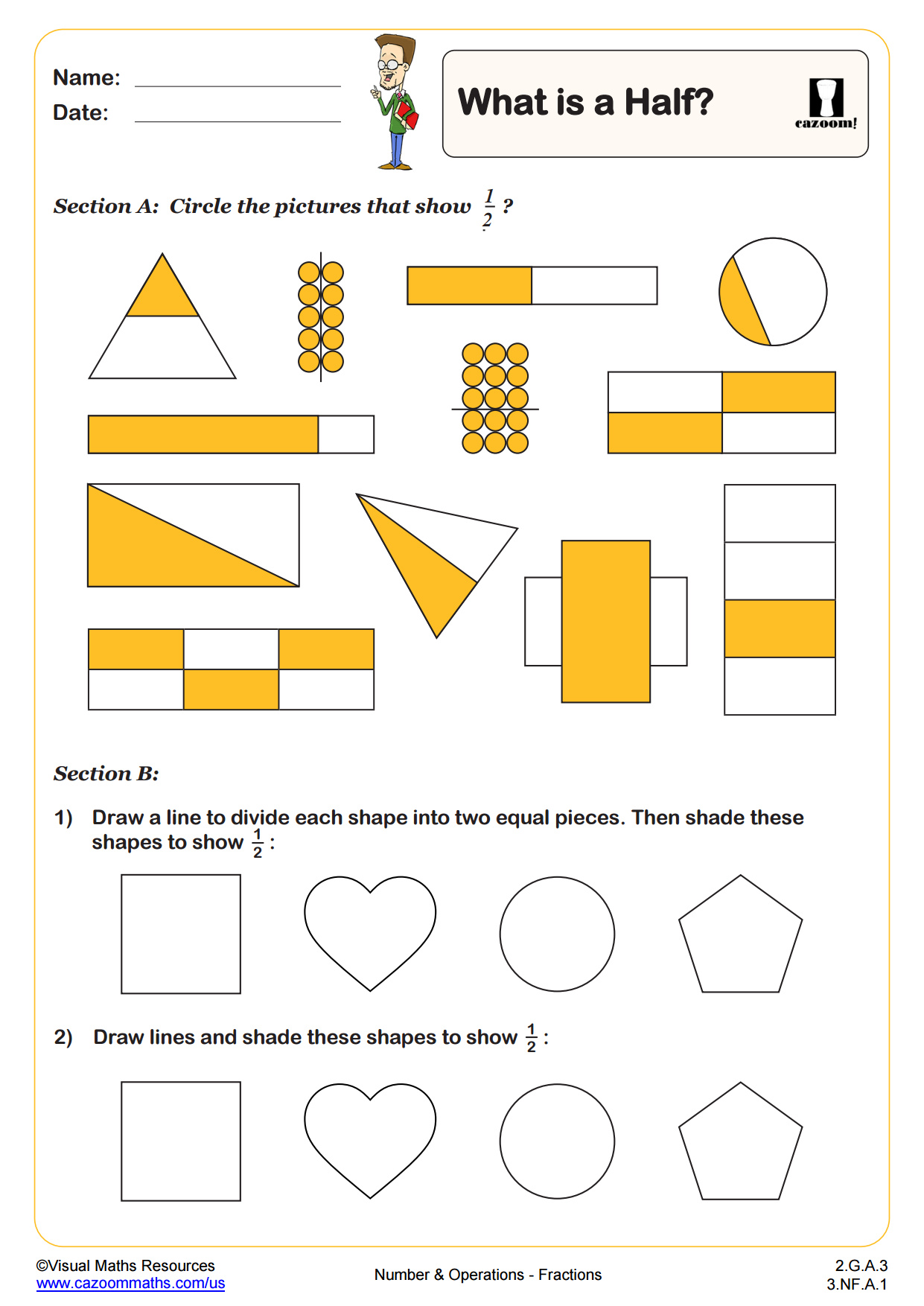
What is a Half
Grades: 2nd Grade, 3rd Grade
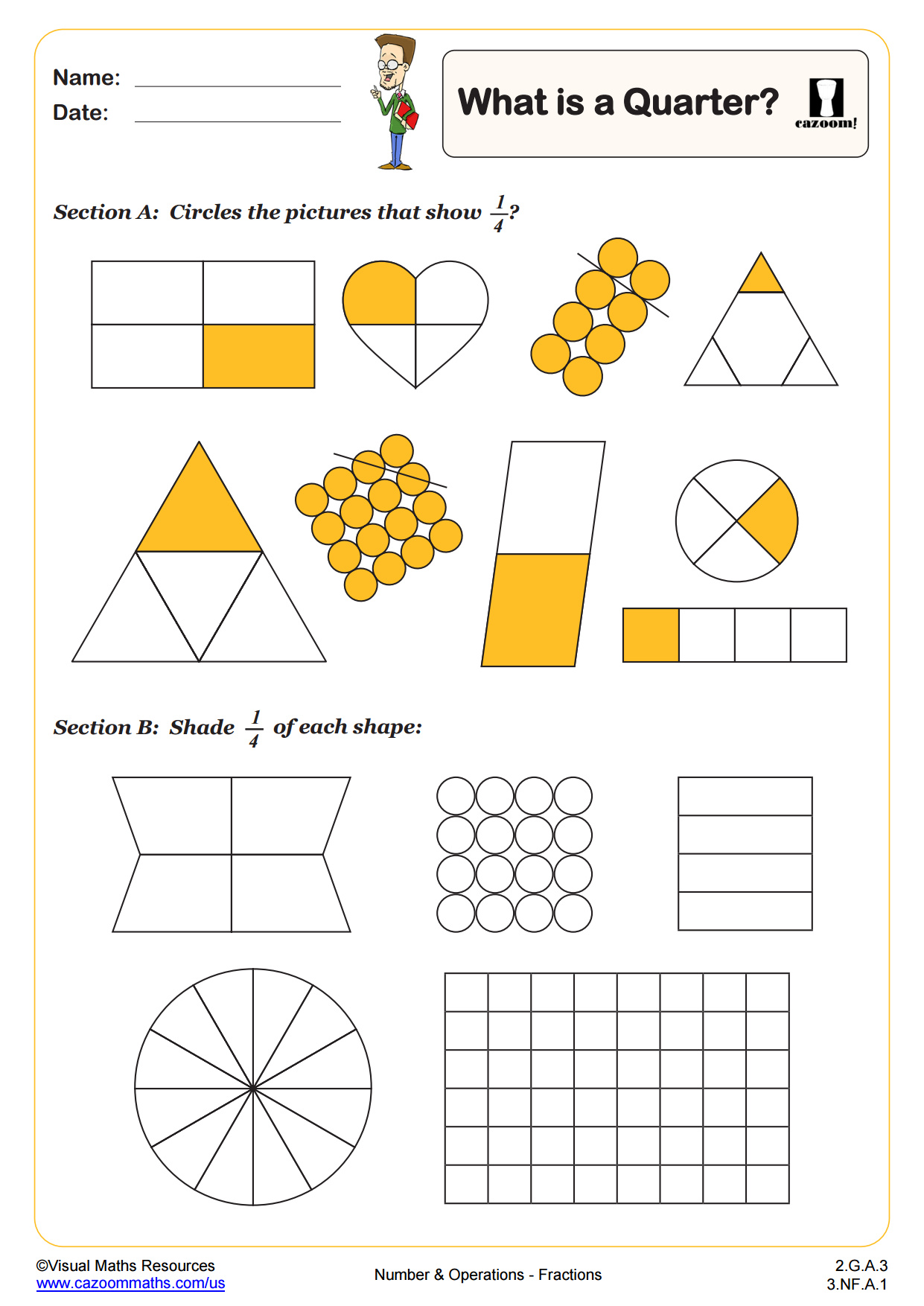
What is a Quarter
Grades: 2nd Grade, 3rd Grade
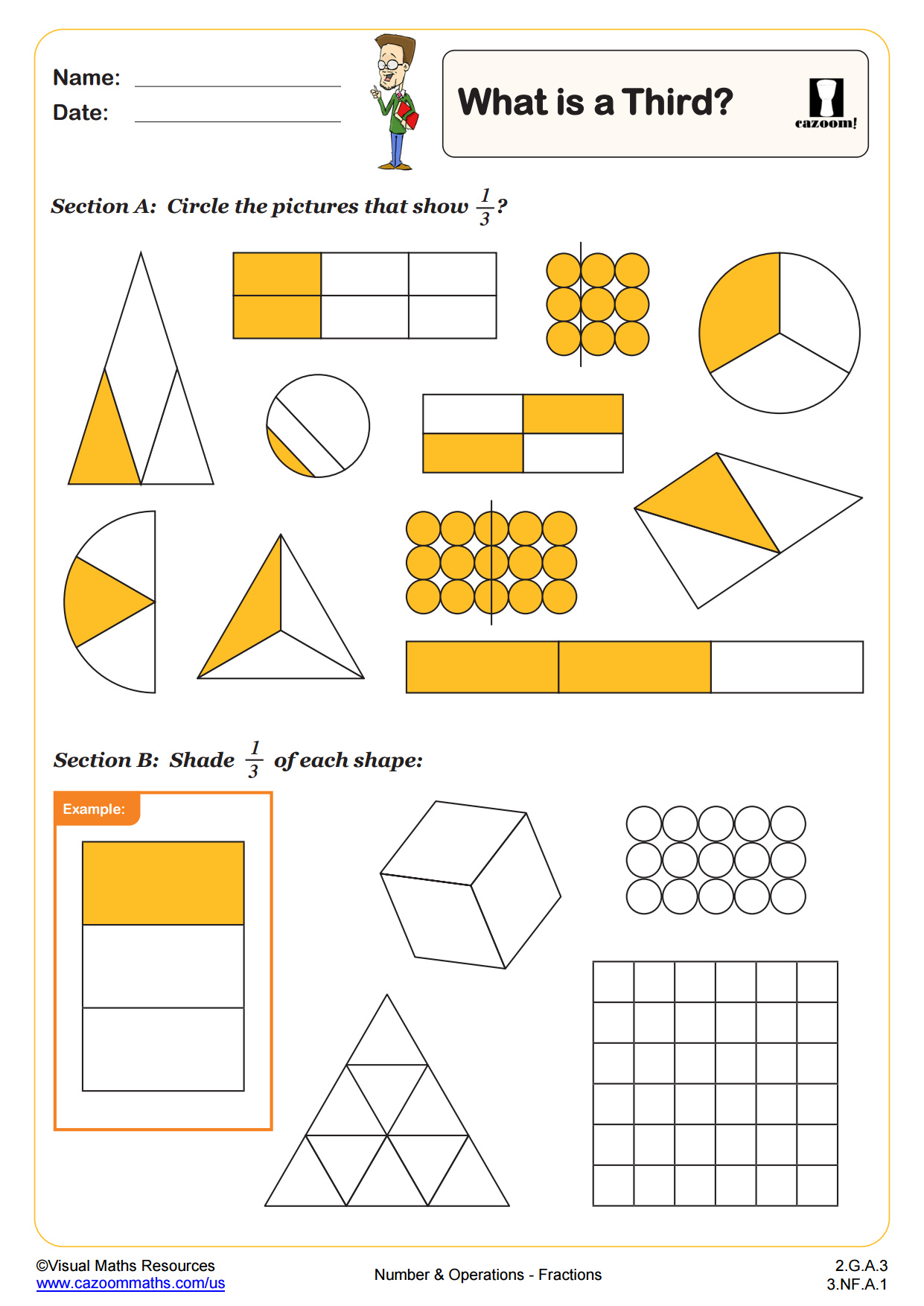
What is a Third
Grades: 2nd Grade, 3rd Grade
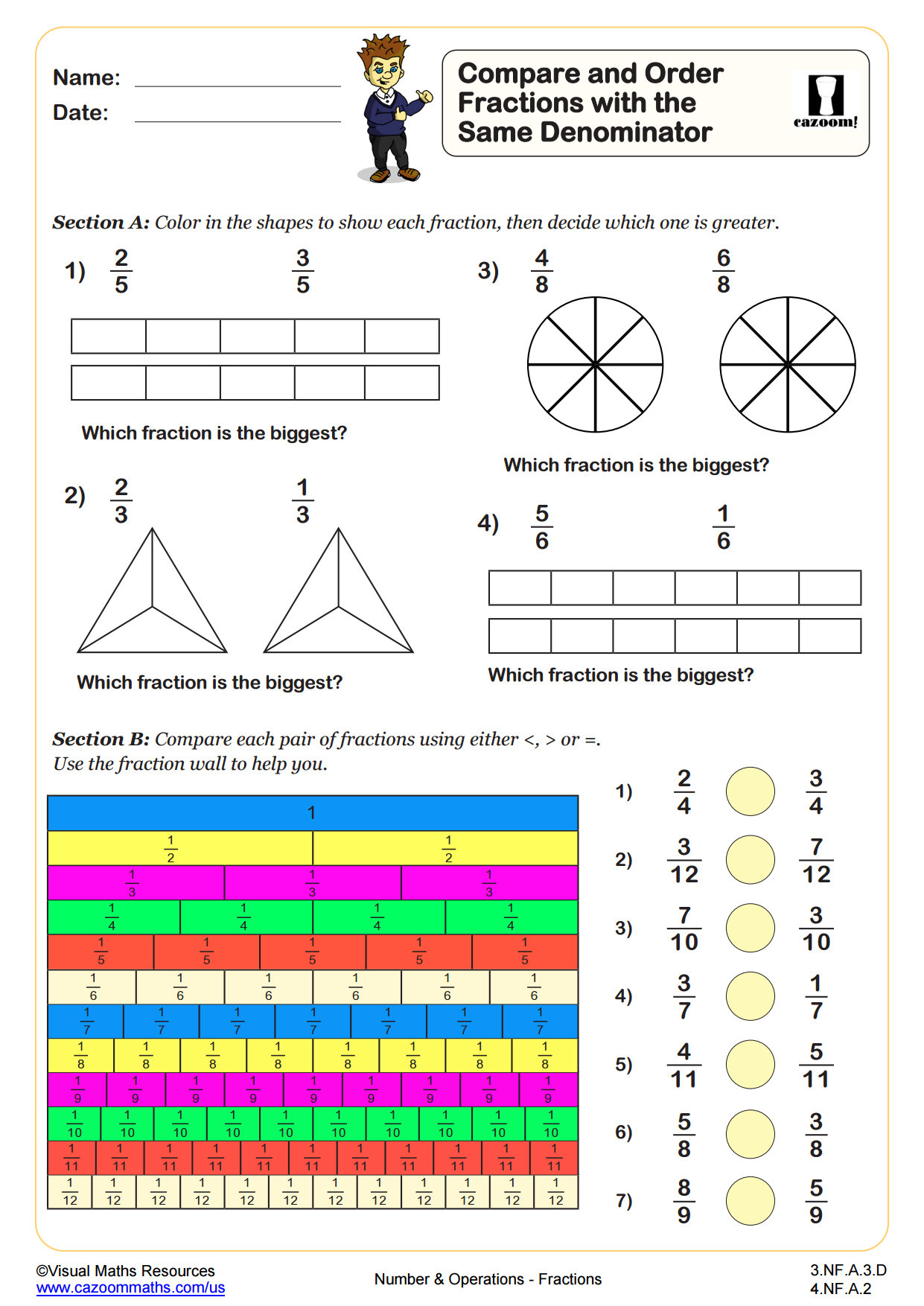
Compare and Order Fractions with the Same Denominator
Grades: 3rd Grade, 4th Grade
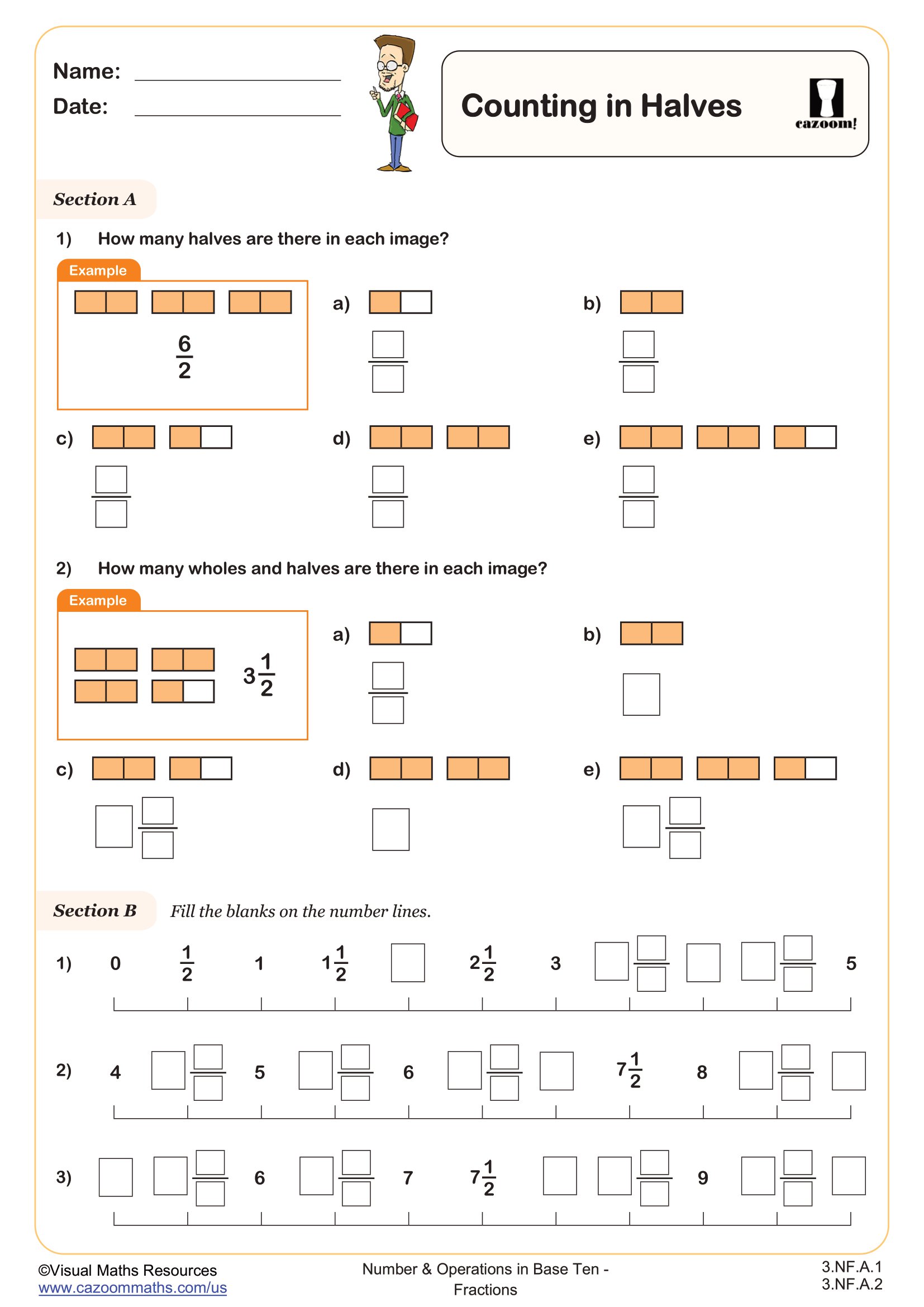
Counting in Halves
Grades: 3rd Grade
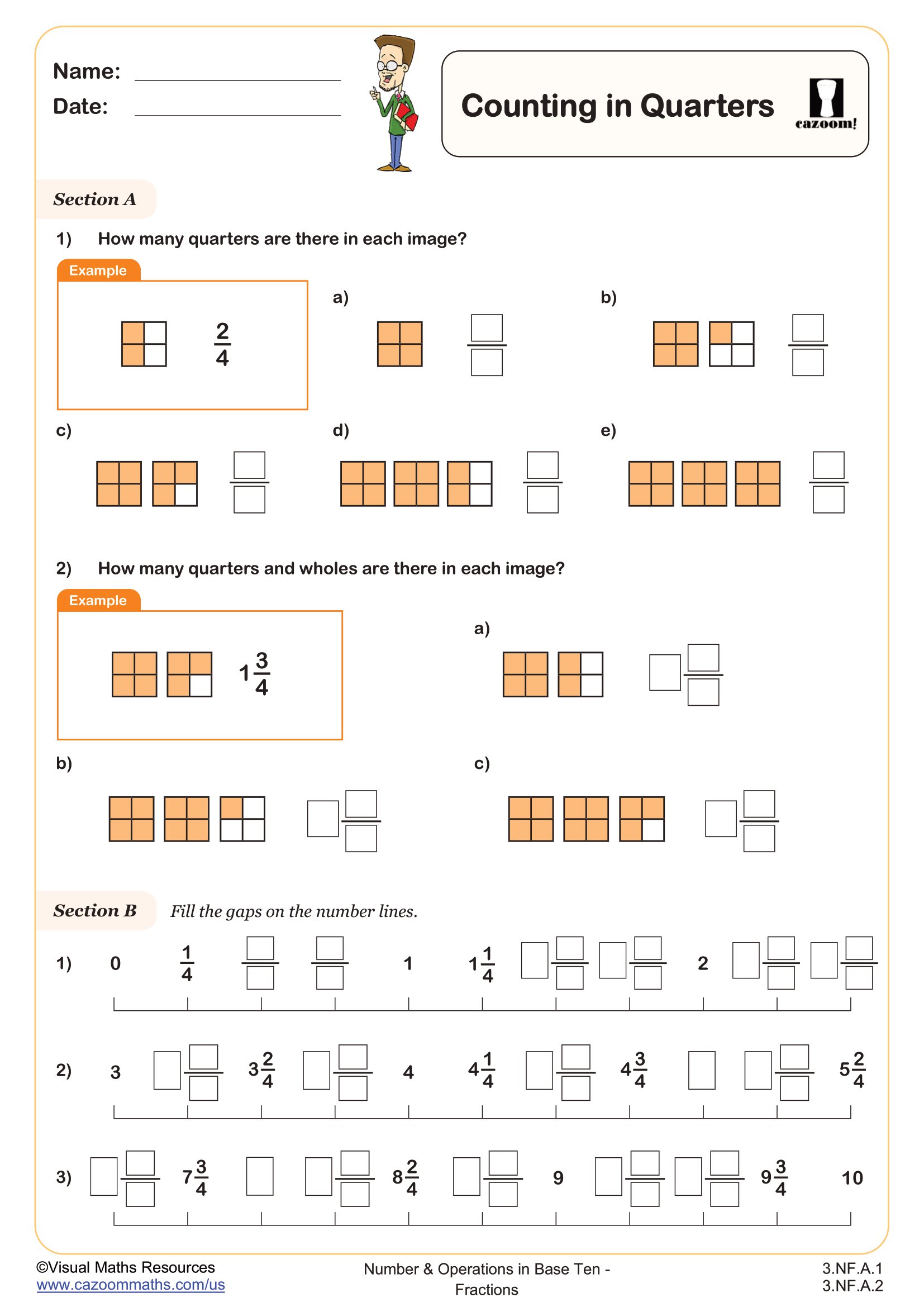
Counting in Quarters
Grades: 3rd Grade
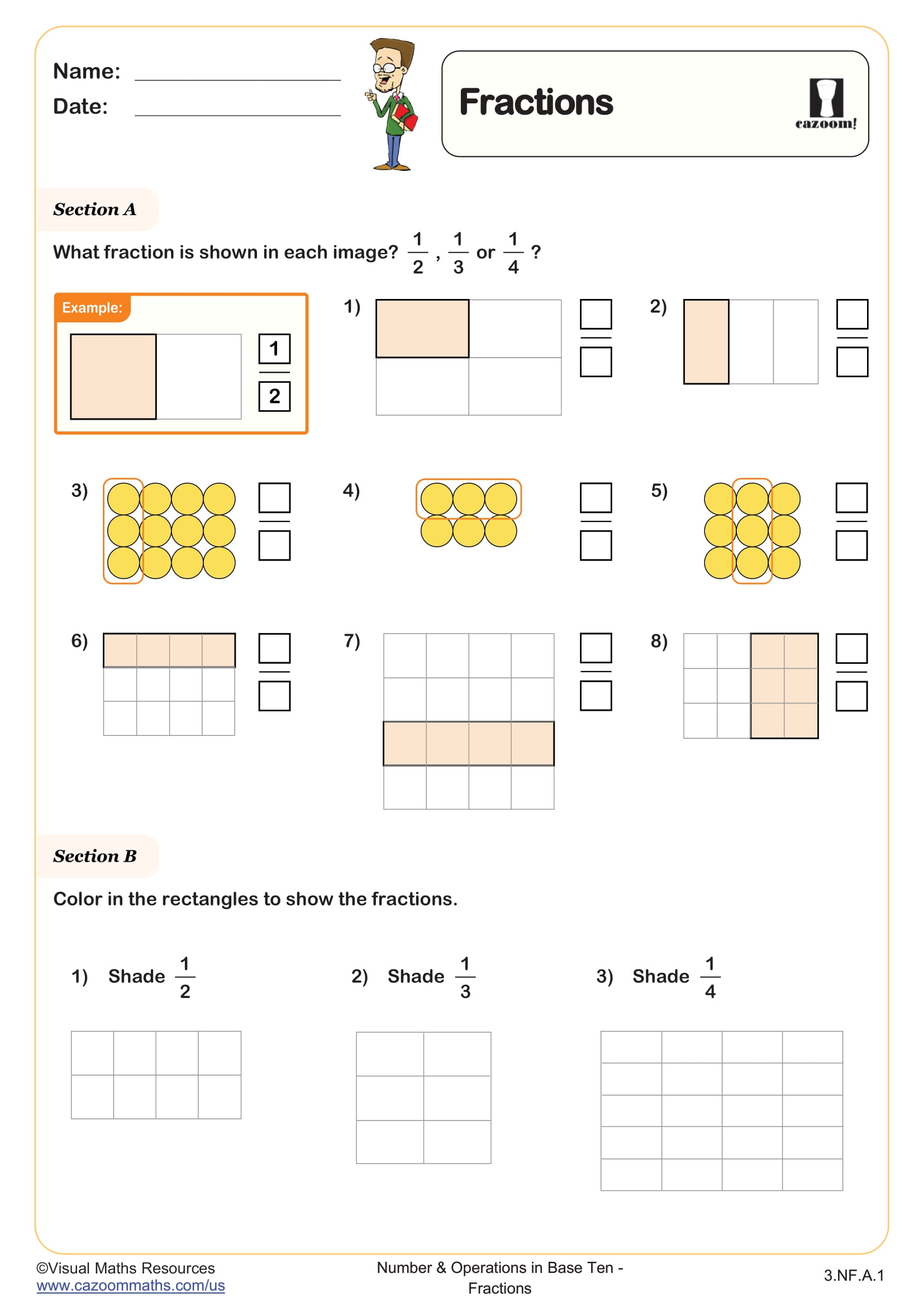
Fractions
Grades: 3rd Grade
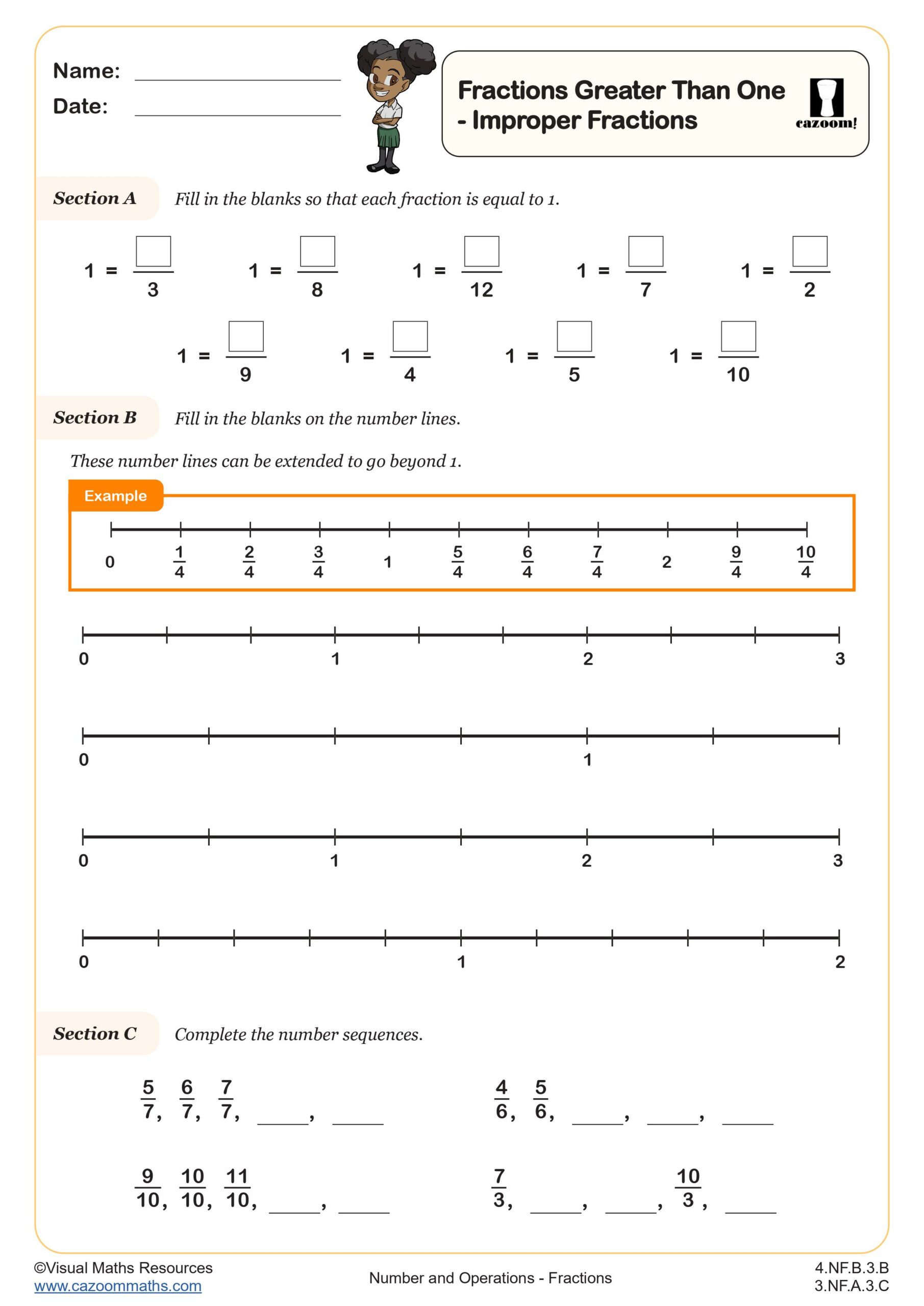
Fractions Greater Than One - Improper Fractions
Grades: 3rd Grade, 4th Grade
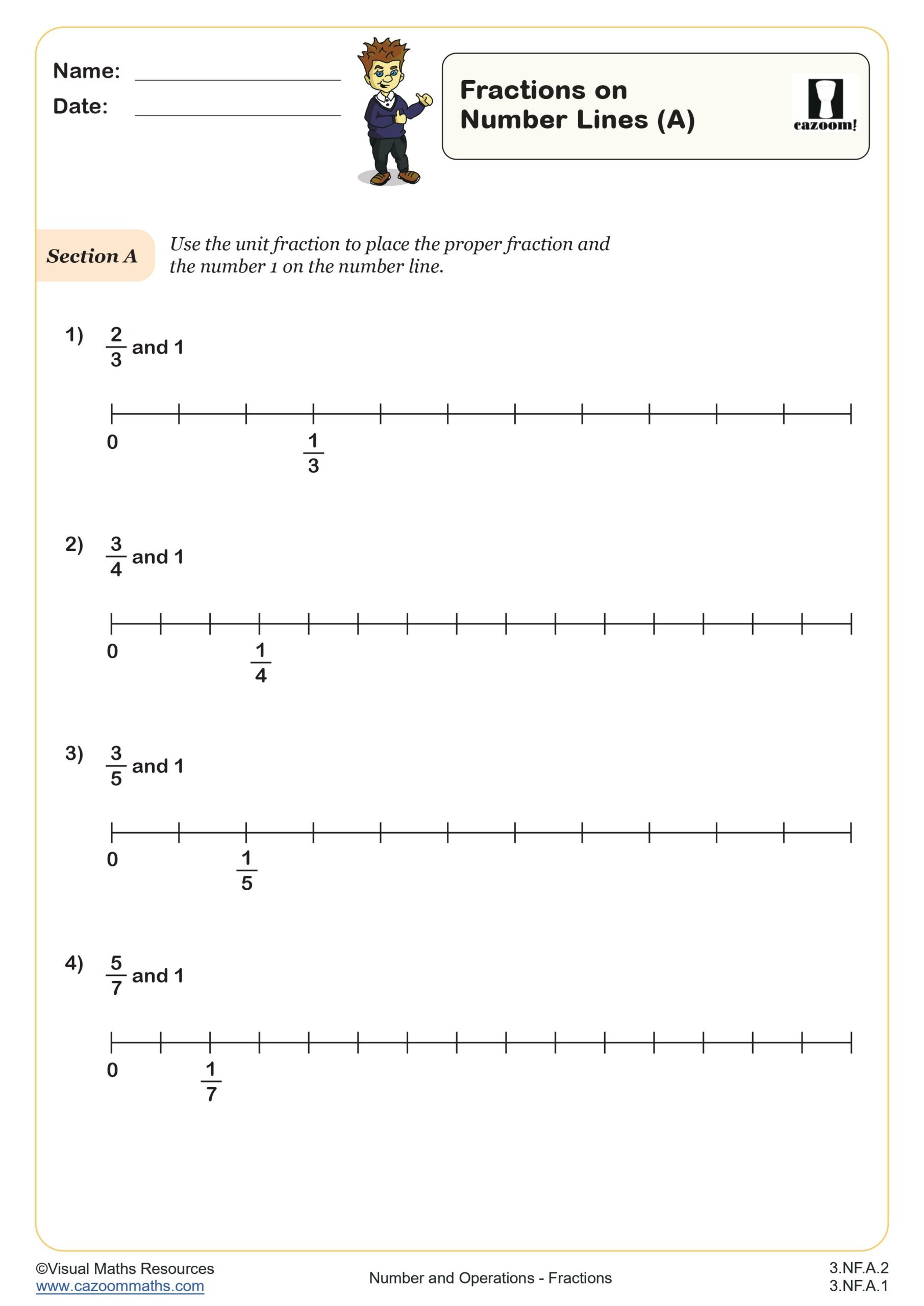
Fractions on Number Lines (A)
Grades: 3rd Grade
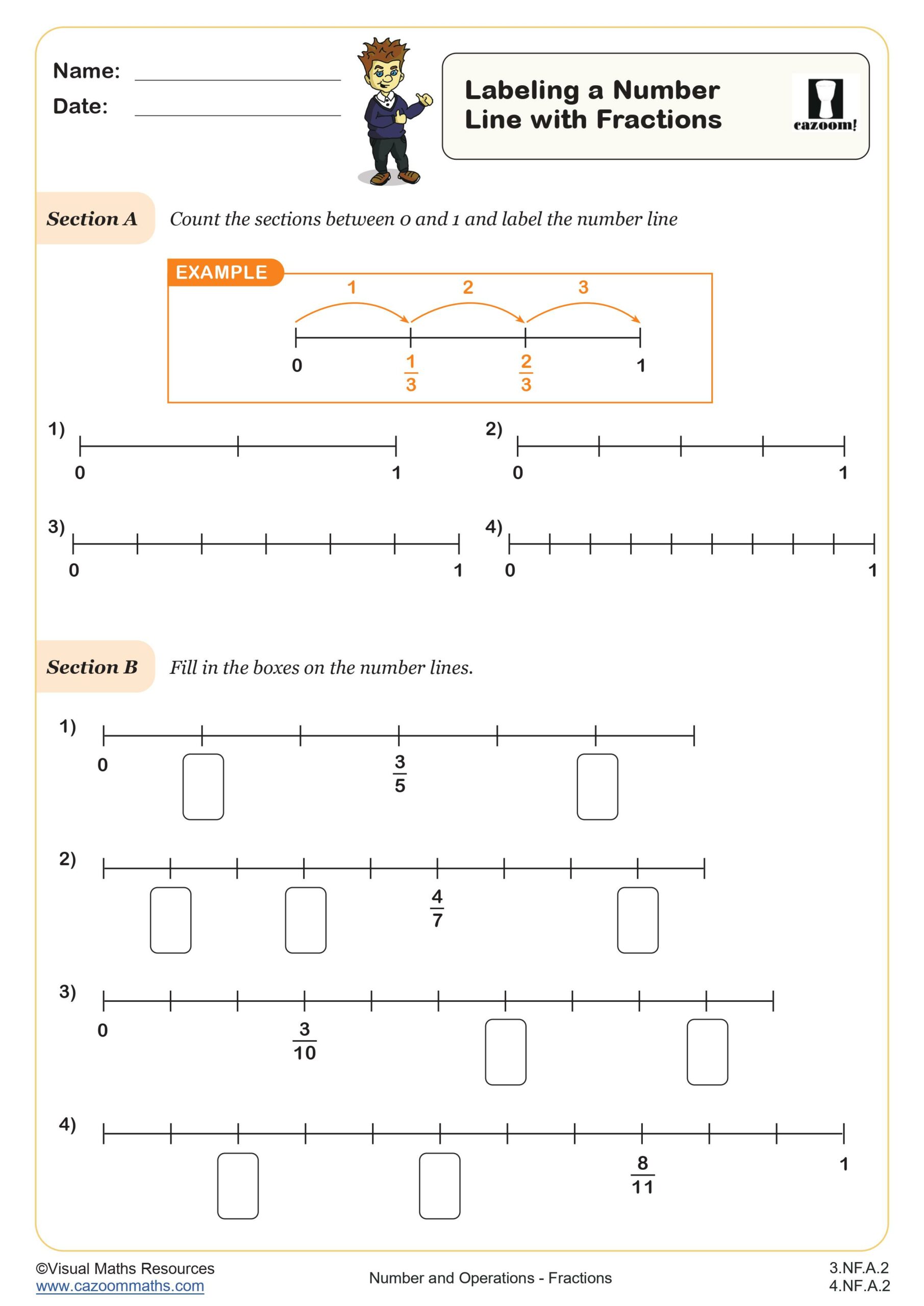
Labeling a Number Line with Fractions
Grades: 3rd Grade, 4th Grade
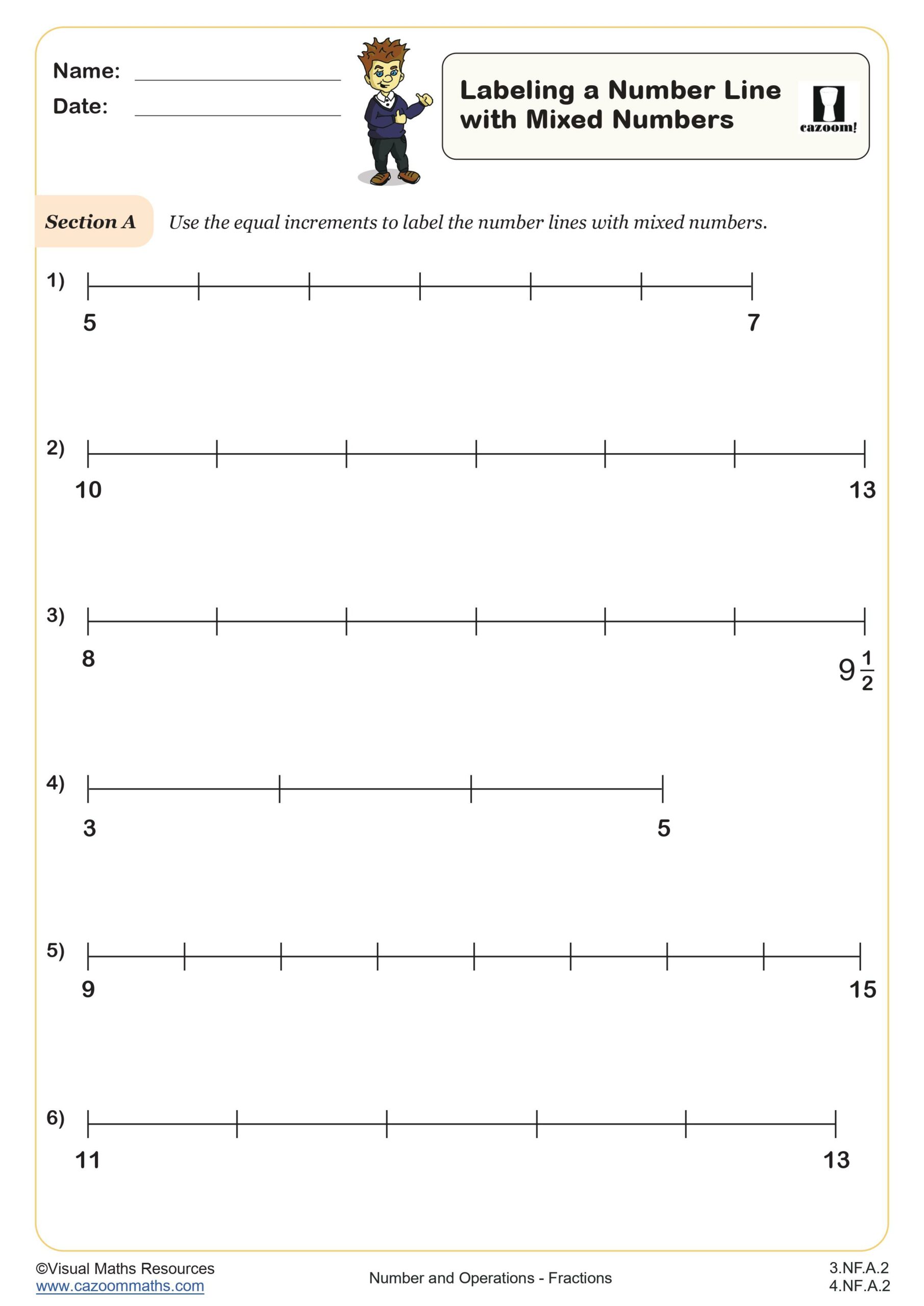
Labeling a Number Line with Mixed Numbers
Grades: 3rd Grade, 4th Grade
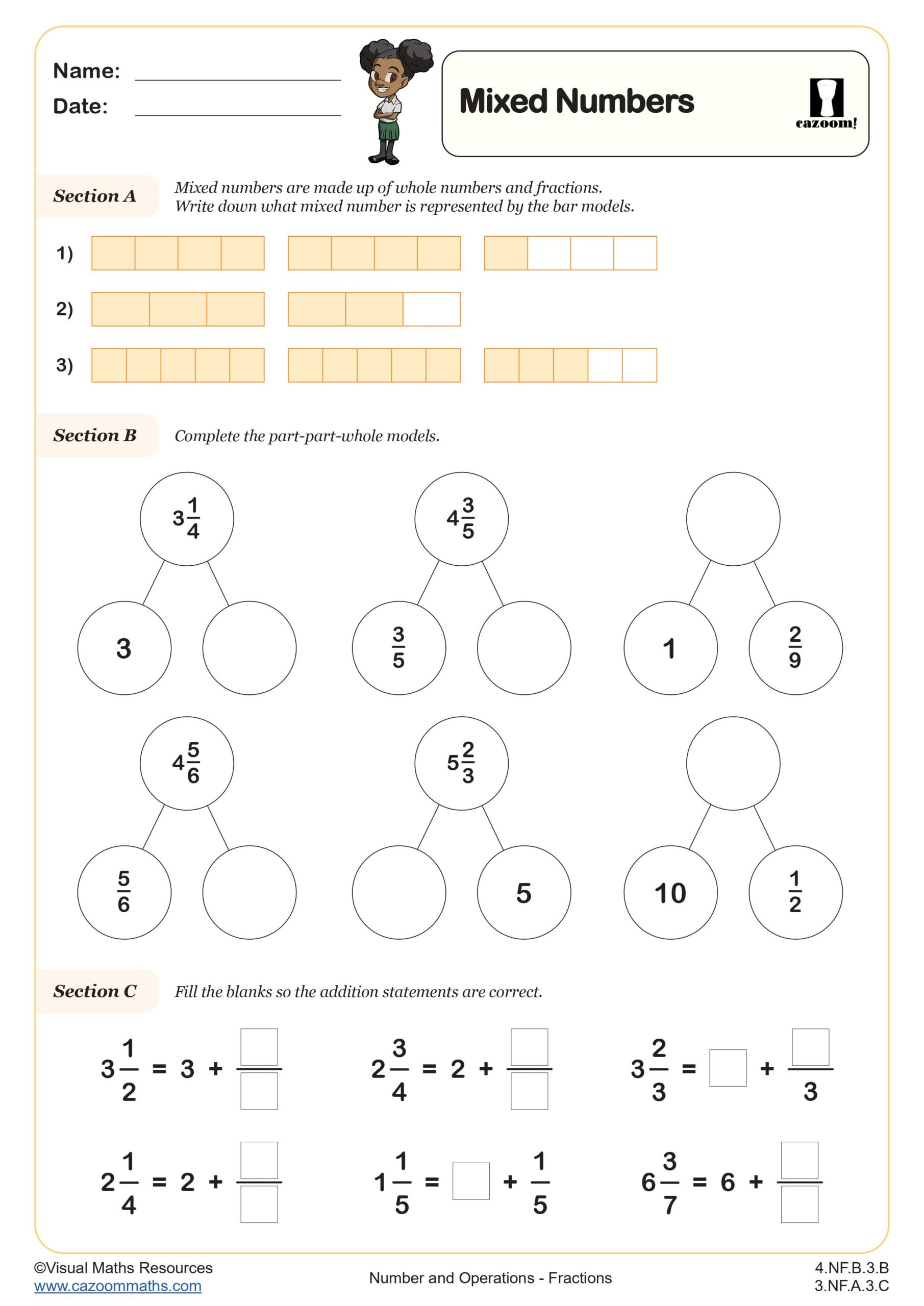
Mixed Numbers
Grades: 3rd Grade, 4th Grade
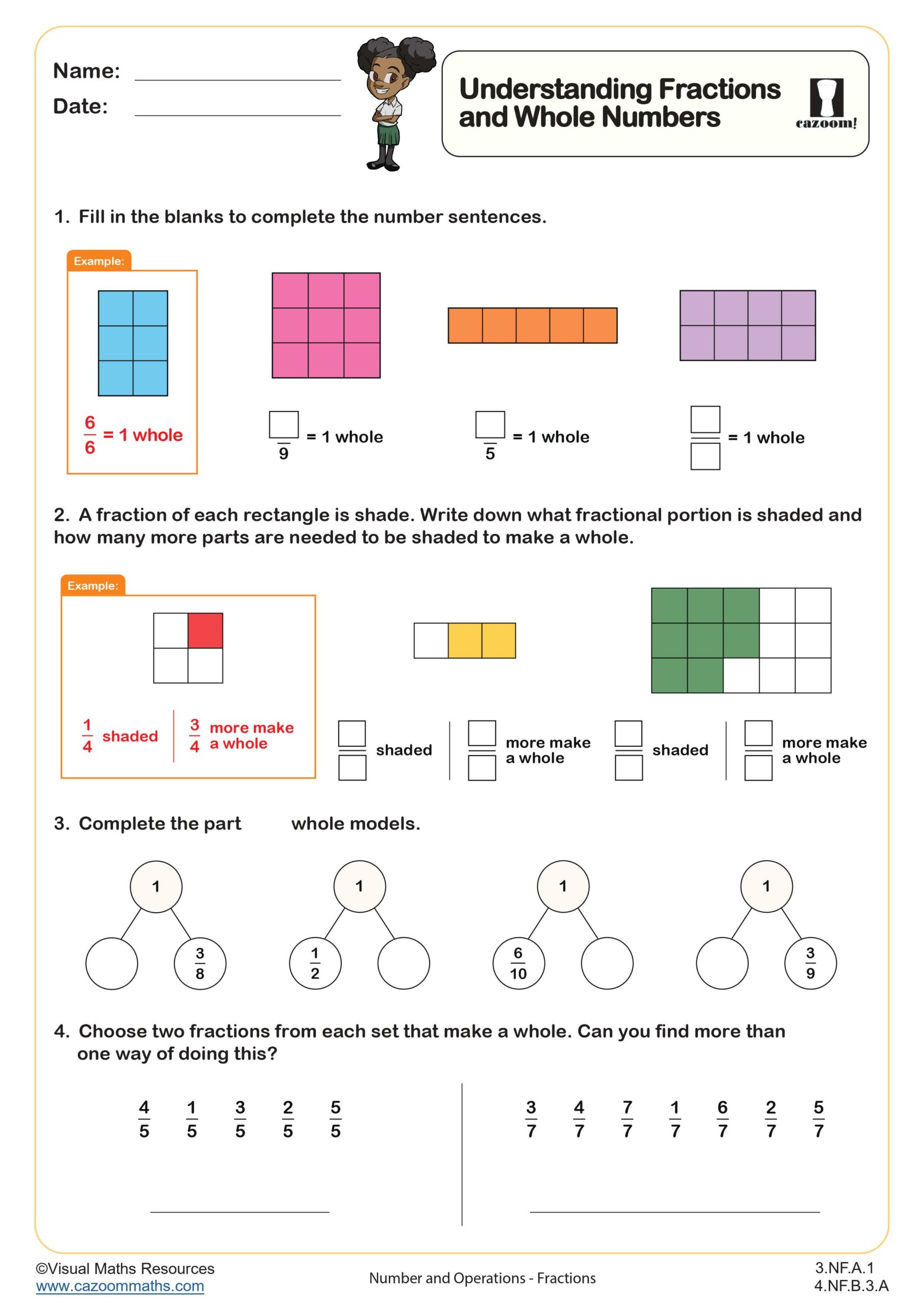
Understanding Fractions and Whole Numbers
Grades: 3rd Grade, 4th Grade
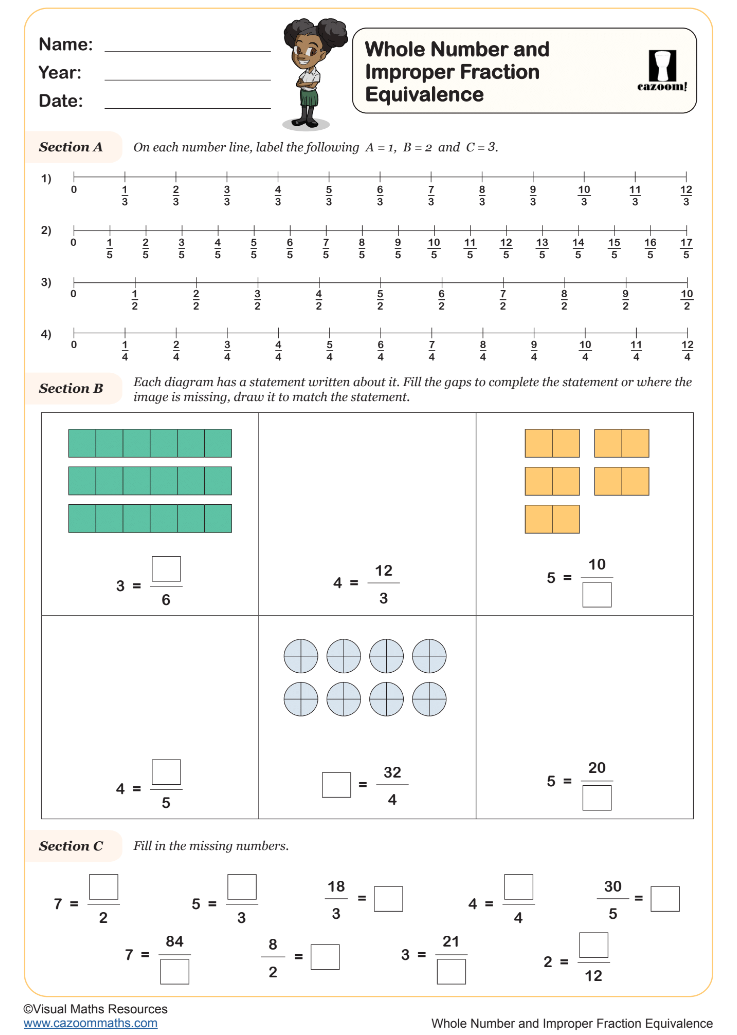
Whole Number and Improper Fraction Equivalence
Grades: 3rd Grade, 4th Grade
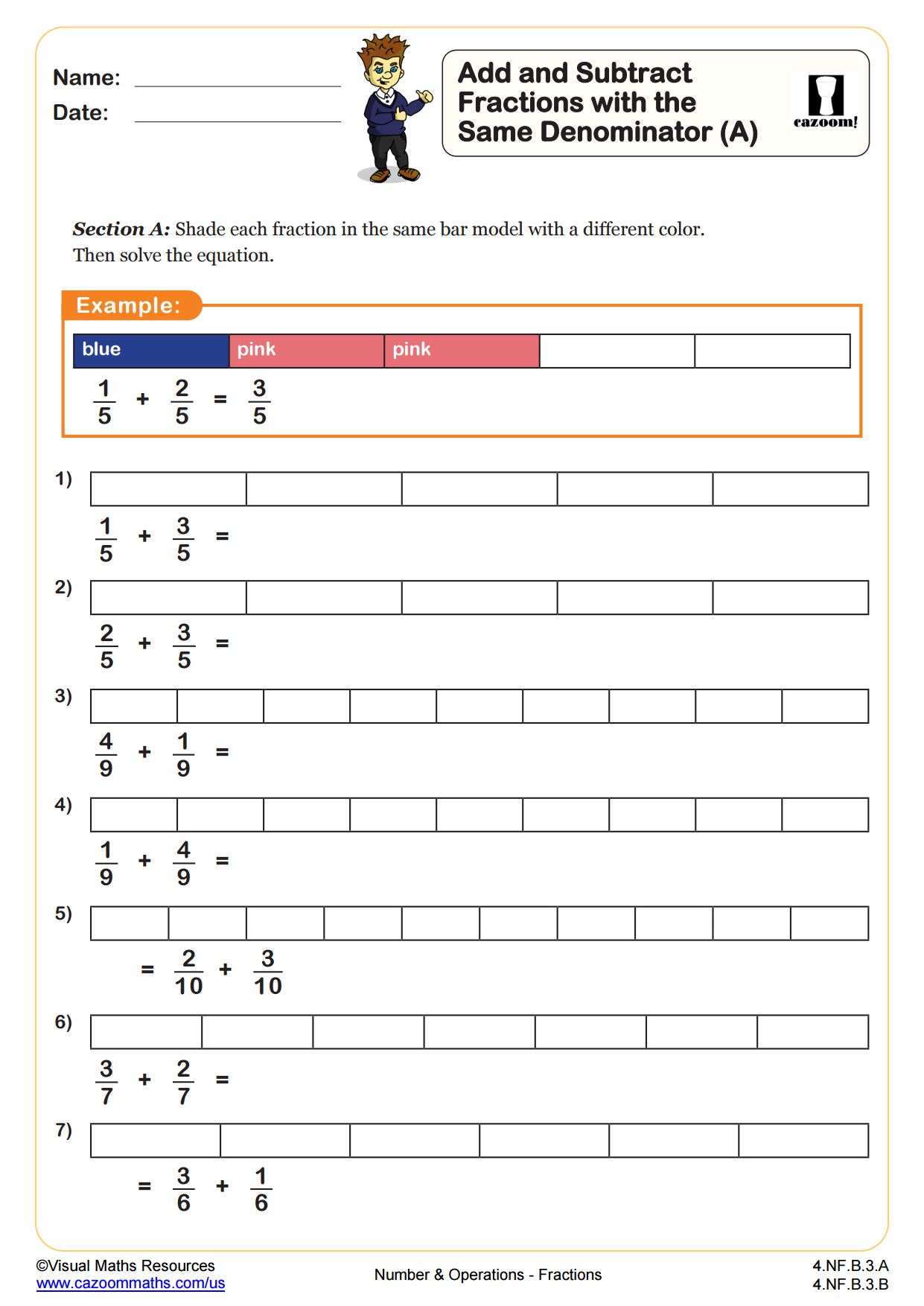
Add and Subtract Fractions (A)
Grades: 4th Grade
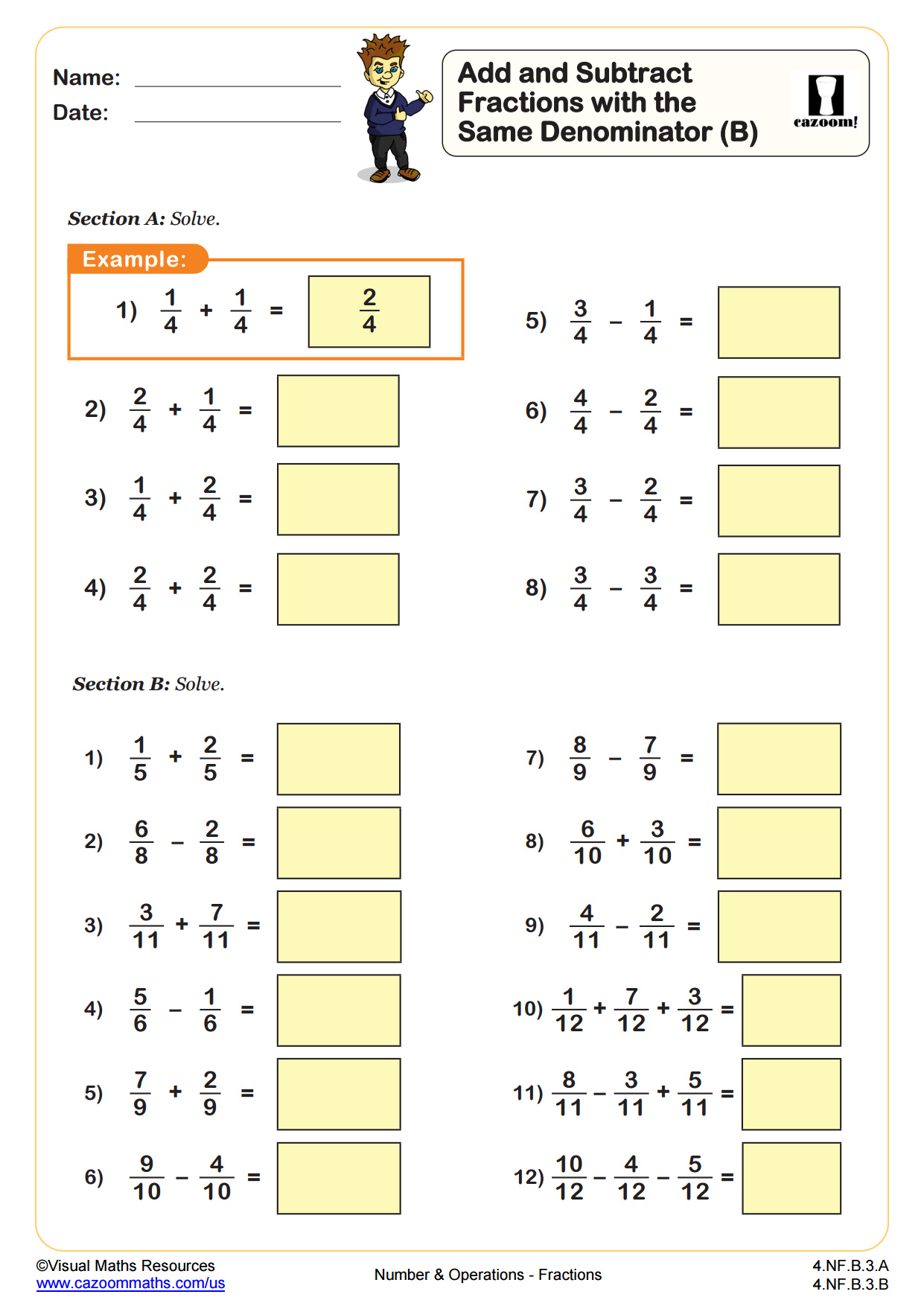
Add and Subtract Fractions (B)
Grades: 4th Grade
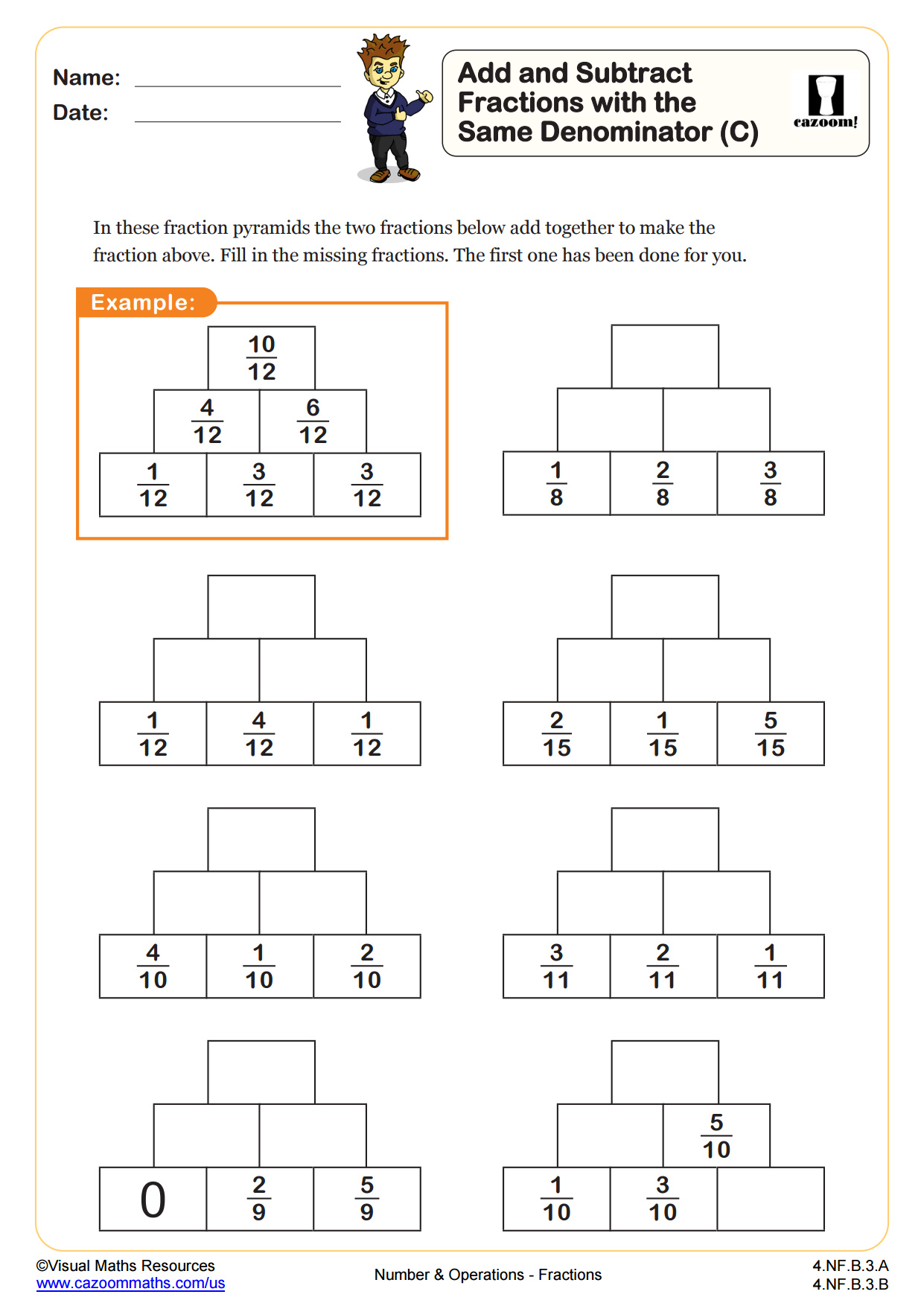
Add and Subtract Fractions (C)
Grades: 4th Grade
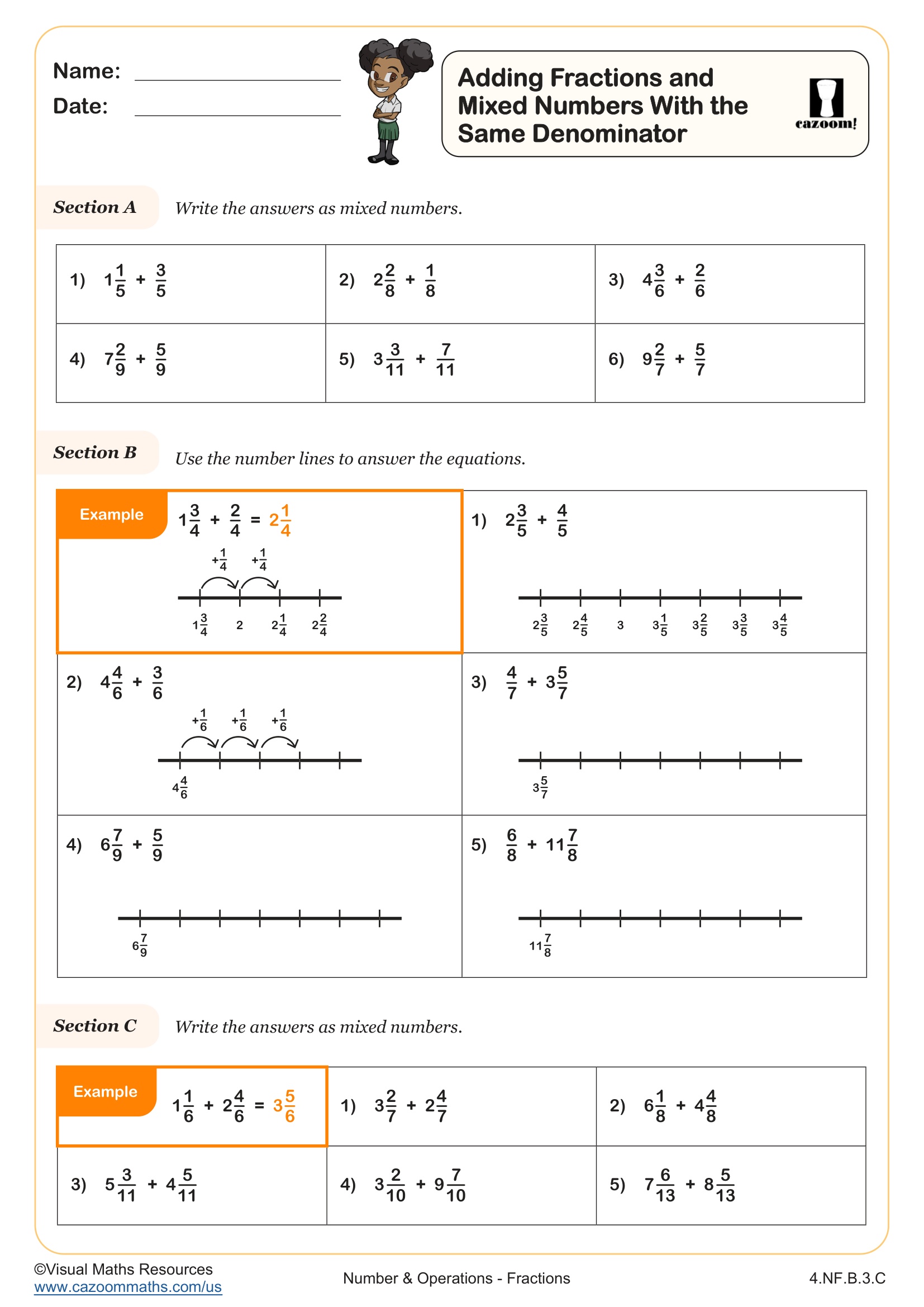
Adding Fractions and Mixed Numbers with the Same Denominator
Grades: 4th Grade
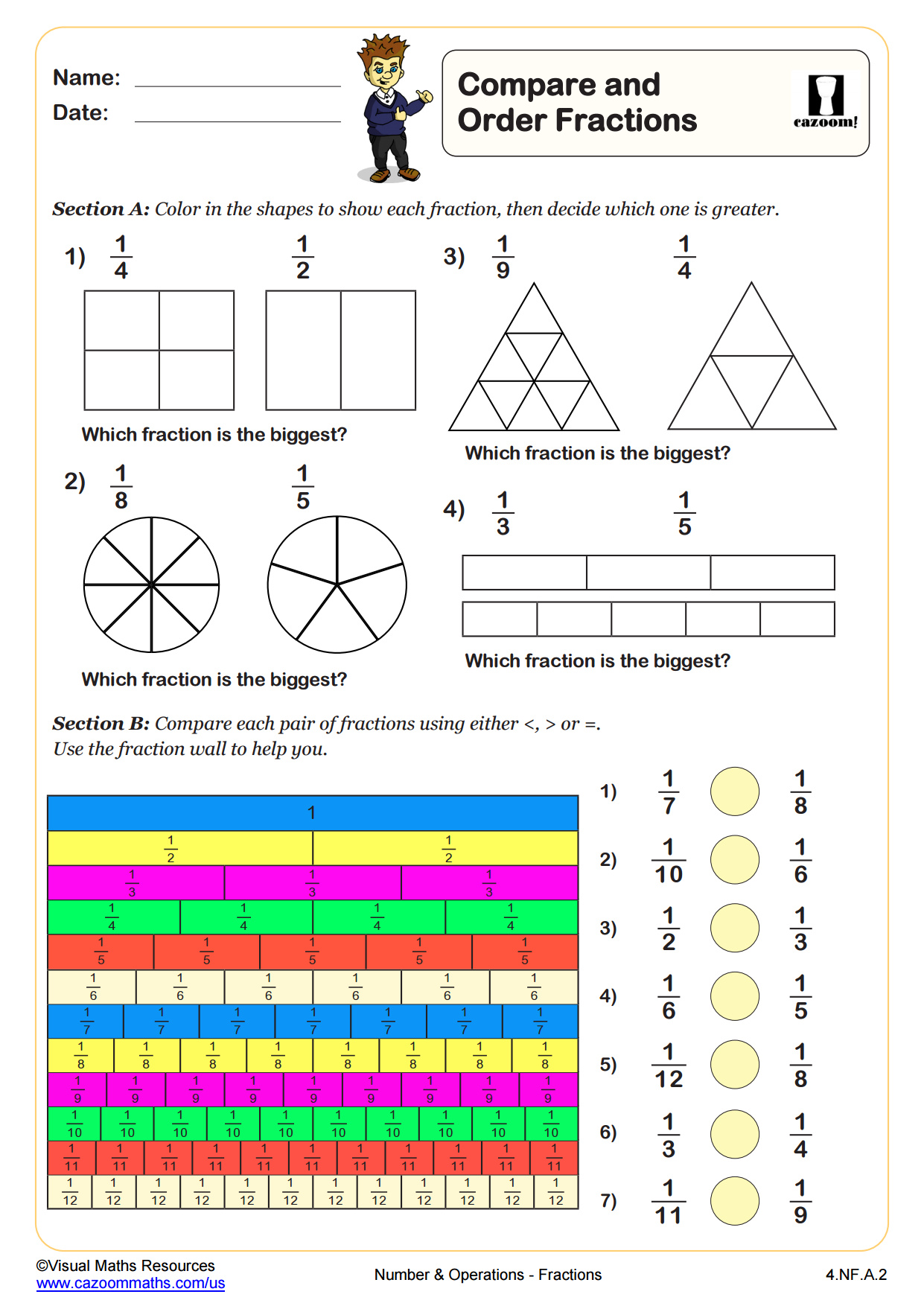
Compare and Order Fractions
Grades: 4th Grade
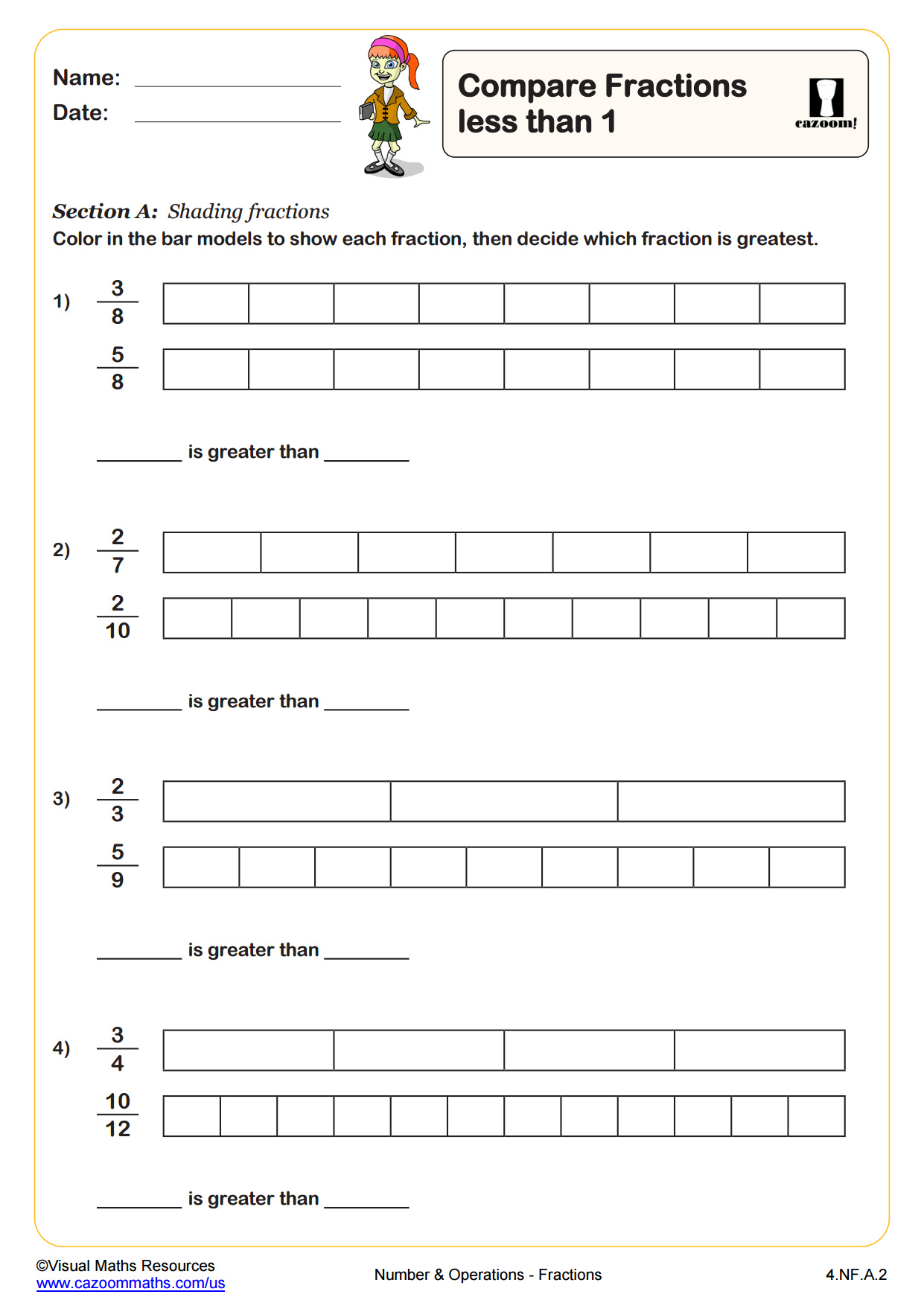
Compare Fractions Less Than 1
Grades: 4th Grade
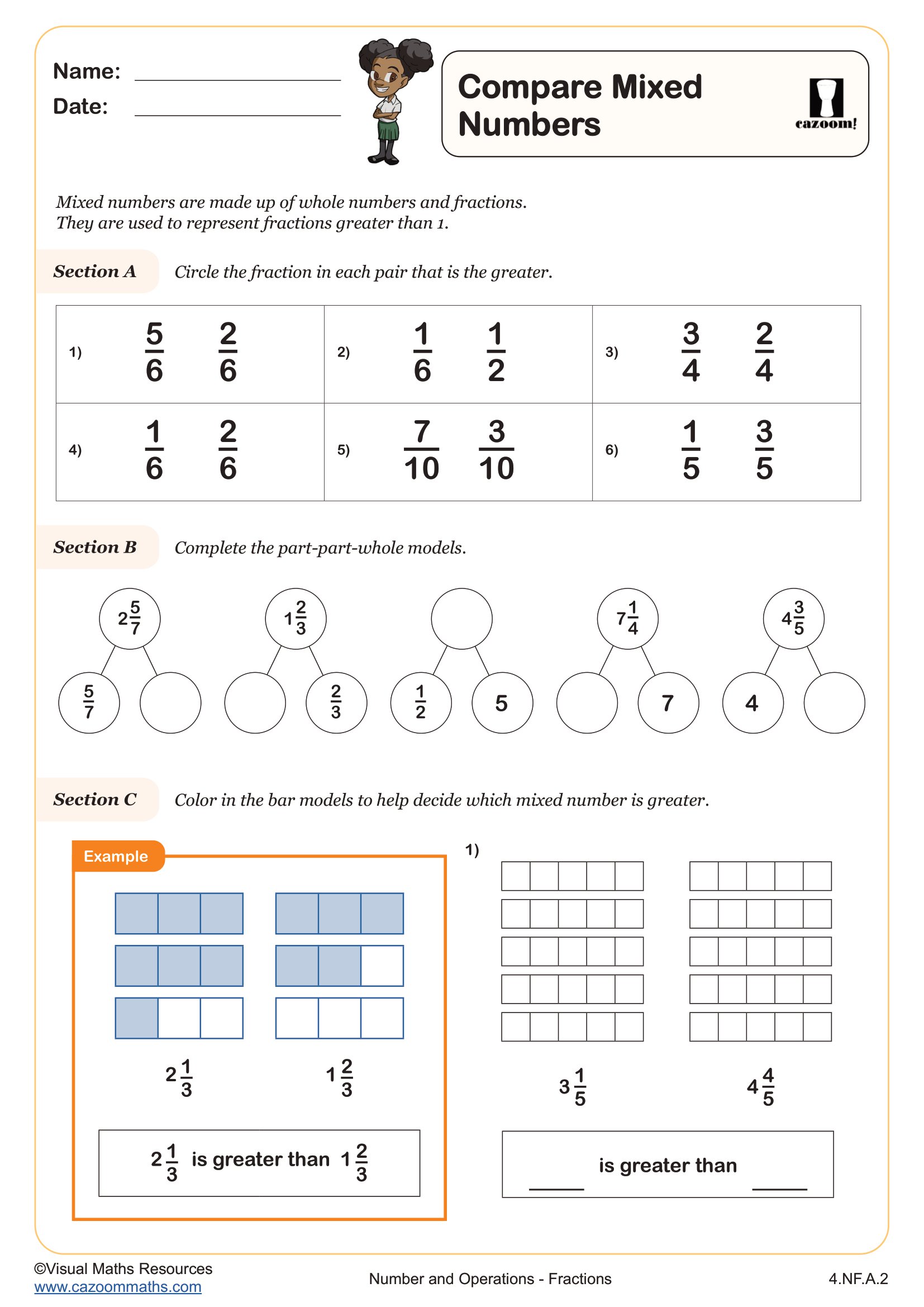
Compare Mixed numbers
Grades: 4th Grade
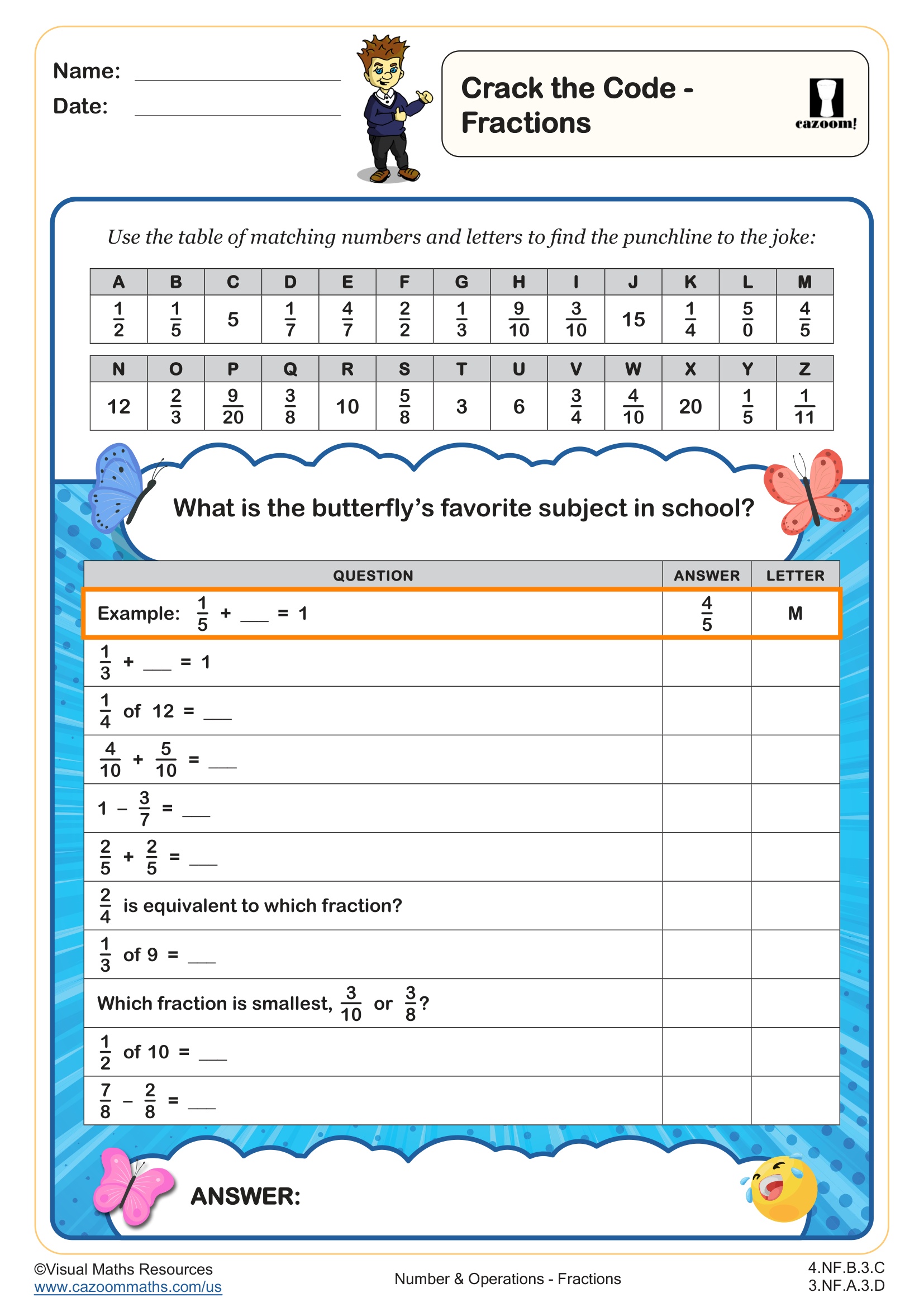
Crack the Code - Fractions
Grades: 4th Grade
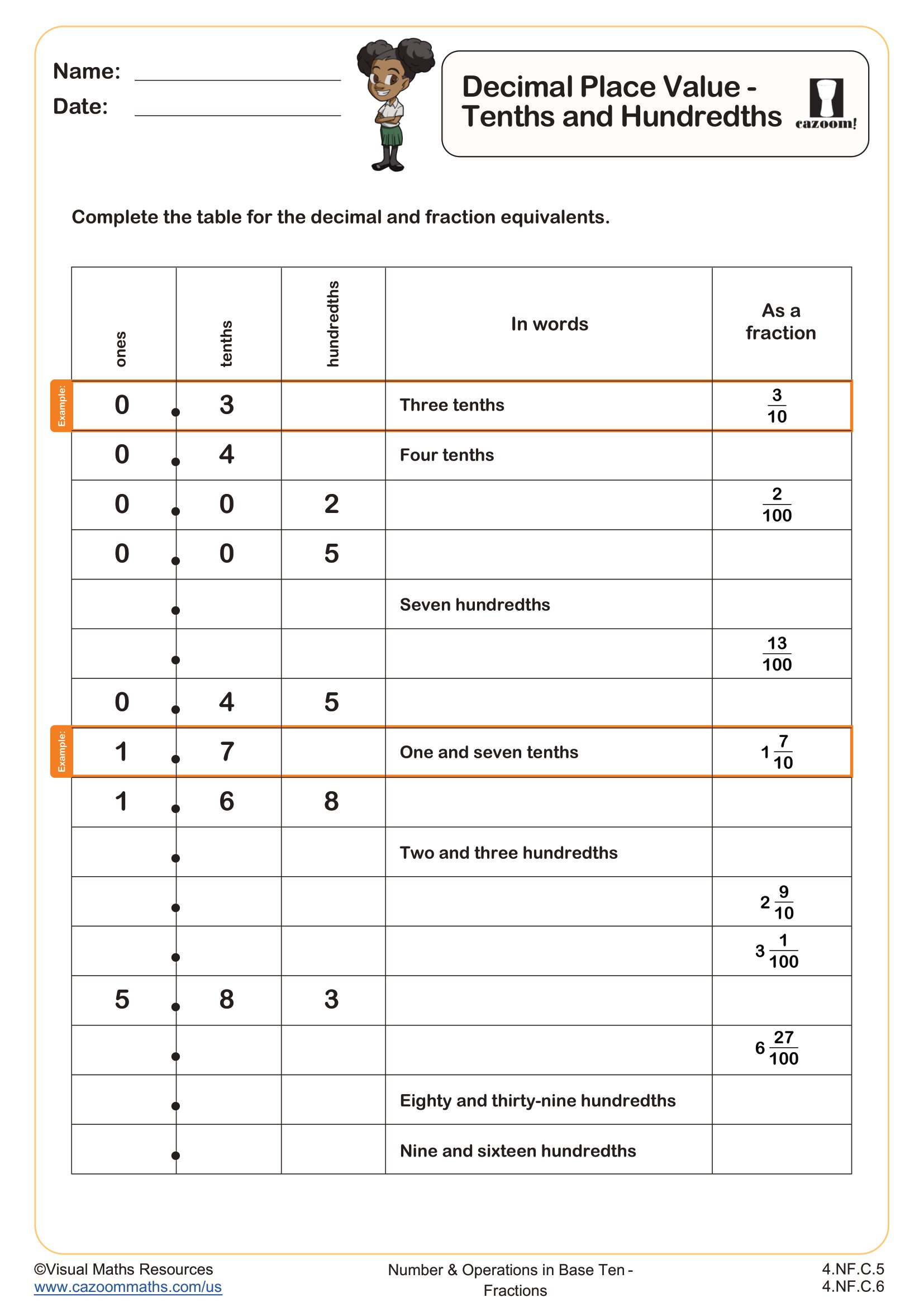
Decimal Place Value - Tenths and Hundredths
Grades: 4th Grade
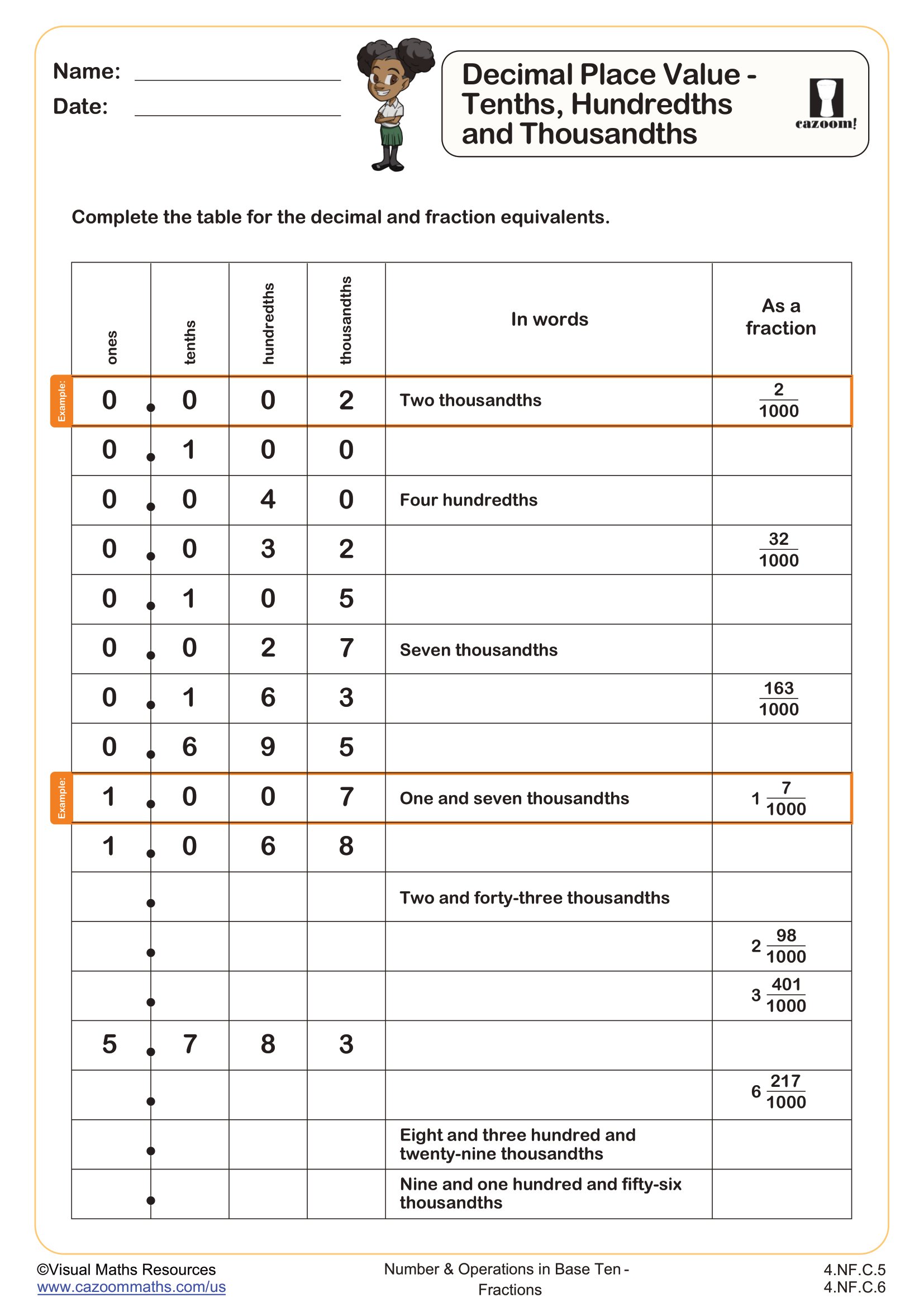
Decimal Place Value - Tenths, Hundredths and Thousandths
Grades: 4th Grade
Equivalent Fractions (A)
Grades: 4th Grade
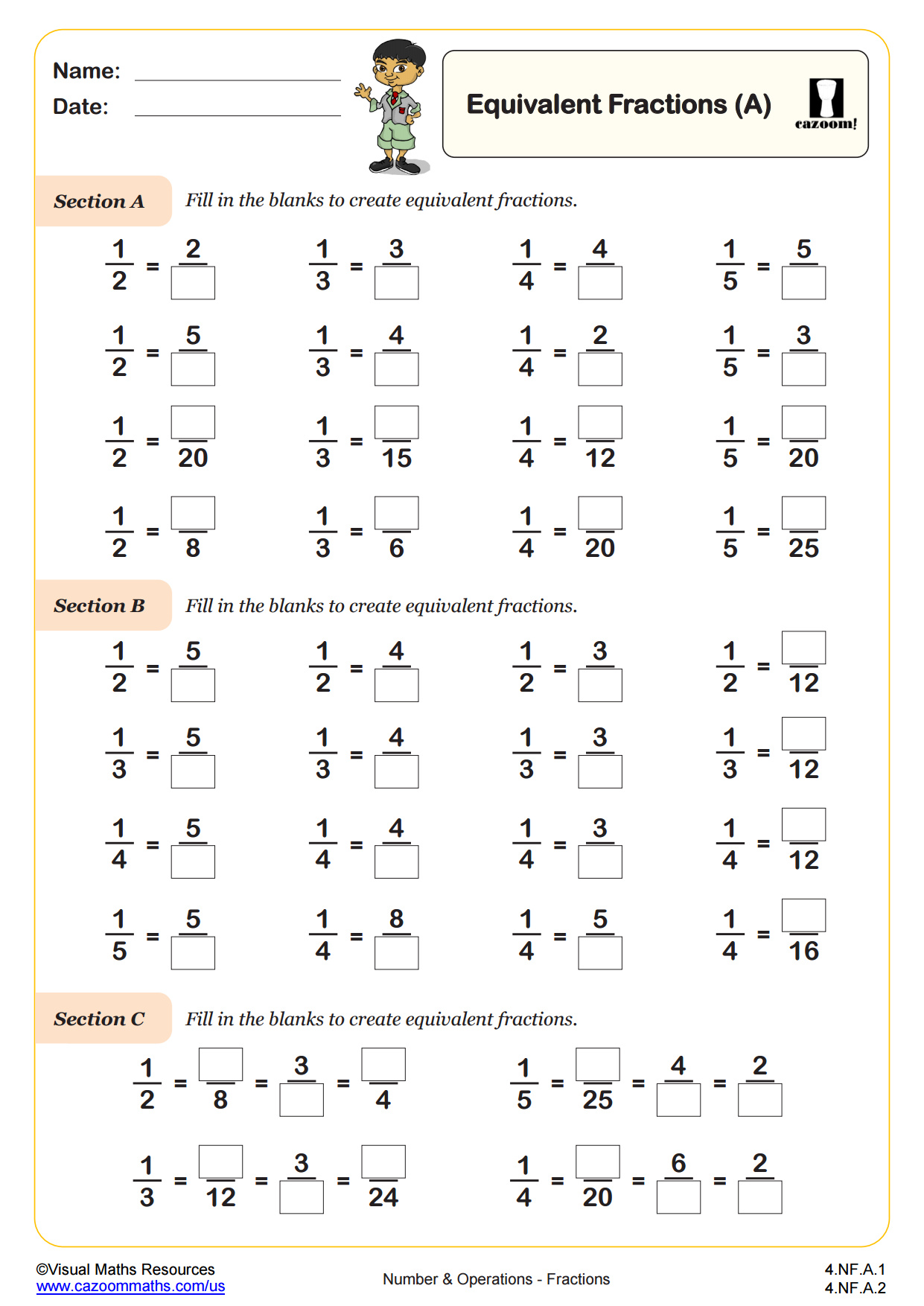
Equivalent Fractions (B)
Grades: 4th Grade
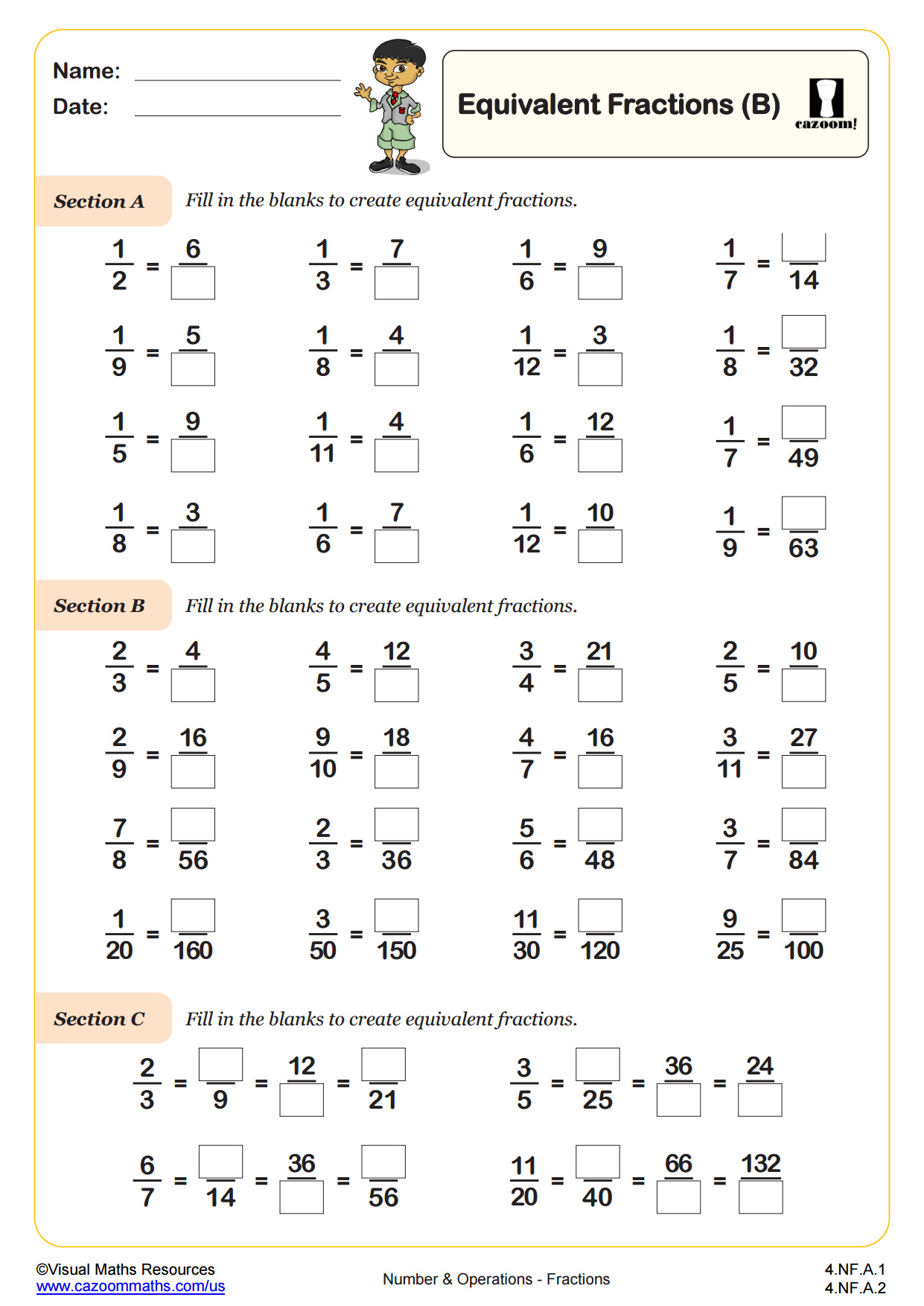
Equivalent Fractions (C)
Grades: 4th Grade
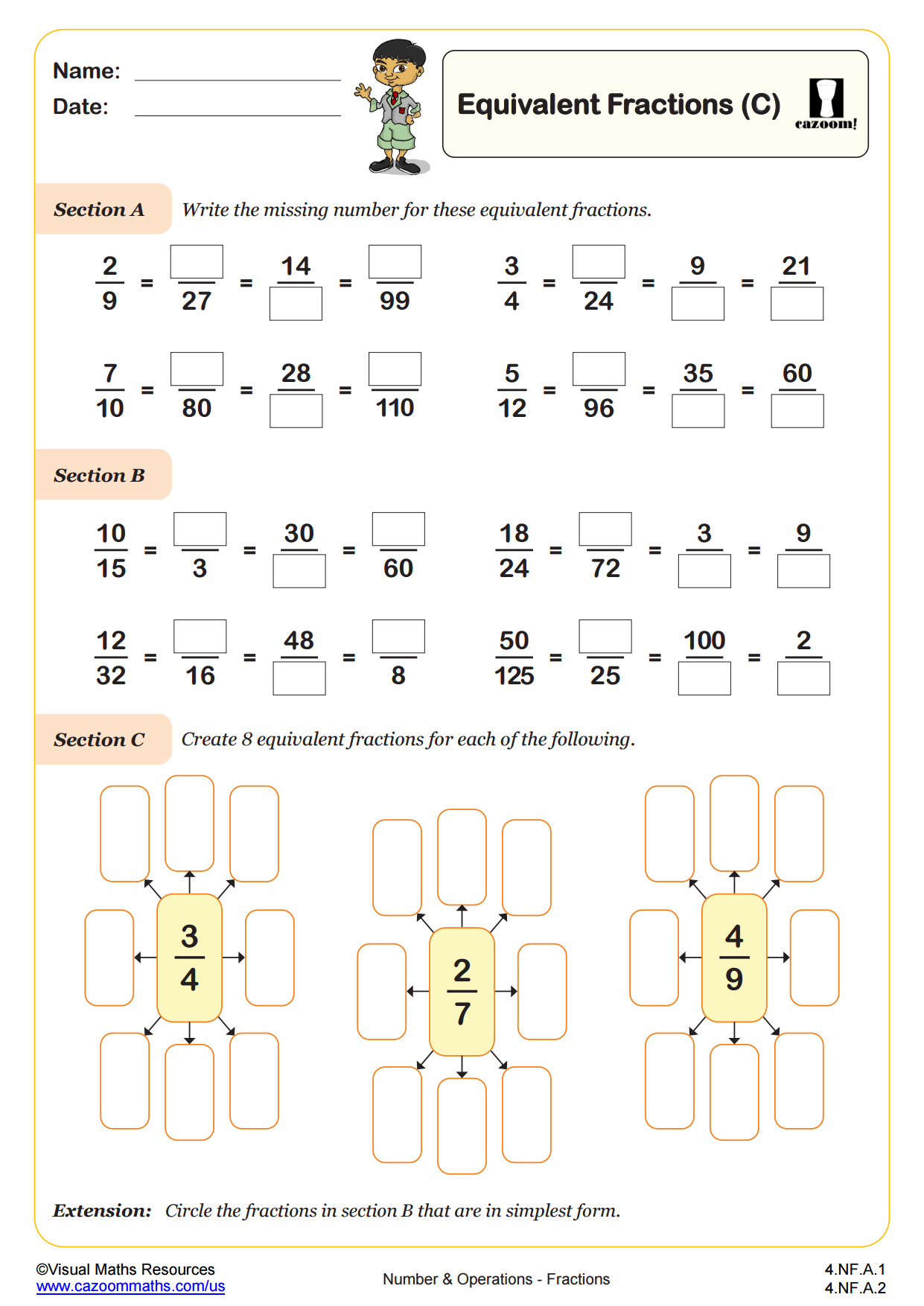
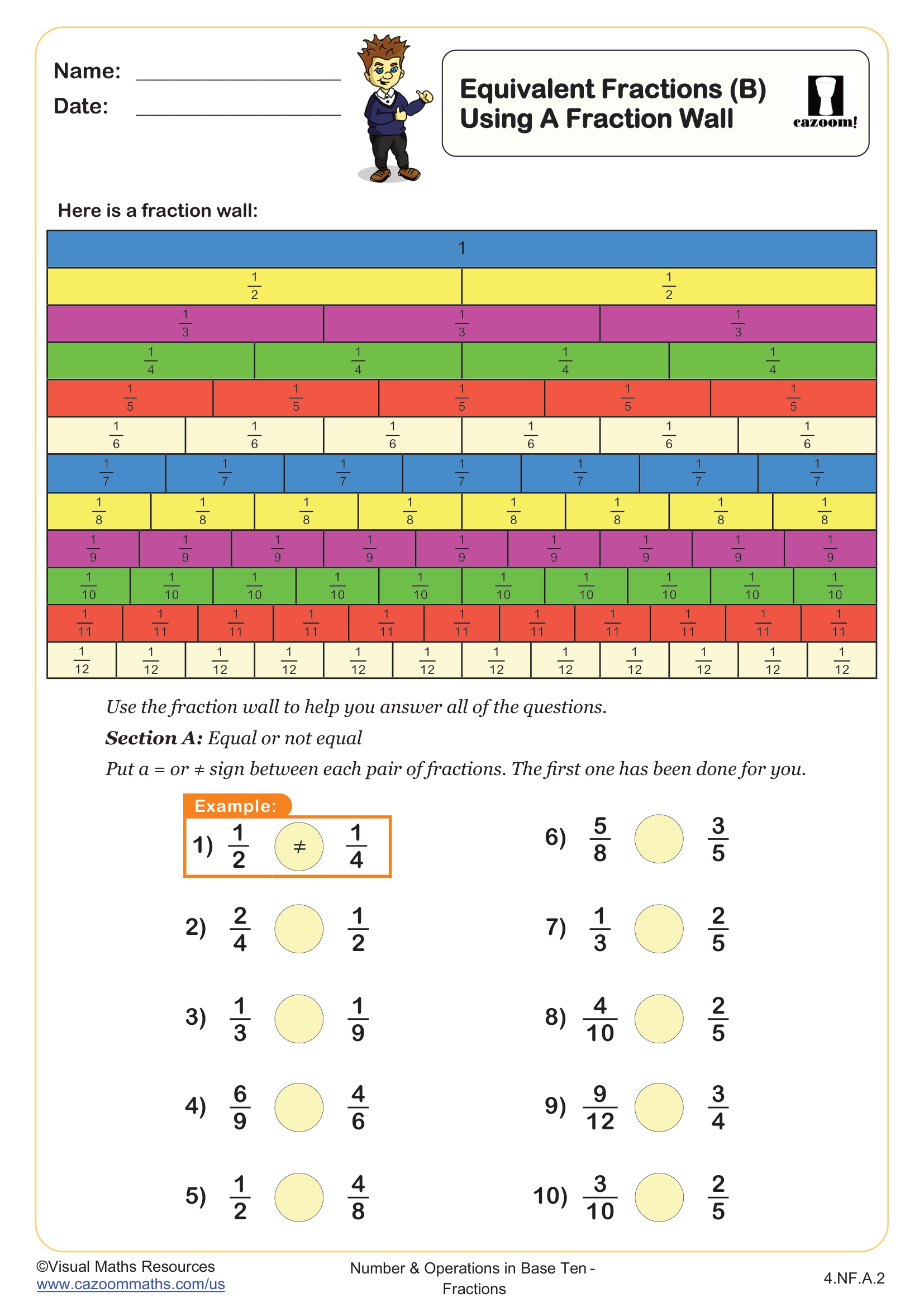
Equivalent Fractions Using a Fraction Wall (B)
Grades: 4th Grade
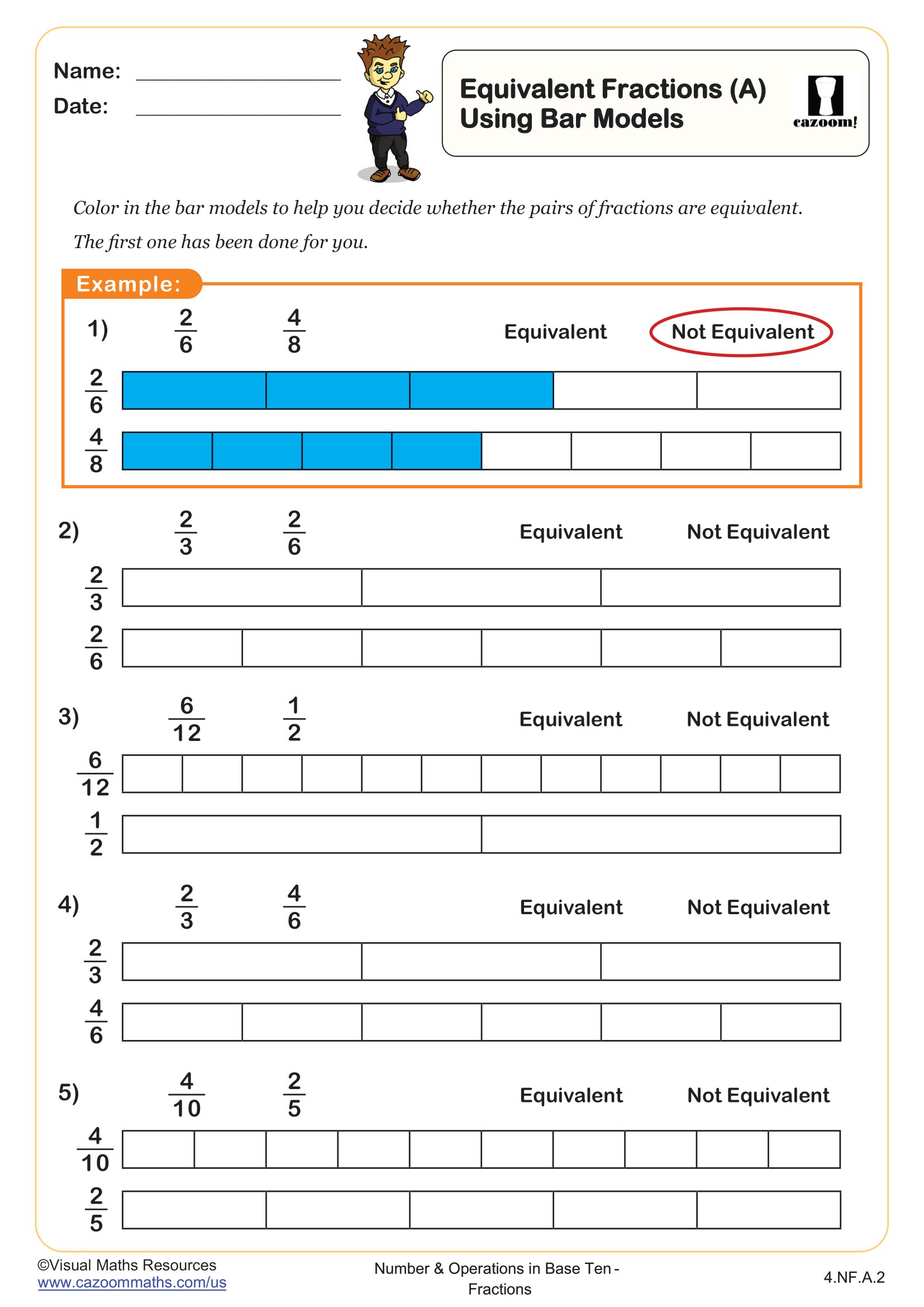
Equivalent Fractions Using Bar Models (A)
Grades: 4th Grade
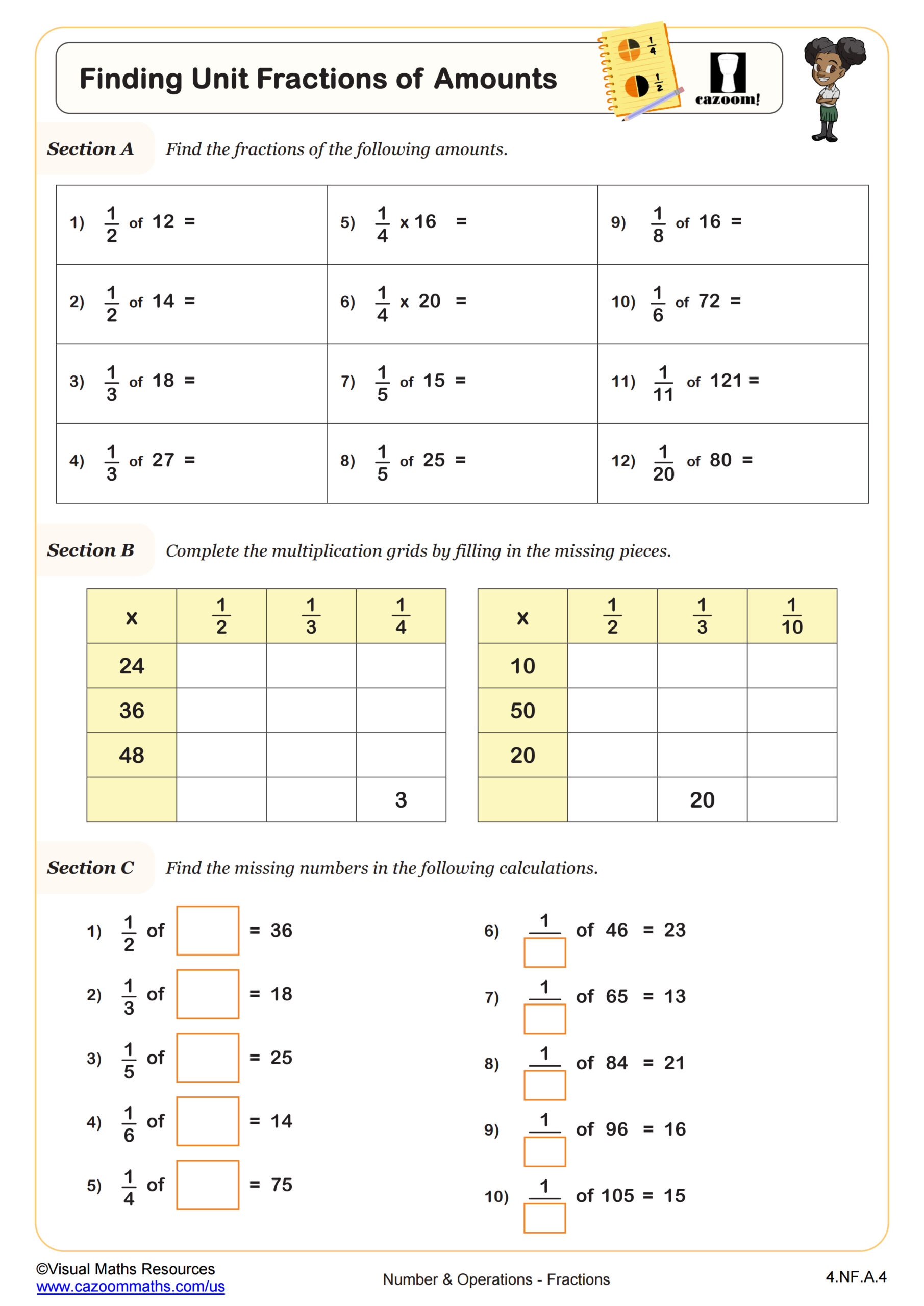
FInding Unit Fractions of Amounts
Grades: 4th Grade
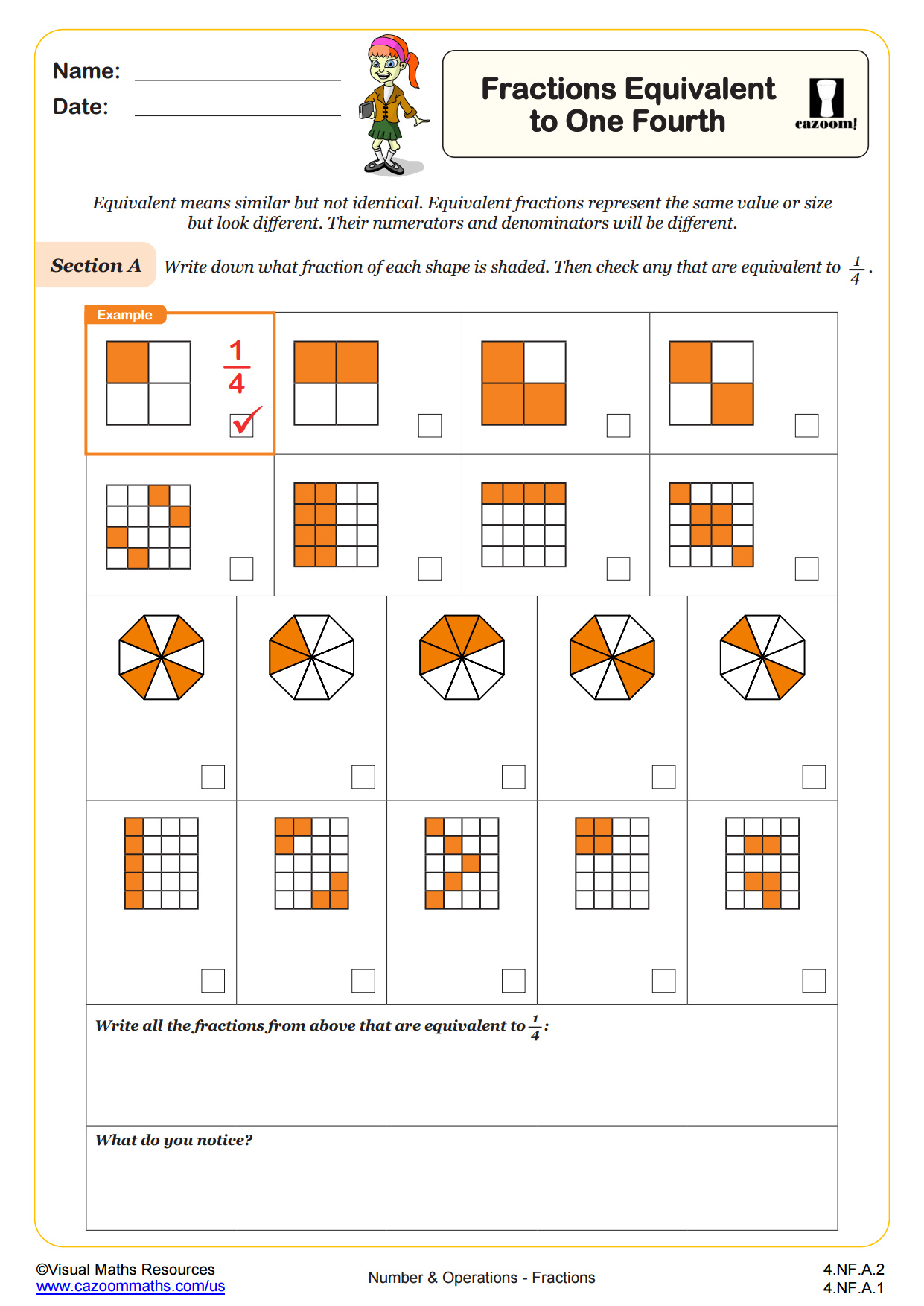
Fractions Equivalent to One Forth
Grades: 4th Grade
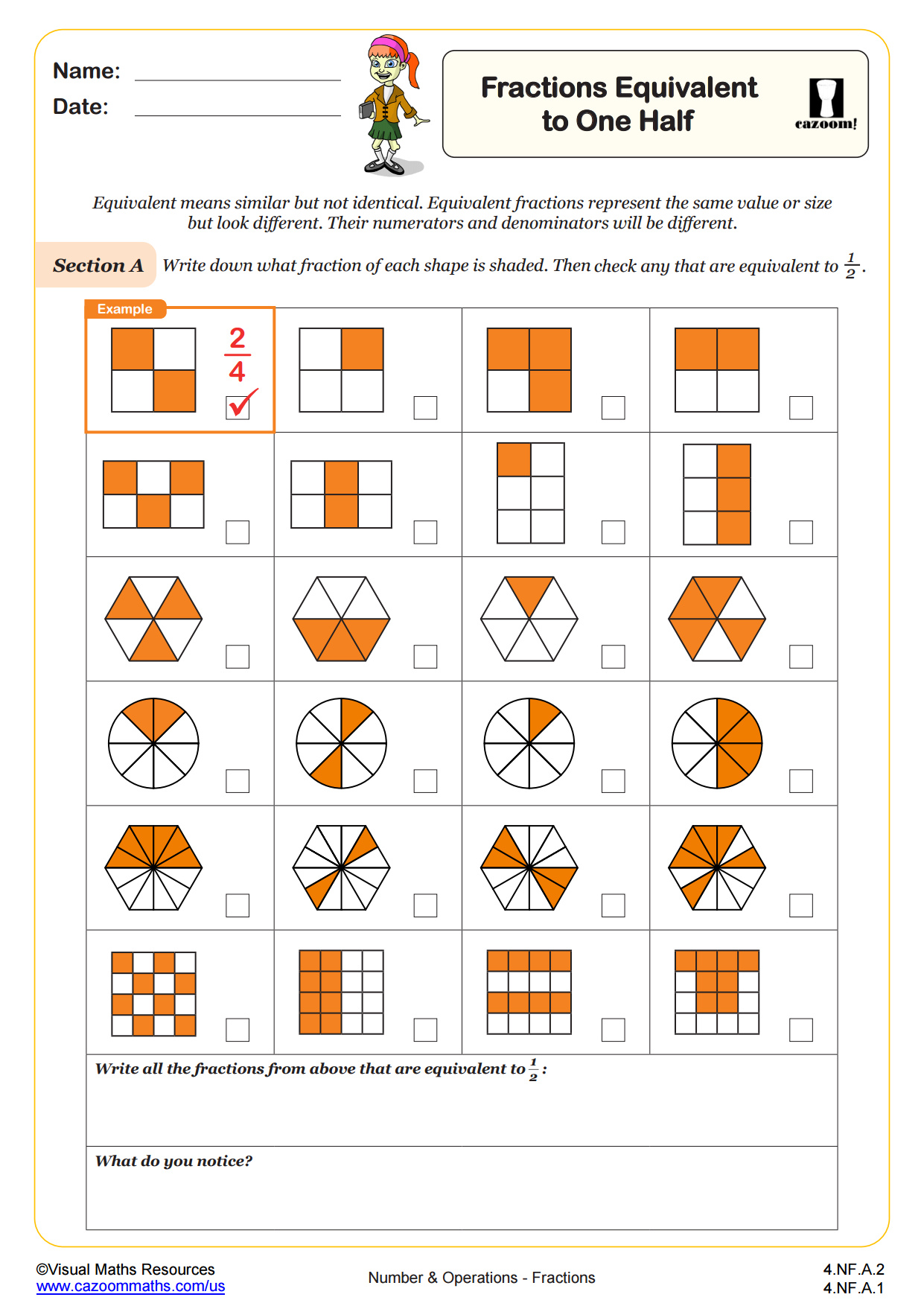
Fractions Equivalent to One Half
Grades: 4th Grade
Fractions Equivalent to One Third
Grades: 4th Grade
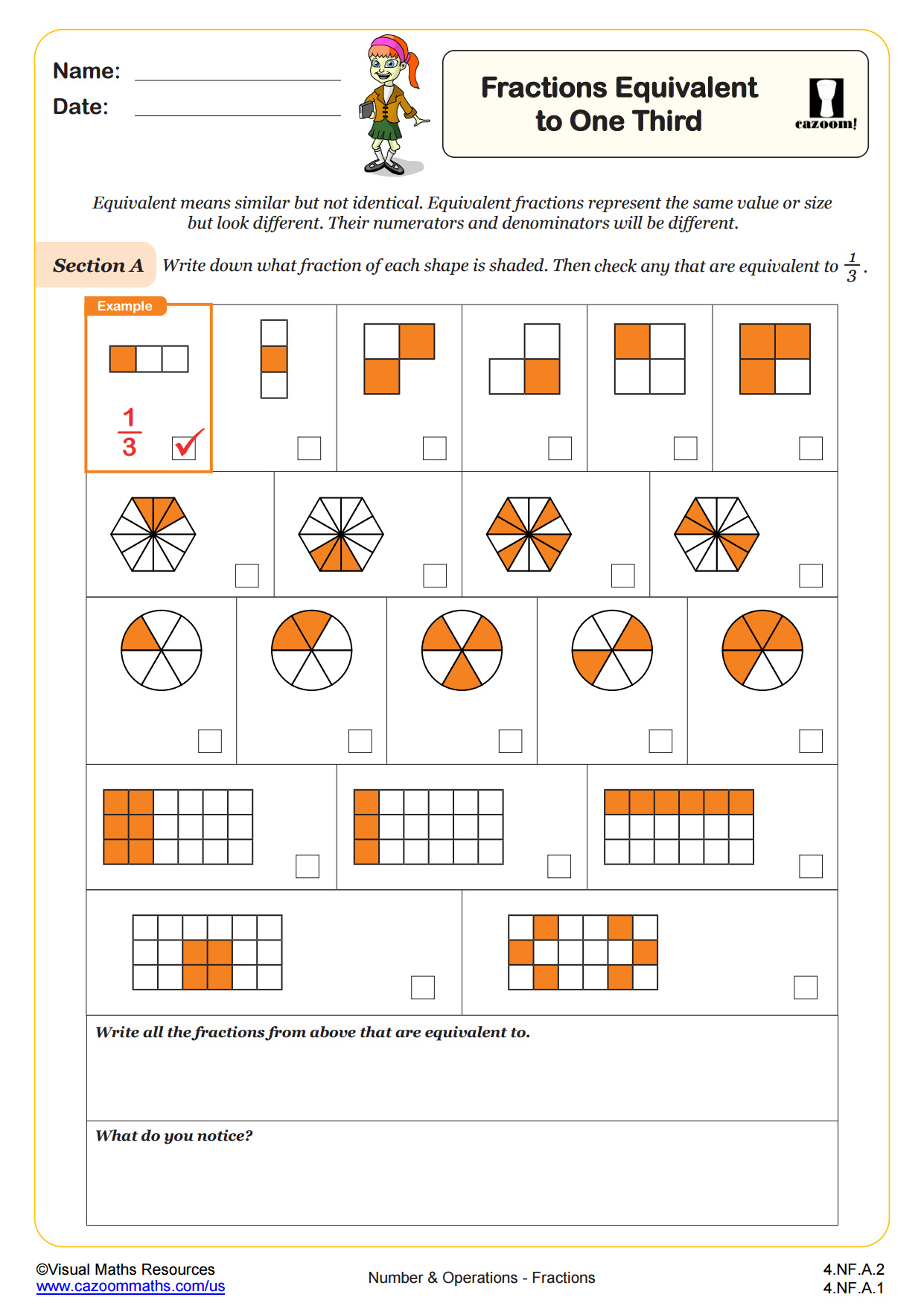
Fractions Greater Than One - Mixed Numbers
Grades: 4th Grade
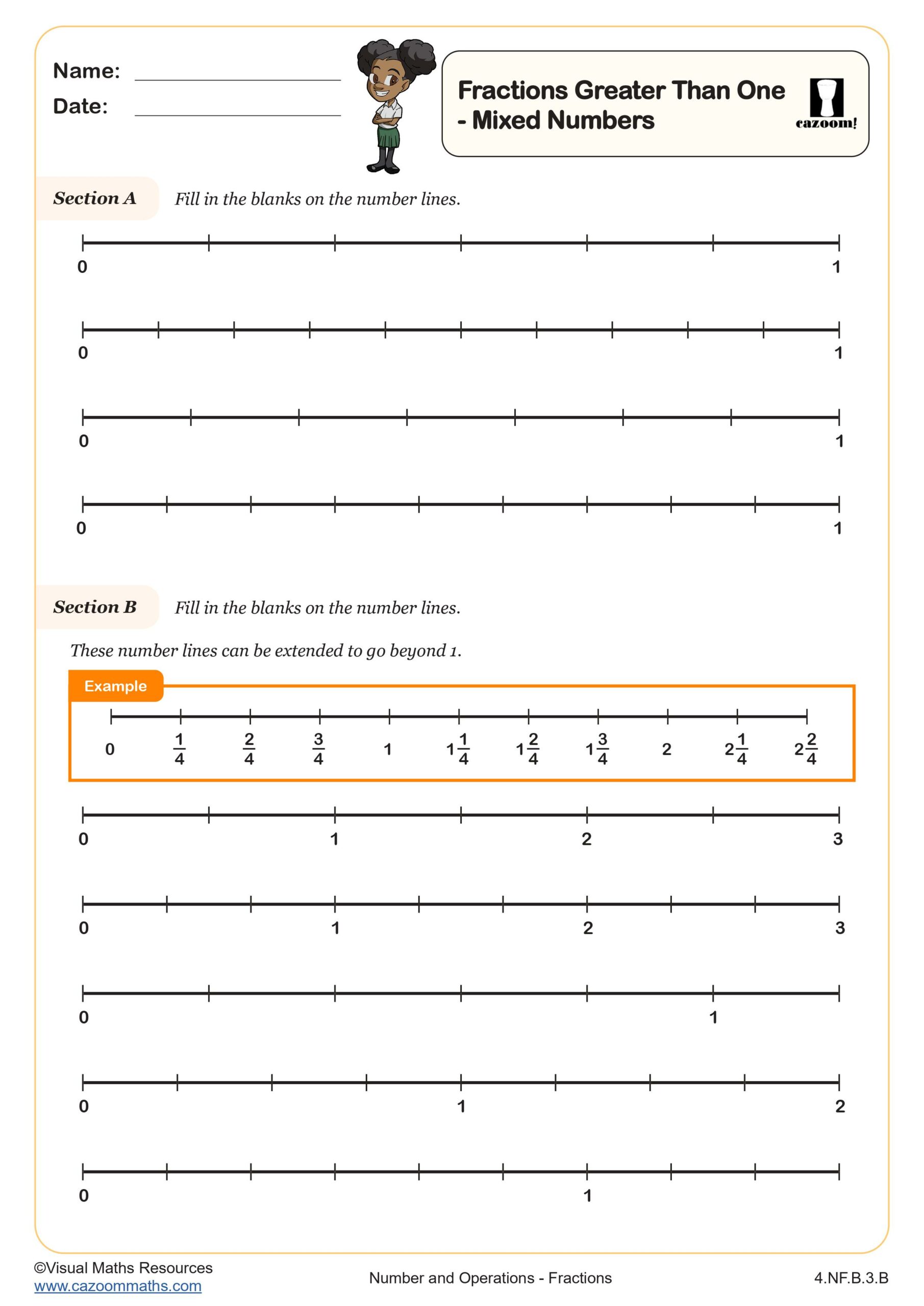
Fractions Greater Than One - Mixed Numbers and Improper Fractions
Grades: 4th Grade
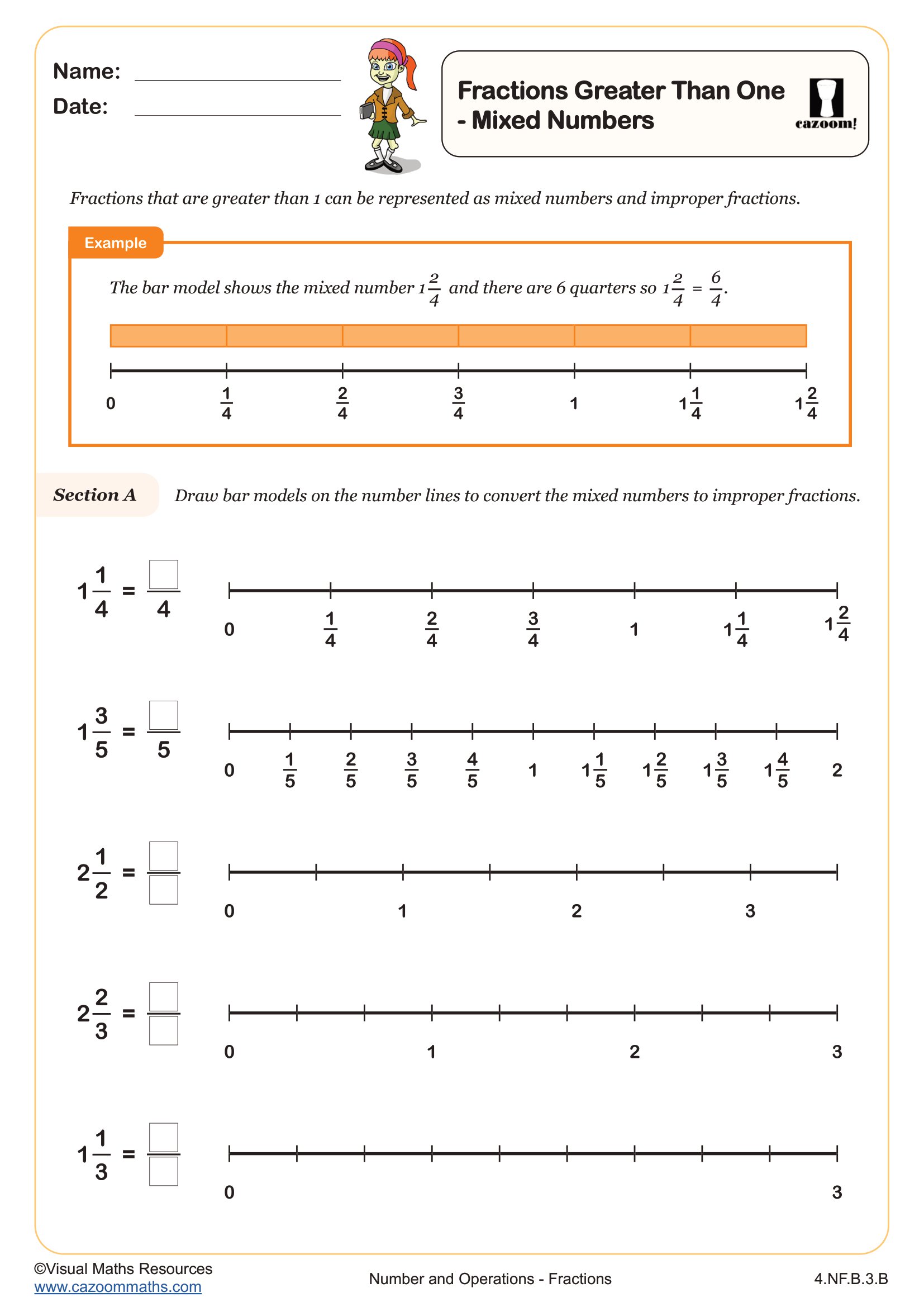
Fractions on Number Lines (B)
Grades: 4th Grade
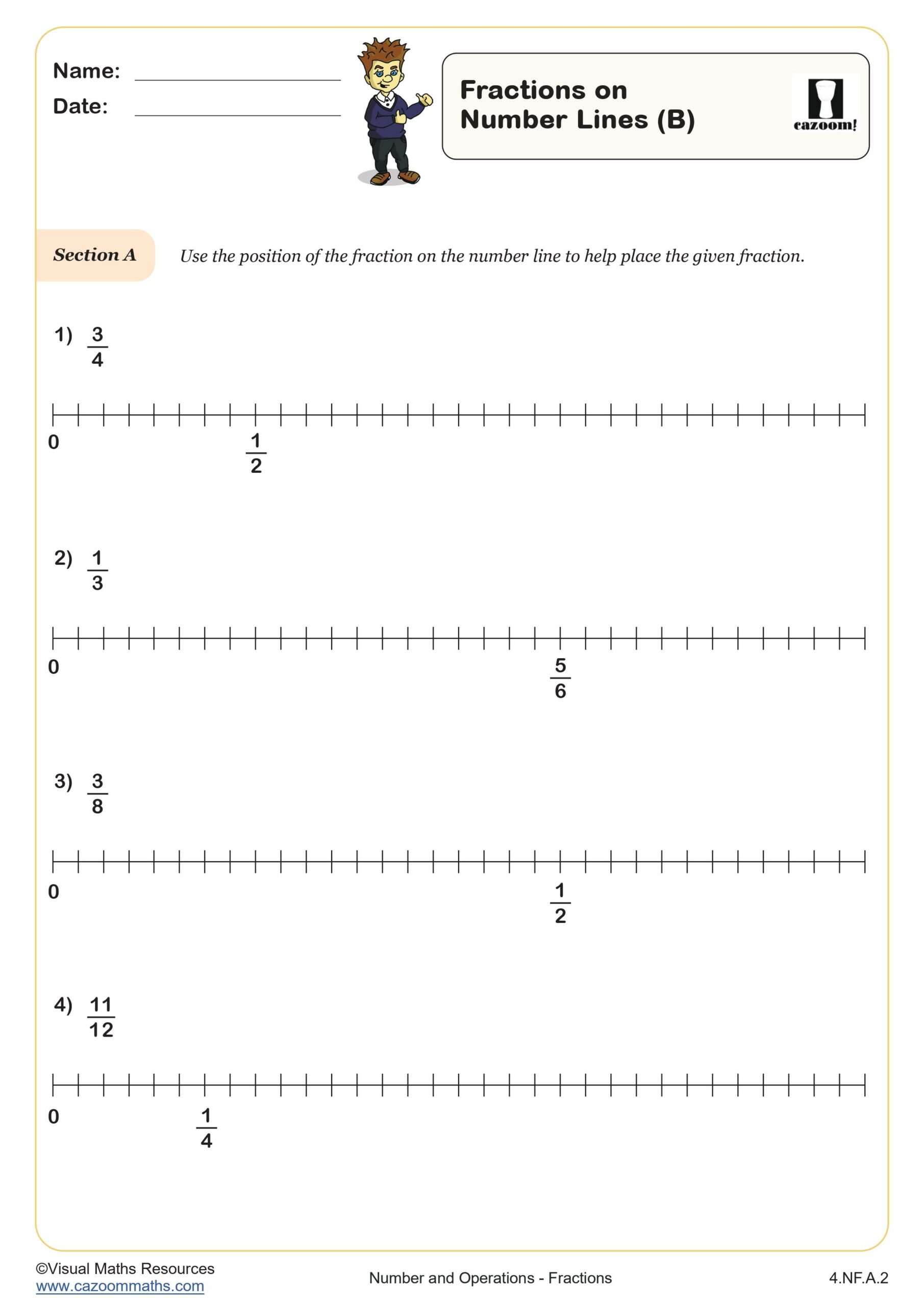
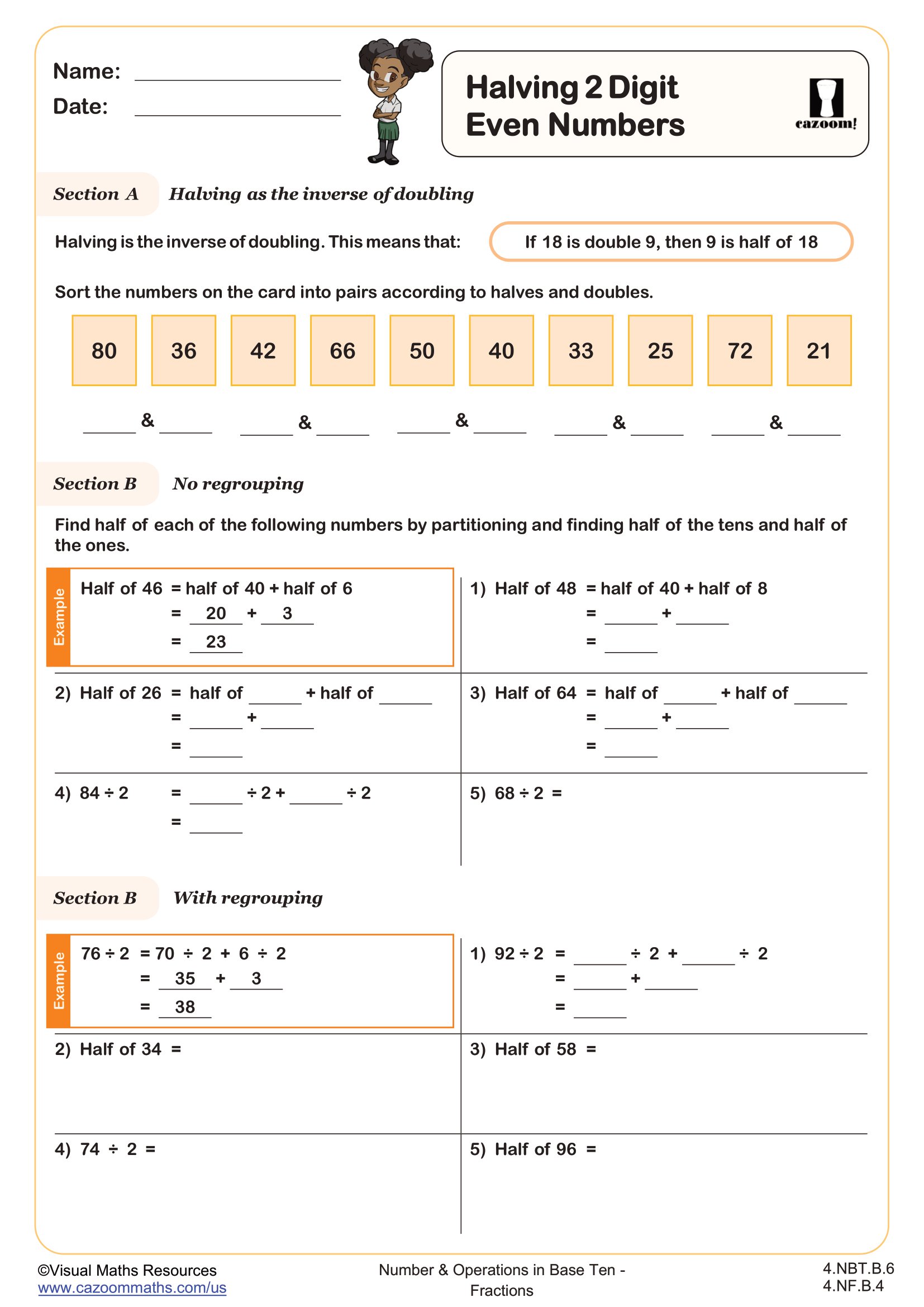
Halving 2 Digit Even Numbers
Grades: 4th Grade
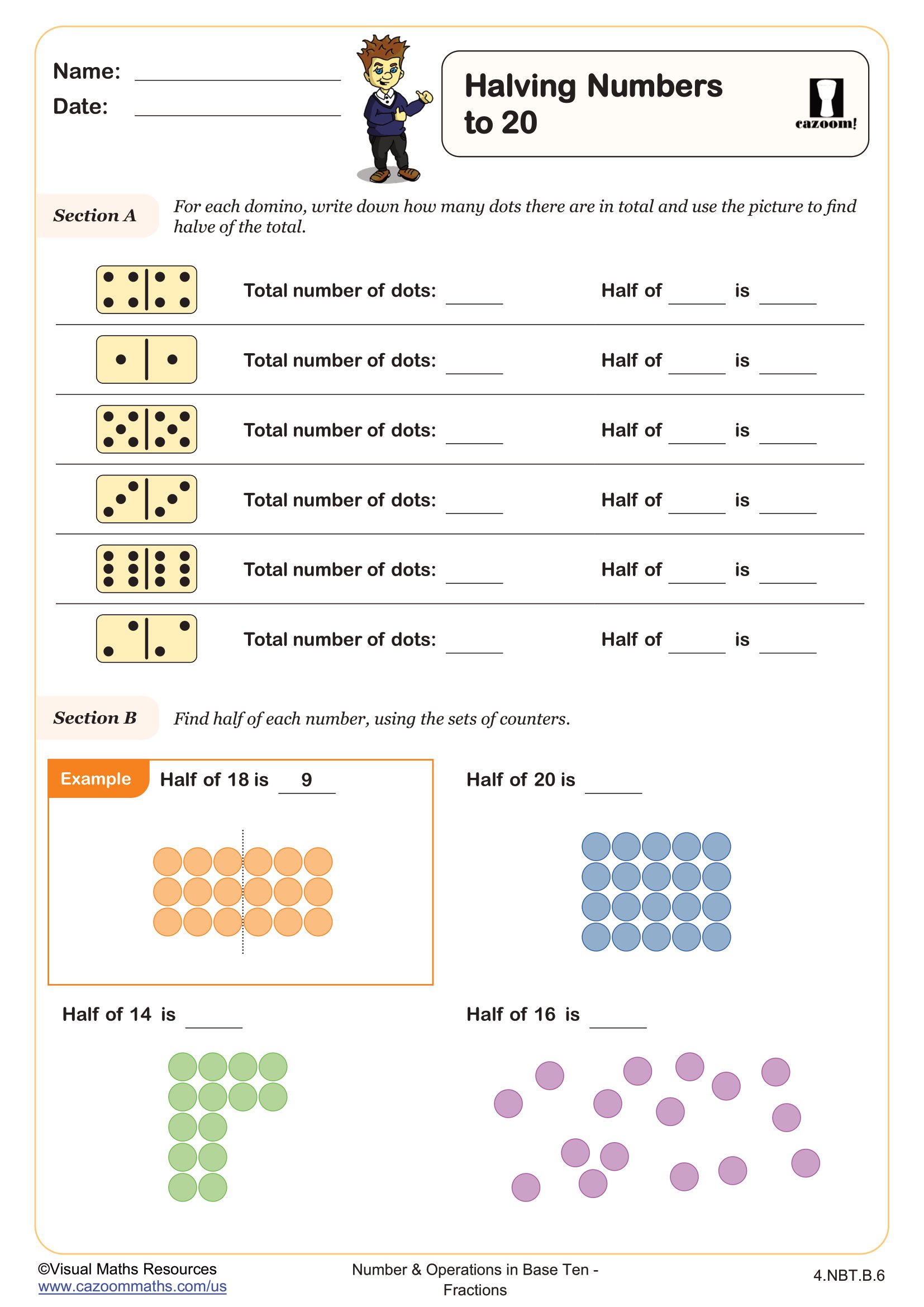
Halving Numbers to 20
Grades: 4th Grade
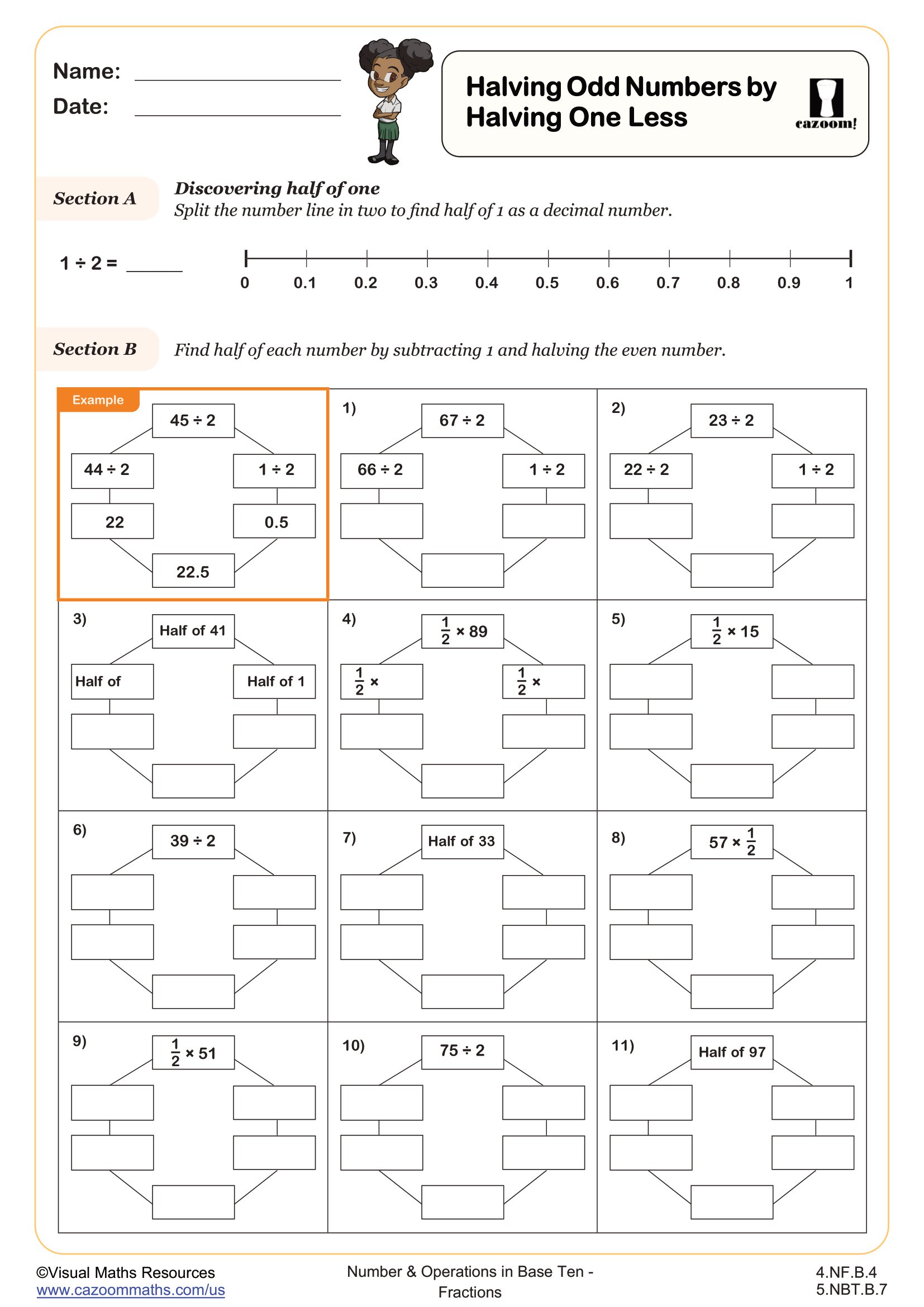
Halving Odd Numbers by Halving One Less
Grades: 4th Grade, 5th Grade
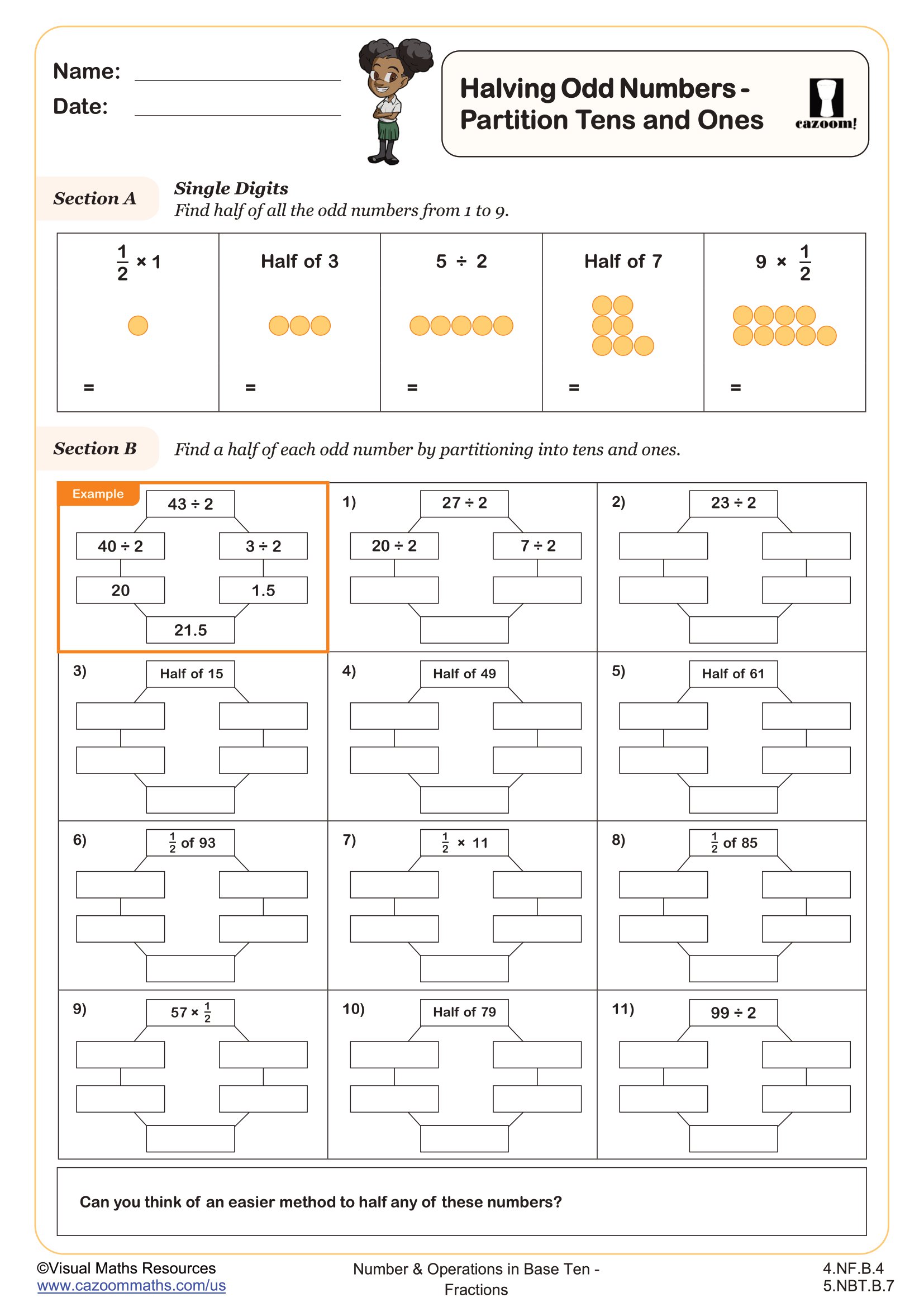
Halving Odd Numbers Partition Tens and Ones
Grades: 4th Grade, 5th Grade
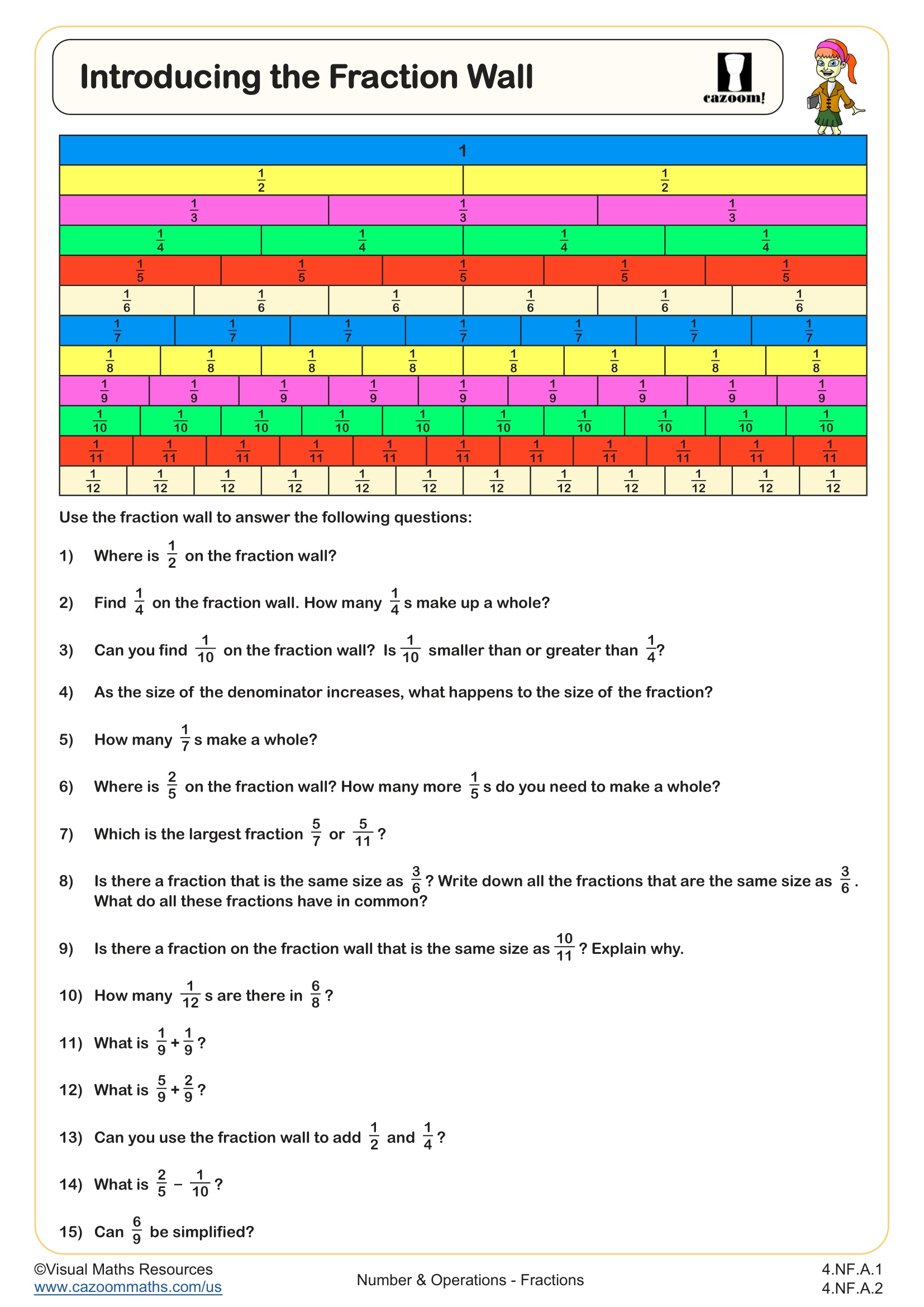
Introducing the Fraction Wall
Grades: 4th Grade
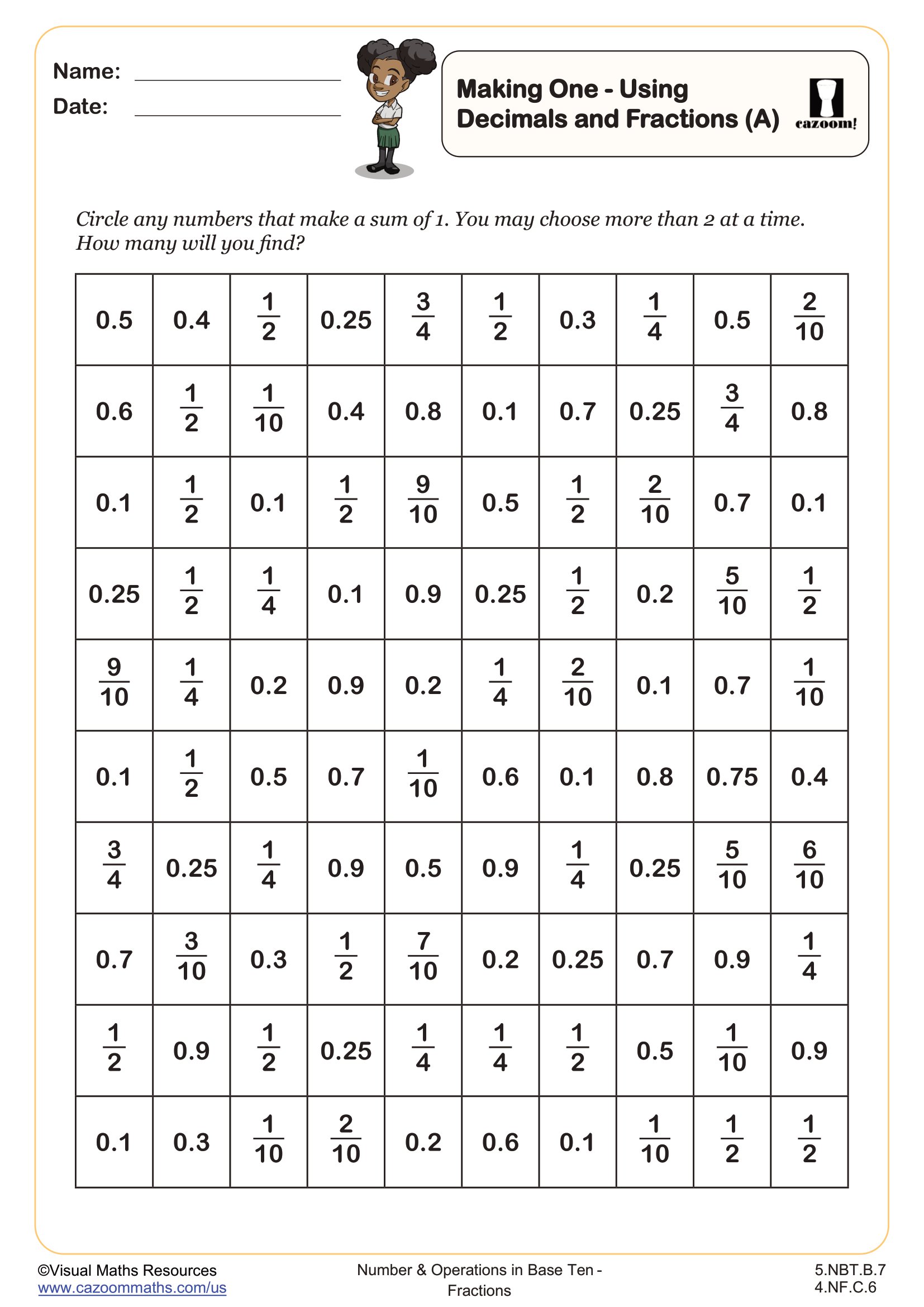
Making One Using Decimals and Fractions (A)
Grades: 4th Grade, 5th Grade
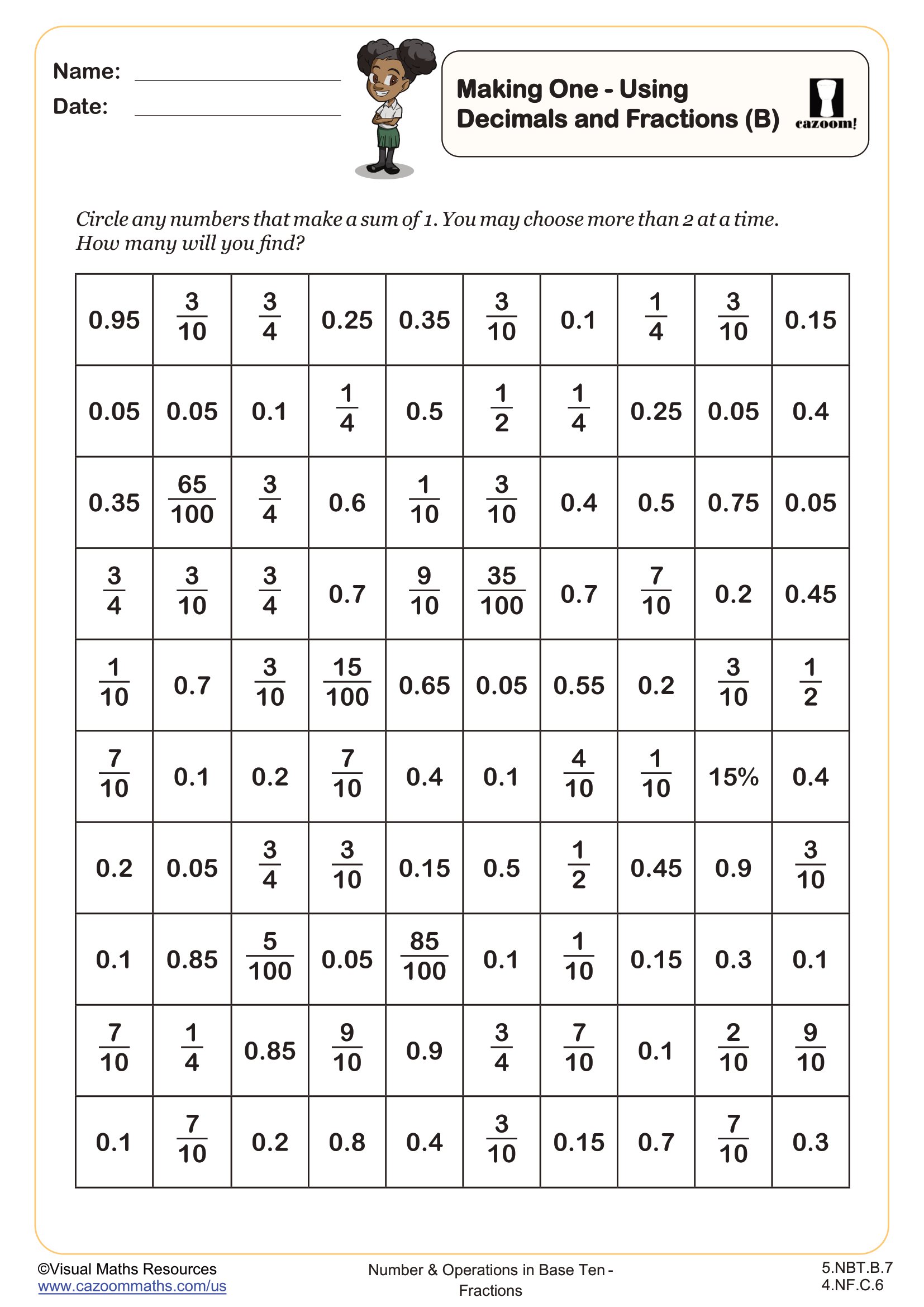
Making One Using Decimals and Fractions (B)
Grades: 4th Grade, 5th Grade
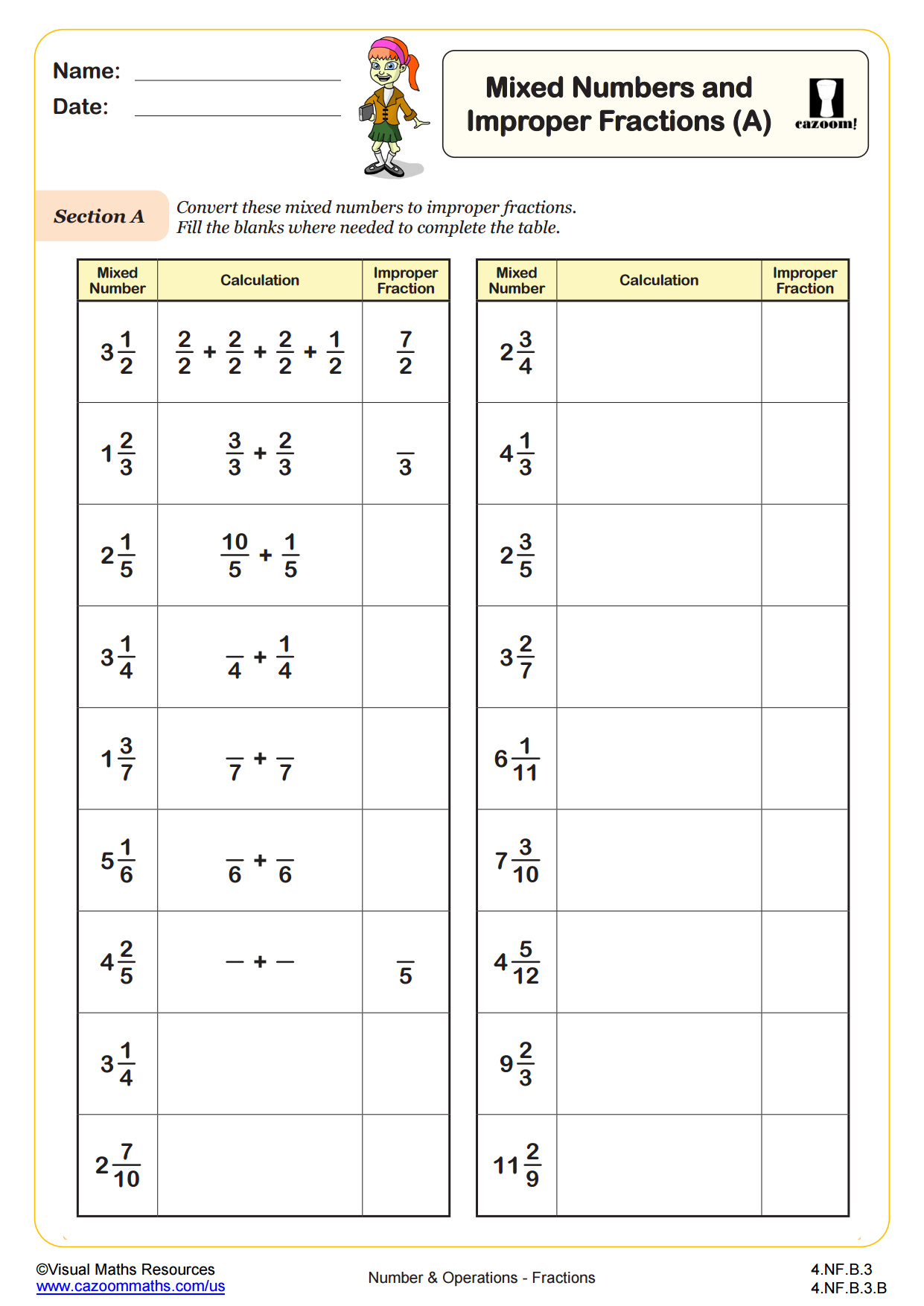
Mixed Numbers & Improper Fractions (A)
Grades: 4th Grade
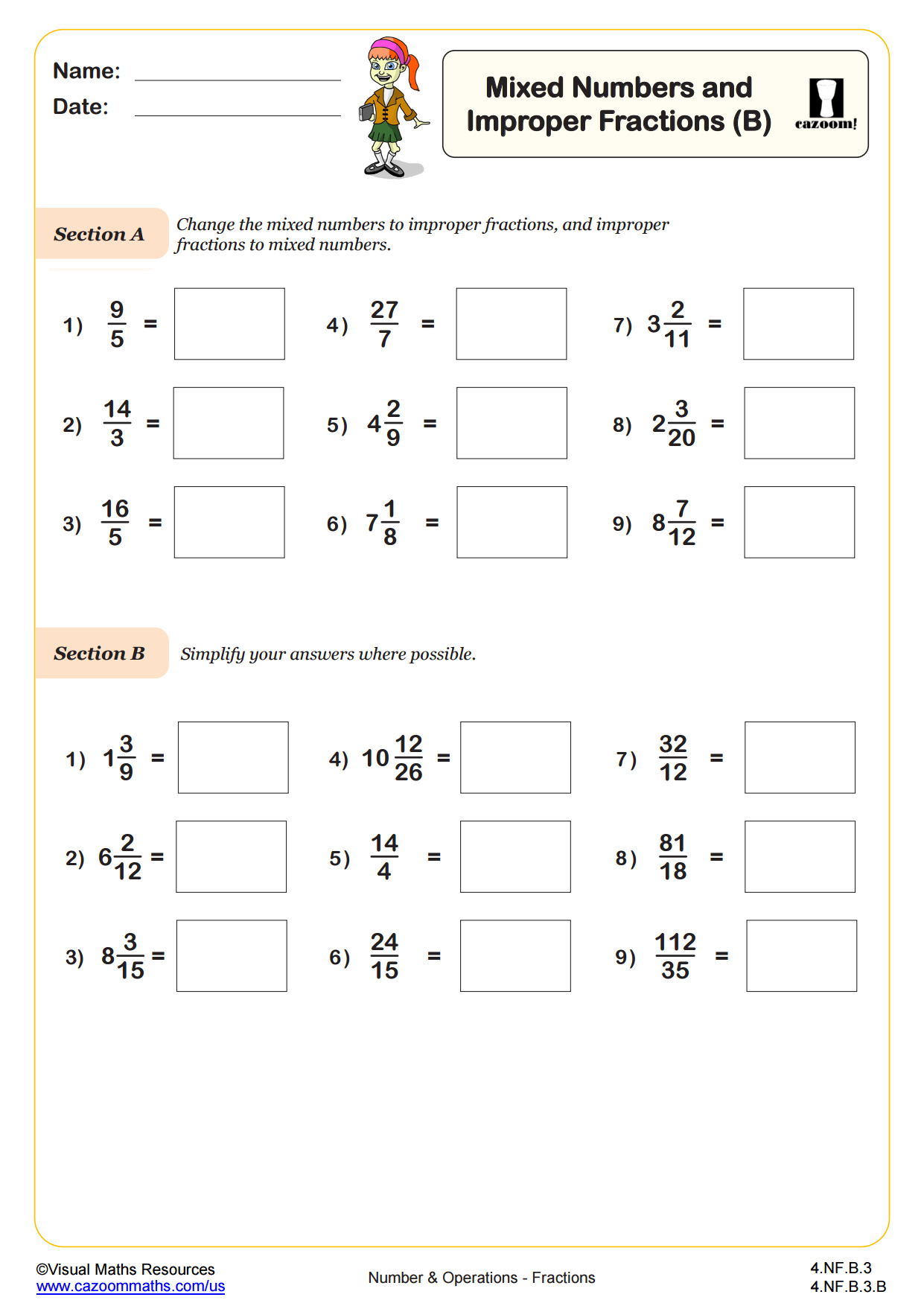
Mixed Numbers & Improper Fractions (B)
Grades: 4th Grade
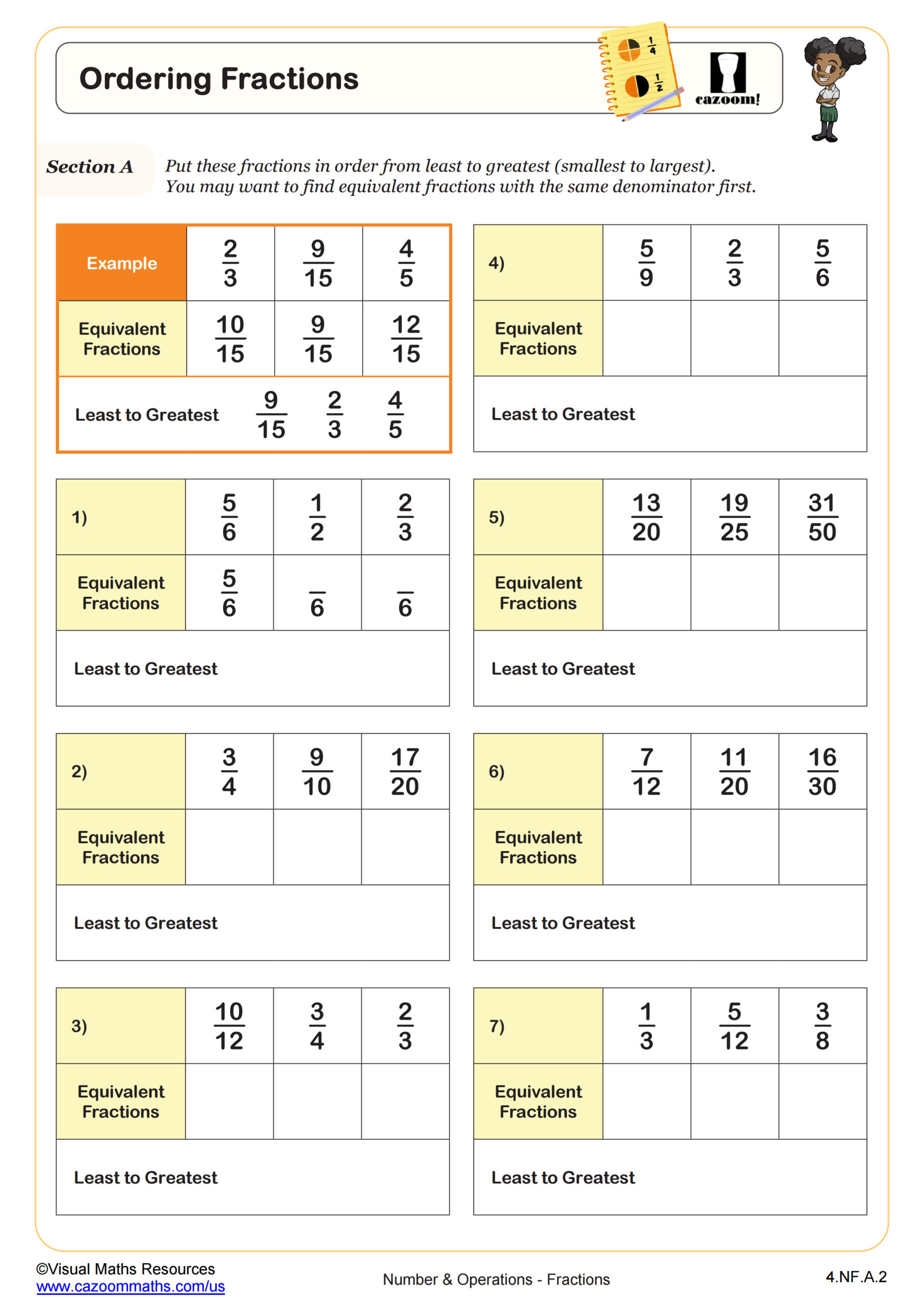
Ordering Fractions
Grades: 4th Grade
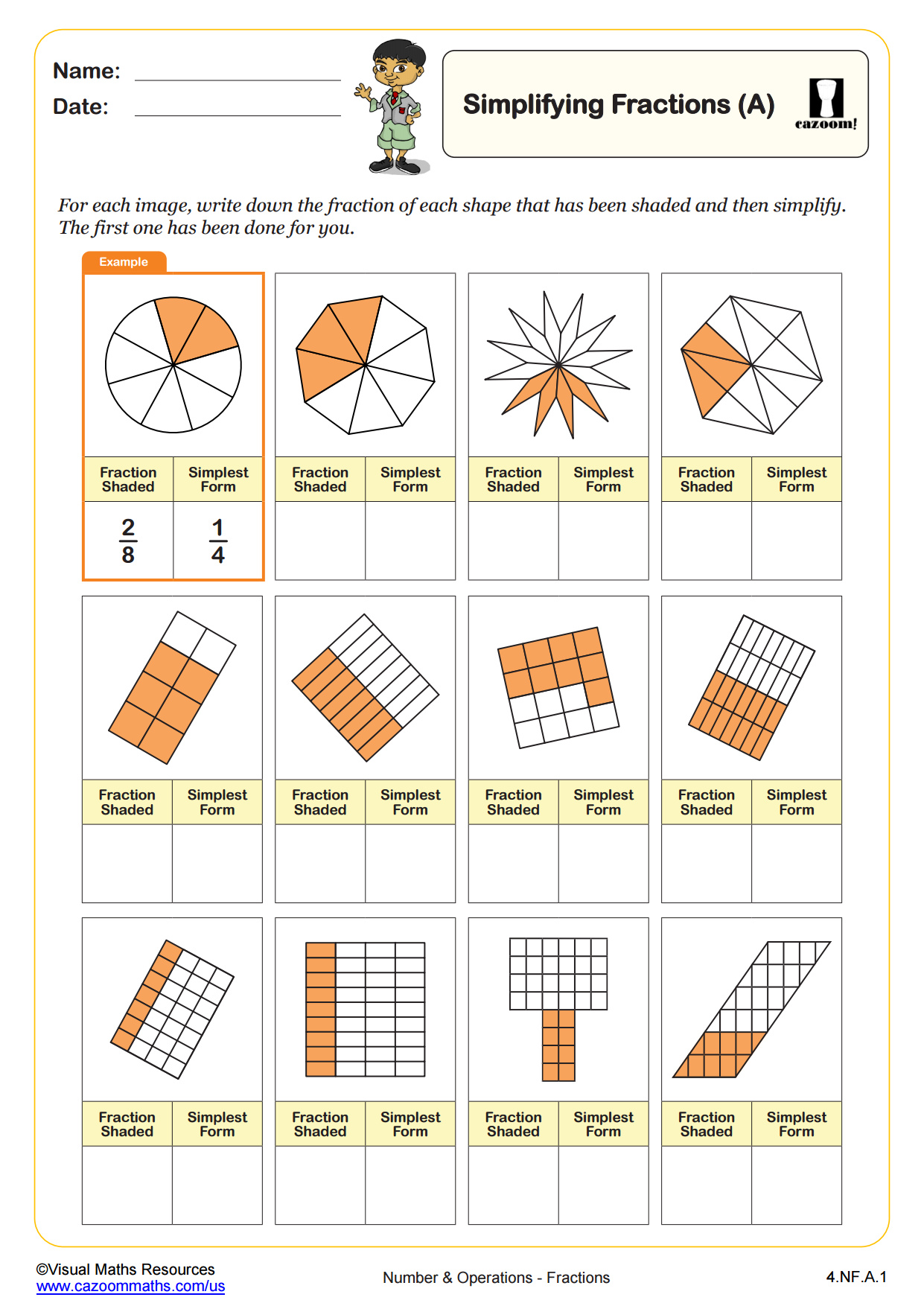
Simplifying Fractions (A)
Grades: 4th Grade
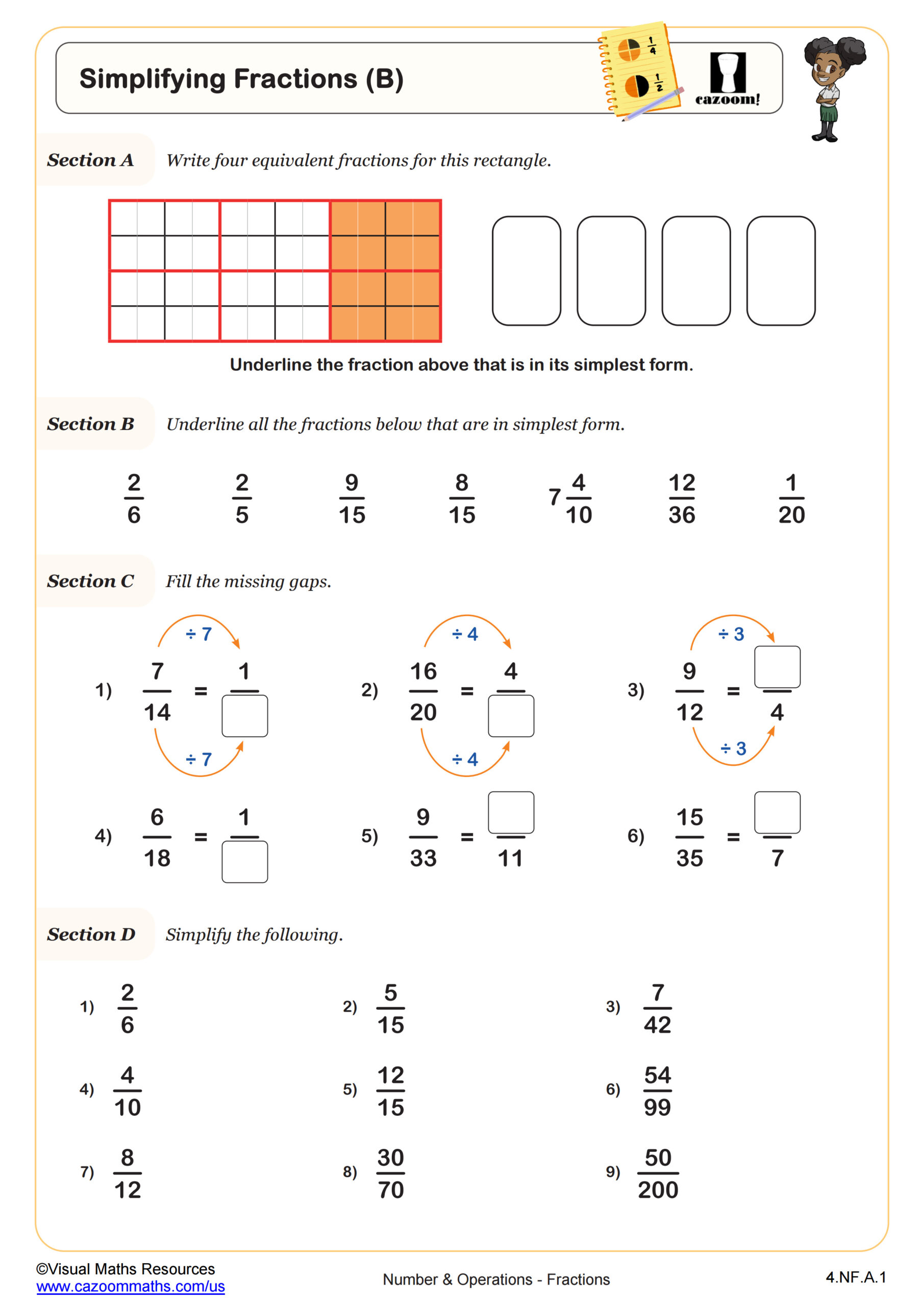
Simplifying Fractions (B)
Grades: 4th Grade
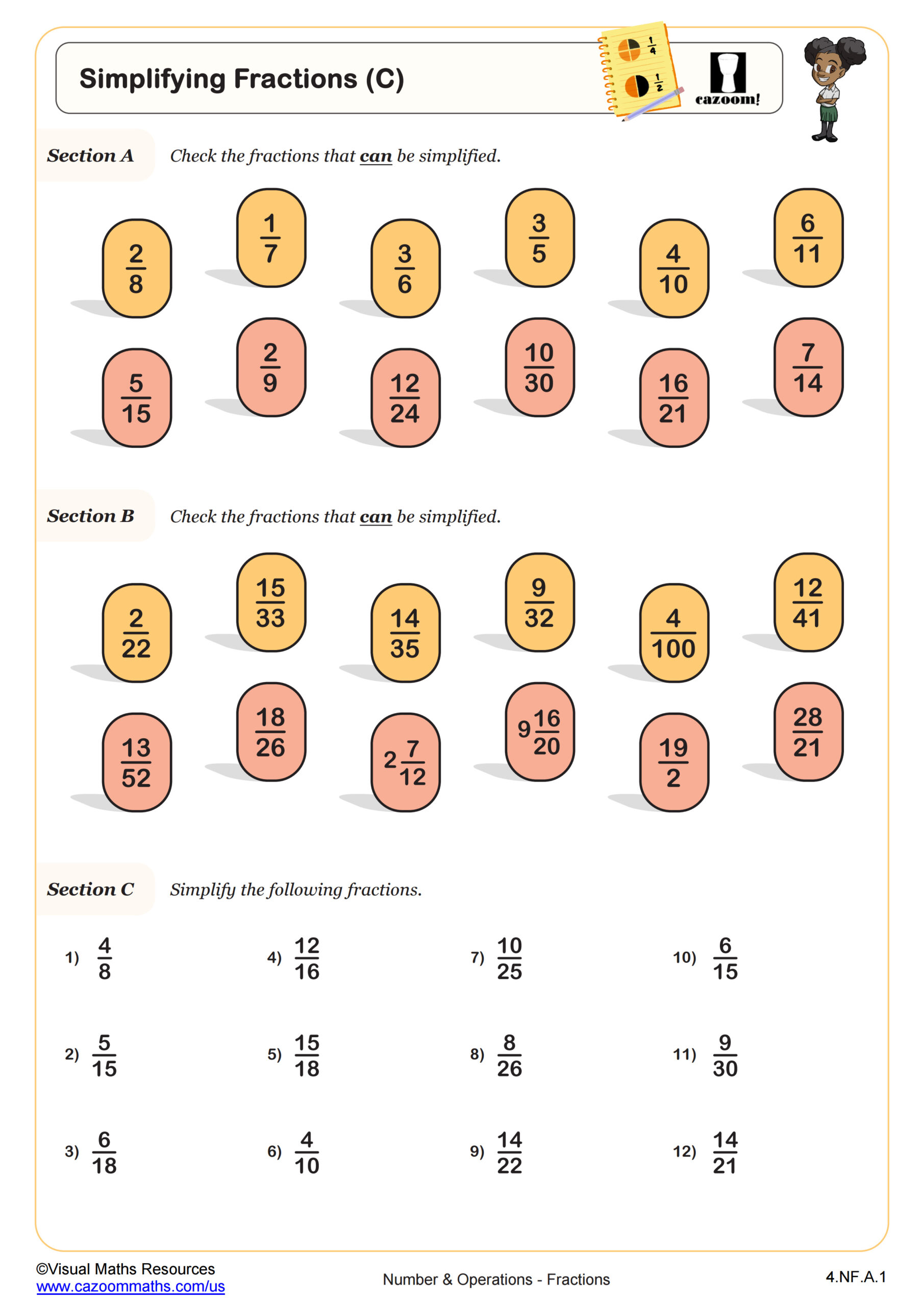
Simplifying Fractions (C)
Grades: 4th Grade
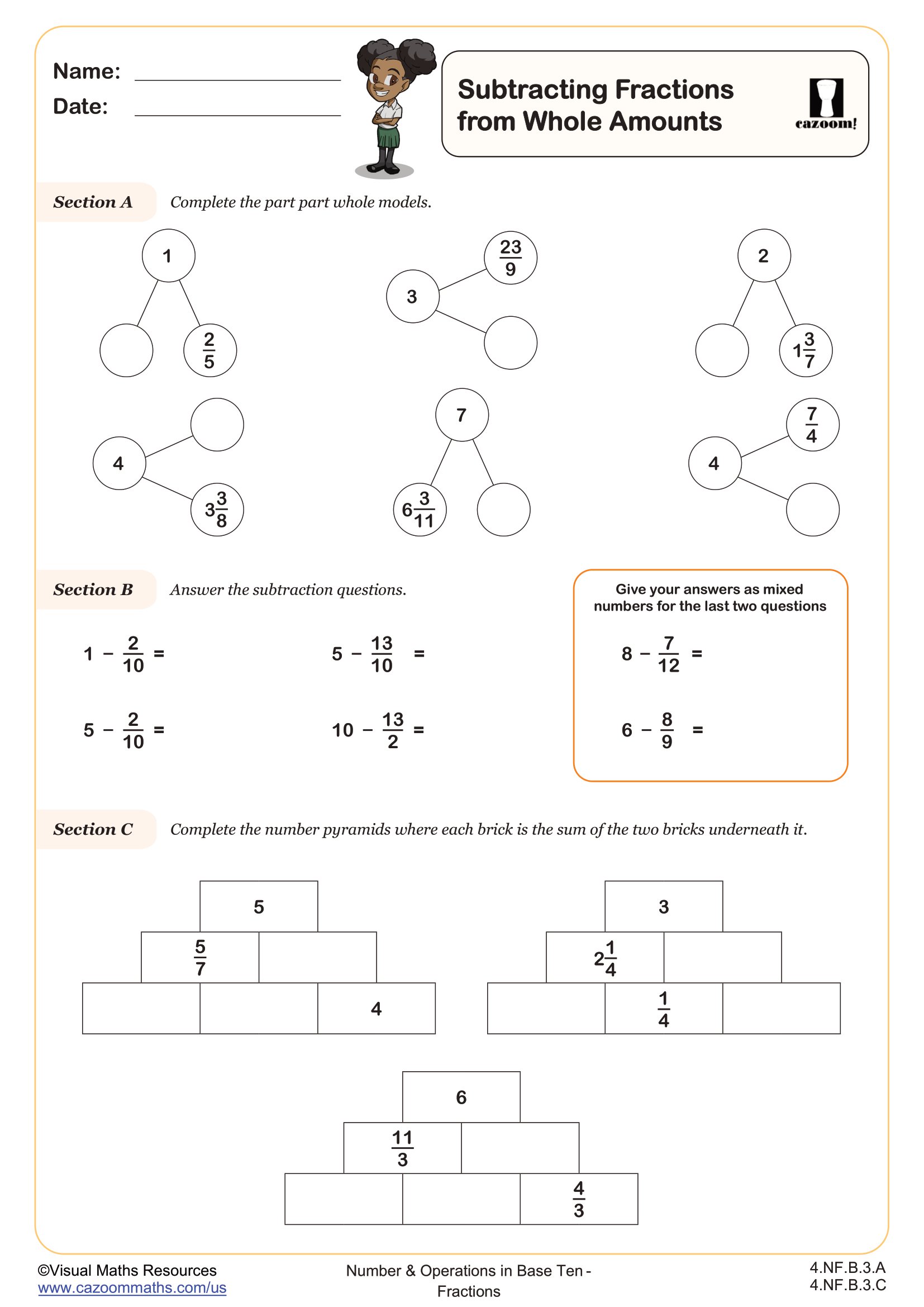
Subtracting Fractions from Whole Amounts
Grades: 4th Grade
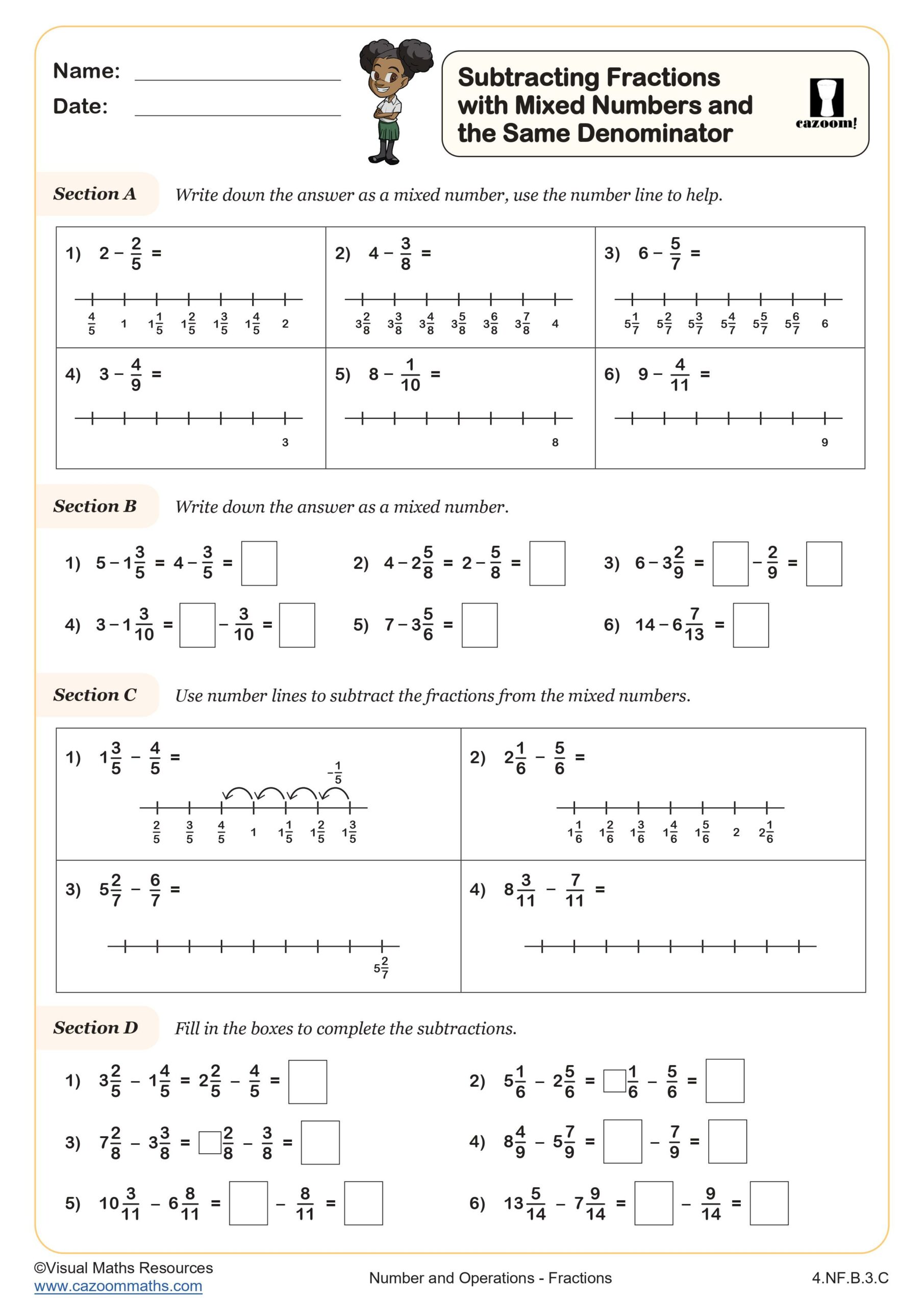
Subtracting Fractions with Mixed Numbers and the Same Denominator
Grades: 4th Grade
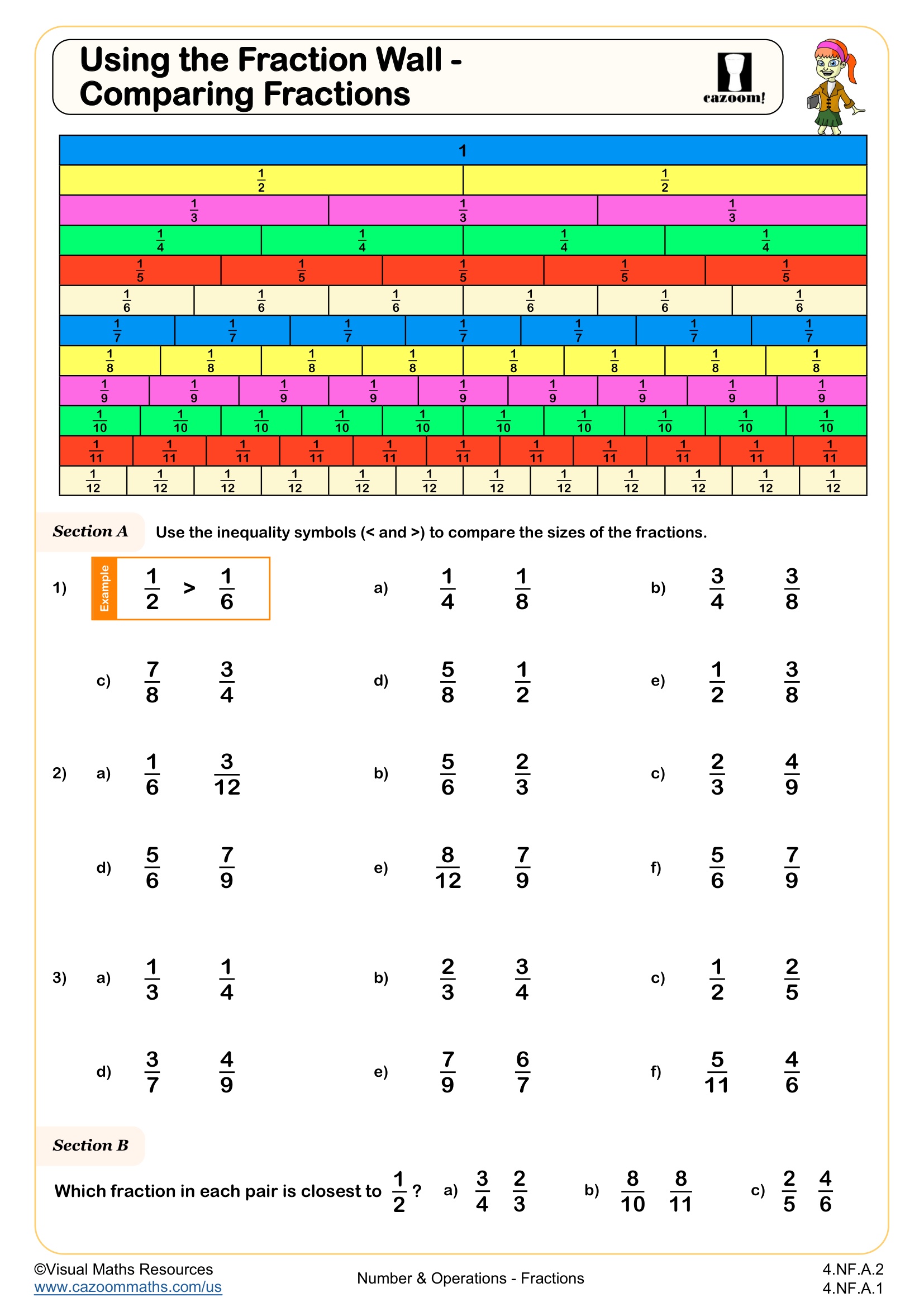
Using a Fraction Wall - Comparing Fractions
Grades: 4th Grade
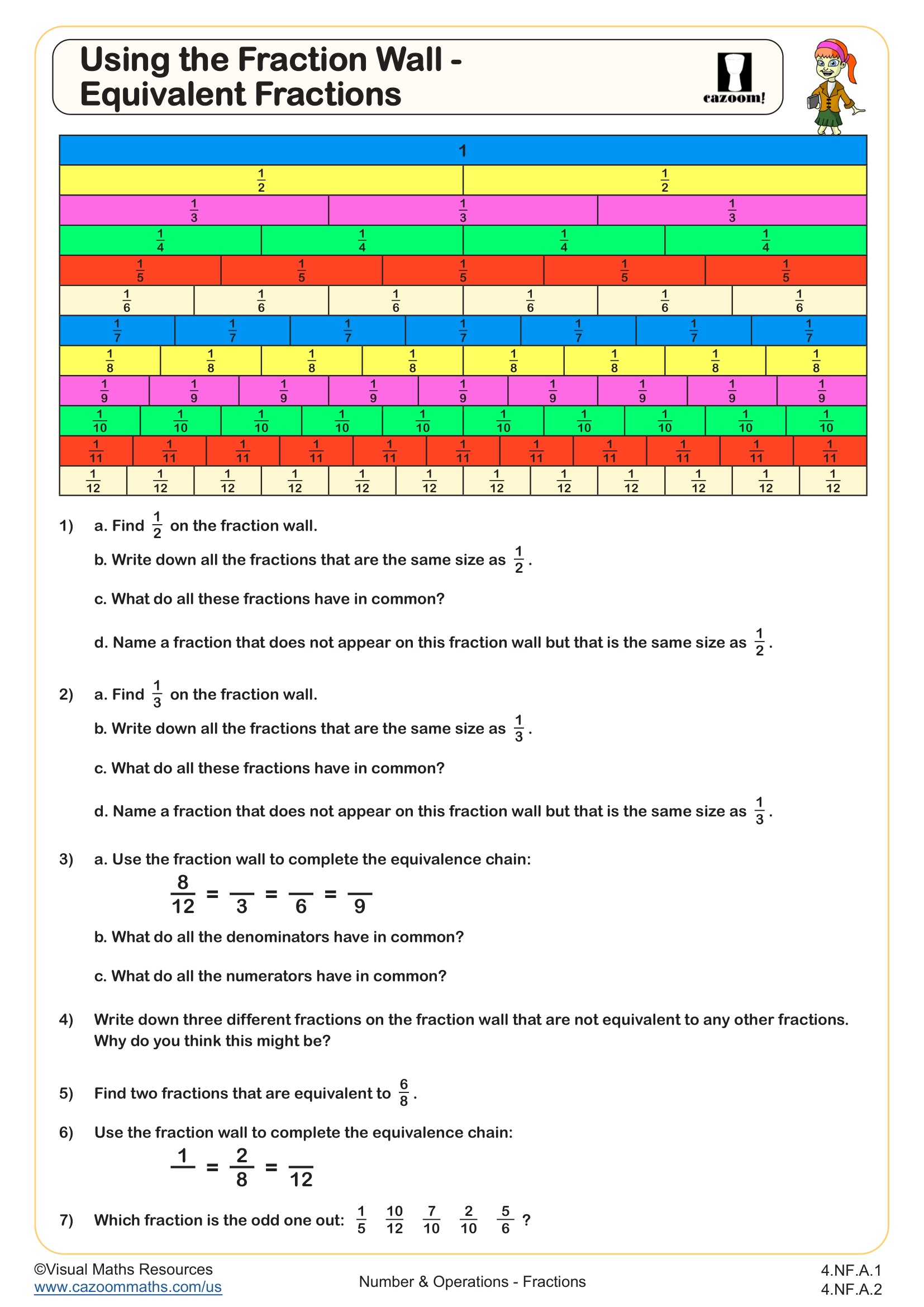
Using a Fraction Wall - Equivalent Fractions
Grades: 4th Grade
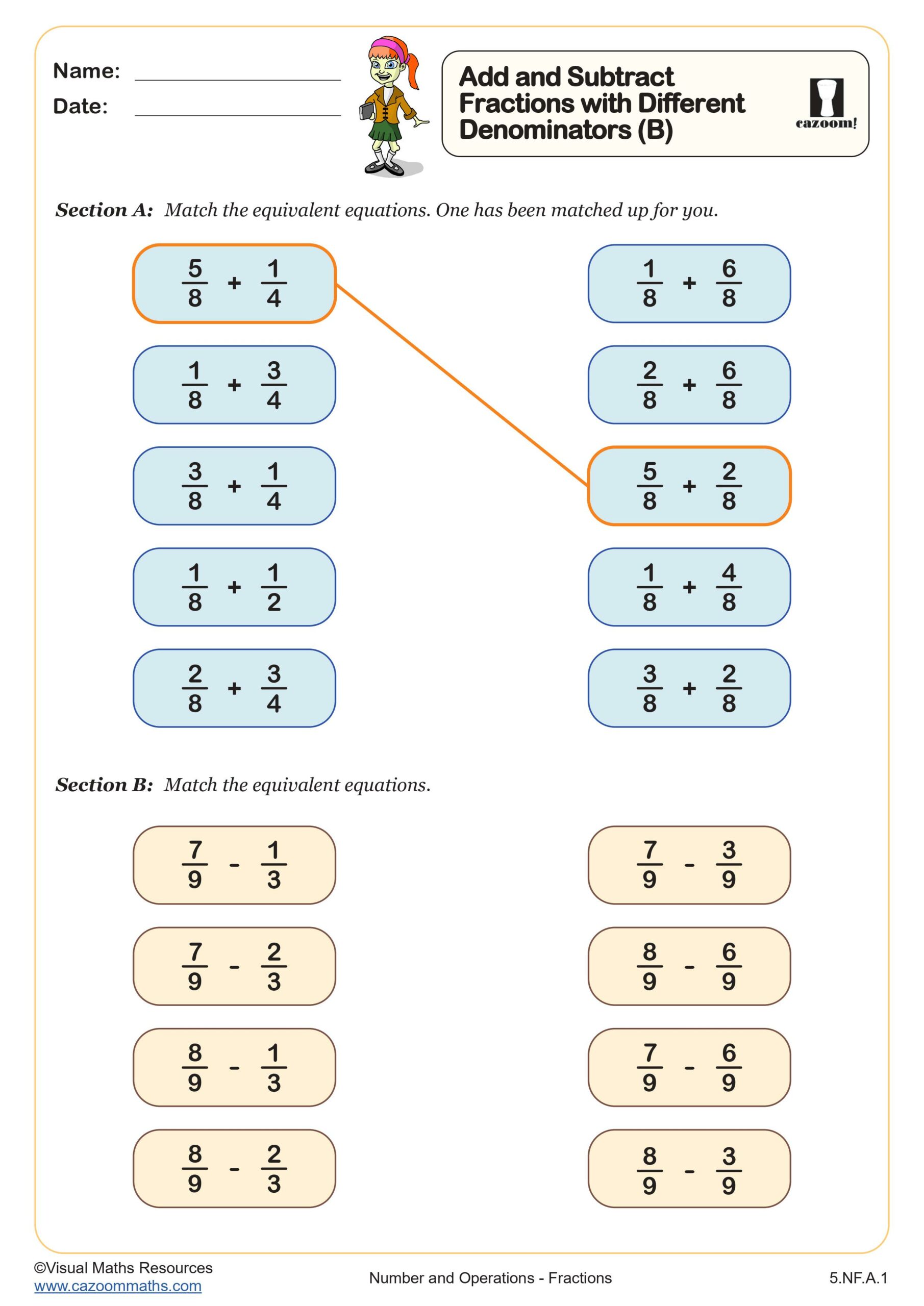
Add and Subtract Fractions with Different Denominators (B)
Grades: 5th Grade
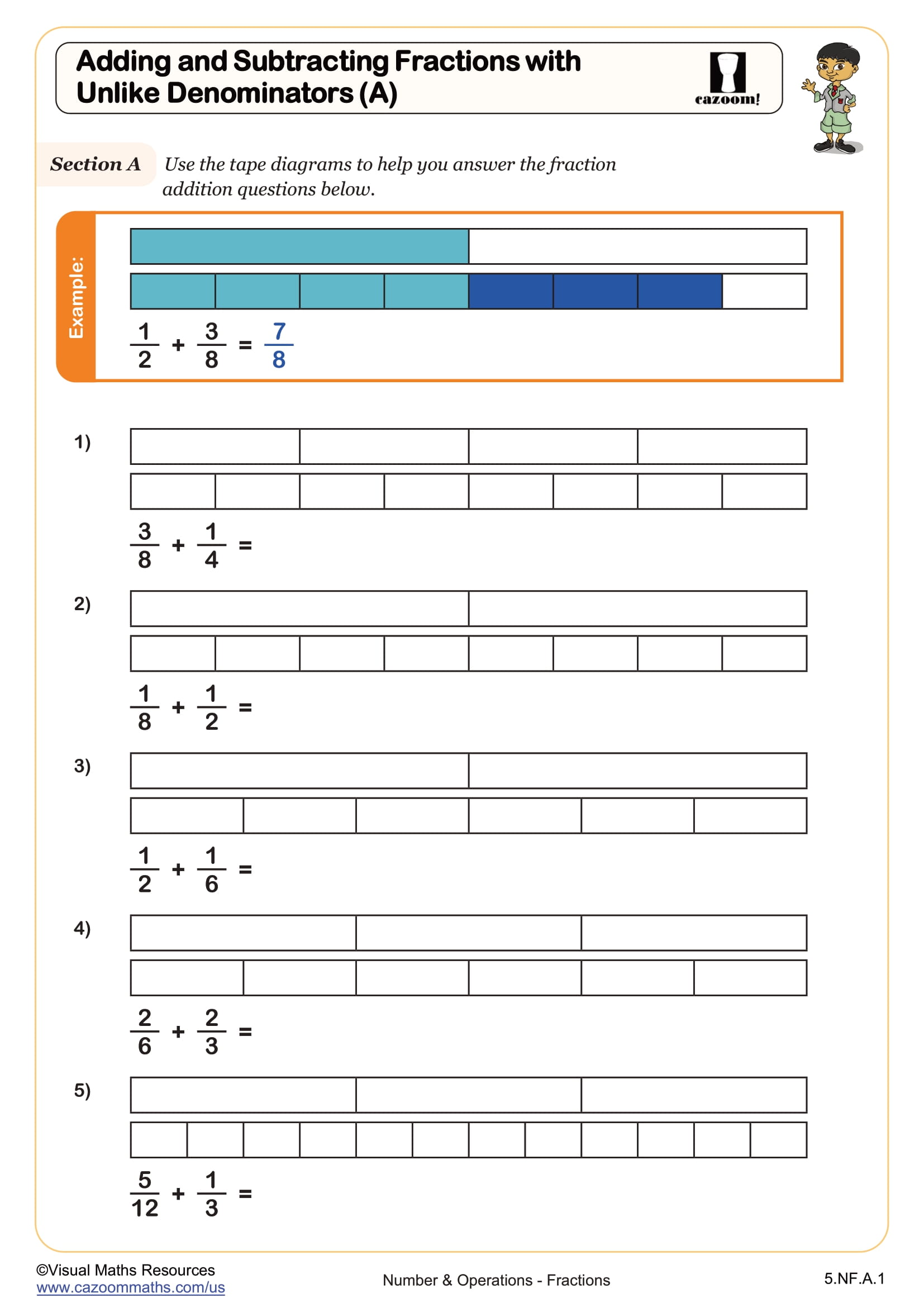
Add and Subtract Fractions with Unlike Denominators (A)
Grades: 5th Grade
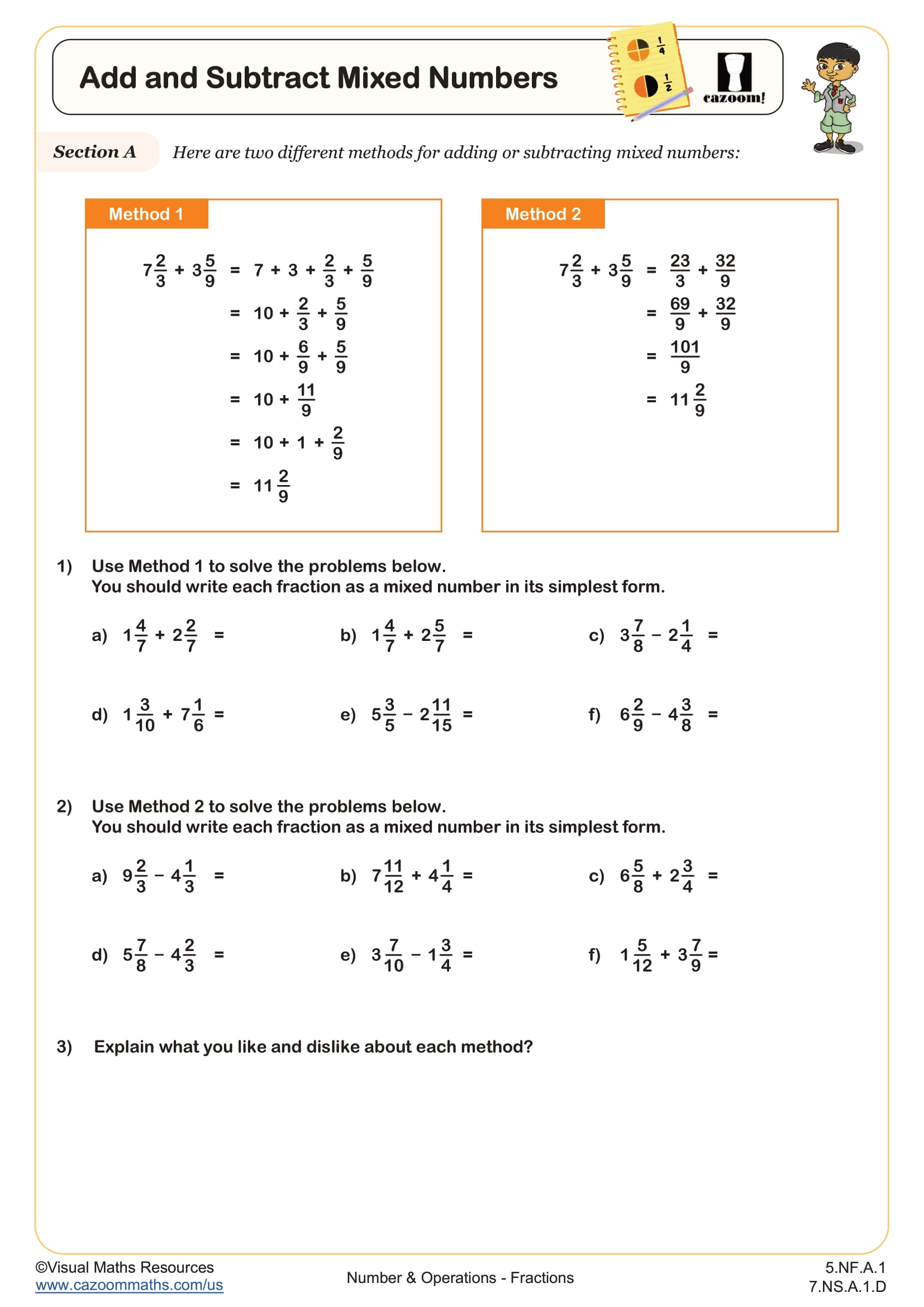
Add and Subtract Mixed Numbers
Grades: 5th Grade, 7th Grade
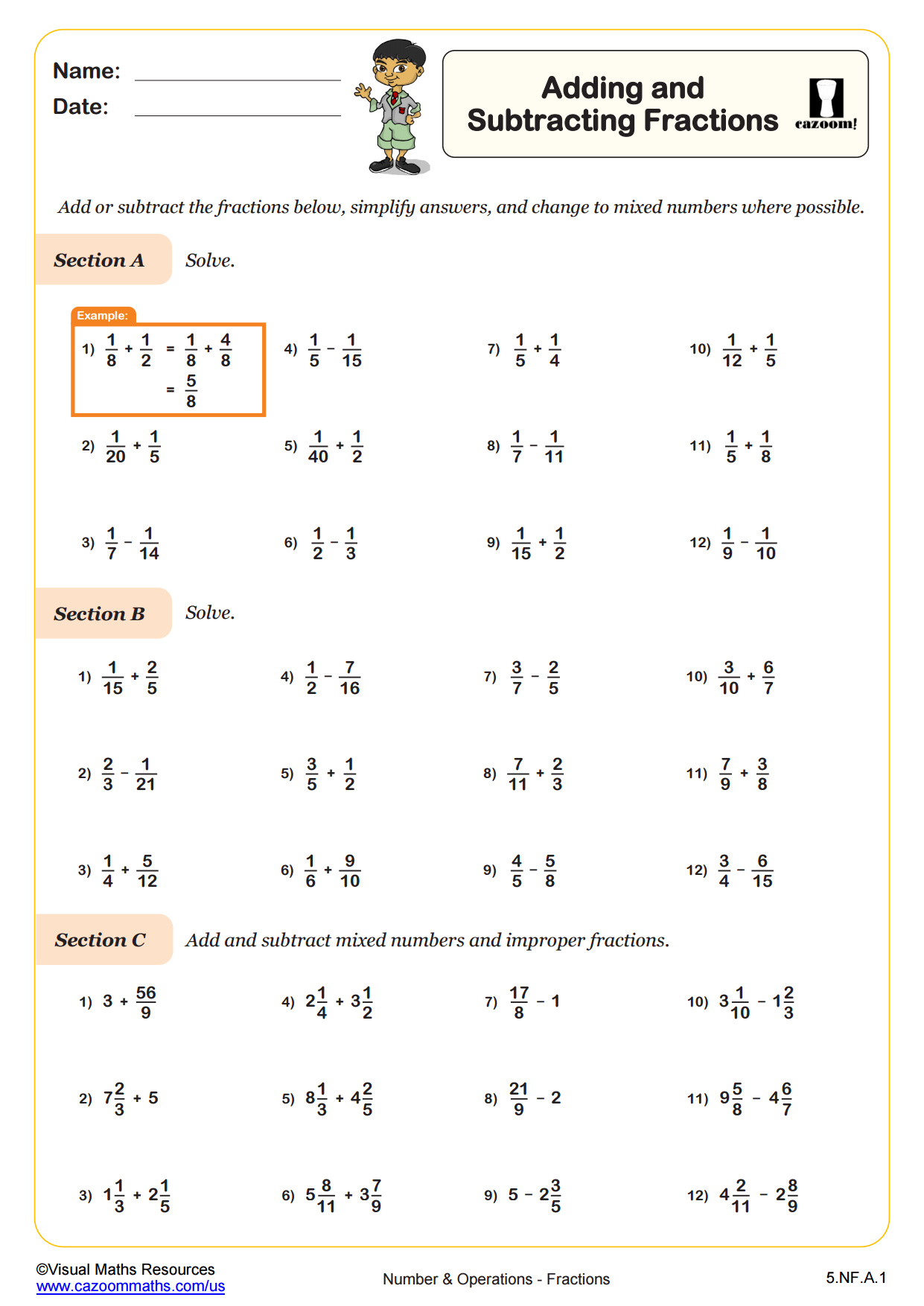
Adding and Subtracting Fractions
Grades: 5th Grade
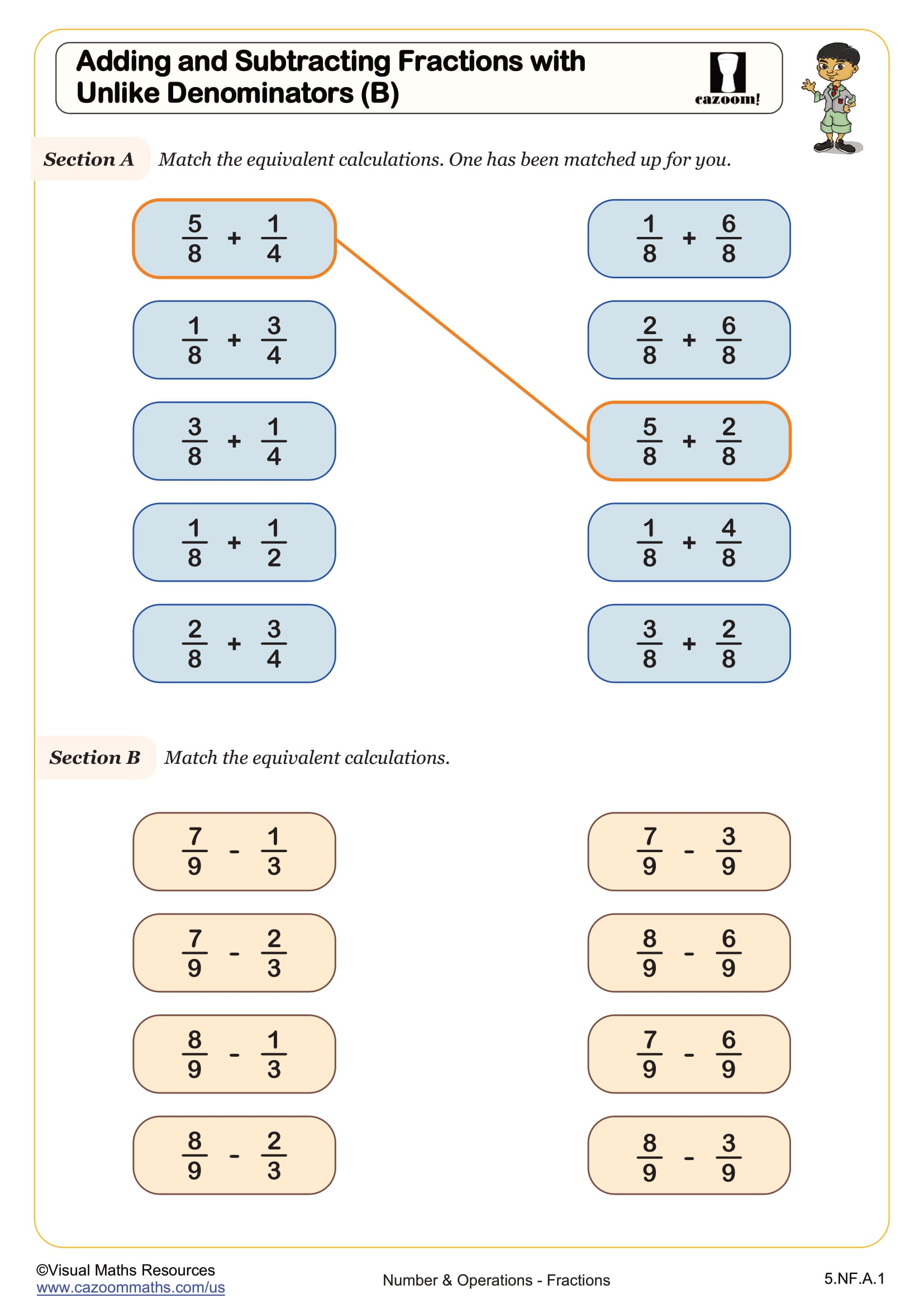
Adding and Subtracting Fractions with Unlike Denominators (B)
Grades: 5th Grade
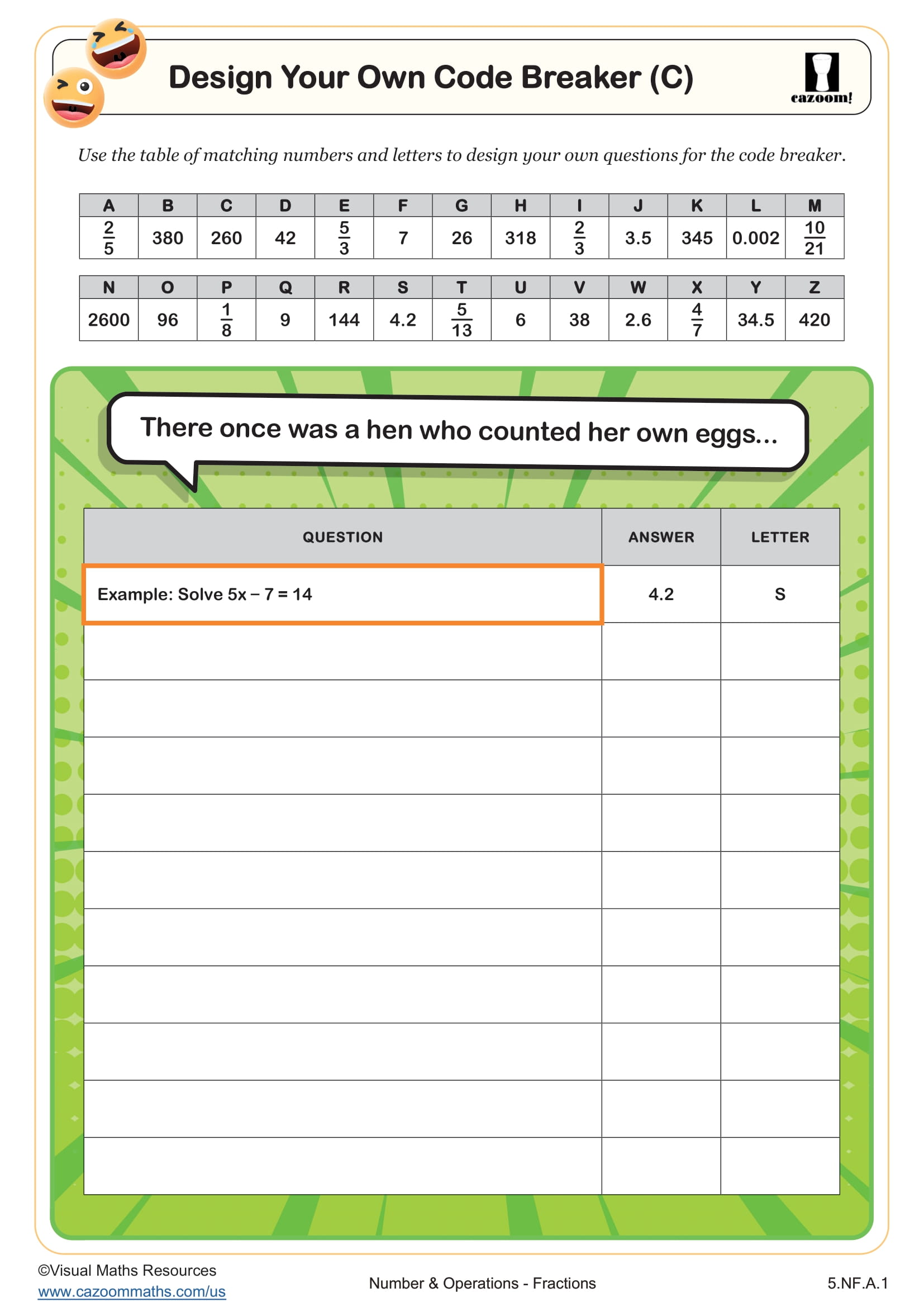
Design Your Own Code Breaker (C)
Grades: 5th Grade
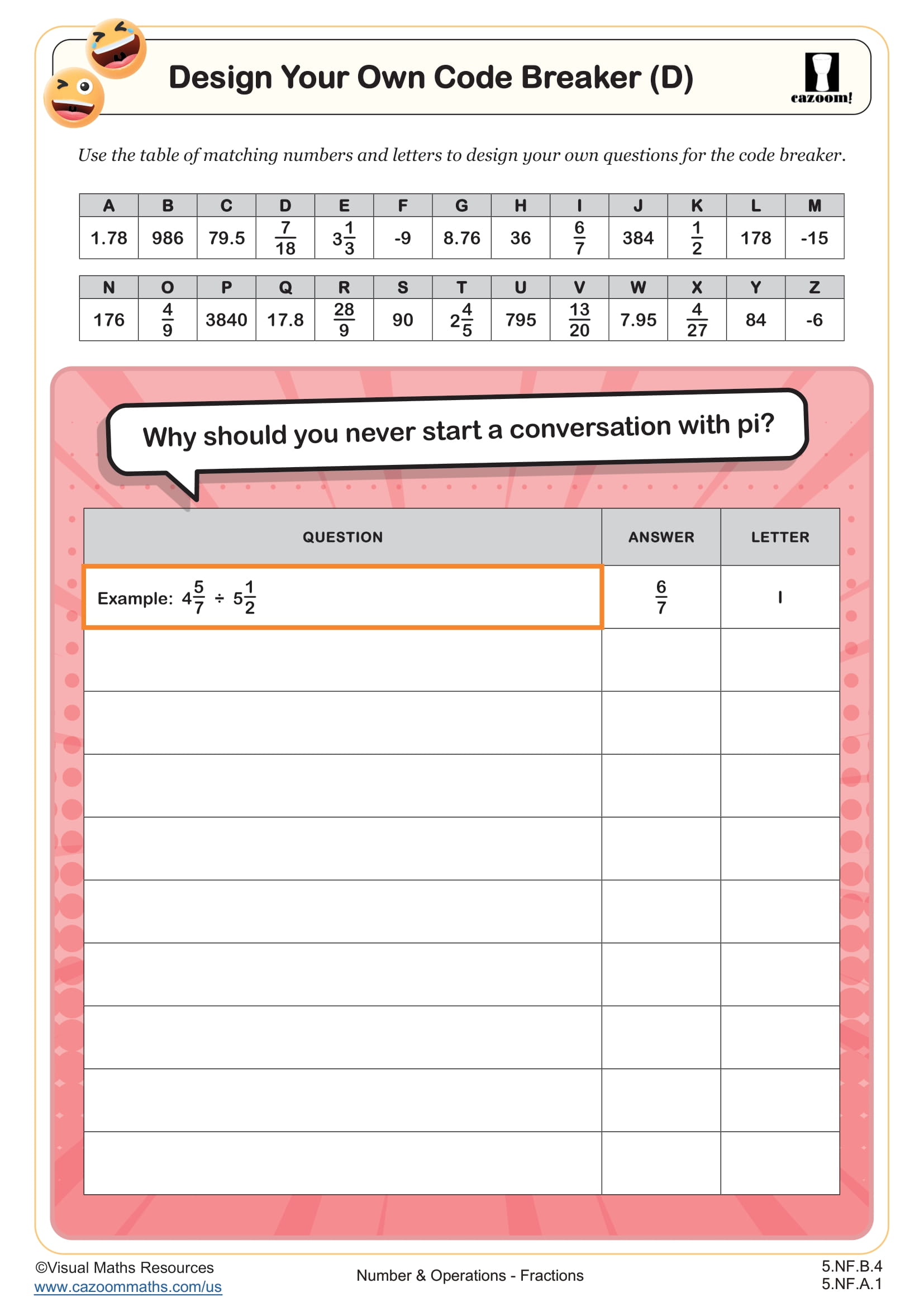
Design Your Own Code Breaker (D)
Grades: 5th Grade
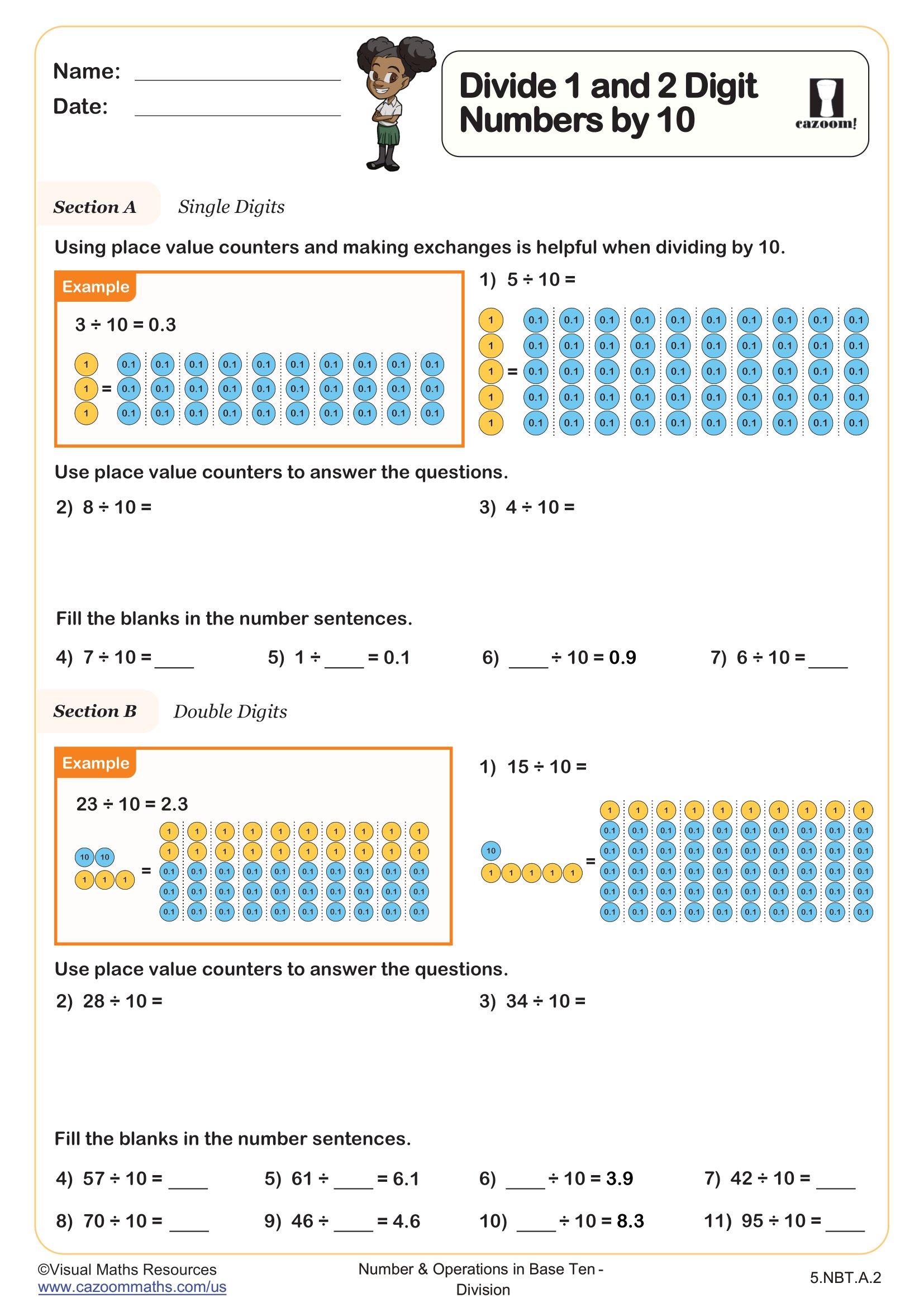
Divide 1 and 2 Digit Numbers by 10
Grades: 5th Grade
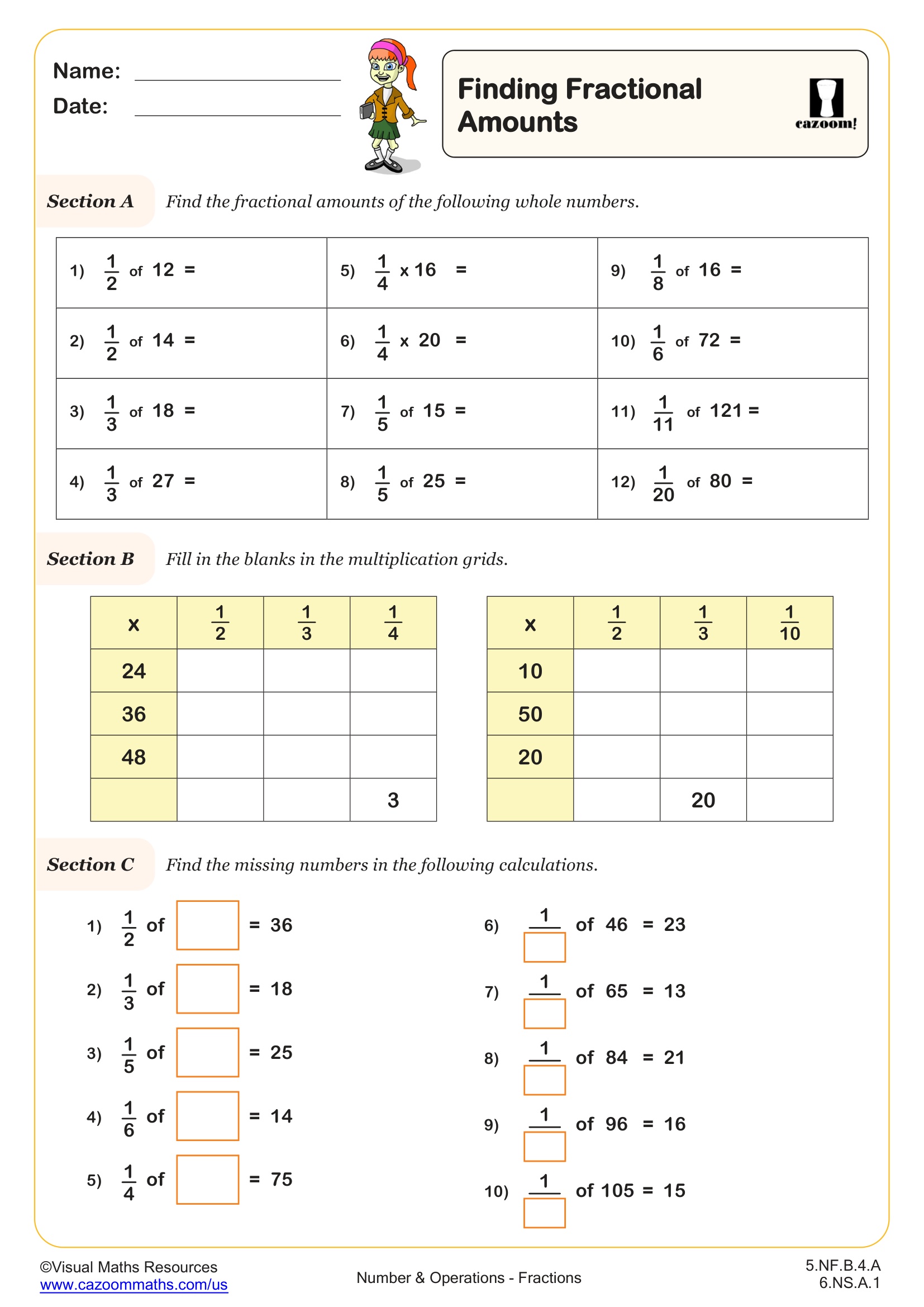
Finding Fractional Amounts
Grades: 5th Grade, 6th Grade
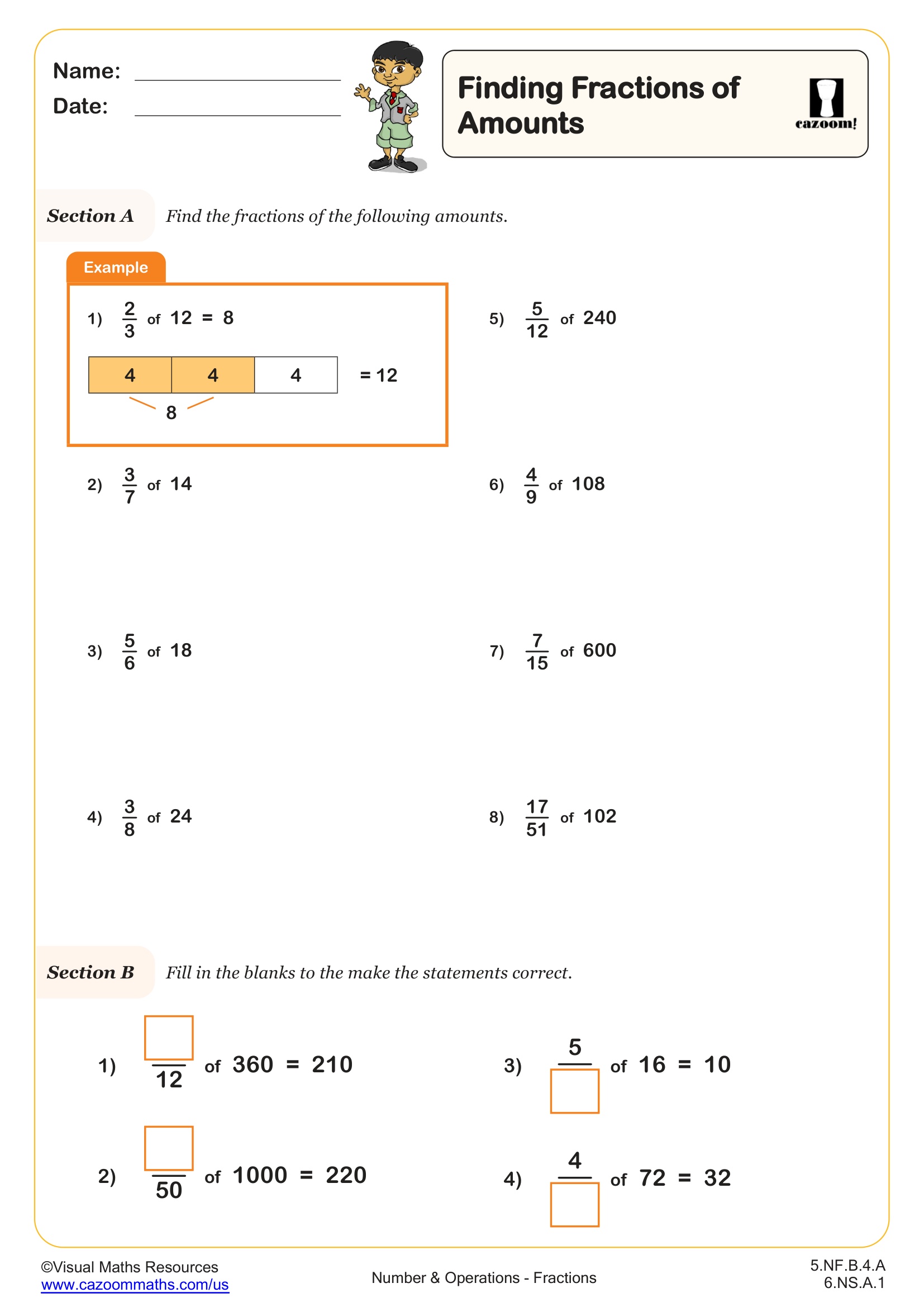
Finding Fractions of Amounts
Grades: 5th Grade, 6th Grade
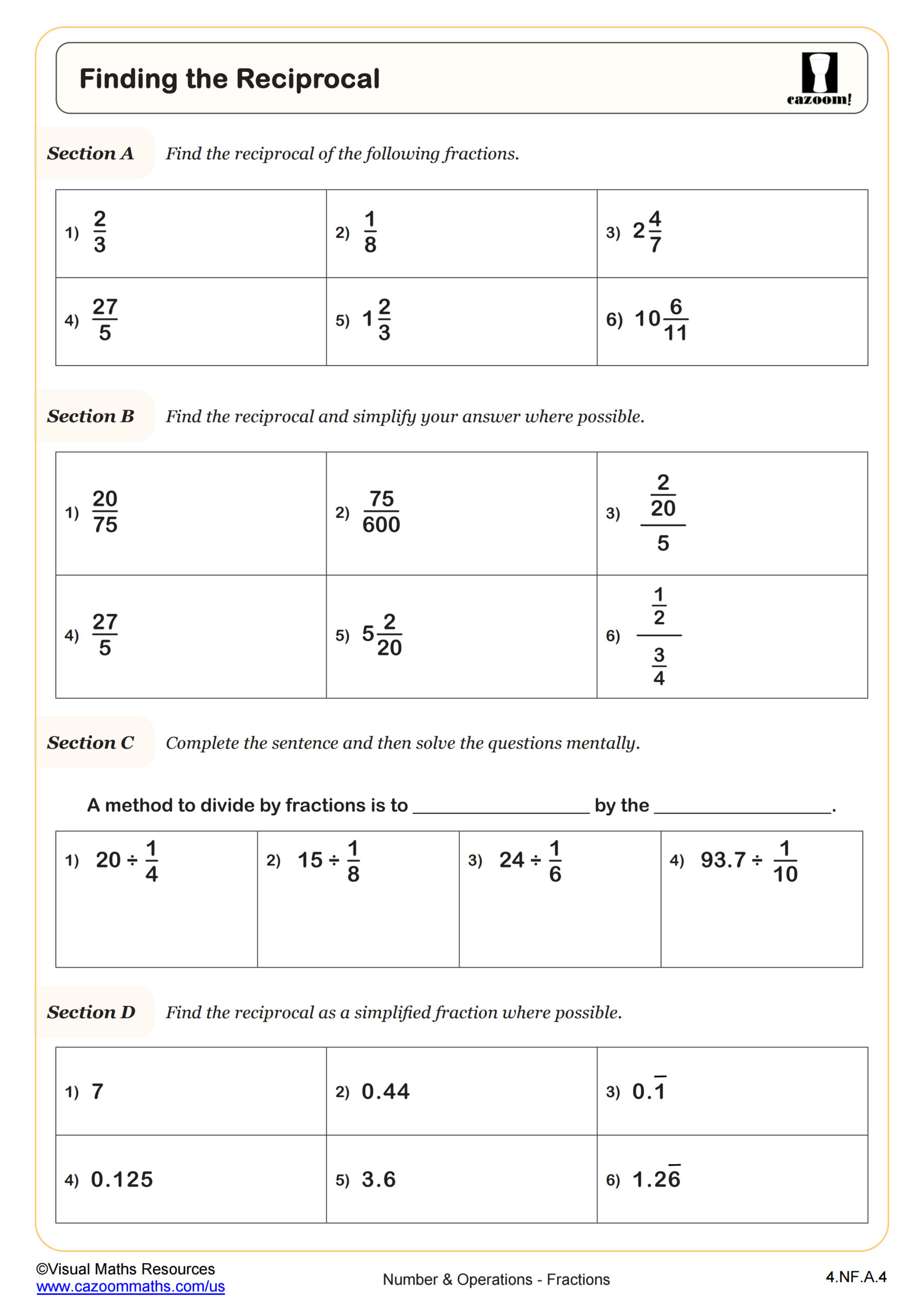
Finding the Reciprocal
Grades: 5th Grade
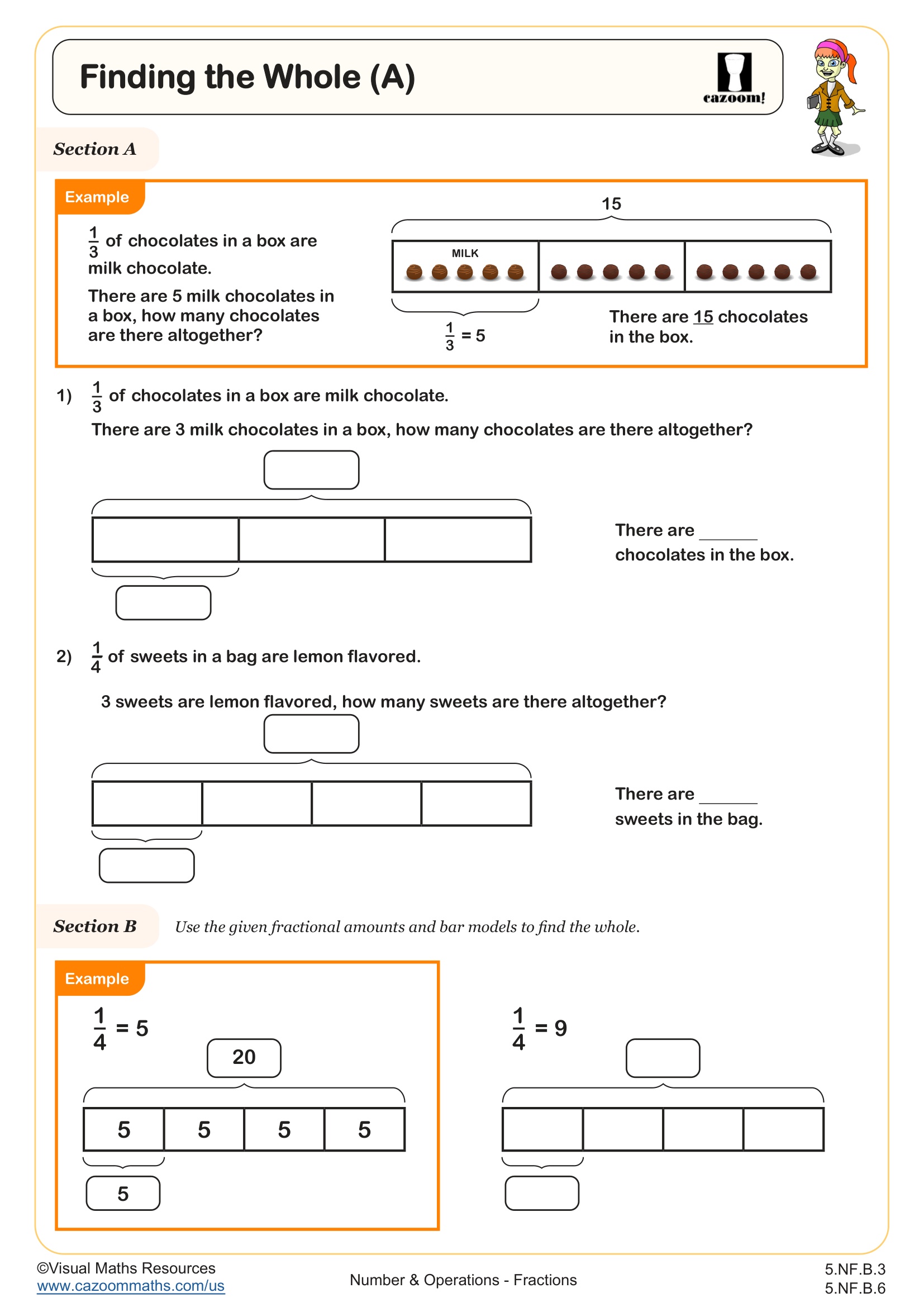
Finding the Whole (A)
Grades: 5th Grade
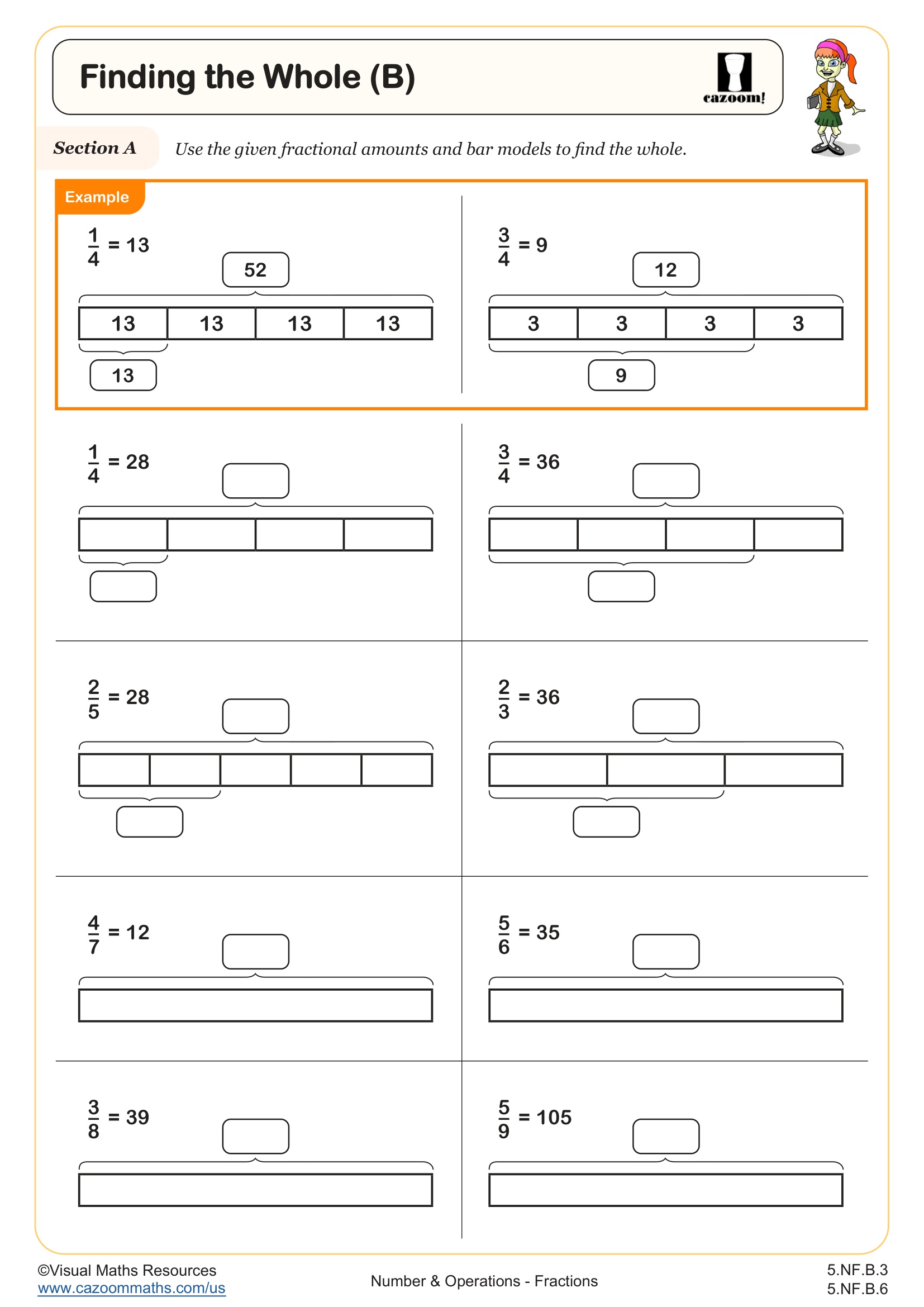
Finding the Whole (B)
Grades: 5th Grade
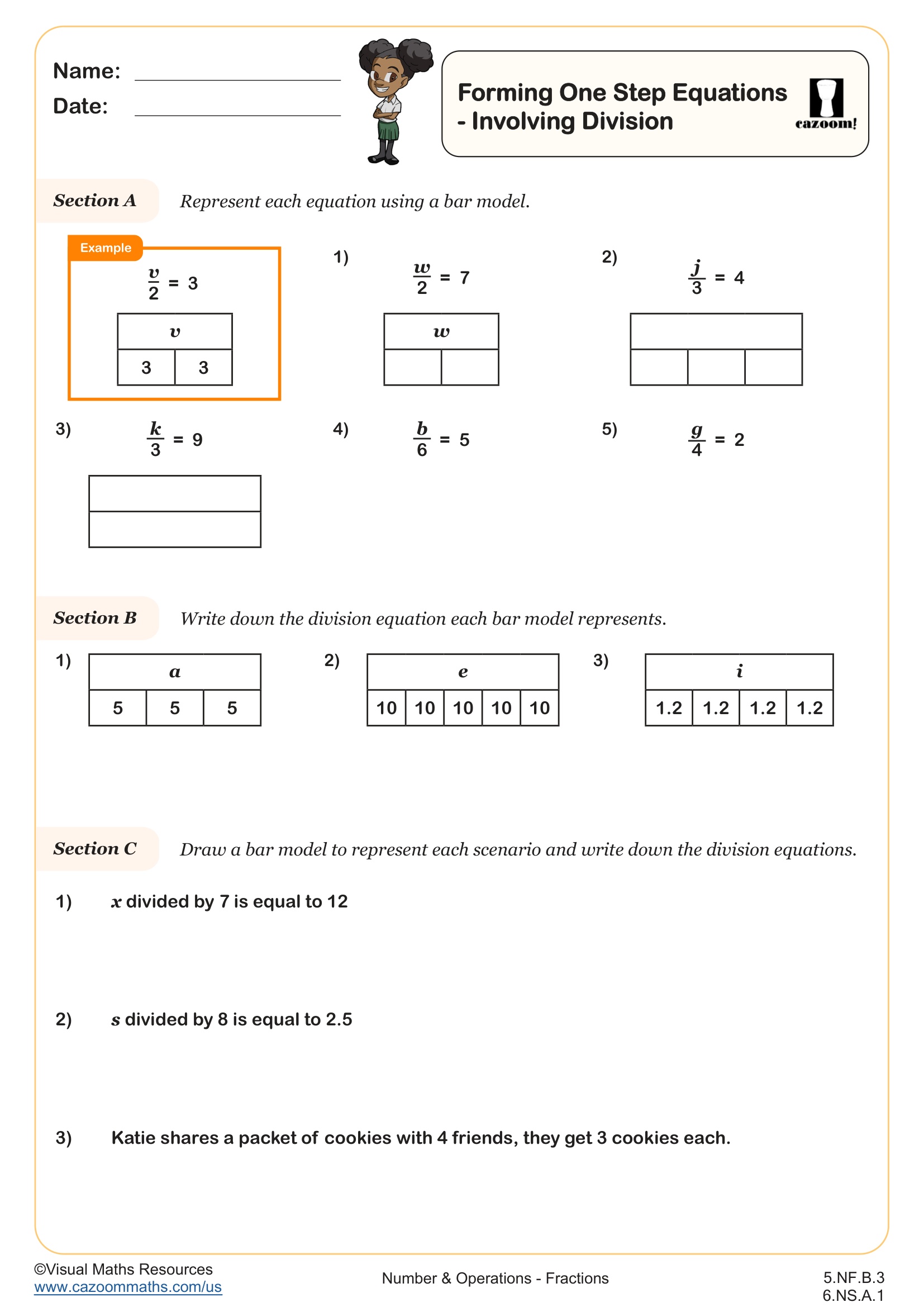
Forming One Step Equations Involving Division
Grades: 5th Grade, 6th Grade
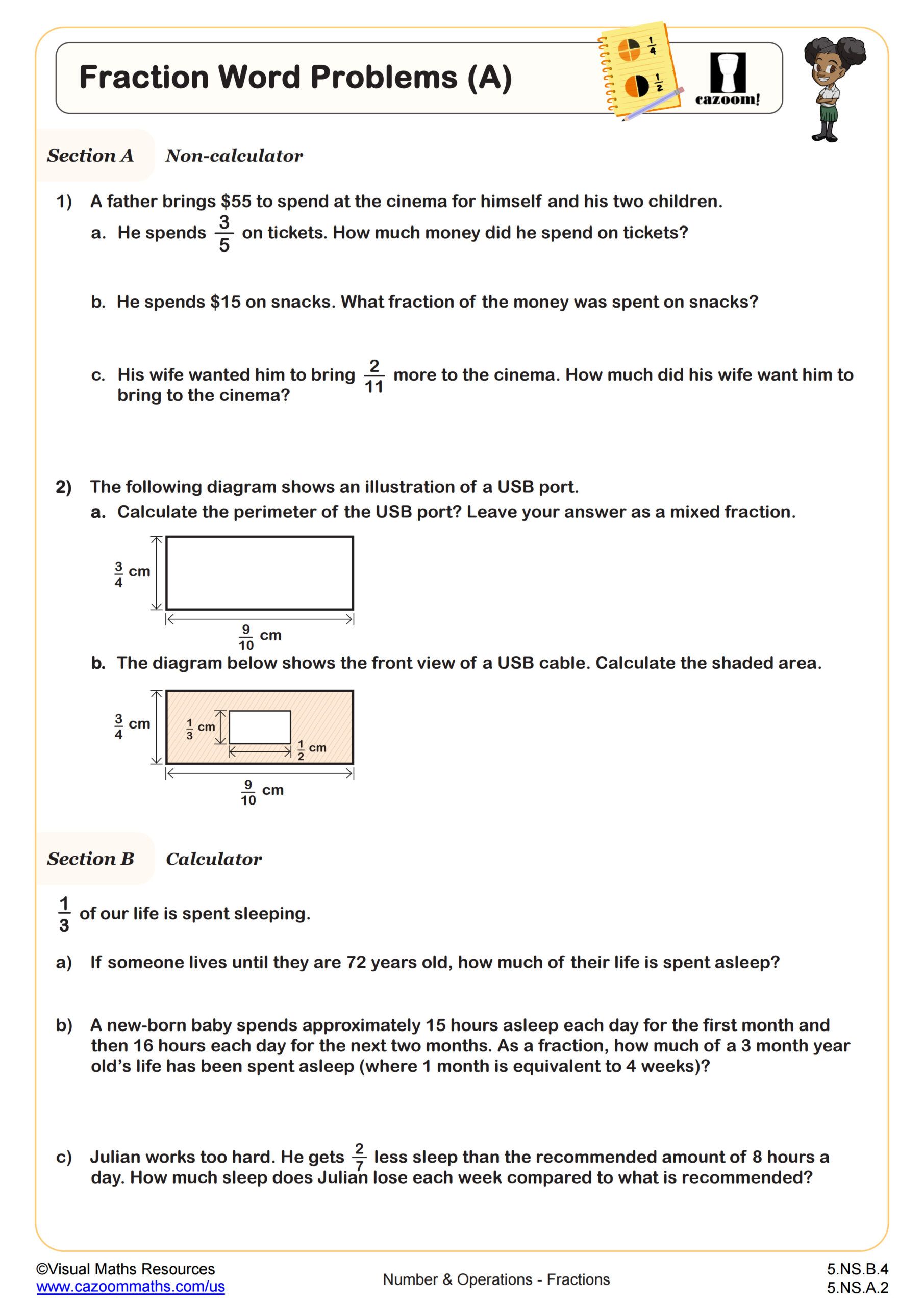
Fractions Word Problems (A)
Grades: 5th Grade
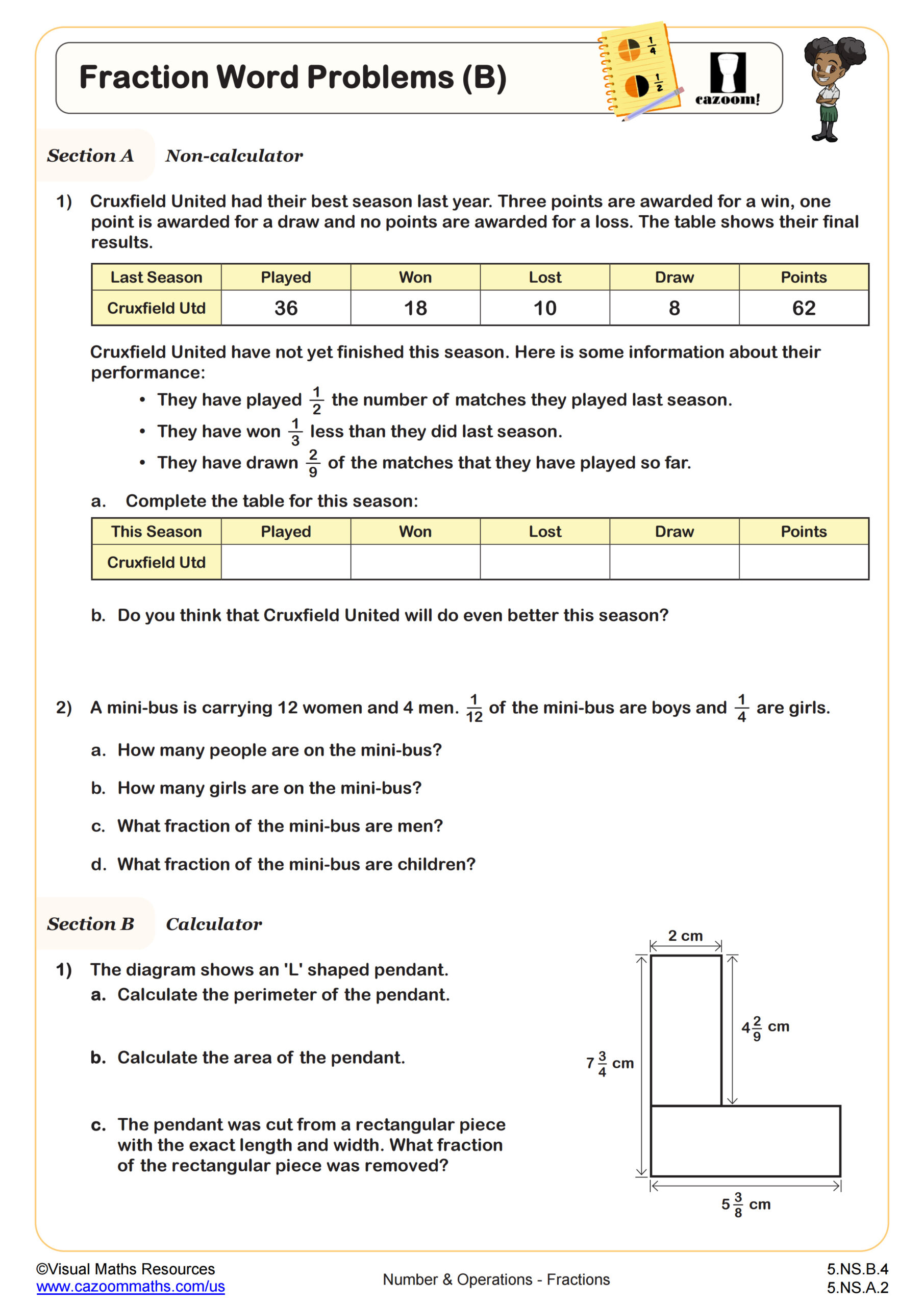
Fractions Word Problems (B)
Grades: 5th Grade
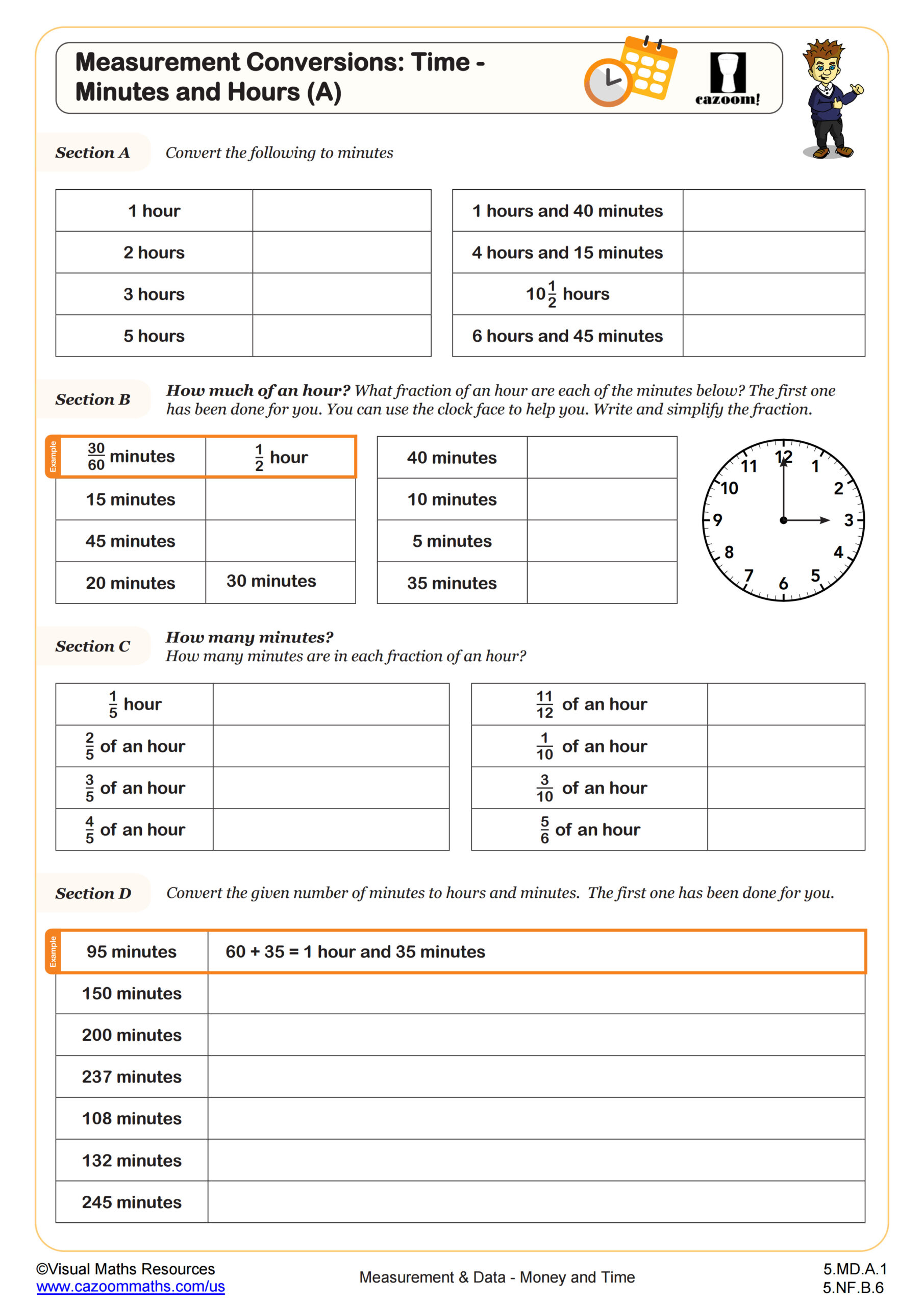
Measurement Conversions: Time - Minutes and Hours (A)
Grades: 5th Grade
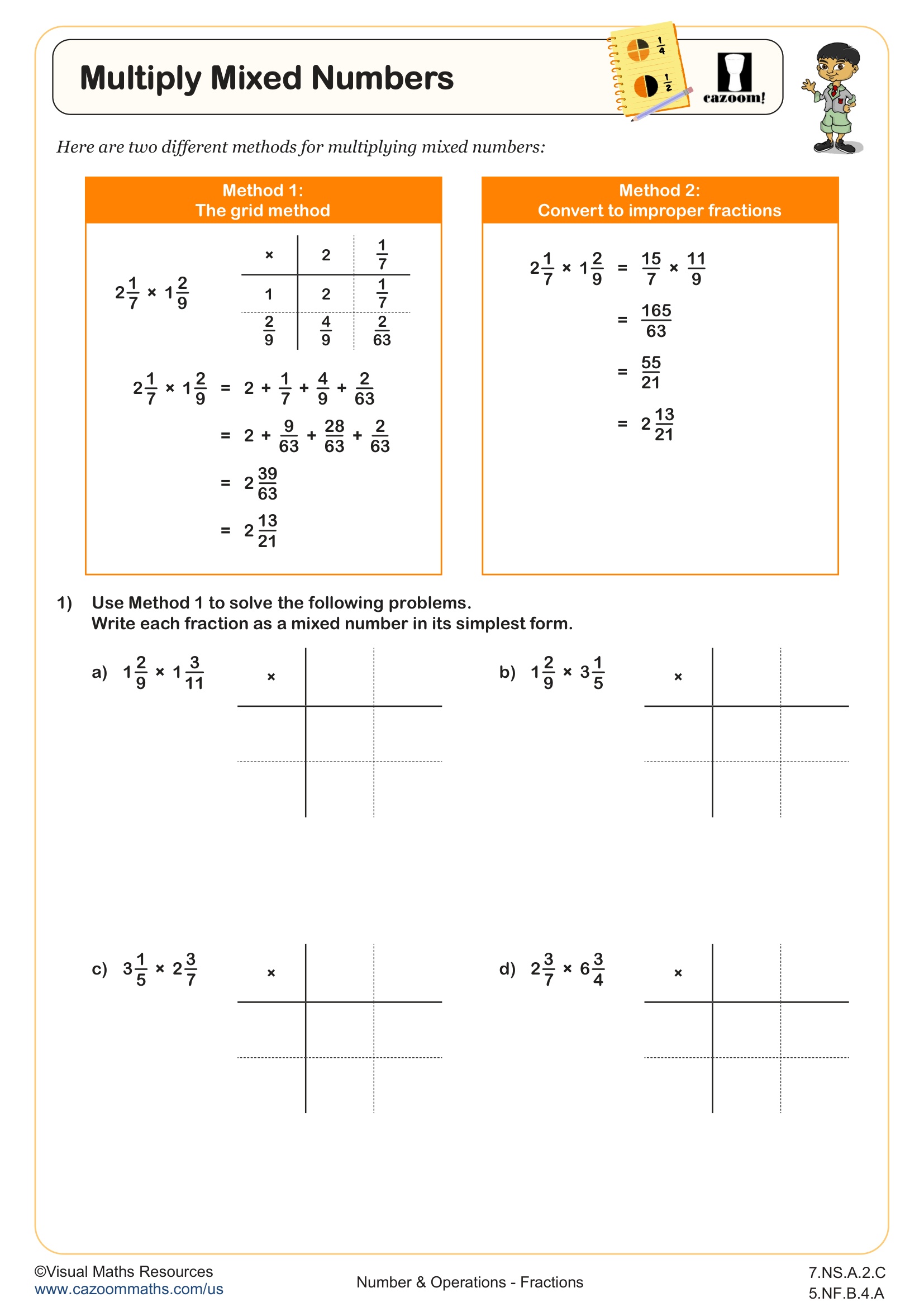
Multiply Mixed Numbers
Grades: 5th Grade, 7th Grade
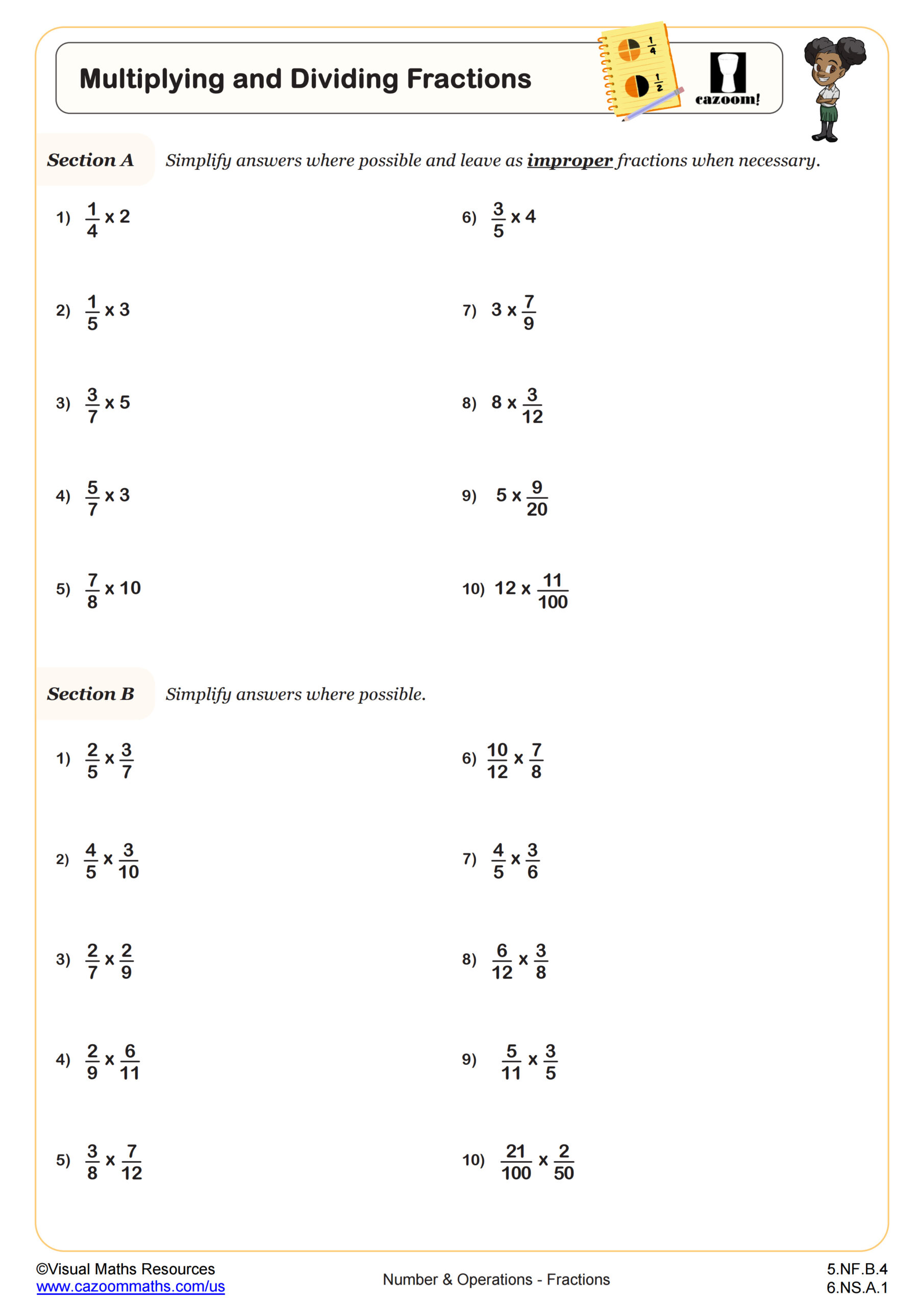
Multiplying and Dividing Fractions
Grades: 5th Grade, 6th Grade
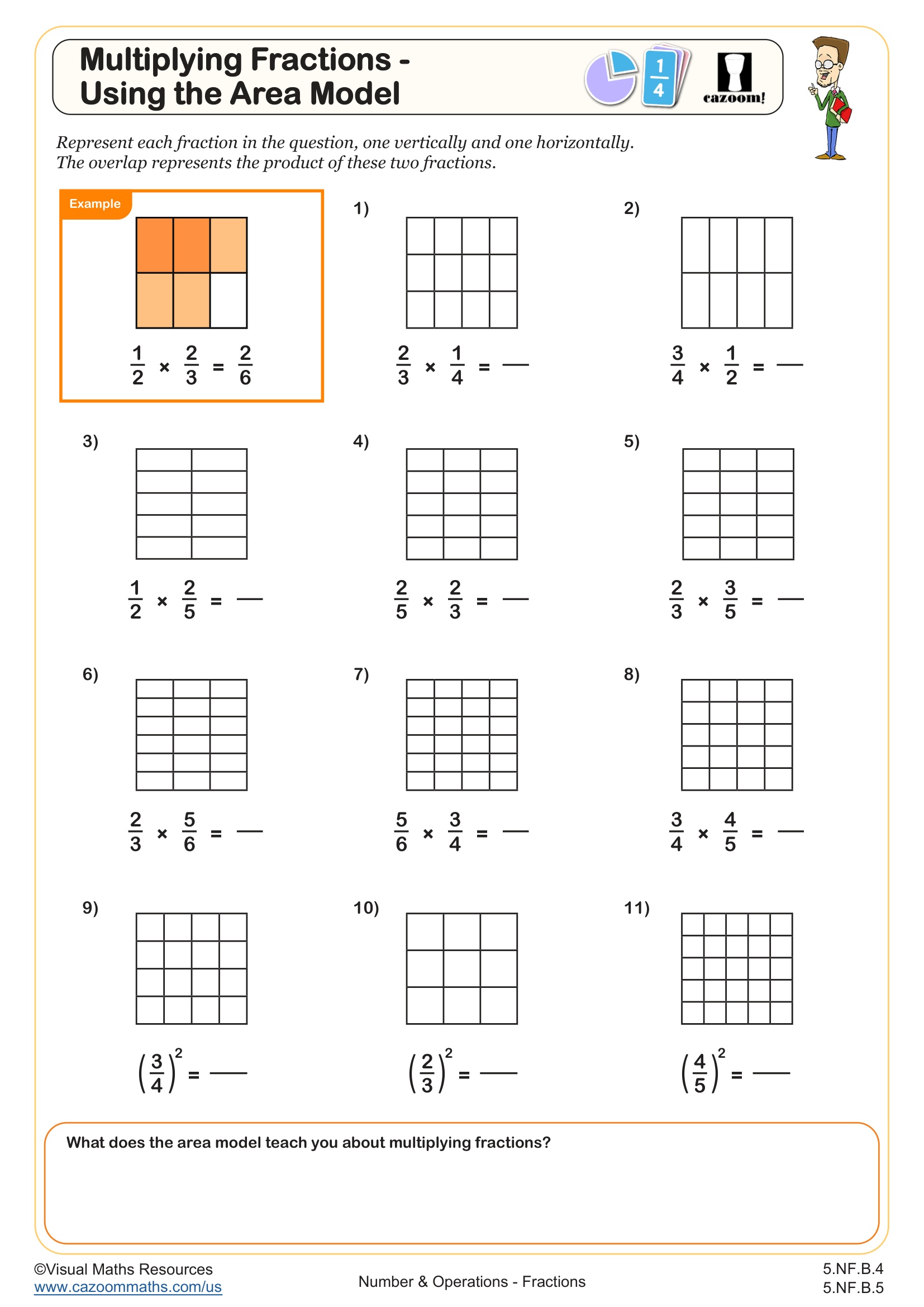
Multiplying Fractions - Using the Area Model
Grades: 5th Grade
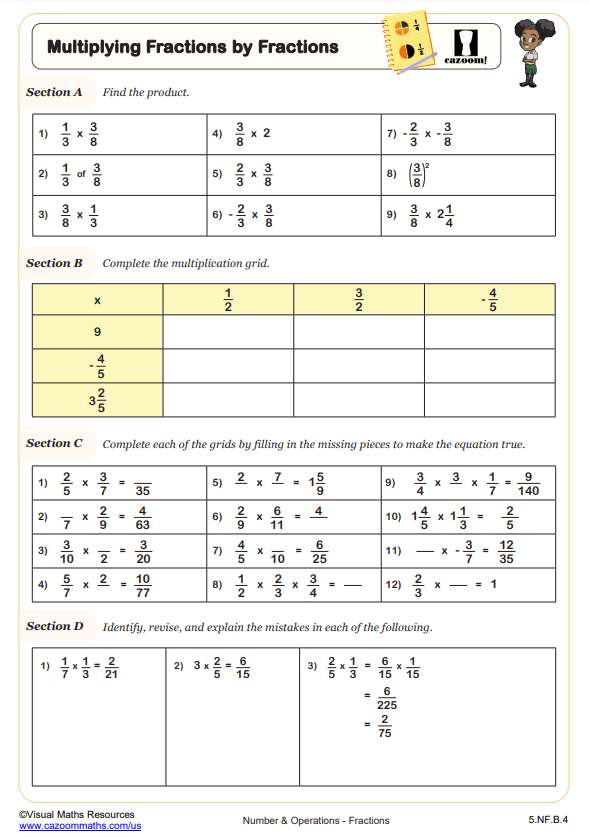
Multiplying Fractions by Fractions
Grades: 5th Grade
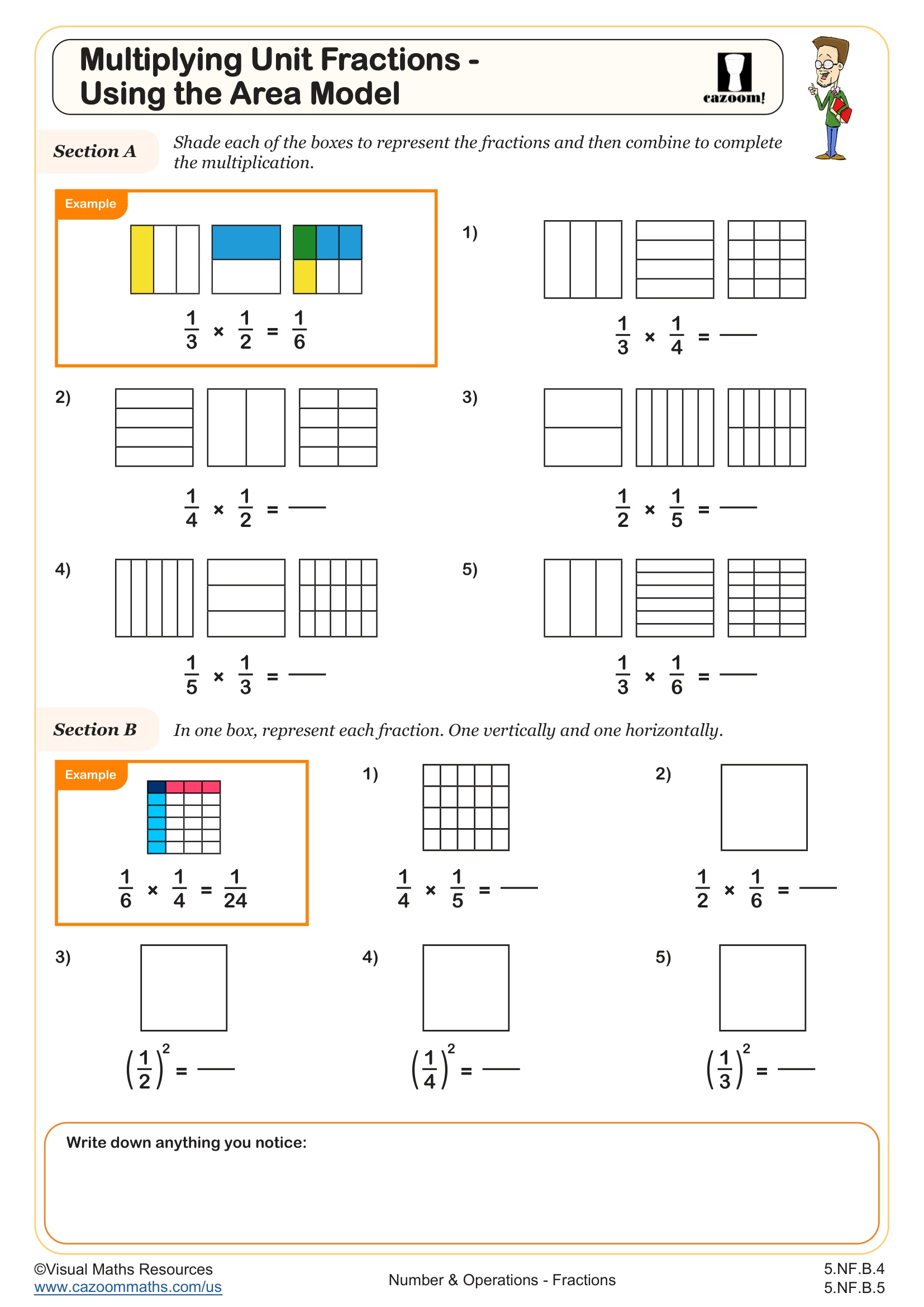
Multiplying Unit Fractions - Using the Area Model
Grades: 5th Grade
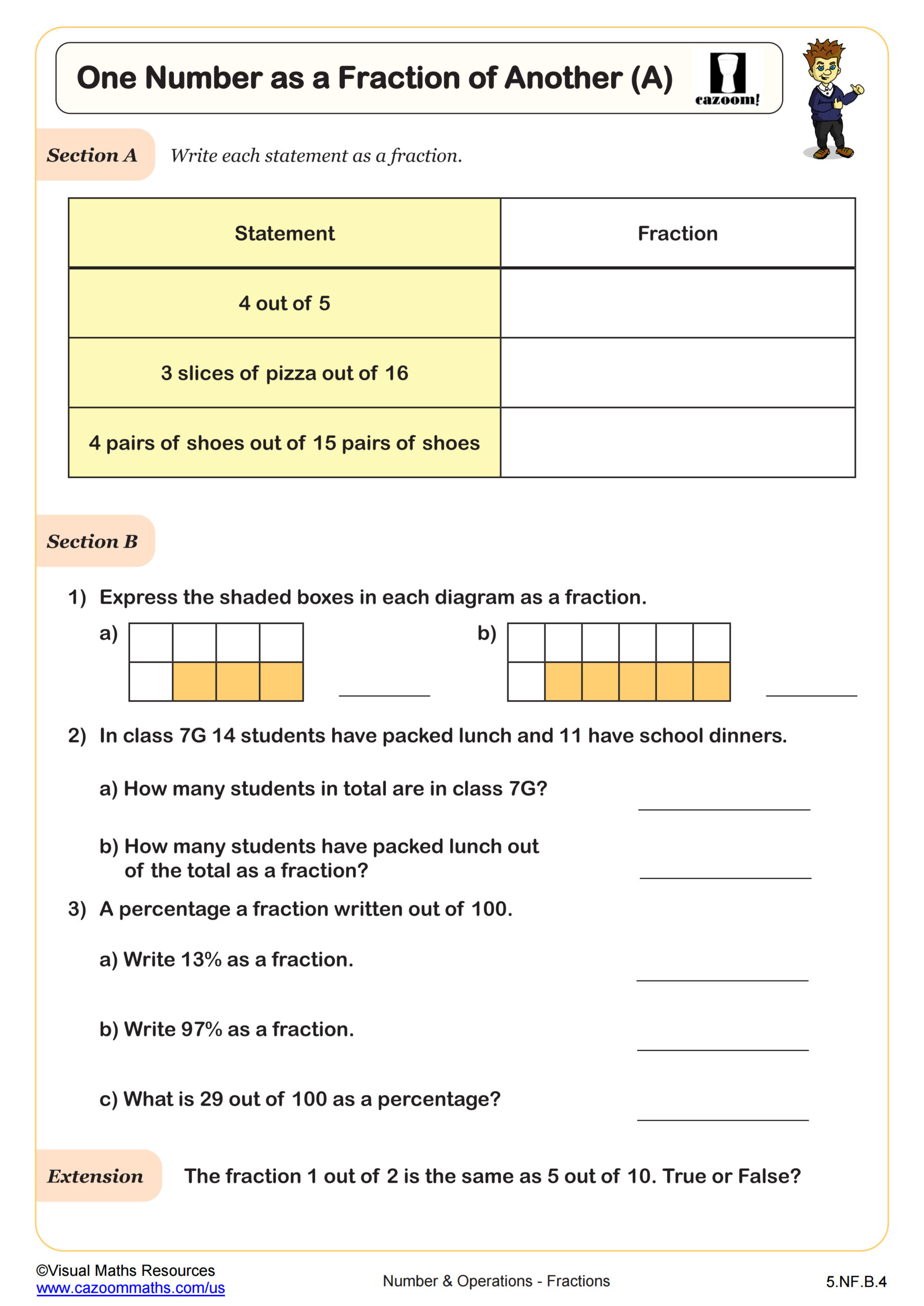
One Number as a Fraction of Another (A)
Grades: 5th Grade
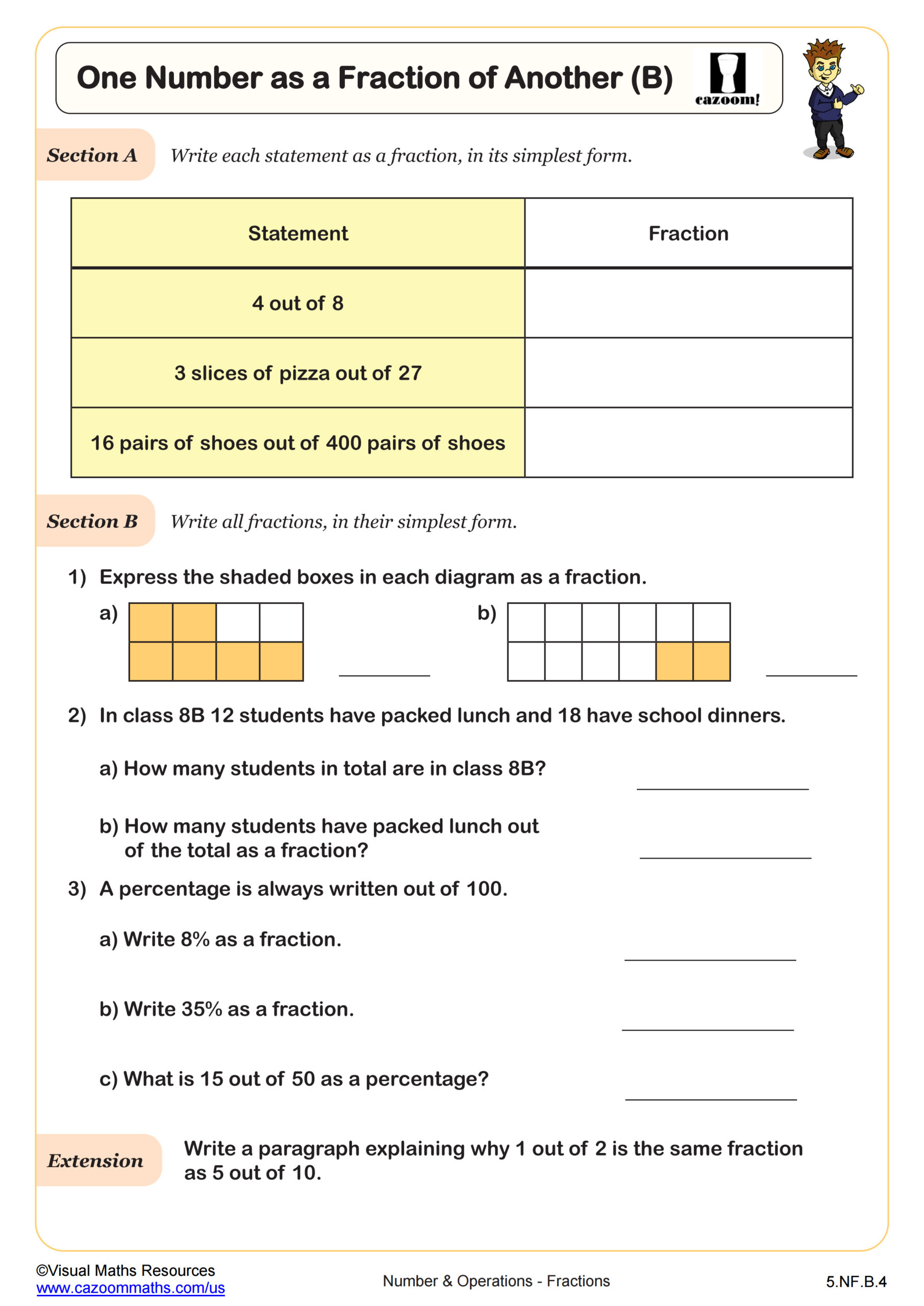
One Number as a Fraction of Another (B)
Grades: 5th Grade
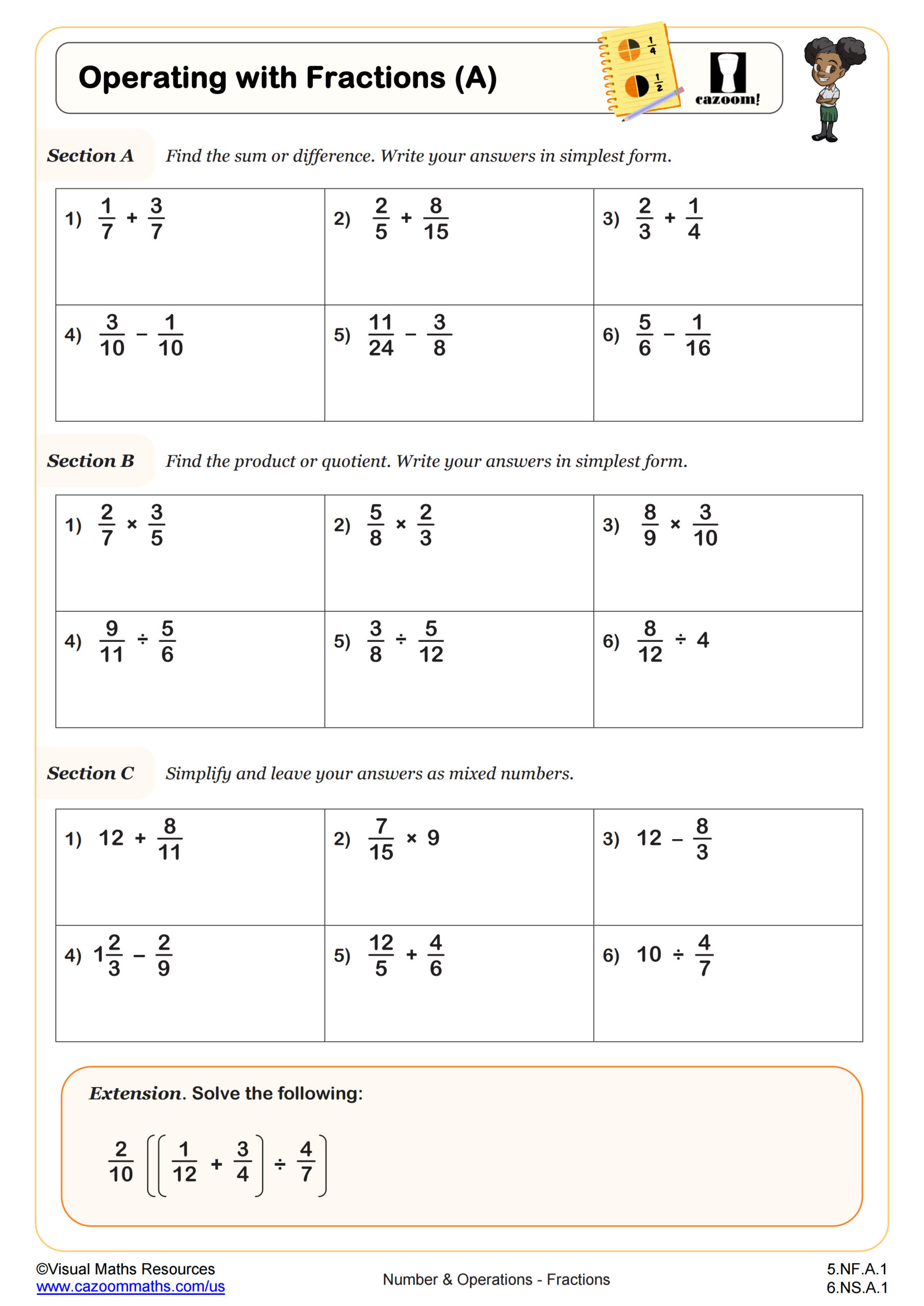
Operations with Fractions (A)
Grades: 5th Grade, 6th Grade
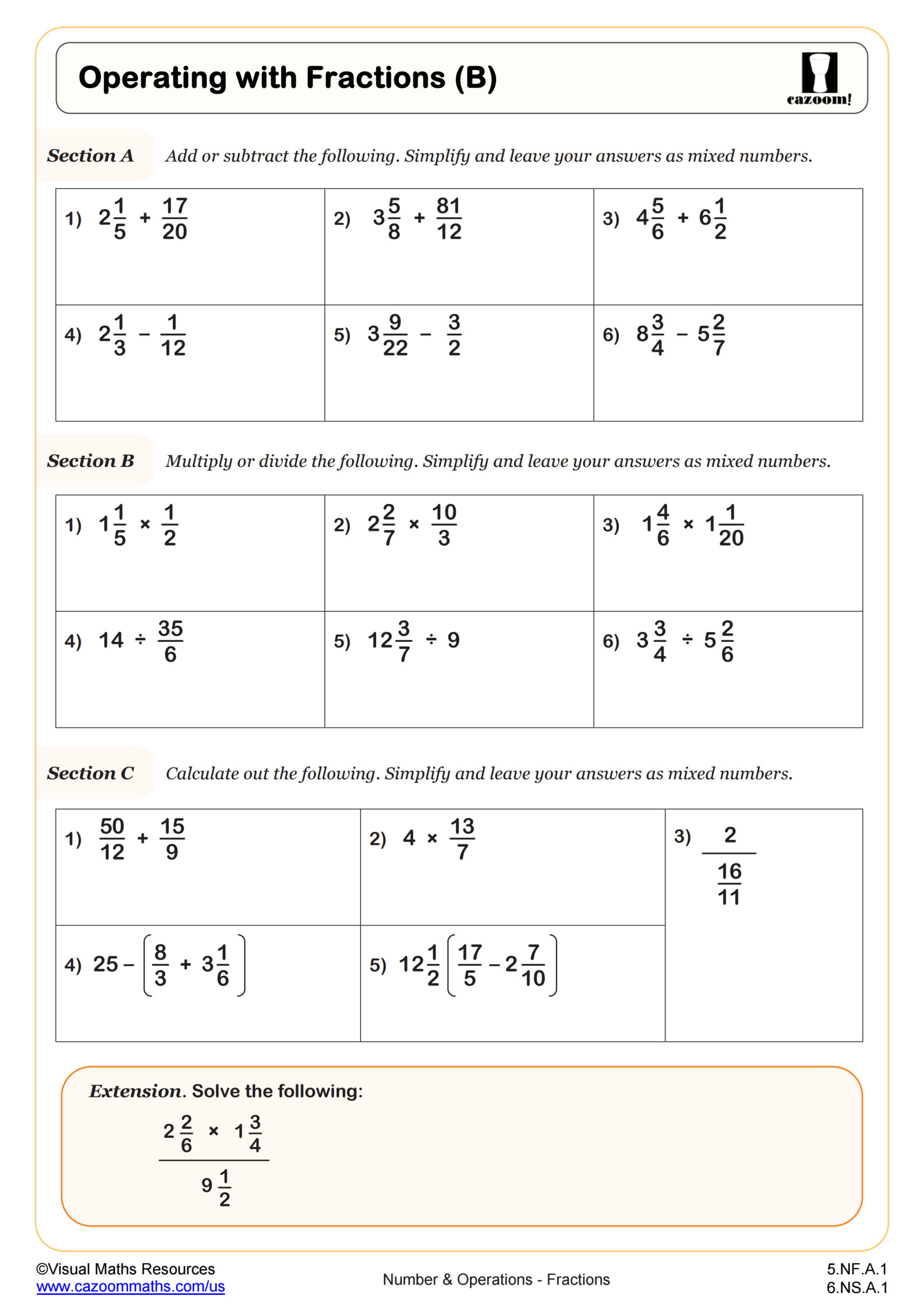
Operations with Fractions (B)
Grades: 5th Grade, 6th Grade
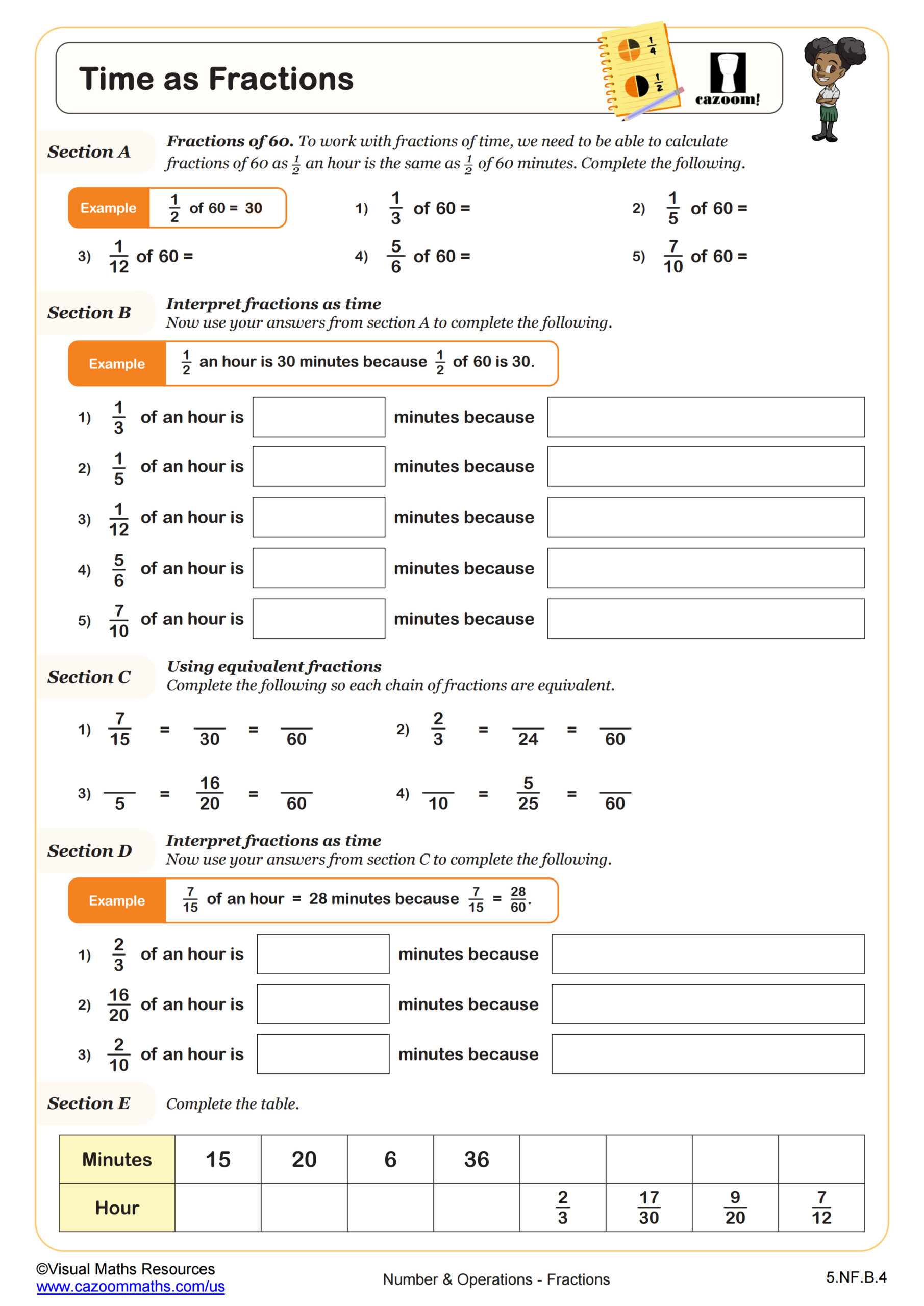
Time as Fractions (A)
Grades: 5th Grade
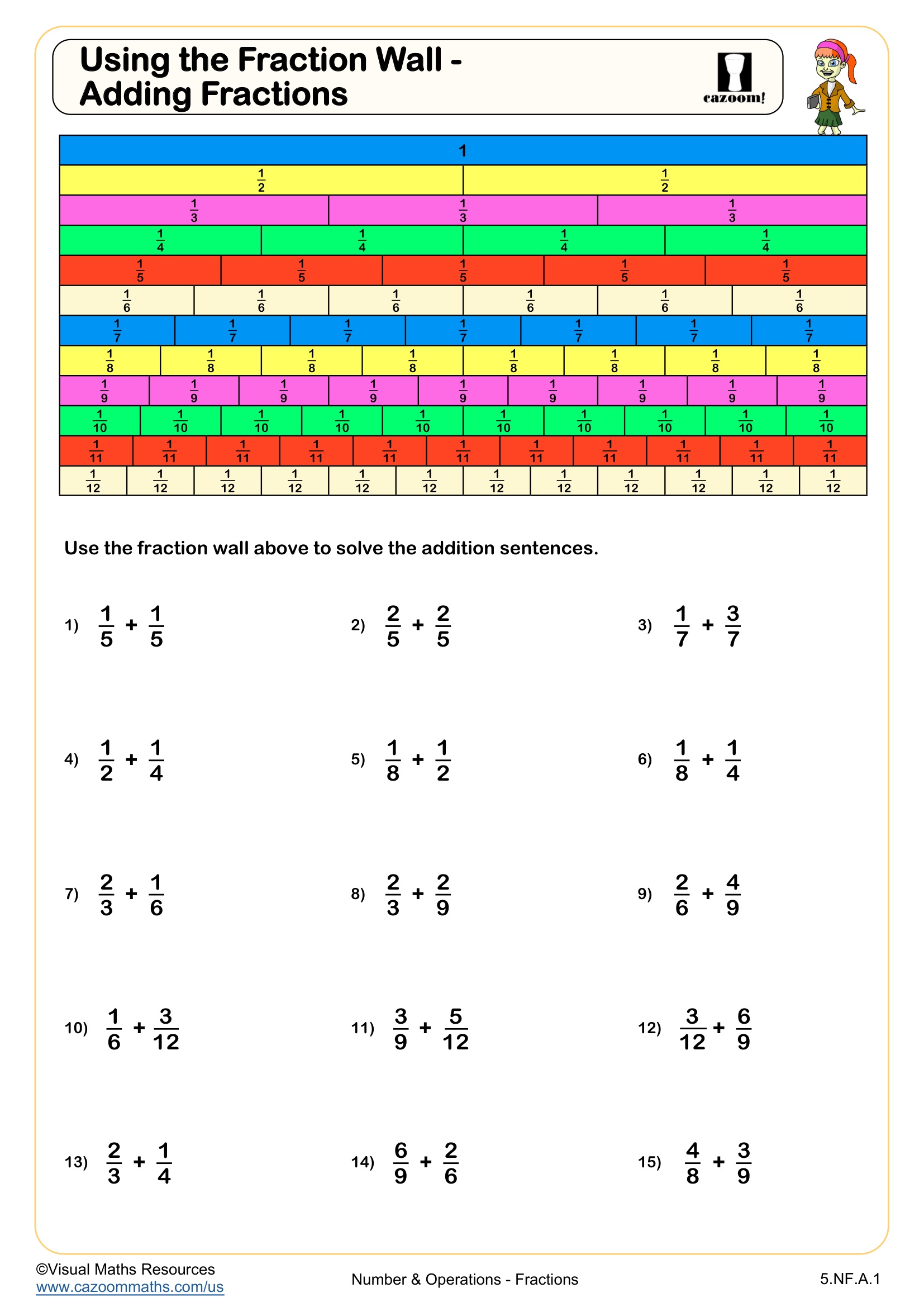
Using a Fraction Wall - Adding Fractions
Grades: 5th Grade
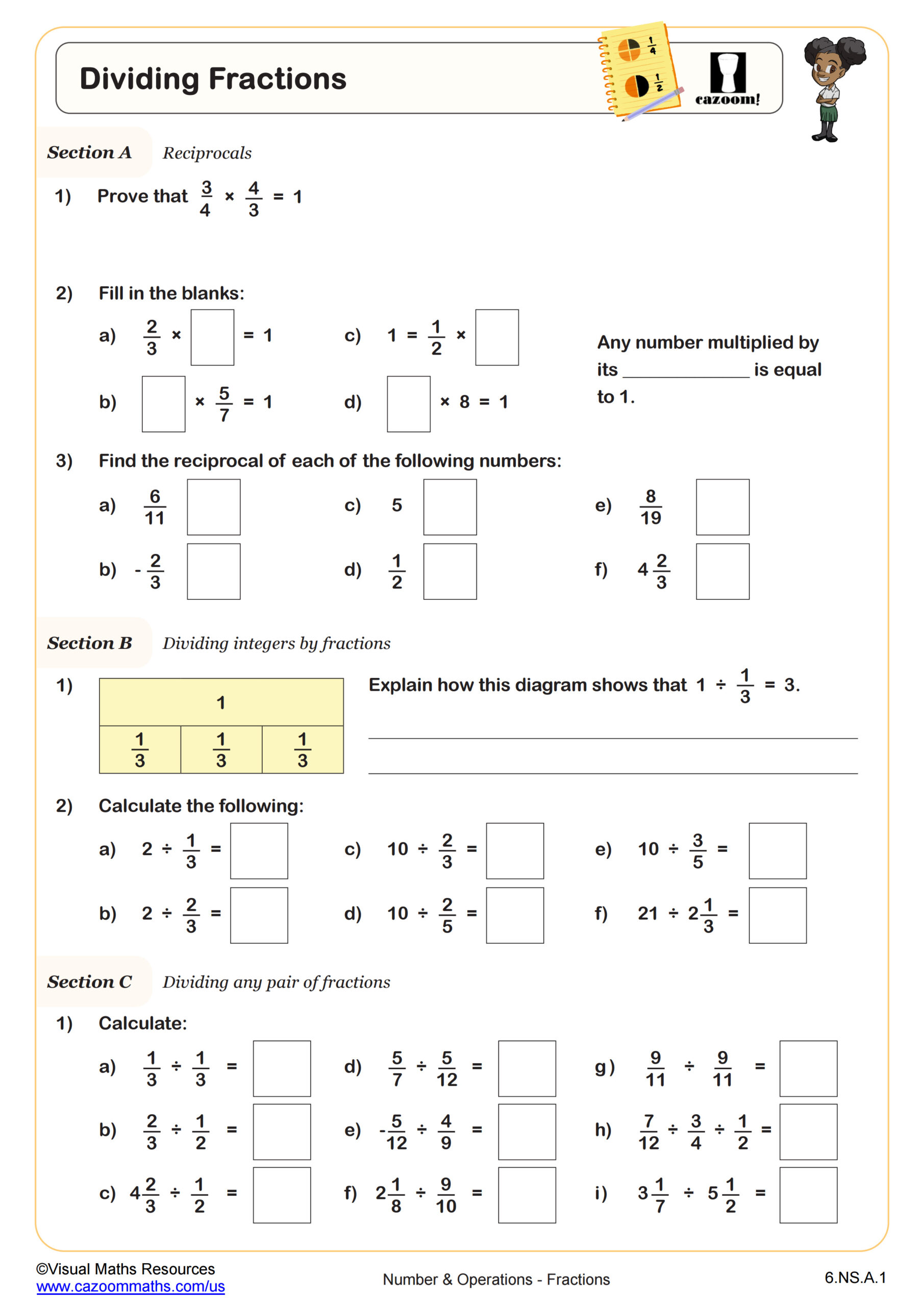
Dividing Fractions
Grades: 6th Grade
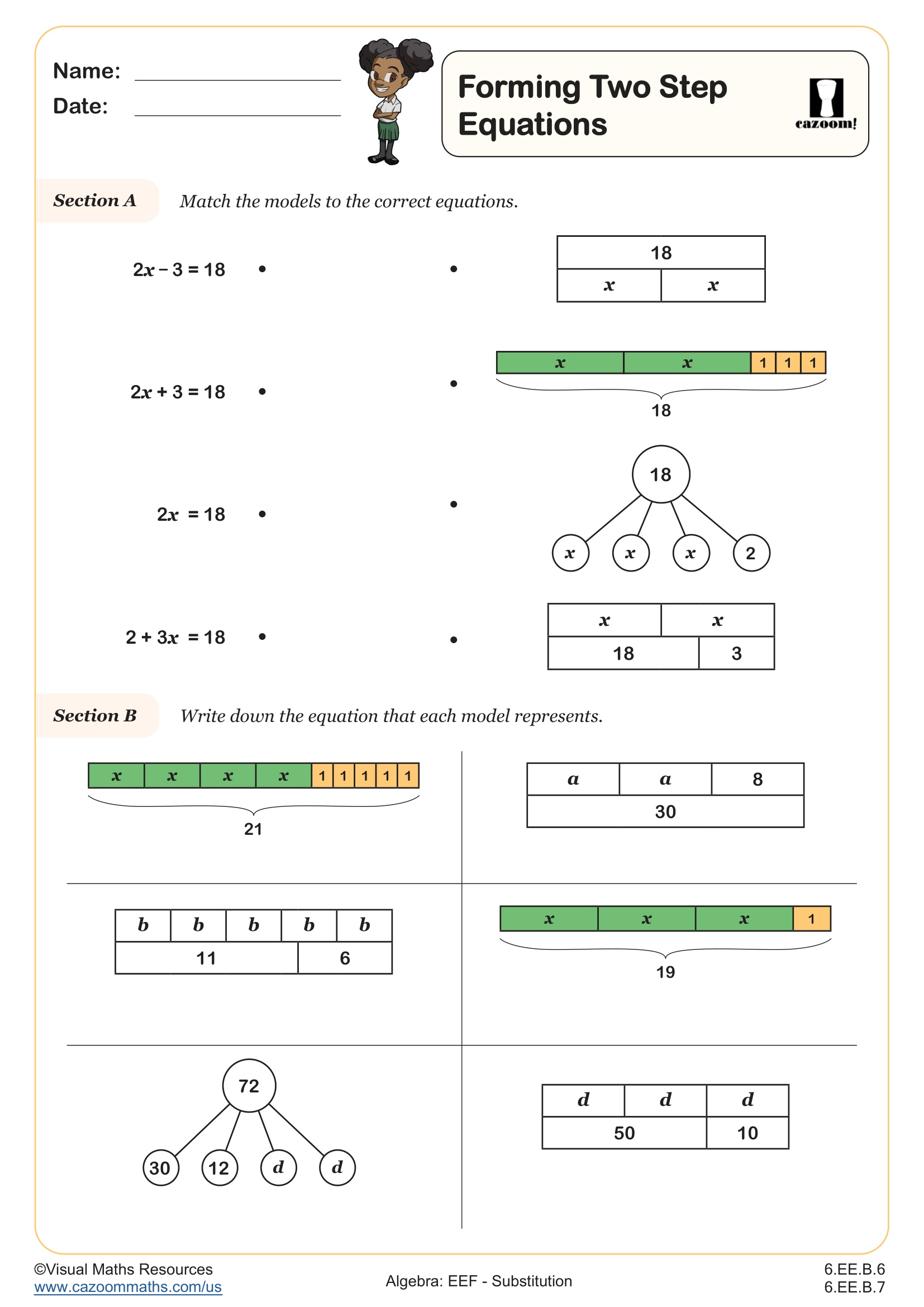
Forming Two Step Equations
Grades: 6th Grade
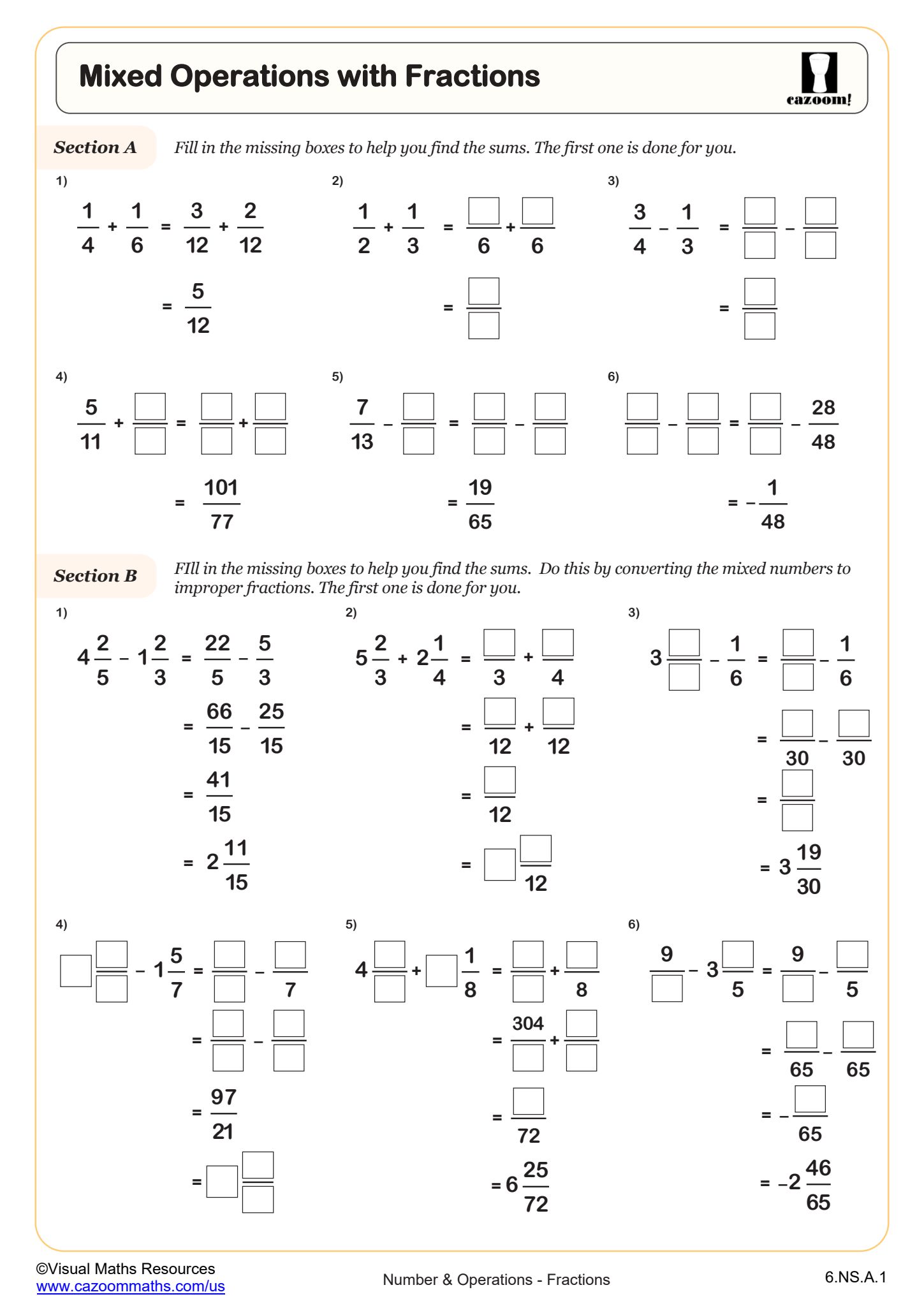
Mixed Operations with Fractions
Grades: 6th Grade
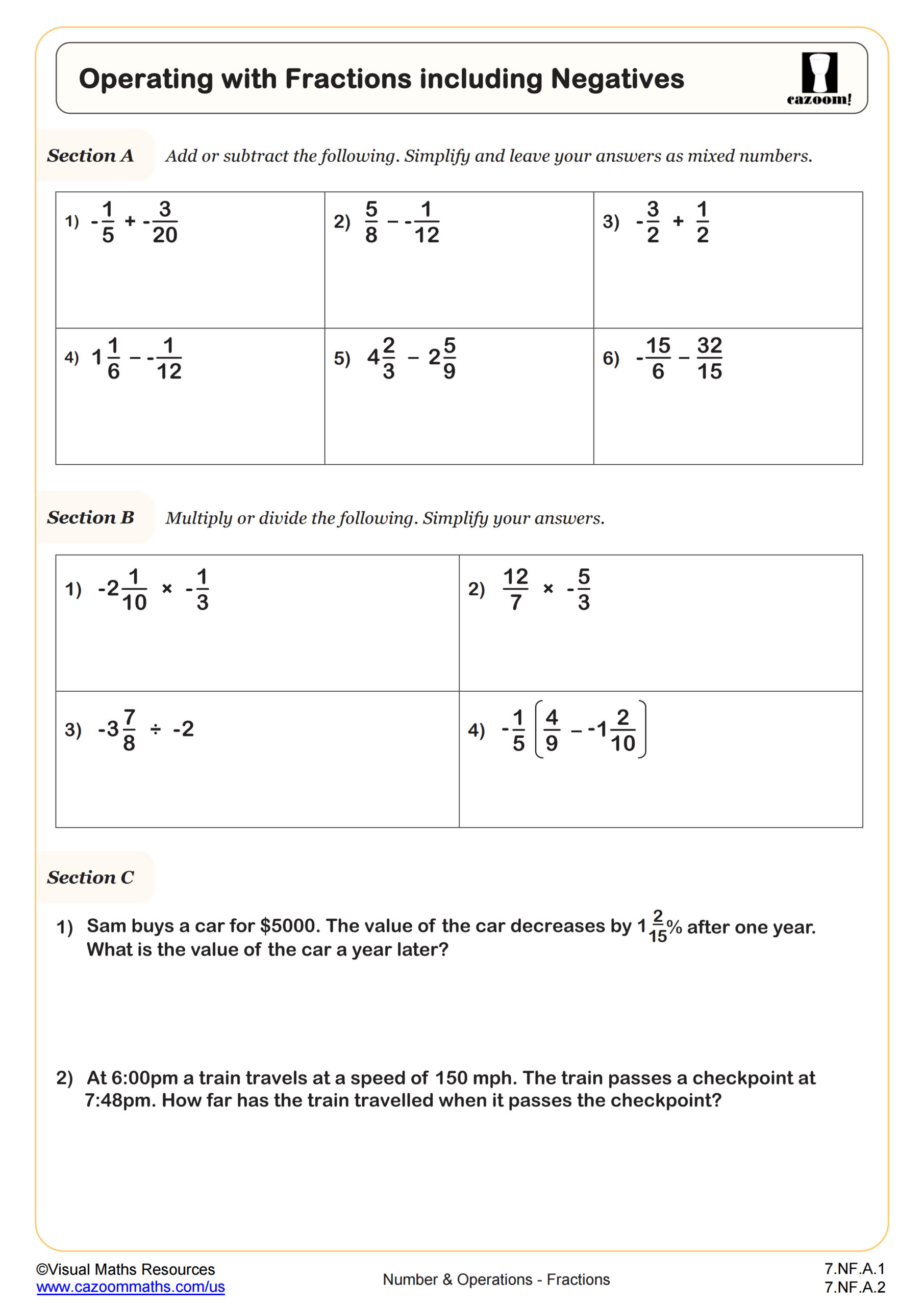
Operating With Fractions Including Negatives
Grades: 7th Grade
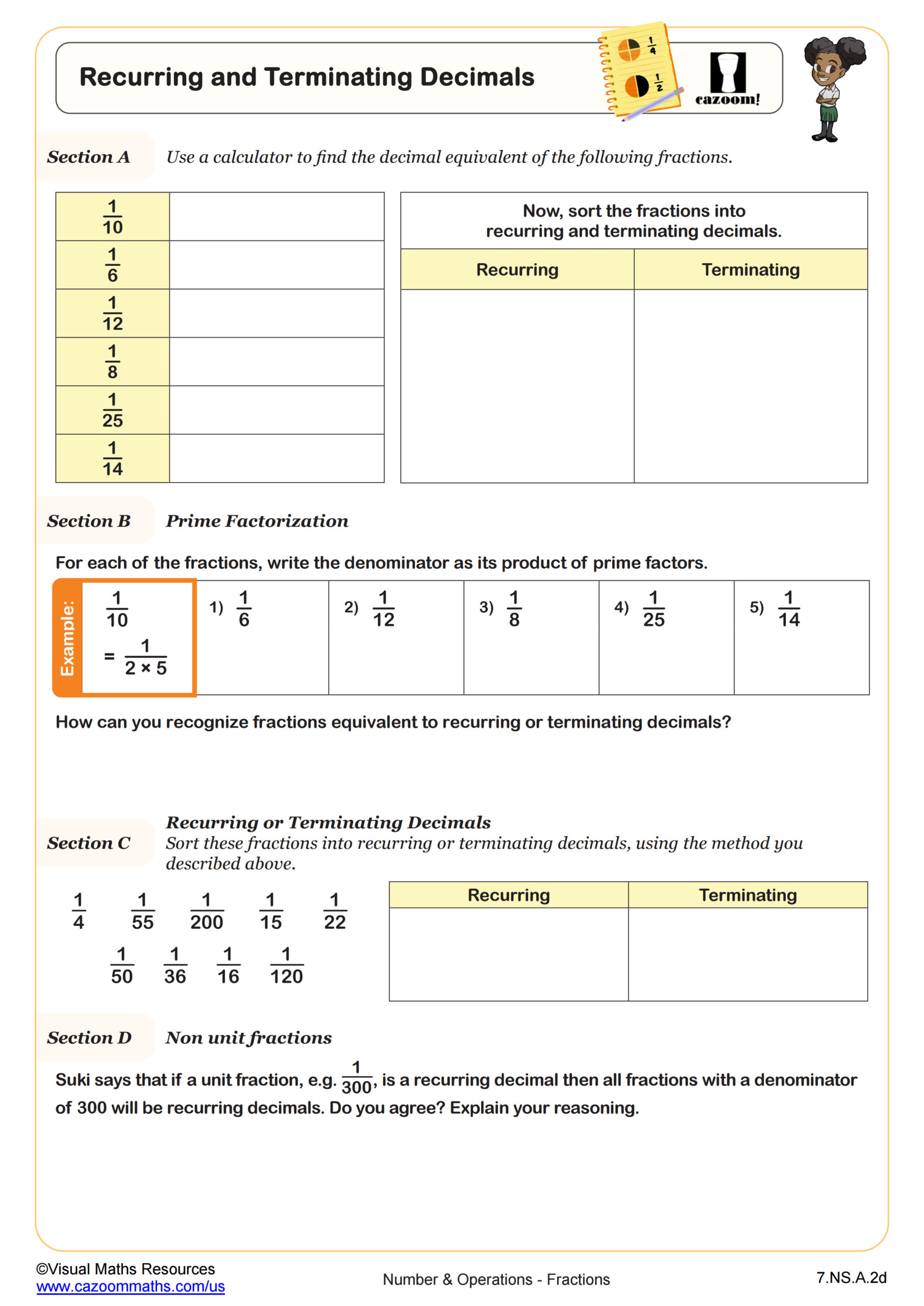
Recurring and Terminating Decimals
Grades: 7th Grade
All worksheets are created by the team of experienced teachers at Cazoom Math.
What skills do fractions worksheets typically cover?
Fractions worksheets address the complete spectrum of fraction concepts outlined in Common Core State Standards, beginning with identifying parts of a whole in early elementary grades and progressing through complex fraction operations in middle school. Students practice recognizing equivalent fractions, comparing fractions with like and unlike denominators, converting between mixed numbers and improper fractions, and performing all four operations with fractions.
Teachers notice that students often memorize procedures without understanding the underlying concepts, particularly when adding fractions with different denominators. Effective math worksheet with fraction problems answers include visual models alongside numerical problems, helping students connect abstract symbols to concrete representations and reducing procedural errors.
How do fraction worksheets progress across different grade levels?
Grade 2 fraction worksheets for grade 2 with answers typically focus on identifying halves, thirds, and fourths using visual models like circles and rectangles. By grades 3-4, students work with equivalent fractions, comparing fractions, and basic addition and subtraction with like denominators. Middle school worksheets advance to operations with unlike denominators, mixed numbers, and fraction-decimal conversions.
Classroom observations reveal that students who miss the foundational understanding of fractions as equal parts often struggle with more advanced concepts. Teachers find success using worksheets that maintain visual representations even as problems become more complex, ensuring students can verify their computational work against concrete models throughout their fraction learning journey.
Why do students struggle with equivalent fractions on worksheets?
Equivalent fractions present unique challenges because students must recognize that different numerical representations can have identical values, a concept that contradicts their whole number experience where different symbols always mean different amounts. Fractions worksheet answers frequently show that students incorrectly assume larger denominators mean larger fractions, leading to errors when comparing 1/4 and 1/8.
Teachers observe that students benefit from worksheets combining visual fraction strips with numerical problems, allowing them to see that 2/4 and 4/8 occupy the same space despite different numbers. This visual-numerical connection proves core for later success with fraction operations, as students who truly understand equivalence make fewer errors when finding common denominators for addition and subtraction problems.
How should teachers use fraction worksheet answers most effectively?
Answer keys work most effectively when teachers use them diagnostically rather than just for grading, examining incorrect responses to identify specific misconceptions and adjust instruction accordingly. Teachers report success having students check their own work using answer keys during practice, fostering self-assessment skills while immediately addressing errors before they become ingrained habits.
Classroom experience shows that simply marking problems wrong without analysis misses valuable teaching opportunities. When students consistently miss problems involving improper fractions or mixed number conversions, teachers can provide targeted reteaching using manipulatives or additional visual models, then assign similar worksheet problems to reinforce the corrected understanding and build computational confidence.