Fractions, Decimals, Percents Worksheets
Comparing Fractions
Grades: 3rd Grade, 4th Grade
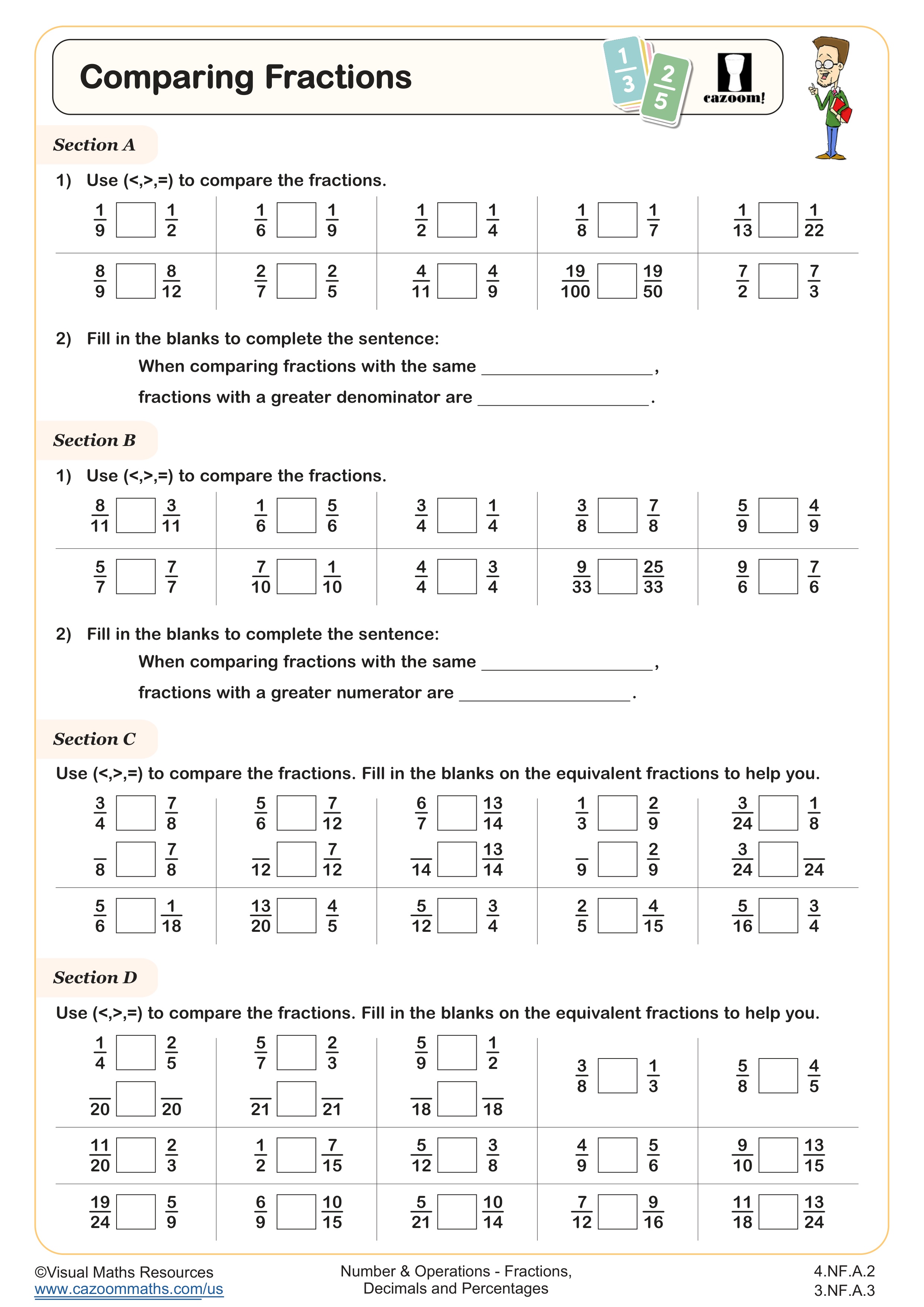
Finding fractions of a set of objects (A)
Grades: 3rd Grade
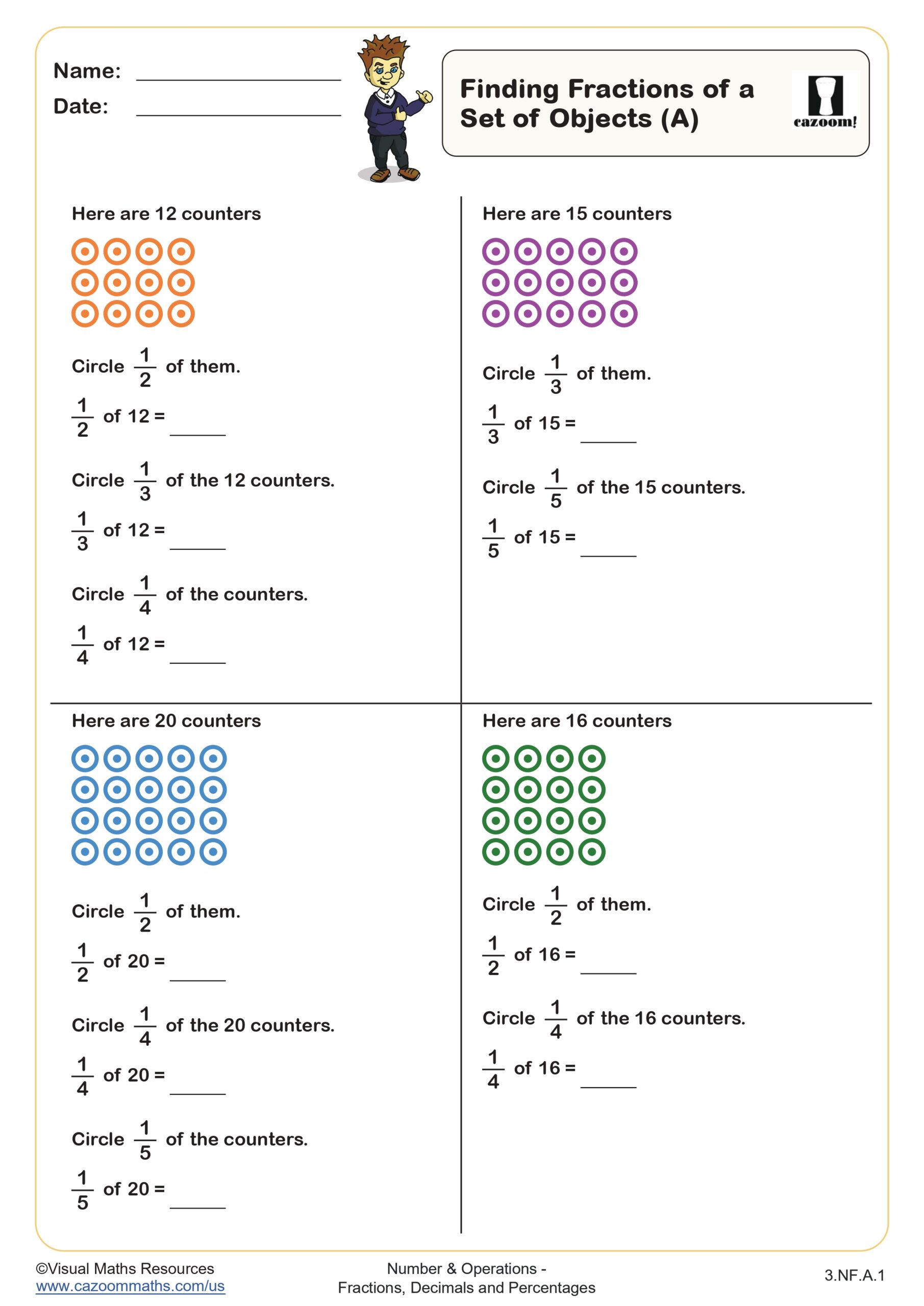
Finding fractions of a set of objects (B)
Grades: 3rd Grade
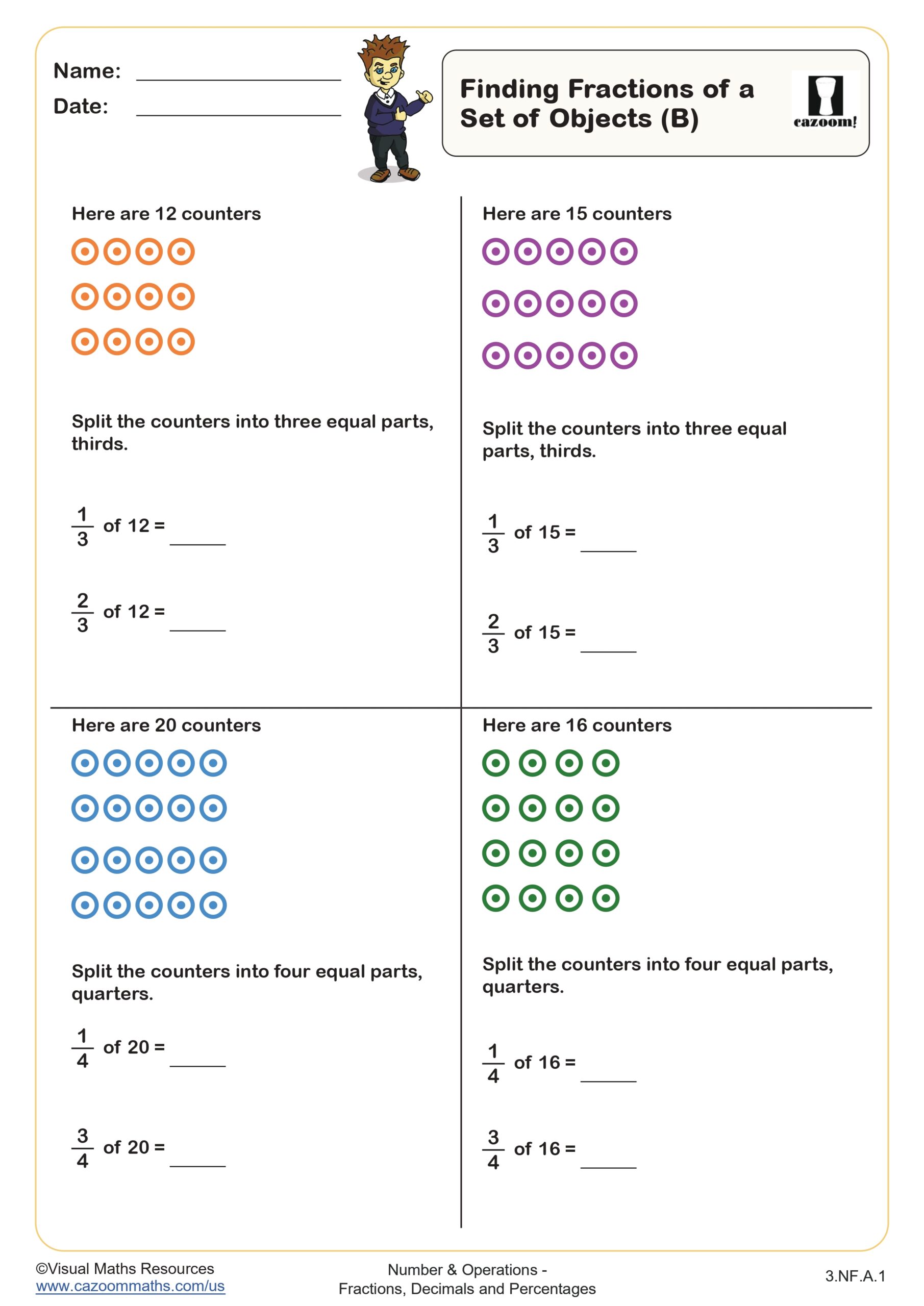
Finding fractions of a set of objects (C)
Grades: 3rd Grade
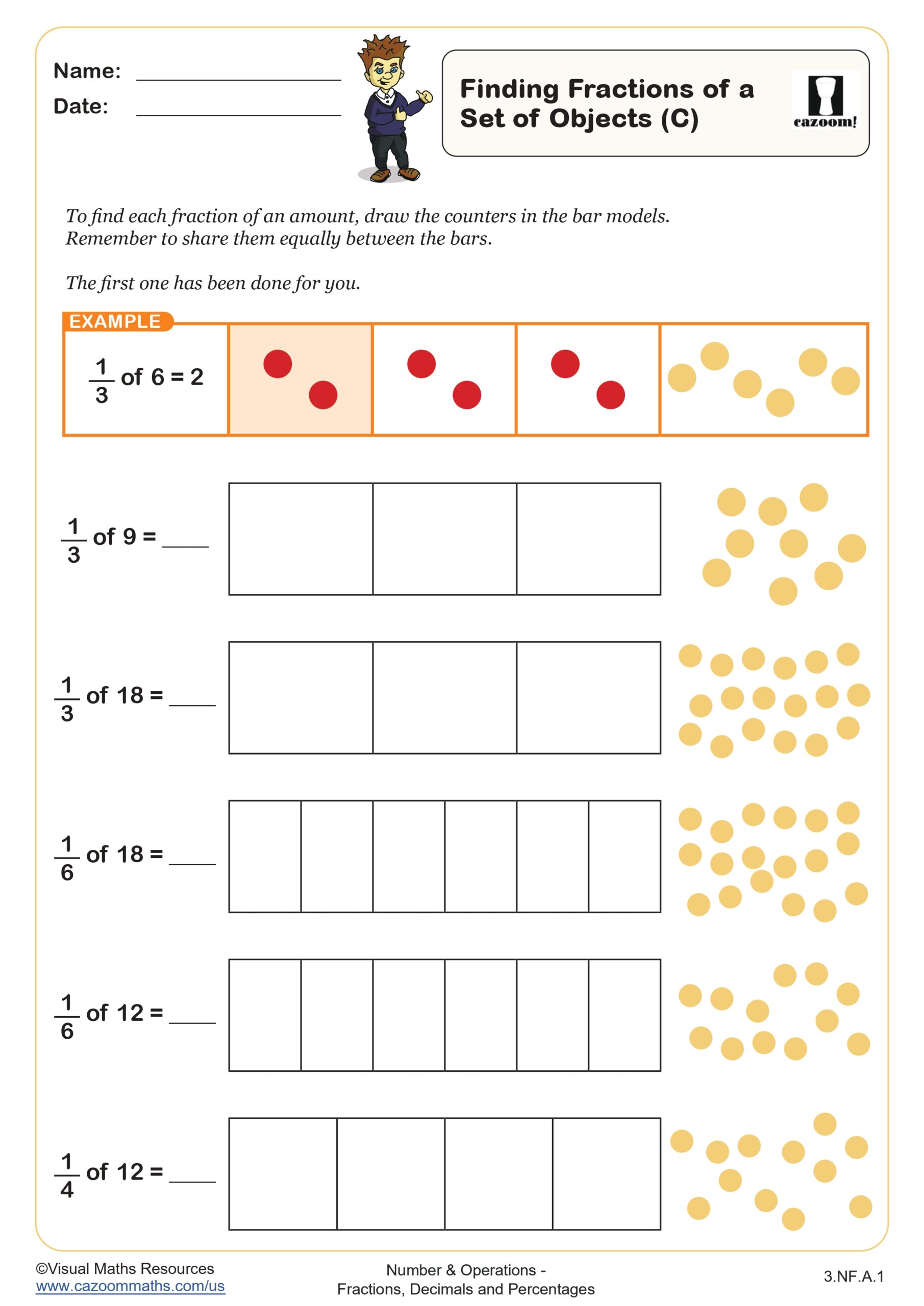
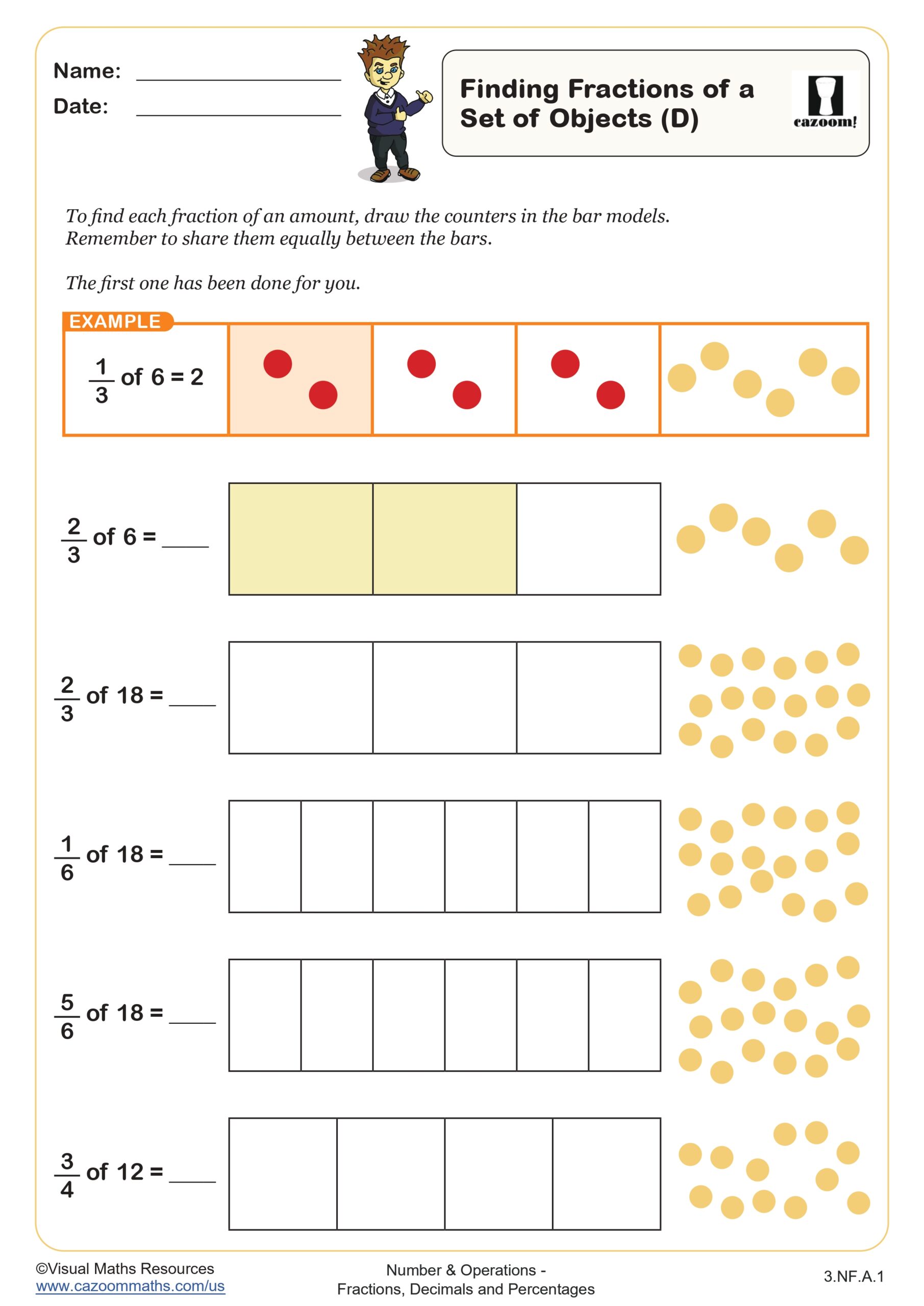
Finding fractions of a set of objects (D)
Grades: 3rd Grade
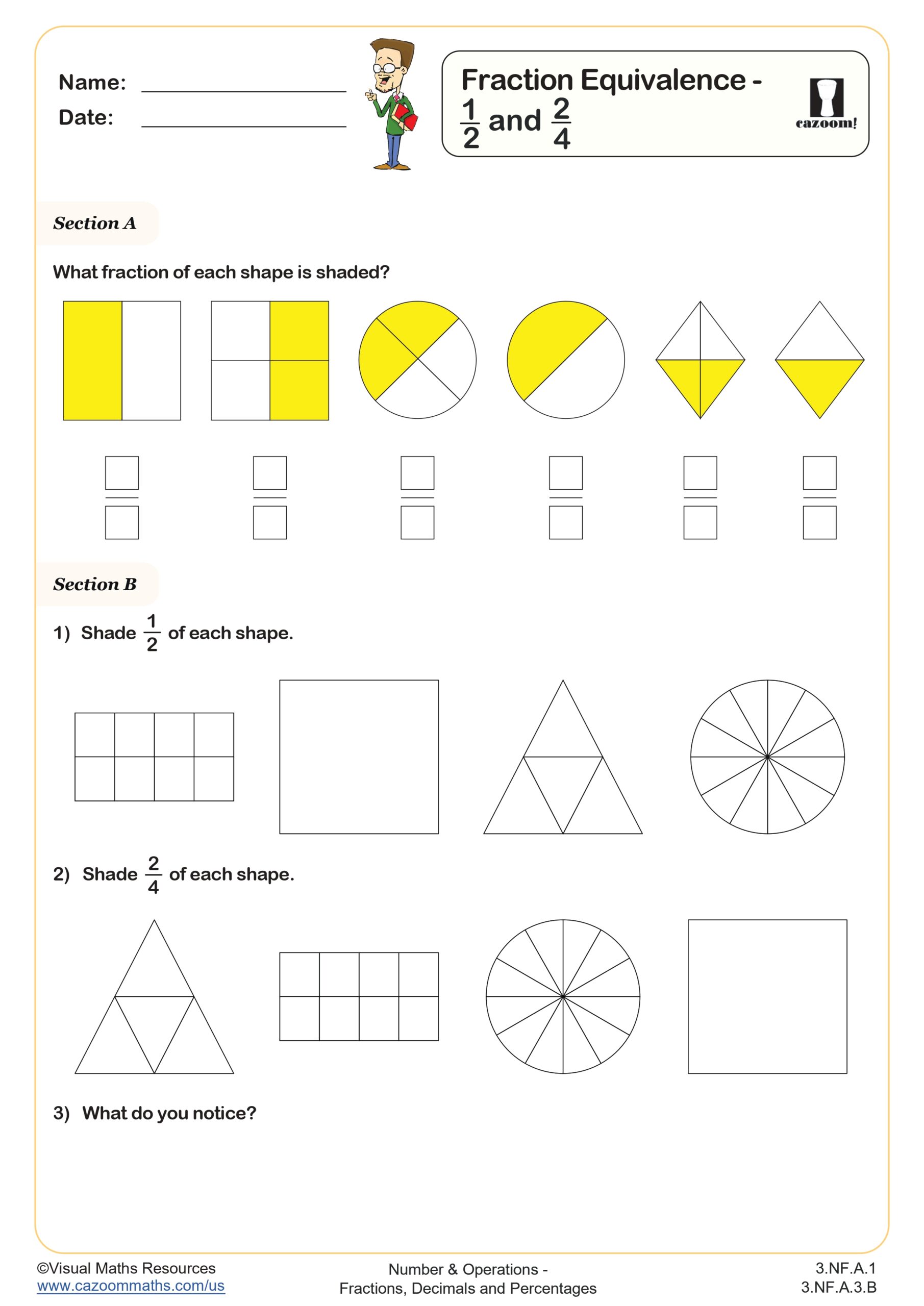
Fraction Equivalence - 1/2 and 2/4
Grades: 3rd Grade
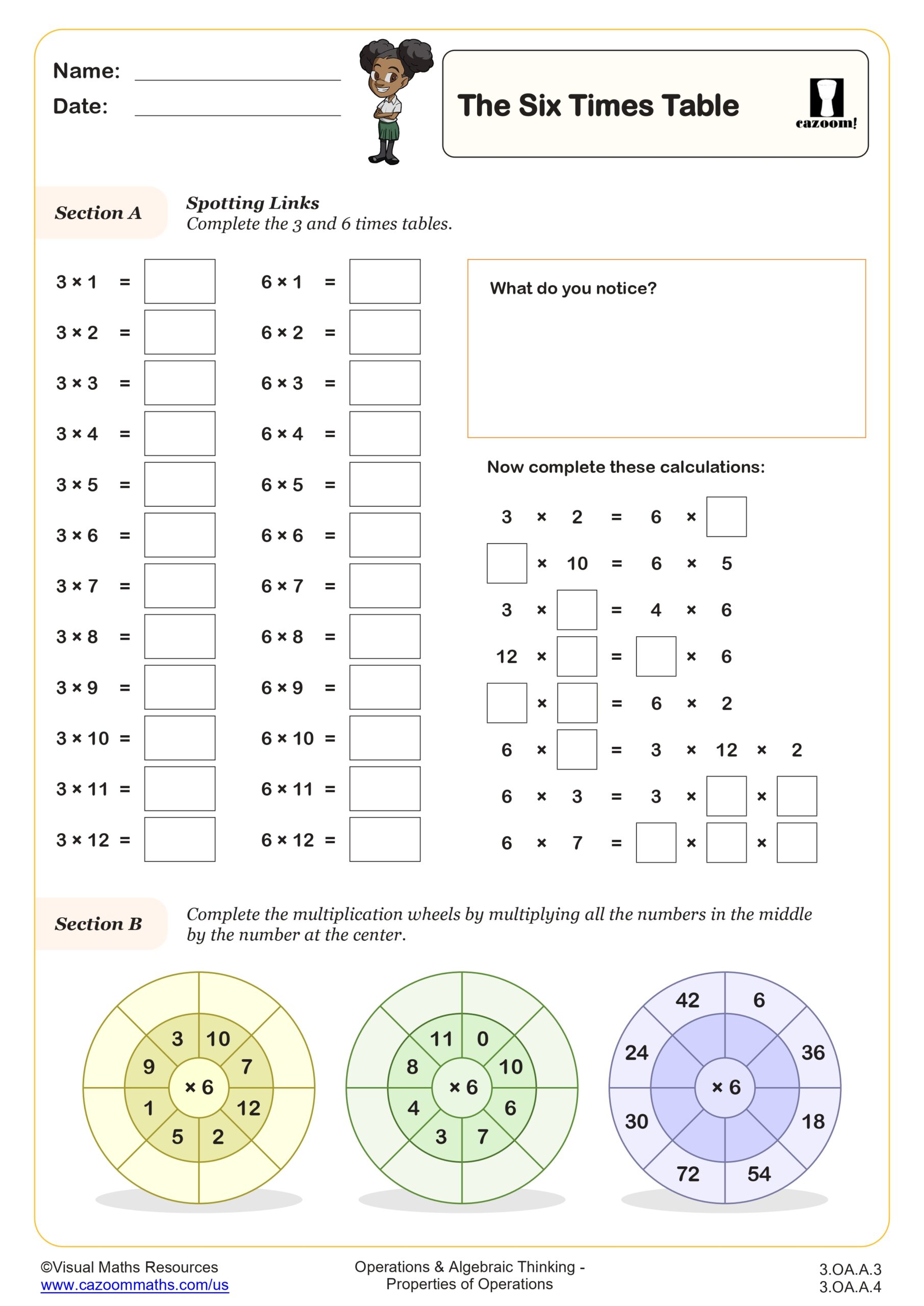
The Six Times Table
Grades: 3rd Grade
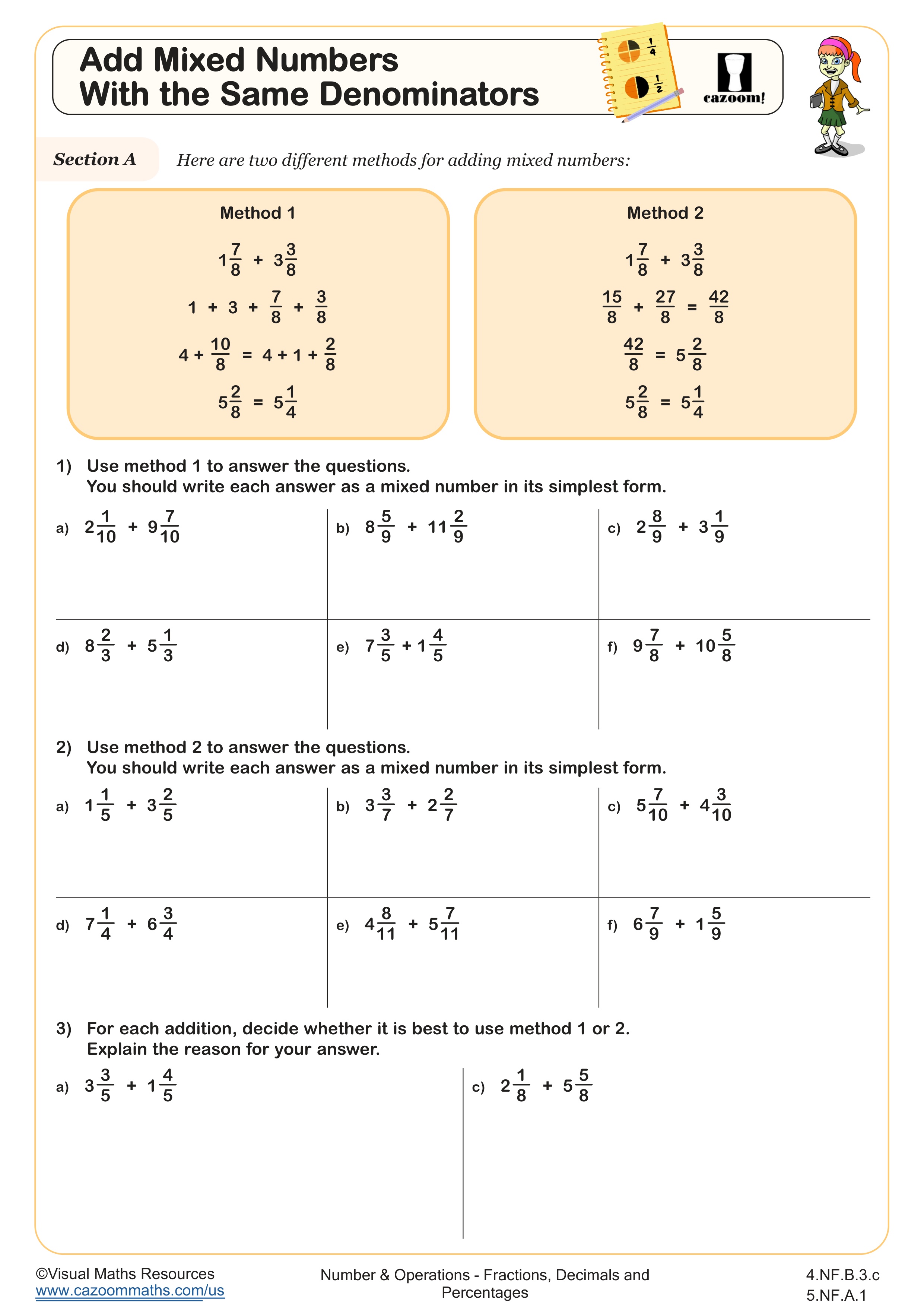
Add Mixed Numbers with the Same Denominator
Grades: 4th Grade, 5th Grade
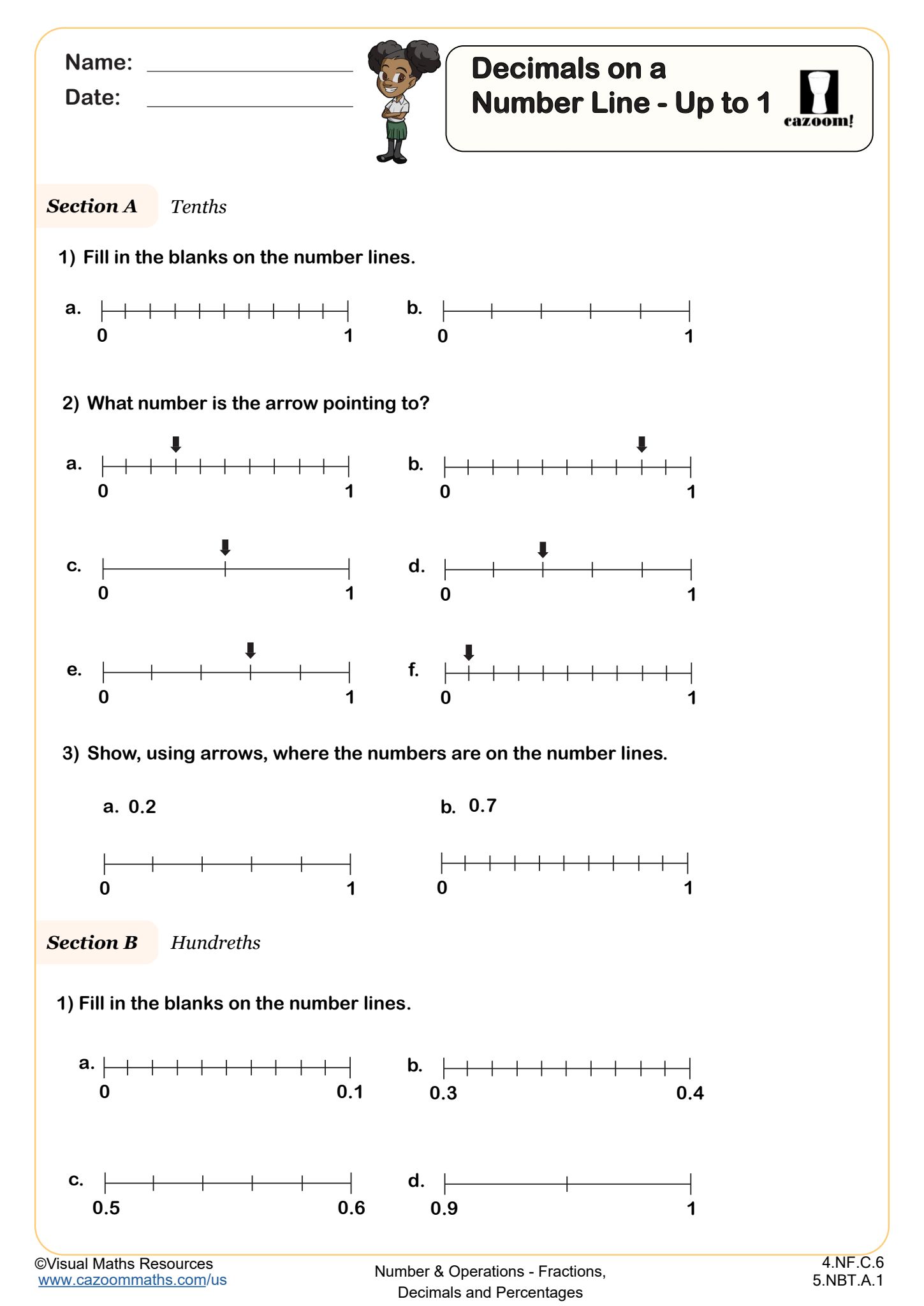
Decimals on a Number Line - Up to 1
Grades: 4th Grade
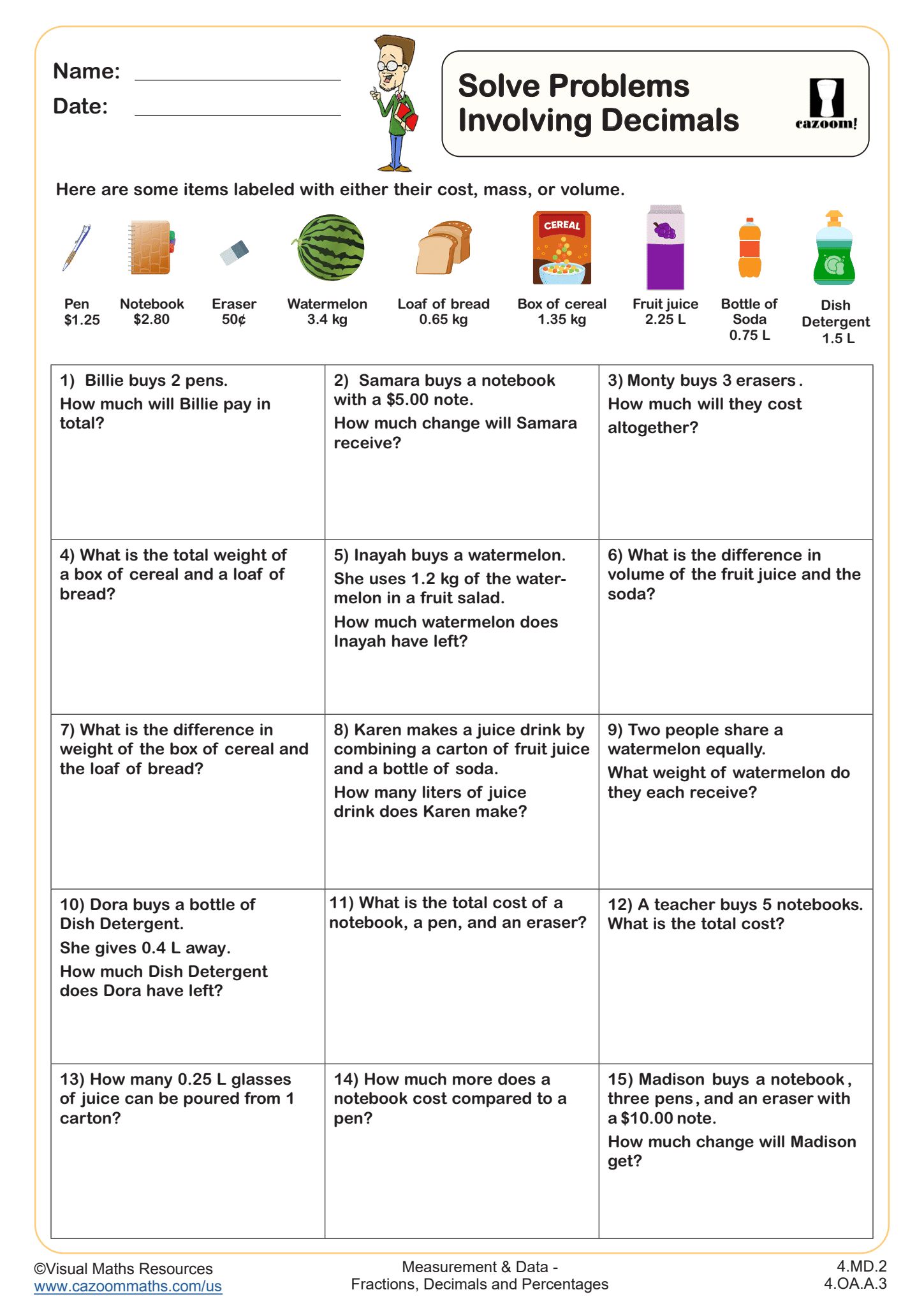
Solve Problems Involving Decimals
Grades: 4th Grade
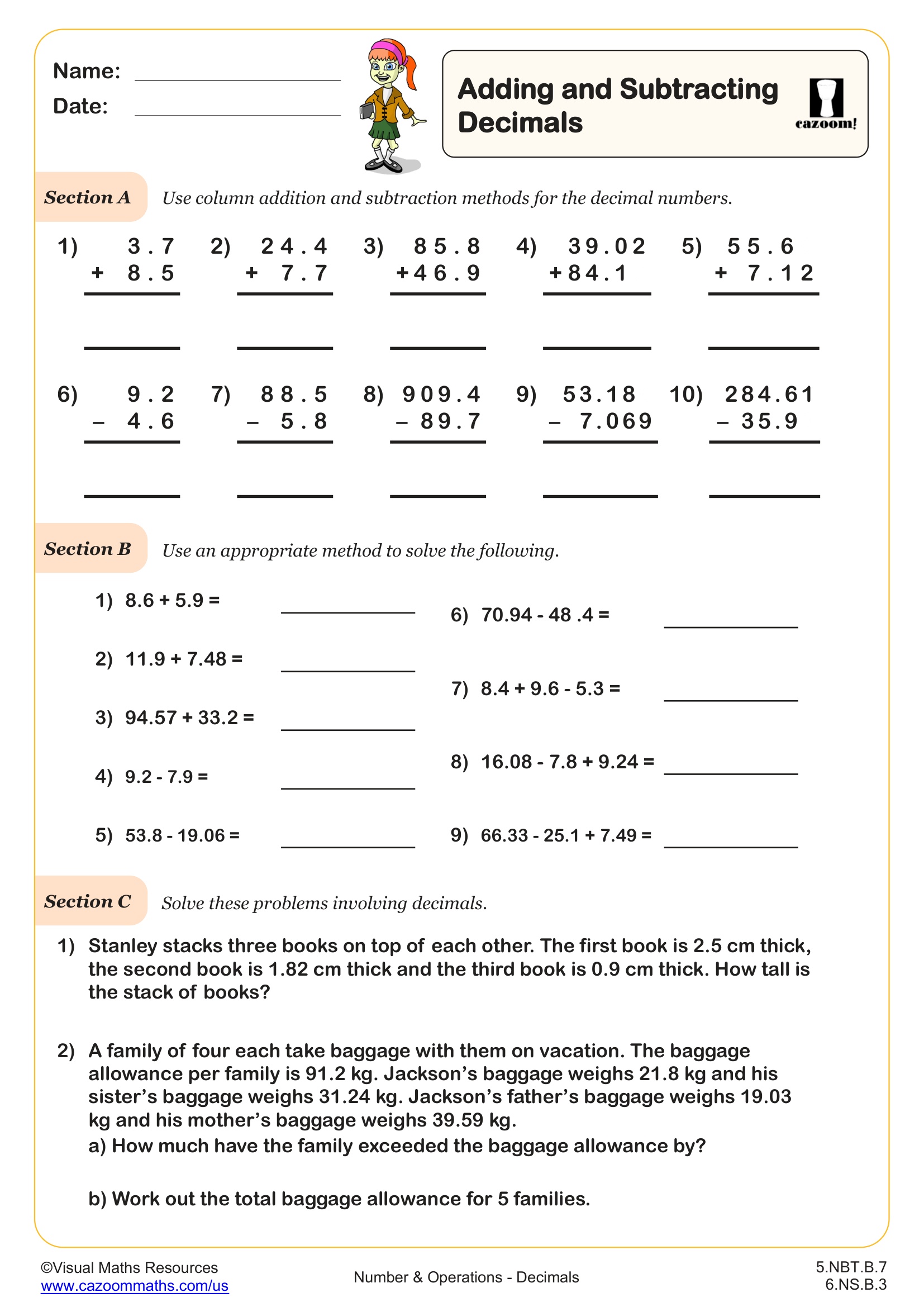
Adding and Subtracting Decimals
Grades: 5th Grade, 6th Grade
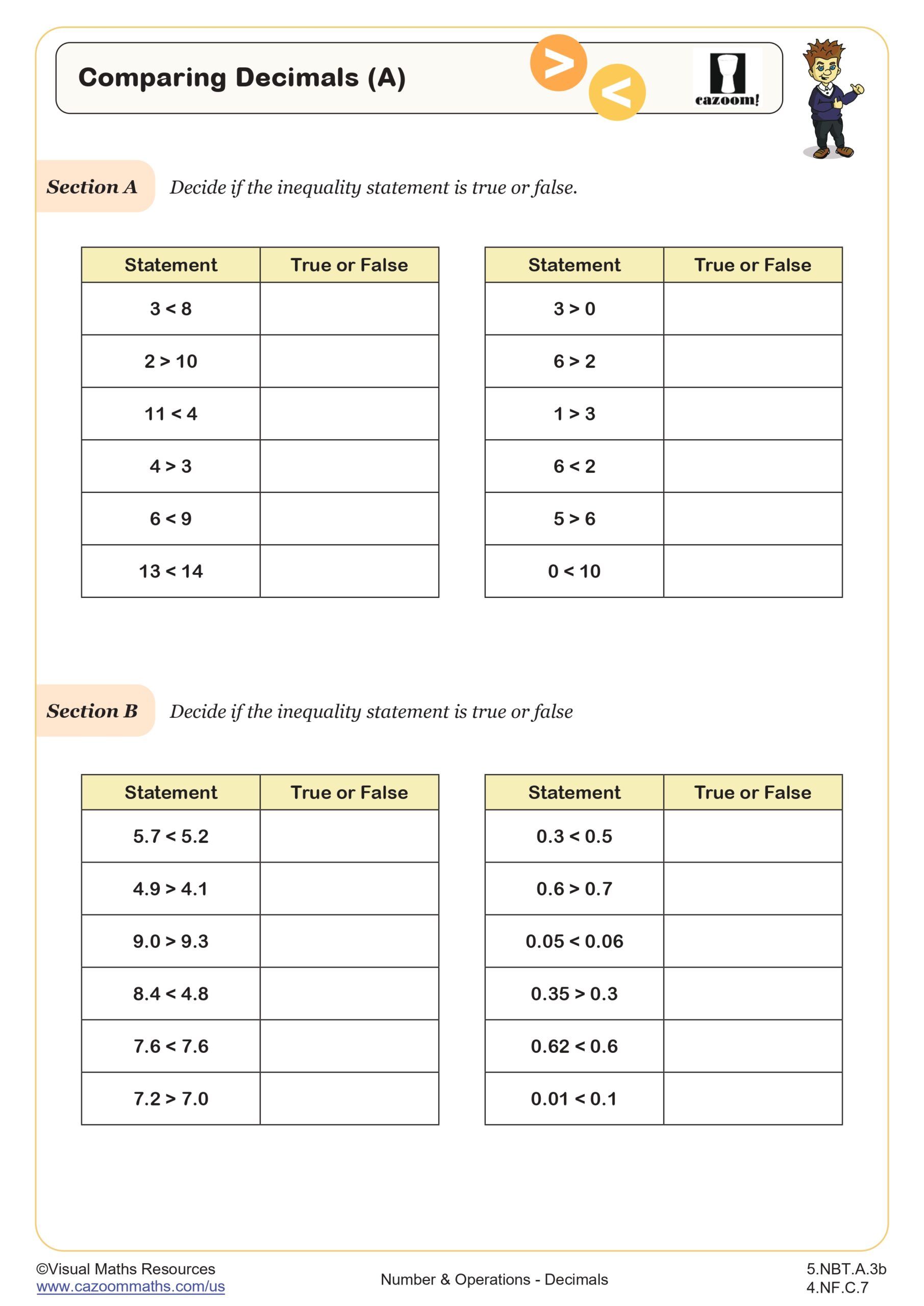
Comparing Decimals (A)
Grades: 5th Grade
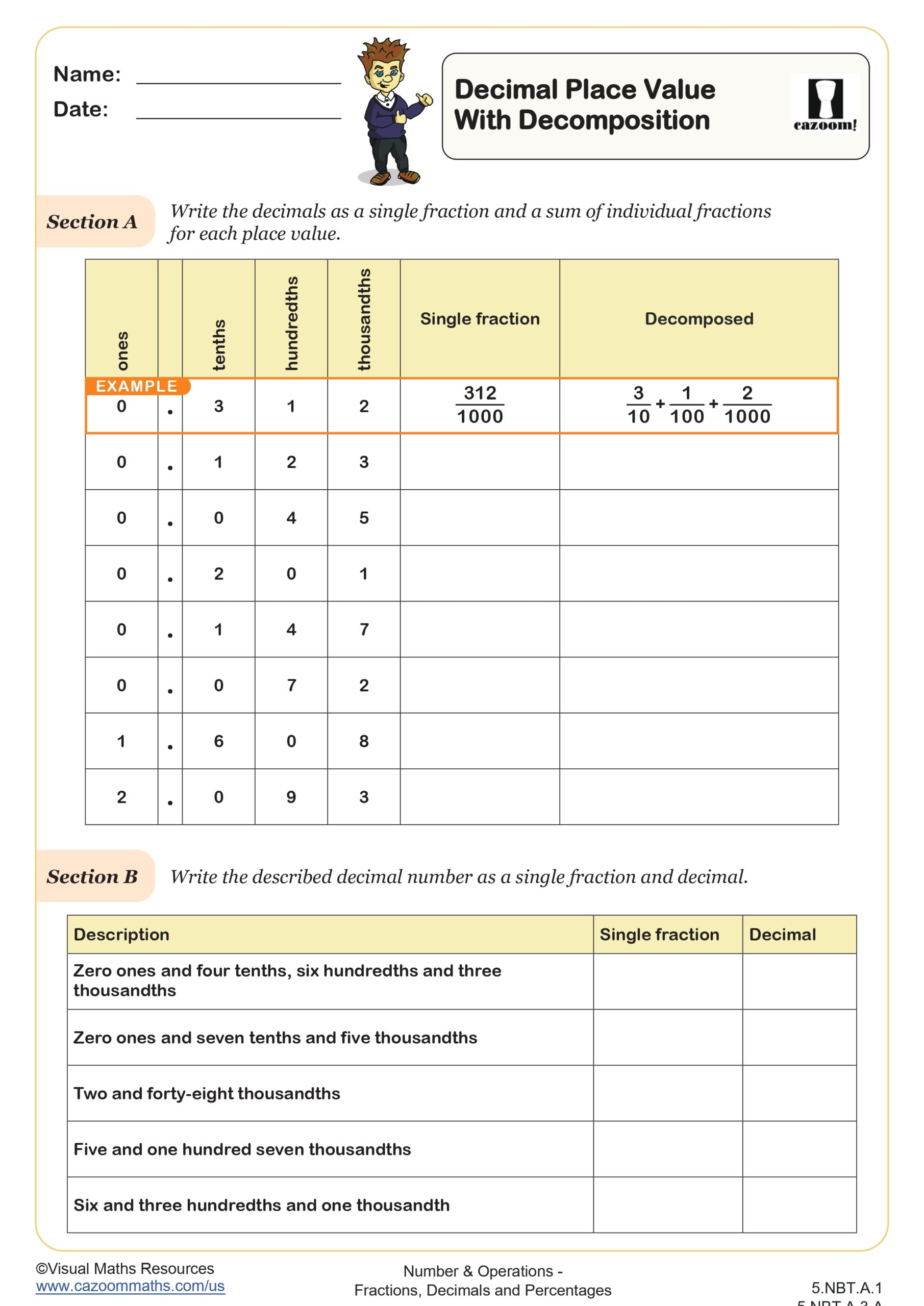
Decimal Place Value With Decomposition
Grades: 5th Grade
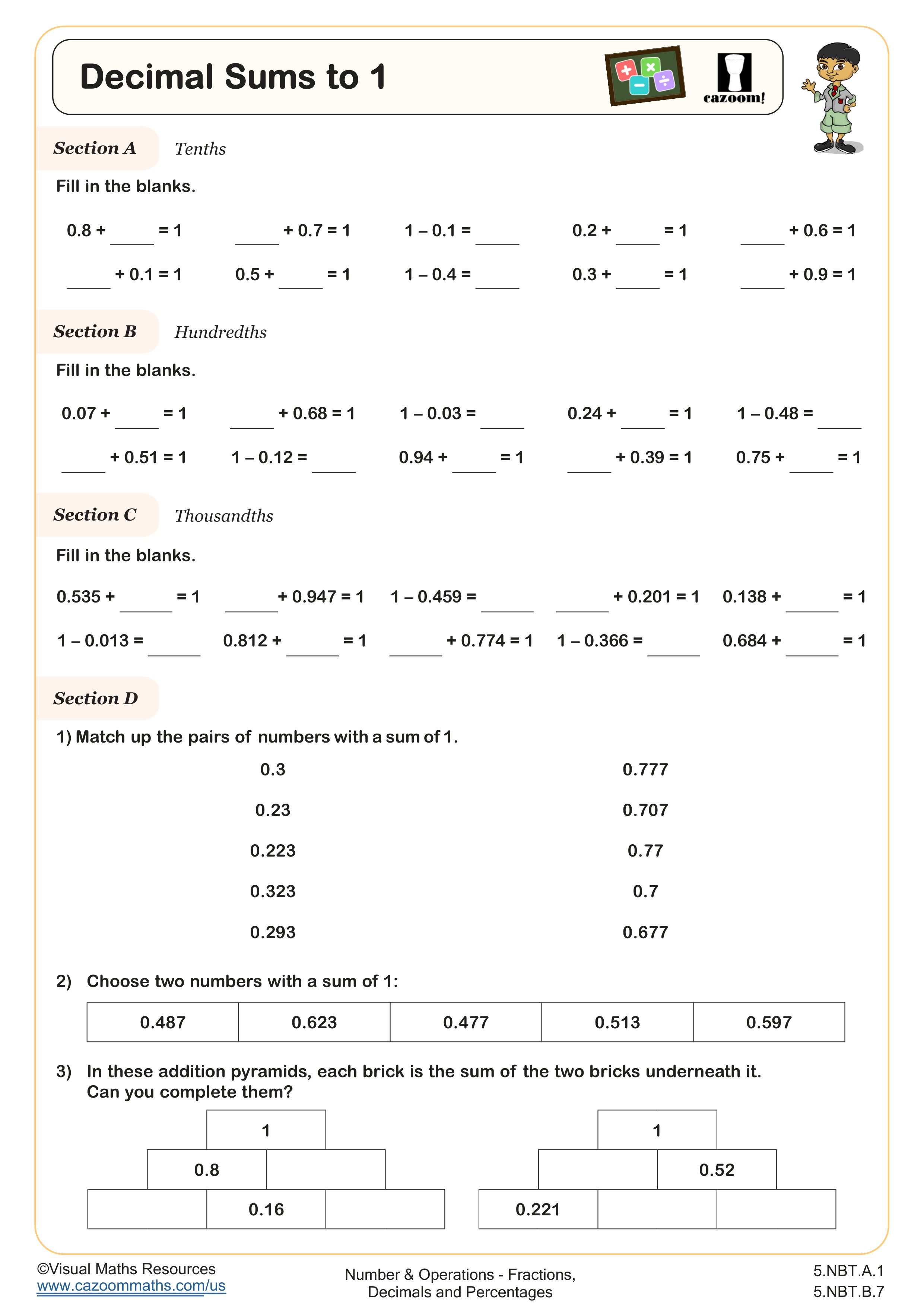
Decimal Sums to 1
Grades: 5th Grade
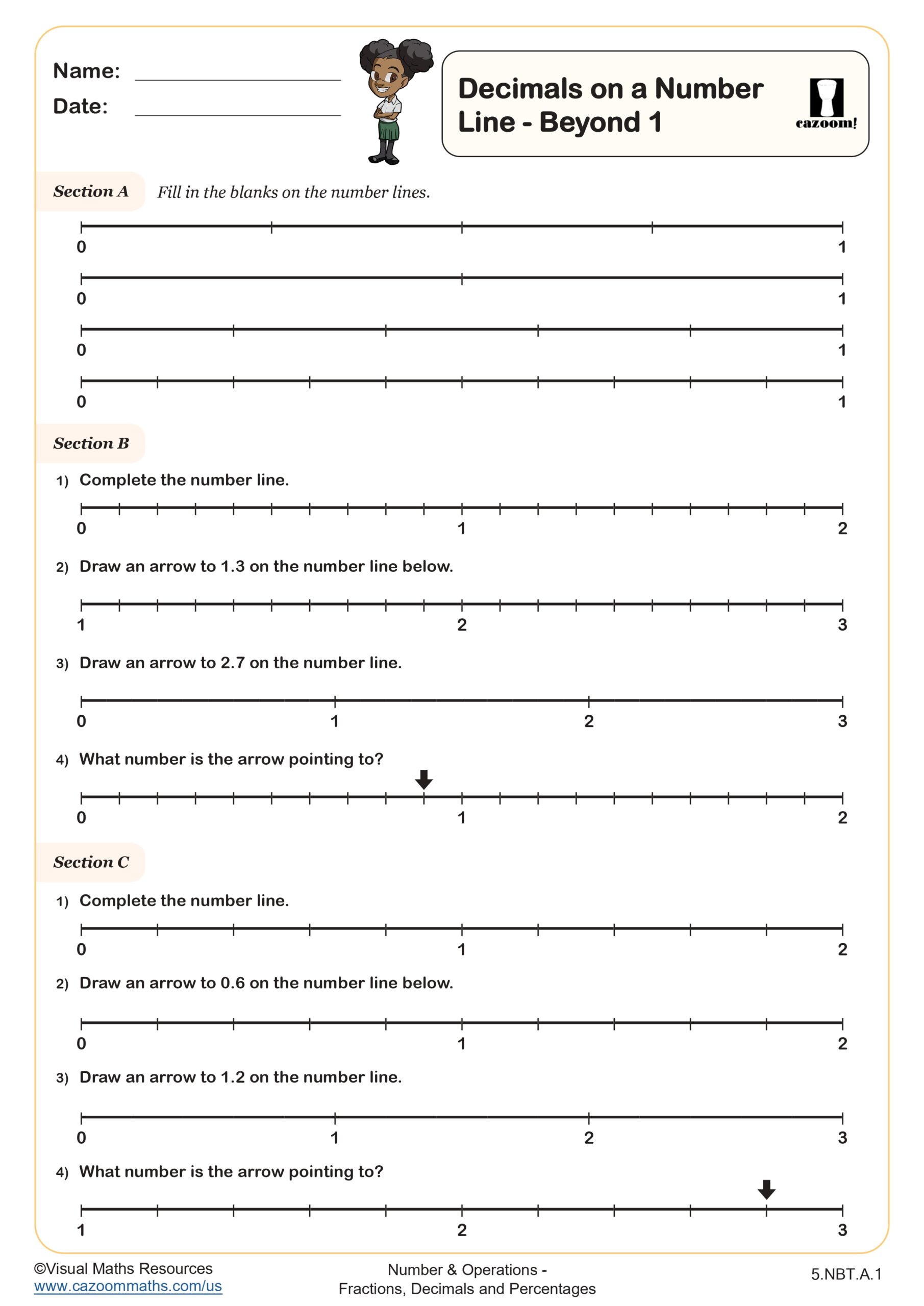
Decimals on a Number Line - Beyond 1
Grades: 5th Grade
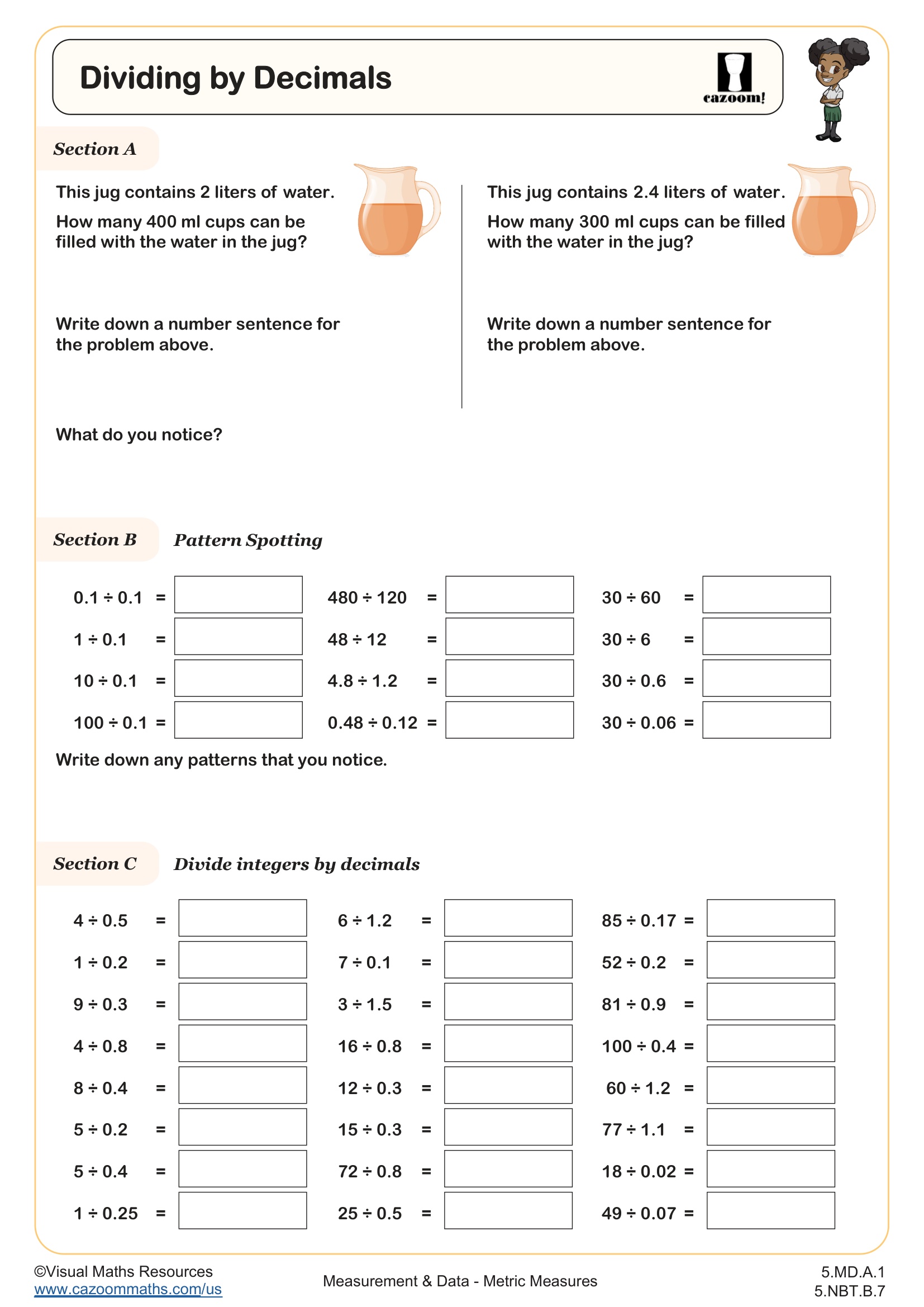
Dividing by Decimals
Grades: 5th Grade
Estimating Shopping Bills
Grades: 5th Grade
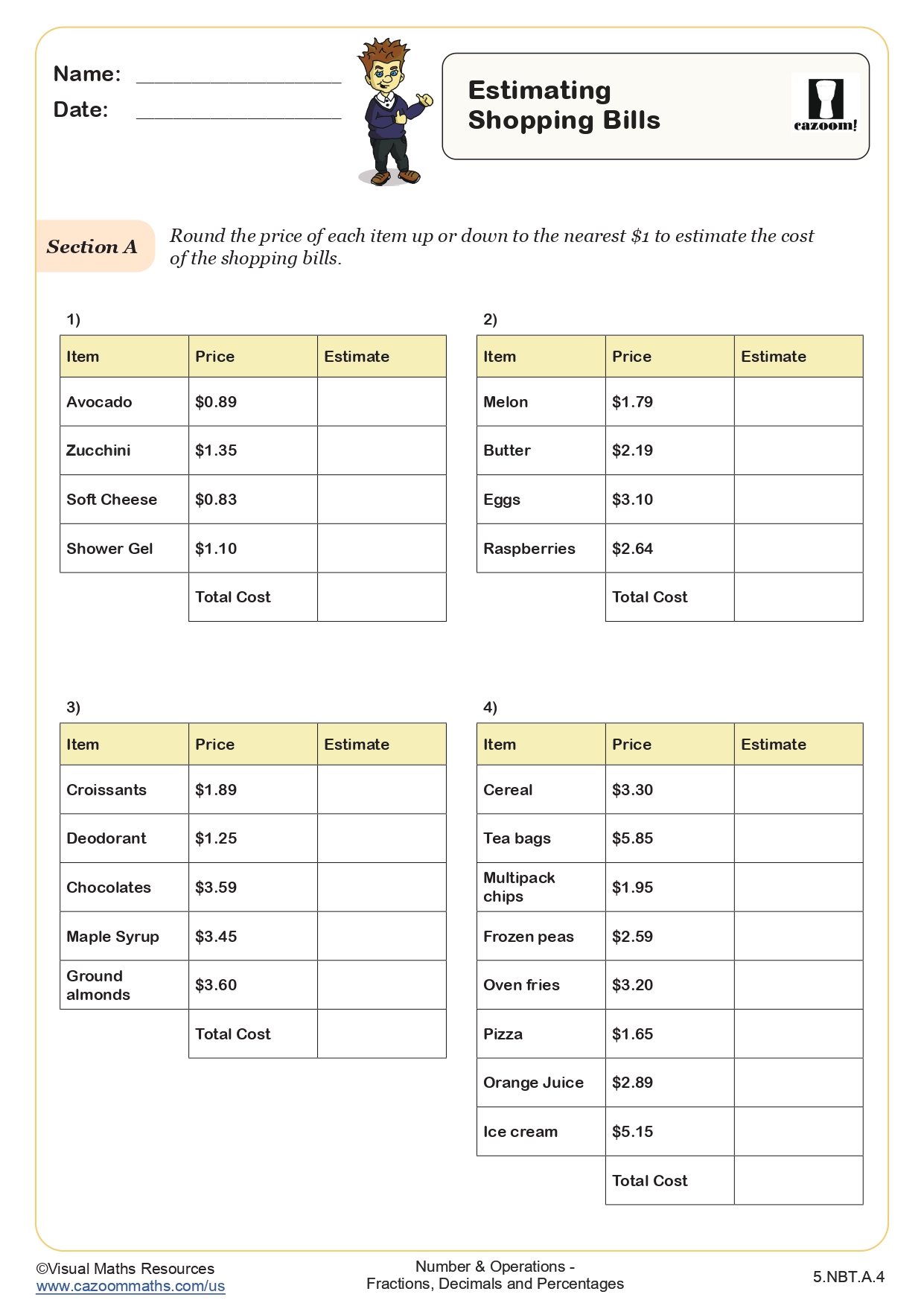
Finding Fractional Amounts
Grades: 5th Grade, 6th Grade
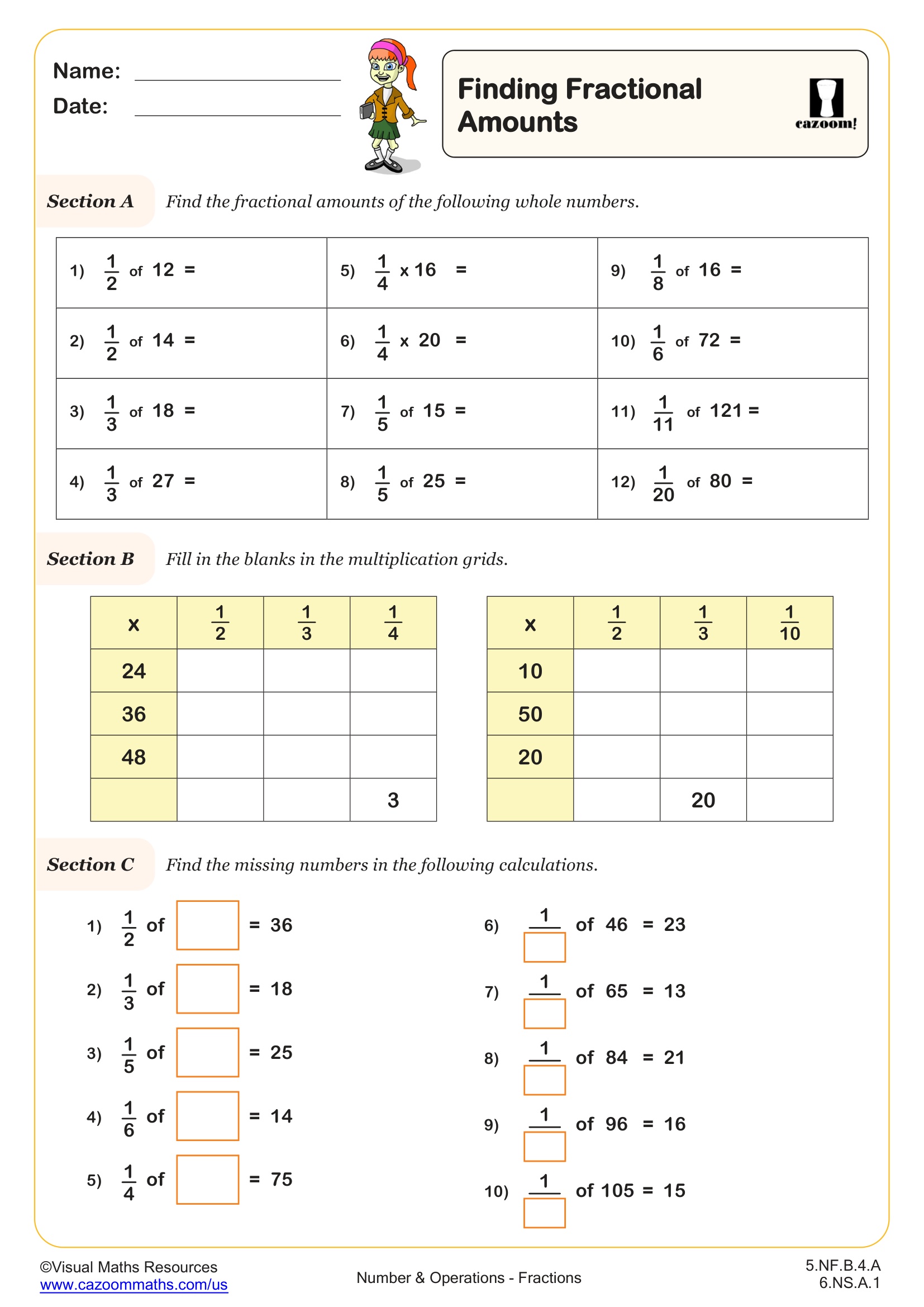
Finding Fractions of Amounts
Grades: 5th Grade, 6th Grade
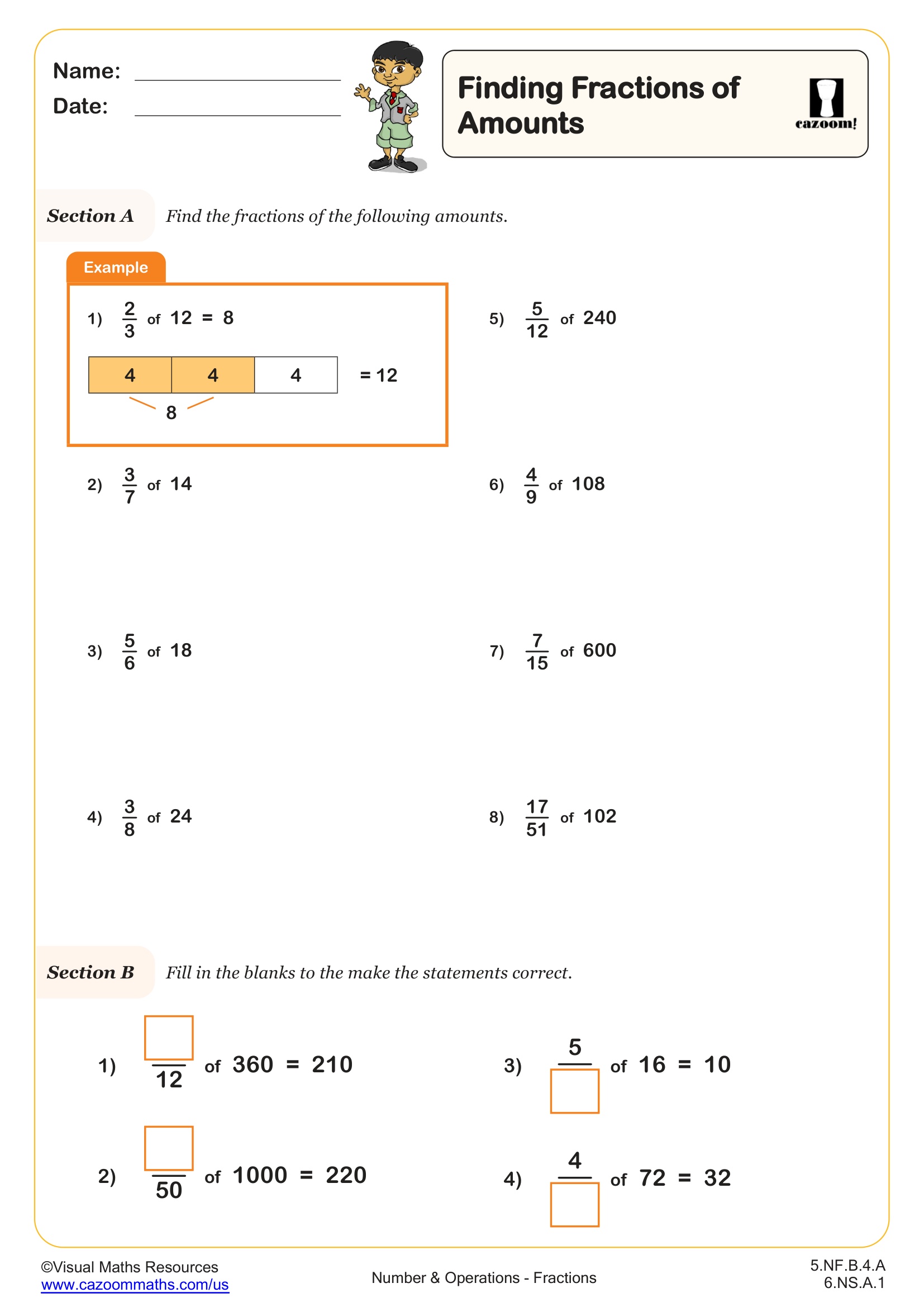
Fraction - Increase and Decrease
Grades: 5th Grade
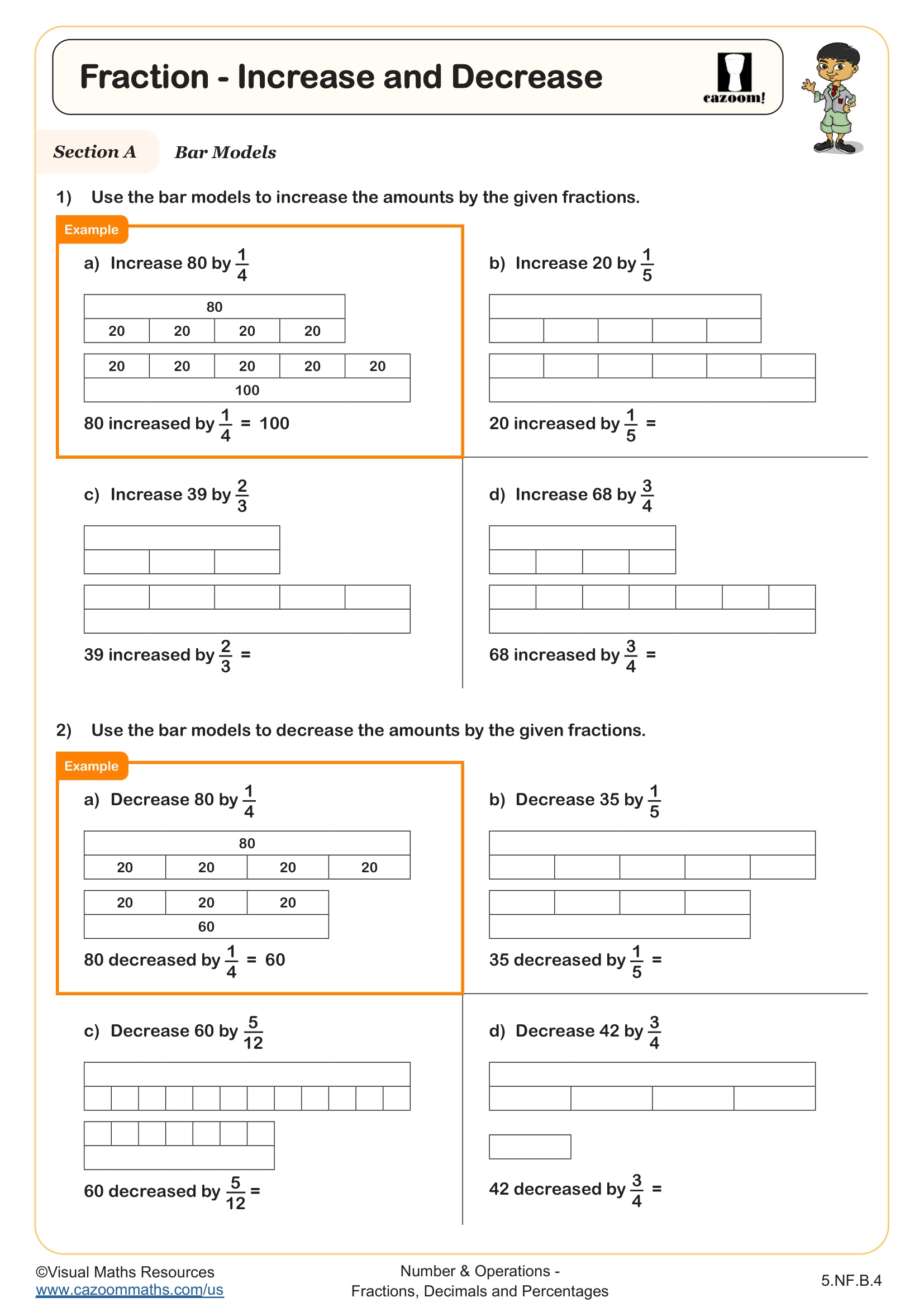
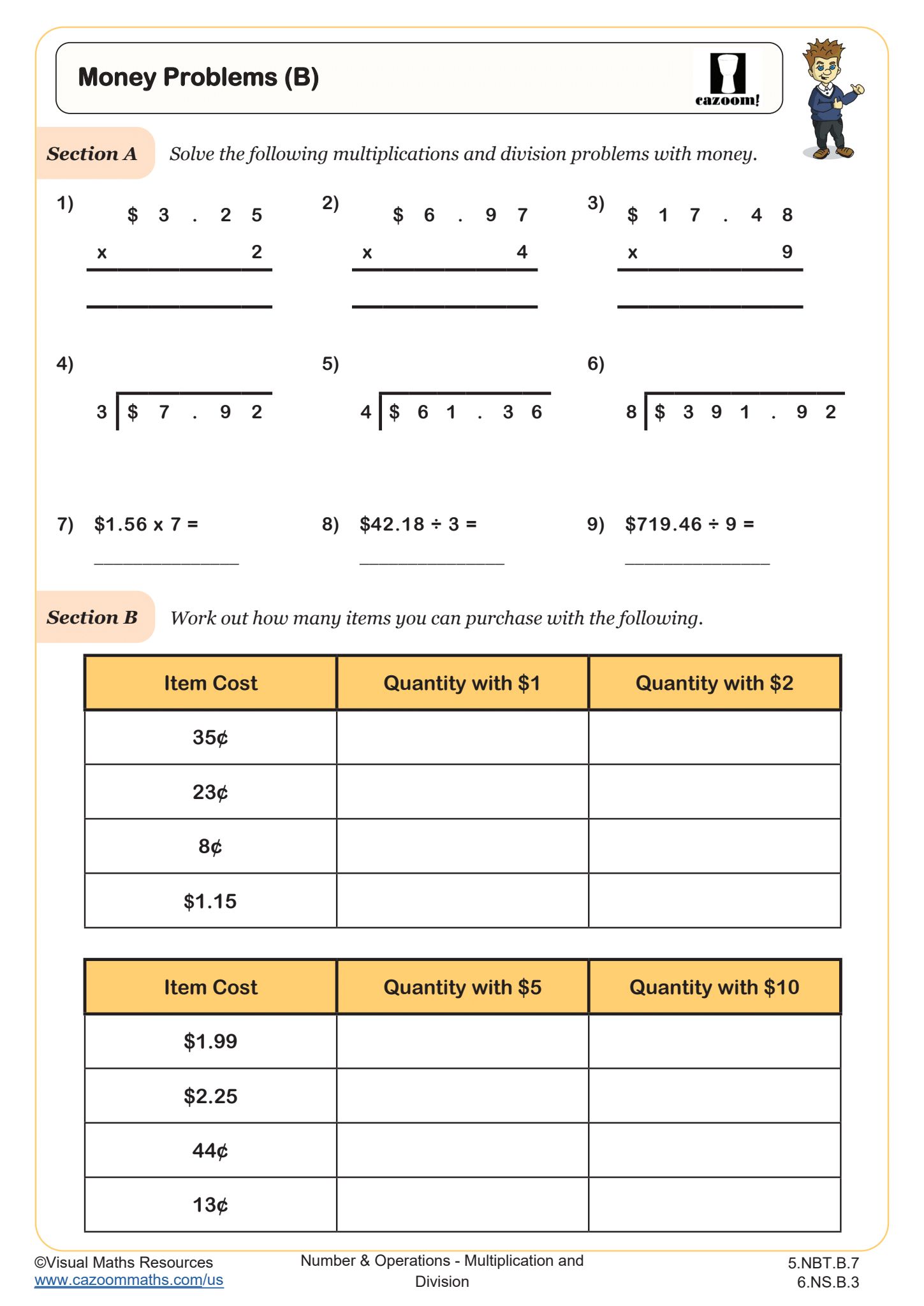
Money Problems (B)
Grades: 5th Grade, 6th Grade
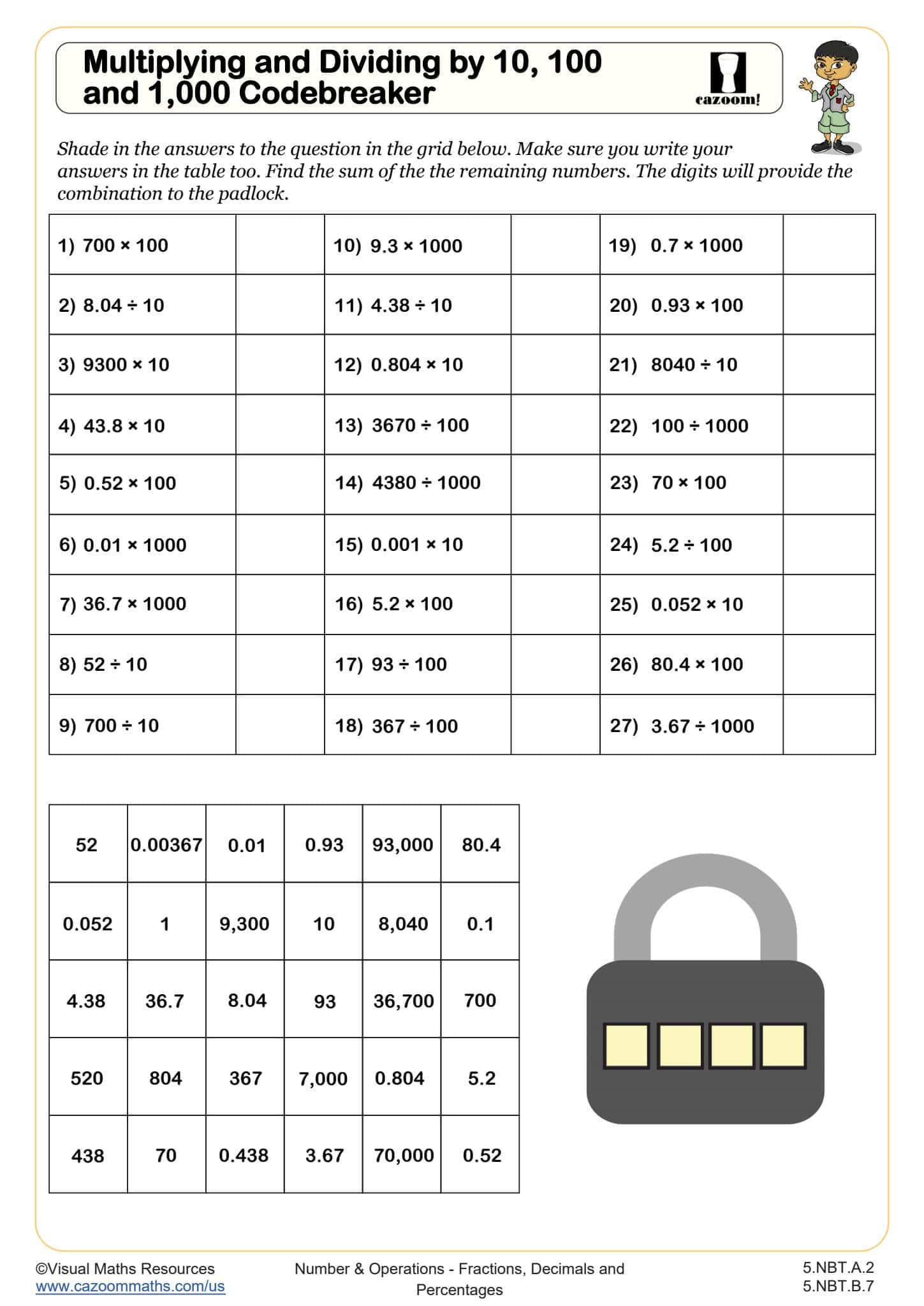
Multiplying and Dividing by 10, 100 and 1,000 Codebreaker
Grades: 5th Grade
Partitioning Decimals - Tenths and Hundredths (A)
Grades: 5th Grade
-Questions-Worksheet.jpg?w=3840)
Partitioning Decimals - Tenths and Hundredths (B)
Grades: 5th Grade
-Questions-Worksheet.jpg?w=3840)
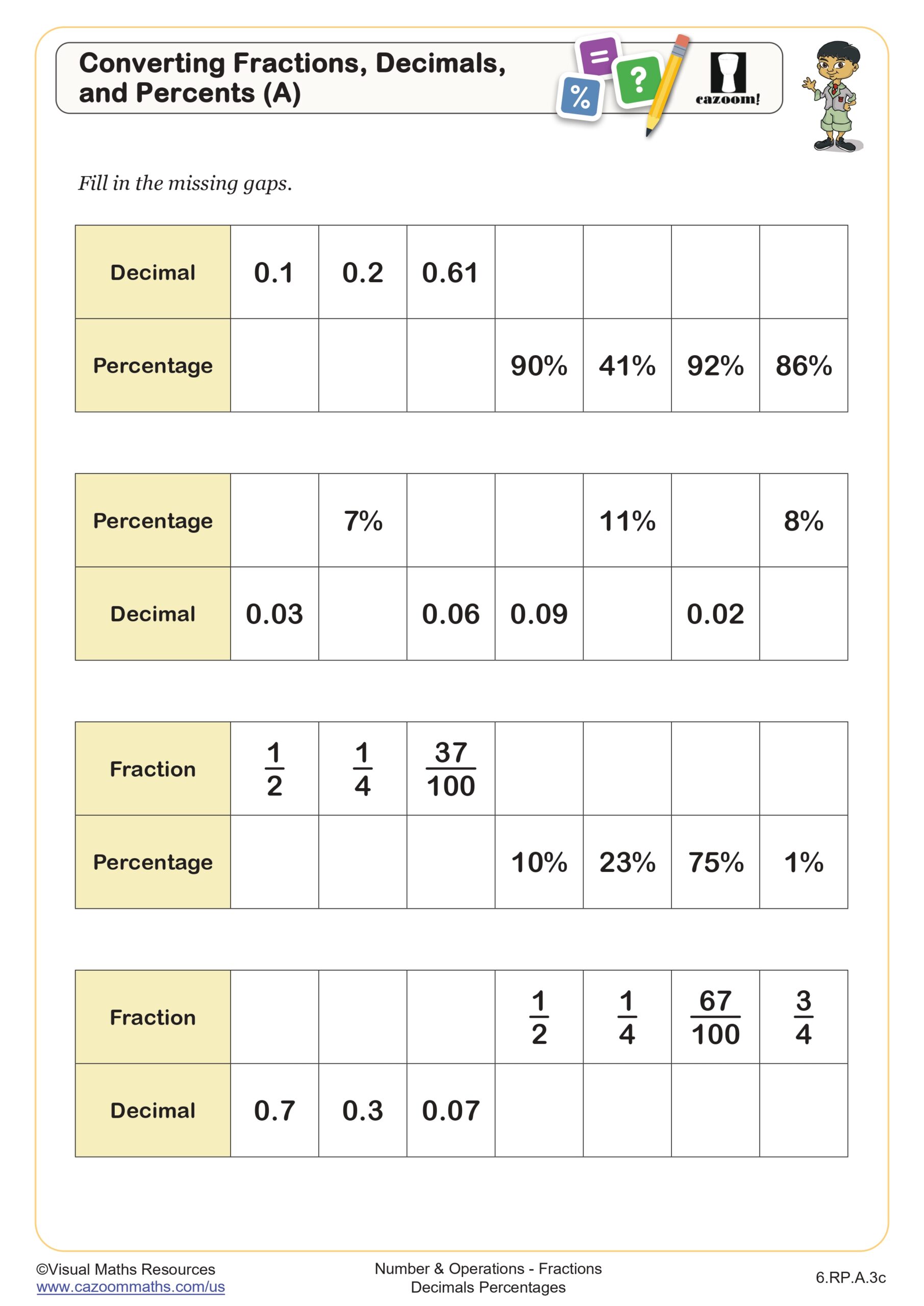
Converting Fractions, Decimals, and Percents (A)
Grades: 6th Grade
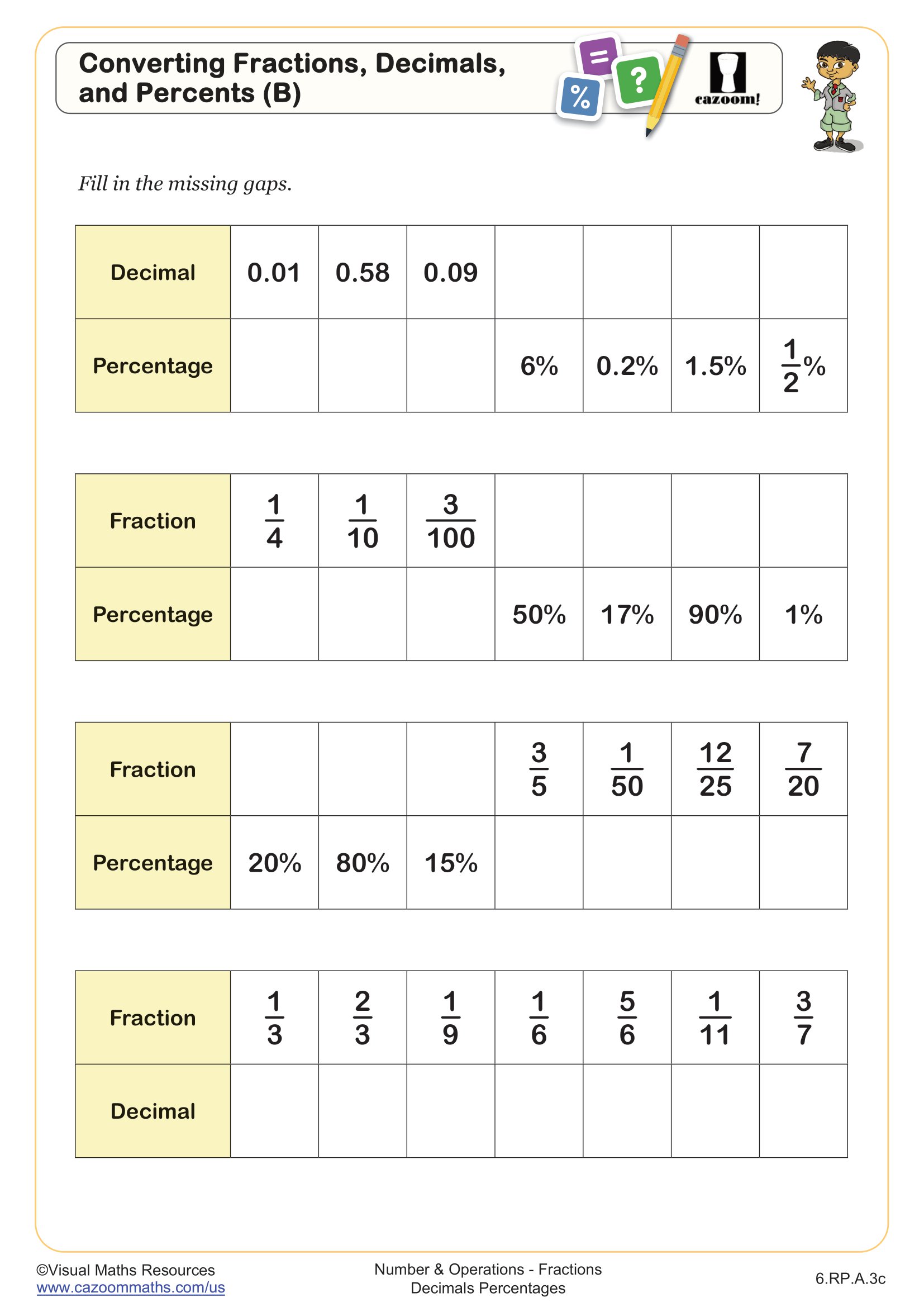
Converting Fractions, Decimals, and Percents (B)
Grades: 6th Grade
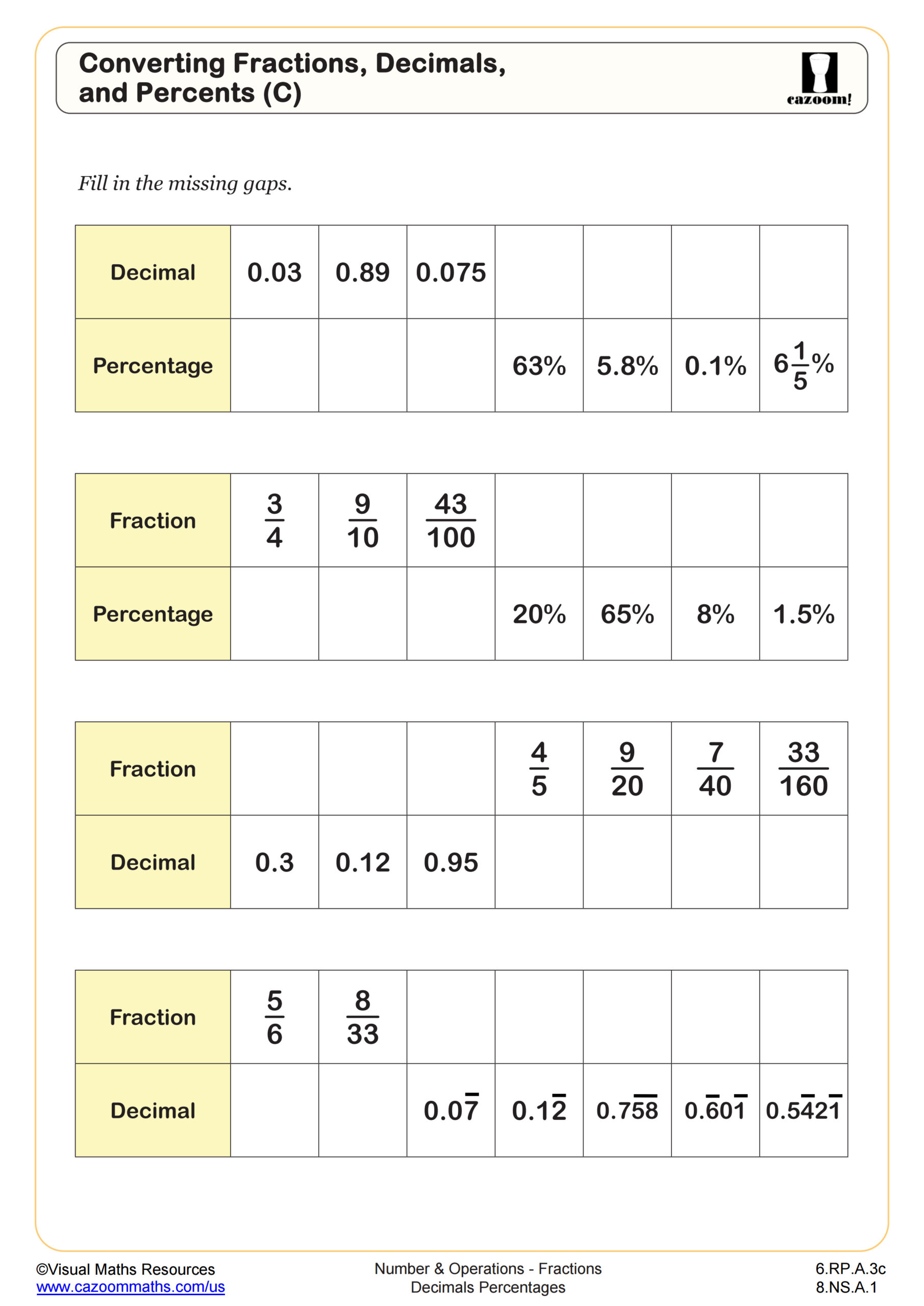
Converting Fractions, Decimals, and Percents (C)
Grades: 6th Grade, 8th Grade
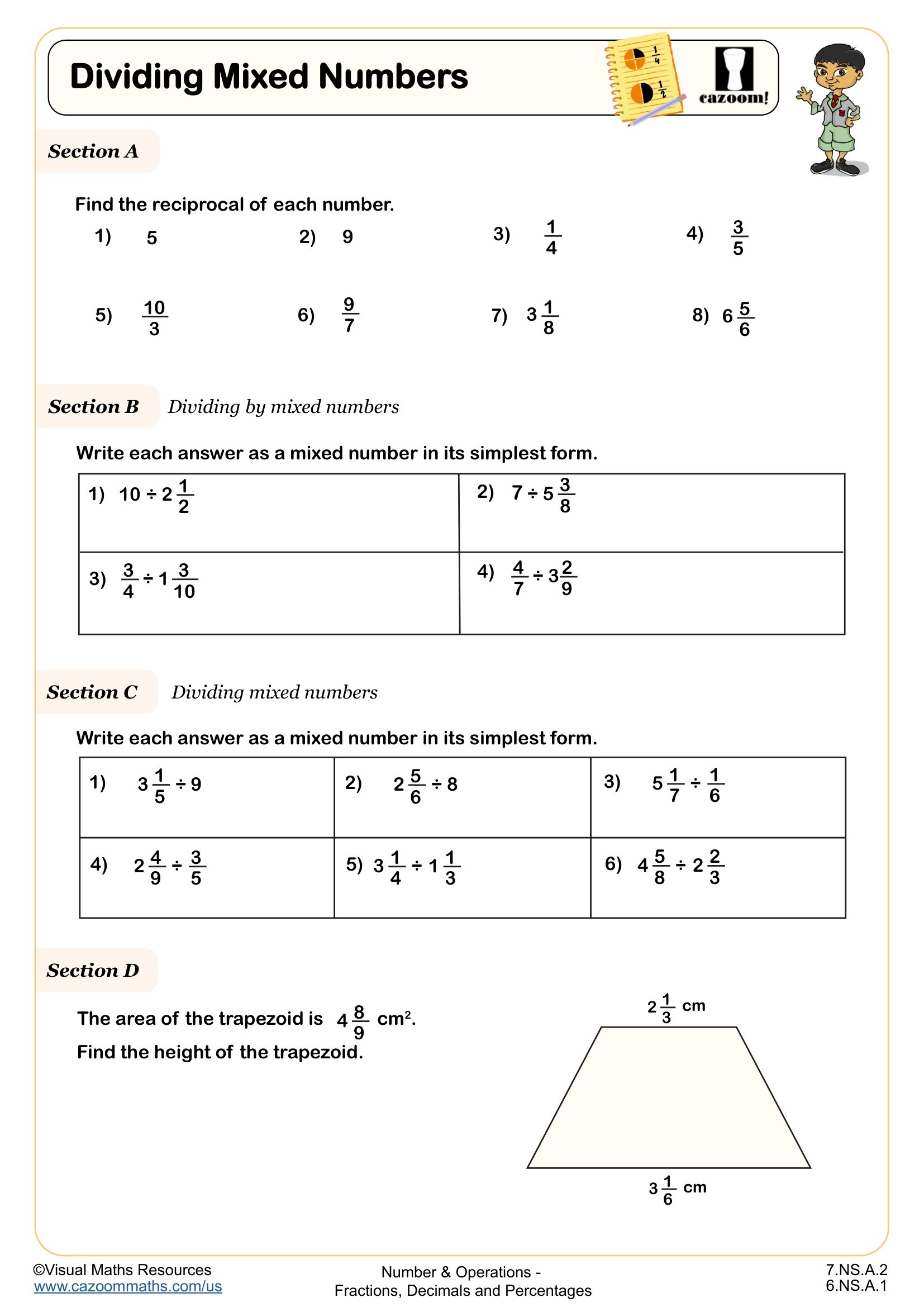
Dividing Mixed Numbers
Grades: 6th Grade, 7th Grade
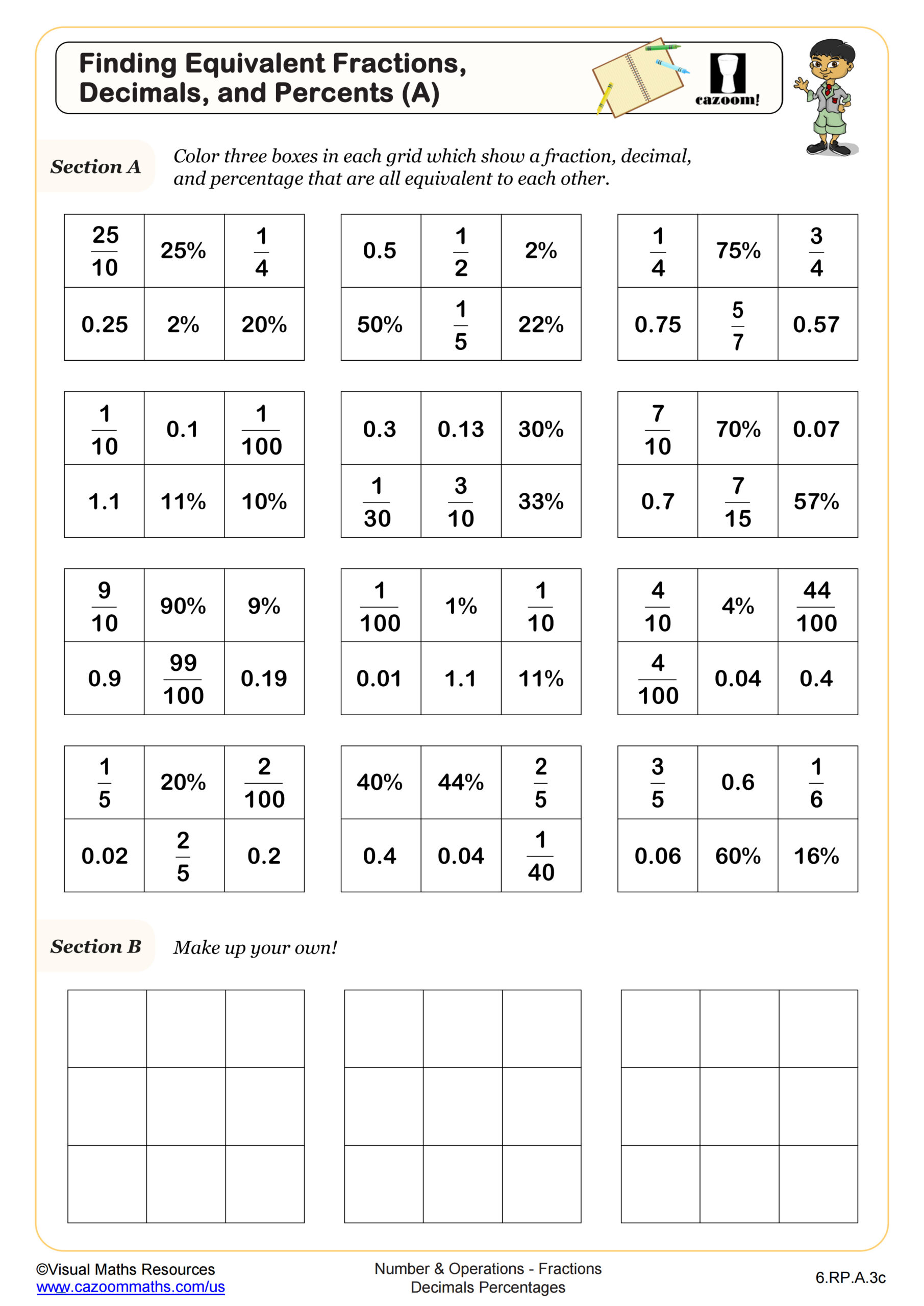
Finding Equivalent Fractions, Decimals, and Percents (A)
Grades: 6th Grade
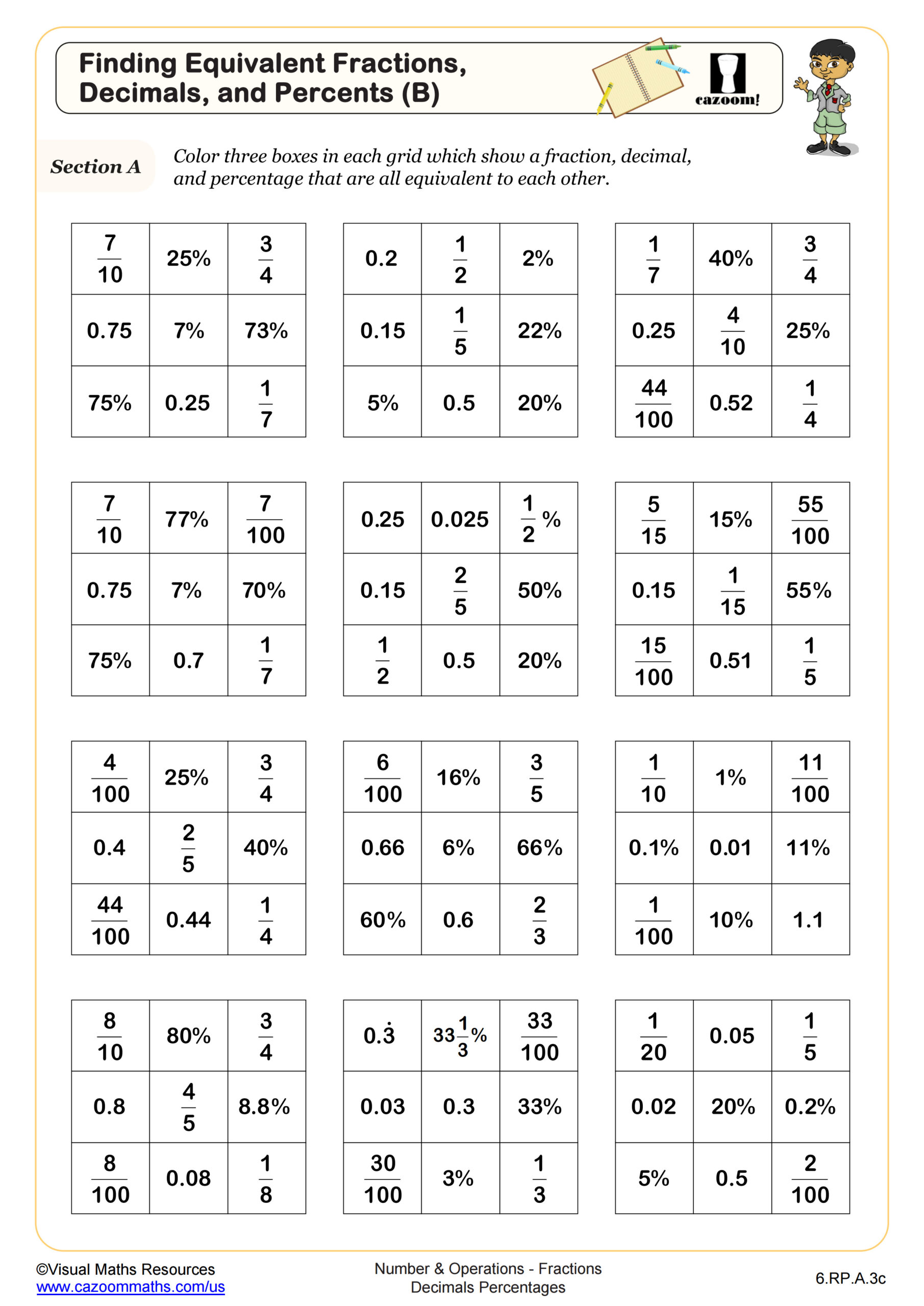
Finding Equivalent Fractions, Decimals, and Percents (B)
Grades: 6th Grade
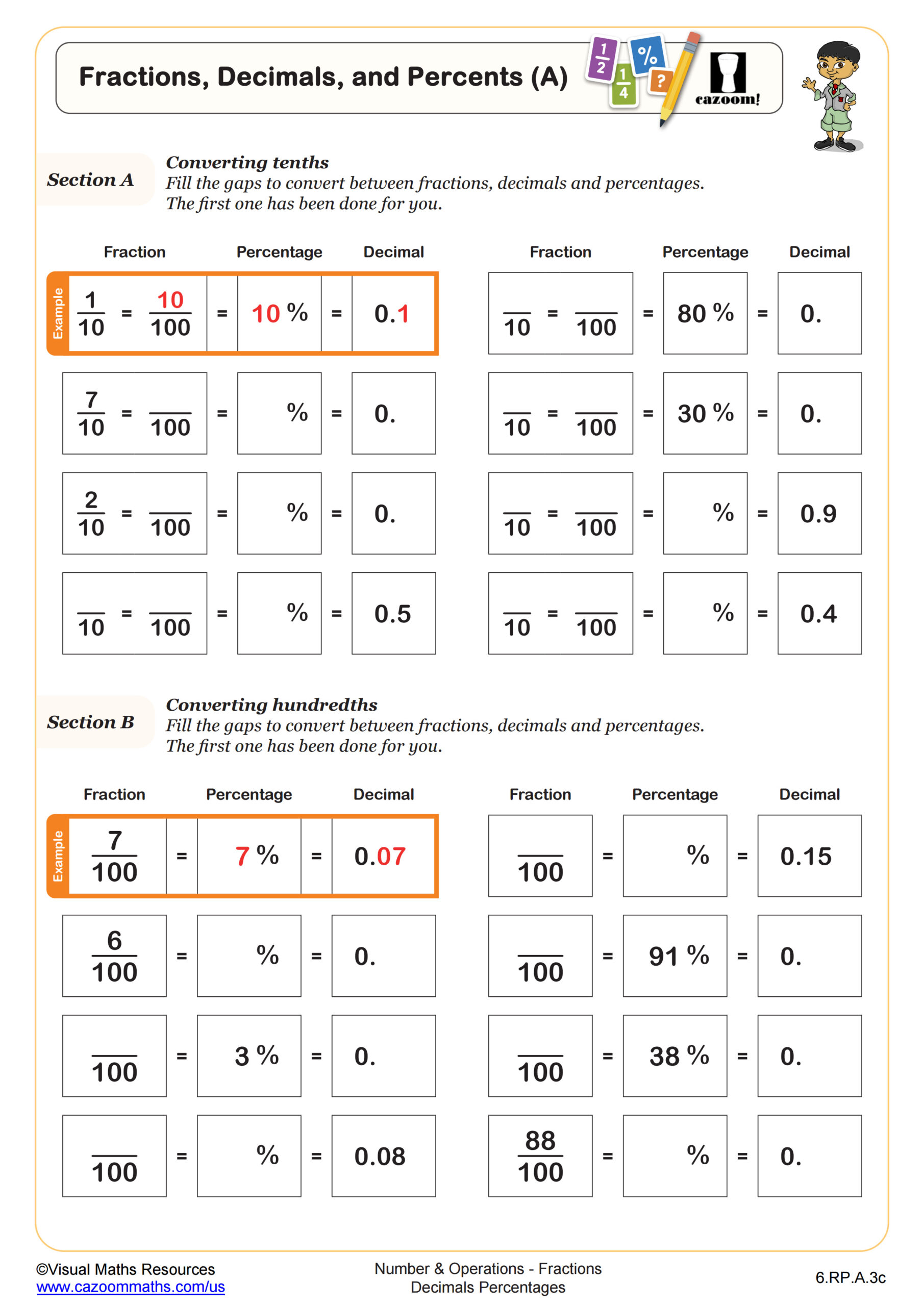
Fractions, Decimals, and Percents (A)
Grades: 6th Grade
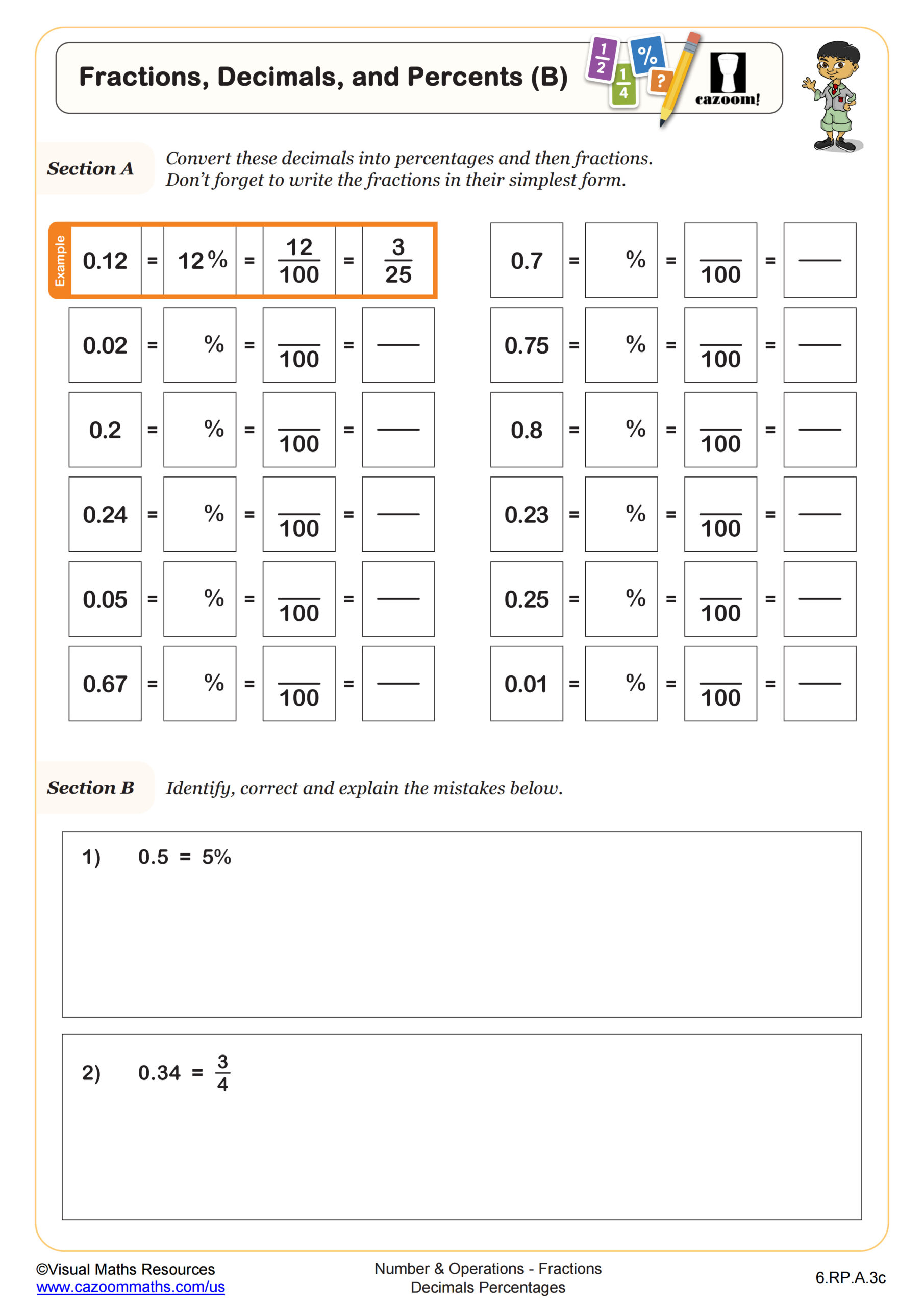
Fractions, Decimals, and Percents (B)
Grades: 6th Grade
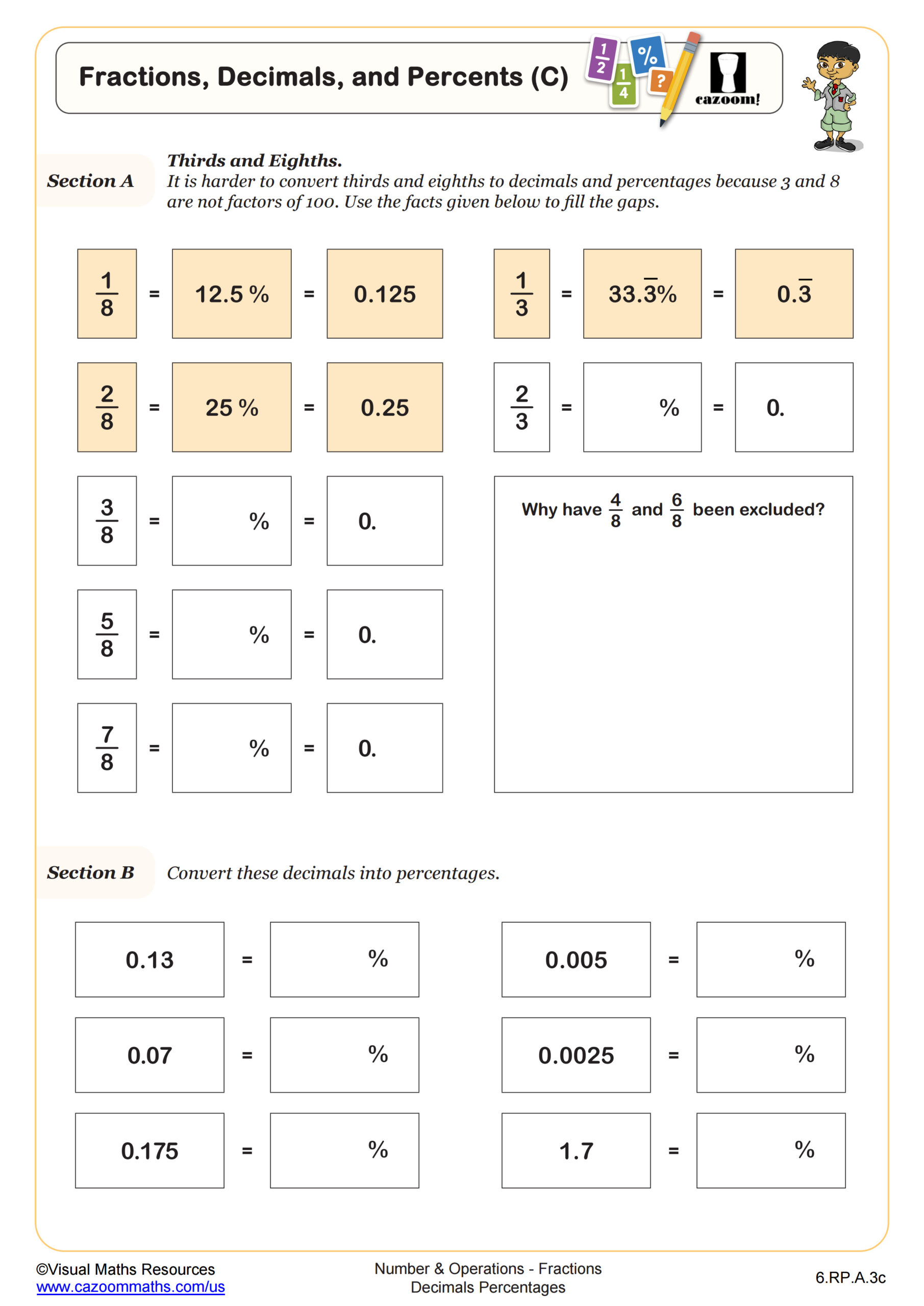
Fractions, Decimals, and Percents (C)
Grades: 6th Grade
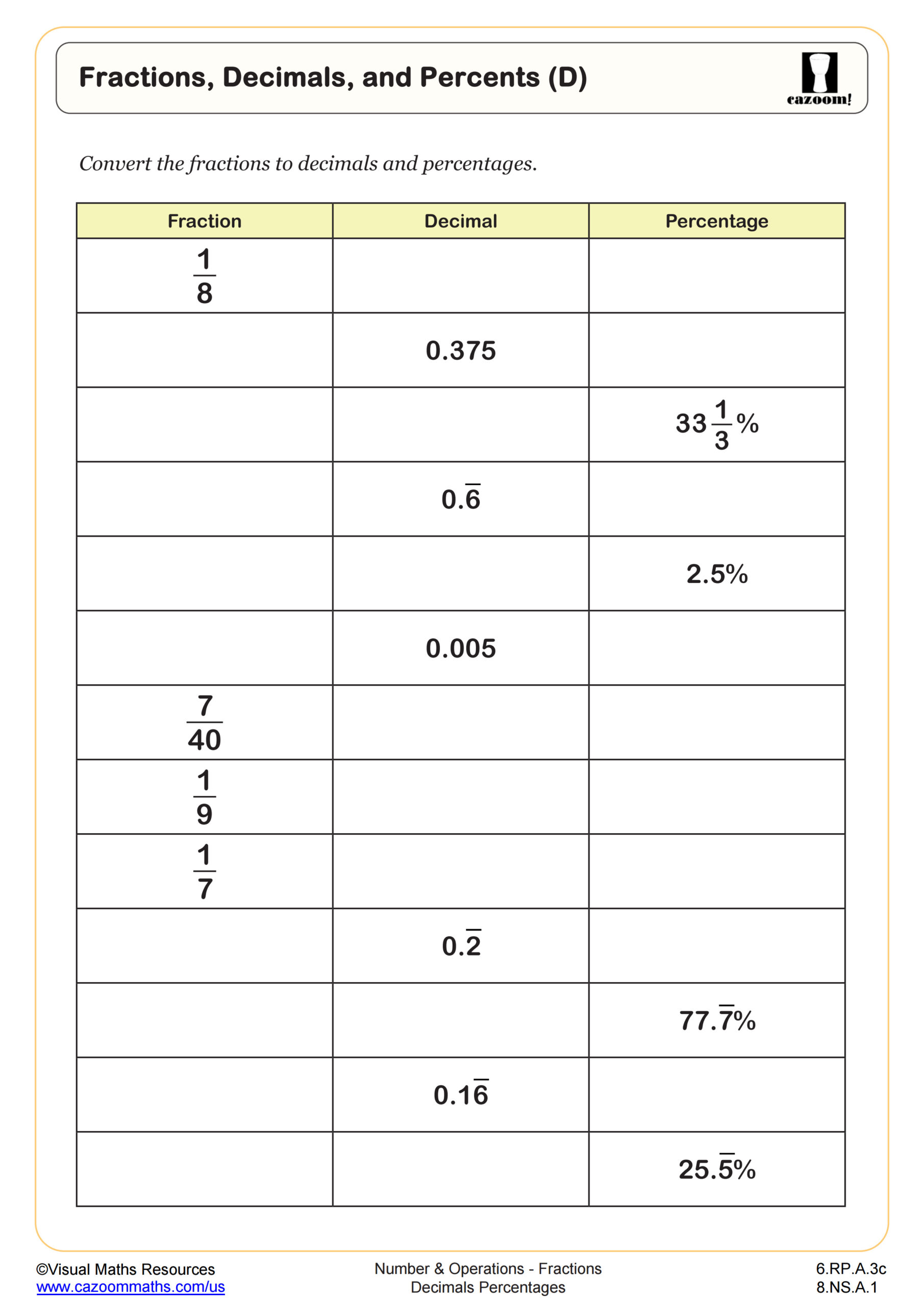
Fractions, Decimals, and Percents (D)
Grades: 6th Grade, 8th Grade
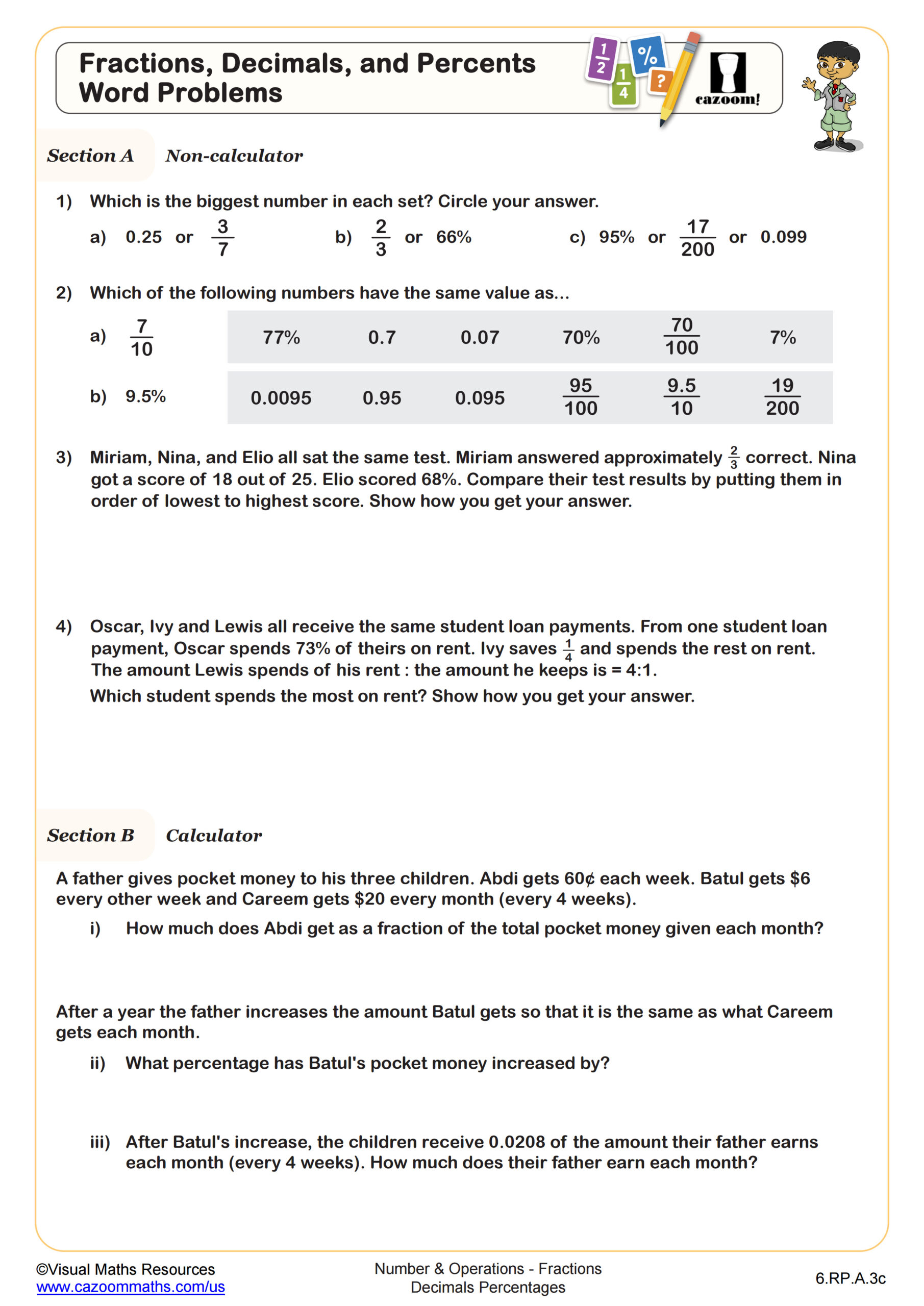
Fractions, Decimals, and Percents Word Problems
Grades: 6th Grade
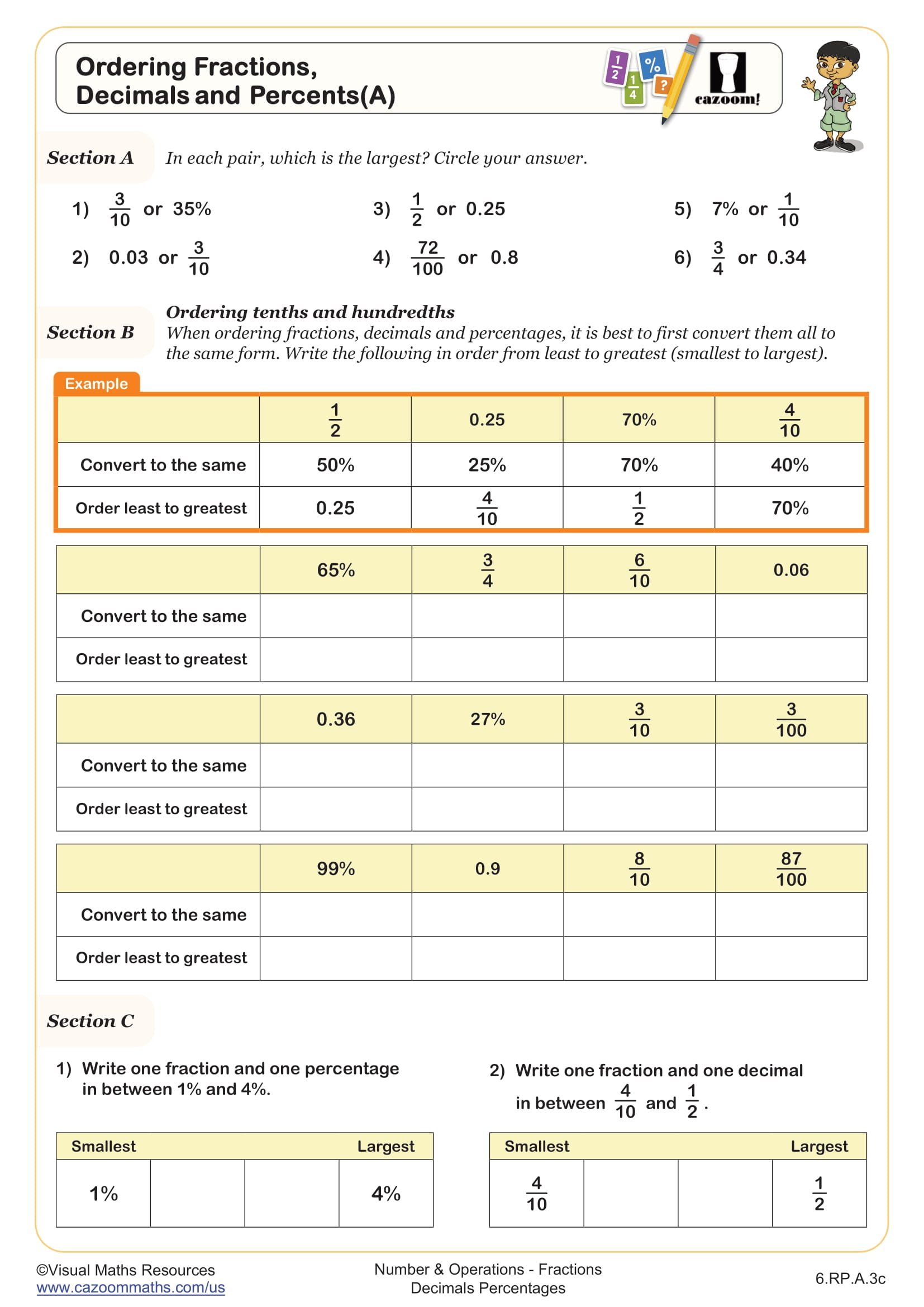
Ordering Fractions, Decimals, and Percents (A)
Grades: 6th Grade
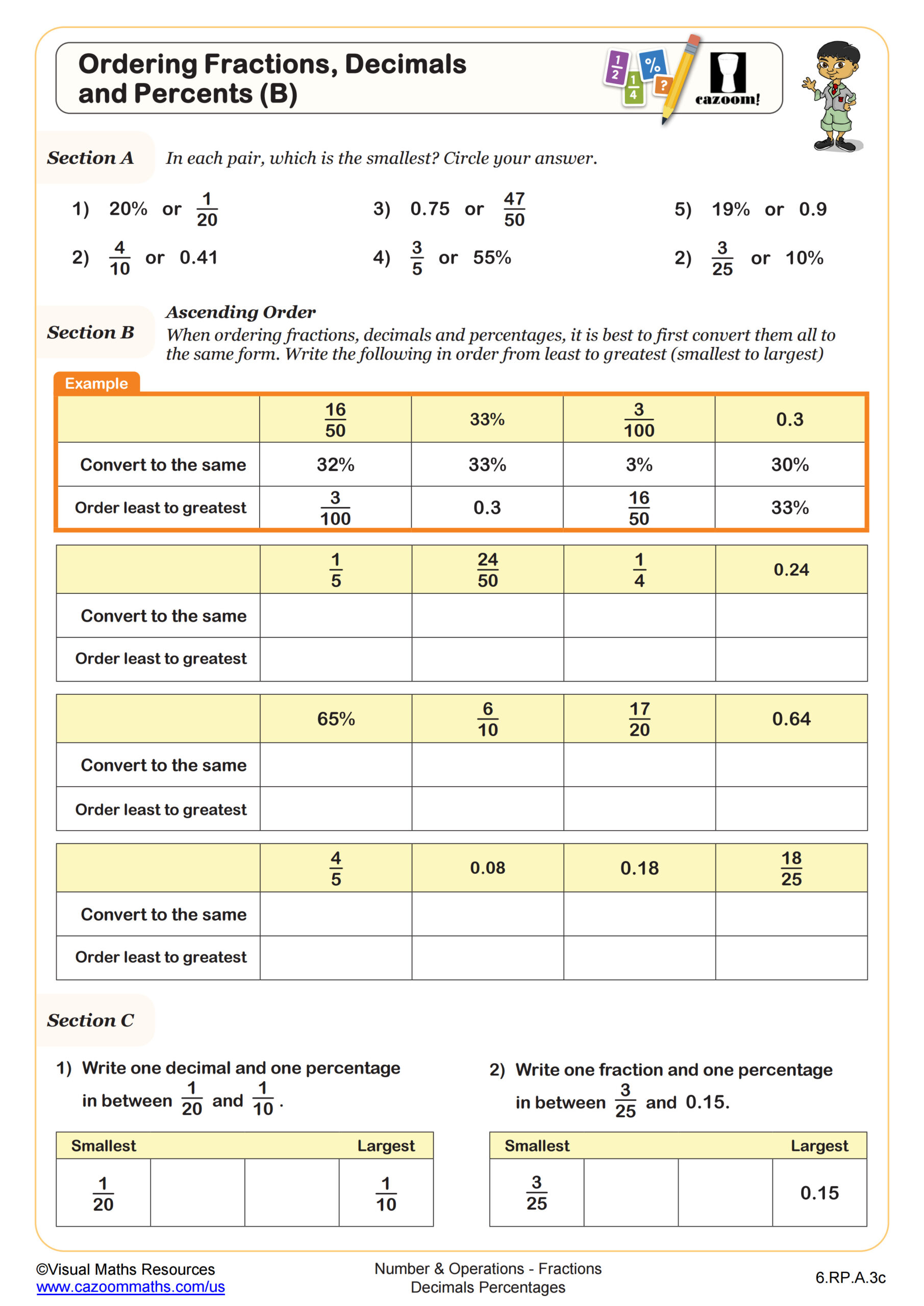
Ordering Fractions, Decimals, and Percents (B)
Grades: 6th Grade
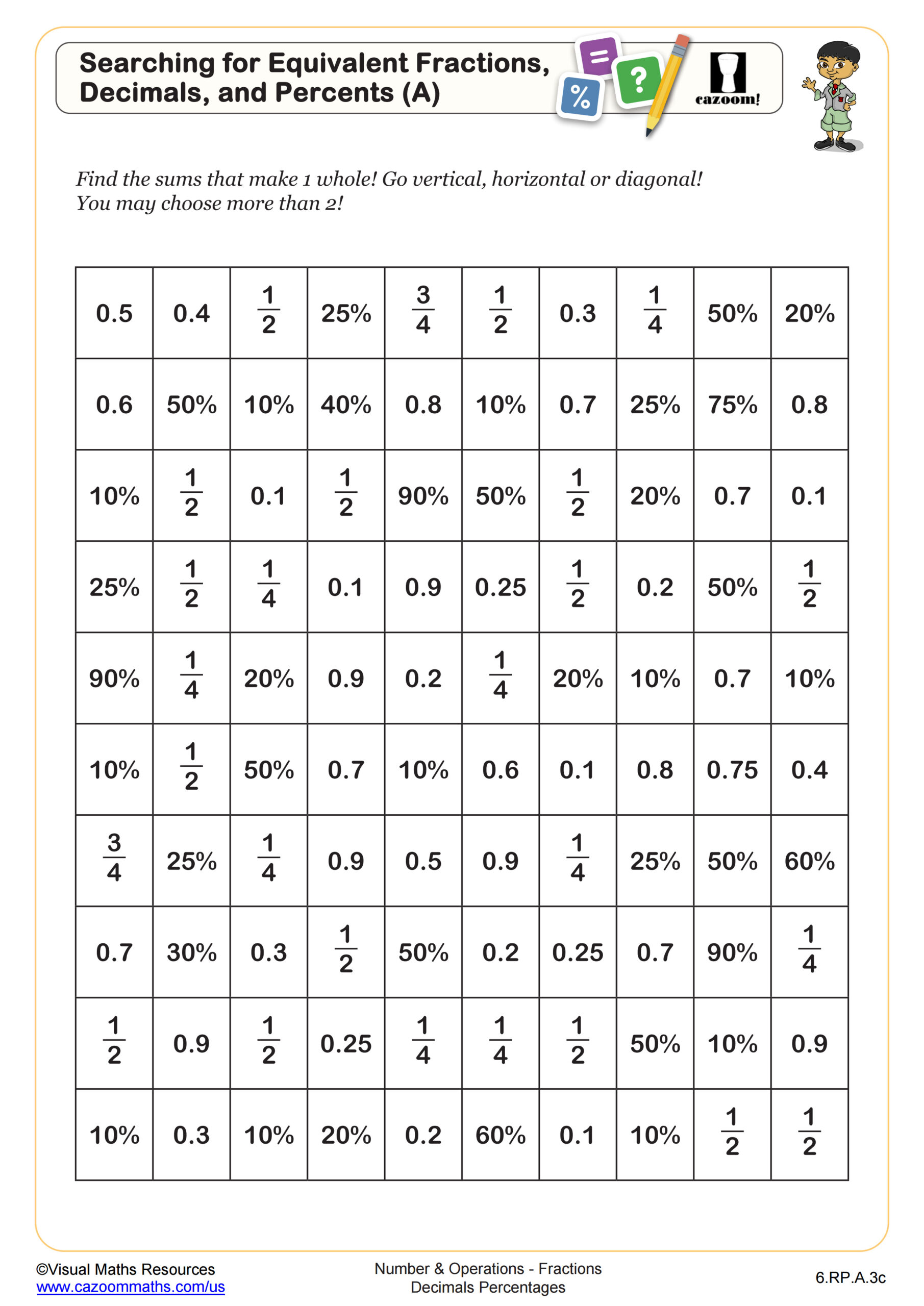
Searching for Equivalent Fractions, Decimals, and Percents (A)
Grades: 6th Grade
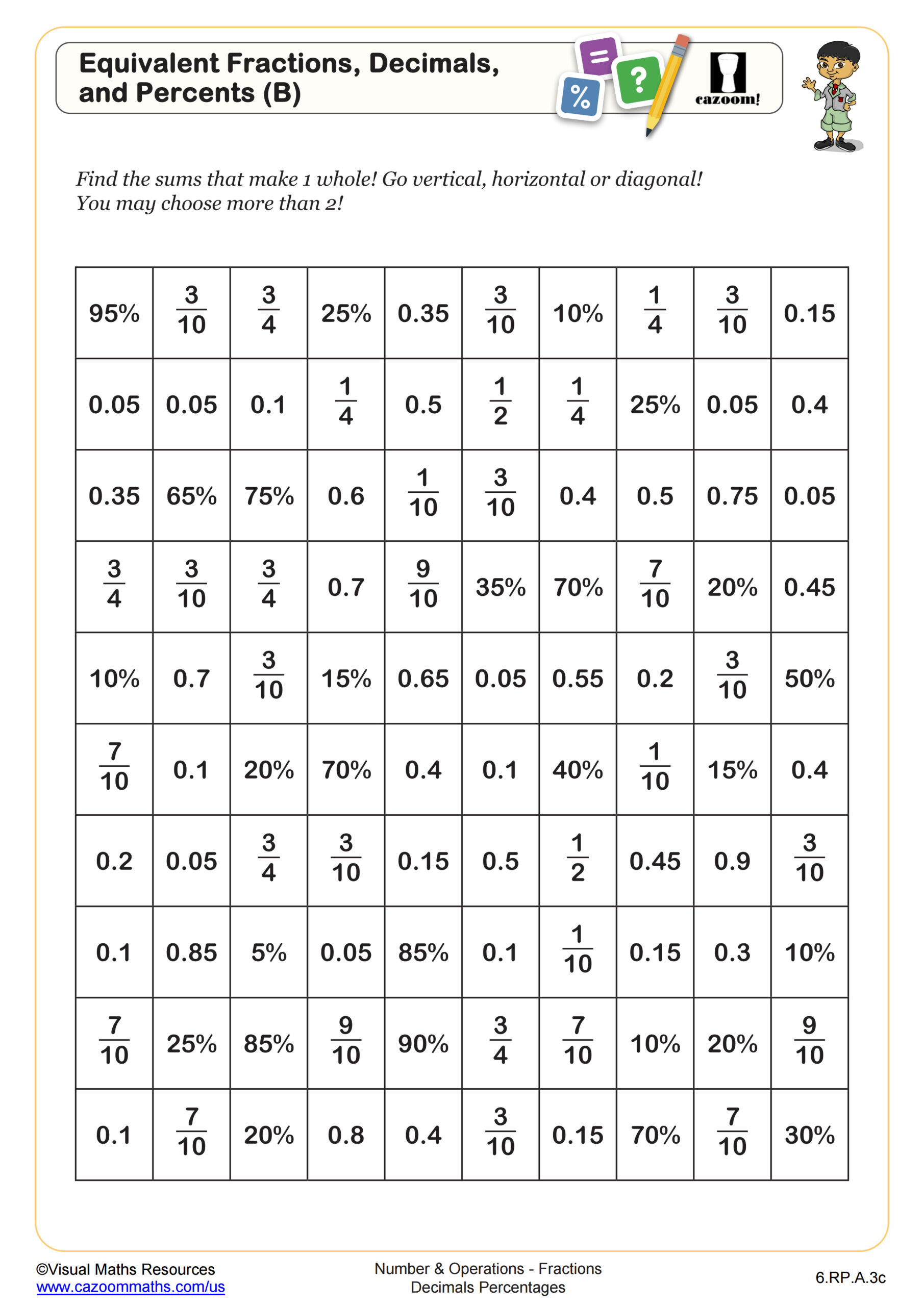
Searching for Equivalent Fractions, Decimals, and Percents (B)
Grades: 6th Grade
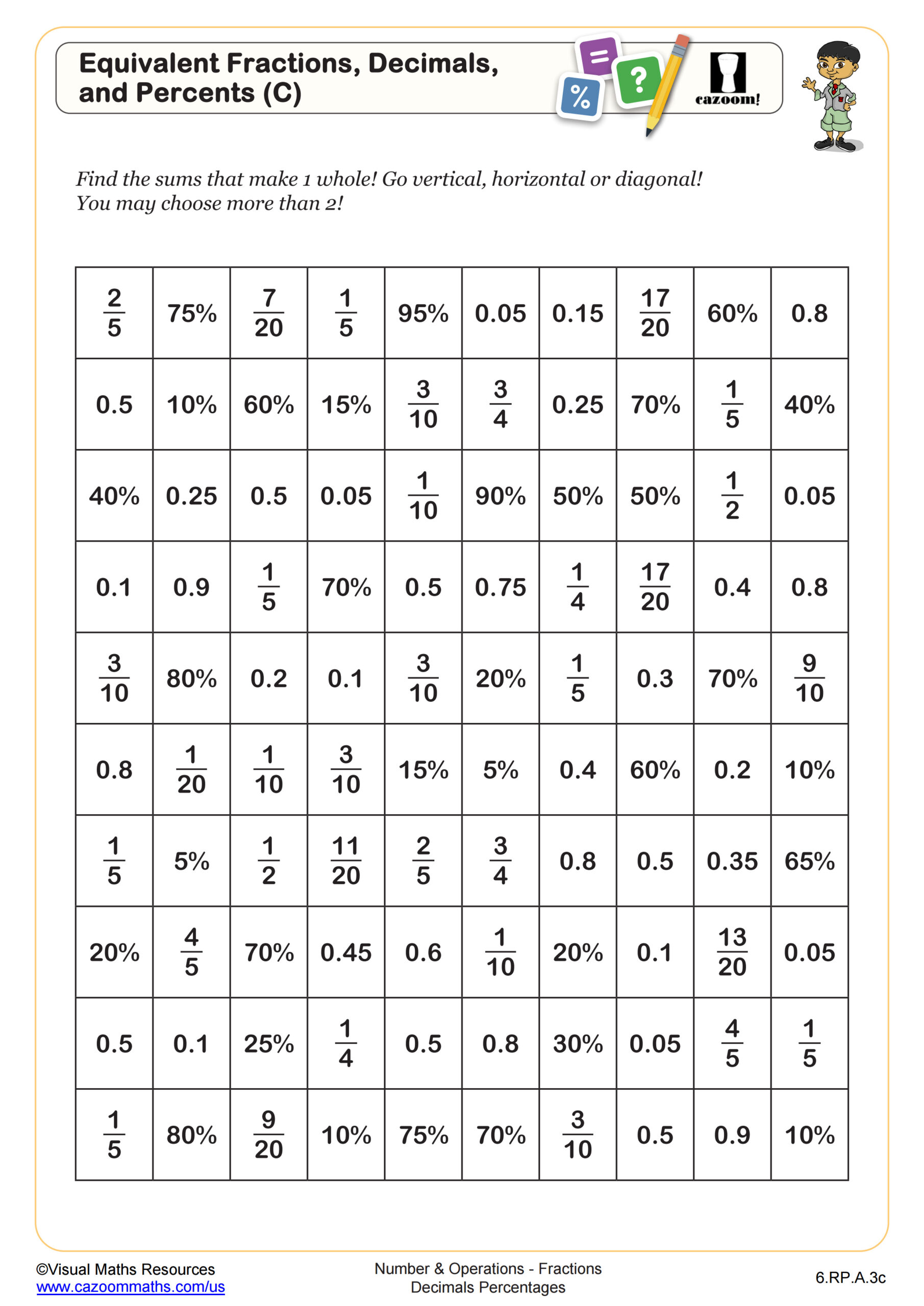
Searching for Equivalent Fractions, Decimals, and Percents (C)
Grades: 6th Grade
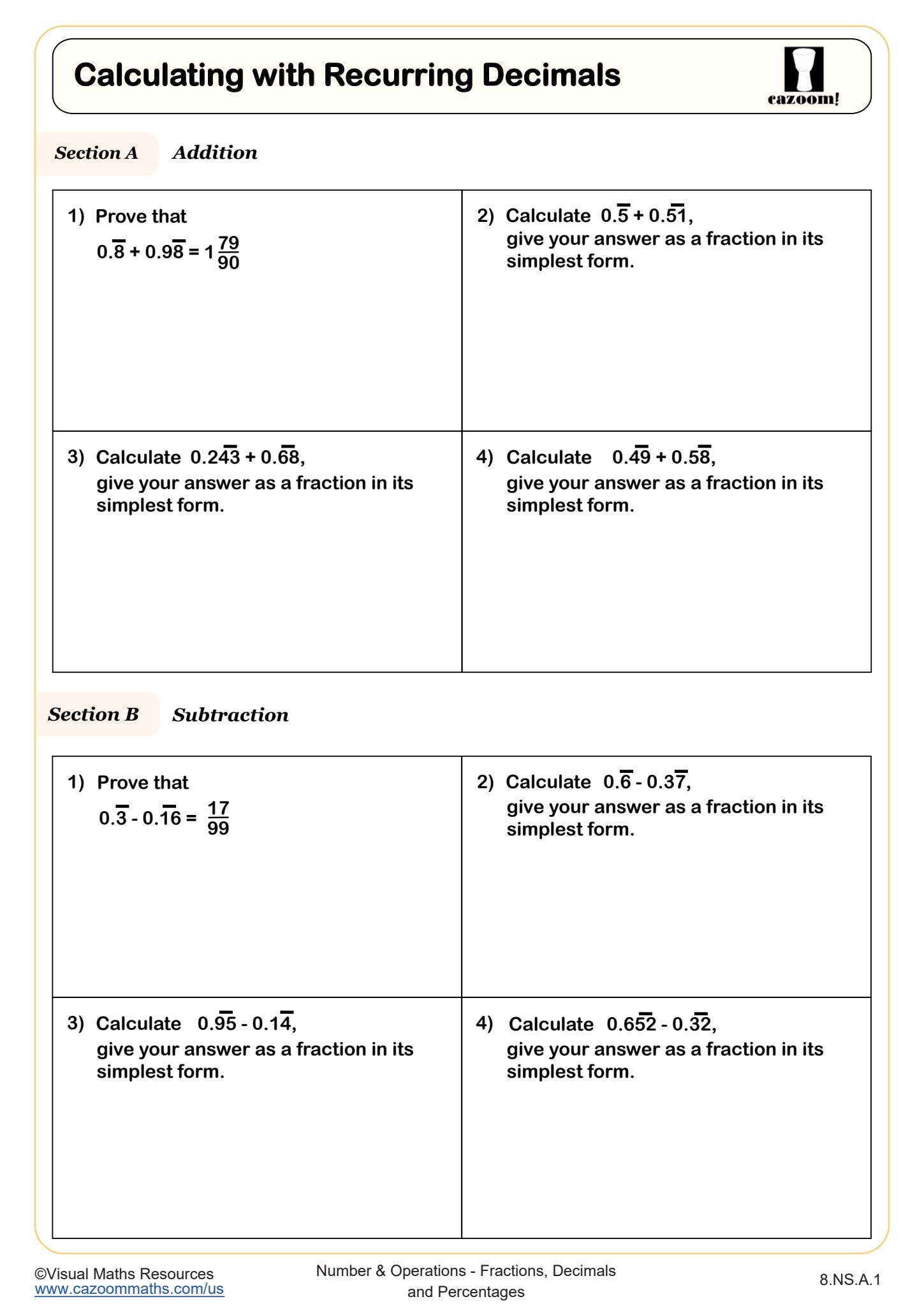
Calculating with Recurring Decimals
Grades: 8th Grade
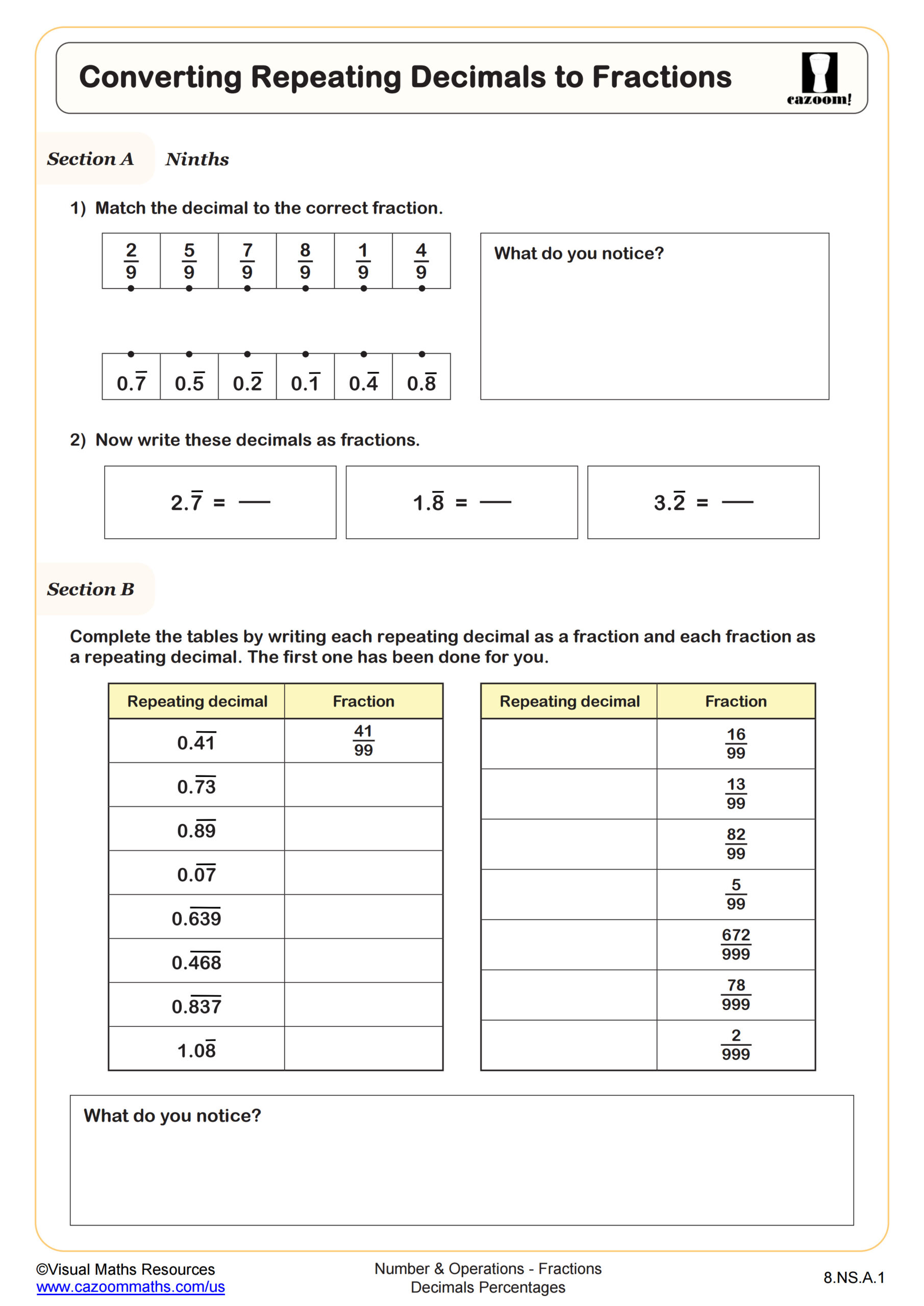
Converting Repeating Decimals to Fractions
Grades: 8th Grade
Converting Repeating Decimals to Fractions Using Algebraic Method
Grades: 8th Grade
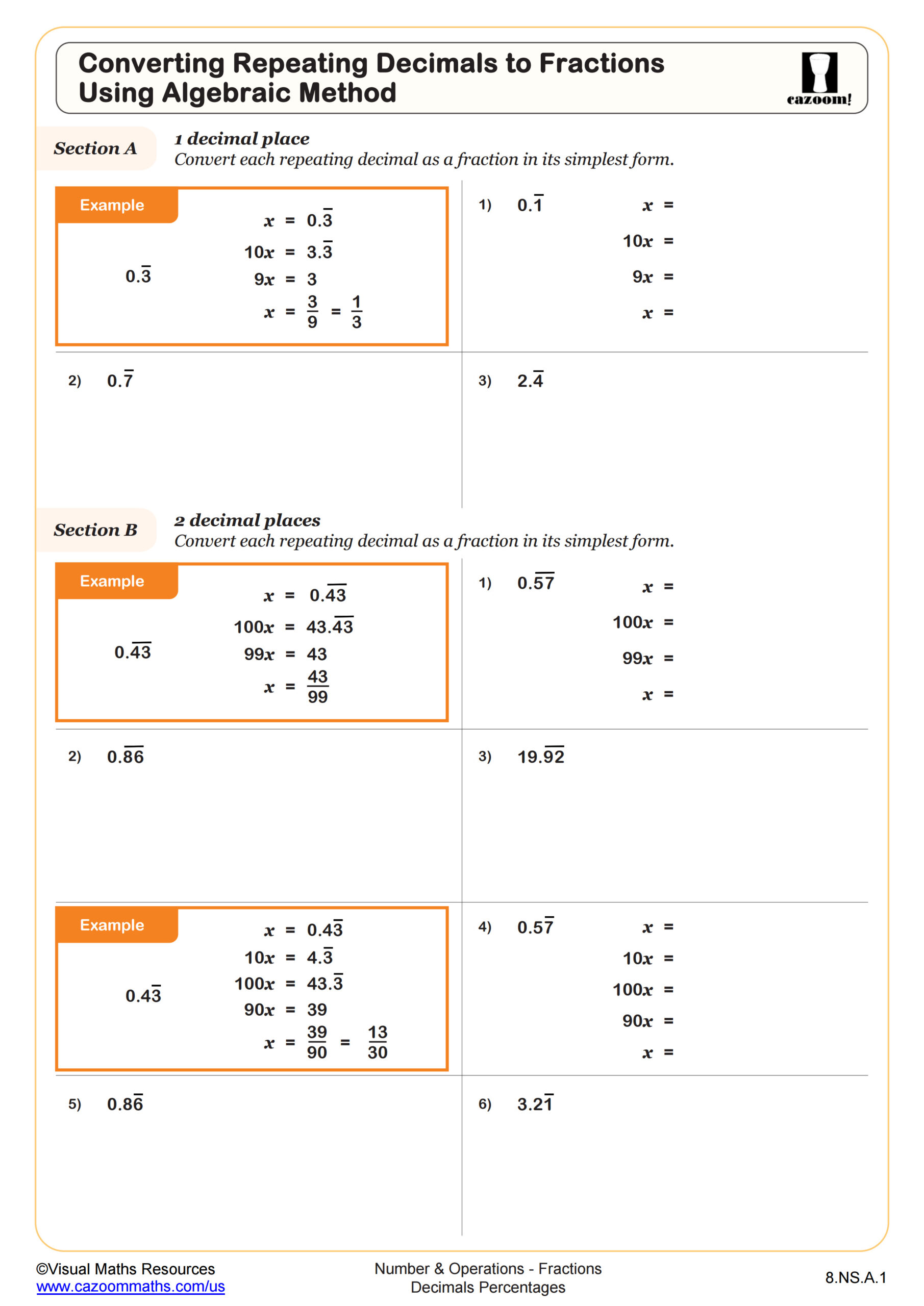
All worksheets are created by the team of experienced teachers at Cazoom Math.
What makes an effective fraction decimal percent worksheet for classroom use?
An effective fraction decimal percent worksheet should include multiple representation formats and scaffold the conversion process step by step. According to Common Core standards, students need explicit practice moving between equivalent forms, starting with simple fractions like 1/2, 1/4, and 3/4 before progressing to more complex conversions that require long division or understanding place value relationships.
Teachers report that students perform better when worksheets include visual models alongside numerical problems. Many students initially treat percentage conversion as a memorization task rather than understanding the underlying relationship that percent means "per hundred." Worksheets that include conversion charts and step-by-step examples help students recognize patterns and develop computational fluency rather than relying solely on rote procedures.
Which grade levels benefit most from fractions decimals and percentages worksheet practice?
Elementary students in grades 4-5 typically begin with fractions of a set worksheets grade 4 level problems, focusing on identifying fractional parts of concrete quantities before moving to abstract conversions. Middle school students in grades 6-8 work extensively with fractions, decimals and percents worksheets 7th grade style problems that include complex conversions and real-world applications.
The progression builds systematically across grade levels. Fourth graders work with simple equivalent fractions and basic decimal notation, while seventh graders tackle converting fractions, decimals and percentages worksheet problems involving repeating decimals and complex percentage calculations. Teachers notice that students who master foundational concepts in elementary grades show significantly better performance with algebraic thinking and proportional reasoning in later courses.
How do fraction decimal percent chart worksheets support visual learners?
Chart-based worksheets provide visual scaffolding that helps students recognize patterns and relationships between different number representations. These charts typically organize equivalent fractions, decimals, and percentages in columns, allowing students to see immediate connections and verify their conversion work against established benchmarks.
Teachers find that students who struggle with abstract number concepts show marked improvement when using chart-based practice. The visual organization helps students identify common equivalencies like 1/2 = 0.5 = 50% and builds confidence before attempting more challenging conversions. Many teachers use these charts as reference tools during assessments, gradually reducing support as students internalize the relationships and develop computational independence.
What teaching strategies work best when implementing these conversion worksheets?
Successful implementation requires connecting worksheet practice to real-world contexts that students encounter daily. Teachers often introduce lessons by discussing sales discounts, sports statistics, or cooking measurements that naturally involve all three representations. This approach helps students understand why conversion skills matter beyond the mathematics classroom.
Teachers report better results when they use worksheets as guided practice rather than independent work initially. Walking through the first few problems as a class helps identify common errors before they become ingrained habits. The answer keys allow teachers to quickly spot patterns in student mistakes and adjust instruction accordingly, particularly addressing the frequent error of moving decimal points incorrectly during percentage conversions.