Geometry Area and Perimeter Worksheets
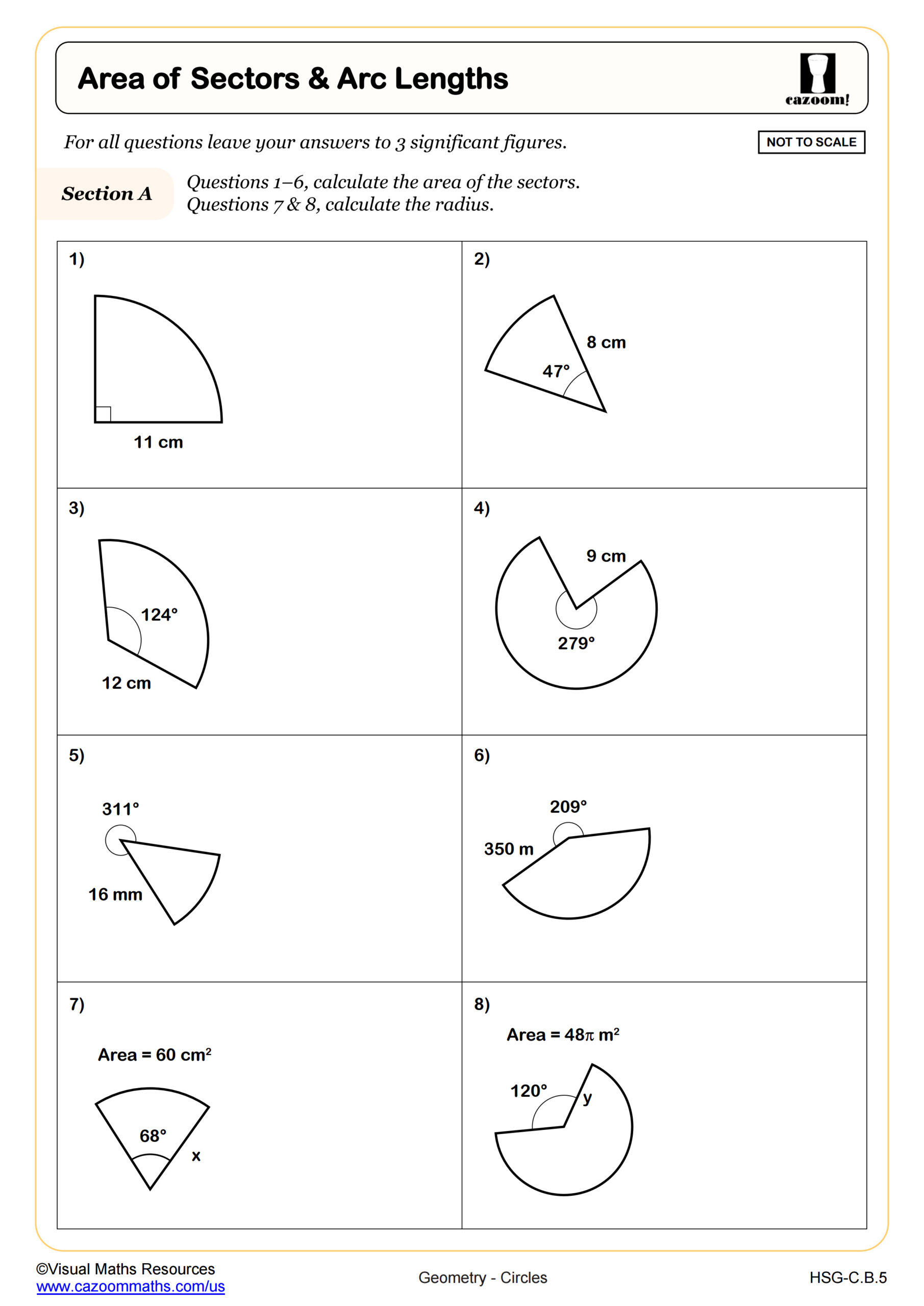
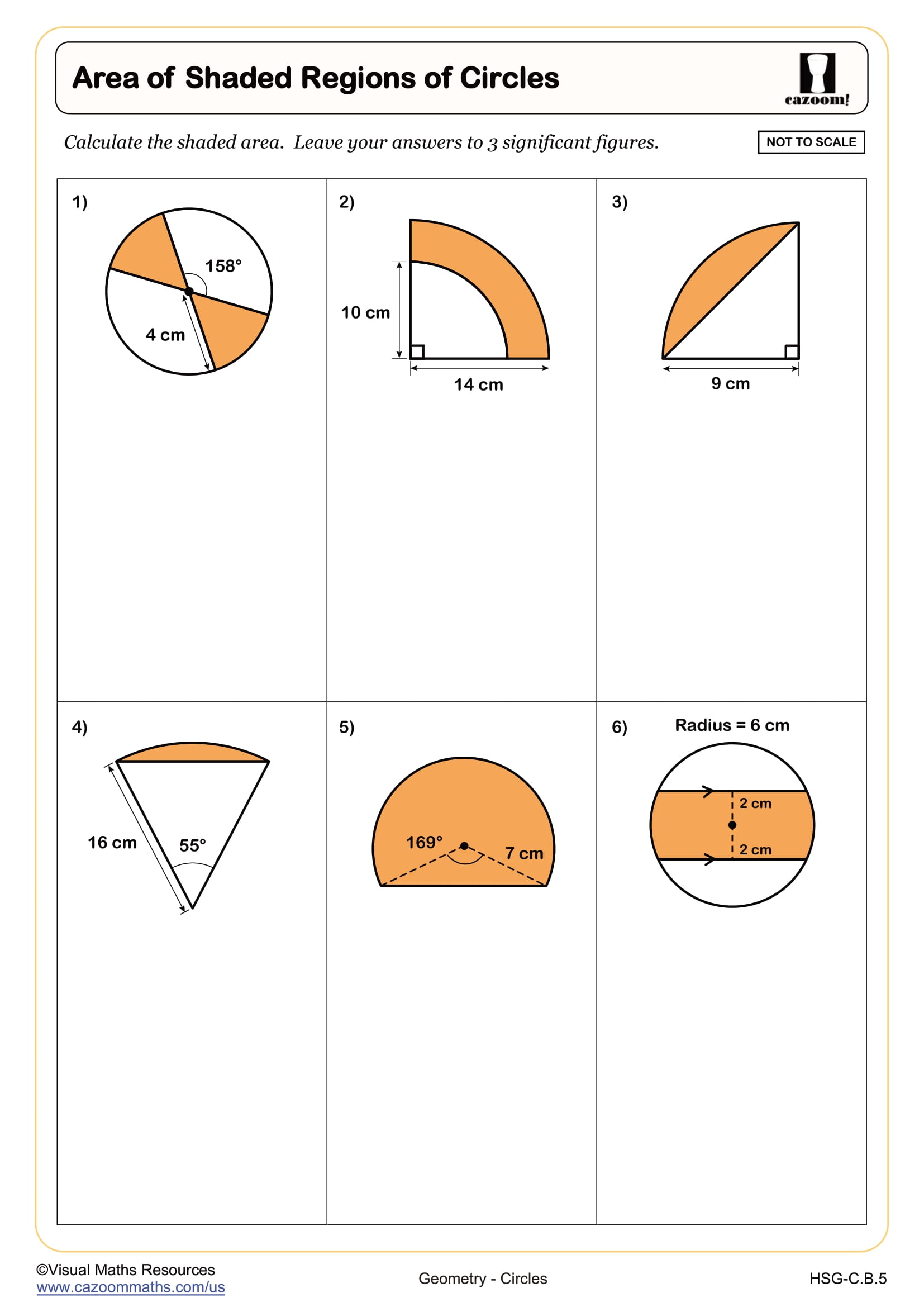
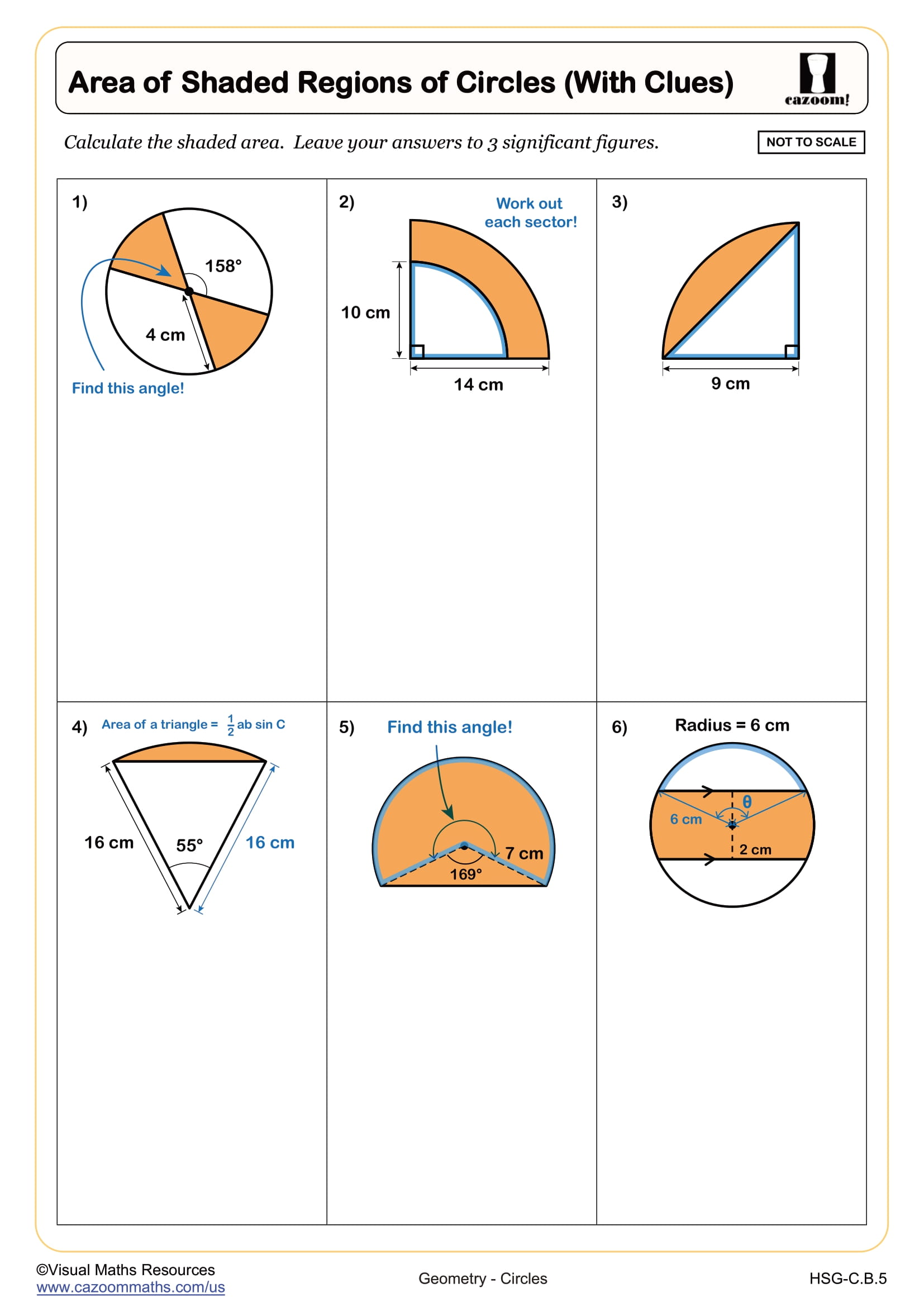
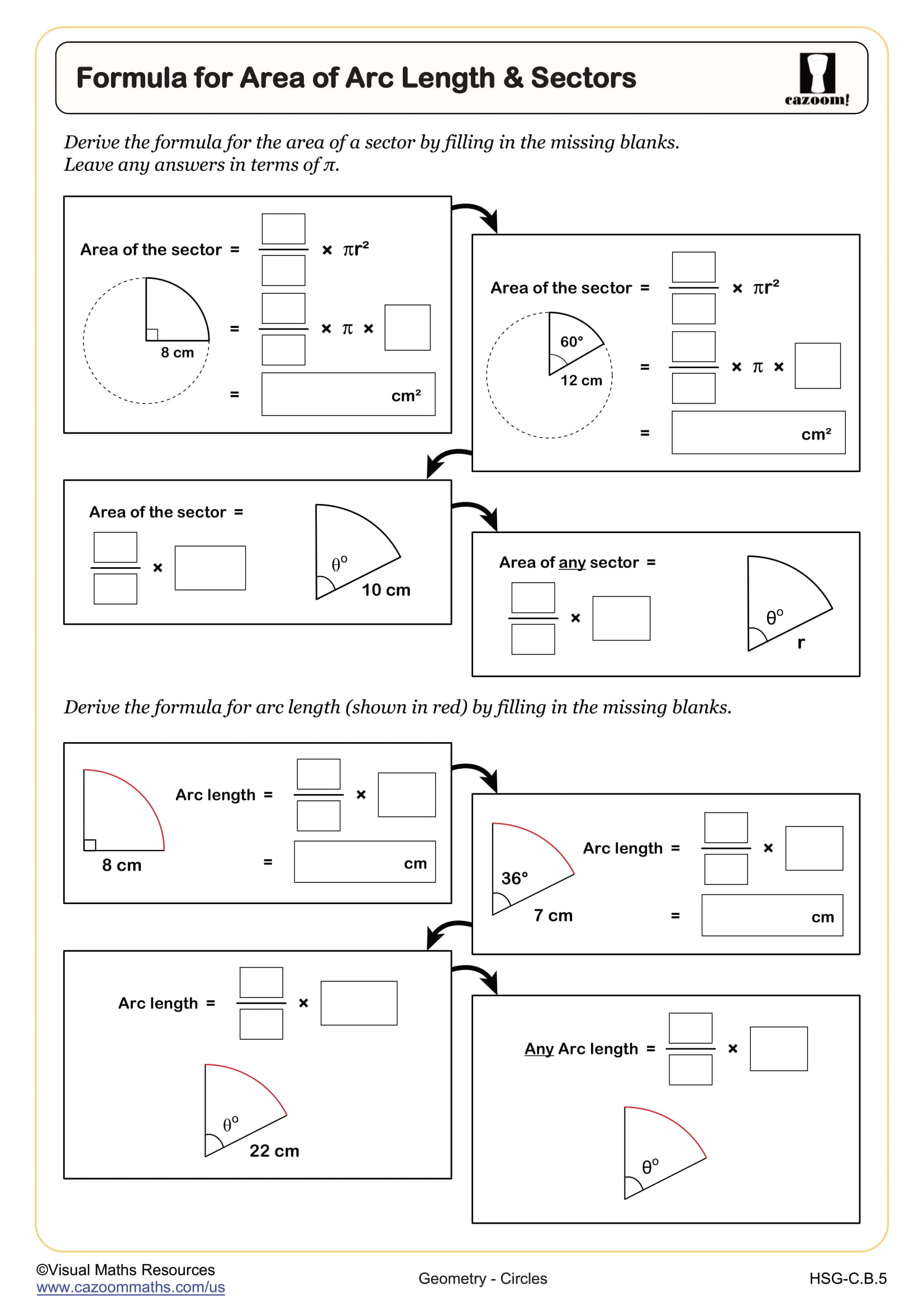
All worksheets are created by the team of experienced teachers at Cazoom Math.
What are area and perimeter in geometry?
Area measures the space inside a two-dimensional shape, expressed in square units, while perimeter measures the distance around the outside of a shape, expressed in linear units. High school geometry courses expect students to calculate area and perimeter for standard shapes like triangles, rectangles, and circles, as well as for irregular and composite figures created by combining multiple shapes.
Students often struggle when problems require them to find a missing dimension before calculating area or perimeter. For example, finding the height of a triangle given its area and base, or determining the radius of a circle from its circumference. Teachers notice that students lose points on tests when they forget to square units for area or when they apply the wrong formula to shaded regions that require subtraction of areas.
What grade level are these area and perimeter worksheets for?
This collection targets high school geometry students who are working with advanced area and perimeter applications. These worksheets go beyond the basic rectangle and triangle formulas introduced in middle school, focusing instead on composite figures, shaded regions involving circles, and problems that require multi-step reasoning.
The progression in difficulty moves from straightforward formula application with provided formula sheets to more complex shaded region problems where students must identify which areas to add or subtract. Students encounter circle sector calculations, inscribed and circumscribed figures, and scenarios where algebraic thinking combines with geometric formulas. This level of complexity aligns with high school geometry standards and prepares students for the geometric reasoning required on the SAT and ACT.
How do you find the area of shaded regions in circles?
Finding the area of shaded regions in circles requires students to identify which geometric shapes comprise the shaded portion, calculate each area separately, then add or subtract as needed. Common scenarios include finding the area between two concentric circles, the area of a sector minus a triangle, or regions created when circles overlap with squares or other polygons. Students must recognize whether to find the difference between a larger and smaller area or to combine multiple areas.
Architects and landscape designers regularly use shaded region calculations when planning circular patios with different materials, designing ring-shaped features like fountains with surrounding walkways, or calculating the amount of turf needed in curved garden beds. Engineers apply these concepts when determining cross-sectional areas of pipes, designing circular components with holes, or calculating material requirements for manufacturing parts with circular cutouts.
How can teachers use these area and perimeter worksheets in class?
The worksheets provide structured practice that builds from formula reference to independent problem-solving. The formula sheets serve as scaffolding for students still building confidence with which formula applies to each shape, while the shaded region problems challenge students to develop spatial reasoning and multi-step problem-solving strategies. Teachers can use the answer keys to quickly identify which types of problems cause the most difficulty and adjust instruction accordingly.
Many teachers assign specific worksheet sections for homework after introducing each concept, then use different worksheets for in-class review before assessments. The shaded region problems work well for paired problem-solving activities where students explain their reasoning to partners. Teachers also use these worksheets for differentiated instruction, providing formula sheets to students who need extra support while challenging advanced students with the more complex shaded region problems that include minimal clues.