Geometry Lines and Angles Worksheets
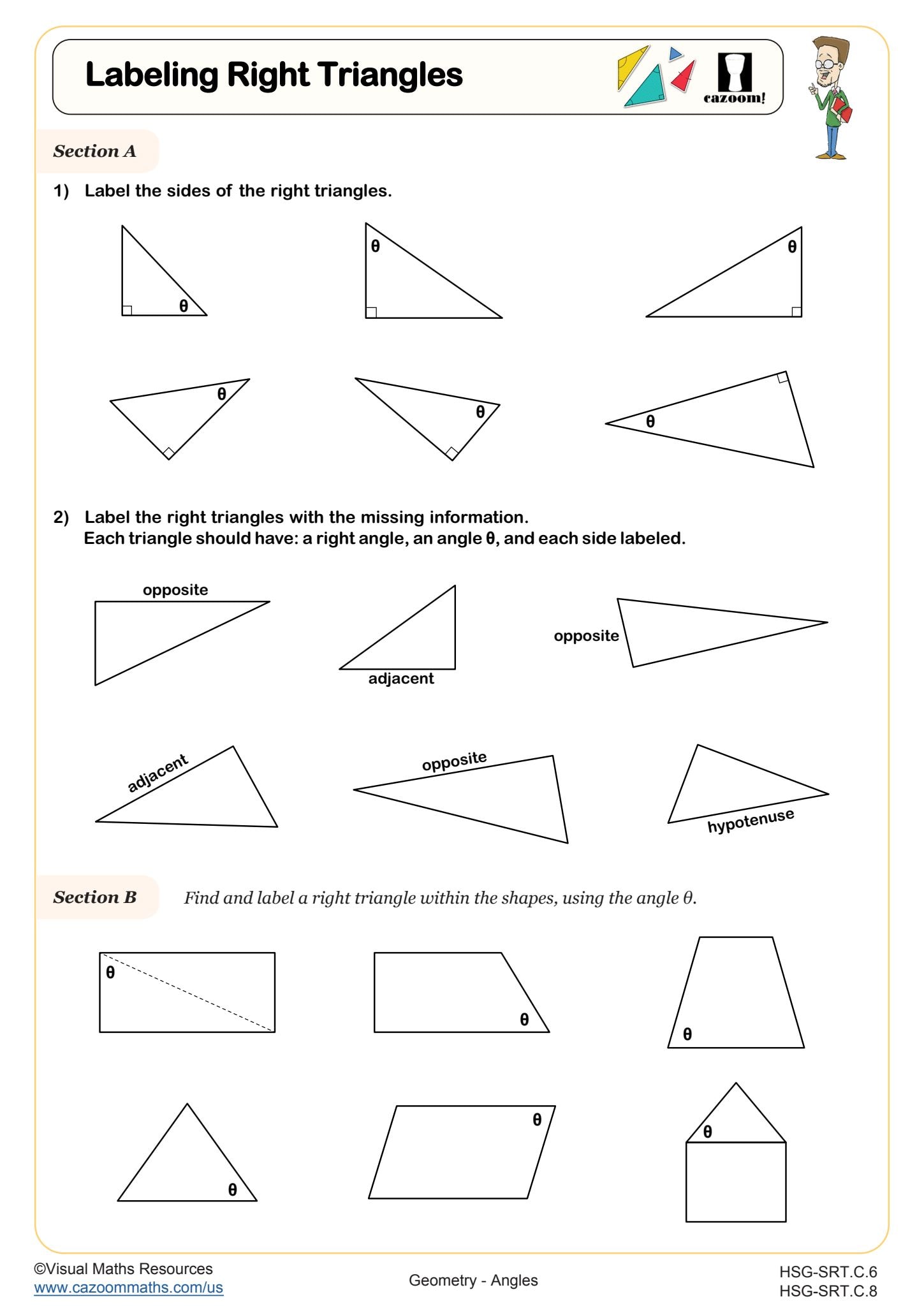
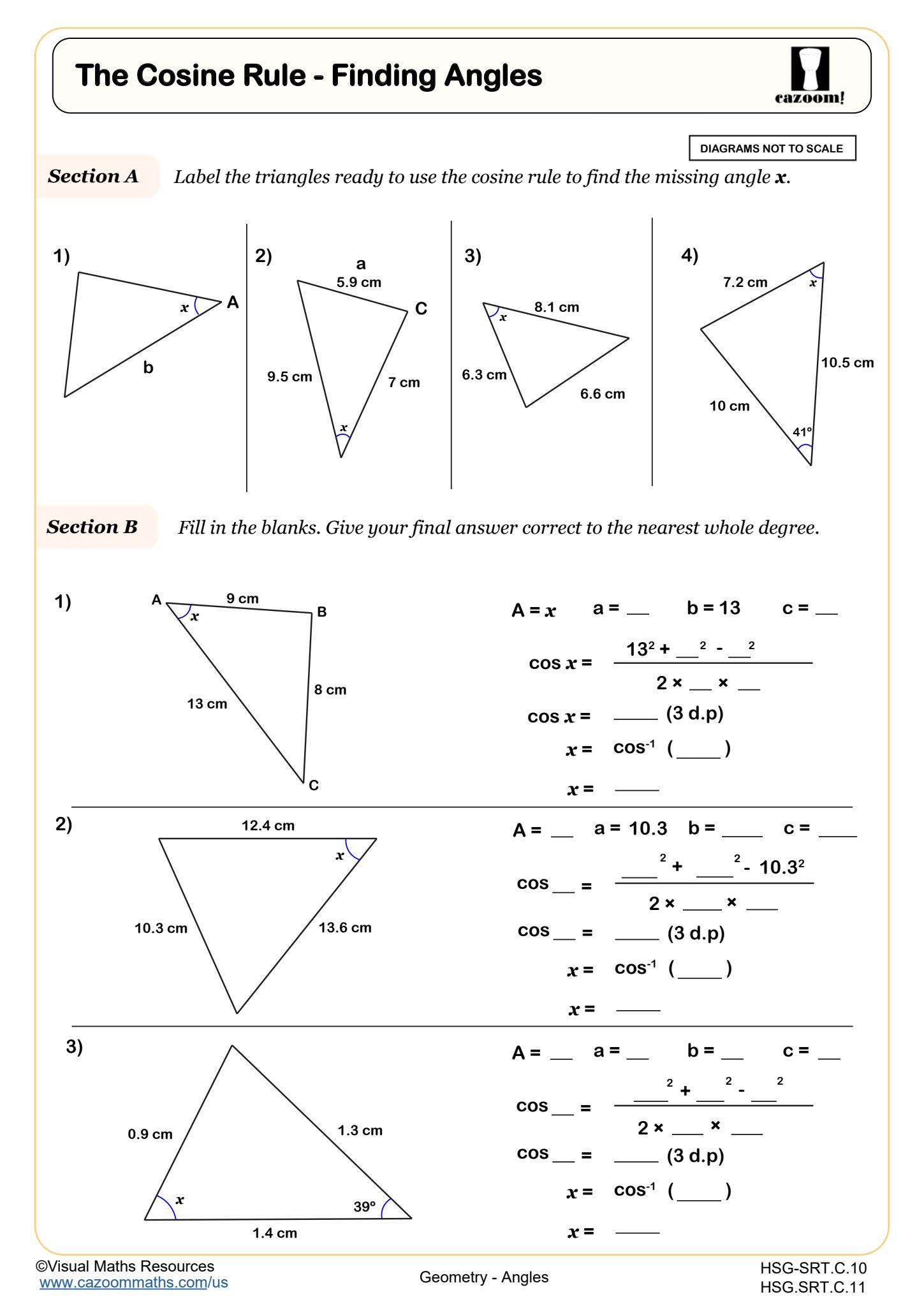
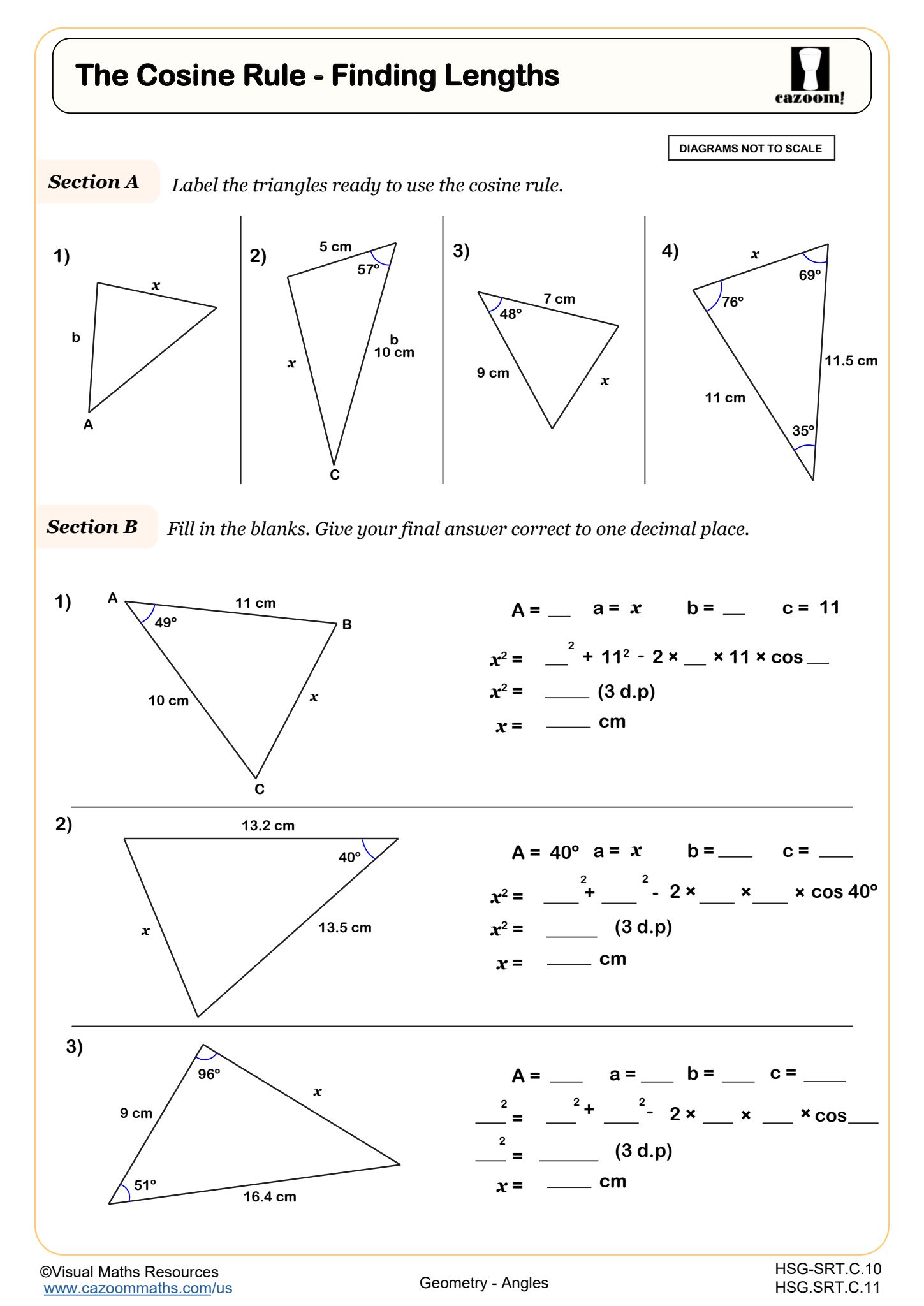
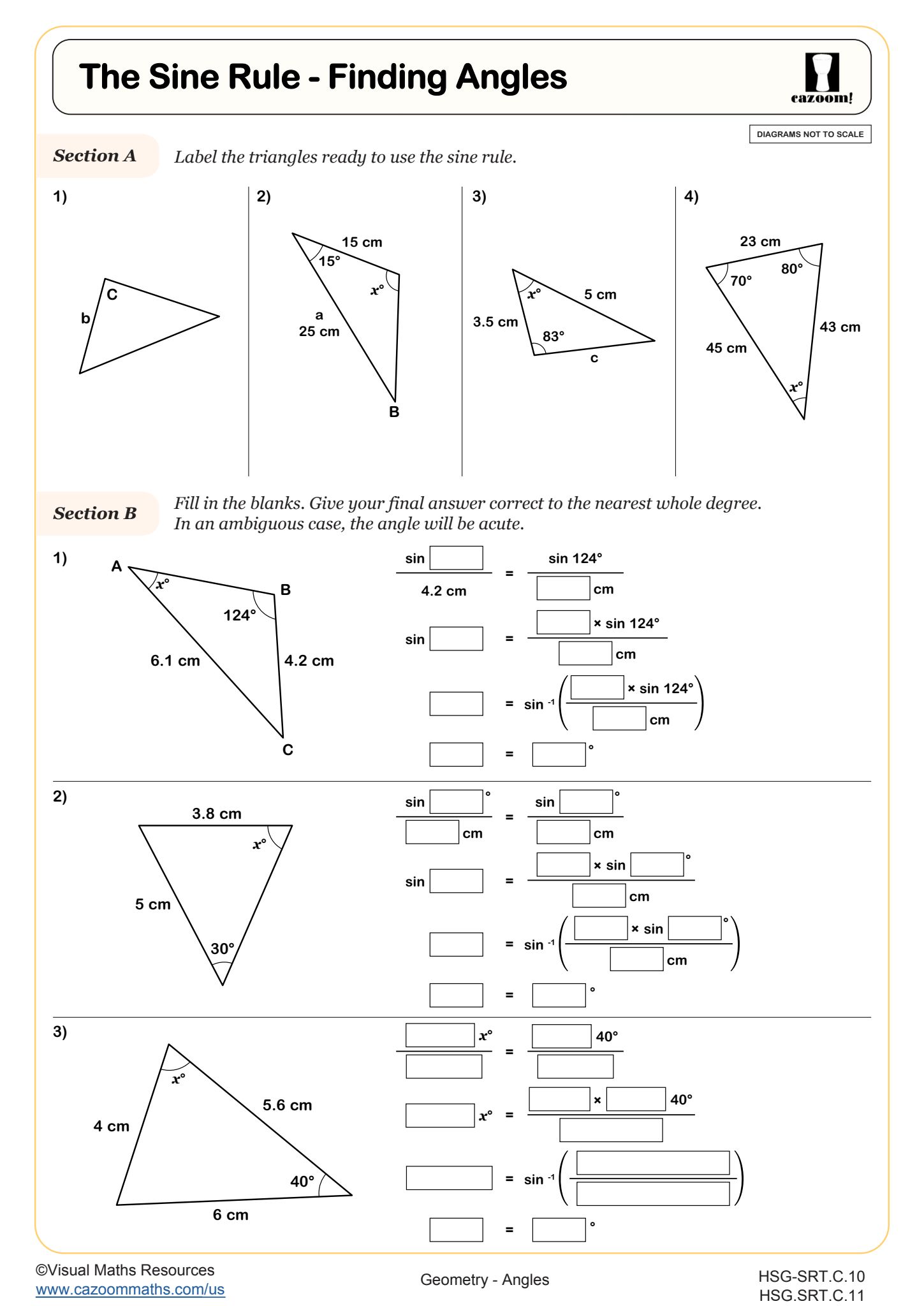
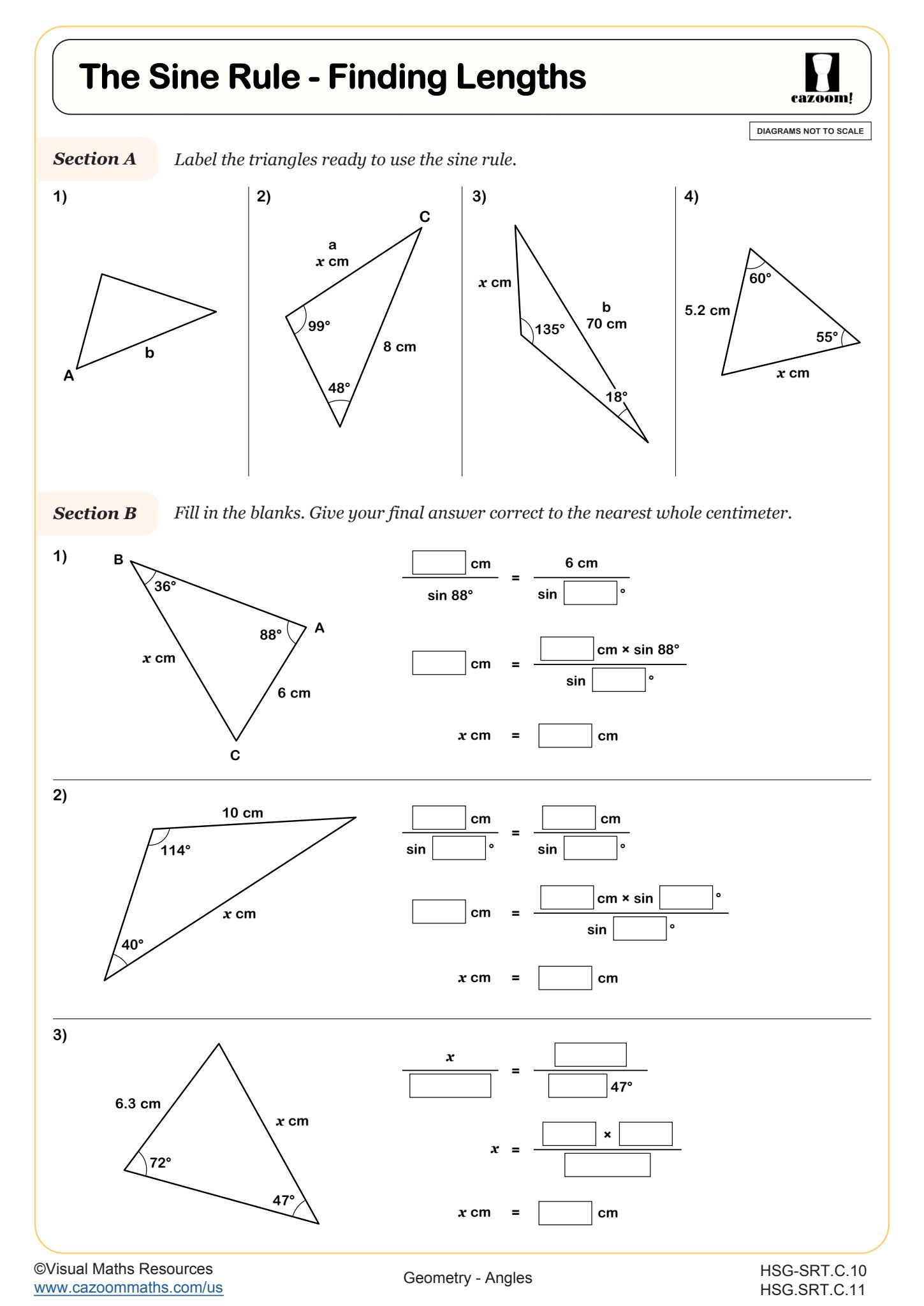
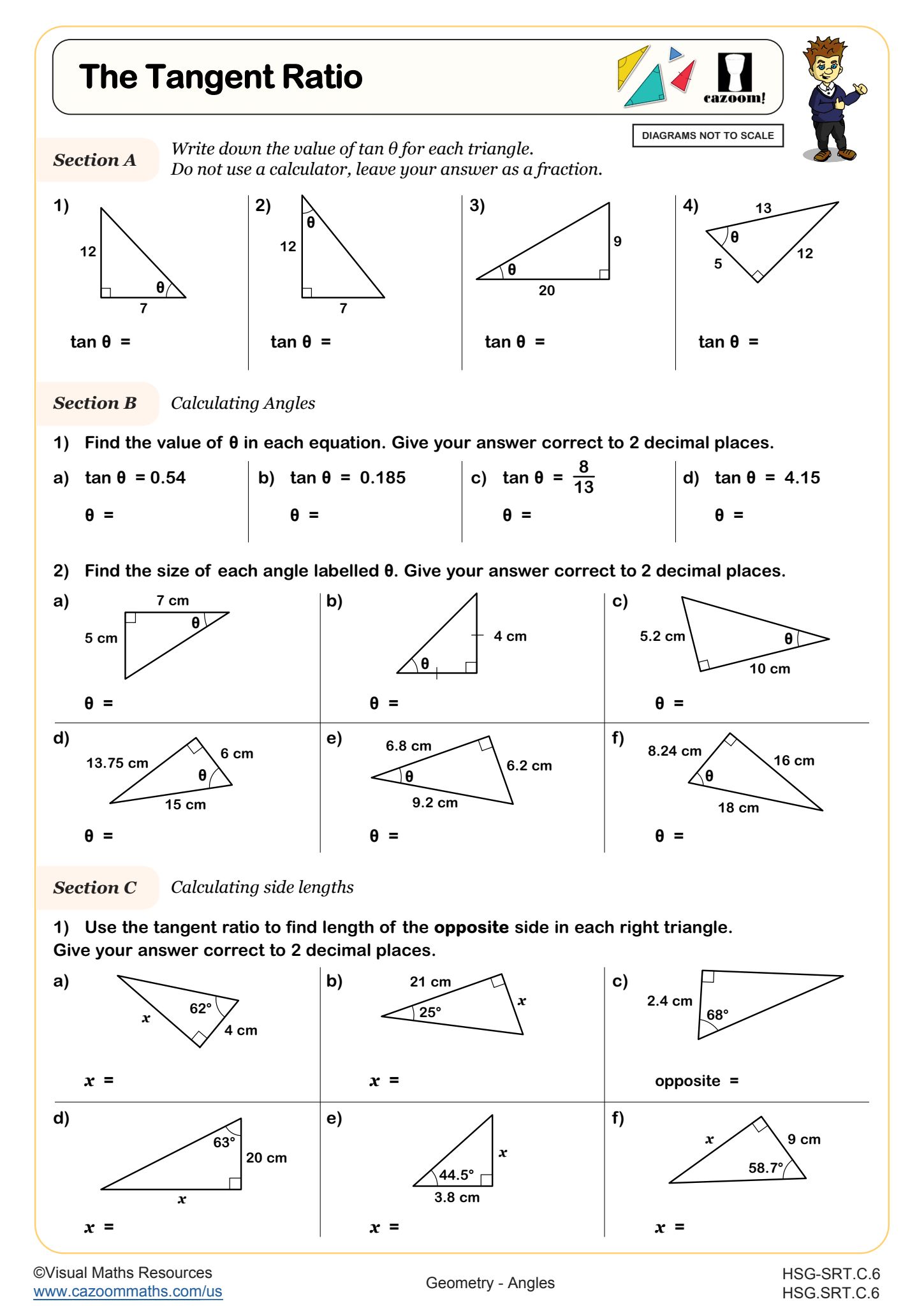
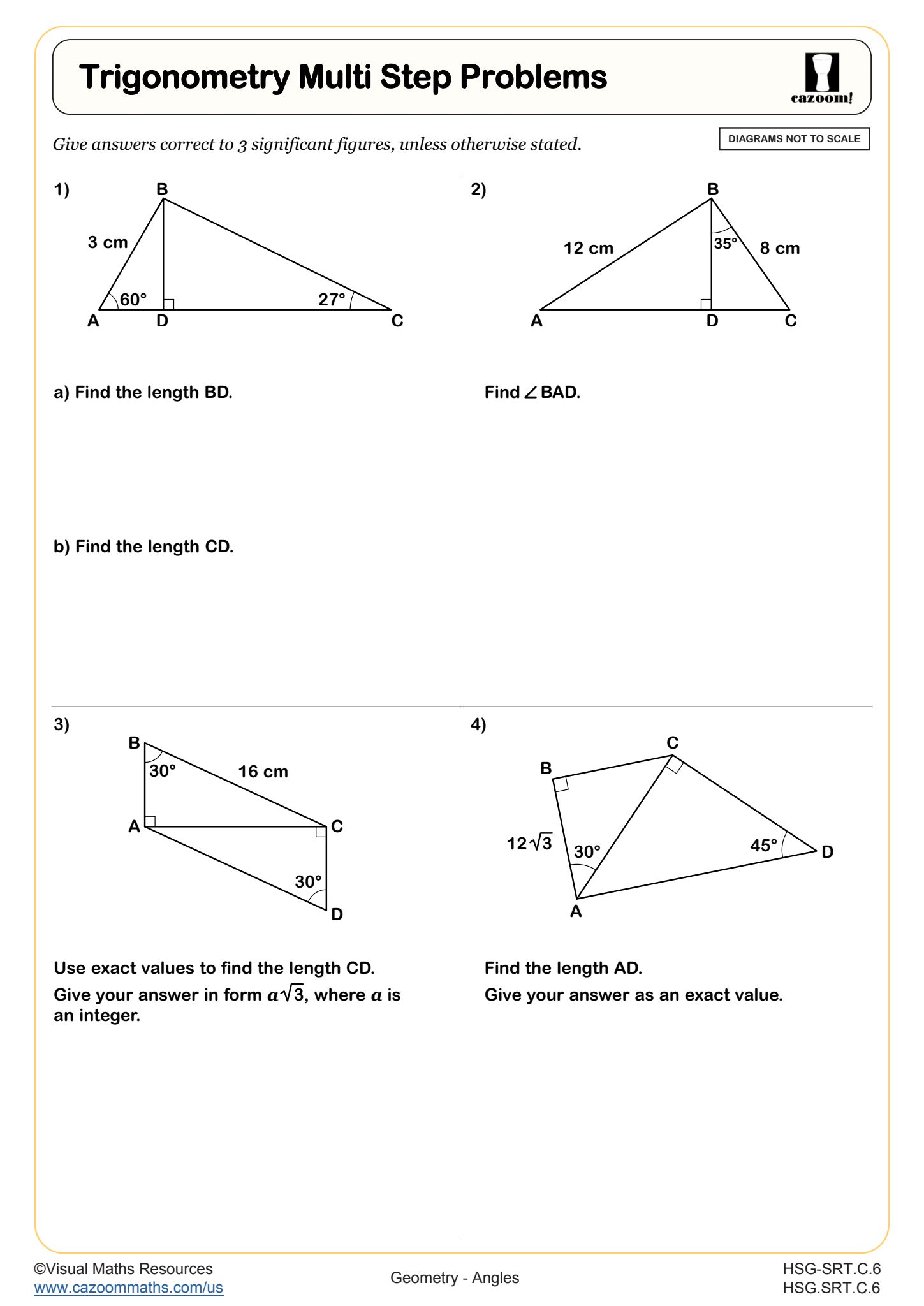
All worksheets are created by the team of experienced teachers at Cazoom Math.
What Are the Different Types of Angles Students Learn?
Students classify angles based on their measure: acute angles (less than 90°), right angles (exactly 90°), obtuse angles (between 90° and 180°), straight angles (exactly 180°), and reflex angles (between 180° and 360°). High school geometry courses expect students to identify these classifications instantly and apply proper notation when labeling angles using three points or single letters.
A common error occurs when students confuse obtuse and reflex angles, particularly when working with diagrams that don't clearly show which angle is being referenced. Teachers notice that students lose points on standardized tests when they measure the smaller angle instead of its reflex counterpart, or when they fail to recognize that complementary angles must both be acute. Practice with varied diagram orientations helps students develop the spatial reasoning needed to identify angles correctly regardless of their position on the page.
What Grade Level Studies Lines and Angles?
These worksheets align with high school geometry coursework, typically taught in grades 9 or 10 depending on student math pathways. While students encounter basic angle concepts in middle school, high school geometry formalizes the language, notation, and measurement techniques that underpin formal proofs and construction methods required by state standards.
The progression moves from concrete measurement and classification skills toward abstract reasoning about angle relationships. Students begin by mastering protractor use and proper notation, then apply these skills when working with parallel lines cut by transversals, polygon angle sums, and circle theorems. Teachers find that students who struggle with basic angle vocabulary and measurement in early geometry units continue to face challenges throughout the course, making early mastery particularly important for long-term success.
How Do Students Use Compass and Protractor Tools Effectively?
Geometric construction tools require specific techniques that many students haven't practiced since middle school. The compass creates circles and arcs with a fixed radius, while the protractor measures angles by aligning its baseline with one ray and reading where the second ray intersects the degree scale. Students must understand that protractors typically have two scales (inner and outer), requiring them to determine which scale corresponds to their angle's orientation.
Architects and engineers rely on these same construction principles when creating technical drawings and blueprints. CAD software replicates compass and straightedge constructions digitally, but understanding the manual process helps students grasp why certain geometric relationships exist. Surveyors use angle measurement to map property boundaries, and machinists apply geometric constructions when fabricating parts that must fit together precisely. Students confidently tackle construction proofs once they recognize that every compass-and-straightedge method creates reproducible geometric relationships based on circle properties.
How Can Teachers Use These Worksheets in Geometry Class?
The worksheets build skills through graduated practice, starting with basic angle identification and measurement before progressing to more complex applications involving angle relationships and construction techniques. Answer keys allow students to self-check their protractor measurements and verify their understanding of angle notation, providing immediate feedback that helps them correct measurement errors before they become habits.
Teachers use these resources for differentiated instruction when students enter geometry with varied preparation levels. The protractor practice sheets work well for students who need additional measurement review before tackling proof-based units, while angle naming worksheets reinforce the precise vocabulary required for formal geometric arguments. Many teachers assign specific worksheets as homework after introducing new angle concepts, then use class time for collaborative problem-solving that builds on these foundational skills. The resources also support intervention when formative assessments reveal gaps in students' understanding of basic geometric terminology.