Geometry Scale & Loci Worksheets
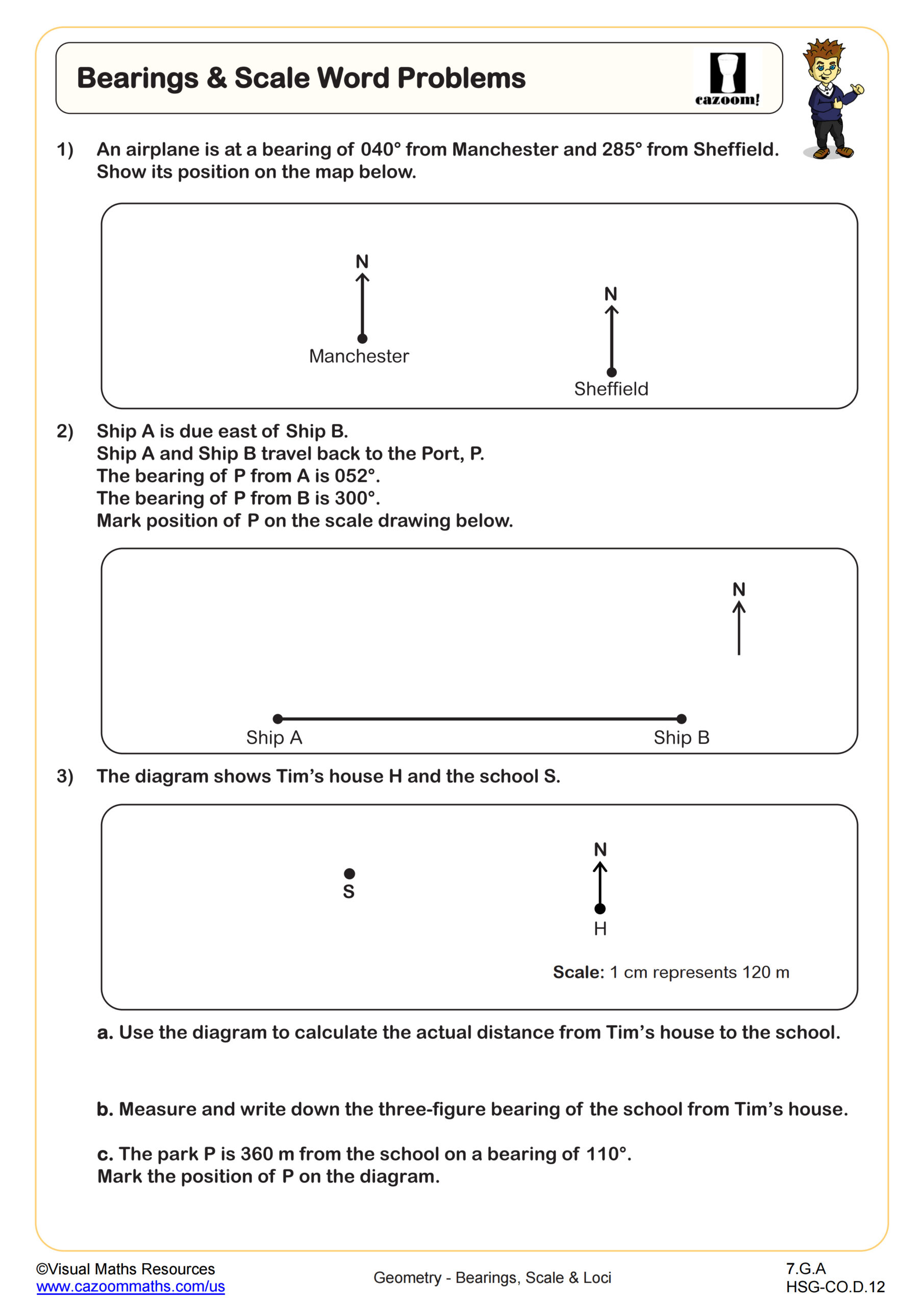
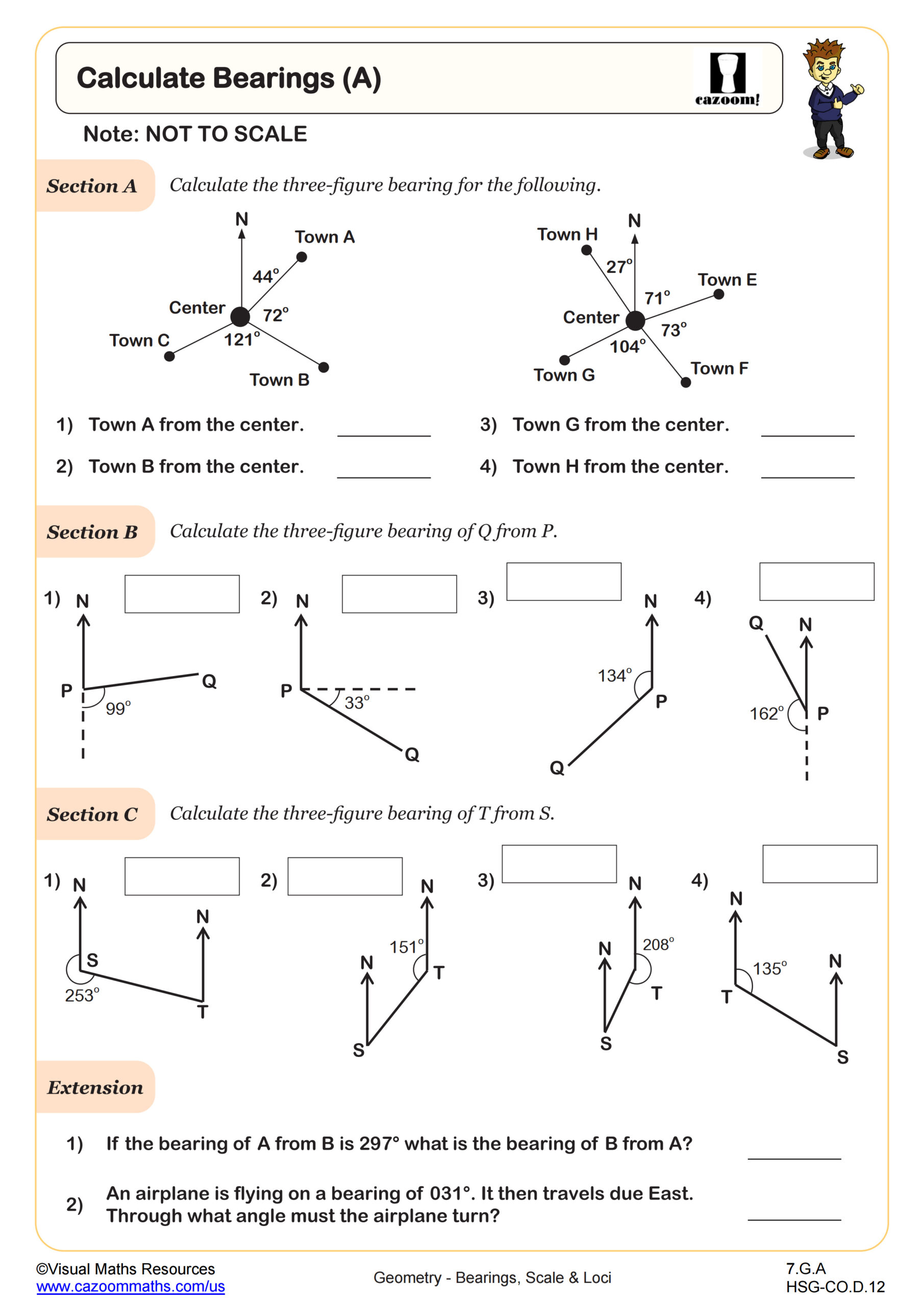
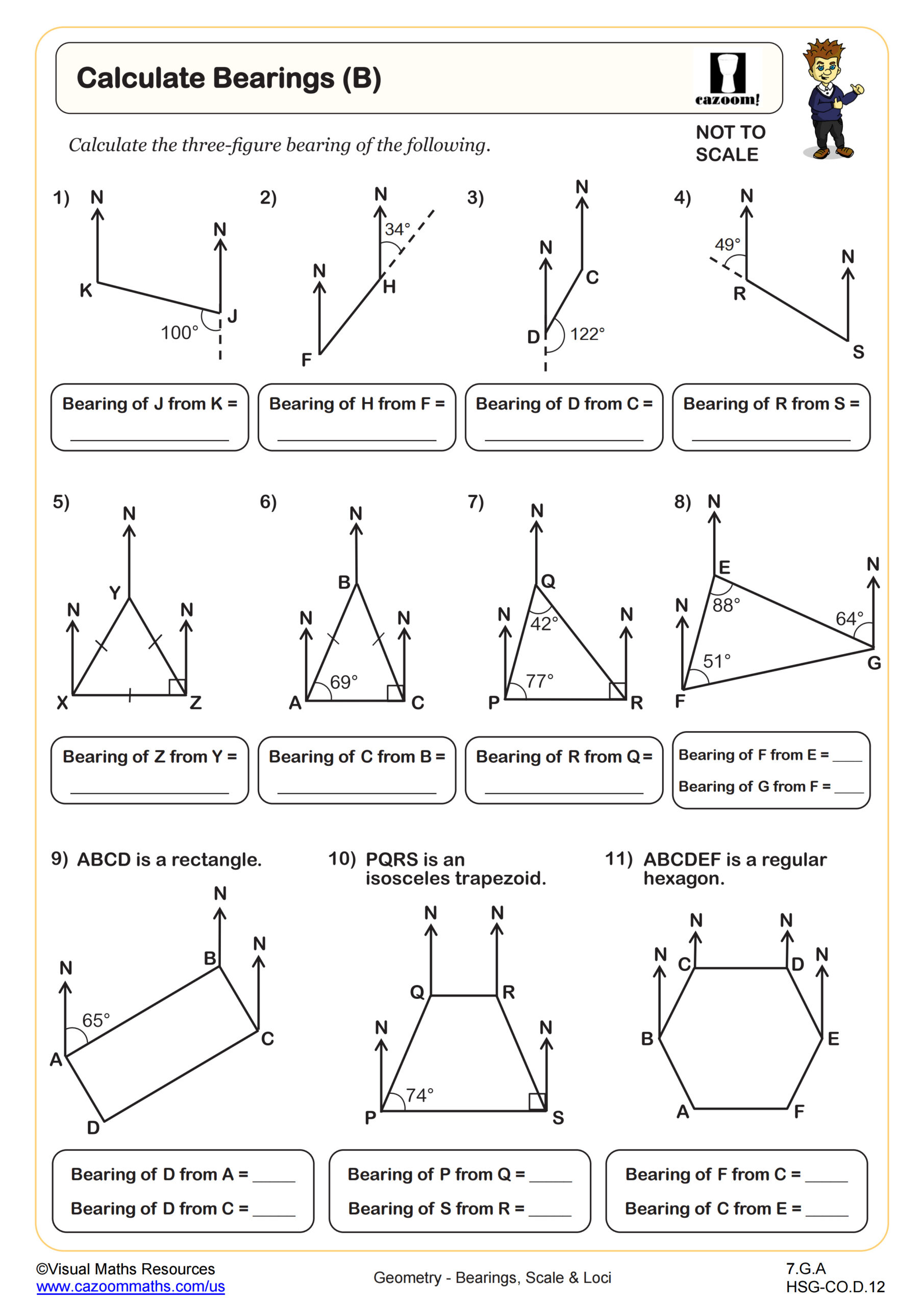
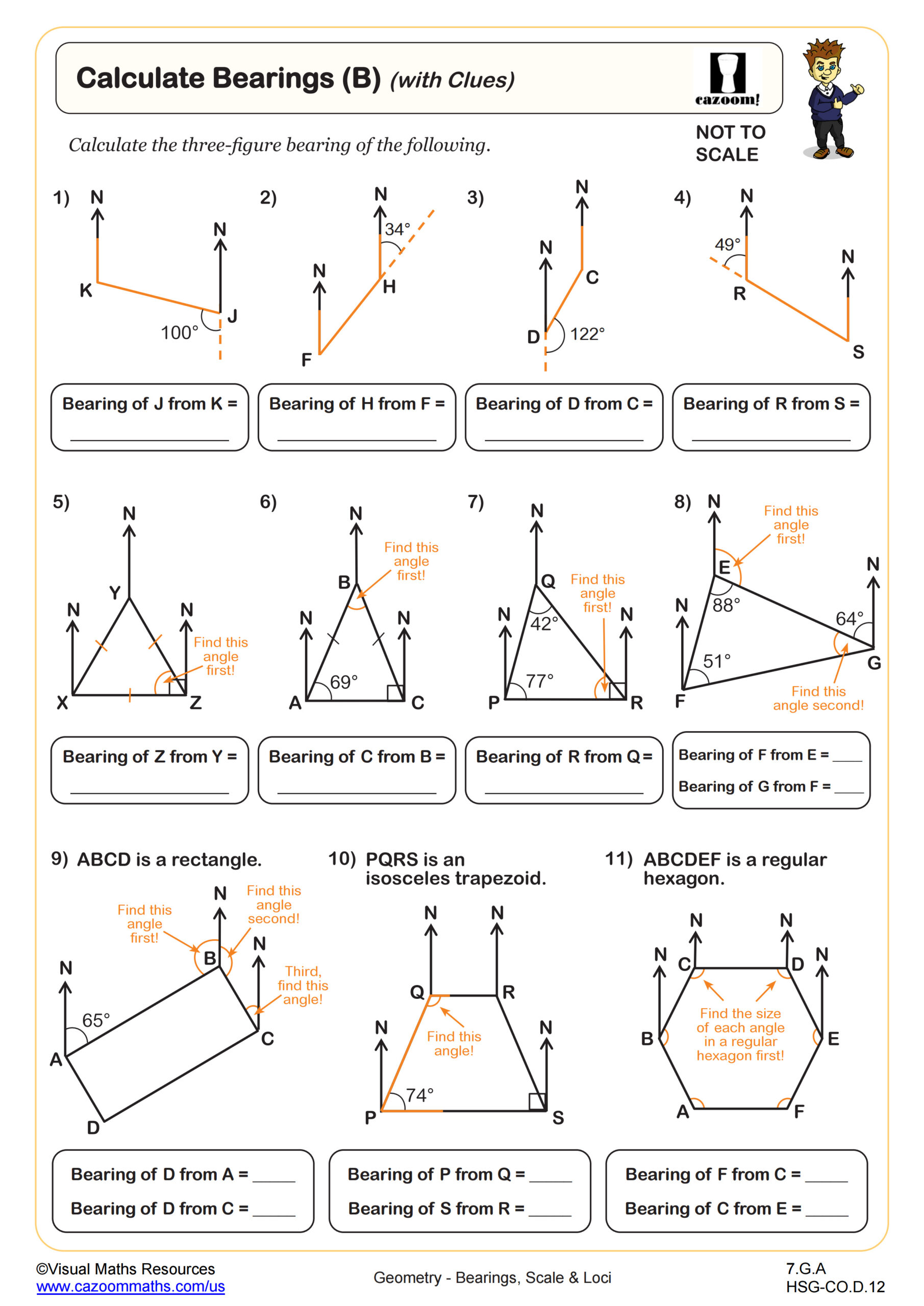
All worksheets are created by the team of experienced teachers at Cazoom Math.
What are scale and loci in geometry?
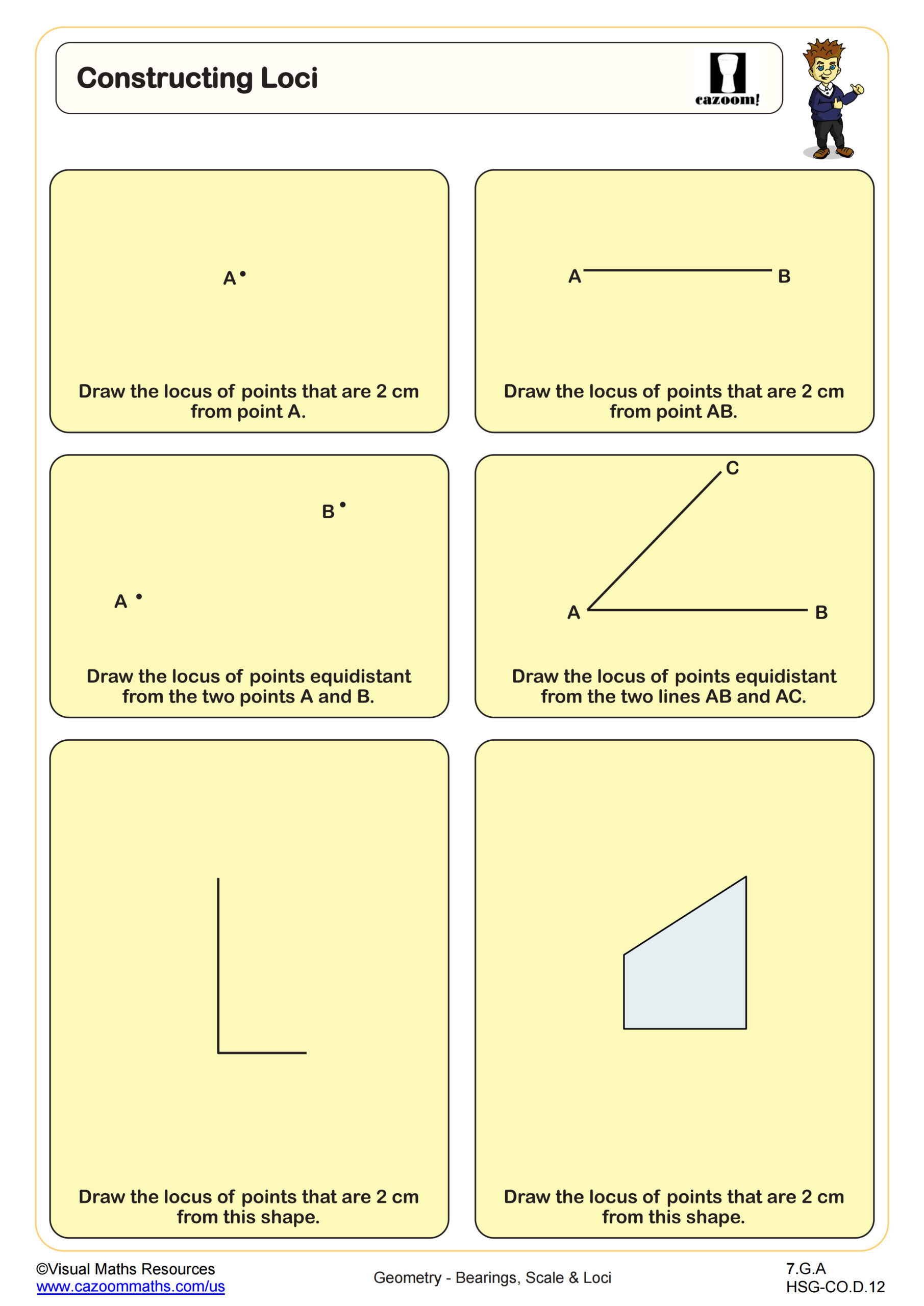
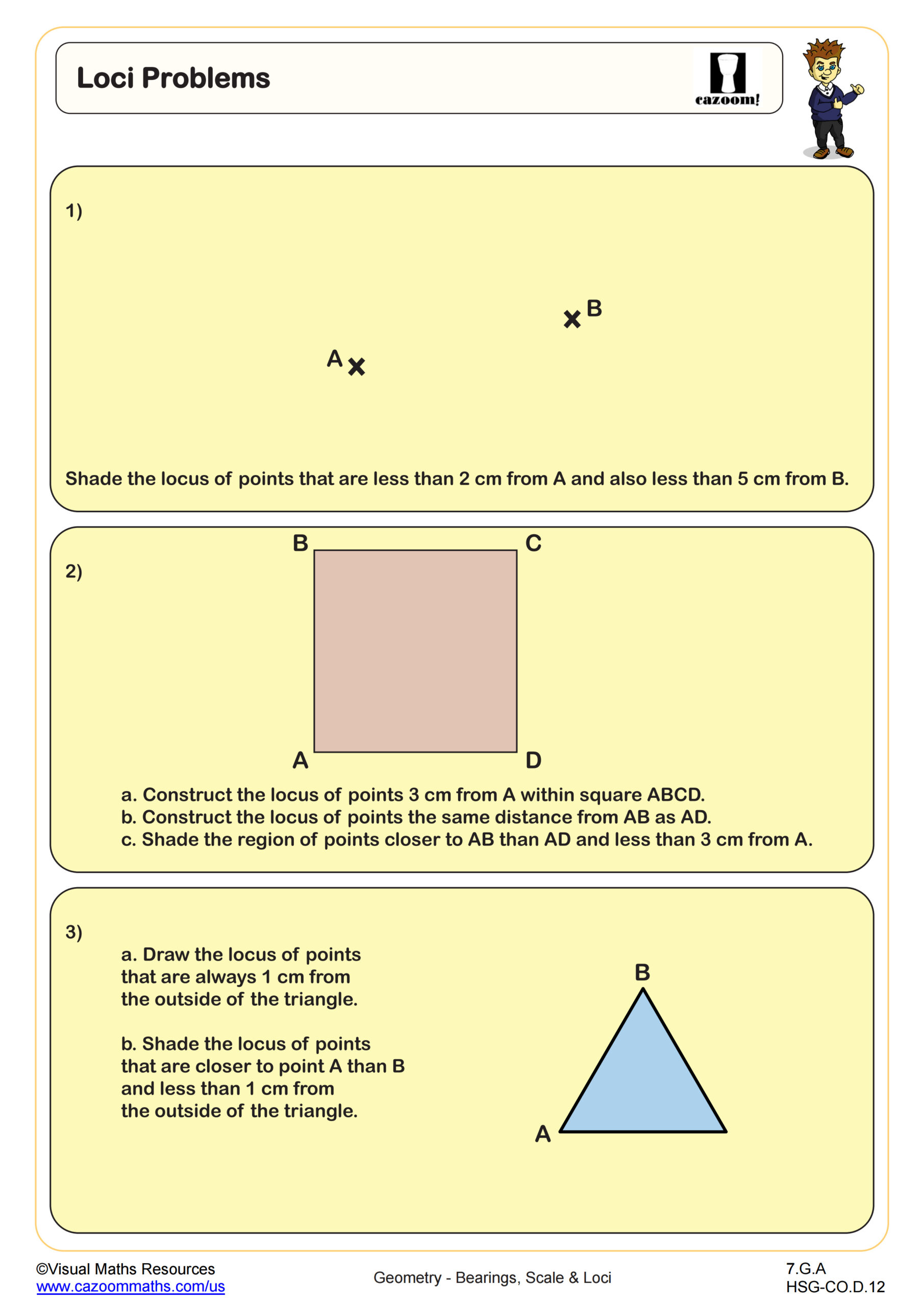
Scale involves creating proportional representations of distances and measurements, while loci (plural of locus) refers to the set of all points satisfying specific conditions or geometric rules. In geometry courses, students learn to interpret scale drawings, convert between actual and scaled measurements, and construct loci such as the perpendicular bisector of a line segment, points equidistant from two points, or regions within a certain distance from a fixed point. These concepts connect directly to Common Core geometry standards requiring students to apply geometric methods to solve design problems.
Students typically struggle when problems combine both concepts, requiring them to first interpret a scale drawing and then construct a locus on that scaled diagram. A common error occurs when students forget to apply the scale factor before measuring distances for locus construction, resulting in accurate geometric work but incorrect final answers because they measured in the wrong units.
What grade level covers scale and loci worksheets?
These worksheets target high school geometry courses, where students encounter bearings, loci construction, and scale applications as part of their study of transformations, constructions, and applied geometry. While middle school students work with basic scale drawings and proportional reasoning, the formal study of loci and three-figure bearings appears in high school geometry alongside compass-and-straightedge constructions and coordinate geometry applications.
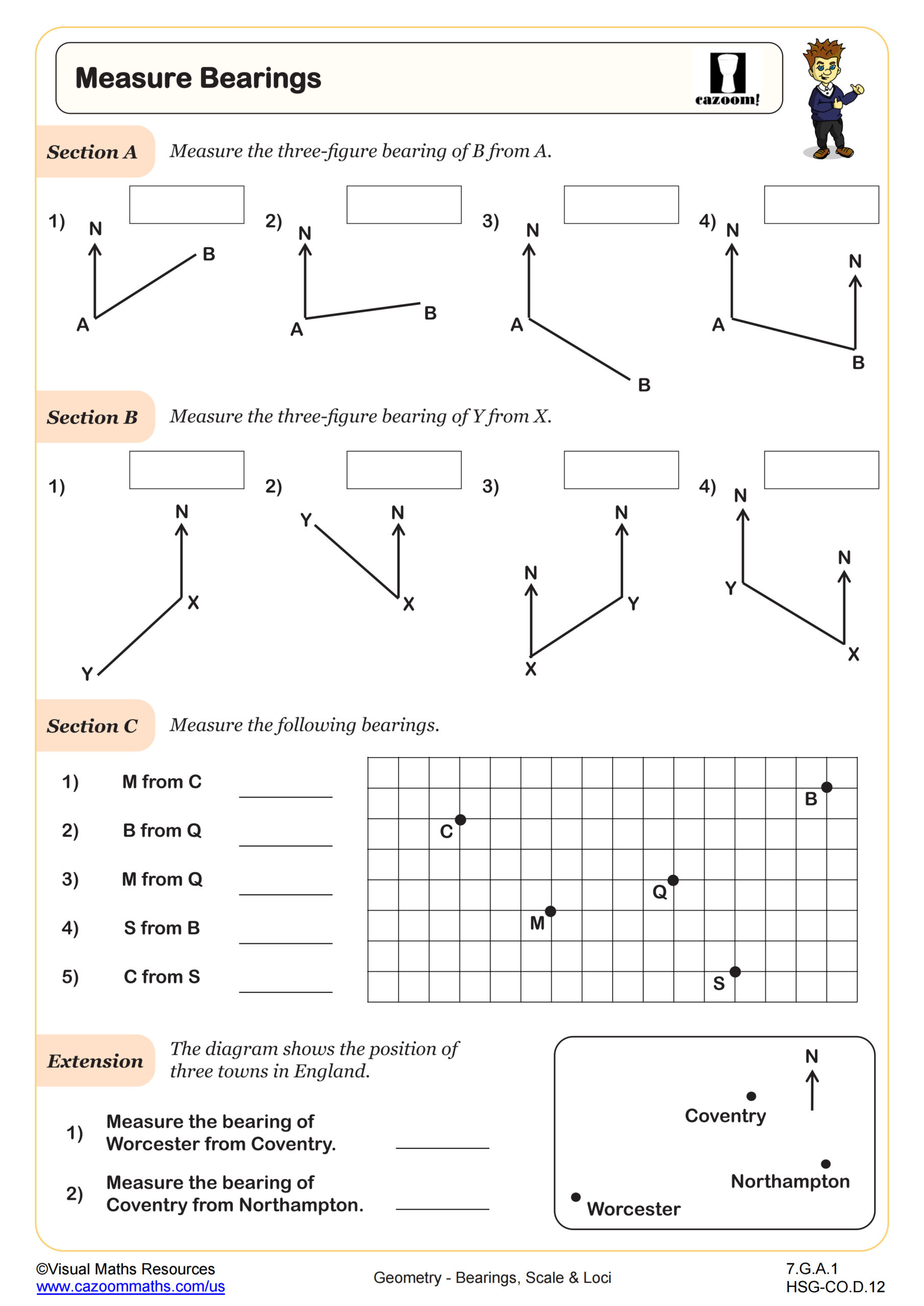
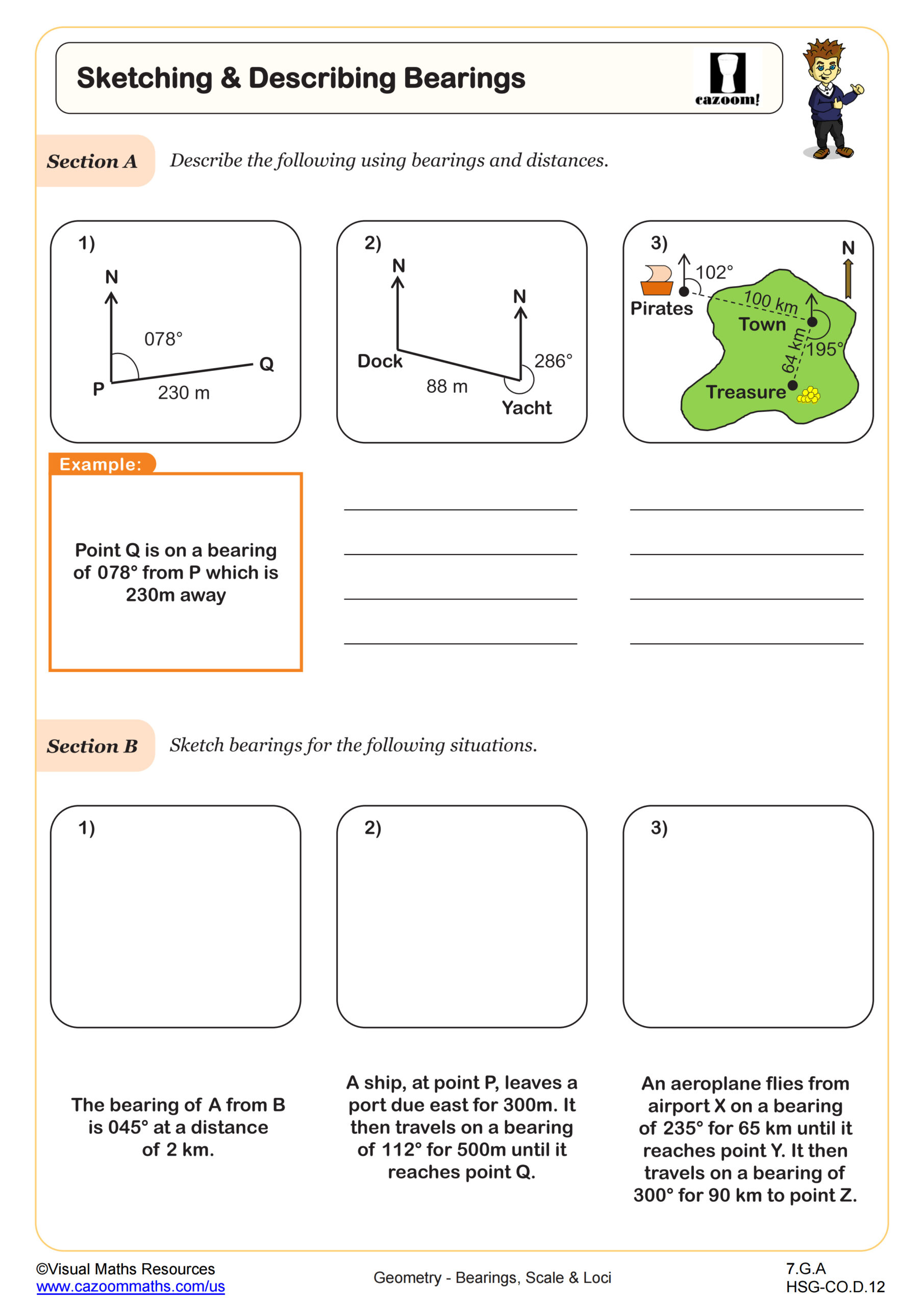
The progression within this collection moves from calculating basic bearings between two points to more complex problems involving clues and multi-step reasoning, then advances to constructing various types of loci using geometric tools. Word problems combining bearings with scale require students to synthesize multiple skills, representing the most challenging application that often appears on geometry assessments and standardized tests.
How do you calculate three-figure bearings?
Three-figure bearings measure direction as an angle from 0° to 360°, always starting from north and moving clockwise. Students must always express bearings using three digits (writing 045° instead of 45°, for example) and measure angles from the north line at the starting point. To find a bearing from point A to point B, students draw or imagine a north line at point A, then measure the clockwise angle to the line connecting A to B. Reverse bearings require adding or subtracting 180° from the original bearing, a calculation where many students lose points by forgetting to adjust answers that fall outside the 0° to 360° range.
Pilots, ship captains, and land surveyors rely on bearing calculations daily to navigate routes and establish property boundaries. GPS technology uses bearing and distance data to track movement and provide directions, while engineers apply these same principles when designing roads, planning construction sites, or mapping terrain features on scaled diagrams.
How do these worksheets help students master scale and loci?
The worksheets build skills progressively, starting with straightforward bearing calculations before introducing problems with additional clues that require logical reasoning and spatial visualization. Loci construction exercises provide opportunities for hands-on practice with compass and straightedge, reinforcing precision and geometric thinking. The bearing and scale word problems integrate multiple skills, helping students see how these concepts work together in applied contexts rather than as isolated procedures.
Teachers use these worksheets for differentiated instruction, assigning basic bearing calculations to students who need foundational practice while challenging advanced students with multi-step word problems. The answer keys make them particularly valuable for independent work, homework assignments, or math centers where students can self-check their constructions and calculations. Many teachers find that having students work in pairs on loci construction problems encourages discussion about geometric properties and helps students catch measurement errors before finalizing their work.