Geometry Units and Dimensions Worksheets
All worksheets are created by the team of experienced teachers at Cazoom Math.
What Are Units and Dimensions in Geometry?
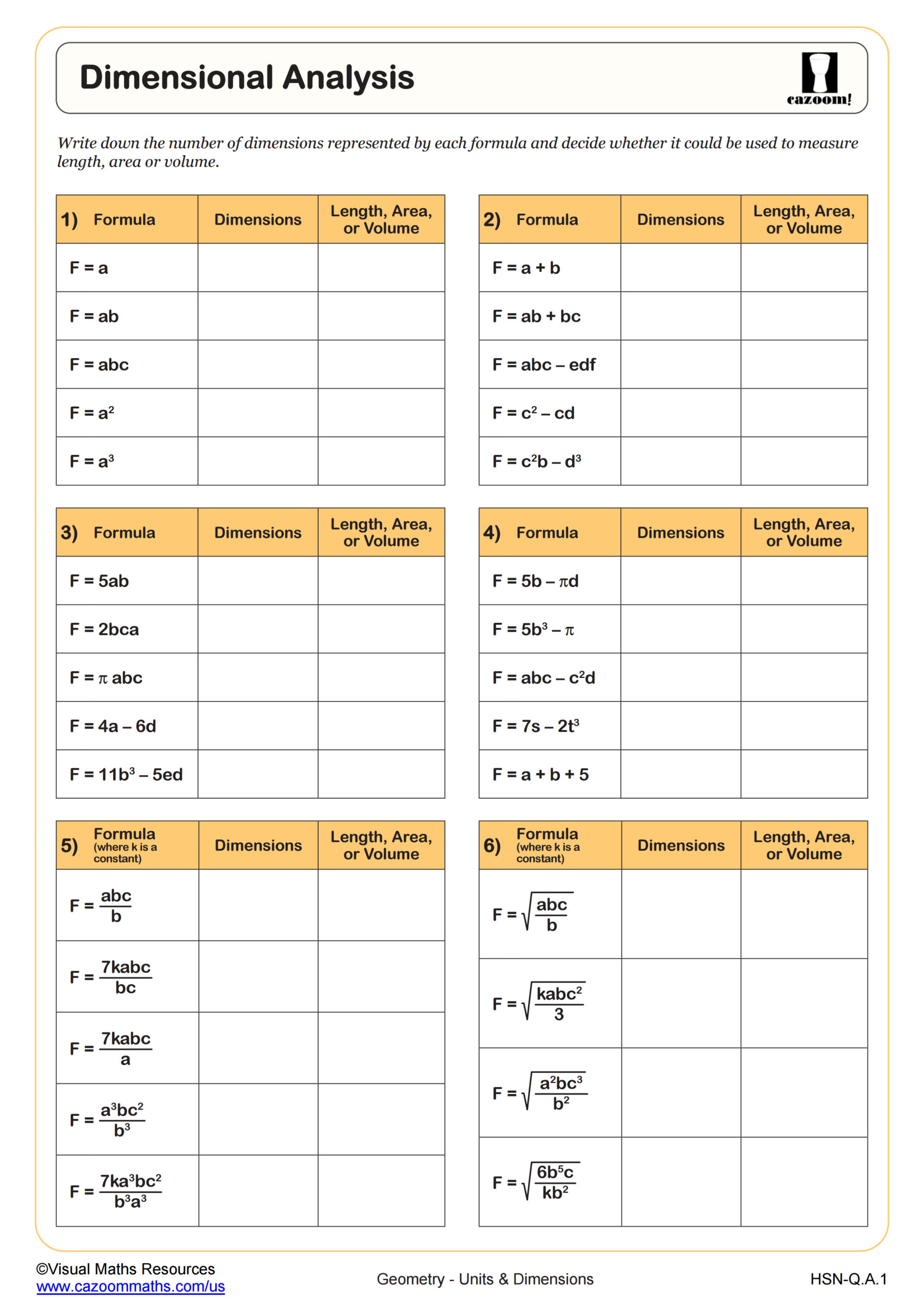
Units and dimensions in geometry refer to the measurements used to quantify length, area, volume, and other geometric properties, along with the systems that organize these measurements. Students work primarily with the metric system, converting between units like millimeters, centimeters, and meters, and applying dimensional analysis to ensure measurements remain consistent across calculations. This topic connects foundational arithmetic skills to advanced problem-solving in geometry and physics.
A common misconception occurs when students treat all conversions the same way. They might correctly convert 500 centimeters to 5 meters but then incorrectly apply the same division when converting millimeters to centimeters. Teachers frequently see students lose points on standardized tests because they don't write out conversion factors or check whether their answer makes logical sense. Dimensional analysis provides a systematic approach that prevents these errors and transfers directly to chemistry and physics coursework.
What Grade Levels Use Units and Dimensions Worksheets?
These units and dimensions worksheets target high school geometry students, typically in grades 9-10. At this level, students build on middle school measurement foundations to tackle more complex conversions and applications that require multi-step reasoning and precision. The worksheets align with Common Core State Standards for geometric measurement and prepare students for the dimensional analysis they'll encounter in upper-level science courses.
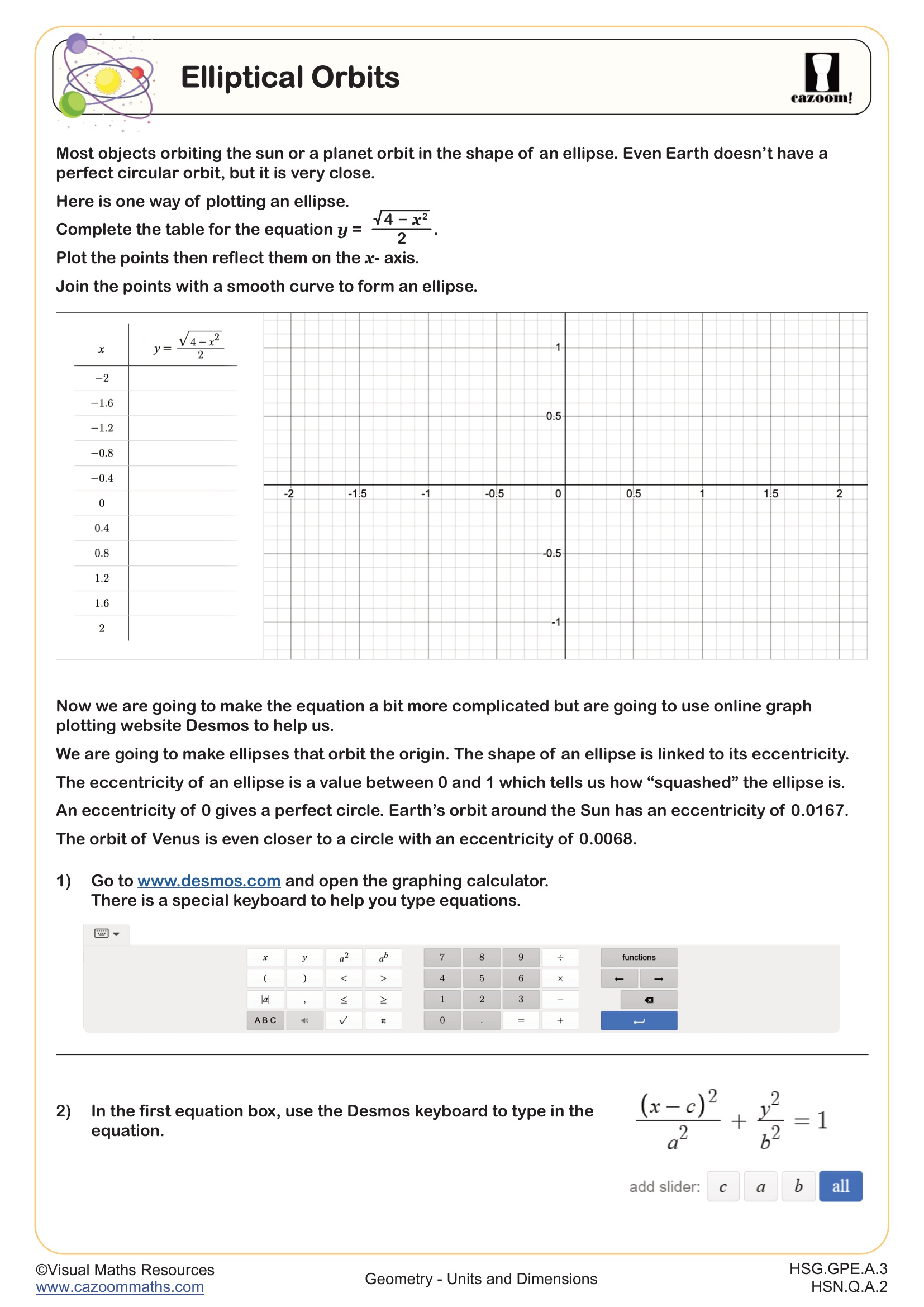
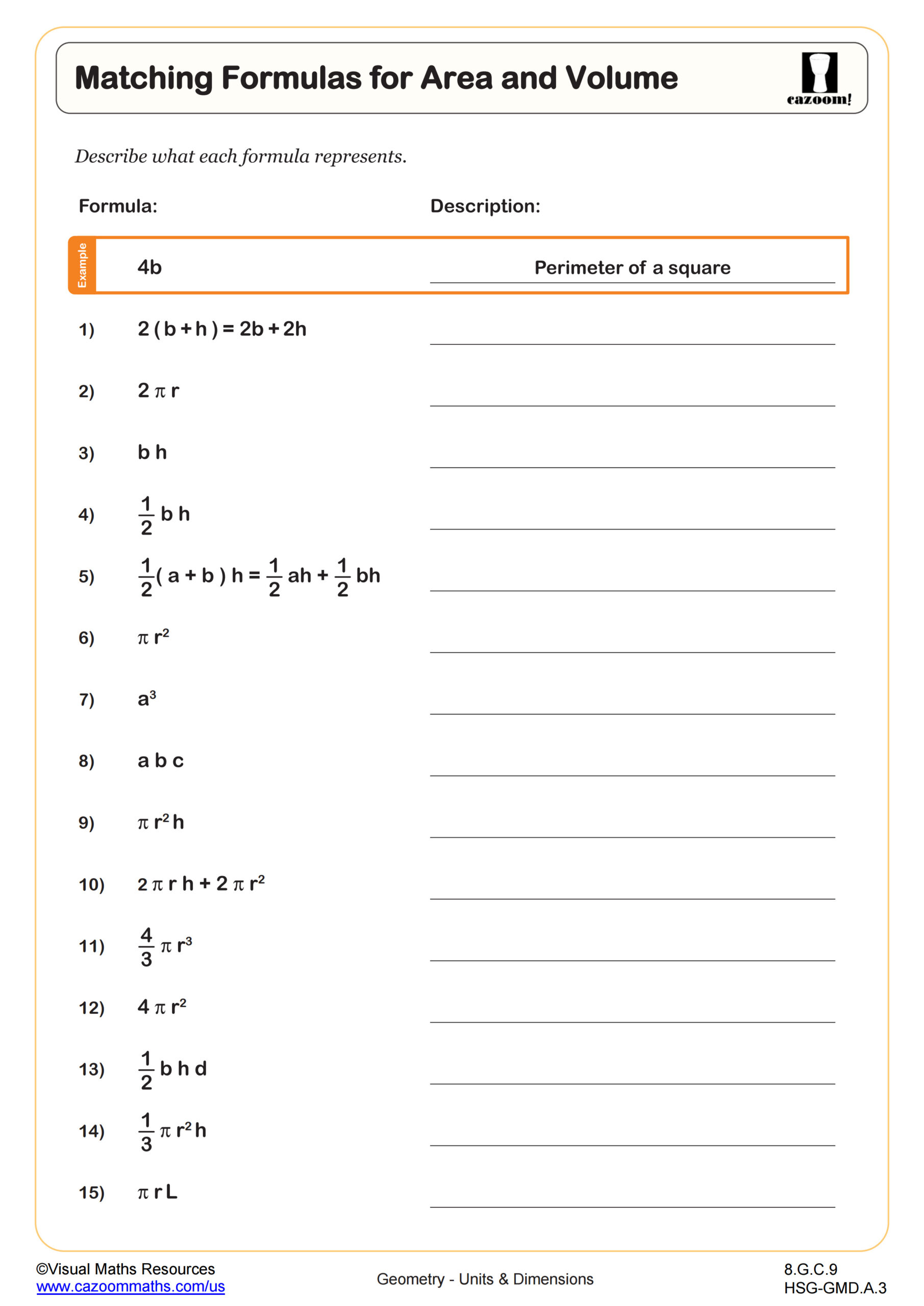
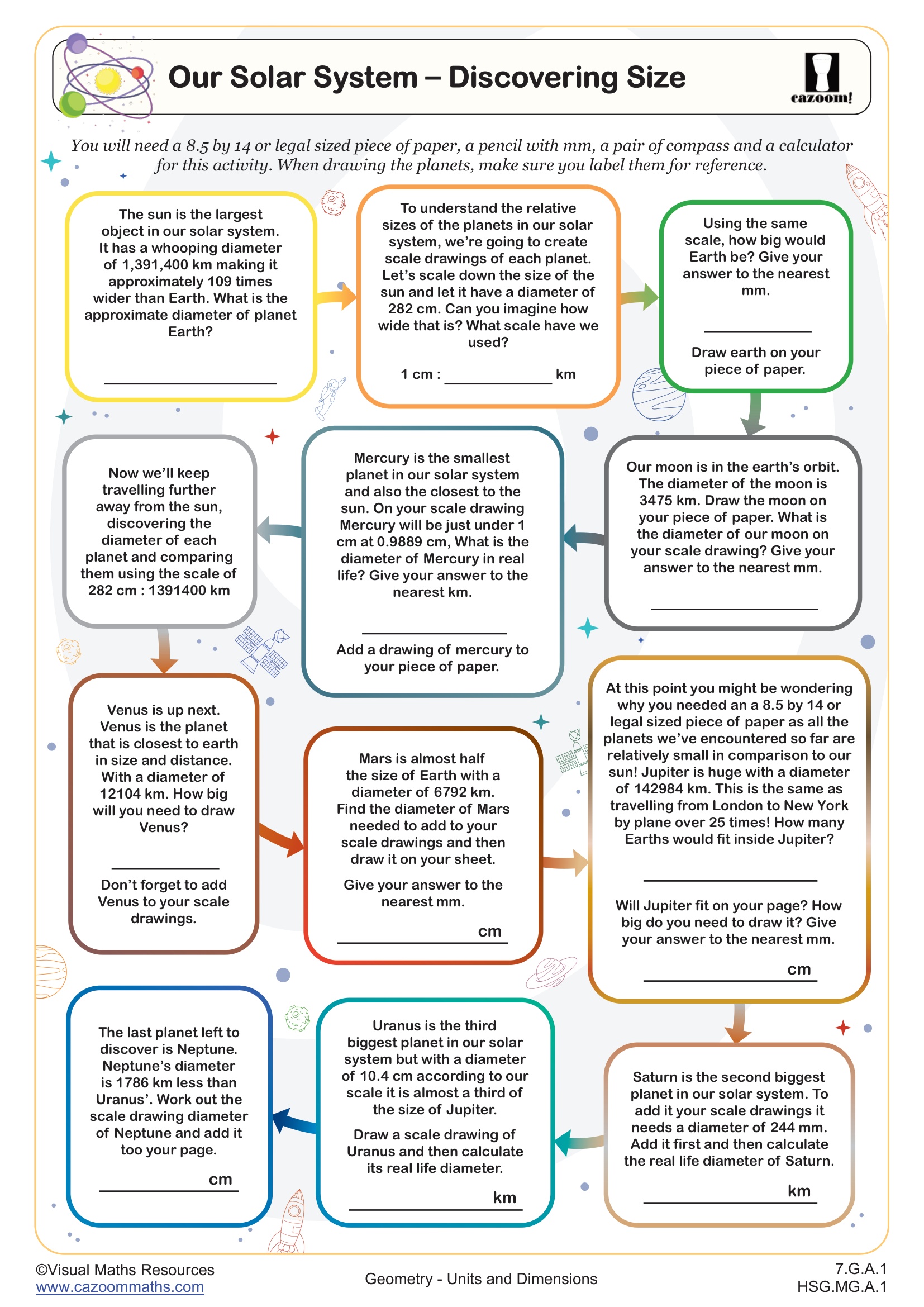
Within high school geometry, the complexity increases as students move from straightforward conversions to problems embedded in geometric contexts. Early worksheets focus on single conversions and simple addition or subtraction of measurements. Later materials challenge students with compound problems where they must convert units before performing operations, or apply conversions within formulas for area, volume, or specialized contexts like calculating parameters of elliptical orbits. This progression mirrors how measurement appears on state assessments and SAT questions.
How Do Students Convert Between Meters and Centimeters?
Converting between meters and centimeters requires understanding that one meter equals 100 centimeters. To convert meters to centimeters, students multiply by 100, moving the decimal point two places right. To convert centimeters to meters, they divide by 100, moving the decimal point two places left. Students confidently tackle these conversions once they recognize the pattern: converting to a smaller unit means getting a larger number, while converting to a larger unit yields a smaller number.
This skill connects directly to real-world STEM applications, particularly in engineering and architecture. Blueprints and technical drawings often mix units, requiring professionals to convert measurements accurately before fabricating parts or constructing buildings. In physics labs, students measure in centimeters with rulers but must convert to meters for calculations involving standard SI units. GPS technology, surveying equipment, and computer-aided design software all depend on precise unit conversions, making this seemingly simple skill essential for numerous technical careers.
How Can Teachers Use These Worksheets Effectively?
The worksheets provide scaffolded practice that progresses from isolated conversion skills to combined operations within geometric contexts. Each worksheet focuses on specific measurement relationships, allowing teachers to assign targeted practice based on student needs. The consistent structure helps students develop procedural fluency while the variety of problem types prevents rote memorization without understanding. Answer keys enable students to self-check their work and identify patterns in their errors.
Teachers commonly use these worksheets for differentiated instruction during intervention blocks or as warm-up activities to maintain skills throughout the semester. They work well for homework assignments because the answer keys allow students to verify their understanding before the next class. Many teachers find success using them for paired work, where one student solves while their partner checks the process step-by-step. The range of subtopics allows teachers to rotate through different conversion types weekly, ensuring students retain skills while building toward more complex applications in physics and advanced mathematics courses.