Geometry Volume and Surface Area Worksheets
All worksheets are created by the team of experienced teachers at Cazoom Math.
What's the difference between volume and surface area that students need to understand?
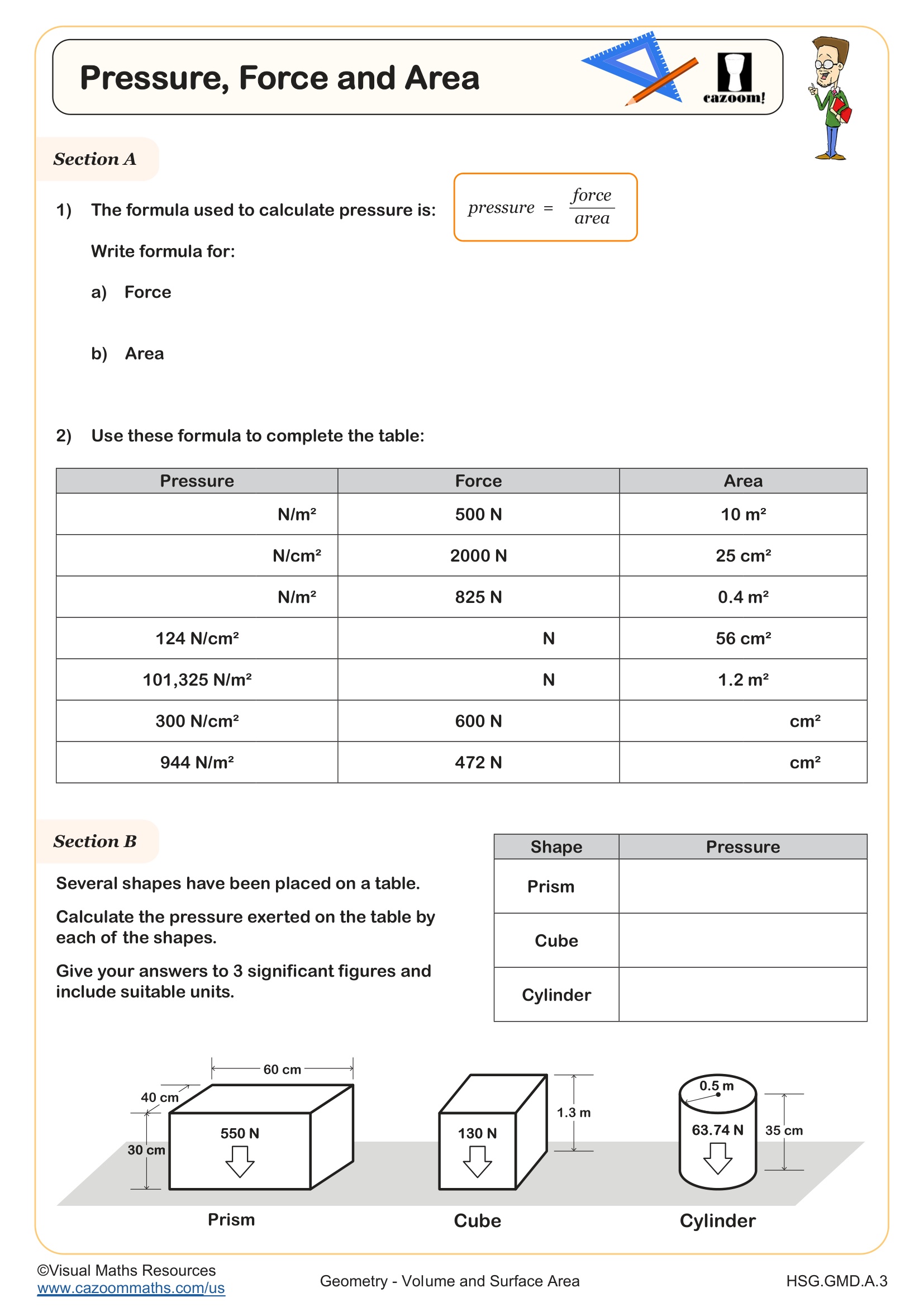
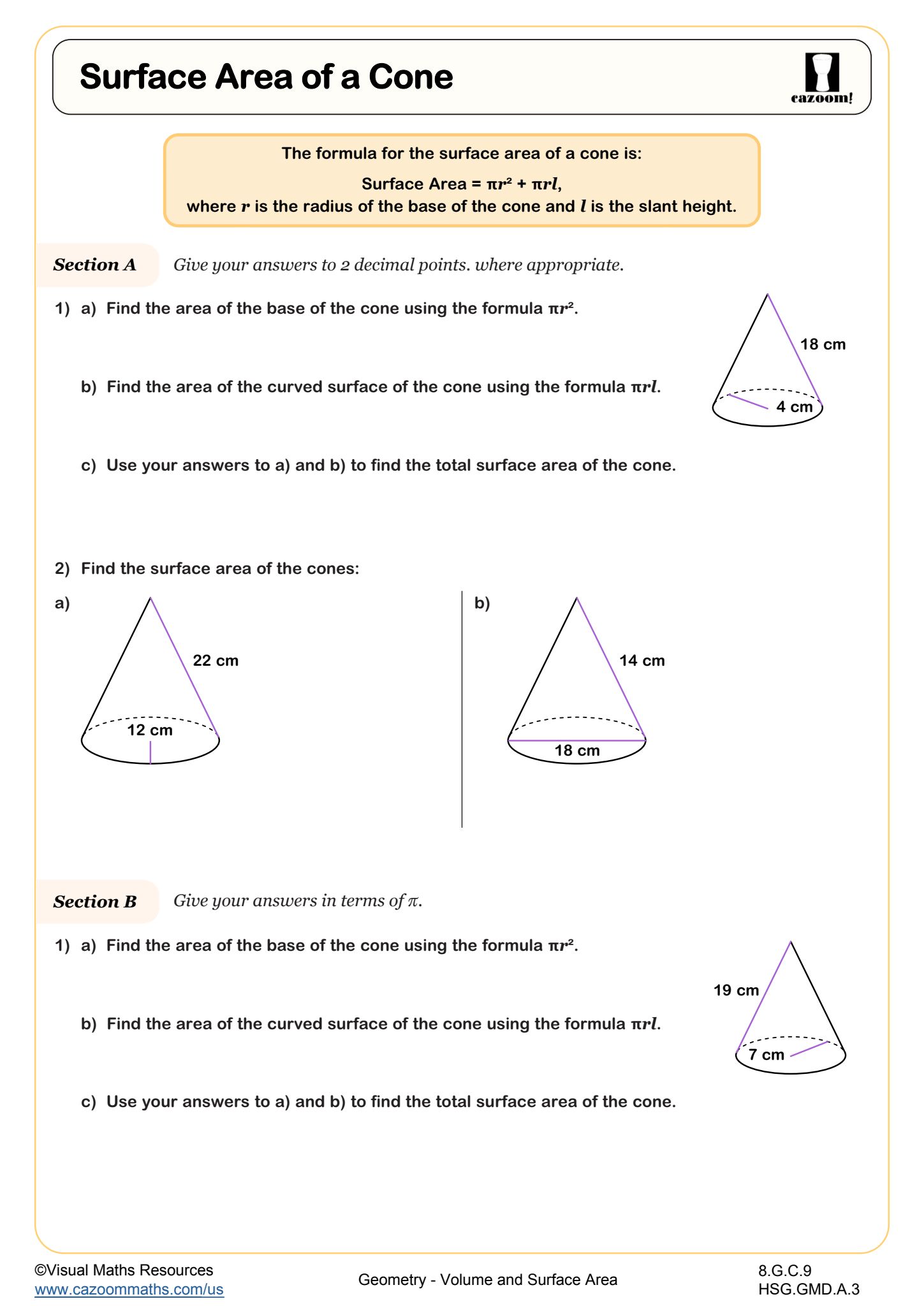
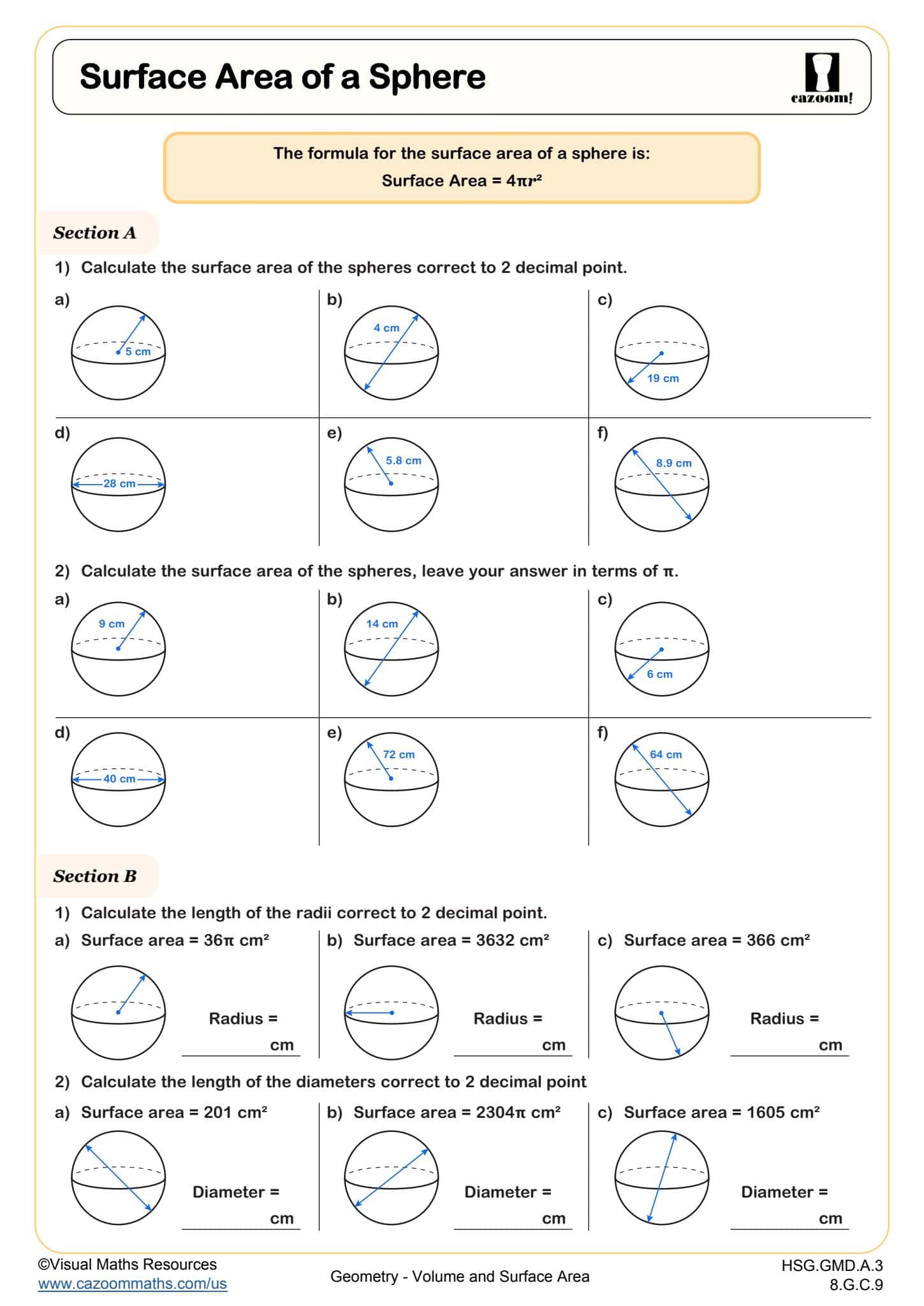
Volume measures the three-dimensional space inside a shape, expressed in cubic units, while surface area measures the total area covering the outside of a shape, expressed in square units. Understanding this distinction proves essential for geometry courses and standardized assessments, where students must select appropriate formulas and interpret results in context.
Students often lose points when they confuse units or apply the wrong formula because they haven't visualized what the problem asks. A common error involves calculating volume when the question requests surface area, particularly on word problems involving packaging or painting scenarios. Teachers find that hands-on activities with nets and physical models help students internalize that surface area involves covering the outside while volume fills the inside space.
Which grade levels use volume and surface area worksheets?
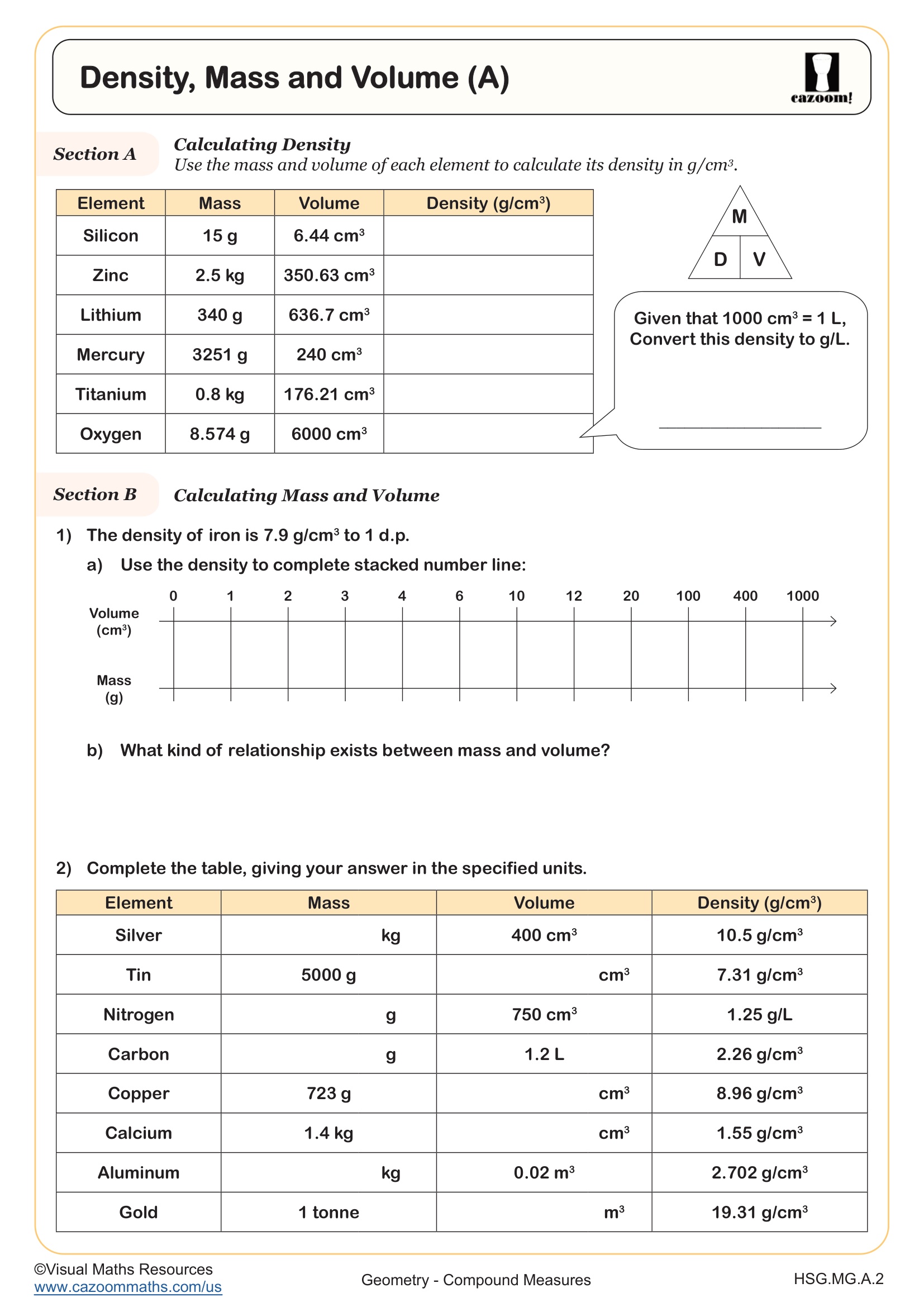
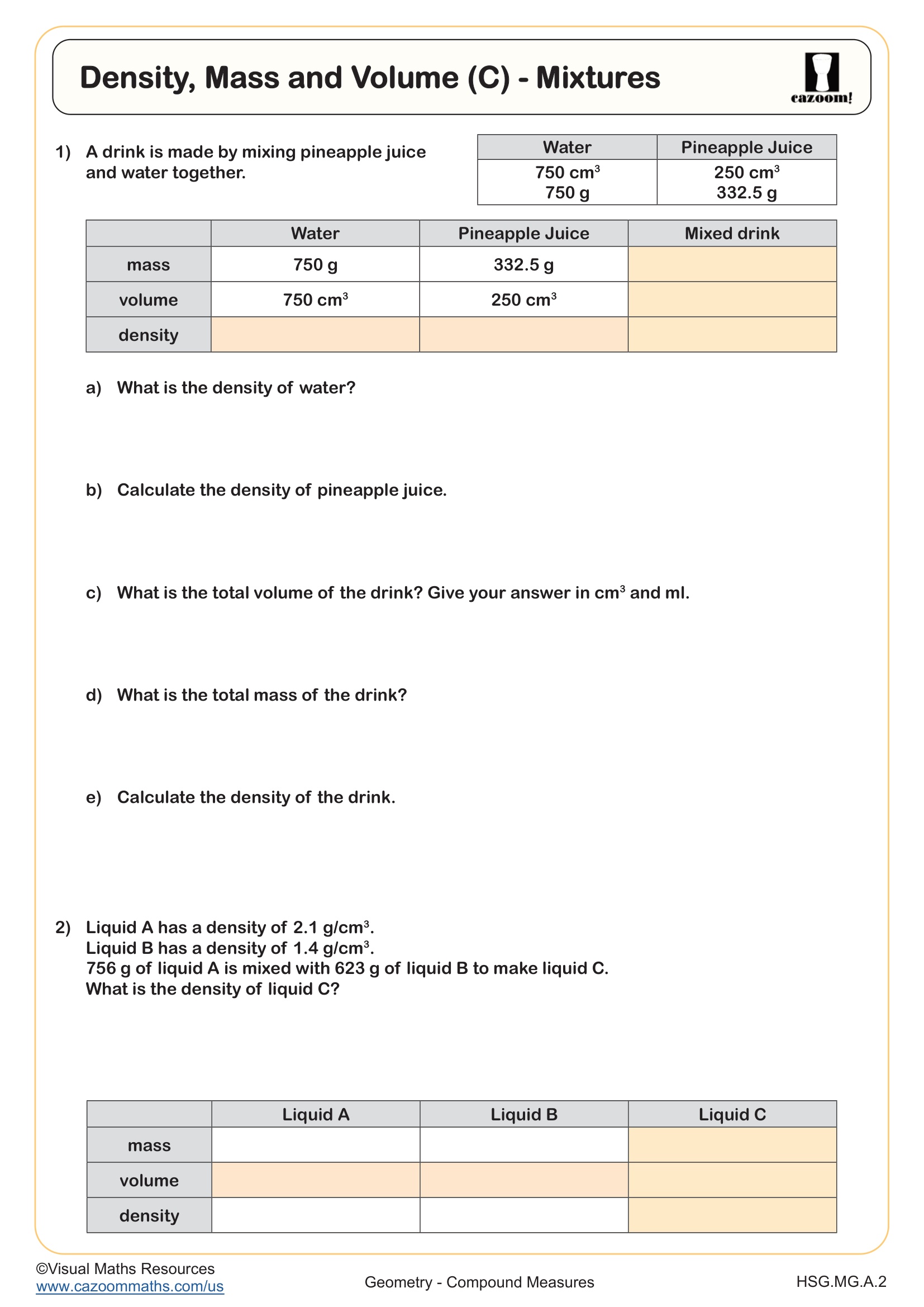
These worksheets target high school geometry courses, where students work extensively with three-dimensional figures and develop advanced spatial reasoning skills. At this level, students move beyond basic formulas to tackle composite shapes, frustums, and applied problems connecting volume with density and mass calculations.
The progression in high school geometry involves starting with straightforward prisms and pyramids, then advancing to more complex shapes like frustums and composite solids requiring decomposition strategies. Students also encounter density problems that integrate volume calculations with chemistry and physics concepts, preparing them for upper-level STEM coursework. This scaffolded approach builds both procedural fluency and conceptual understanding necessary for college readiness.
How do students work with frustums in geometry?
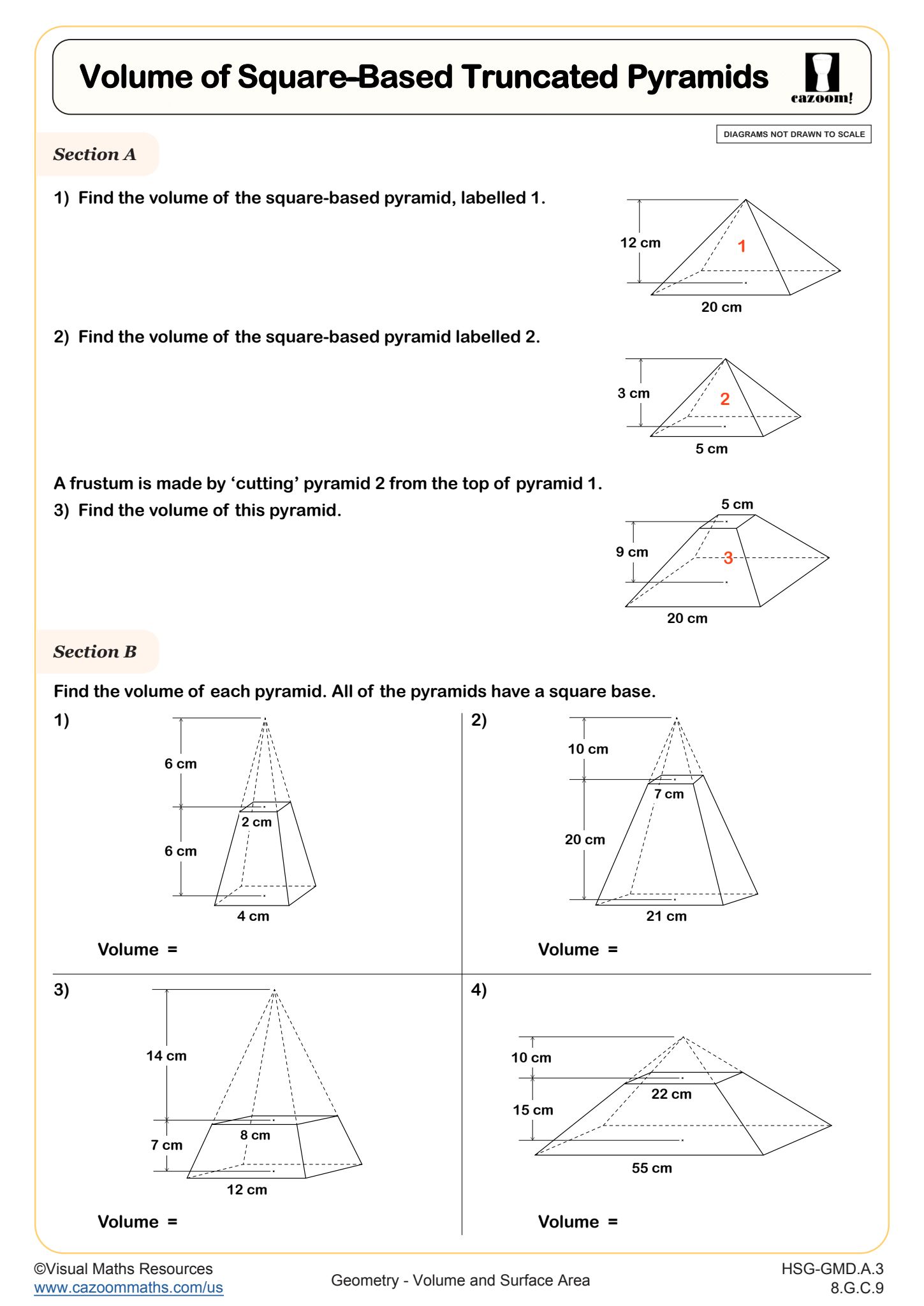
A frustum represents the portion of a pyramid or cone remaining after the top section is cut by a plane parallel to the base. Students learn to calculate volume and surface area by applying modified formulas that account for both the larger base and smaller top dimensions. The formula for a frustum's volume involves heights and areas of both bases, requiring careful attention to which measurements apply where.
Frustums appear regularly in architecture, engineering, and manufacturing contexts. Lampshades, traffic cones, cooling towers, and tapered structural columns all use frustum geometry. Understanding these calculations allows engineers to determine material quantities for construction or manufacturing processes. Students often make the connection between frustum problems and real structures when they start noticing tapered designs in buildings and everyday objects, which strengthens their geometric intuition for future STEM applications.
How can teachers use these volume and surface area worksheets effectively?
The worksheets provide structured practice that moves from foundational concepts like surface area of triangular prisms through complex applications involving density and composite shapes. Many include matching activities where students connect three-dimensional shapes with their corresponding formulas, reinforcing formula recognition before calculation practice. This approach helps students develop both procedural skills and conceptual understanding of when to apply specific formulas.
Teachers typically use these worksheets for differentiated instruction, selecting appropriate difficulty levels based on student readiness. The answer keys make them practical for independent practice stations, homework with immediate verification, or test preparation where students need extensive practice before assessments. Many teachers assign frustum and density problems as extension activities for students who have mastered basic volume calculations, while using triangular prism worksheets for intervention with students still developing spatial visualization skills.