High School Area and Perimeter Worksheets
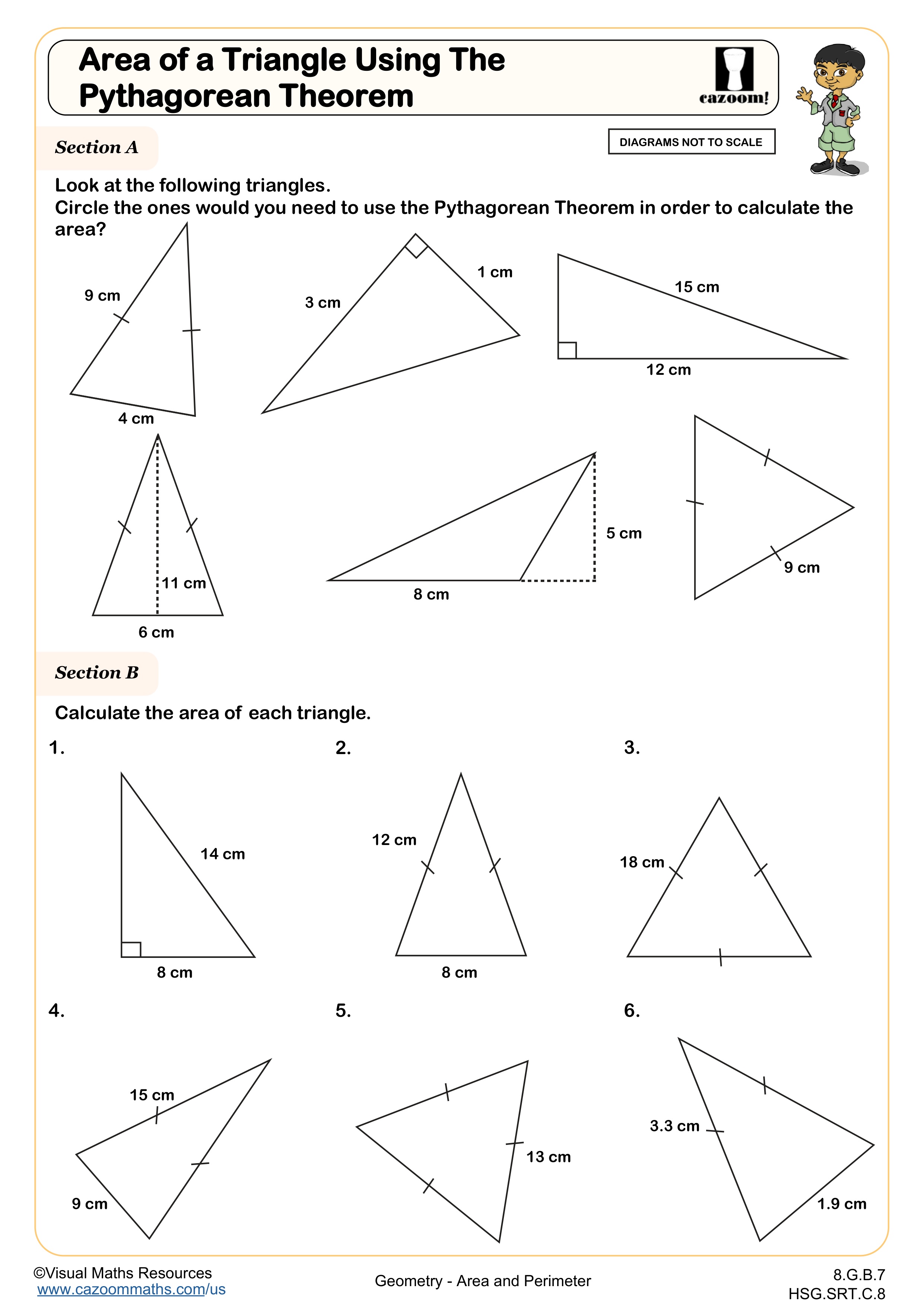
Area of a Triangle Using The Pythagorean Theorem
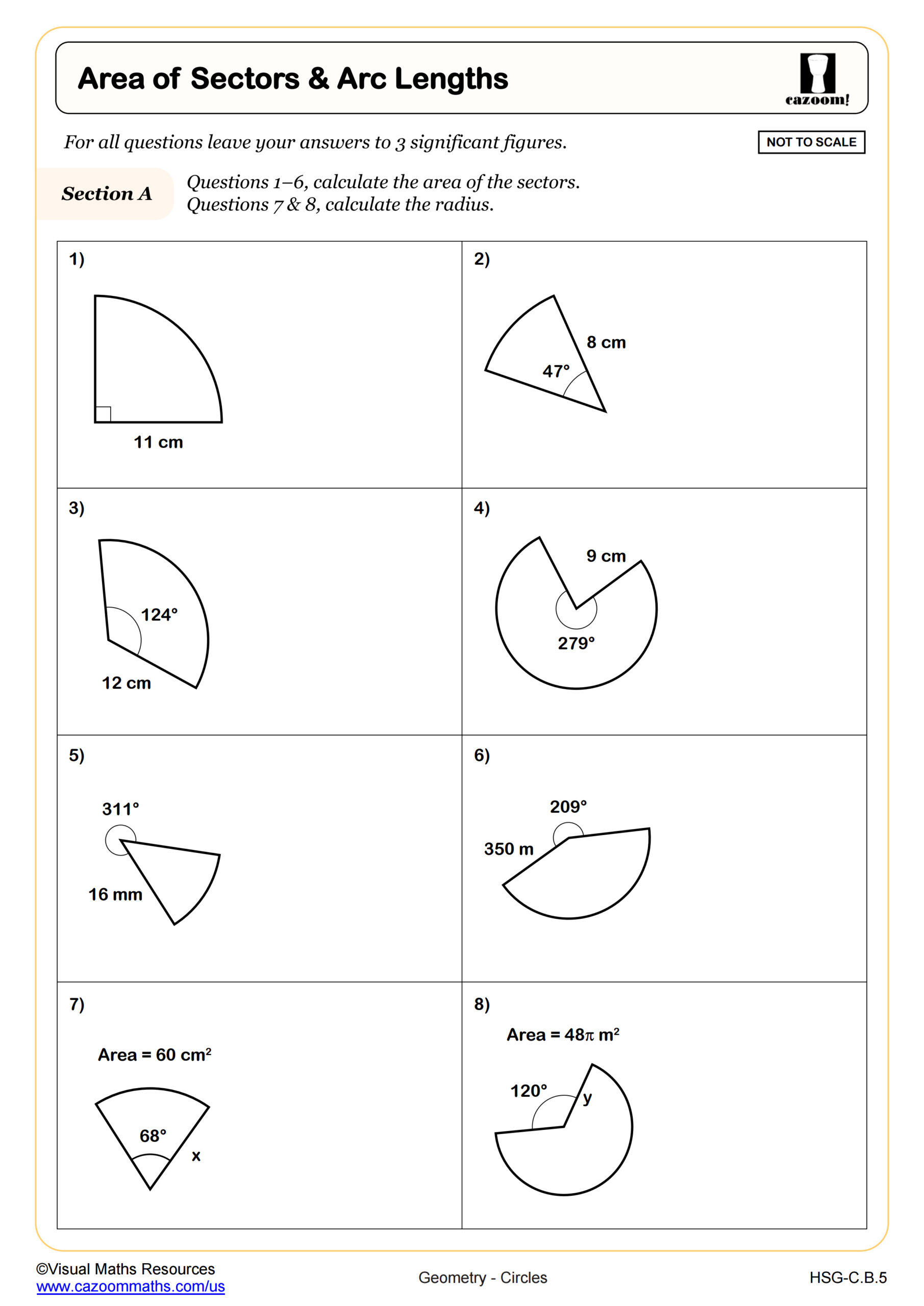
Area of Arc Lengths & Sectors
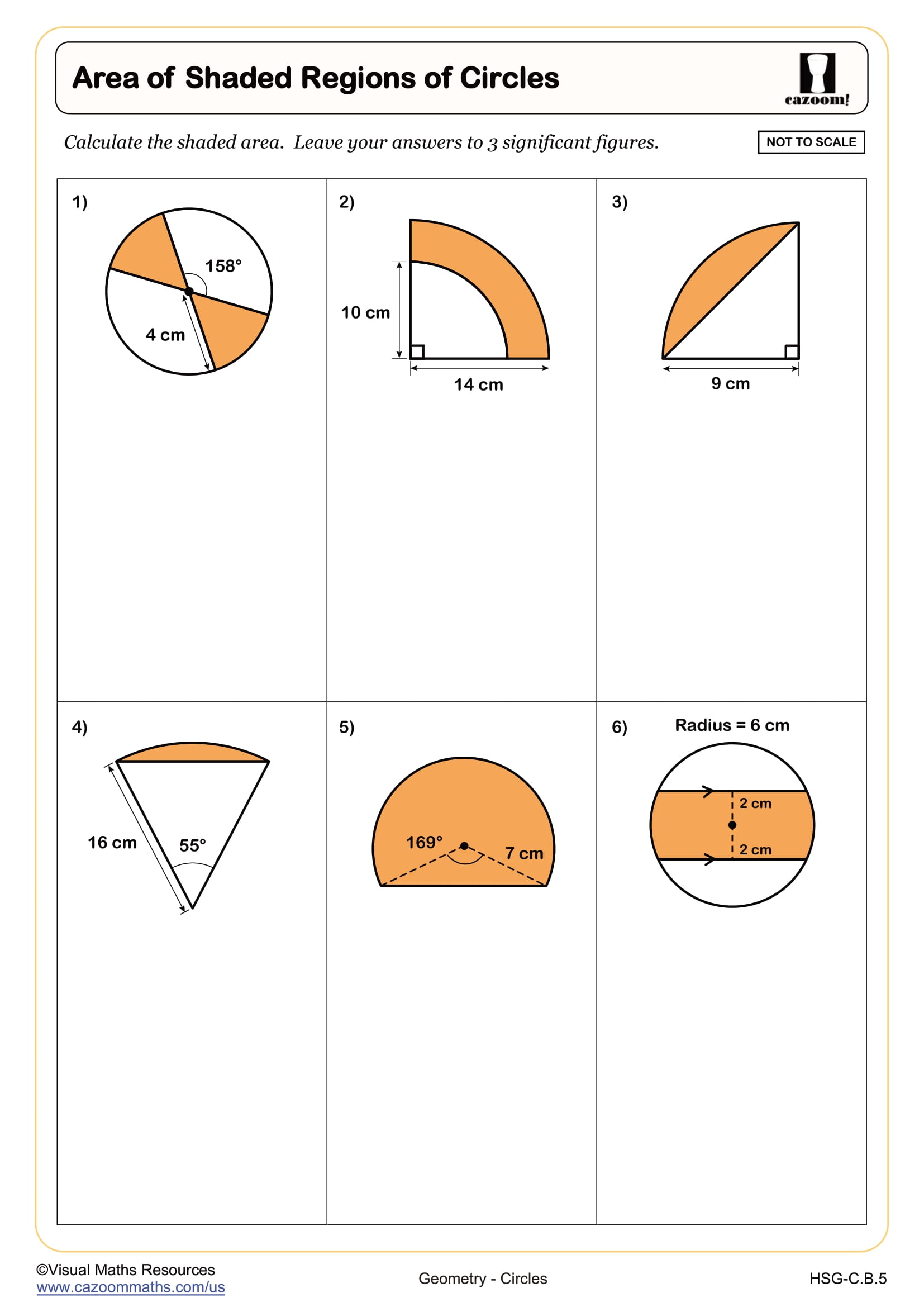
Area of Shaded Regions of Circles
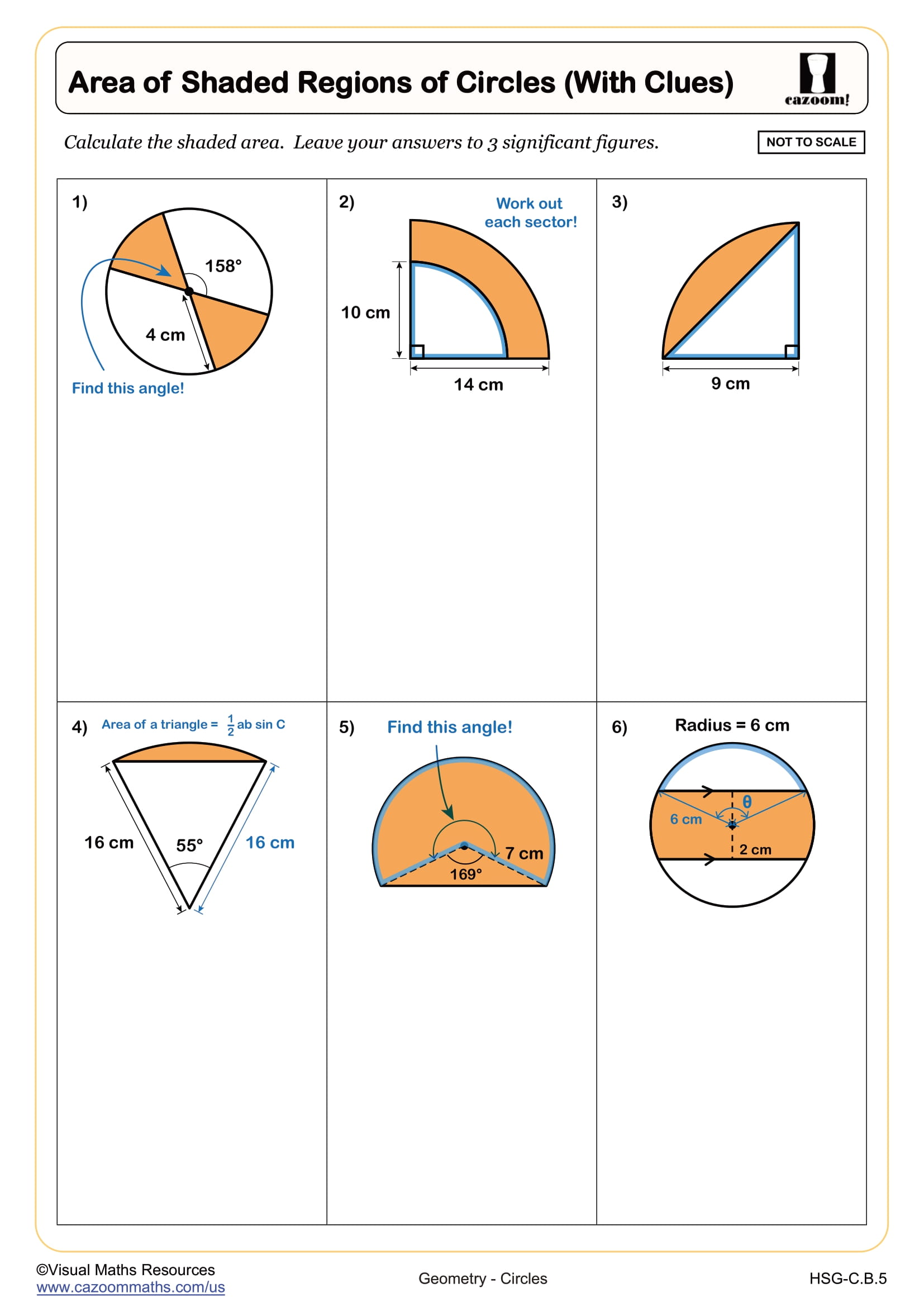
Area of Shaded Regions of Circles (with clues)
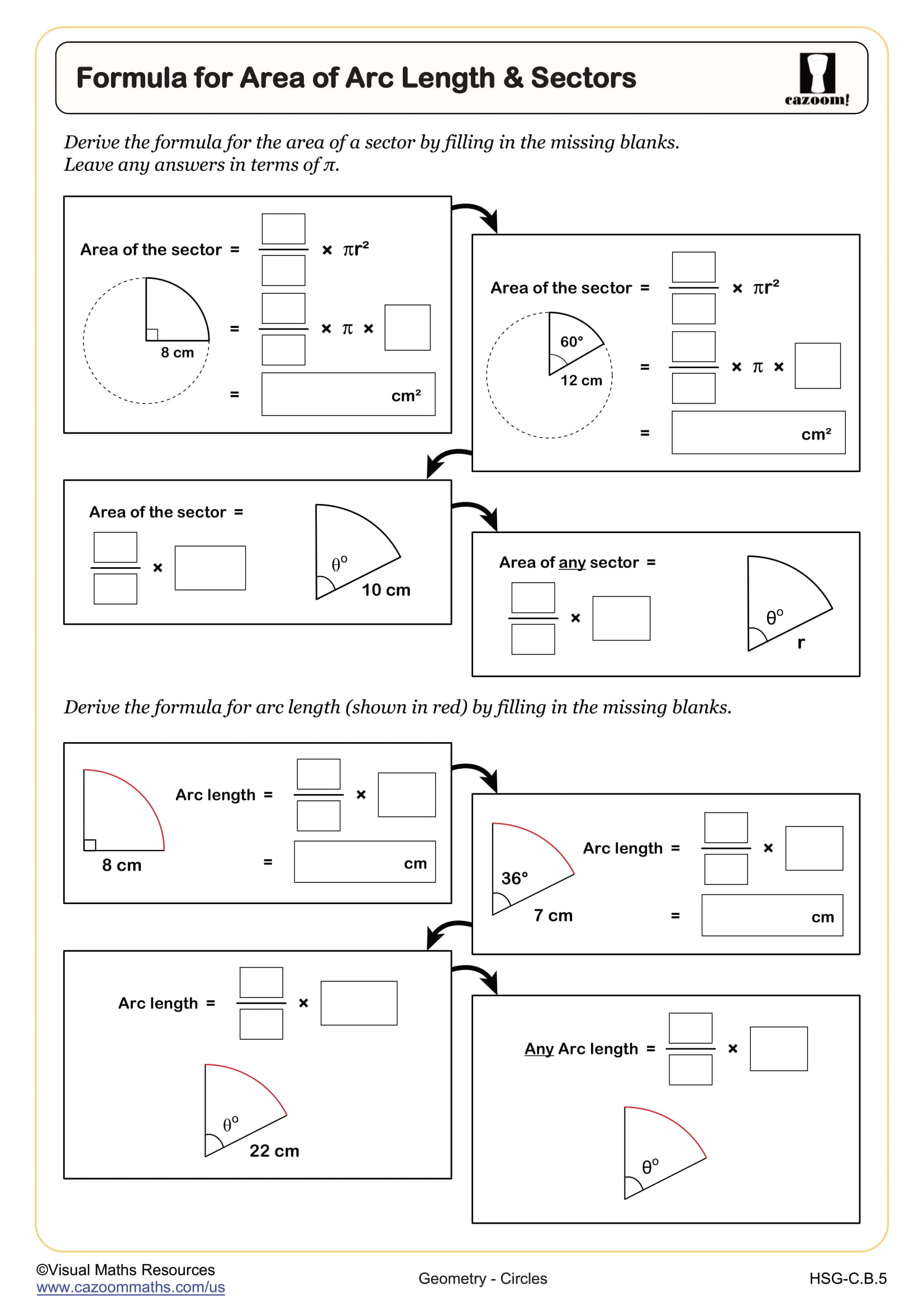
Formula for Area of Arc Length & Sectors
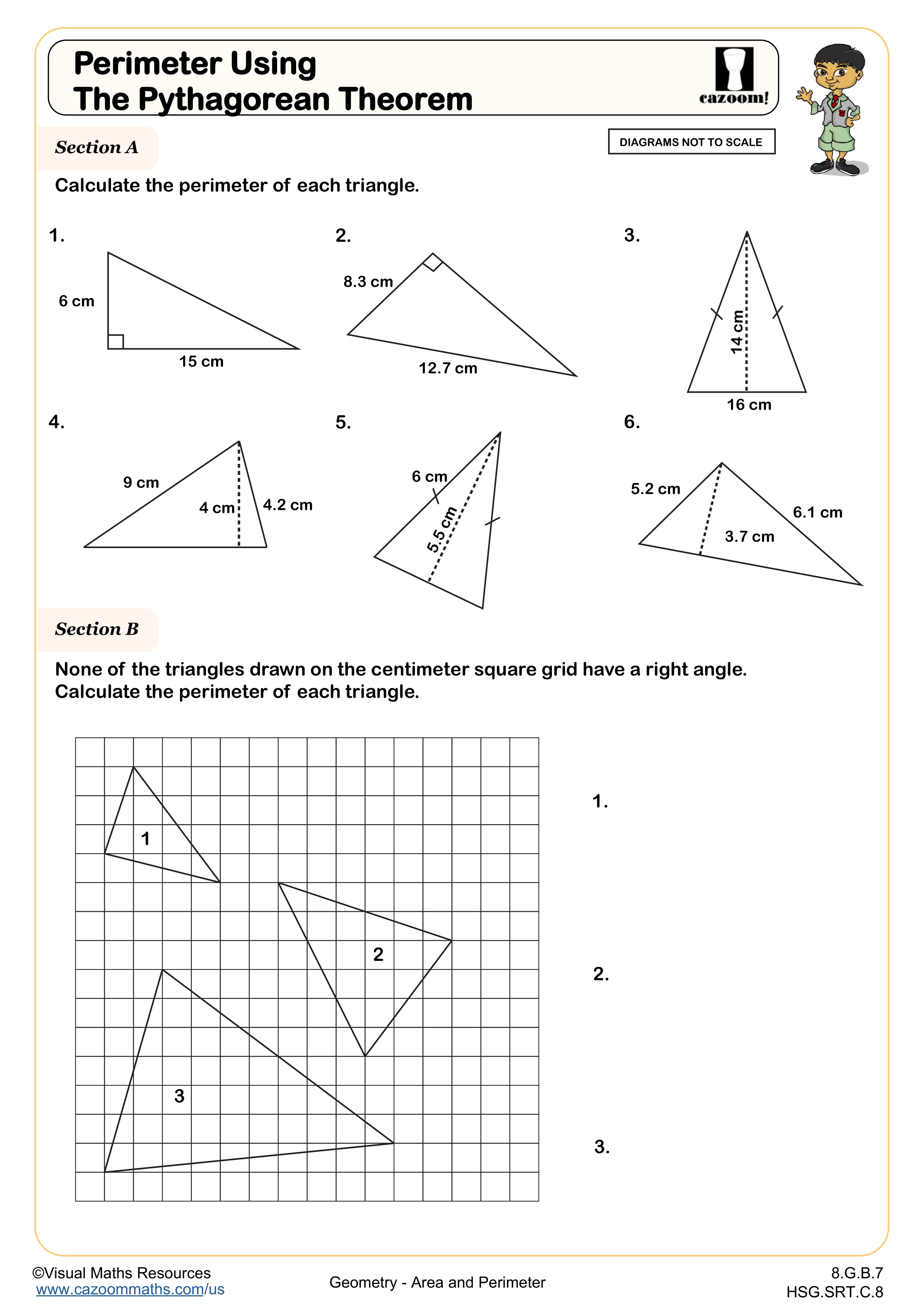
Perimeter Using The Pythagorean Theorem
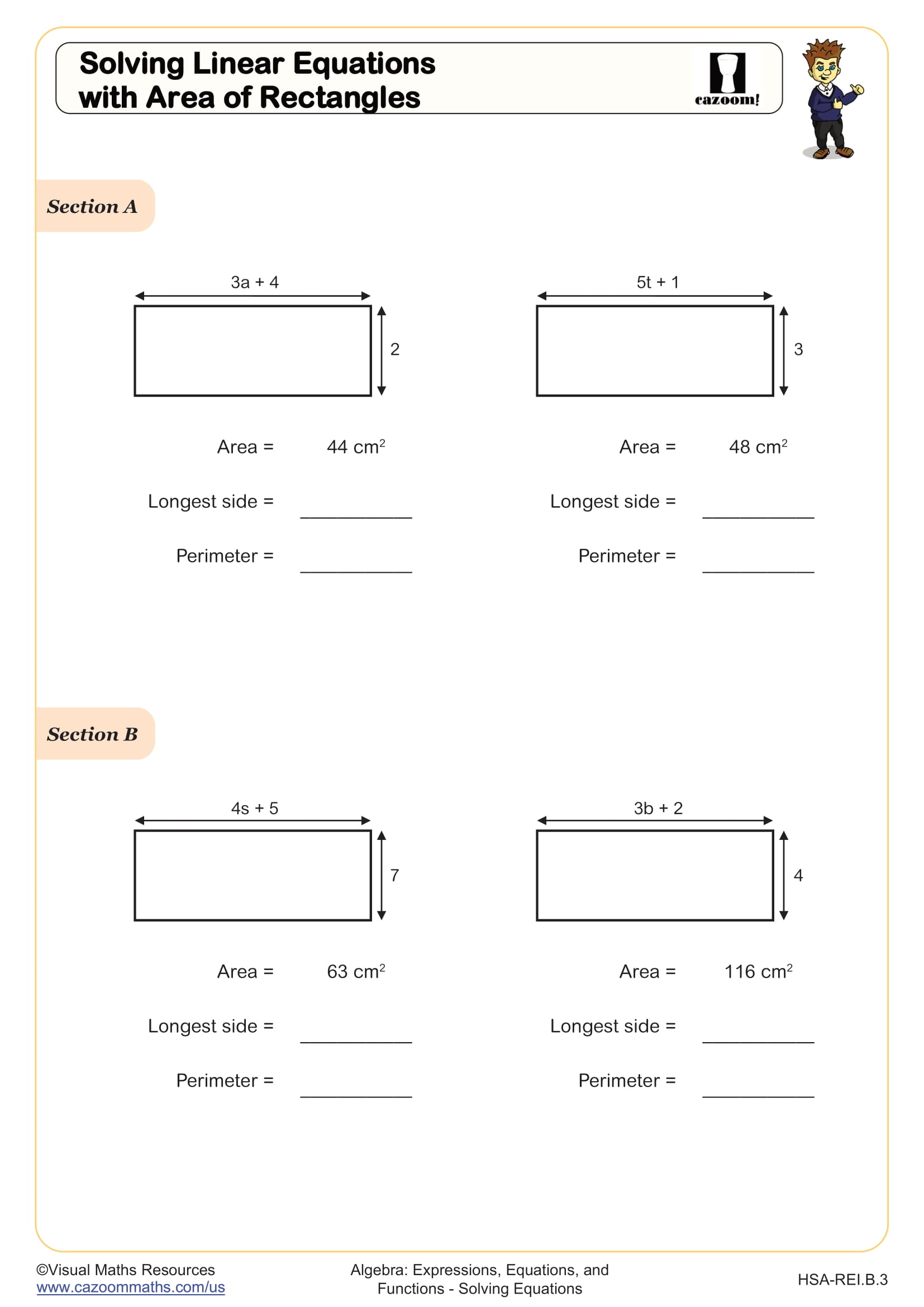
Solving Linear Equations with Area of Rectangles
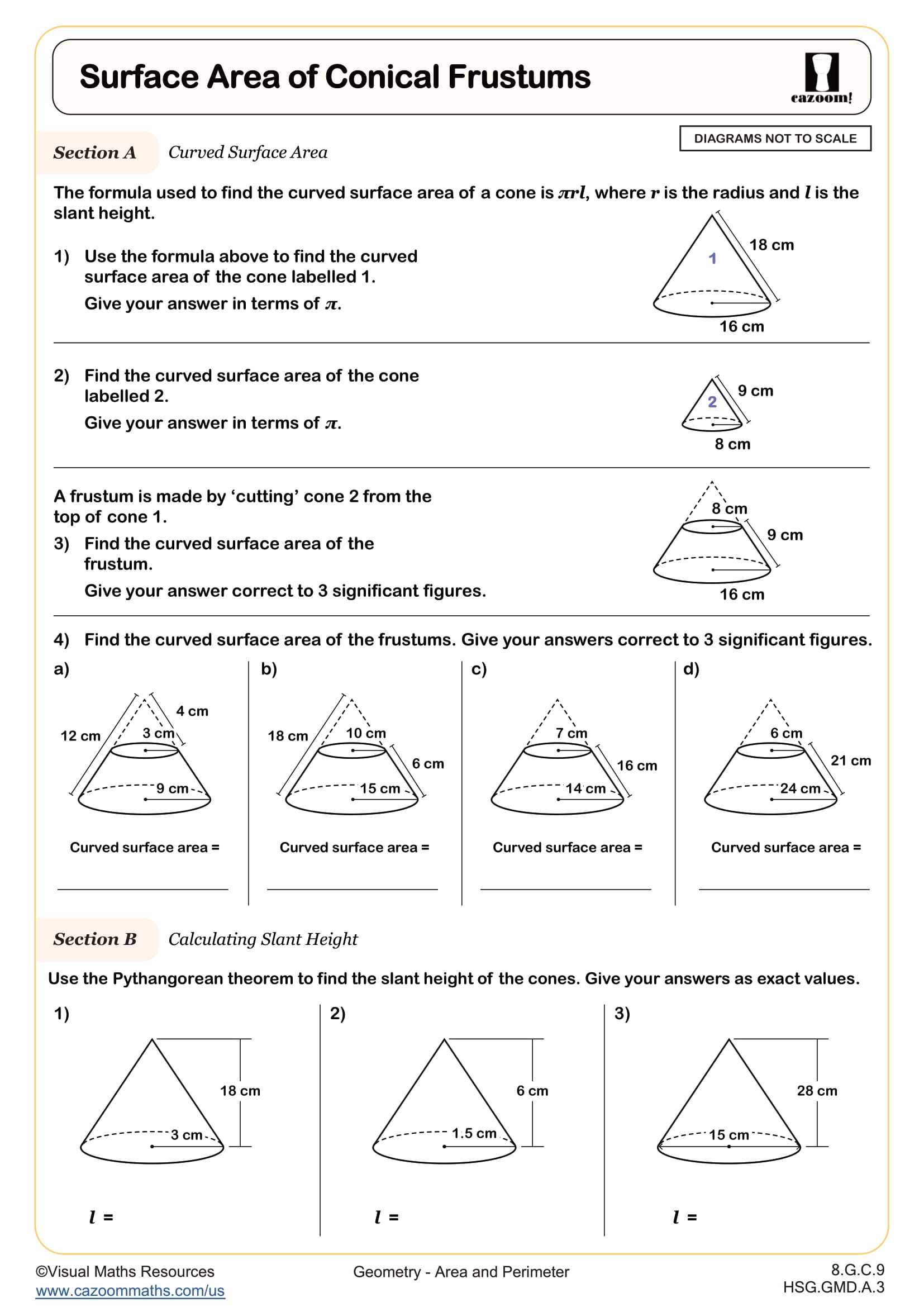
Surface Area of Conical Frustums
All worksheets are created by the team of experienced teachers at Cazoom Math.
What makes high school area and perimeter different from middle school?
High school area and perimeter problems require students to work with algebraic expressions, composite shapes, and multi-step reasoning rather than simply plugging numbers into memorized formulas. Students encounter shaded regions where they must subtract areas, apply the Pythagorean theorem to find missing dimensions, or work backward from a given area to determine side lengths. The problems integrate multiple concepts simultaneously, reflecting how these skills appear on the SAT, ACT, and state assessments.
Teachers frequently notice that students struggle when problems require them to recognize which formula applies to each component of a composite figure. A common error occurs when students add the area of a semicircle to a rectangle but forget to use half the circle formula, or when they calculate the area of a shaded region by finding the wrong difference. Success comes when students develop a systematic approach: sketch and label the figure, identify each component shape, and write out their calculation steps before computing.
Which high school courses cover area and perimeter?
These worksheets span Algebra I, Algebra II, Geometry, Precalculus, and the Integrated Math pathway (IM 1, IM 2, IM 3). In Geometry, area and perimeter form a substantial unit, while in algebra courses these concepts appear when working with quadratic applications, optimization problems, and function modeling. The Integrated Math sequence distributes these skills across all three years, revisiting them with increasing complexity as students build algebraic sophistication.
The progression across courses moves from applying formulas with given measurements in Algebra I to deriving formulas and proving area relationships in Geometry, then to optimization and rate-of-change problems in Precalculus. Students in IM 1 start with basic composite figures, while IM 3 students tackle problems involving trigonometry and polar coordinates. This spiraling approach ensures students see area and perimeter not as isolated topics but as tools for solving increasingly sophisticated mathematical problems.
How do students work with shaded regions of circles?
Shaded region problems require students to identify overlapping areas and determine which regions to add or subtract. In circle problems, this often means finding the area of a sector, segment, or the space between concentric circles. Students must recognize whether they're working with a full circle, semicircle, or fractional portion, then apply the appropriate formula. The worksheets include problems with and without clues, building both guided and independent problem-solving skills.
These skills connect directly to real-world applications in engineering, architecture, and design. Landscape architects calculate the area of curved garden beds and pathways, while mechanical engineers determine the cross-sectional area of pipes and gears. Manufacturing processes require precise calculations of material usage when cutting circular patterns from rectangular sheets. Students who master shaded region problems develop spatial reasoning that transfers to CAD software, construction planning, and any field requiring optimization of space and materials.
How can teachers use these worksheets effectively in class?
The worksheets provide structured practice that moves from formula recall to multi-step application, allowing teachers to differentiate based on student readiness. Formula sheets help students build confidence before attempting complex problems, while shaded region worksheets challenge advanced learners. The complete answer keys let teachers quickly identify whether errors stem from calculation mistakes or conceptual misunderstandings, making it easier to target interventions where students actually need help.
Many teachers use these worksheets for warm-up activities to maintain skills throughout the year, homework assignments that reinforce classroom instruction, or paired work where students explain their reasoning to each other. They work well for spiral review before standardized tests, since area and perimeter appear across multiple assessment domains. Teachers also assign specific subtopics as intervention for students who struggle with particular concepts, using the answer keys to facilitate self-checking and immediate feedback during independent practice time.