High School Bearings Scale and Loci Worksheets
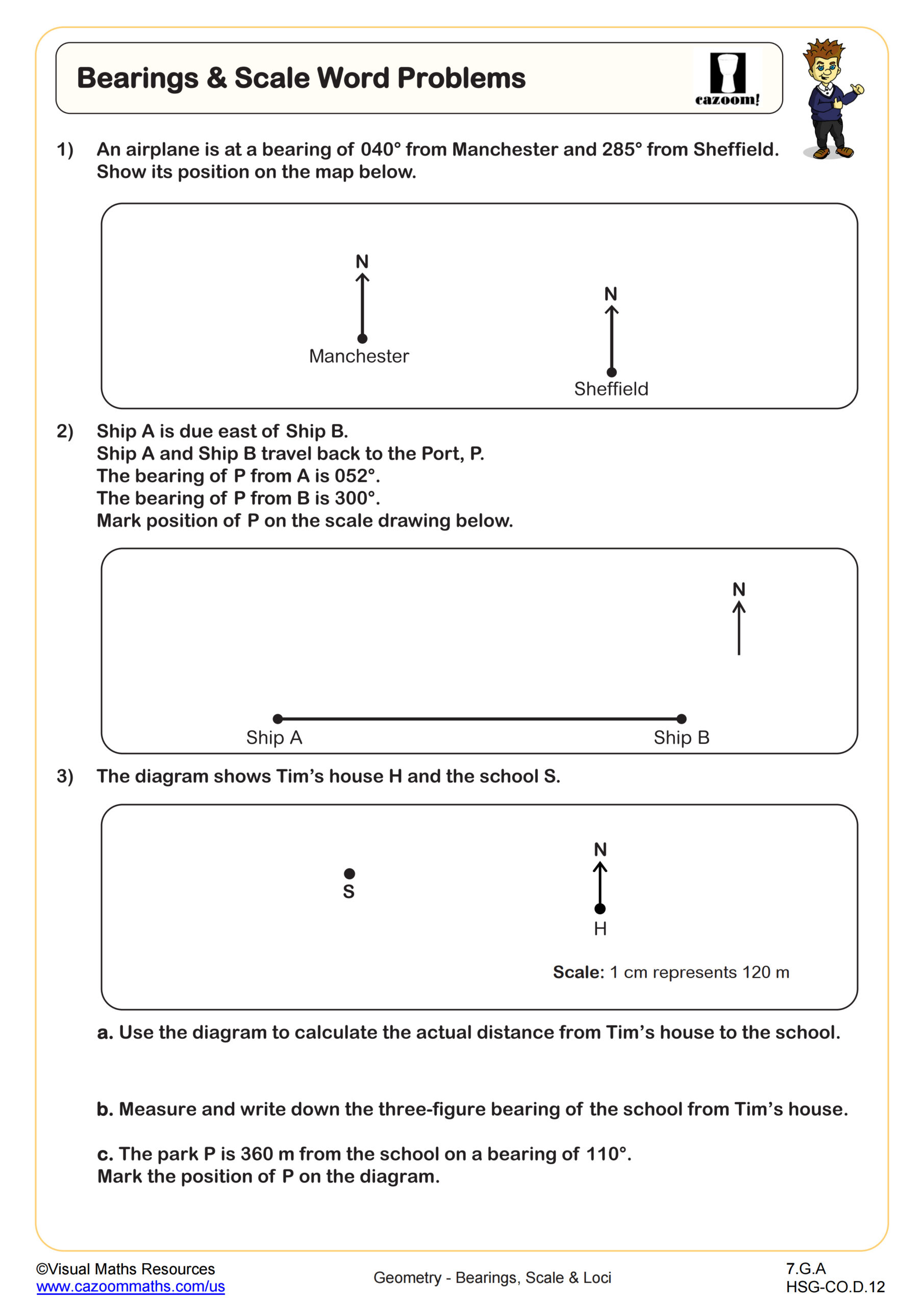
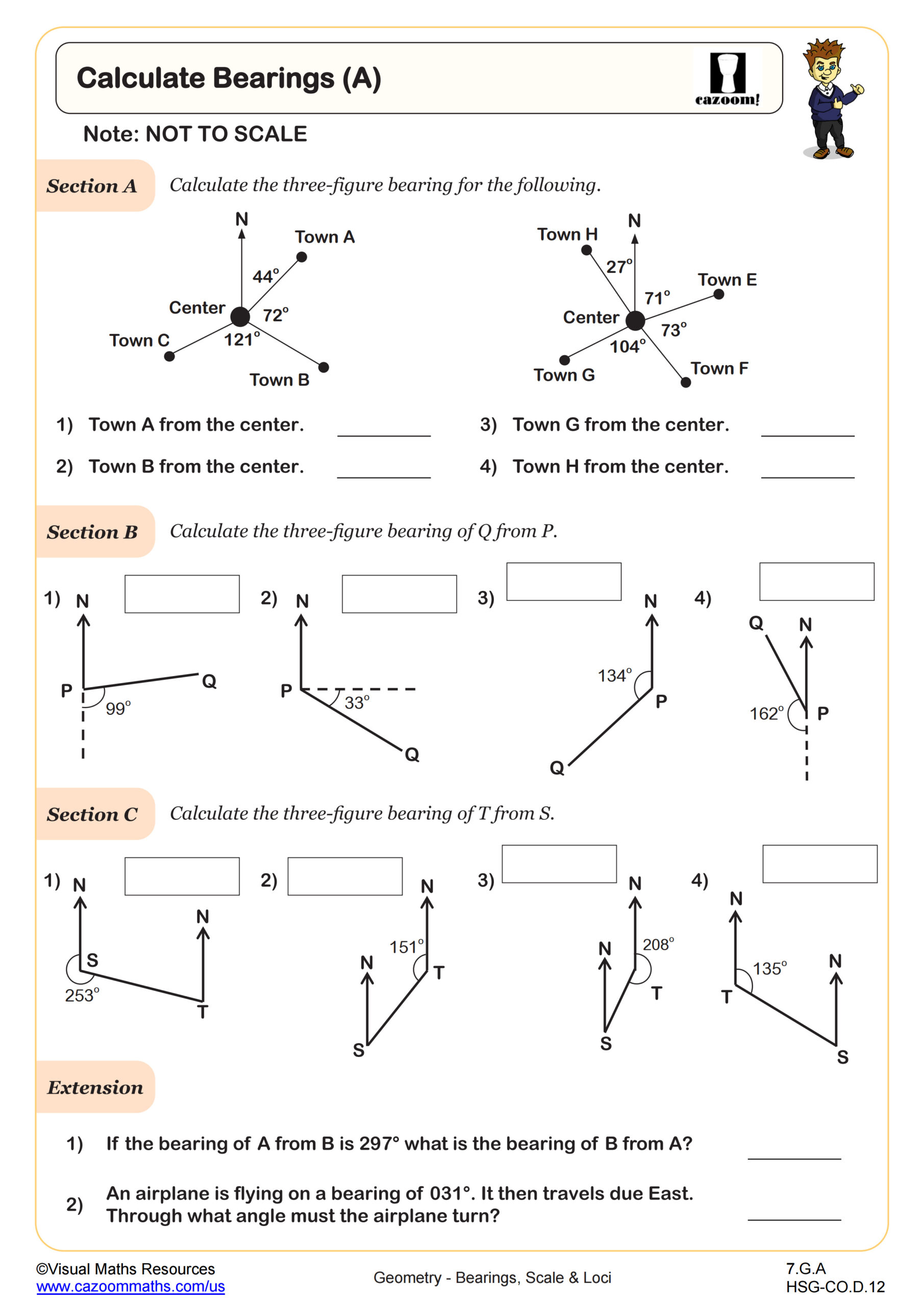
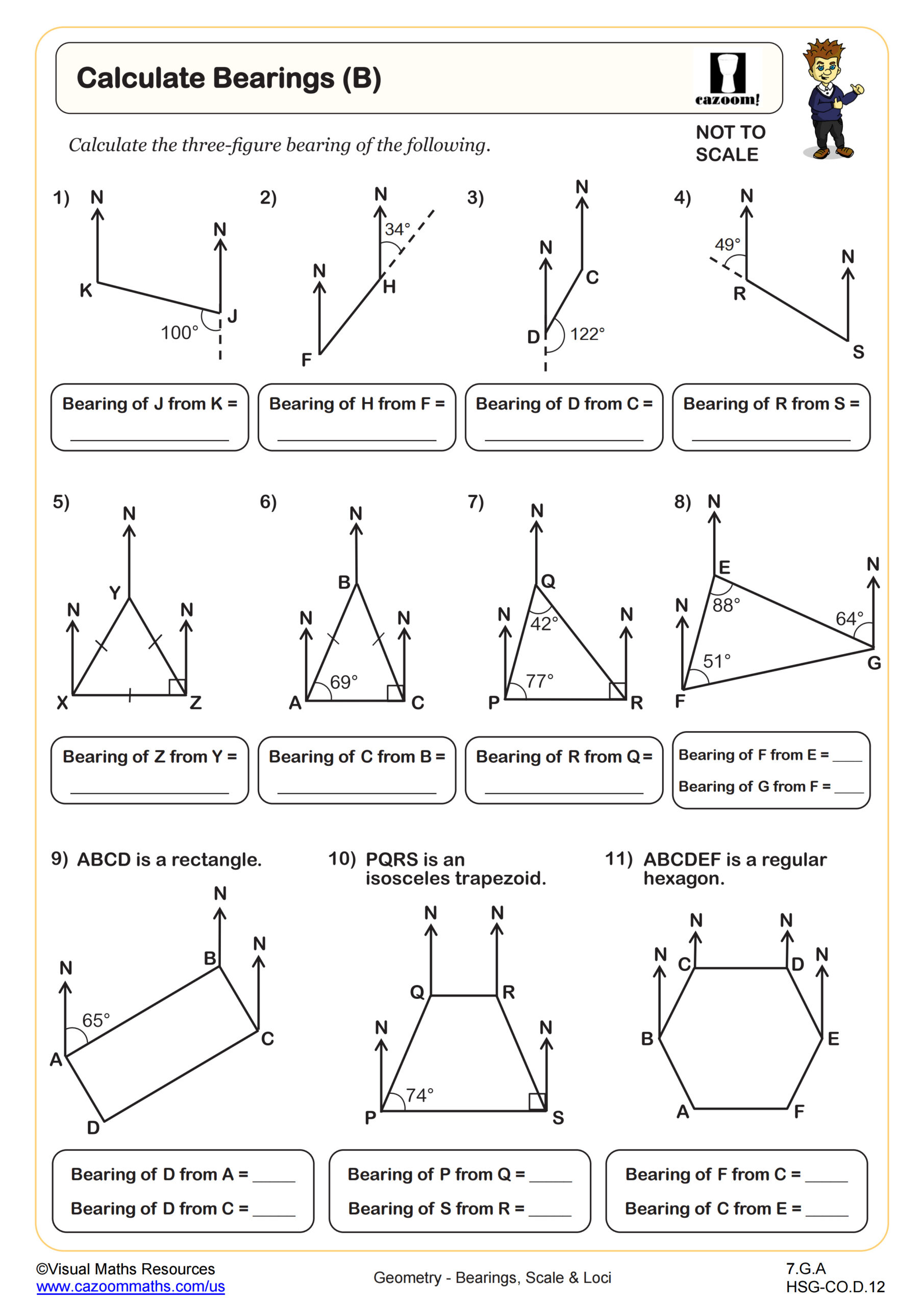
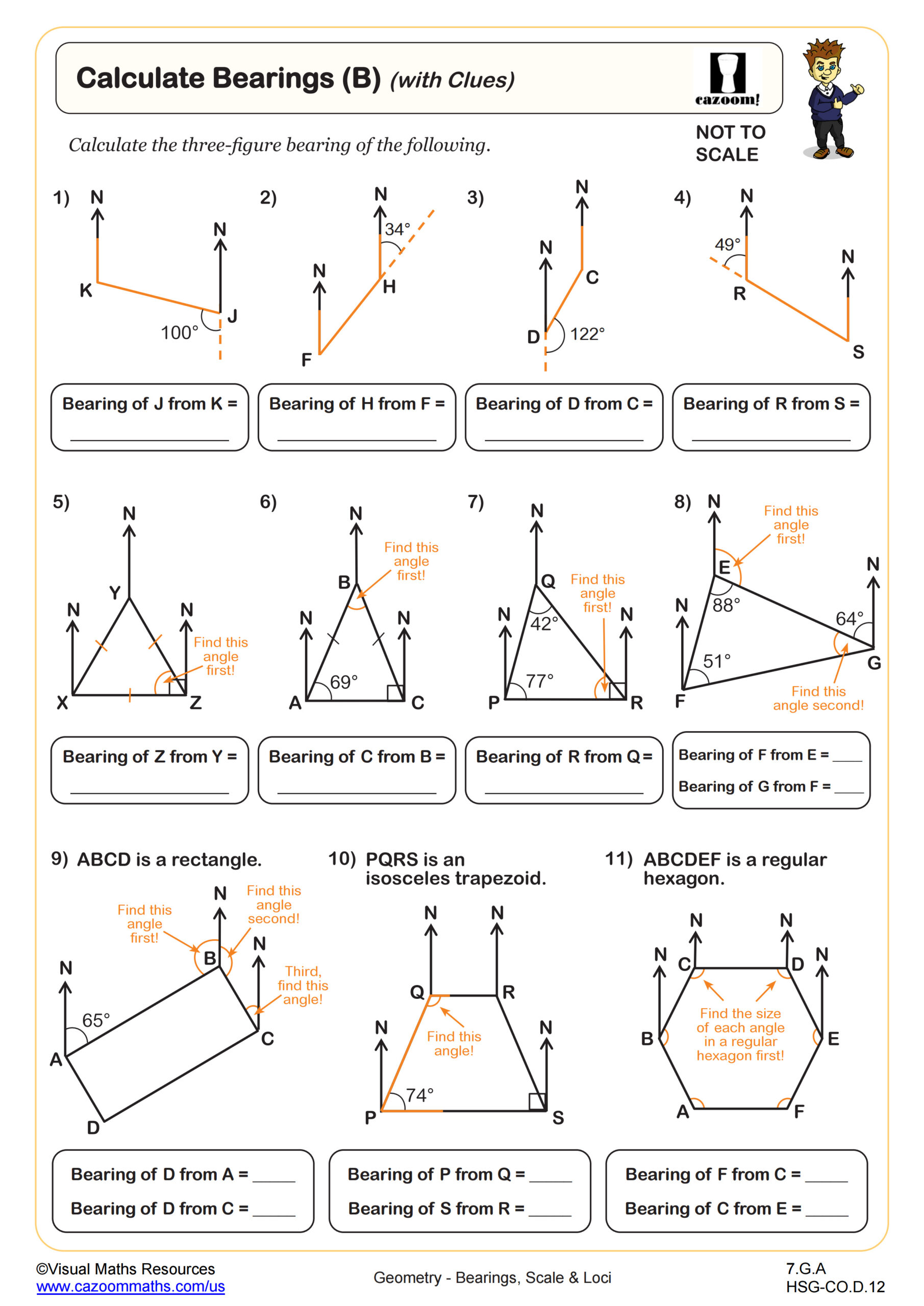
All worksheets are created by the team of experienced teachers at Cazoom Math.
What are bearings in math and why do students learn them?
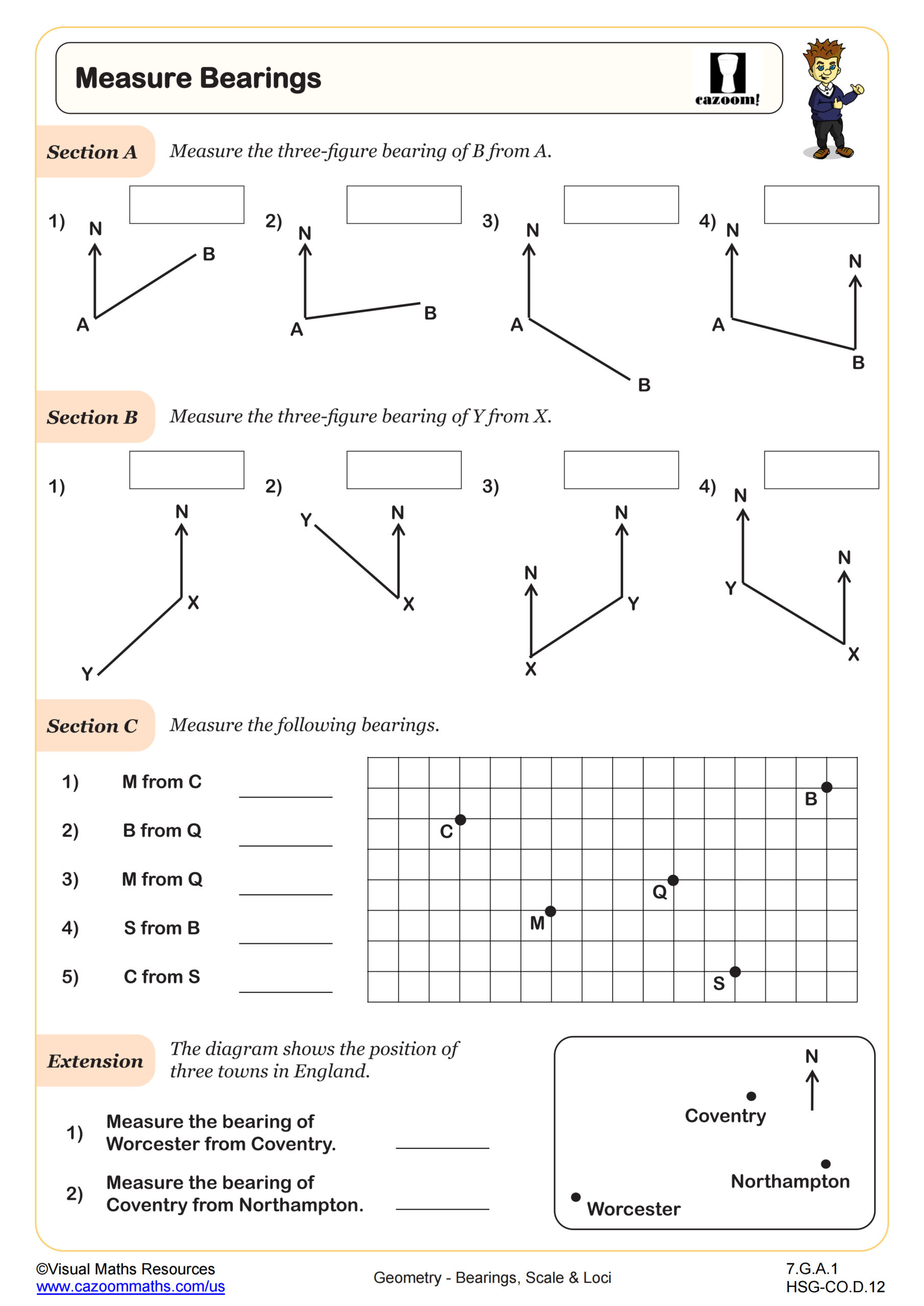
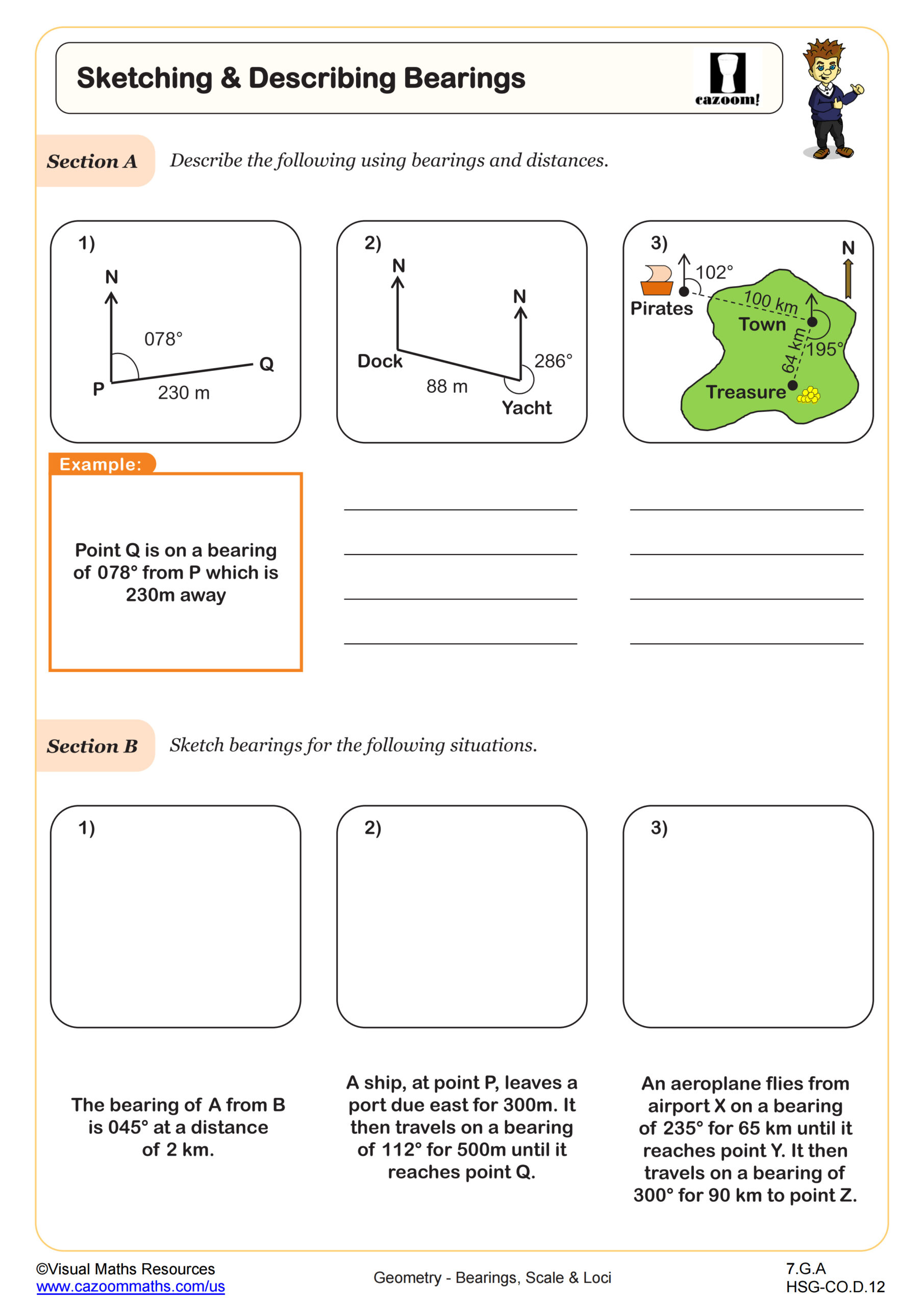
Bearings represent directional measurements using three-figure angles measured clockwise from north, always expressed as values between 000° and 360°. High school geometry and algebra courses introduce bearings as a practical application of angle measurement, coordinate geometry, and trigonometry. Students learn to interpret compass directions, calculate return bearings, and solve problems involving distance and direction simultaneously.
A common error occurs when students write bearings as two-digit numbers instead of maintaining the three-figure convention—writing 45° instead of 045°, for example. Standardized tests and real-world navigation require the three-digit format to avoid ambiguity. Students also struggle with the concept that the bearing from Point A to Point B differs from the return bearing, typically off by 180° but requiring careful consideration of the full 360° range when adding or subtracting.
Which grade levels study bearings, scale, and loci?
These worksheets address high school mathematics standards across Algebra I, Algebra II, Geometry, Precalculus, and Integrated Math 1, 2, and 3 courses. Geometry classes typically introduce bearings alongside transformations and coordinate work, while algebra courses incorporate them into word problems requiring equation-solving and multi-step reasoning. Integrated Math sequences distribute these concepts across multiple years, building complexity gradually.
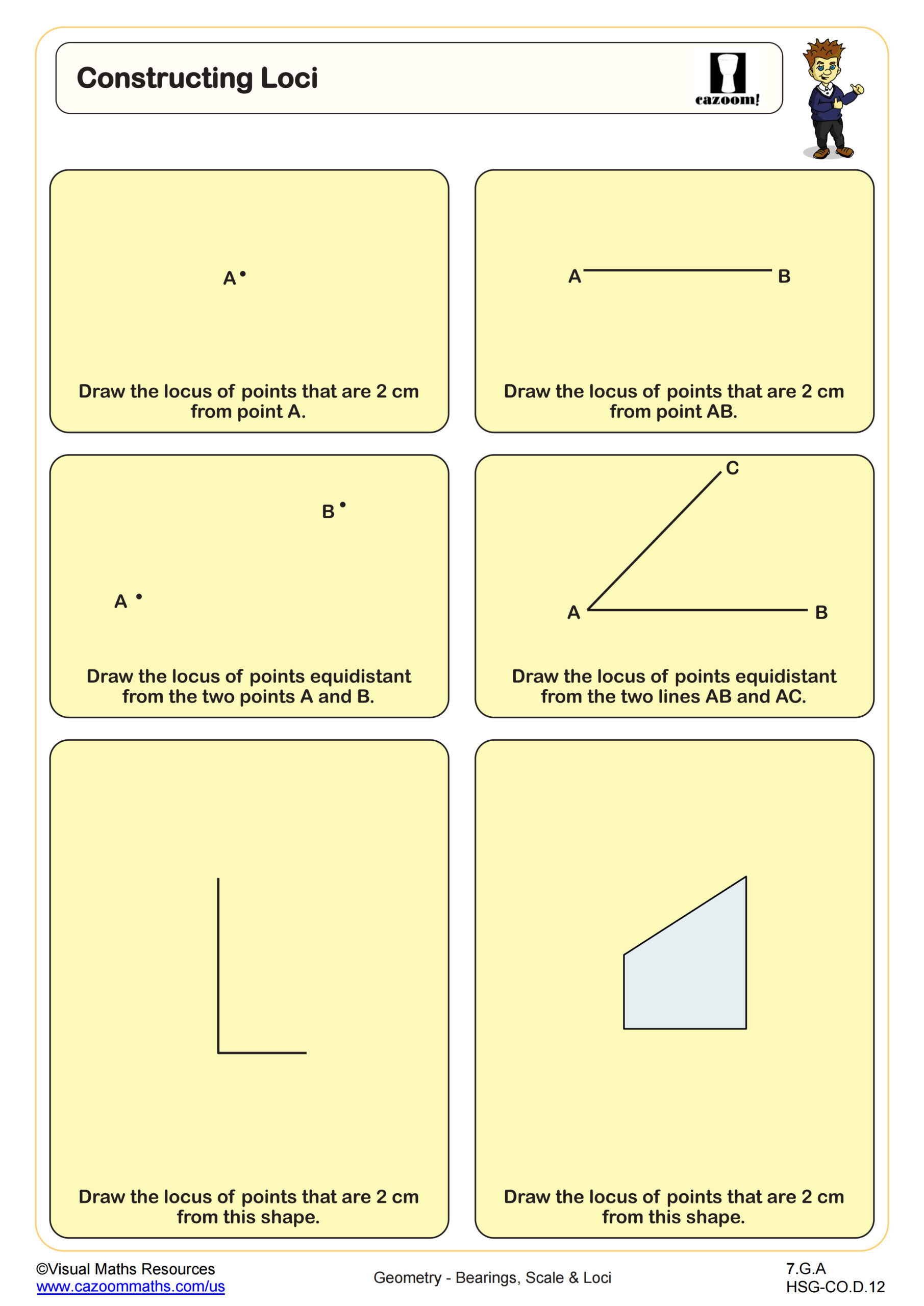
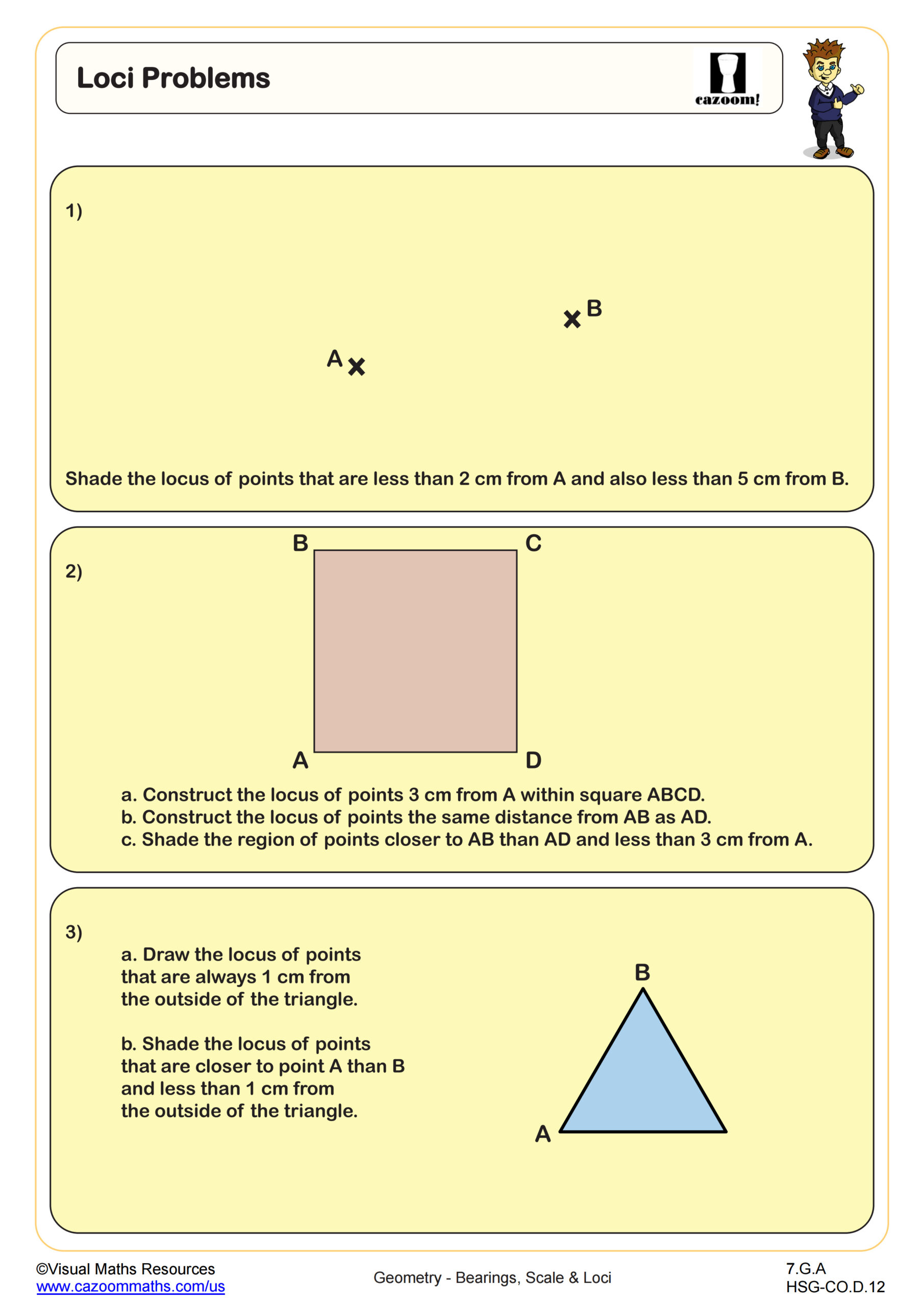
The progression moves from basic bearing calculations using given information to constructing loci based on distance and bearing constraints. Earlier worksheets focus on interpreting diagrams and applying the three-figure bearing convention, while advanced problems combine bearings with scale drawings, requiring students to convert between map distances and actual distances before calculating bearings. Word problems in later worksheets ask students to synthesize multiple concepts, including trigonometric ratios for non-right-angle situations.
How do students work with scale drawings in bearing problems?
Scale drawing problems require students to convert between actual distances and map representations using ratios like 1:50,000 or scales expressed as "1 cm represents 5 km." Students measure bearings from scale diagrams using protractors, then apply the scale factor to determine real-world distances. The challenge lies in managing unit conversions while simultaneously calculating angles and applying trigonometric relationships when points don't align along cardinal directions.
Aviation flight planning provides a direct application where pilots use sectional charts with specific scales to calculate fuel requirements and flight times. A pilot planning a route from one airport to another must determine the bearing for heading, measure the scaled distance, convert to nautical miles, and calculate fuel burn rates. Maritime navigation similarly relies on chart scales and bearings for plotting courses. GPS technology has automated many calculations, but understanding the underlying mathematics remains essential for backup navigation systems and for careers in surveying, civil engineering, and geographic information systems.
How should teachers use these bearings worksheets in class?
The worksheets scaffold learning by separating core skills before combining them in complex problems. Basic bearing calculation sheets build fluency with the three-figure convention and angle measurement before introducing scale factors or loci constructions. Worksheets with clues guide students through multi-step reasoning, providing intermediate values that help them check their process. The answer keys show complete working, which helps students identify exactly where their reasoning diverged from the correct method.
Teachers find these resources effective for differentiated practice, assigning basic calculation worksheets to students who need foundational work while directing advanced students toward scale-based word problems. The constructing loci worksheets work well for paired activities where students can discuss constraint interpretations and verify their geometric constructions against a partner's work. Many teachers use these as homework following classroom instruction with protractors and compasses, then review common errors during the next class period. The consistent formatting across difficulty levels helps students build confidence as they progress through increasingly complex scenarios.