High School Circles Worksheets
Area of Arc Lengths & Sectors
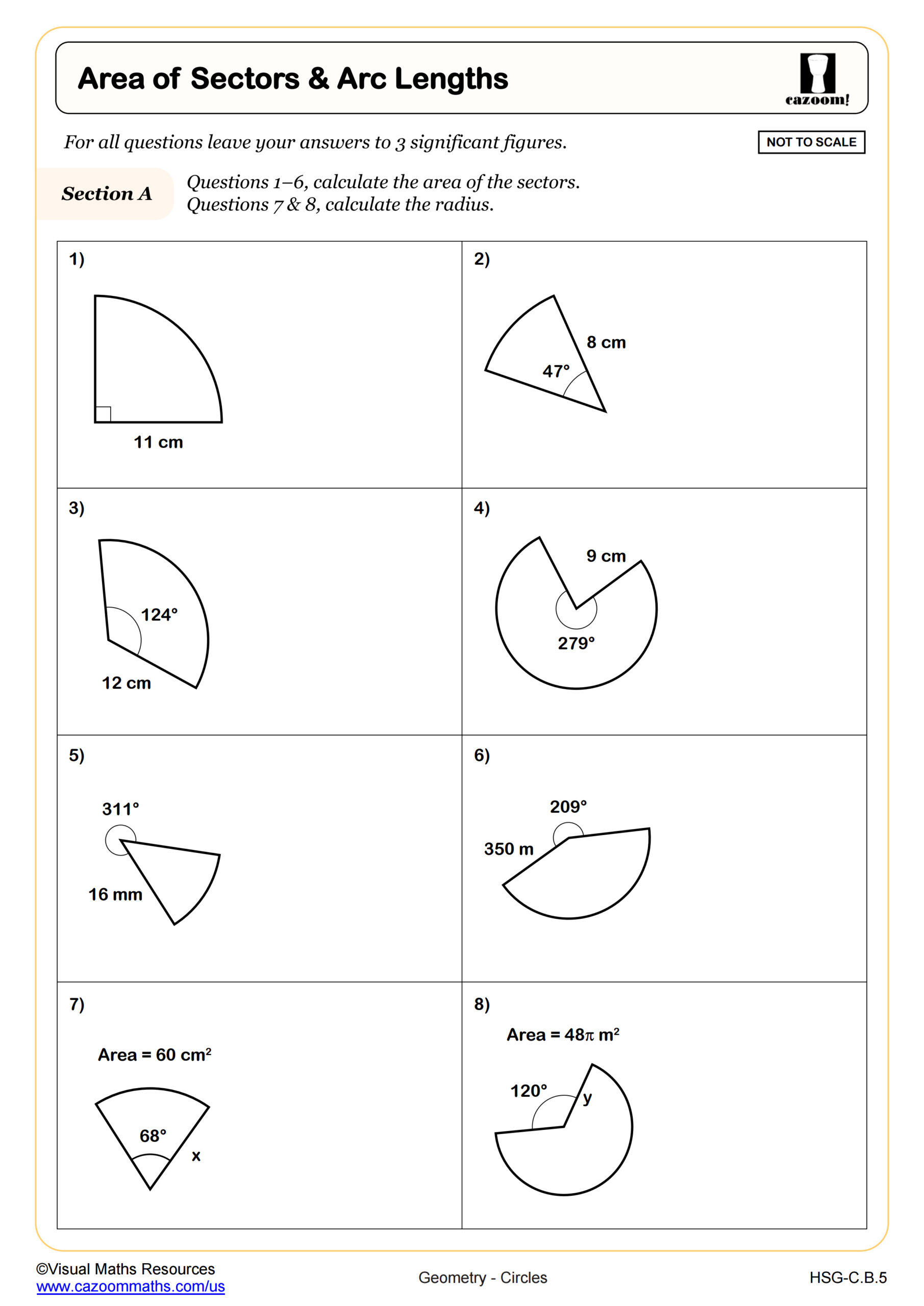
Area of Shaded Regions of Circles
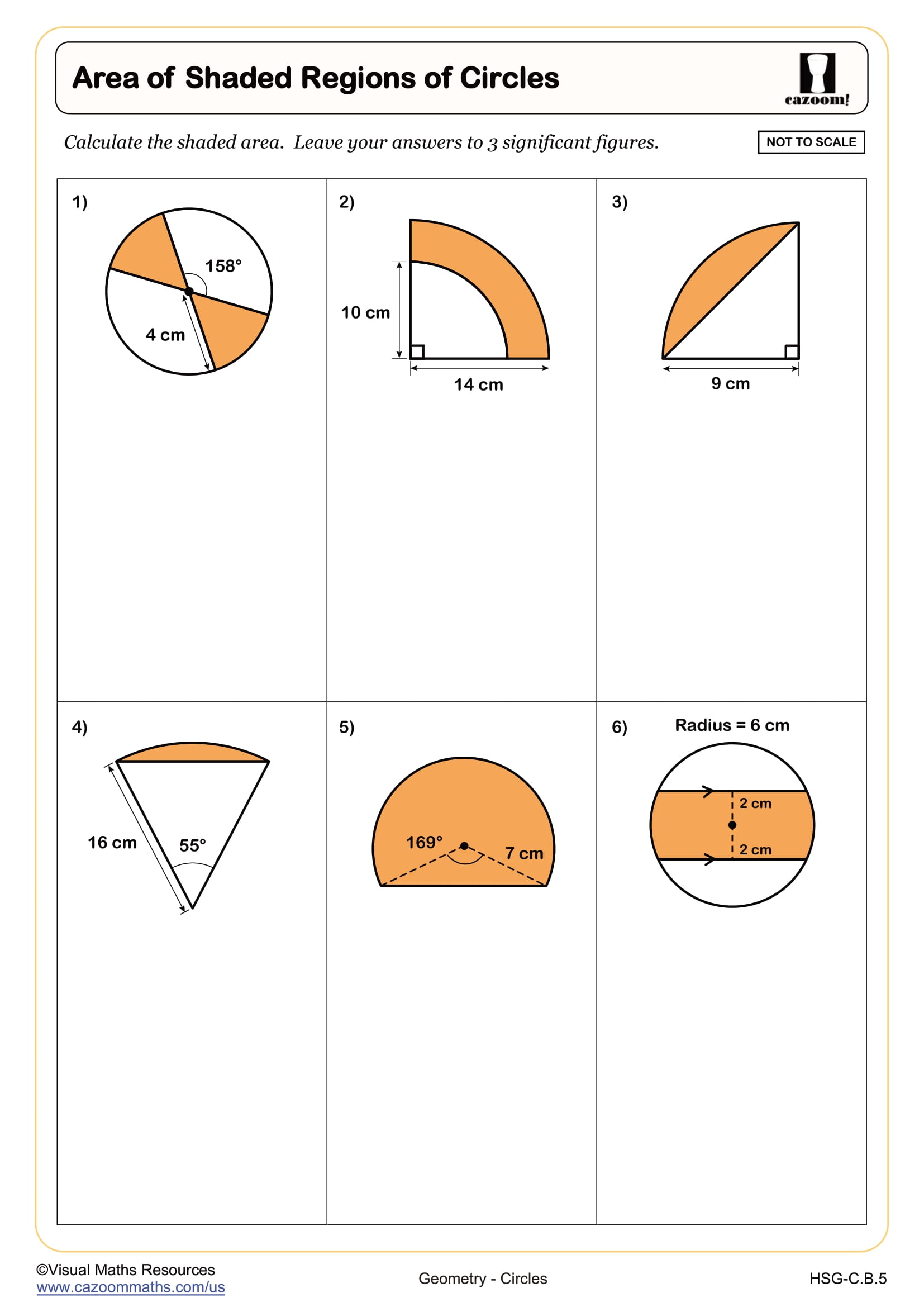
Area of Shaded Regions of Circles (with clues)
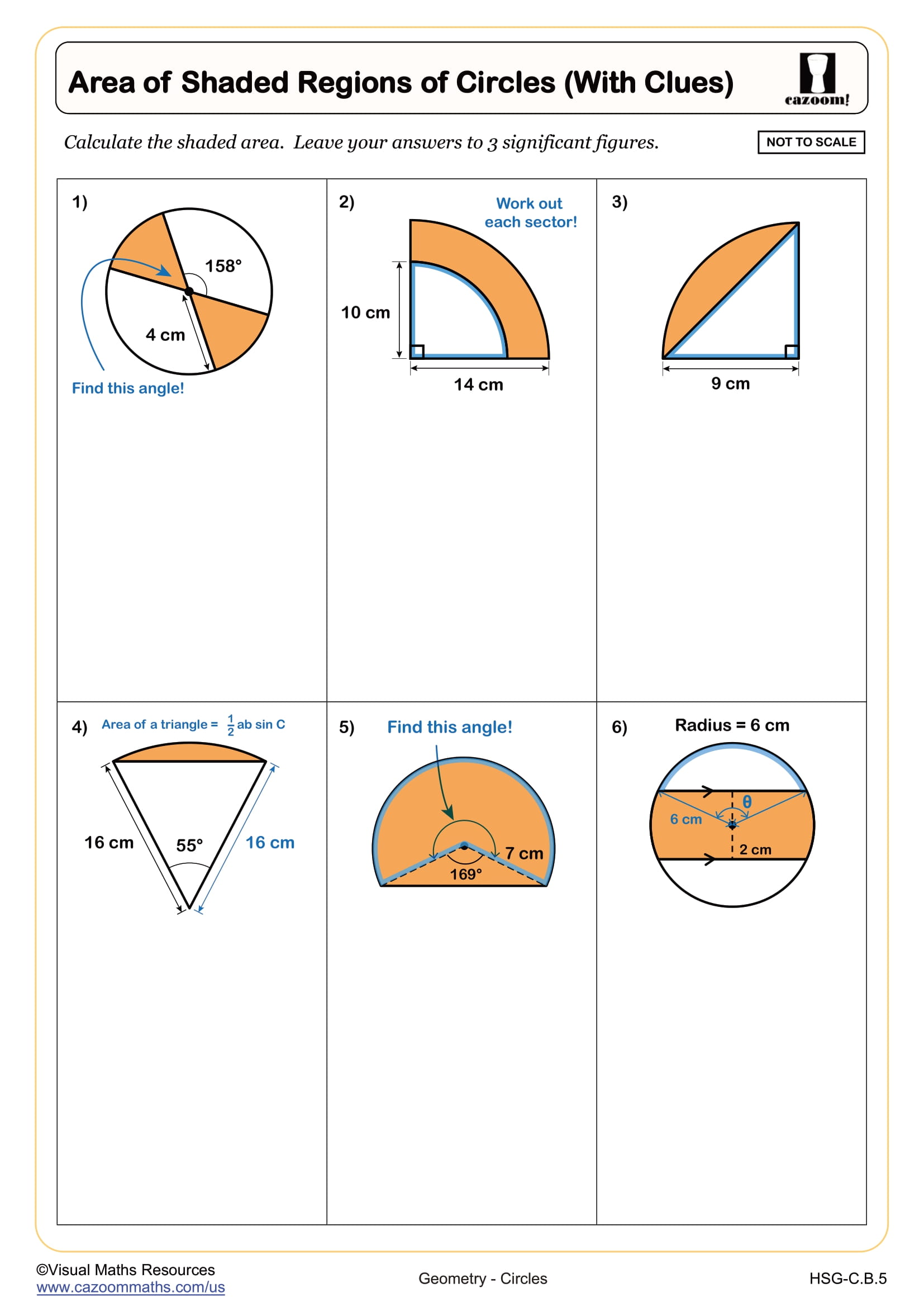
Area With Pi (A)
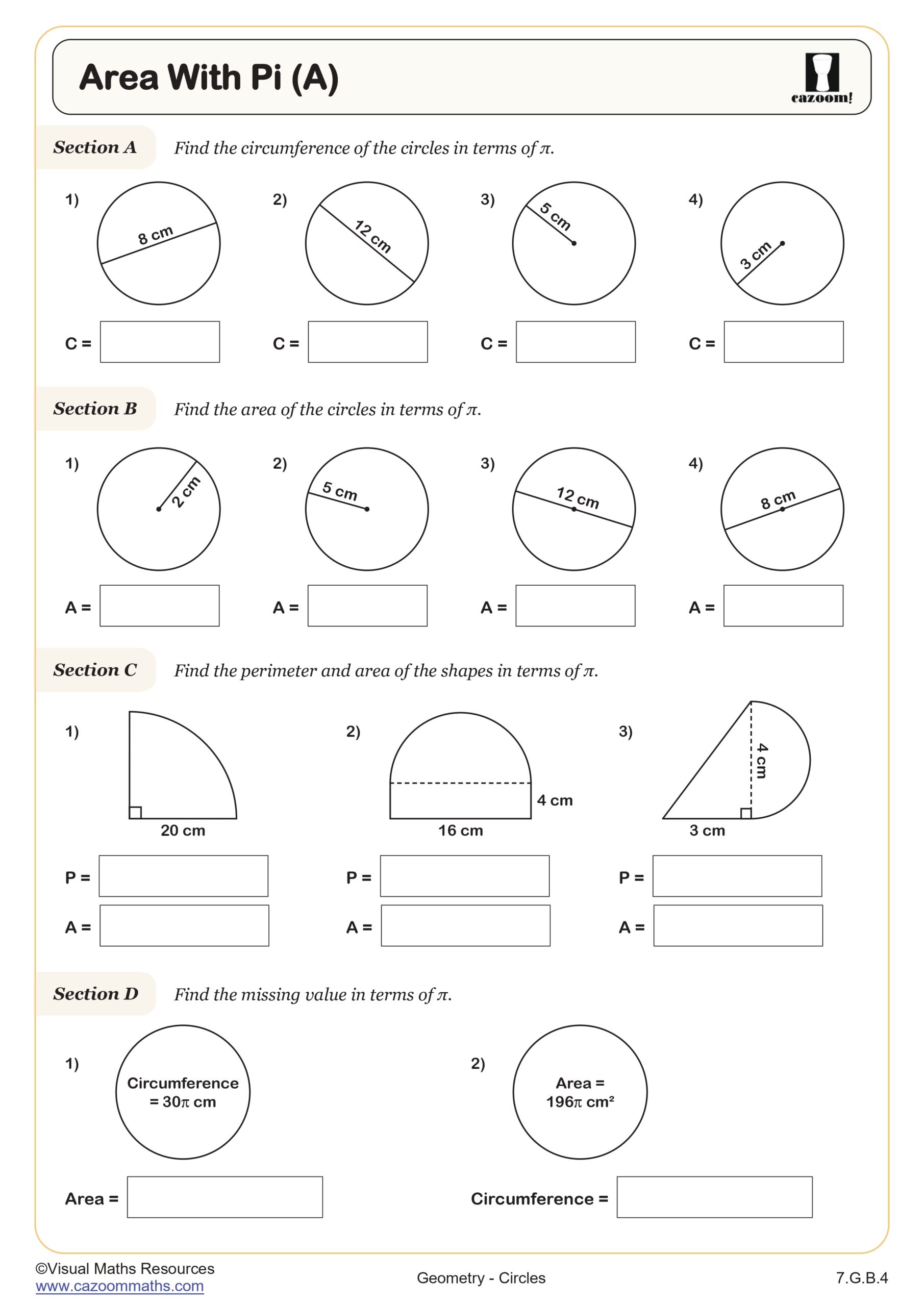
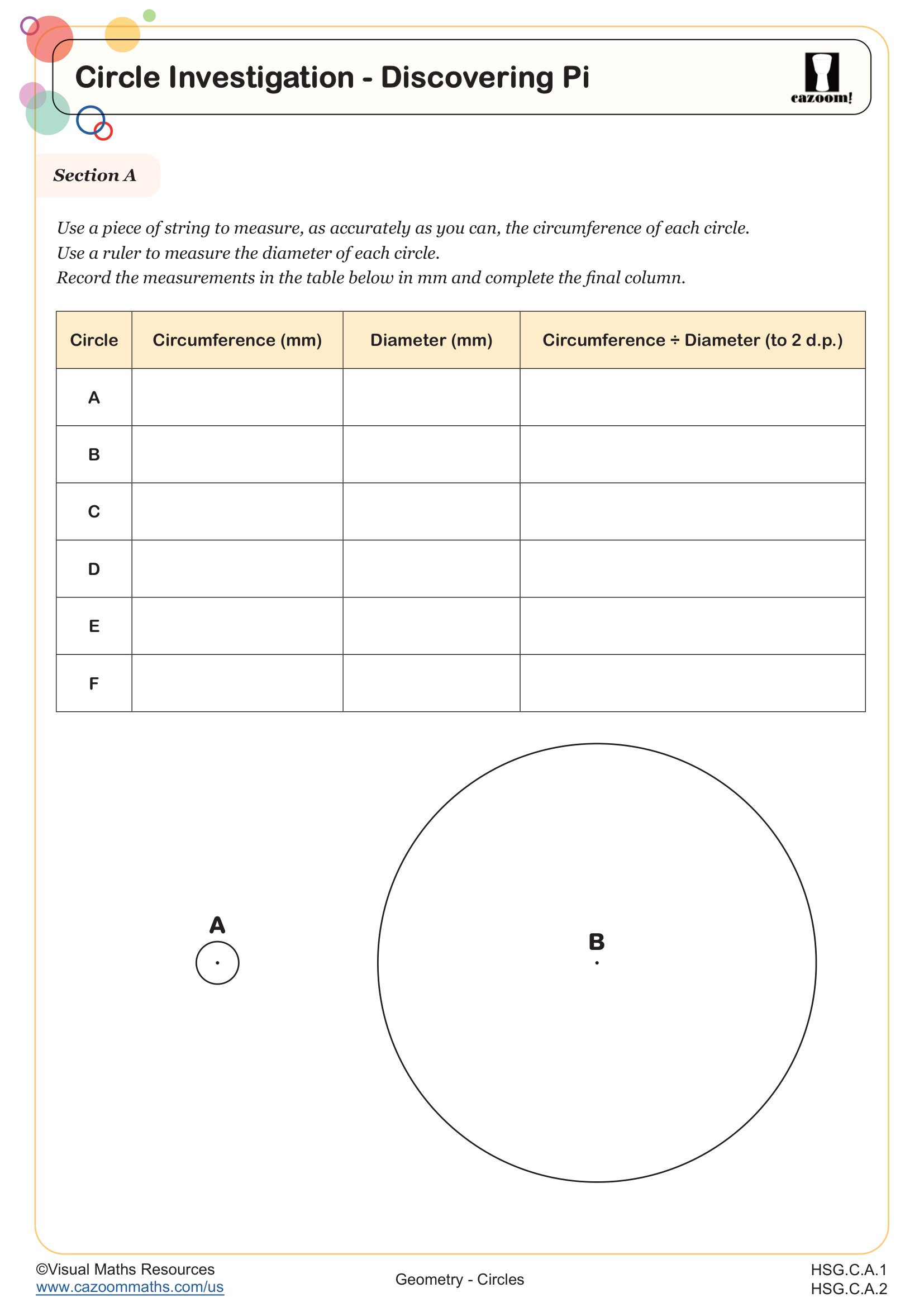
Circle Investigation - Discovering Pi
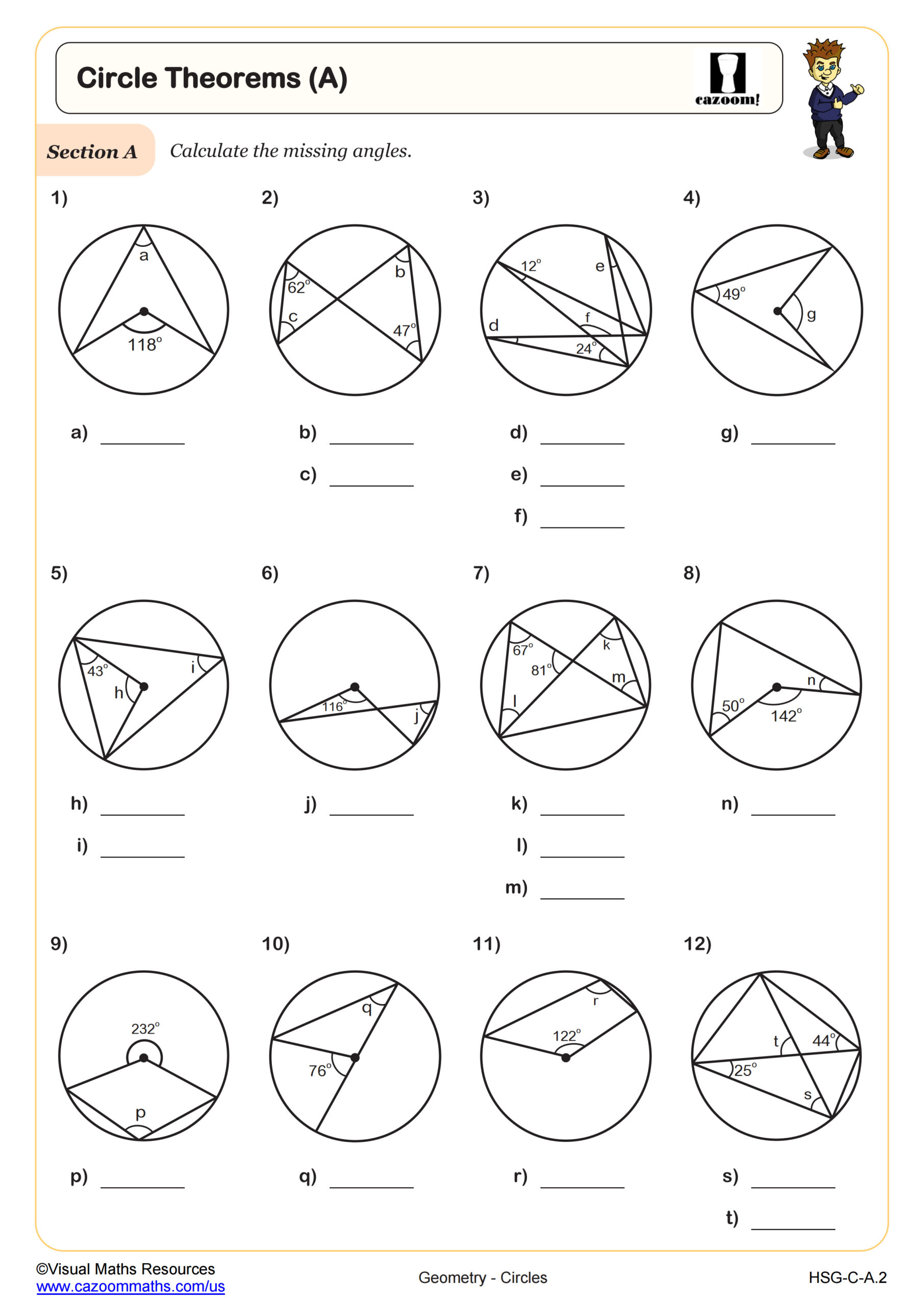
Circle Theorems (A)
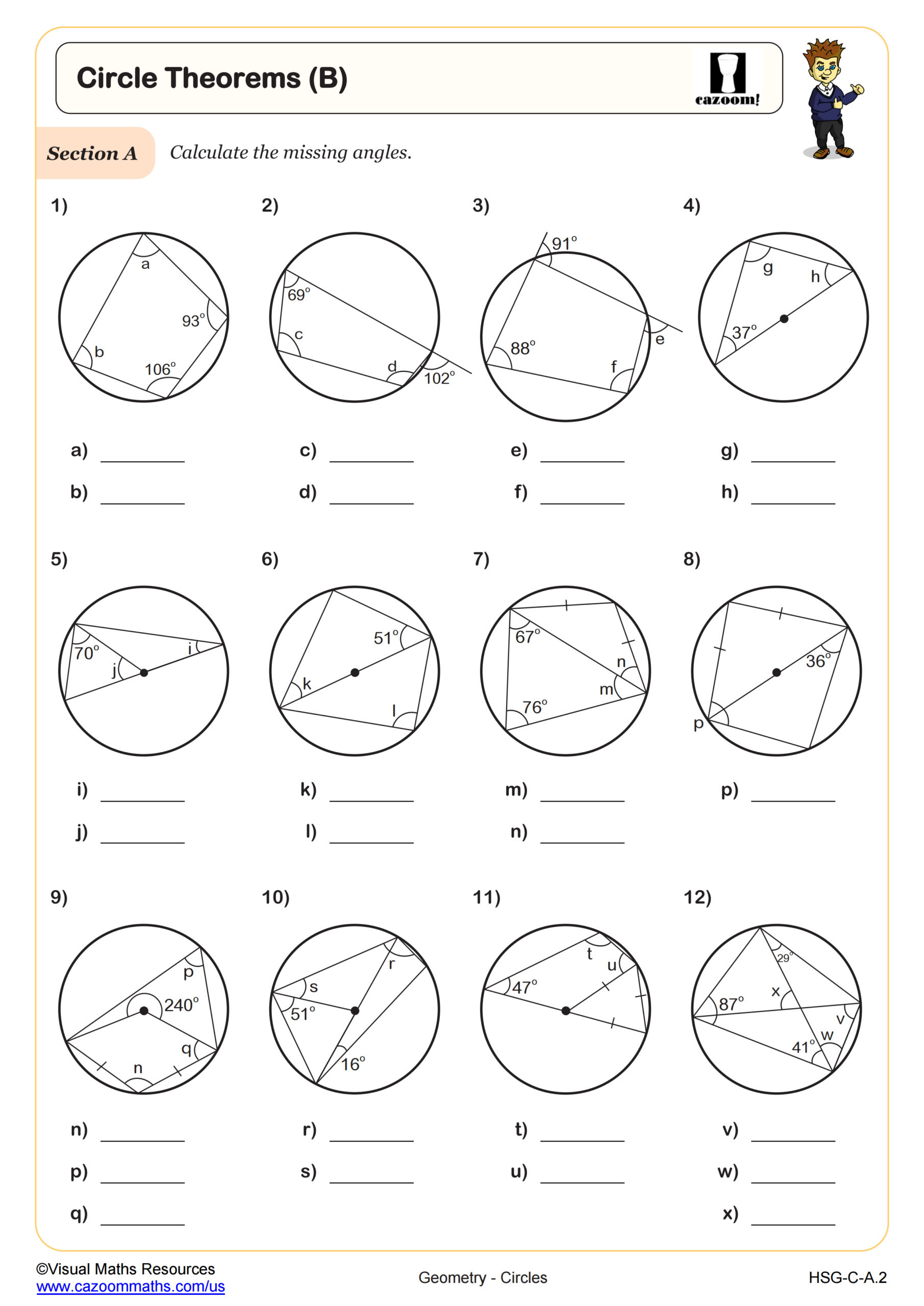
Circle Theorems (B)
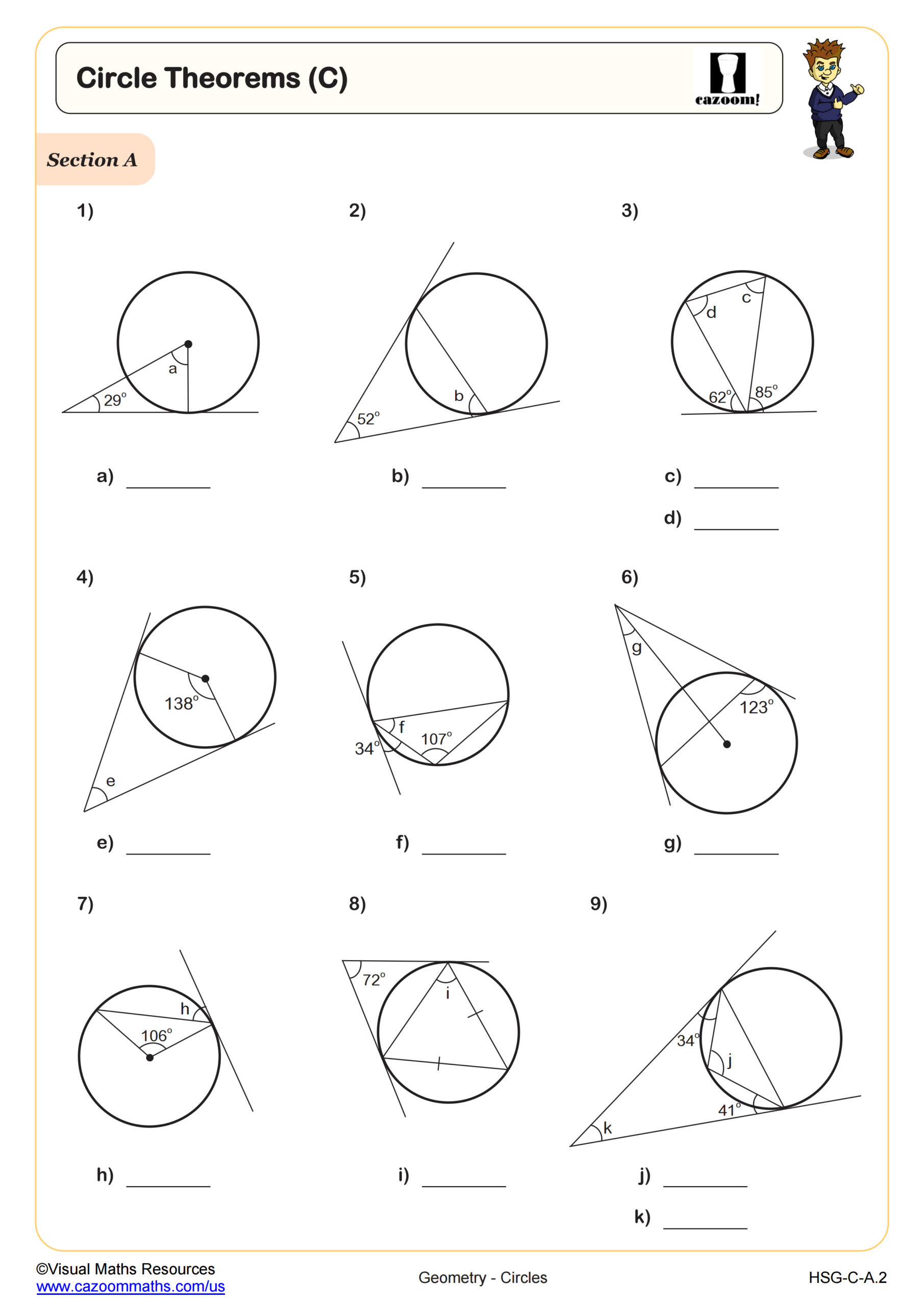
Circle Theorems (C)
Circle Theorems: Angle at Center Twice the Angle at Circumference
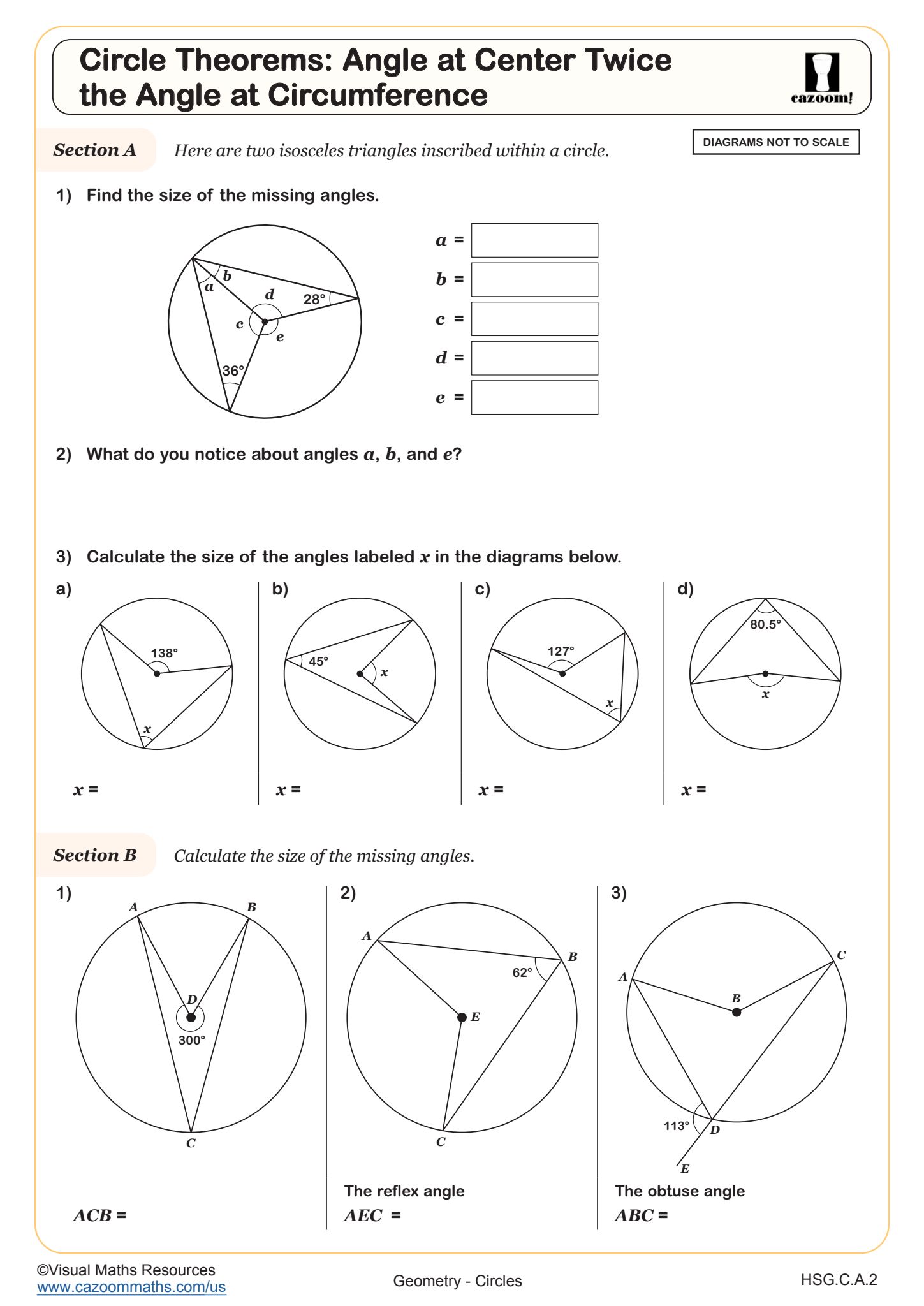
Circle Theorems: Angle Notation
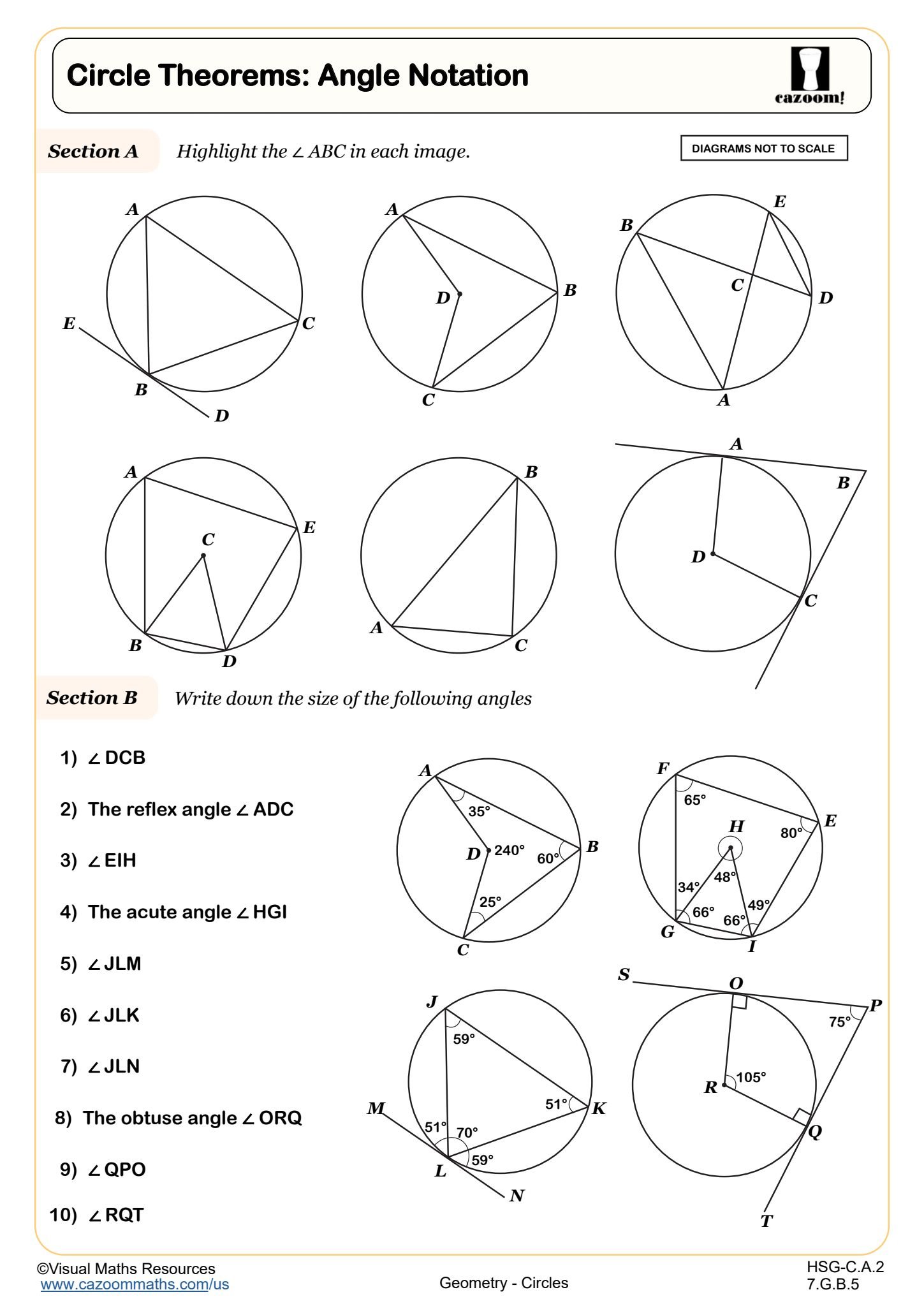
Circle Theorems: Cyclic Quadrilaterals
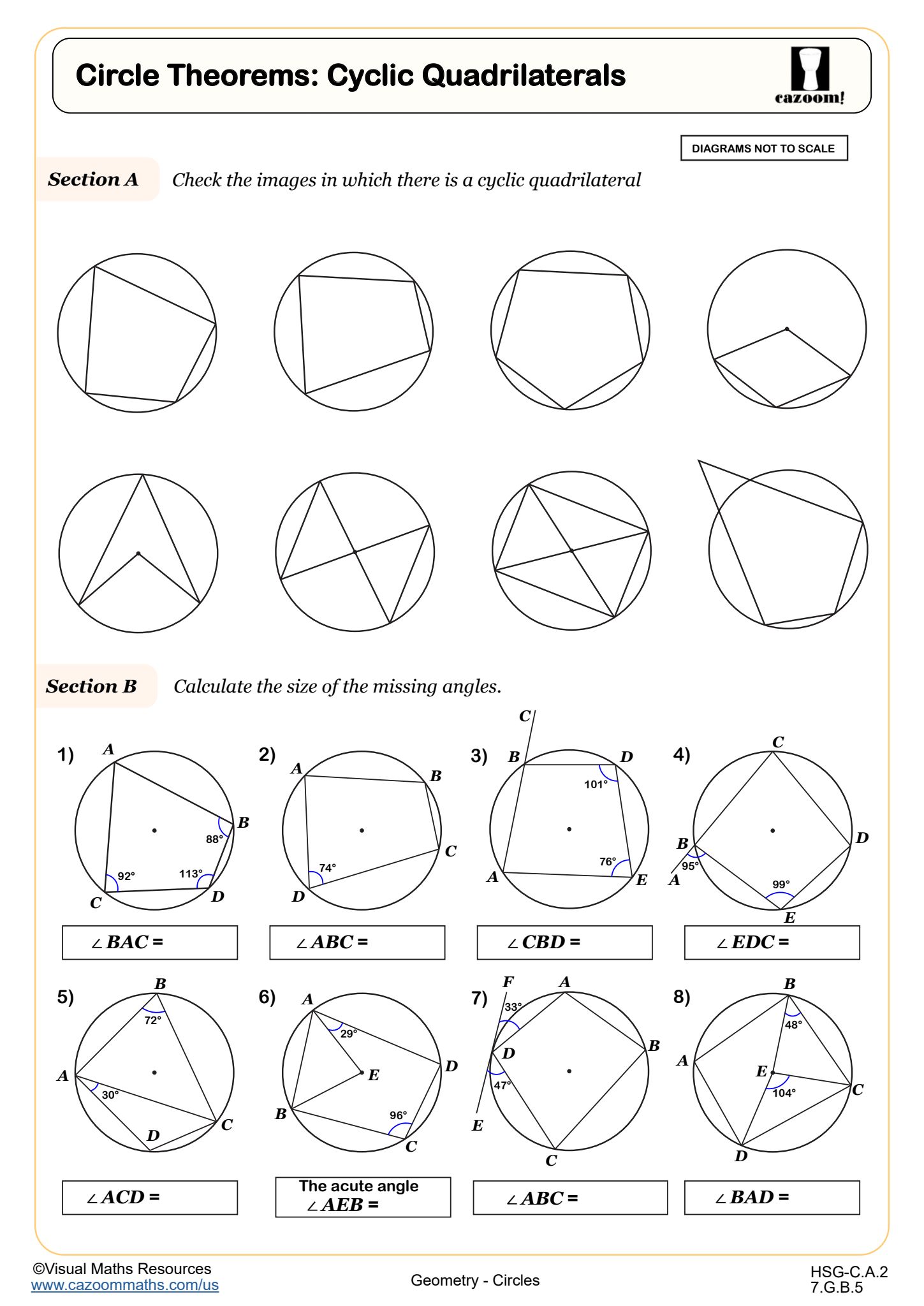
Circle Theorems: Triangles in Circles
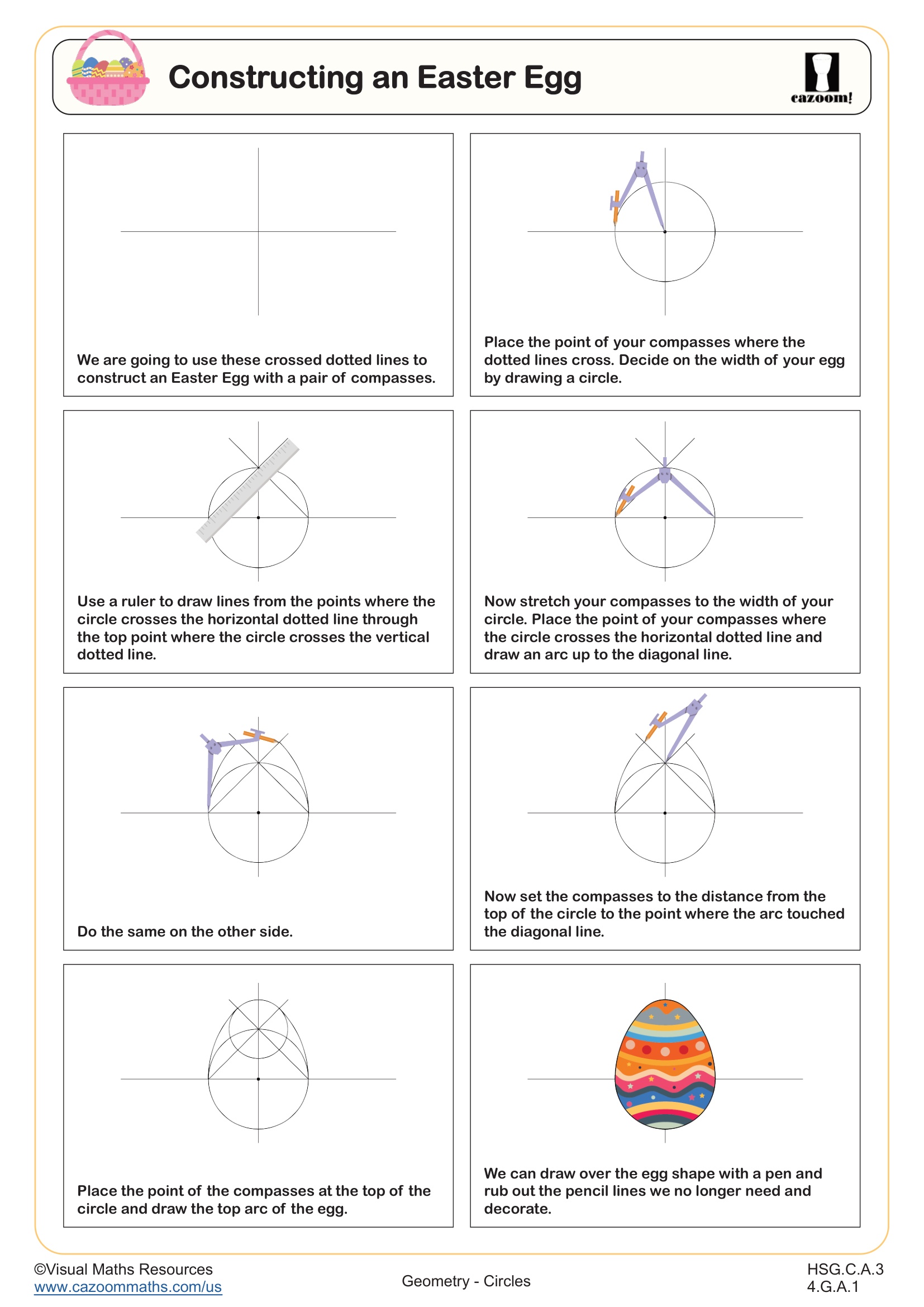
Constructing an Easter Egg
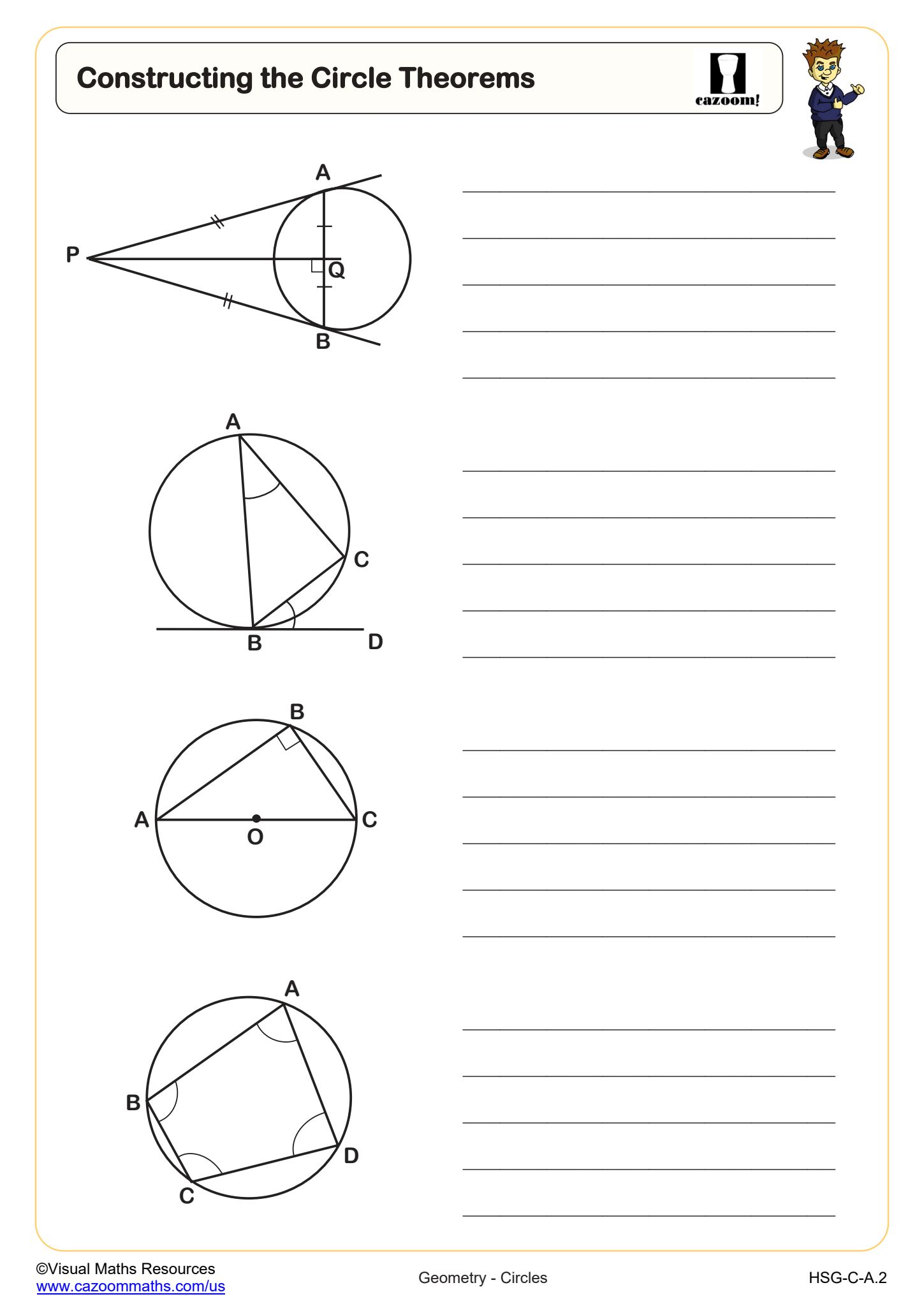
Constructing the Circle Theorems
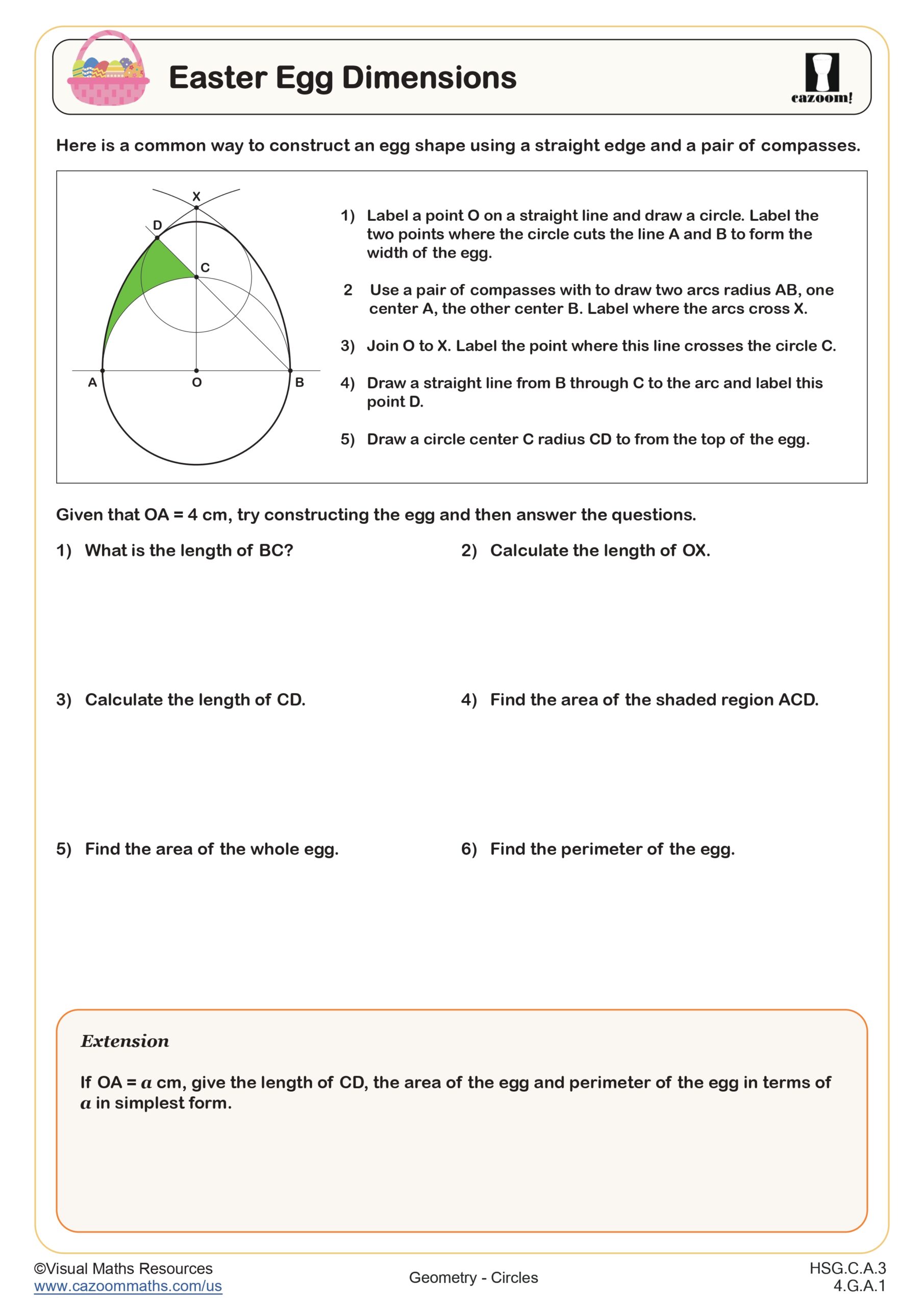
Easter Egg Dimension
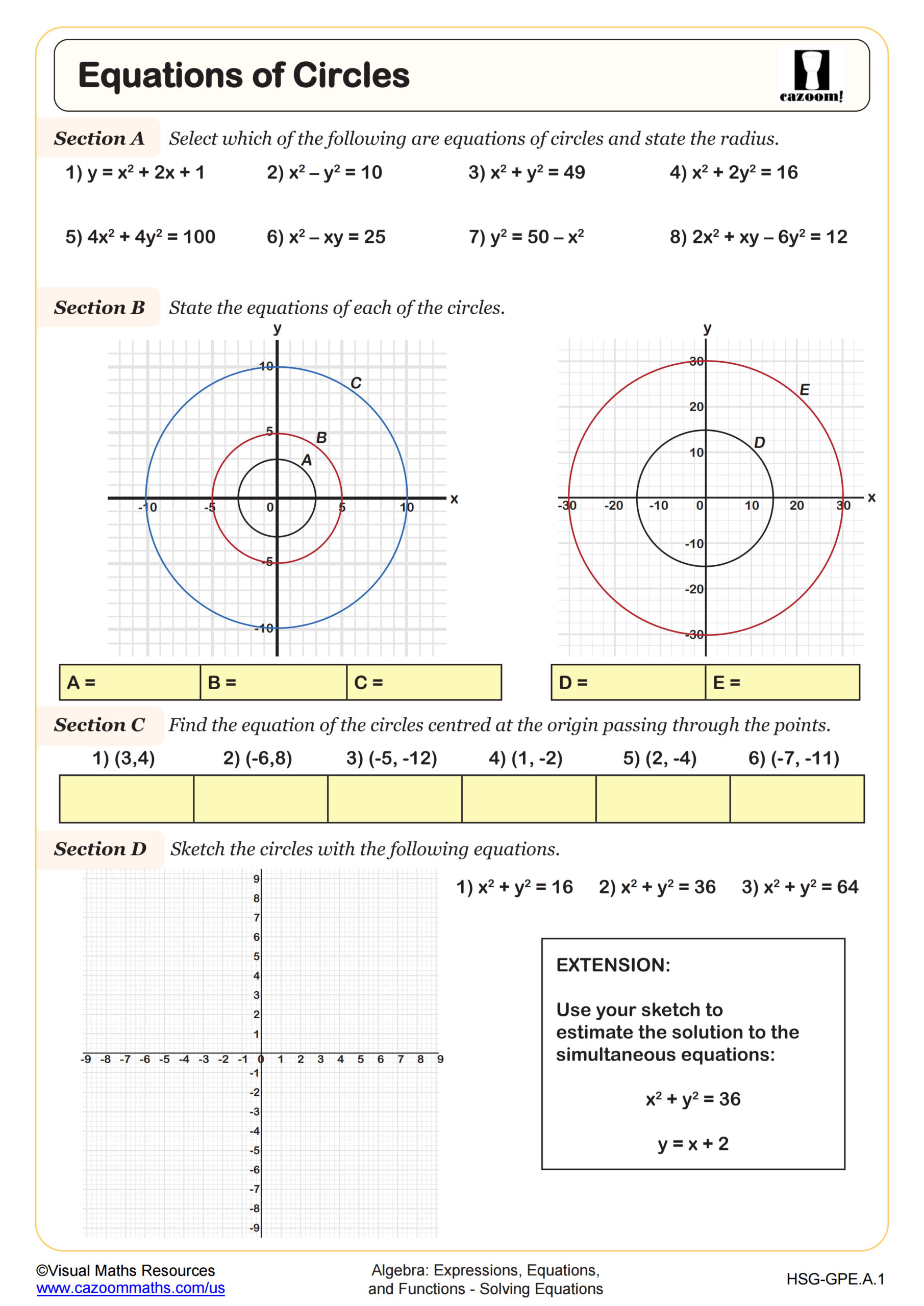
Equations of Circles
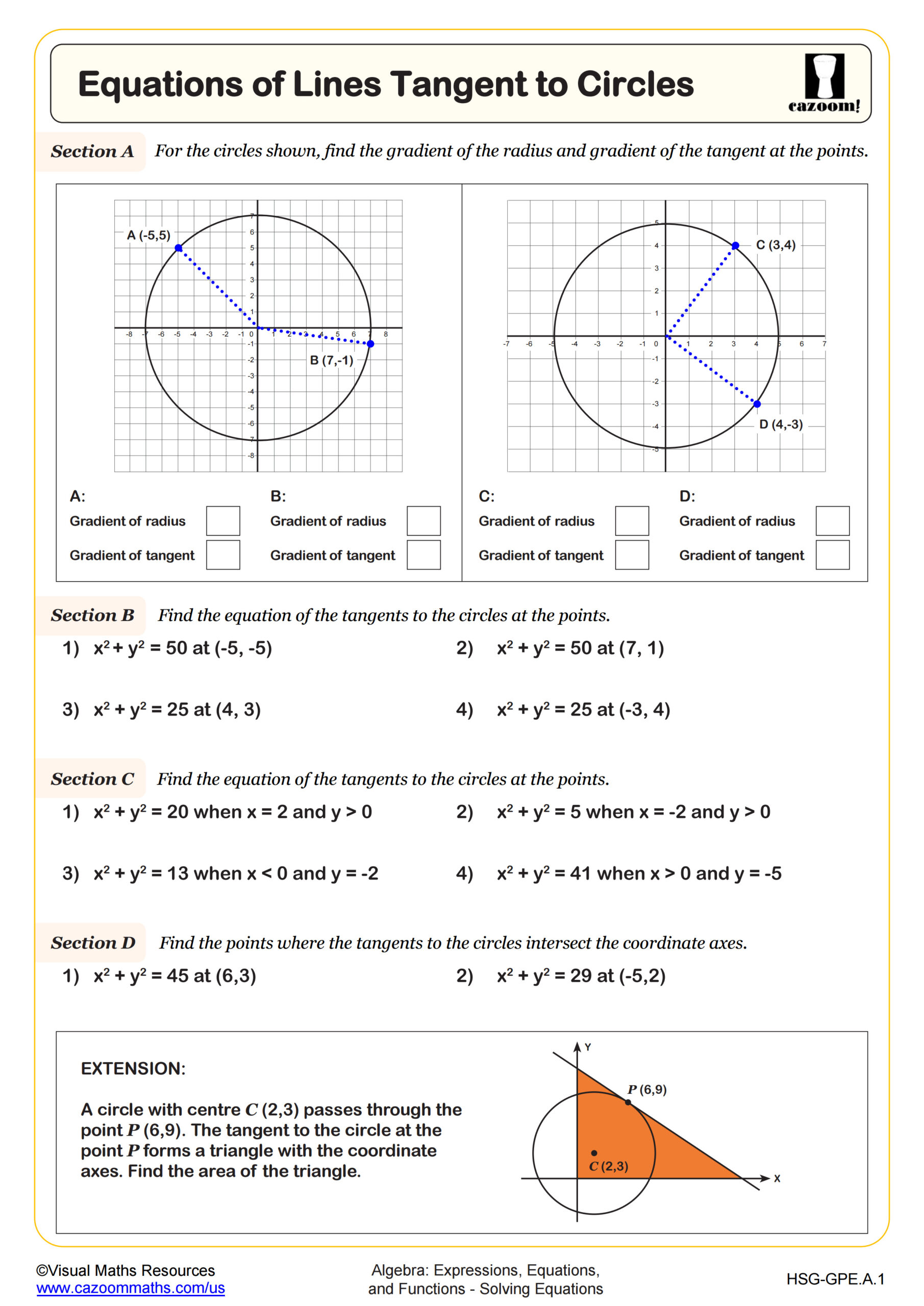
Equations of Lines Tangent to Circles
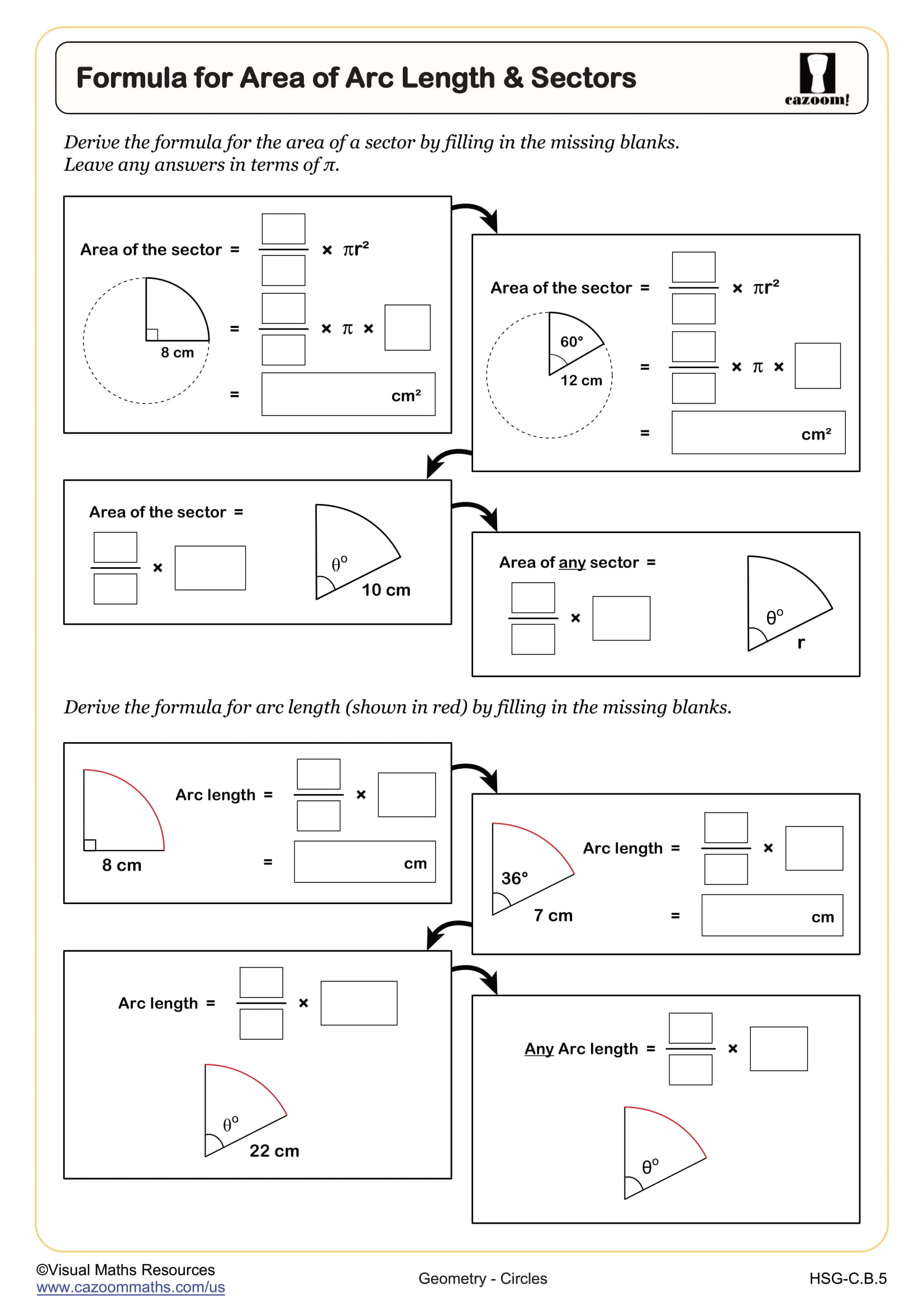
Formula for Area of Arc Length & Sectors
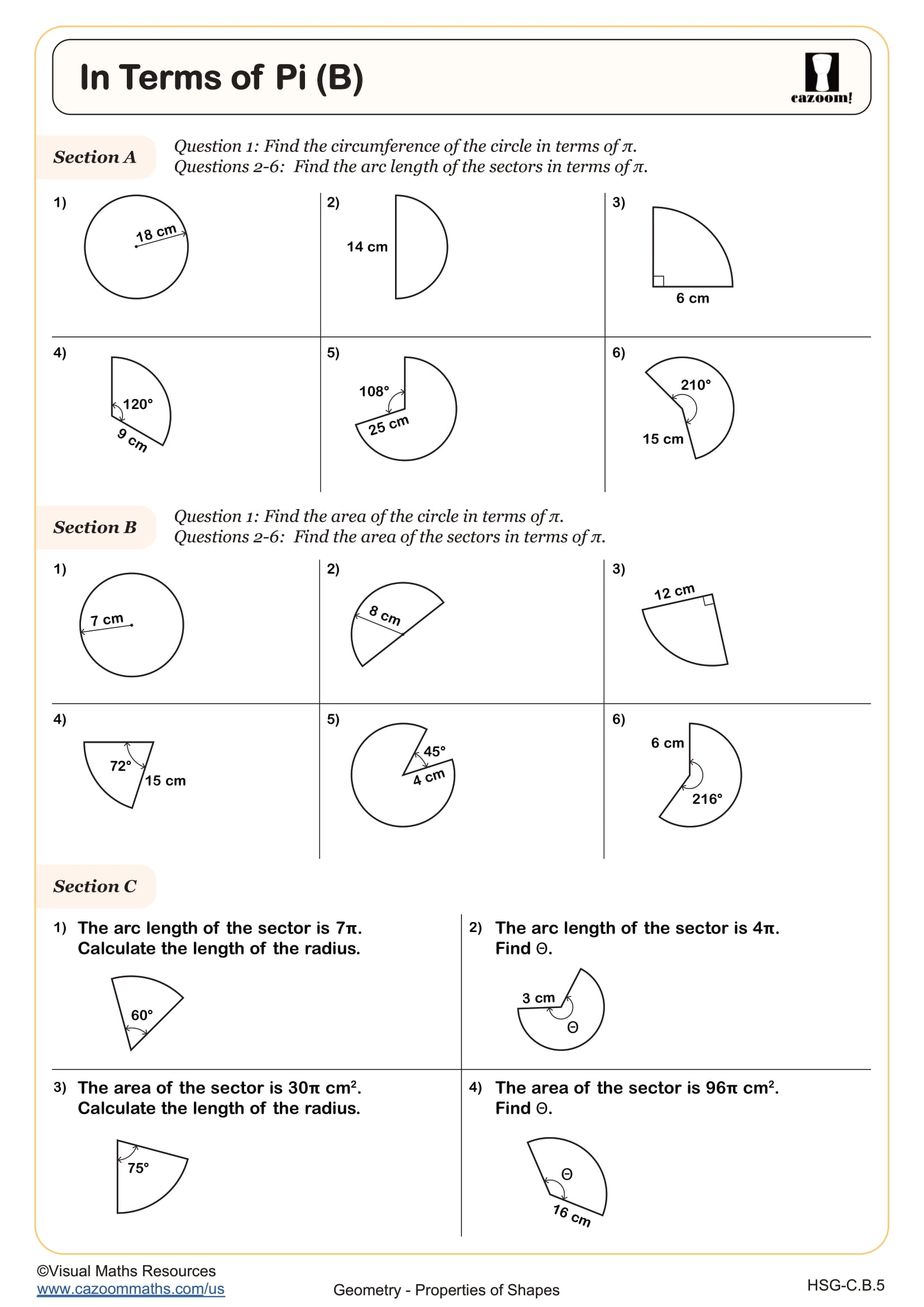
In Terms of Pi (B)
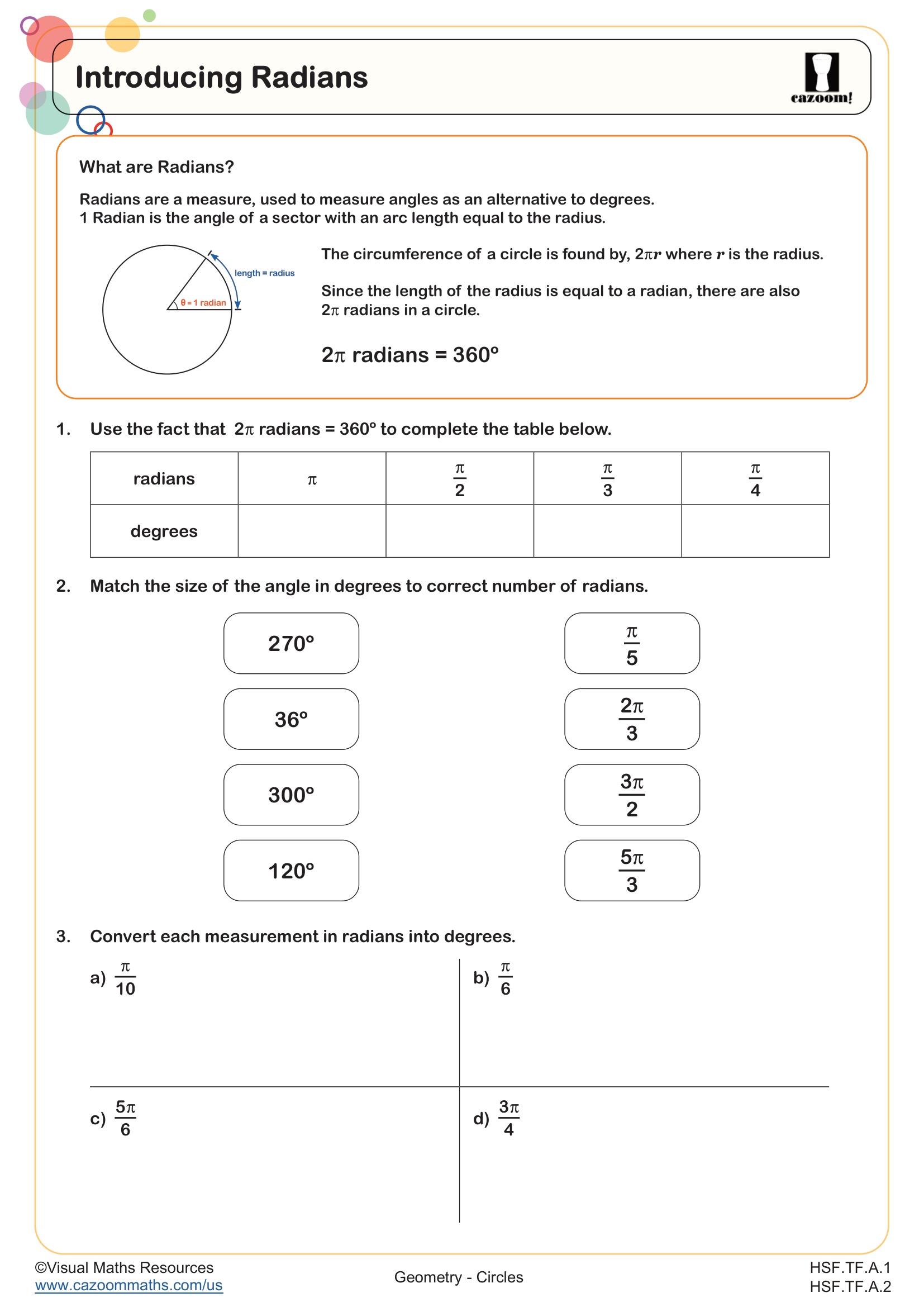
Introducing Radians
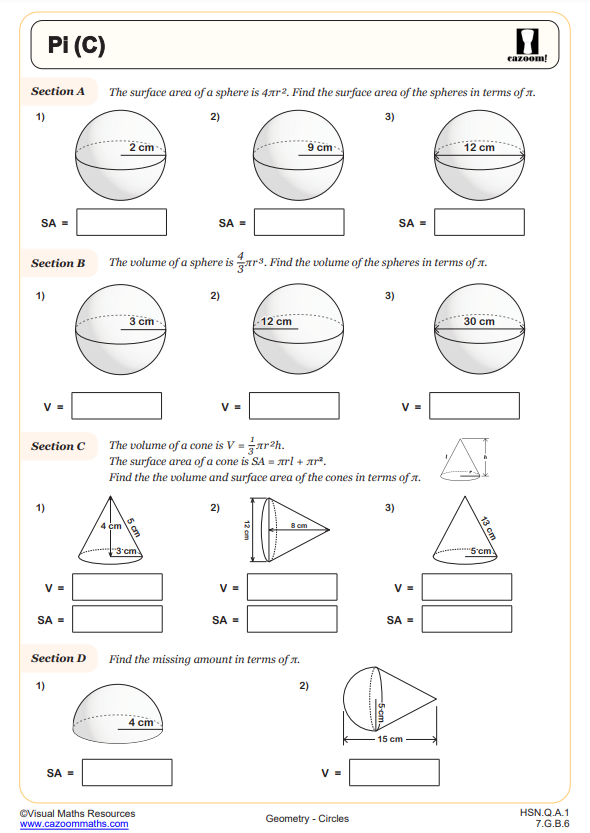
Pi (C)
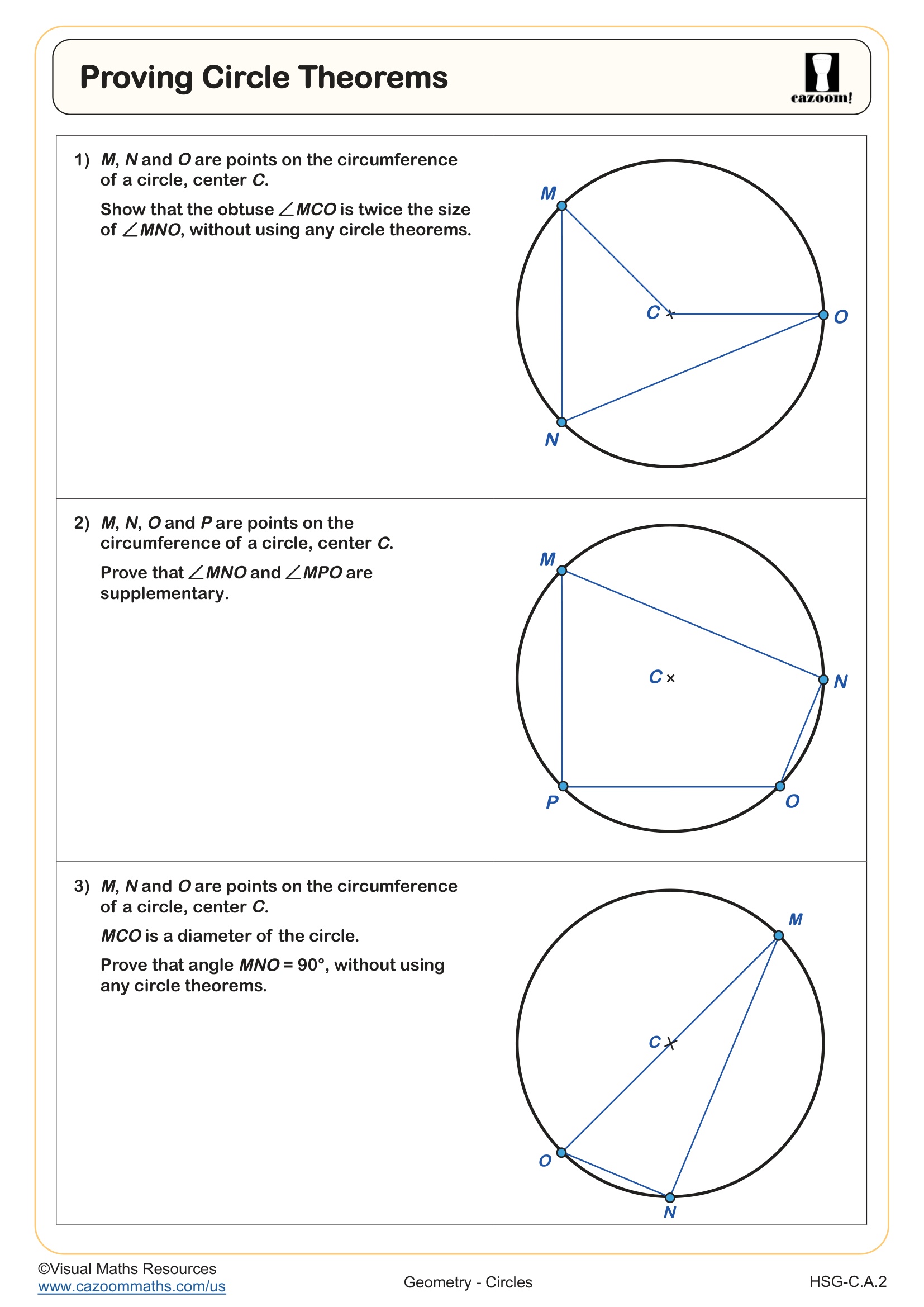
Proving Circle Theorems
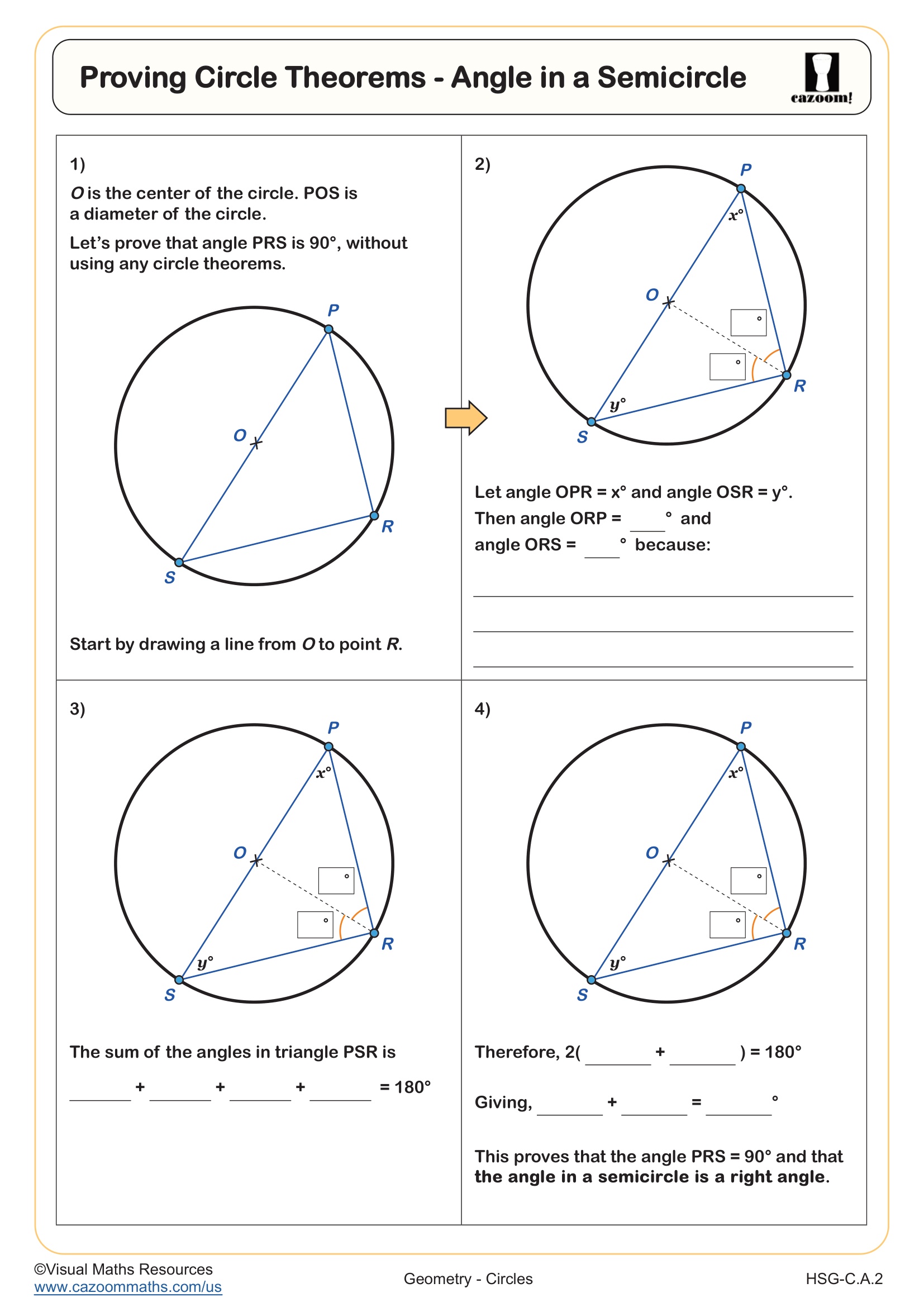
Proving Circle Theorems - Angle in a Semicircle
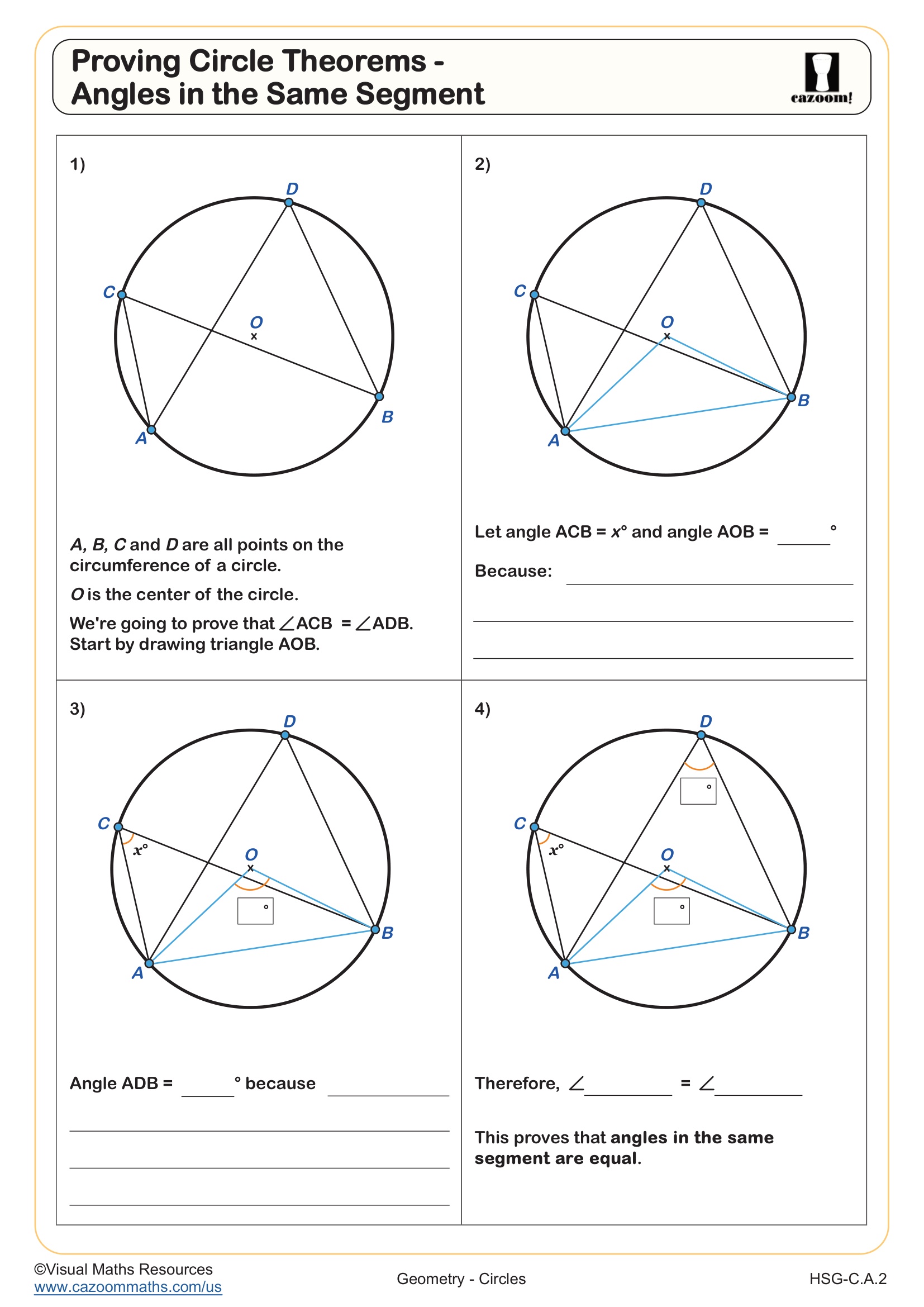
Proving Circle Theorems - Angles in the Same Segment
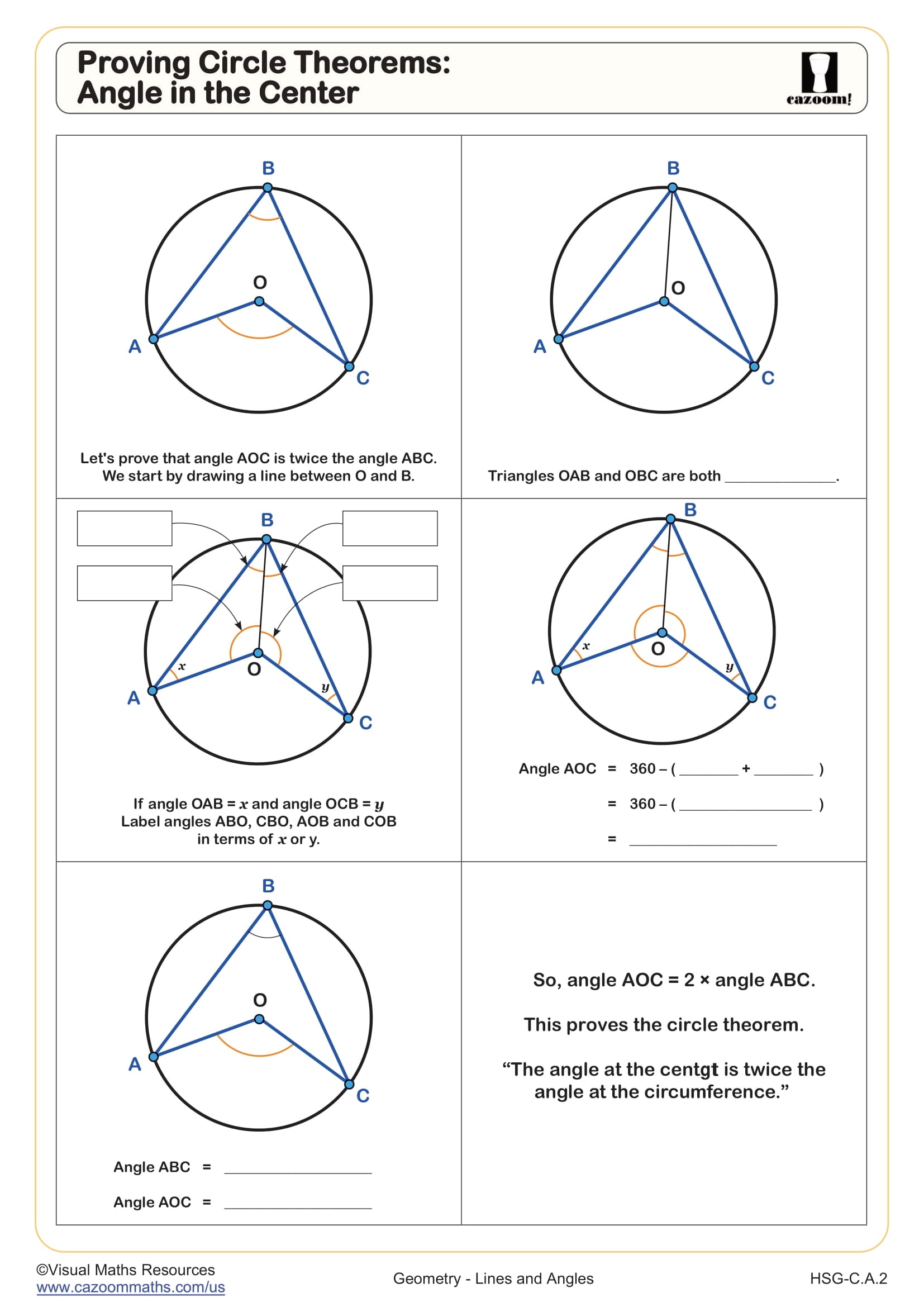
Proving Circle Theorems: Angle in the Center
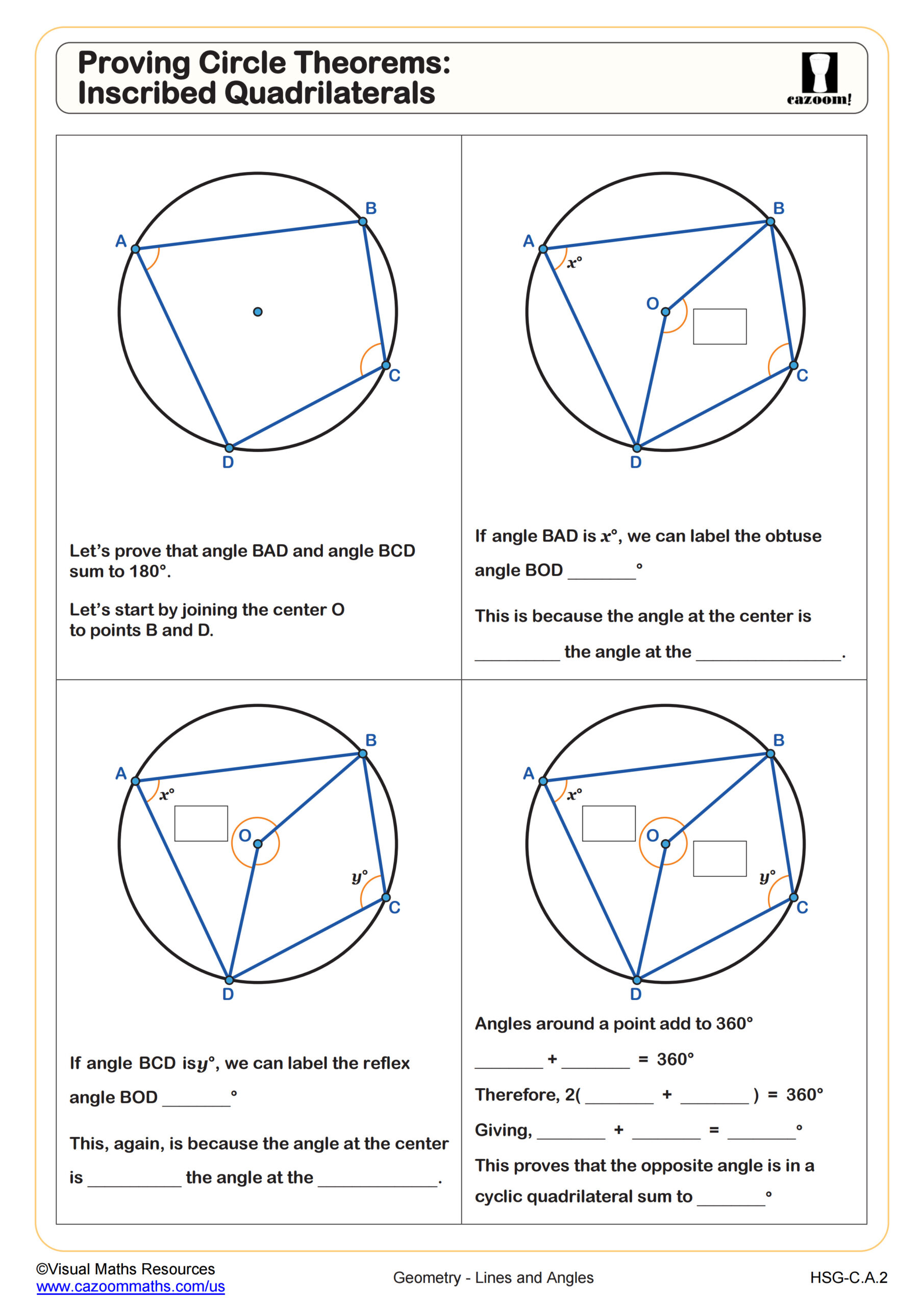
Proving Circle Theorems: Inscribed Quadrilaterals
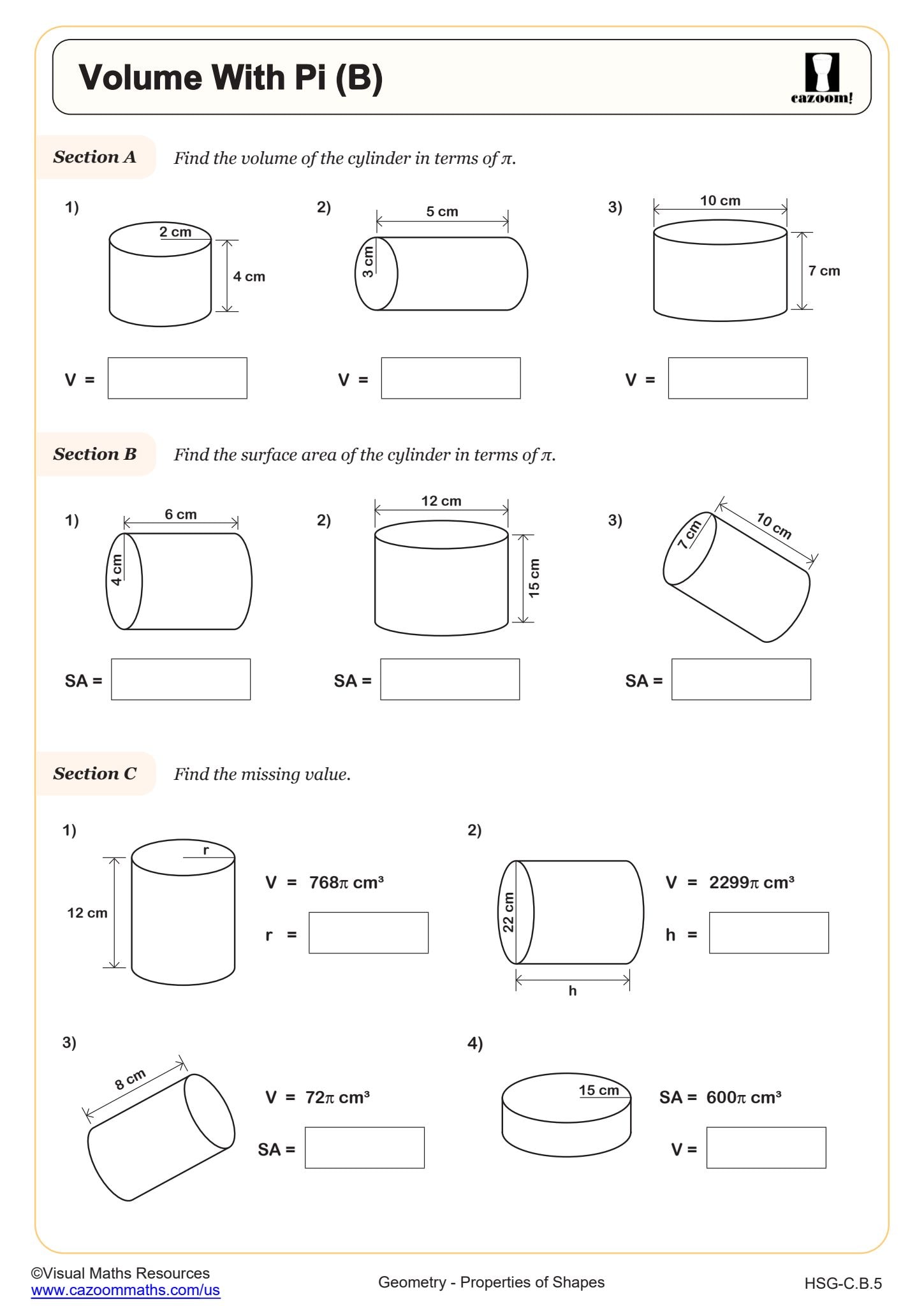
Volume With Pi (B)
All worksheets are created by the team of experienced teachers at Cazoom Math.
What circle concepts do high school students need to master?
High school students work with circles beyond basic formulas, developing skills in calculating area and circumference, applying circle theorems related to inscribed angles and triangles, and determining shaded regions within complex figures. These concepts appear throughout standardized assessments and connect directly to coordinate geometry, trigonometry, and calculus readiness. Circle theorems become particularly important in Geometry courses where students prove relationships between angles, chords, tangents, and arcs.
Students often lose points when they confuse diameter and radius in calculations, leading to answers that are off by a factor of four in area problems. Teachers notice this error persists even among otherwise strong students because the substitution happens automatically—students see a circle measurement and plug it directly into formulas without pausing to identify whether they're working with r or d. Worksheets that require students to first identify given information help reduce this common mistake.
Which grade levels study circles in high school math?
Circle concepts appear across Algebra I, Algebra II, Geometry, Precalculus, and all three Integrated Math courses (IM 1, IM 2, IM 3), though the depth and application vary significantly. Algebra I typically introduces coordinate geometry of circles and basic area-circumference relationships, while Geometry courses emphasize circle theorems, inscribed angles, and proofs. Algebra II and Precalculus extend these concepts to equations of circles, completing the square, and connections with trigonometric functions.
The progression moves from computational fluency with formulas to applying multiple concepts simultaneously in complex problems. Students in Geometry handle circle theorems involving triangles and angle relationships, while Precalculus students work with circles in polar coordinates and as special cases of conic sections. Integrated Math courses distribute these concepts across three years, revisiting circles with increasing sophistication as algebraic and geometric skills develop in parallel.
How do shaded region problems develop problem-solving skills?
Shaded region problems require students to decompose complex figures into recognizable shapes, determine which areas to add or subtract, and apply multiple formulas within a single problem. Students must visualize how circles, rectangles, triangles, and sectors combine, then create a calculation plan before executing any arithmetic. This multi-step reasoning mirrors authentic problem-solving where information isn't neatly packaged into single-formula exercises. Teachers notice breakthrough moments when students start sketching and labeling separate components rather than attempting to solve everything visually.
Architects and engineers regularly calculate material quantities for curved surfaces and circular elements in construction projects—from determining tile needed for rounded patios to calculating paint coverage for cylindrical storage tanks. Landscape designers compute mulch quantities for circular garden beds with internal walkways, exactly the type of composite area calculation students practice in shaded region worksheets. These spatial reasoning skills transfer directly to technical fields where circular components appear in everything from mechanical parts to urban planning.
How can teachers use circle worksheets effectively in class?
Circle worksheets work well as skill-building tools when students need focused practice moving from formula memorization to application in varied contexts. The progression from straightforward circumference and area calculations to complex shaded regions allows teachers to differentiate instruction—some students need computational fluency while others are ready for multi-step problem solving. Worksheets featuring circle theorems provide proof practice and theorem application, reinforcing the logical reasoning standards emphasized in high school geometry courses.
Many teachers use these worksheets for warm-up activities to reactivate prior knowledge before introducing related topics like sectors, arc length, or three-dimensional circular solids. They're equally valuable for intervention when formative assessments reveal gaps in understanding, or as homework that reinforces classroom instruction without requiring extensive teacher explanation. Paired work sessions where students compare solution strategies often reveal the multiple valid approaches to shaded region problems, strengthening mathematical discourse skills alongside computational accuracy.