High School Functions Worksheets
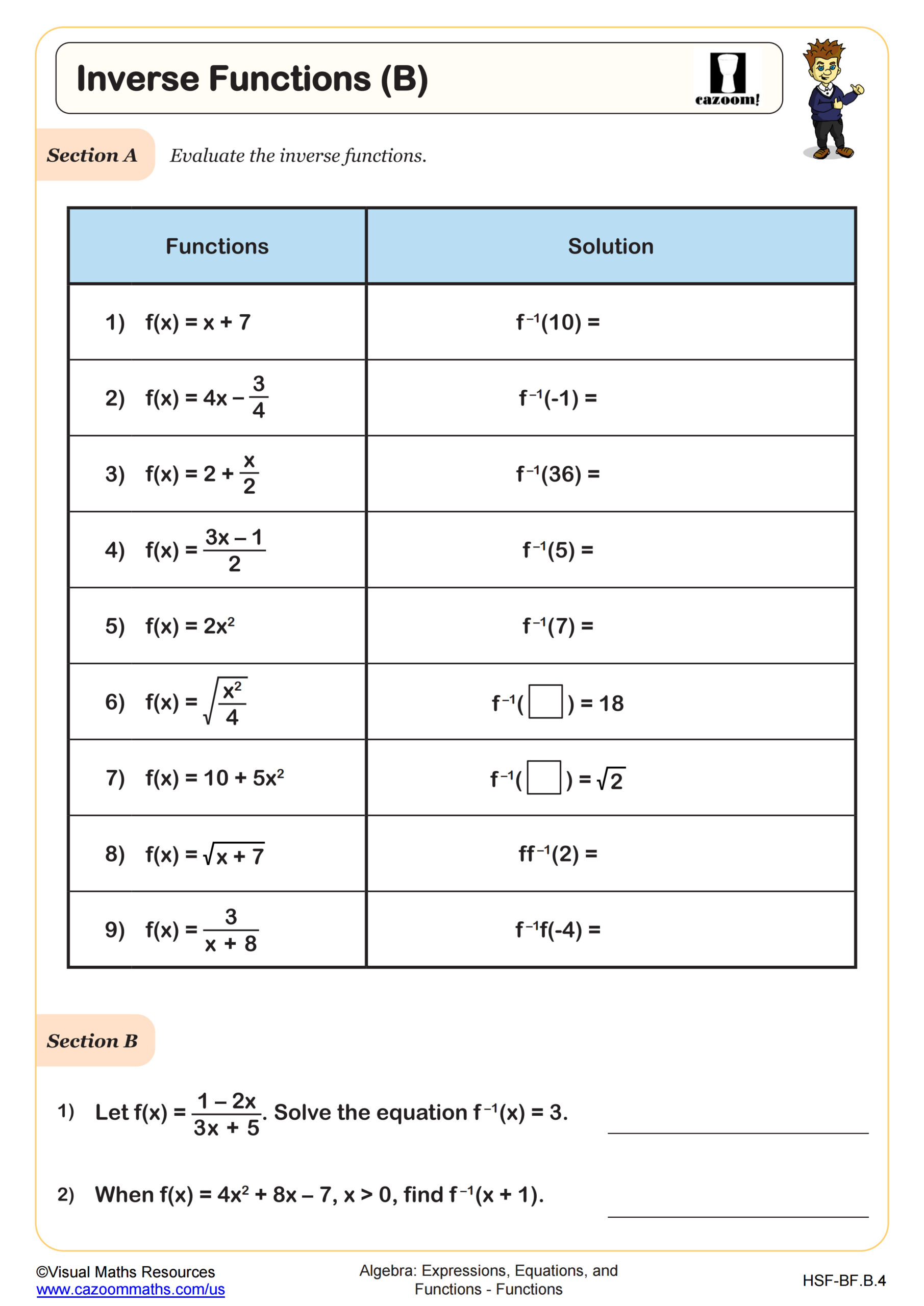
All worksheets are created by the team of experienced teachers at Cazoom Math.
What topics are covered in a functions worksheet for high school students?
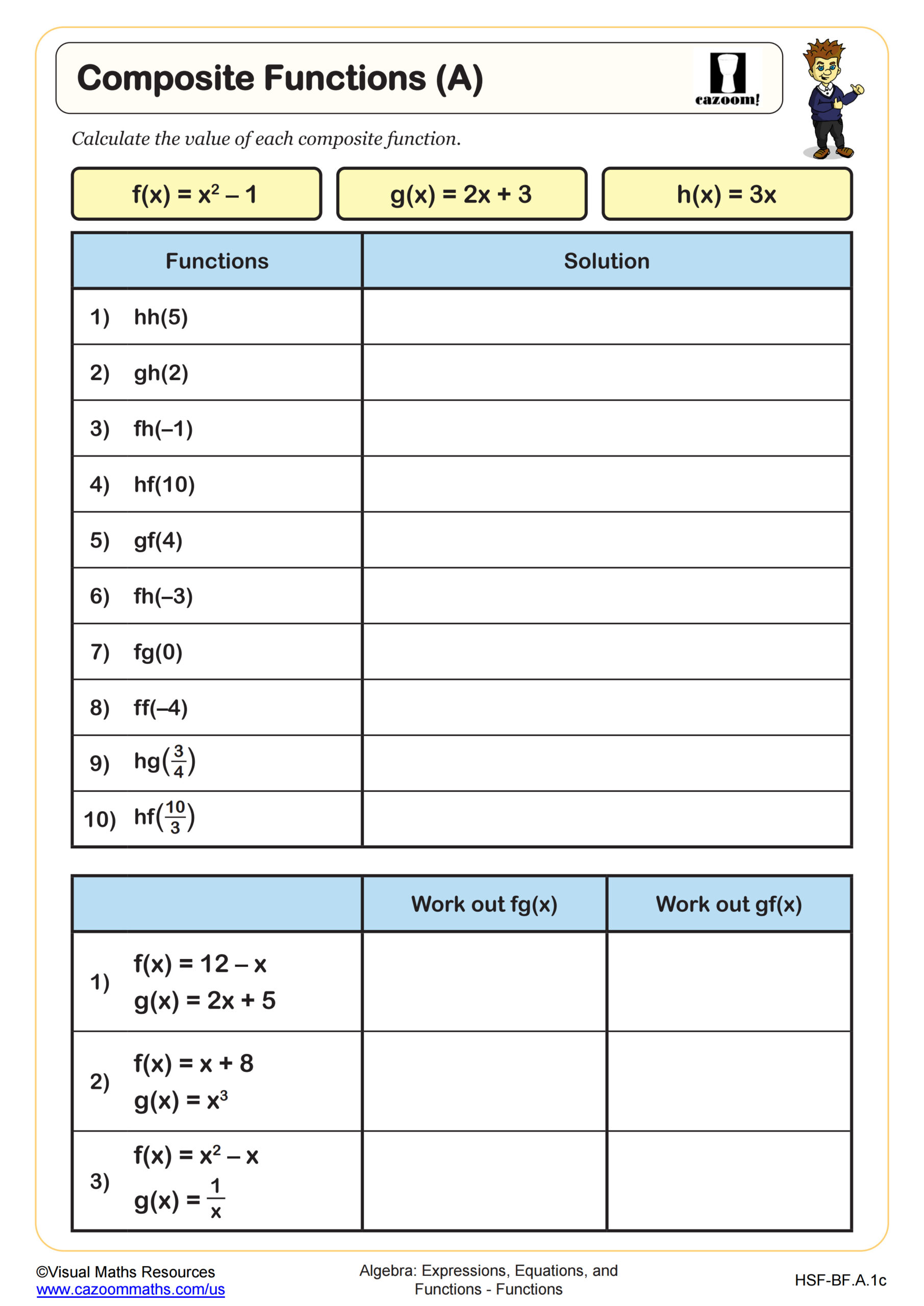
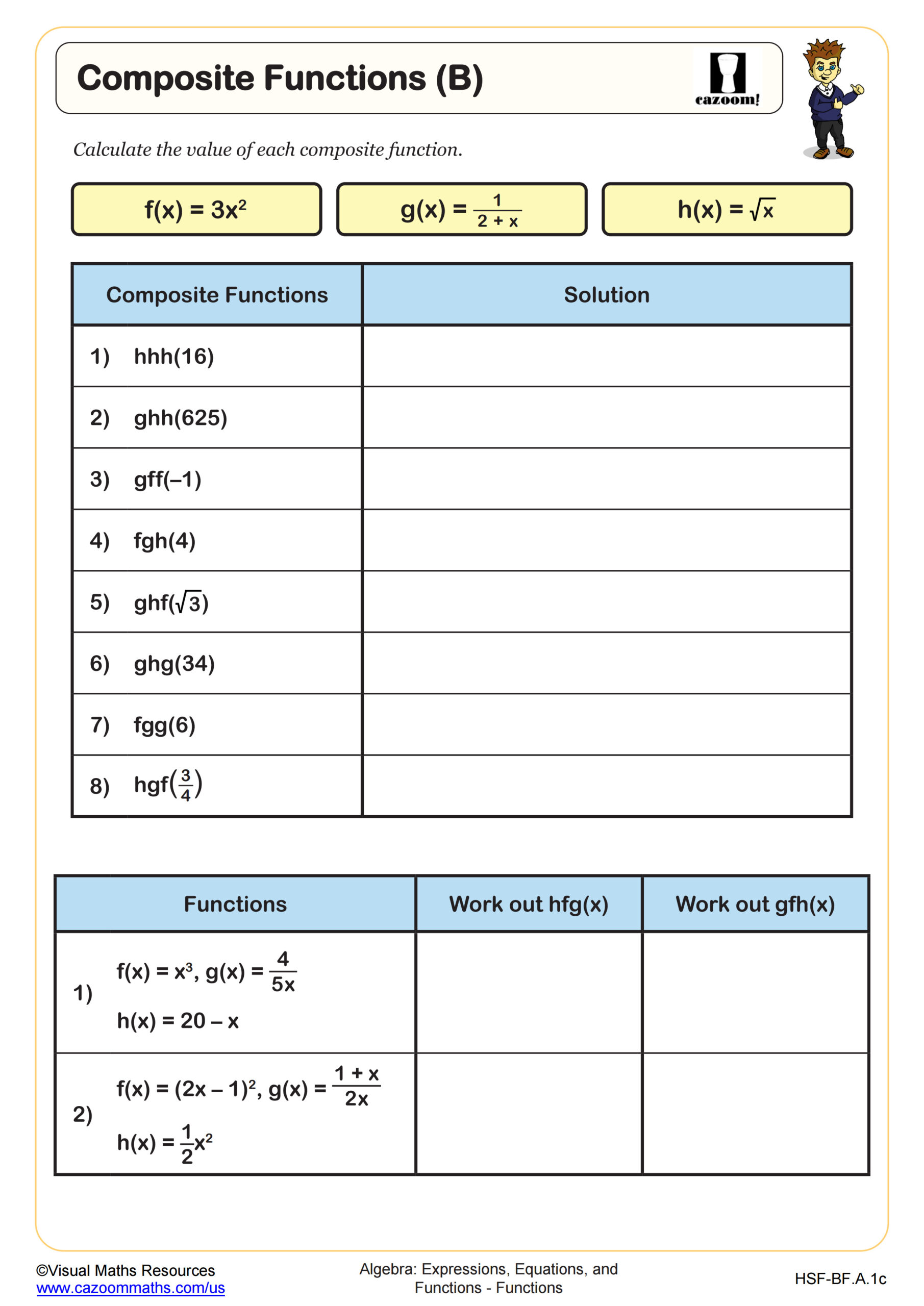
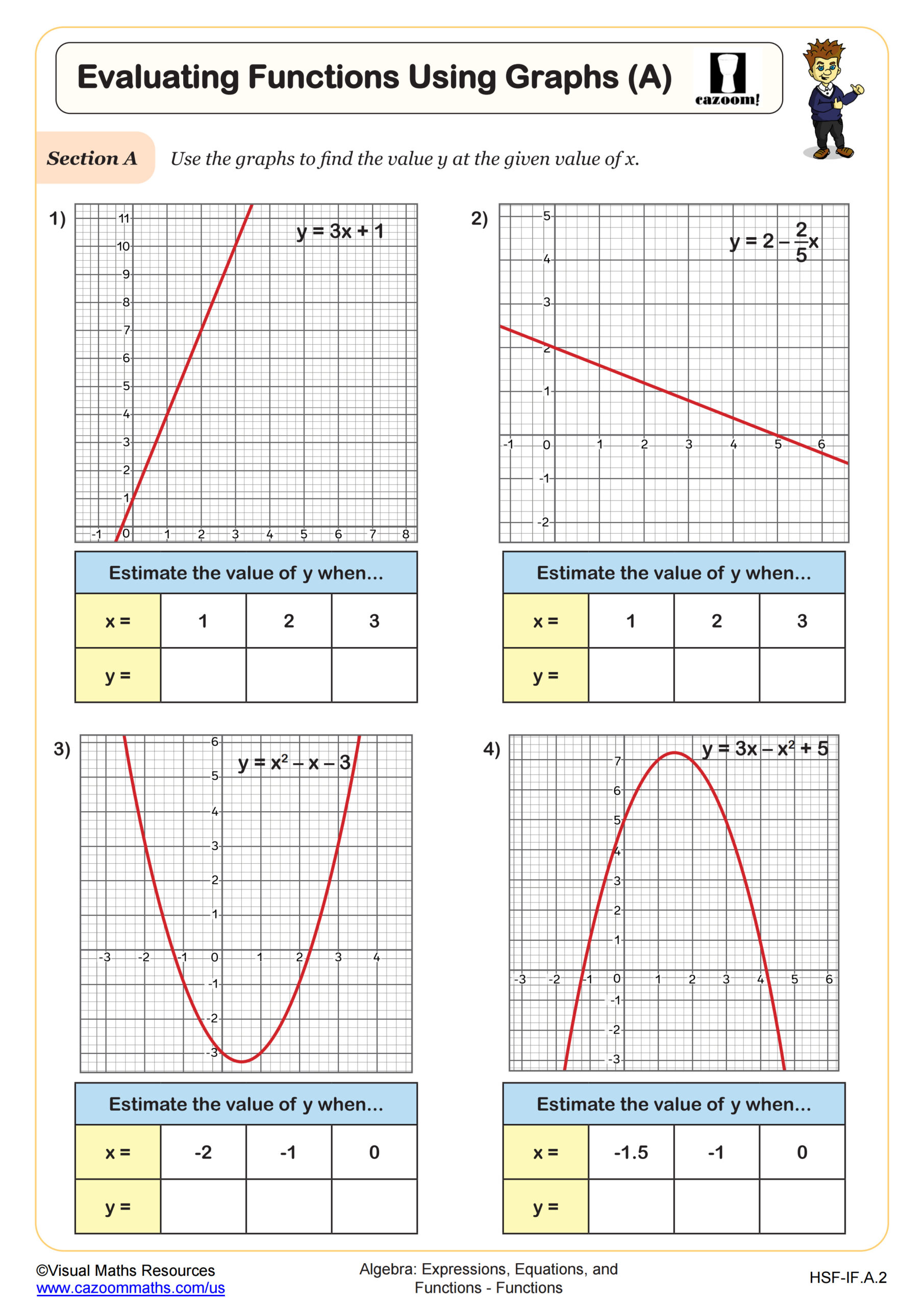
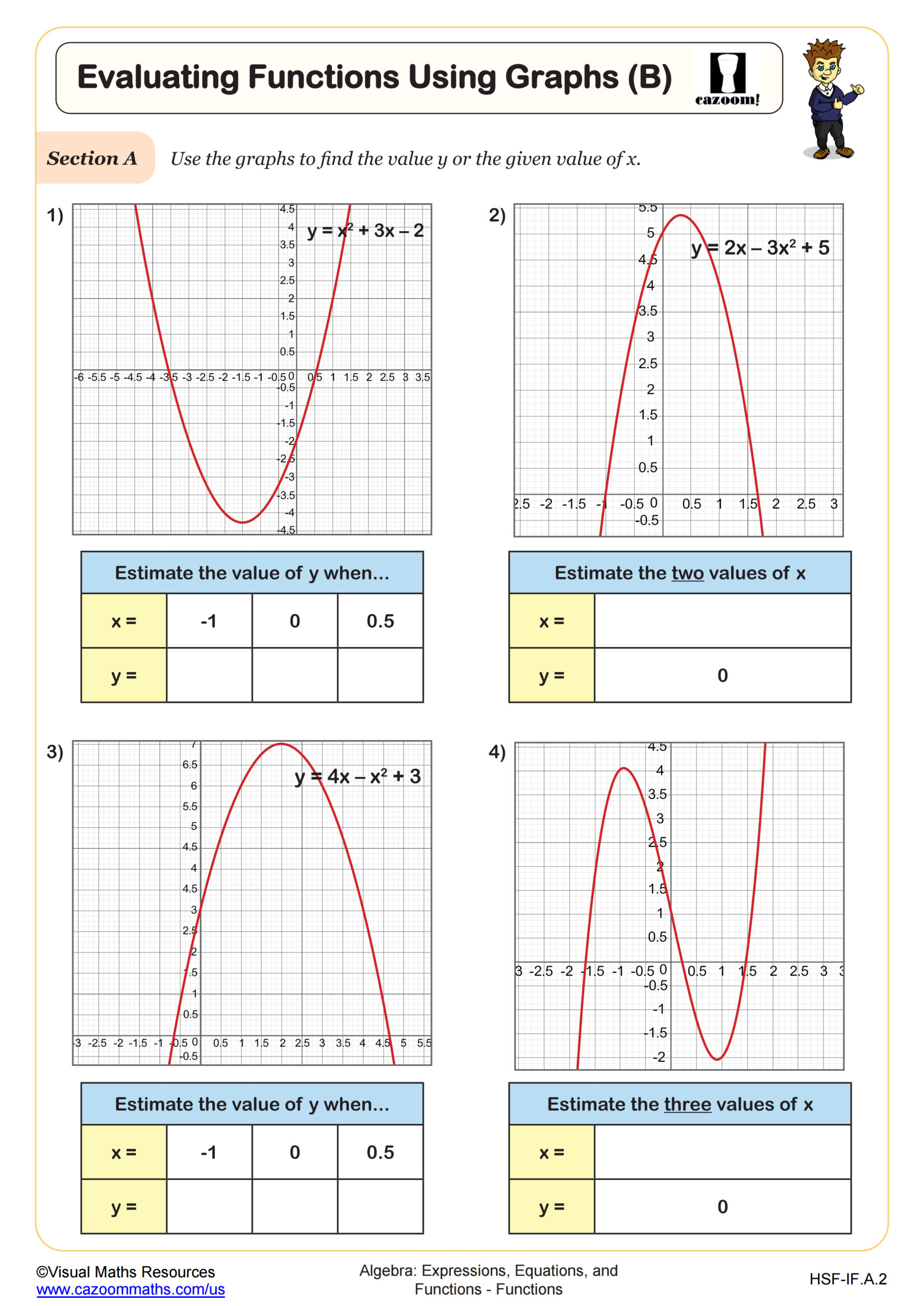
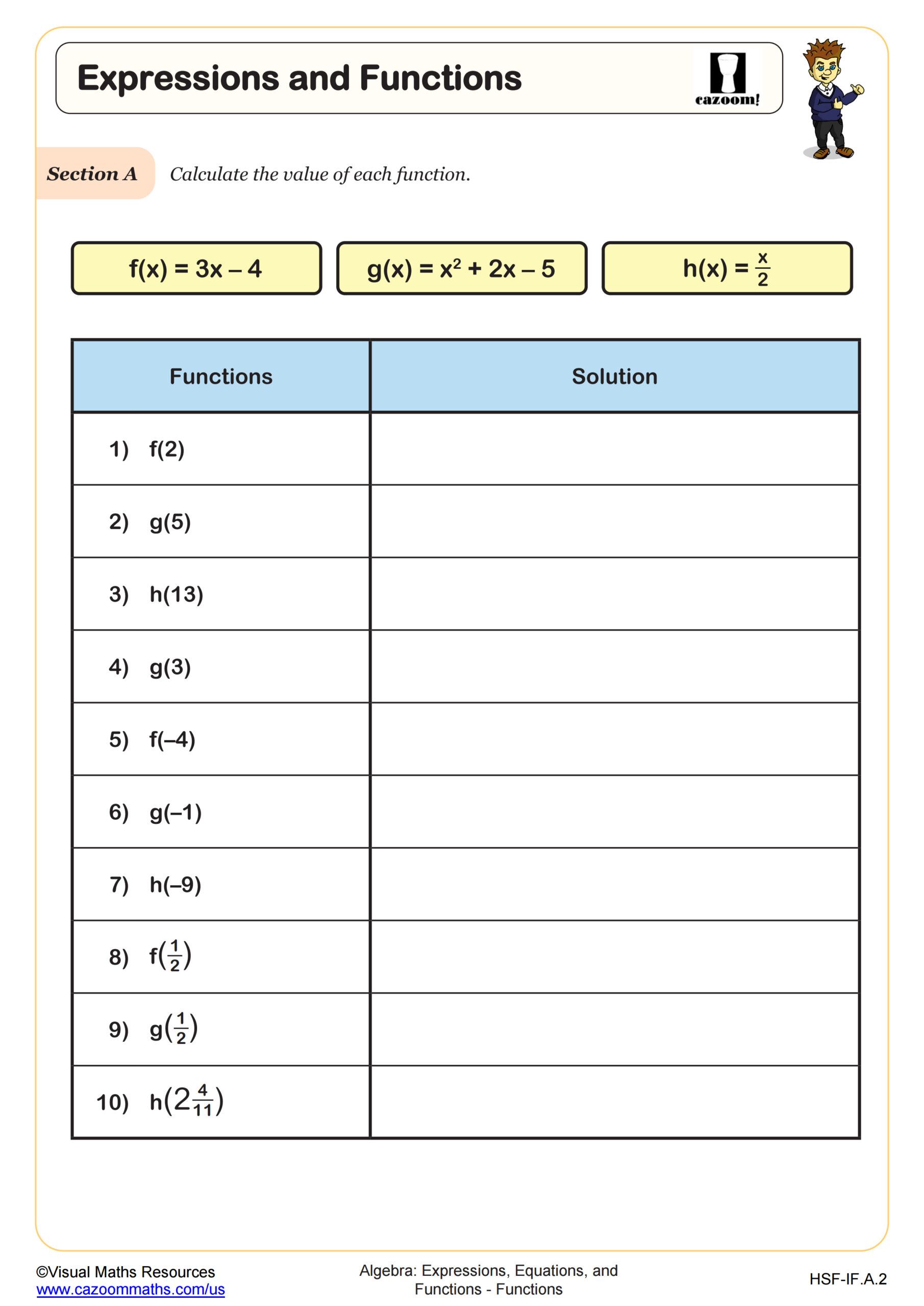
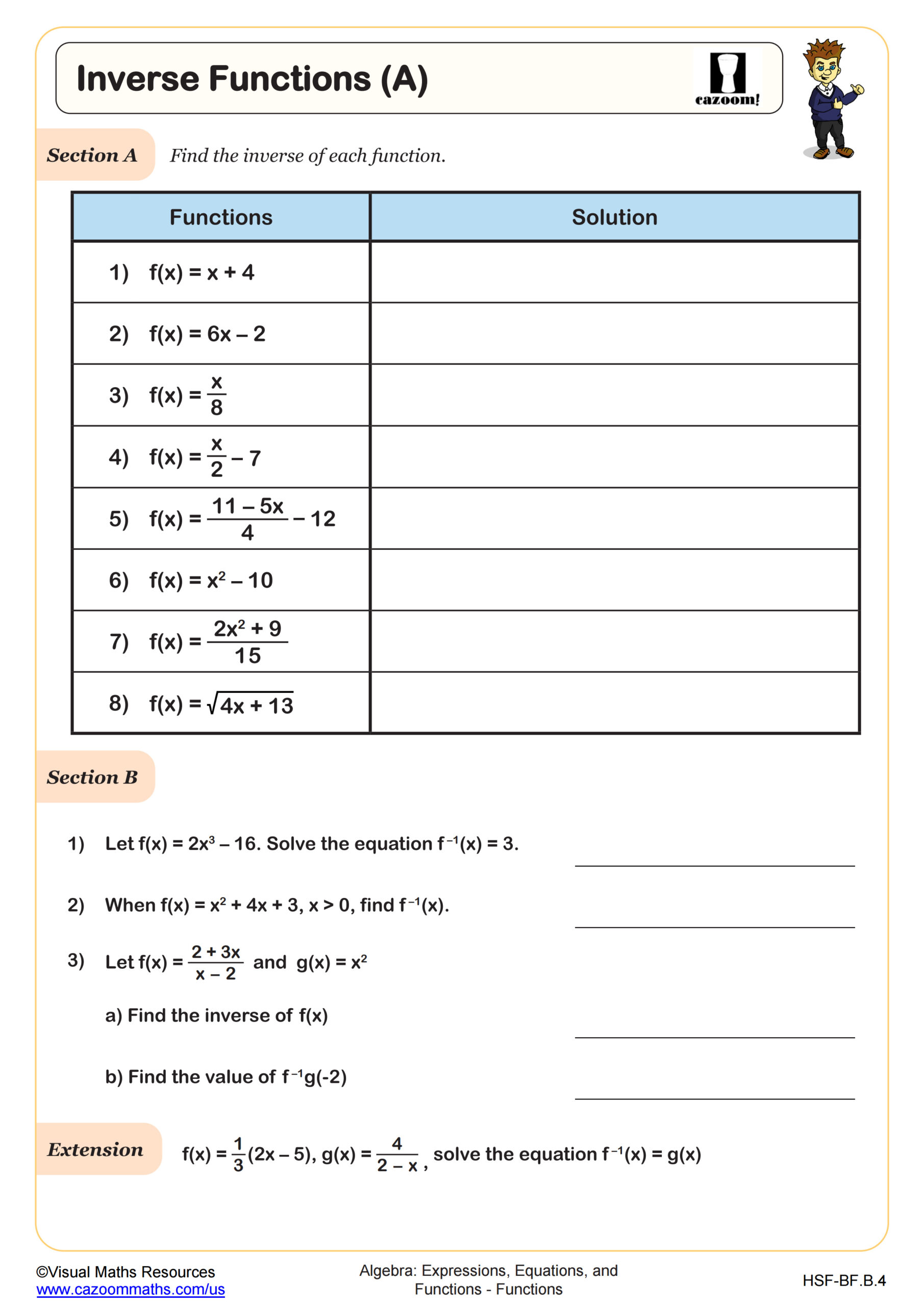
A thorough functions worksheet typically covers function notation, domain and range identification, function evaluation, graphing linear and quadratic functions, function transformations, inverse functions, and composite functions. High school curricula also include exponential and logarithmic functions, piecewise functions, and absolute value functions to meet Common Core Algebra 2 and Precalculus standards.
Teachers notice students frequently confuse function notation with multiplication, writing f(x) as f times x rather than f of x. Effective function worksheets include explicit practice distinguishing between these concepts, with problems that require students to evaluate functions at specific values while reinforcing that the parentheses indicate input, not multiplication.
Which grade levels should use high school functions worksheets?
High school functions concepts typically begin in Algebra 1 (grades 9-10) with basic linear functions, progress through Algebra 2 (grades 10-11) with quadratic and exponential functions, and culminate in Precalculus (grade 11-12) with advanced function operations. Many teachers introduce function notation in late Algebra 1 to prepare students for more complex work.
The progression allows students to build understanding gradually. Teachers find that 11th grade math students benefit most from thorough function practice as they prepare for calculus, where function fluency becomes targeted. Students who master functions in Algebra 2 show significantly better performance in advanced mathematics courses and STEM applications like engineering and physics modeling.
How should students approach function transformation problems?
Function transformation worksheets should teach students to identify parent functions first, then systematically analyze how parameters affect the graph. The standard approach involves recognizing vertical shifts (k), horizontal shifts (h), vertical stretches/compressions (a), and reflections in the general form f(x) = a(x - h) + k.
Teachers observe that students often apply transformations in the wrong order or confuse the direction of horizontal shifts. A common error involves thinking f(x - 3) shifts left instead of right. Effective worksheets provide step-by-step transformation sequences with visual representations, helping students develop systematic approaches rather than relying on memorization of individual cases.
What makes function practice worksheets effective for classroom use?
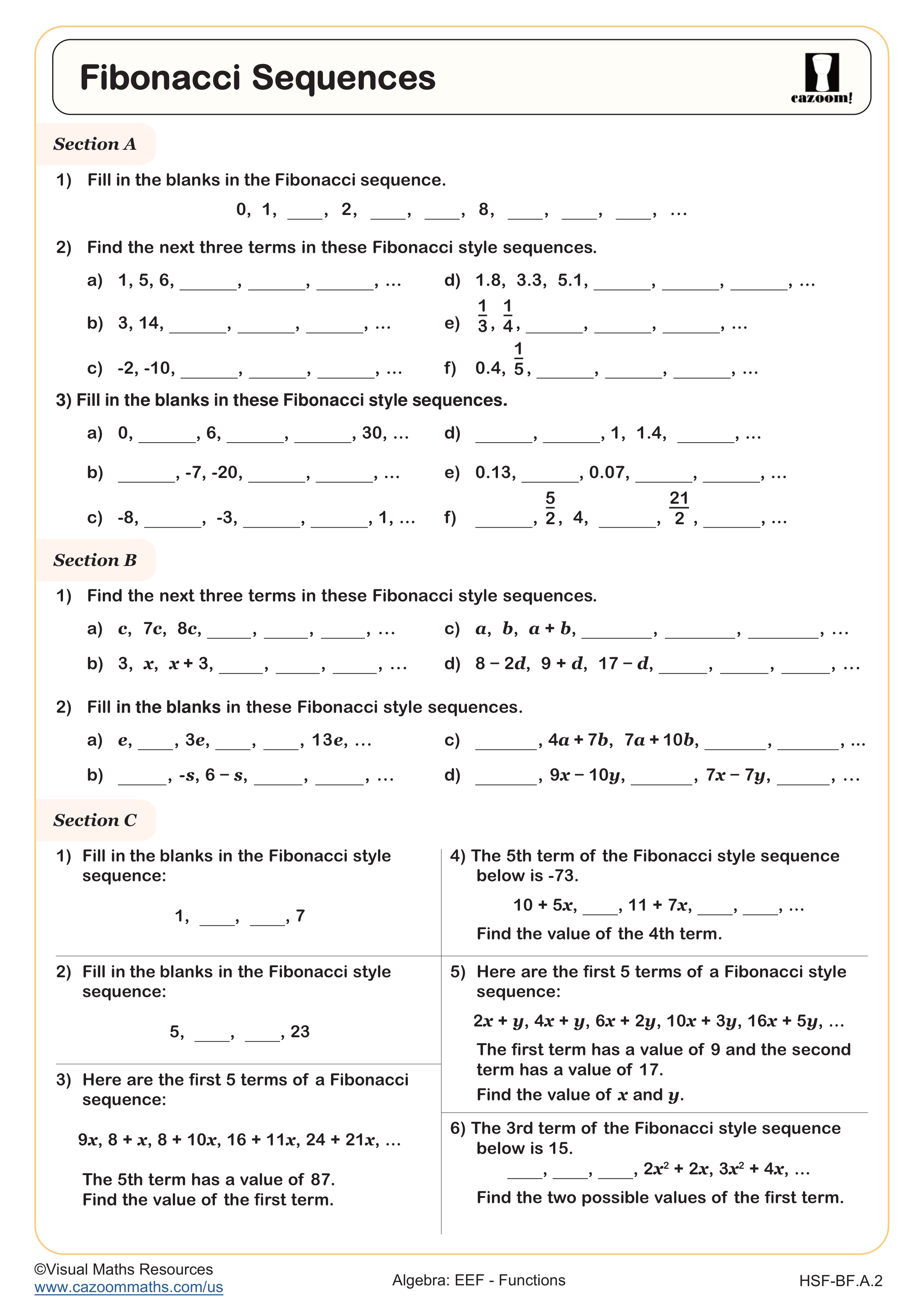
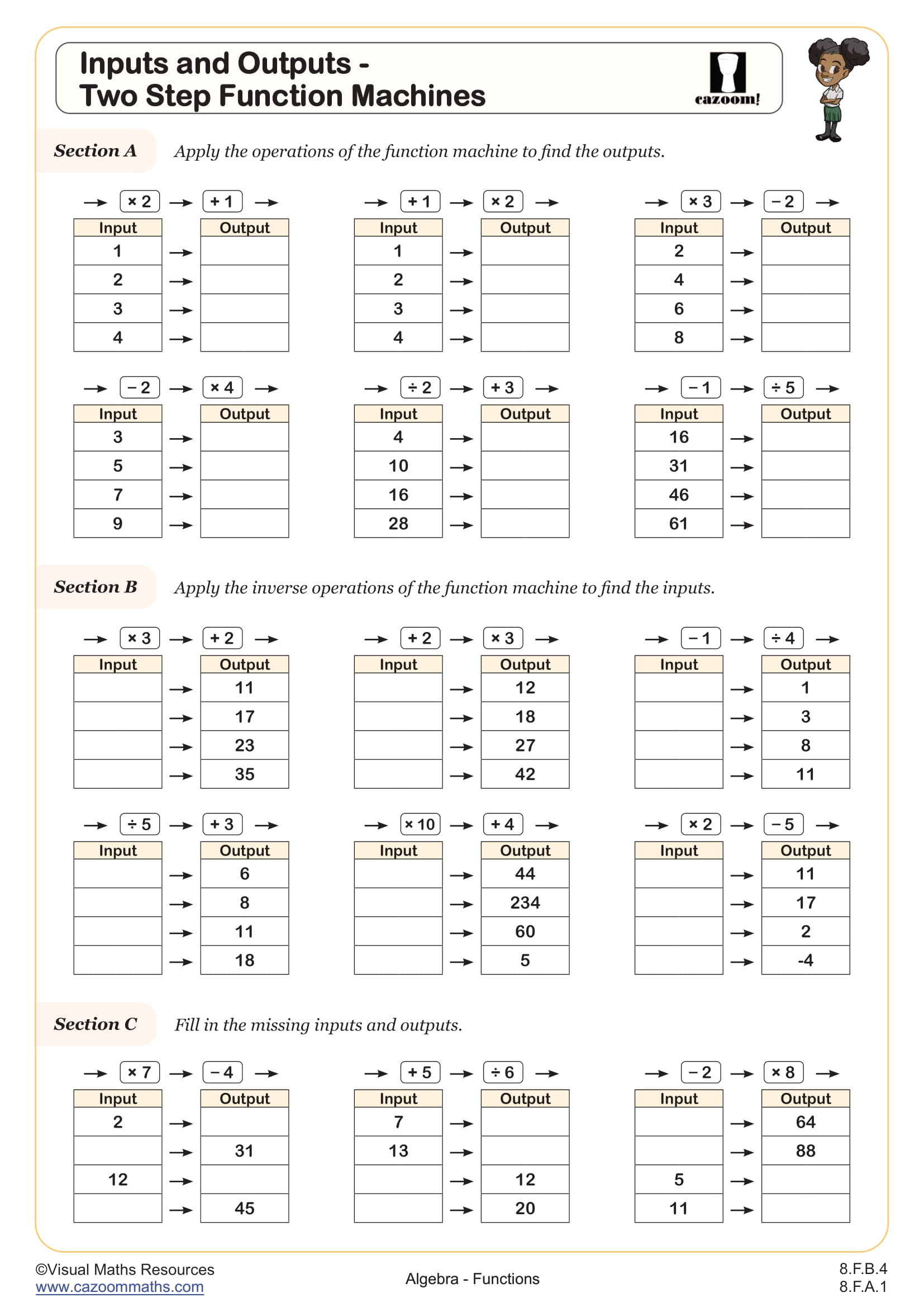
Effective function practice worksheets scaffold difficulty levels, starting with basic function evaluation before progressing to complex operations like composition and inverse functions. Teachers find that worksheets work best when they include multiple representations - tables, graphs, and equations - allowing students to make connections between different forms of the same function.
Answer keys become particularly valuable for functions because students can check intermediate steps, not just final answers. Teachers report that self-checking capabilities help students identify conceptual errors early. The most useful worksheets also include real-world applications, such as modeling population growth or projectile motion, connecting abstract function concepts to practical STEM contexts students will encounter in advanced coursework.