High School Indices Worksheets
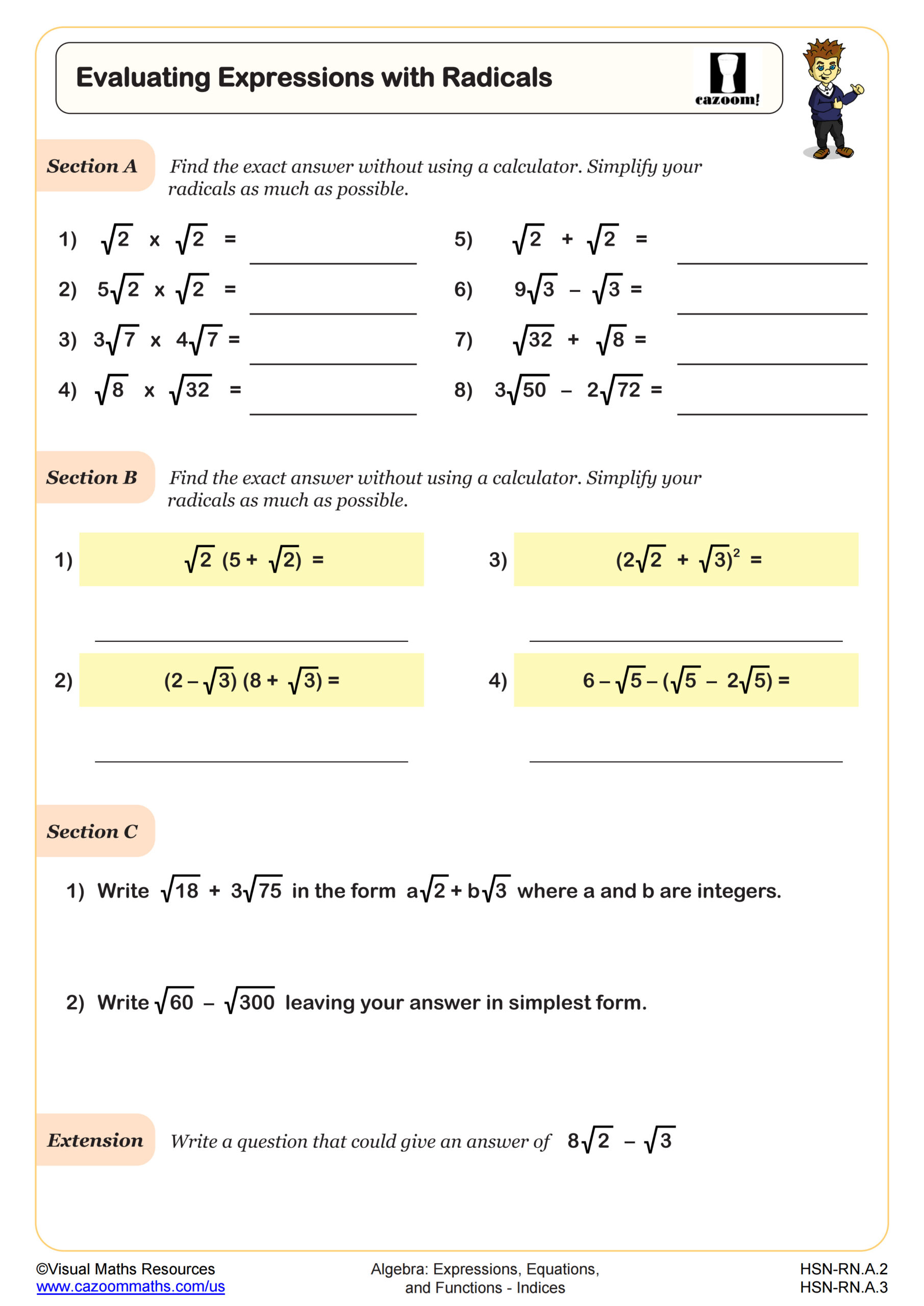
Evaluating Expressions with Radicals
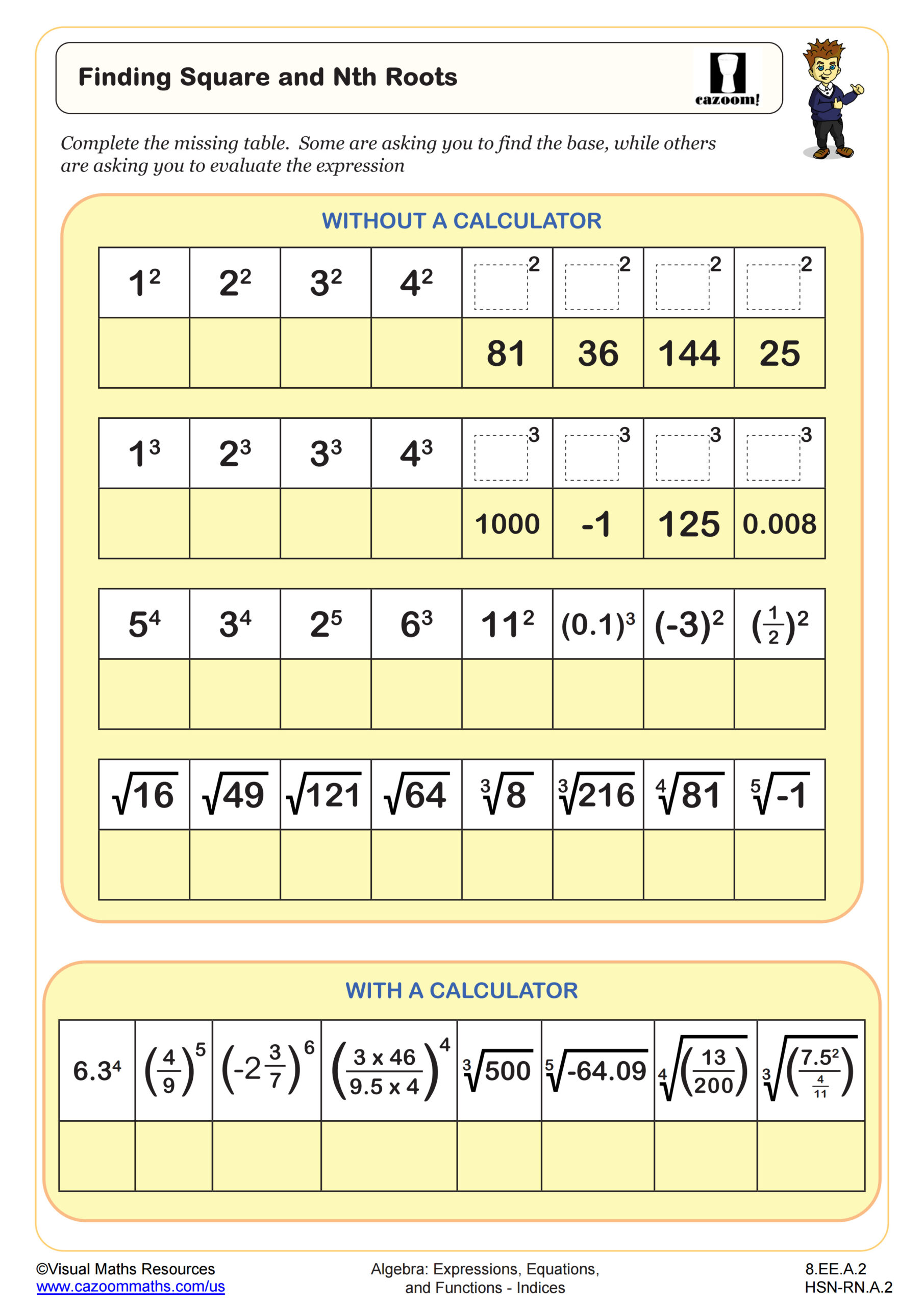
Finding Square and Nth Roots
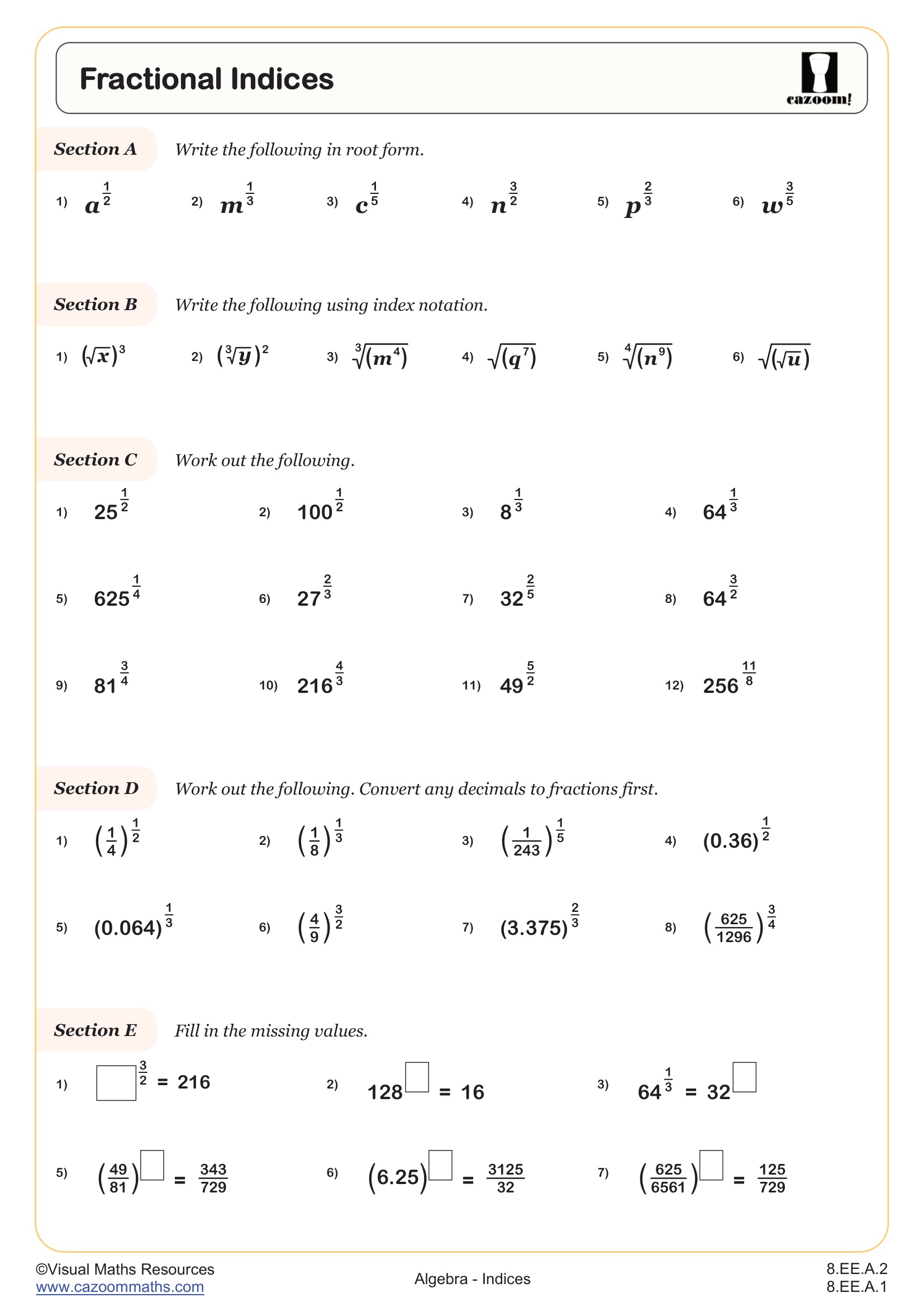
Fractional Indices
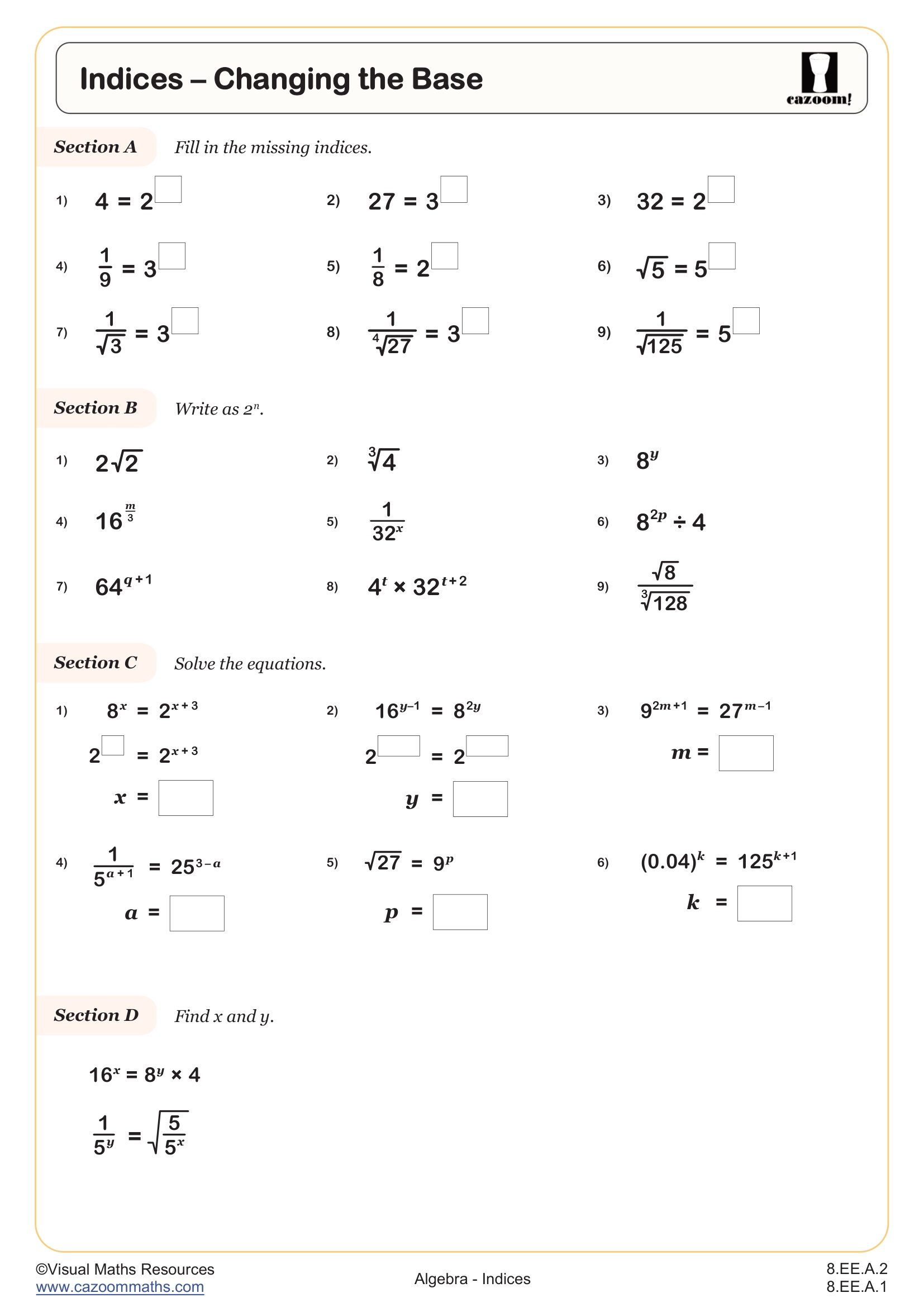
Indices - Changing the Base
Negative Indices
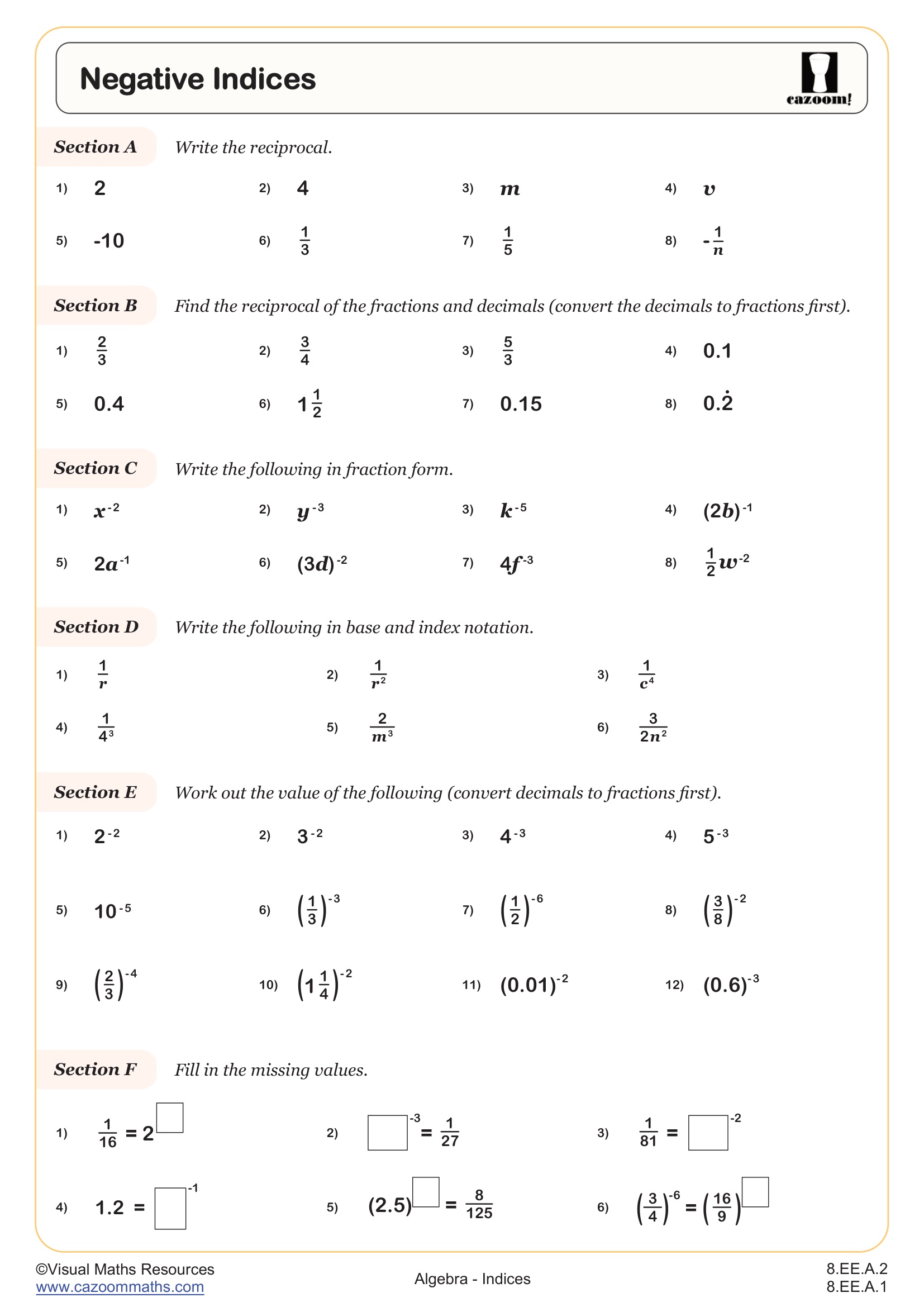
Simplifying Radicals (A)
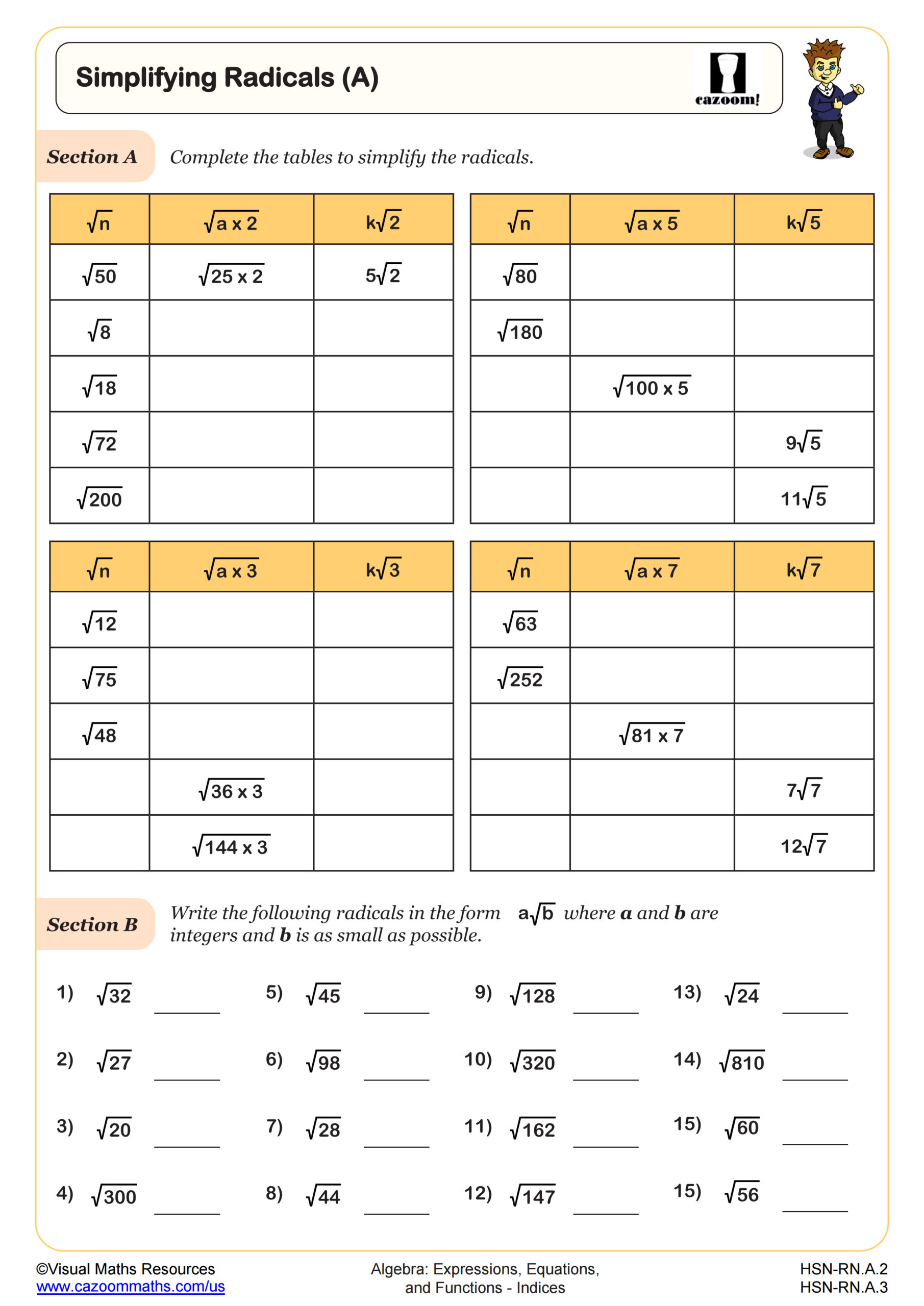
Simplifying Radicals (B)
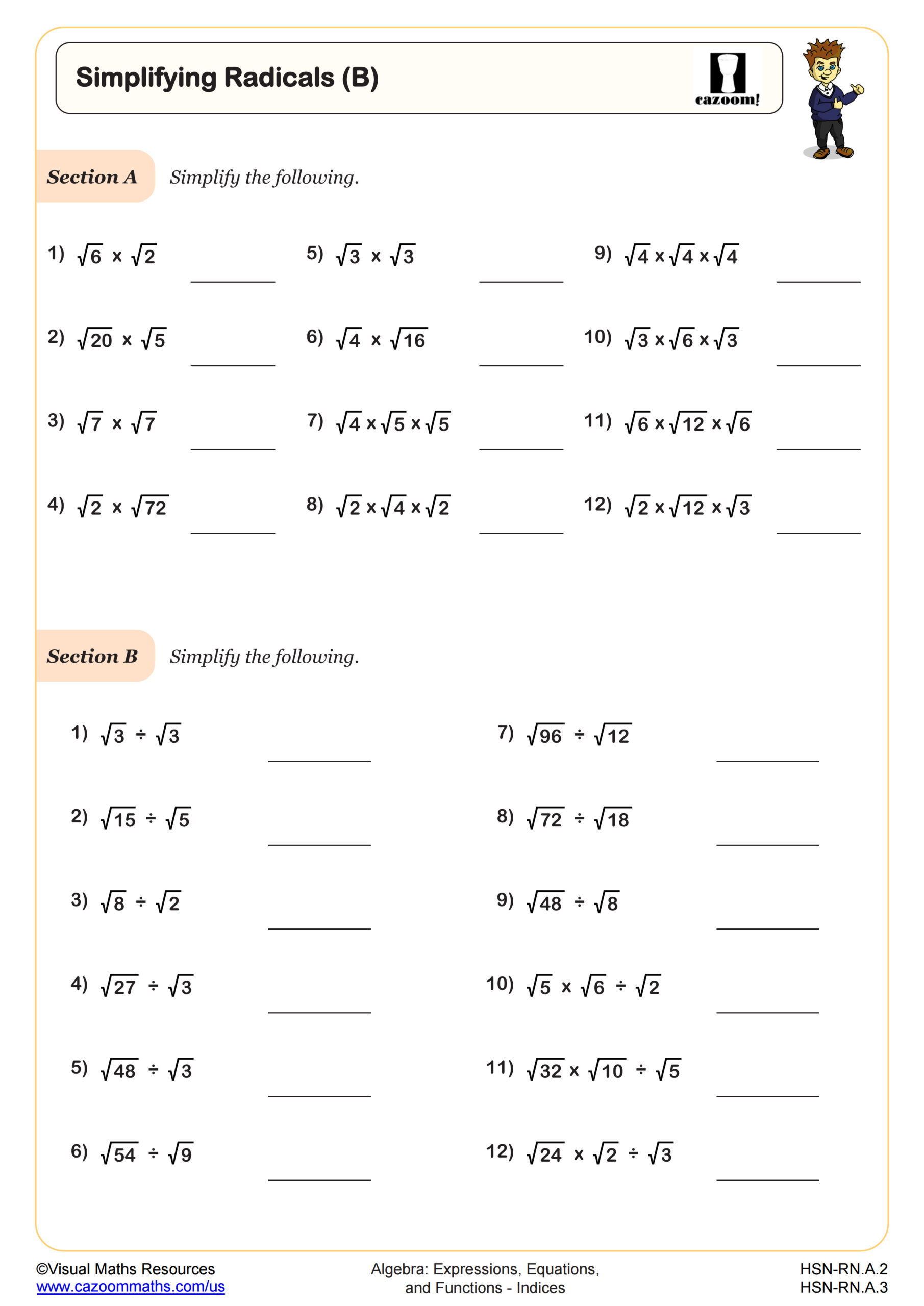
Simplifying Radicals (C)
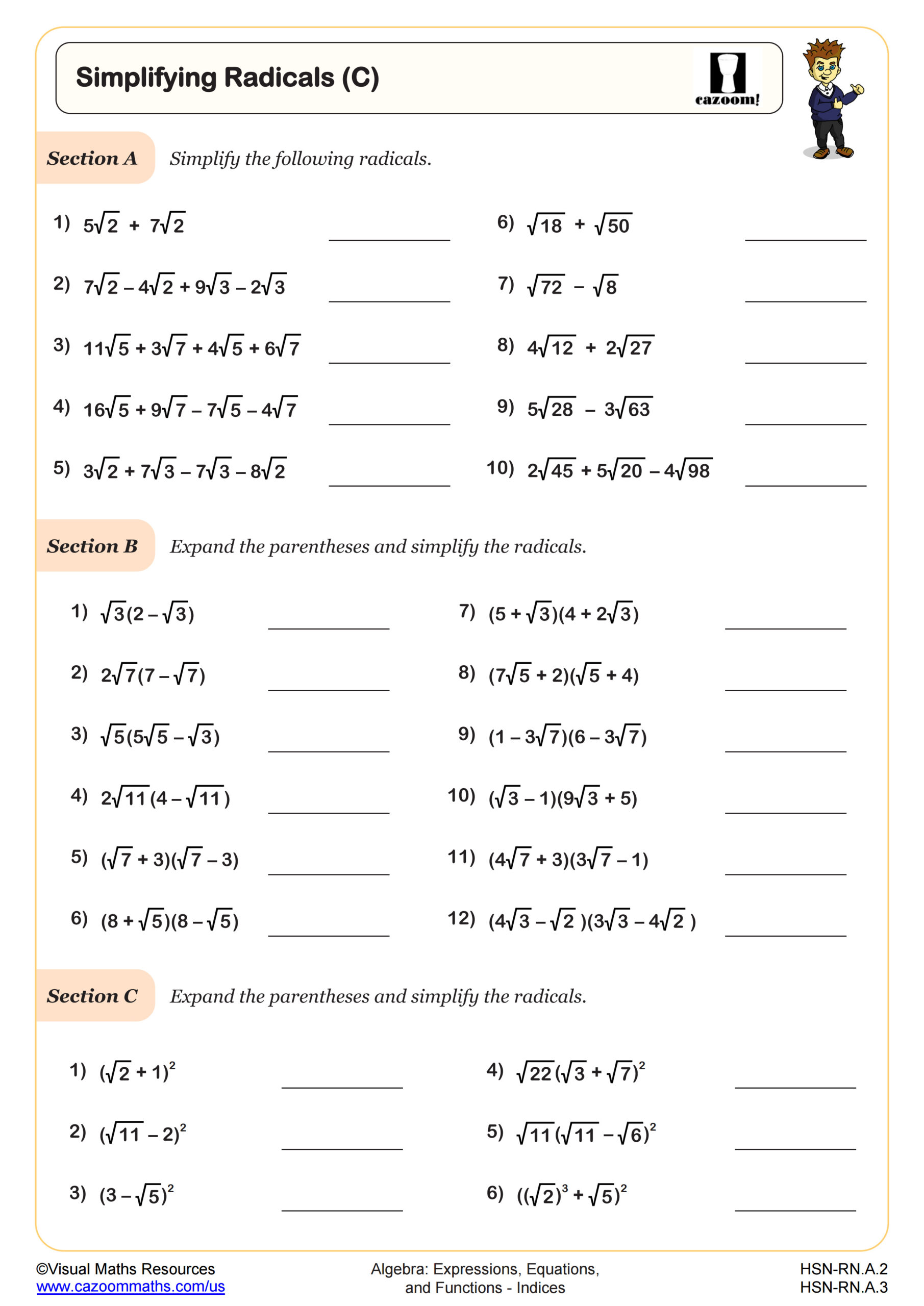
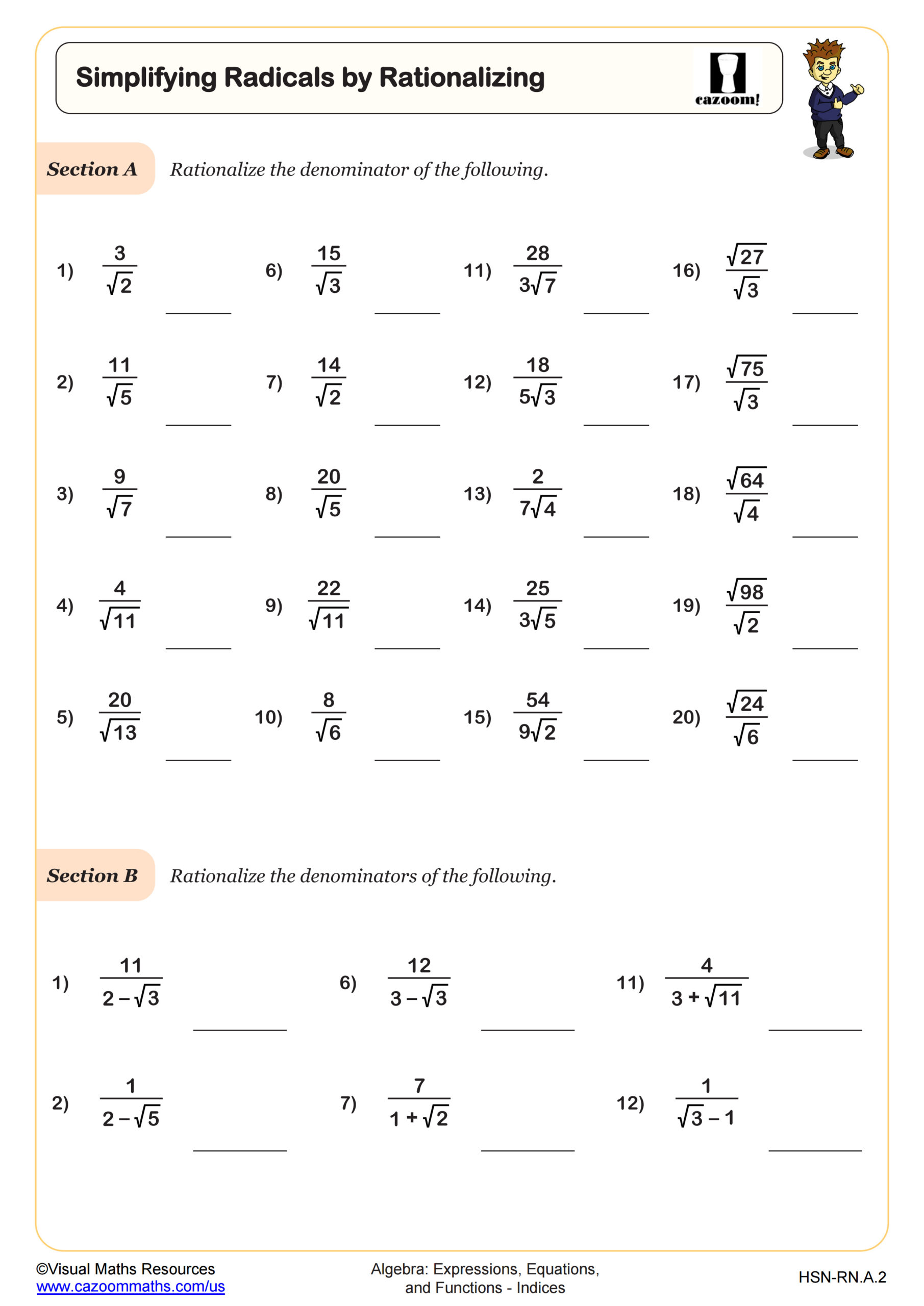
Simplifying Radicals by Rationalizing
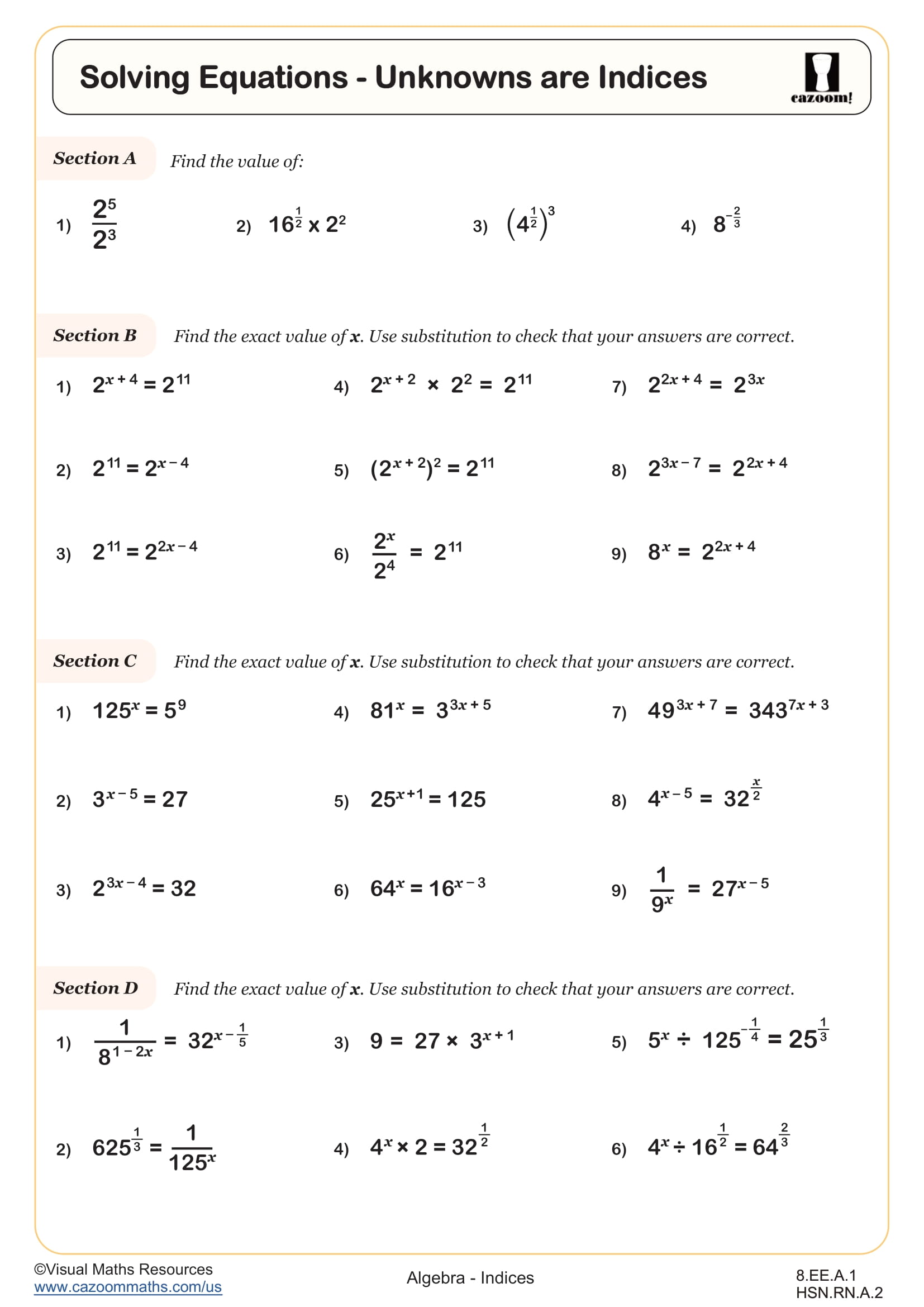
Solving Equations - Unknowns are Indices
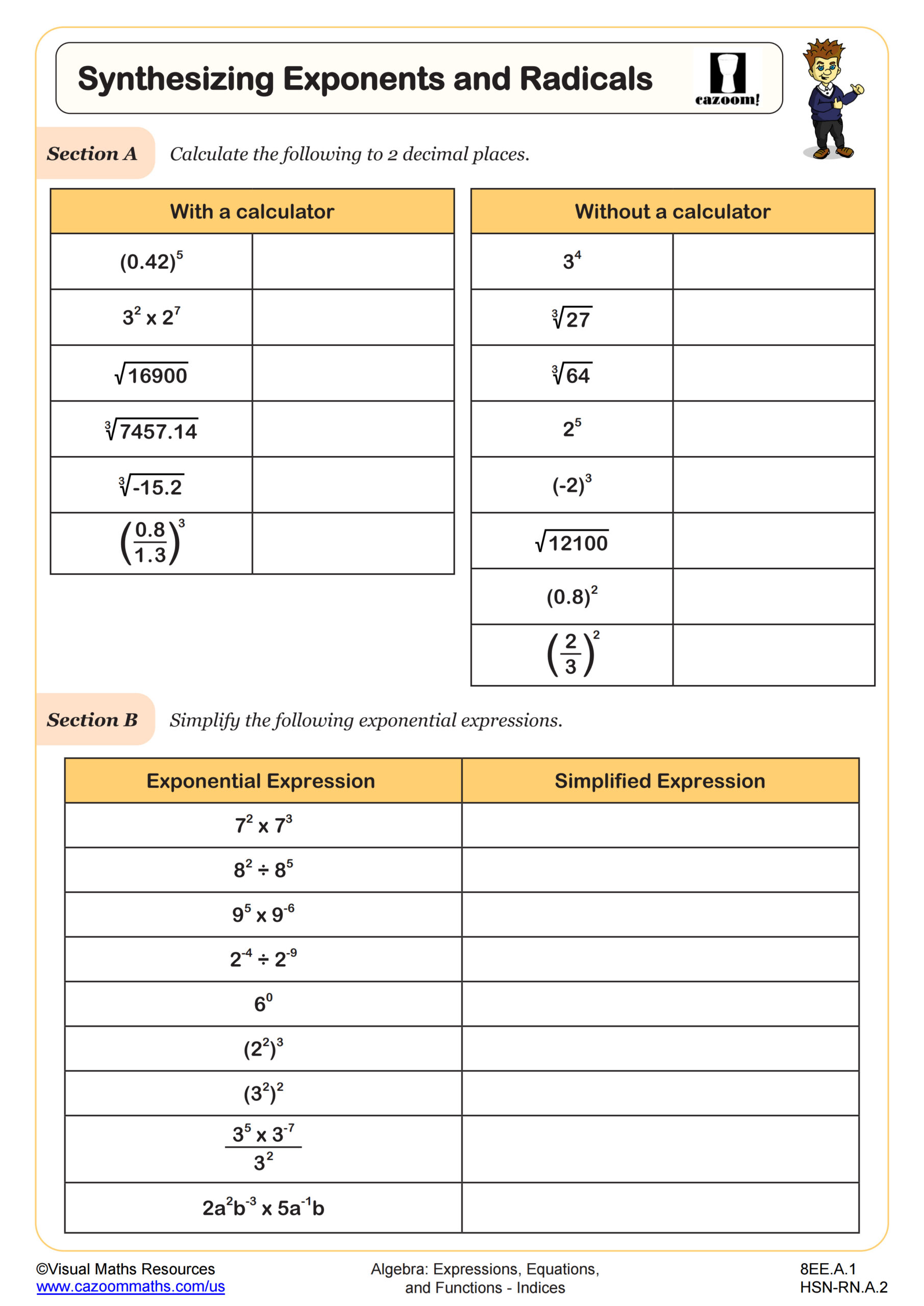
Synthesizing Exponents and Radicals
All worksheets are created by the team of experienced teachers at Cazoom Math.
Why do teachers search for Cazoom Math indices worksheets?
Teachers turn to Cazoom Math for indices worksheets because they need reliable resources that align with high school algebra standards while providing immediate feedback through answer keys. The platform offers differentiated practice problems that address Common Core standards for radicals and rational exponents, helping educators save preparation time while ensuring thorough coverage of exponent laws.
Many teachers notice that students who practice with mixed problem sets perform better on assessments because they learn to identify which exponent rule applies in different contexts. The structured progression from basic integer exponents to complex rational expressions helps students build confidence systematically, reducing the anxiety that often accompanies exponential notation in algebra courses.
What grade levels benefit most from indices worksheet practice?
Indices worksheets typically serve students in grades 9-12, with foundational concepts introduced in Algebra I and advanced applications extending through Pre-Calculus. Most teachers begin with positive integer exponents in ninth grade, then progress to zero and negative exponents before introducing fractional indices in later high school courses.
Teachers observe that students who master indices in Algebra I demonstrate stronger performance in subsequent courses like Algebra II and Chemistry, where exponential relationships appear frequently. The progression from simple exponent laws to complex radical expressions requires consistent practice, making these worksheets valuable for both initial instruction and review sessions before standardized tests or final exams.
How do mixed indices worksheets help with common student errors?
Mixed indices worksheets address the most persistent student misconceptions by presenting problems that require different exponent rules within the same exercise. Teachers consistently notice that students confuse the product rule with the power rule, incorrectly writing x² × x³ as x⁶ instead of x⁵, especially when working with more complex expressions involving negative or fractional exponents.
These worksheets force students to slow down and identify which rule applies to each step, preventing the automatic responses that lead to errors. The variety of problem types within each worksheet helps students recognize patterns and choose appropriate strategies, building the analytical thinking needed for advanced algebra topics like logarithms and exponential functions.
What makes these answer keys effective for classroom use?
The complete answer keys provide step-by-step solutions that help teachers identify exactly where student thinking breaks down in multi-step exponent problems. Teachers can quickly scan student work against the detailed solutions to pinpoint whether errors stem from conceptual misunderstandings or computational mistakes, enabling more targeted intervention strategies.
Many teachers use these answer keys to create worked examples on the board, showing students the logical progression through complex expressions. The keys also support peer tutoring activities, where stronger students can explain solutions to classmates using the provided steps as a guide, reinforcing learning for both the tutor and the student receiving help.