High School Lines and Angles Worksheets
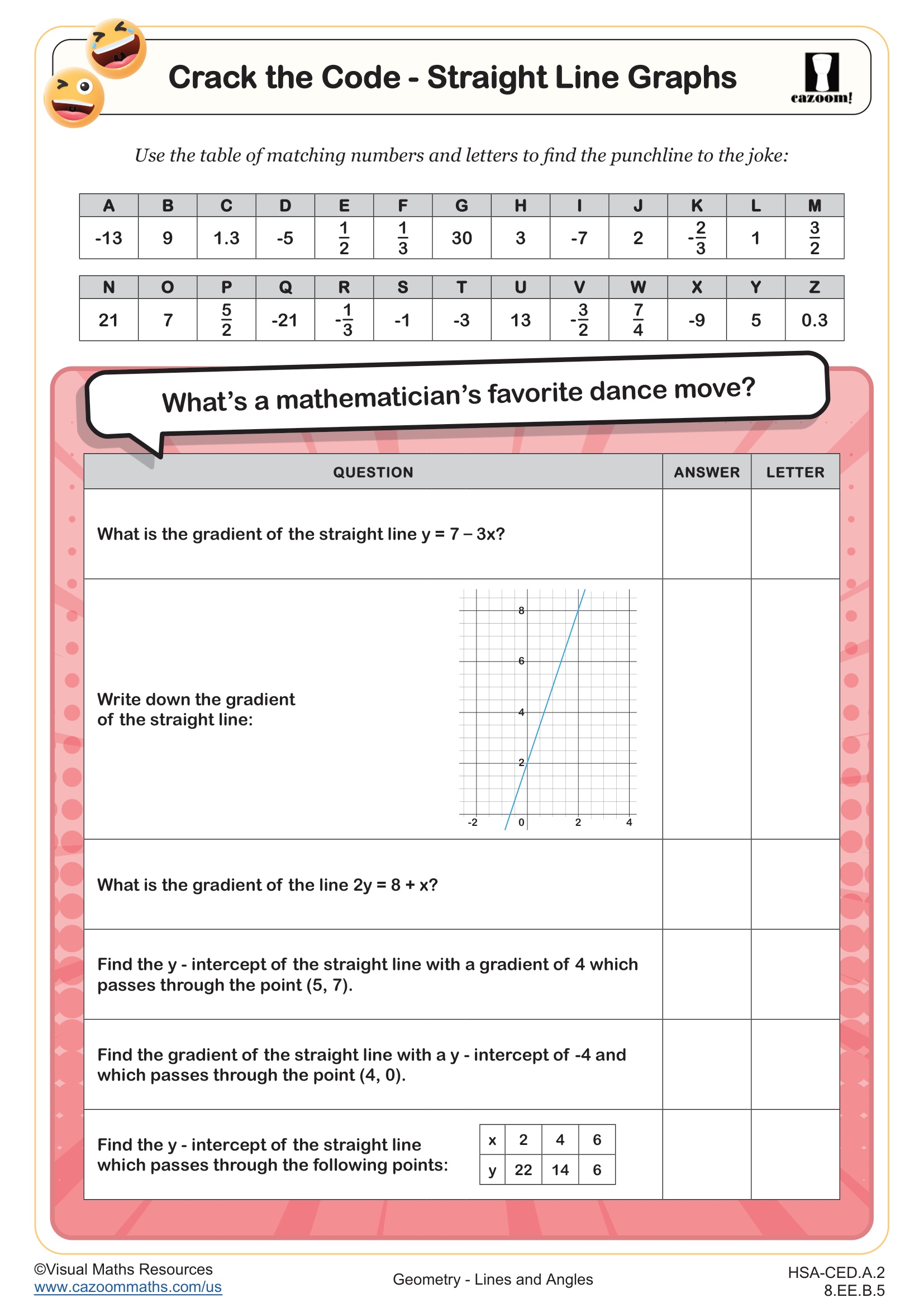
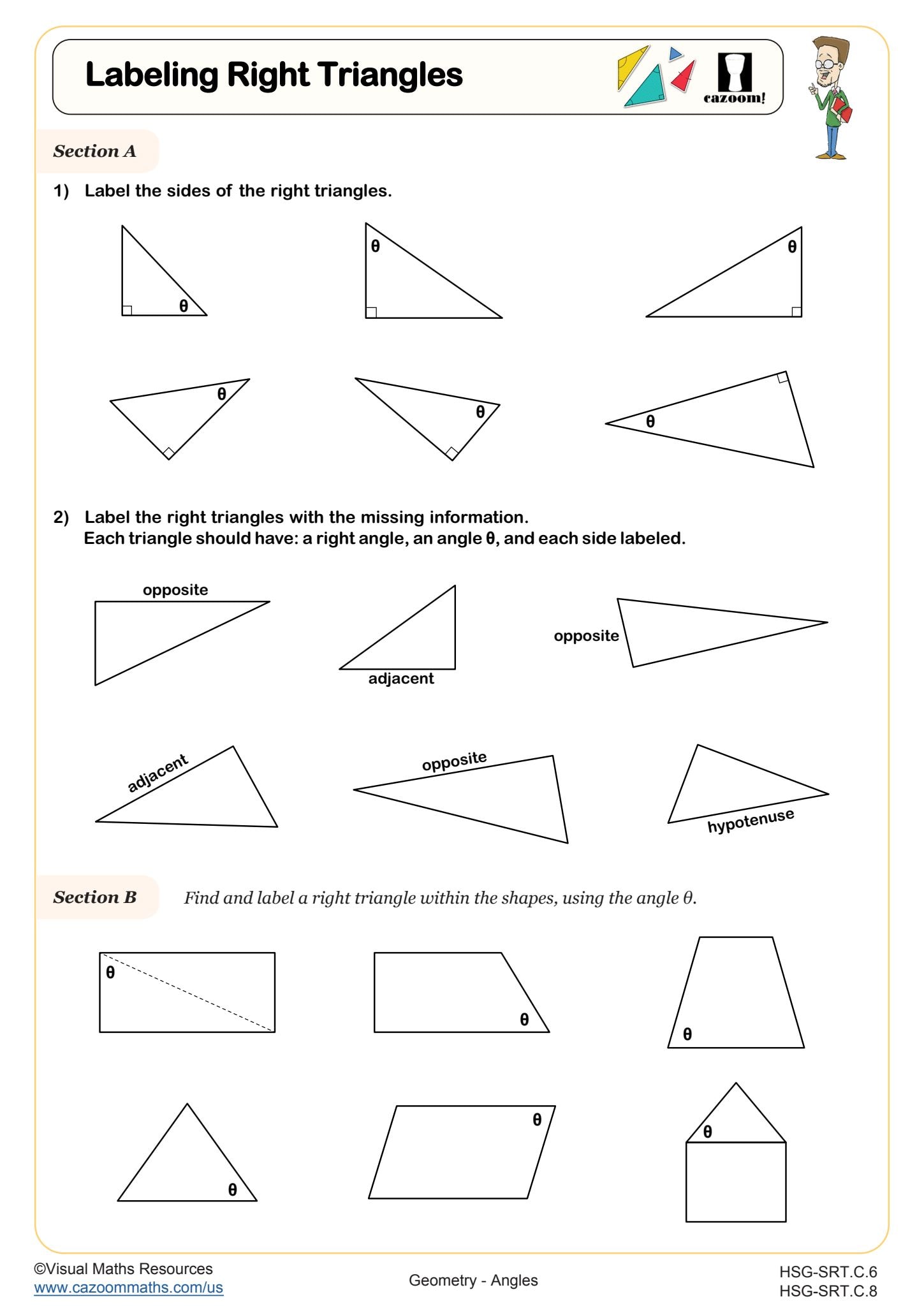
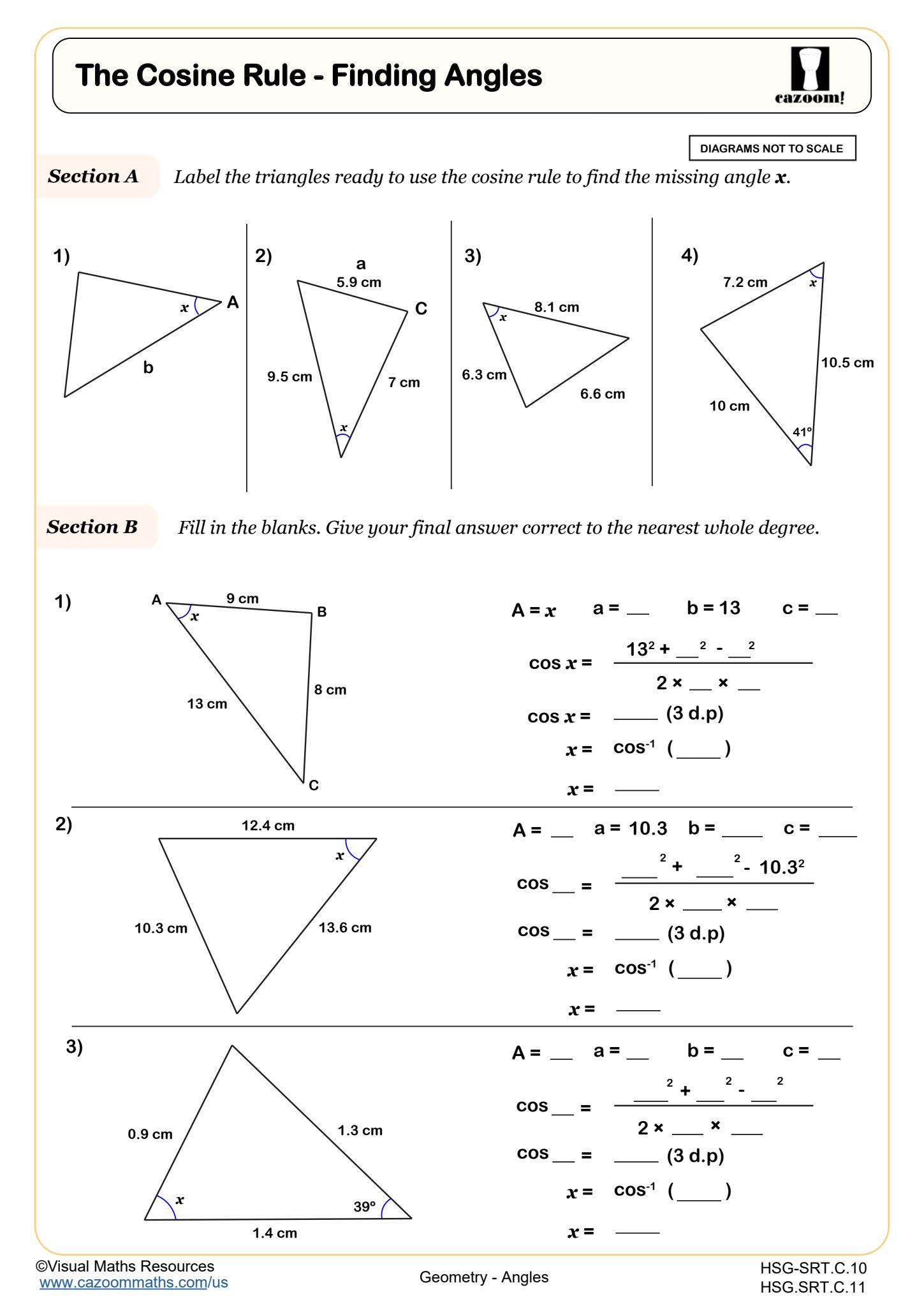
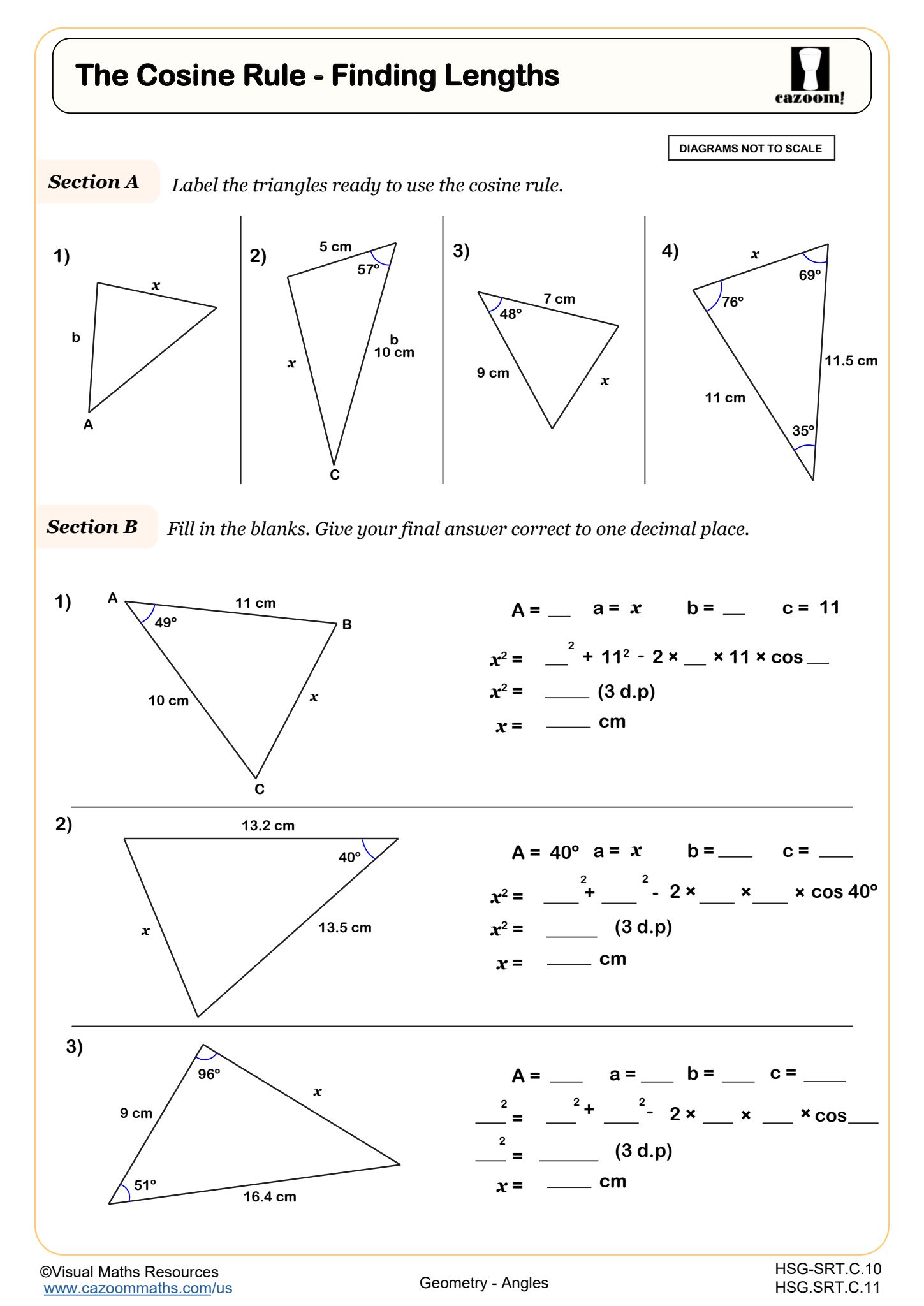
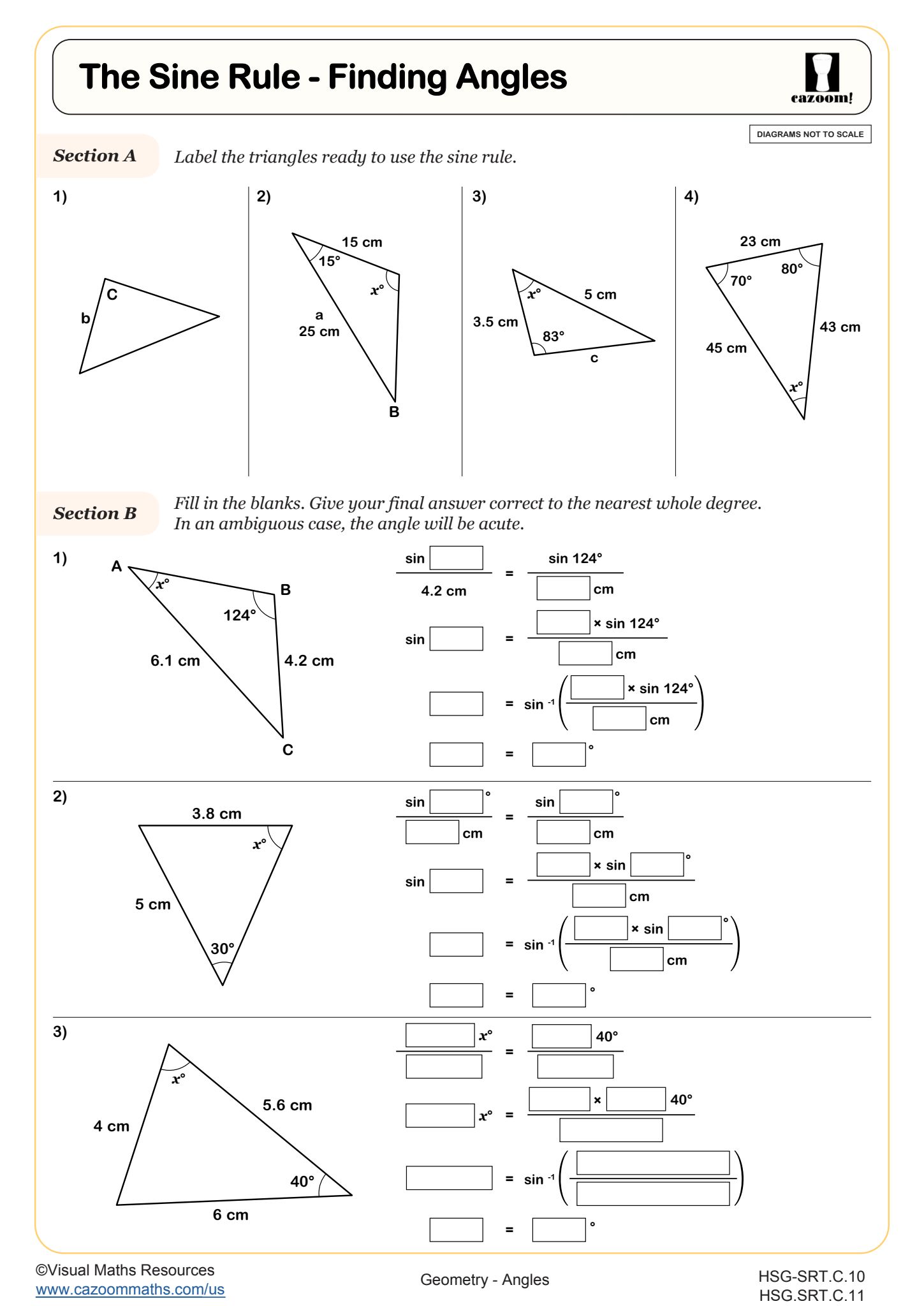
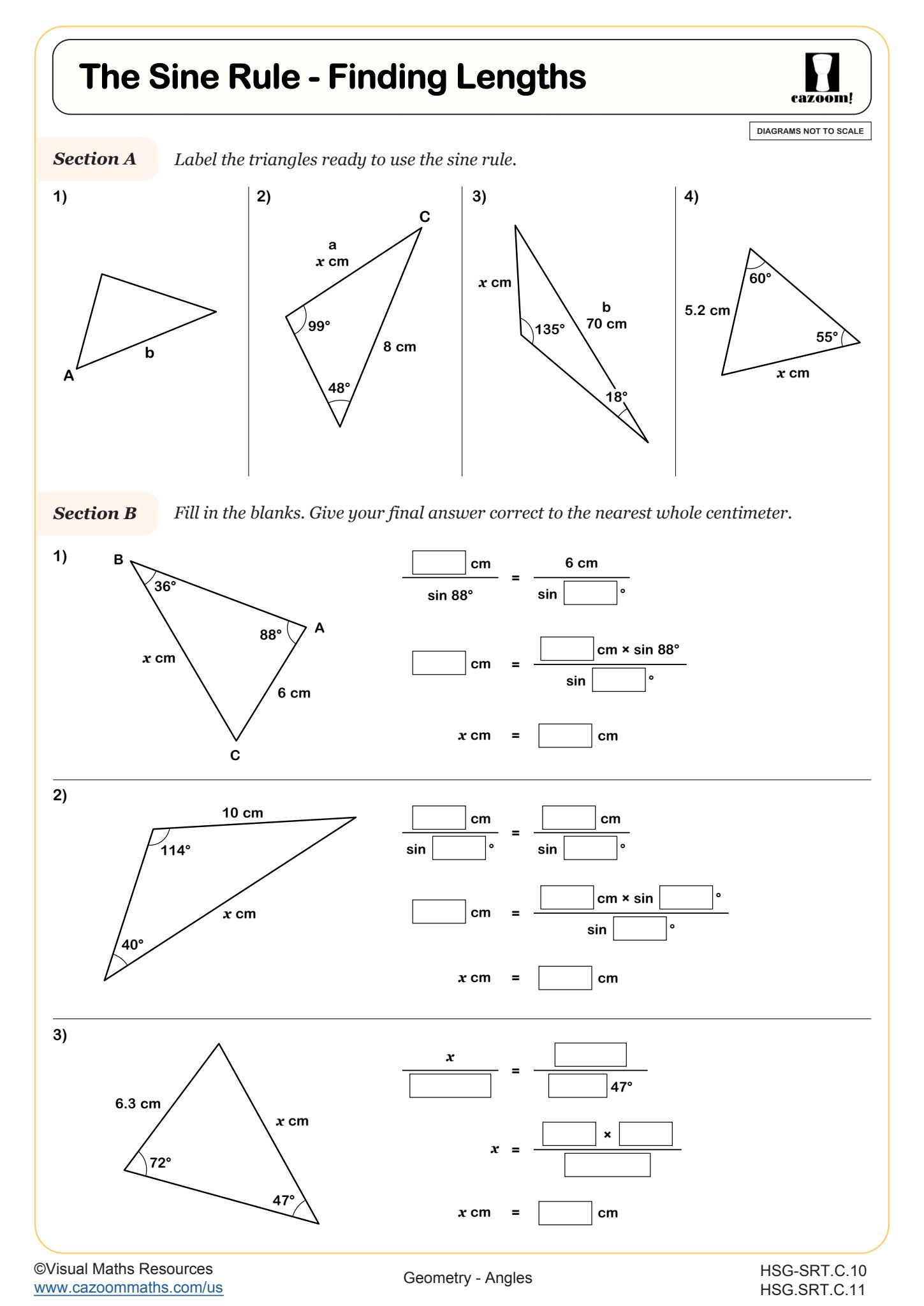
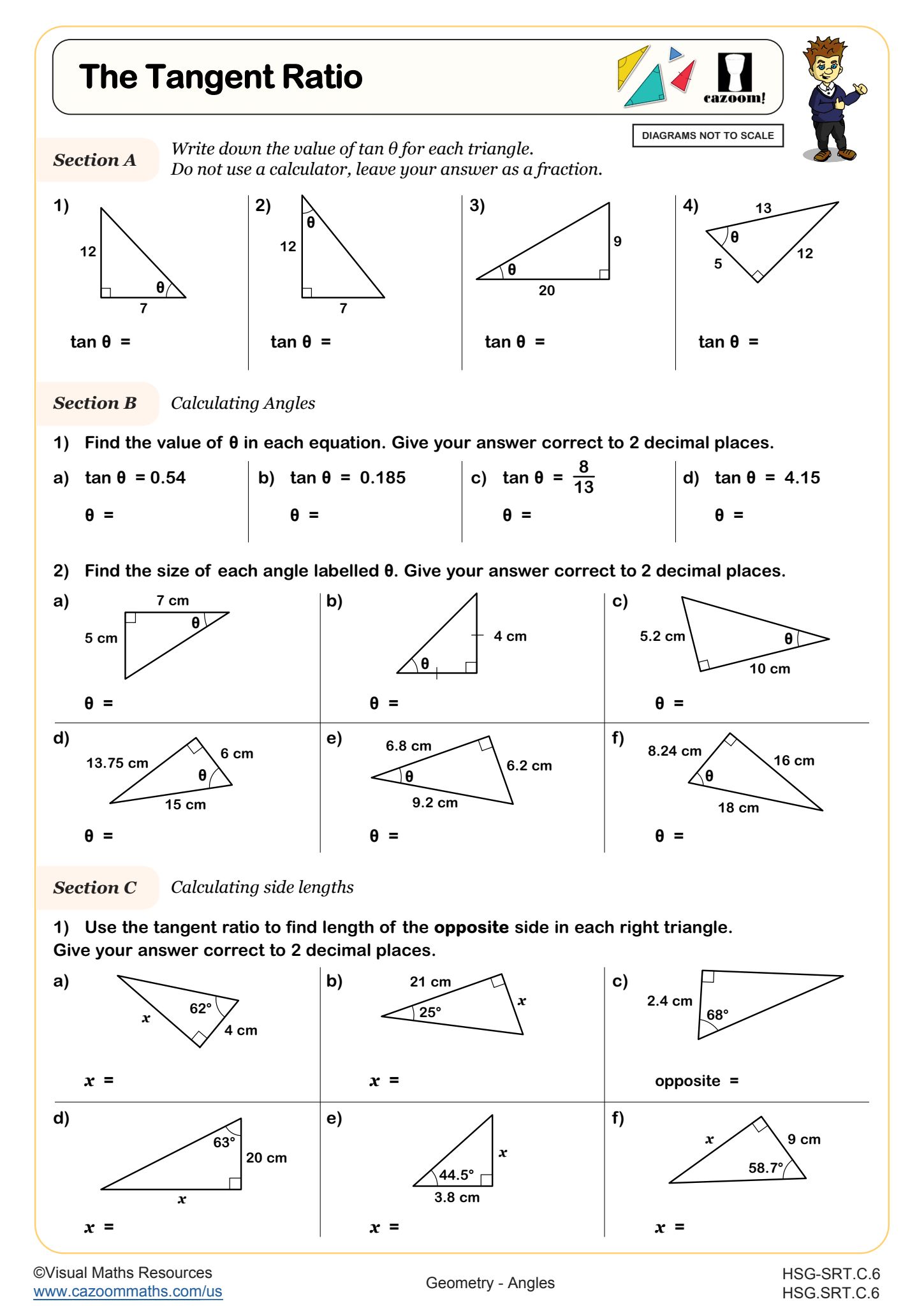
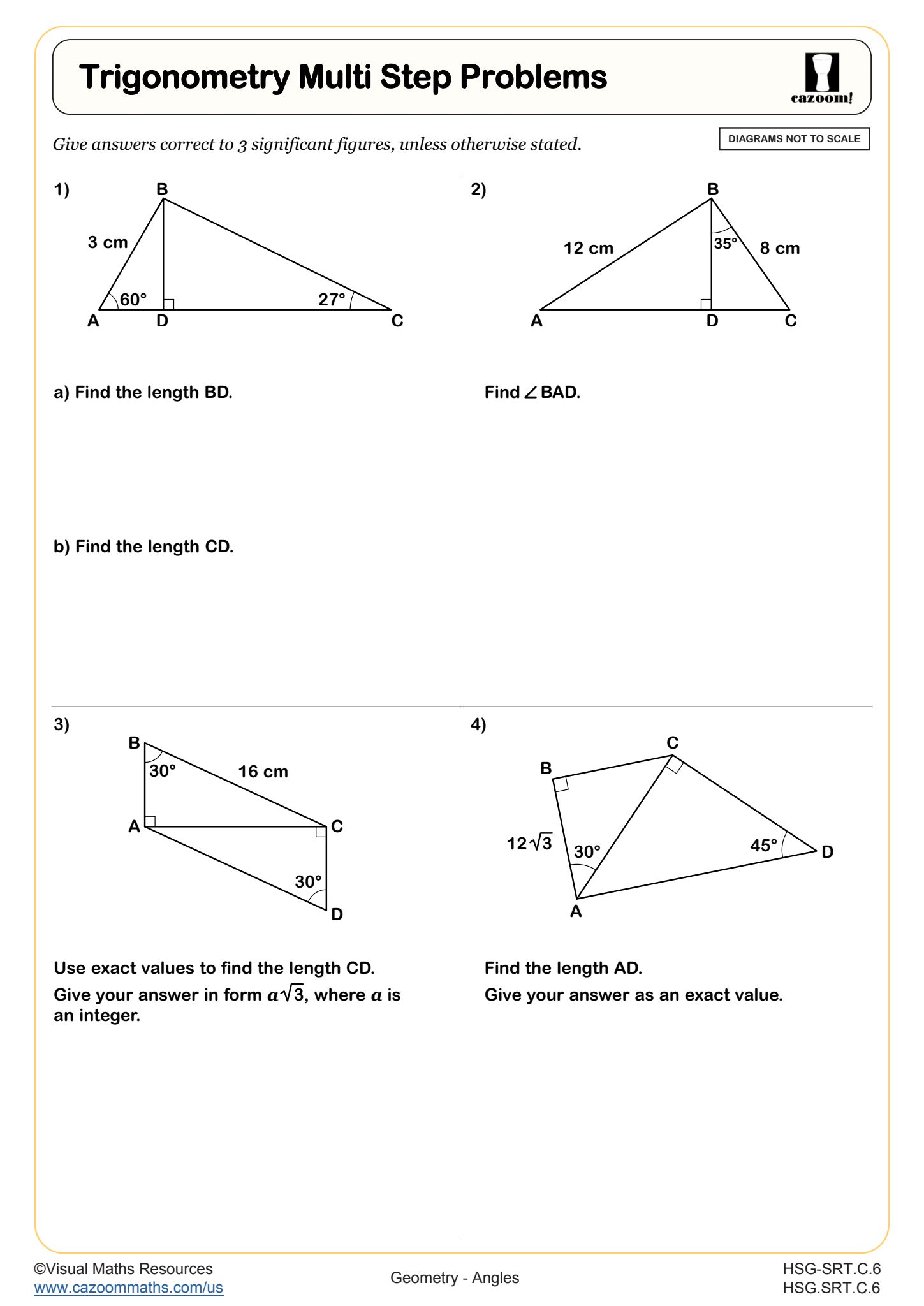
All worksheets are created by the team of experienced teachers at Cazoom Math.
Why Do Lines and Angles Matter in High School Math?
Lines and angles provide the language and tools students need for advanced geometry, trigonometry, and calculus. High school courses build on elementary angle concepts by introducing formal proof structures, coordinate plane applications, and connections to functions. Students apply angle relationships when solving systems of linear equations, analyzing slopes, proving theorems about parallel lines cut by transversals, and working with angle measures in radians.
A common misconception emerges when students assume all angle diagrams are drawn to scale. Many students lose points on standardized tests because they estimate angle measures visually rather than using given algebraic expressions or applying angle pair relationships. Teaching students to mark congruent angles with arc notation and to write out relationship equations before measuring helps prevent this costly error in both classroom assessments and state exams.
Which High School Grades Cover Lines and Angles?
These worksheets support students in Algebra I, Algebra II, Geometry, Precalculus, and Integrated Math 1, 2, and 3 courses throughout high school. While angle basics appear in middle school, high school courses require formal reasoning, algebraic manipulation of angle measures, and connections to coordinate geometry. Geometry classes dedicate significant time to angle proofs and constructions, while algebra courses apply angle concepts when graphing linear equations and analyzing perpendicular and parallel relationships.
The progression increases in abstraction and application. Algebra I students might solve for unknown angle measures using supplementary angle relationships, while Geometry students prove theorems about vertical angles or angles formed by parallel lines. Precalculus students work with angles in standard position, reference angles, and eventually transition to radian measure, connecting geometric angles to the unit circle and trigonometric functions that appear throughout calculus.
What Skills Do Students Practice with Protractor Worksheets?
Protractor worksheets develop measurement precision and help students distinguish between acute, obtuse, right, and straight angles through hands-on practice. Students learn to align the protractor's center point with an angle's vertex, position the baseline correctly, and read the appropriate scale—skills that remain surprisingly challenging even for high school students who haven't used protractors recently. Half and full protractor formats prepare students for different testing situations and real-world measurement tools.
Architects, engineers, and construction professionals use angle measurement daily when designing structures, calculating load distributions, and ensuring components fit together correctly. Surveyors rely on precise angle measurements to map property boundaries and elevation changes. Robotics engineers program movement paths using angular rotations, while graphic designers adjust elements using rotation angles measured in degrees. Mastering protractor use in high school mathematics directly connects to these STEM careers where a single degree of error can compromise structural integrity or design function.
How Can Teachers Use These Lines and Angles Worksheets?
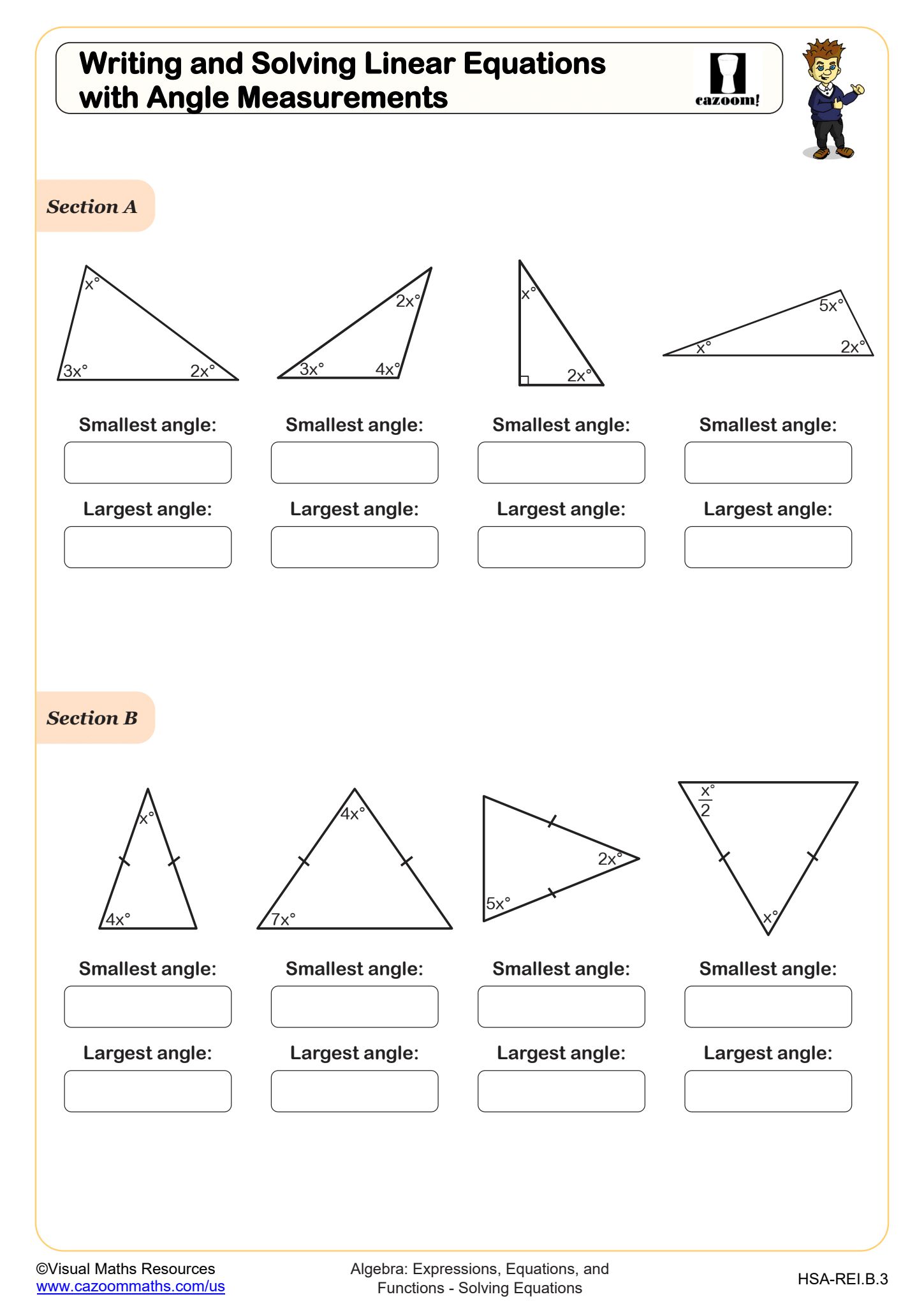
These worksheets provide scaffolded practice that moves students from basic angle identification to complex applications involving algebraic expressions and proof writing. Answer keys allow students to self-check during independent work, while teachers can quickly verify understanding during formative assessments. The variety of subtopics—from protractor practice to angle naming conventions—means teachers can target specific skill gaps that surface during instruction or assign differentiated practice based on student readiness levels.
Many teachers use these worksheets during geometry unit warm-ups to reactivate prior knowledge before introducing theorems about angle relationships. They work well for intervention sessions when students struggle with proof prerequisites or need measurement practice before tackling construction projects. Pairing students for protractor activities encourages peer discussion about measurement techniques and common errors. The worksheets also serve as effective homework assignments that reinforce classroom instruction without requiring lengthy explanations, since the answer keys help students identify mistakes and correct their thinking independently.