High School Percentages Worksheets
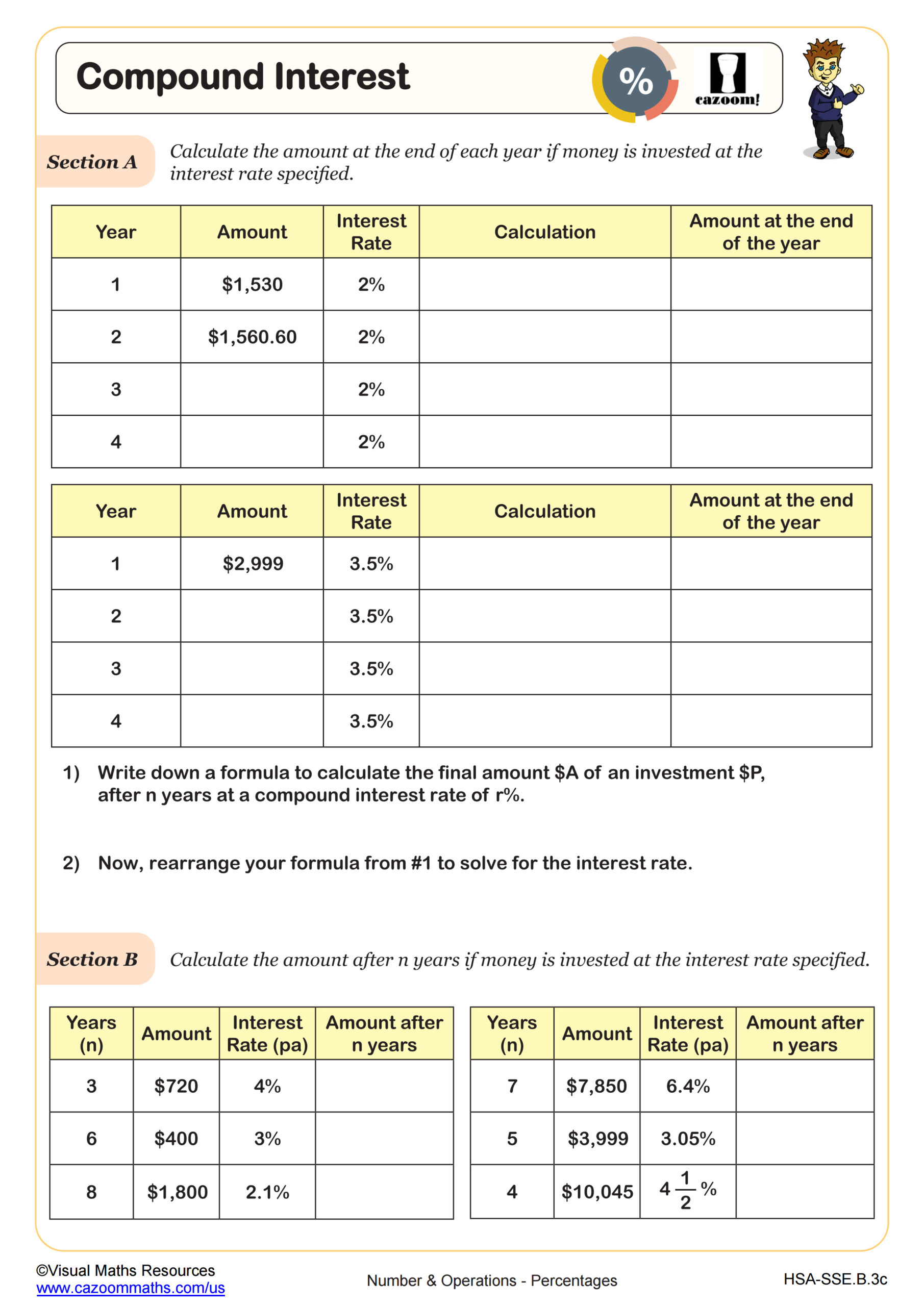
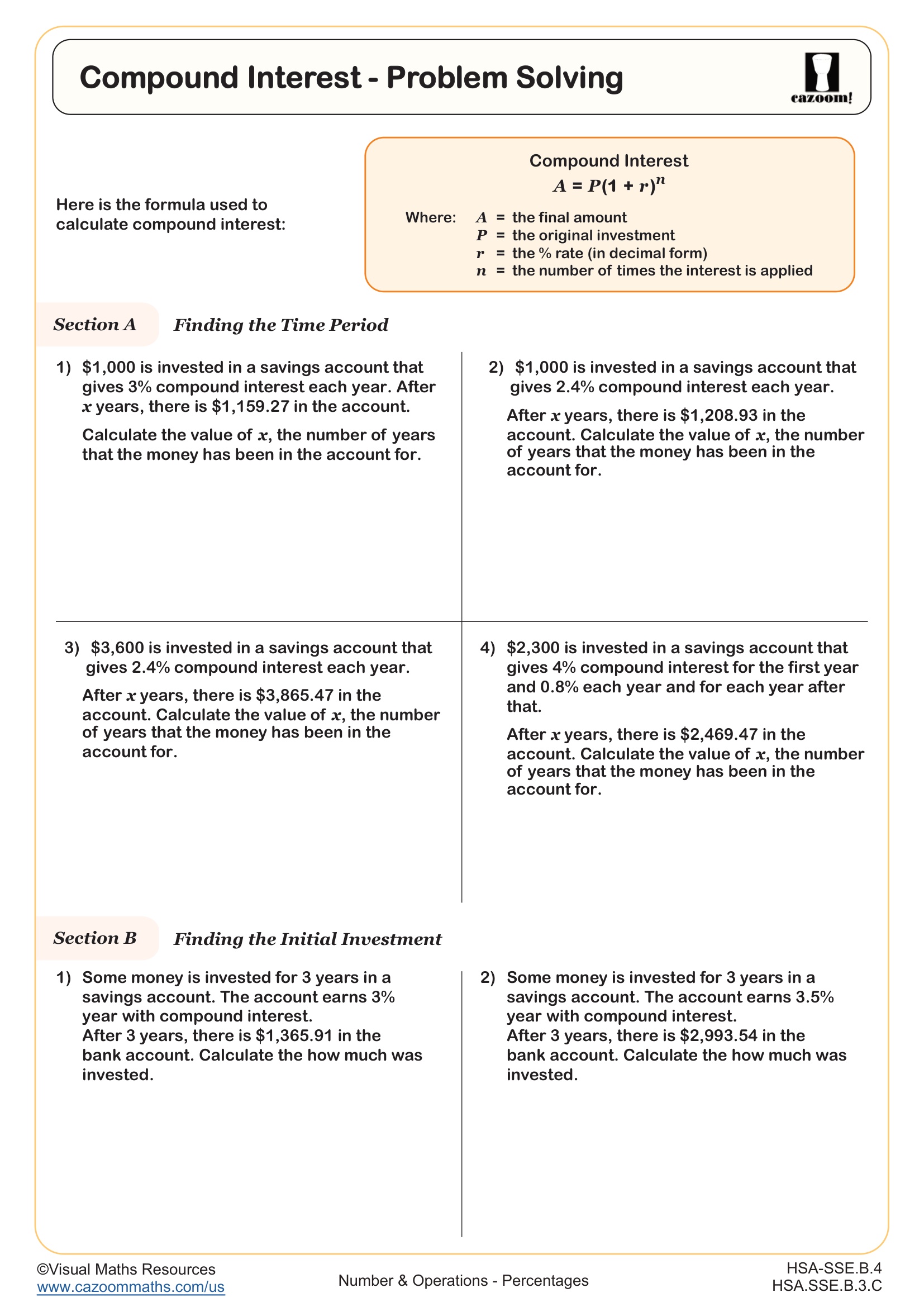
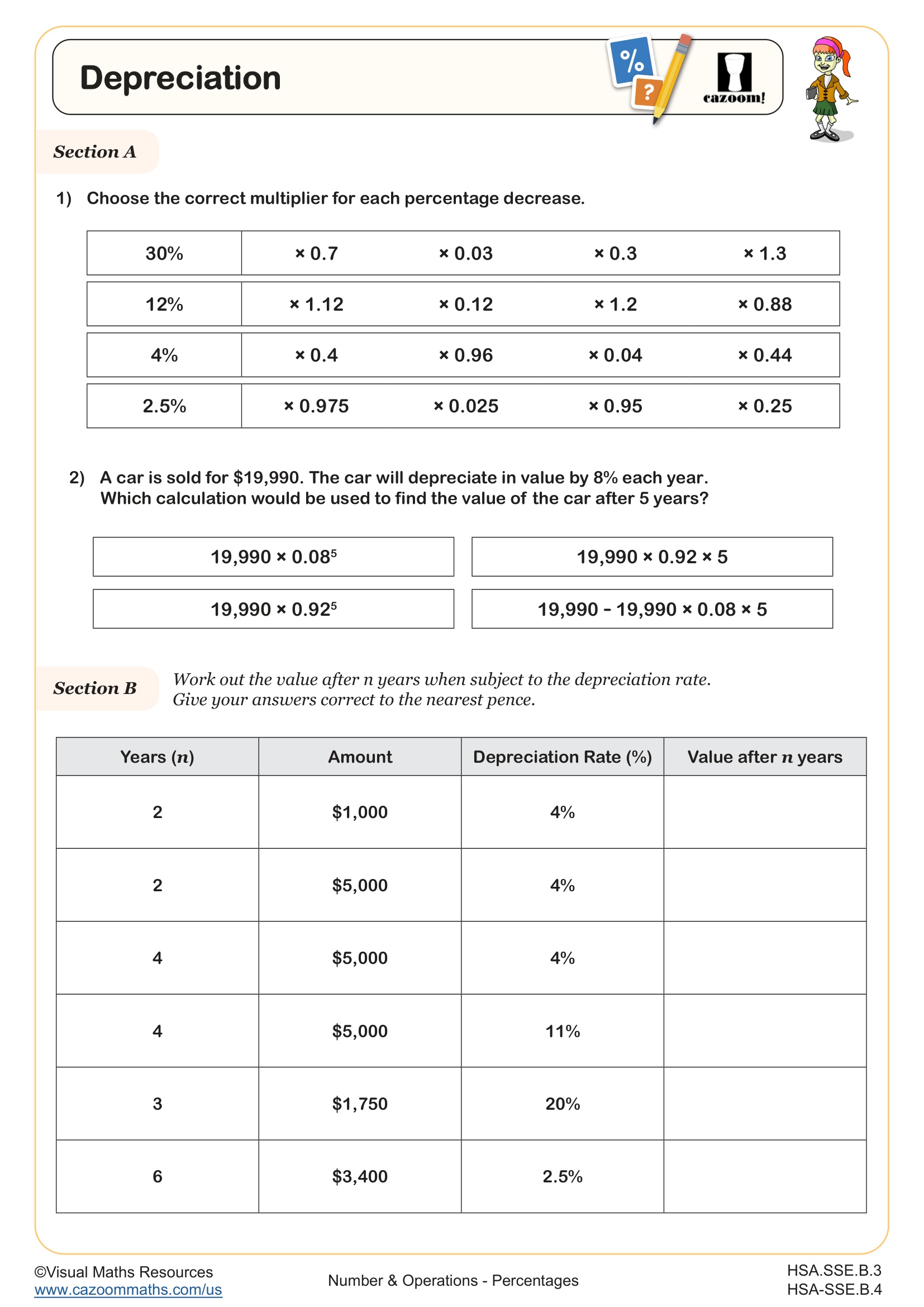
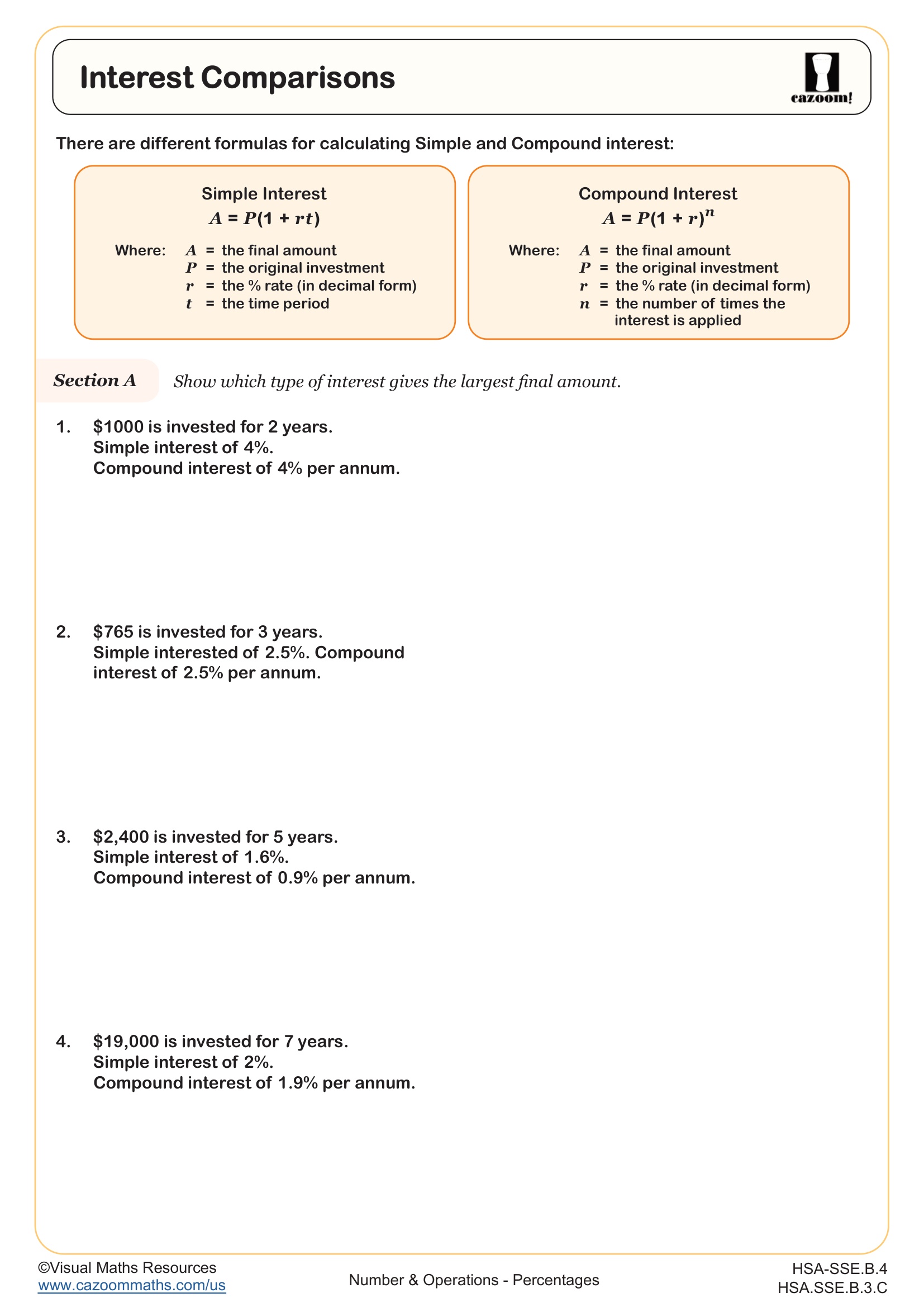
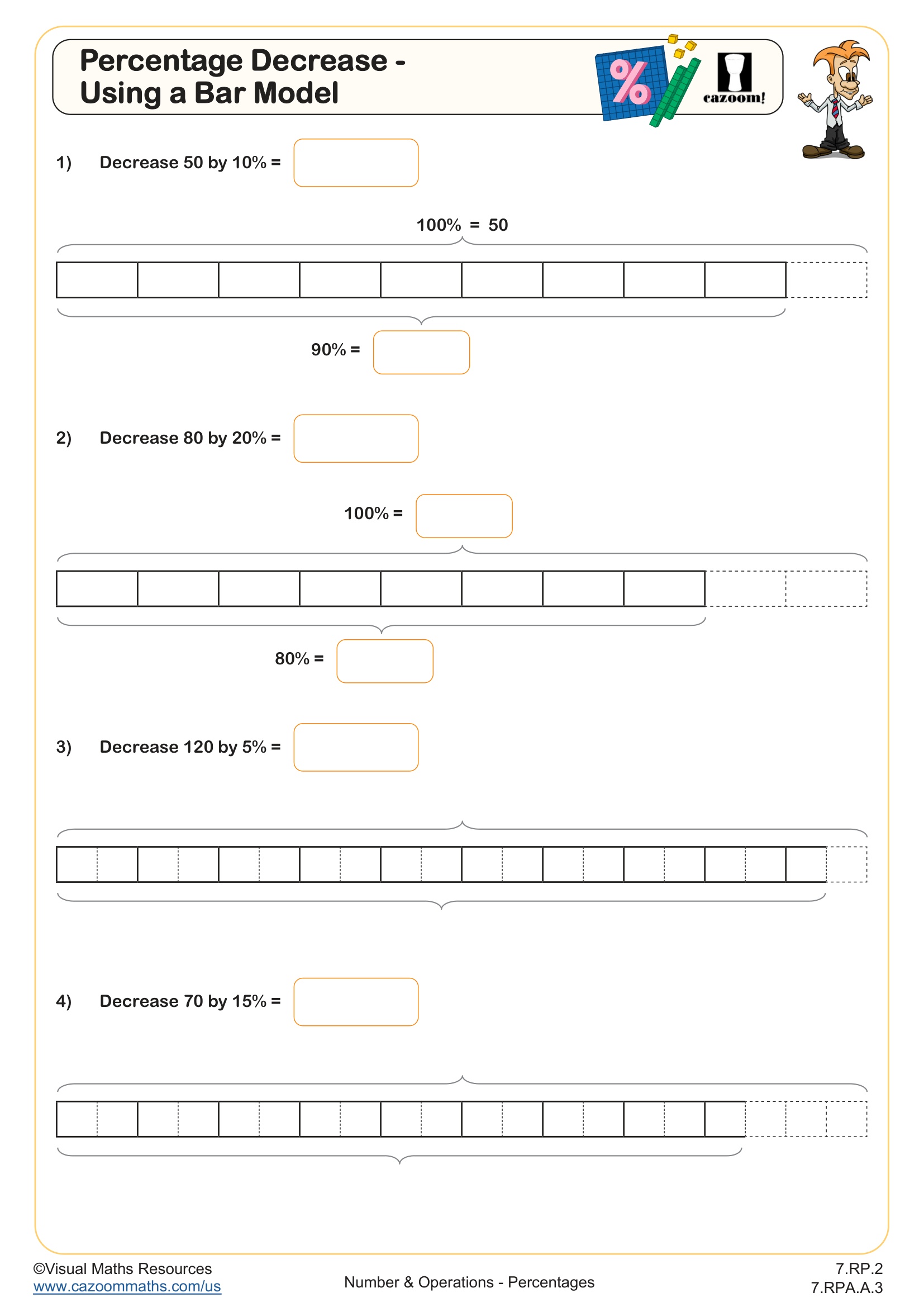
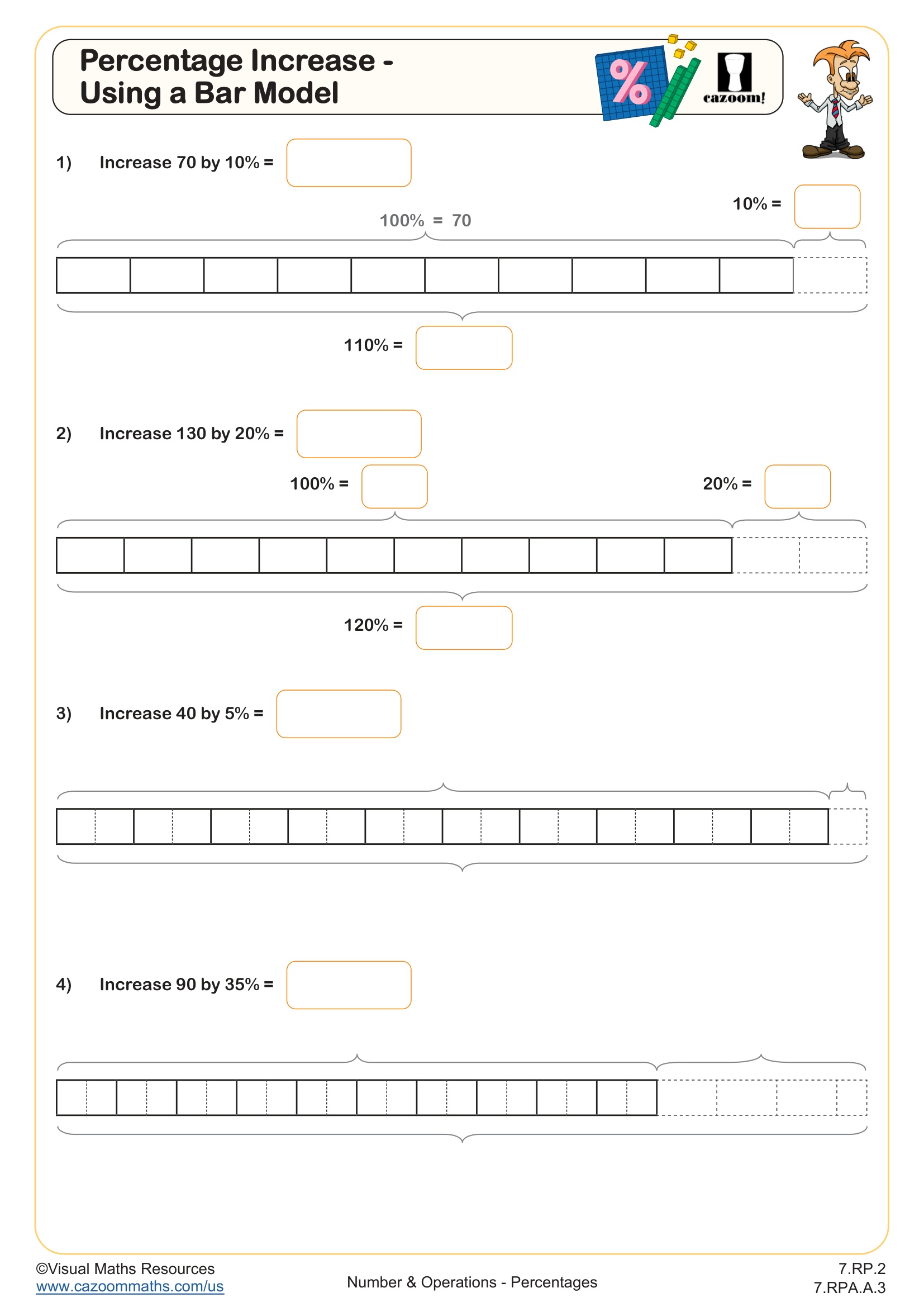
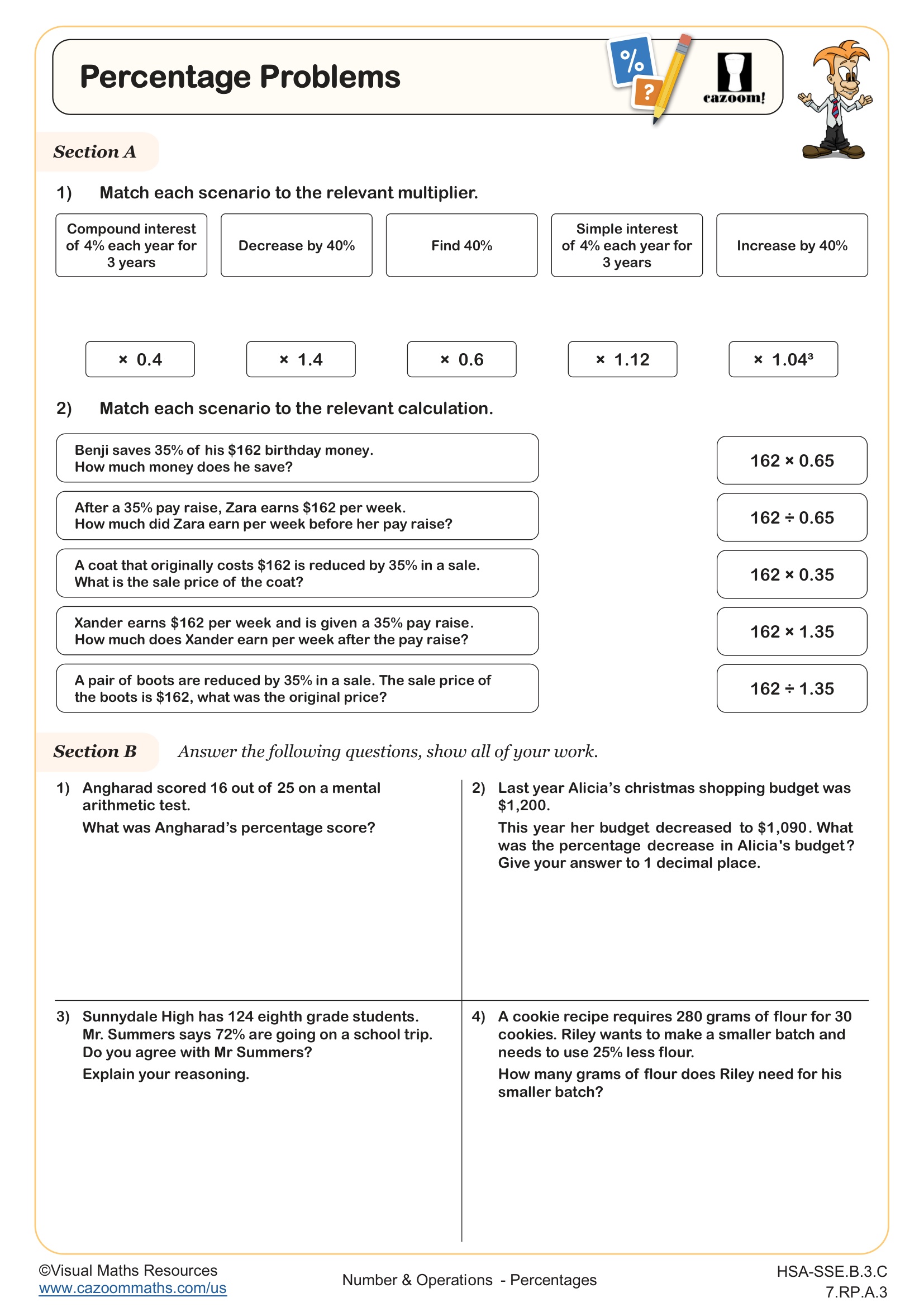
All worksheets are created by the team of experienced teachers at Cazoom Math.
Why Do High School Students Still Practice Basic Percentages?
High school percentage work shifts from conceptual understanding to rapid application within algebraic contexts. Students encounter percentages in exponential growth and decay problems, statistical analysis, probability calculations, and geometric scaling—all requiring instant recall of benchmark values. Teachers frequently notice that students who can't quickly find 25% or identify complements to 100% struggle disproportionately with compound interest formulas and percent change applications in Algebra II.
A common error pattern emerges when students calculate 10% correctly but then attempt to find 5% by dividing the original number by 5 rather than halving their 10% result. Reinforcing these benchmark relationships through targeted practice helps students recognize efficient pathways, particularly when percentages appear embedded within multi-step algebraic problems where computational efficiency directly impacts problem-solving success.
Which Grade Levels Use These High School Percentages Worksheets?
These worksheets serve high school students across Algebra I, Algebra II, Geometry, Precalculus, and Integrated Math I, II, and III courses. The content addresses percentage fluency gaps that affect performance in advanced mathematics, regardless of specific course enrollment. Students often arrive at high school with conceptual understanding but lack the automaticity required when percentages appear within algebraic expressions, geometric similarity problems, or trigonometric applications.
Progression across these levels shifts from reinforcing benchmark calculations in Algebra I to applying percentages in increasingly complex contexts. Geometry students use percentages when scaling figures and calculating error rates in measurement. Precalculus students encounter percentage change in logarithmic growth models and statistical distributions. Teachers notice that students who master complement relationships early show stronger performance later when working with probability complements and inverse functions.
How Do Students Use Complements to 100 Percent in Problem Solving?
Complements to 100% represent the relationship where two percentages sum to the whole. Understanding that 35% and 65% are complements helps students quickly determine remaining quantities without recalculating from the original value. This concept appears when students find discount amounts versus sale prices, probability of an event versus its complement, or completed versus remaining portions of a task. Teachers observe that students who recognize complement pairs solve multi-step percentage problems more efficiently.
In manufacturing and quality control contexts, complement percentages prove essential for calculating defect rates. If a factory maintains a 97.3% success rate, quality engineers immediately know the defect rate is 2.7% without additional computation. Medical laboratories use complement percentages when reporting test sensitivity and specificity rates. Students preparing for STEM careers encounter these applications in statistical analysis, financial modeling, and engineering tolerances where recognizing complement relationships streamlines complex calculations and reduces computational errors.
How Should Teachers Use These Percentage Worksheets in High School Classes?
These worksheets function as diagnostic tools and targeted intervention resources rather than primary instruction materials. Teachers use them to identify which benchmark percentages students can calculate mentally versus which require calculator support. The progression from creating percentages using 10%, 50%, and 25% through calculator-based problems allows teachers to scaffold student development from mental strategies to technology-enhanced computation appropriate for advanced coursework.
Many teachers assign these worksheets as warm-up activities before introducing exponential functions or statistical analysis where percentage fluency prevents cognitive overload. Others use them for differentiated homework, assigning benchmark-focused problems to students needing fluency development while challenging advanced students with calculator-based applications. The complete answer keys support peer tutoring arrangements where students check each other's work and identify error patterns. Teachers also use selected problems as bell ringers before standardized test preparation sessions, recognizing that percentage automaticity affects performance across multiple assessment sections.