High School Probability Worksheets
.jpg?w=3840)
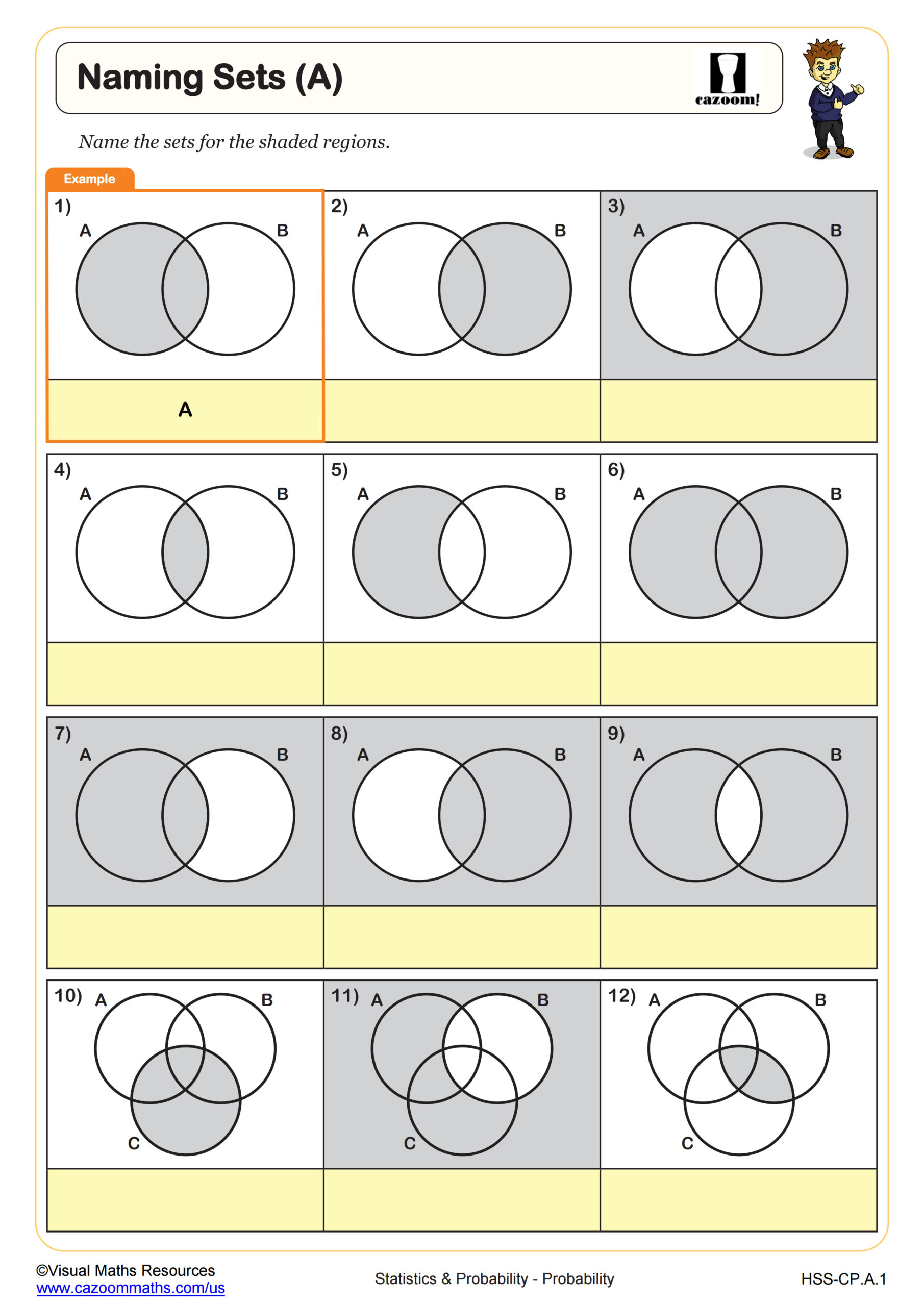
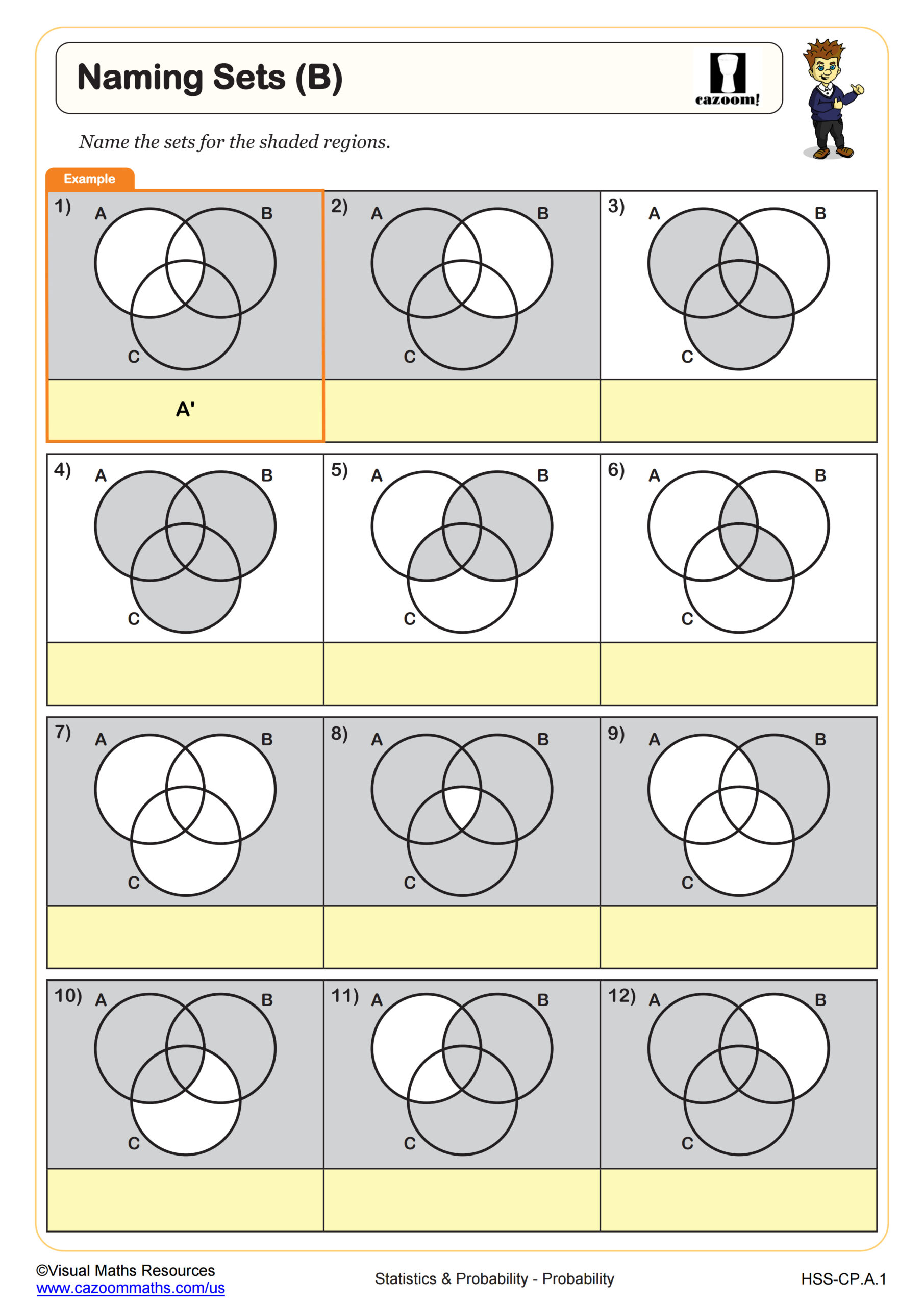
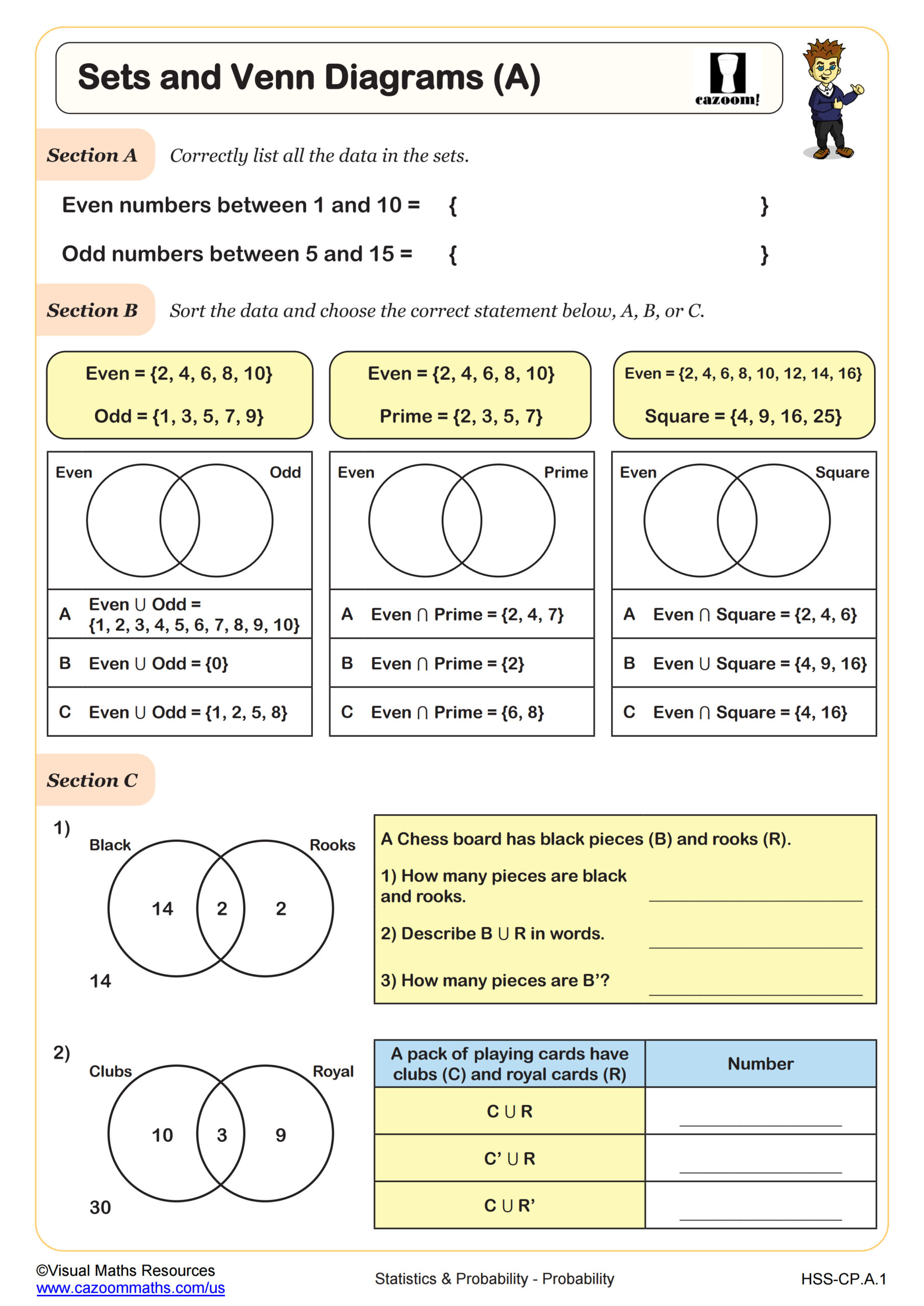
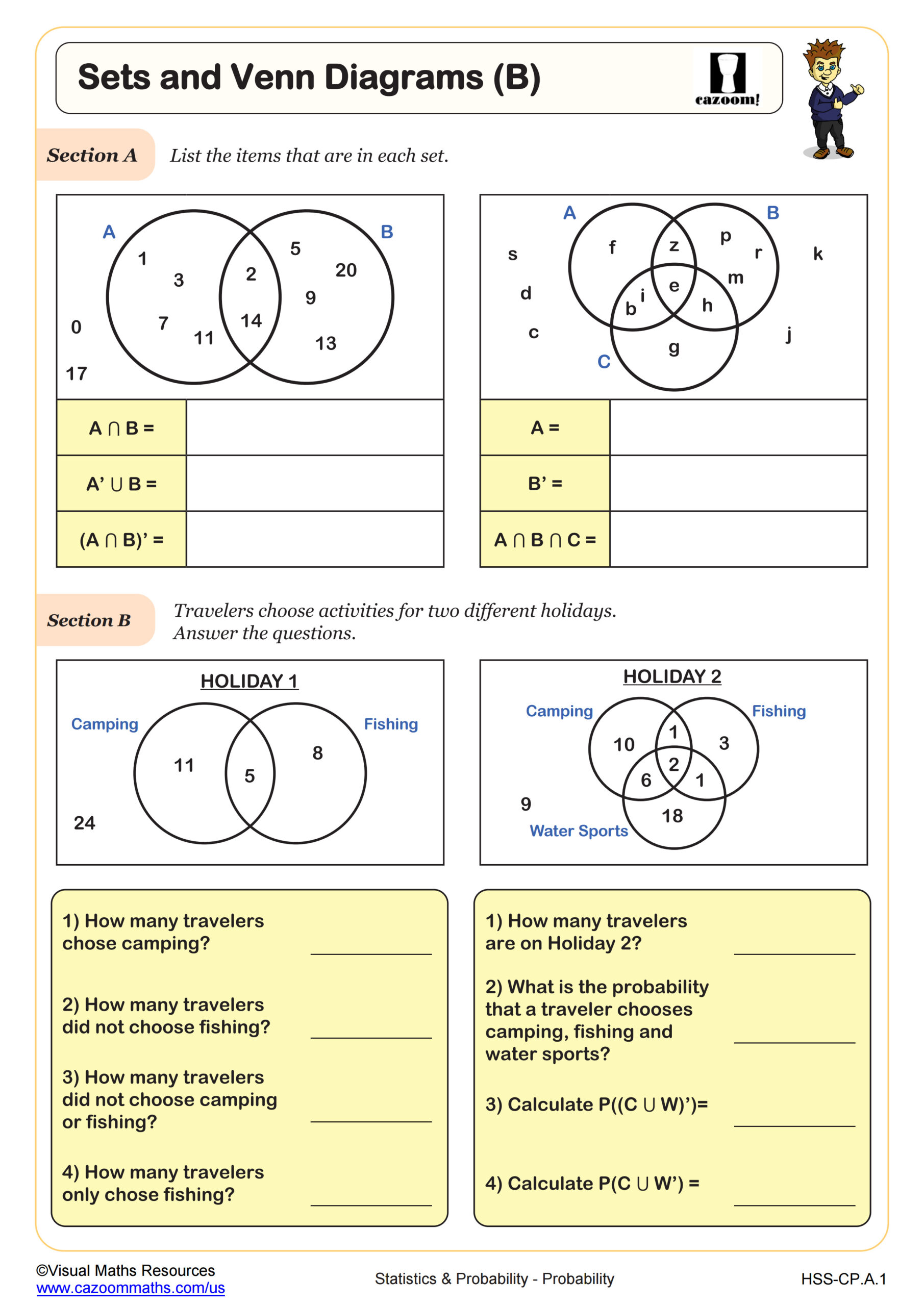
All worksheets are created by the team of experienced teachers at Cazoom Math.
What topics do high school probability worksheets typically cover?
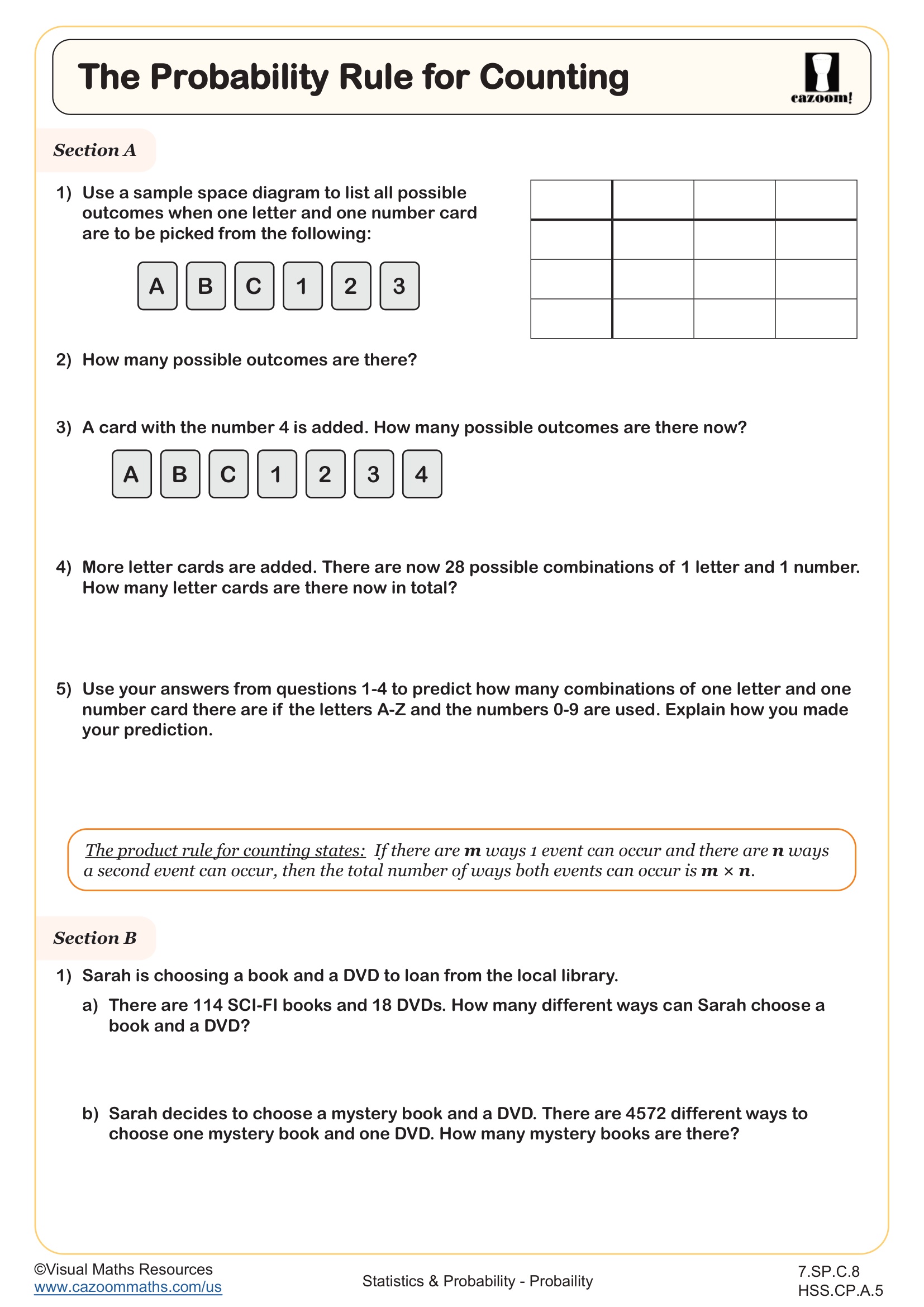
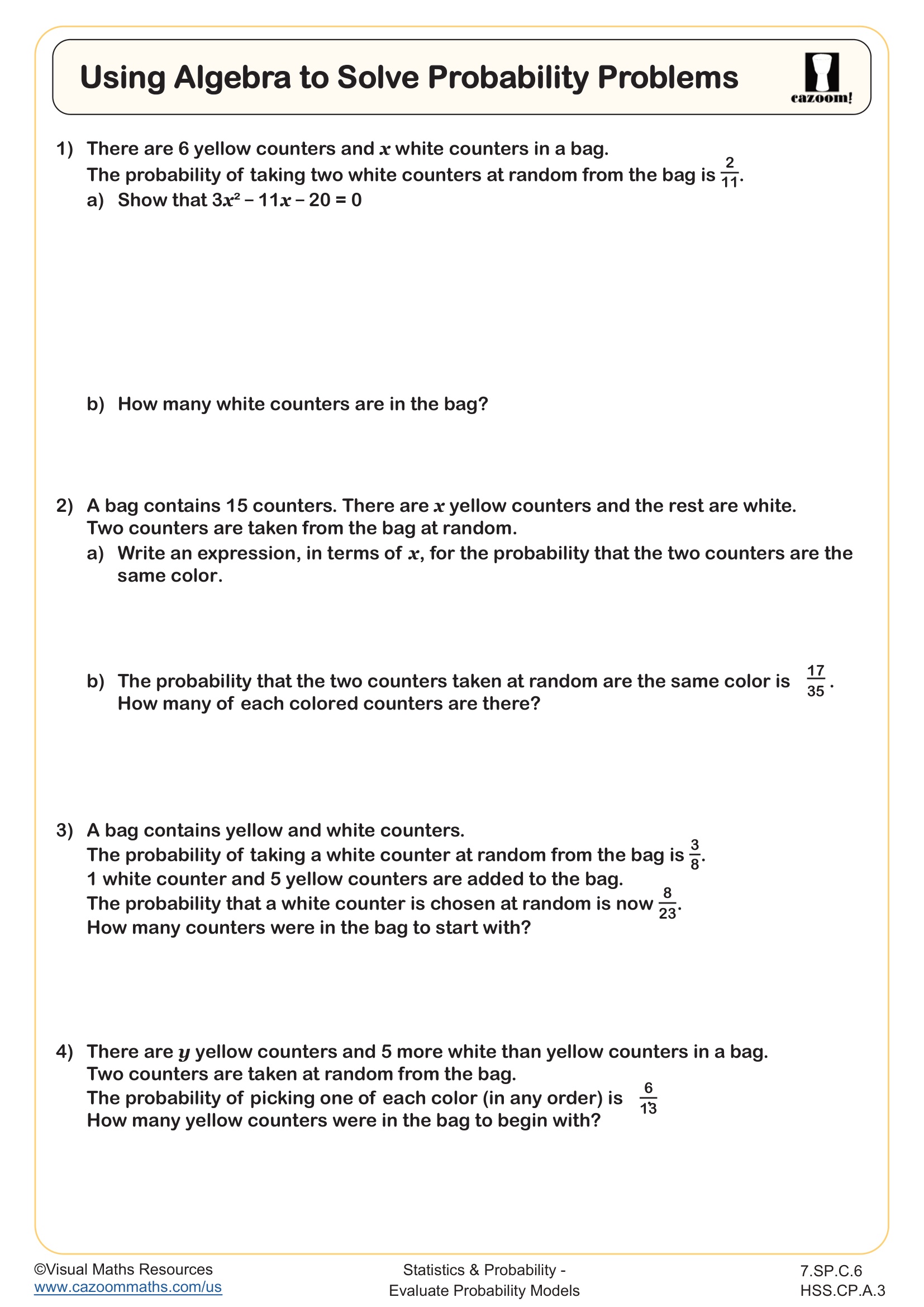
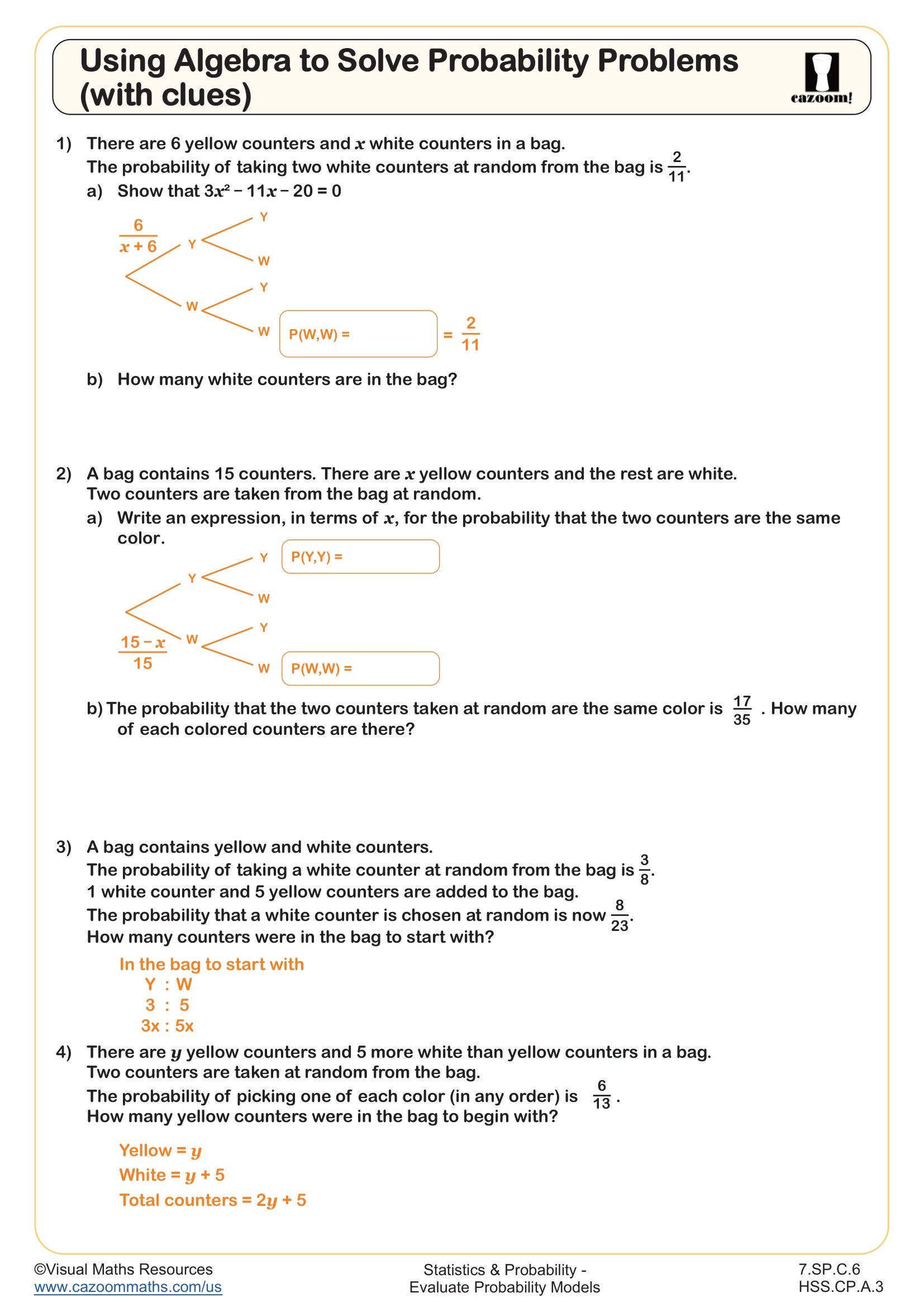
High school probability worksheets address the full spectrum of probability concepts required by state standards, including simple and compound probability, conditional probability, permutations and combinations, and probability distributions. Students practice calculating theoretical probability using sample spaces, experimental probability through simulations, and applying the multiplication and addition rules for probability.
Teachers notice that students frequently misapply the multiplication rule, forgetting to check whether events are independent before multiplying probabilities. The worksheets include step-by-step problems that explicitly require students to identify event relationships, helping them avoid this common error that costs points on assessments.
How do probability worksheets progress across high school grade levels?
Ninth and tenth grade probability worksheet content focuses on foundational concepts like simple probability, experimental versus theoretical probability, and basic compound events using tree diagrams and tables. By eleventh and twelfth grade, students tackle advanced topics including conditional probability, binomial distributions, and statistical inference that prepare them for AP Statistics or college-level coursework.
The progression reflects how probability concepts build upon each other, with later worksheets requiring mastery of earlier skills. Teachers report that students who struggle with basic fraction operations in simple probability calculations will face significant challenges with conditional probability formulas, making the foundational practice crucial for long-term success.
Why do students find conditional probability problems challenging?
Conditional probability represents one of the most difficult concepts in high school probability because it requires students to update their sample space based on given information. The notation P(A|B) confuses many students who interpret it as P(A) × P(B) rather than understanding it means the probability of A occurring given that B has already occurred.
Chance worksheets that focus on conditional probability use real-world contexts like medical testing or quality control scenarios to help students visualize how additional information changes probability calculations. Teachers find that students perform better when they can draw Venn diagrams or create two-way tables before attempting to use formulas, making the abstract concept more concrete.
How can teachers maximize student learning with probability worksheets?
Teachers achieve better results when they use probability worksheets as guided practice rather than independent work, allowing students to discuss their reasoning and identify misconceptions before they become entrenched. The answer keys should be used for immediate feedback, with teachers encouraging students to explain their solutions rather than simply checking for correct answers.
Classroom experience shows that students benefit from working probability homework problems in pairs, particularly when dealing with complex scenarios involving multiple events. This collaborative approach helps students catch calculation errors and develop mathematical communication skills while building confidence with probability concepts that many find intimidating when working alone.