High School Quadratic and Cubic Functions Worksheets
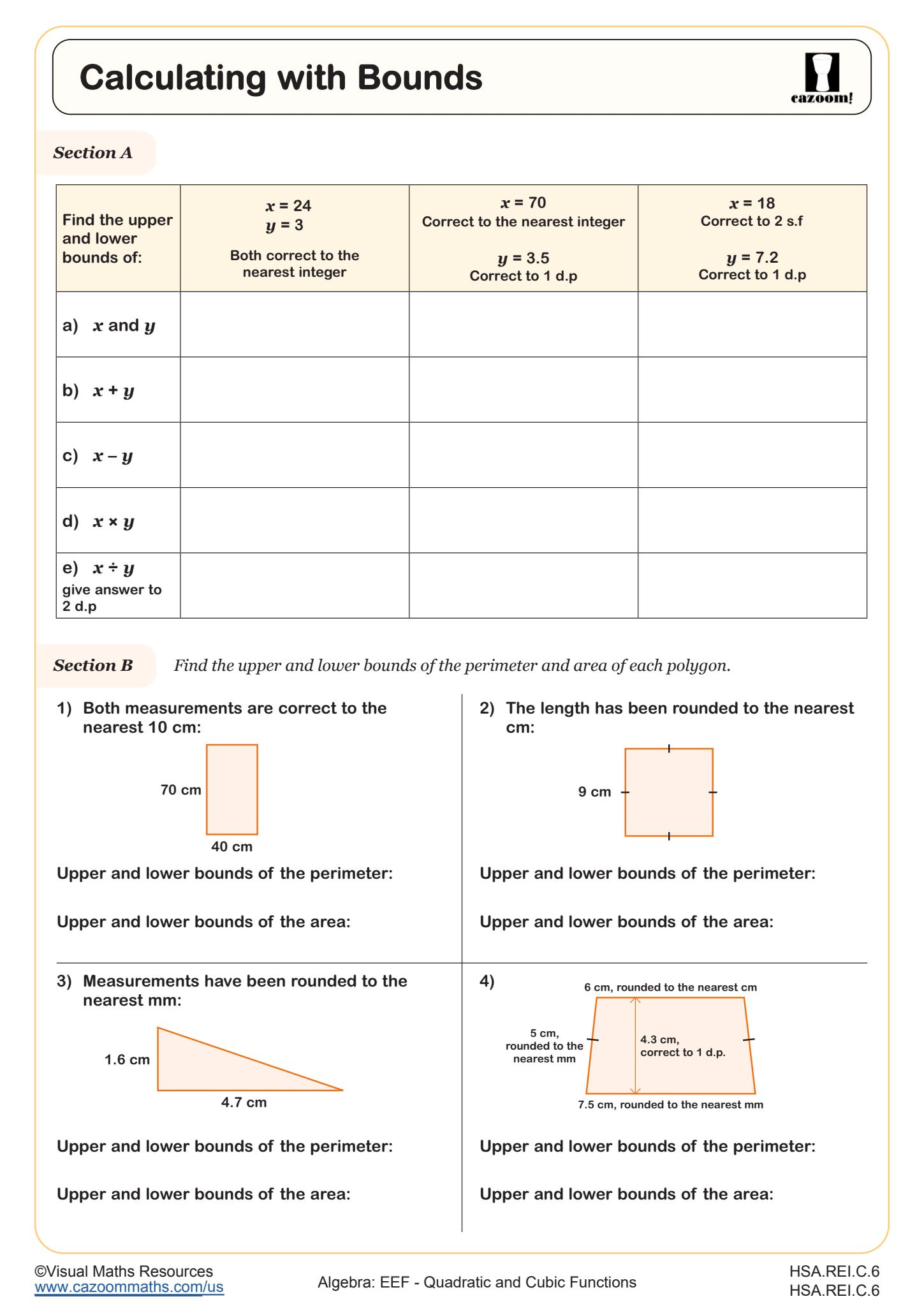
Calculating with Bounds
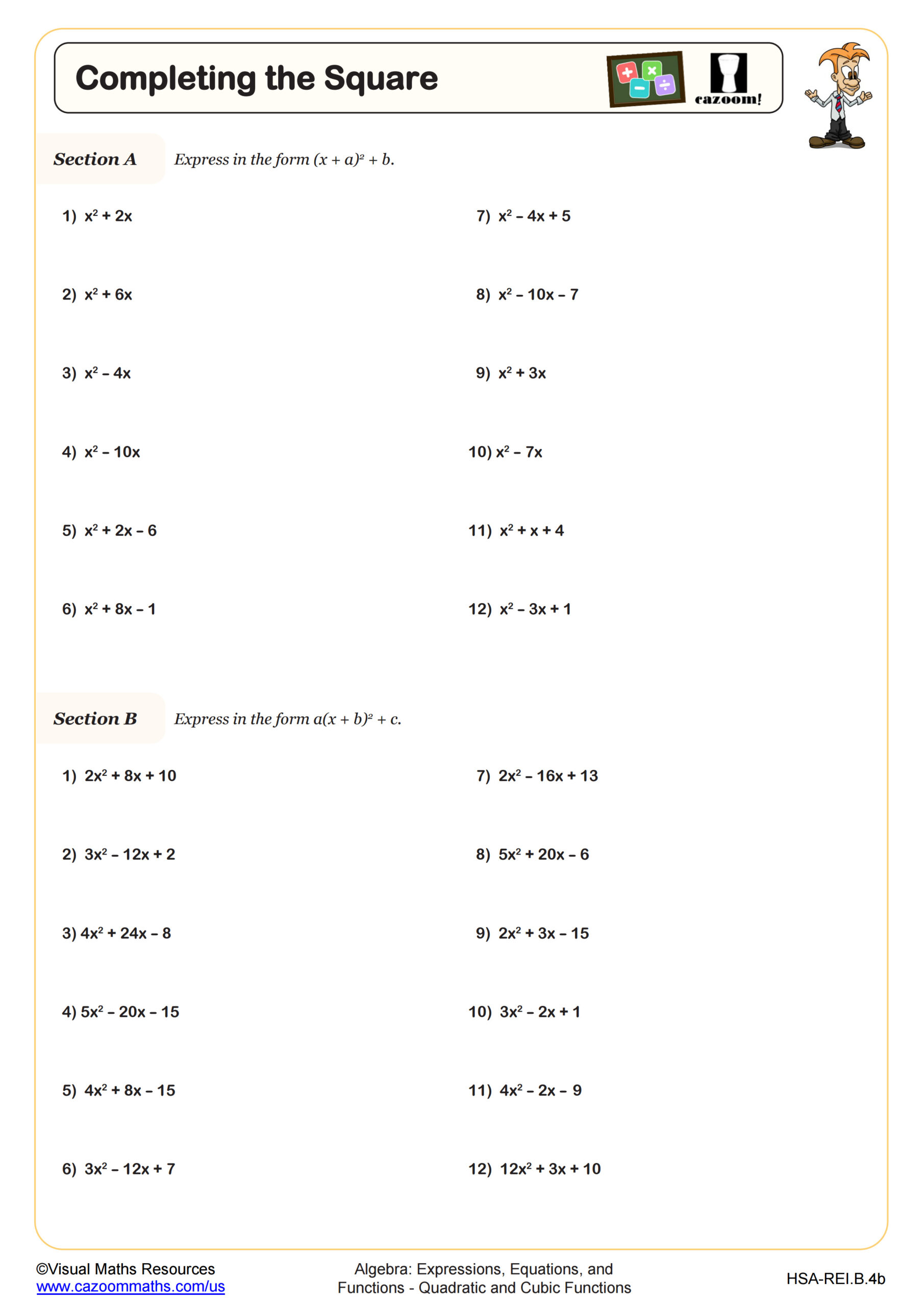
Completing the Square
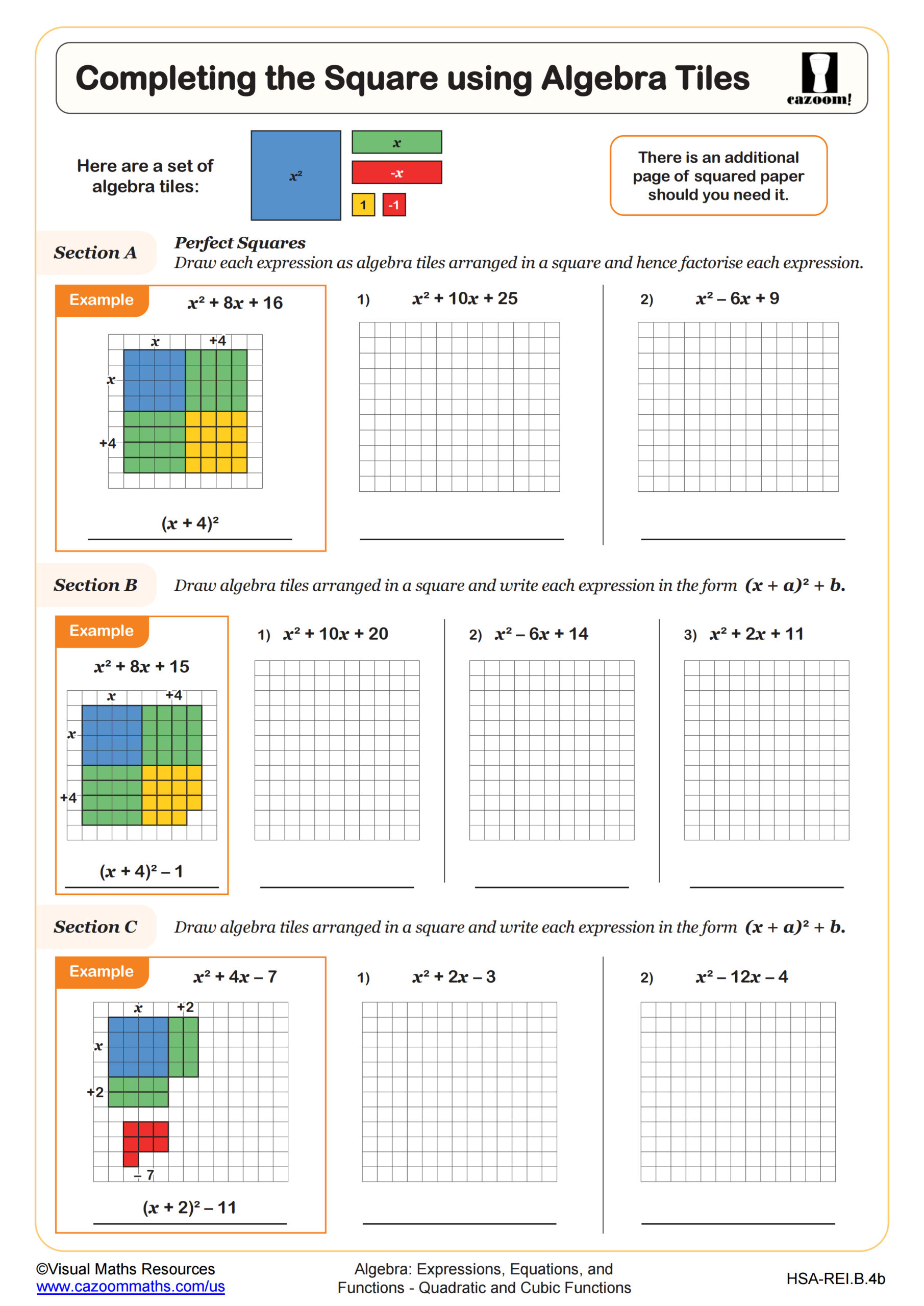
Completing the Square using Algebra Tiles
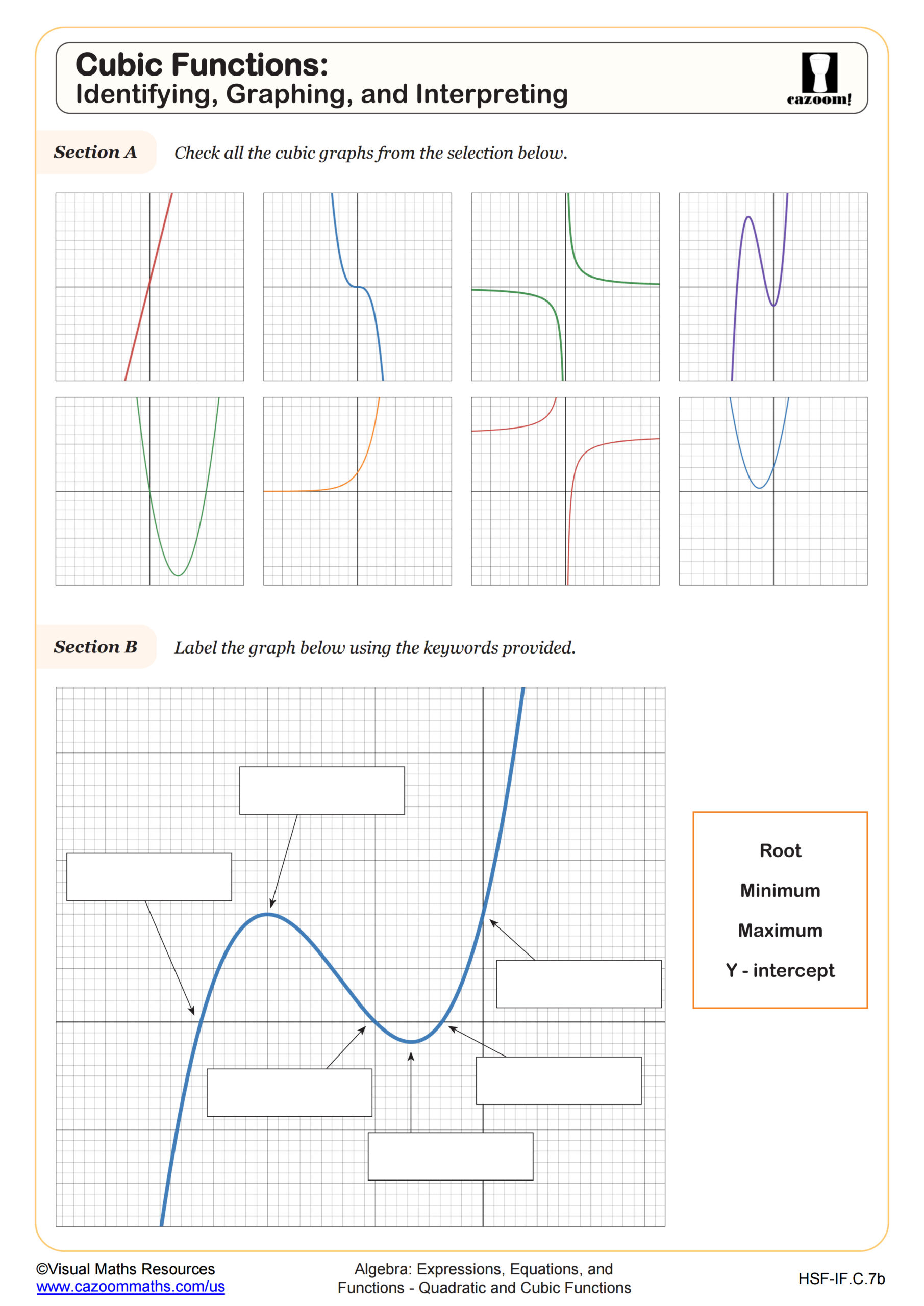
Cubic Functions: Identifying, Graphing, and Interpreting
Factorising Quadratic Expressions - Using the Area Model
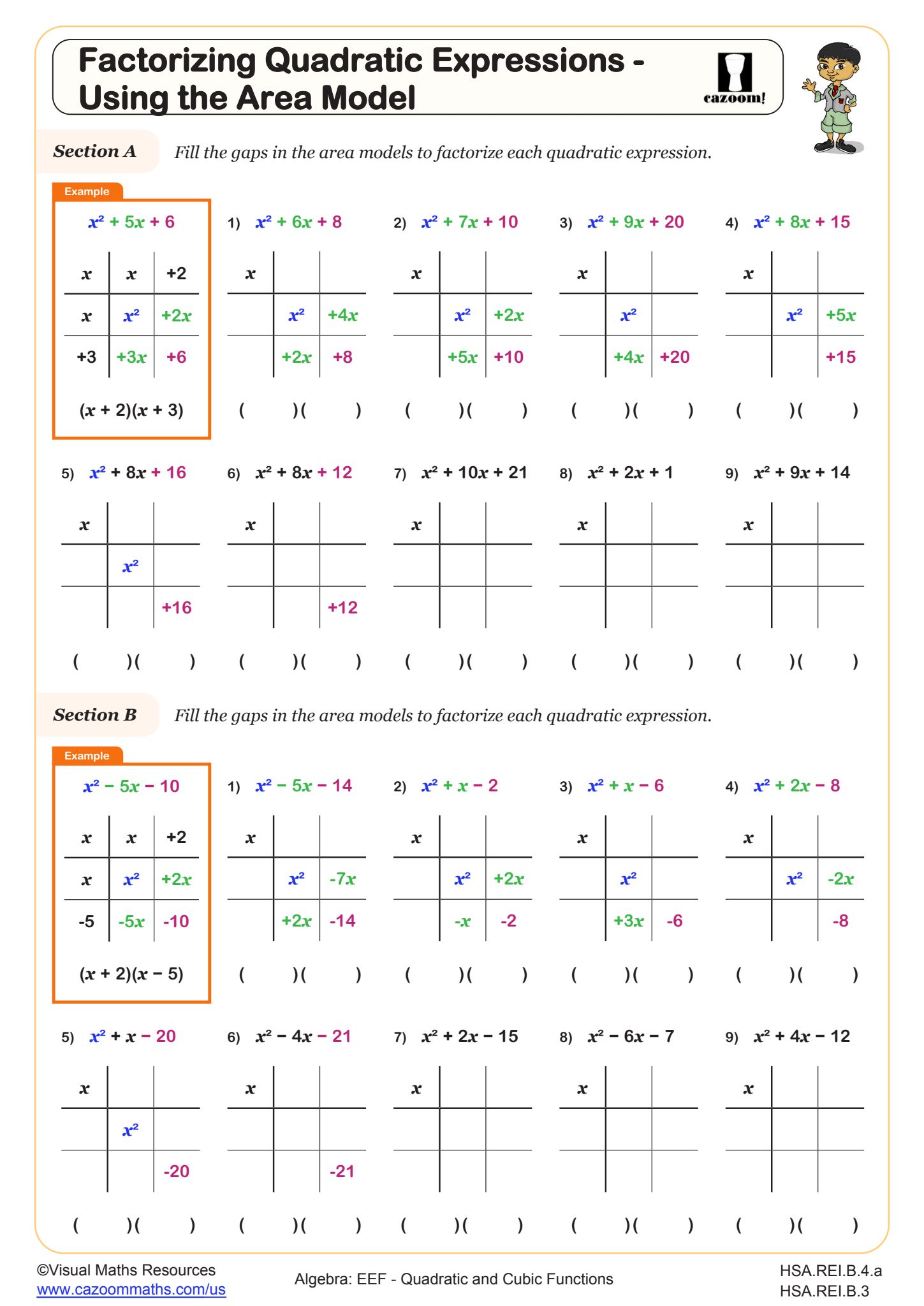
Graphing Cubic Functions
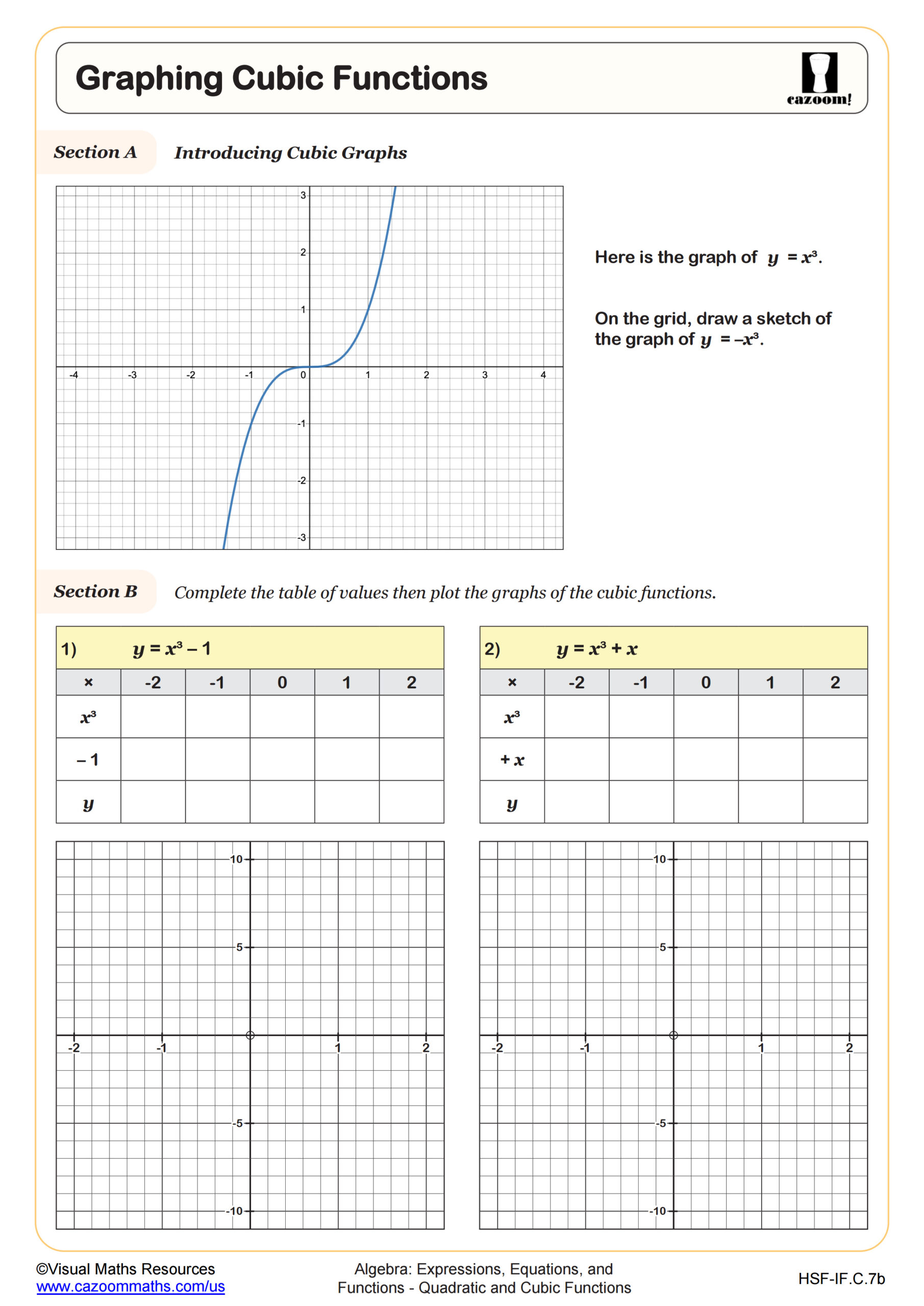
Graphs of Quadratic Functions (A)
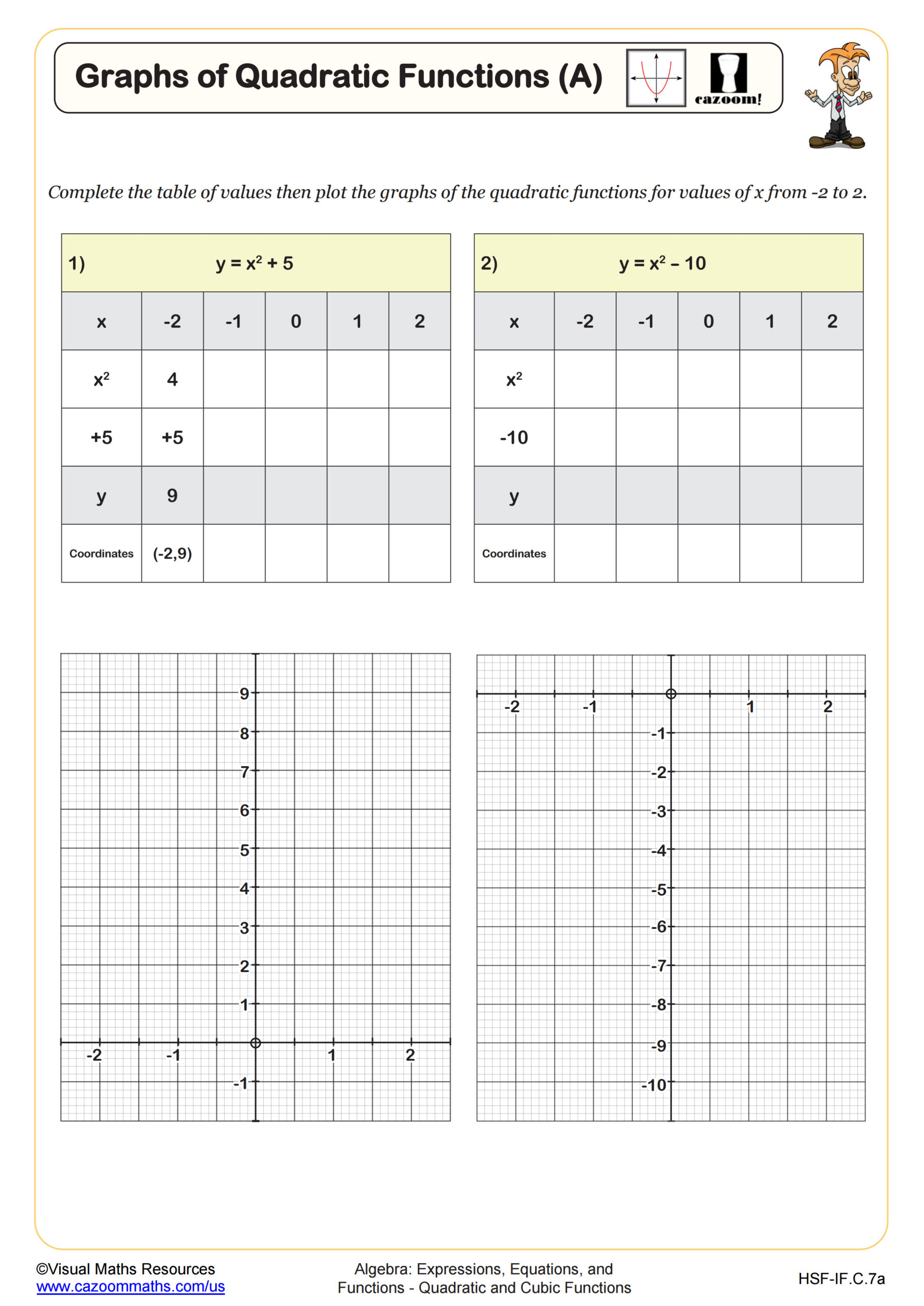
Graphs of Quadratic Functions (B)
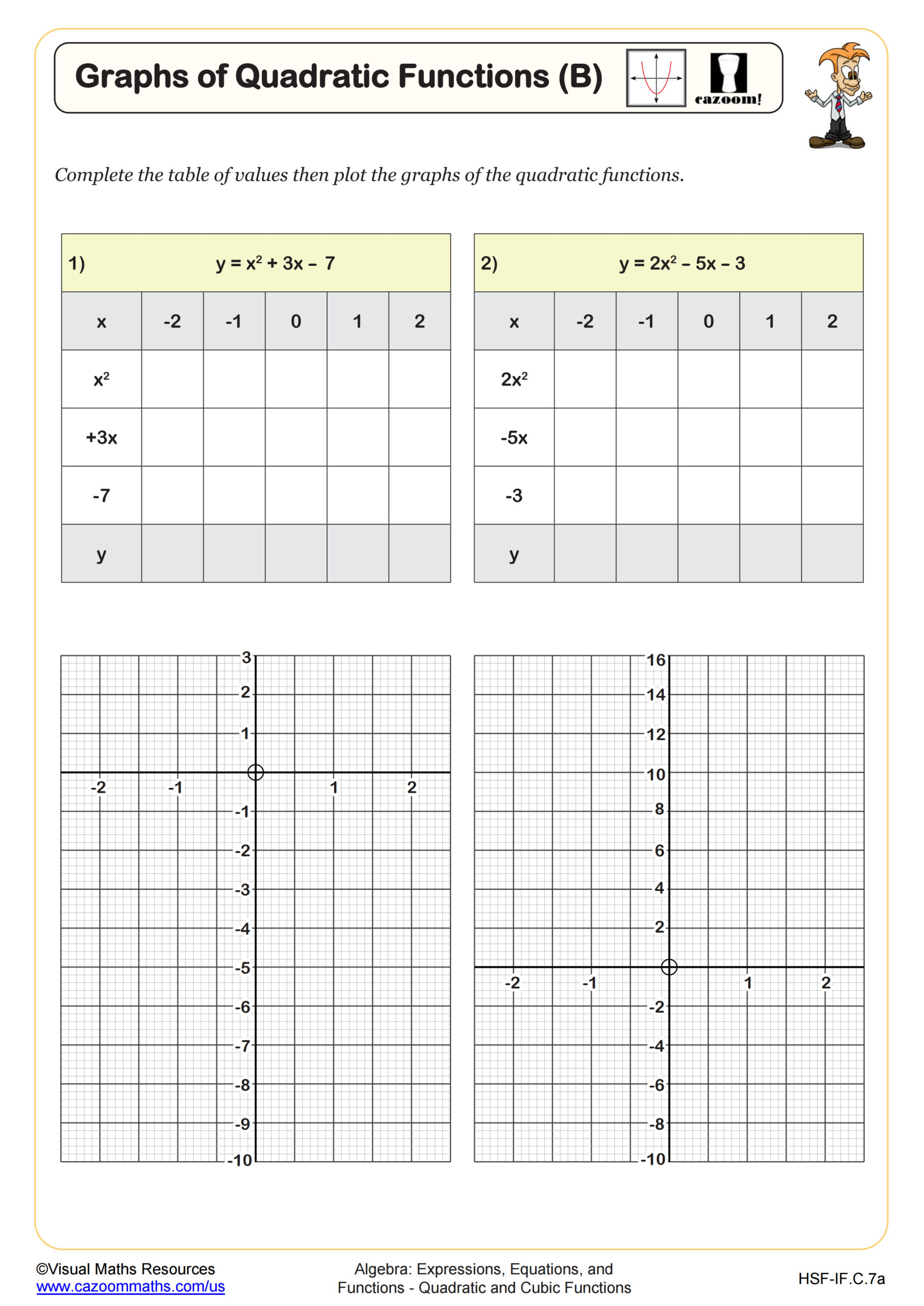
Identifying Vertex of Quadratic Functions
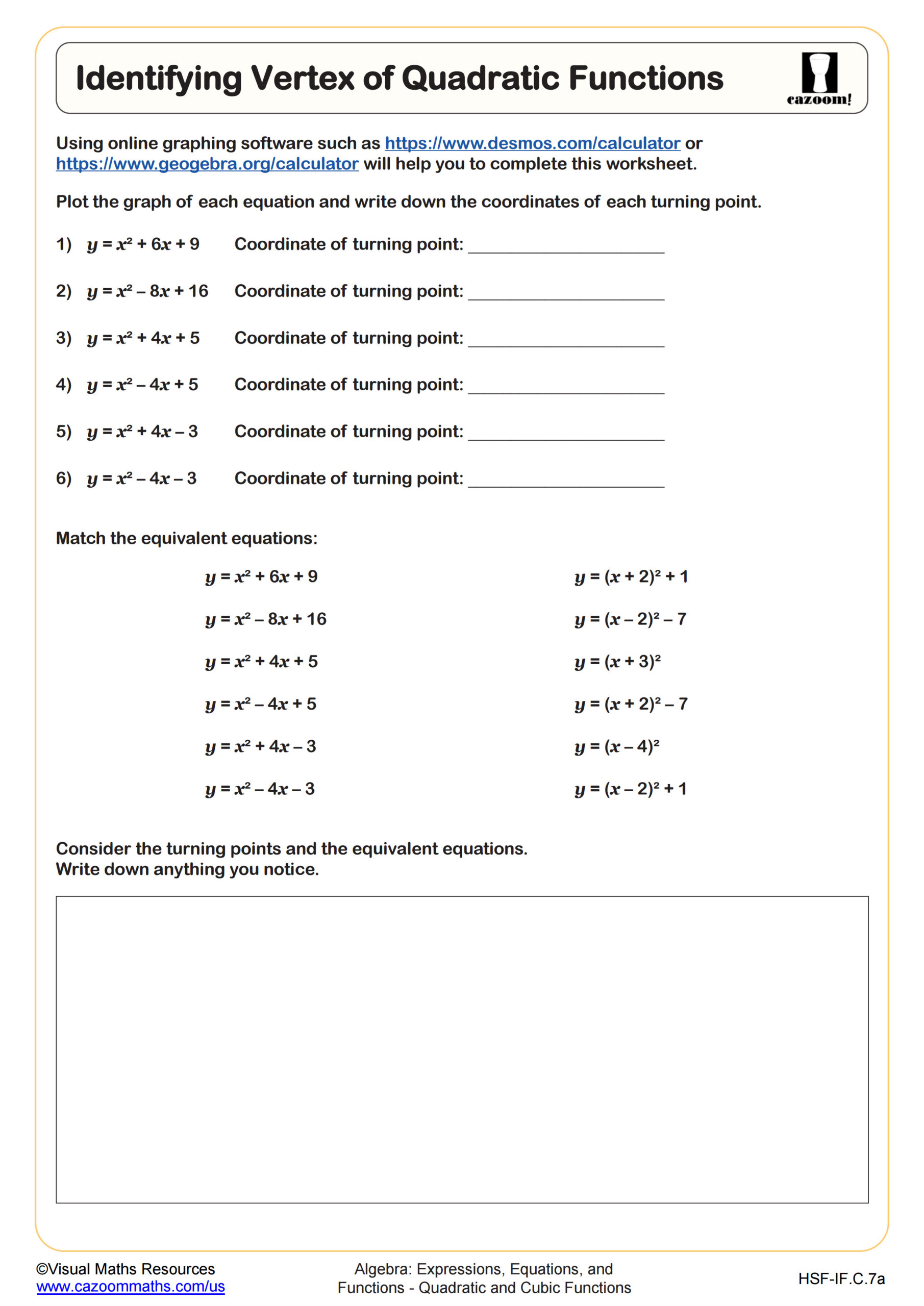
Quadratic Expressions and Equations Involving Areas
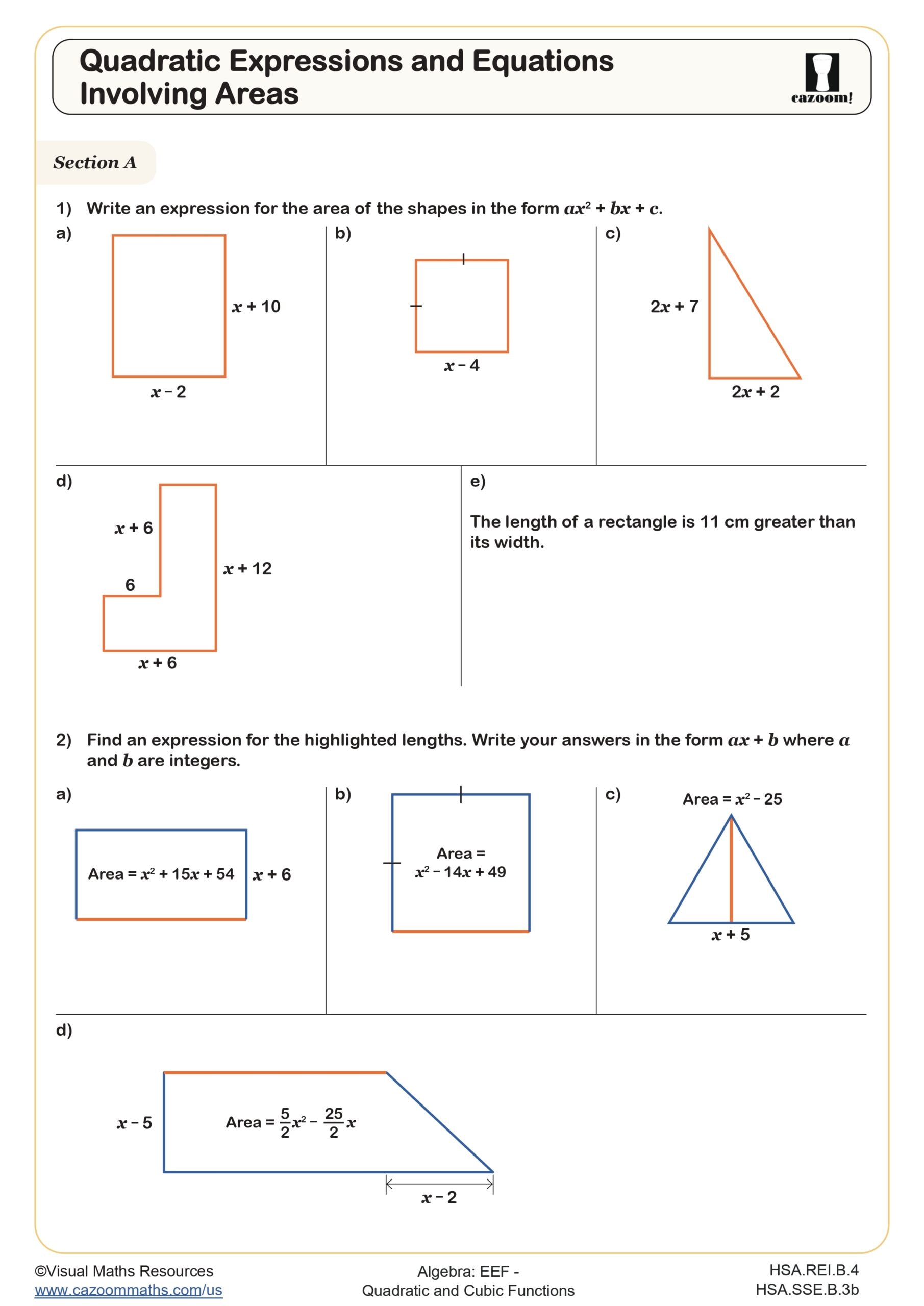
Sketching Quadratic Functions
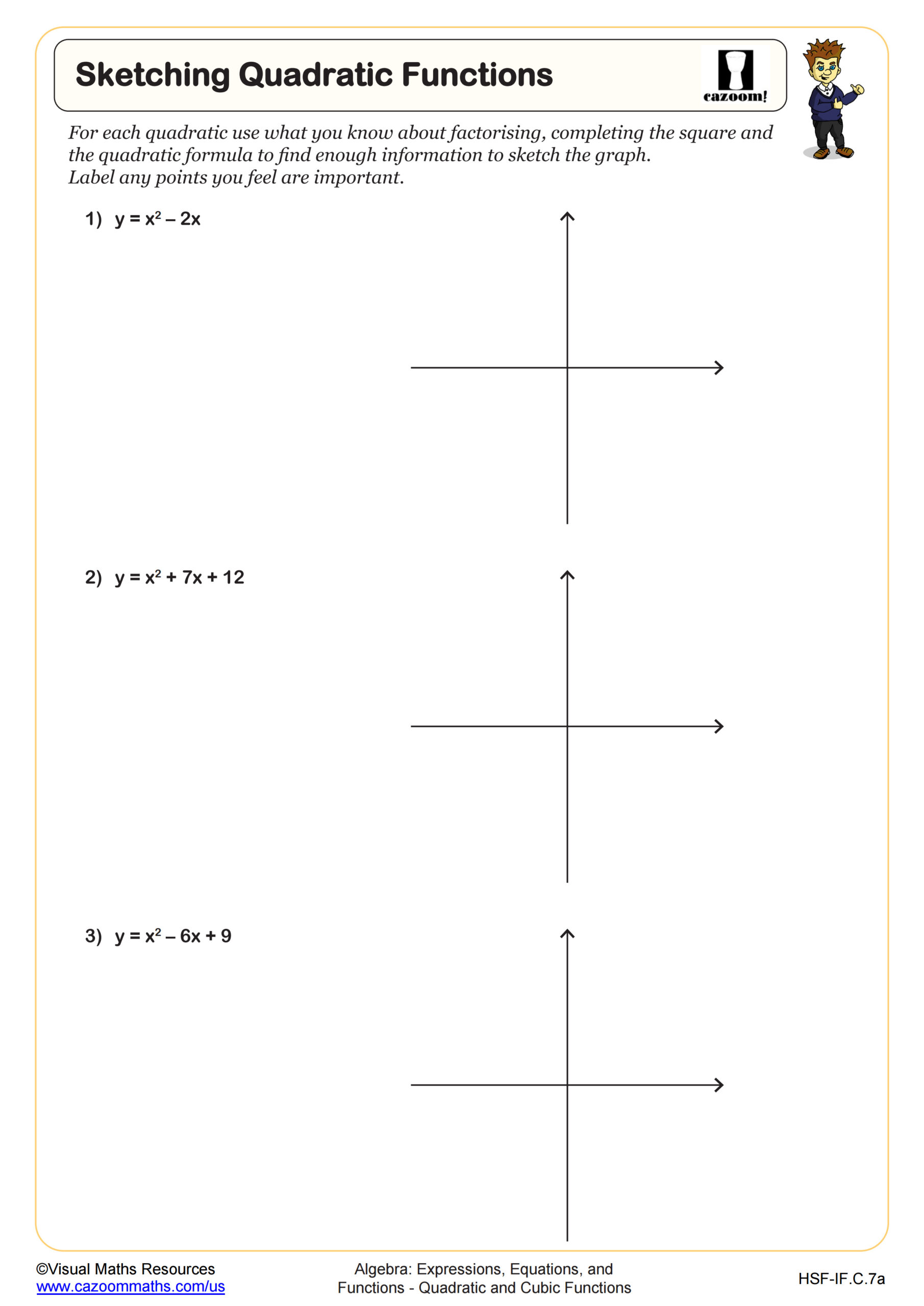
Solving Linear Simultaneous Equations - Same Coefficients
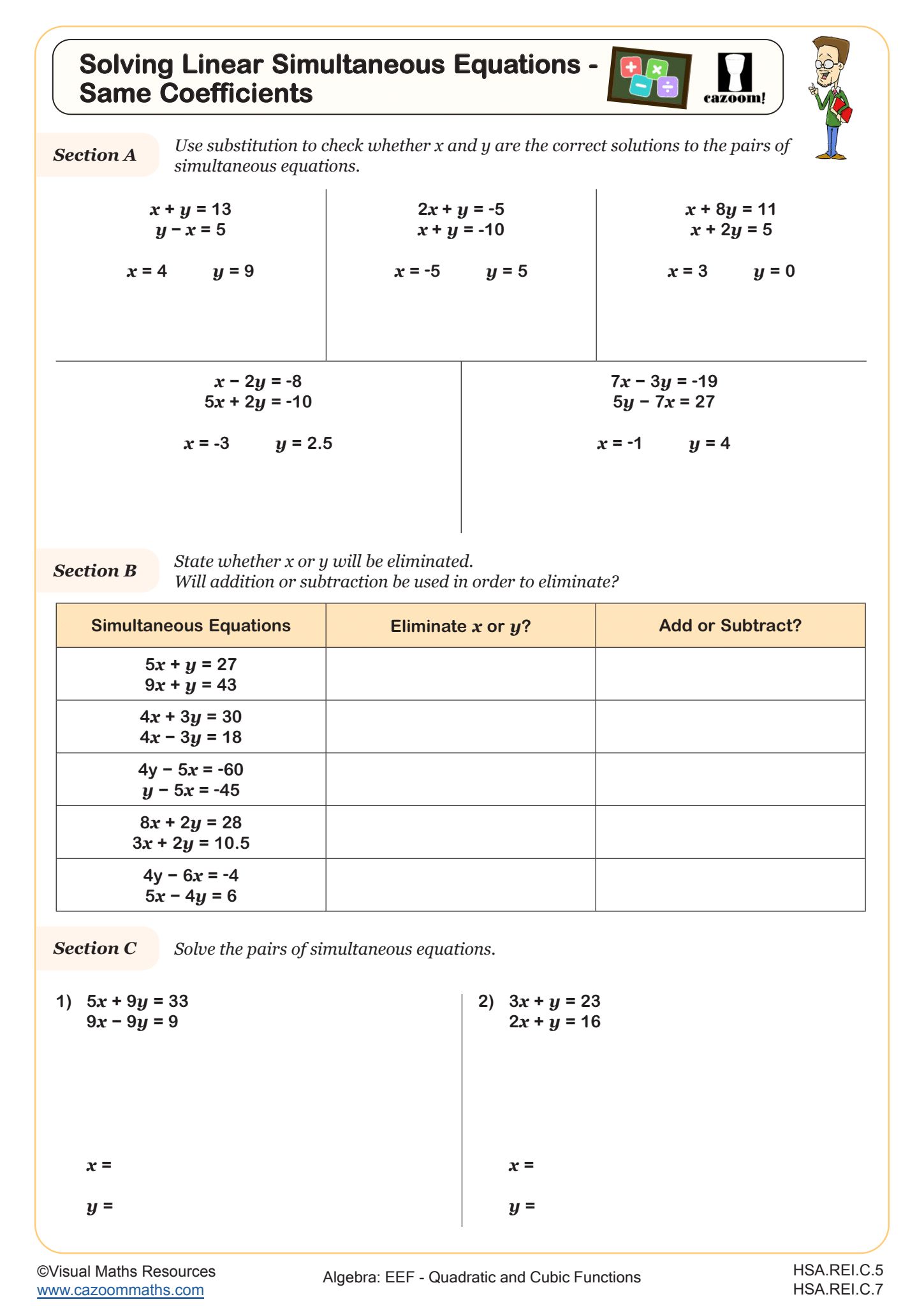
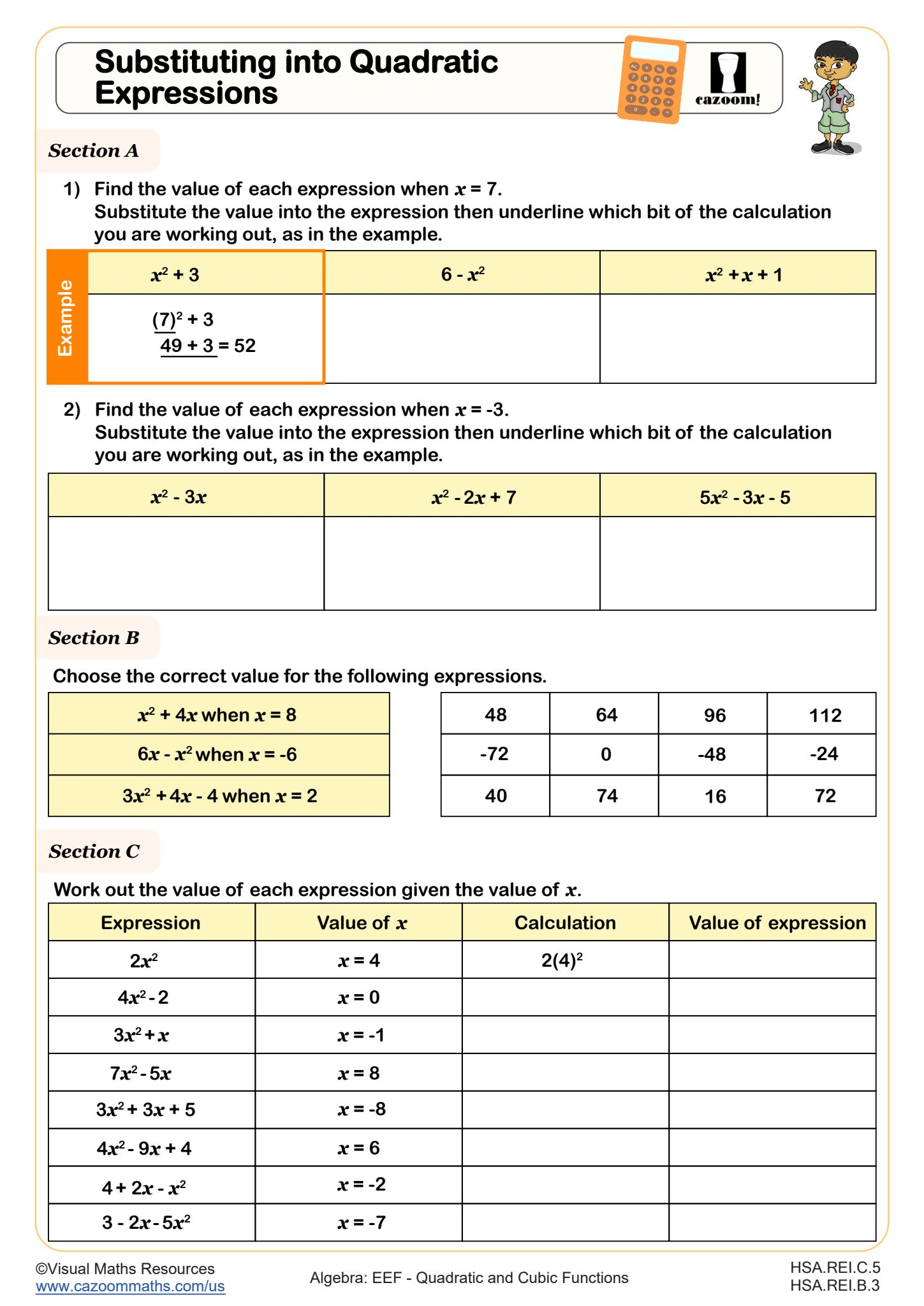
Substituting into Quadratic Expressions
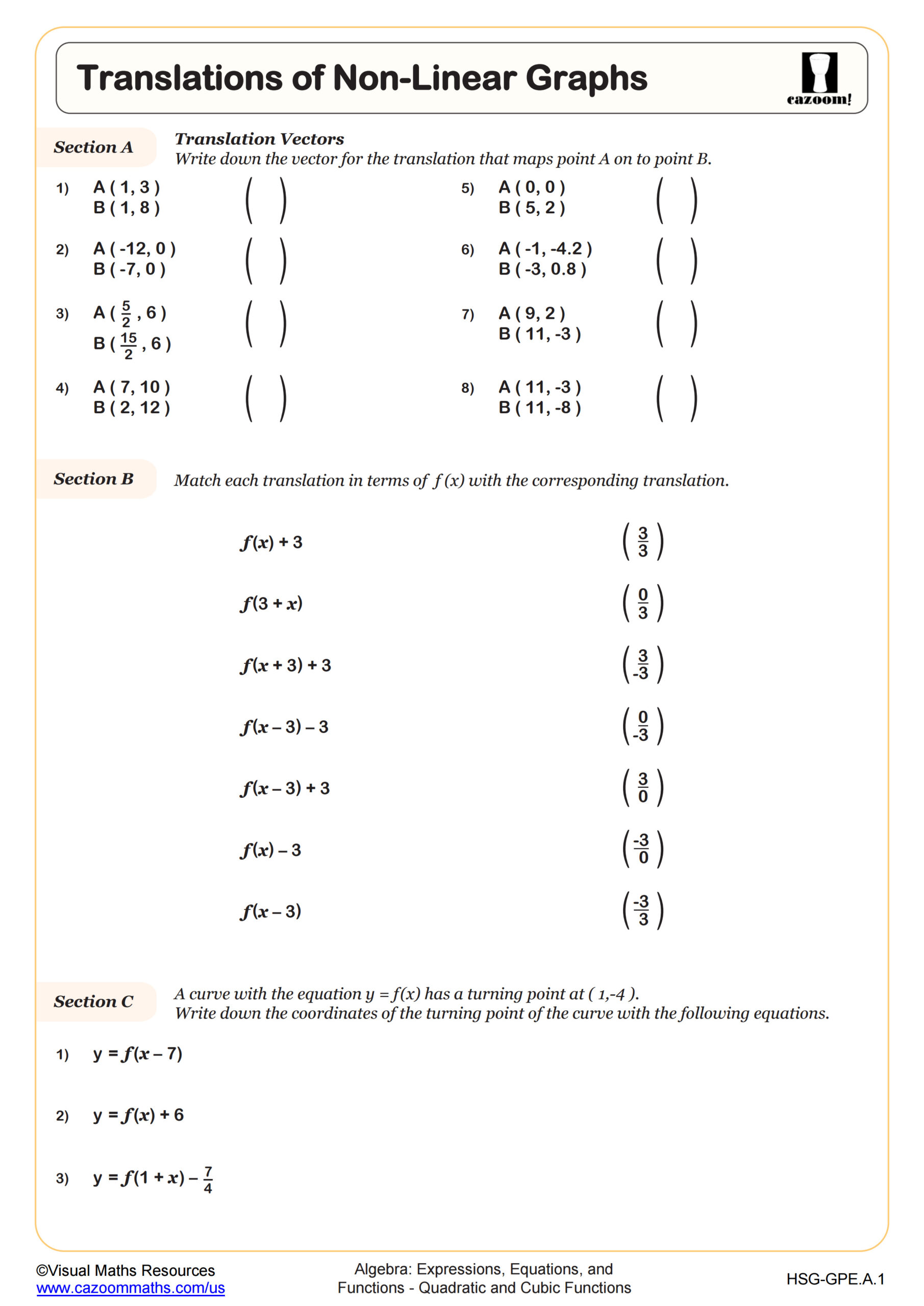
Translations of Non-Linear Graphs
All worksheets are created by the team of experienced teachers at Cazoom Math.
What skills do students practice with a cubic function worksheet?
A cubic function worksheet typically covers graphing techniques, identifying key characteristics, and analyzing transformations of functions in the form f(x) = ax³ + bx² + cx + d. Students work with finding intercepts, determining end behavior, and locating turning points. These skills align with Common Core standards for high school algebra and prepare students for advanced mathematics courses.
Teachers often observe that students struggle most with sketching accurate curves between plotted points. Many students plot several coordinate pairs correctly but then connect them with straight lines rather than smooth curves. The worksheets address this by providing practice with both point-plotting and curve-sketching techniques, helping students understand how cubic functions behave differently from linear or quadratic functions.
Which grade levels use graphing cubic functions worksheets?
Graphing cubic functions worksheets are primarily used in grades 9-12, typically introduced in Algebra 2 or Precalculus courses. Some advanced Algebra 1 classes may cover basic cubic graphing, while AP Calculus students revisit these concepts when studying derivatives and critical points. The timing varies by state standards and district pacing guides.
Teachers find that students need solid mastery of quadratic functions before attempting cubic graphs. Students who haven't fully grasped parabola transformations often become overwhelmed by the additional complexity of cubic curves. Many teachers recommend reviewing quadratic transformations before introducing cubic function worksheets to ensure students have the foundational skills needed for success with these more complex functions.
How do cubic transformations worksheet problems help students?
Cubic transformations worksheet problems teach students to identify how parameters affect the shape and position of cubic graphs. Students learn to recognize vertical shifts, horizontal shifts, reflections, and stretches by analyzing changes to the parent function f(x) = x³. These transformation skills are key for understanding function families and preparing for calculus concepts.
Teachers notice that students often confuse the direction of horizontal shifts, applying the opposite transformation to what the equation indicates. For example, students frequently graph f(x) = (x + 3)³ by shifting right instead of left. The worksheets provide systematic practice with transformation notation, helping students develop reliable strategies for determining the correct direction and magnitude of each transformation type.
How can teachers use these worksheets most effectively in class?
Teachers get the best results by introducing cubic functions through guided practice before assigning independent worksheet problems. Many teachers start with graphing calculator exploration to help students visualize how parameter changes affect cubic curves. The answer keys allow for immediate feedback and self-correction, which is particularly valuable for this visually-dependent topic.
Teachers often pair these worksheets with real-world applications to maintain student engagement. Cubic functions model many phenomena in physics and engineering, such as the relationship between volume and dimensions in optimization problems. Connecting worksheet problems to practical contexts helps students understand why mastering cubic function graphing matters beyond the mathematics classroom and builds stronger conceptual understanding.