High School Similarity and Congruence Worksheets
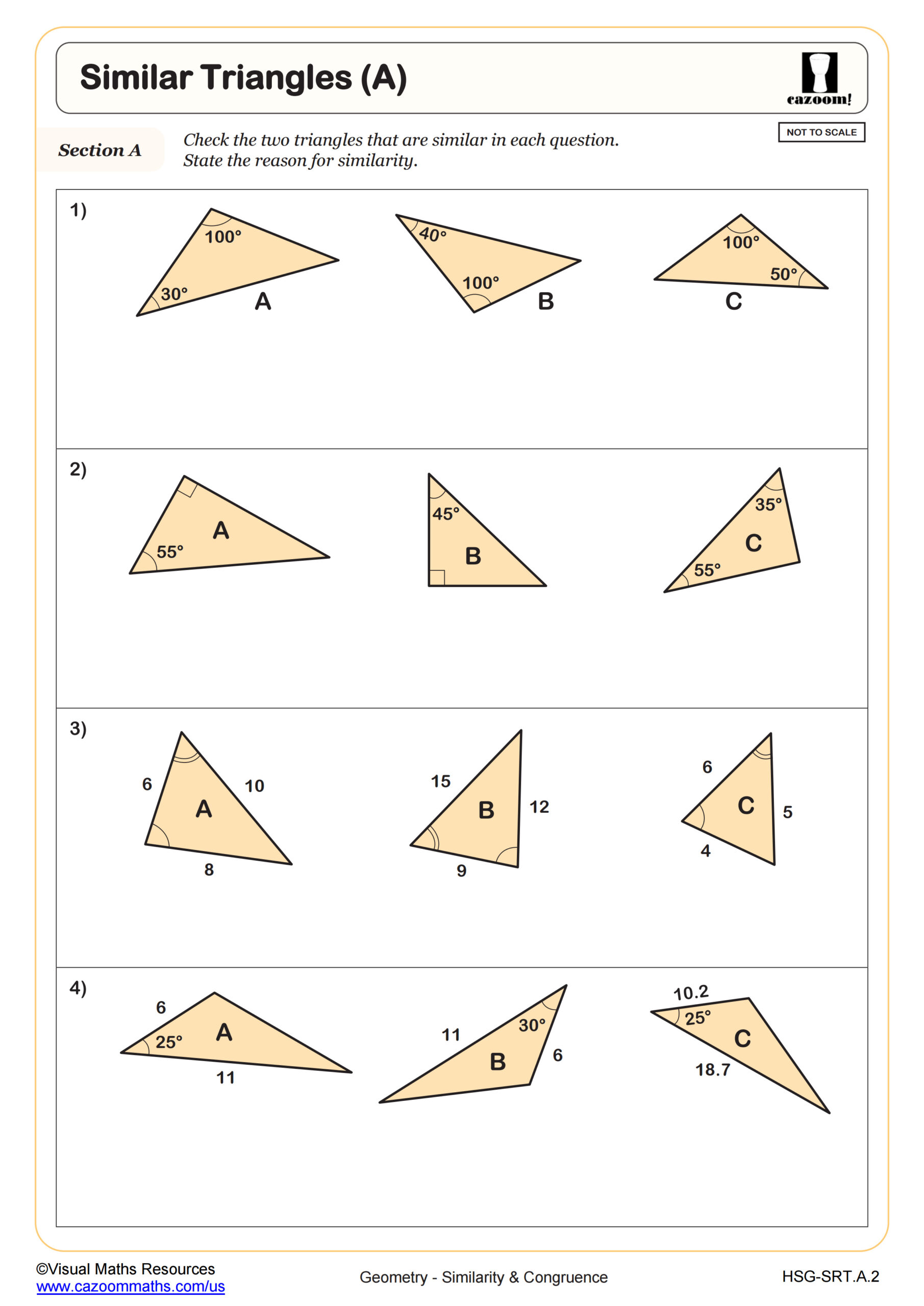
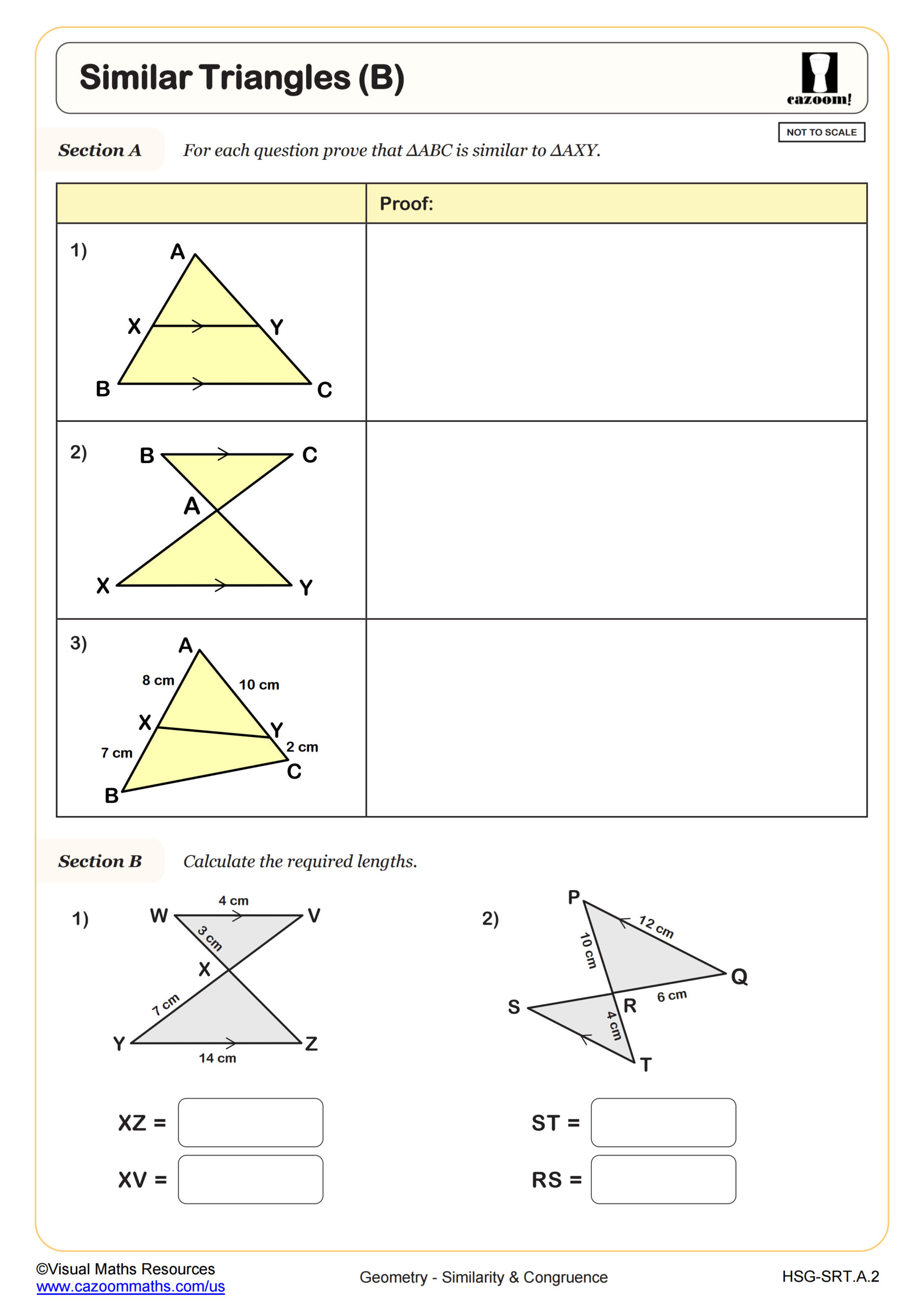
All worksheets are created by the team of experienced teachers at Cazoom Math.
What types of similarity and congruence worksheet math problems help students master these concepts?
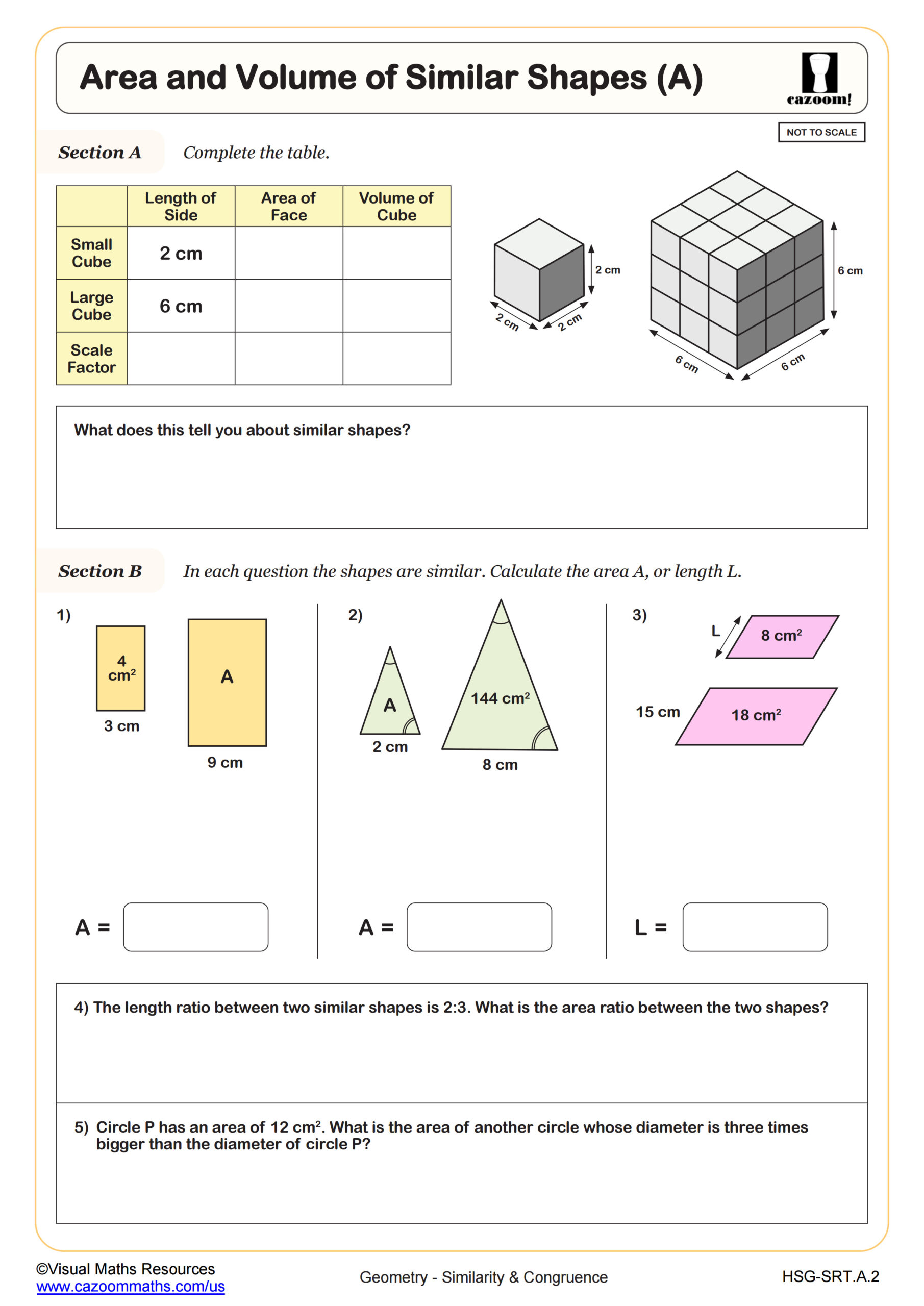
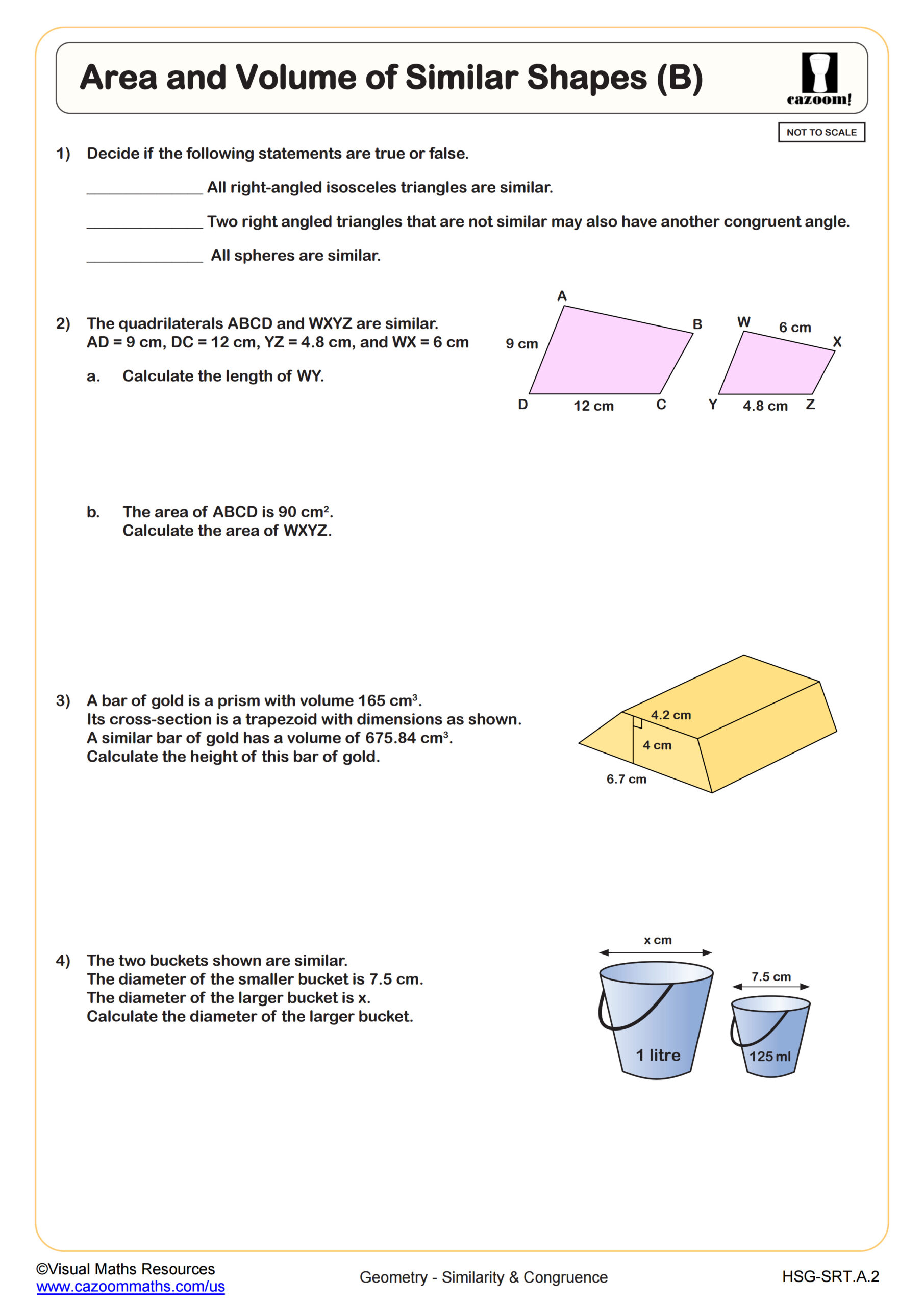
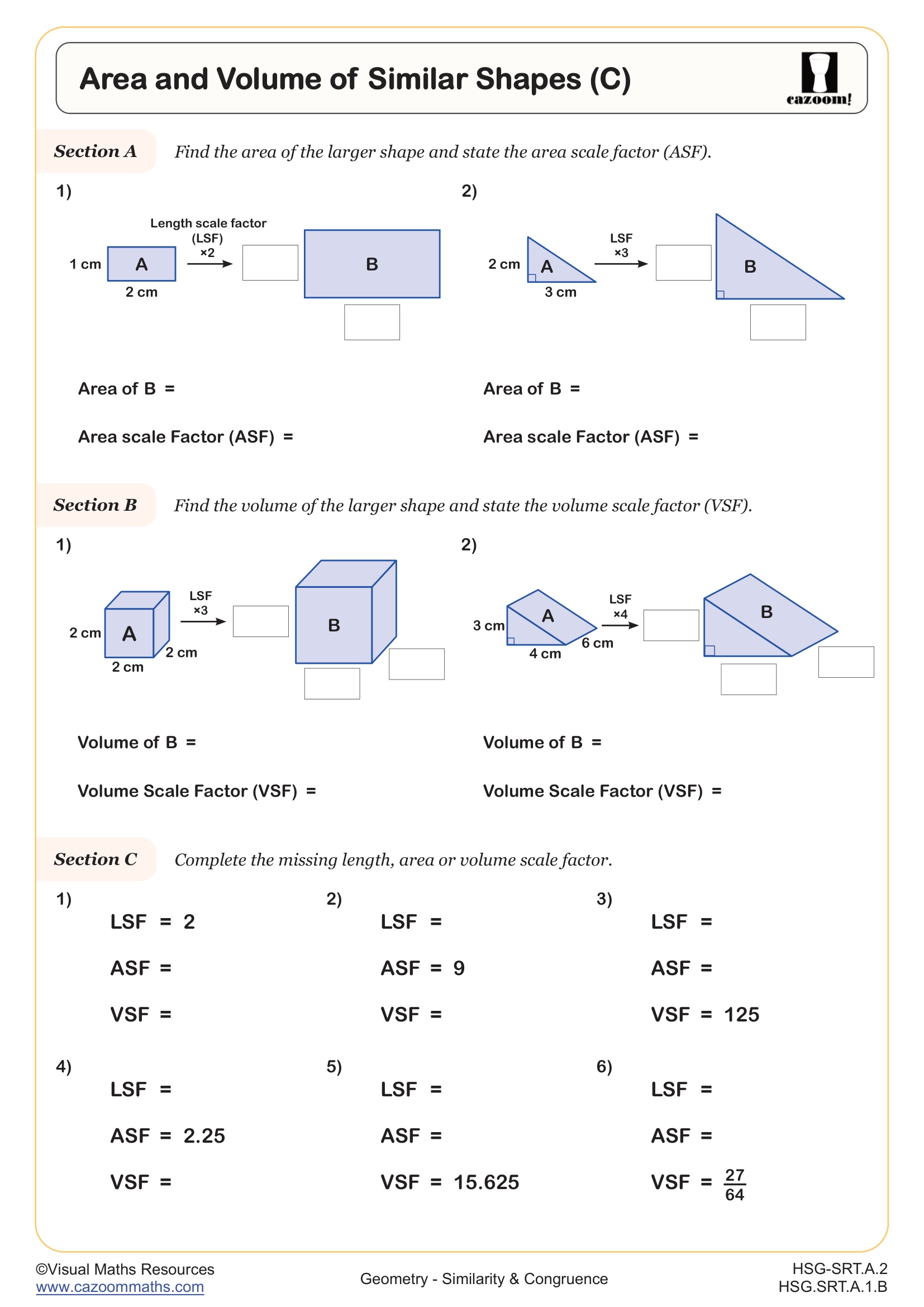
Effective similarity and congruence worksheet collections include problems covering triangle congruence postulates (SSS, SAS, ASA, AAS, HL), similarity theorems (AA, SSS, SAS), and scale factor applications. Students work through identifying corresponding parts, writing congruence statements, and constructing formal proofs that meet Common Core geometry standards for logical reasoning.
Teachers notice students often miss points by incorrectly ordering vertices in congruence statements or forgetting to justify each step in similarity proofs. Problems that require students to find missing side lengths using proportional relationships and apply similarity in coordinate geometry help bridge conceptual understanding with computational skills needed for state assessments.
How do similarity and congruence concepts progress through high school geometry?
High school geometry courses typically introduce congruence first, building from basic shape identification to formal proofs using postulates and theorems. Students then advance to similarity concepts, learning to work with proportional relationships and scale factors before tackling more complex applications in coordinate geometry and trigonometry.
Teachers observe that students who master congruence proofs early in the year demonstrate stronger reasoning skills when approaching similarity problems later. The progression from concrete shape comparisons to abstract proof writing requires consistent practice, as students must develop both computational accuracy and logical argument structure to succeed on standardized assessments.
How do teachers help students understand similarity scale factor calculations?
Scale factor problems challenge students to identify corresponding sides correctly and set up proportional equations accurately. Teachers find that students benefit from systematic approaches that emphasize labeling corresponding vertices and checking reasonableness of answers, particularly when dealing with fractional scale factors less than one.
Many students initially multiply when they should divide, especially when finding actual measurements from scale drawings. Practice problems that connect similarity scale factor concepts to real-world applications like architectural blueprints or map reading help students develop number sense and recognize when their calculations produce logical results in context.
What teaching strategies work best with congruence and similarity worksheet activities?
Teachers report success using guided practice sessions where students work through congruence and similarity worksheet problems collaboratively before attempting independent practice. Starting with visual identification activities helps students recognize corresponding parts before moving to algebraic applications and formal proof writing.
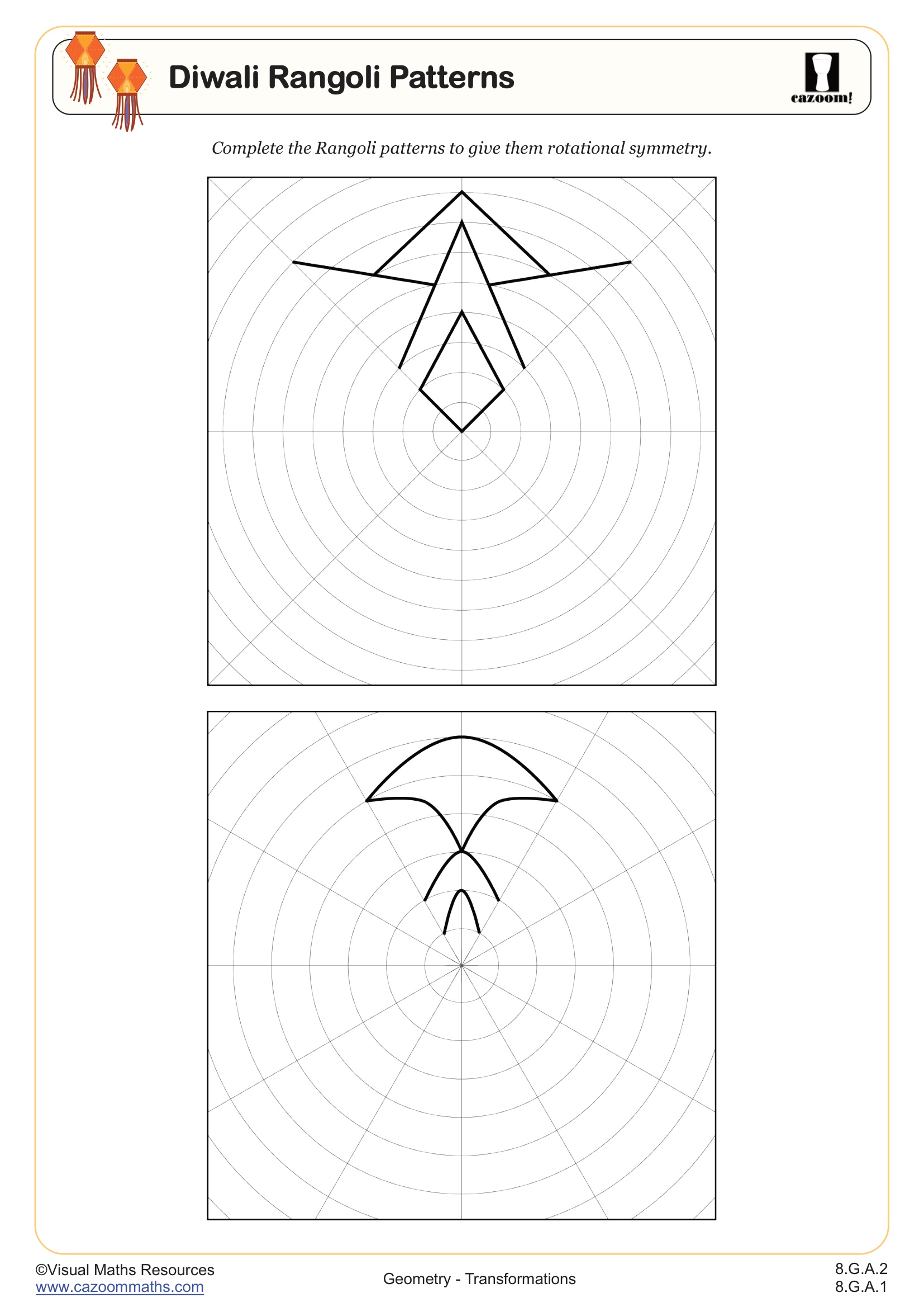
Answer keys enable teachers to facilitate peer checking sessions where students explain their reasoning and identify common errors. Many educators find that having students create their own similar figures using coordinate geometry reinforces understanding of transformation concepts while building connections between similarity, congruence, and the coordinate plane skills tested on standardized assessments.