High School Solving Equations Worksheets
Compound Interest
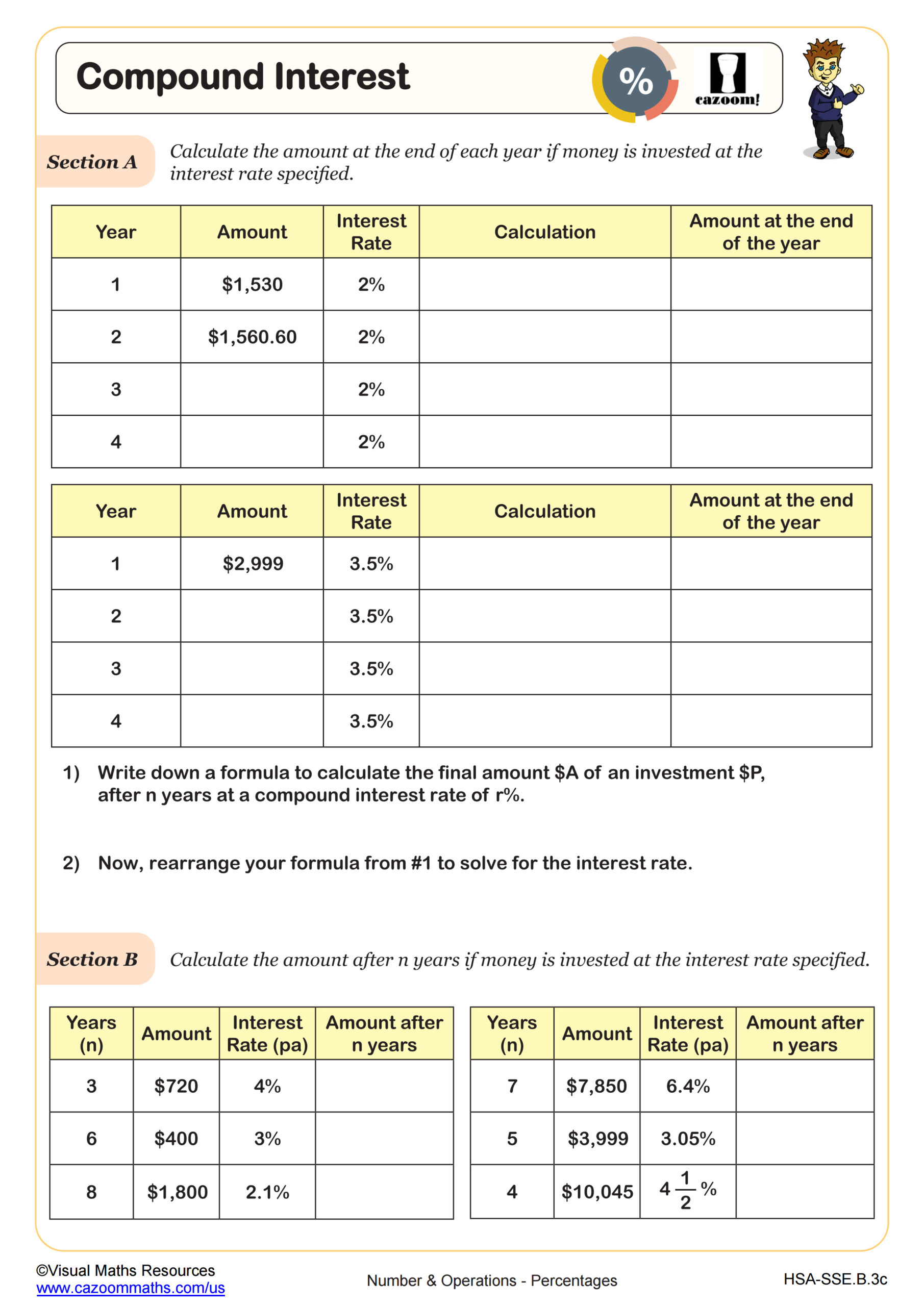
Equations of Circles
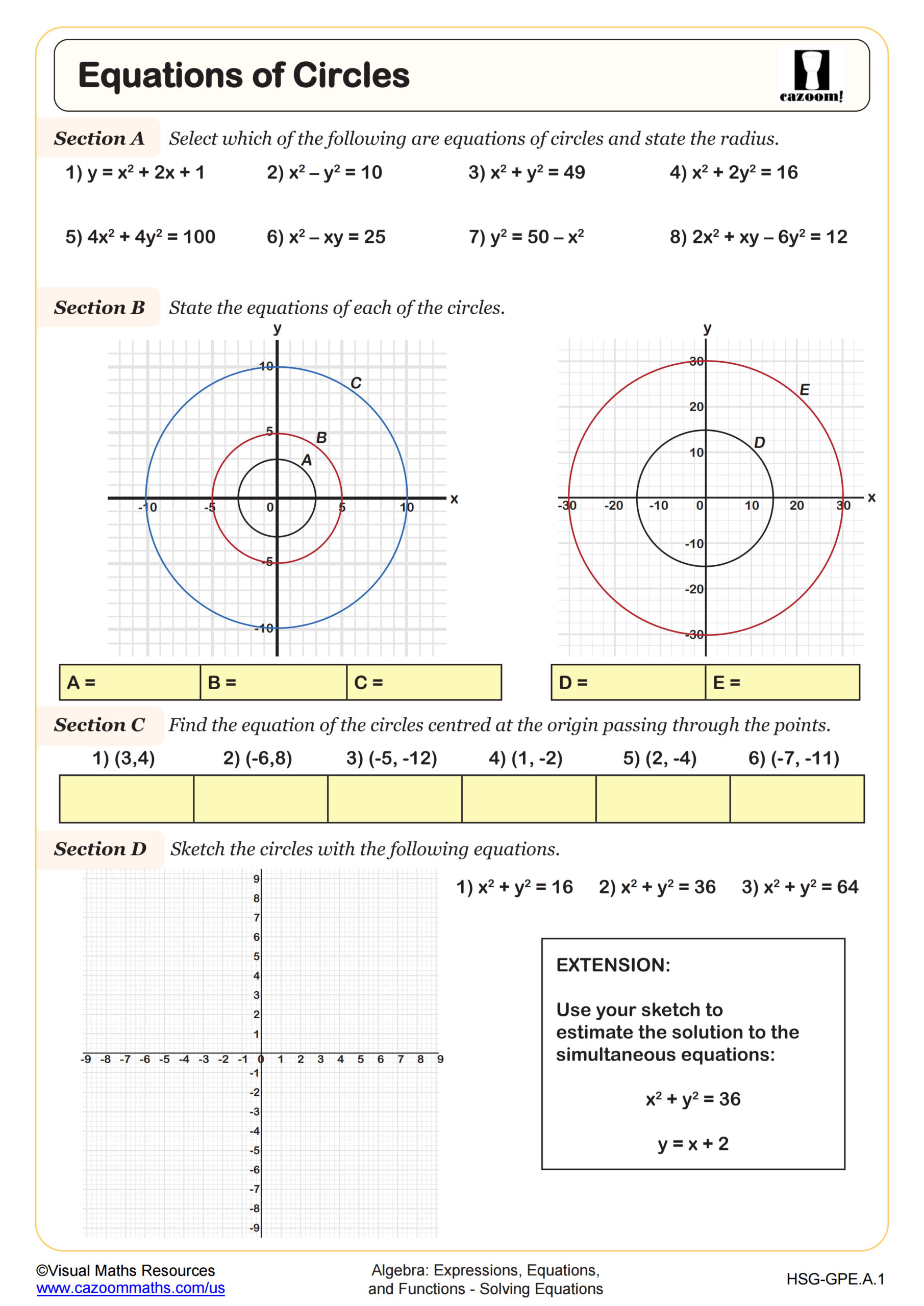
Equations of Lines Tangent to Circles
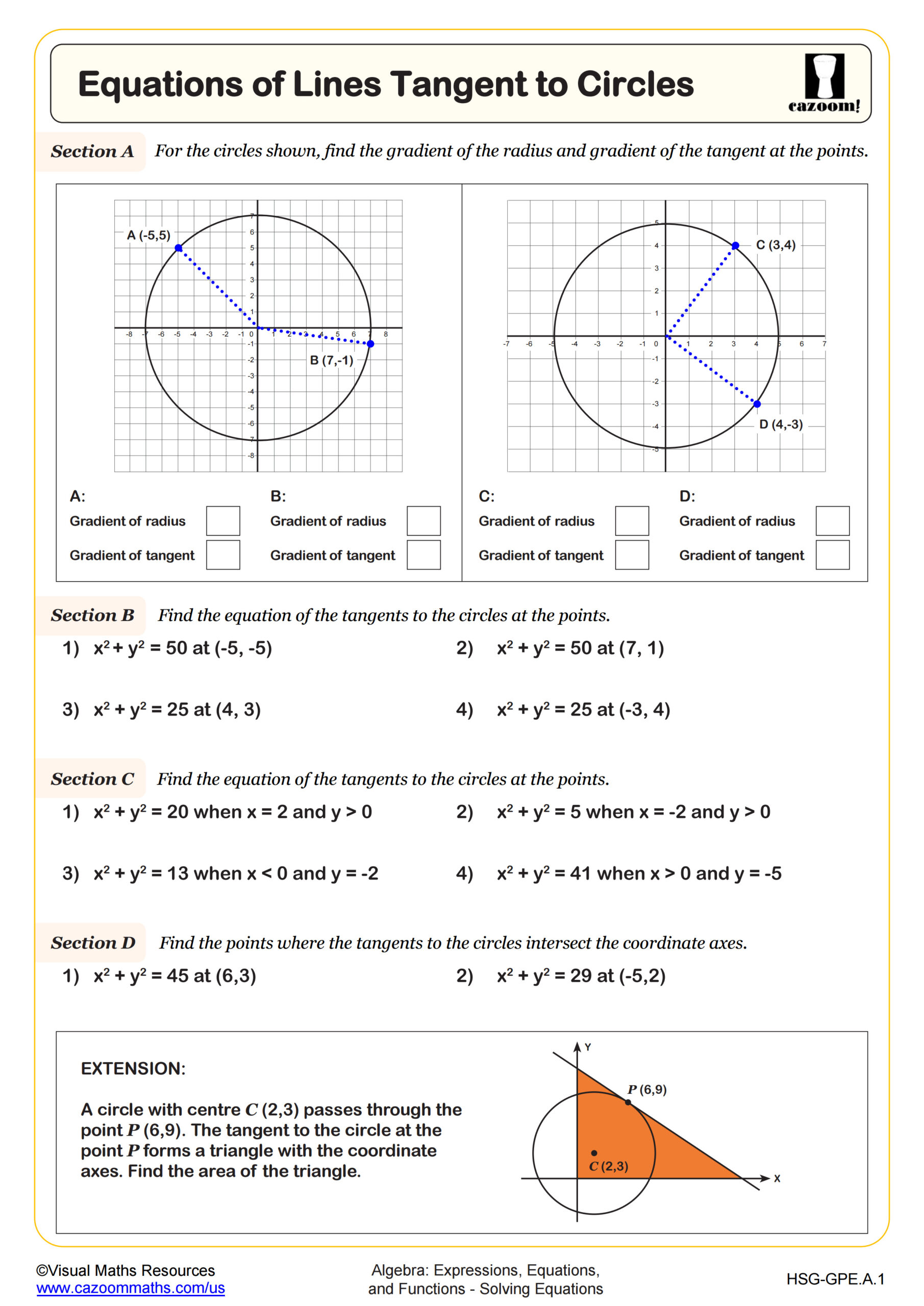
Equations of Proportion - with Three Variables
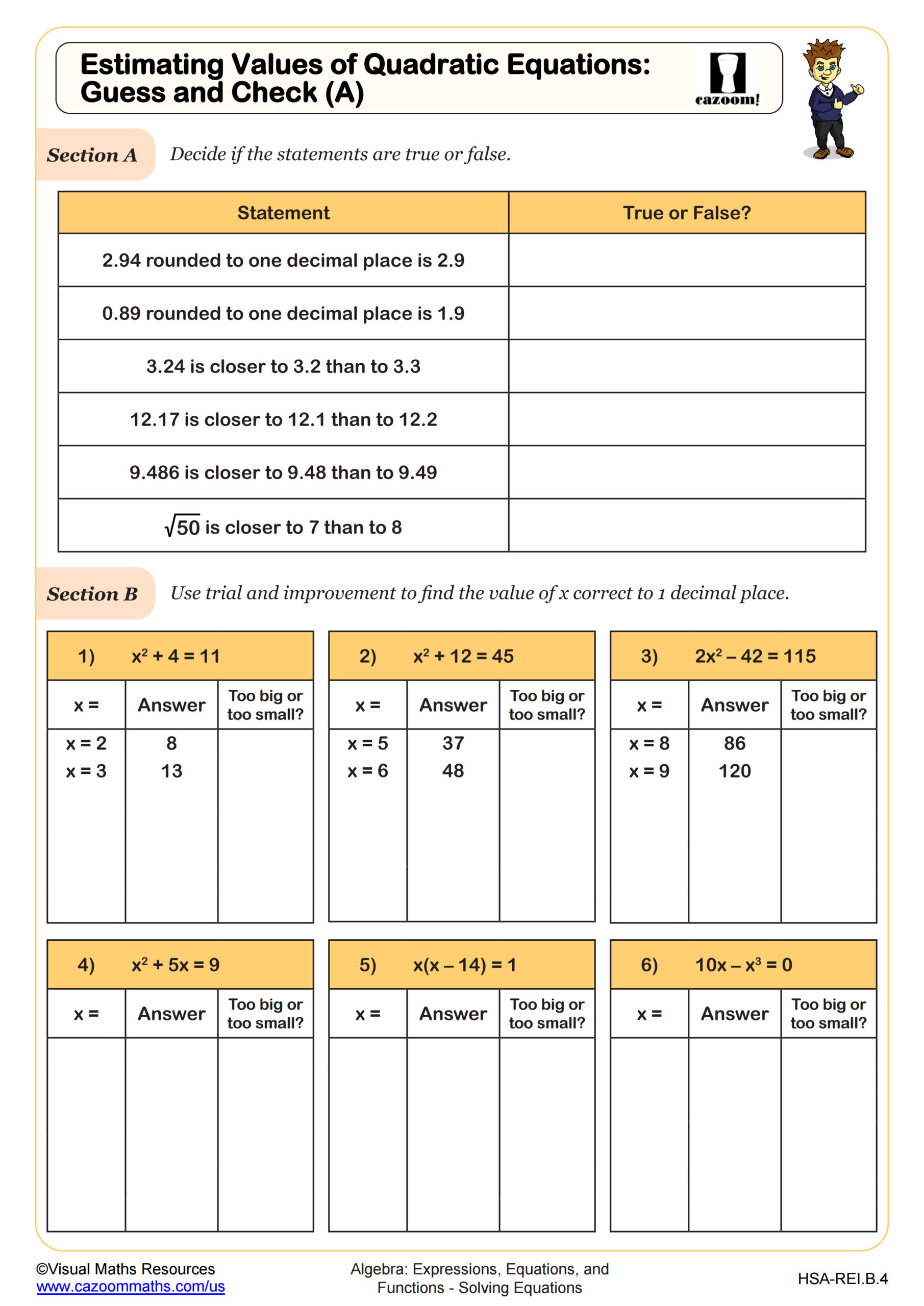
Estimating Values of Quadratic Equations: Guess and Check (A)
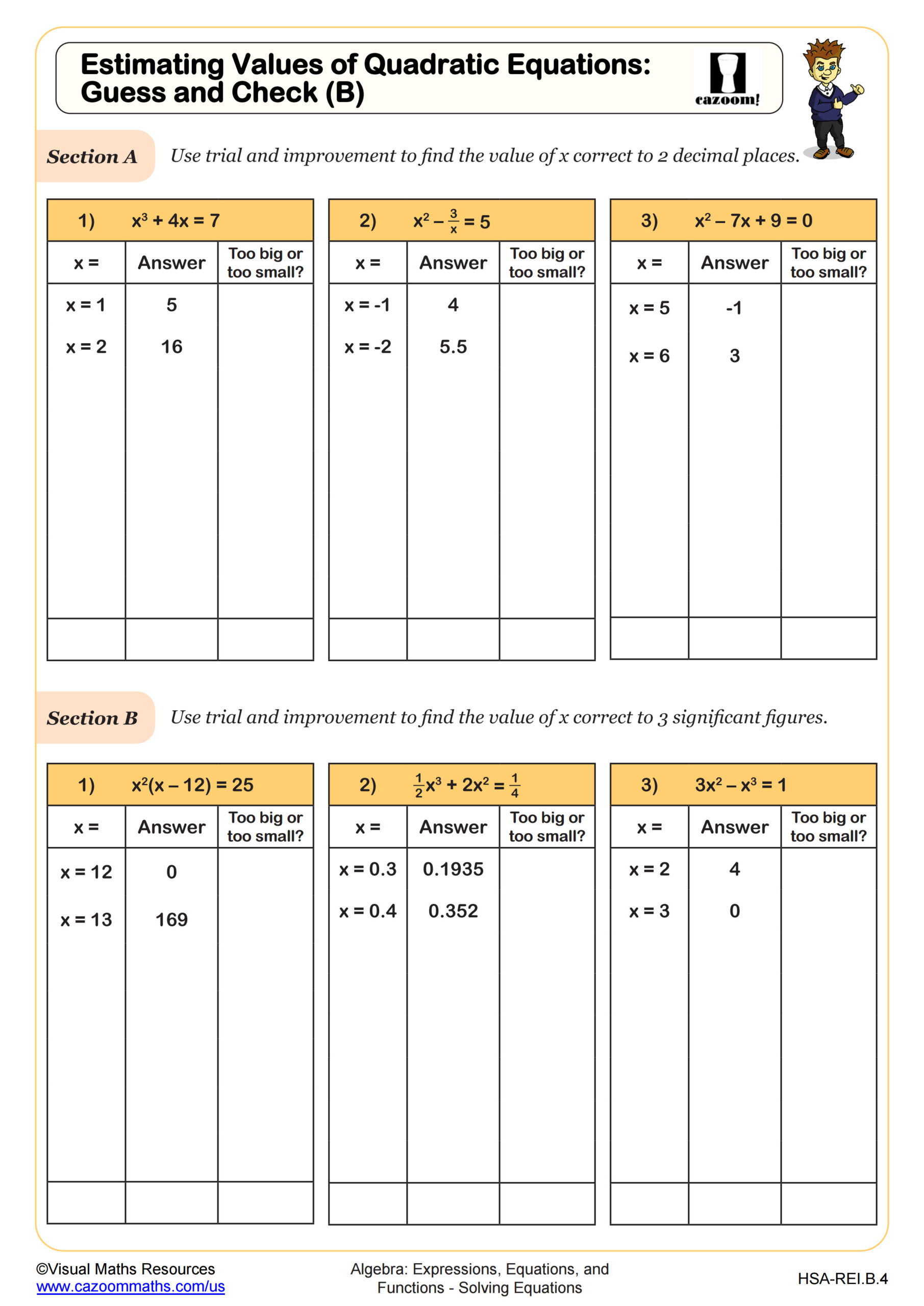
Estimating Values of Quadratic Equations: Guess and Check (B)
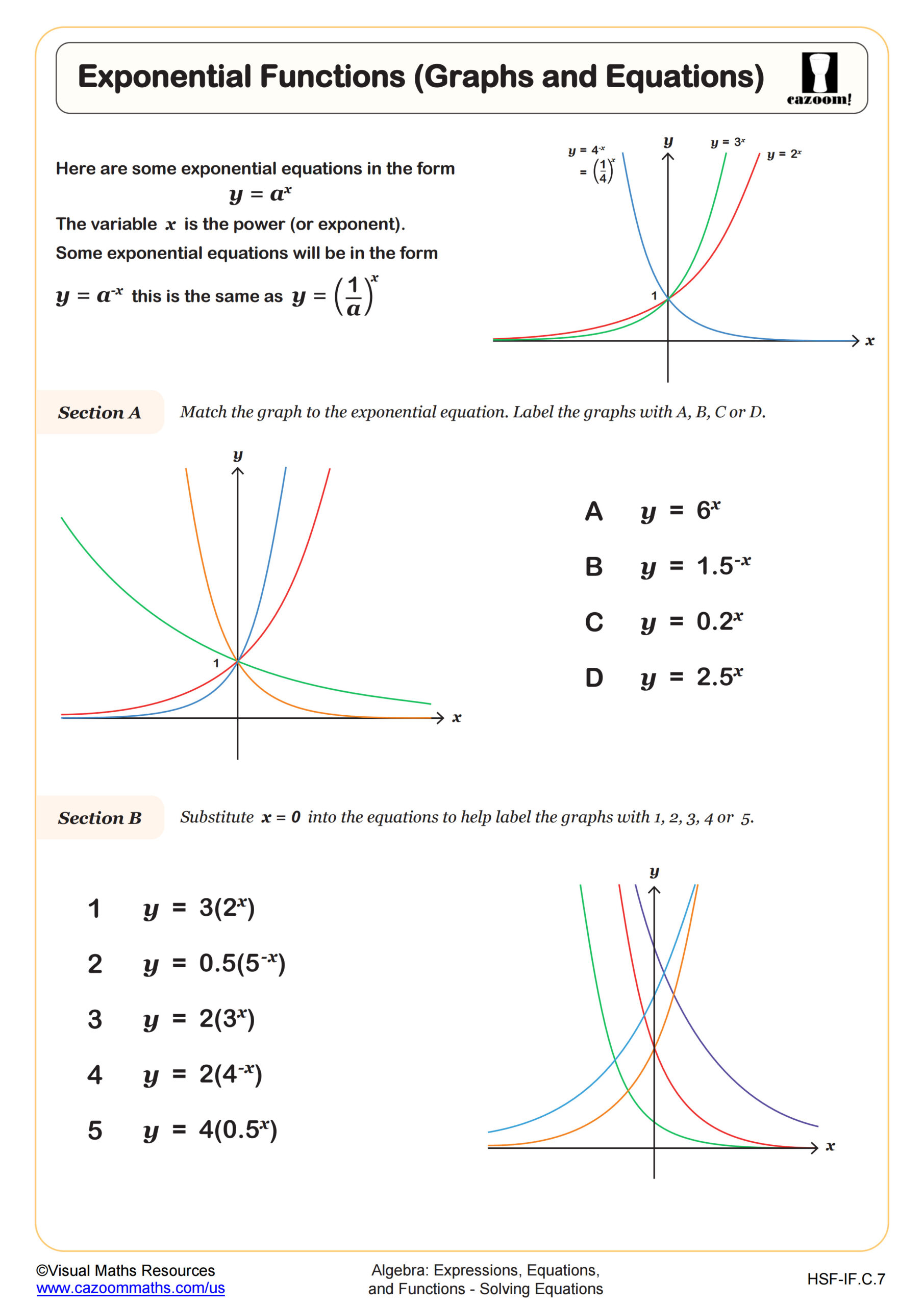
Exponential Functions (Graphs and Equations)
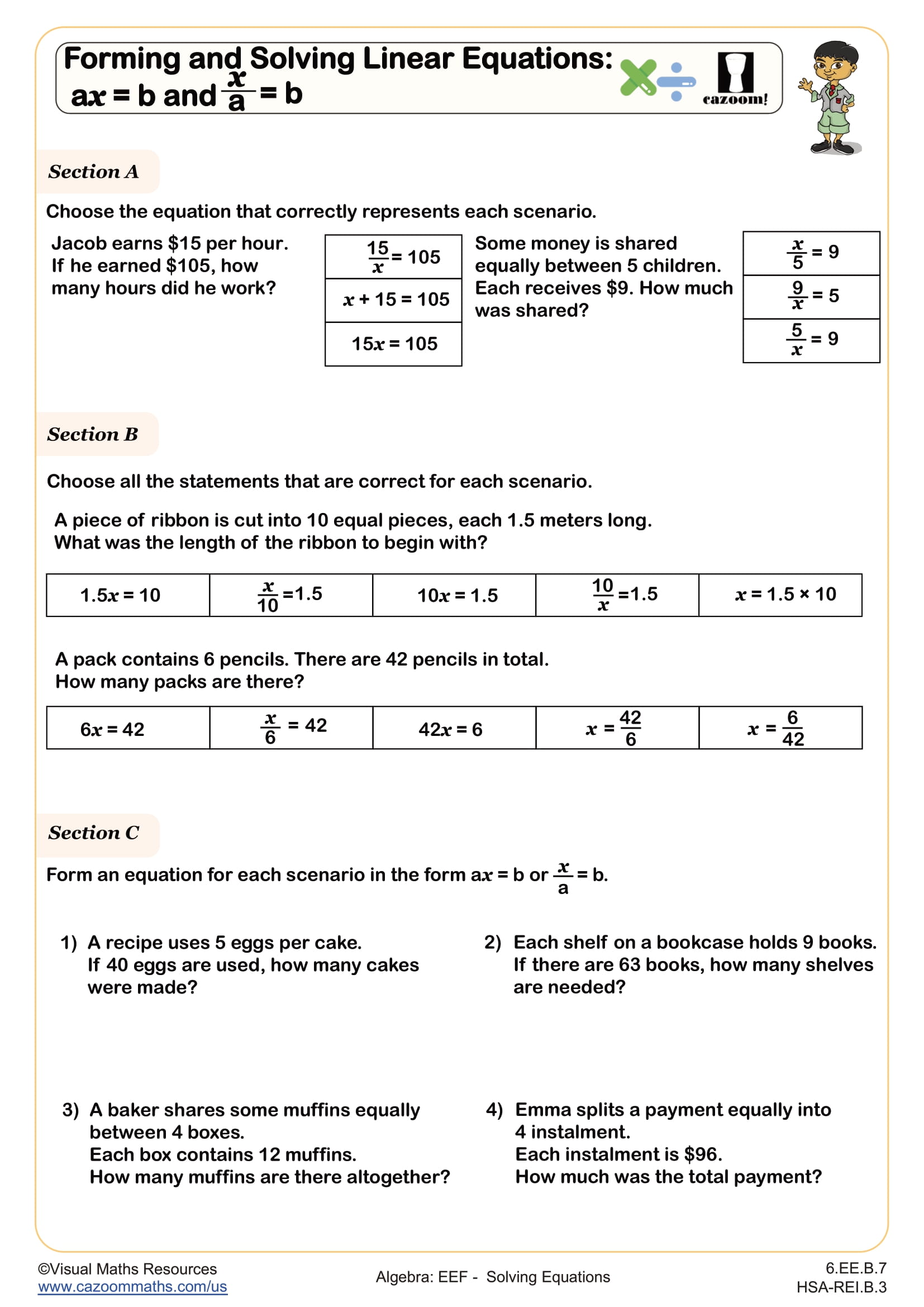
Forming and Solving Linear Equations: a𝑥 = b and 𝑥/a = b
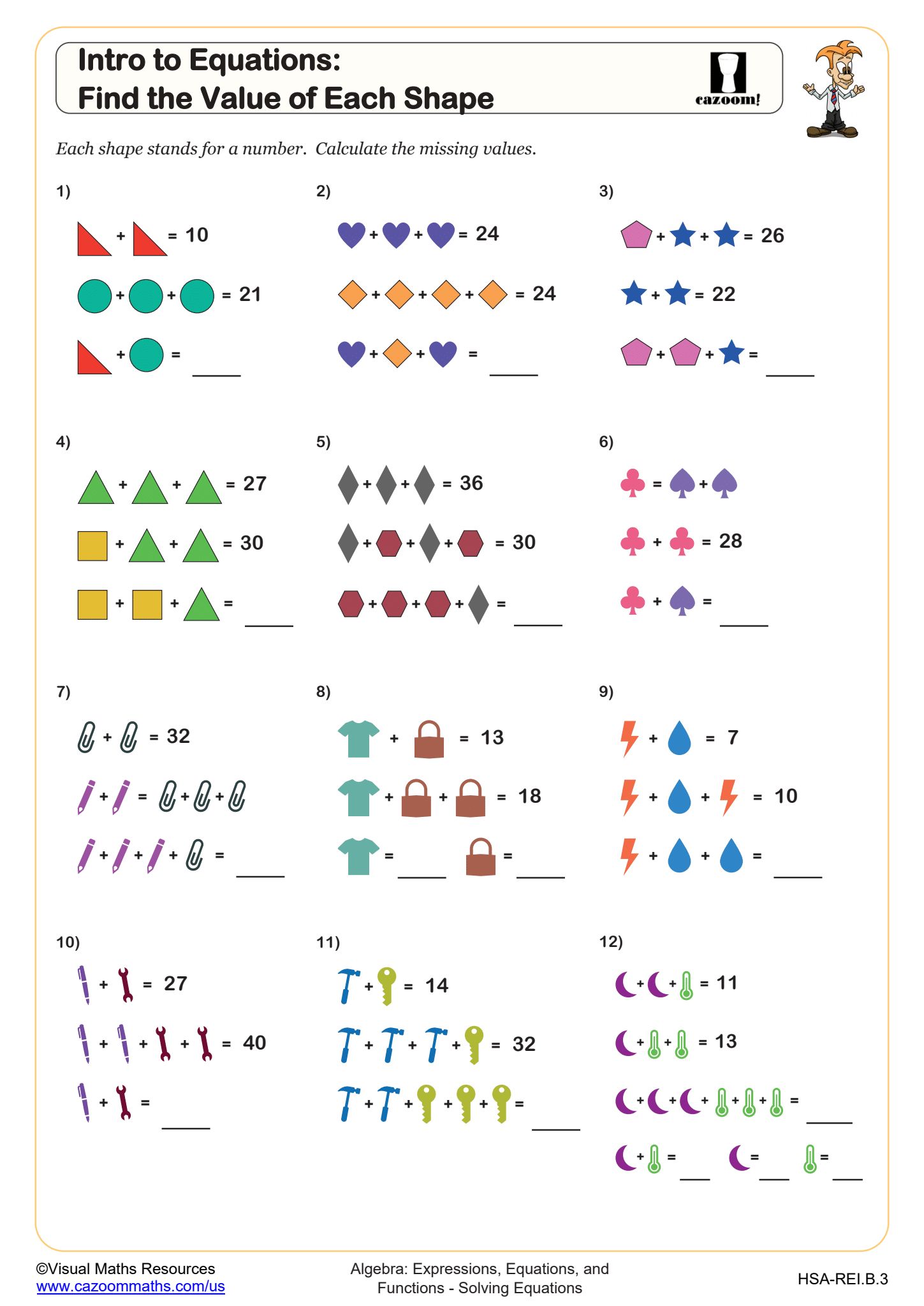
Intro to Equations: Find the Value of Each Shape
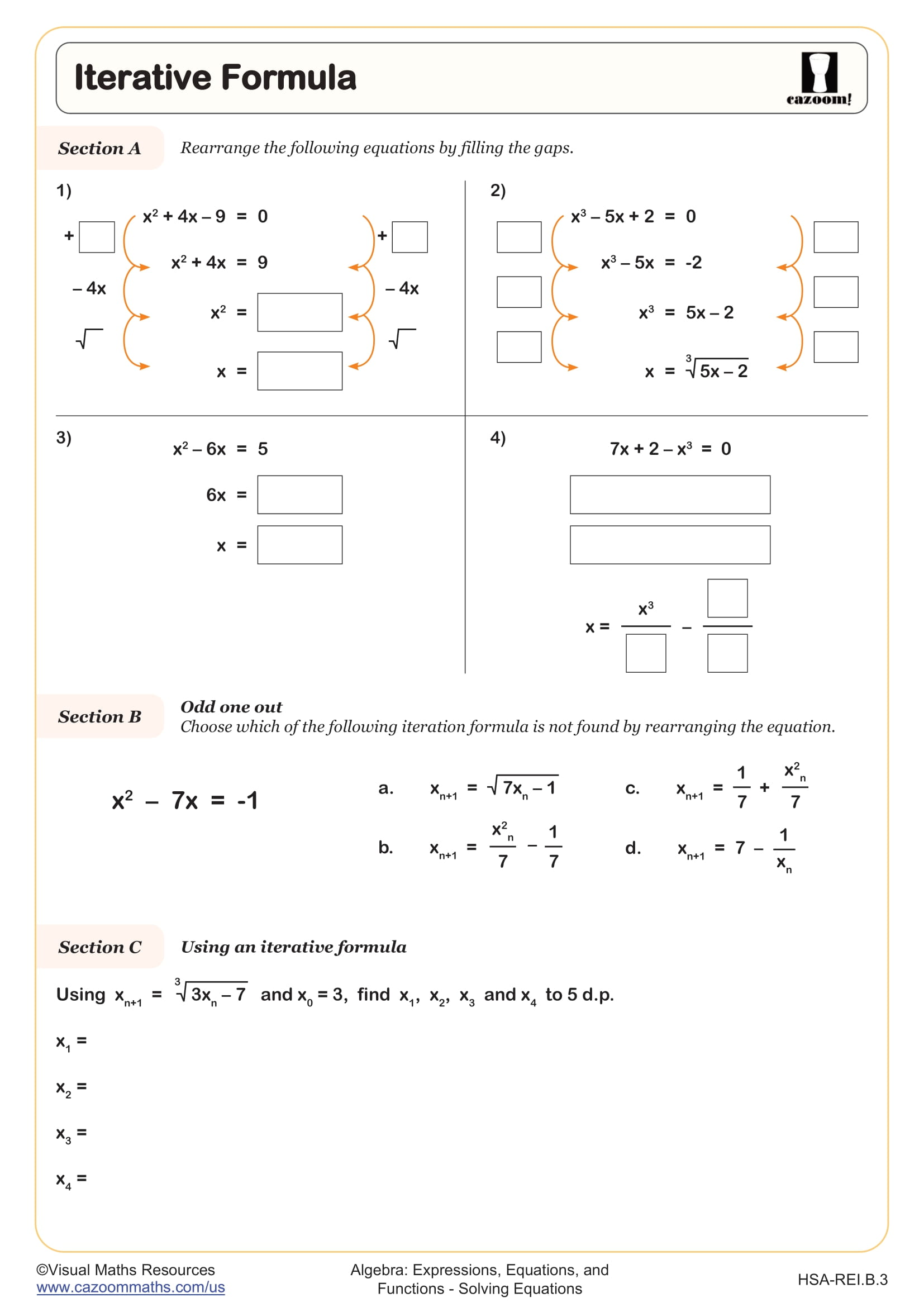
Iterative Formula
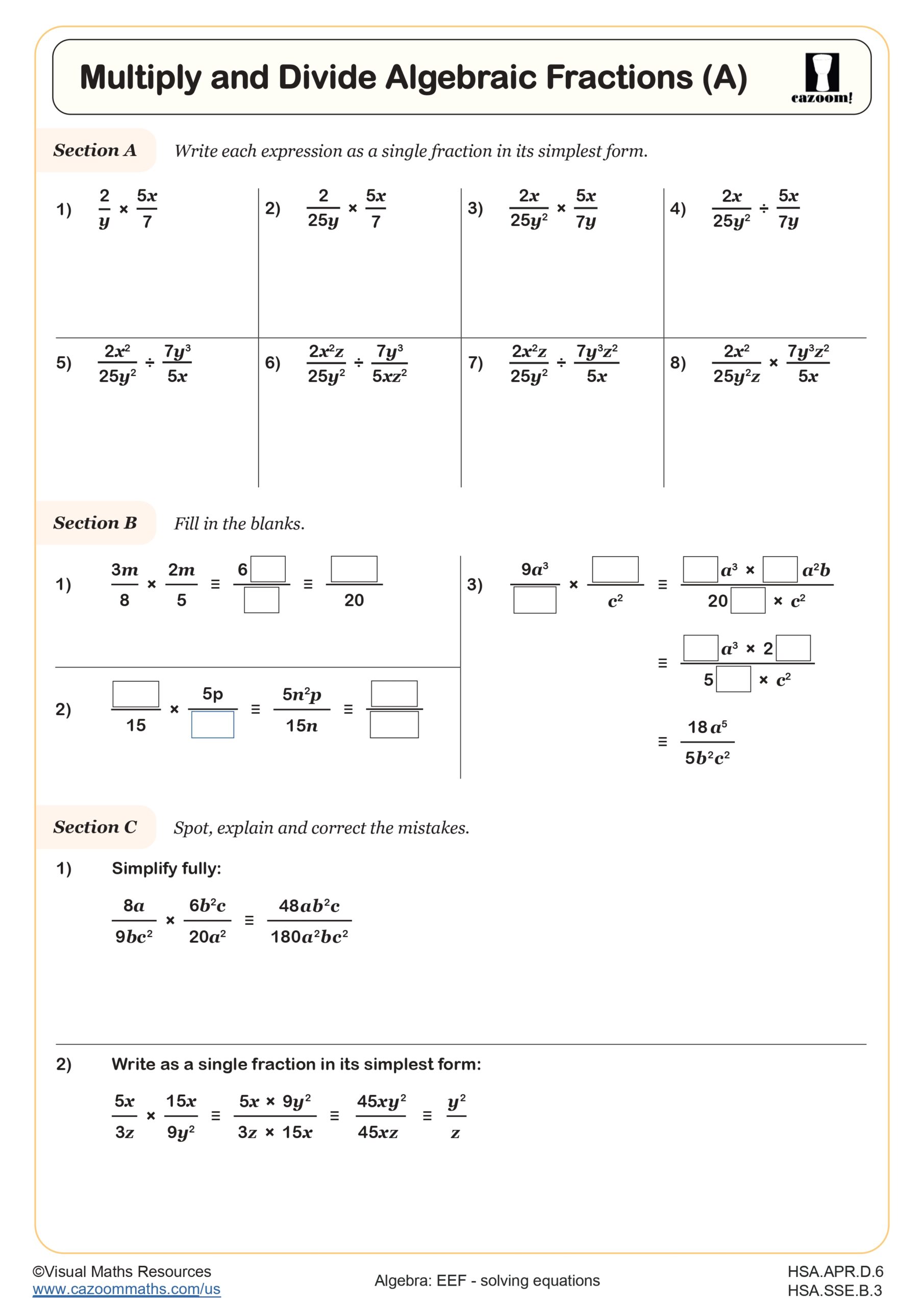
Multiply and Divide Algebraic Fractions (A)
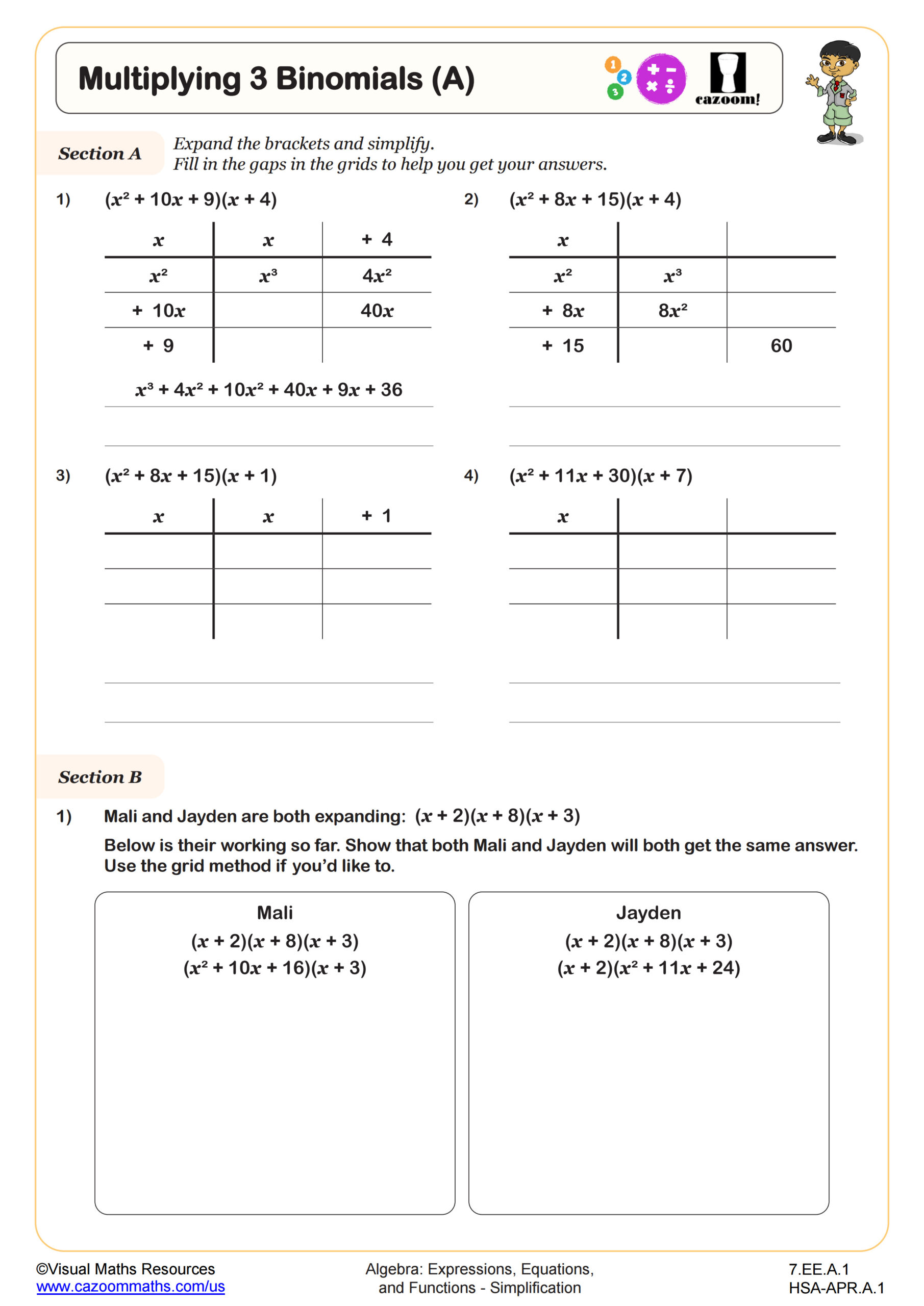
Multiplying 3 Binomials (A)
Multiplying 3 Binomials (B)
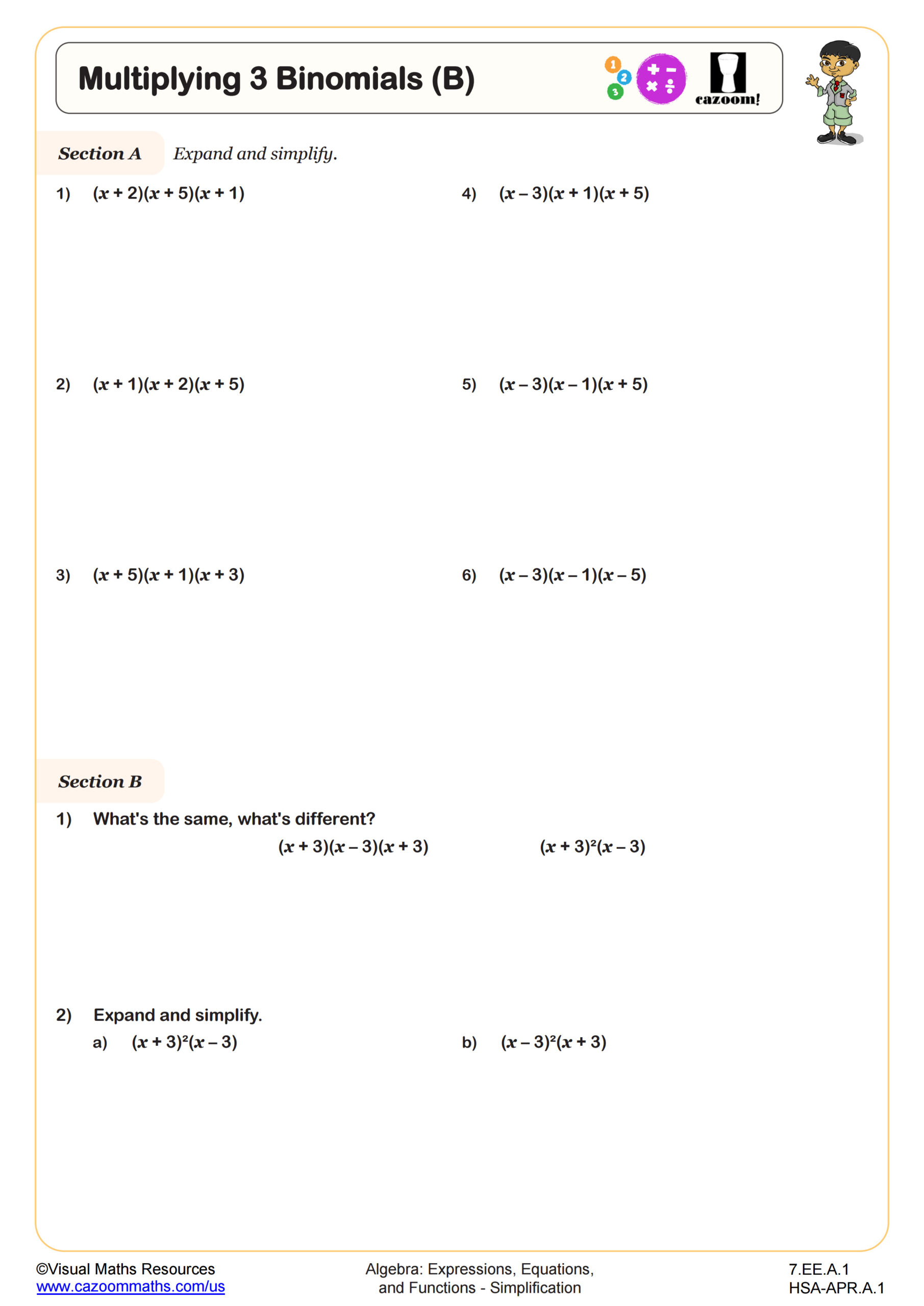
Multiplying Binomials
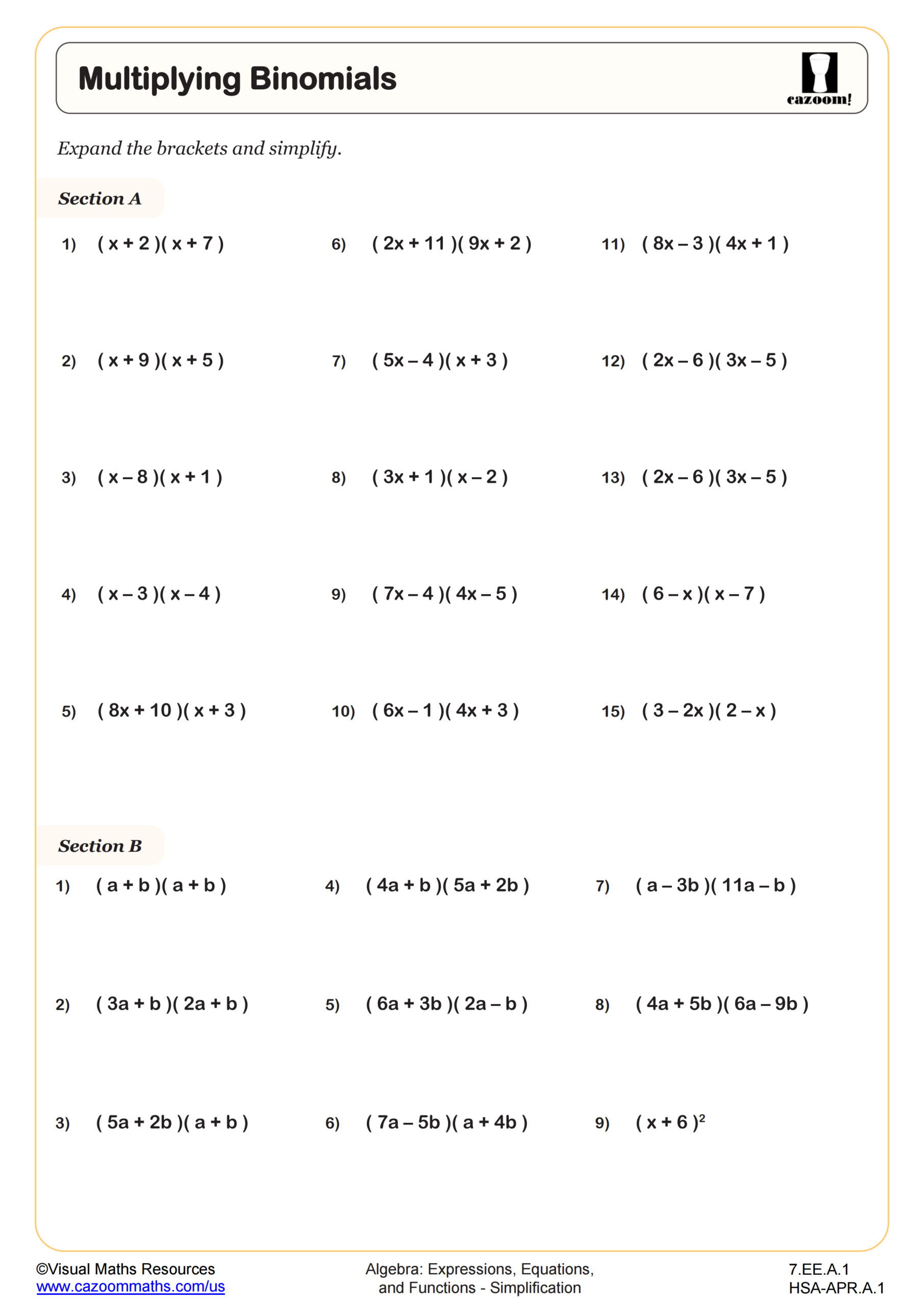
Multiplying Binomials using the Grid Method
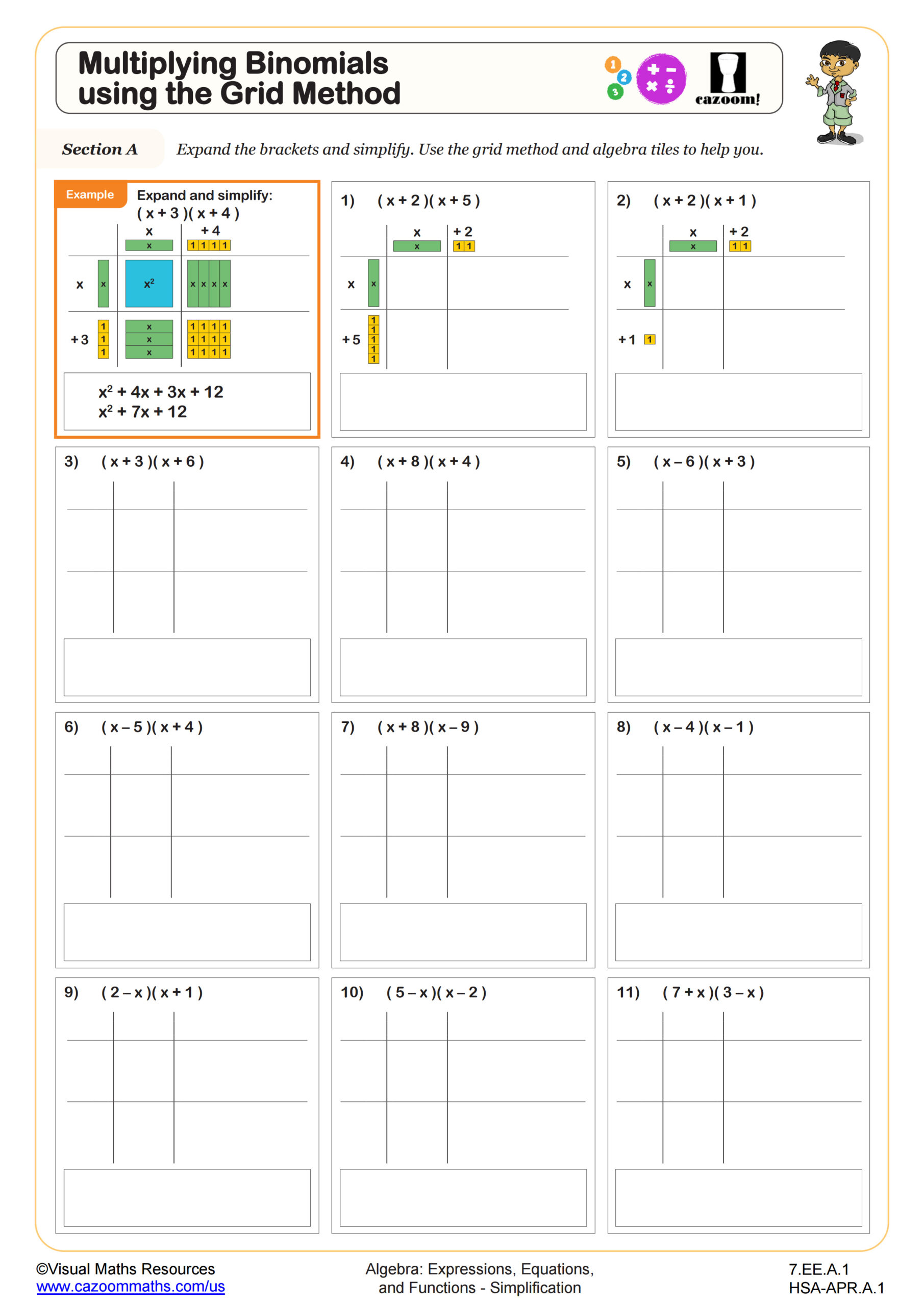
Pythagoras with Radicals
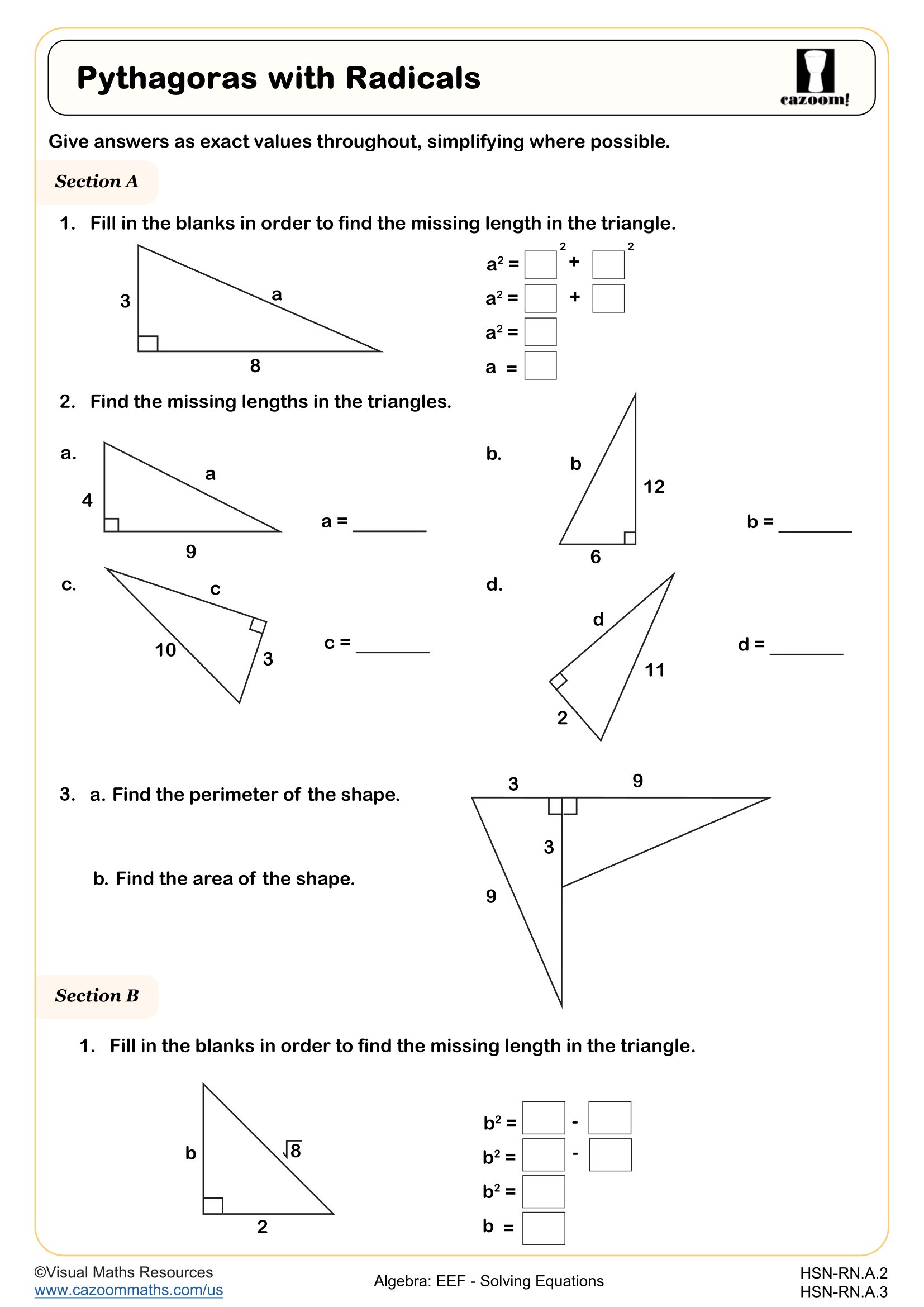
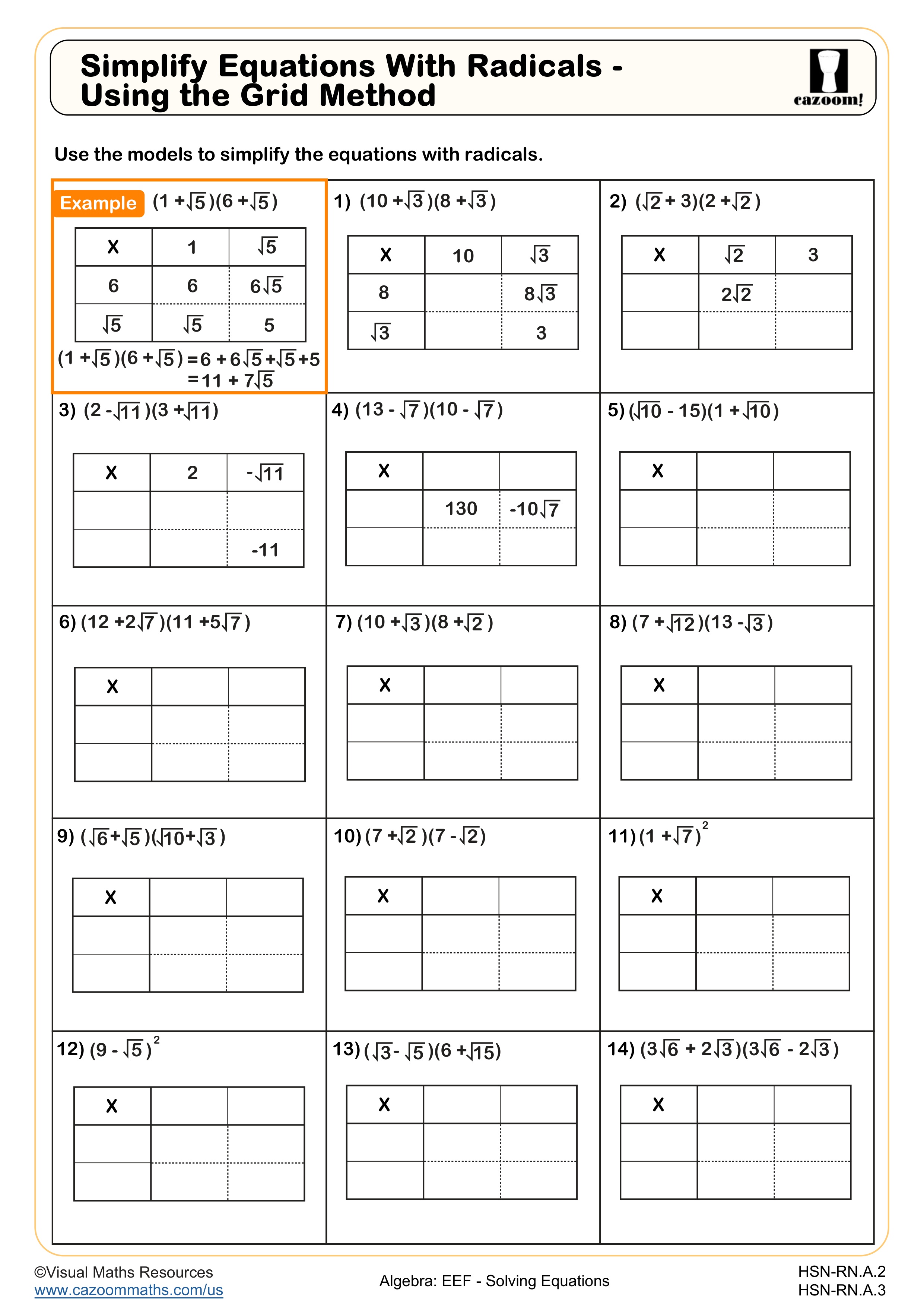
Simplify Equations with Radicals - Using the Grid Method
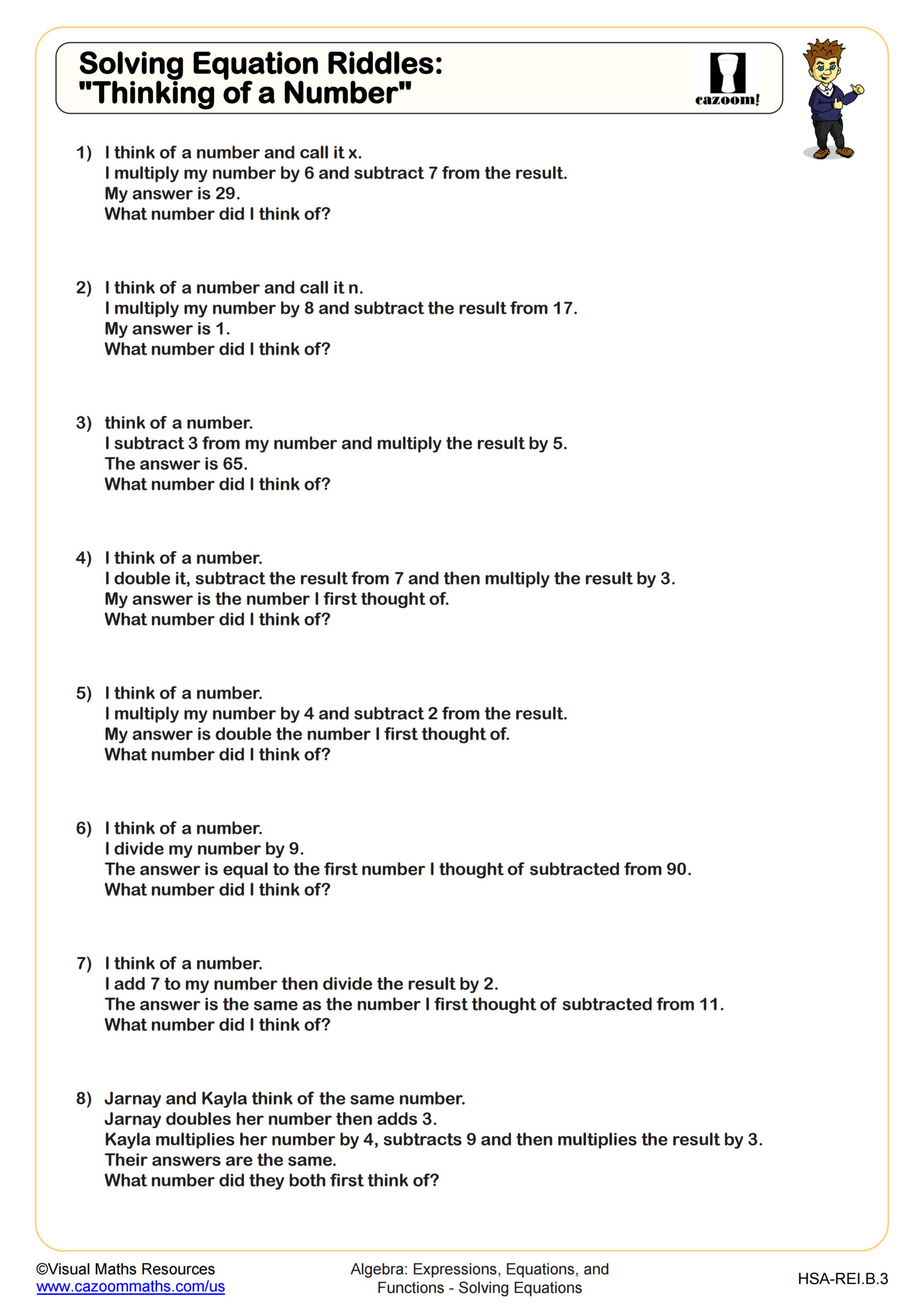
Solving Equation Riddles: "Thinking of a Number"
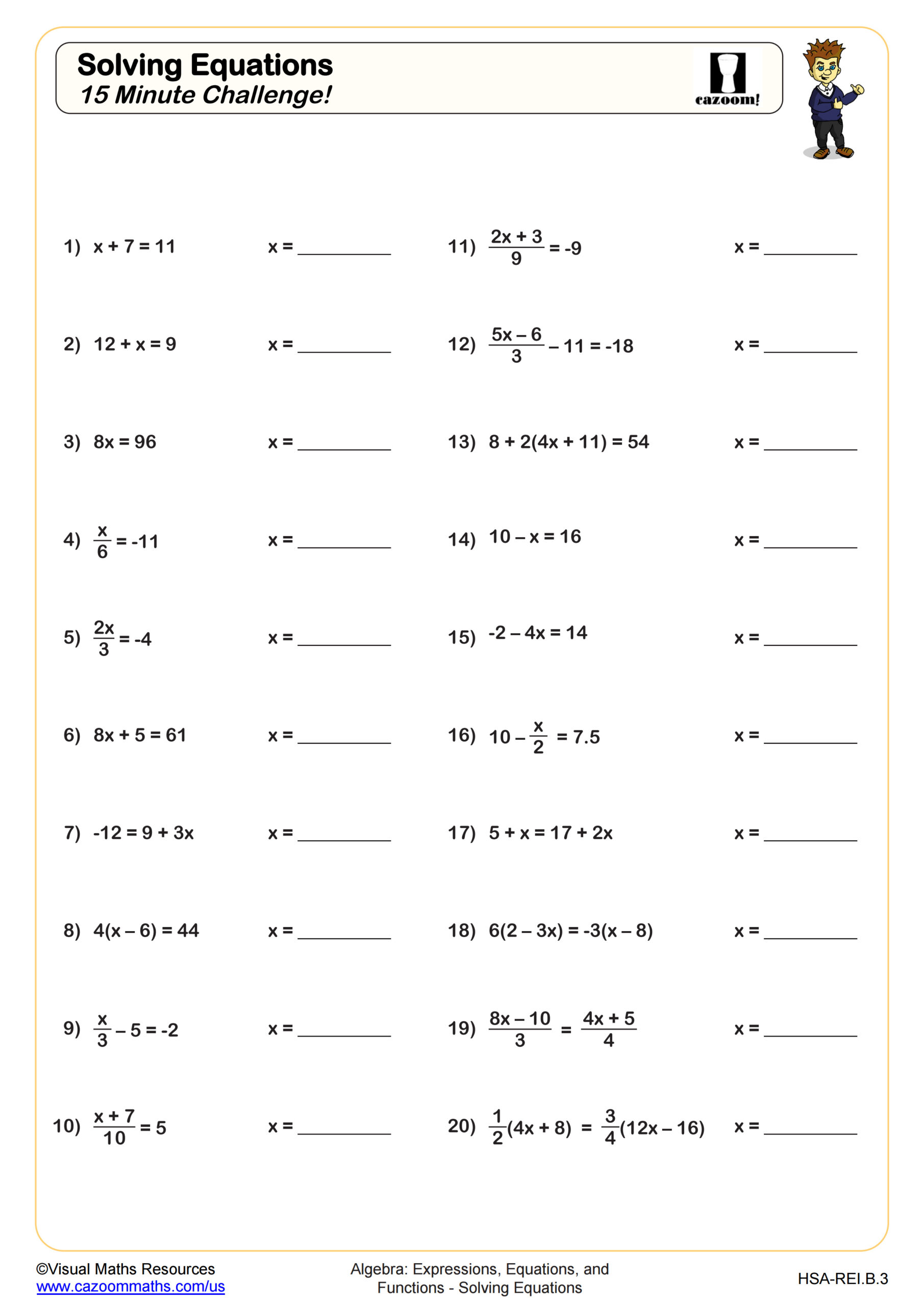
Solving Equations 15 Minute Challenge
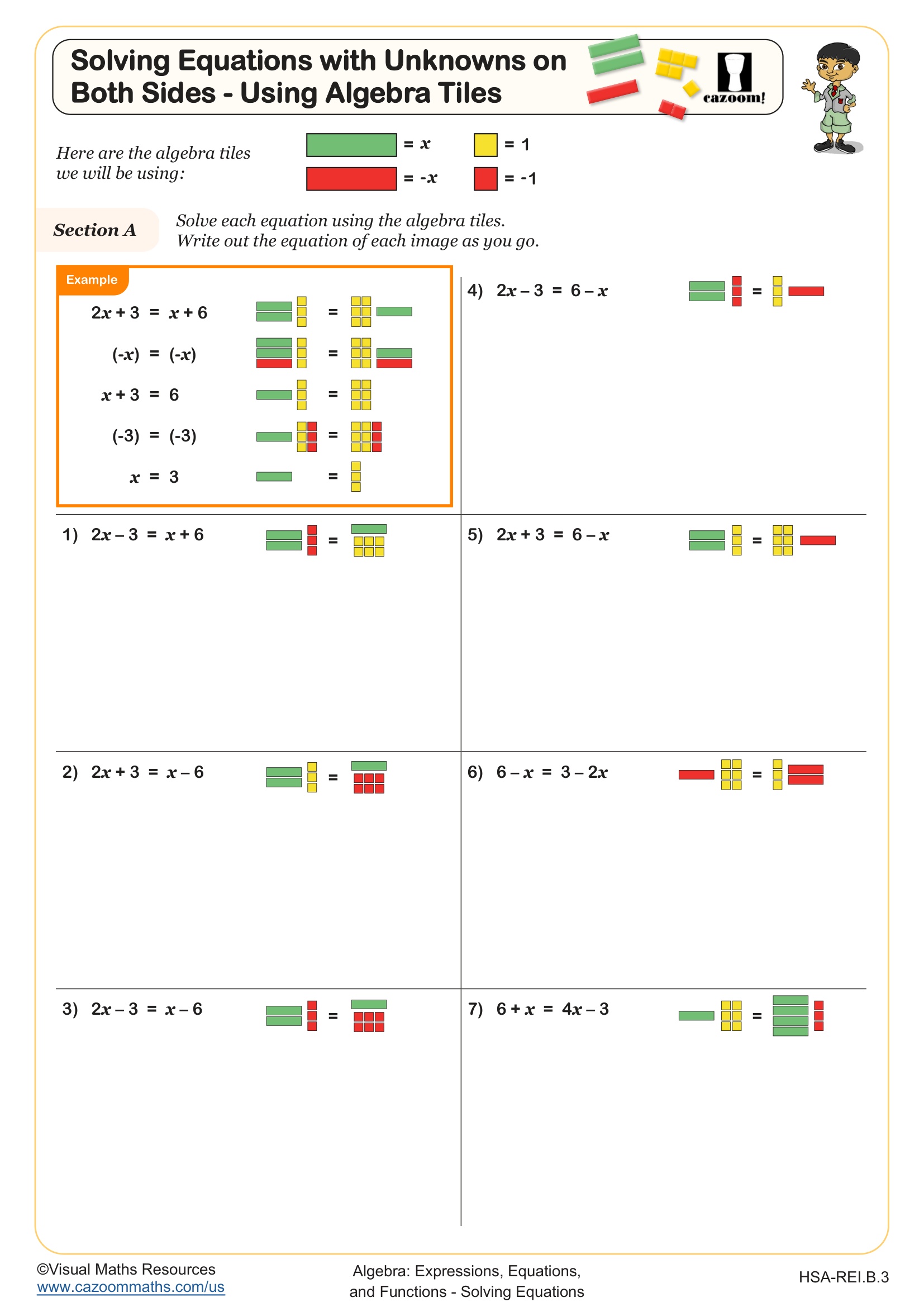
Solving Equations with Unknowns on Both Sides - Using Algebra Tiles
Solving Linear Equations (A)
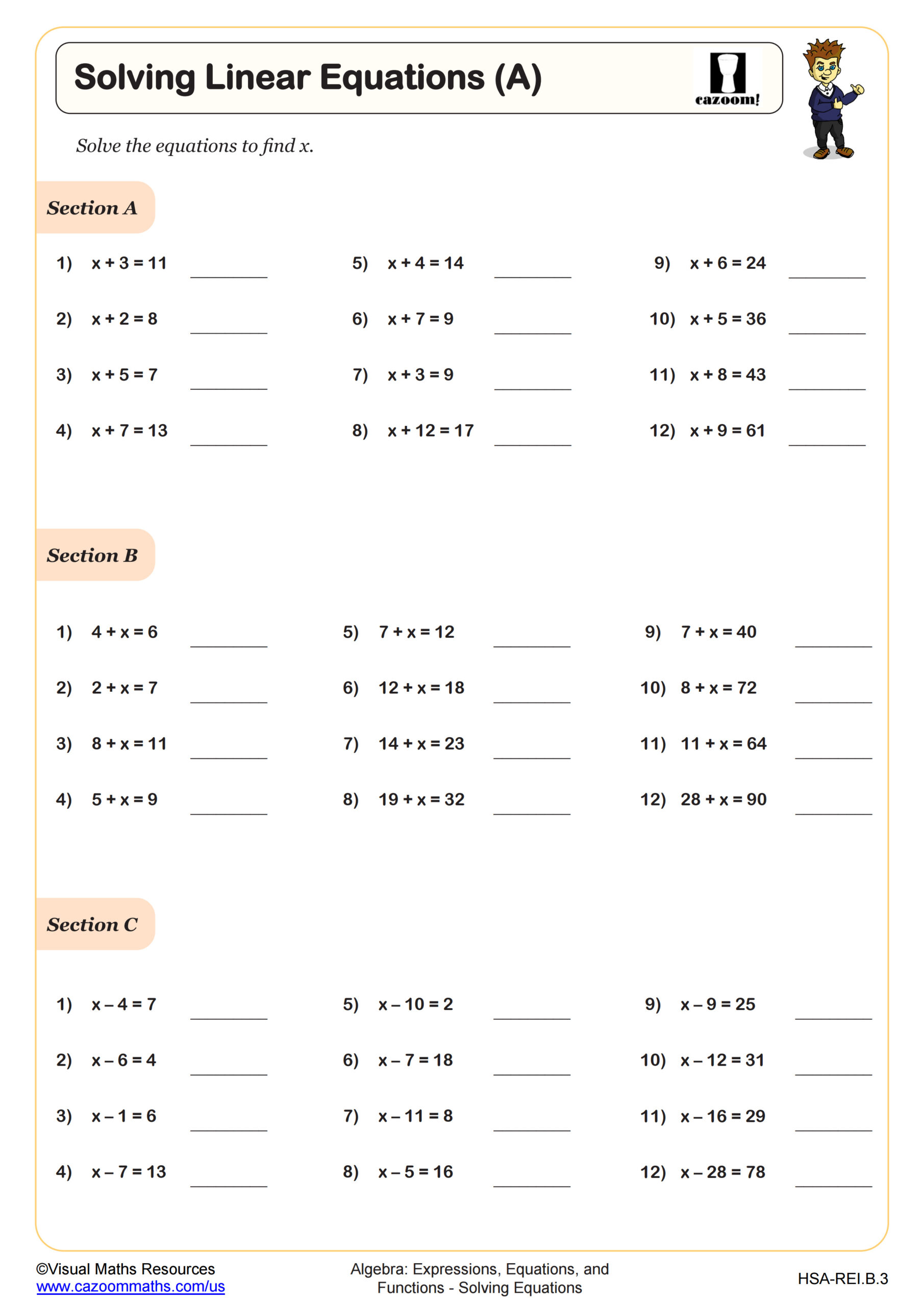
Solving Linear Equations (B)
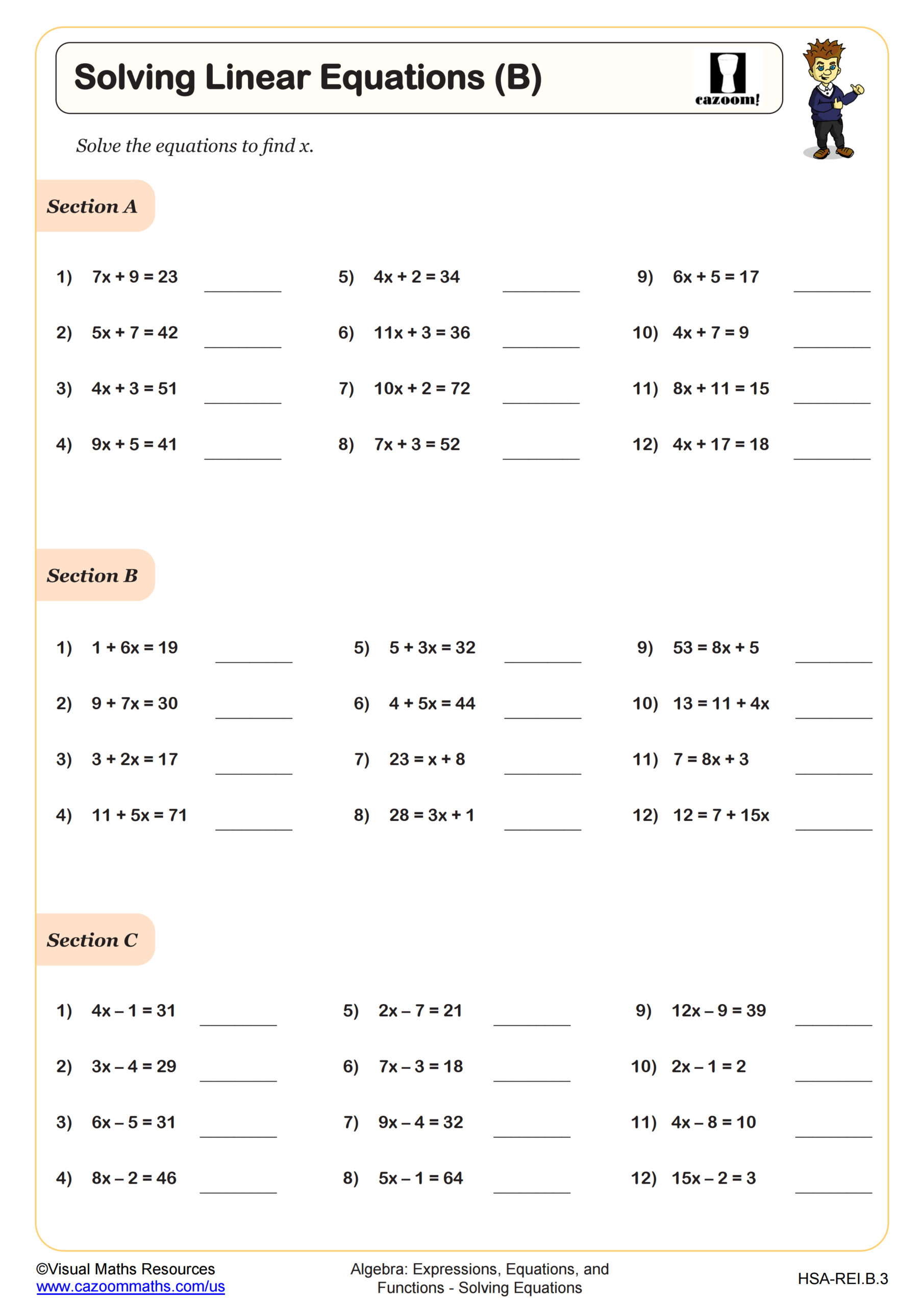
Solving Linear Equations (C)
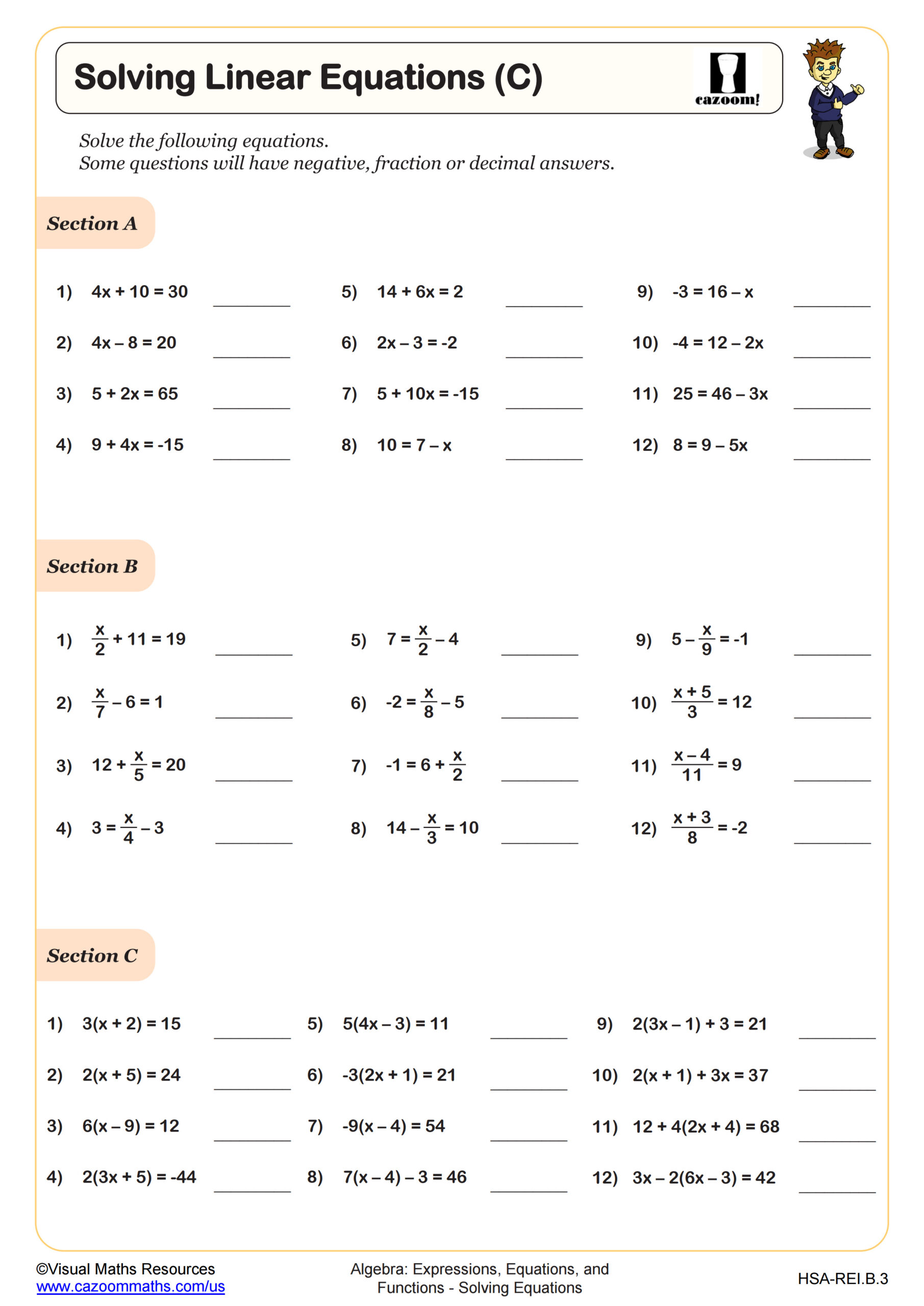
Solving Linear Equations (D)
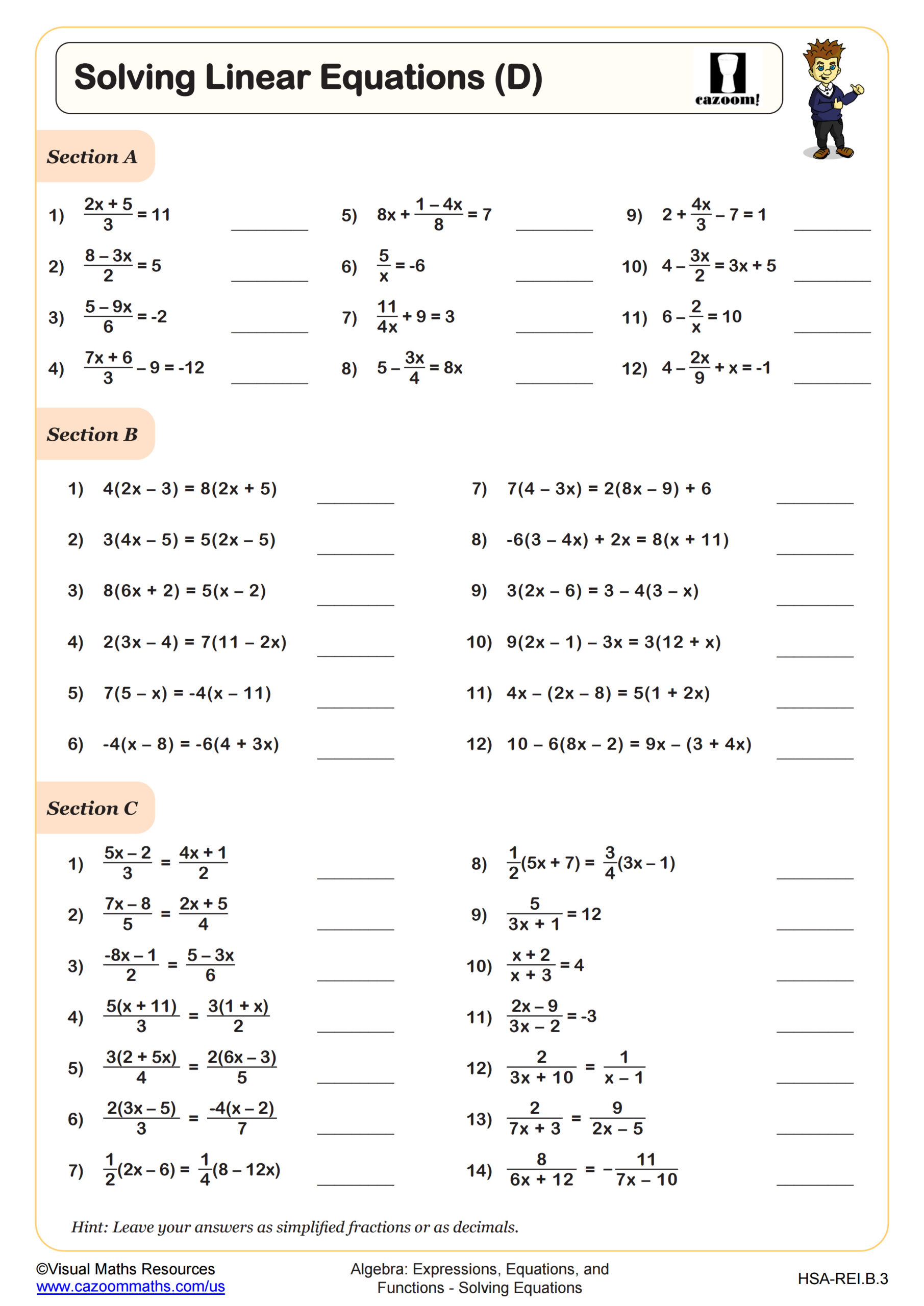
Solving Linear Equations (Without Negatives)
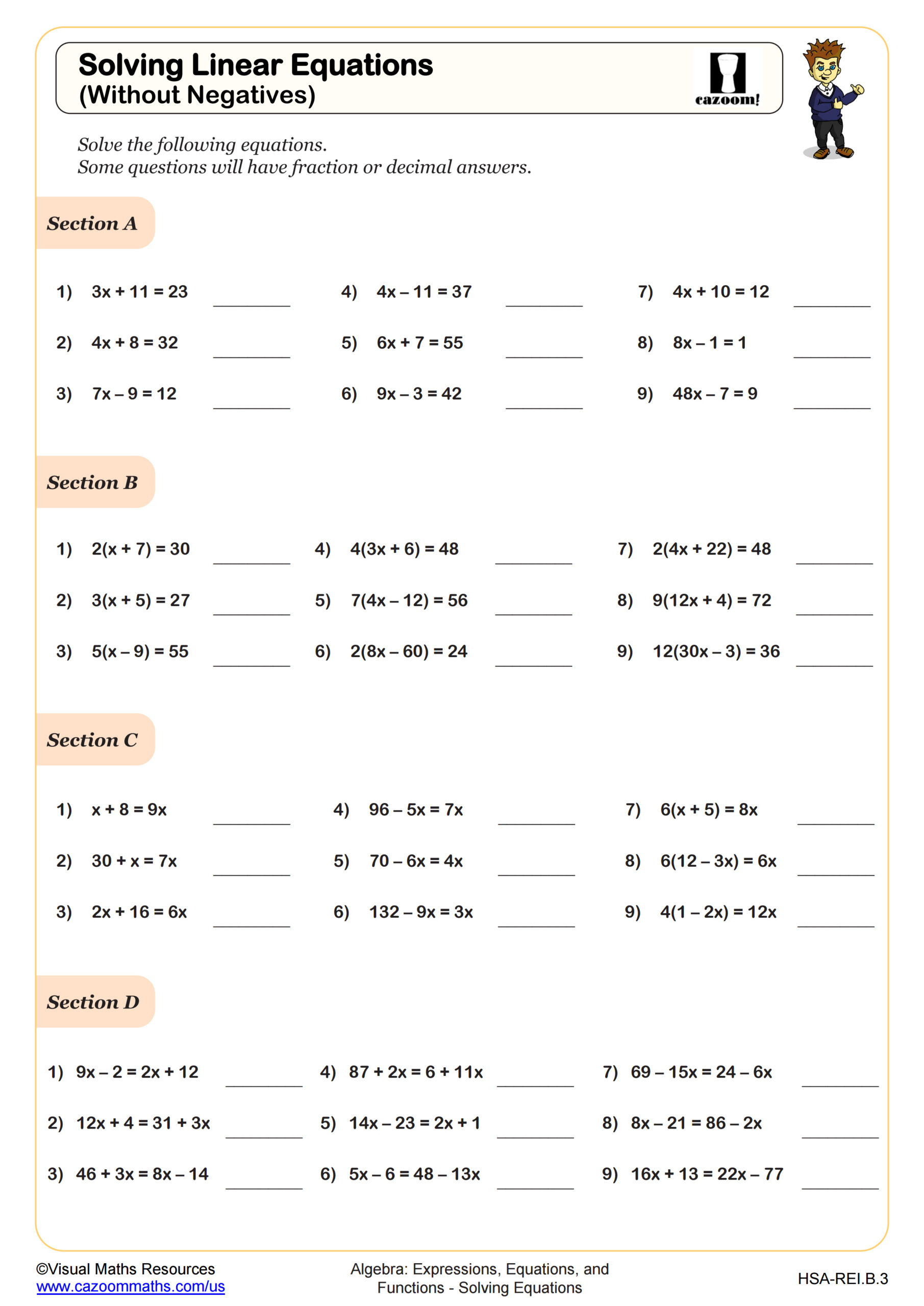
Solving Linear Equations with 2D Shapes
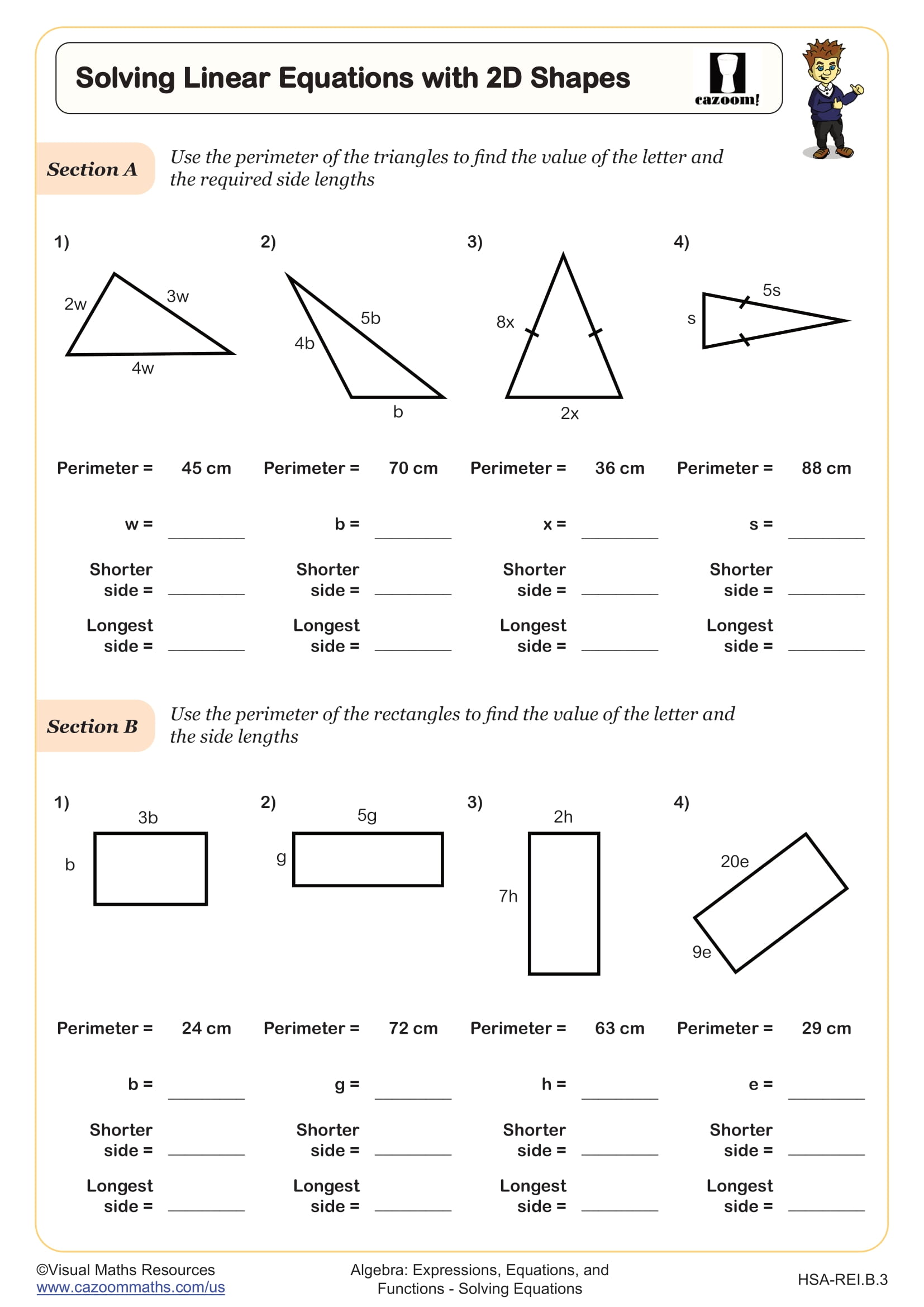
Solving Linear Equations with Area of Rectangles
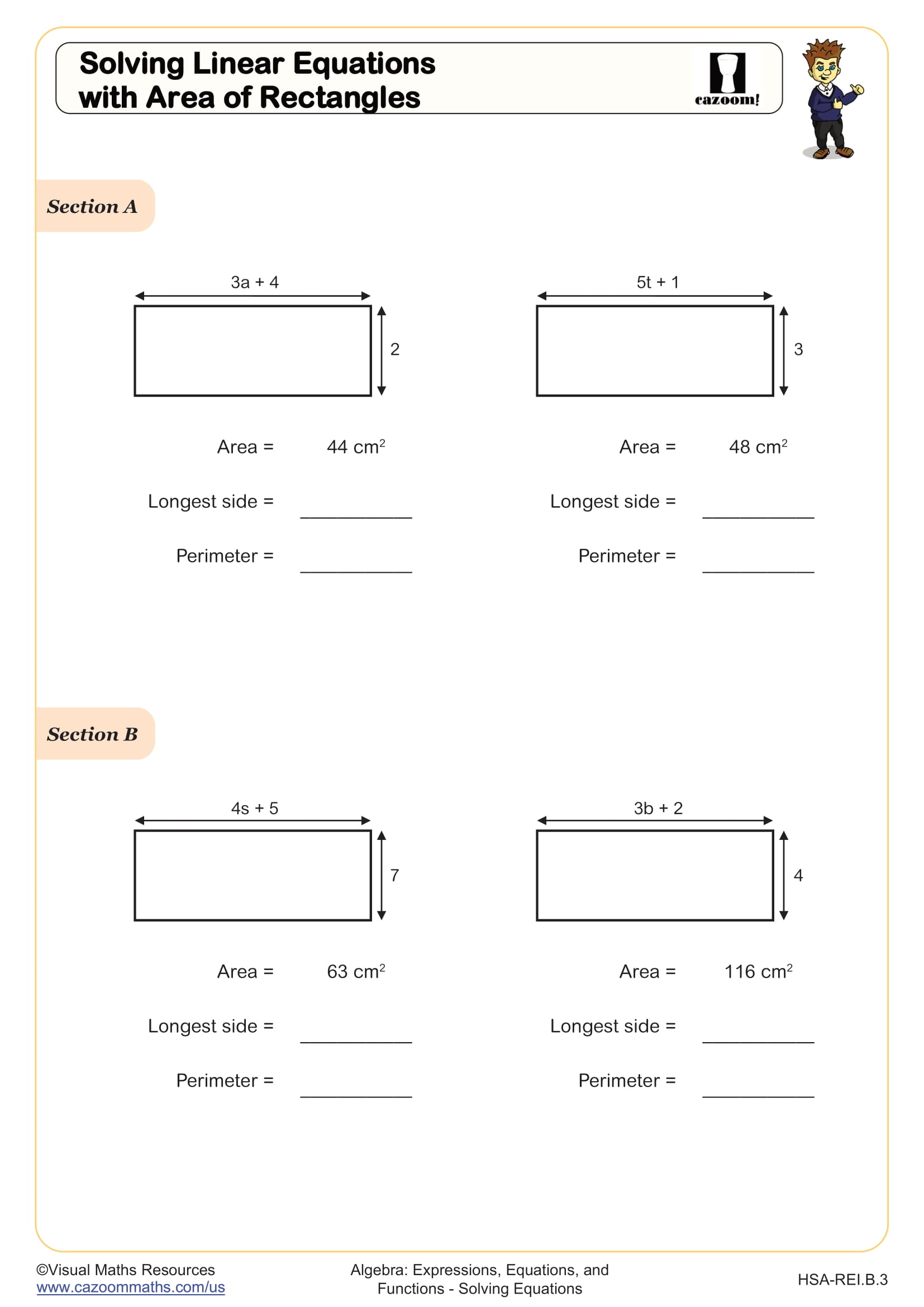
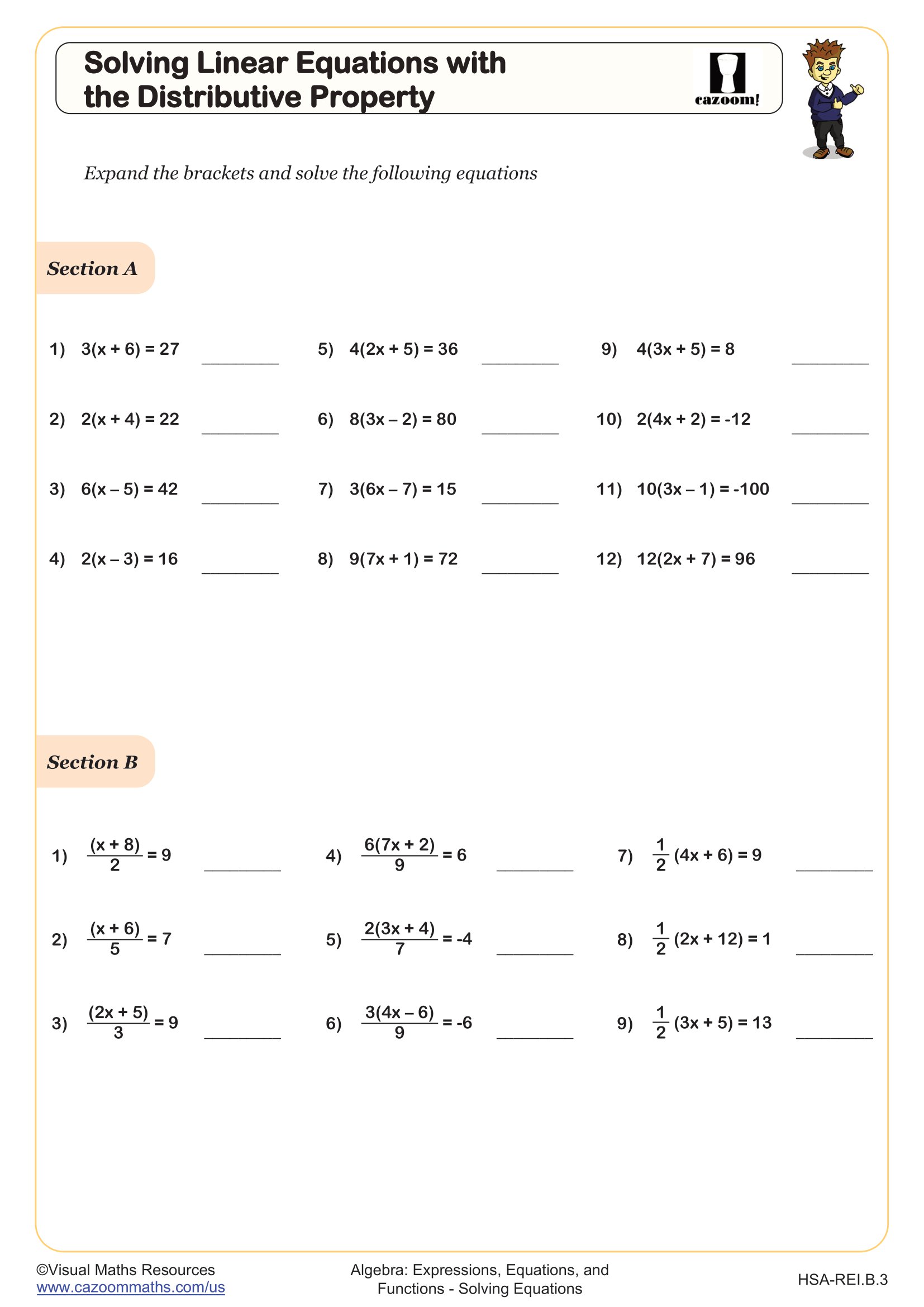
Solving Linear Equations with the Distributive Property
Solving Proportions Algebraically
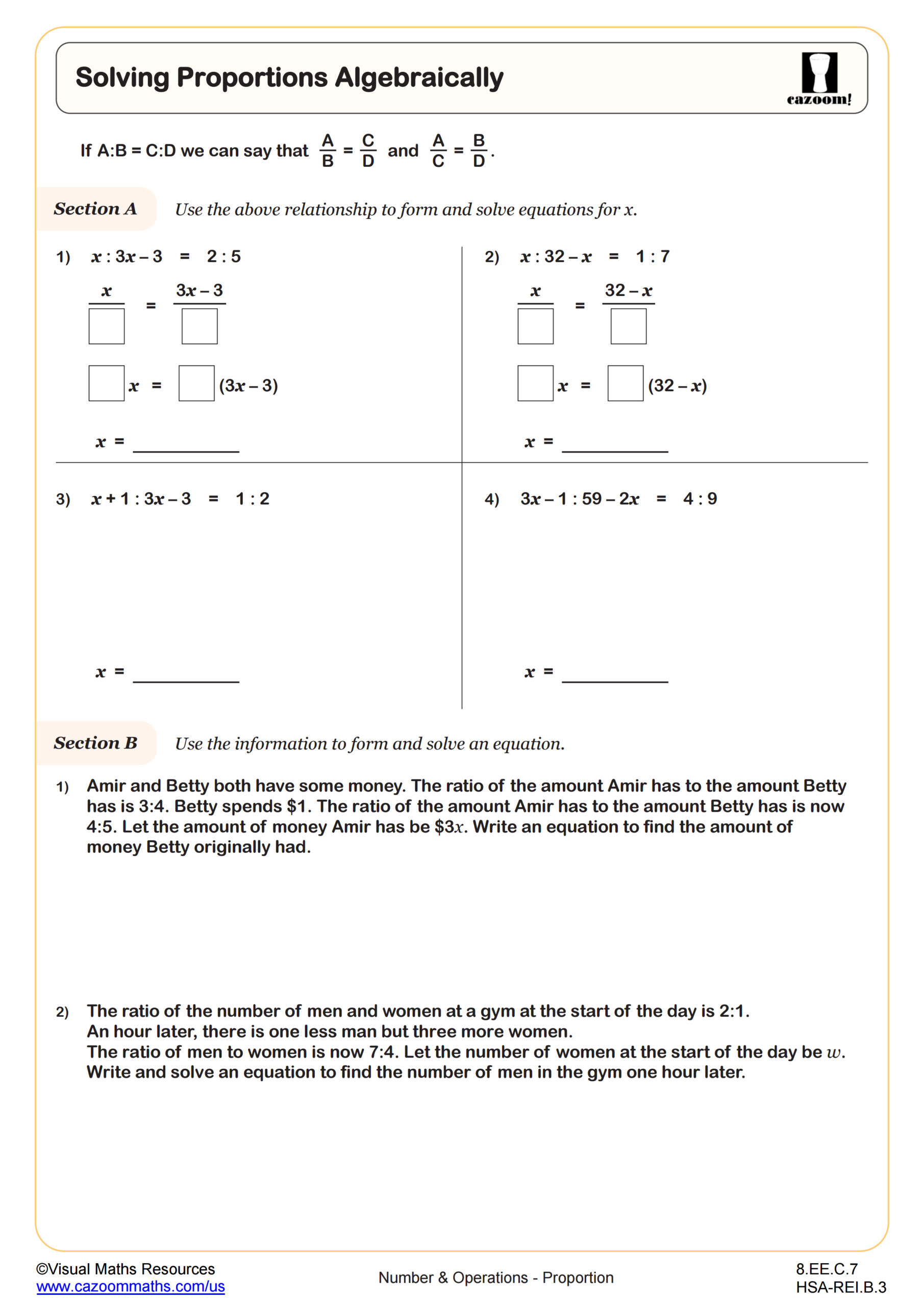
Solving Quadratic Equations (A)
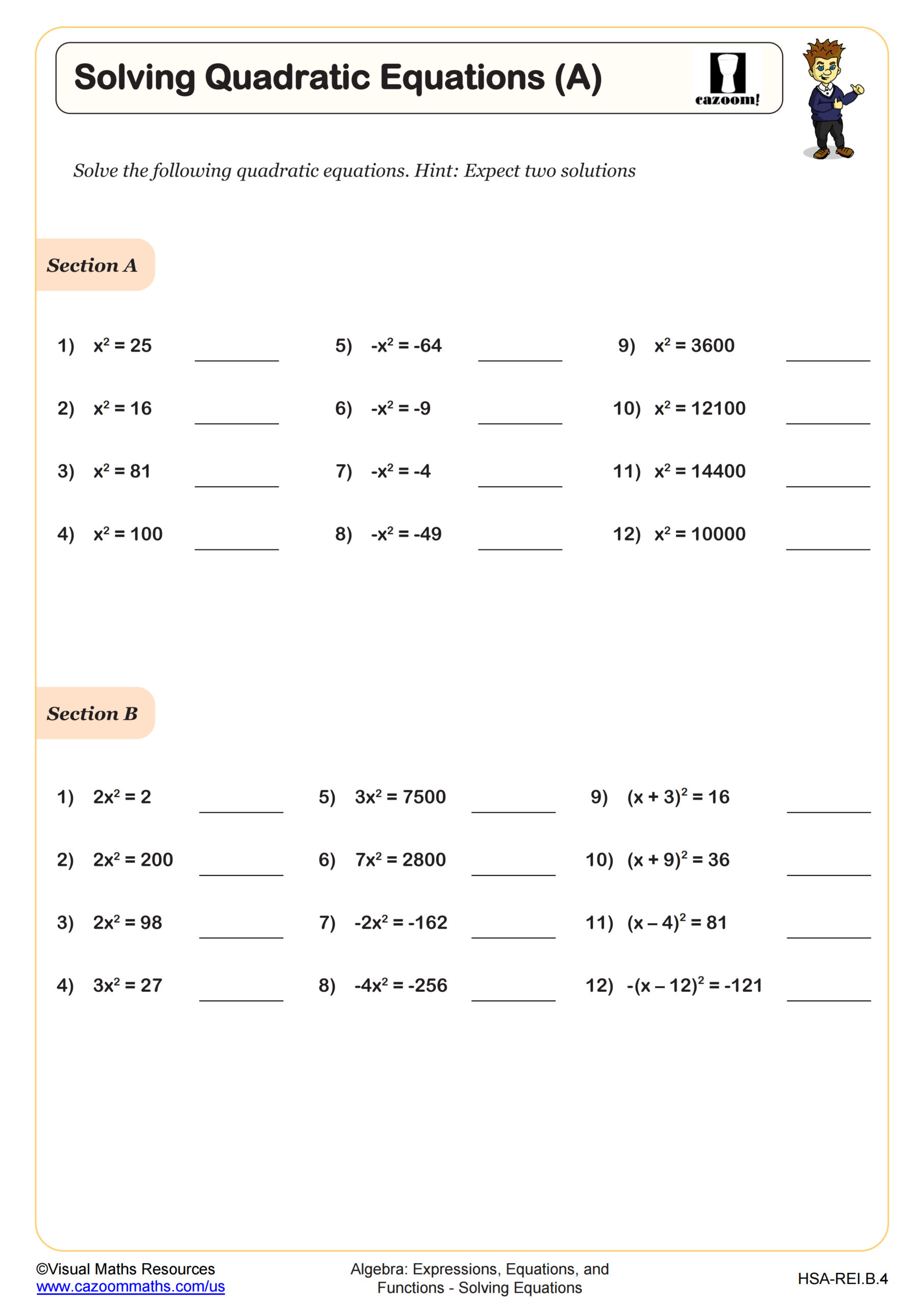
Solving Quadratic Equations (B) - By Factoring
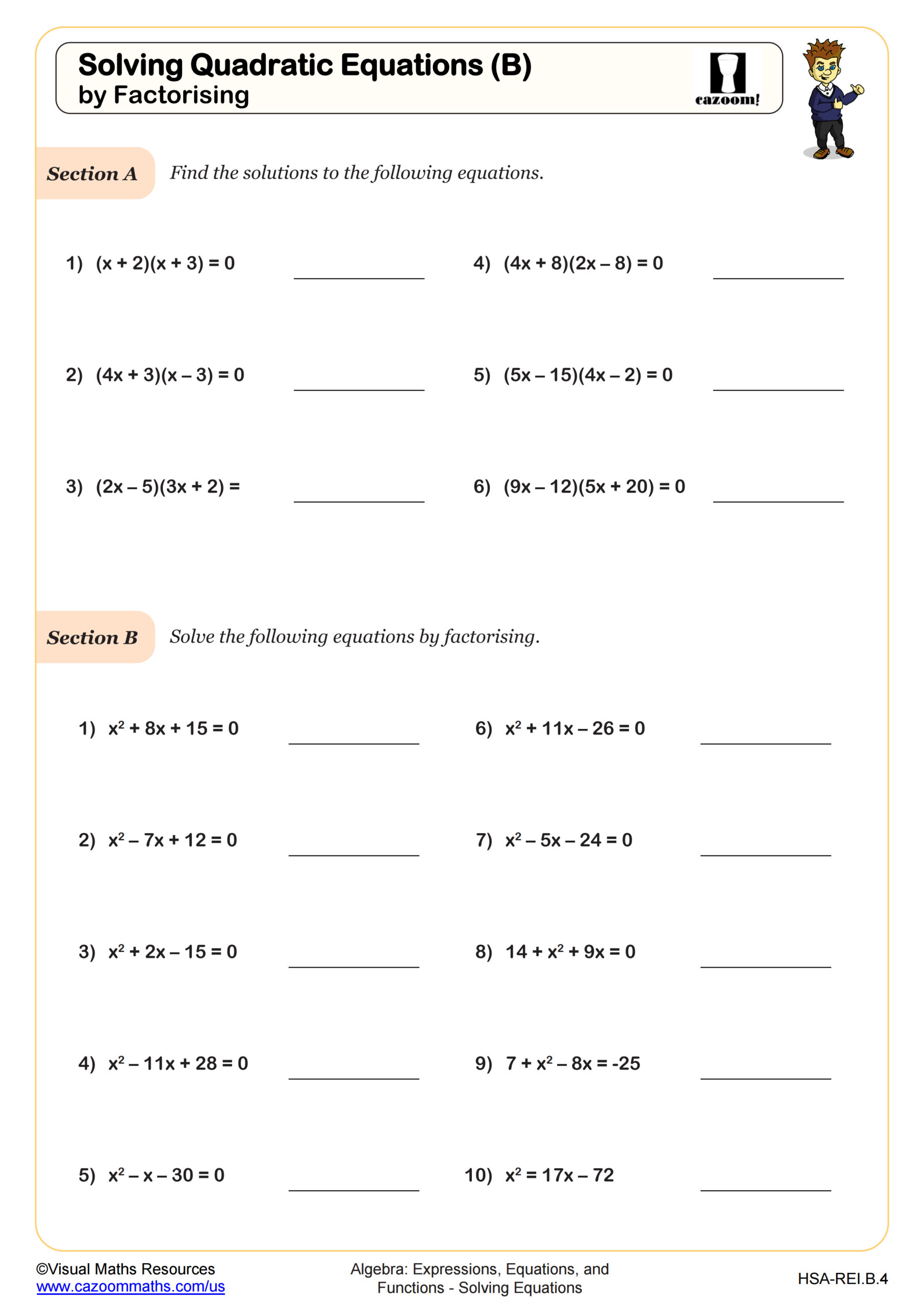
Solving Quadratic Equations (C) - By Quadratic Formula
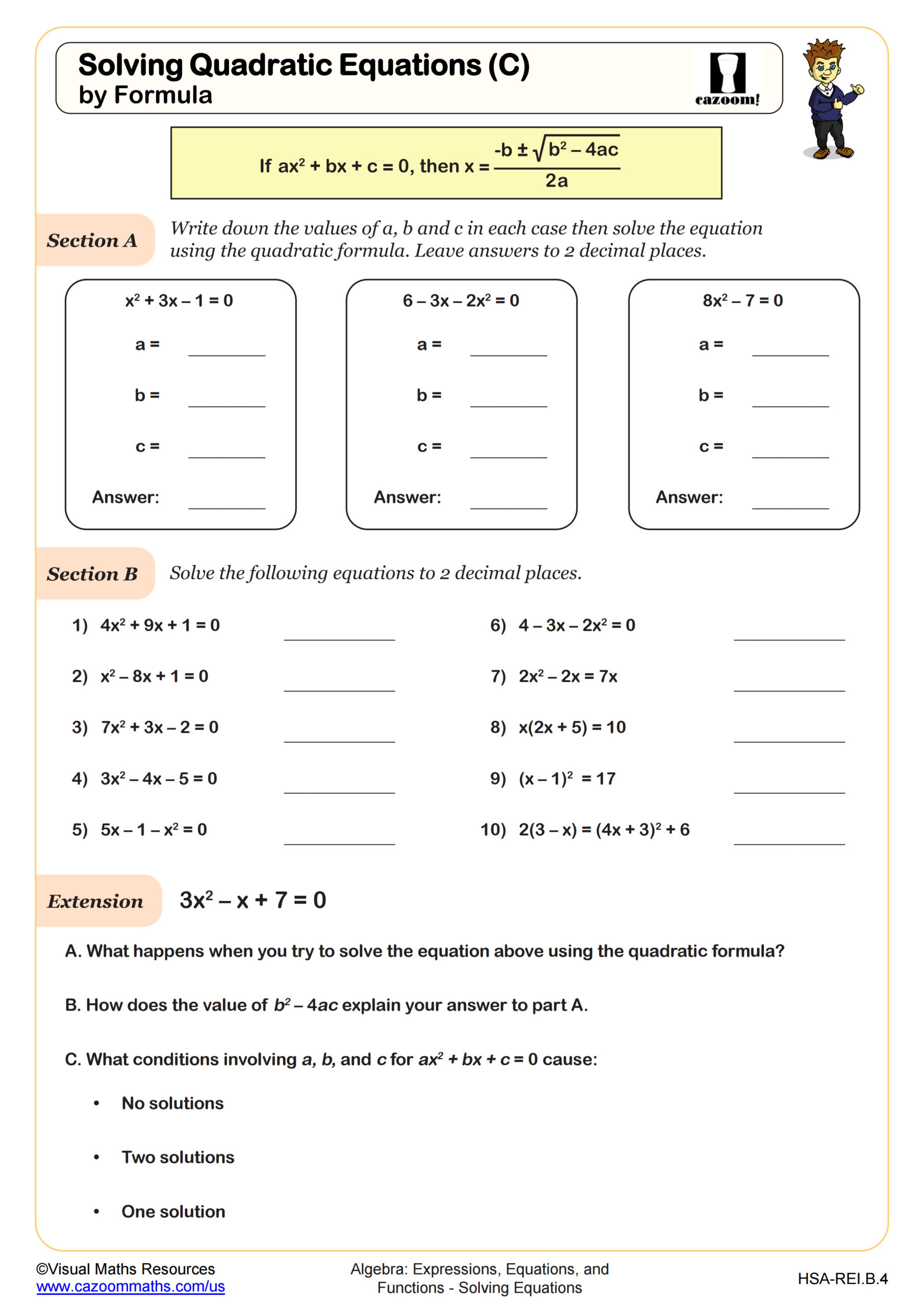
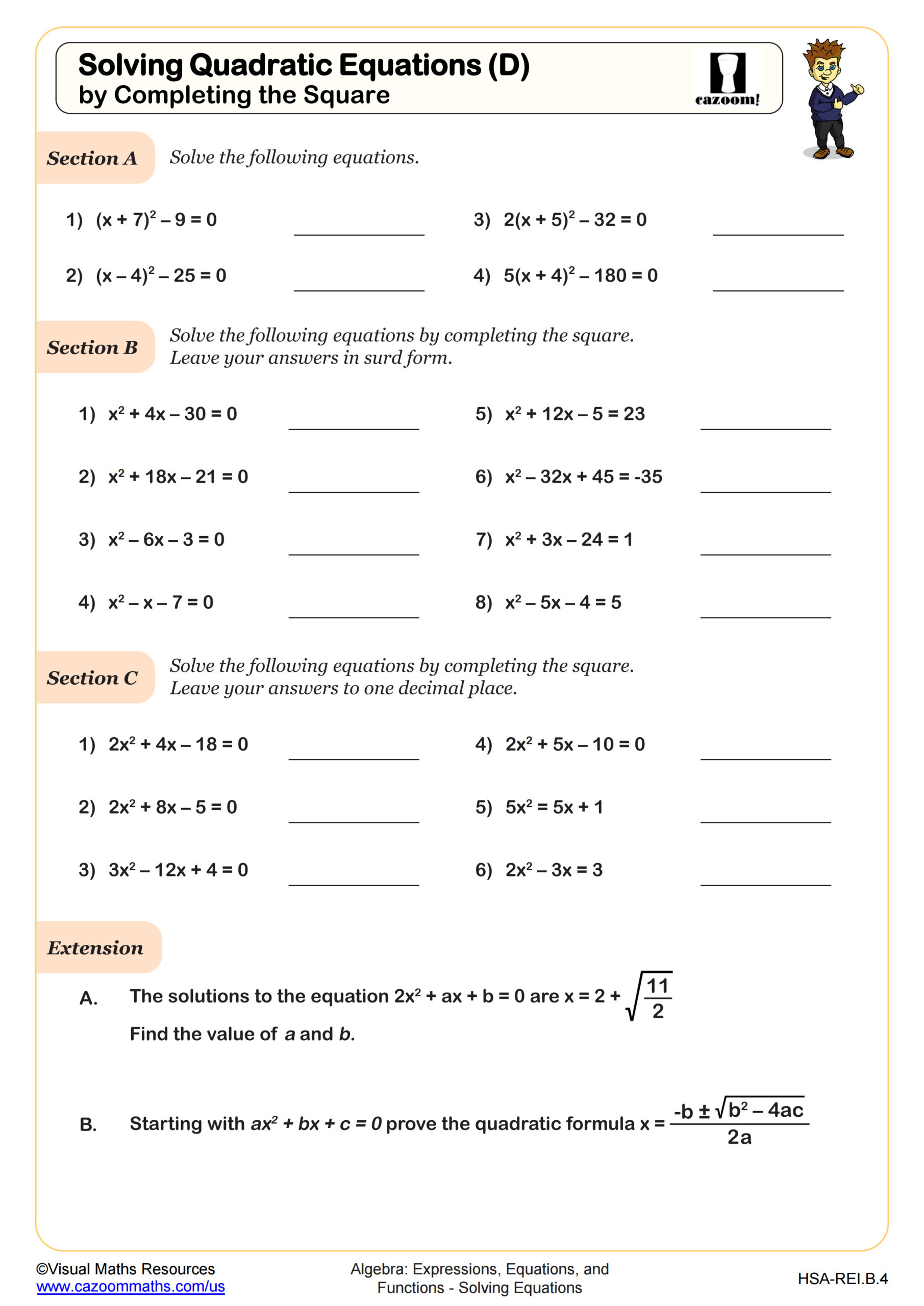
Solving Quadratic Equations (D) - By Completing the Square
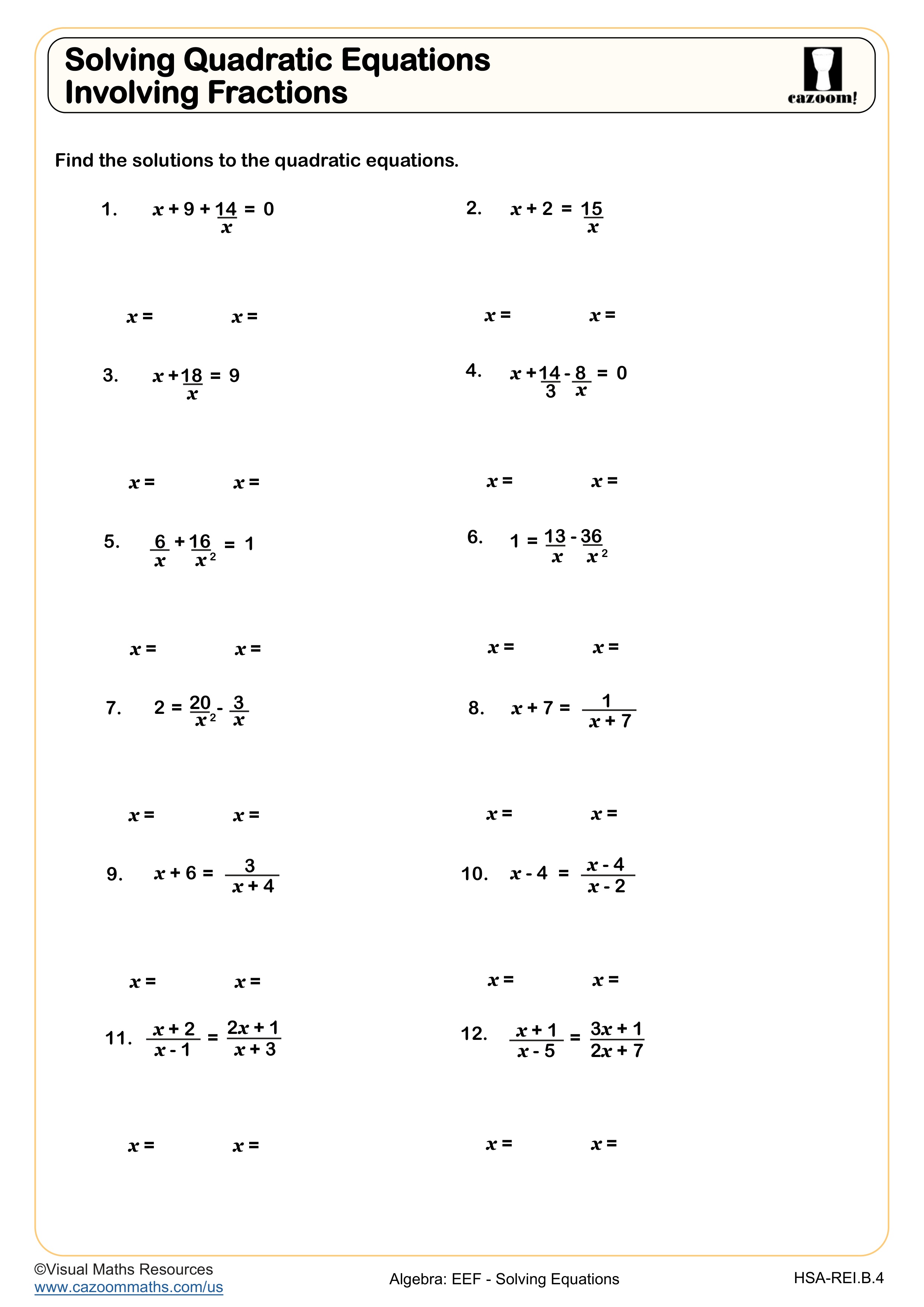
Solving Quadratic Equations Involving Fractions
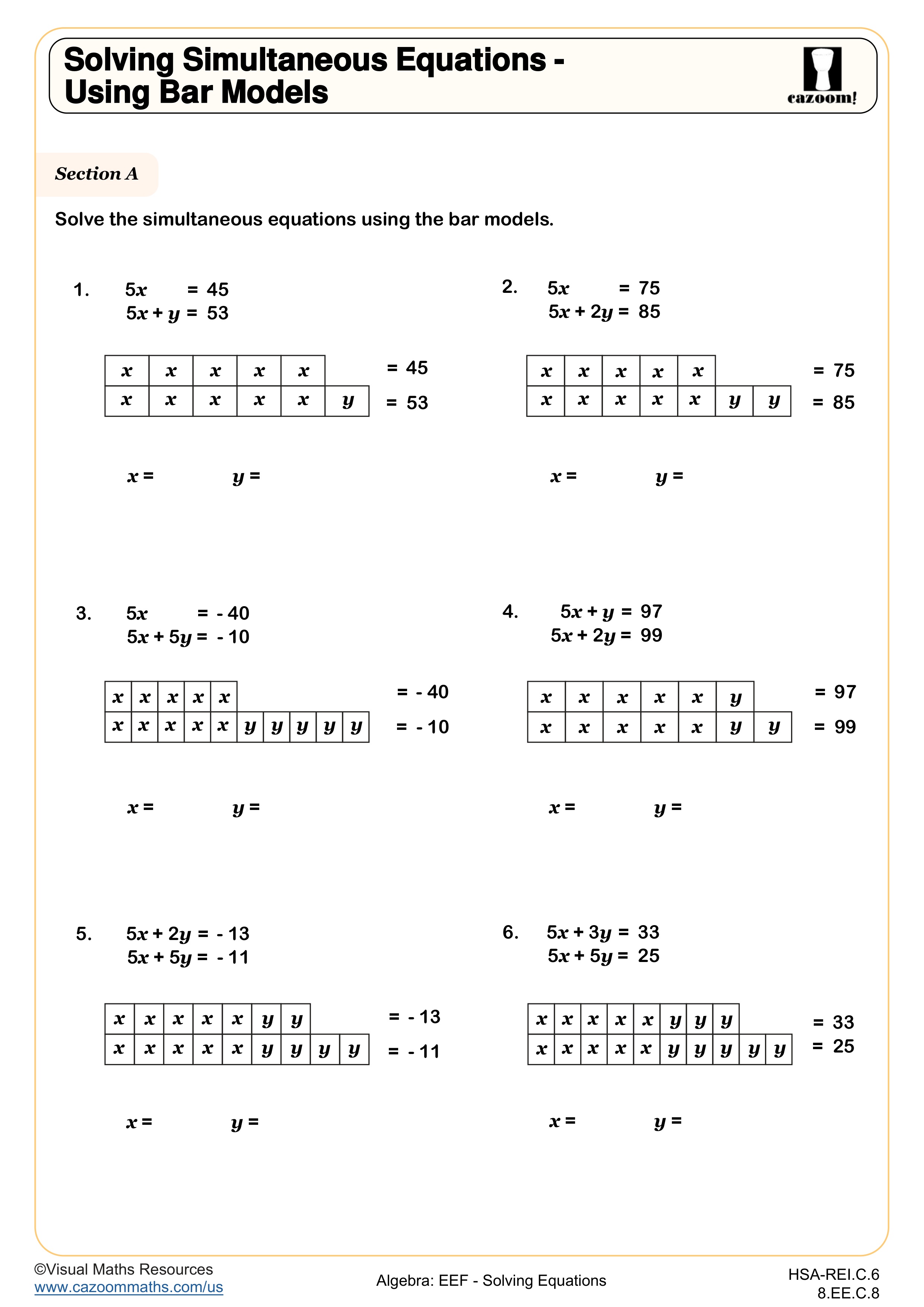
Solving Simultaneous Equations - Using Bar Models
Solving Simultaneous Equations - Using Substitution

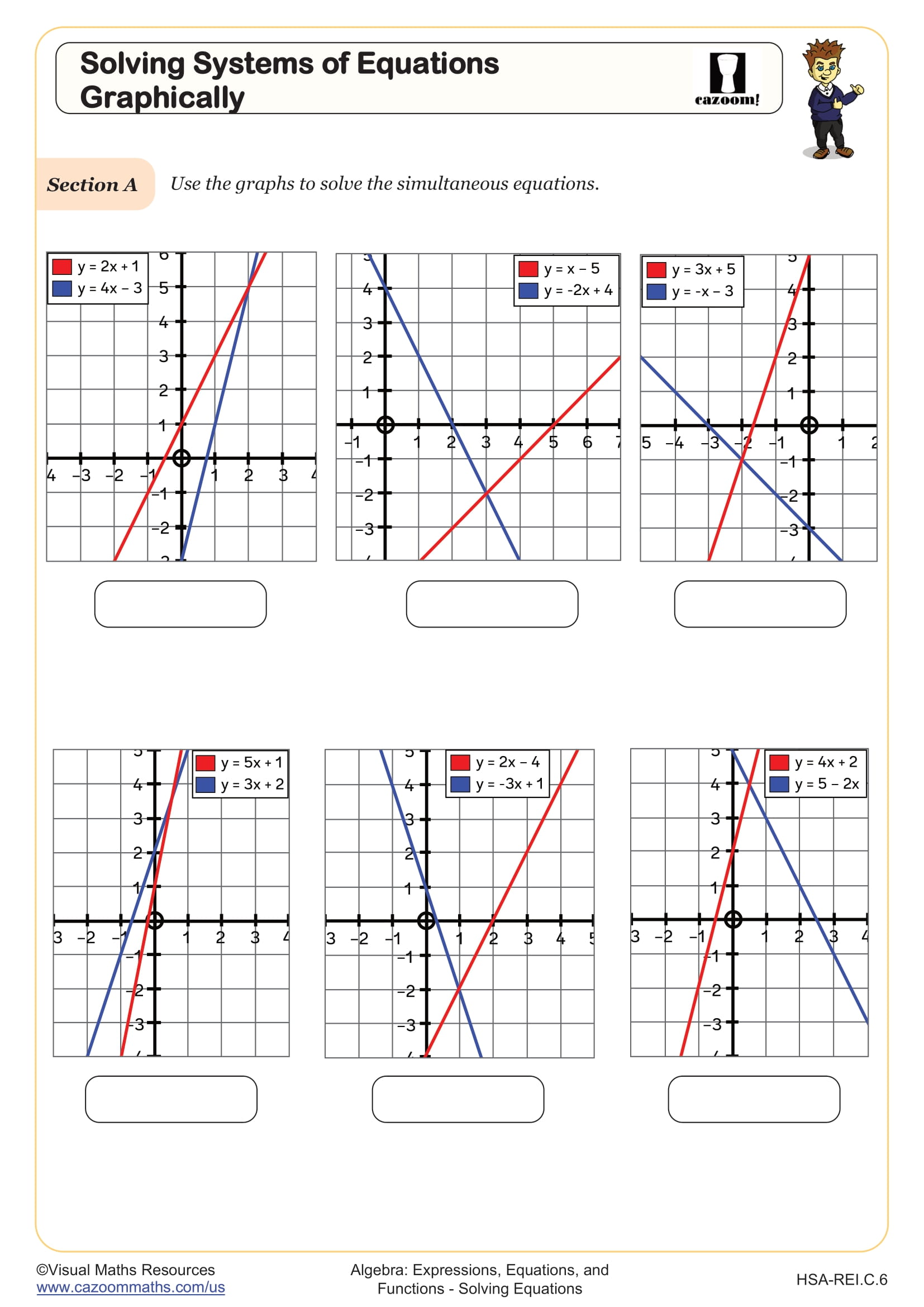
Solving Systems of Equations Graphically
Solving Systems of Linear Equations
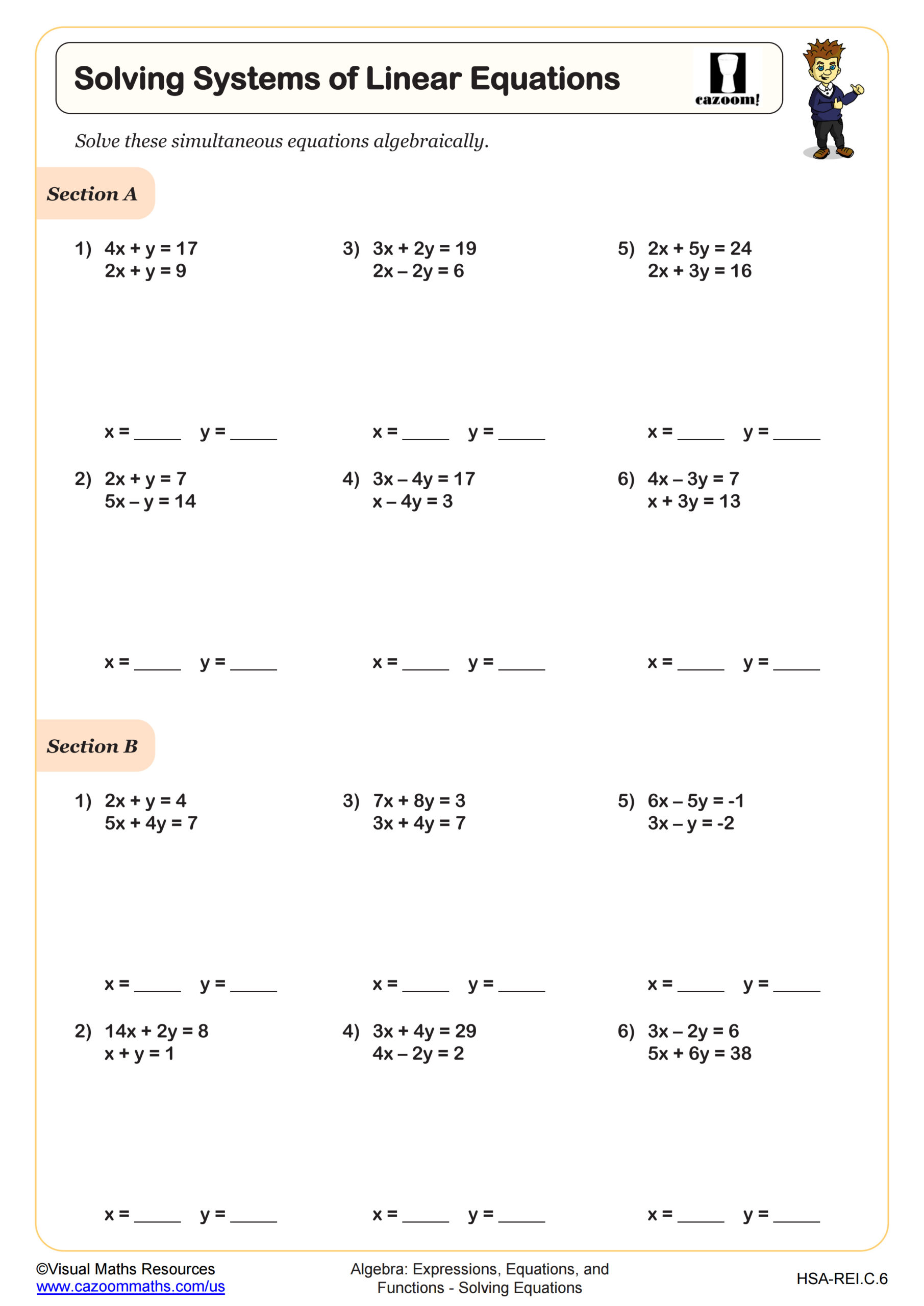
Solving Systems of Quadratic Equations
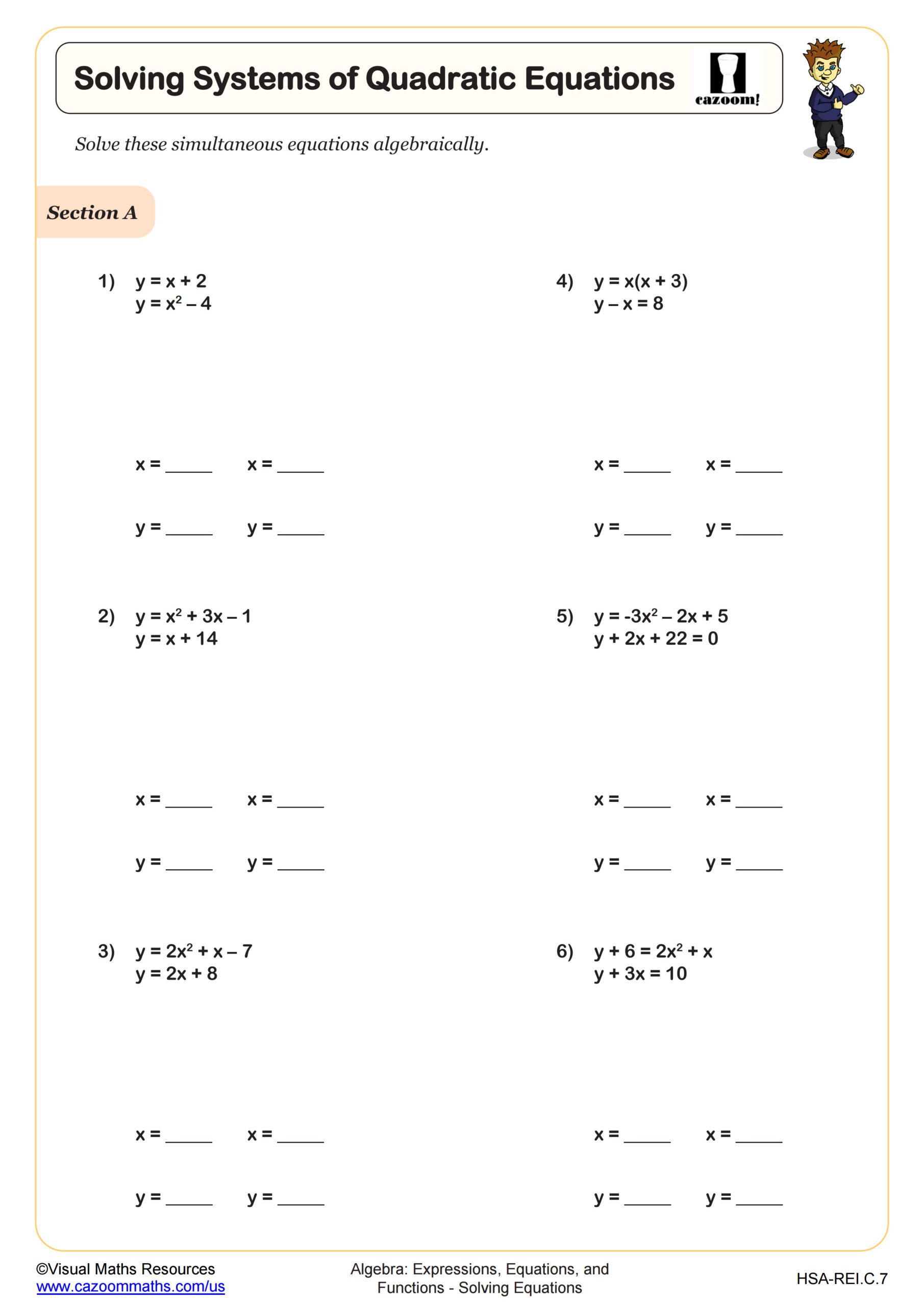
Speed, Distance, Time - Multi Stage Journeys
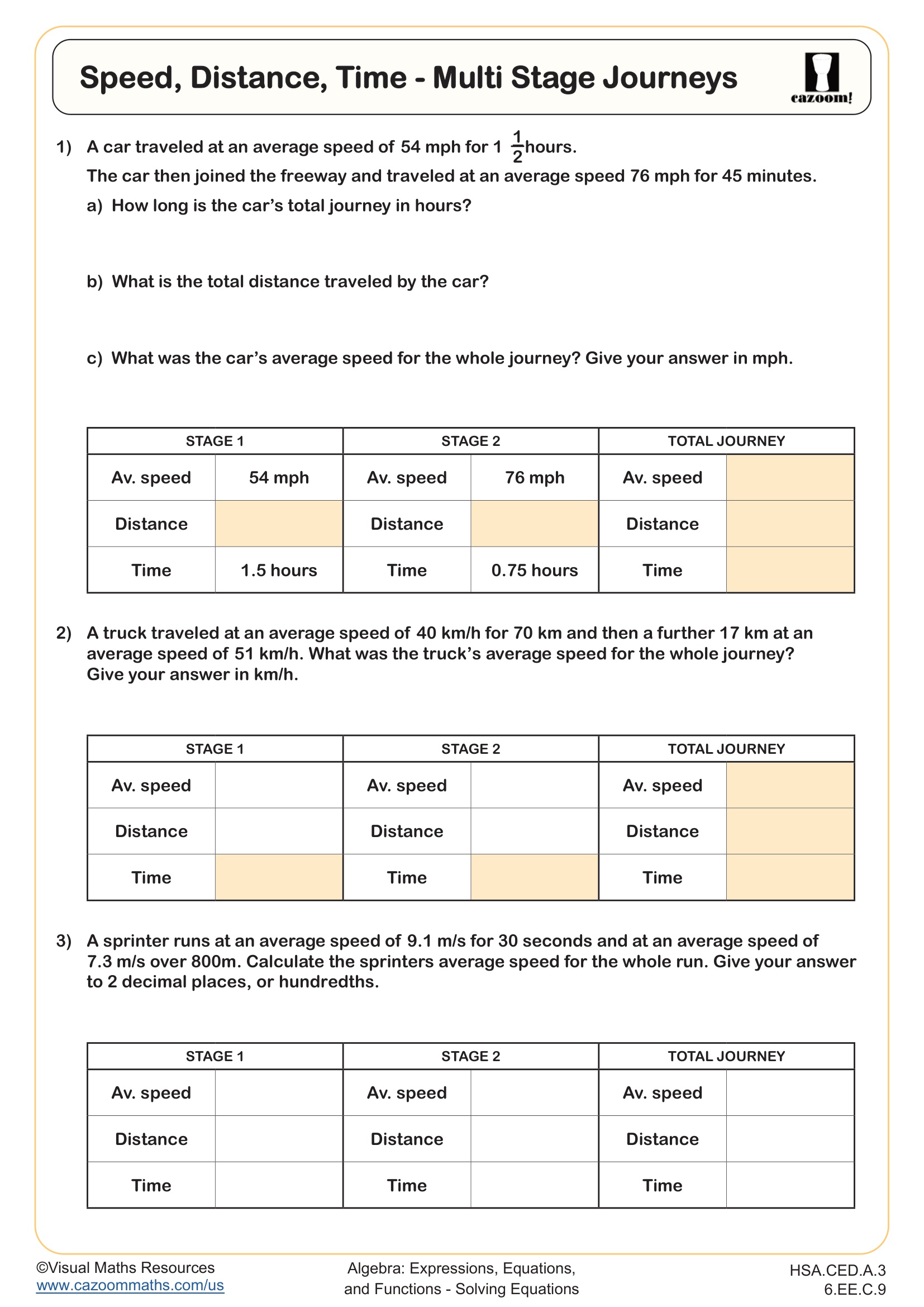
Using Graphs to Solve Non-Linear Equations
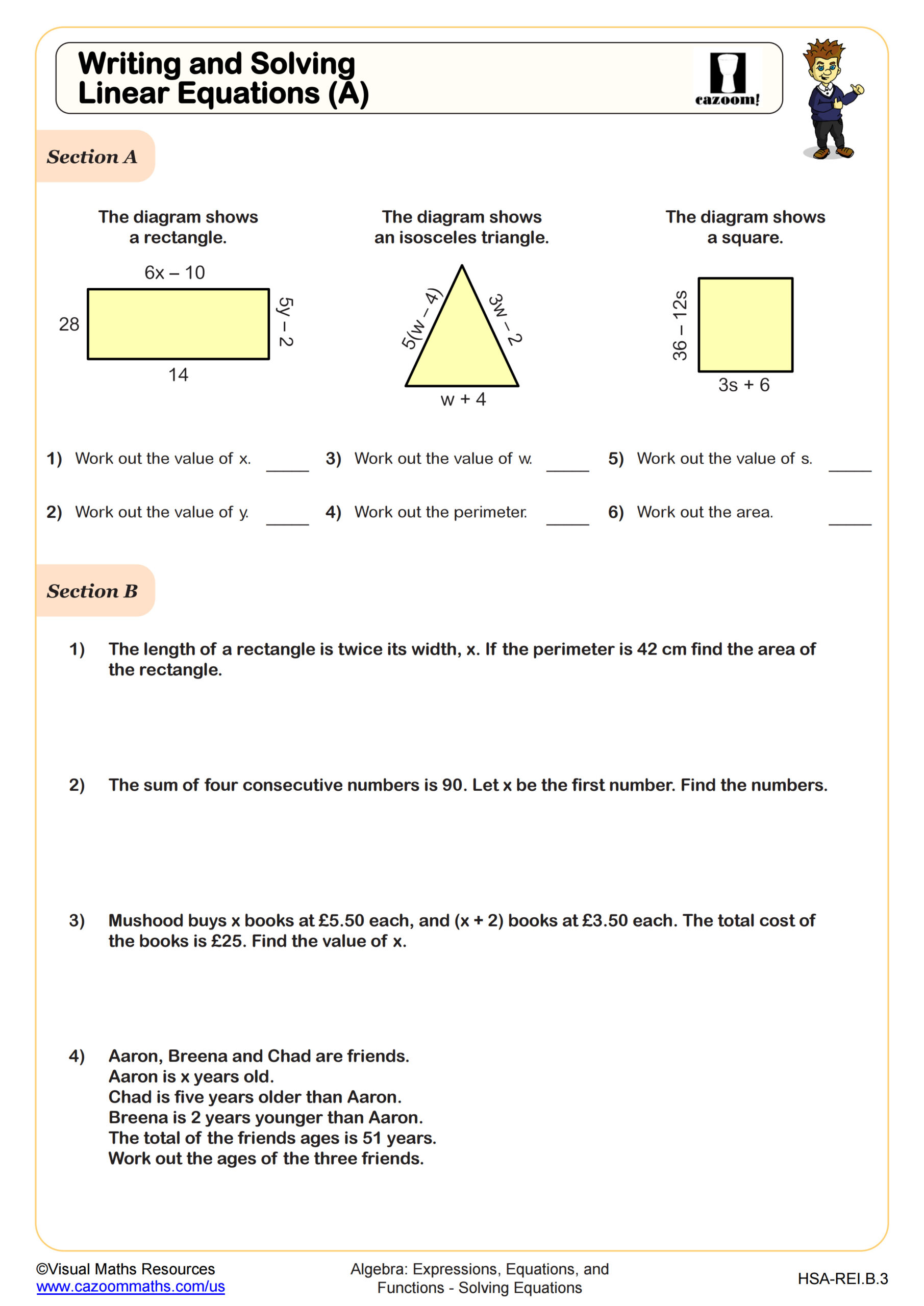
Writing and Solving Linear Equations (A)
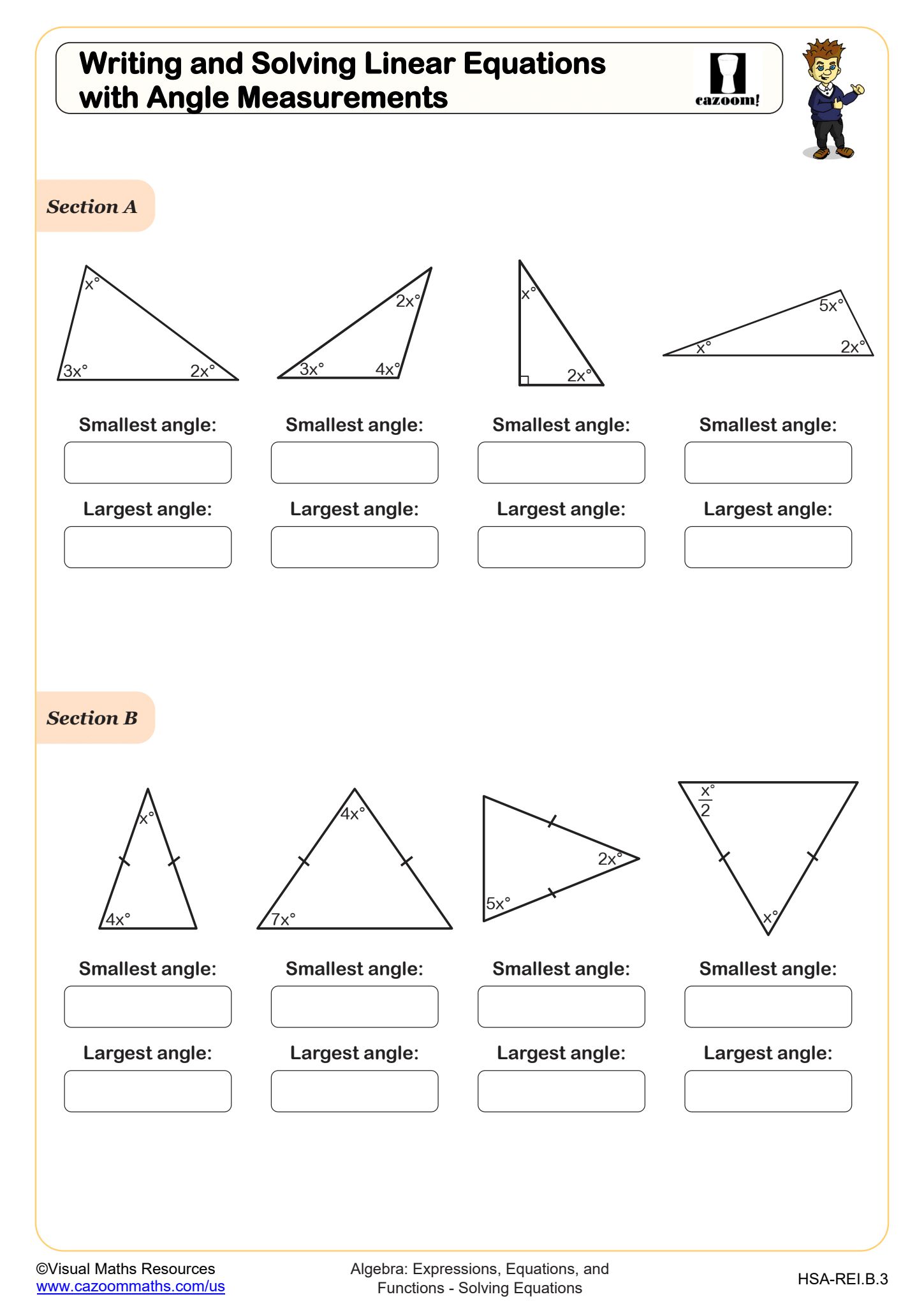
Writing and Solving Linear Equations with Angle Measurements
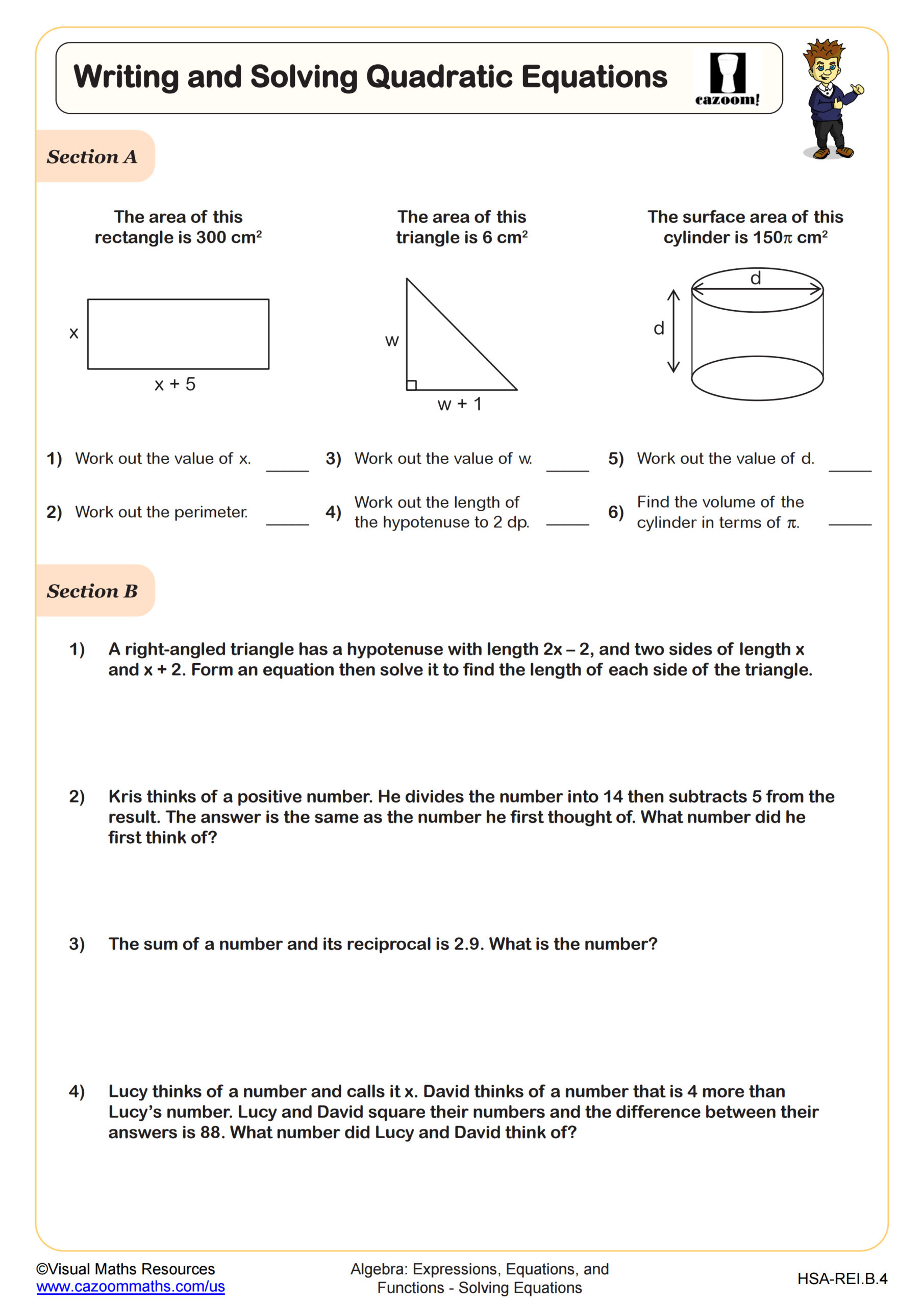
Writing and Solving Quadratic Equations
All worksheets are created by the team of experienced teachers at Cazoom Math.
What types of problems are included in a solving equations worksheet?
A thorough solving equations worksheet typically includes linear equations with variables on both sides, quadratic equations requiring factoring or the quadratic formula, rational equations with restrictions on solutions, and systems of equations solved by substitution or elimination. These align with Common Core Standards A-REI.3 and A-REI.4 for high school algebra courses.
Teachers notice students frequently make sign errors when moving terms across the equals sign, particularly in multi-step linear equations. The most effective math equations worksheets include problems that specifically address these common misconceptions, such as equations requiring distribution before combining like terms or problems where students must check their solutions in the original equation.
How do high school equations differ across grade levels?
Ninth-grade students typically work with linear equations and simple quadratic equations, while tenth and eleventh-grade students tackle more complex rational equations, exponential equations, and systems of equations. Advanced students in pre-calculus encounter trigonometric equations and logarithmic equations that require specialized solution techniques.
The progression from solving equation worksheet problems in Algebra I to advanced equation types requires careful scaffolding. Teachers observe that students who master basic linear equation solving techniques in ninth grade show significantly better performance with complex equation types in later courses, making early intervention with struggling students particularly important for long-term success.
Why do students struggle with rational equations specifically?
Rational equations present unique challenges because students must identify domain restrictions before solving, then verify that solutions don't create undefined expressions in the original equation. Many students forget to check their answers against these restrictions, leading to extraneous solutions that appear mathematically correct but are invalid.
Teachers frequently see students multiply through by the LCD correctly but then fail to recognize when their algebraic solution creates a zero denominator. Effective solving equations worksheets include problems that deliberately produce extraneous solutions, helping students develop the habit of checking all answers in the original equation context rather than just verifying their algebraic manipulation.
How can teachers use these worksheets most effectively in class?
Teachers find success using equations worksheet problems as guided practice after introducing new solution techniques, allowing students to work through similar problems while support is immediately available. The answer keys enable teachers to circulate during independent practice and quickly identify students who need additional support with specific equation types.
Many teachers structure lessons by having students complete three to four problems from a solve equation worksheet independently, then discuss common errors as a class before continuing. This approach helps address misconceptions immediately rather than allowing incorrect techniques to become habits, particularly important given that equation-solving skills transfer directly to calculus and physics coursework where precision is practical.