High School Trigonometry Worksheets
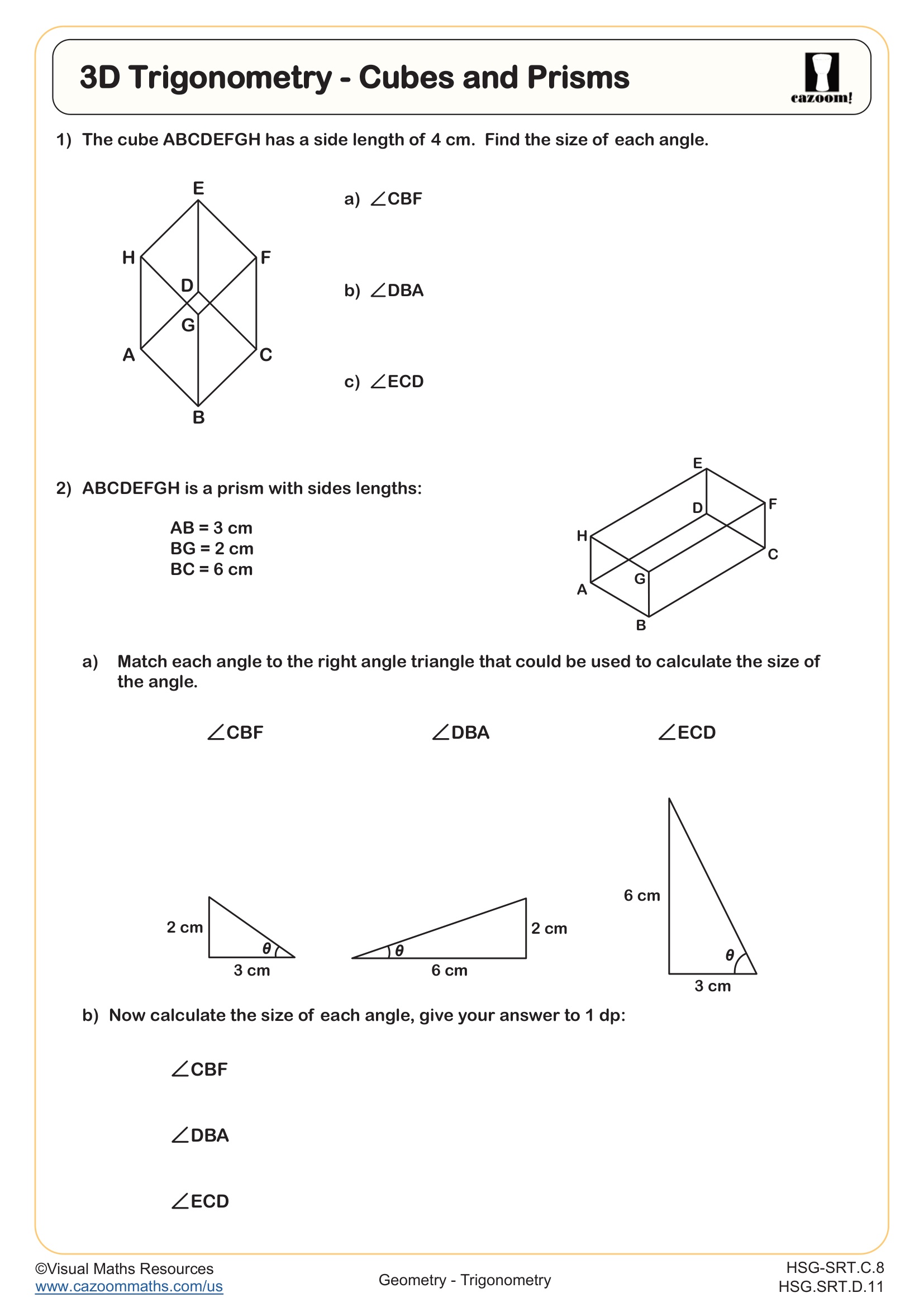
3D Trigonometry - Cubes and Prisms
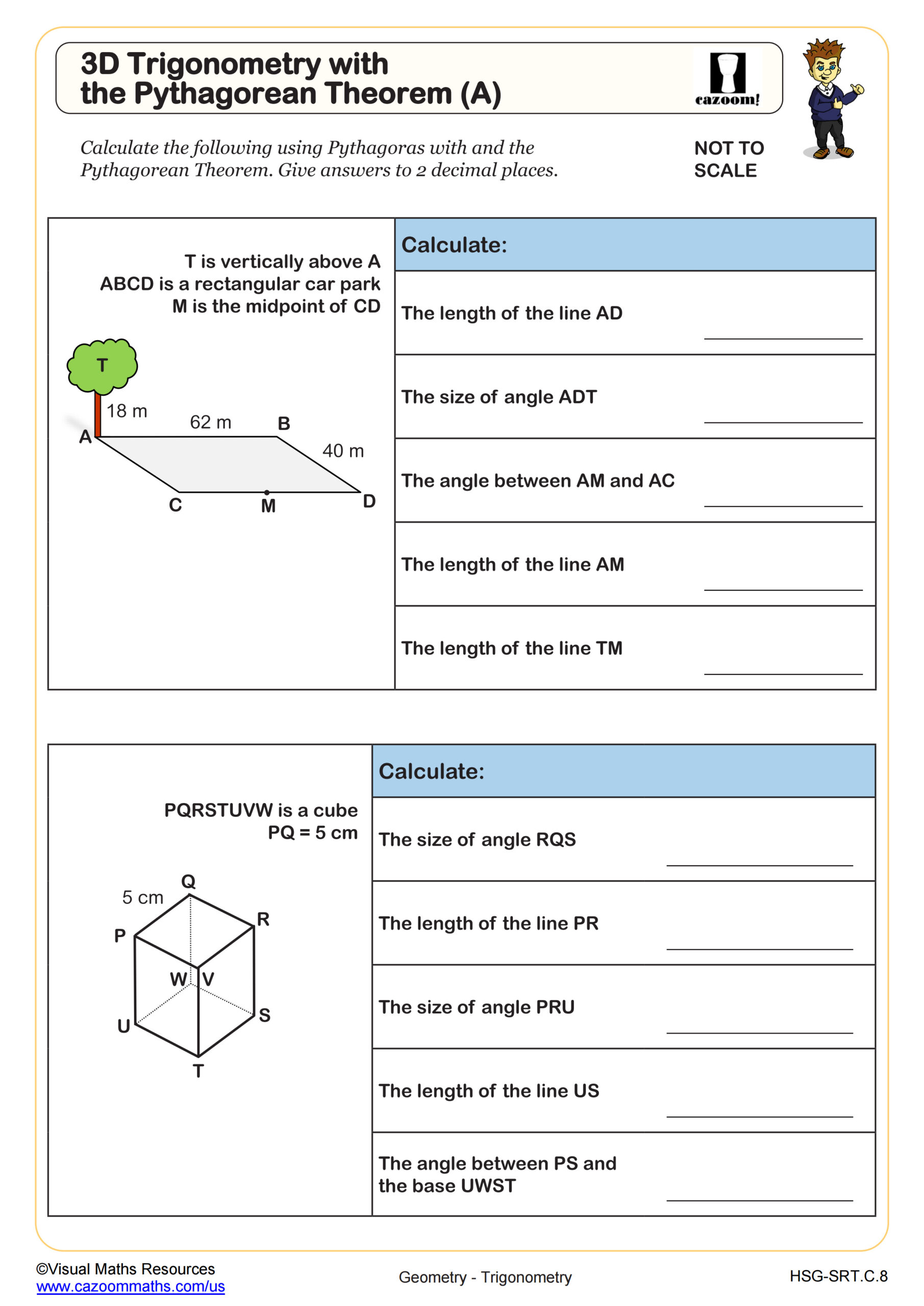
3D Trigonometry with the Pythagorean Theorem (A)
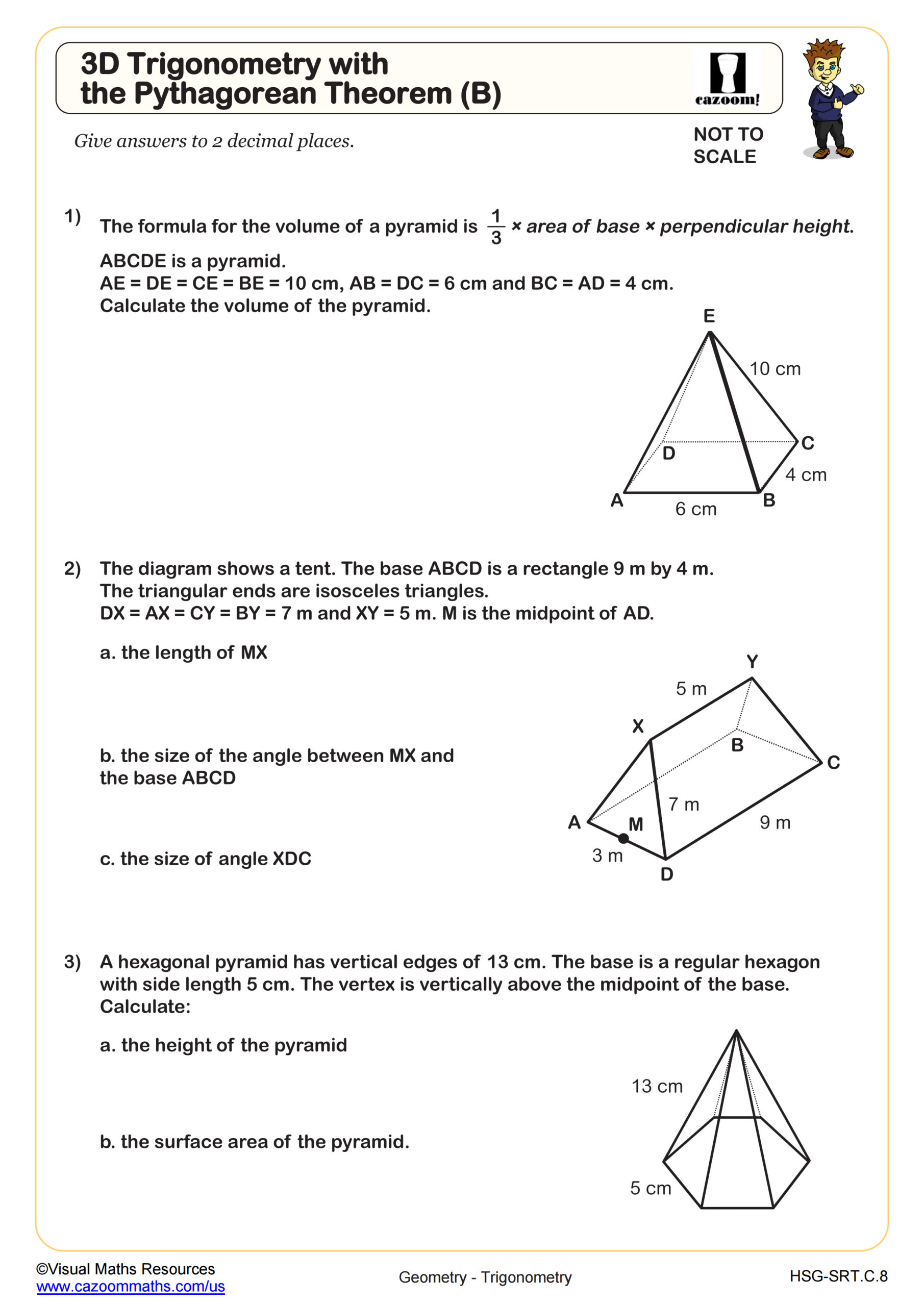
3D Trigonometry with the Pythagorean Theorem (B)
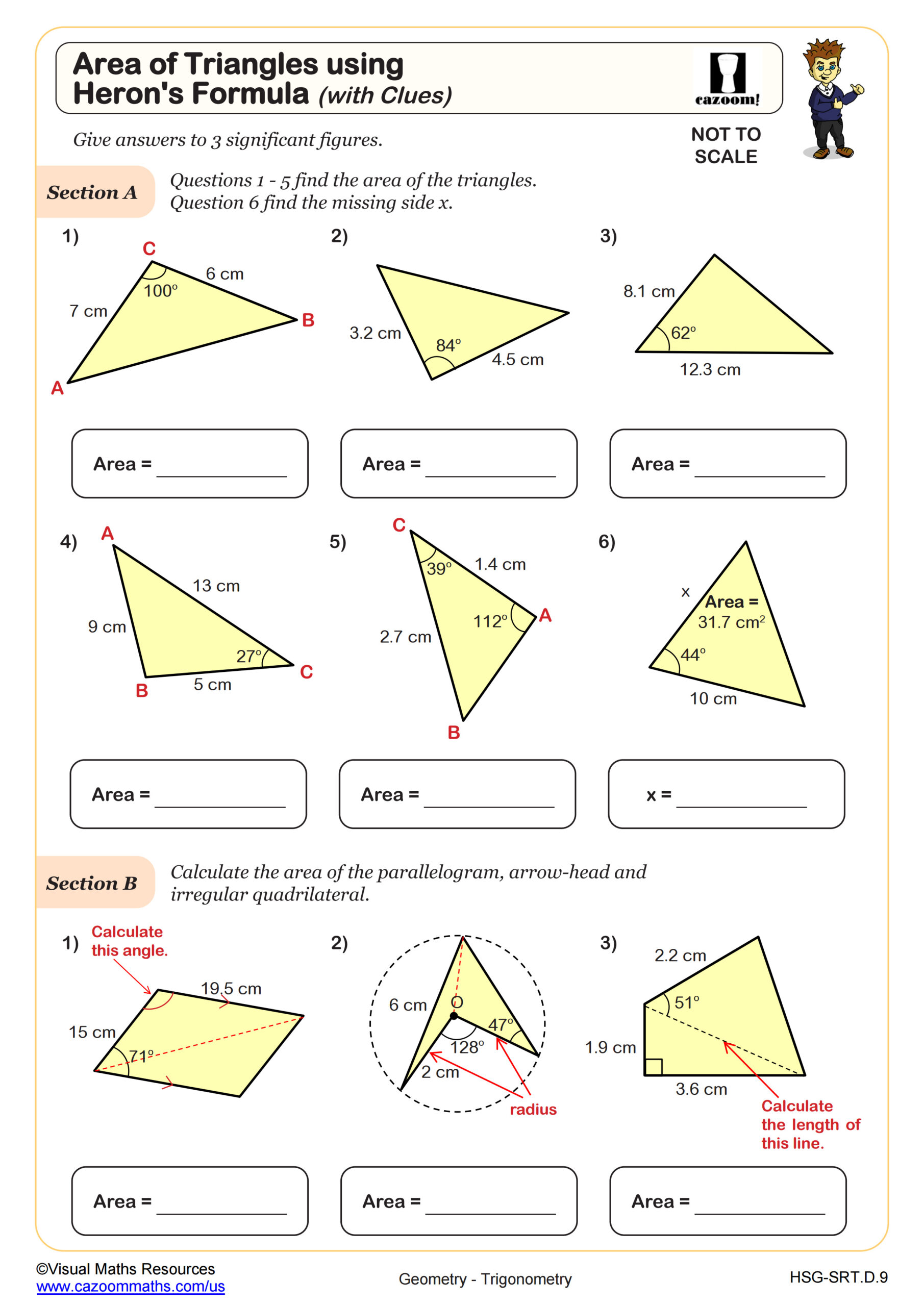
Area of Triangles using Heron's Formula
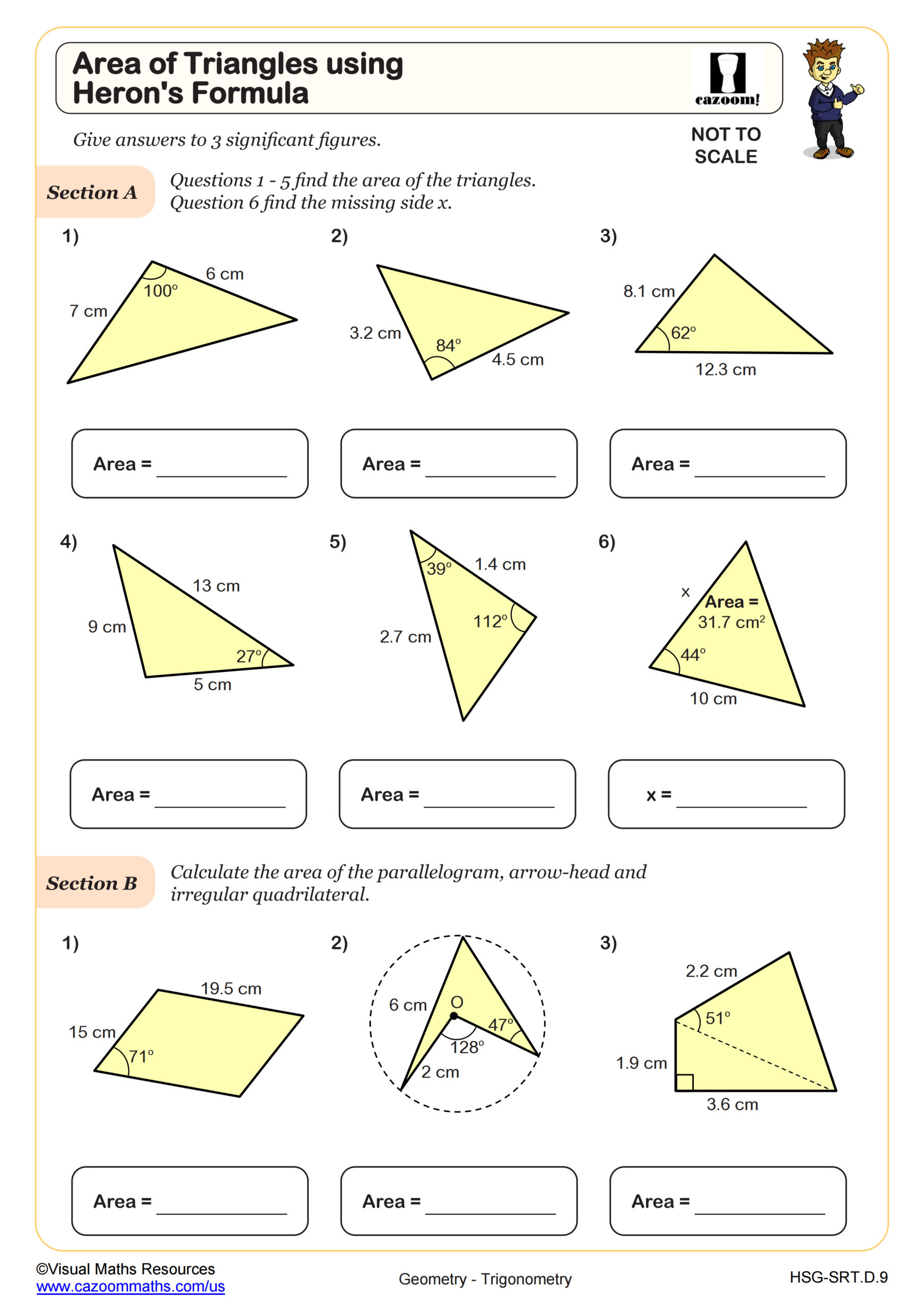
Area of Triangles using Heron's Formula (with clues)
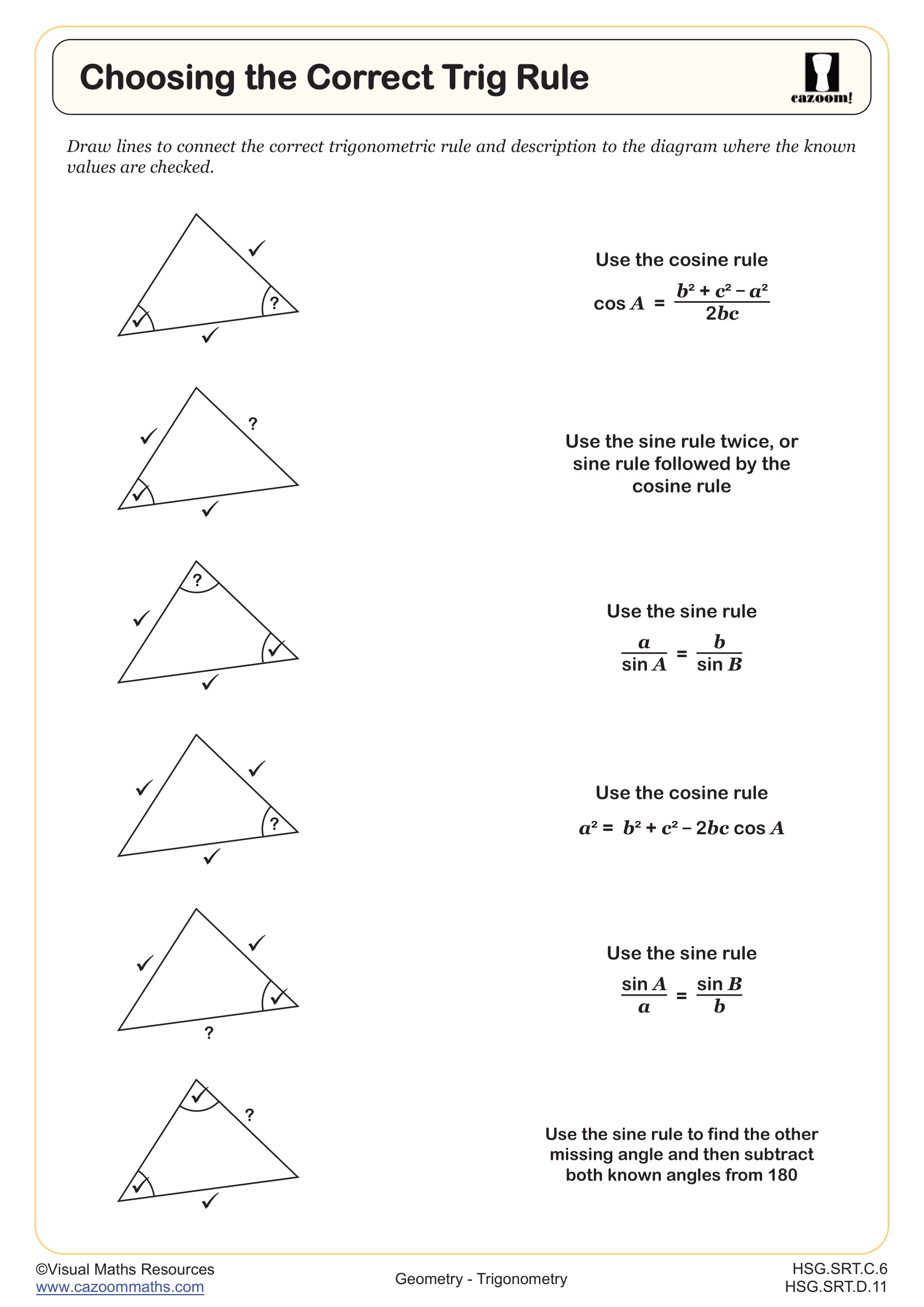
Choosing the Correct Trig Rule
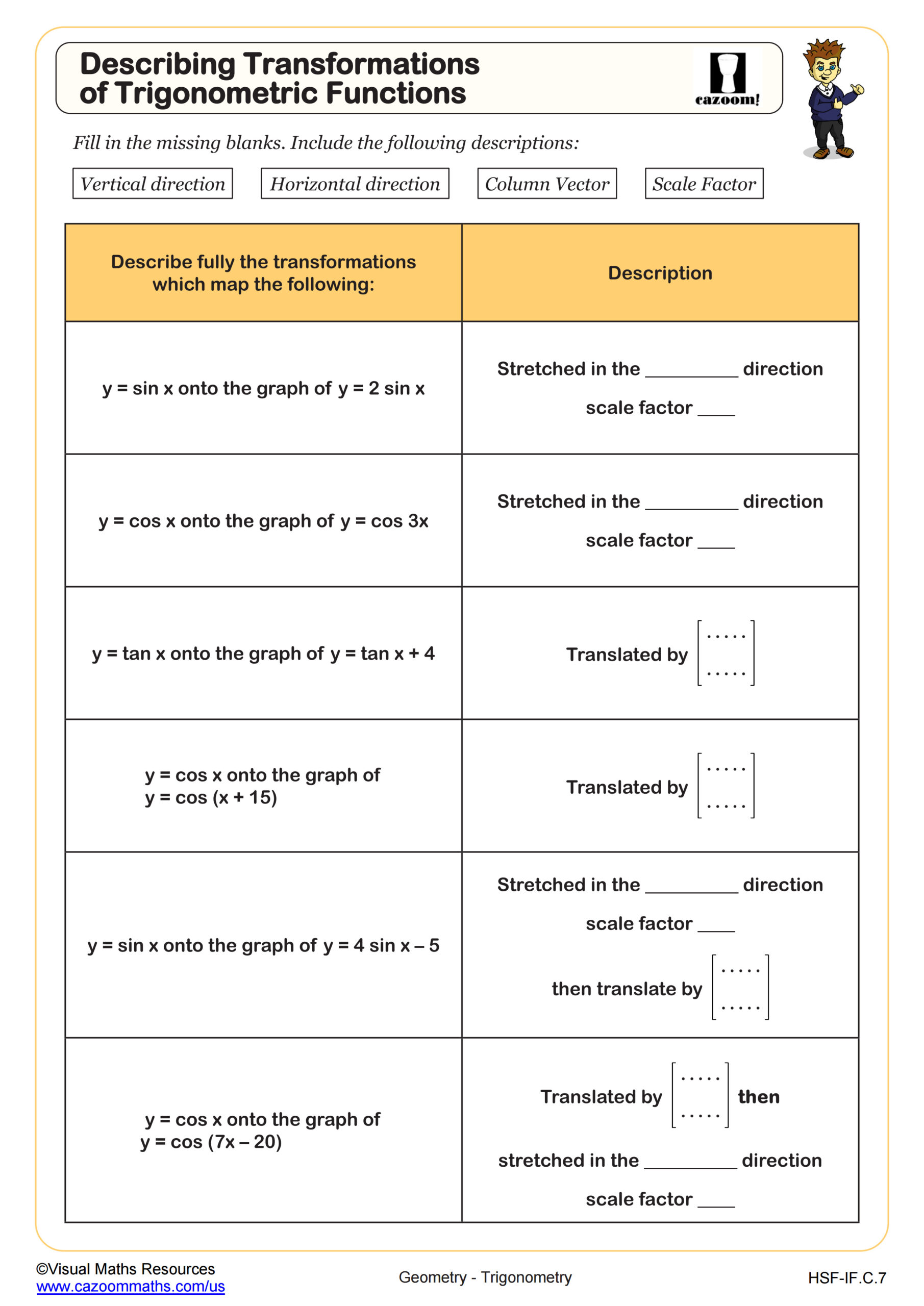
Describing Transformations of Trigonometric Functions
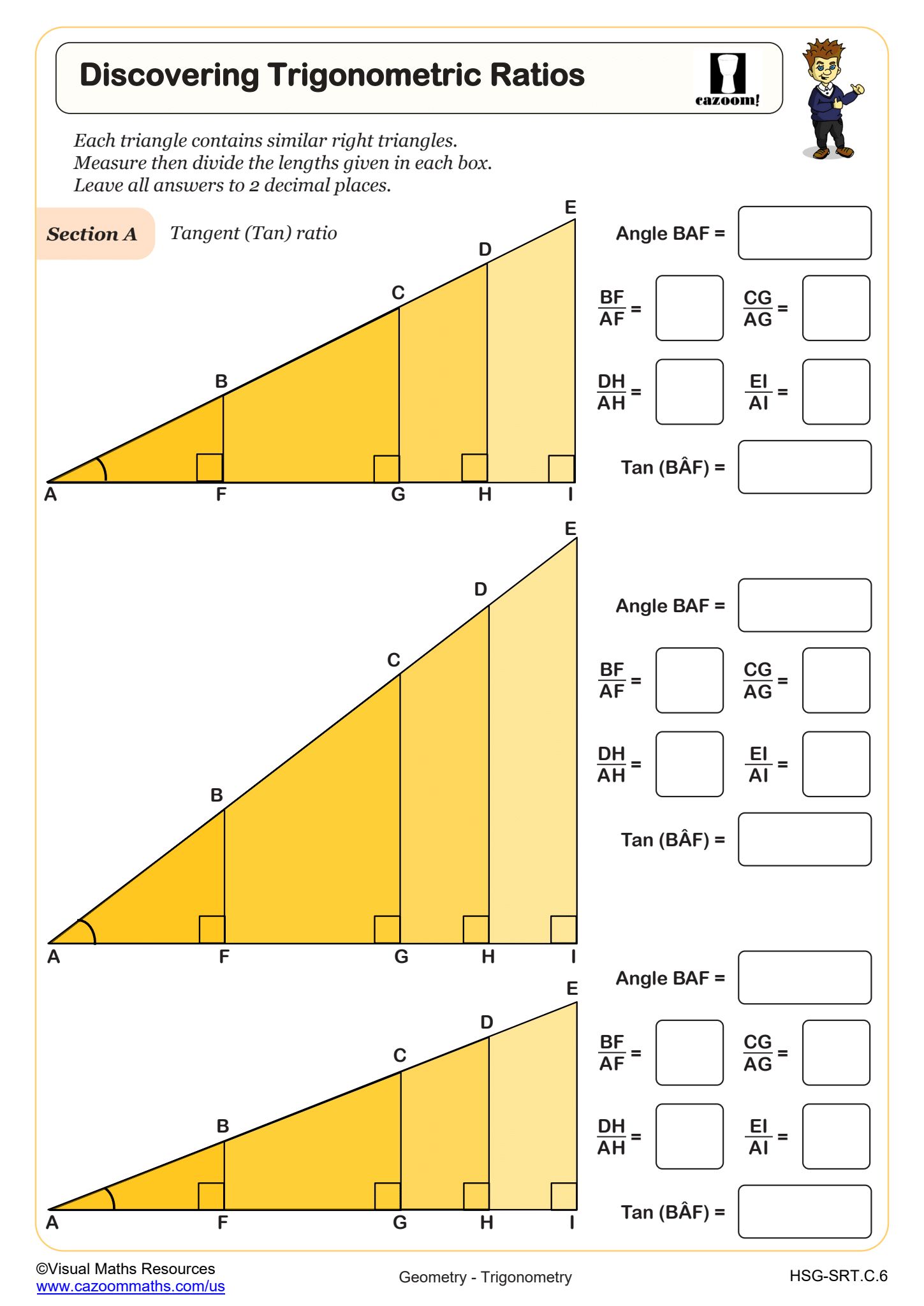
Discovering Trigonometric Ratios
Graphs of Trigonometric Functions (A)
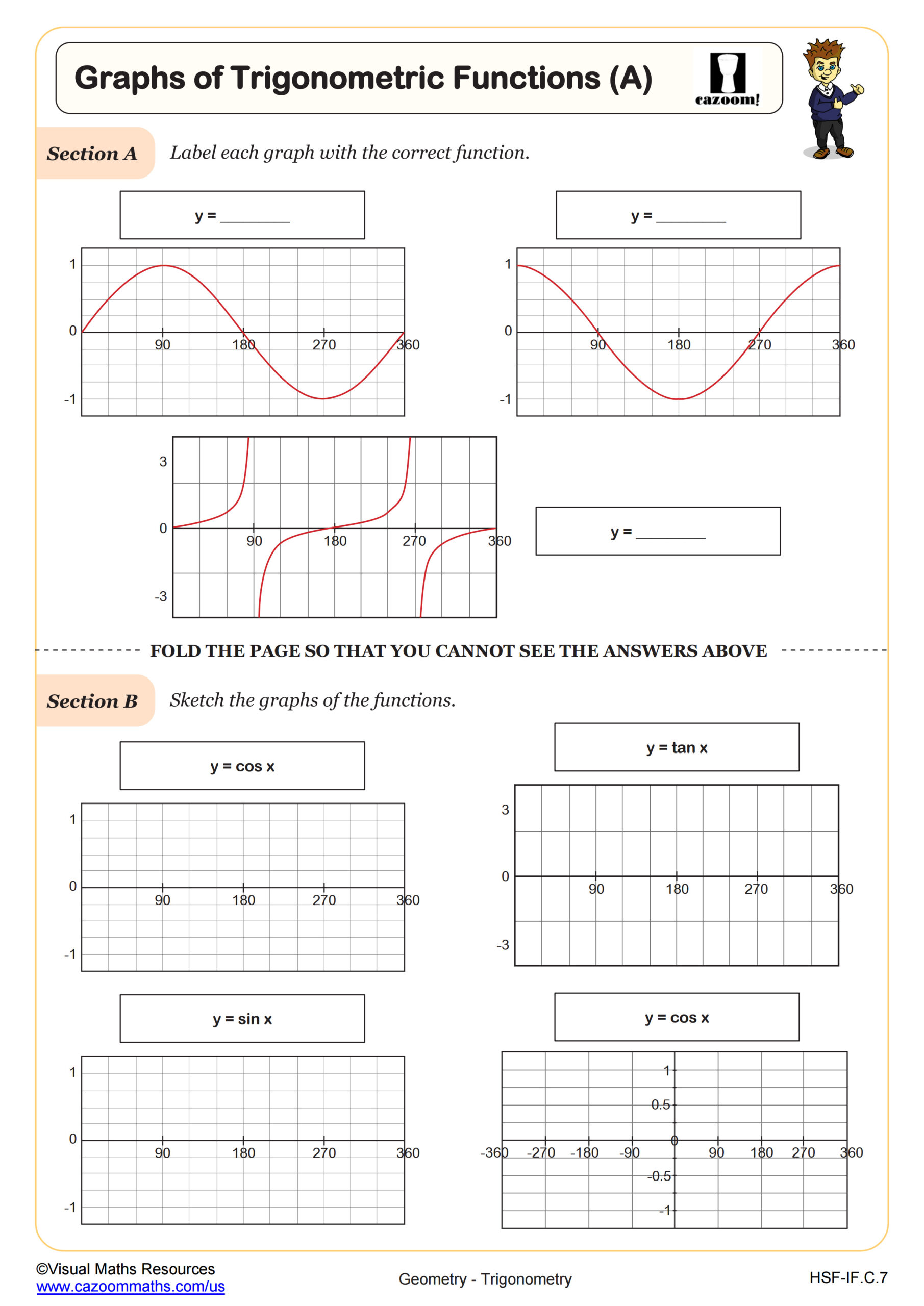
Graphs of Trigonometric Functions (B)
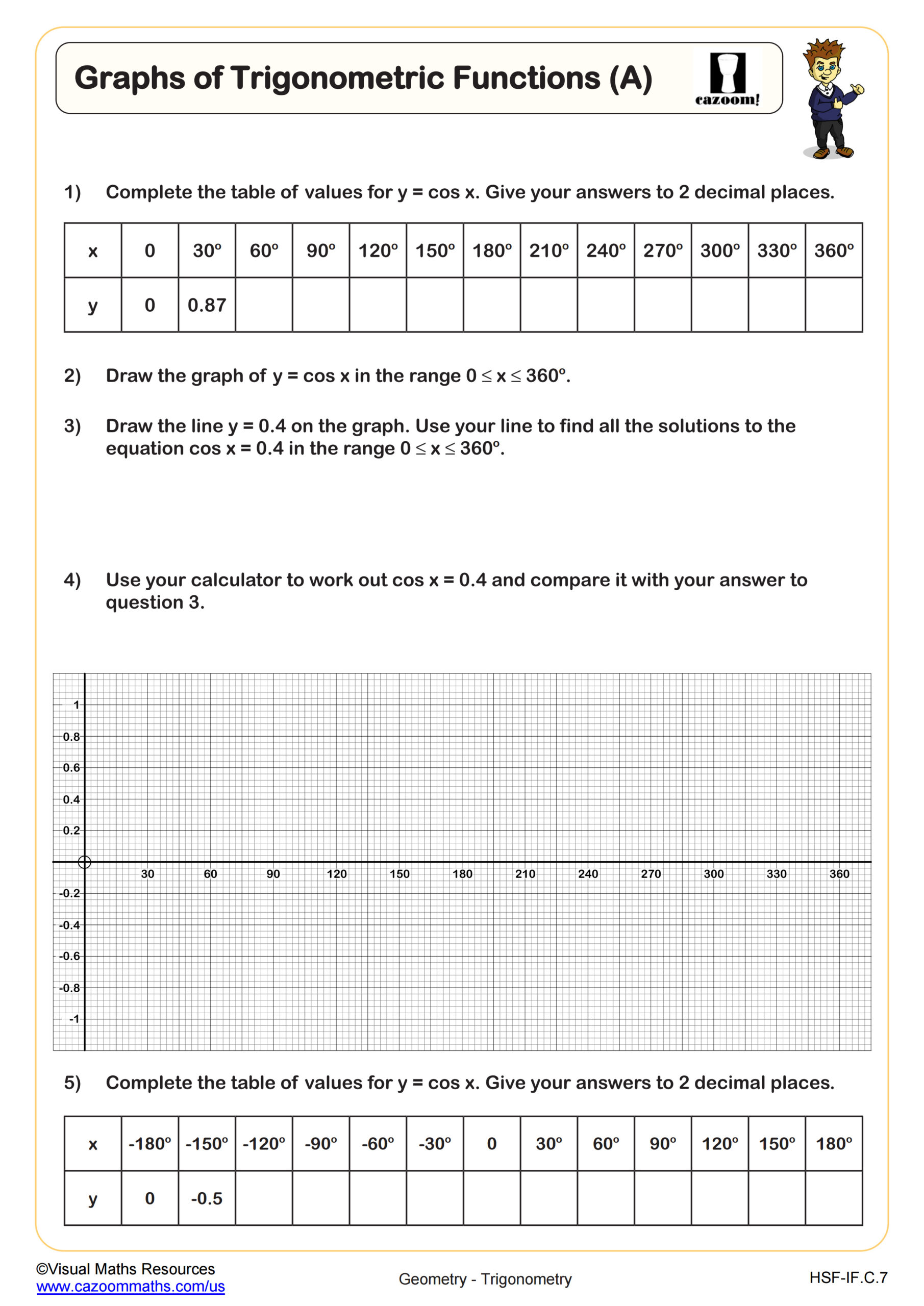
Law of Cosines
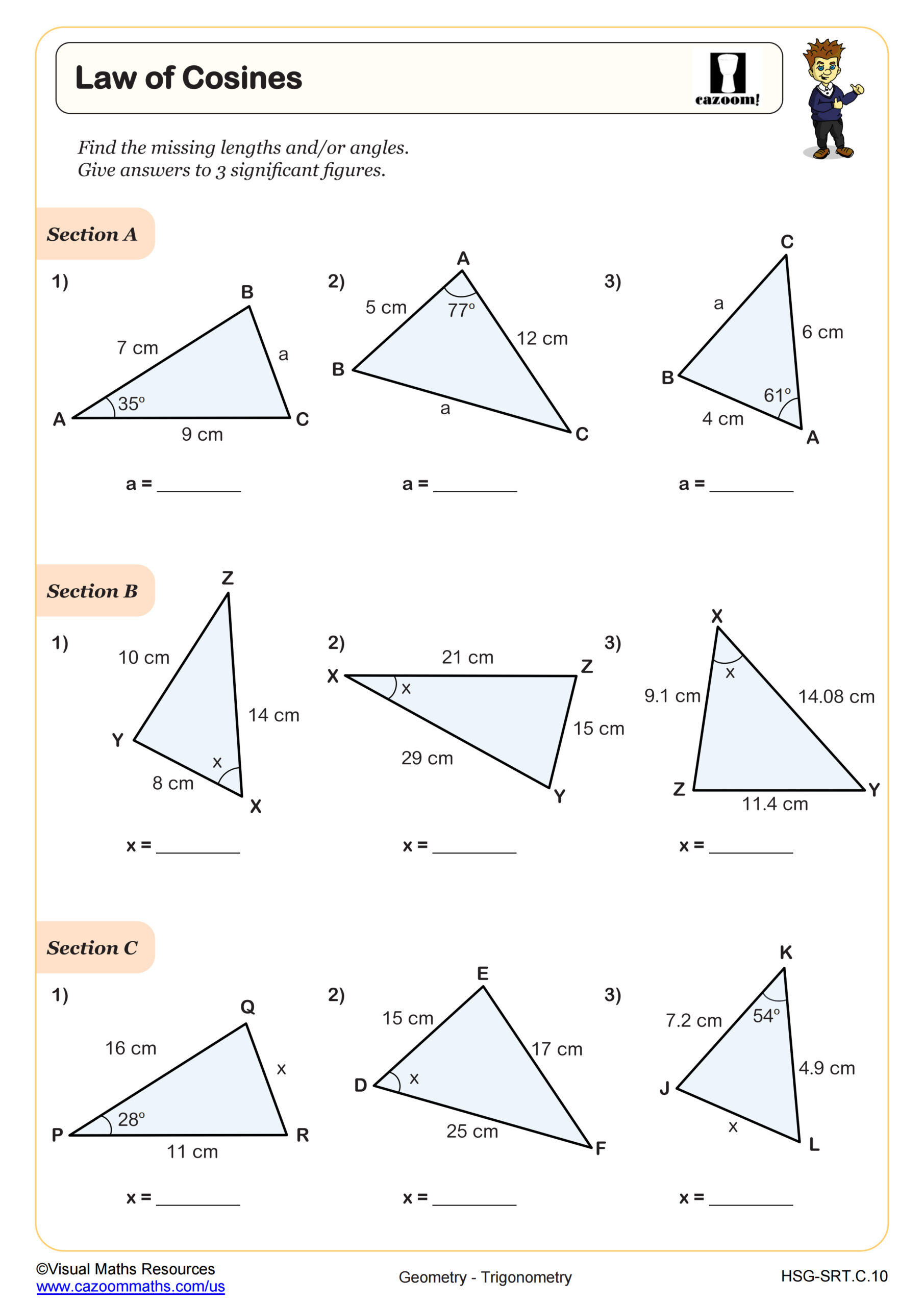
Law of Sines
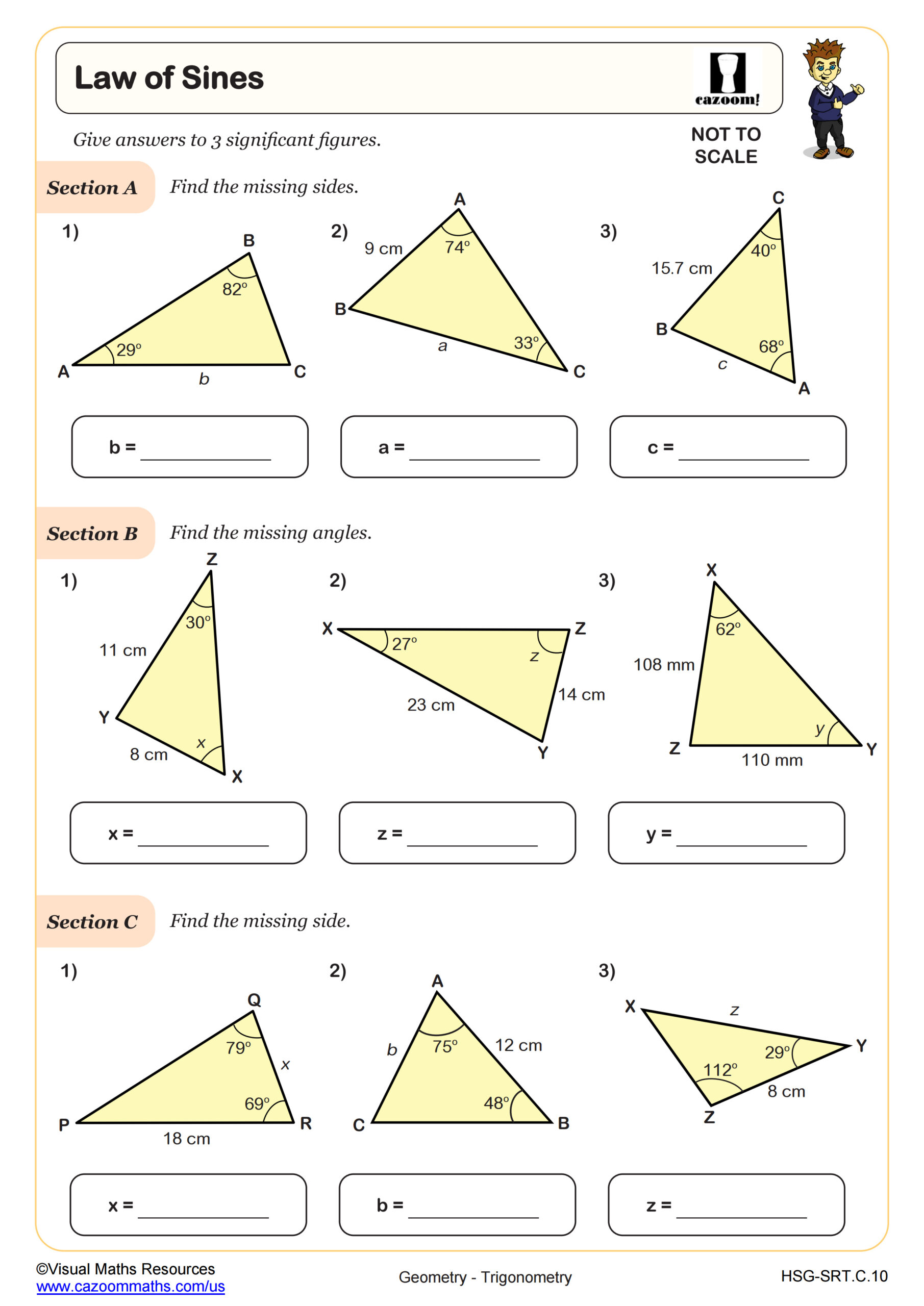
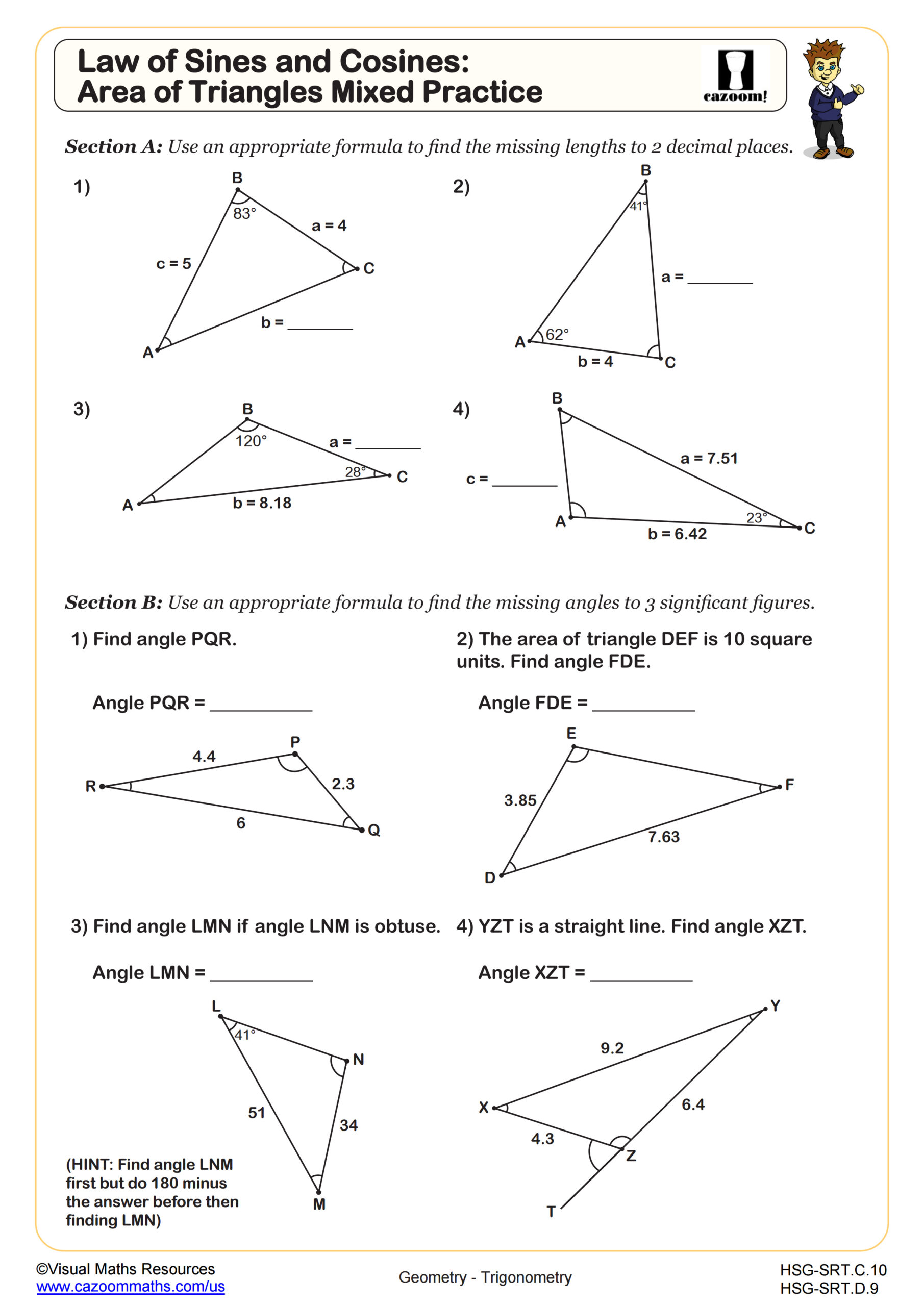
Law of Sines and Cosines; Area of Triangles Mixed Practice
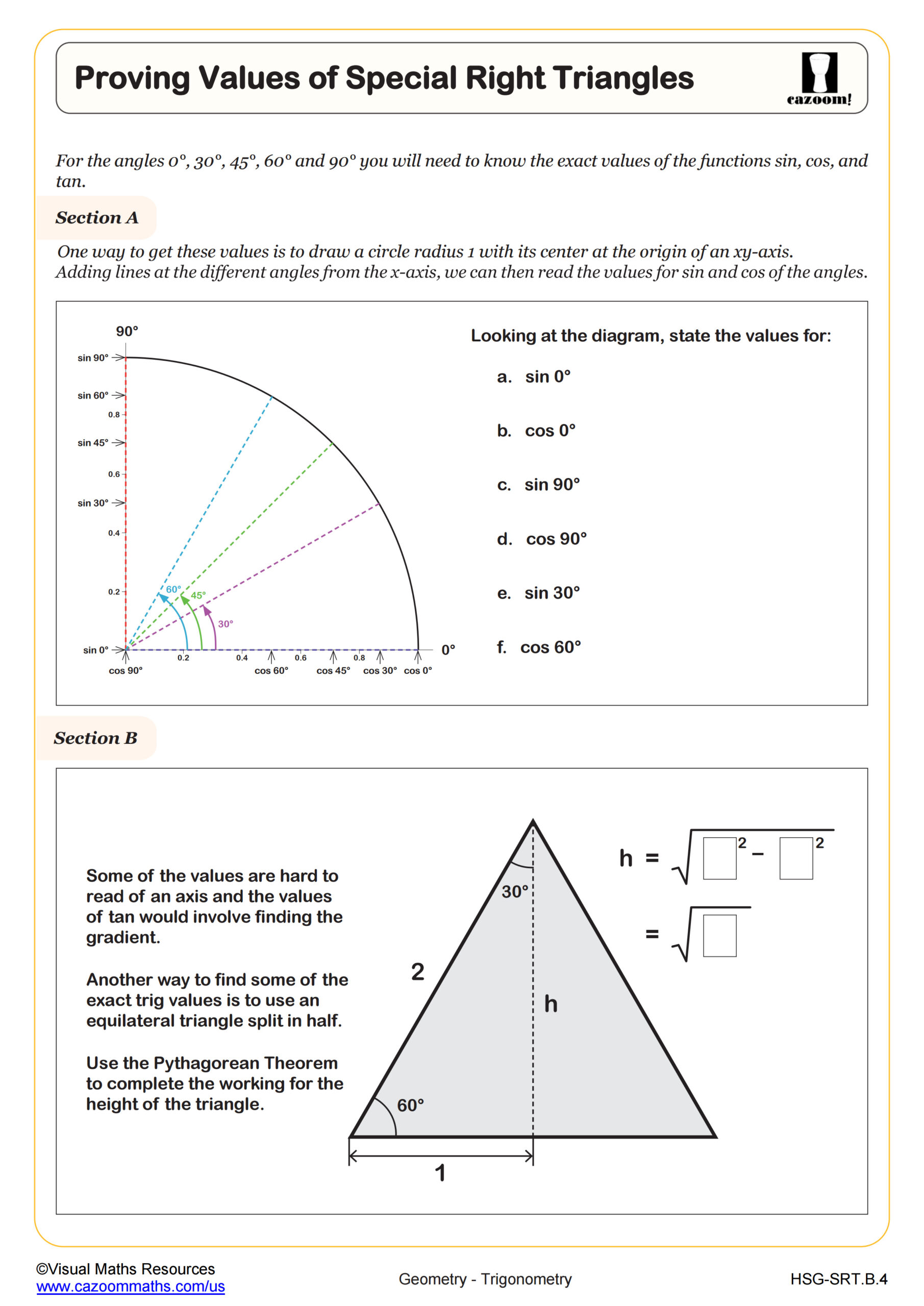
Proving Values of Special Right Triangles
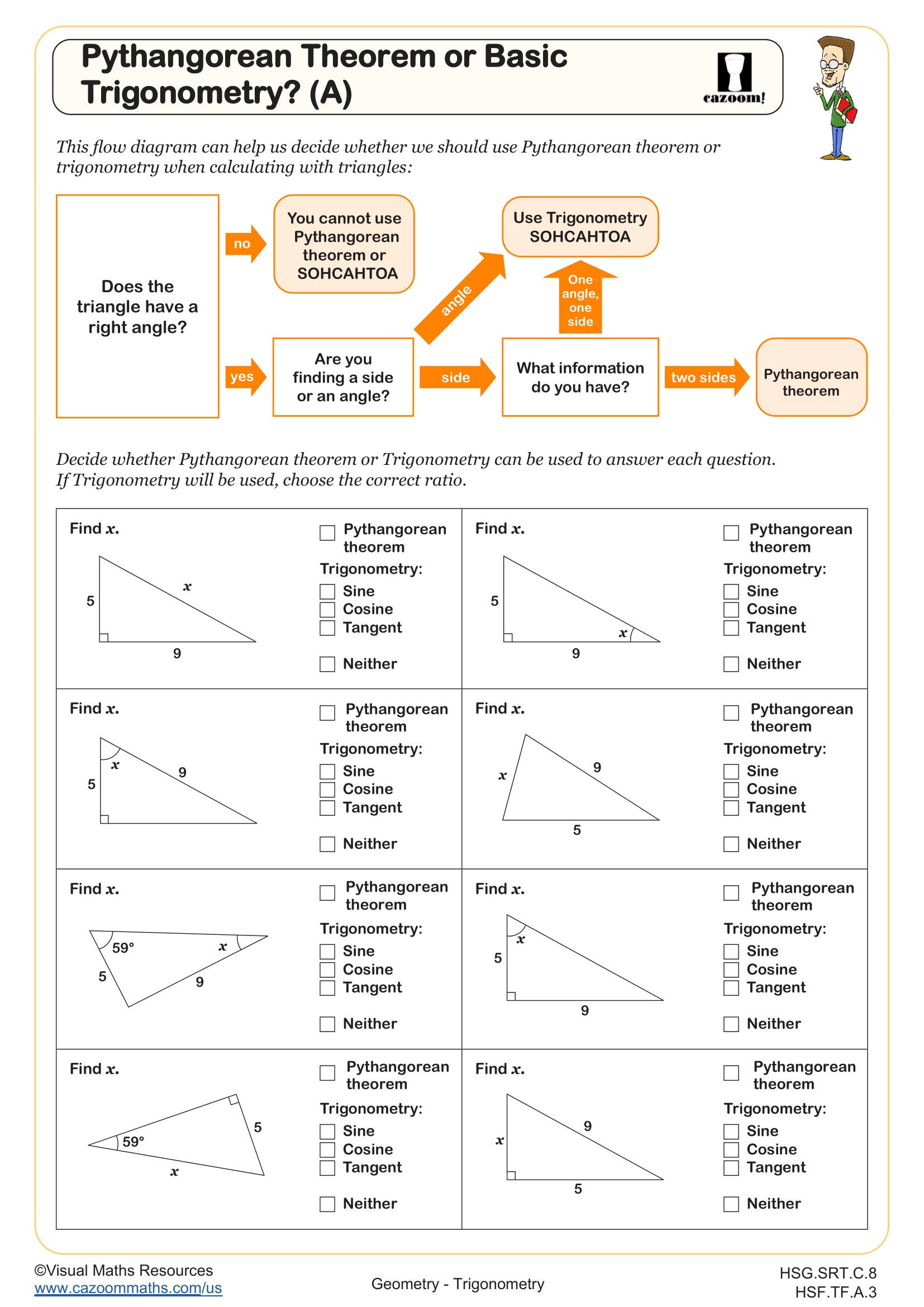
Pythagorean Thereom or Trigonometry? (A)
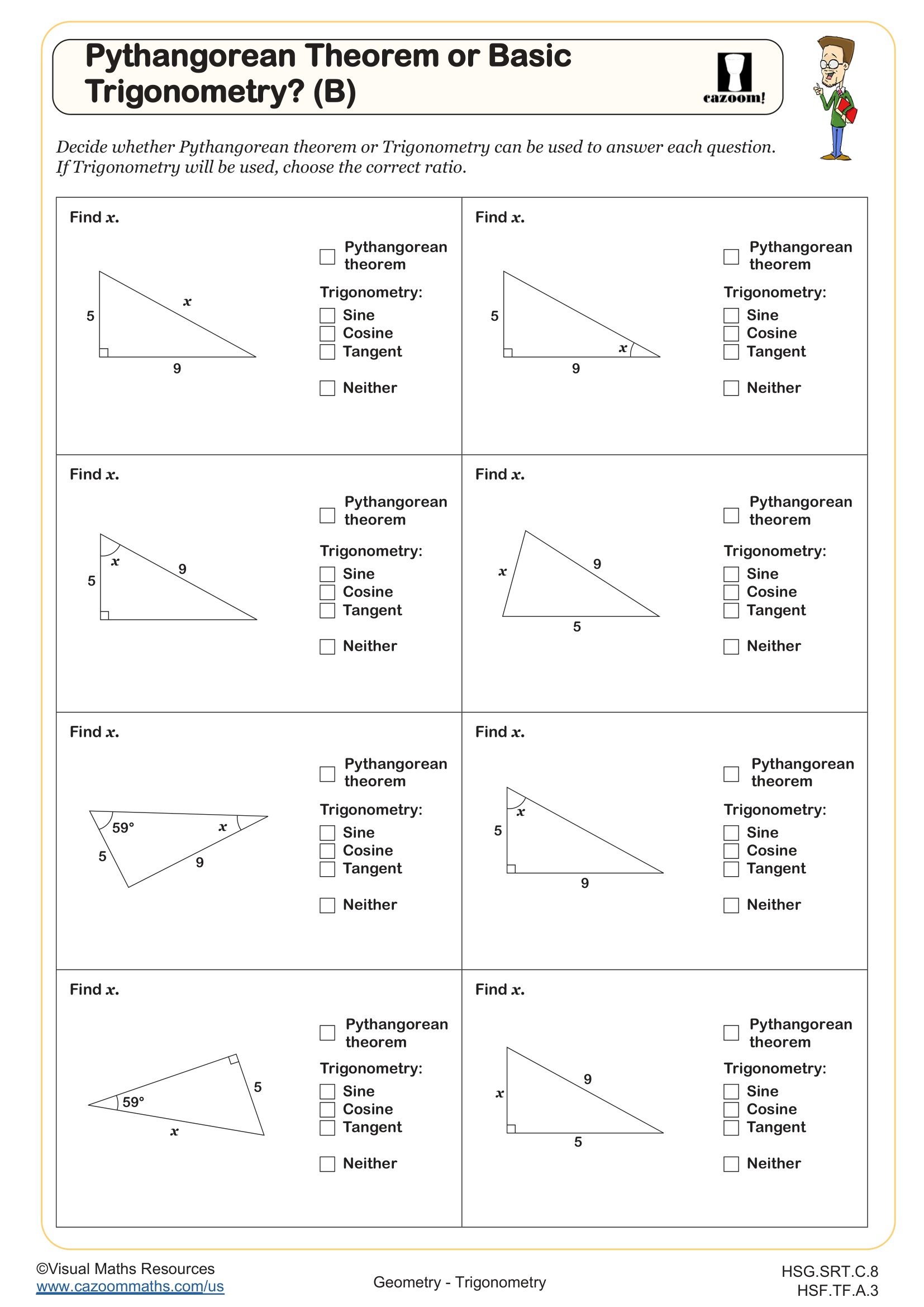
Pythagorean Thereom or Trigonometry? (B)
Solving Trigonometric Equations
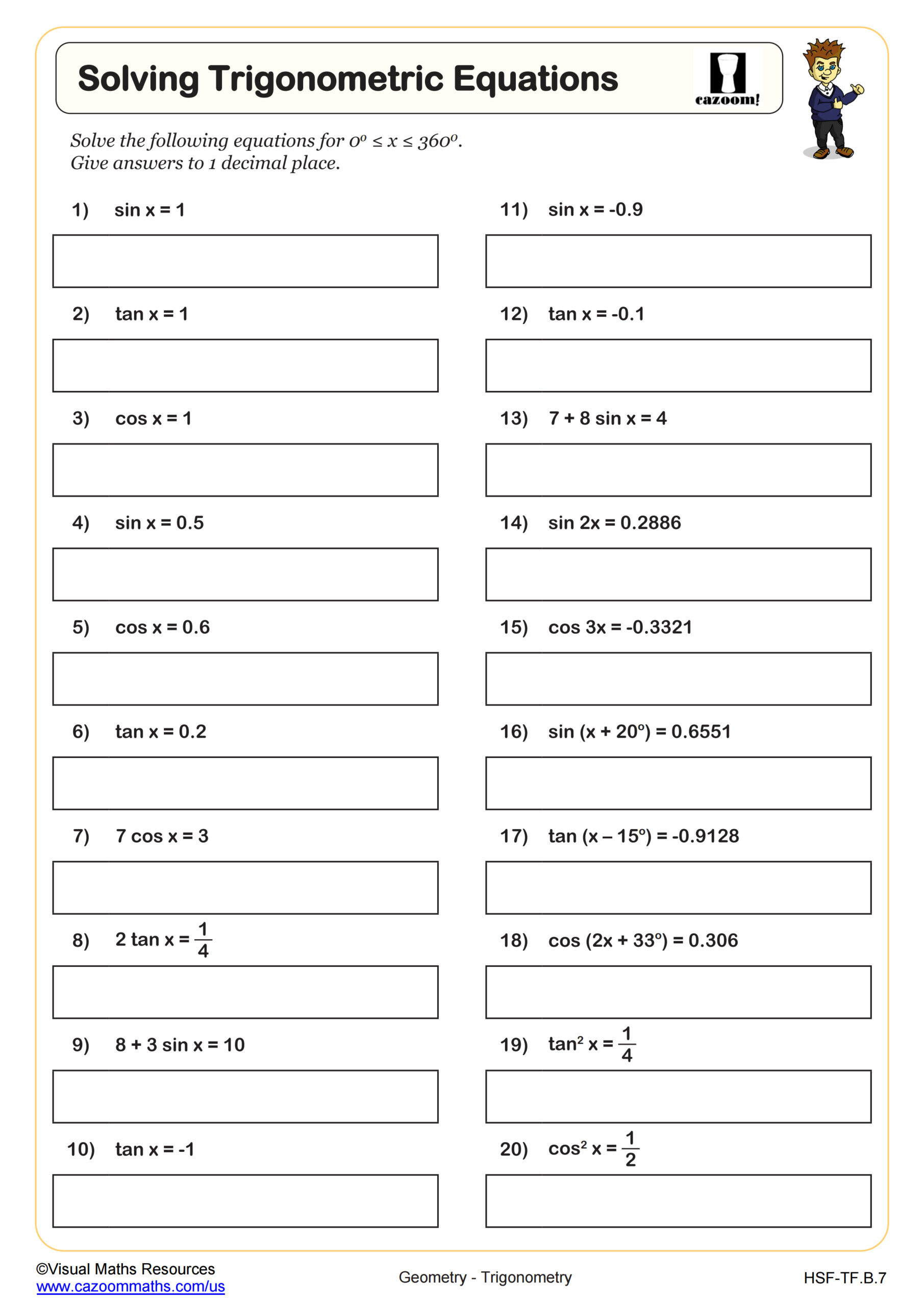
The Cosine Rule - Finding Angles
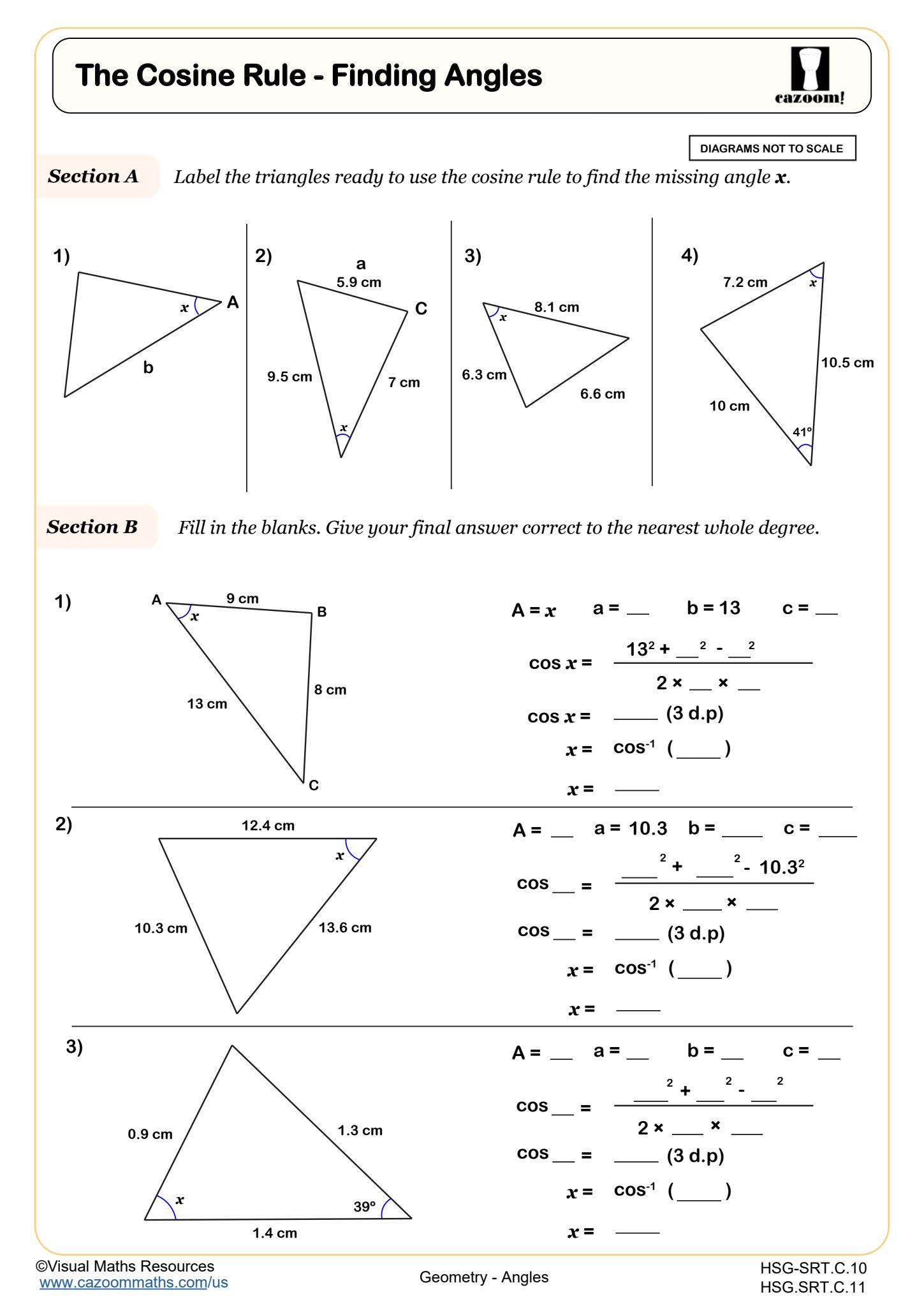
The Cosine Rule - Finding Lengths
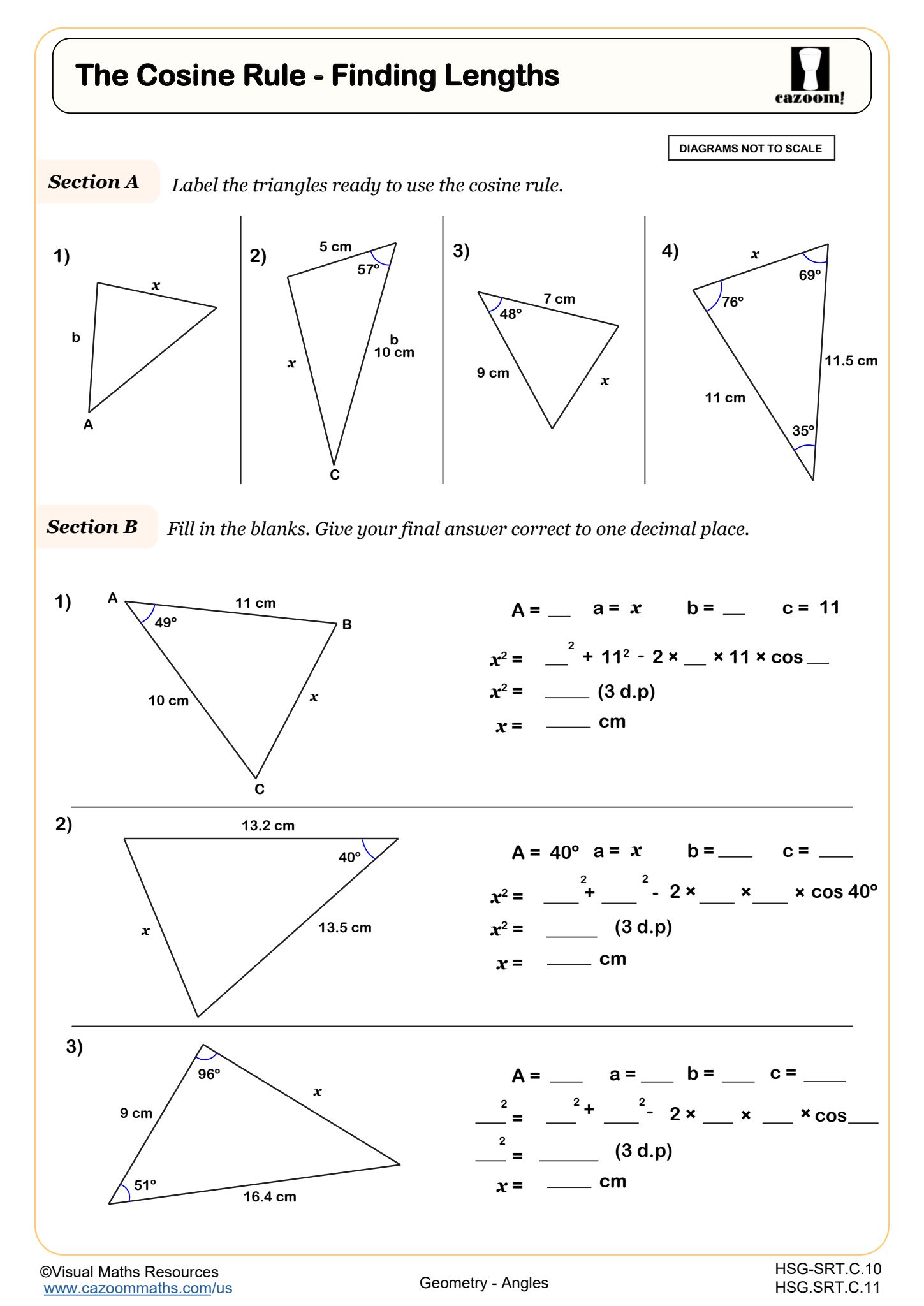
The Sine Rule - Finding Lengths
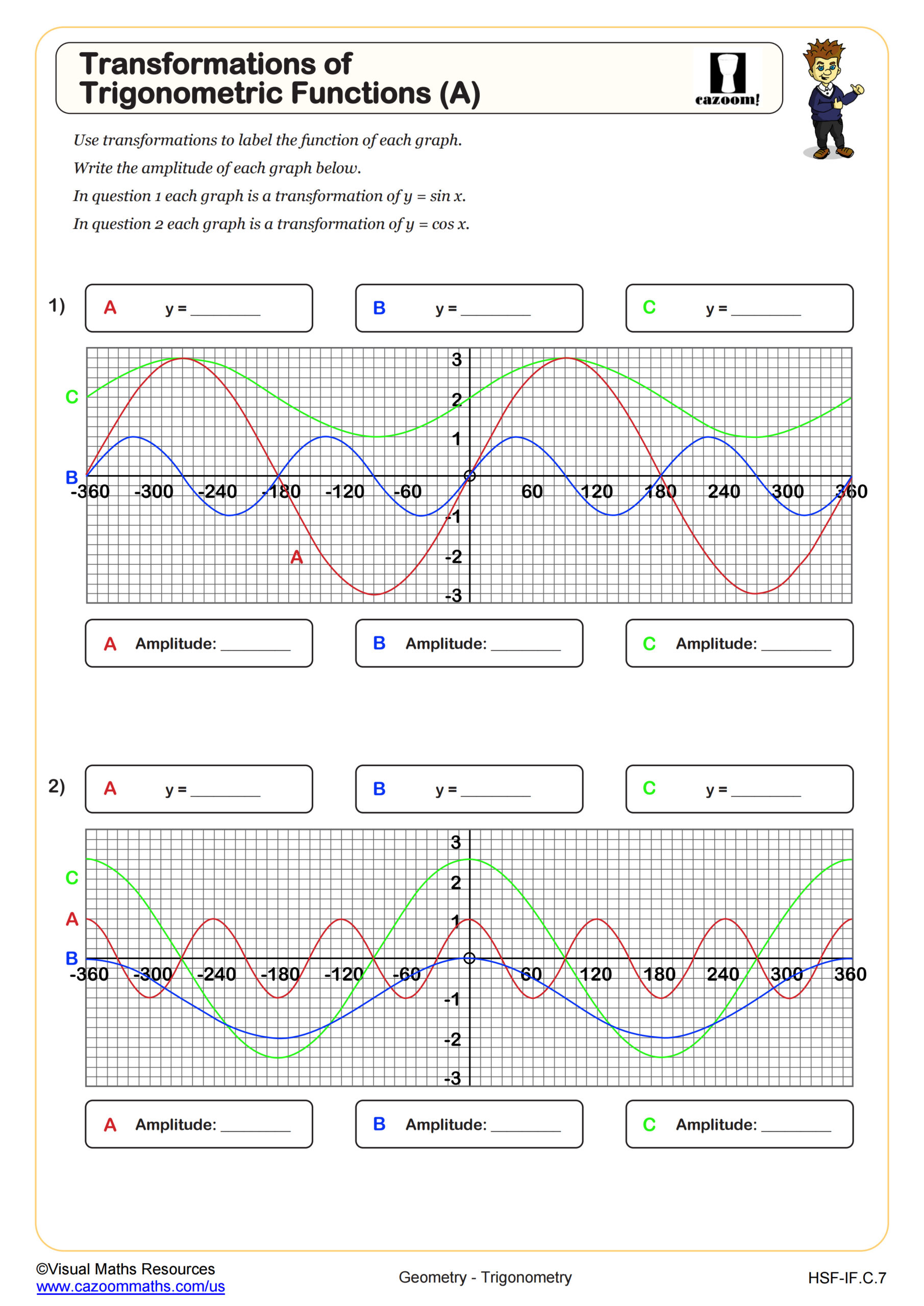
Transformations of Trigonometric Functions (A)
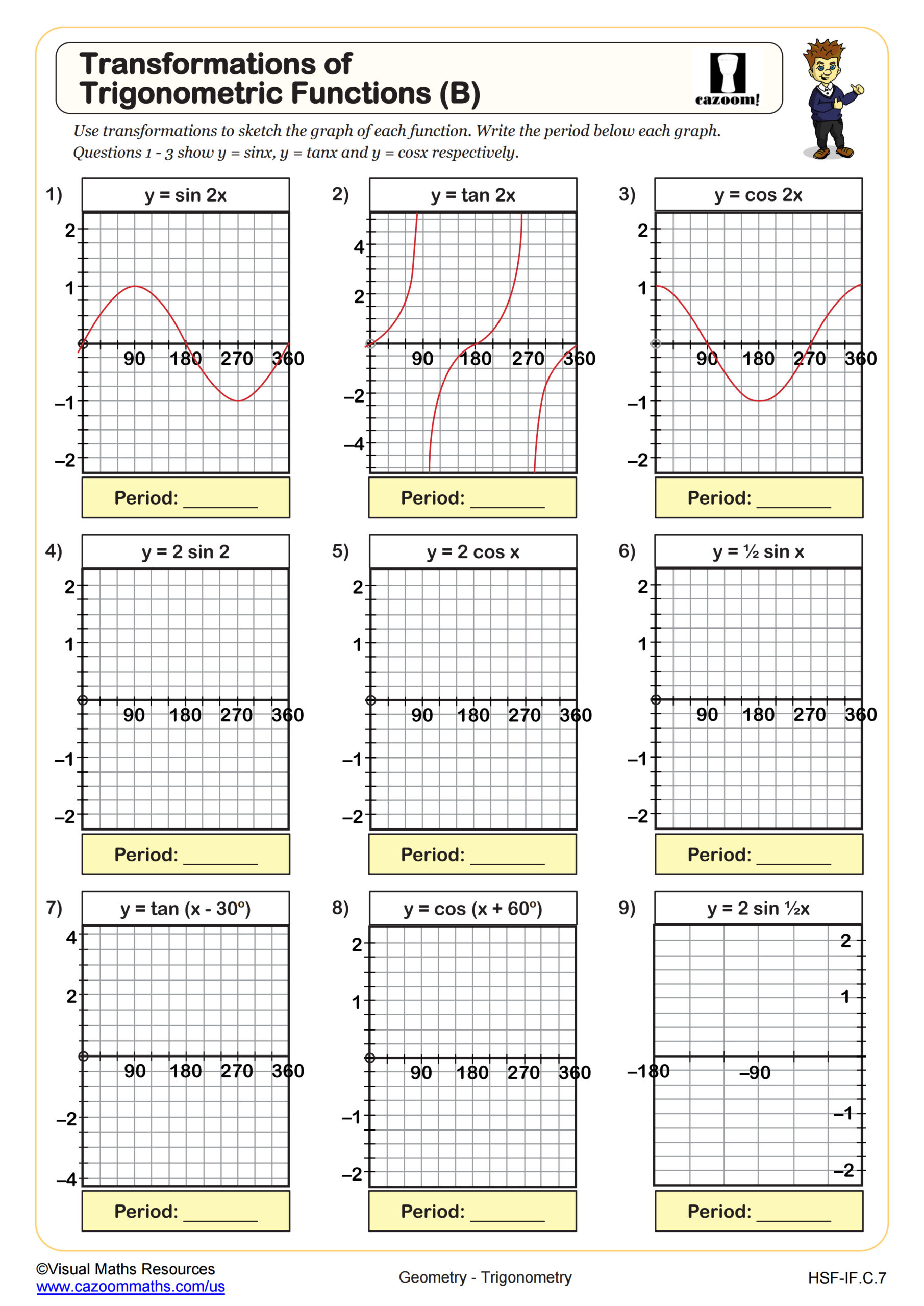
Transformations of Trigonometric Functions (B)
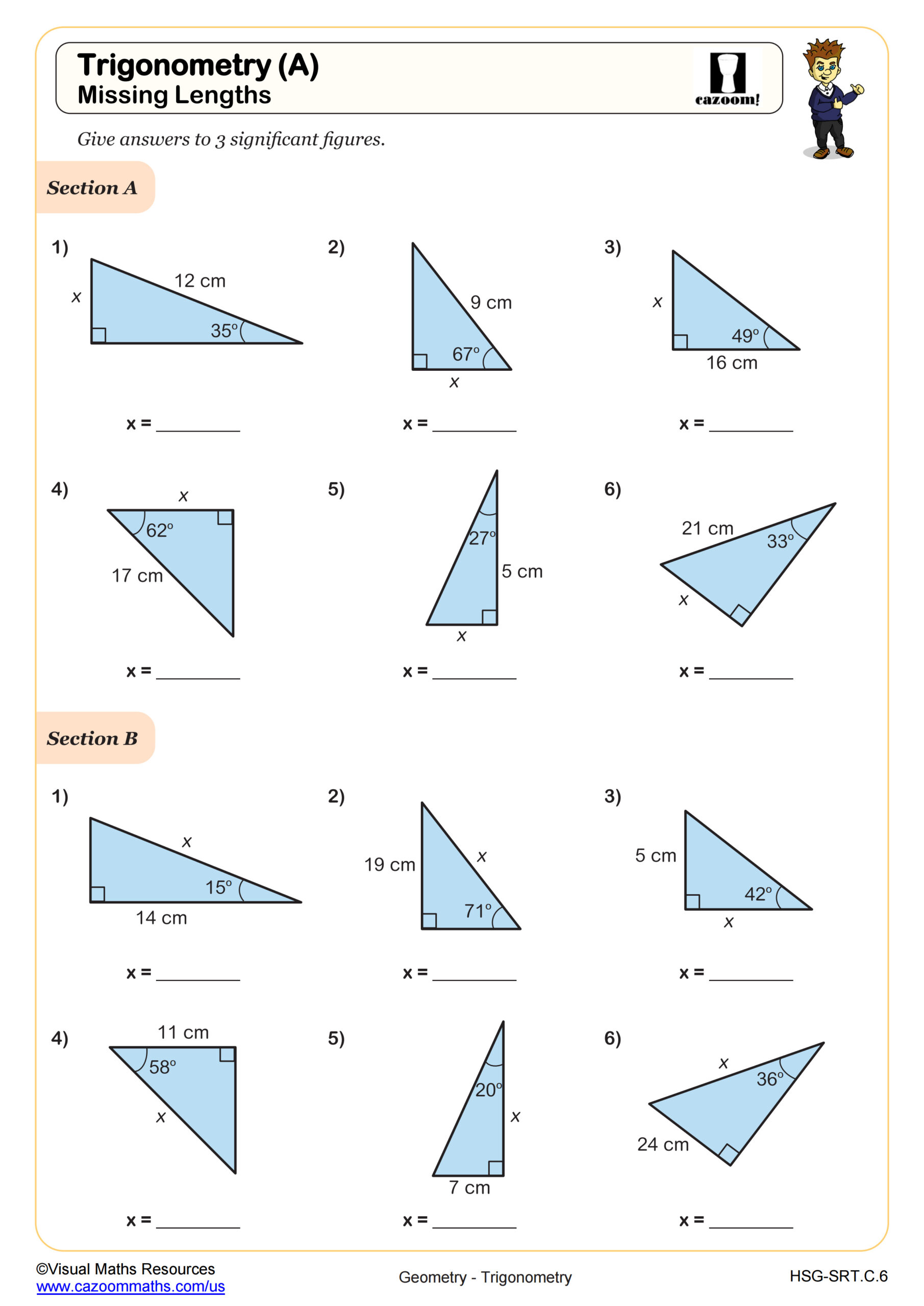
Trigonometic Ratios (SOH CAH TOA): Missing Side Lengths
Trigonometic Ratios (SOH CAH TOA): Word Problems
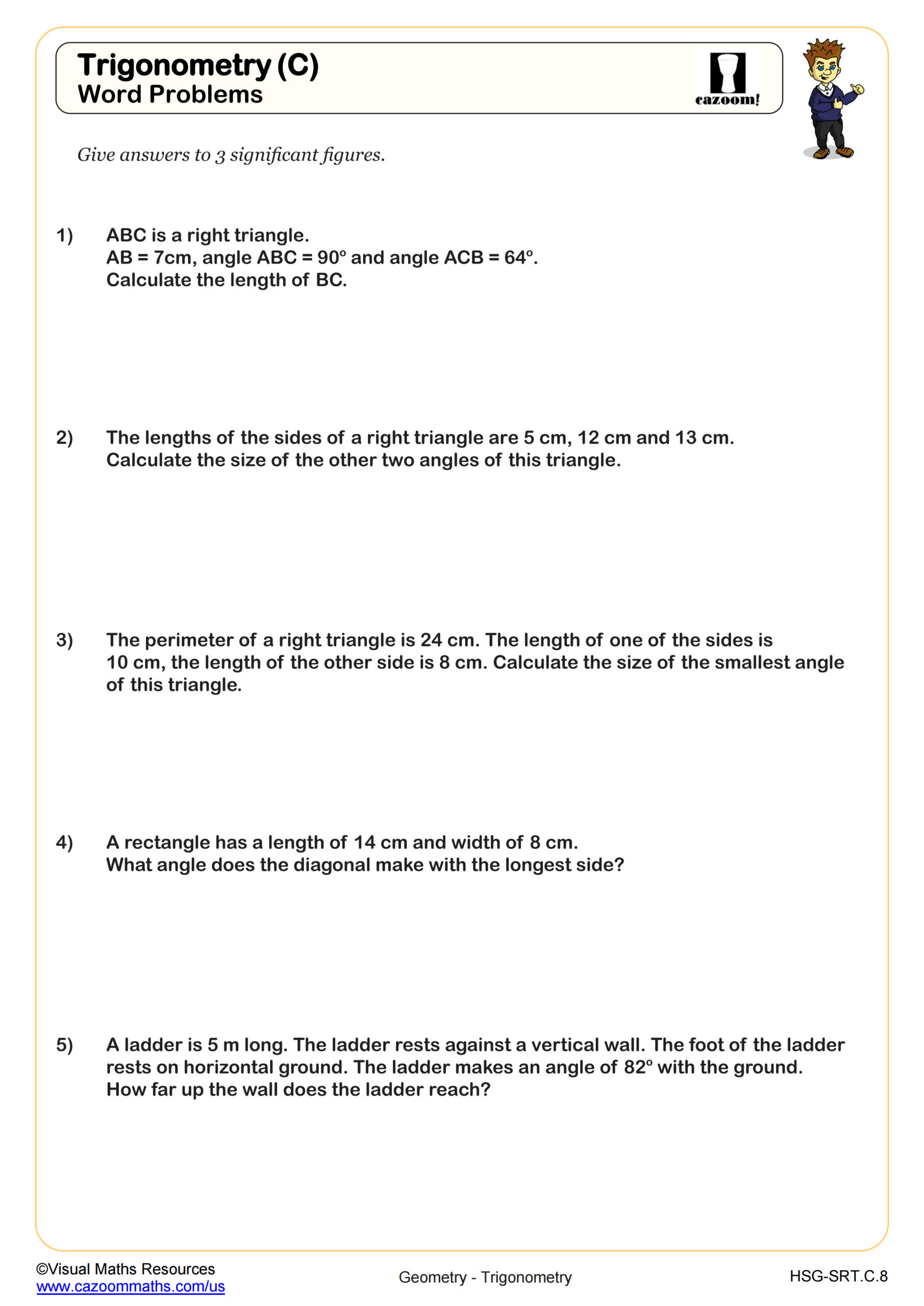
Trigonometic Ratios (SOH CAH TOA): Word Problems (With Clues)
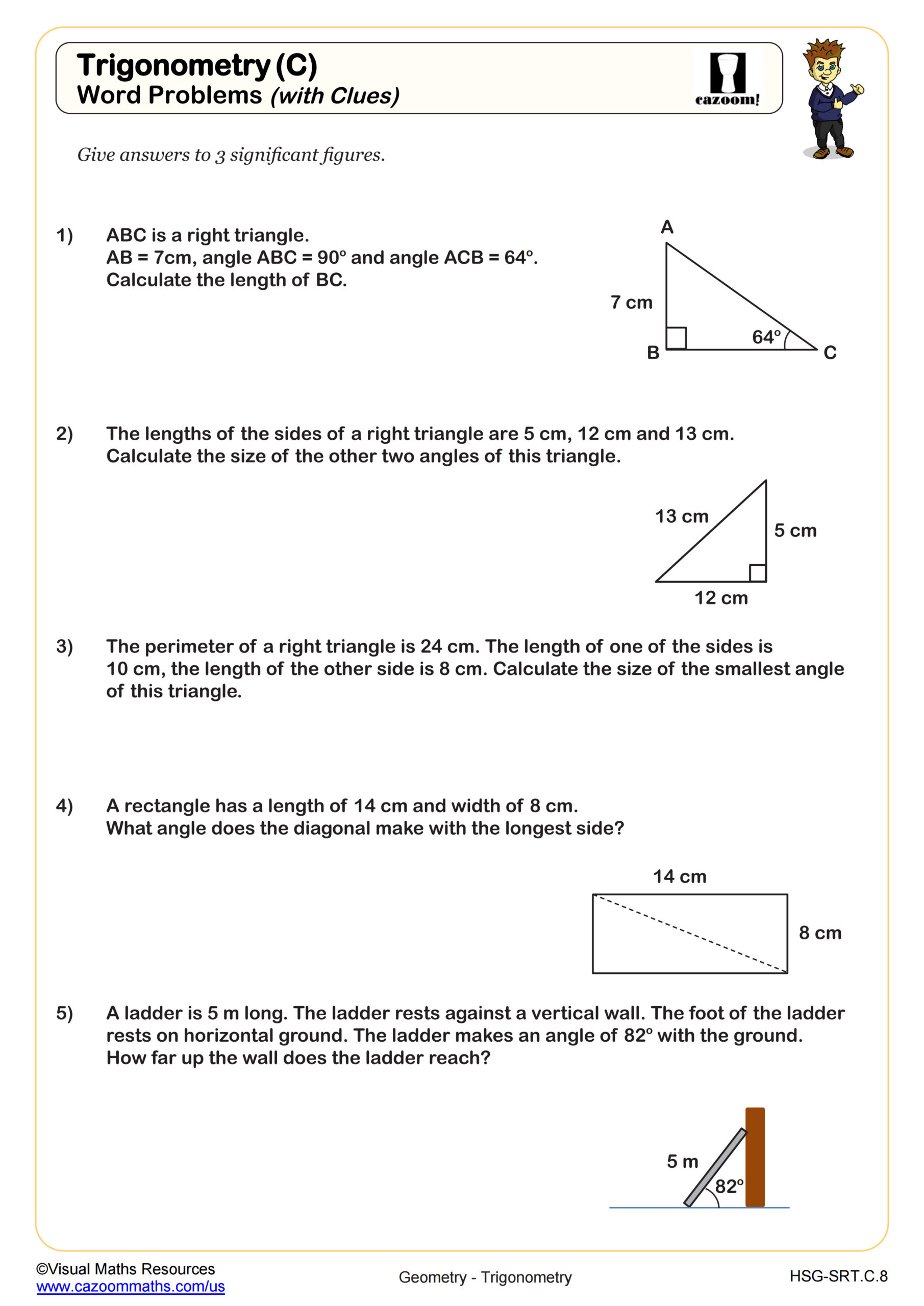
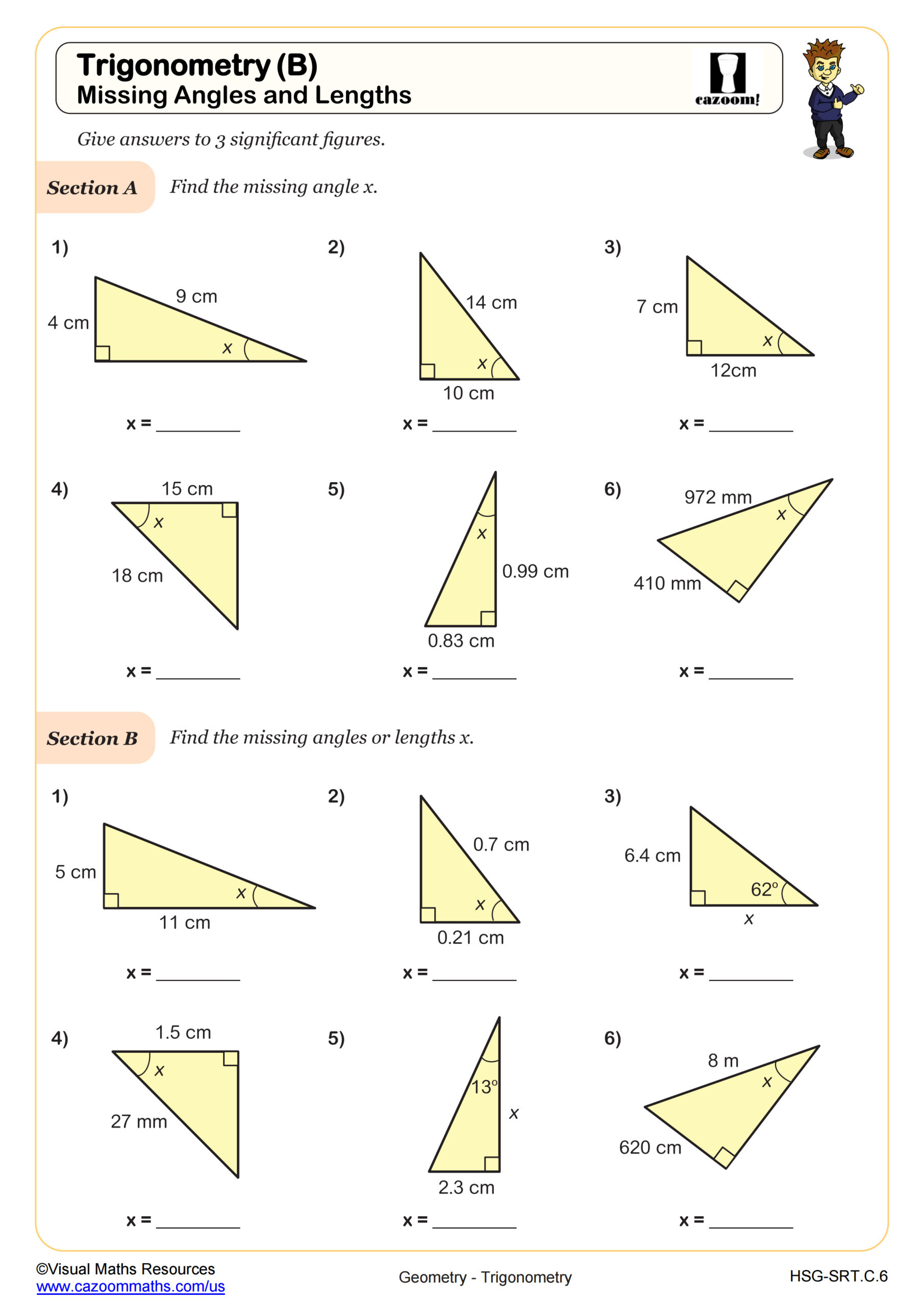
Trigonometric Ratios: Missing Side Lengths and Angle Measures
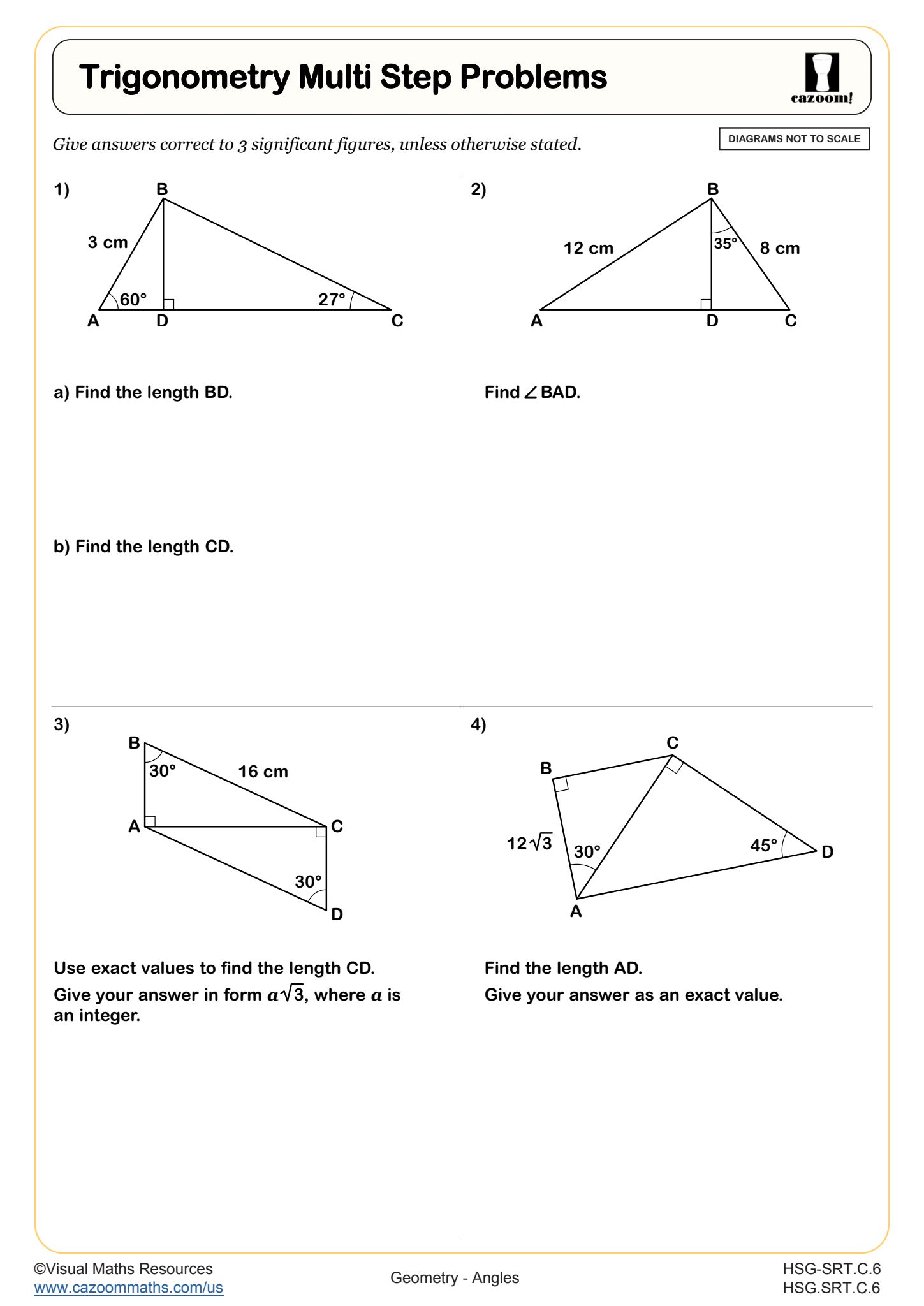
Trigonometry Multi Step Problems
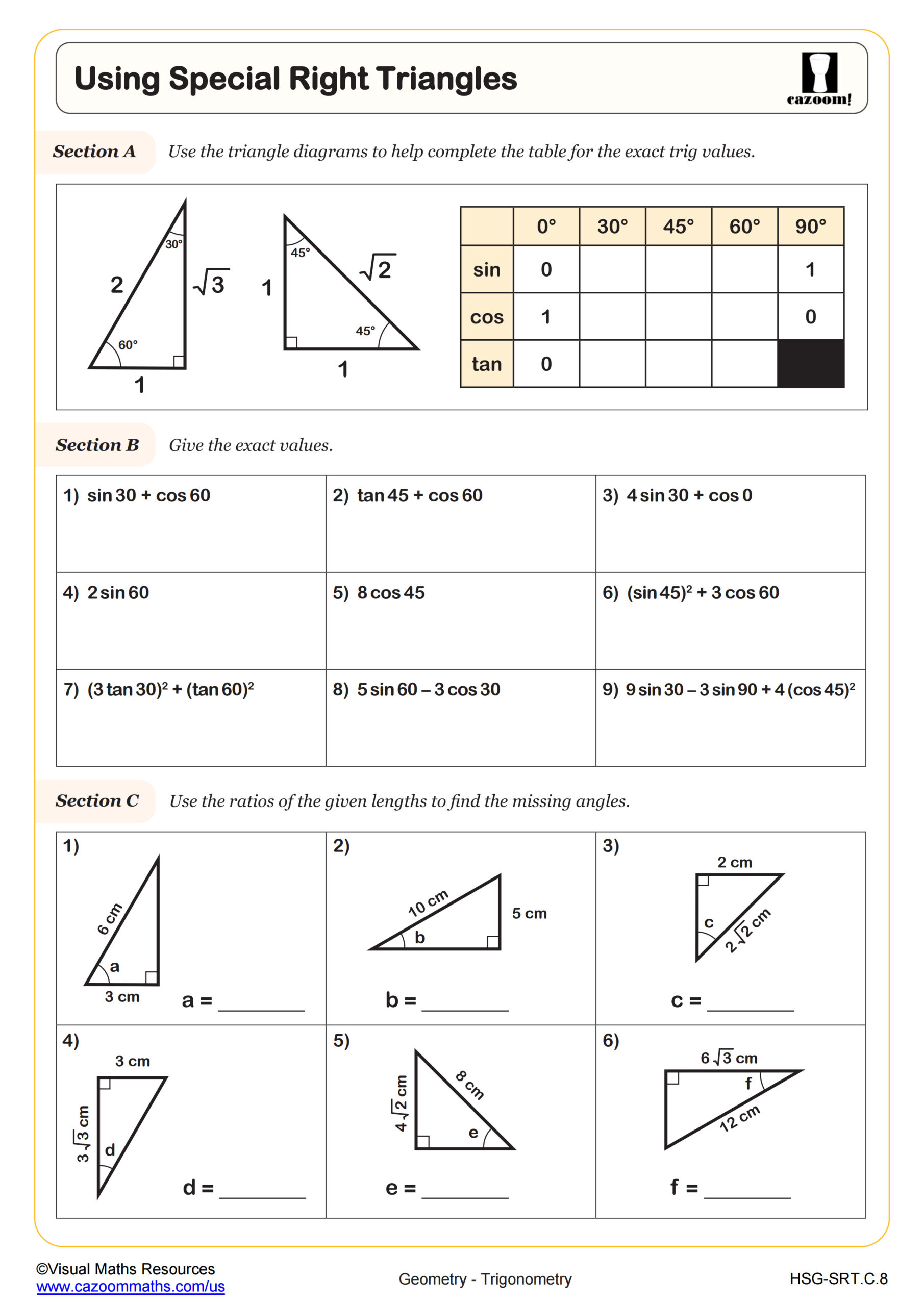
Using Special Right Triangles
All worksheets are created by the team of experienced teachers at Cazoom Math.
How can teachers find reliable trigonometry homework resources for their students?
Many educators struggle to locate trustworthy sources for trigonometry worksheets pdf materials that align with Common Core standards and provide thorough answer keys. Teachers need resources that progress logically from basic trigonometric ratios through inverse functions and real-world applications, ensuring students master each concept before advancing.
Math teachers frequently notice that students perform better on trigonometry homework when problems are scaffolded appropriately, starting with right triangle applications before moving to unit circle work. The most effective worksheets include varied problem types, from computational practice to word problems trigonometry worksheet scenarios, helping students connect abstract concepts to practical situations like determining building heights or calculating distances.
What grade levels should use high school trigonometry worksheets?
Trigonometry concepts typically appear in Algebra 2 courses for grades 10-11, with more advanced topics covered in Precalculus during grades 11-12. Some accelerated students encounter basic trigonometric ratios in Geometry during grade 9, while others may not see thorough trigonometry until grade 12 depending on their math pathway.
Teachers observe that students benefit most when trigonometry builds on a solid foundation of algebraic manipulation and geometric reasoning. High school trigonometry pdf resources work best when they acknowledge these prerequisite skills, providing review opportunities within the trigonometry context. Students who struggle with fraction operations or graphing often need additional support before tackling trigonometric function transformations.
How do word problems help students understand trigonometric applications?
Word problems trigonometry worksheet exercises connect abstract trigonometric concepts to real-world scenarios, helping students understand why these mathematical tools matter beyond the classroom. Students learn to identify when trigonometry applies to situations involving indirect measurement, periodic phenomena, and angular relationships in fields like engineering, astronomy, and navigation.
Classroom experience shows that students initially struggle to translate word problem language into trigonometric setups, particularly distinguishing between angles of elevation and depression. A trig applications worksheet that includes diagrams and step-by-step problem-solving strategies helps students develop the critical thinking skills needed to analyze complex scenarios and select appropriate trigonometric relationships for solving real-world problems.
What makes trigonometry worksheets effective for student learning?
Effective trigonometry worksheets balance computational practice with conceptual understanding, providing problems that require students to apply multiple trigonometric concepts within single scenarios. Teachers find that worksheets work best when they include clear examples, varied difficulty levels, and problems that connect to STEM applications students can visualize and understand.
Many teachers notice improved student performance when trigonometry worksheets include self-checking features and detailed answer explanations. Students benefit from immediate feedback on their problem-solving approaches, especially when working with inverse trigonometric functions or solving trigonometric equations. The most successful worksheet implementations combine individual practice with collaborative problem-solving sessions where students can discuss different solution strategies.