High School Vectors Worksheets
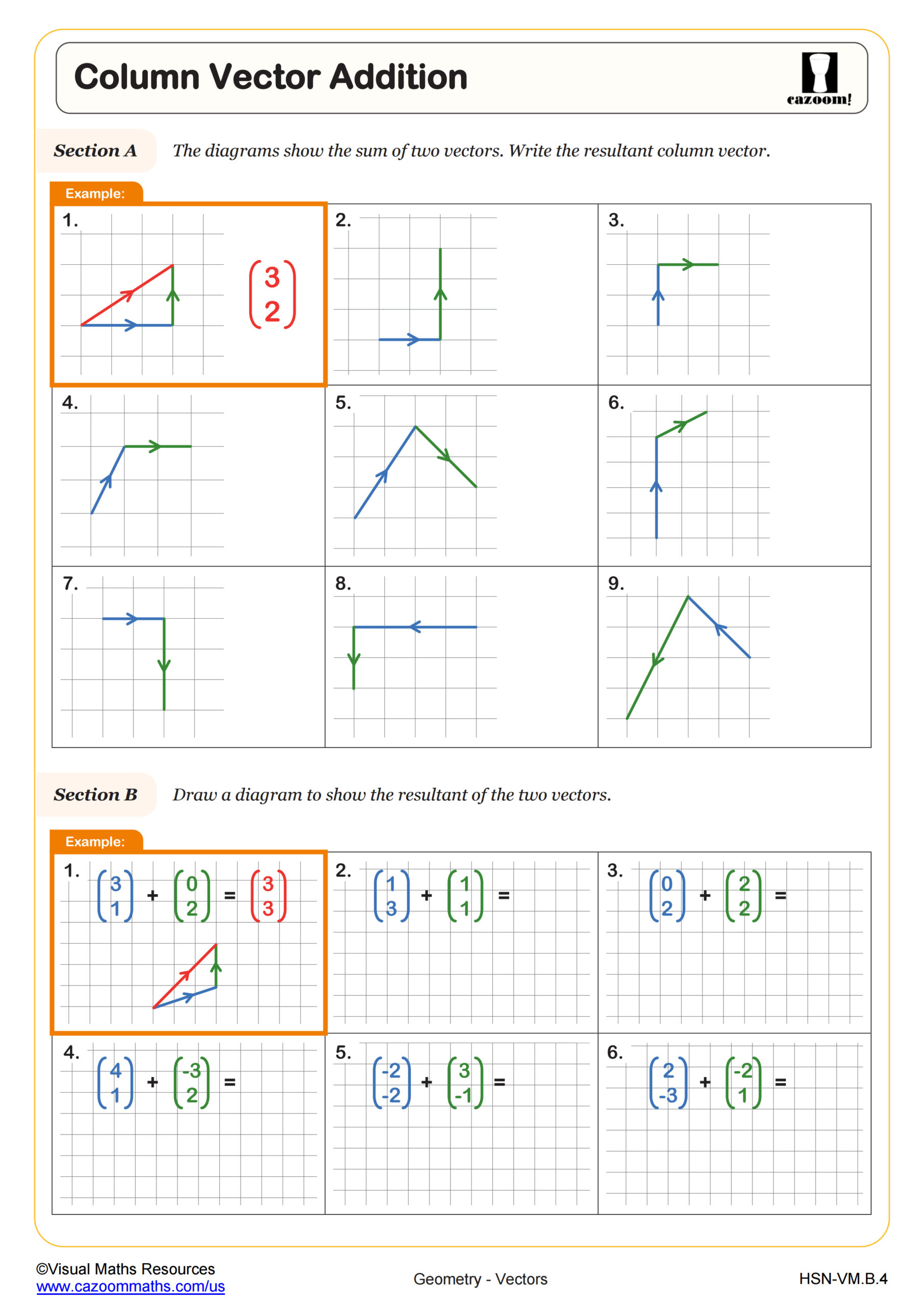
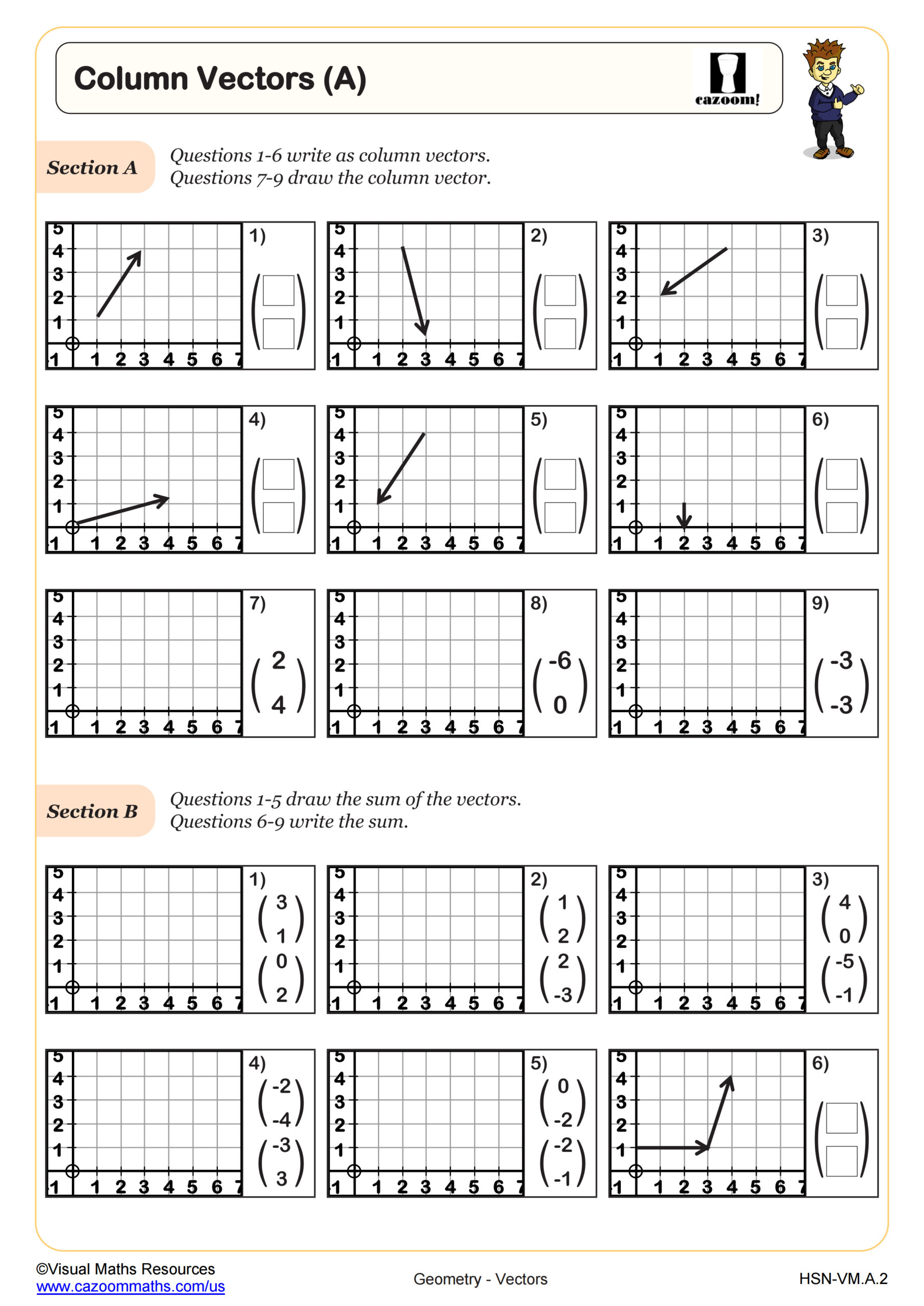
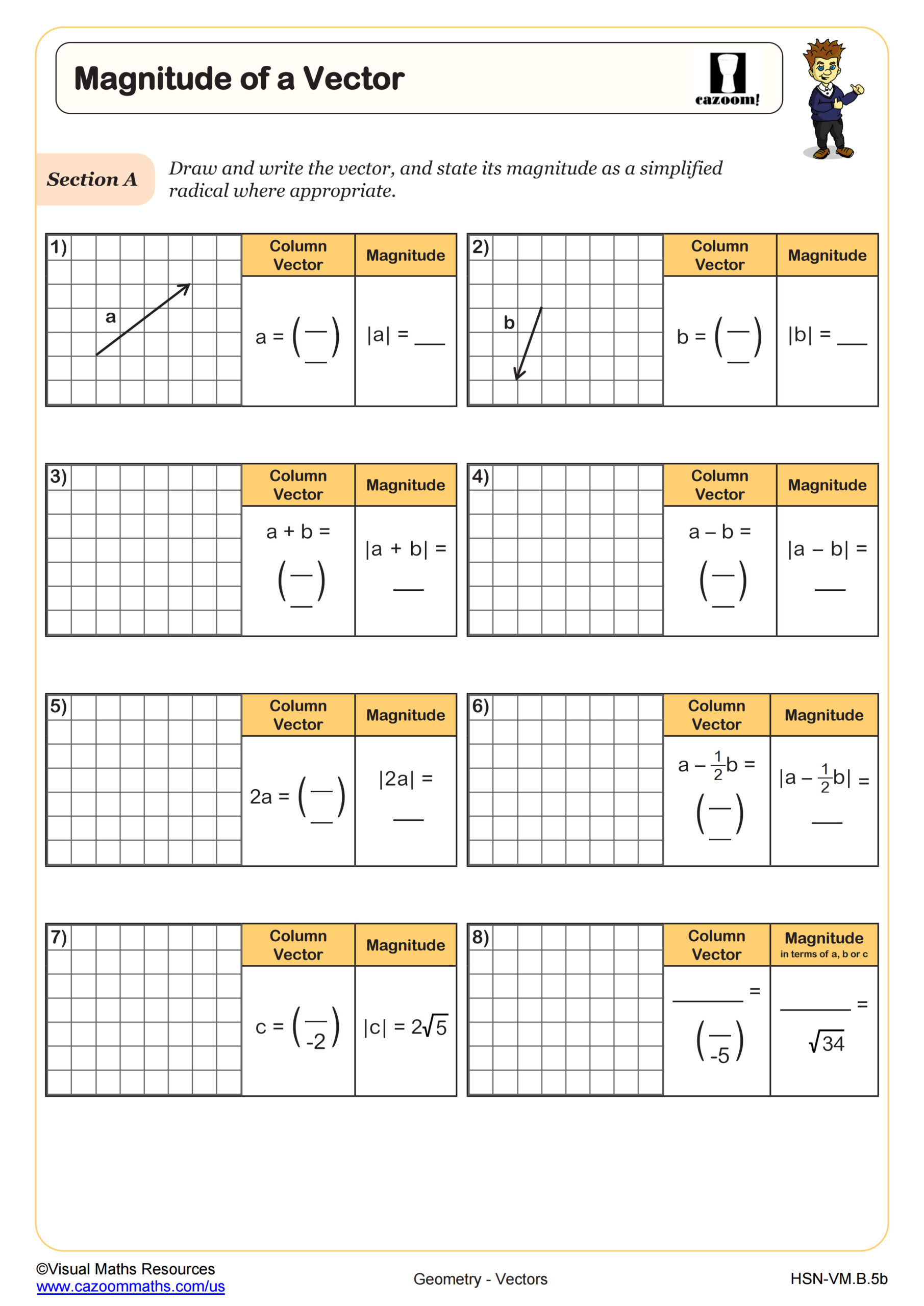
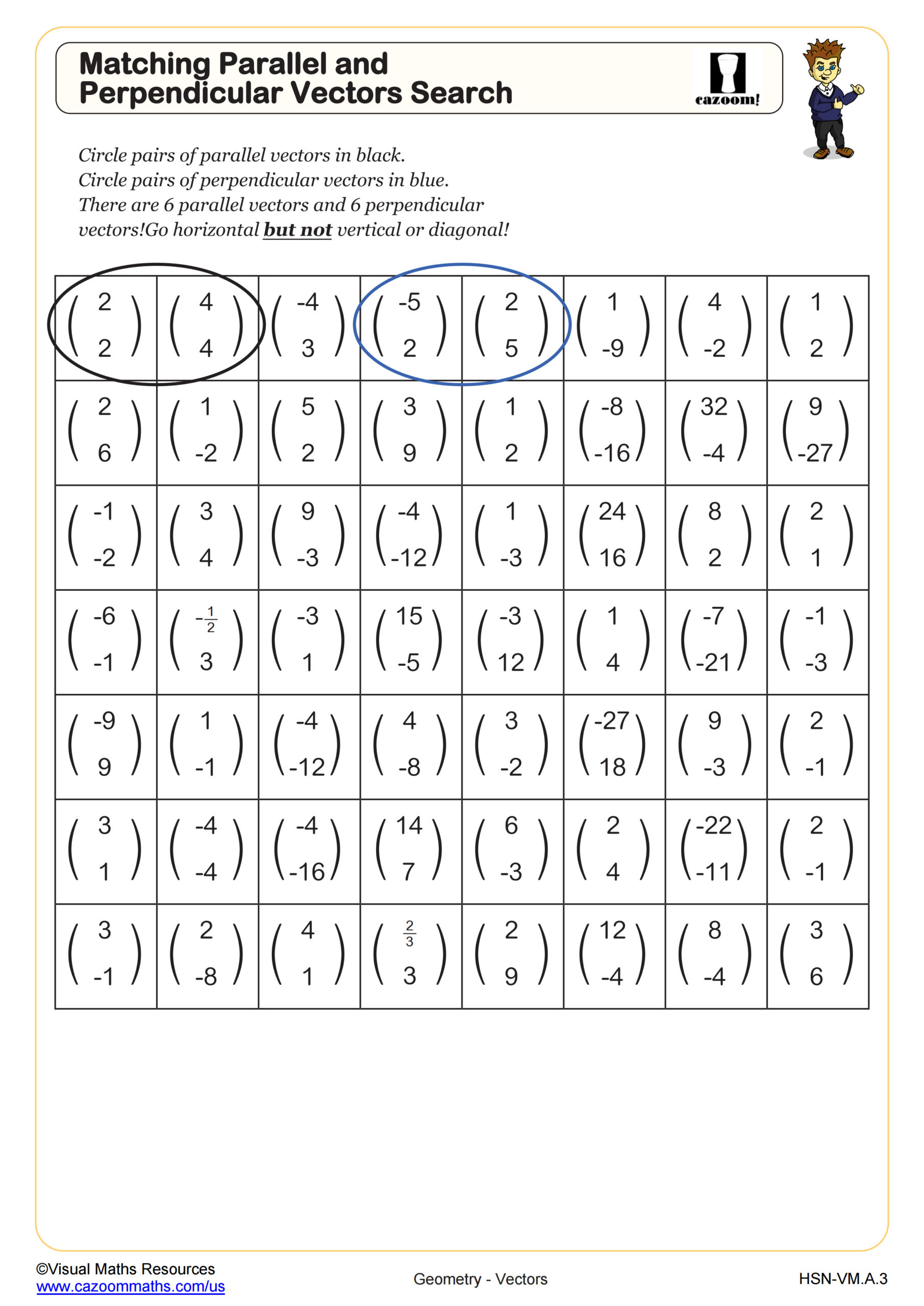
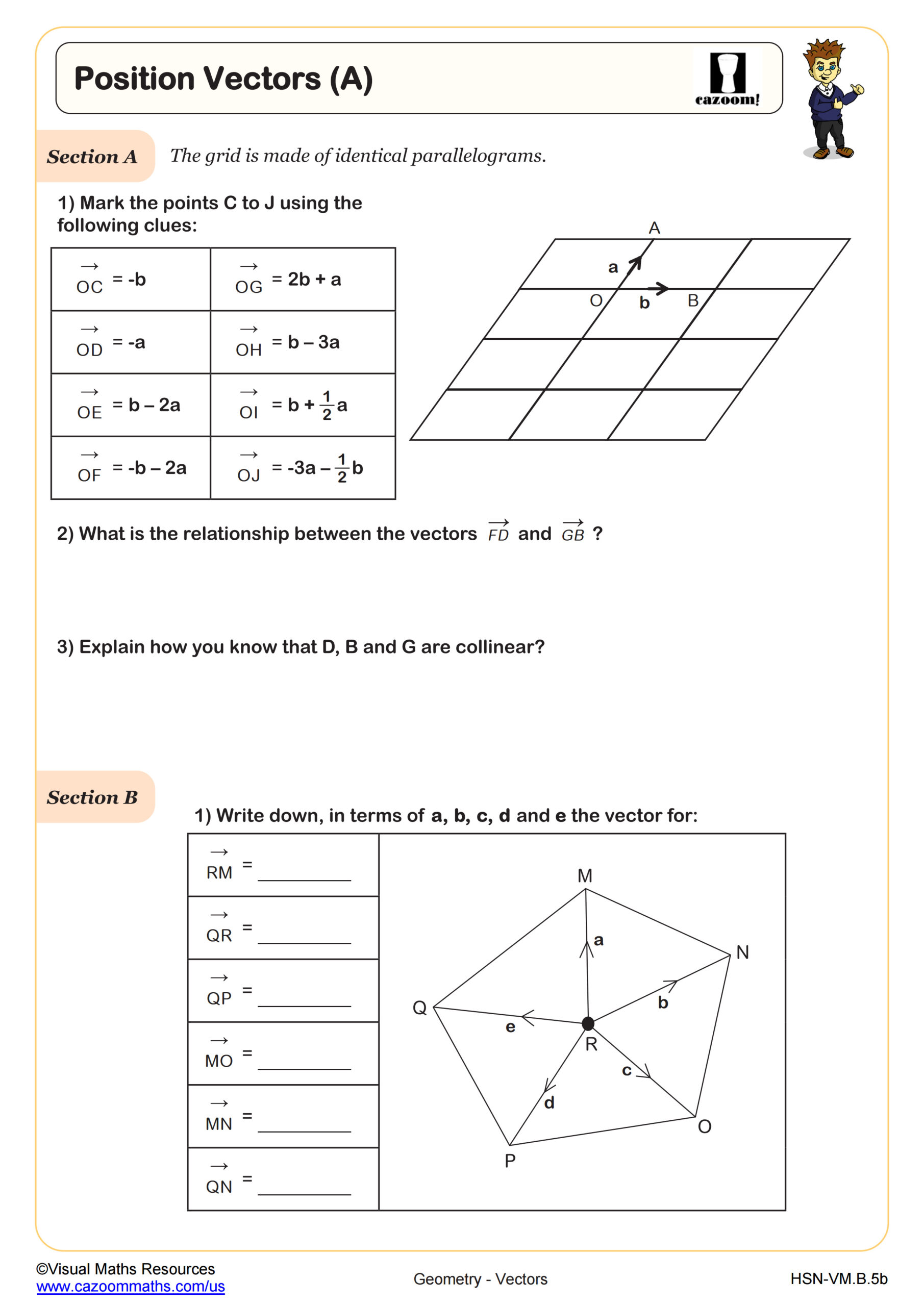
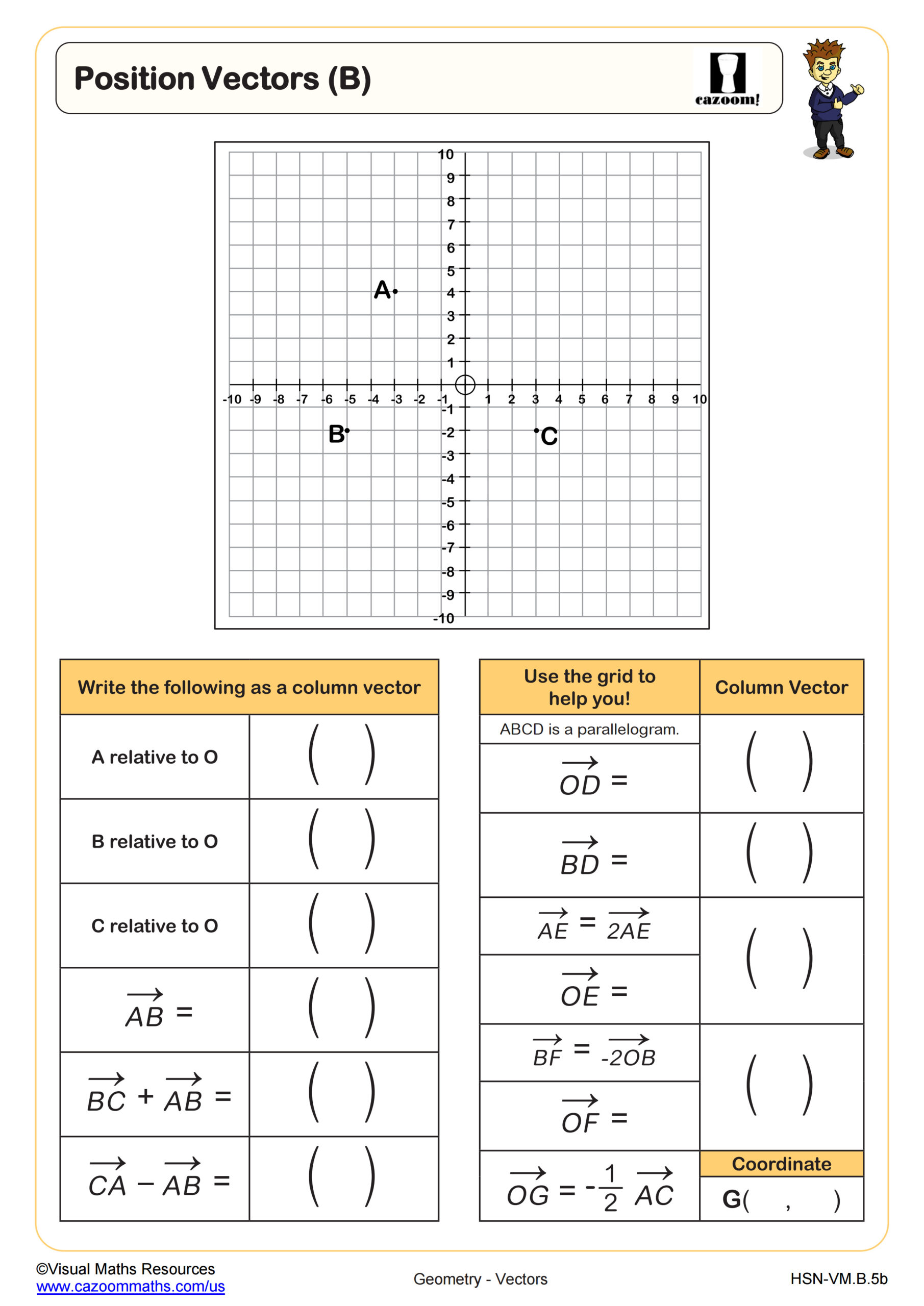
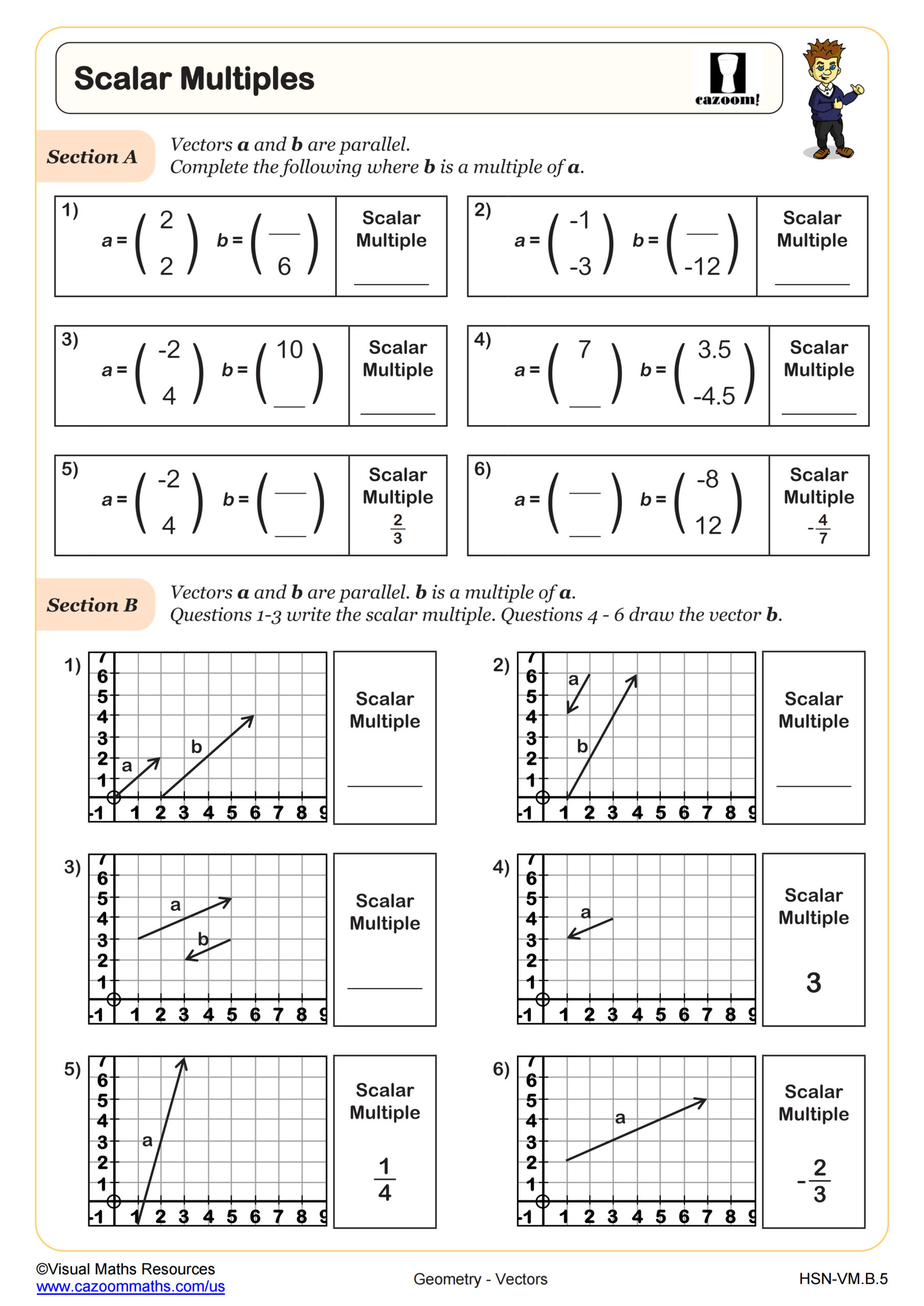
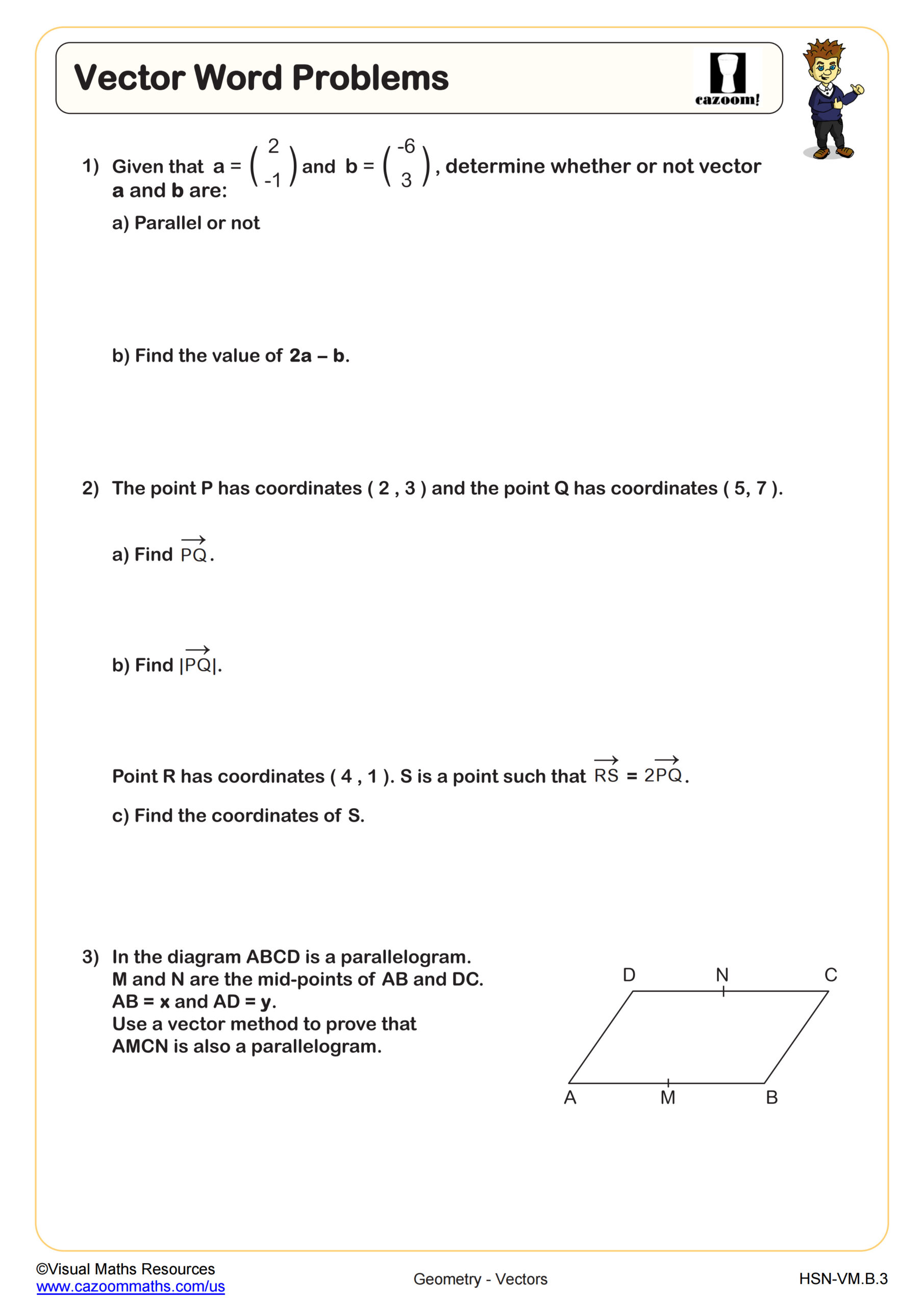
All worksheets are created by the team of experienced teachers at Cazoom Math.
What makes an effective vector operations worksheet for high school students?
An effective vector operations worksheet should progress systematically through vector addition, subtraction, scalar multiplication, and magnitude calculations while incorporating both component and geometric methods. The Common Core State Standards emphasize mathematical modeling and reasoning, making vector operations important preparation for calculus and physics courses.
Teachers notice that students benefit most from worksheets that clearly distinguish between position vectors and displacement vectors, as this conceptual understanding prevents common errors in physics applications. The most successful worksheet designs include visual representations alongside algebraic problems, helping students connect abstract calculations to concrete geometric interpretations.
Which grade levels should use vector worksheets in their curriculum?
Vector operations typically appear in Algebra 2, Pre-Calculus, and Physics courses, generally serving students in grades 10-12. Some advanced Geometry classes introduce basic vector concepts, while AP Calculus and AP Physics courses require mastery of vector operations for success with more complex applications.
Teachers report that students who encounter vectors earlier in their mathematical journey show greater confidence when these concepts reappear in calculus and physics contexts. The vectors worksheet materials should align with each course's specific emphasis, whether focusing on pure mathematical operations or real-world applications in engineering and computer graphics.
How should students approach vector addition problems on the Cartesian plane?
Vector addition on the Cartesian plane requires students to add corresponding components separately, combining x-components with x-components and y-components with y-components. This algebraic method proves more reliable than geometric approaches when working with precise calculations and non-standard angles.
Mathematics teachers consistently observe that students make fewer errors when they organize their work systematically, writing out component forms clearly before performing operations. Students who rush through the component addition often mix up coordinates or forget to include proper units in physics applications, leading to incorrect final answers even when their method understanding is solid.
What strategies help students master vector operations worksheet problems effectively?
Students should begin each problem by identifying the given information and required operations, then choose between geometric and component methods based on the problem context. Regular practice with both approaches builds flexibility and prevents over-reliance on memorized procedures without conceptual understanding.
Teachers find that students benefit from checking their answers using alternative methods when possible, such as verifying vector addition results through geometric construction. The answer keys included with these materials allow for immediate self-assessment, but students should attempt problems independently before consulting solutions to build authentic problem-solving confidence.