Integrated Math 1 Linear Functions Worksheets
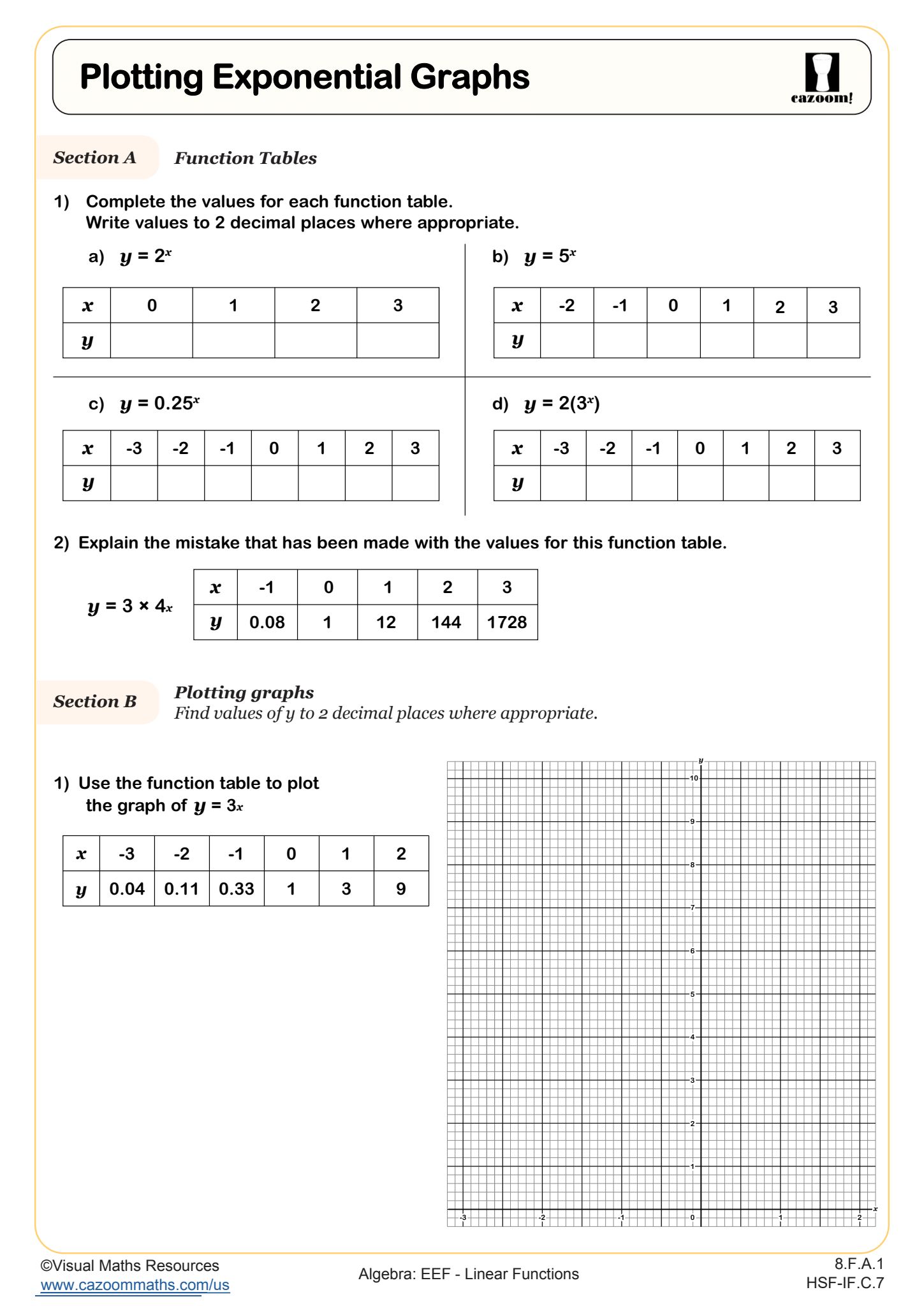
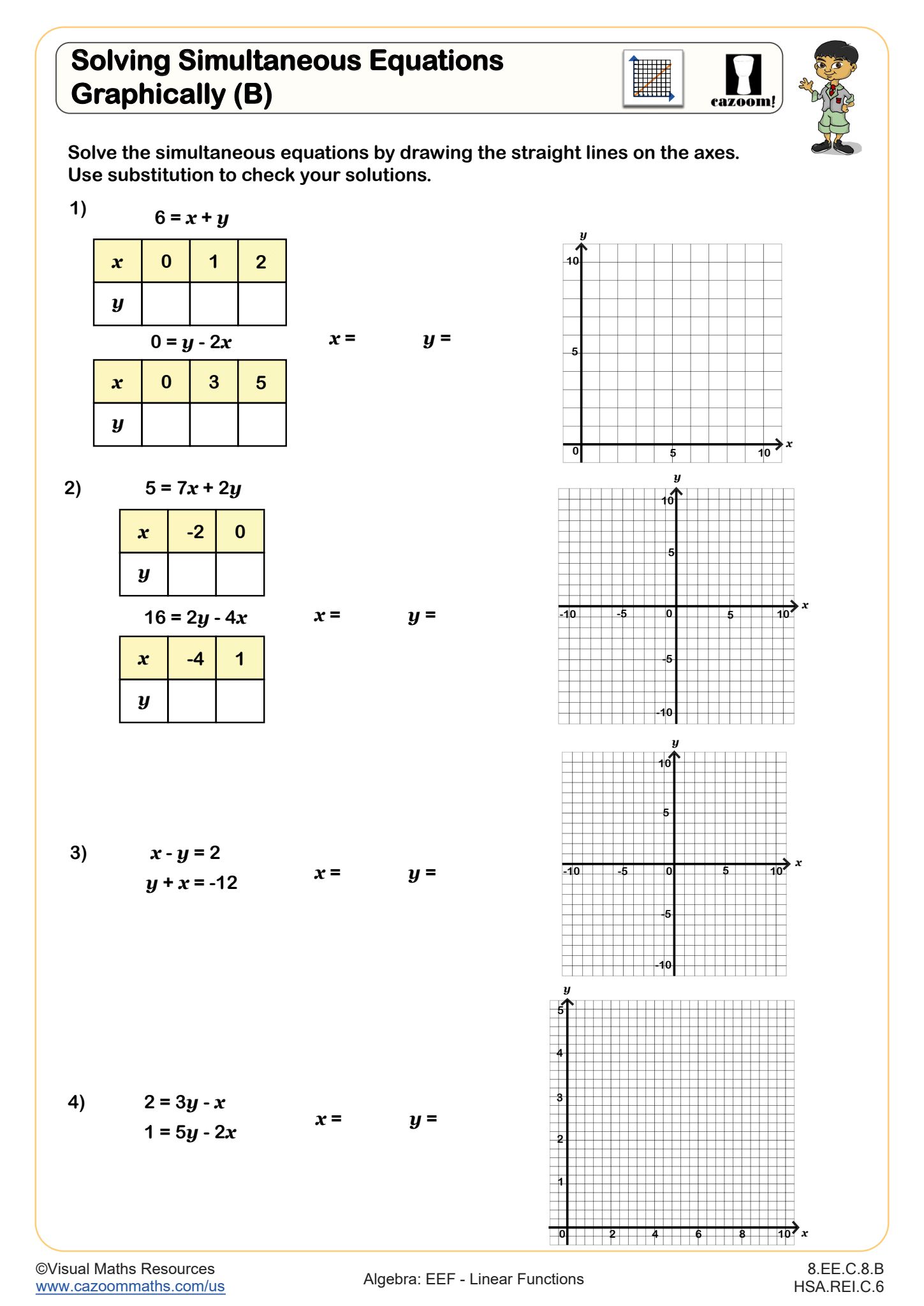
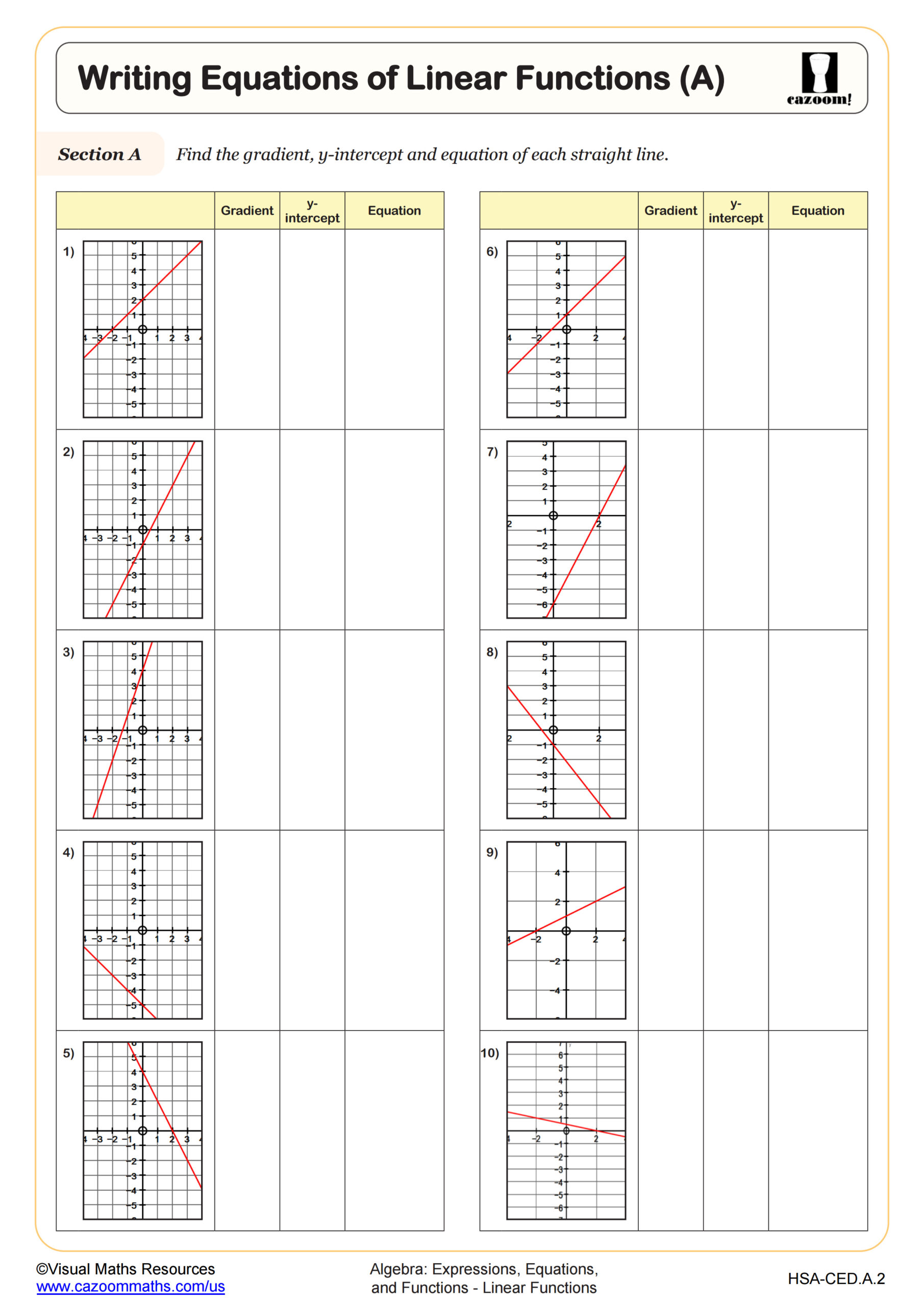
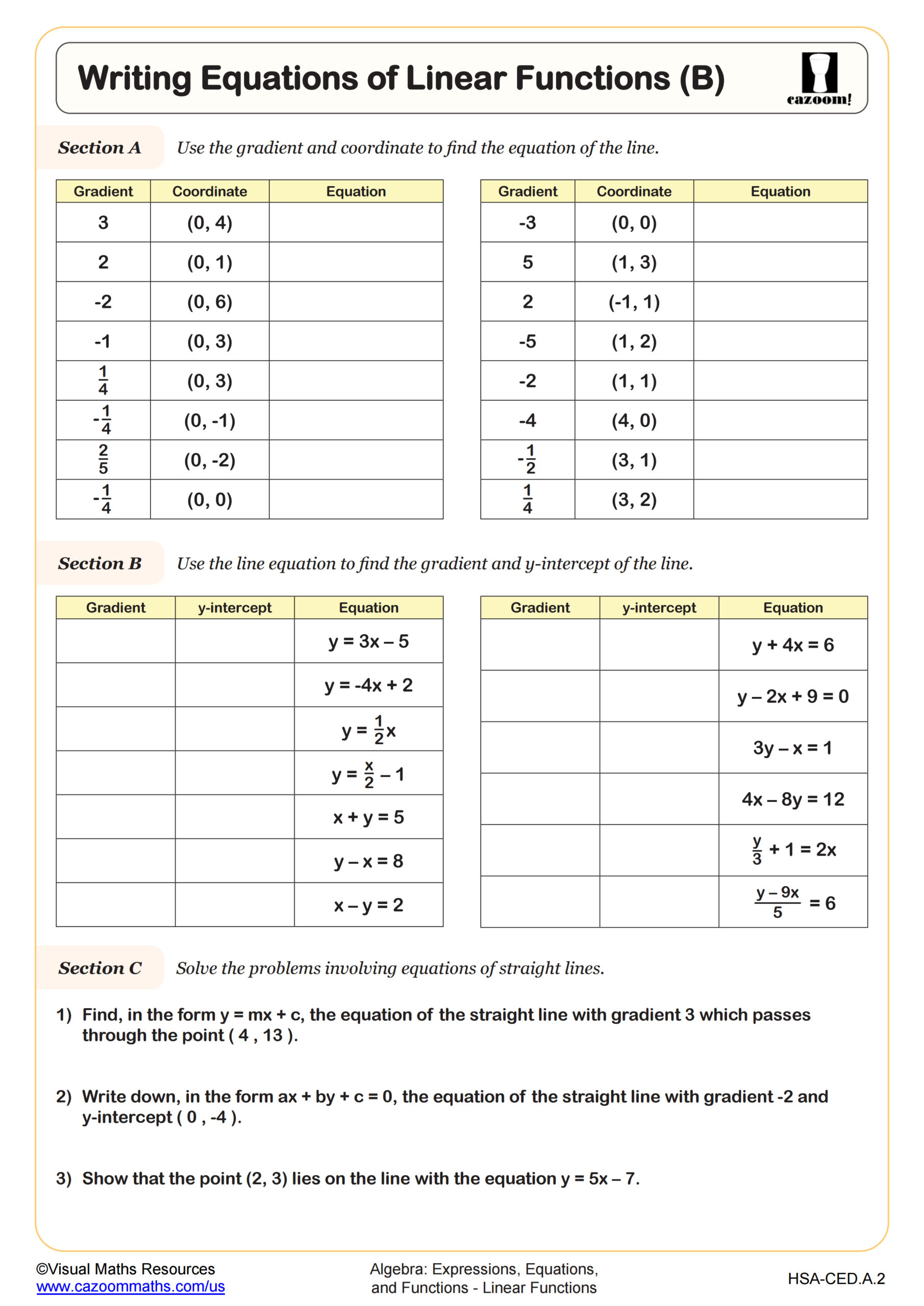
All worksheets are created by the team of experienced teachers at Cazoom Math.
What Linear Function Skills Do Integrated Math 1 Students Practice?
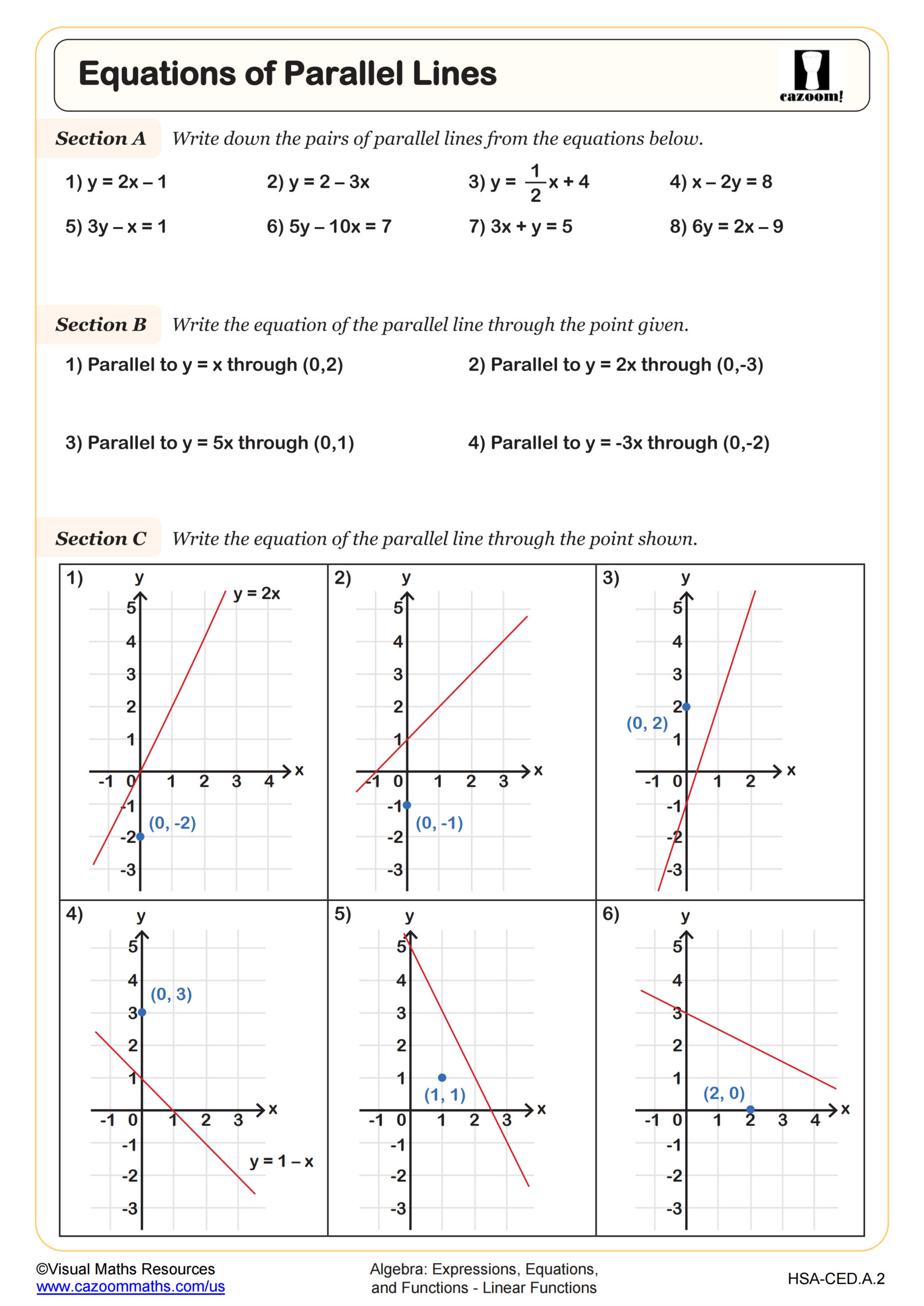
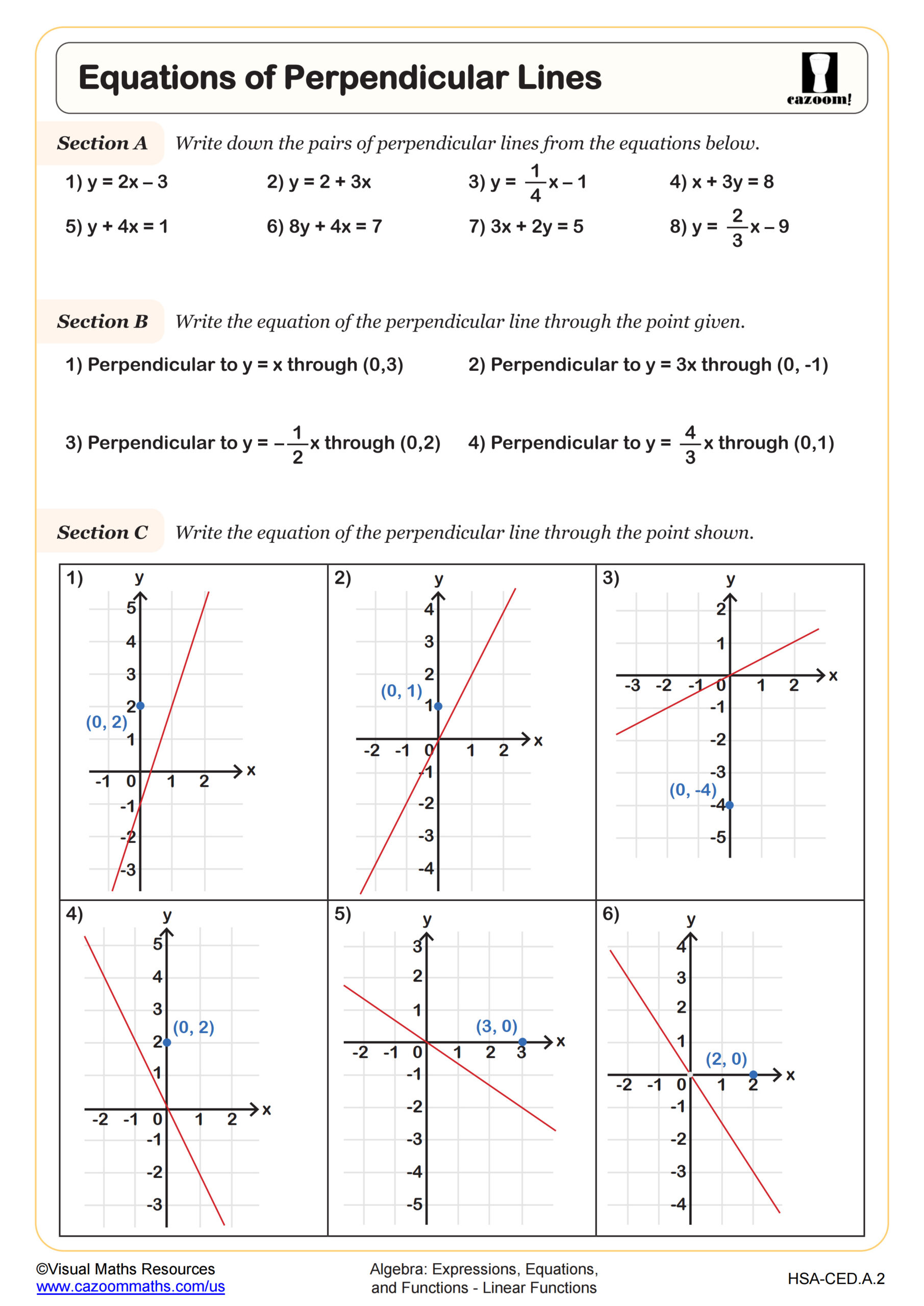
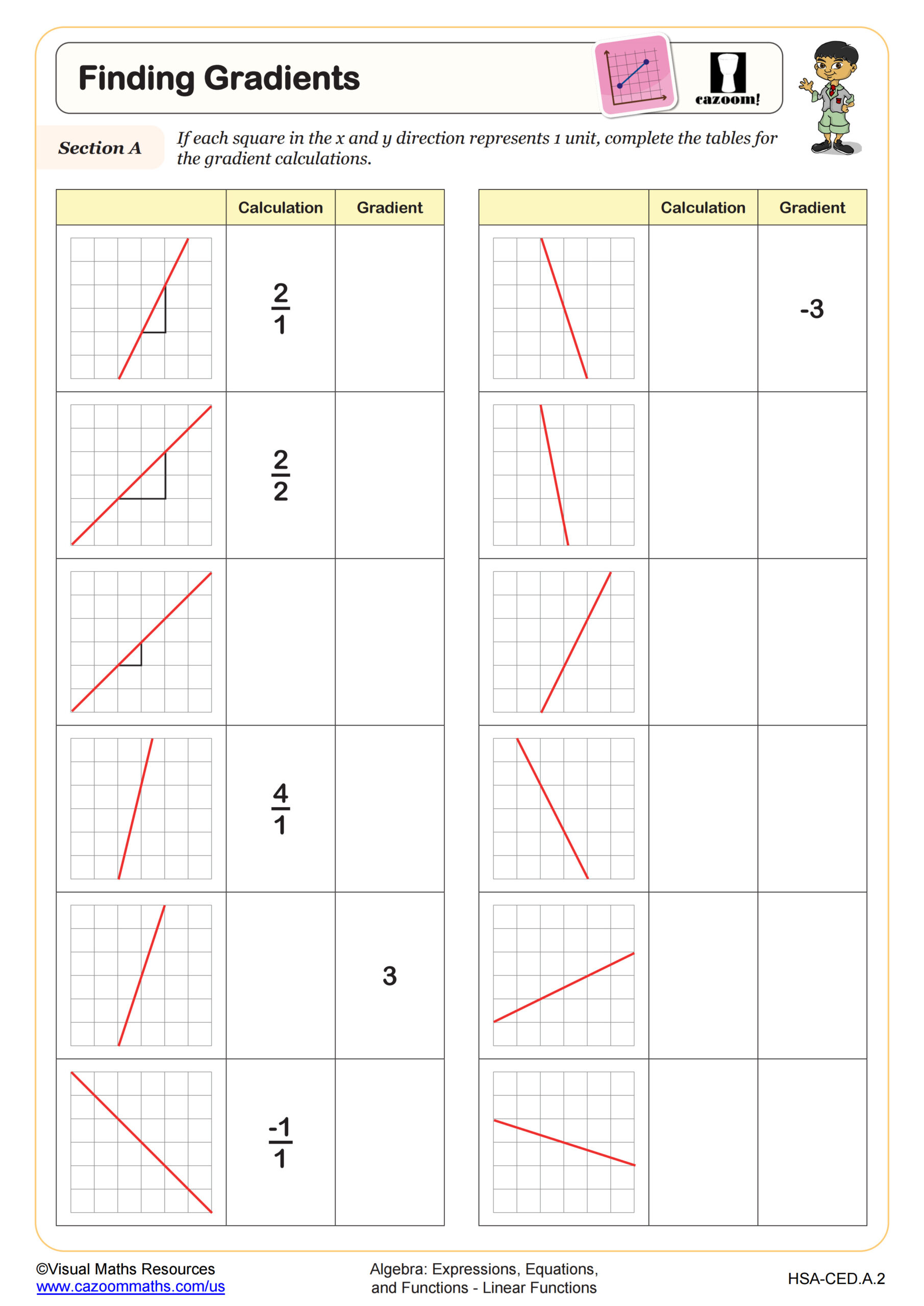
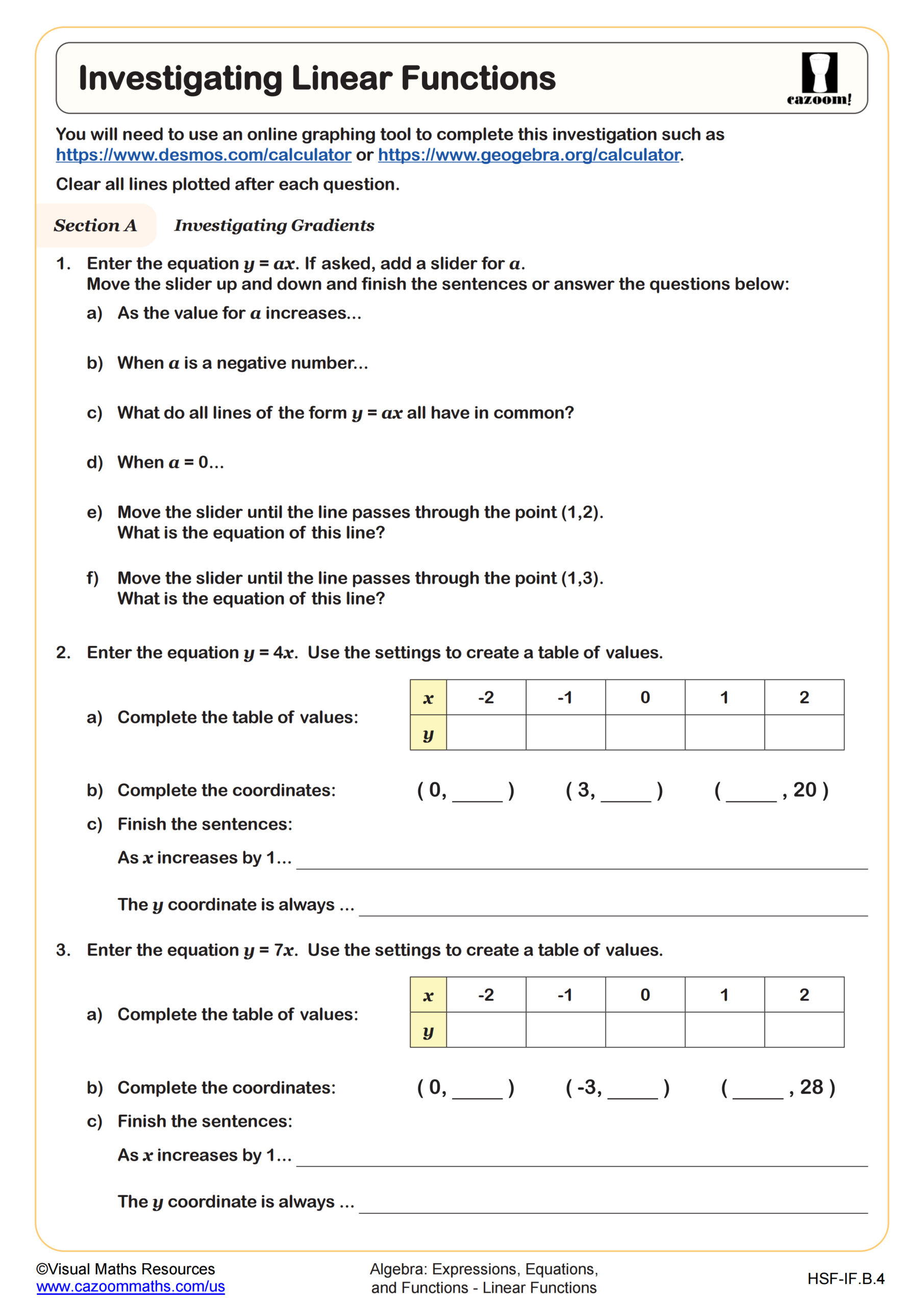
Integrated Math 1 students develop a comprehensive understanding of linear functions, including calculating slopes from graphs and tables, writing equations in slope-intercept and point-slope forms, and analyzing the relationships between parallel and perpendicular lines. The curriculum emphasizes multiple representations, requiring students to translate between equations, tables, graphs, and verbal descriptions of linear relationships. Students also investigate how changing parameters in y = mx + b affects the appearance of a line.
A common error occurs when students confuse the conditions for parallel versus perpendicular lines. Many students initially believe that lines with opposite slopes are perpendicular, when perpendicular slopes must be opposite reciprocals. Teachers frequently use the shorthand that parallel lines have identical slopes while perpendicular slopes multiply to negative one, which helps students remember the relationship during problem-solving.
How Do Standardized Tests Assess Linear Functions?
The SAT and state assessments regularly test linear functions through multi-step problems that require students to write equations from context, interpret slope and y-intercept in real-world scenarios, and determine equations of lines parallel or perpendicular to a given line. Students must demonstrate fluency with different equation forms and select appropriate methods based on given information. Test questions often embed linear function concepts within data analysis or modeling contexts rather than presenting isolated algebraic exercises.
Students lose points when they correctly calculate slope but fail to use the point-slope form to find the complete equation, instead trying to guess the y-intercept. Another testing pitfall involves misinterpreting negative slopes in word problems, particularly when students don't recognize that negative slope indicates a decreasing relationship. Time pressure on standardized tests makes procedural fluency with equation-writing essential for success.
Why Are Parallel and Perpendicular Lines Important in Linear Functions?
Understanding parallel and perpendicular lines requires students to analyze slope relationships algebraically rather than just visually. Parallel lines share identical slopes because they rise and run at the same rate, never intersecting. Perpendicular lines have slopes that are opposite reciprocals, meaning their product equals negative one. This concept challenges students to think about slope as more than just steepness and recognize the geometric implications of algebraic properties.
Architects and engineers apply perpendicular line concepts when designing structures that require right angles, from building foundations to road intersections. Computer graphics programmers use perpendicular slopes to calculate normal vectors for lighting effects. Urban planners rely on parallel and perpendicular street grids to optimize traffic flow. These applications demonstrate why Integrated Math 1 emphasizes the connection between algebraic slope relationships and geometric configurations, preparing students for STEM fields that depend on precise spatial reasoning.
How Can Teachers Use These Linear Functions Worksheets in Integrated Math 1?
These worksheets provide scaffolded practice that moves from foundational slope calculations to more complex tasks like writing equations from various starting points. The answer keys allow students to check their work independently, promoting self-assessment and error analysis. Teachers can use different worksheets to differentiate instruction, assigning simpler gradient practice to students who need reinforcement while challenging advanced learners with perpendicular line problems that require multi-step reasoning.
Many teachers use these worksheets for targeted test preparation before unit assessments, selecting specific topics where formative assessments revealed gaps. The worksheets work effectively as warm-up activities to maintain skills throughout the semester or as intervention materials during tutorial sessions. Paired work allows students to discuss their equation-writing strategies, which often reveals conceptual misunderstandings that individual practice might miss. The consistent format across worksheets helps students focus on mathematical content rather than navigating unfamiliar directions.