Integrated Math 1 Percentages Worksheets
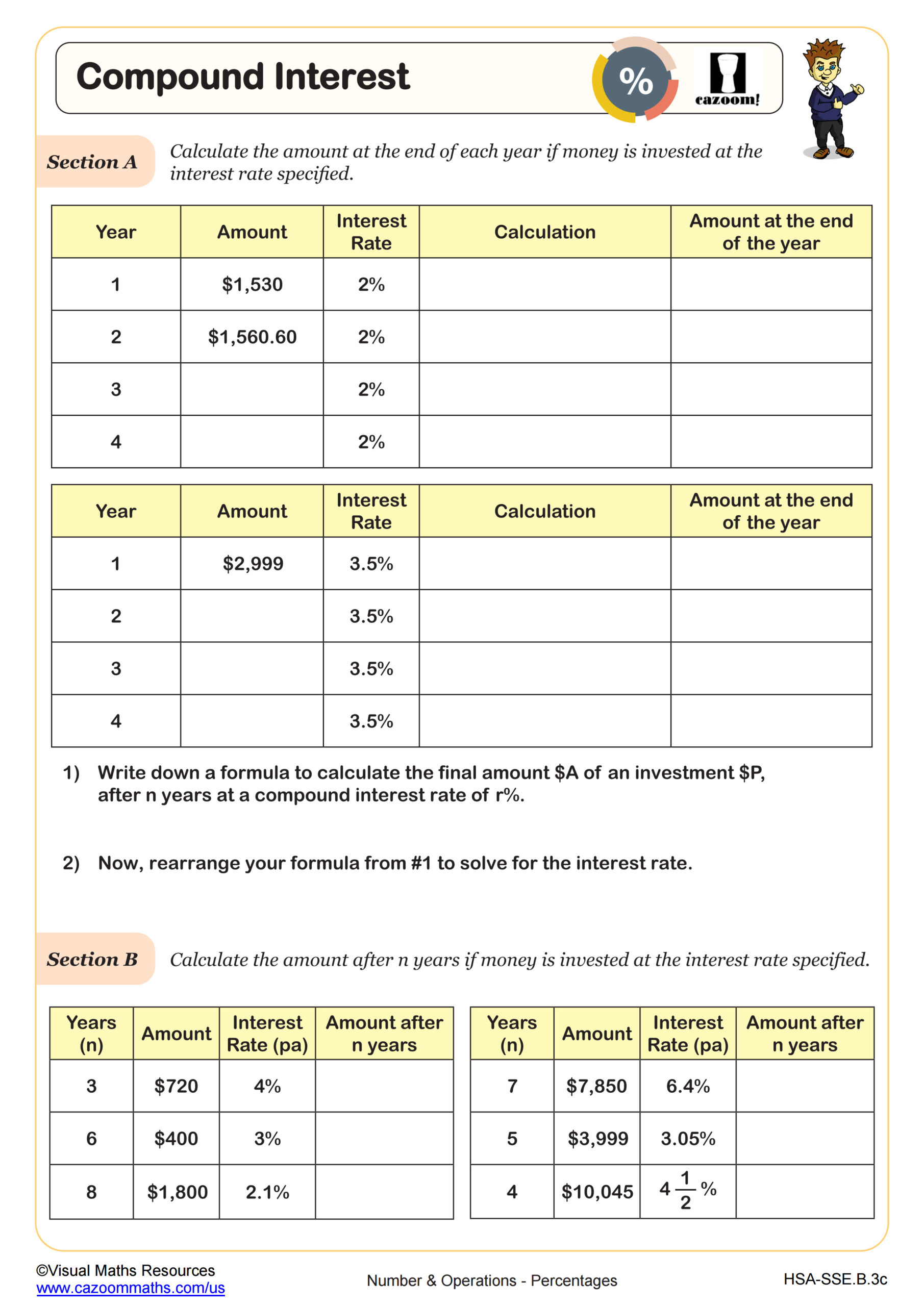
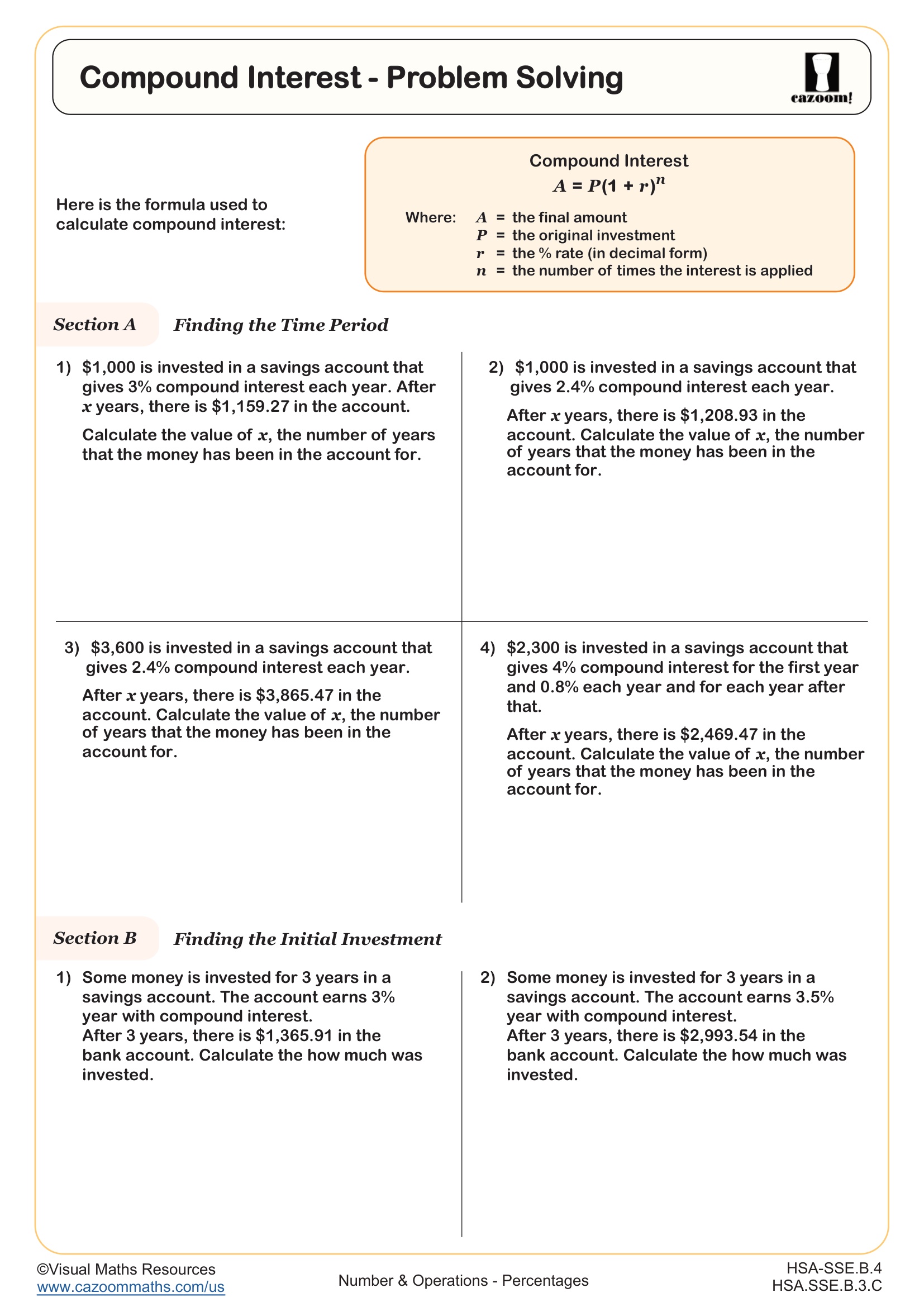
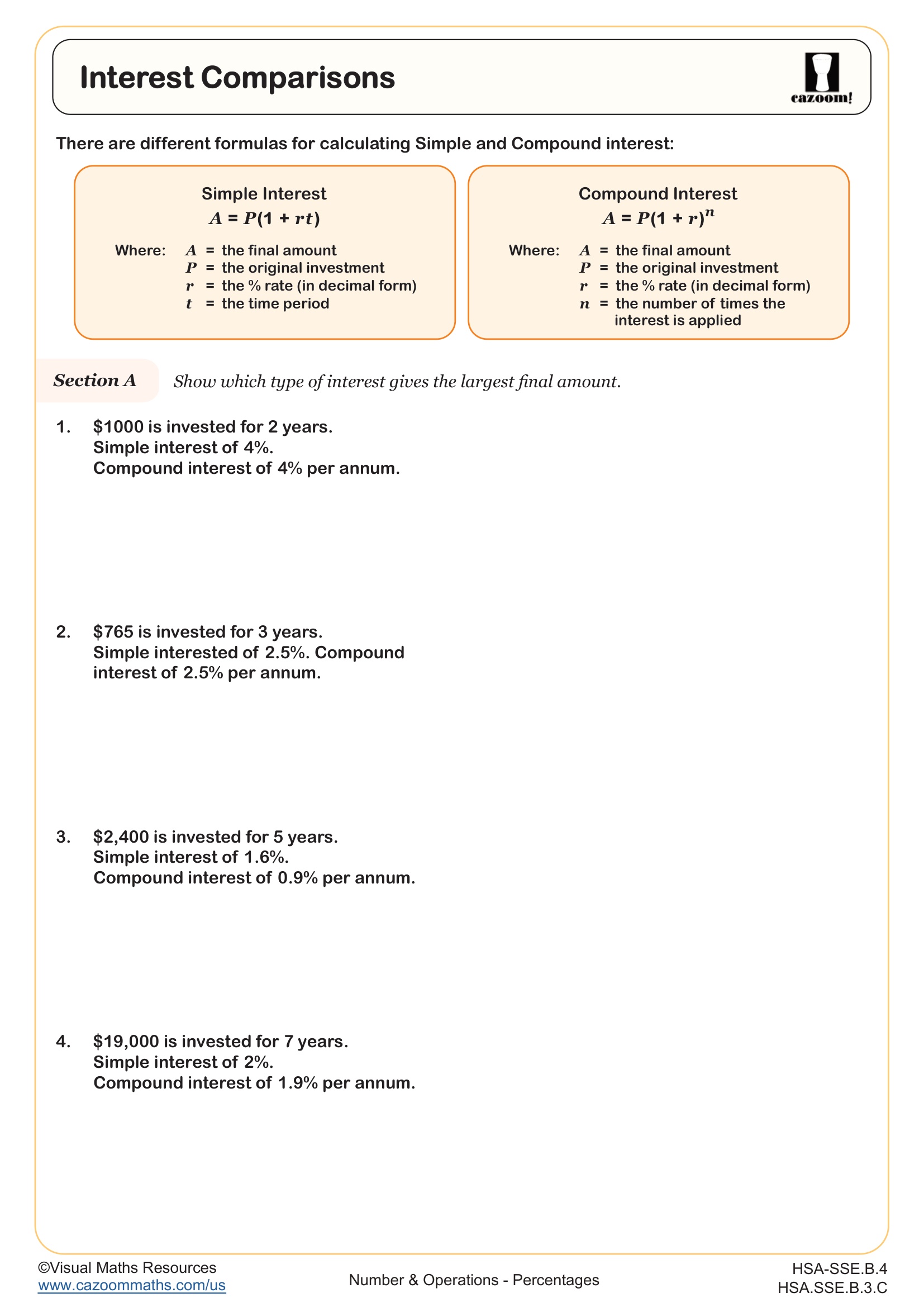
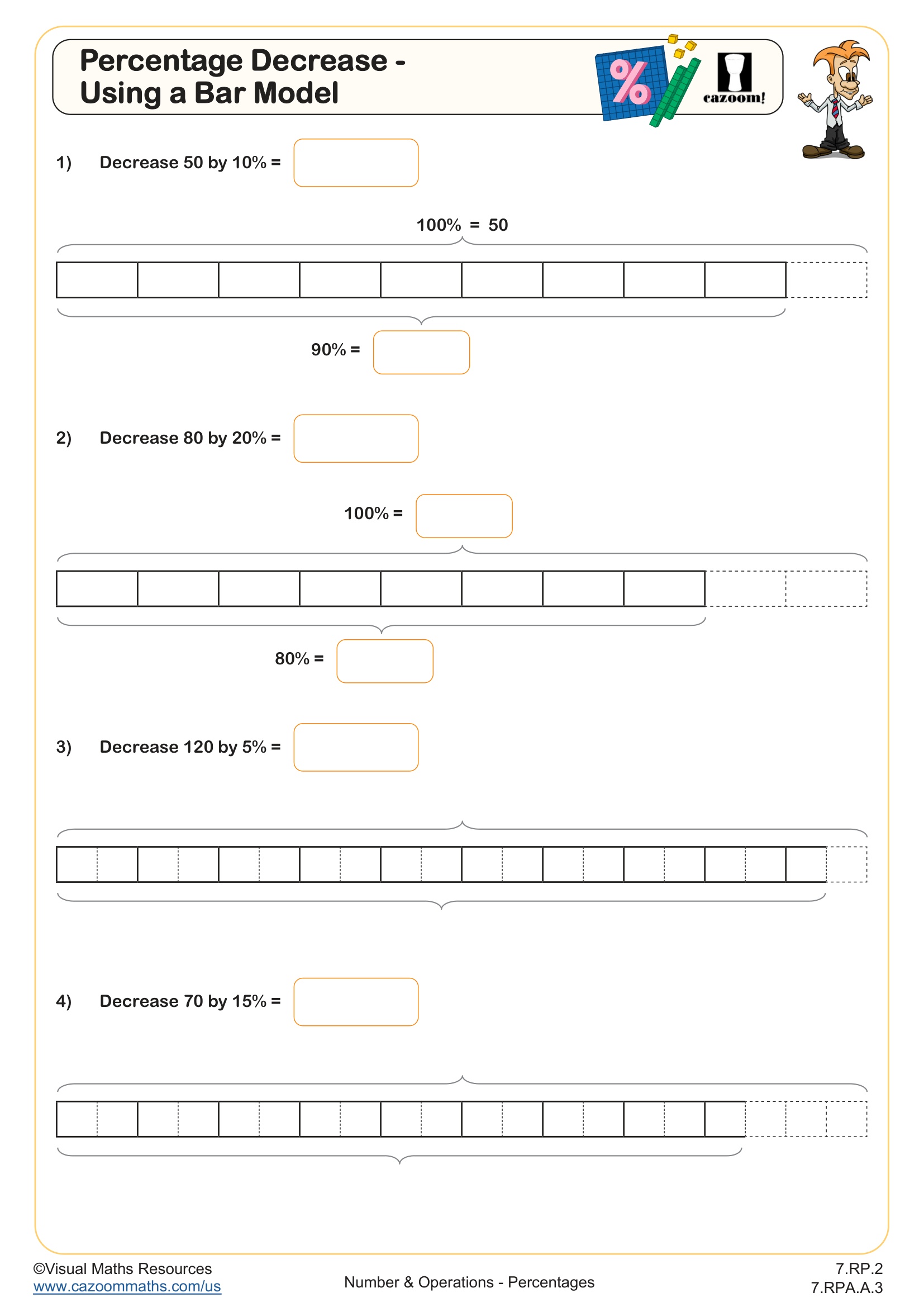
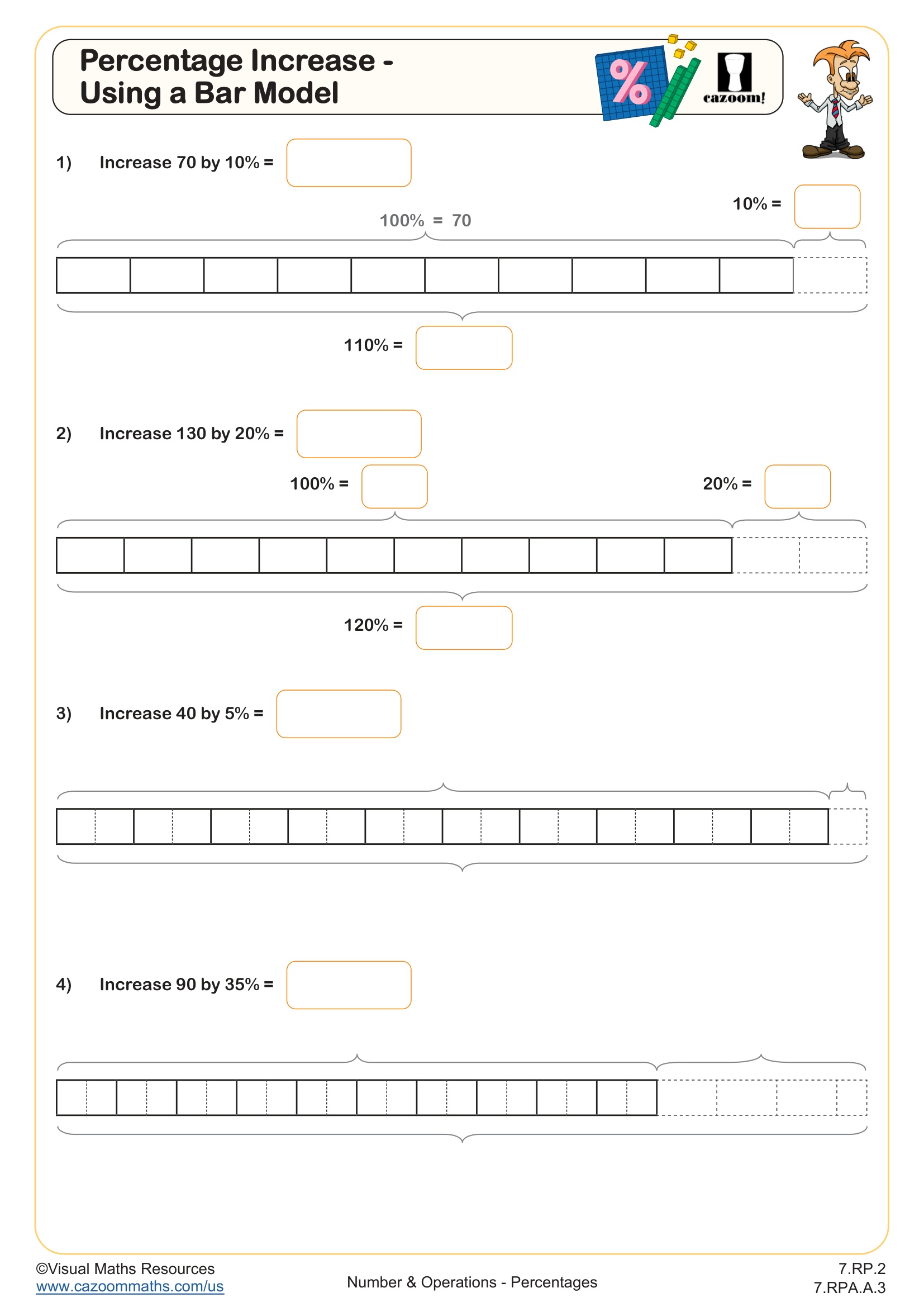
All worksheets are created by the team of experienced teachers at Cazoom Math.
Why Are Benchmark Percentages Important in Integrated Math 1?
Benchmark percentages—10%, 25%, 50%—serve as building blocks for all percentage calculations in high school mathematics. Students who master these foundational percentages can quickly estimate discounts, calculate tax, determine probability outcomes, and solve proportion problems without reaching for a calculator every time. The Integrated Math 1 curriculum emphasizes these percentages because they connect directly to fractions (½, ¼, 1/10) and decimals (0.5, 0.25, 0.1), reinforcing number sense across representations.
Students often lose points on assessments when they can't efficiently find 25% of a value, defaulting to time-consuming calculator methods instead of recognizing the division-by-4 shortcut. These worksheets guide students from creating percentages using benchmark values through finding percentages of various amounts, building the automaticity that standardized tests expect. The complement to 100% exercises particularly strengthen mental math skills, as students discover that finding what's left after a percentage is applied requires subtraction thinking rather than multiplication.
What Grade Level Should Use These Percentage Worksheets?
These worksheets align specifically with the Integrated Math 1 curriculum, typically taught to high school freshmen (9th grade), though some students encounter this course in 8th grade depending on their math pathway. Integrated Math 1 combines algebra, geometry, and statistics concepts rather than teaching them in separate courses, and percentage work supports the statistical reasoning and proportional thinking that appears throughout the curriculum.
The progression within these worksheets moves from simpler benchmark calculations toward more sophisticated percentage applications. Students begin by creating percentages from familiar values like 10% and 50%, then advance to finding percentages from combinations of benchmarks (like calculating 15% by adding 10% and 5%). Later worksheets introduce calculator methods for percentages that don't reduce to simple fractions, preparing students for real-world calculations where mental math alone won't suffice. This scaffolded approach ensures students develop both estimation skills and technological proficiency.
How Do Students Learn to Find Percentages Using Benchmark Values?
Finding percentages from benchmark values involves recognizing that complex percentages can be built from simpler ones through addition and subtraction. For example, students discover that 75% equals three groups of 25%, or that 60% can be calculated by finding 50% plus 10%. This decomposition strategy transforms intimidating calculations into manageable mental math, especially when students internalize that 10% means dividing by 10, 25% means dividing by 4, and 50% means dividing by 2.
These percentage skills connect directly to retail and finance applications that students encounter daily. When shopping, calculating a 30% discount requires finding 10% of the price three times, then subtracting from the original cost. In STEM fields, scientists use benchmark percentages to prepare diluted solutions—a 25% concentration means one part solute to three parts solvent. Statisticians rely on percentage reasoning when interpreting data sets, where quartiles represent 25% intervals. Students who understand benchmark percentages can estimate tips, compare sale prices, and interpret statistical reports without calculator dependence.
How Should Teachers Use These Percentage Worksheets in Class?
These worksheets support differentiated instruction through their structured progression from basic benchmark percentages to calculator-based methods. Teachers can assign early worksheets to students who need foundational practice with 10%, 25%, and 50% calculations, while directing more advanced students toward the complement problems and calculator work. The consistent format across worksheets allows students to focus on the mathematical concepts rather than decoding new directions with each assignment.
Many teachers use these worksheets for targeted intervention when assessment data reveals gaps in percentage fluency. The answer keys make them practical for homework assignments where students can check their own work, building metacognitive skills as they identify error patterns. During review sessions before unit tests or state assessments, teachers often assign mixed-difficulty worksheets as warm-up activities, helping students refresh percentage strategies. The worksheets also work well for paired practice, where students compare solution methods and explain their reasoning to partners, deepening conceptual understanding beyond procedural computation.