Integrated Math 1 Ratio Worksheets
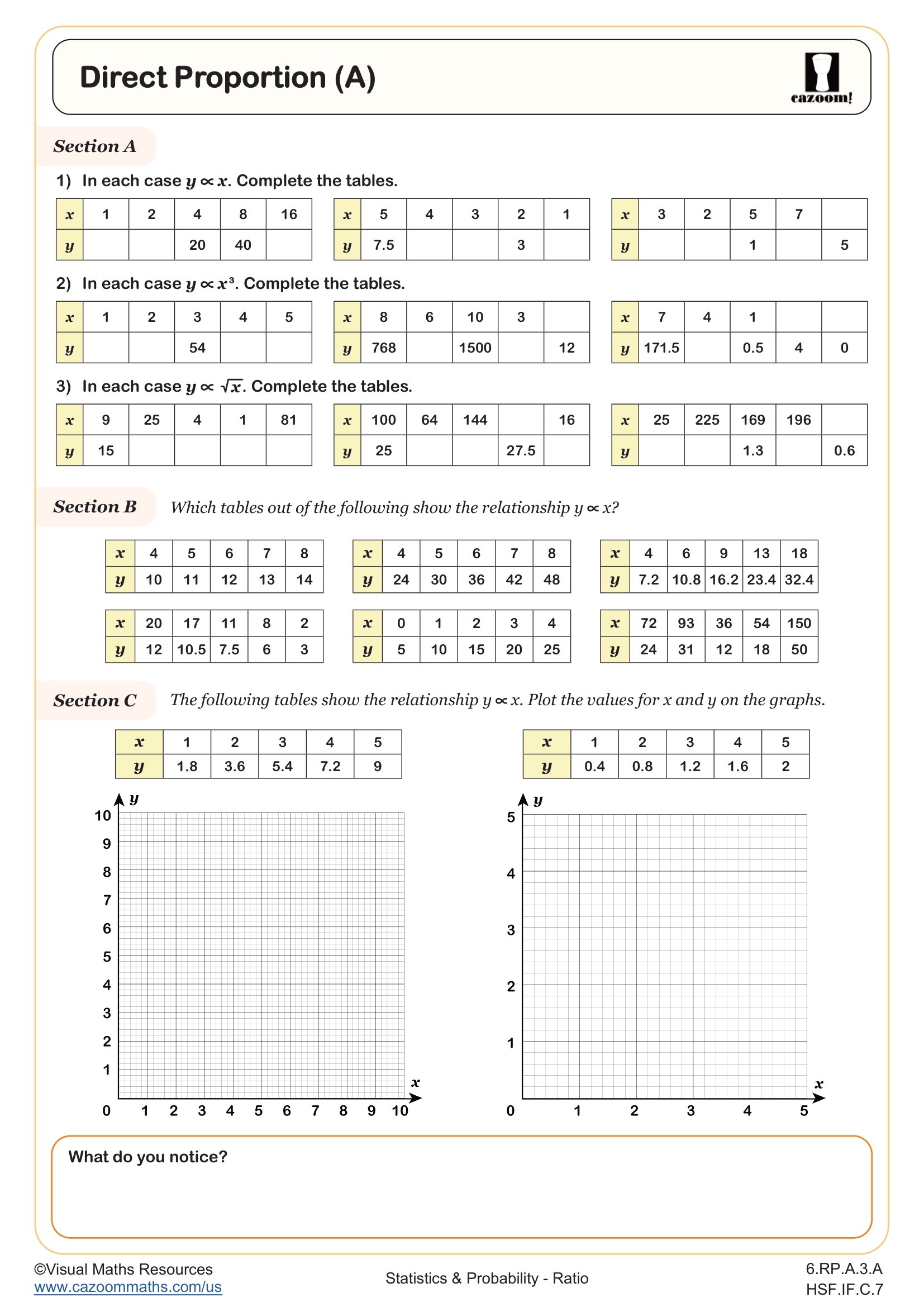
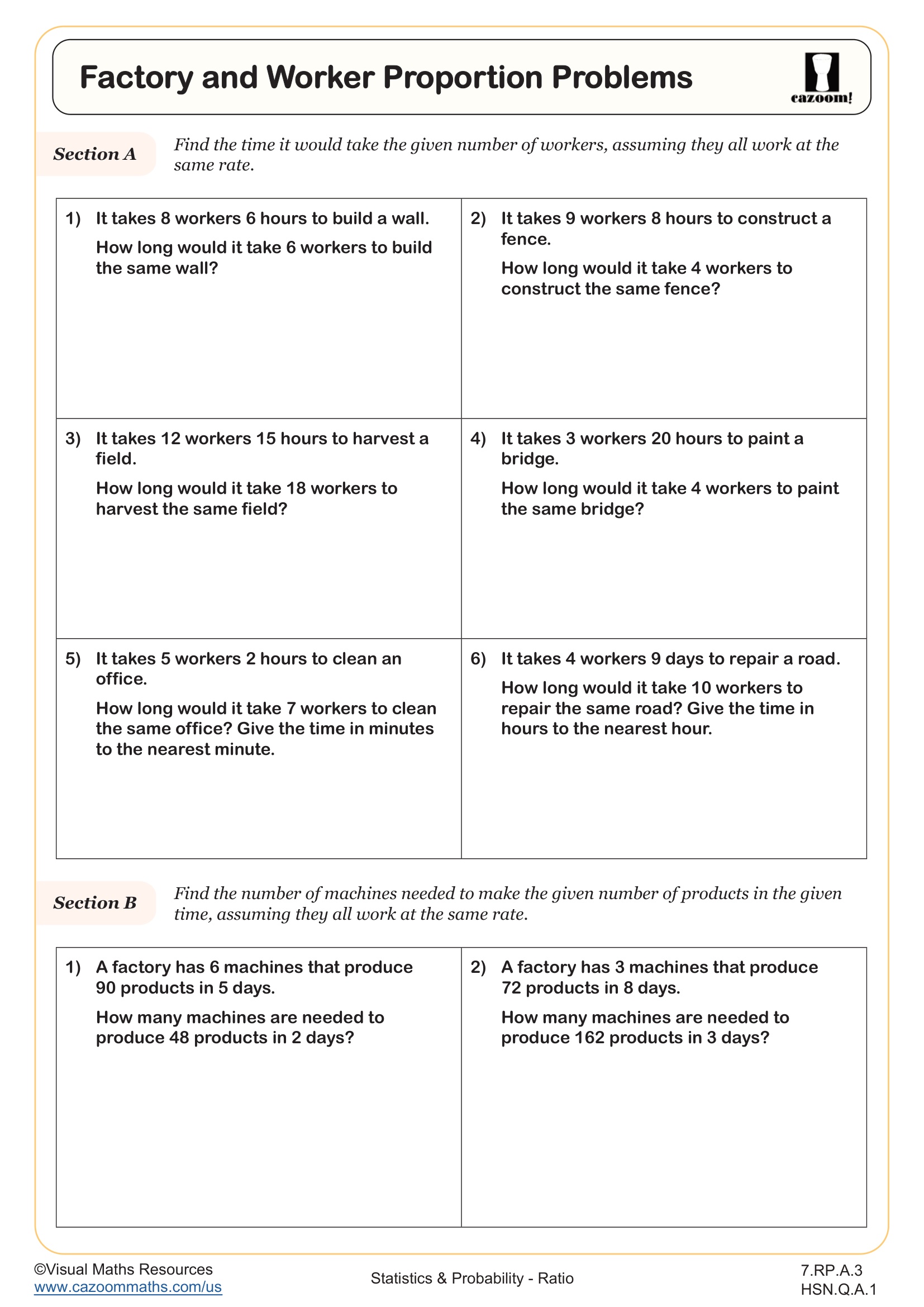
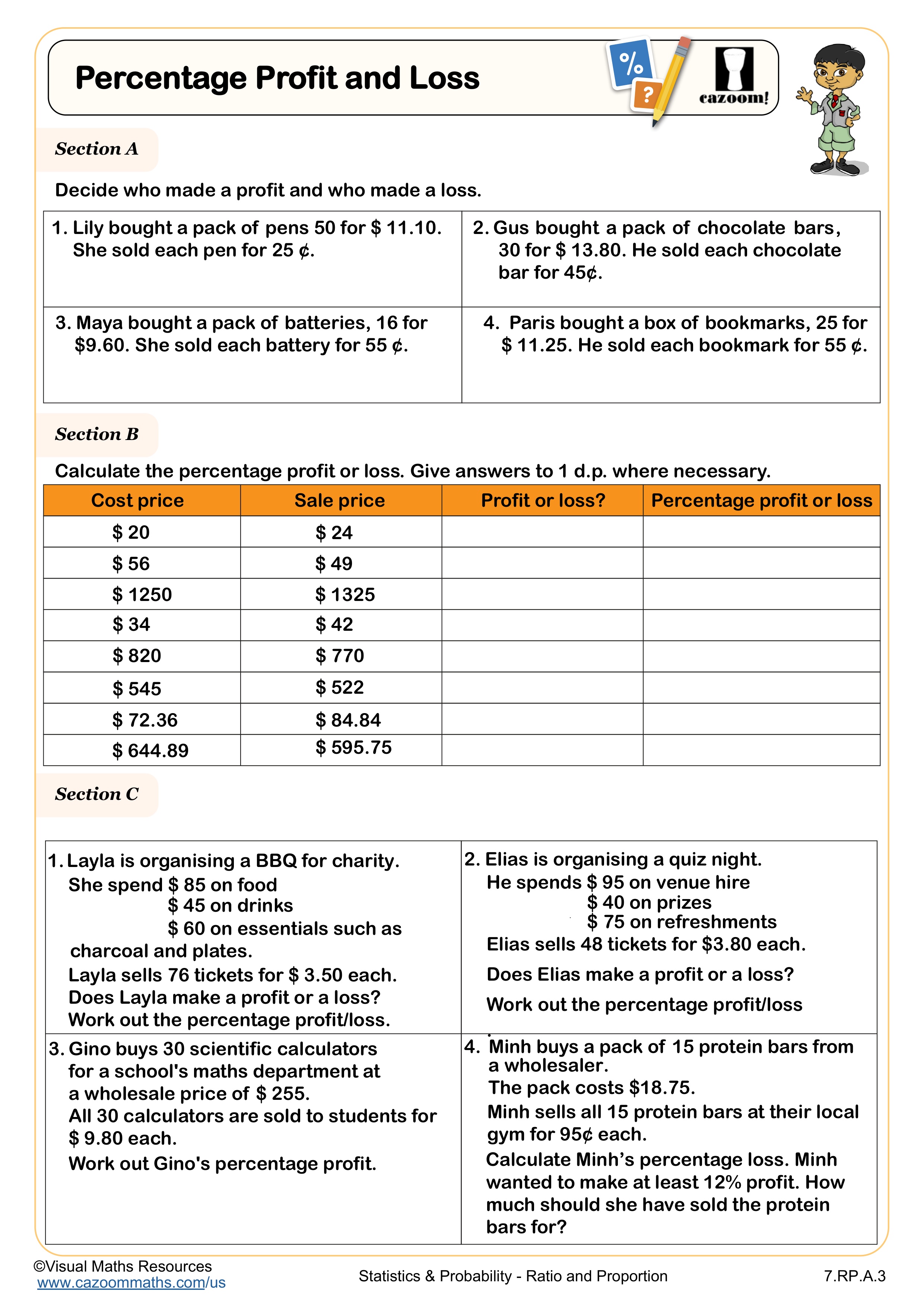
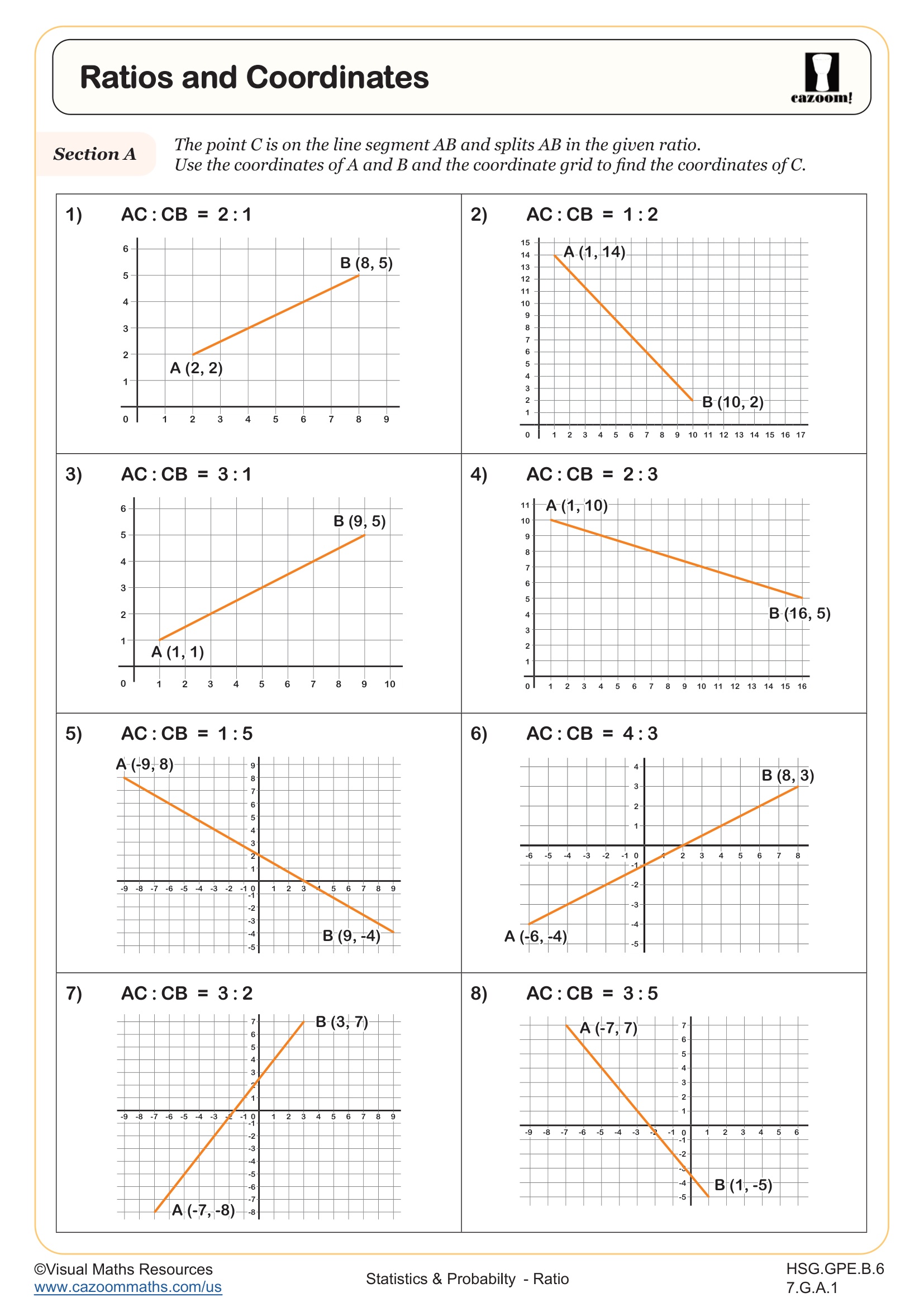
All worksheets are created by the team of experienced teachers at Cazoom Math.
What Makes Ratio Problems Challenging for High School Students?
Ratio problems require students to identify and maintain multiplicative relationships between quantities, a conceptual shift from the additive thinking that dominates elementary arithmetic. Many students entering Integrated Math 1 can set up simple ratios but struggle when problems involve three or more quantities, require unit conversion, or embed ratios within word problems that don't explicitly state "find the ratio."
A common error pattern emerges when students add numbers within a ratio instead of scaling multiplicatively. For example, given a 3:5 ratio with a total of 40 items, students might incorrectly add 3+5=8 and then divide, rather than recognizing that 3x+5x=40. Standardized tests consistently include multi-step ratio problems where this misconception causes students to lose points even when they understand the basic concept.
Which Grade Levels Use These Ratio Worksheets?
These worksheets align with Integrated Math 1 curriculum standards, typically taught in ninth or tenth grade as part of the high school mathematics sequence. Integrated Math 1 combines elements of algebra, geometry, and statistics rather than teaching these subjects in isolation, and ratio work provides the foundation for understanding linear relationships, similarity, and scaling throughout the course.
While students encounter basic ratios in middle school (grades 6-7), the Integrated Math 1 approach increases complexity by connecting ratios to algebraic expressions, geometric applications like scale factors, and statistical contexts like rates of change. This progression prepares students for more advanced proportional reasoning in Integrated Math 2 and beyond, where ratios appear in trigonometry, probability, and function analysis.
How Do Exchange Rate Problems Connect to Real-World Applications?
Exchange rate problems teach students to work with ratios where the relationship between two currencies creates a conversion factor. Students learn to set up proportions like "1 USD = 0.85 EUR" and then scale these relationships to convert larger amounts, determining whether to multiply or divide based on which currency they're converting to. This skill reinforces the concept that ratios describe consistent multiplicative relationships.
Beyond travel scenarios, exchange rate thinking appears throughout STEM careers and financial literacy contexts. Engineers convert between measurement systems using the same proportional reasoning, chemists use molar ratios in stoichiometry calculations, and anyone analyzing international business data must navigate currency conversions. Students who master exchange rate problems develop transferable skills in unit analysis and dimensional reasoning that support success in chemistry, physics, and economics coursework.
How Can Teachers Use These Worksheets Most Effectively?
The worksheets progress from concrete ratio notation and bar model representations to more abstract fraction-percentage-ratio connections, allowing teachers to scaffold instruction based on student readiness. Bar models particularly help visual learners see the part-to-part and part-to-whole relationships simultaneously, bridging the gap between pictorial understanding and algebraic manipulation. Complete answer keys enable students to check their work independently and identify exactly where their reasoning diverged from correct solutions.
Many teachers use these worksheets for differentiated instruction, assigning bar model problems to students who need additional visual support while directing algebraically confident students toward exchange rate and multi-step problems. The worksheets work well as homework following direct instruction, warm-up activities to activate prior knowledge before new lessons, or intervention materials for students who need targeted ratio practice before advancing to more complex proportional reasoning in functions and linear equations.