Integrated Math 1 Solving Equations Worksheets
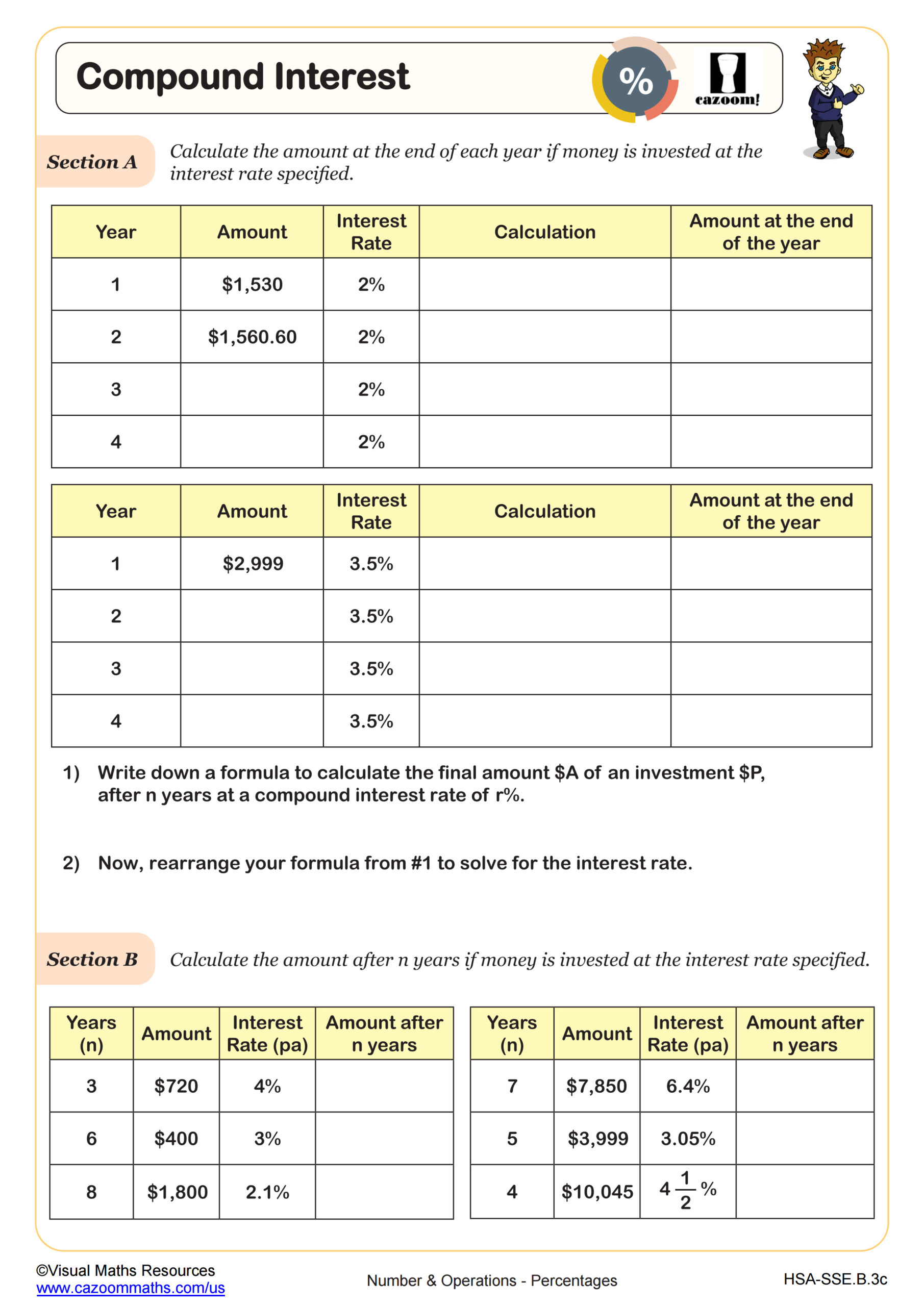
Compound Interest
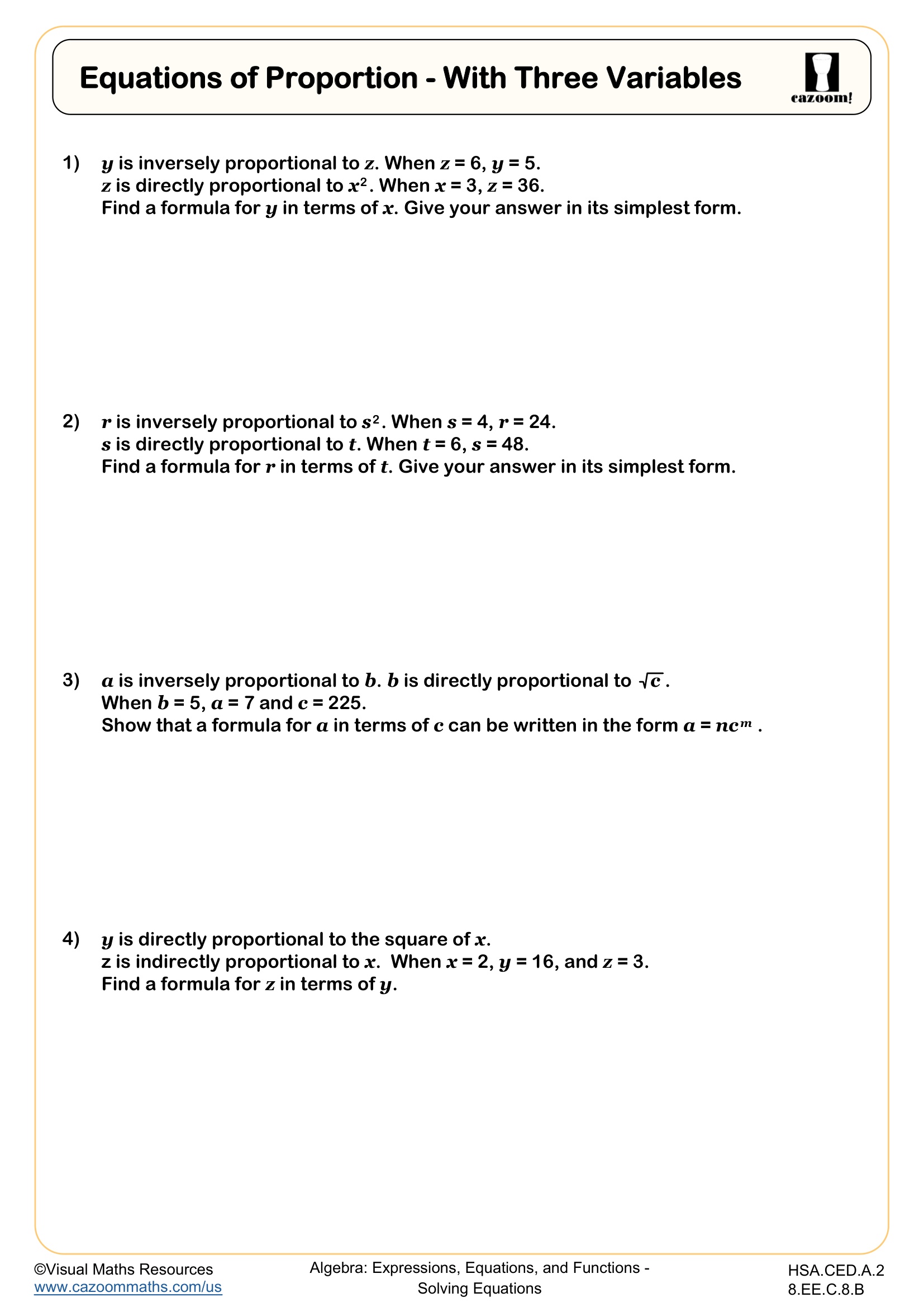
Equations of Proportion - with Three Variables
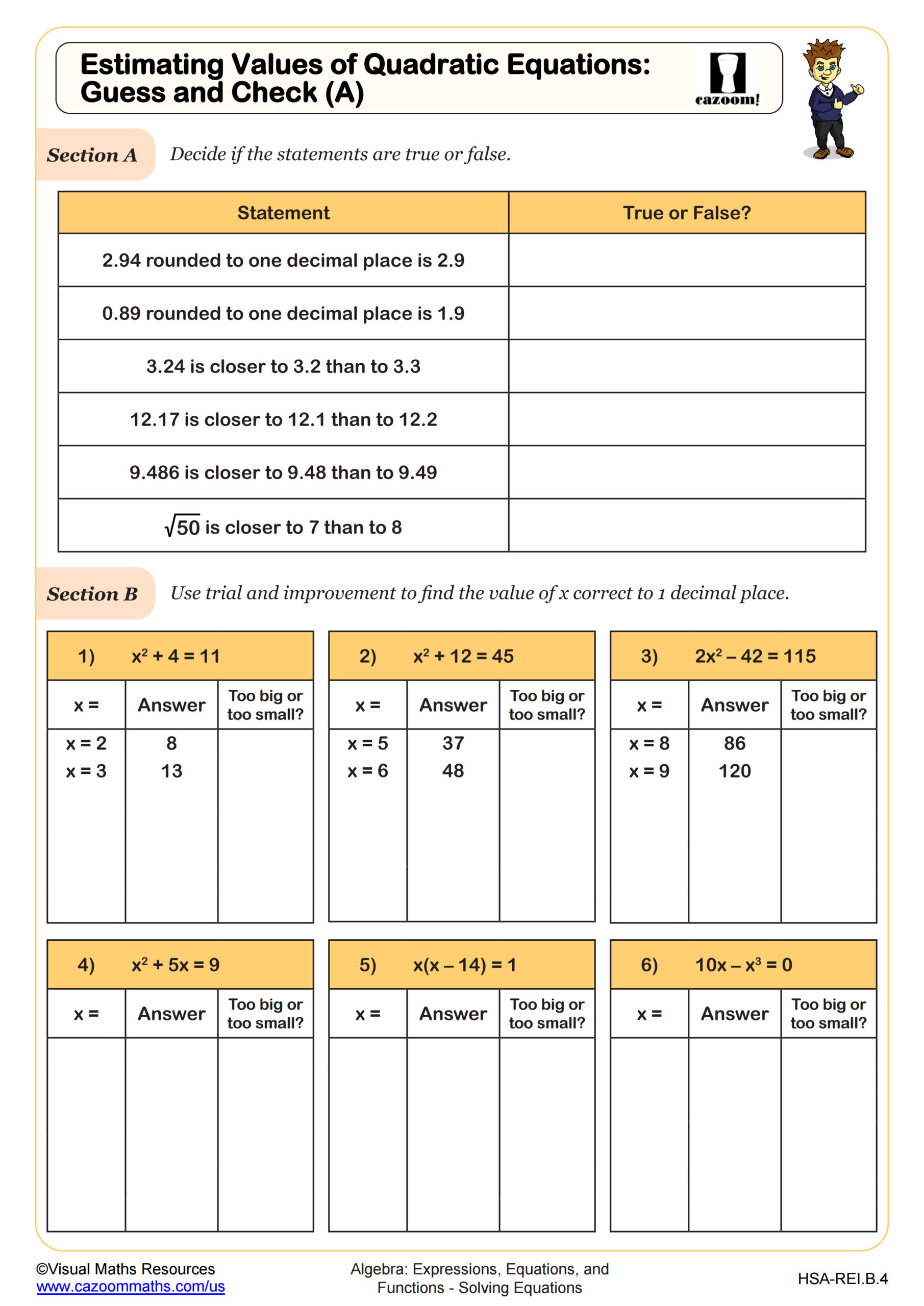
Estimating Values of Quadratic Equations: Guess and Check (A)
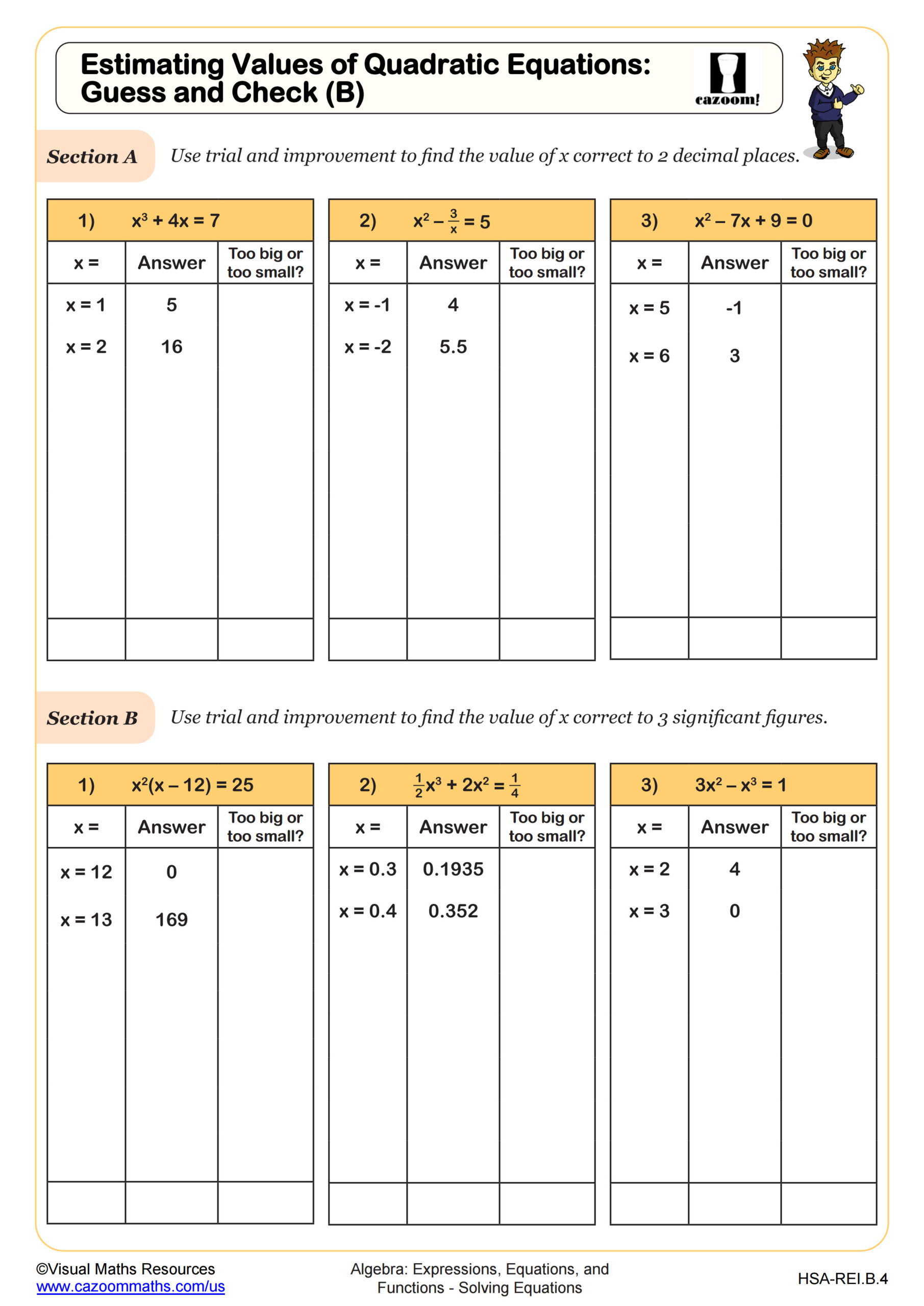
Estimating Values of Quadratic Equations: Guess and Check (B)
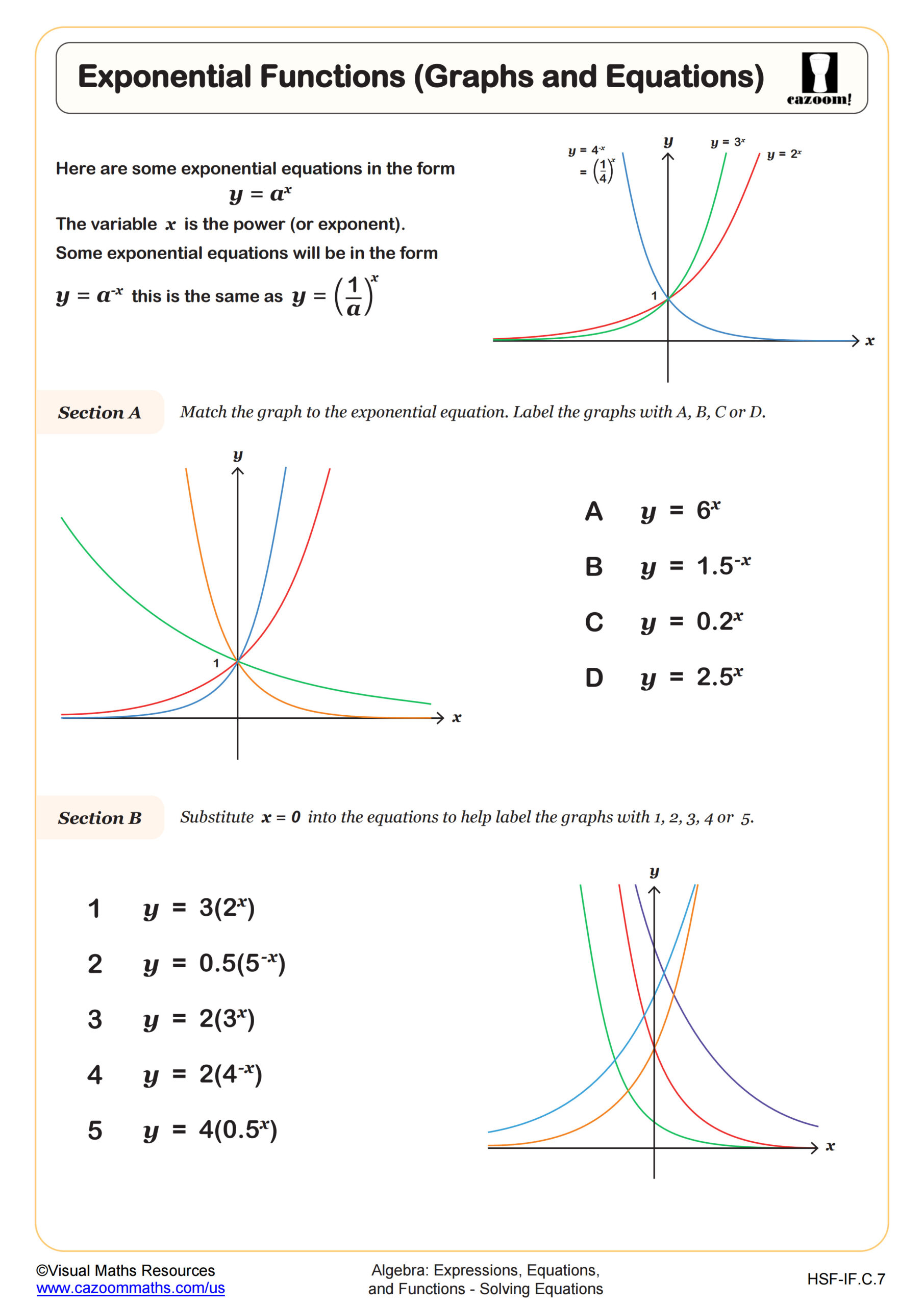
Exponential Functions (Graphs and Equations)
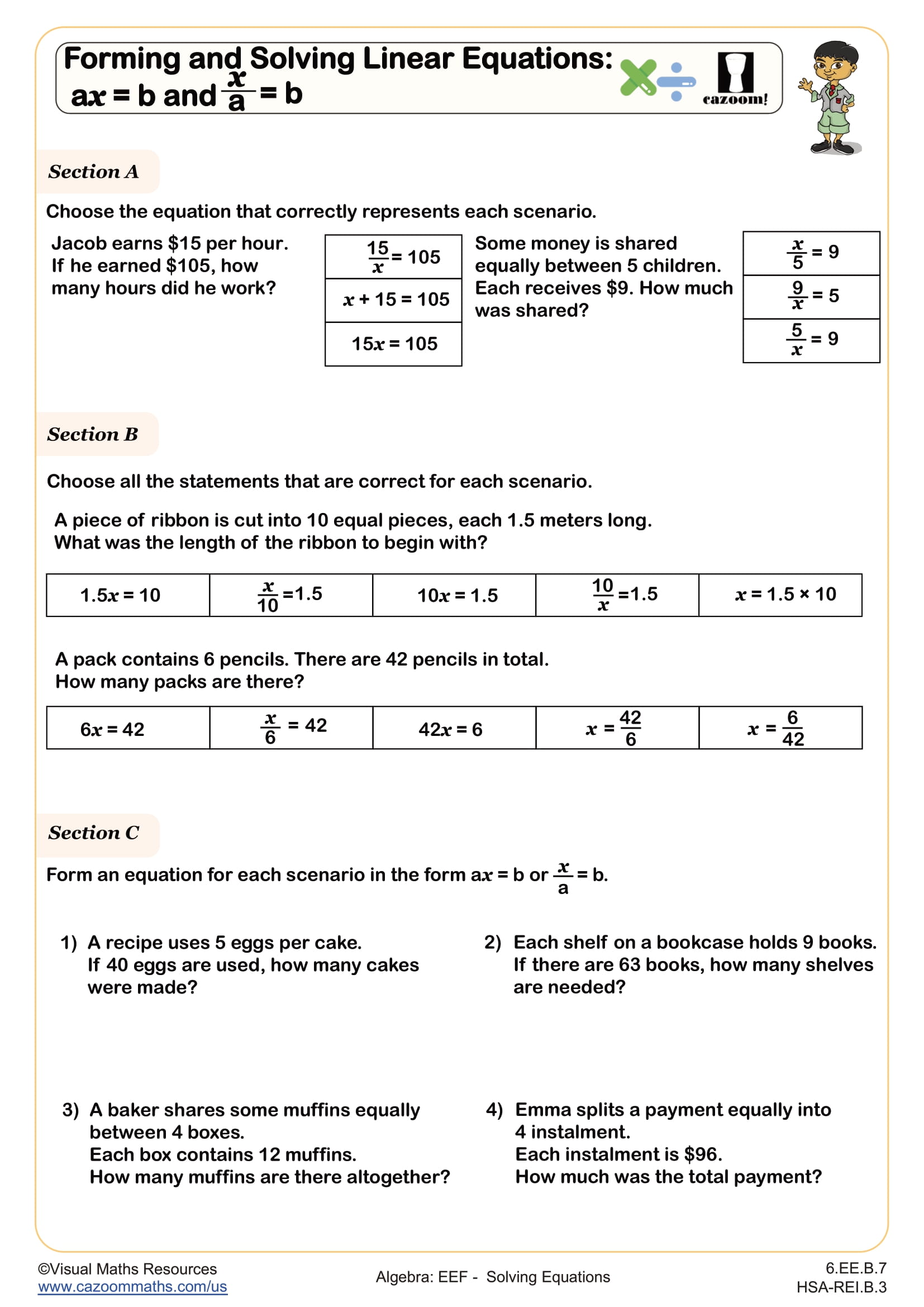
Forming and Solving Linear Equations: a𝑥 = b and 𝑥/a = b
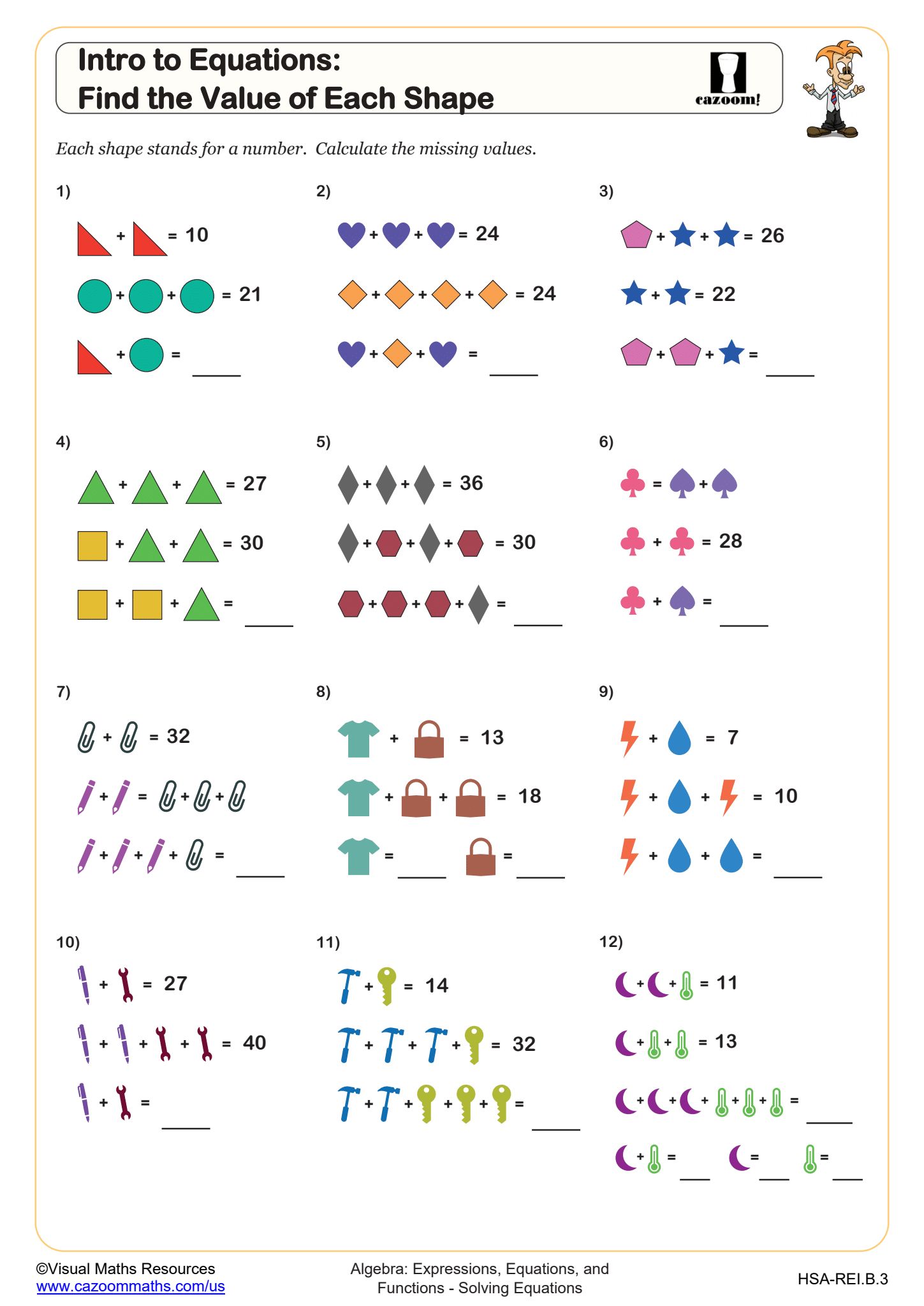
Intro to Equations: Find the Value of Each Shape
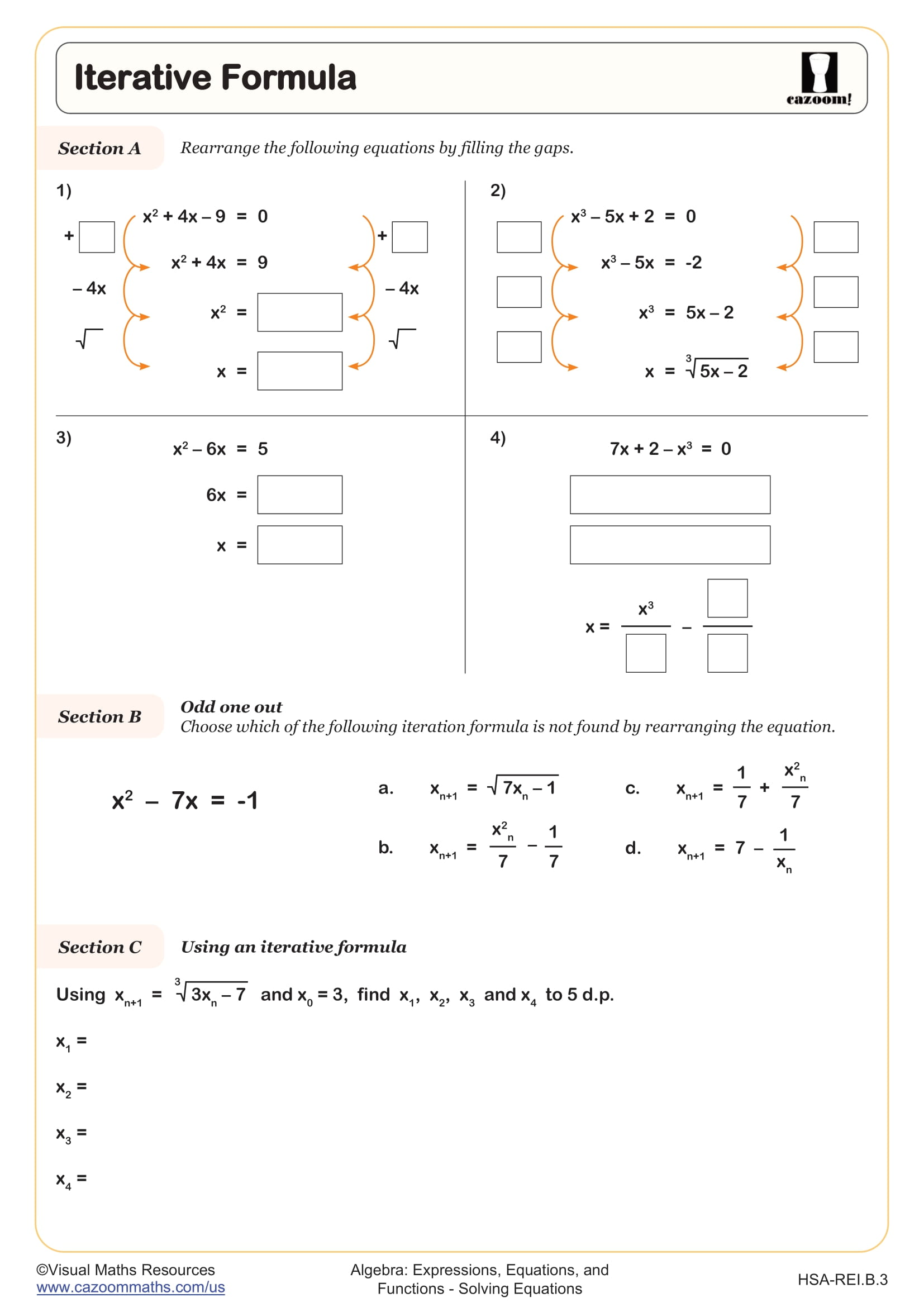
Iterative Formula
Multiply and Divide Algebraic Fractions (A)
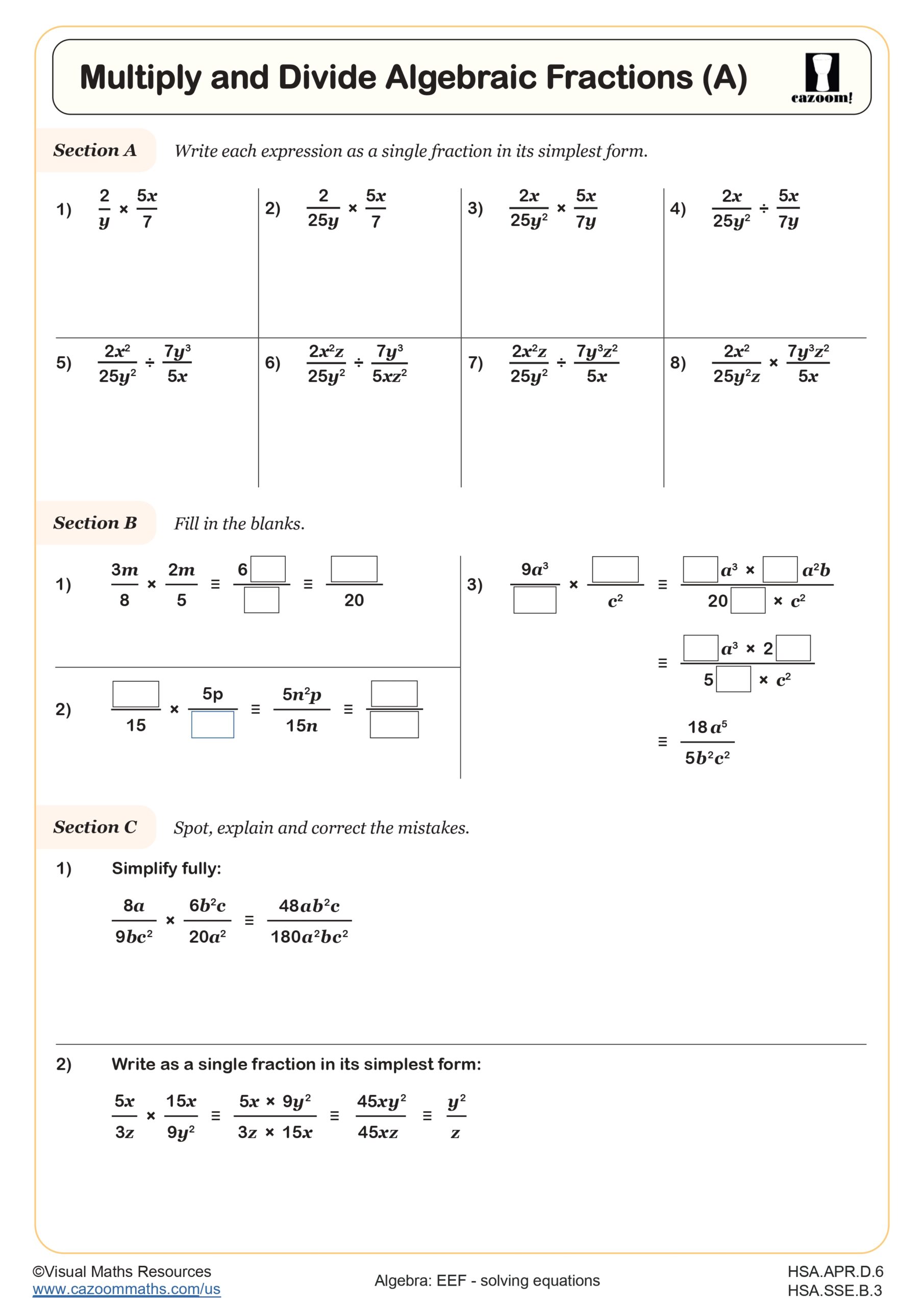
Solving Equation Riddles: "Thinking of a Number"
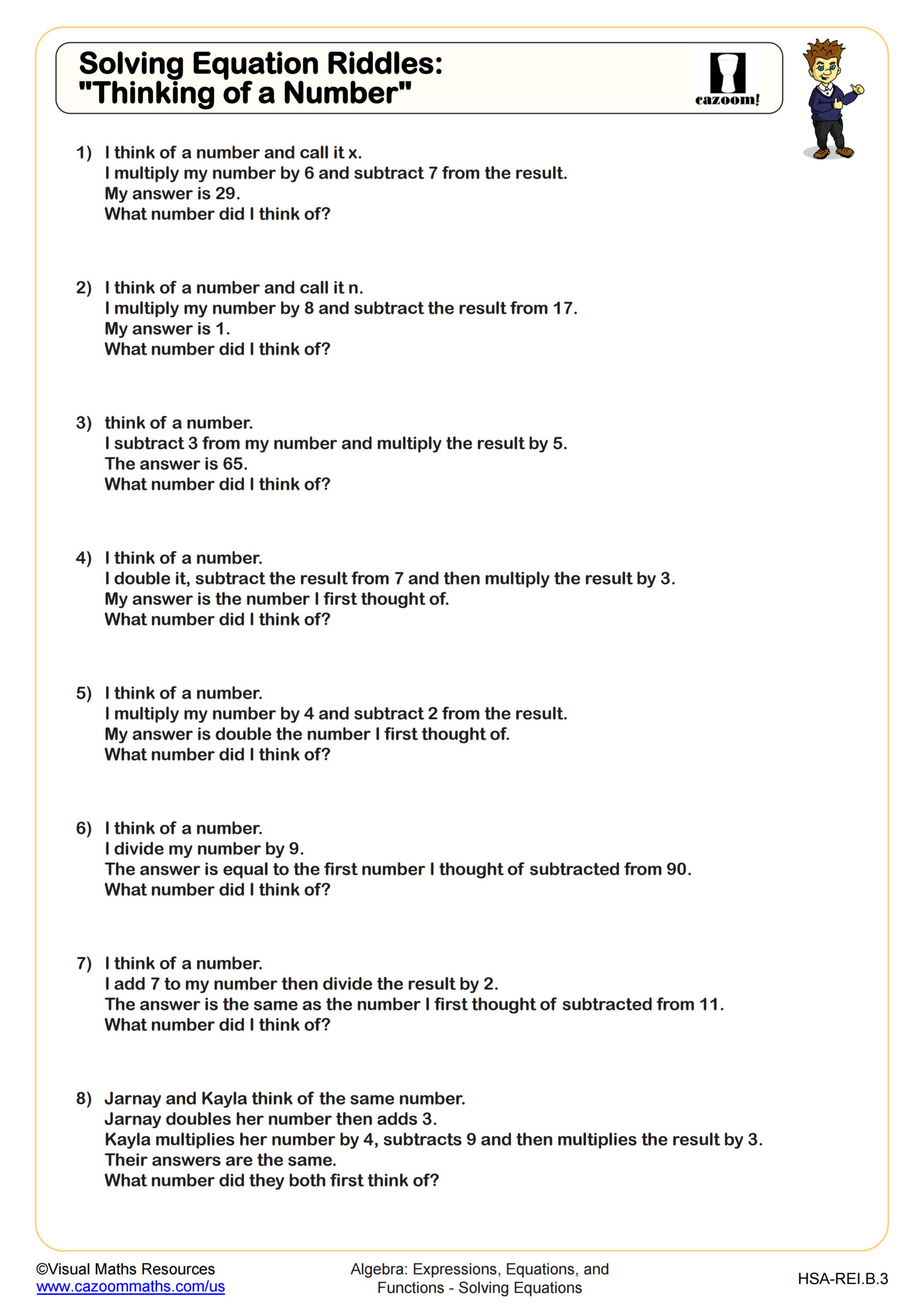
Solving Equations 15 Minute Challenge
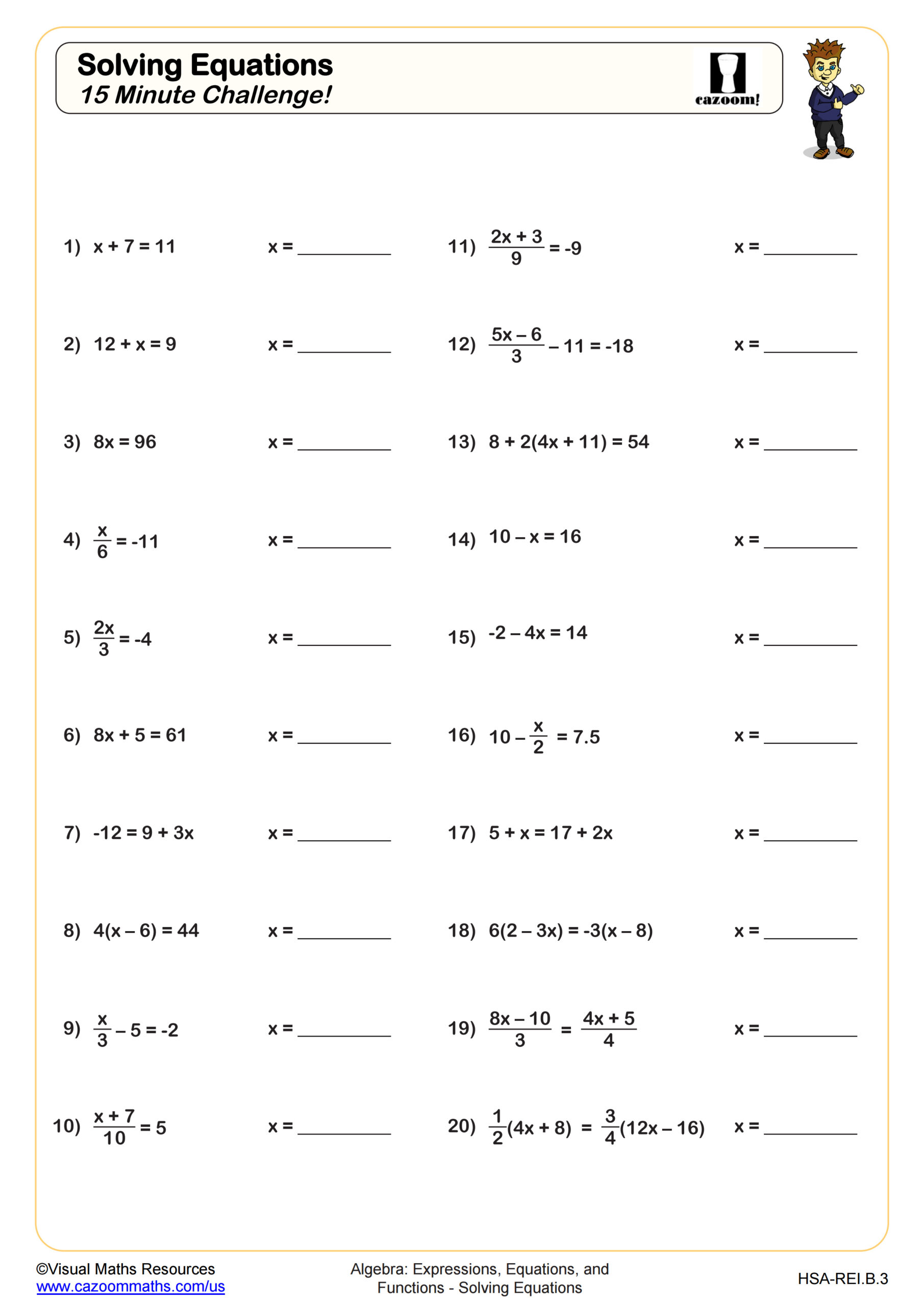
Solving Equations with Unknowns on Both Sides - Using Algebra Tiles
Solving Linear Equations (A)
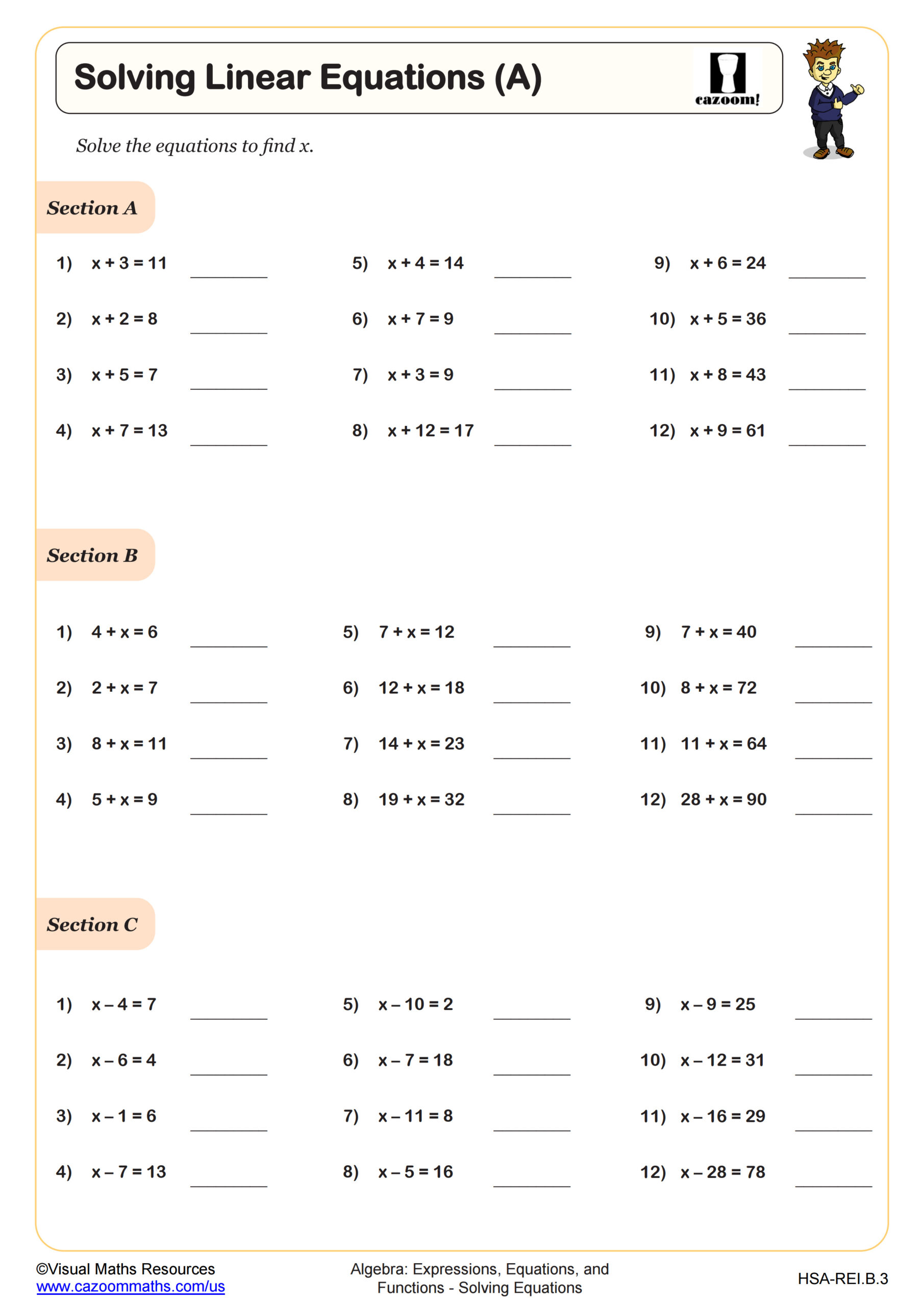
Solving Linear Equations (B)
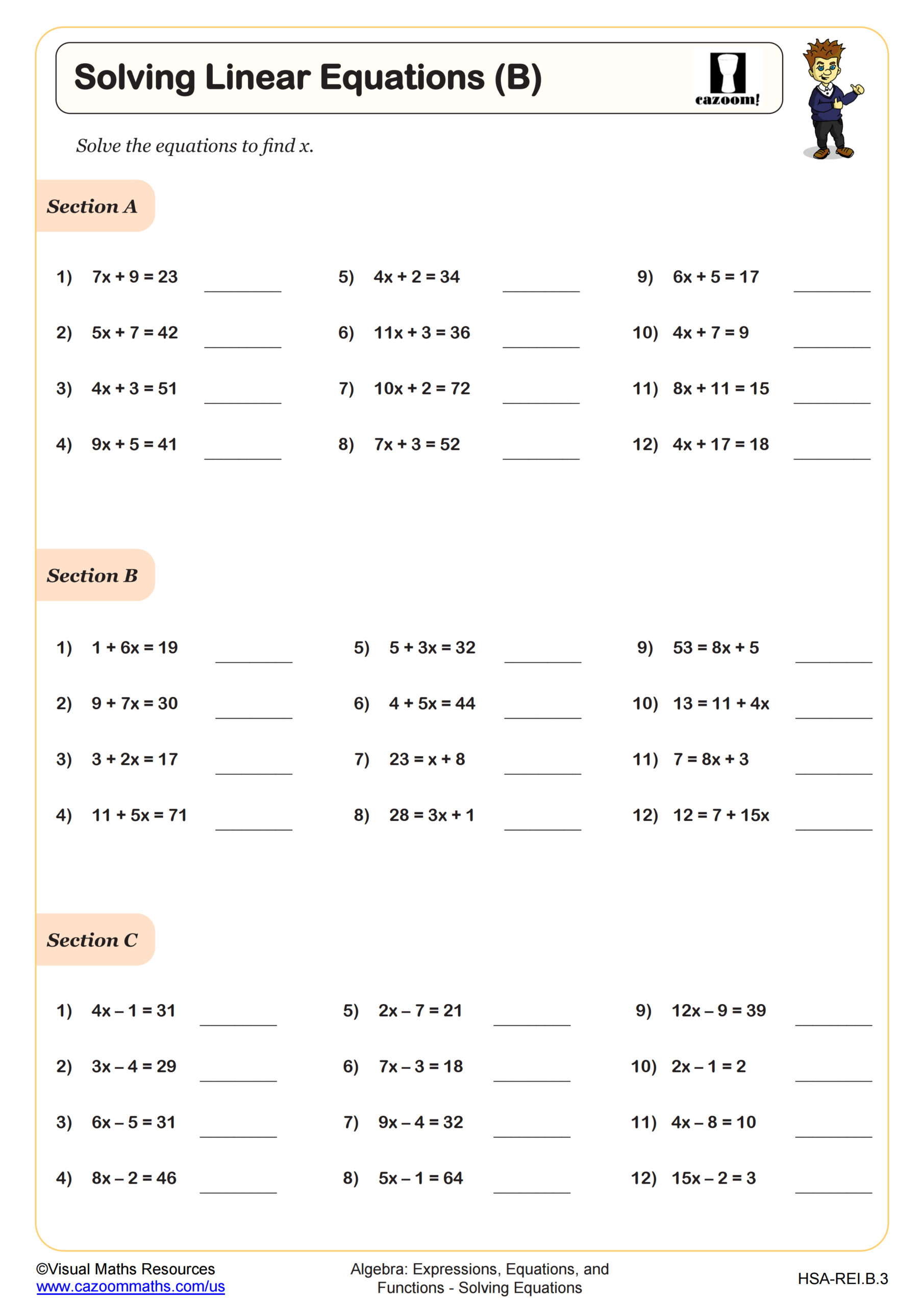
Solving Linear Equations (C)
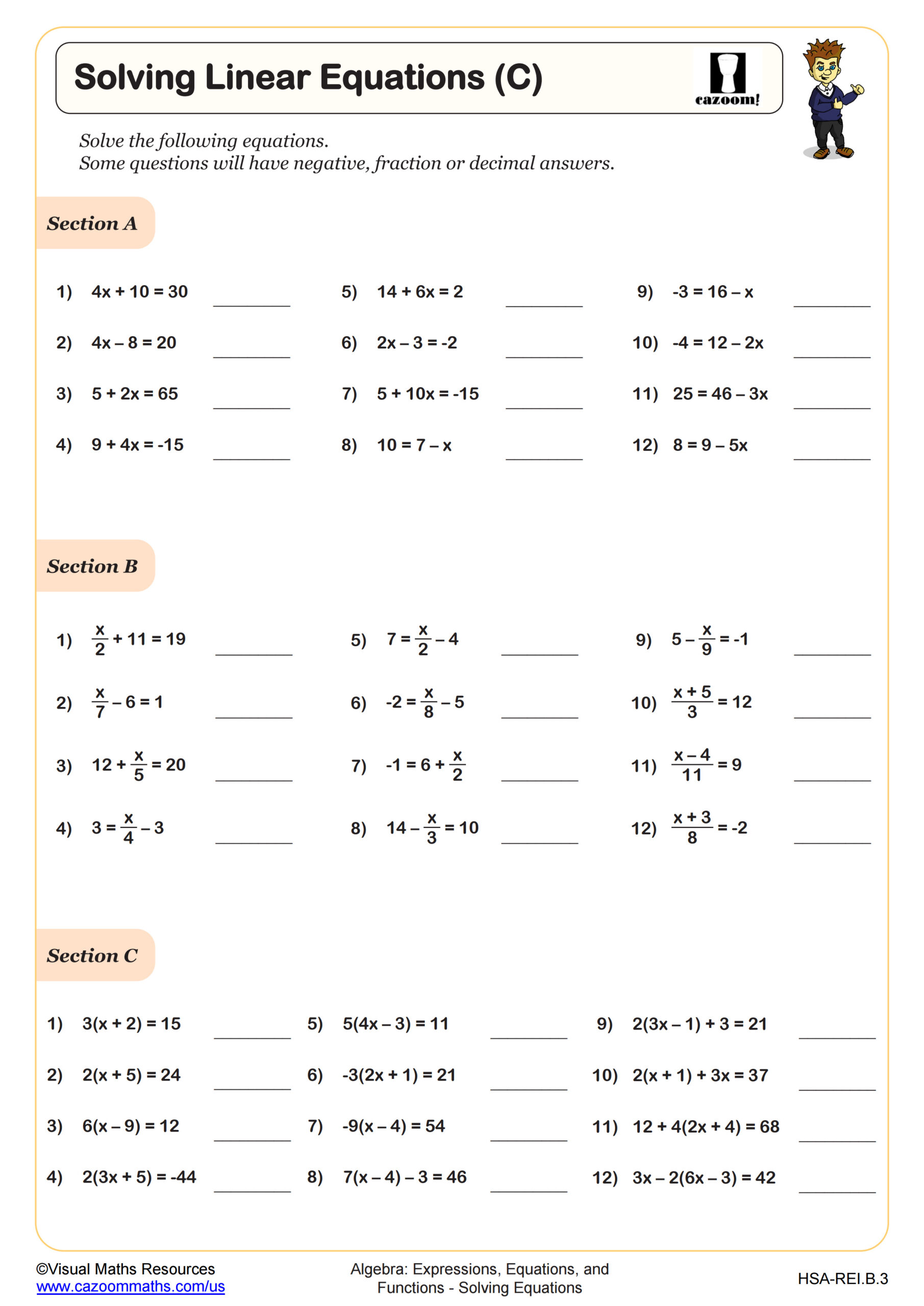
Solving Linear Equations (D)
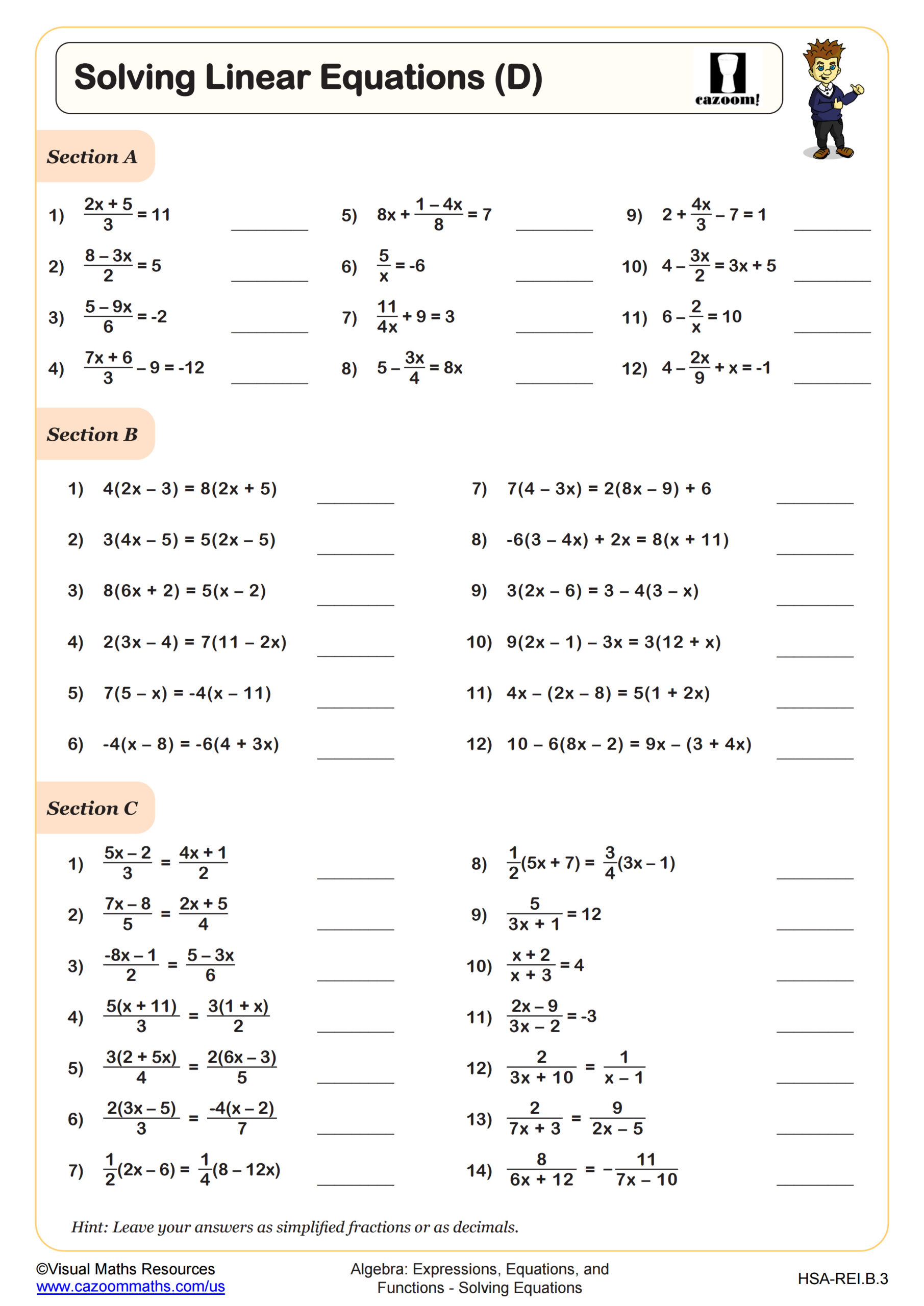
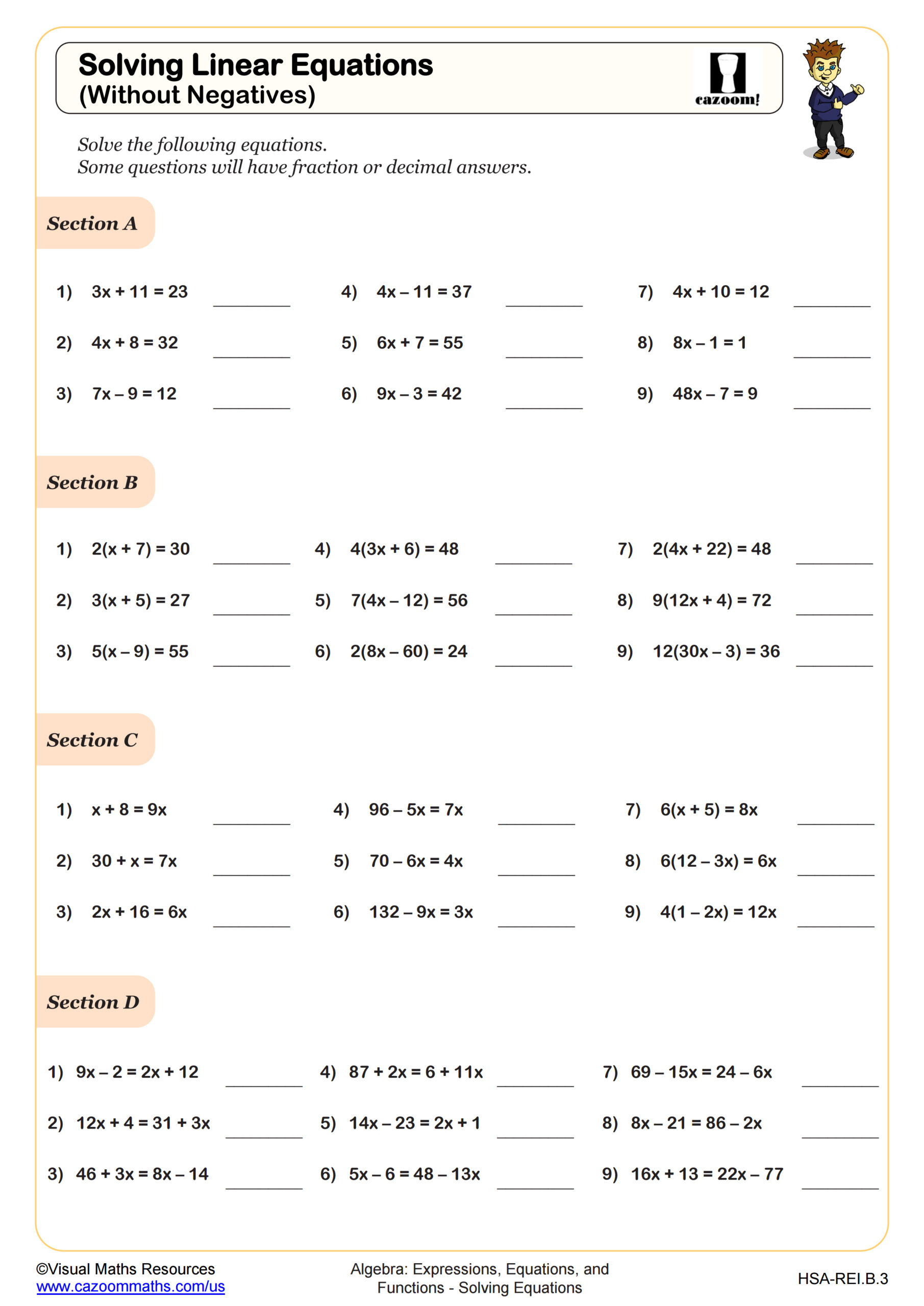
Solving Linear Equations (Without Negatives)
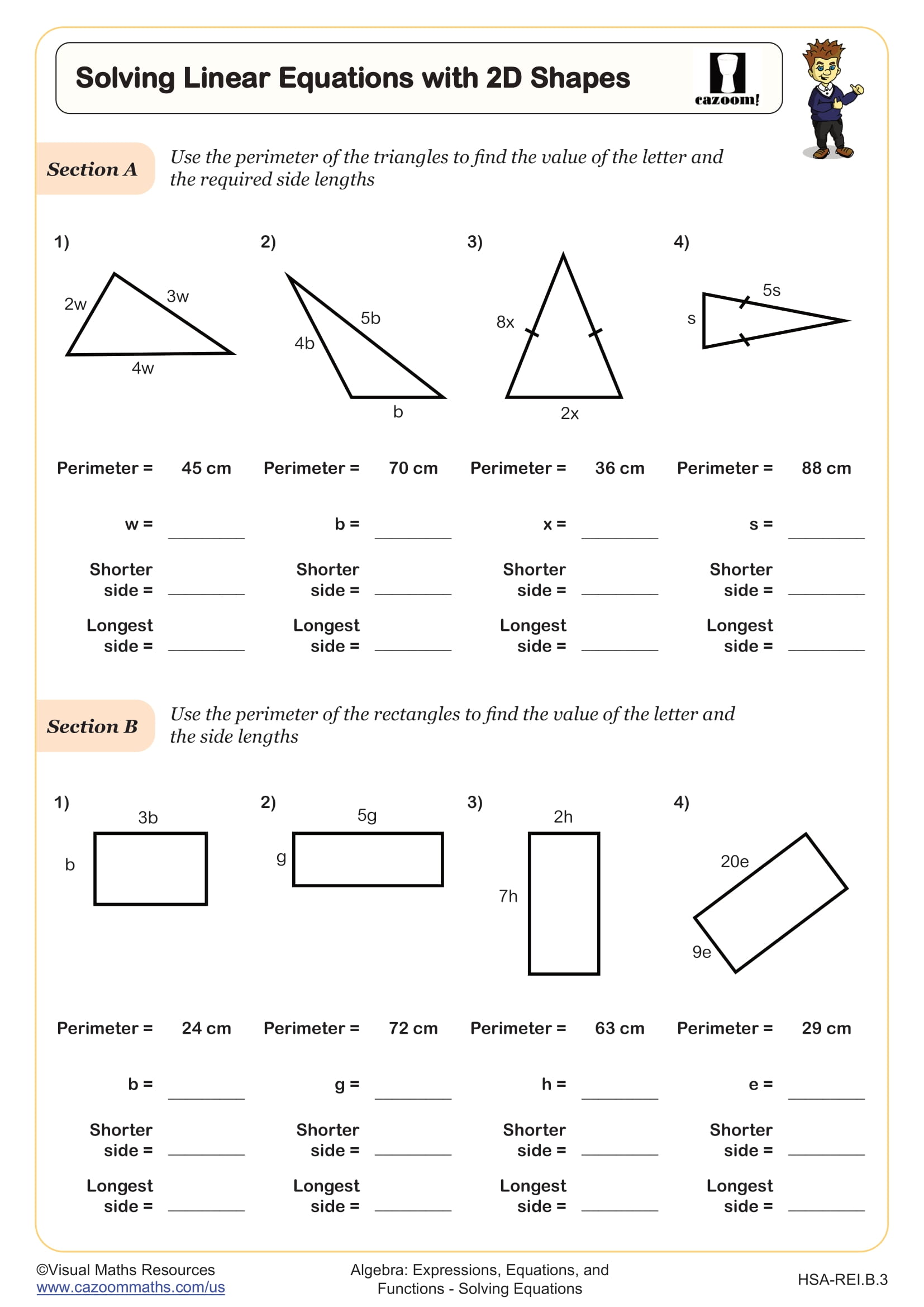
Solving Linear Equations with 2D Shapes
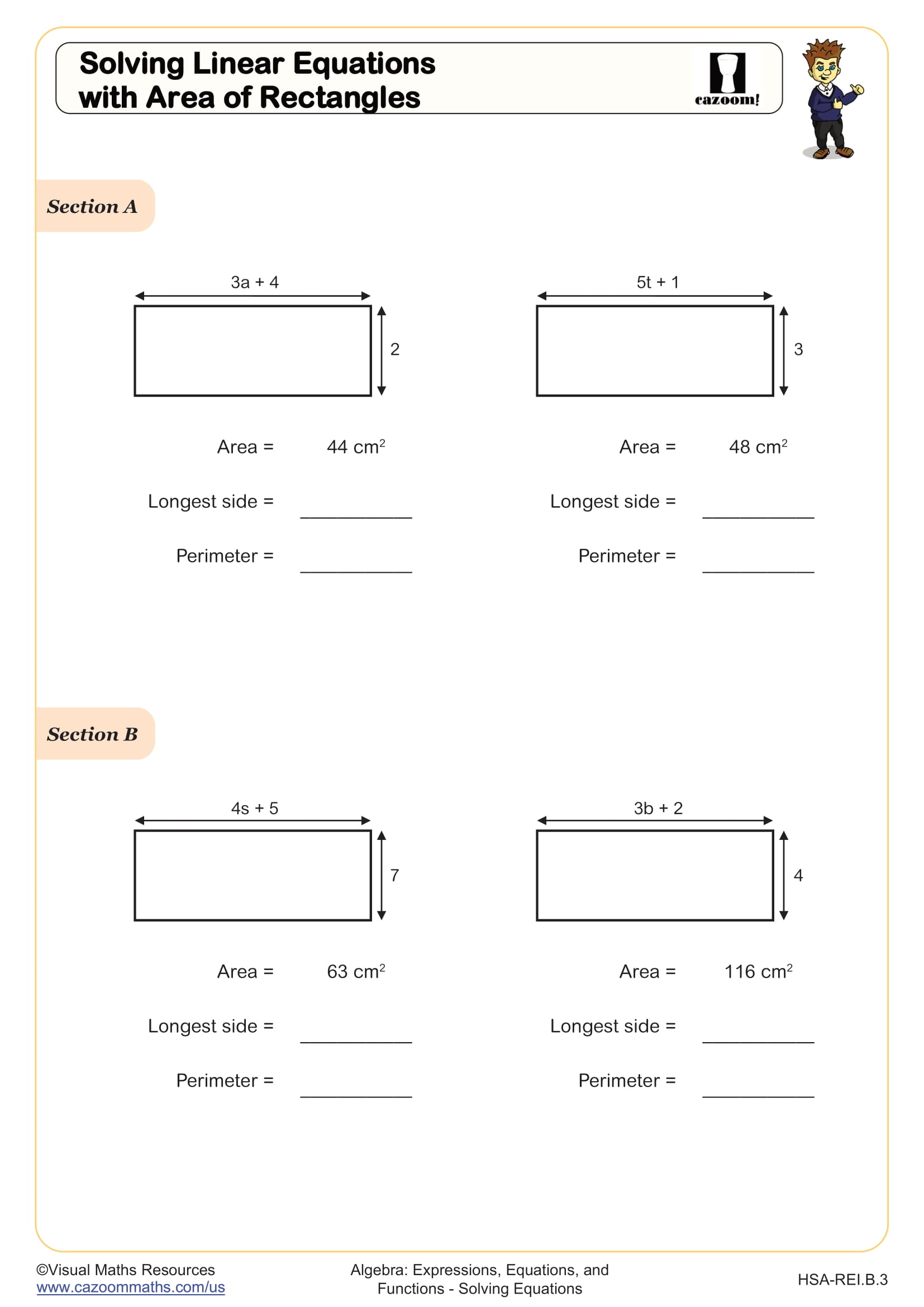
Solving Linear Equations with Area of Rectangles
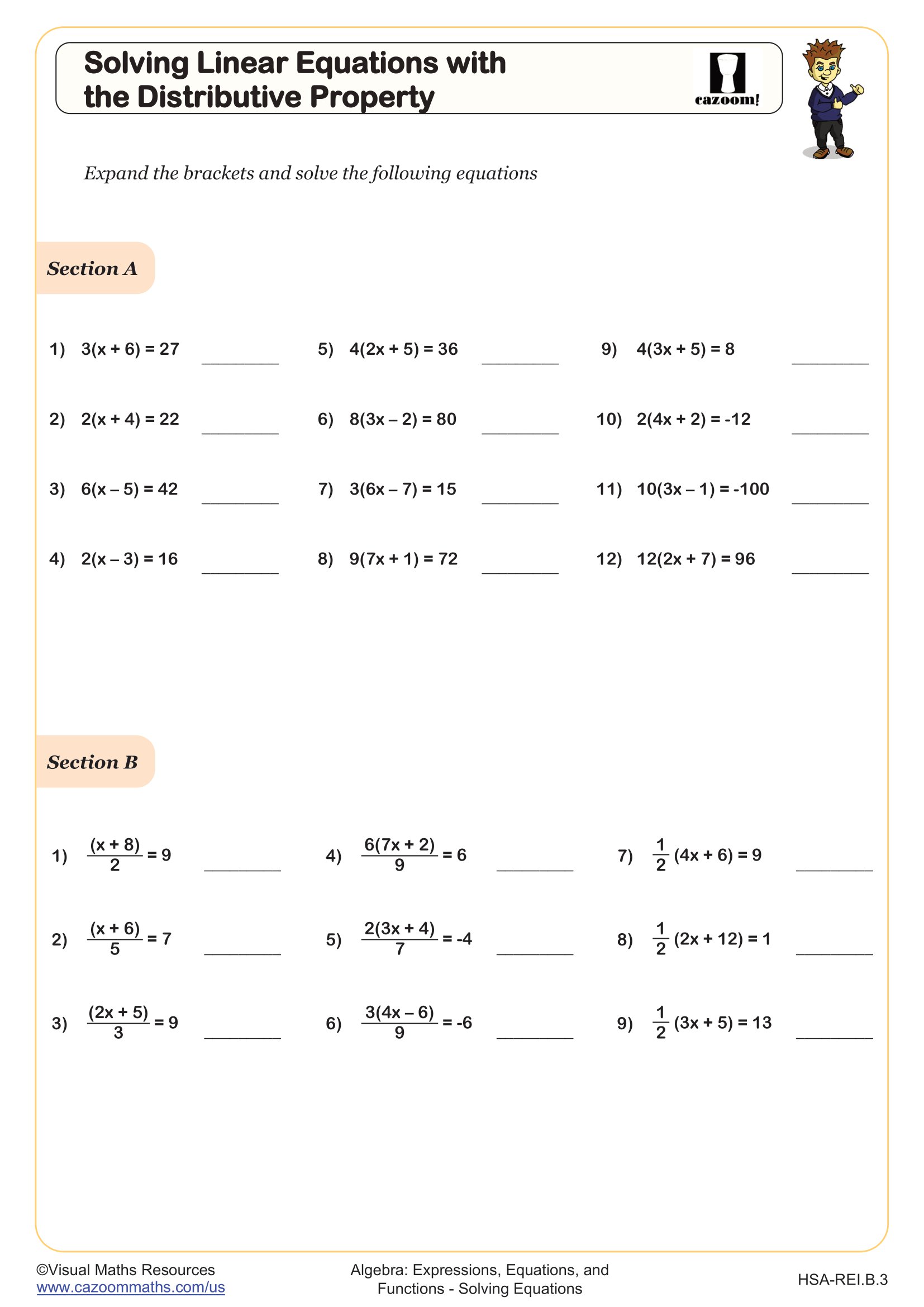
Solving Linear Equations with the Distributive Property
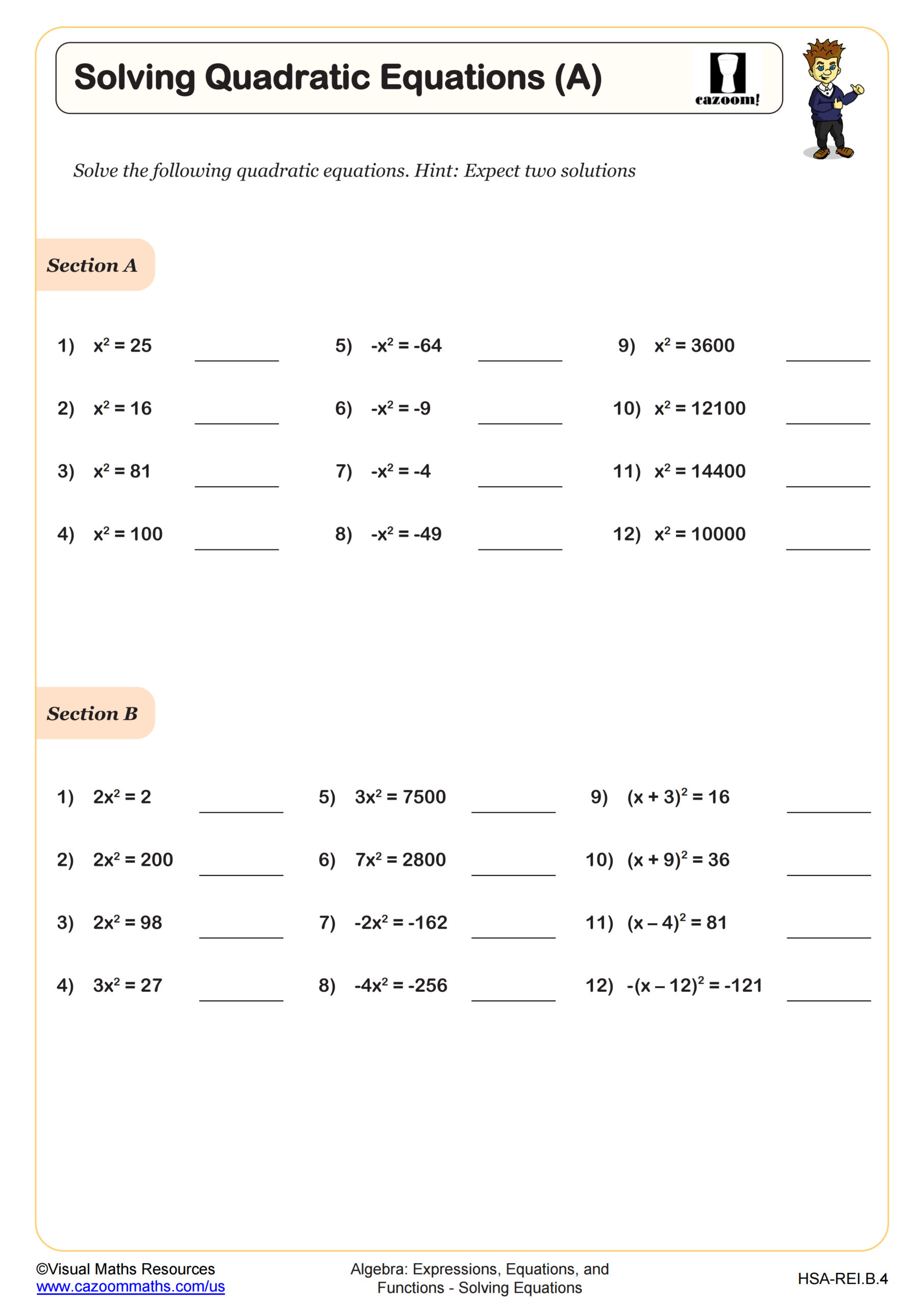
Solving Quadratic Equations (A)
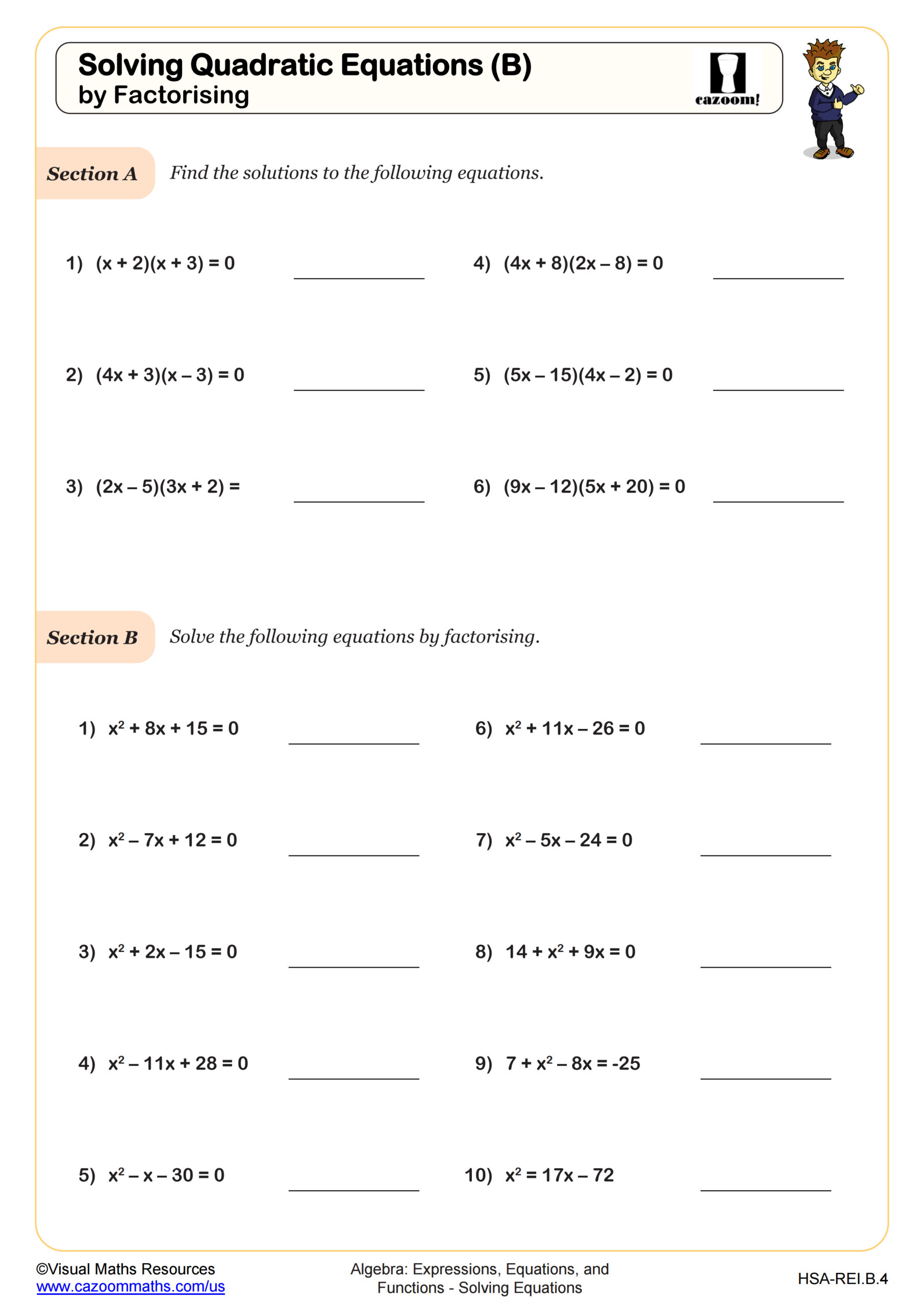
Solving Quadratic Equations (B) - By Factoring
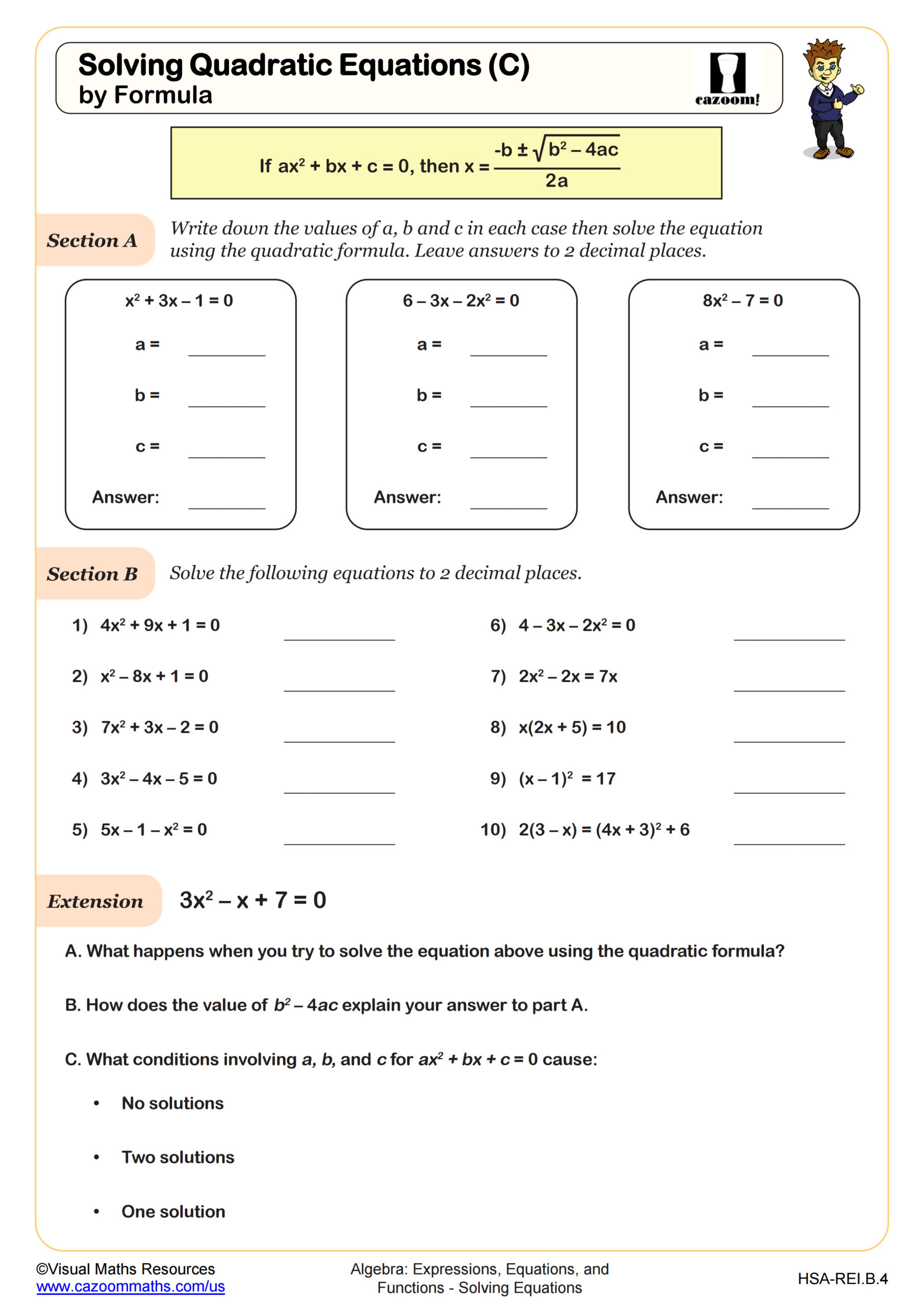
Solving Quadratic Equations (C) - By Quadratic Formula
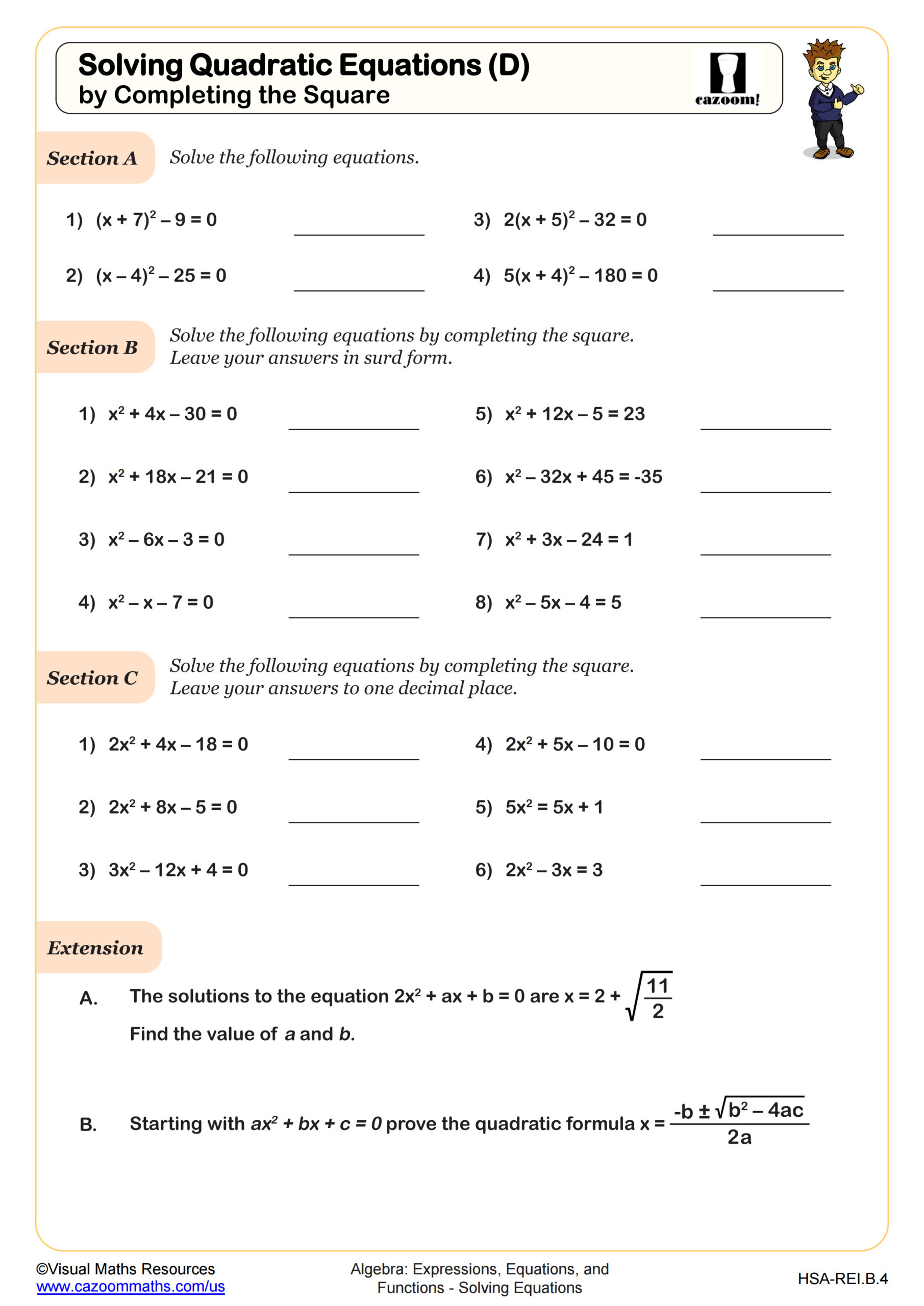
Solving Quadratic Equations (D) - By Completing the Square
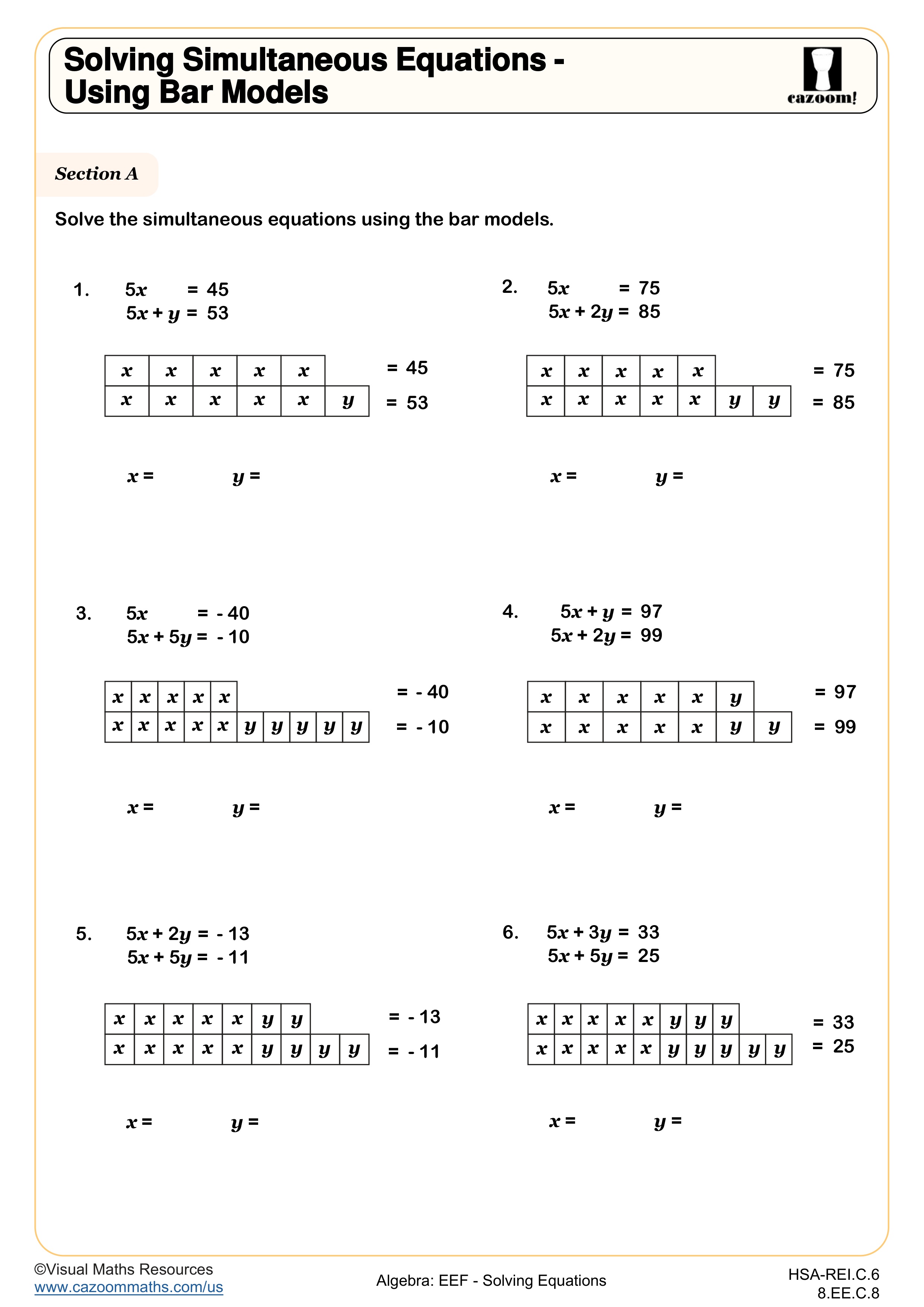
Solving Simultaneous Equations - Using Bar Models
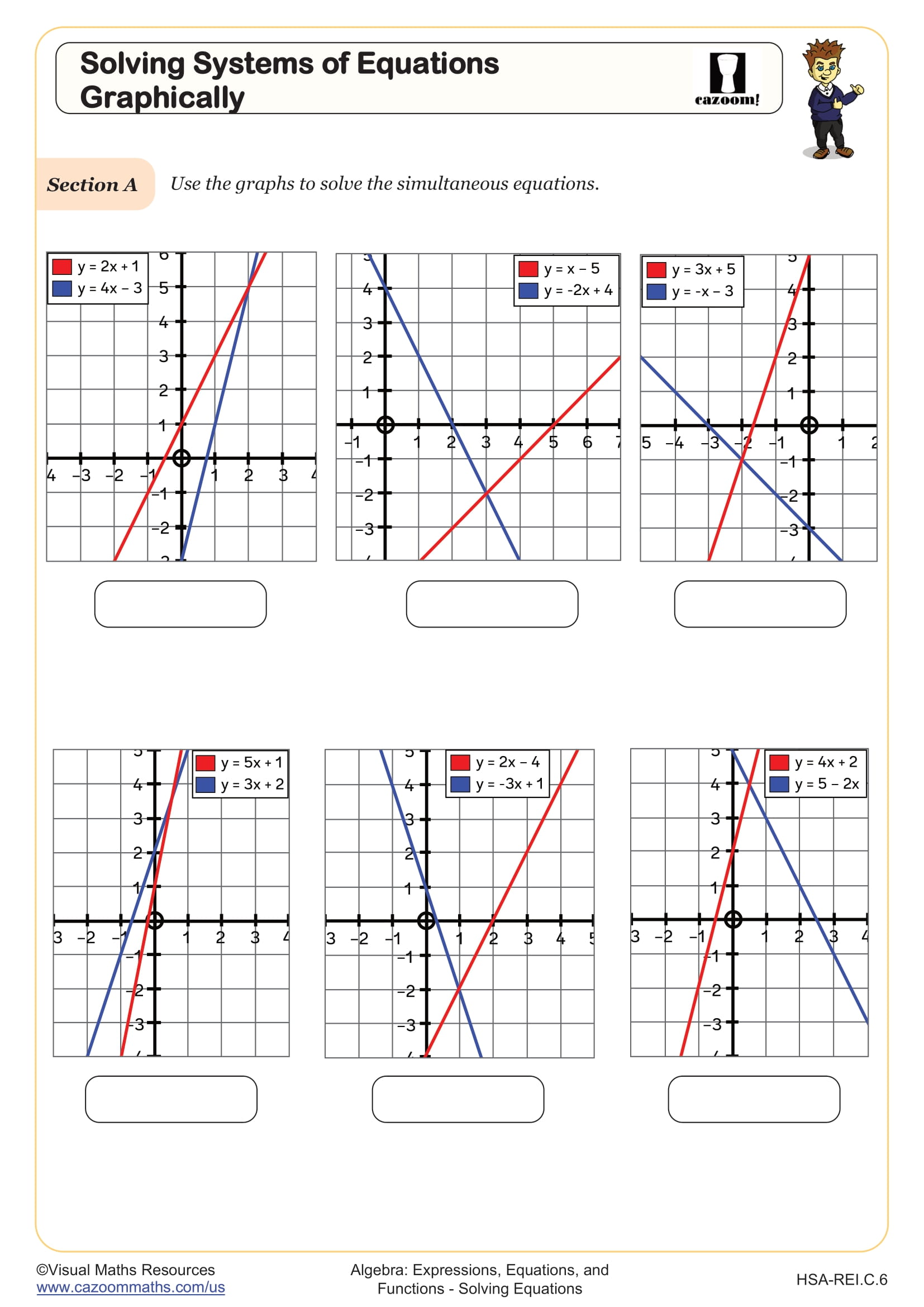
Solving Systems of Equations Graphically
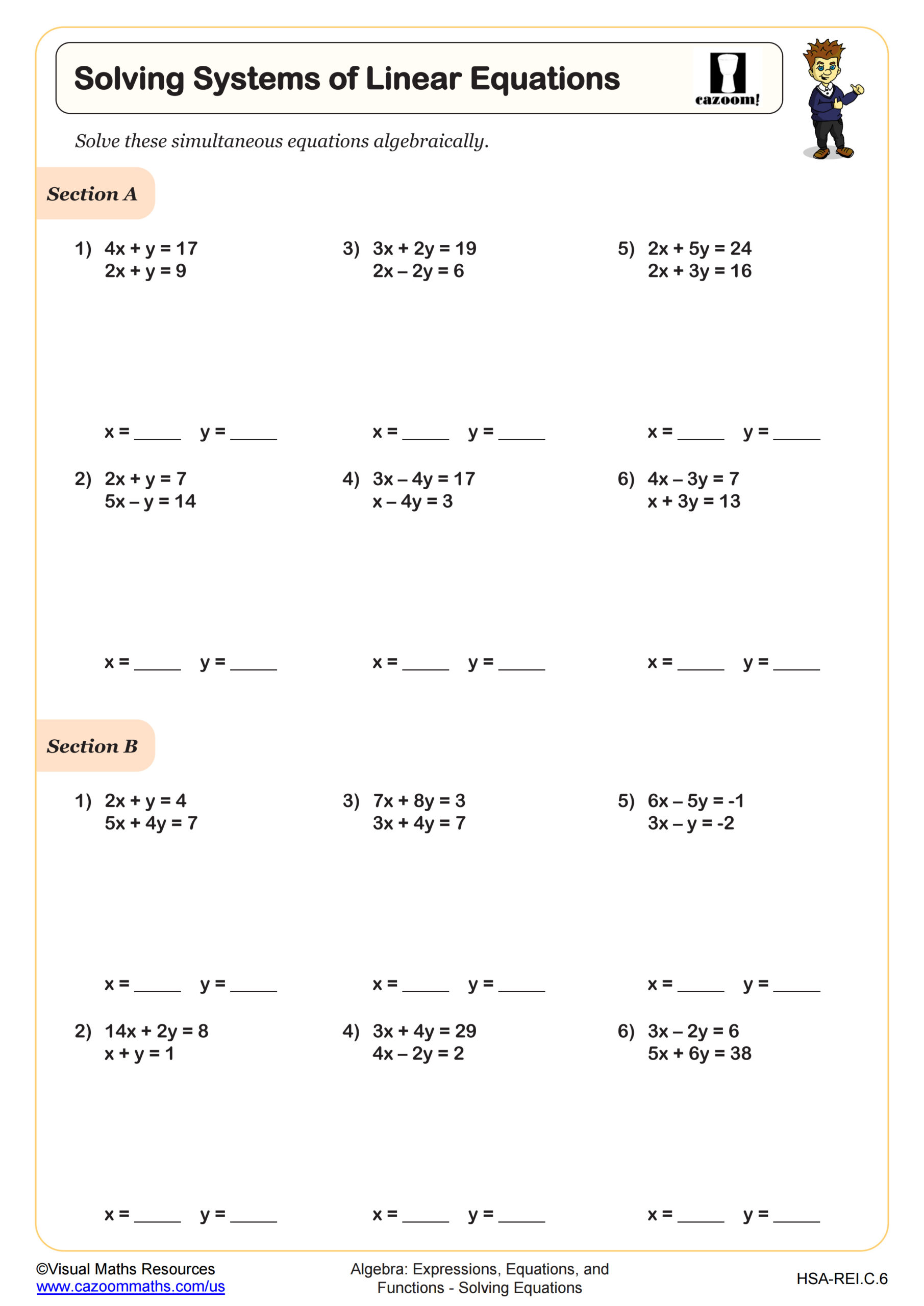
Solving Systems of Linear Equations
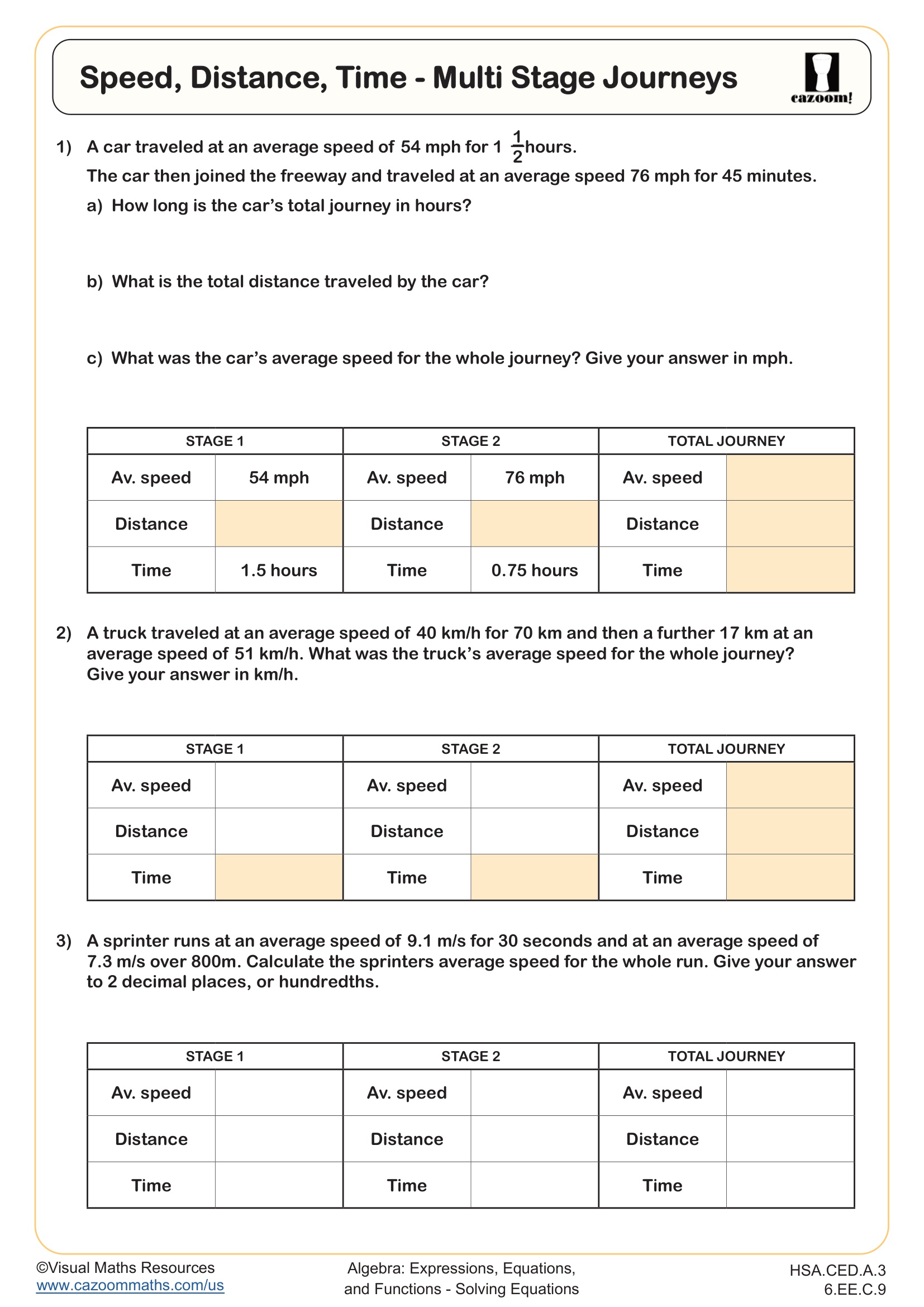
Speed, Distance, Time - Multi Stage Journeys
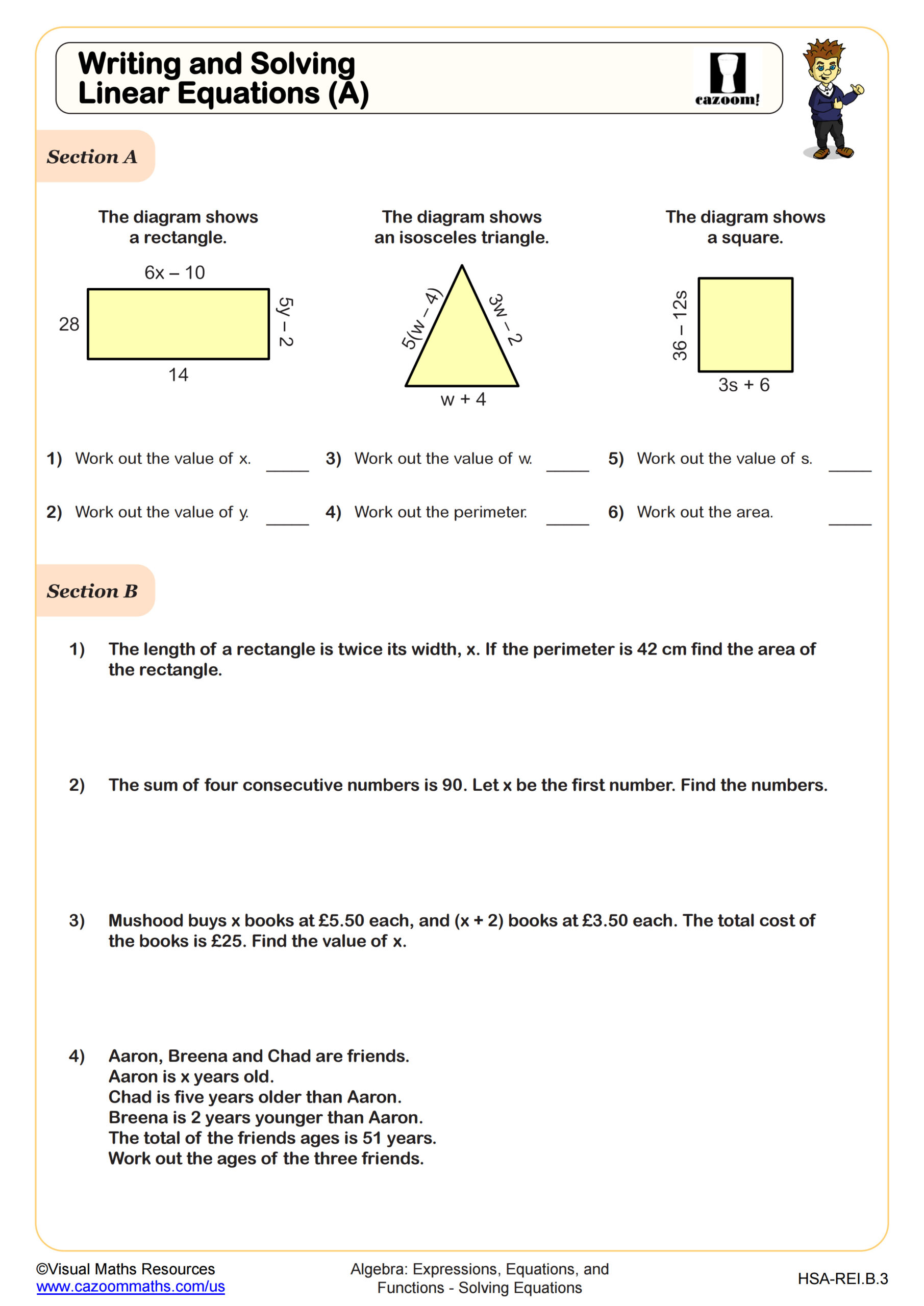
Writing and Solving Linear Equations (A)
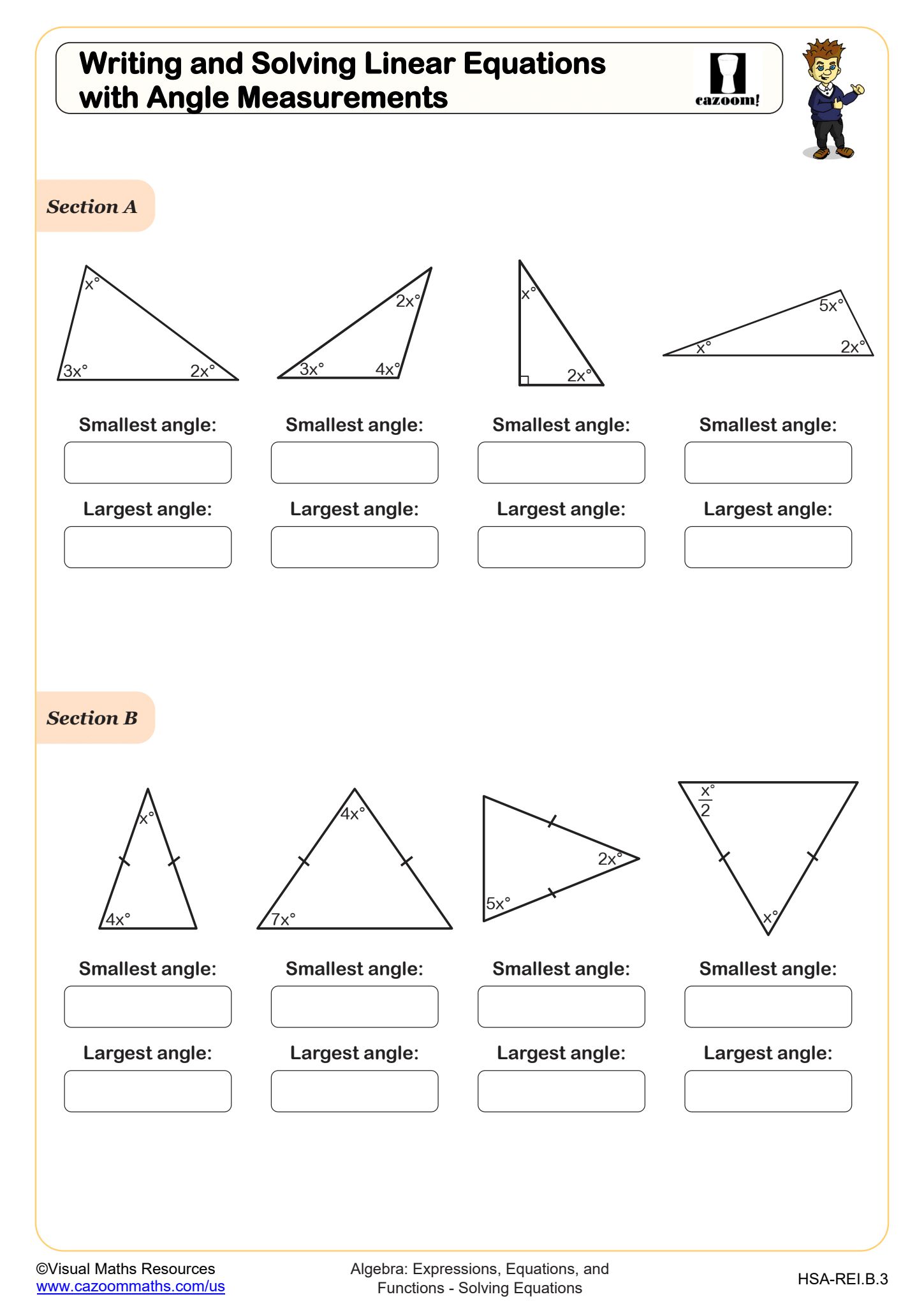
Writing and Solving Linear Equations with Angle Measurements
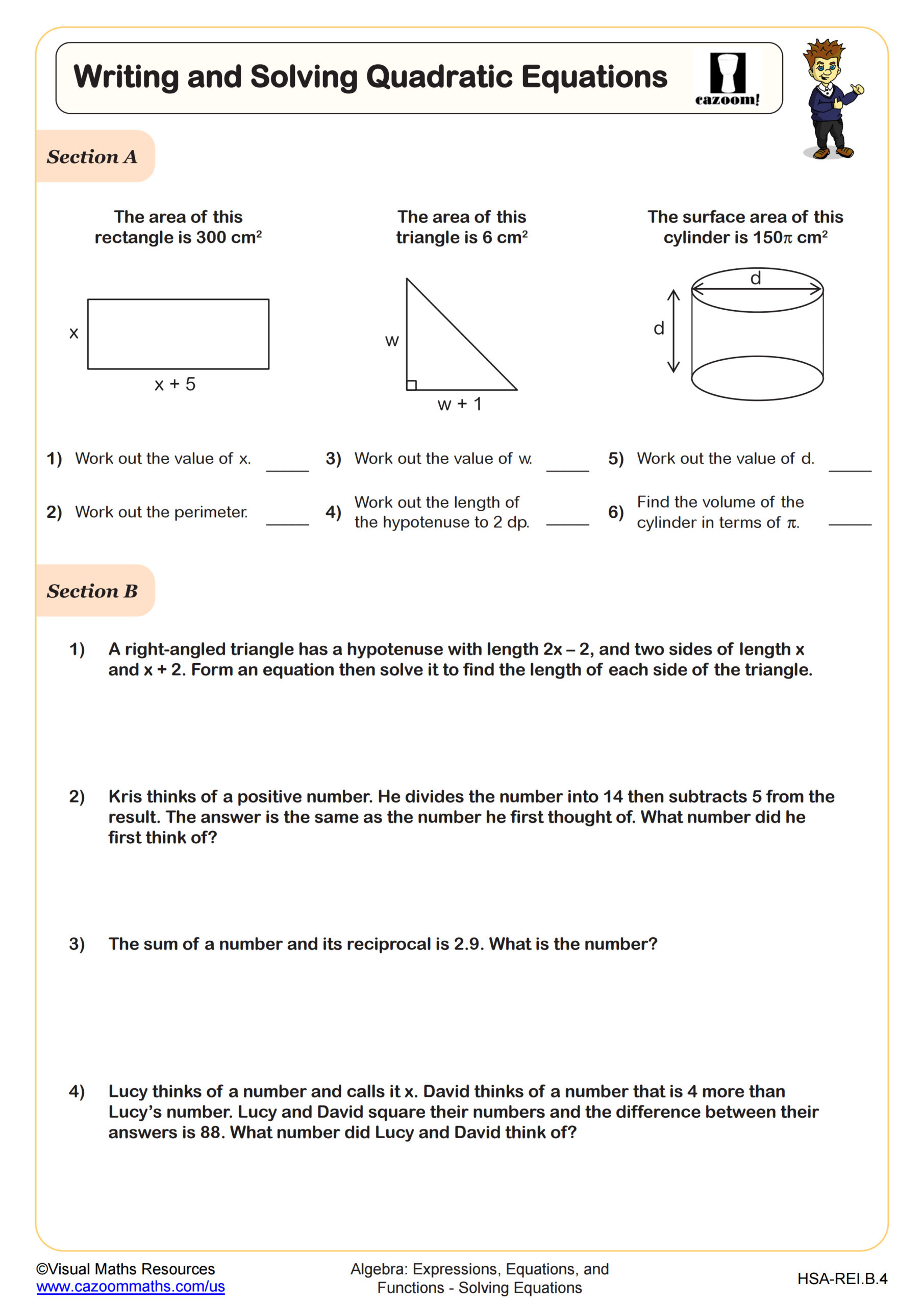
Writing and Solving Quadratic Equations
All worksheets are created by the team of experienced teachers at Cazoom Math.
What Equation-Solving Skills Are Covered in Integrated Math 1?
Integrated Math 1 focuses on solving linear equations with variables on both sides, equations with rational coefficients, and introductory quadratic equations solved by factoring. Students also write equations from verbal descriptions and apply equation solving to geometric formulas, connecting algebra to spatial reasoning. This integrated approach helps students see equations as tools for modeling real situations rather than isolated symbol manipulation.
A common error occurs when students distribute negative signs across parentheses incorrectly, particularly in equations like 5 - 2(x + 3) = 11. Teachers notice that students who check their solutions by substituting back into the original equation catch these distribution mistakes and develop stronger number sense. The worksheets provide varied contexts that require attention to signs, helping students build accuracy through repetition.
How Do Standardized Tests Assess Equation Solving?
The SAT and state assessments regularly include equation-solving questions in both calculator and no-calculator sections, expecting students to solve multi-step linear equations and basic quadratic equations efficiently. Tests often embed equations within word problems about rates, distances, or geometric relationships, requiring students to first translate scenarios into algebraic form. Students must demonstrate fluency with combining like terms, applying the distributive property, and isolating variables through inverse operations.
Students lose points when they rush through sign errors or fail to simplify fully before declaring an answer. Another frequent mistake involves solving quadratic equations by factoring but forgetting to set each factor equal to zero separately, writing just the factored form without finding actual x-values. Practice with mixed problem sets helps students develop the careful step-by-step approach that standardized tests reward.
What Makes Factoring an Effective Method for Solving Quadratic Equations?
Factoring transforms quadratic equations into products of binomials, allowing students to apply the zero product property: if ab = 0, then a = 0 or b = 0. This method works efficiently when quadratics have integer solutions and provides insight into the structure of parabolas by revealing their x-intercepts directly. Students typically experience a breakthrough when they recognize that factoring reverses the FOIL multiplication process they've already practiced, connecting two skills they initially viewed as separate.
Engineers and designers use factoring when optimizing dimensions for manufacturing constraints or calculating projectile paths. For example, determining when a launched object reaches ground level involves solving a quadratic equation where height equals zero. Understanding factoring prepares students for physics courses where quadratic models describe motion, making this algebraic skill immediately relevant to STEM applications beyond the math classroom.
How Can Teachers Use These Worksheets in Integrated Math 1 Classrooms?
The worksheets provide scaffolded practice that progresses from basic one-step equations to complex multi-step problems requiring multiple properties. Different versions of similar problem types allow teachers to differentiate instruction, assigning simpler variations to students needing foundational work while challenging advanced students with contextual applications. The answer keys enable students to self-check during independent practice, promoting metacognition about their solution strategies and error patterns.
Many teachers use these worksheets for spiral review, assigning mixed problem sets that revisit linear equations while introducing quadratic solving methods. They work well as warm-up activities before introducing related concepts or as exit tickets to assess daily progress. For students preparing for unit tests or benchmark assessments, the variety of problem contexts helps identify specific weak points, whether in algebraic manipulation, sign handling, or translating word problems into equations.