Integrated Math 2 Area and Perimeter Worksheets
All worksheets are created by the team of experienced teachers at Cazoom Math.
What Area and Perimeter Concepts Do Integrated Math 2 Students Study?
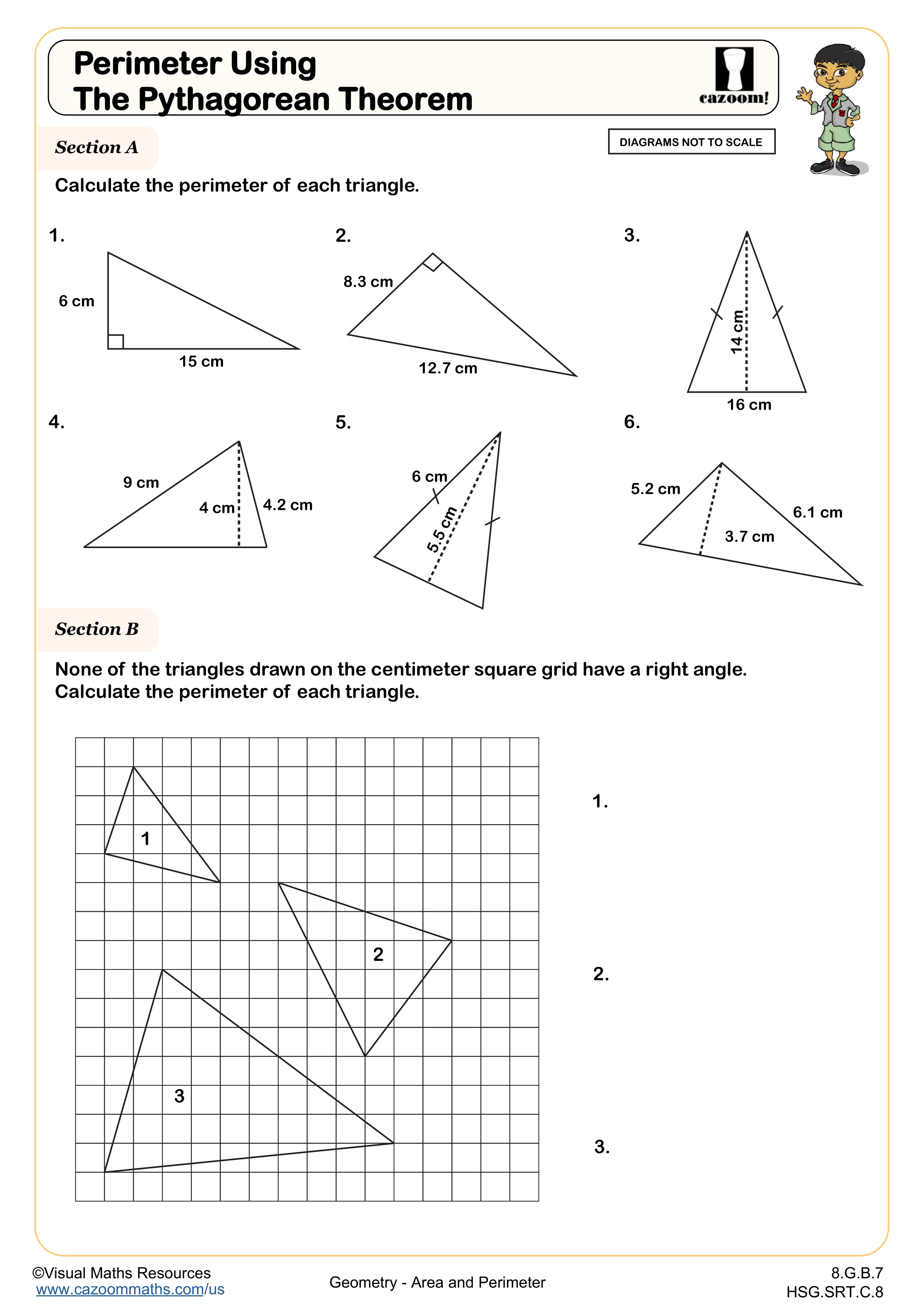
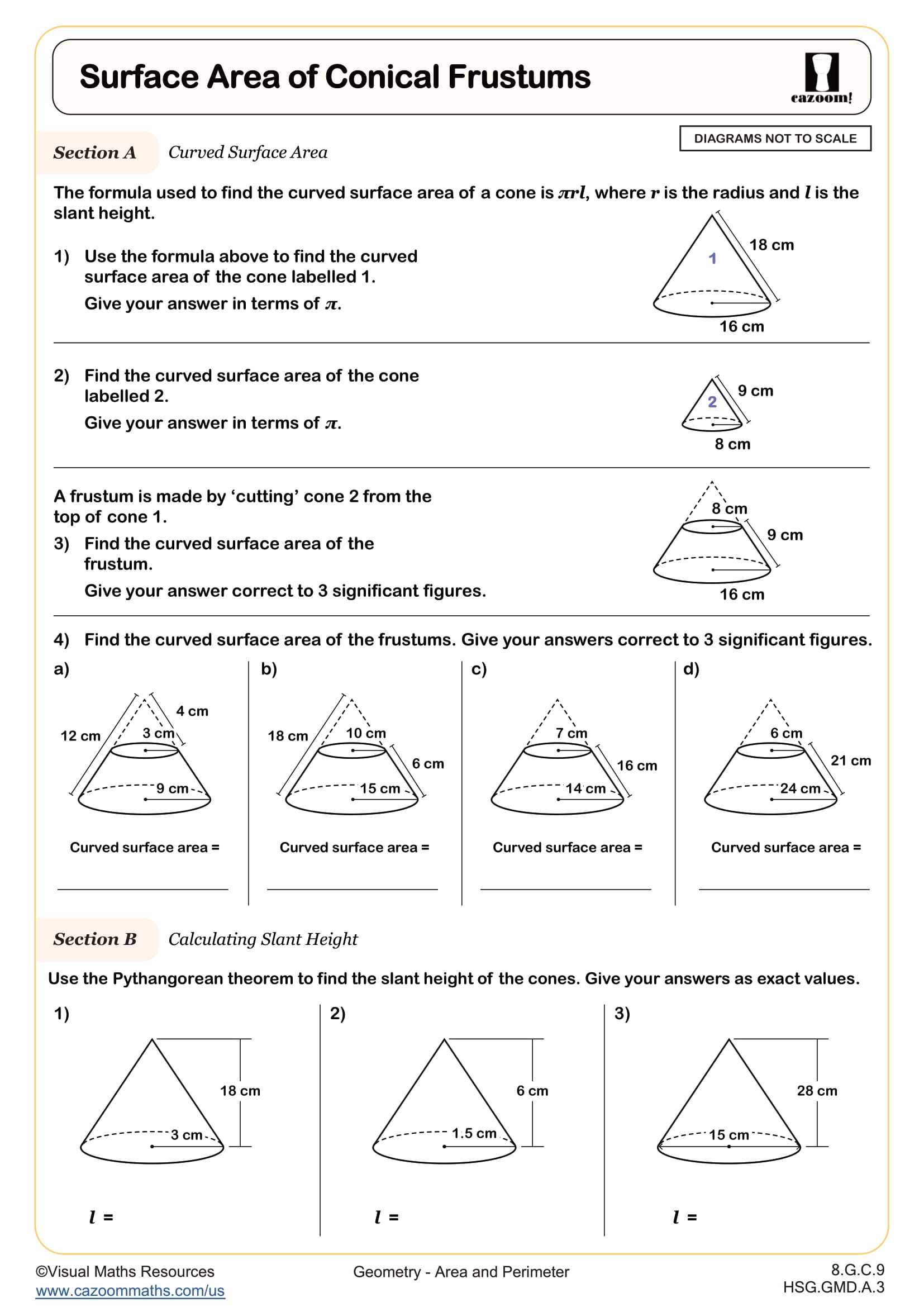
In Integrated Math 2, area and perimeter work moves beyond the formulas students memorized in middle school. The curriculum expects students to apply the Pythagorean Theorem as a prerequisite step before calculating areas or perimeters, handle composite shapes that require decomposition strategies, and work with three-dimensional objects like conical frustums where multiple geometric principles intersect. Students also encounter problems where they must determine which measurement to find first based on given information.
A common error occurs when students see a triangle problem and immediately reach for the standard area formula without recognizing they need to calculate the height using the Pythagorean Theorem first. Teachers report that explicitly asking students to identify missing information before selecting a formula helps break this automatic response pattern and encourages more strategic problem-solving.
How Do Area and Perimeter Problems Appear on the SAT and ACT?
Standardized tests like the SAT and ACT rarely ask straightforward area or perimeter questions with all dimensions provided. Instead, these assessments embed geometric calculations within multi-step problems where students must recognize relationships between figures, apply the Pythagorean Theorem to find missing lengths, or work backwards from a given area to determine a dimension. Questions often combine algebra with geometry, requiring students to set up equations involving area or perimeter expressions.
Students lose points when they calculate an intermediate value like a triangle's height but then forget to use it in the final area calculation. Another frequent mistake occurs with conical frustums or other three-dimensional shapes where students confuse lateral surface area with total surface area, missing the bases entirely. Test-takers who sketch diagrams and label each calculated value directly on their work tend to avoid these errors.
Why Do Students Need to Find Area Using the Pythagorean Theorem?
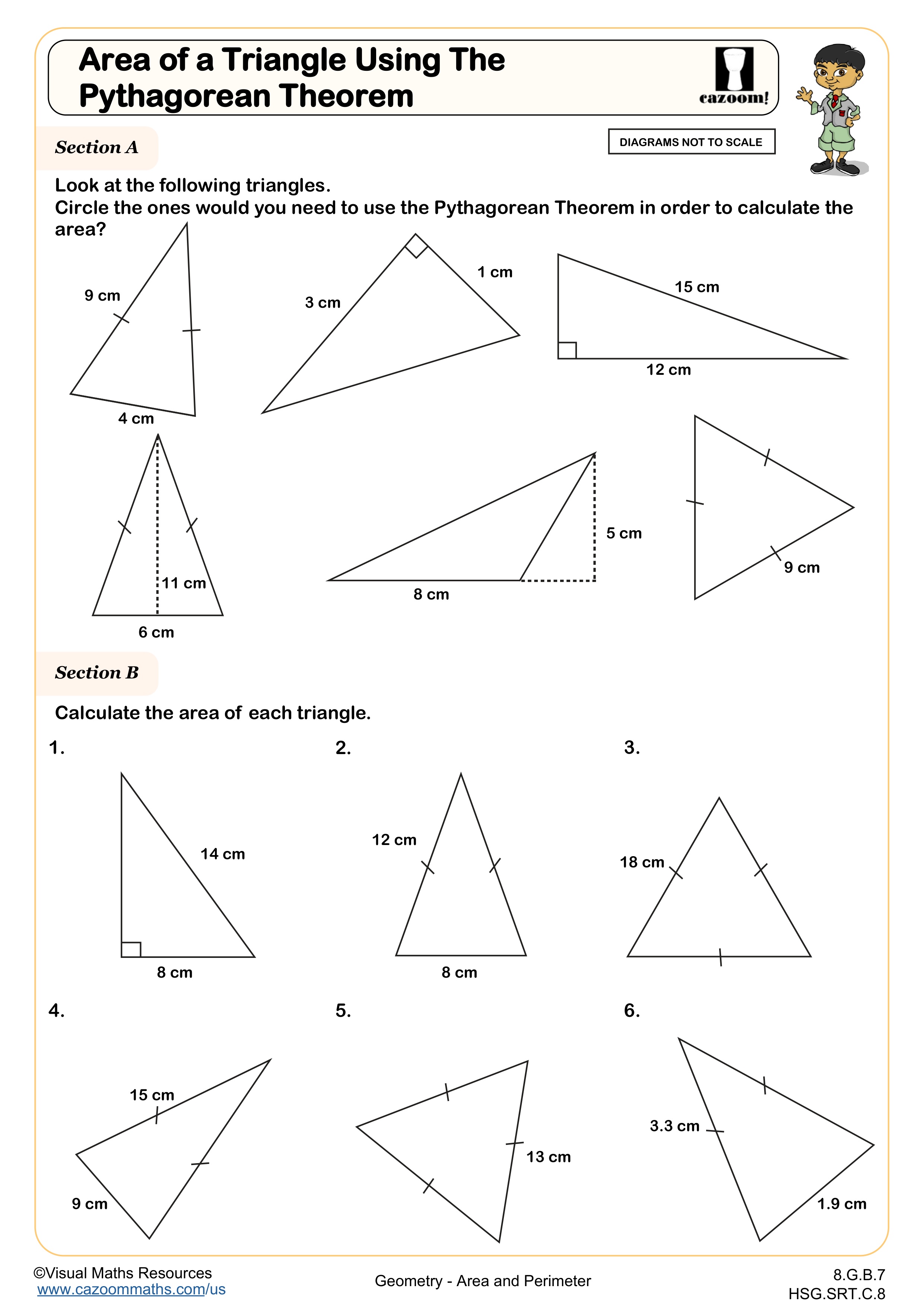
When a triangle's height isn't given directly, students must use the Pythagorean Theorem to calculate it before applying the area formula. This skill appears frequently in problems involving right triangles where students know two sides and need to find the third, or in isosceles triangles where the height creates two right triangles. The process requires recognizing which triangle within the figure contains the needed right angle, setting up the equation correctly, and then using that calculated dimension in the area formula.
Architects and engineers regularly perform these calculations when determining roof areas for material estimates, calculating load-bearing requirements for triangular support structures, or planning drainage slopes. Civil engineers use this combined skill when surveying land parcels where direct height measurements aren't accessible but horizontal distances and slant heights are known. This multi-step reasoning appears again in trigonometry and calculus applications.
How Should Teachers Use These Area and Perimeter Worksheets in Integrated Math 2?
These worksheets provide graduated practice with problems that require students to integrate the Pythagorean Theorem with area and perimeter formulas rather than simply plug numbers into equations. The answer keys allow students to check their work at each step, helping them identify whether errors occurred during the Pythagorean calculation or the subsequent area computation. This diagnostic feature makes the worksheets valuable for identifying specific skill gaps that need reteaching.
Many teachers assign these as retrieval practice before unit assessments, since students may have studied the Pythagorean Theorem weeks earlier and need deliberate review to connect it with current geometry topics. The worksheets also work well for targeted intervention with students who perform adequately on single-step problems but struggle when assessments require combining multiple concepts. Paired work helps students articulate their problem-solving sequence, which strengthens their approach on similar standardized test questions.