Integrated Math 2 Probability Worksheets
.jpg?w=3840)
All worksheets are created by the team of experienced teachers at Cazoom Math.
What Probability Concepts Do Integrated Math 2 Students Learn?
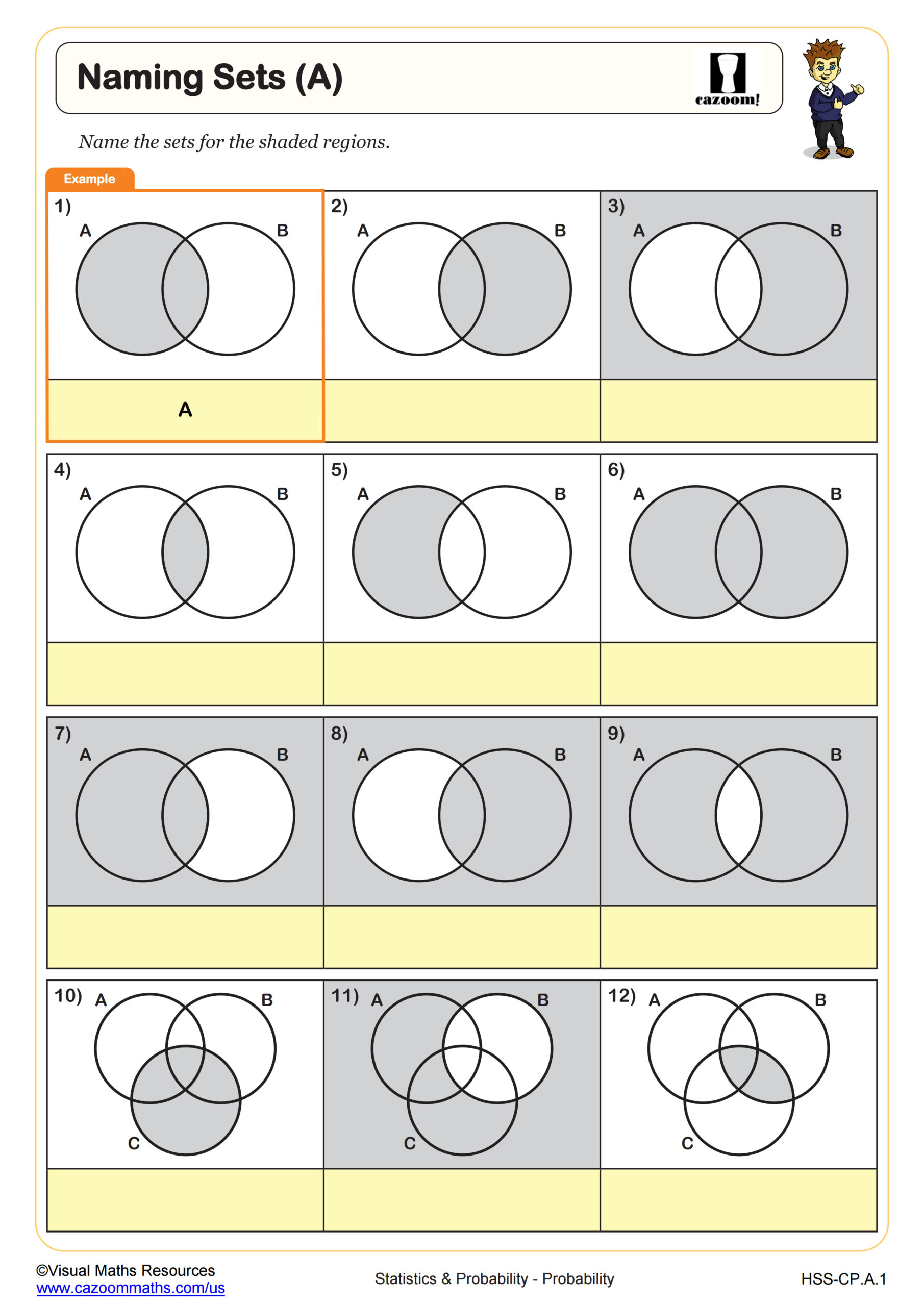
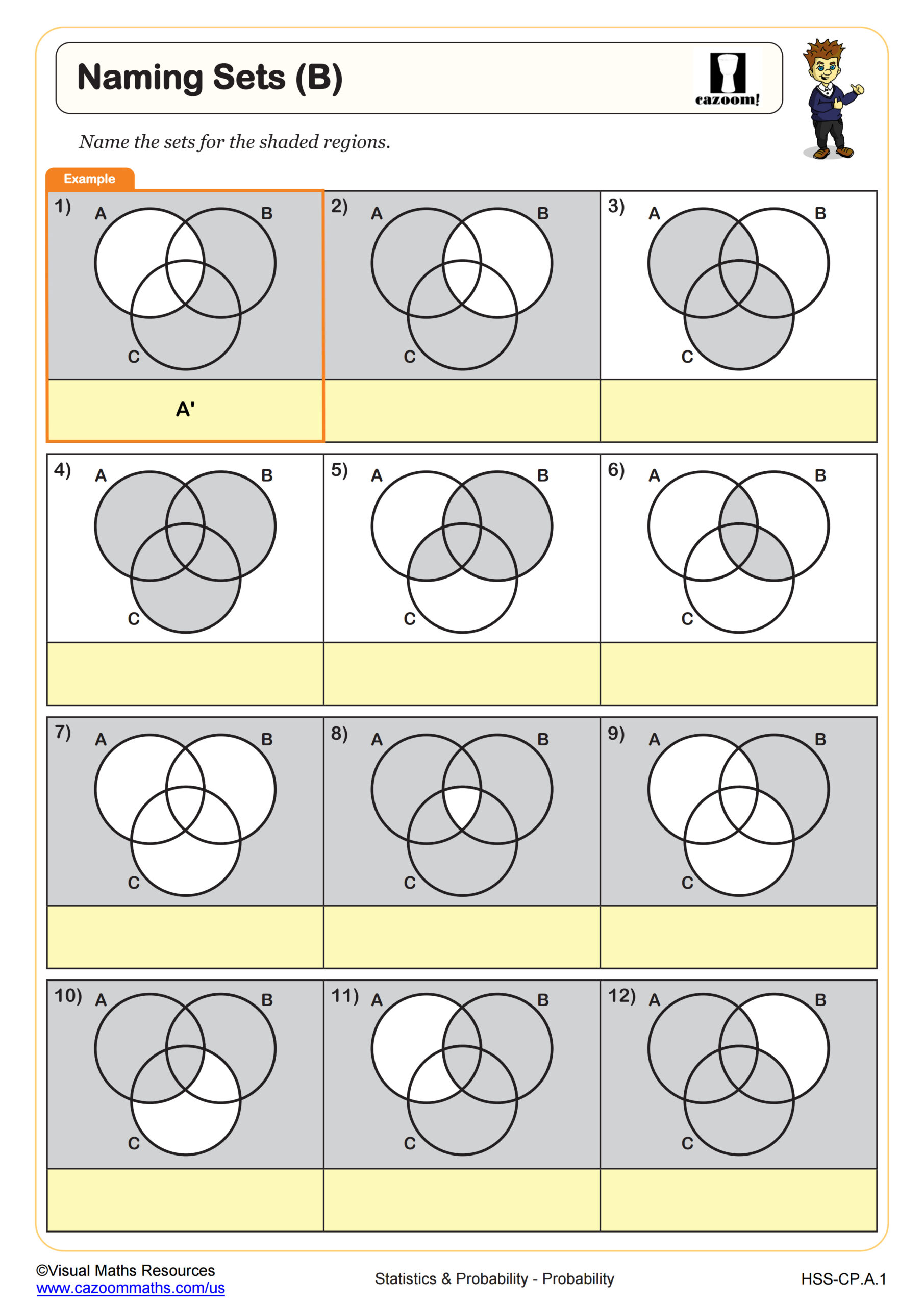
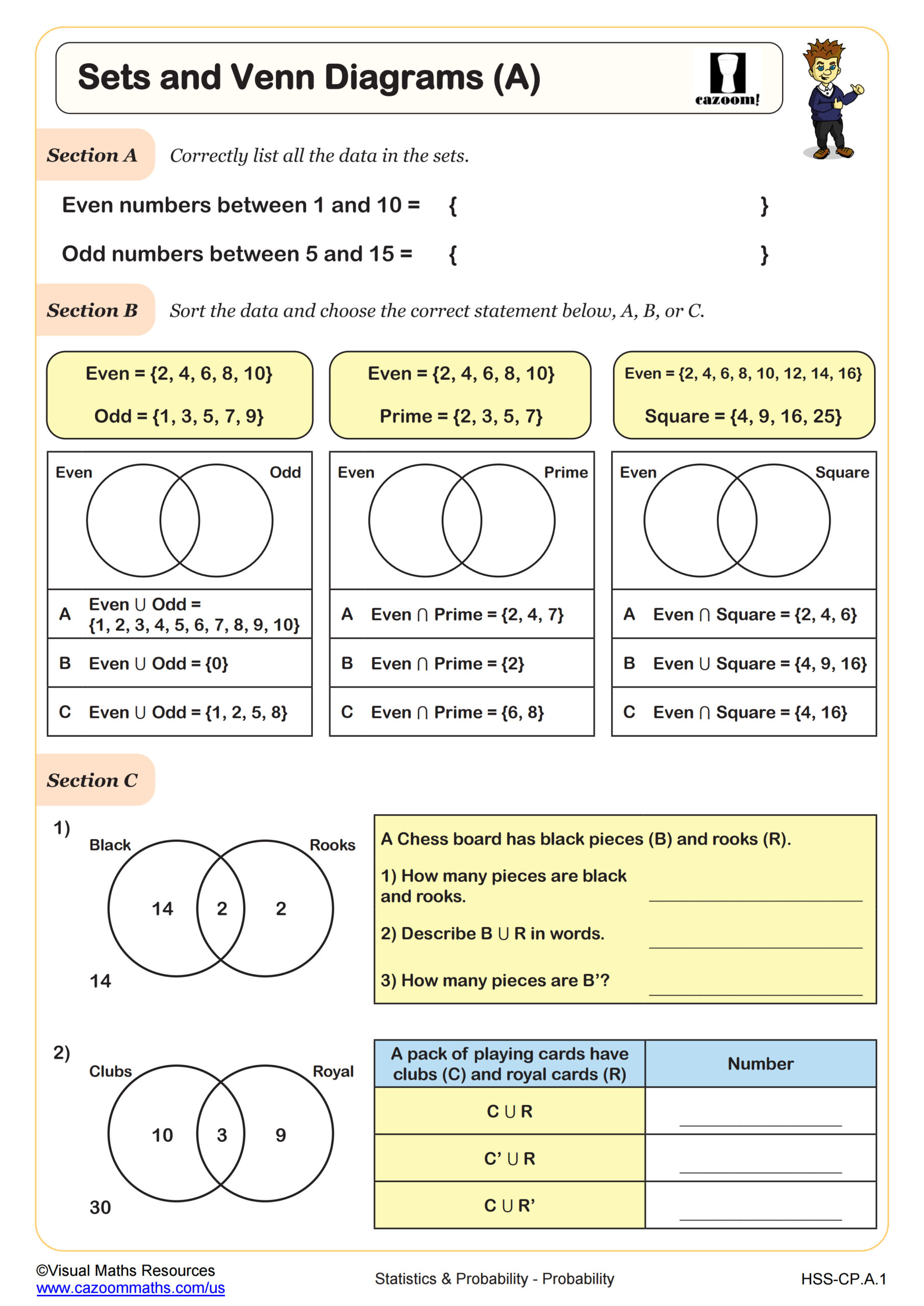
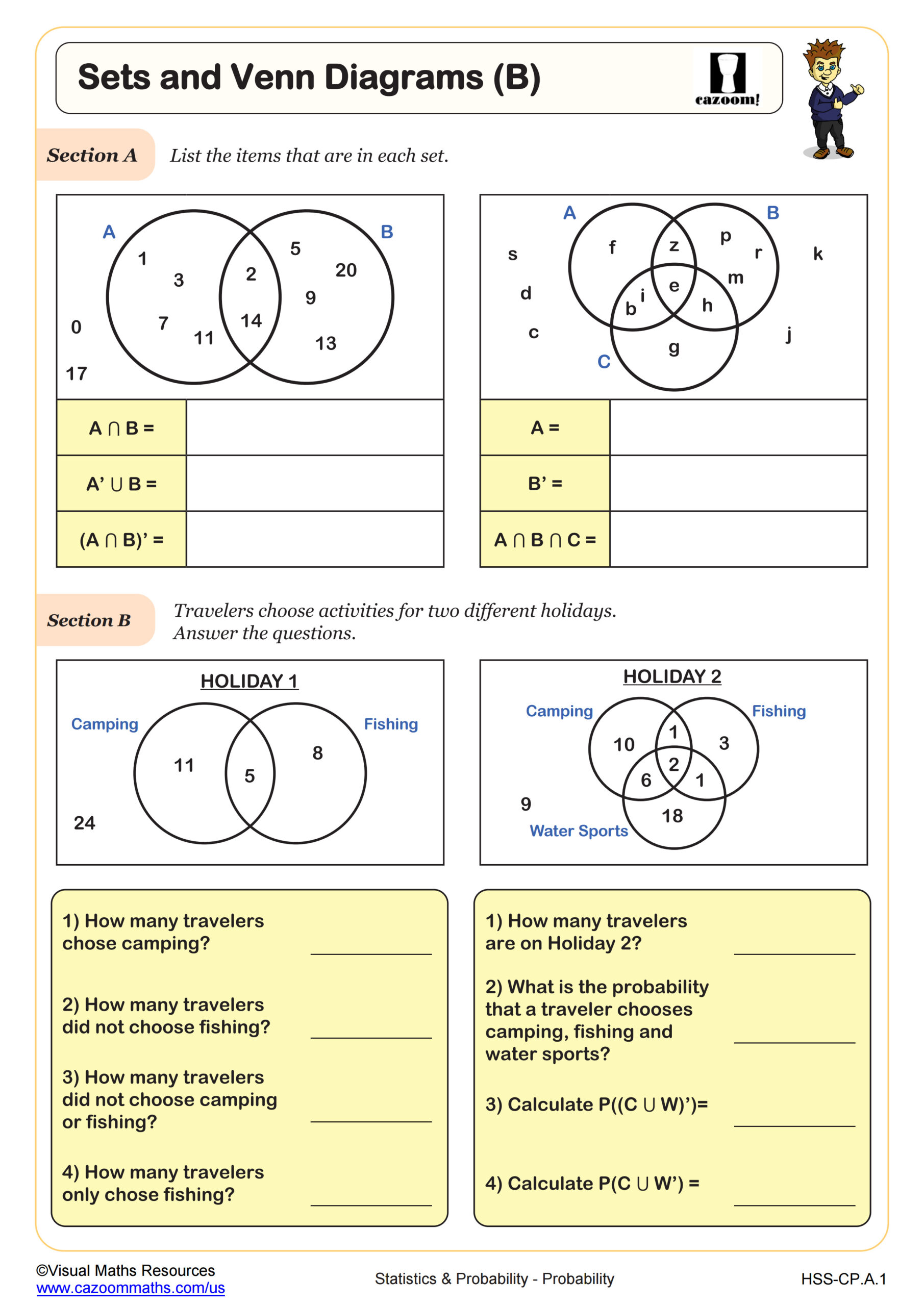
Integrated Math 2 probability focuses on foundational concepts including set notation, Venn diagrams for representing relationships between groups, and identifying mutually exclusive events. Students learn to name sets using roster and set-builder notation, interpret intersections and unions visually, and determine when events cannot occur simultaneously. These skills prepare students for more advanced probability calculations in later courses.
Students frequently confuse the concepts of intersection and union when first working with Venn diagrams, particularly when translating word problems into visual representations. Teachers notice that providing consistent practice with real-world scenarios, such as categorizing students by sports participation or class enrollment, helps students distinguish between "and" (intersection) and "or" (union) more reliably on assessments.
How Does Probability Appear on the SAT and ACT?
Standardized tests like the SAT and ACT assess probability through questions involving set relationships, compound events, and interpreting data displays including Venn diagrams. Students must demonstrate understanding of basic probability principles, calculate probabilities from given information, and recognize when events are mutually exclusive. The ACT particularly emphasizes reading and interpreting visual representations of data and probability relationships.
Students lose points when they misinterpret what a Venn diagram region represents, especially overlapping sections. A common error occurs when students calculate the probability of "A or B" by simply adding individual probabilities without accounting for overlap. Teachers observe that students who practice translating between verbal descriptions, set notation, and visual diagrams perform significantly better on these standardized test questions.
What Are Mutually Exclusive Events and Why Do They Matter?
Mutually exclusive events are outcomes that cannot occur at the same time, such as rolling an even number and an odd number on a single die roll. Understanding this concept helps students recognize when probability calculations require different approaches. When events are mutually exclusive, probabilities add directly; when they overlap, students must account for the intersection to avoid double-counting.
This concept connects directly to real-world decision-making in fields like insurance, risk assessment, and medical diagnosis. Epidemiologists use mutually exclusive event analysis when categorizing patient outcomes that cannot overlap, such as disease presence versus absence. College-bound students heading into business, healthcare, or engineering programs encounter these probability principles when analyzing scenarios where multiple outcomes compete but only one can occur in any given trial.
How Can Teachers Use These Probability Worksheets in Integrated Math 2?
These worksheets provide structured practice with varying difficulty levels, allowing teachers to differentiate instruction based on student readiness. The inclusion of both basic naming sets exercises and more complex Venn diagram interpretation problems supports scaffolded learning. Answer keys enable students to check their work independently during practice sessions or allow teachers to quickly assess understanding after instruction.
Many teachers find these worksheets effective for station rotations, where students work through different probability concepts at their own pace, or as targeted intervention for students struggling with specific aspects like set notation. The worksheets work well as homework following initial instruction, warm-up activities to refresh prior knowledge before moving to compound probability, or review materials before unit assessments and state testing windows.