Integrated Math 2 Sequences Worksheets
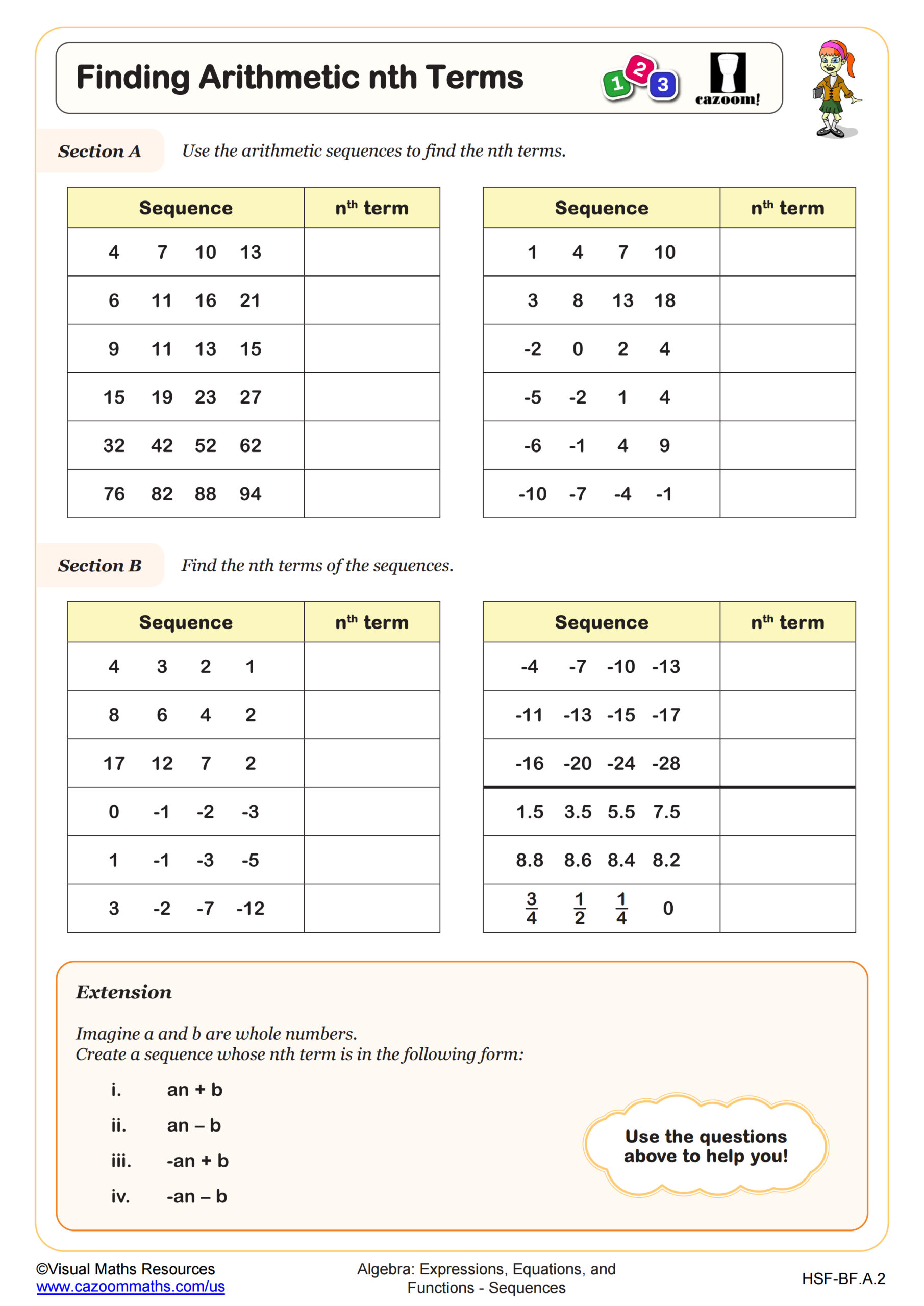
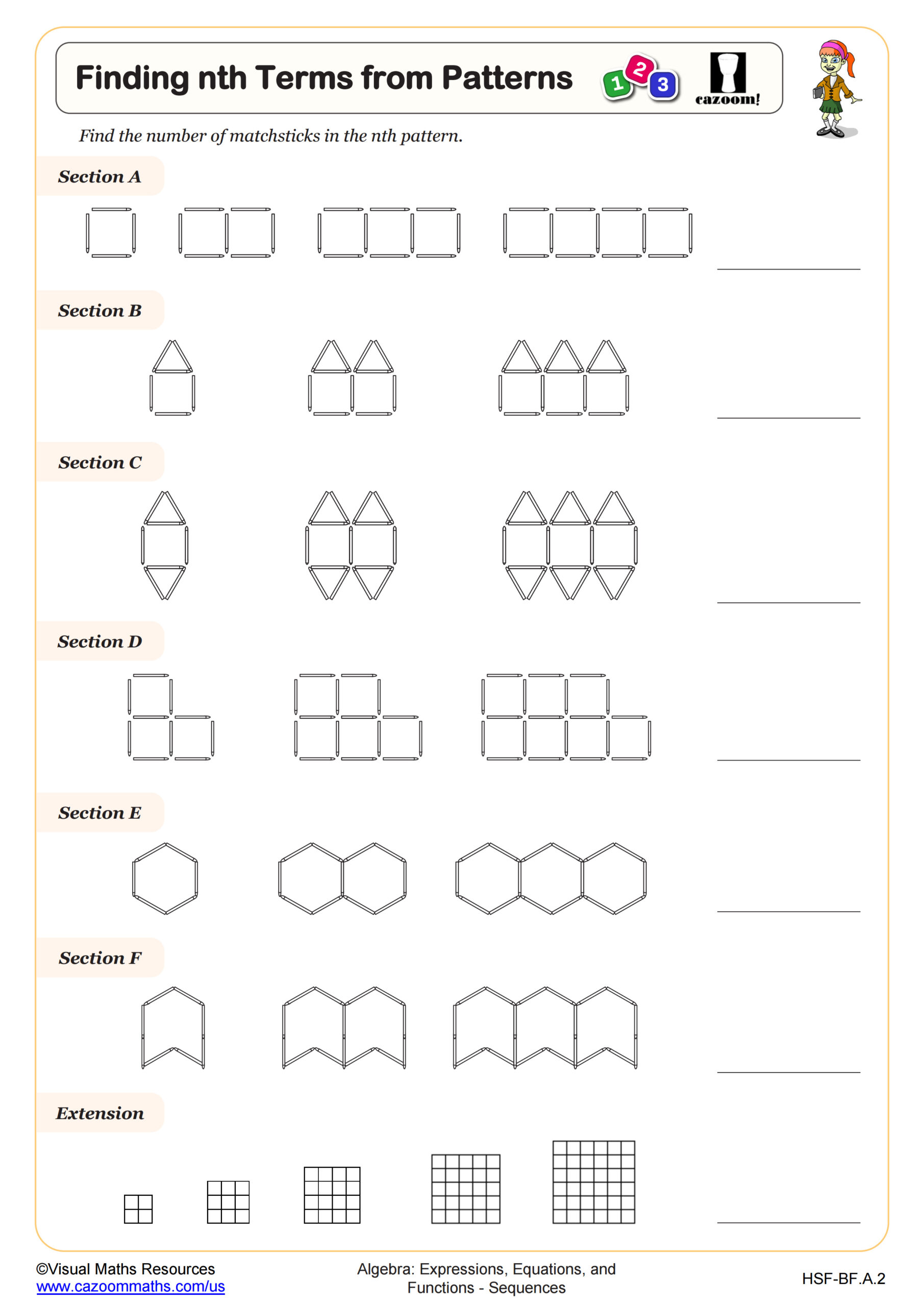
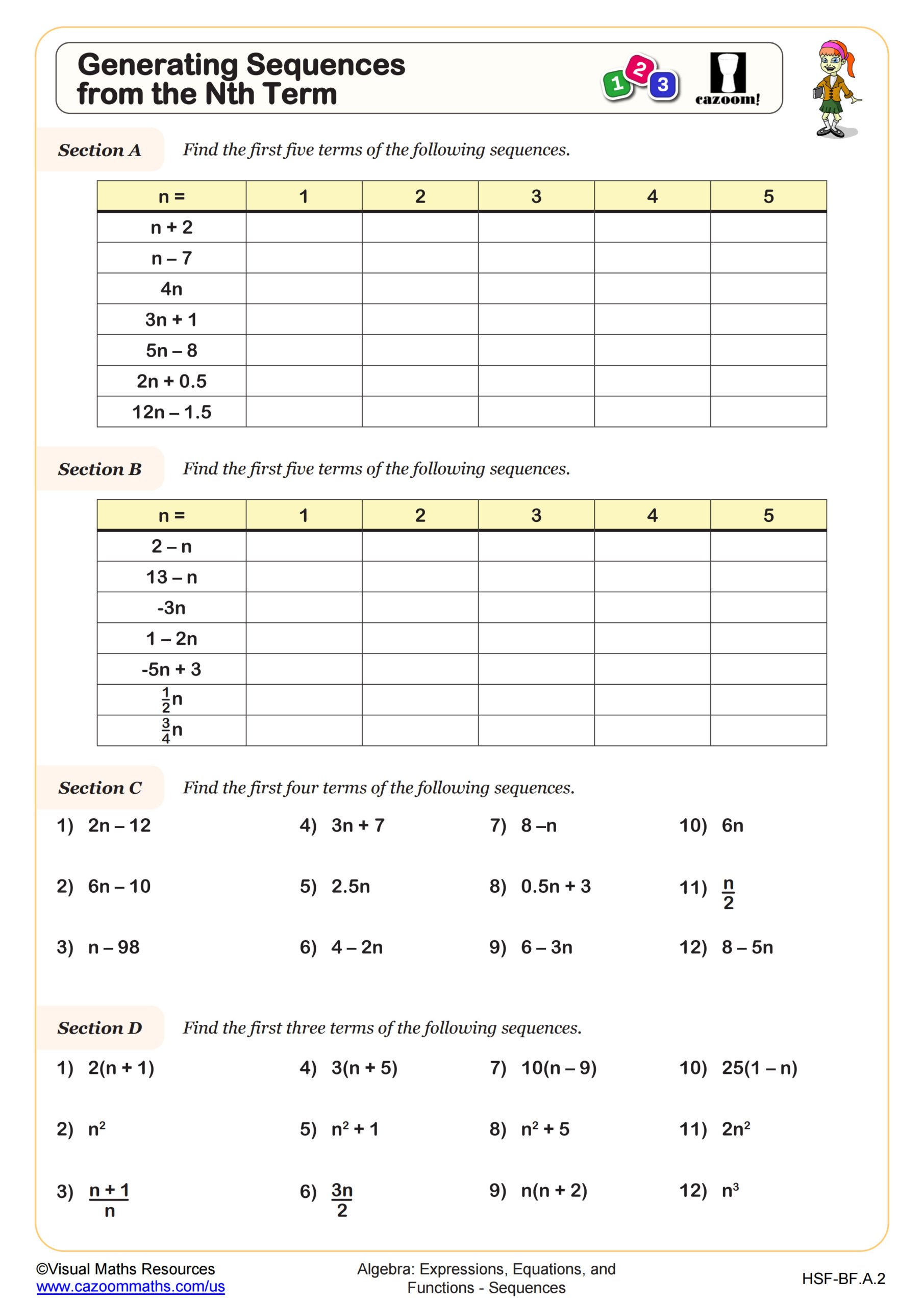
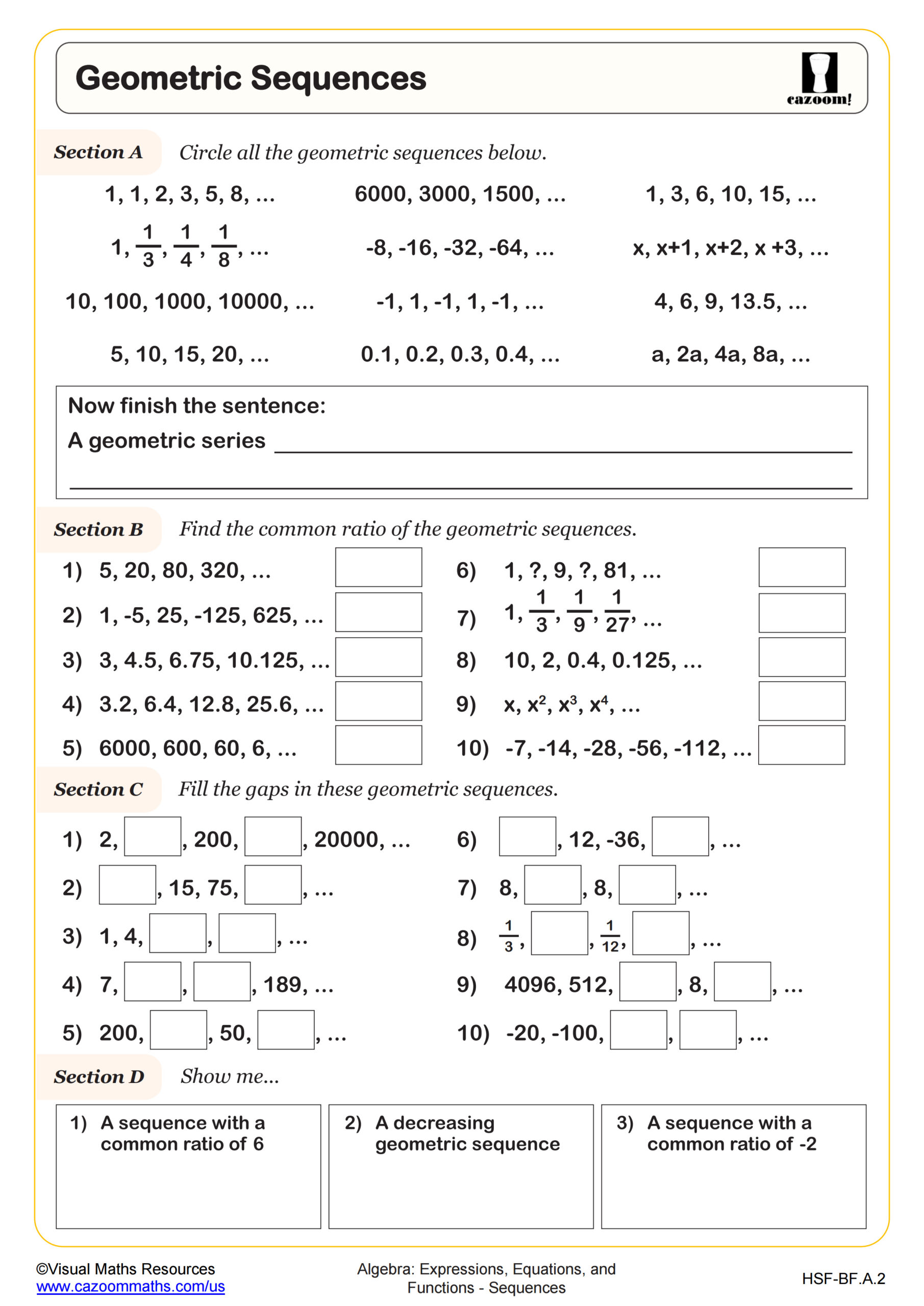
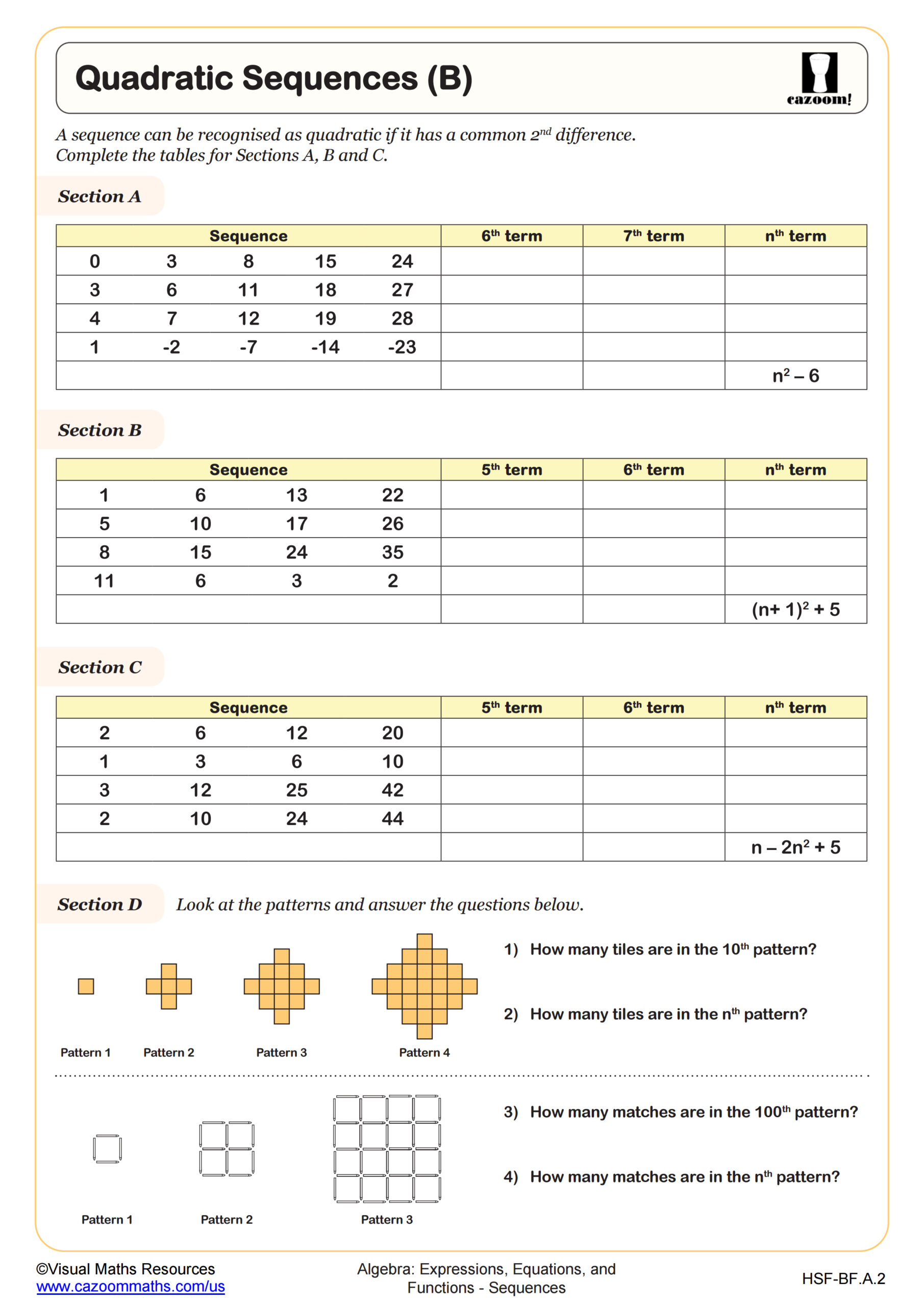
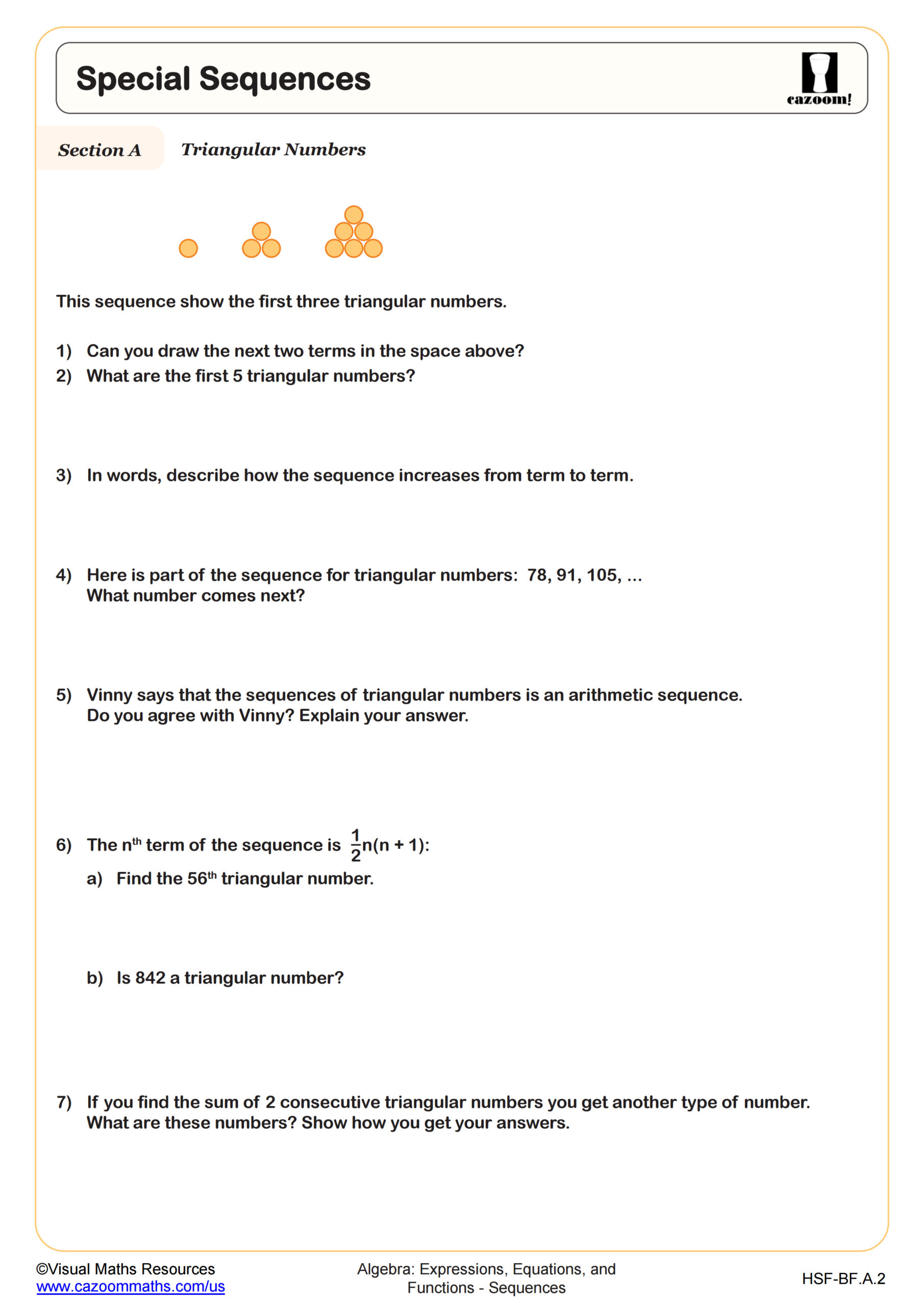
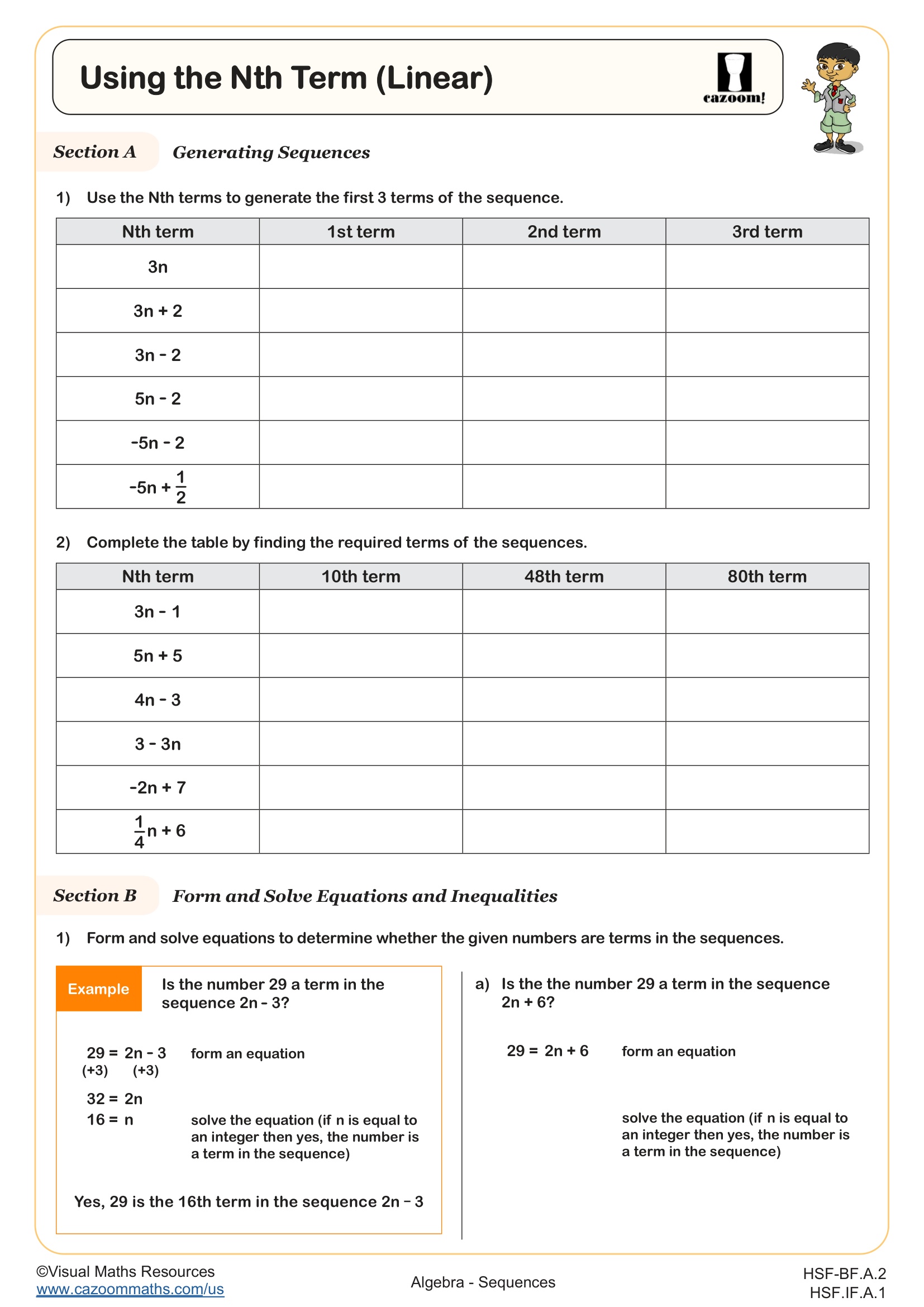
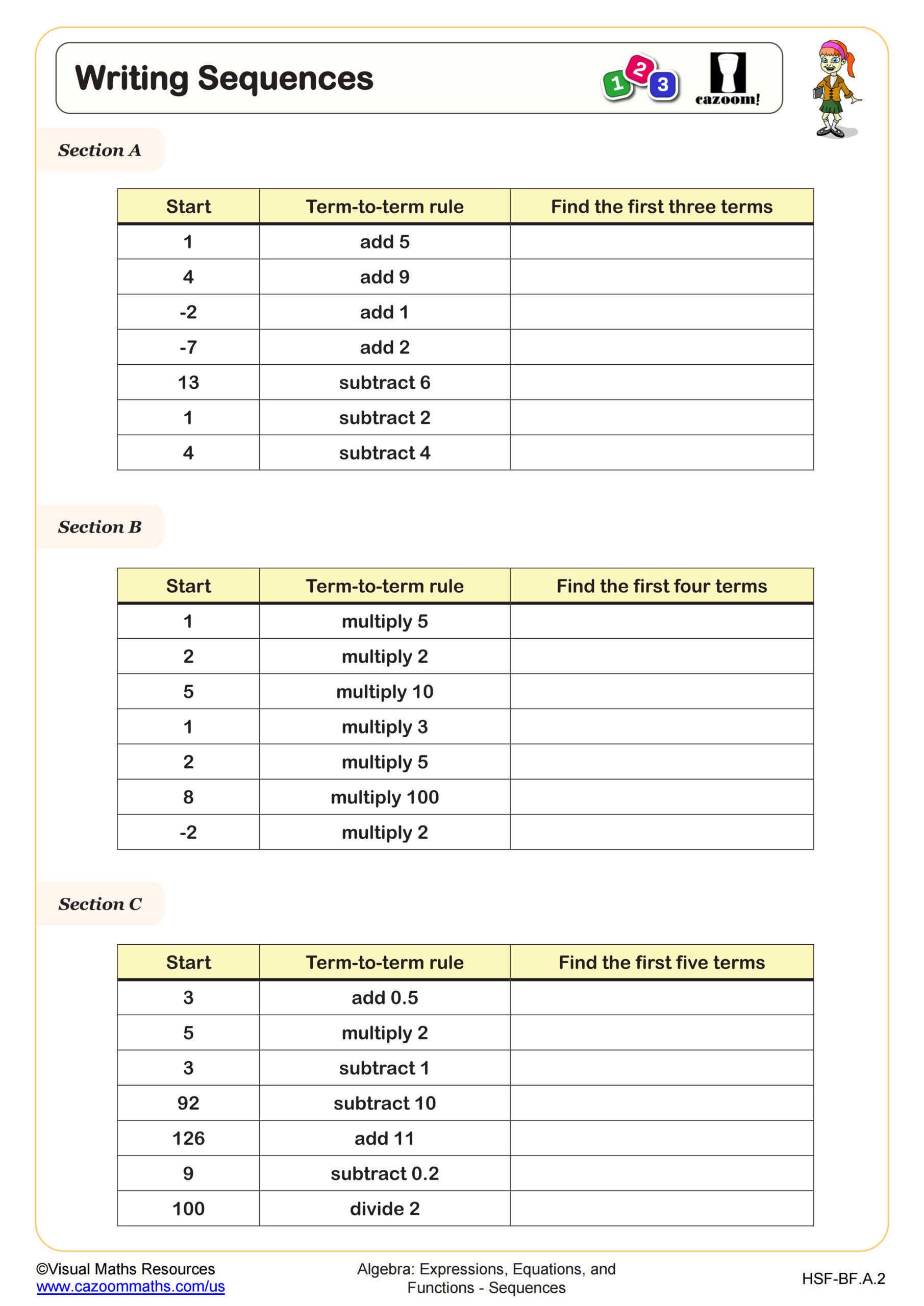
All worksheets are created by the team of experienced teachers at Cazoom Math.
What Sequence Concepts Do Integrated Math 2 Students Learn?
Integrated Math 2 students explore both arithmetic and geometric sequences, learning to identify patterns, write explicit and recursive formulas, and find specific terms using the nth term formula. The curriculum emphasizes understanding when to add a common difference versus multiply by a common ratio, and students practice translating between different representations of sequences including tables, graphs, and formulas.
Many students initially confuse the structure of arithmetic formulas (a_n = a_1 + (n-1)d) with geometric formulas (a_n = a_1 × r^(n-1)), particularly when determining which pattern applies to a given sequence. Teachers often see students correctly identify the pattern but then apply the wrong formula type, losing points on assessments even when their conceptual understanding is solid.
How Do Sequences Appear on the SAT and State Assessments?
Standardized tests including the SAT and state assessments regularly feature sequence problems that require students to identify patterns, write formulas, or calculate specific terms. Test questions often embed sequences within word problems or ask students to recognize sequence patterns in tables or graphs. Students need to work efficiently with both arithmetic and geometric sequences and understand how to apply formulas without relying on calculators for every step.
Students lose points when they fail to recognize that a problem involves a sequence or when they calculate several terms manually instead of using the nth term formula. Another common assessment error occurs when students round intermediate steps in geometric sequences, leading to incorrect final answers. Tests typically expect students to distinguish between explicit and recursive notation and to write formulas using proper mathematical language.
Why Do Students Need to Understand Explicit vs. Recursive Formulas?
Explicit formulas allow students to calculate any term in a sequence directly using the term number, while recursive formulas define each term based on the previous term. Understanding both approaches develops flexible mathematical thinking and prepares students for more advanced topics in precalculus and calculus. Students learn that explicit formulas prove more efficient for finding distant terms (like the 50th term), while recursive formulas often reveal the underlying pattern more clearly.
These formula types connect directly to computer programming and STEM applications where iterative processes (recursive thinking) and direct calculation (explicit formulas) serve different purposes. Financial calculations involving compound interest, population growth models, and amortization schedules all rely on sequence concepts. College-bound students encounter these patterns again in calculus when studying series and in discrete mathematics courses.
How Can Teachers Use These Sequences Worksheets in Integrated Math 2?
These worksheets provide targeted practice with specific sequence skills, allowing teachers to assign focused work on arithmetic sequences, geometric sequences, or nth term problems based on individual student needs. The progression from basic pattern recognition through formula writing mirrors the typical instructional sequence in Integrated Math 2. Answer keys enable students to check their work independently or allow teachers to quickly review student understanding during formative assessments.
Teachers use these worksheets effectively for spiral review throughout the year, as sequences connect to functions, exponential growth, and linear relationships. The materials work well for intervention with students who struggle to distinguish between additive and multiplicative patterns, and they provide solid test preparation for standardized assessments. Many teachers assign different worksheet types as homework based on where students need additional practice, then use class time for collaborative problem-solving on more complex sequence applications.