Integrated Math 2 Units and Dimensions Worksheets
All worksheets are created by the team of experienced teachers at Cazoom Math.
What are units and dimensions in Integrated Math 2?
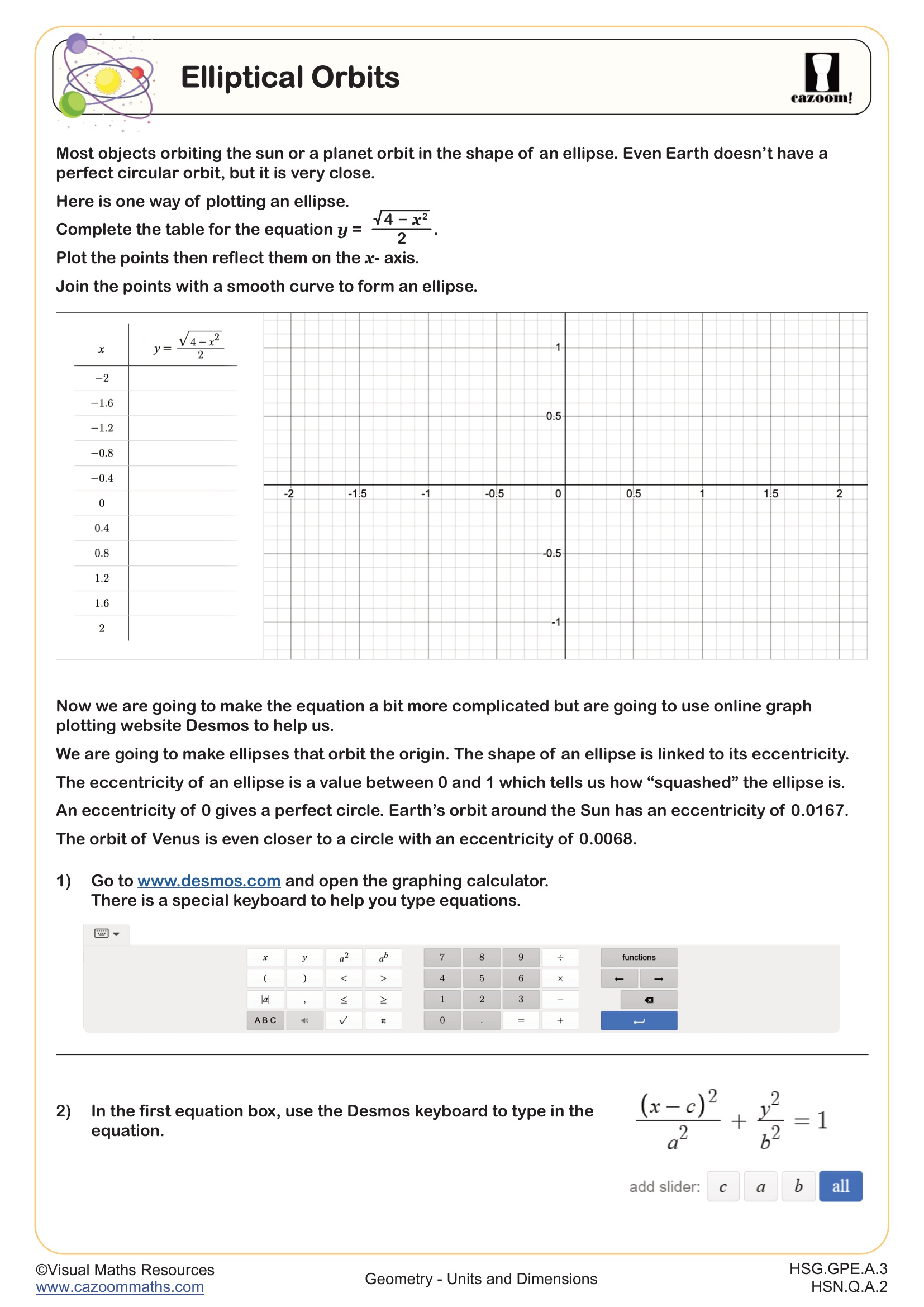
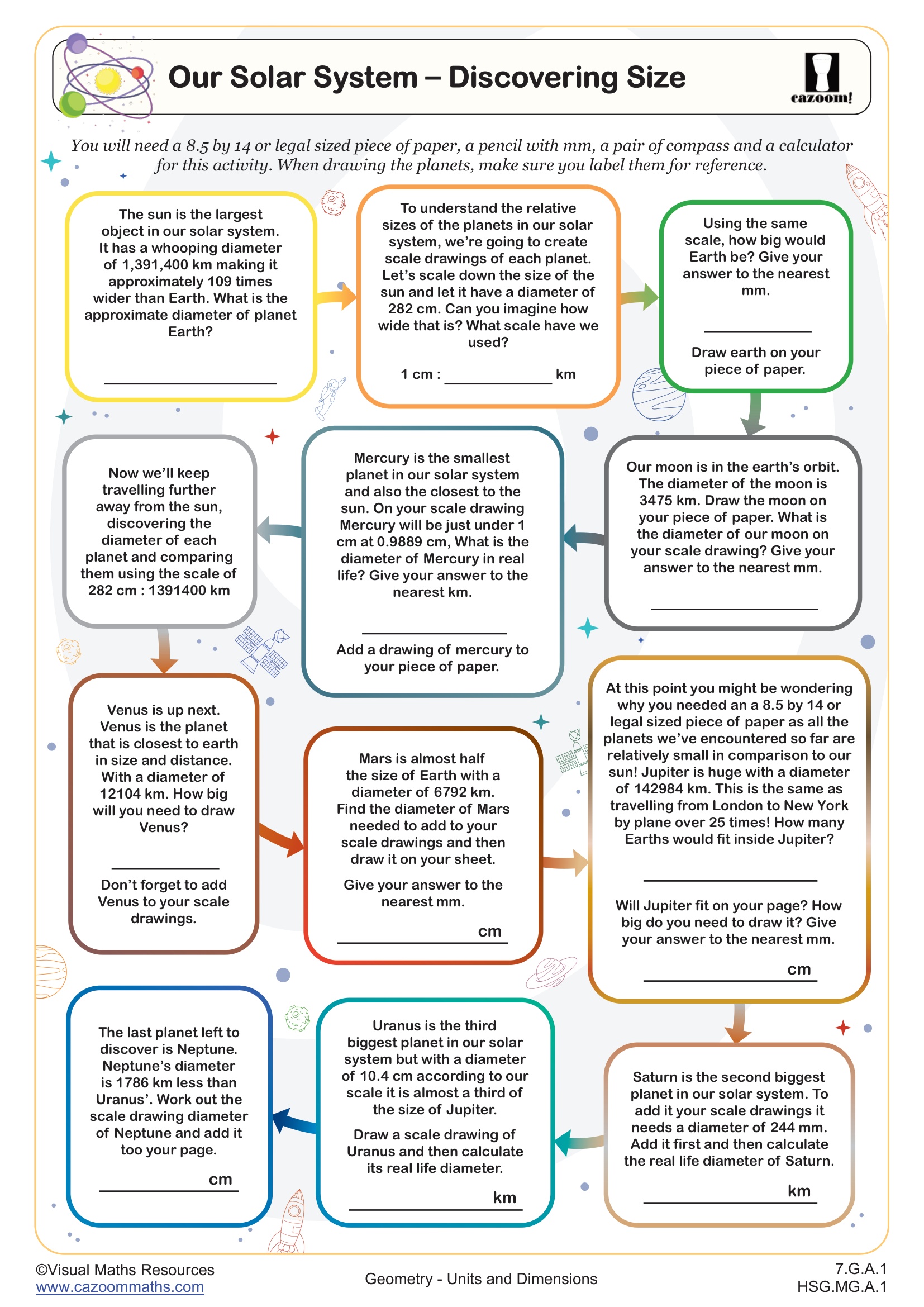
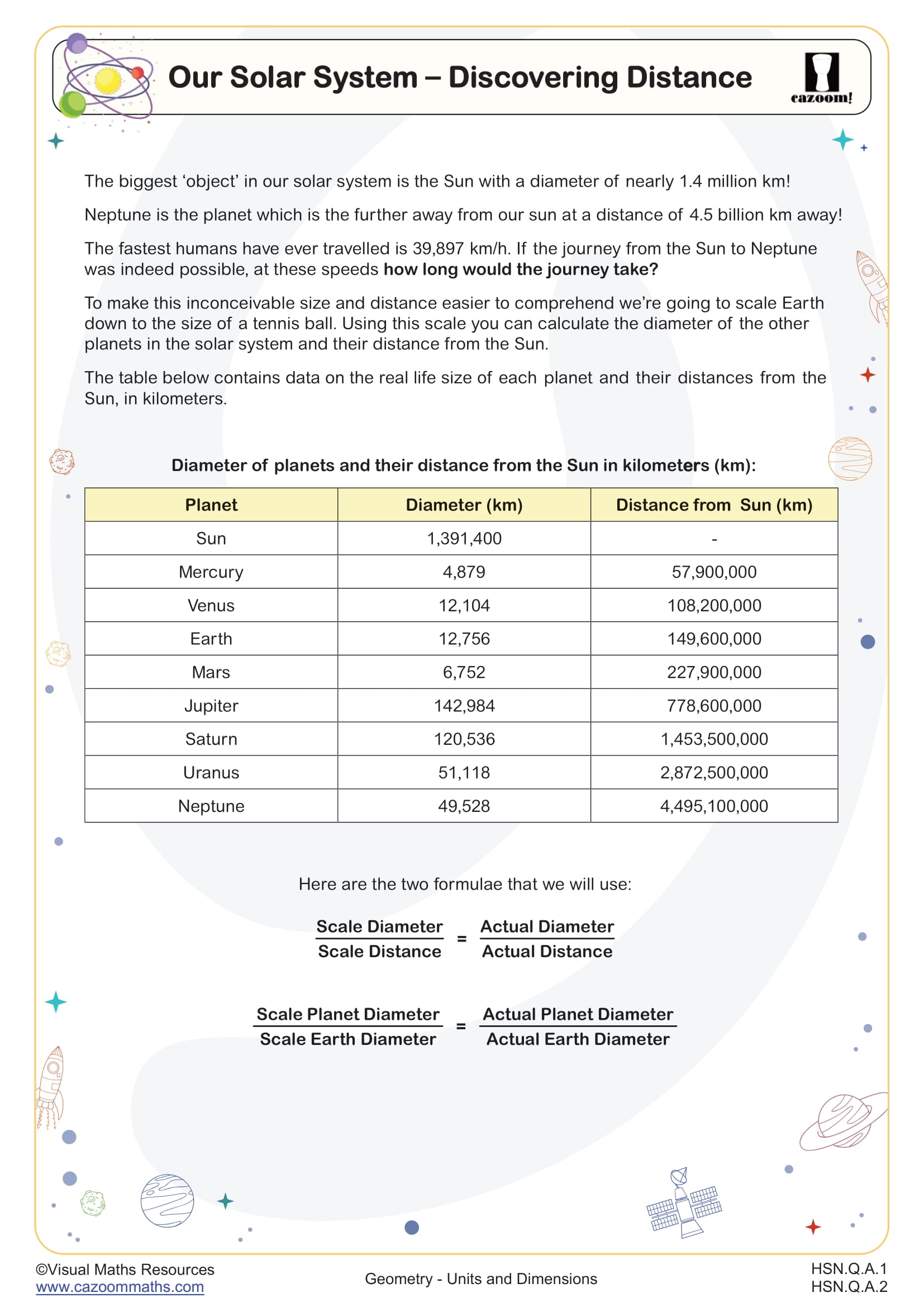
Units and dimensions in Integrated Math 2 focus on measurement systems, unit conversions, and dimensional analysis within the metric system. Students work with linear measurements, converting between meters and centimeters, centimeters and millimeters, and combinations of these units. The curriculum extends to real applications like calculating dimensions in elliptical orbits, connecting algebra and geometry concepts to physical science contexts.
A common error occurs when students treat unit conversion as simple arithmetic rather than proportional reasoning. Teachers frequently notice students writing "100 cm = 1 m" but then incorrectly multiplying when they should divide. Worksheets that require students to show conversion factors as fractions help address this misconception, forcing students to think about whether the resulting unit should be larger or smaller than the original measurement.
What grade level covers units and dimensions?
Units and dimensions appears in Integrated Math 2, typically taken by high school students in 9th or 10th grade. This placement assumes students have foundational understanding of measurement from middle school but need to develop more sophisticated dimensional analysis skills for upper-level mathematics and science courses. The topic bridges arithmetic measurement concepts and the rigorous quantitative reasoning required in physics and chemistry.
The progression in Integrated Math 2 moves from straightforward single-step conversions to multi-step problems involving addition and subtraction across different units. Students begin with converting between two closely related units, then advance to problems requiring them to combine measurements in different units before converting. This scaffolded approach prepares students for complex problems in trigonometry, physics, and AP science courses where dimensional analysis becomes essential.
How do elliptical orbits connect to units and dimensions?
Elliptical orbits introduce students to real applications of measurement and dimensional analysis in astronomy and space science. Students calculate distances, perímeters, and areas of ellipses using appropriate metric units, often working with astronomical units (AU) or converting between kilometers and meters. This context reinforces why precise unit notation matters and how measurement errors compound in multi-step calculations.
Space agencies like NASA rely on exact dimensional analysis when calculating orbital trajectories, satellite positioning, and fuel requirements. A unit conversion error famously caused the Mars Climate Orbiter to crash in 1999 when one team used metric units while another used imperial measurements. By working with elliptical orbit problems, students see how the mathematical skills they're practicing directly connect to aerospace engineering, satellite technology, and space exploration careers.
How do these worksheets help students master unit conversions?
The worksheets systematically build conversion skills by separating different types of metric conversions before combining them. Students first work exclusively with meters and centimeters, then with centimeters and millimeters, allowing them to recognize patterns in metric conversion before tackling mixed problems. This structure helps students internalize that metric conversions follow consistent powers of ten, making the system predictable once they understand the relationships.
Teachers use these worksheets for differentiated instruction, assigning simpler conversion sheets for students who need additional practice with basic metric relationships while challenging advanced students with elliptical orbit problems. The complete answer keys allow students to check their work immediately during independent practice or homework, helping them identify whether errors stem from conversion mistakes or arithmetic errors. Many teachers pair students for worksheet completion, having one student work the problem while their partner checks the dimensional analysis steps.