Integrated Math 3 Area and Perimeter Worksheets
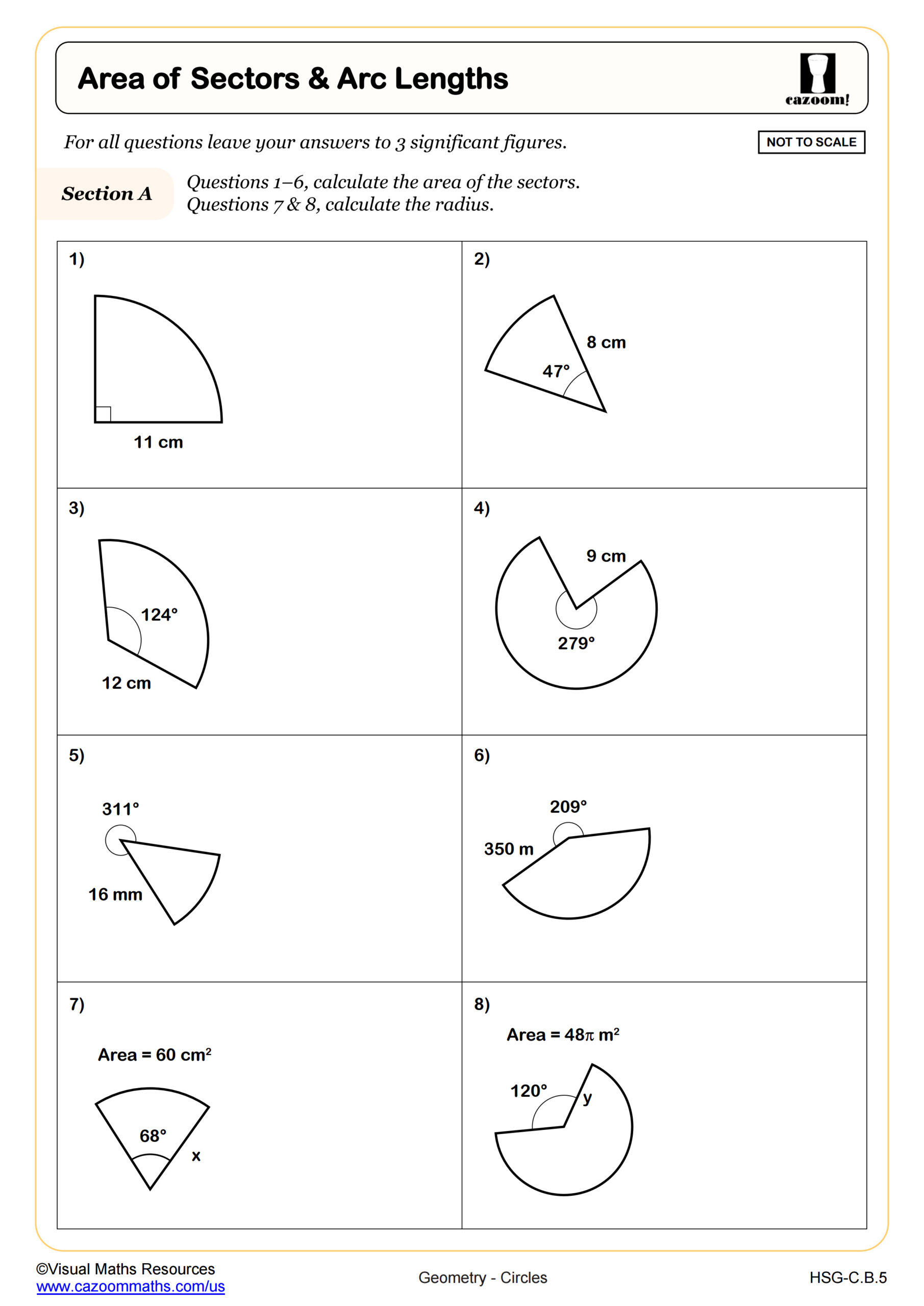
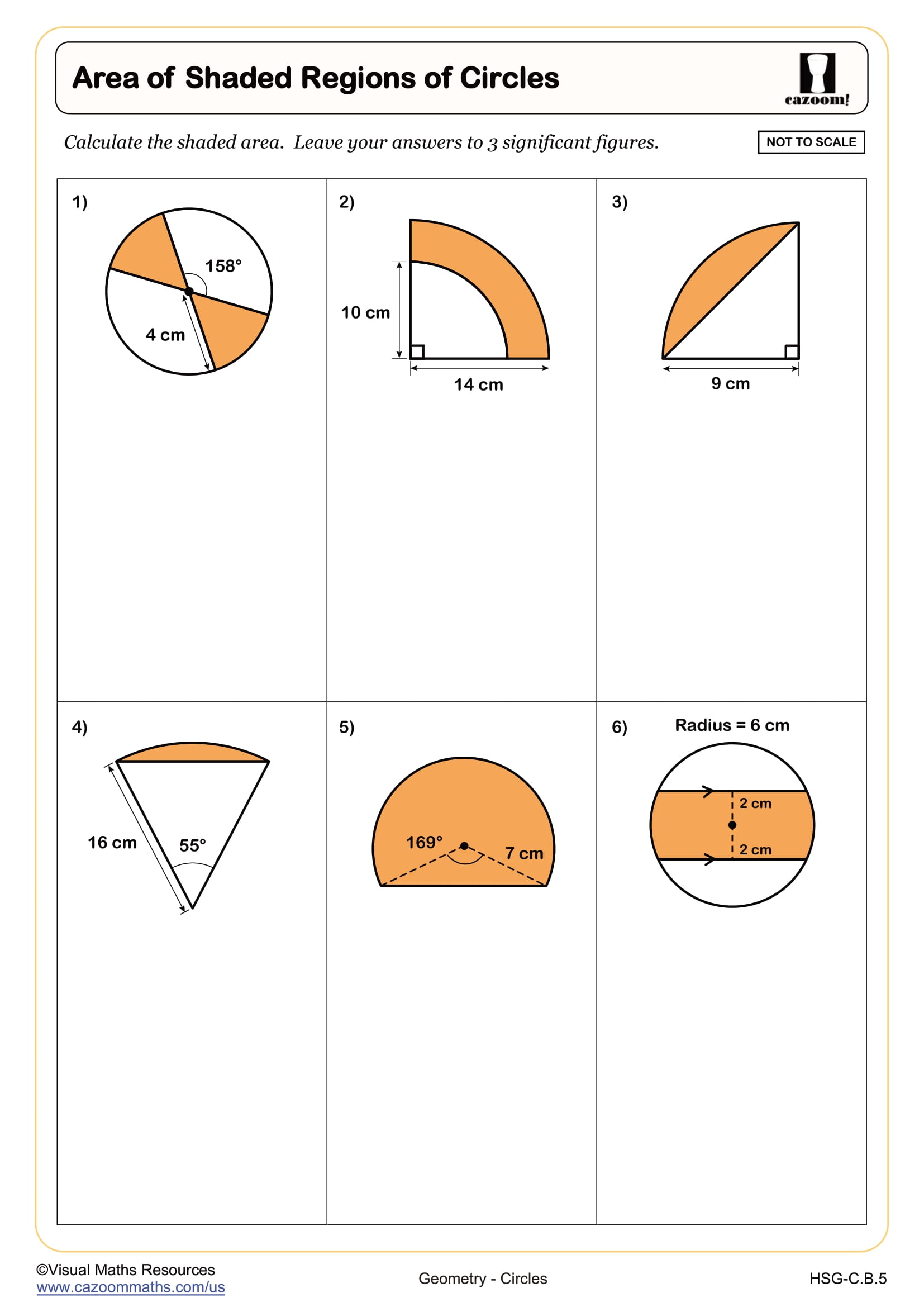
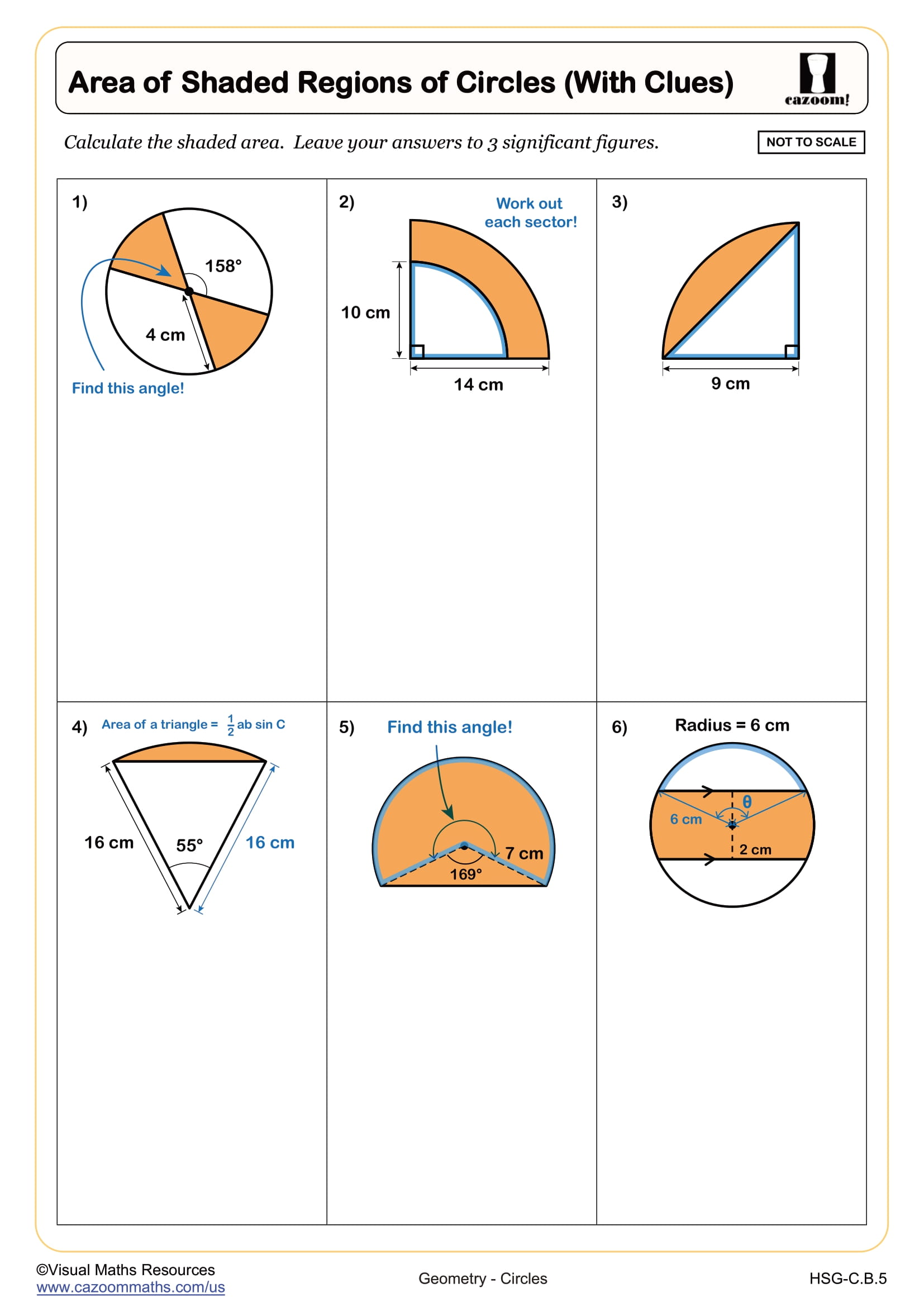
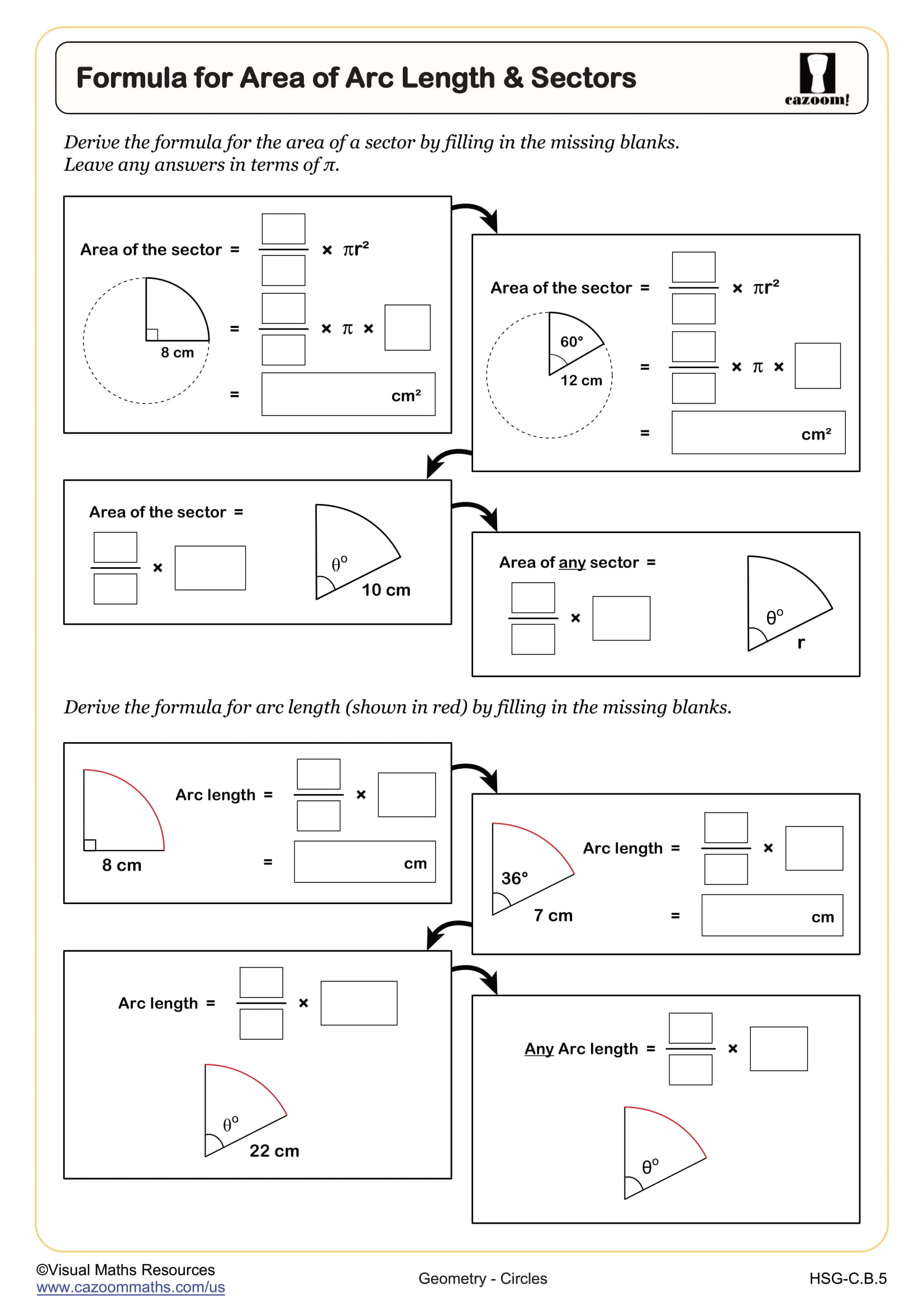
All worksheets are created by the team of experienced teachers at Cazoom Math.
Why do Integrated Math 3 students revisit area and perimeter?
Integrated Math 3 students return to area and perimeter not to relearn elementary formulas, but to apply these concepts in more sophisticated contexts that prepare them for calculus and STEM coursework. At this level, students work with shaded regions of circles requiring knowledge of sectors and segments, composite figures that demand strategic decomposition, and problems where they must derive or manipulate formulas rather than simply plug in values.
A common error teachers observe is students forgetting to convert units consistently, especially when working with circle problems involving both radius and diameter, or when calculating areas that require squaring linear measurements. Students lose points on standardized assessments when they round pi too early in multi-step problems, leading to compounded errors that could have been avoided by maintaining exact values until the final answer.
What grade level are these area and perimeter worksheets designed for?
This collection specifically targets Integrated Math 3 students in high school, typically 11th graders in districts that follow the integrated pathway rather than the traditional Algebra 1, Geometry, Algebra 2 sequence. The integrated approach spirals geometric concepts throughout three years, and by IM 3, students encounter area and perimeter in advanced problem-solving contexts that blend algebra, geometry, and sometimes trigonometry.
The difficulty progression within IM 3 area and perimeter worksheets moves from formula sheet reference problems that reinforce foundational knowledge, through straightforward applications with right triangles and basic perimeter calculations, to challenging shaded region problems that require students to recognize which formulas apply and how to combine them strategically. The most complex worksheets provide clues rather than explicit instructions, pushing students toward independent mathematical reasoning.
How do shaded region problems prepare students for advanced math?
Shaded region problems require students to visualize geometric relationships, identify which areas to add or subtract, and execute multi-step calculations with precision—skills that directly translate to calculus concepts like finding areas under curves. These problems develop spatial reasoning and the ability to break complex figures into manageable components, both fundamental to success in higher-level mathematics and engineering coursework.
Architects and urban planners routinely calculate areas of irregular plots by decomposing them into recognizable shapes, exactly the skill students practice when finding shaded regions. Civil engineers determining the amount of material needed for curved roadways or landscape designers calculating mulch requirements for garden beds with circular elements use these same geometric reasoning strategies, making shaded region problems one of the most practically applicable topics in the high school geometry curriculum.
How can teachers use these area and perimeter worksheets effectively?
The worksheets provide scaffolding that allows teachers to differentiate instruction based on student readiness. Formula sheet worksheets serve as reference tools for students who need to rebuild foundational knowledge before tackling complex applications, while shaded region problems with clues challenge advanced students to think critically without excessive hand-holding. The complete answer keys enable students to check their own work during independent practice, building self-assessment skills.
Many teachers use these worksheets for spiraled review throughout the semester, assigning two or three problems as daily warm-ups to maintain skills between geometry units. They work particularly well for intervention with students who performed poorly on area and perimeter questions in previous courses, and as homework that reinforces classroom instruction without requiring extensive teacher explanation. Paired work sessions where students compare solution strategies often reveal multiple valid approaches to shaded region problems, deepening conceptual understanding.