Integrated Math 3 Lines and Angles Worksheets
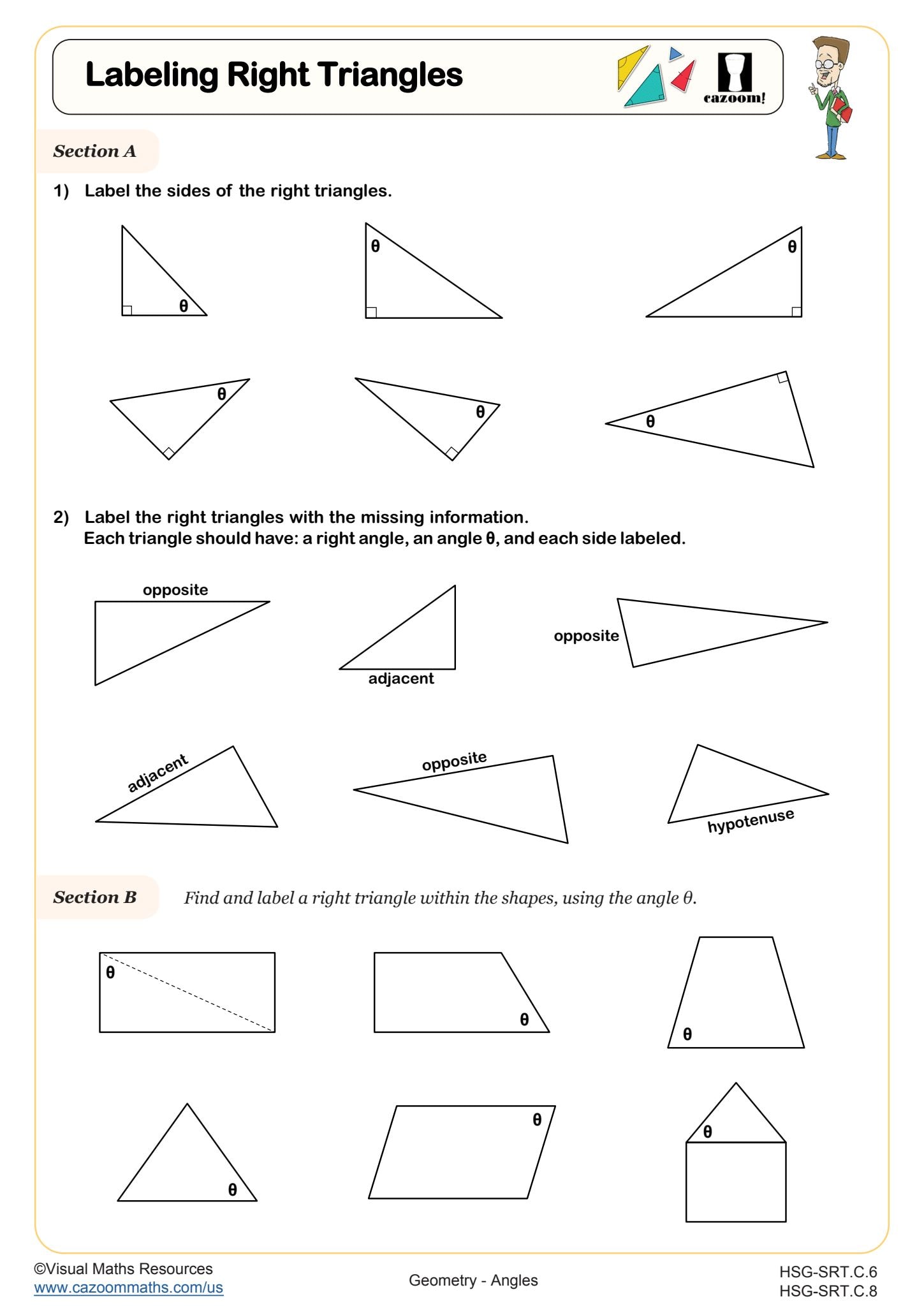
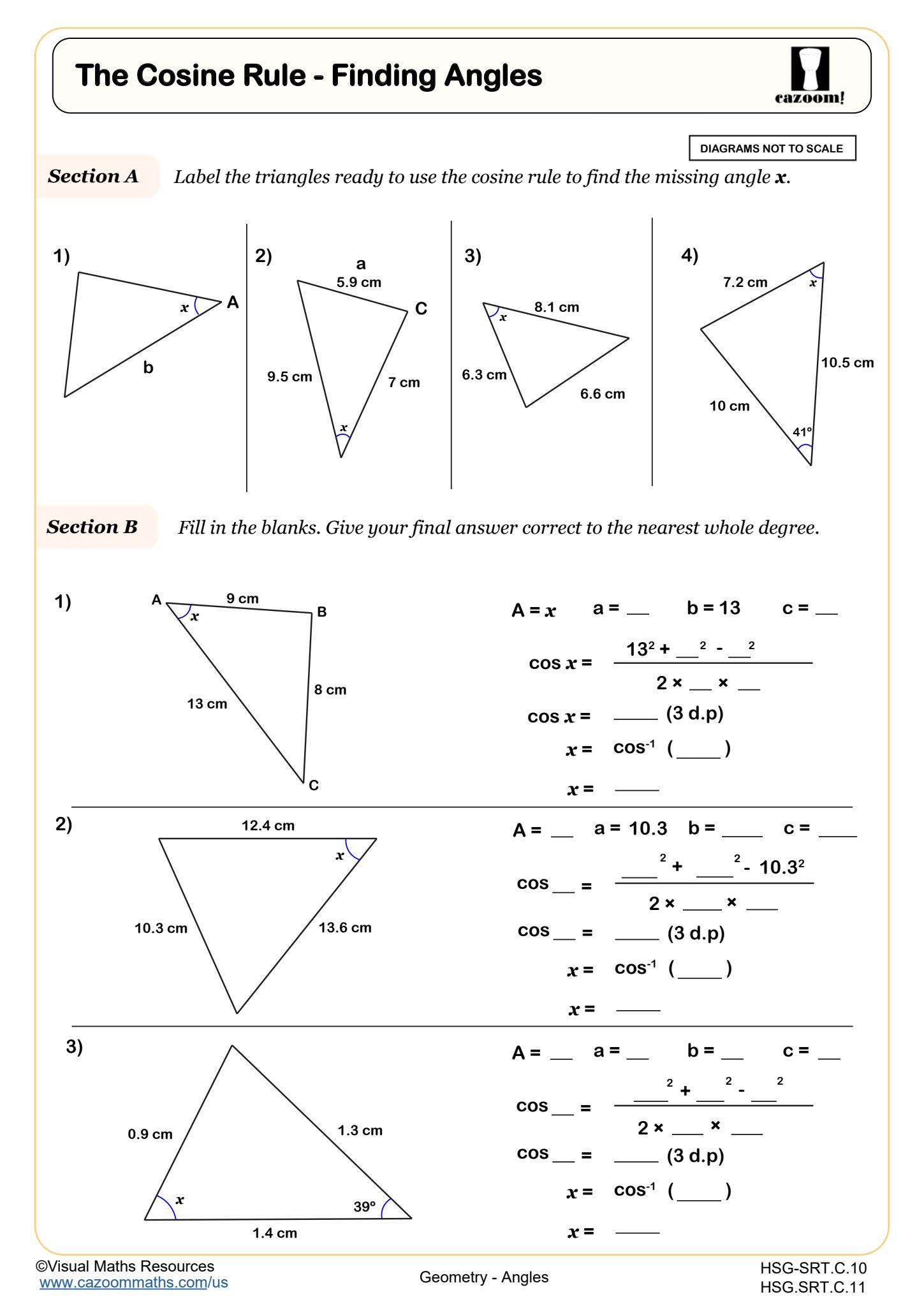
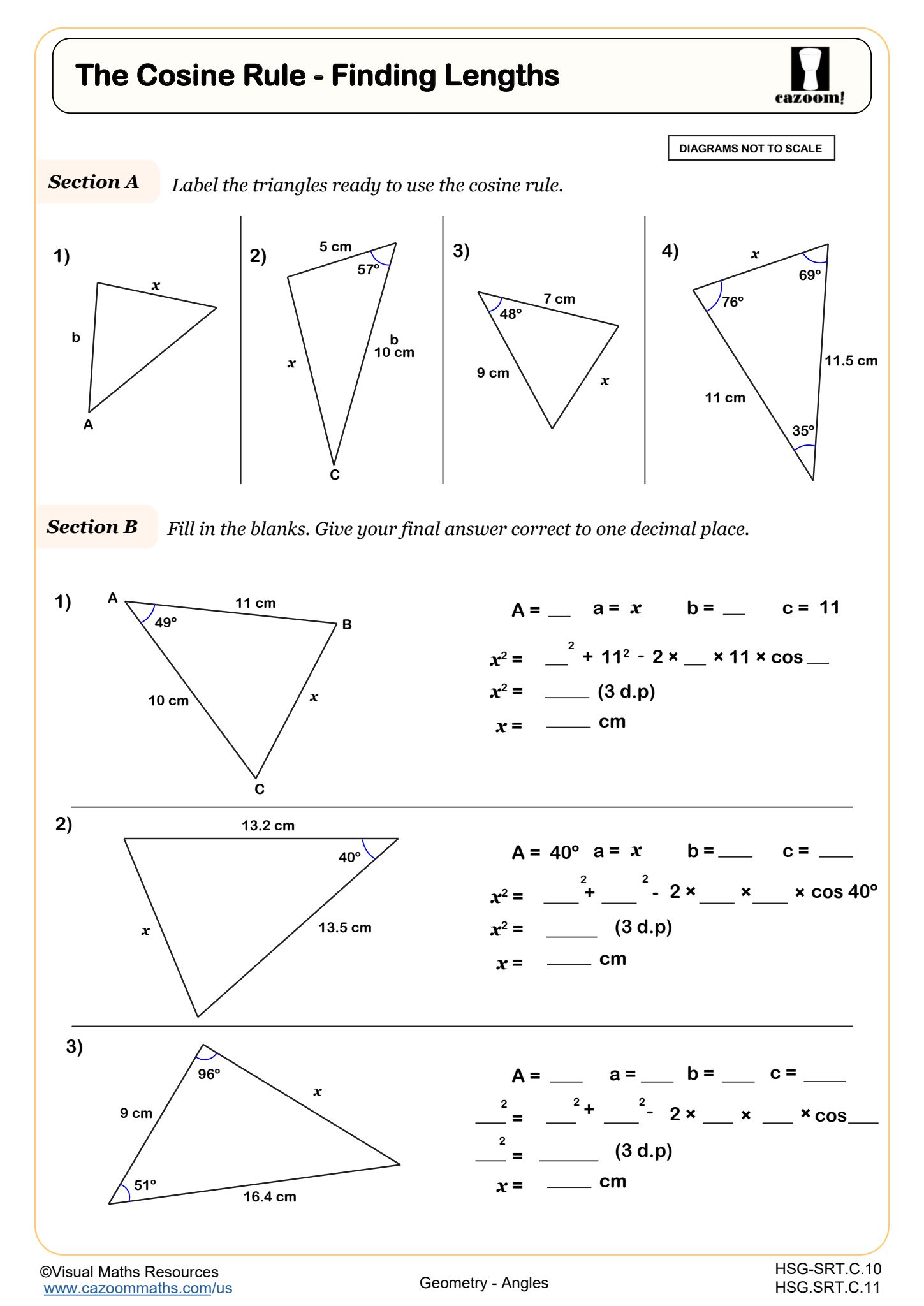
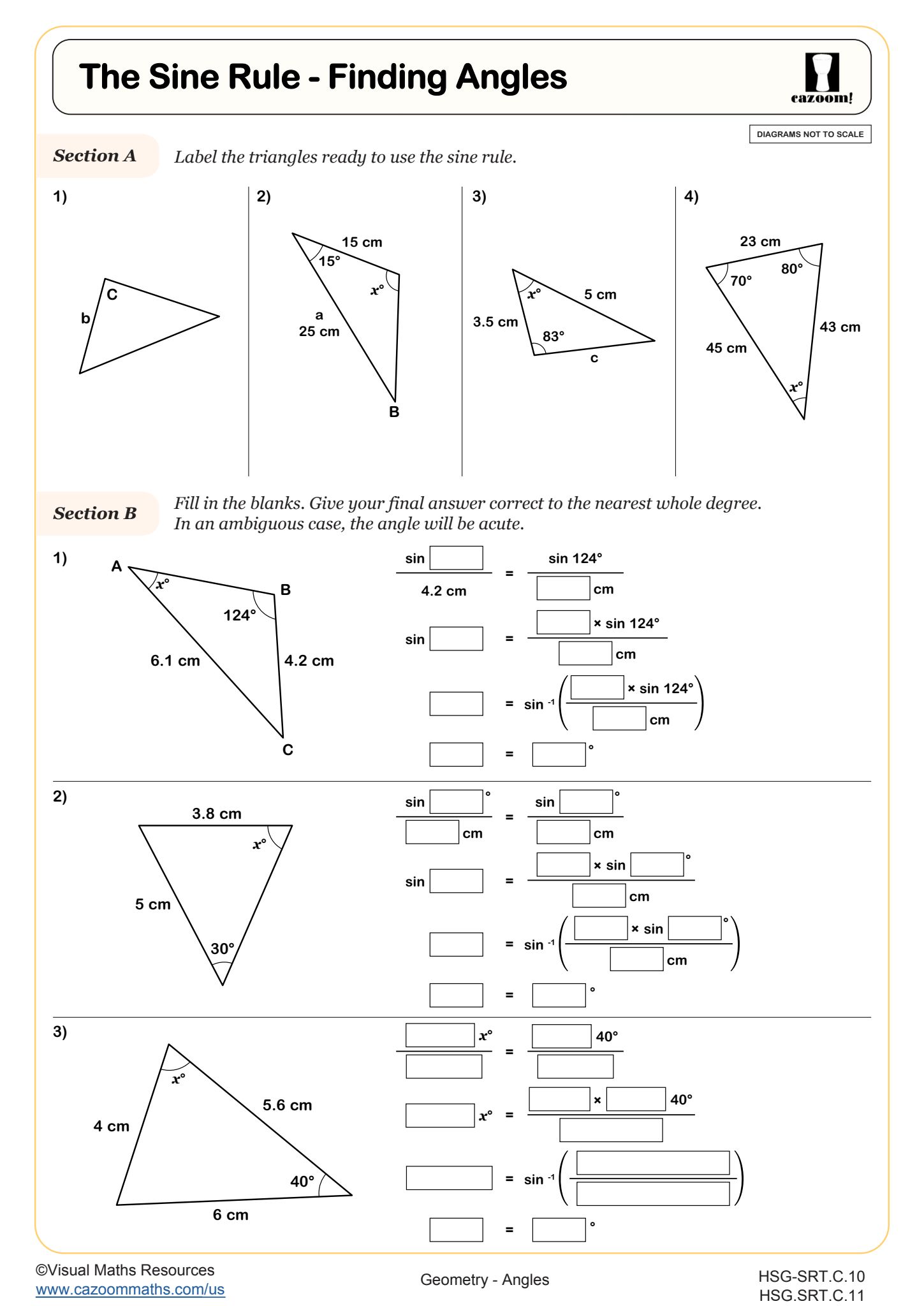
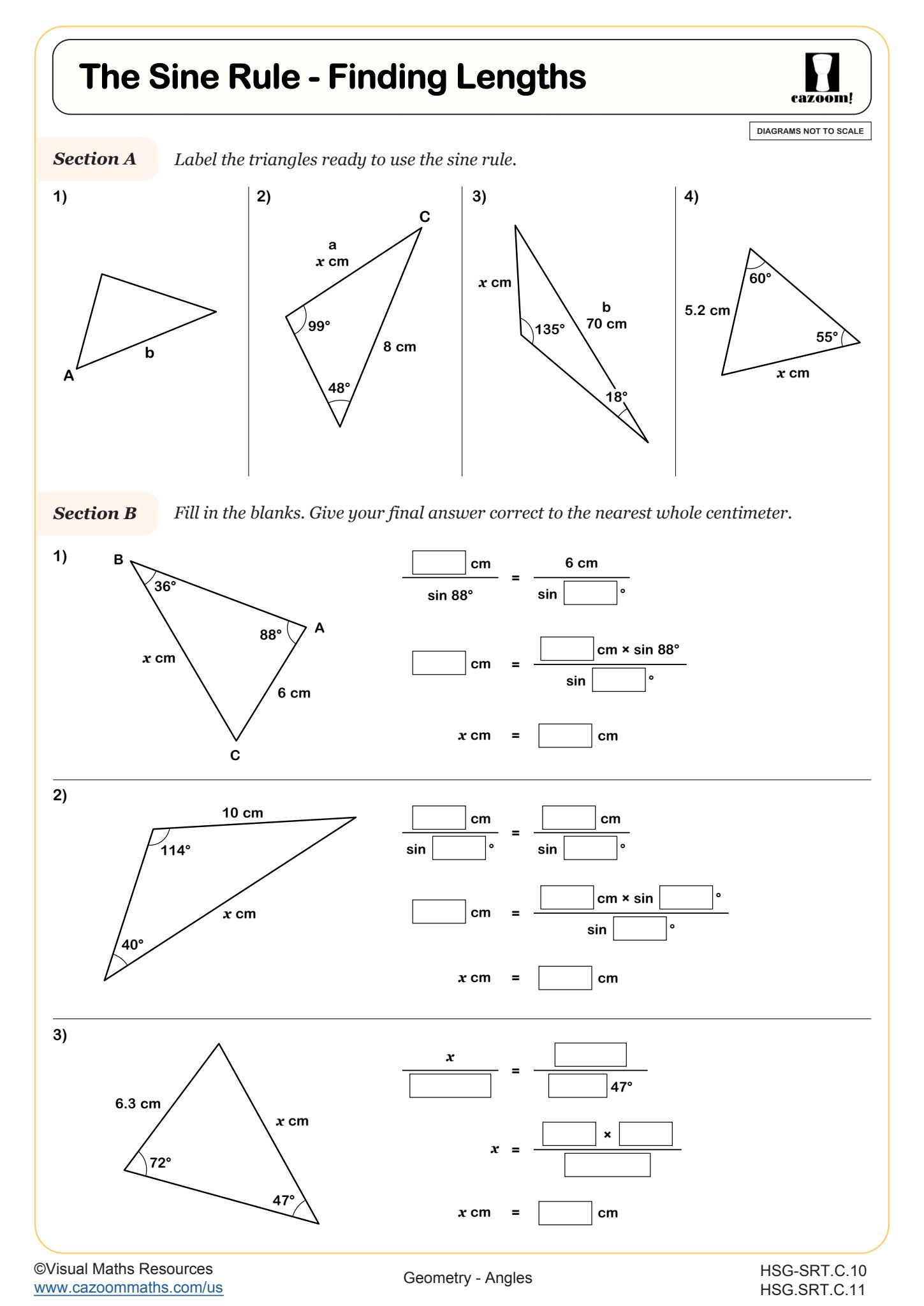
All worksheets are created by the team of experienced teachers at Cazoom Math.
What angle concepts do Integrated Math 3 students need to master?
Integrated Math 3 students revisit foundational angle skills to support advanced topics like trigonometry, circle theorems, and coordinate proofs. While basic angle identification may seem elementary, IM3 requires precise angle notation, accurate protractor use for construction tasks, and fluency with complementary, supplementary, and vertical angle relationships that appear in proof scenarios.
Students often underestimate how proper angle naming impacts their proof writing. Teachers notice that students who write "angle A" instead of using three-point notation (∠BAC) struggle to communicate which angle they're referencing in complex diagrams. This precision becomes critical when working with inscribed angles, tangent-chord relationships, and trigonometric applications where multiple angles share a vertex.
Which grade levels use these lines and angles worksheets?
These worksheets align with Integrated Math 3 curriculum standards for high school students, typically juniors who are in their third year of the integrated math sequence. This course combines geometry, algebra, and data analysis, so angle work supports multiple strands simultaneously.
At the IM3 level, angle skills transition from procedural measurement to application within proofs and problem-solving contexts. Students apply angle relationships to justify steps in geometric arguments, use protractors and compasses for precise constructions required in locus problems, and connect angle measures to unit circle positions when learning trigonometric functions. The progression emphasizes mathematical reasoning over simple identification.
How do students learn to use a protractor accurately?
Protractor worksheets guide students through aligning the center point with an angle's vertex and the baseline with one ray, then reading the correct scale based on whether the angle opens left or right. Students practice with both full 360-degree protractors and half 180-degree versions, learning when each tool is most appropriate. Common errors include reading the wrong scale or misaligning the center point, leading to measurements that differ by exactly 180 degrees or several degrees respectively.
Architects, engineers, and surveyors rely on precise angle measurement daily. Construction professionals use digital protractors and angle finders to ensure structural elements meet specifications—a roof truss at 32 degrees instead of 35 degrees creates stress points that compromise building integrity. Students who develop careful protractor habits in IM3 build the measurement precision required in technical fields and STEM careers.
How can teachers use these worksheets effectively in class?
The worksheets progress from tool familiarity (protractor scales, compass use) to conceptual understanding (angle classification, naming conventions) to application problems. This scaffolding allows teachers to assign foundational sheets for review while using advanced problems to challenge students ready for proof-based thinking. The answer keys support student self-assessment, particularly helpful when reviewing measurement techniques that require immediate feedback.
Many teachers use these worksheets during intervention blocks for students who need angle fundamentals reinforced before tackling circle geometry or trigonometry. The protractor and compass sheets work well as homework before construction projects, while angle naming exercises make effective warm-ups before proof units. Teachers also pair students for peer-checking measurement work, since comparing answers helps both partners identify alignment errors and scale-reading mistakes before formal assessments.