Kindergarten 2D Shapes Worksheets
All worksheets are created by the team of experienced teachers at Cazoom Math.
What Are 2D Shapes and Why Do Kindergarteners Learn Them?
Two-dimensional shapes are flat figures with length and width but no depth, including circles, squares, triangles, rectangles, and other polygons. Kindergarten standards introduce students to basic 2D shapes as part of the Geometry domain in the Common Core State Standards, specifically requiring students to correctly name shapes regardless of orientation or size and to describe their attributes.
Students often struggle when shapes appear rotated or in non-standard positions, like a square balanced on one corner rather than sitting flat. Teachers frequently notice that students who learn to count sides and corners as identifying features rather than relying on visual memory alone make more accurate classifications. Activities that present the same shape in multiple orientations help students recognize that a triangle remains a triangle even when it points down or sideways.
What Should Kindergarten Students Know About 2D Shapes?
By the end of kindergarten, students should recognize and name circles, squares, triangles, and rectangles in various sizes and orientations. They should describe shapes using informal language about their attributes, such as noting that triangles have three sides and corners while circles are round with no corners. Students should also sort shapes into categories and identify shapes in their environment.
This work builds on preschool exposure where children may have matched shapes by appearance alone. The kindergarten focus on counting sides and identifying corners prepares students for first grade, when they'll compose new shapes from existing ones and partition shapes into halves and quarters. Early shape recognition connects directly to fraction concepts, making this foundational work critical for future math success.
How Do Students Learn to Sort 2D Shapes?
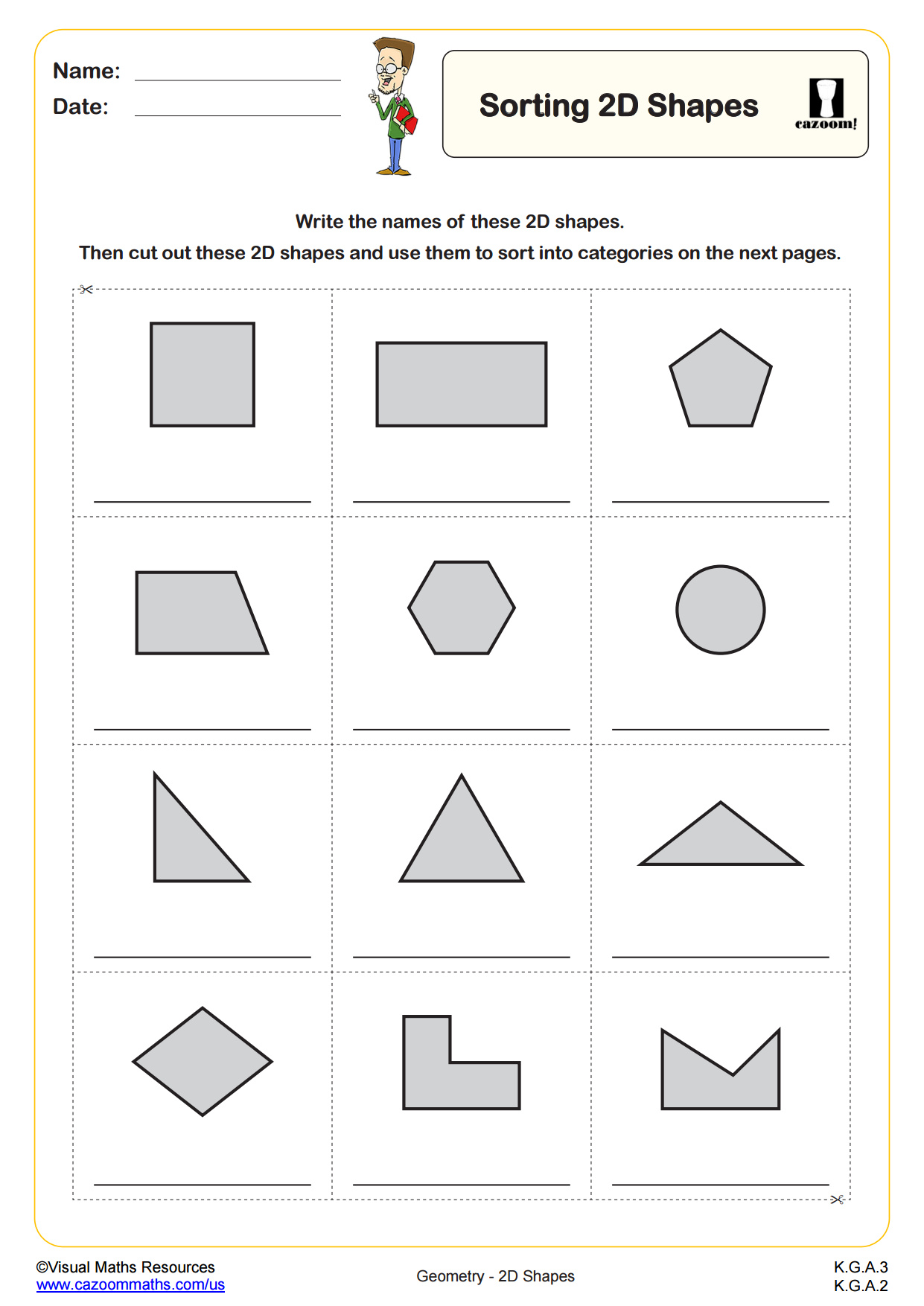
Sorting shapes involves identifying common attributes and grouping shapes based on shared characteristics like the number of sides, corners, or curved edges. Students begin by sorting shapes into obvious categories, such as separating circles from polygons, then progress to more refined classifications like distinguishing triangles from quadrilaterals. Teachers notice that students make breakthroughs when they verbalize their sorting rules aloud, which helps them recognize that shapes can belong to multiple categories.
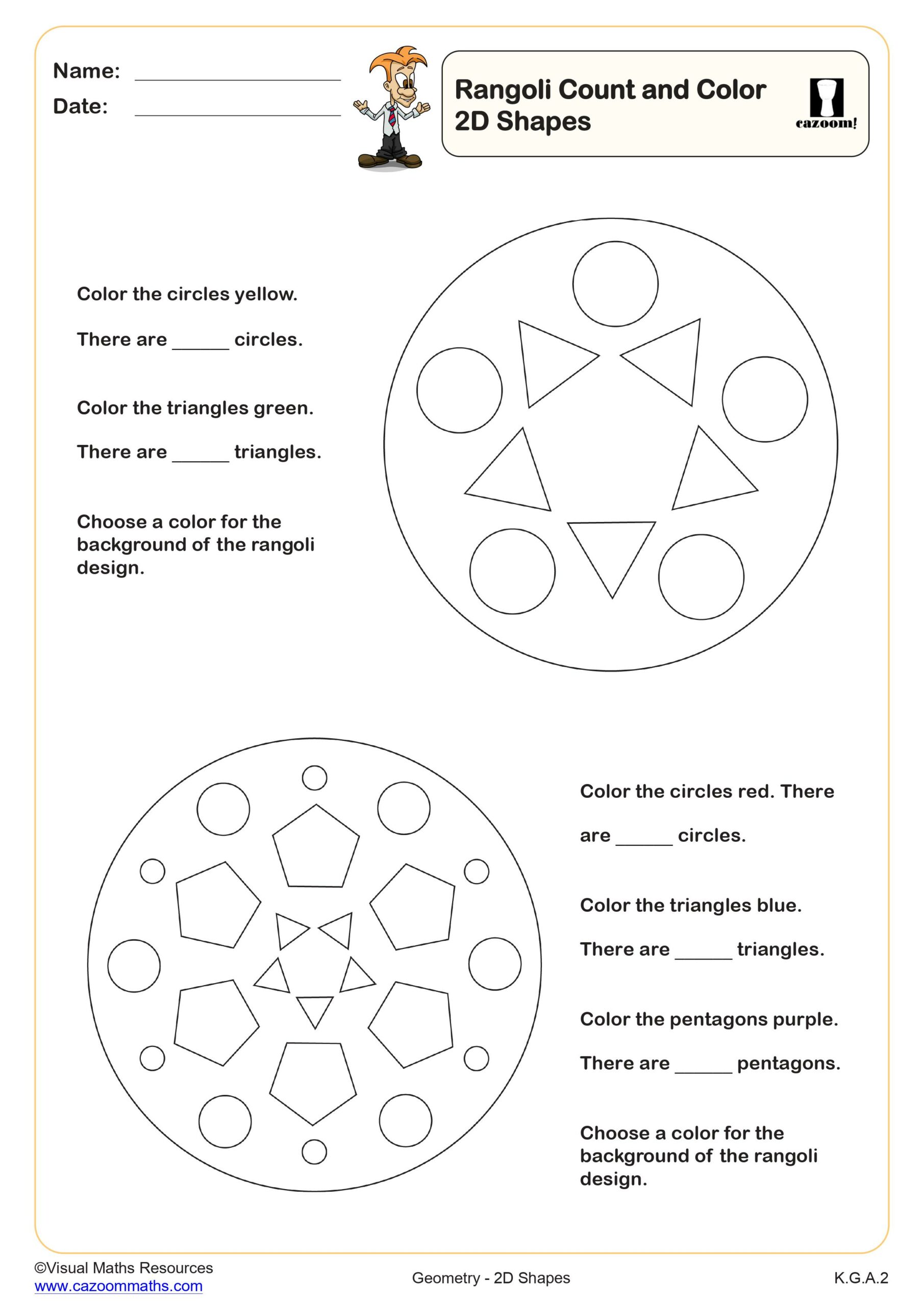
Shape sorting connects to real-world STEM applications throughout architecture and design. Architects use specific shapes for structural stability, choosing triangles for bridge trusses because they distribute weight effectively. Artists and designers create patterns using repeated shapes, similar to the Rangoli patterns from Indian culture that combine circles, triangles, and other shapes into symmetrical designs. These cultural connections help students see geometry as both practical and creative.
How Can Teachers Use These 2D Shapes Worksheets Effectively?
These worksheets provide structured practice with visual supports that help students connect shape names to their attributes. The counting and coloring activities engage fine motor skills while reinforcing shape recognition, and the sorting tasks require students to analyze multiple shapes and apply classification rules. The answer keys allow teachers to quickly assess understanding and identify students who need additional support with specific shapes or attributes.
Many teachers use these worksheets during math centers, pairing students so they can discuss their sorting decisions and explain their reasoning. The worksheets work well as morning work for students who arrive early, as homework to involve families in geometry conversations, or as intervention material for students who need extra practice before assessments. Teachers also find them valuable for documenting student progress throughout the unit, with completed worksheets showing growth in shape identification accuracy over time.