Kindergarten 3D Shapes Worksheets
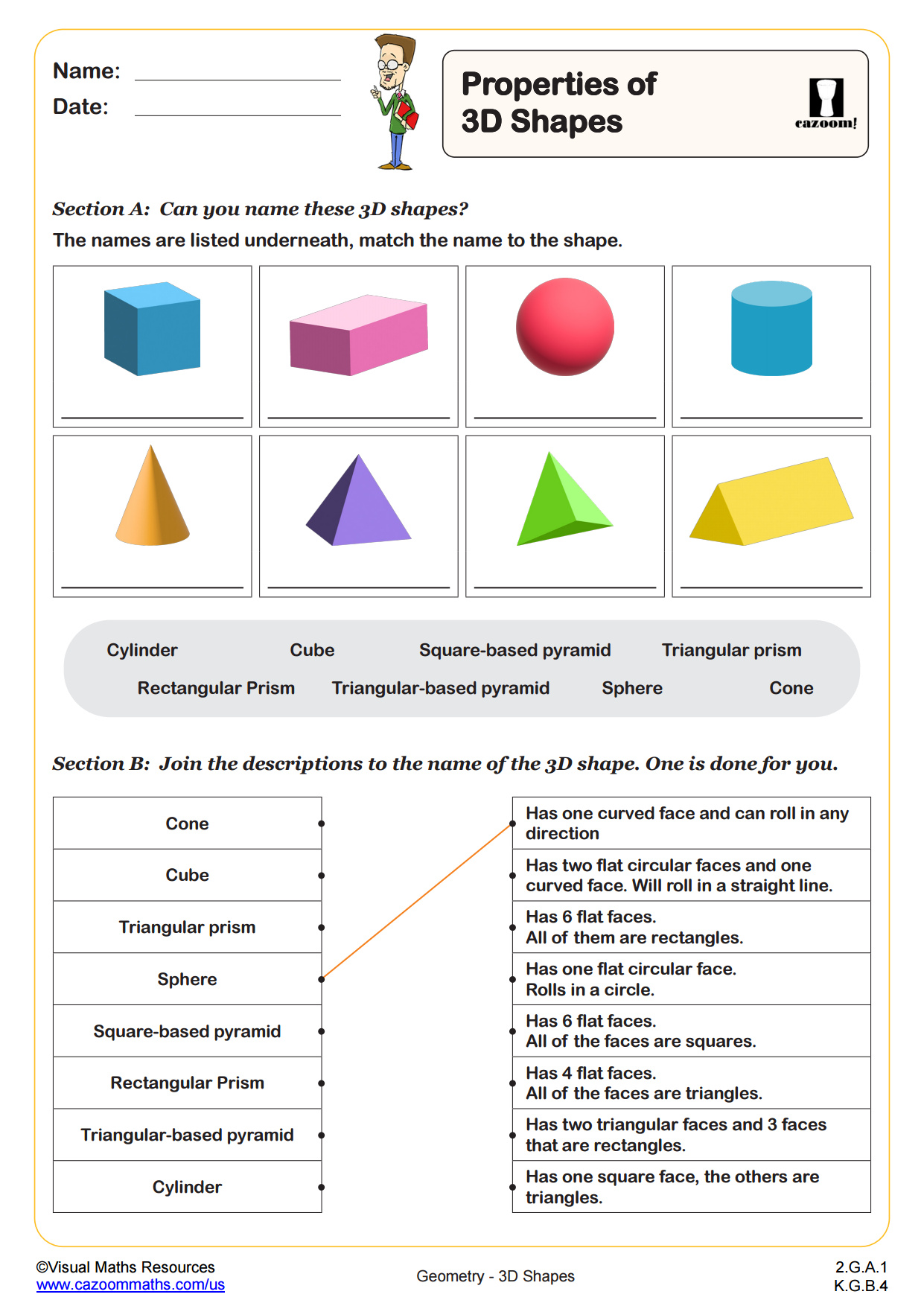
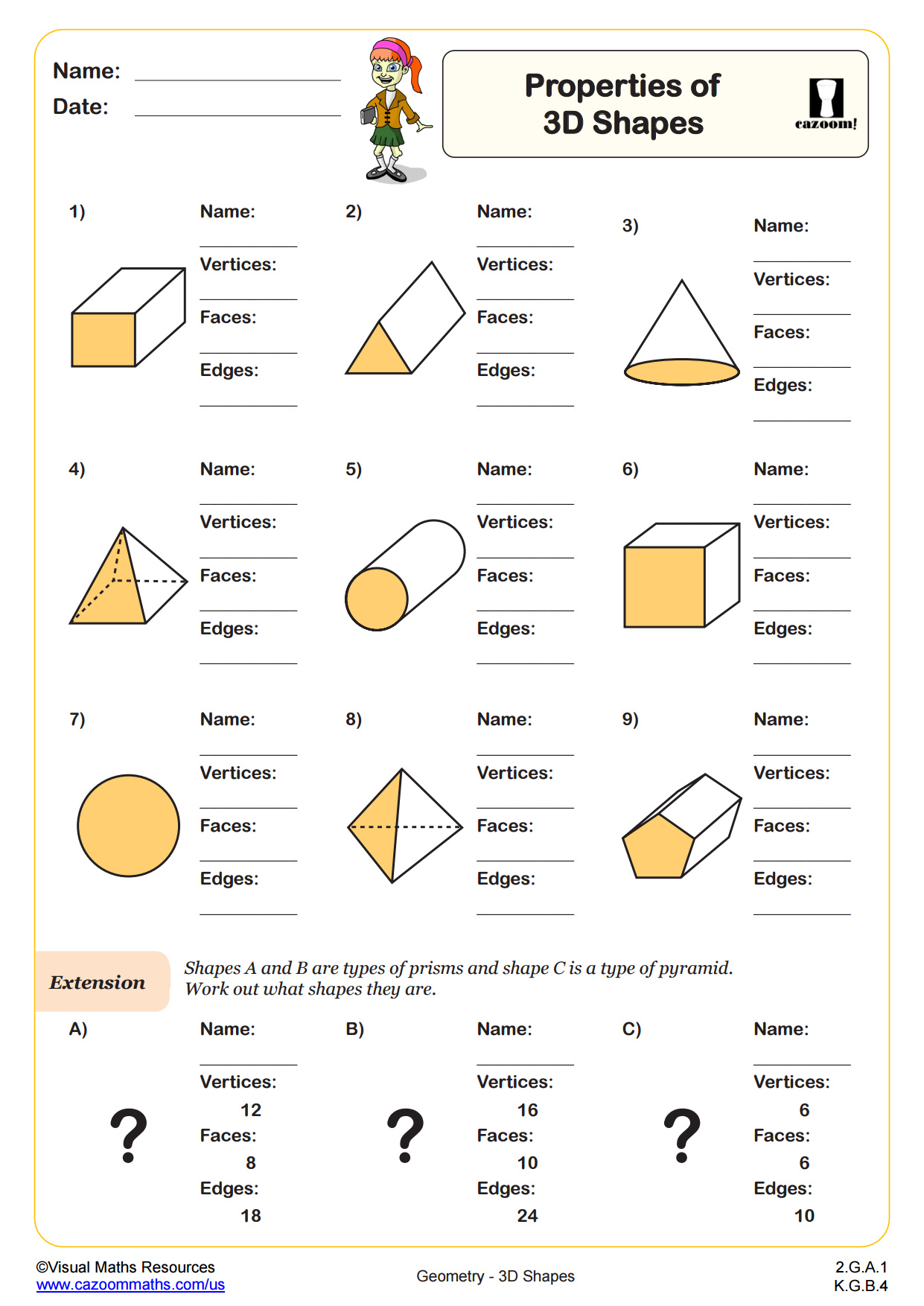
All worksheets are created by the team of experienced teachers at Cazoom Math.
What makes 3d shapes worksheets kindergarten appropriate for this grade level?
Kindergarten 3d shapes worksheets align with Common Core geometry standards that require students to identify and describe shapes in their environment. These worksheets use large, clear images and simple vocabulary that match kindergarteners' developmental stage, focusing on the four basic solids: cube, sphere, cylinder, and cone.
Teachers report that kindergarteners learn best when worksheets connect 3D shapes to familiar objects like balls, boxes, and cans. The most effective 3d shape worksheet kindergarten activities include real-world examples rather than abstract geometric drawings, helping students bridge the gap between mathematical concepts and their everyday experiences.
How do kindergarten 3D shape skills progress to higher grades?
Kindergarten 3D shape recognition provides the foundation for increasingly complex geometry concepts in later grades. Students who master identifying cubes, spheres, cylinders, and cones in kindergarten are better prepared for first-grade work with combining shapes and second-grade analysis of faces, edges, and vertices.
Teachers notice that students who struggle with basic 3D shape identification in kindergarten often have difficulty with spatial reasoning tasks throughout elementary school. Strong early exposure through 3d shapes worksheets for kindergarten helps prevent these downstream challenges and builds confidence with geometric thinking that extends into middle school coordinate geometry and high school solid geometry.
What specific skills do these worksheets target beyond shape identification?
Beyond basic recognition, these worksheets develop sorting and classification skills as students group objects by shape properties. Many activities ask kindergarteners to find shapes in complex scenes or match 3D objects to their corresponding flat faces, building visual discrimination abilities structured for later math success.
Classroom observations show that kindergarteners particularly benefit from worksheets that combine coloring with shape identification, as the motor skills practice reinforces the learning. Teachers find that students who complete regular 3d shapes worksheets demonstrate stronger problem-solving approaches when encountering new geometric concepts, suggesting these early experiences build mathematical thinking patterns beyond just shape knowledge.
How can teachers maximize the effectiveness of these kindergarten worksheets?
Teachers achieve the best results when they pair these worksheets with hands-on manipulatives, allowing students to hold actual 3D objects while completing the paper activities. This multi-sensory approach helps kindergarteners make stronger connections between the worksheet representations and real-world shapes they encounter daily.
Many educators find success using these free printable 3d shapes worksheets for kindergarten as assessment tools rather than just practice activities. By observing which shapes students consistently miss or confuse, teachers can identify specific areas needing additional instruction and adjust their geometry lessons accordingly. The included answer keys make this diagnostic approach practical for busy classroom schedules.