Kindergarten Adding 0-20 Worksheets
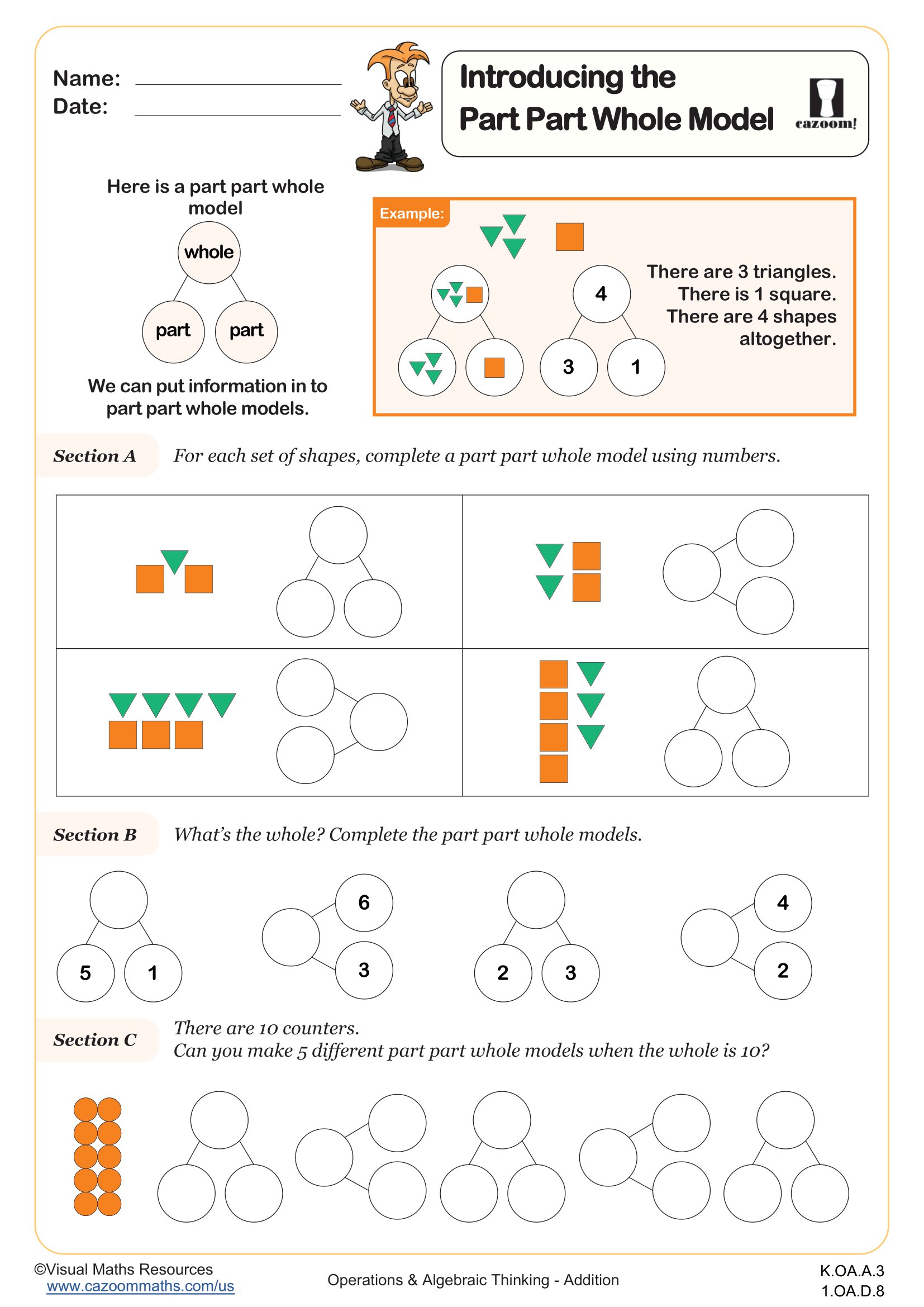
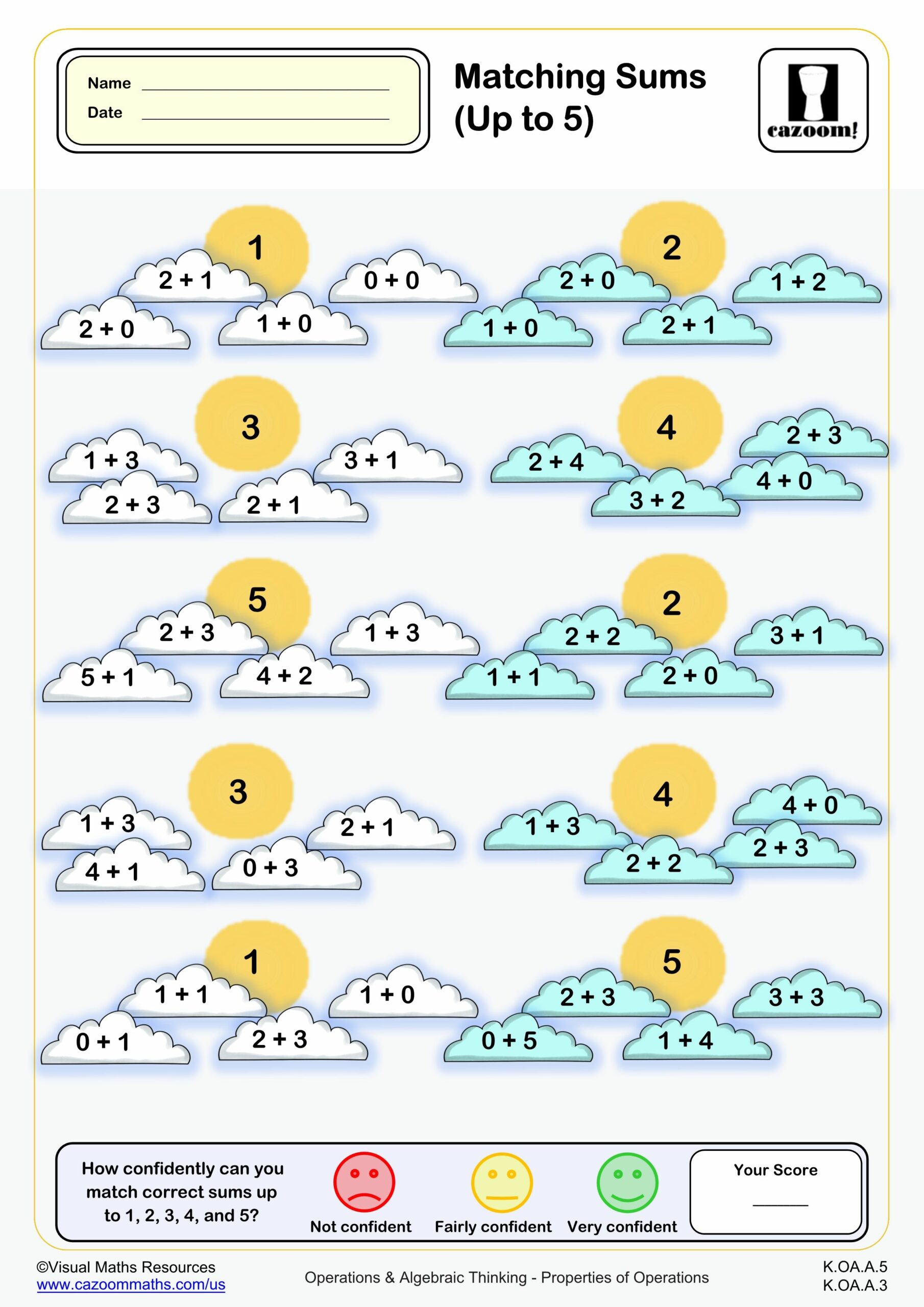
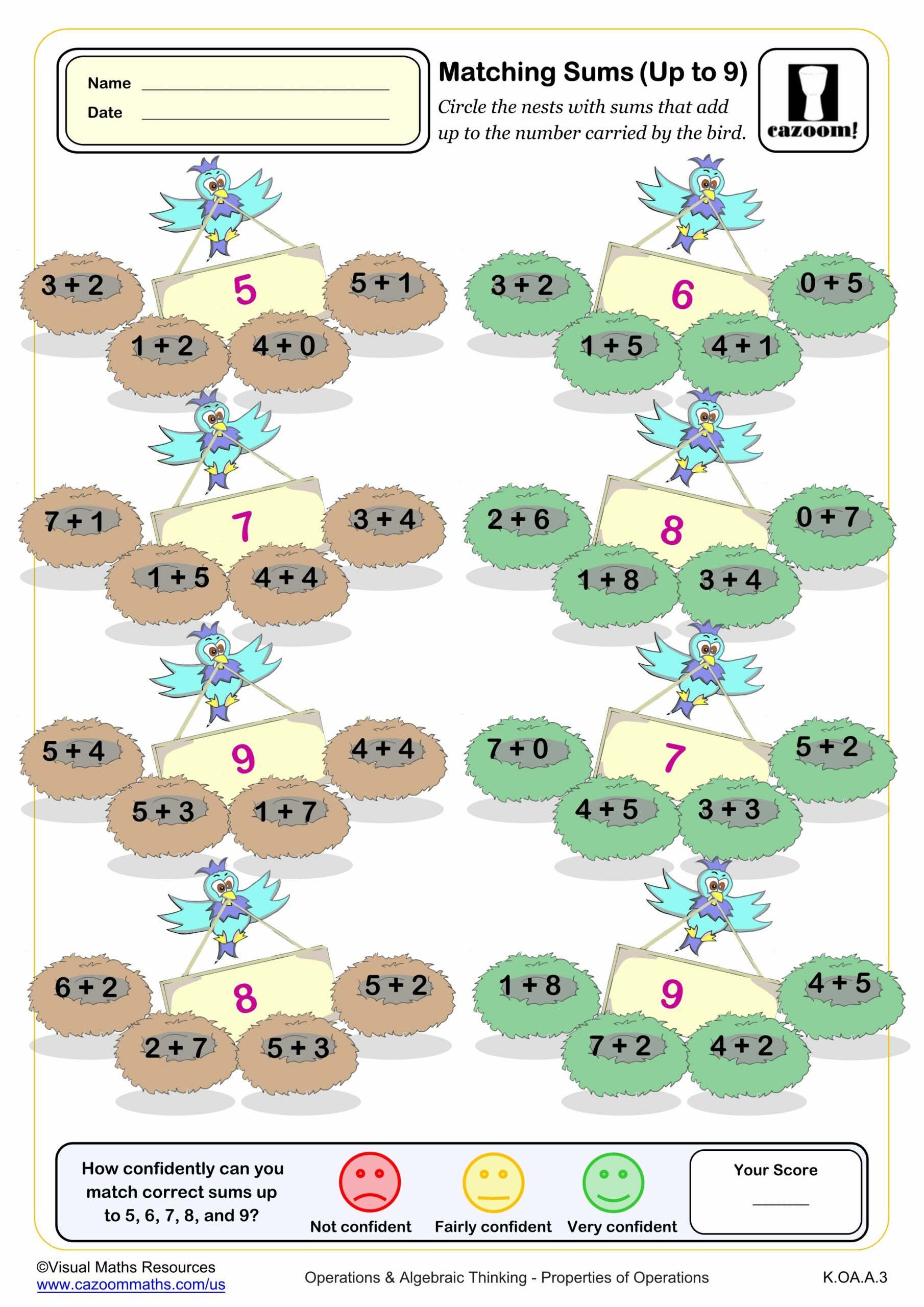
All worksheets are created by the team of experienced teachers at Cazoom Math.
What Addition Skills Do Kindergarteners Learn With Numbers 0-20?
Kindergarten students working with addition 0-20 develop several foundational skills aligned with Common Core standards. They learn to combine two single-digit numbers with sums up to 20, understand zero as an addend, and begin recognizing addition as joining groups. Students practice both horizontal and picture-based problems that connect concrete representations to abstract number sentences.
A common error teachers notice is students who count all objects from one when they could count on from the larger number. For example, when solving 8 + 2, students often count "1, 2, 3, 4, 5, 6, 7, 8, 9, 10" instead of starting at 8 and counting "9, 10." Worksheets that gradually increase problem complexity help students develop this more efficient counting-on strategy, which becomes essential for mental math as they progress.
Which Grade Levels Use Addition 0-20 Worksheets?
These addition worksheets specifically target kindergarten students in elementary school. At this stage, students are expected to add and subtract within 10 fluently and work with addition problems that have sums up to 20, particularly those involving making ten (such as 8 + 7 = 8 + 2 + 5 = 10 + 5 = 15).
The worksheets progress in difficulty through varied formats and problem quantities. Students might begin with adding 1 or adding 2 to build confidence with simple patterns, then advance to adding larger numbers like 4. This scaffolded approach mirrors how teachers introduce addition concepts, starting with concrete manipulatives and pictures before moving to abstract number problems. By the end of kindergarten, students should demonstrate fluency with addition facts through 10 and show developing understanding of teen sums.
How Does Adding Small Numbers Like 1, 2, or 4 Build Math Skills?
Practicing addition with specific small addends helps kindergarteners recognize numerical patterns that form the foundation of algebraic thinking. When students repeatedly add 1, they discover the successor pattern—each sum is simply the next counting number. Similarly, adding 2 consistently reveals skip-counting patterns. These predictable relationships build the mental flexibility students need for later work with number lines, even and odd numbers, and skip counting by twos.
These patterns connect directly to real-world situations kindergarteners encounter daily. Adding 1 appears when receiving one more snack or book, while adding 2 shows up when comparing pairs of shoes or eyes. In STEM contexts, understanding consistent incremental increases prepares students for measuring growth (plants growing taller each day), simple coding sequences (move forward two spaces), and basic data collection (adding one tally mark for each observation). This early pattern recognition supports logical reasoning across disciplines.
How Can Teachers Use These Addition Worksheets Effectively?
These worksheets support differentiated instruction through varied problem formats and quantities. Teachers can select worksheets with 10 questions for students who need more time per problem or those with 20-50 questions for students ready for extended practice. The included answer keys allow for quick assessment of which addition facts students have mastered and which require additional reinforcement with manipulatives or visual models.
Many teachers use these worksheets during math centers, pairing students for peer checking with the answer keys. They work well as morning work to activate prior knowledge, as homework to reinforce classroom learning, or as formative assessments to guide small-group instruction. Students who finish early can check their own work against the answer key, promoting mathematical independence. During intervention time, teachers can assign specific worksheets targeting the exact addition facts individual students need to practice, making instruction both efficient and focused.