Kindergarten Addition with Visual Aids Worksheets
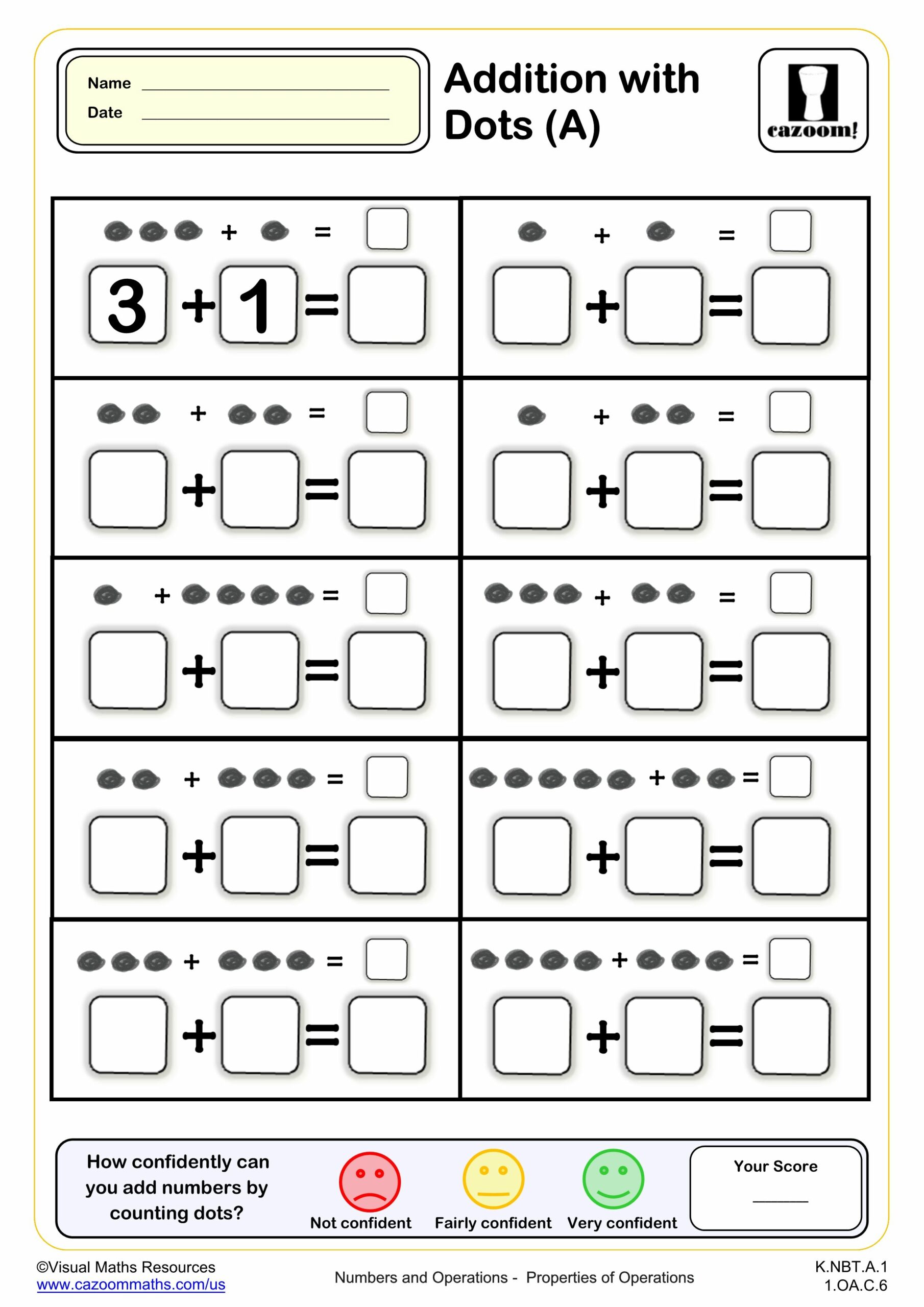
Addition with dots (A)
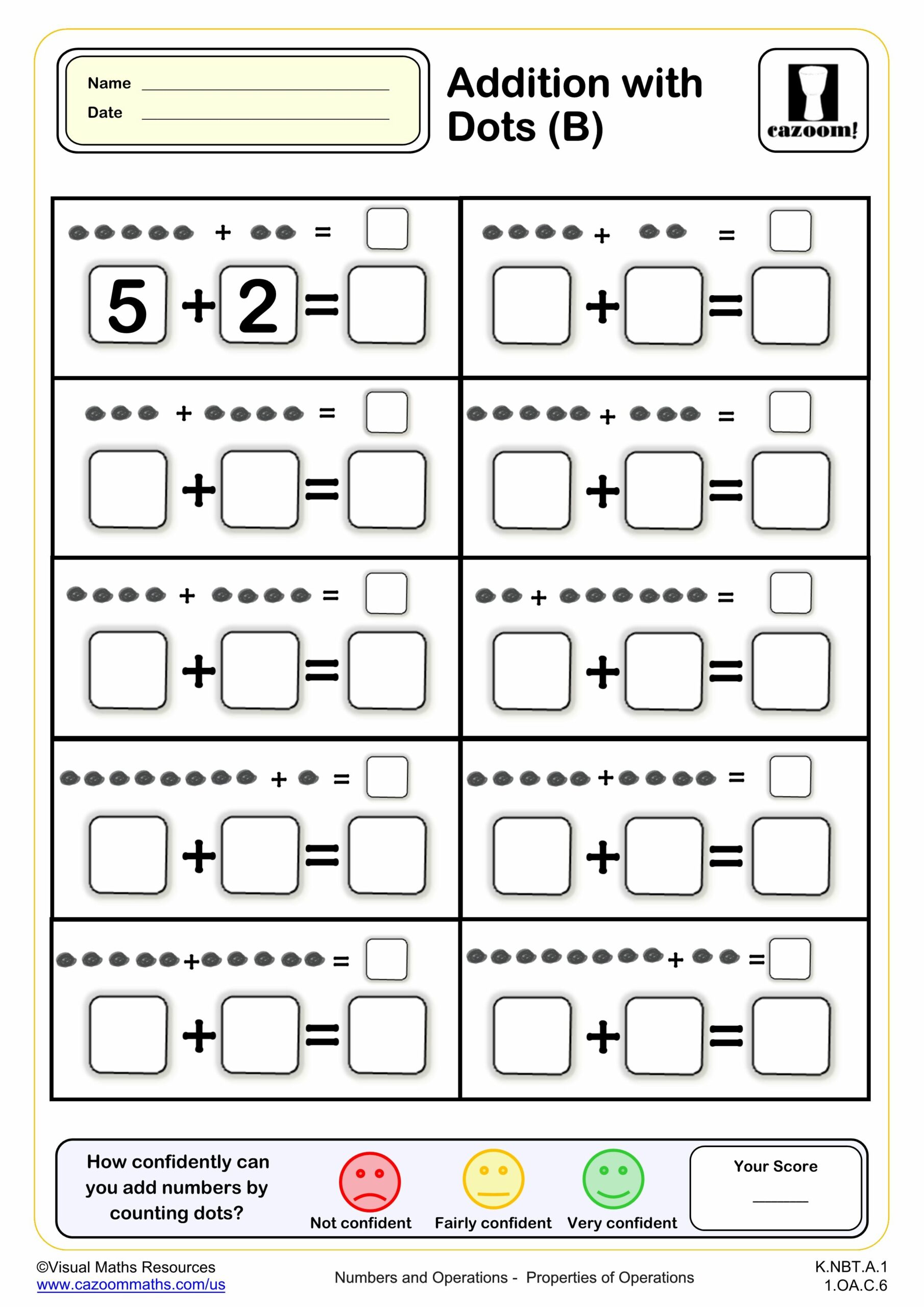
Addition with Dots (B)
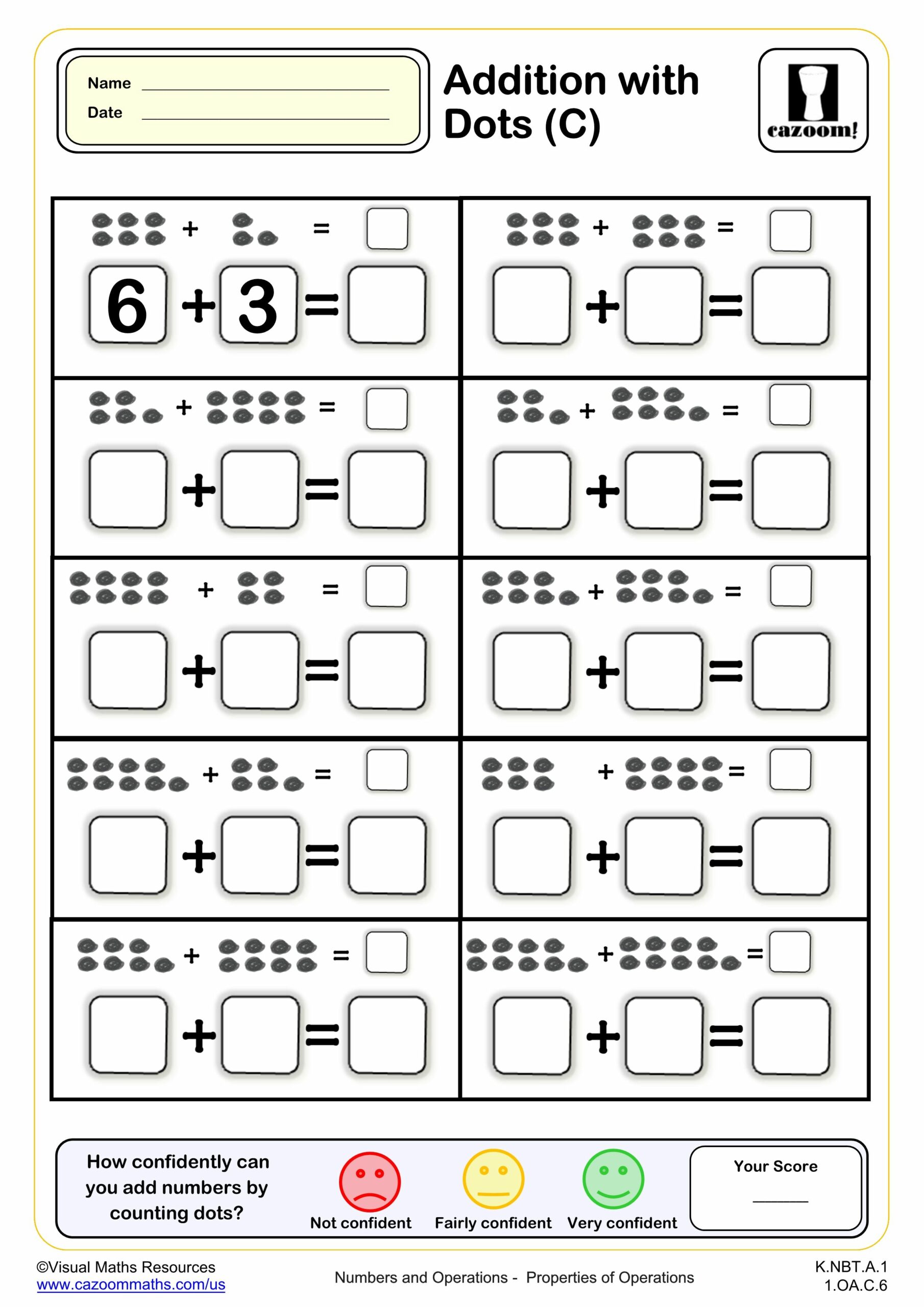
Addition with Dots (C)
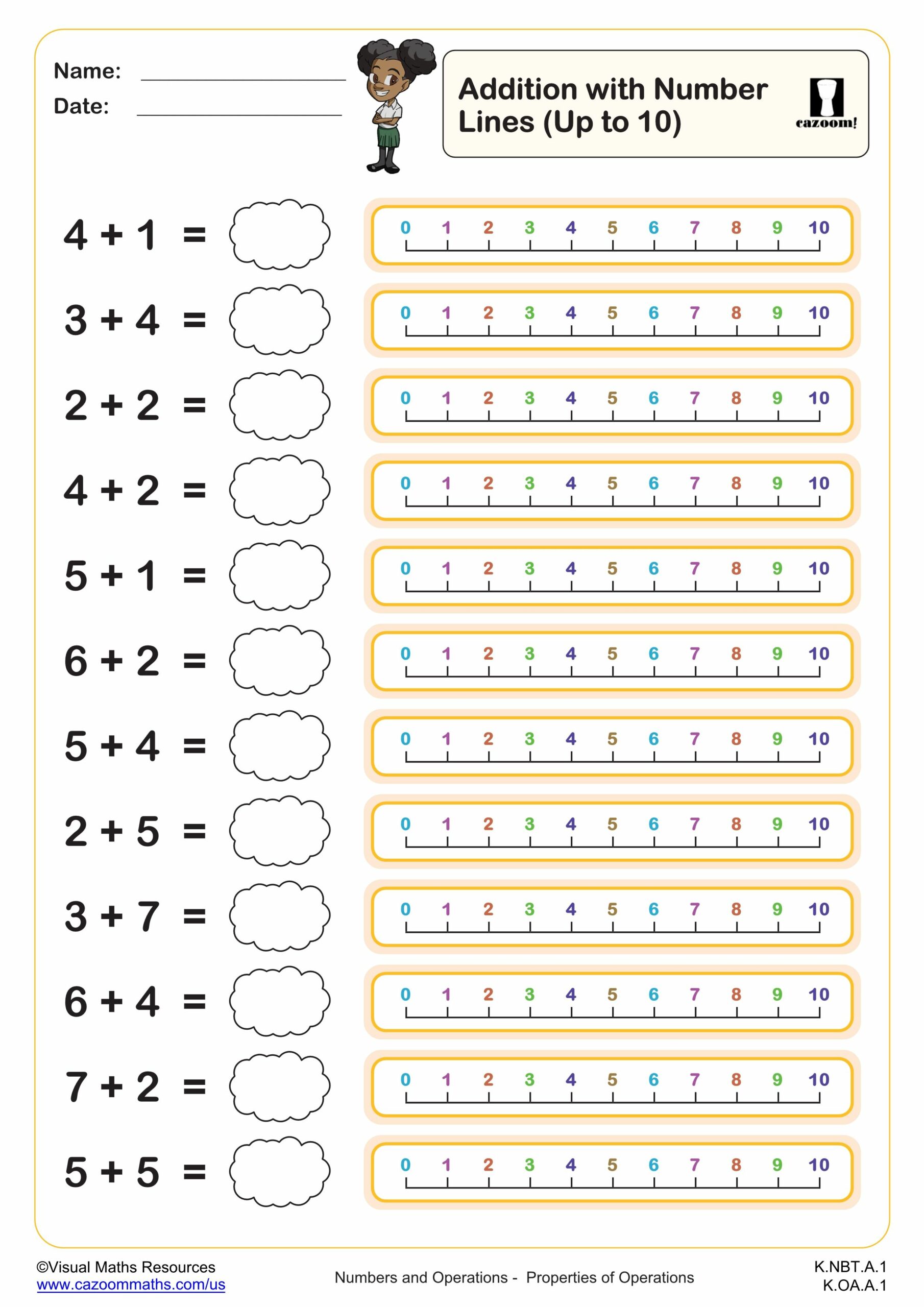
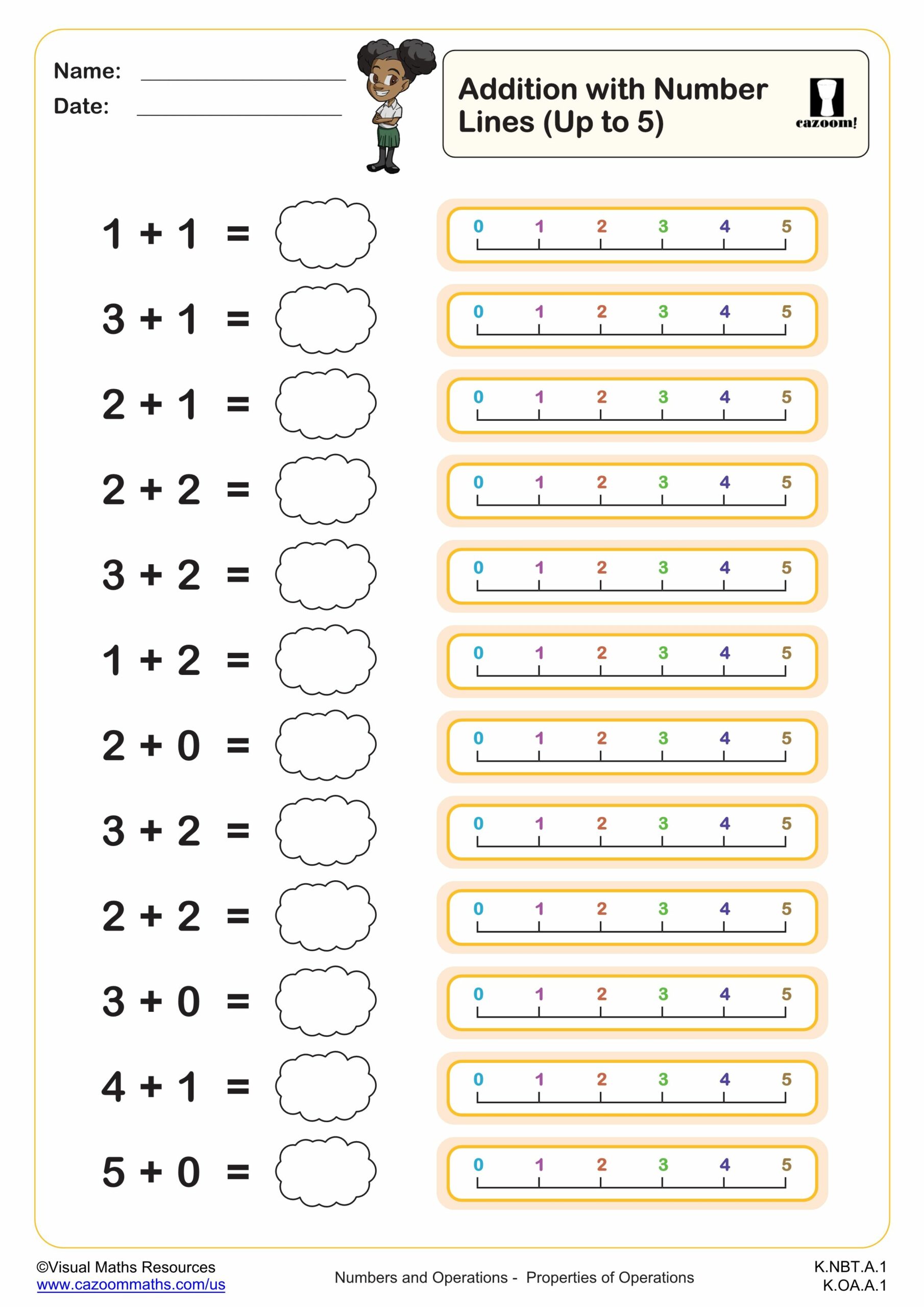
Addition with Number Lines (up to 10)
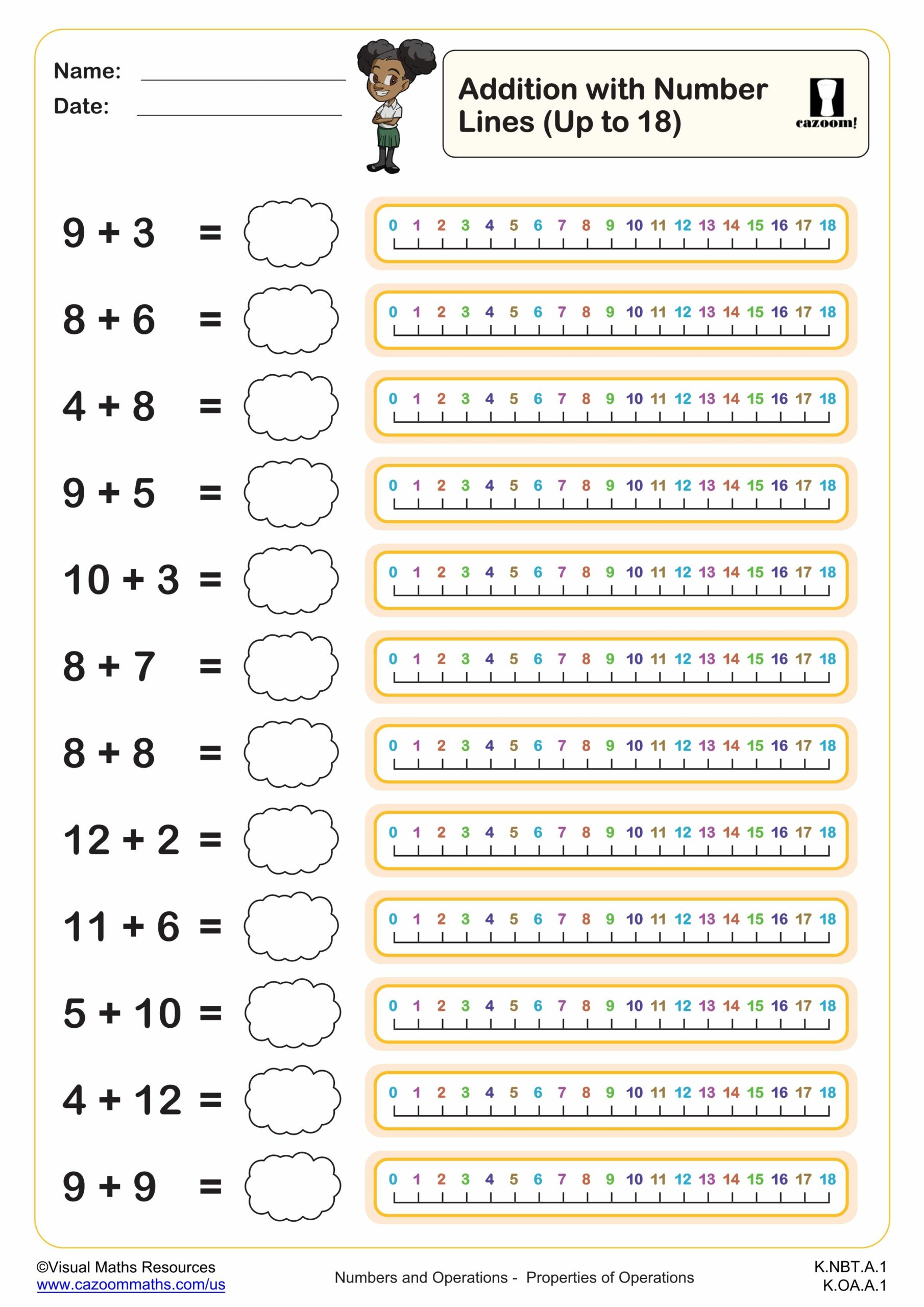
Addition with Number Lines (up to 18)
Addition with Number Lines (up to 5)
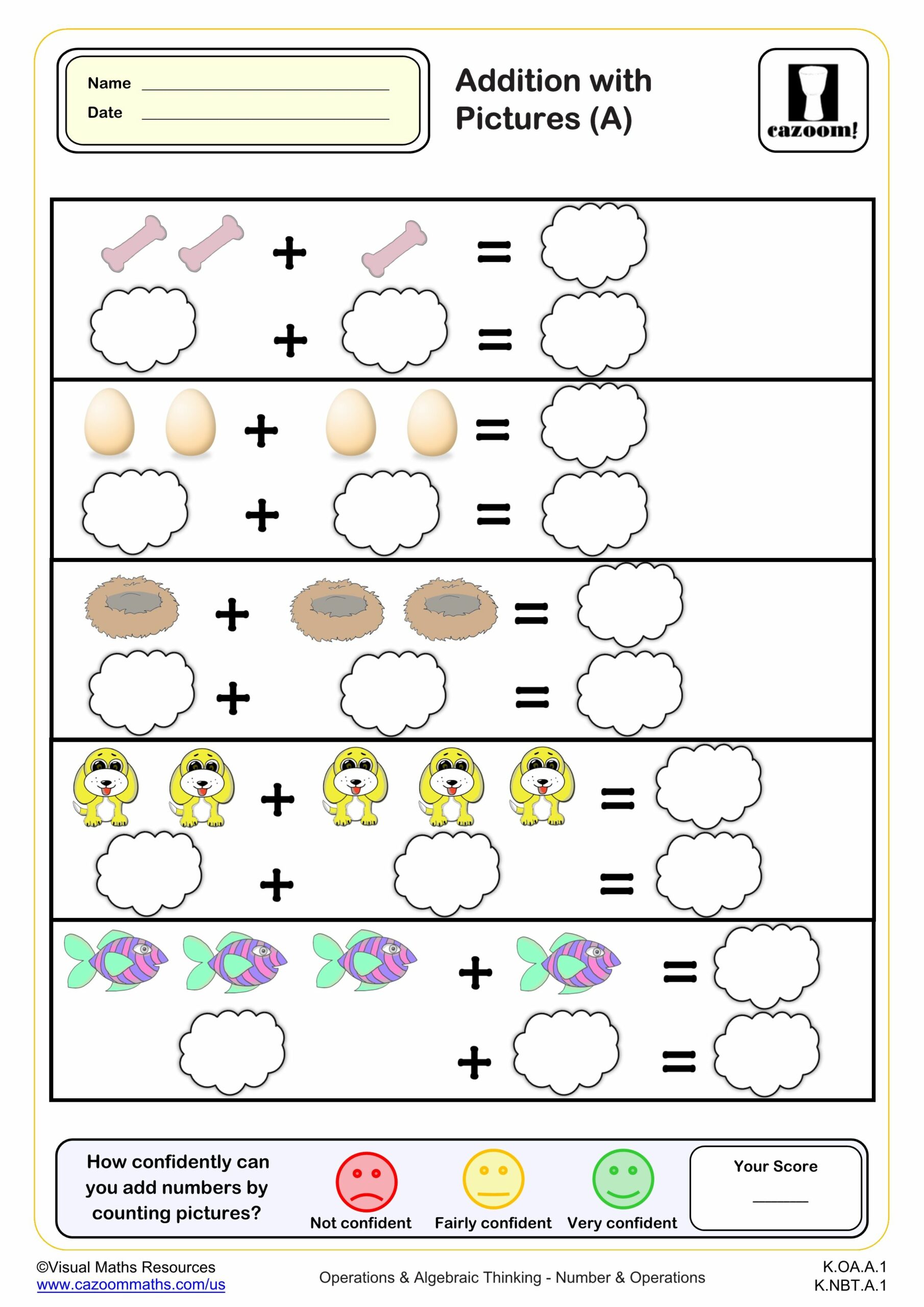
Addition with Pictures (A)
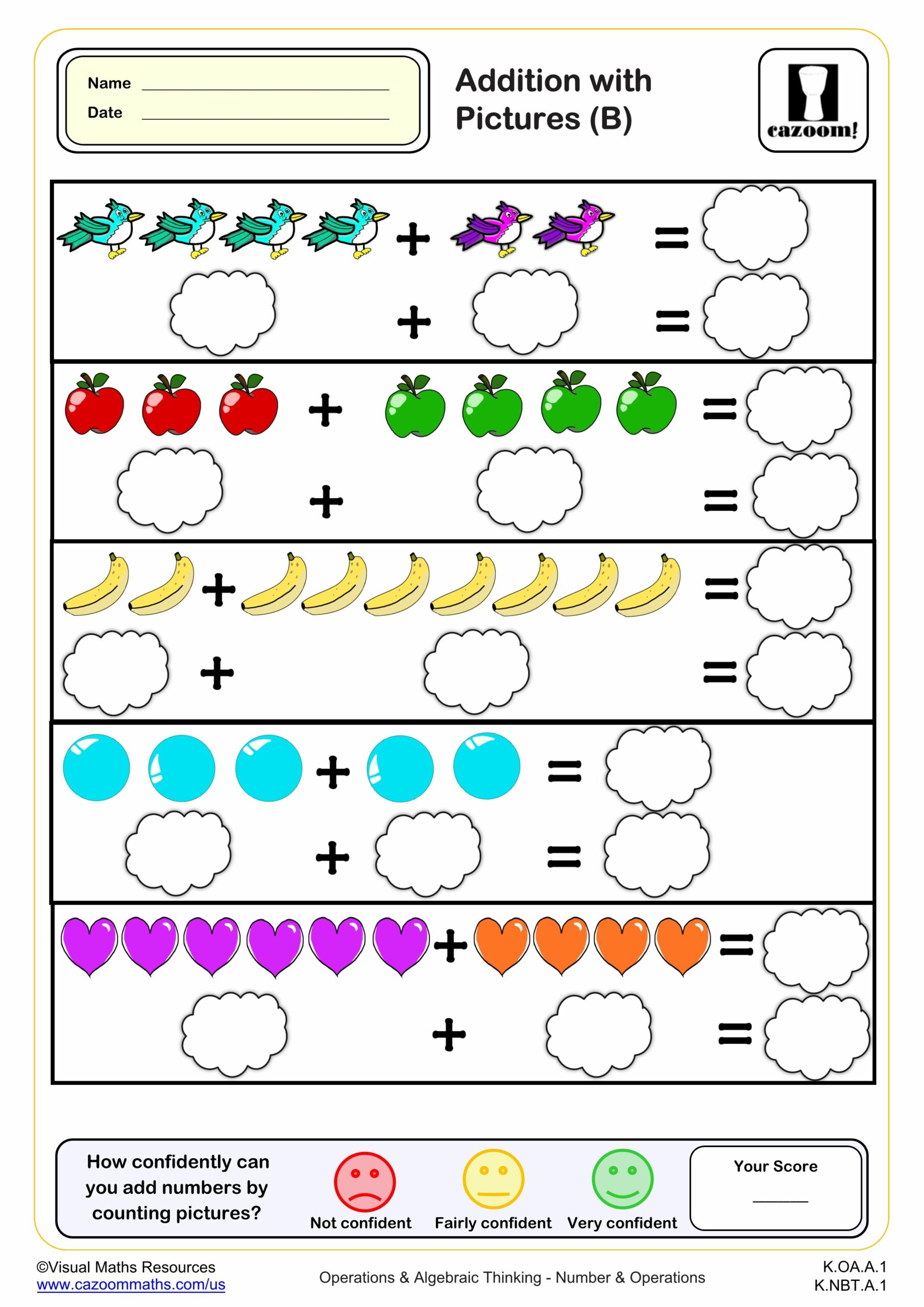
Addition with Pictures (B)
Addition with Sticks (A)
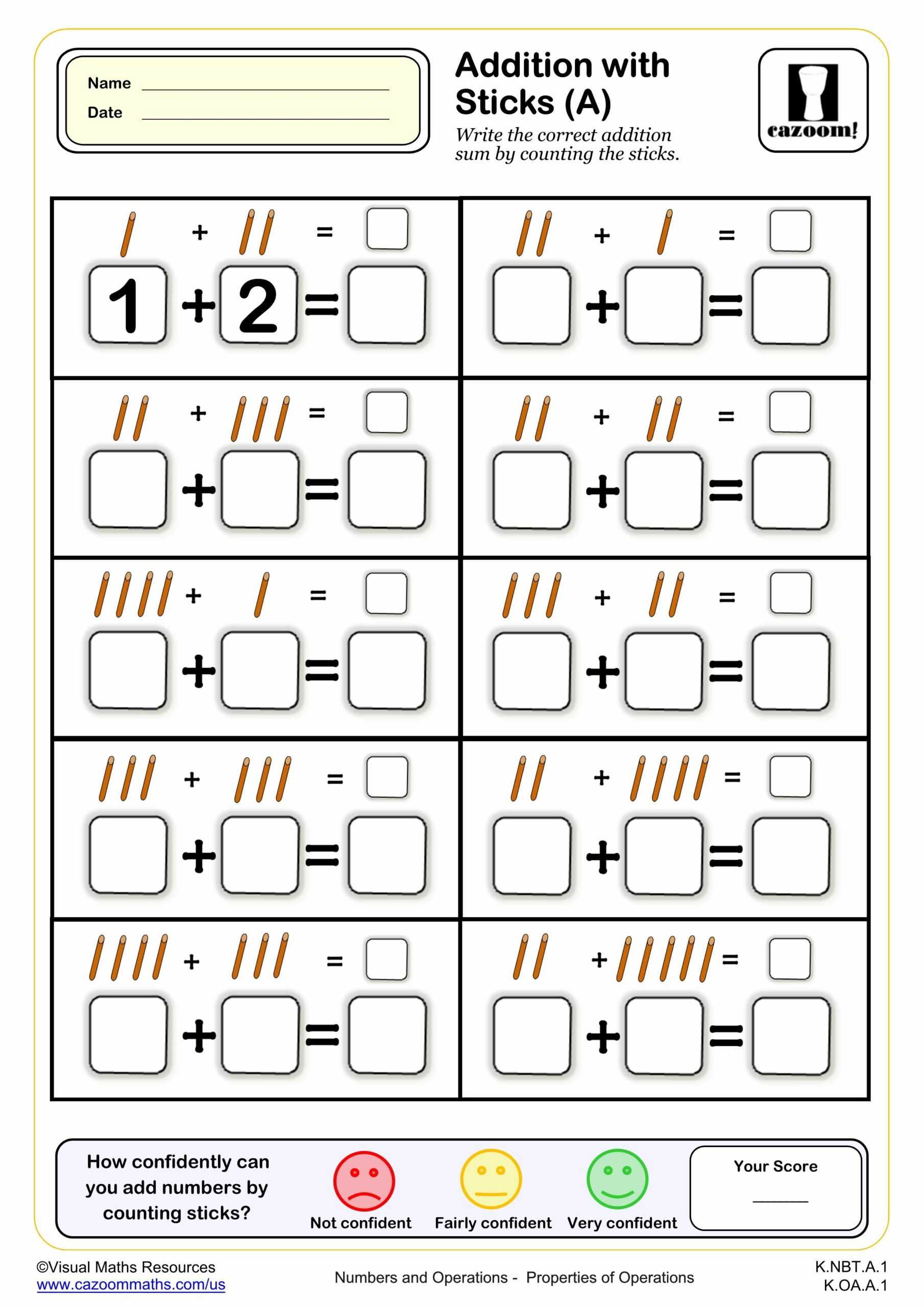
Addition with Sticks (B)
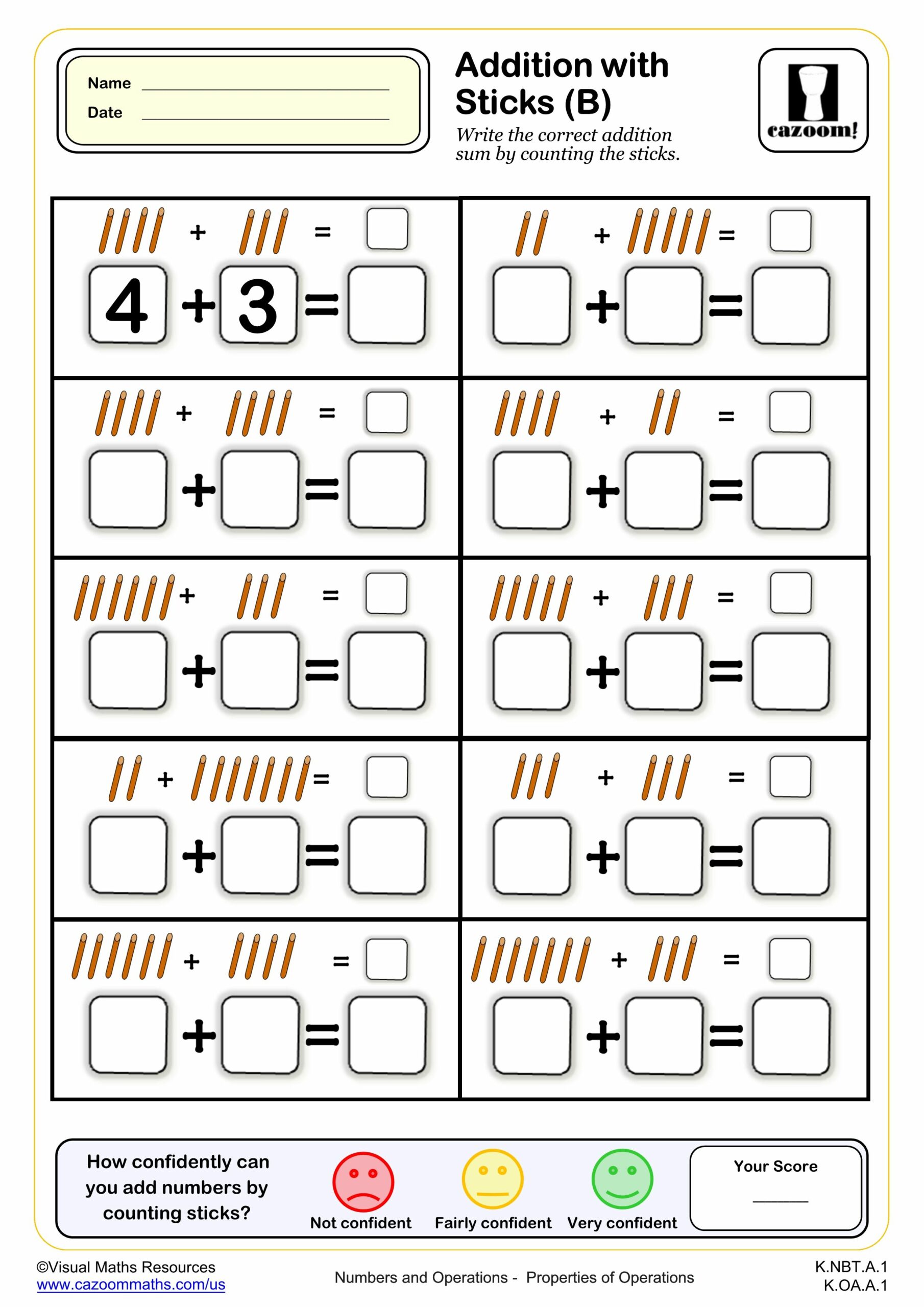
Addition with Sticks (C)
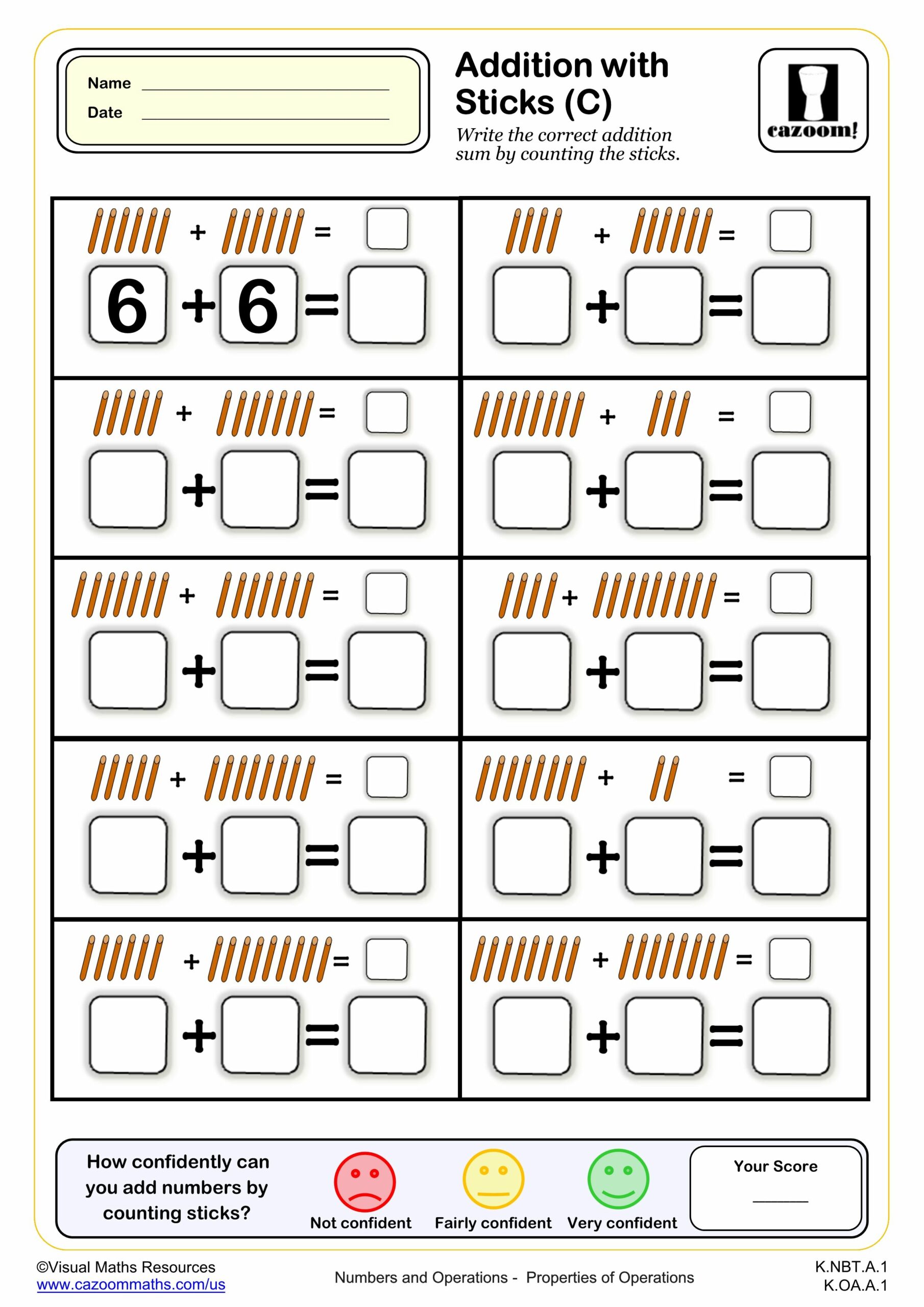
Writing Addition Number Sentences
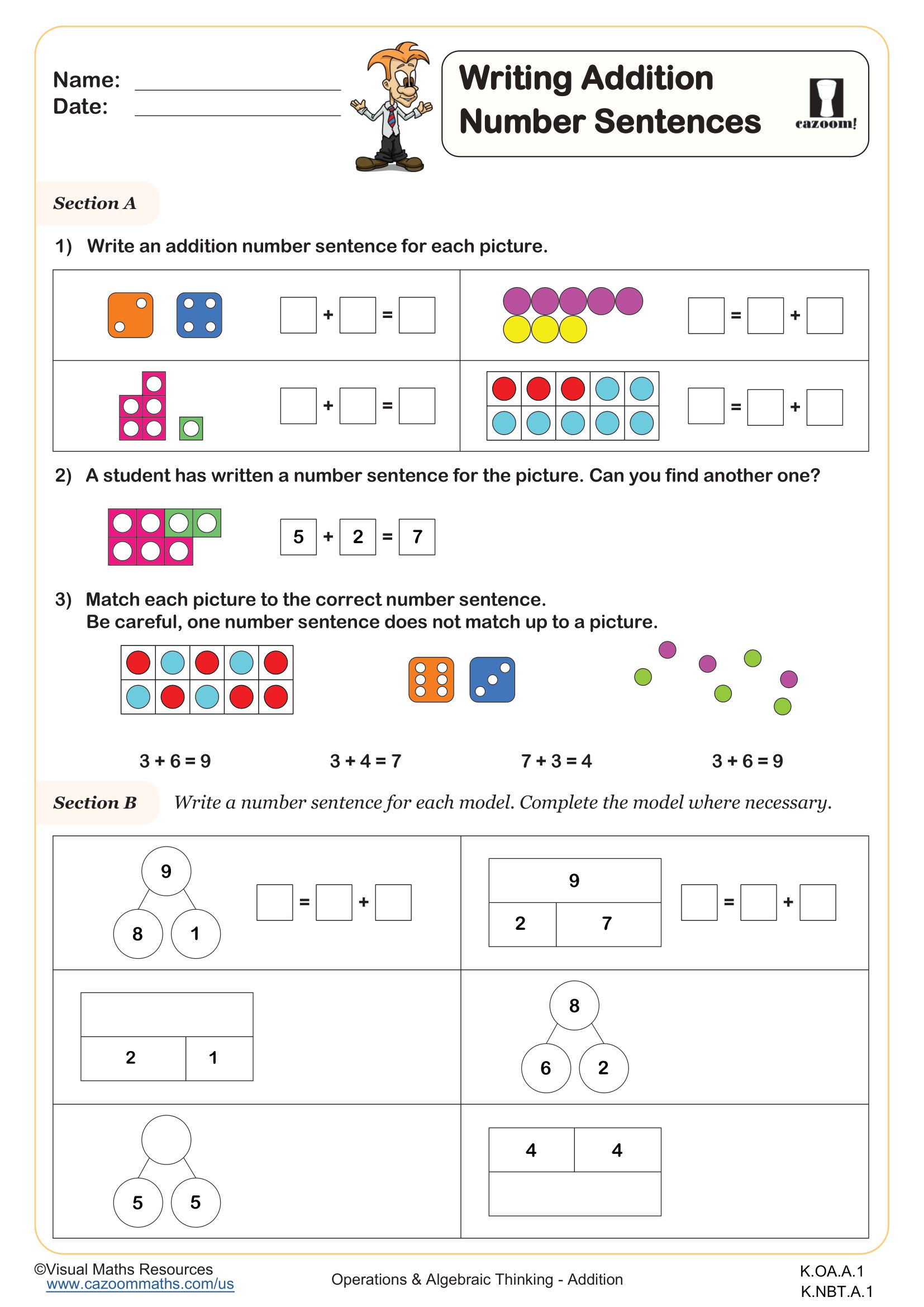
All worksheets are created by the team of experienced teachers at Cazoom Math.
Why Are Visual Aids Important for Teaching Kindergarten Addition?
Visual aids provide kindergarten students with concrete representations that bridge the gap between physical manipulation and abstract number operations. At this developmental stage, young learners think concretely and benefit from seeing quantities represented through pictures, objects, or diagrams before working with numerals alone. Visual models align with early elementary standards that emphasize understanding addition as combining sets and counting all or counting on.
A common misconception occurs when students count the same object twice or skip items without a systematic approach. Teachers frequently observe that students who touch each picture while counting or cross out counted items make fewer errors than those who rely on visual scanning alone. Worksheets with clearly separated visual groups help students develop one-to-one correspondence and accurate counting habits that transfer to mental math strategies later.
What Grade Level Uses Addition with Visual Aids Worksheets?
These worksheets specifically target kindergarten students in elementary school, aligning with foundational math standards for early childhood education. Kindergarten marks the critical period when children formalize their understanding of addition beyond simple object manipulation, learning to represent mathematical thinking on paper and connect visual quantities to written number sentences.
The difficulty progression within kindergarten materials typically moves from adding two single-digit numbers with clear picture support to combining three numbers with varied visual formats. Students advance from counting individual objects to using more efficient strategies like recognizing familiar number patterns (dice configurations, ten-frames) and applying counting-on techniques. By kindergarten's end, many students begin transitioning toward mental addition for smaller sums, though visual support remains valuable for building confidence and accuracy.
How Do Number Lines Help Students Learn Addition?
Number lines transform addition into a visual movement activity where students start at one number and hop forward by the second addend, landing on the sum. This representation helps kindergarteners understand addition as increasing quantity and builds spatial reasoning about number relationships. Number lines to 20 introduce students to a tool they'll use throughout elementary math for operations, fractions, and eventually negative numbers.
Number line skills connect directly to real-world measurement contexts that students encounter in STEM activities. When kindergarteners measure how many blocks tall their tower stands or how many steps it takes to cross the classroom, they're applying the same forward-counting movement they practice on number lines. This spatial understanding of quantity supports later work with rulers, thermometers, and data representation on graphs, where position along a line represents mathematical value.
How Can Teachers Use These Addition Worksheets in the Classroom?
The worksheets provide scaffolded practice that moves students from heavily supported visual addition to more independent problem-solving. Early problems typically show clear pictures or distinct objects to count, while later exercises might use tally marks, ten-frames, or number lines that require students to apply counting strategies with different visual formats. This variety helps students generalize their understanding rather than memorizing specific picture-counting procedures.
Teachers use these resources flexibly across instructional settings: as guided practice during small-group math rotations, independent work at math centers, homework to reinforce daily lessons, or informal assessments to identify which students have mastered visual counting strategies versus those still developing one-to-one correspondence. The included answer keys allow teacher aides, parent volunteers, or older student helpers to check work accurately, freeing teachers to provide targeted intervention for students who struggle with specific visual representations or consistently miscounting.