Kindergarten Addition Worksheets
Addition with Number Lines (up to 10)
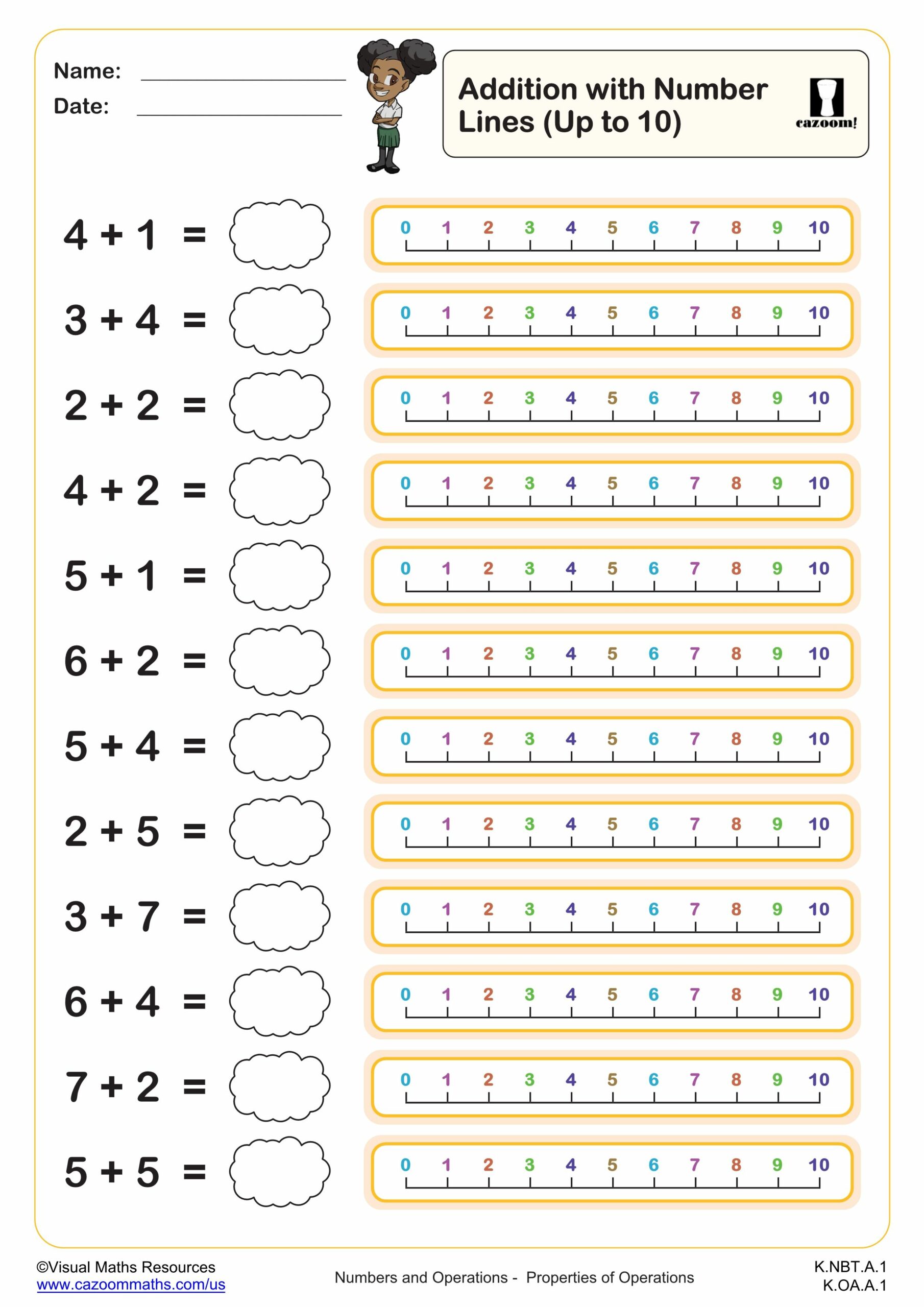
Addition with Number Lines (up to 5)
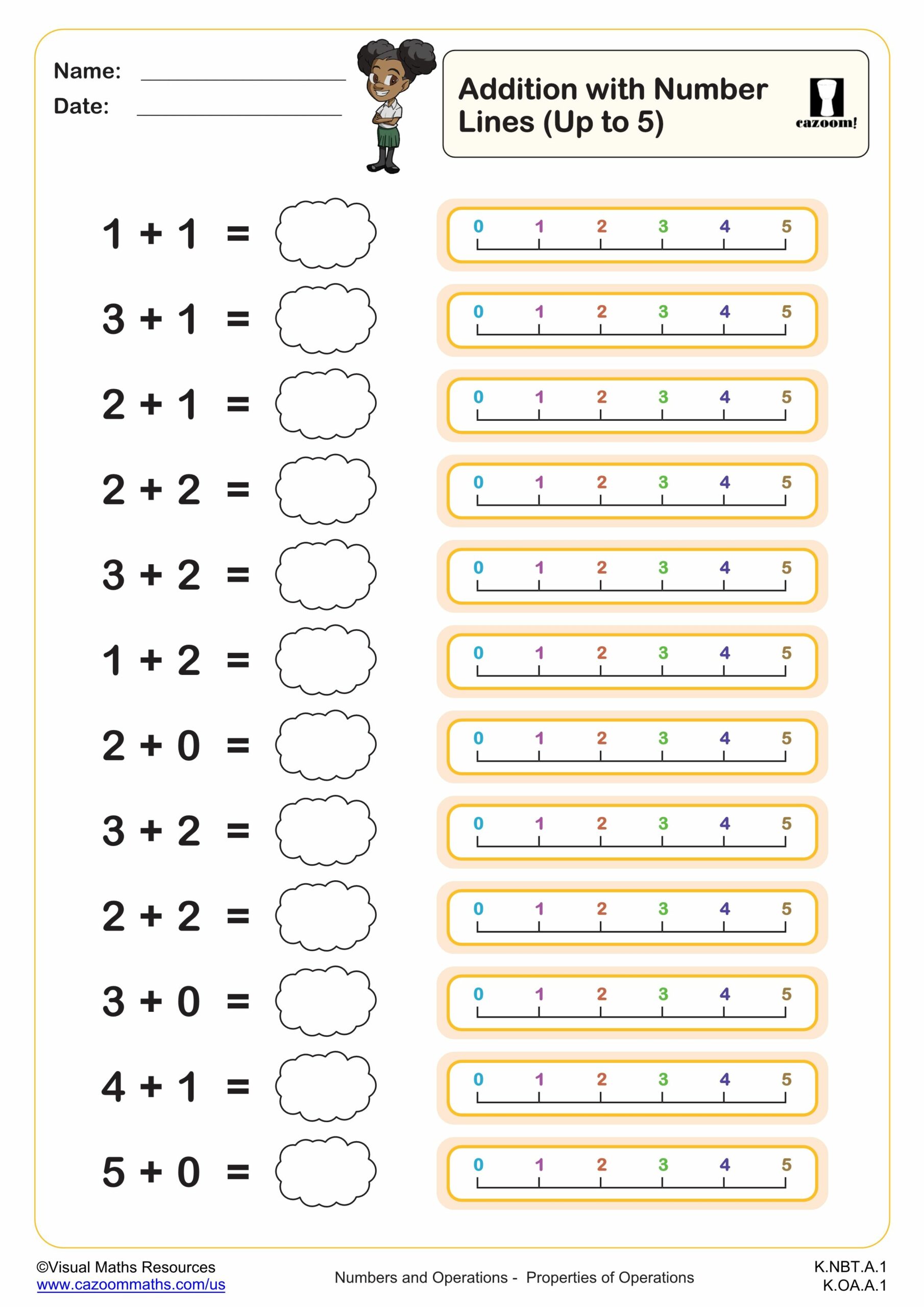
Addition with Pictures (A)
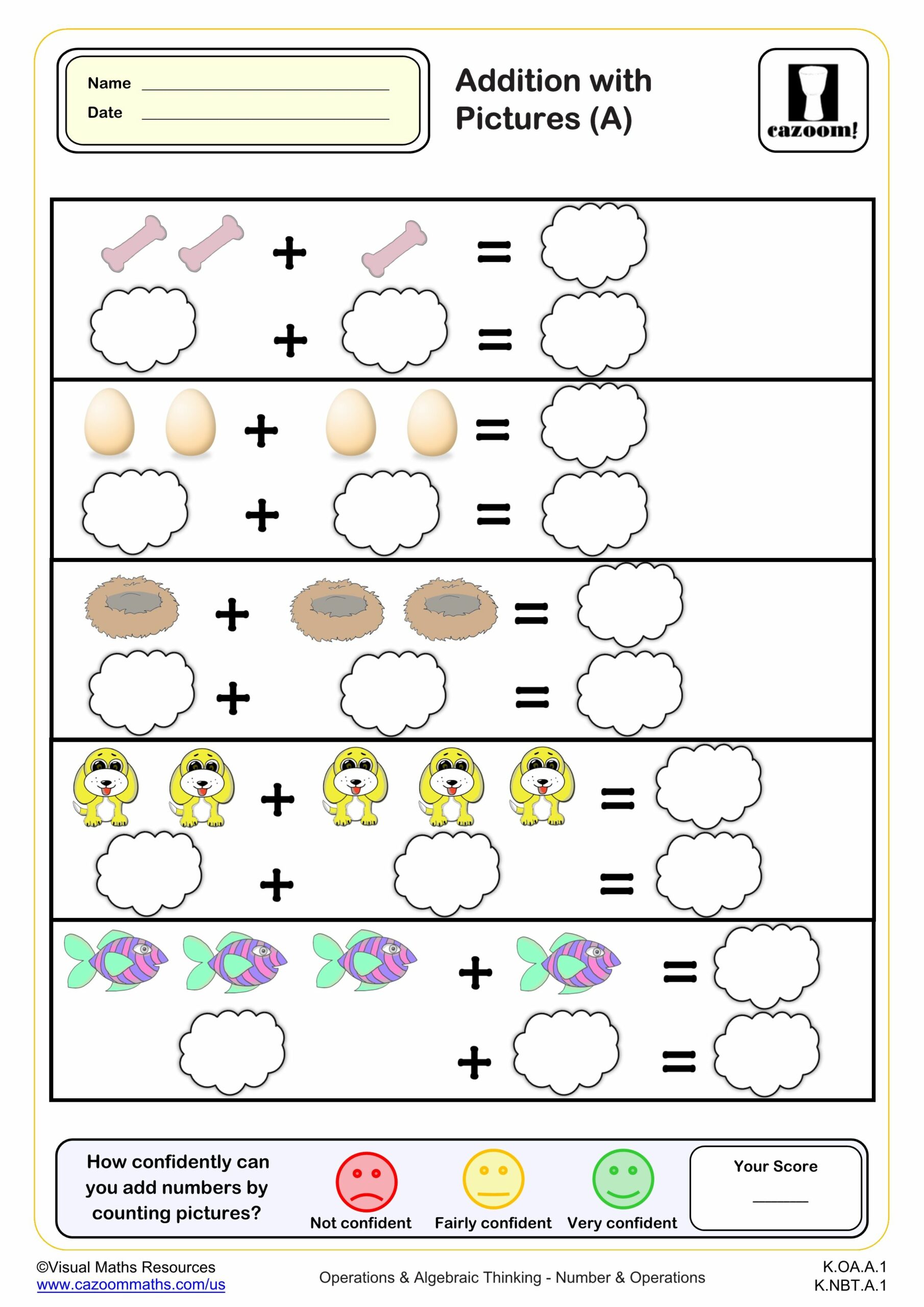
Addition with Pictures (B)
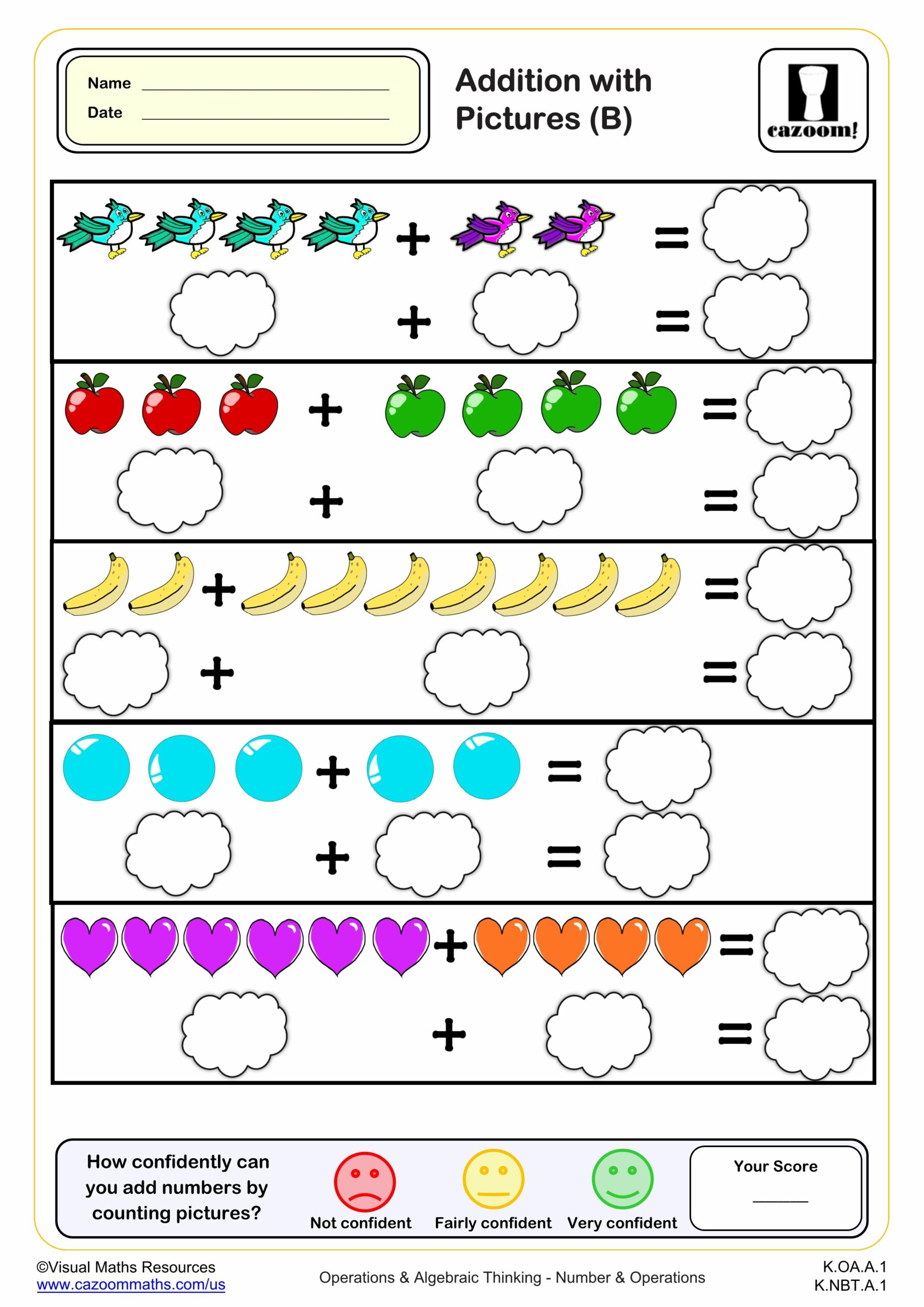
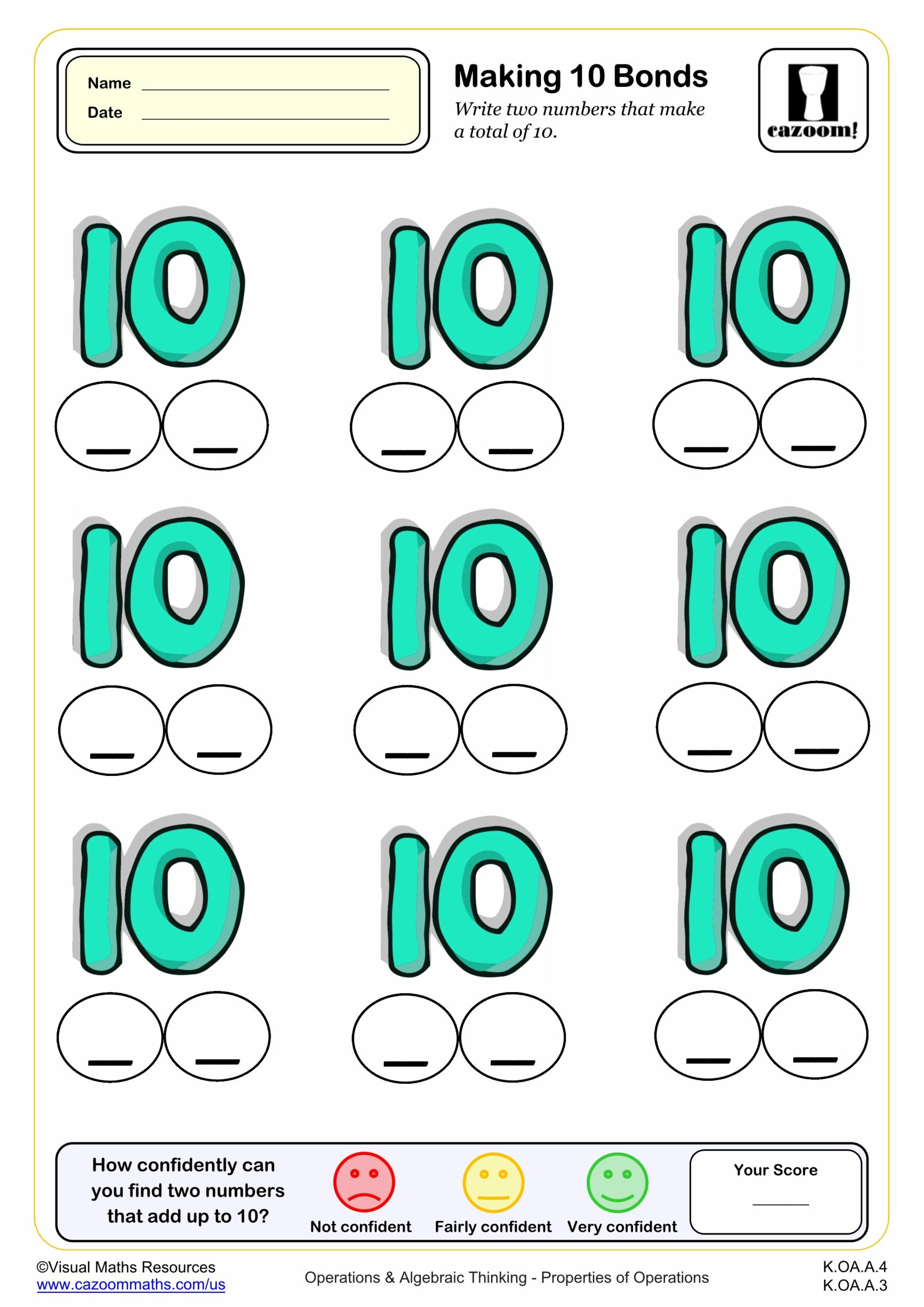
Making 10 (BONDS)
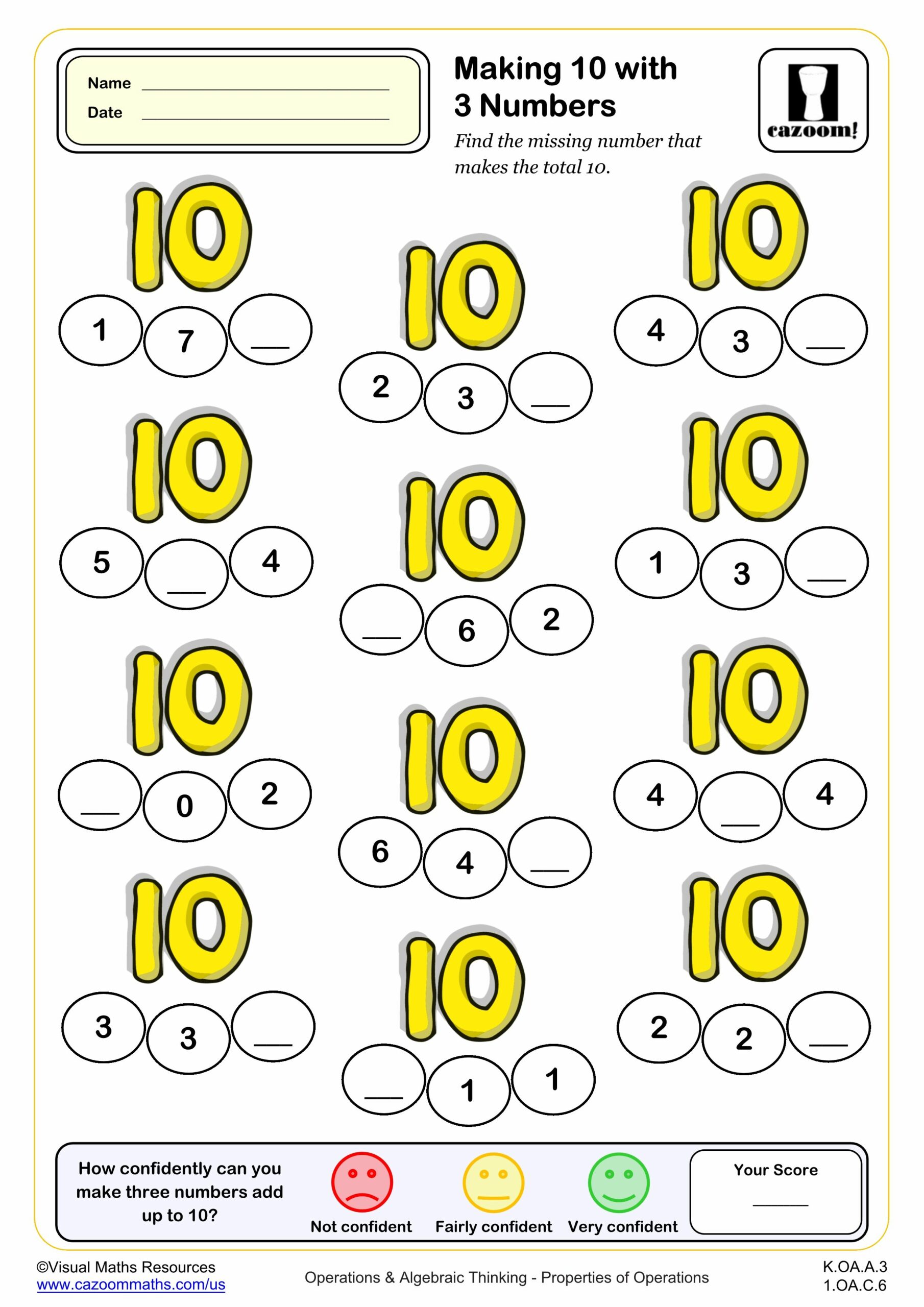
Making 10 with three numbers
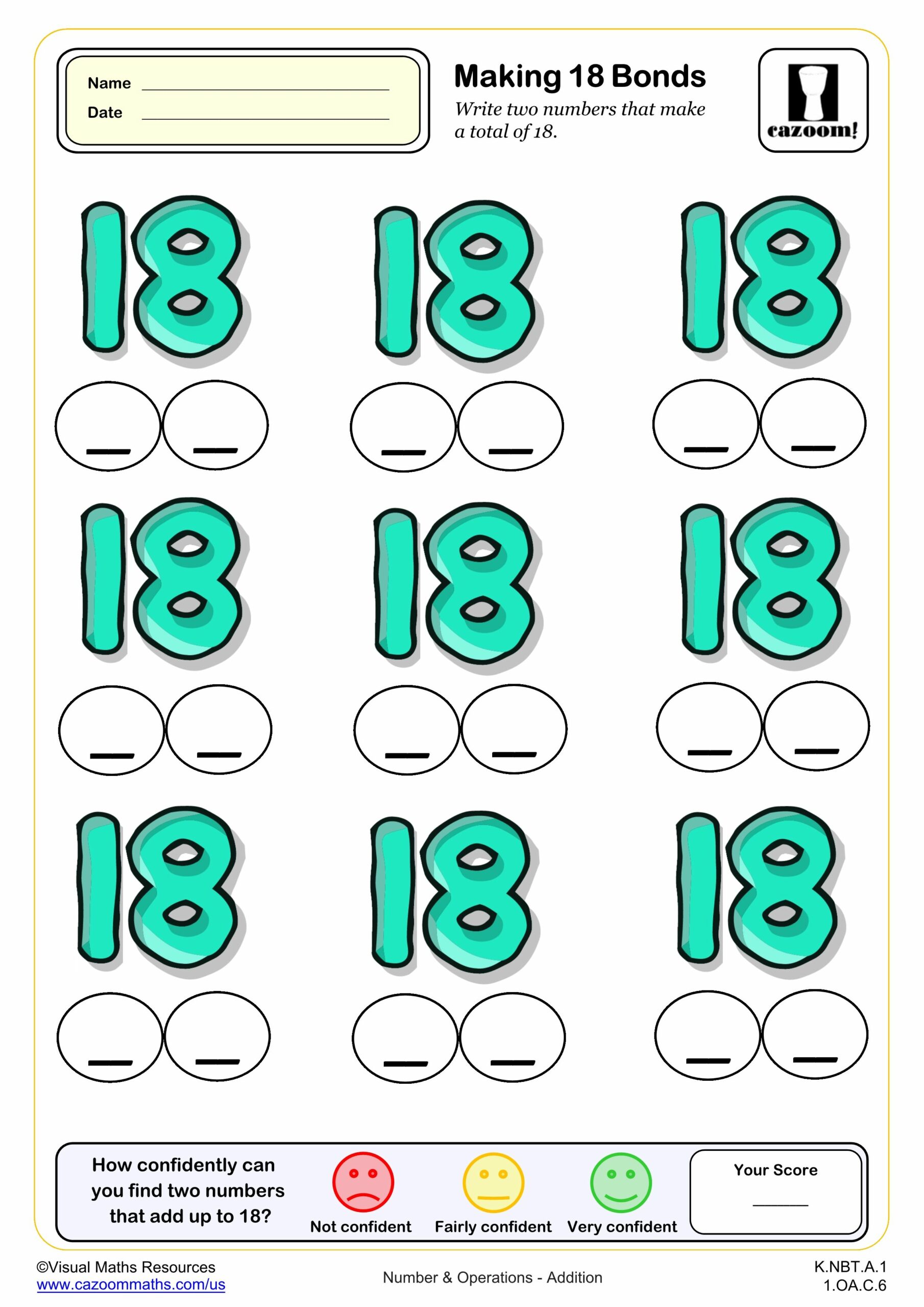
Making 18 (BONDS)
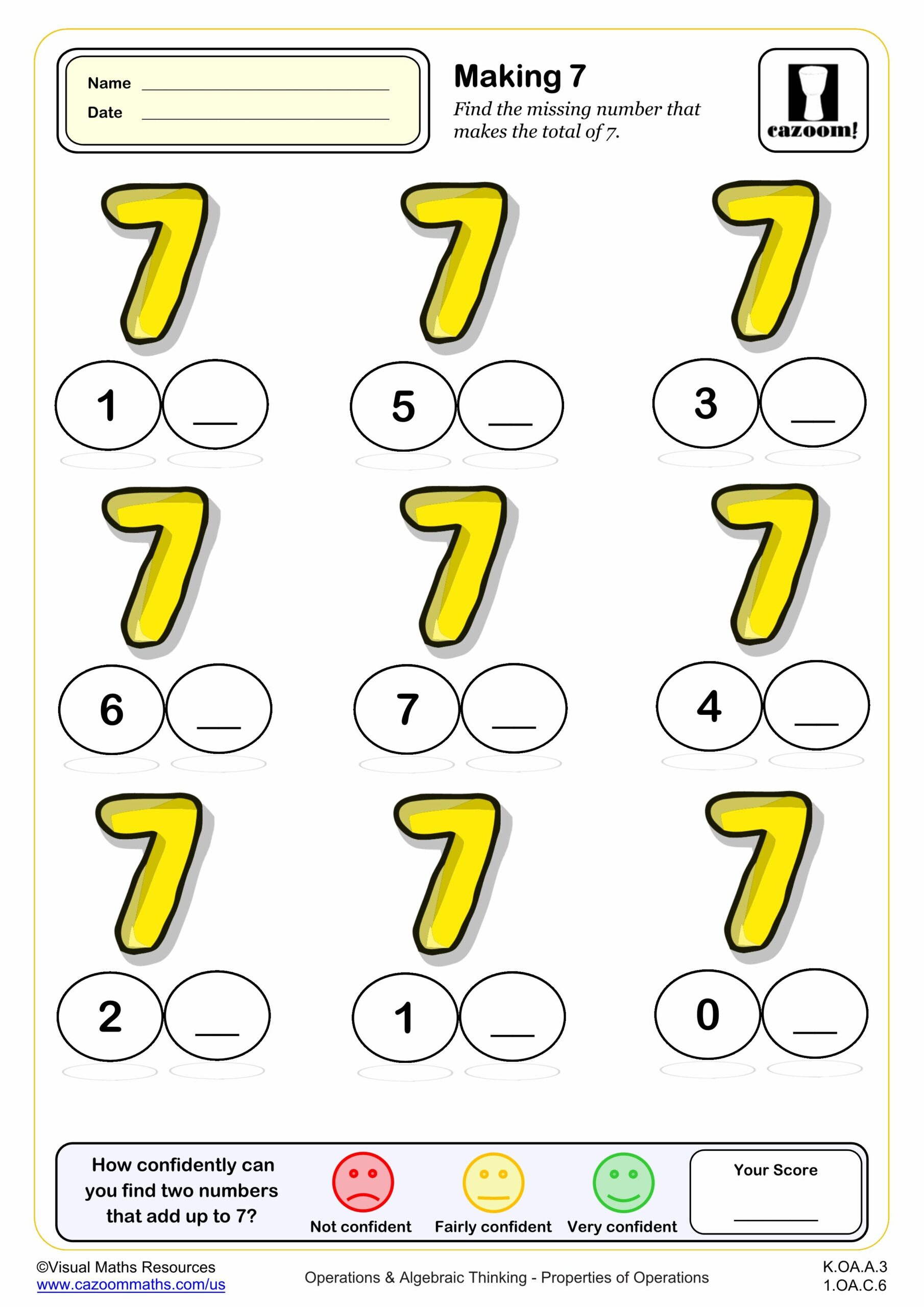
Making 7
Making 8
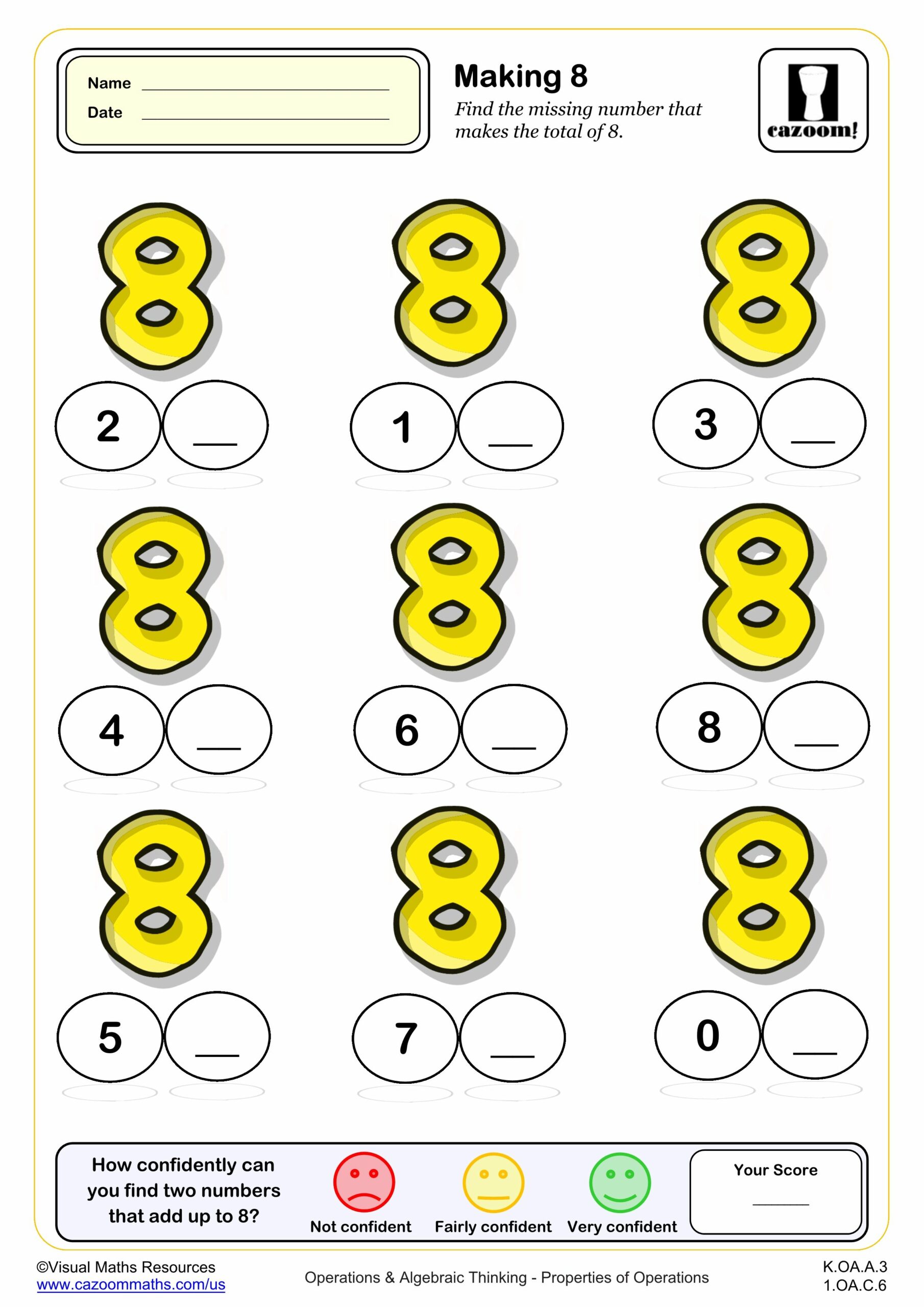
Making 9
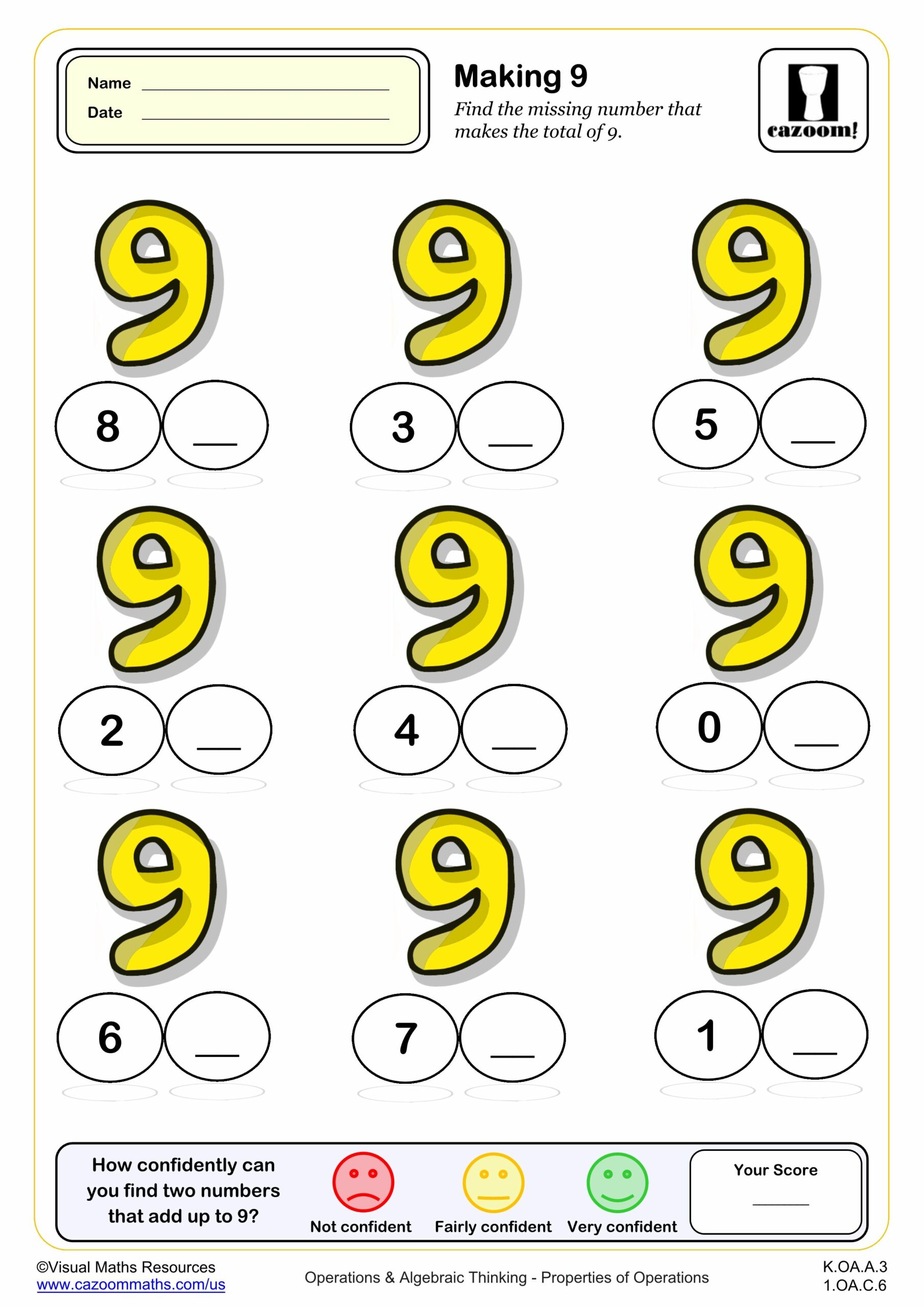
Matching Sums (to 10)
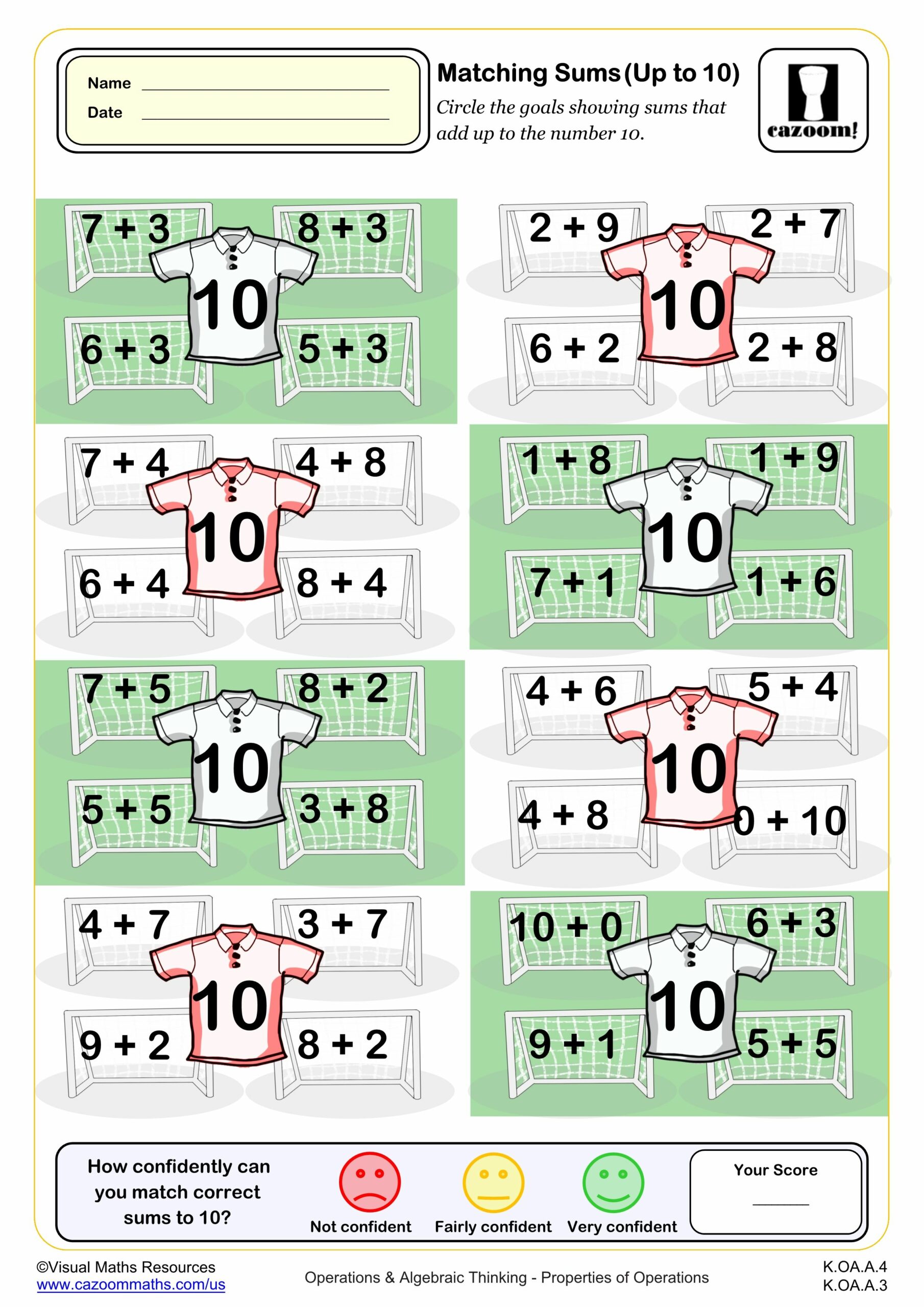
Matching Sums (up to 9)
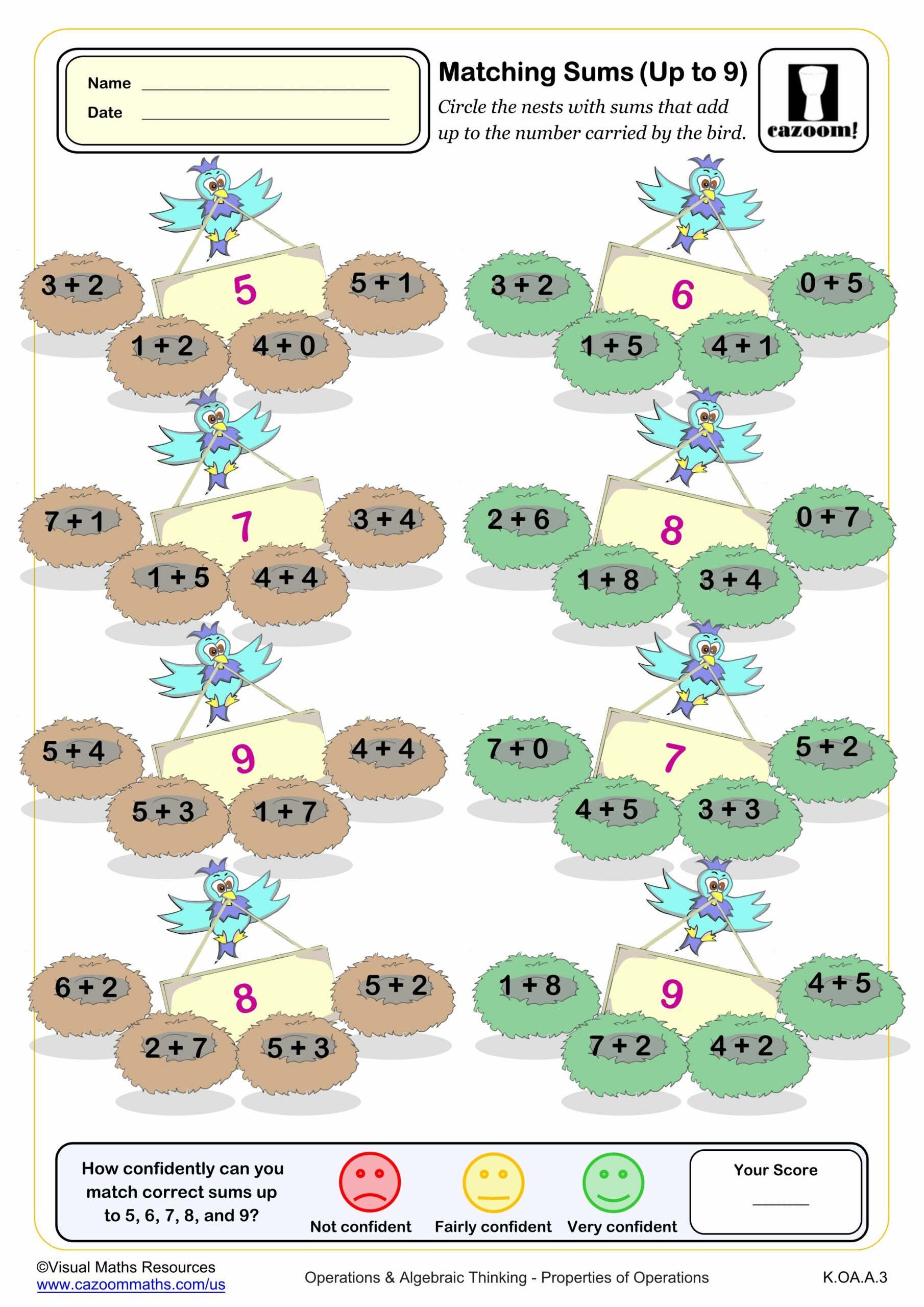
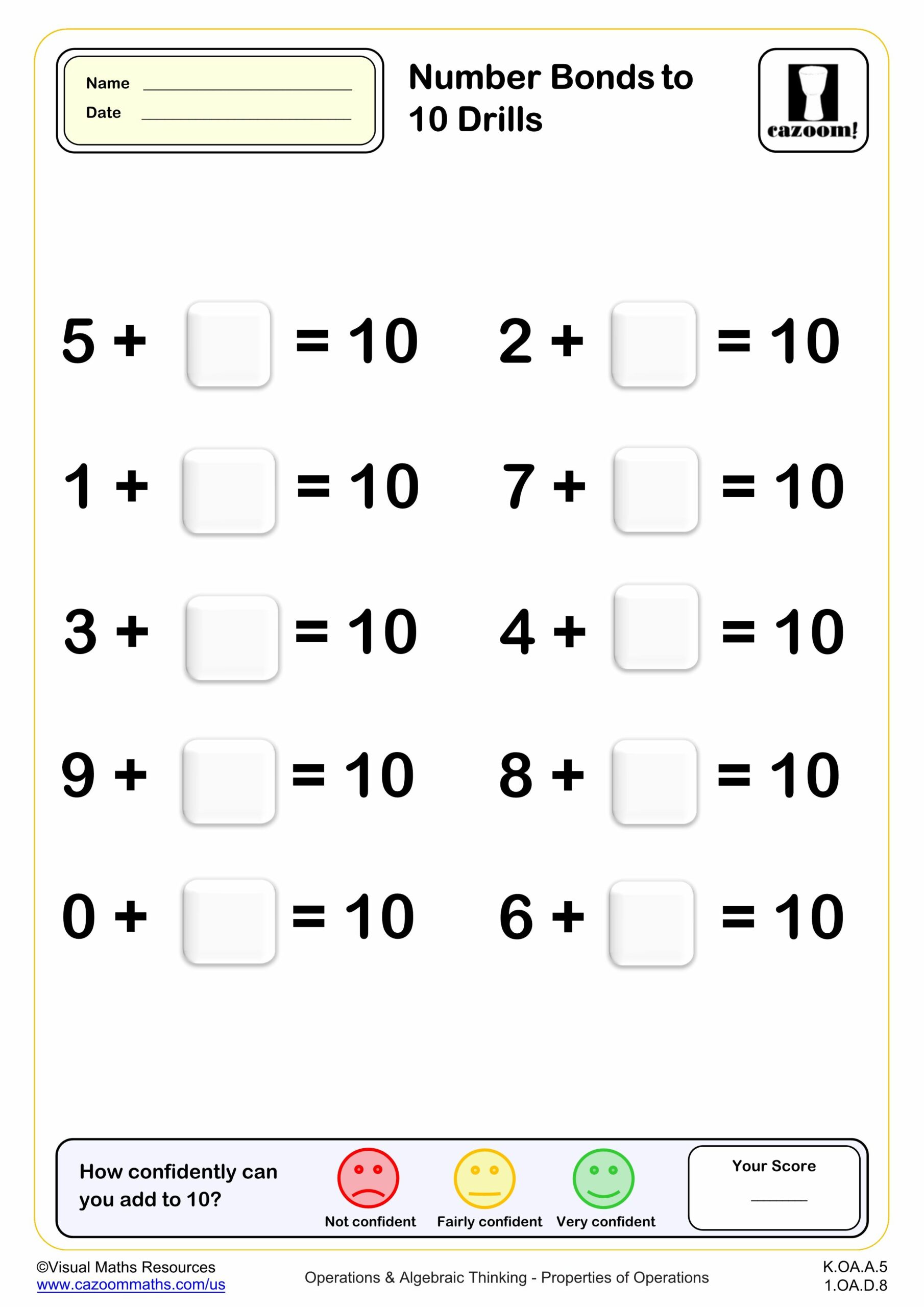
Number Bonds to 10 drills (10 questions)
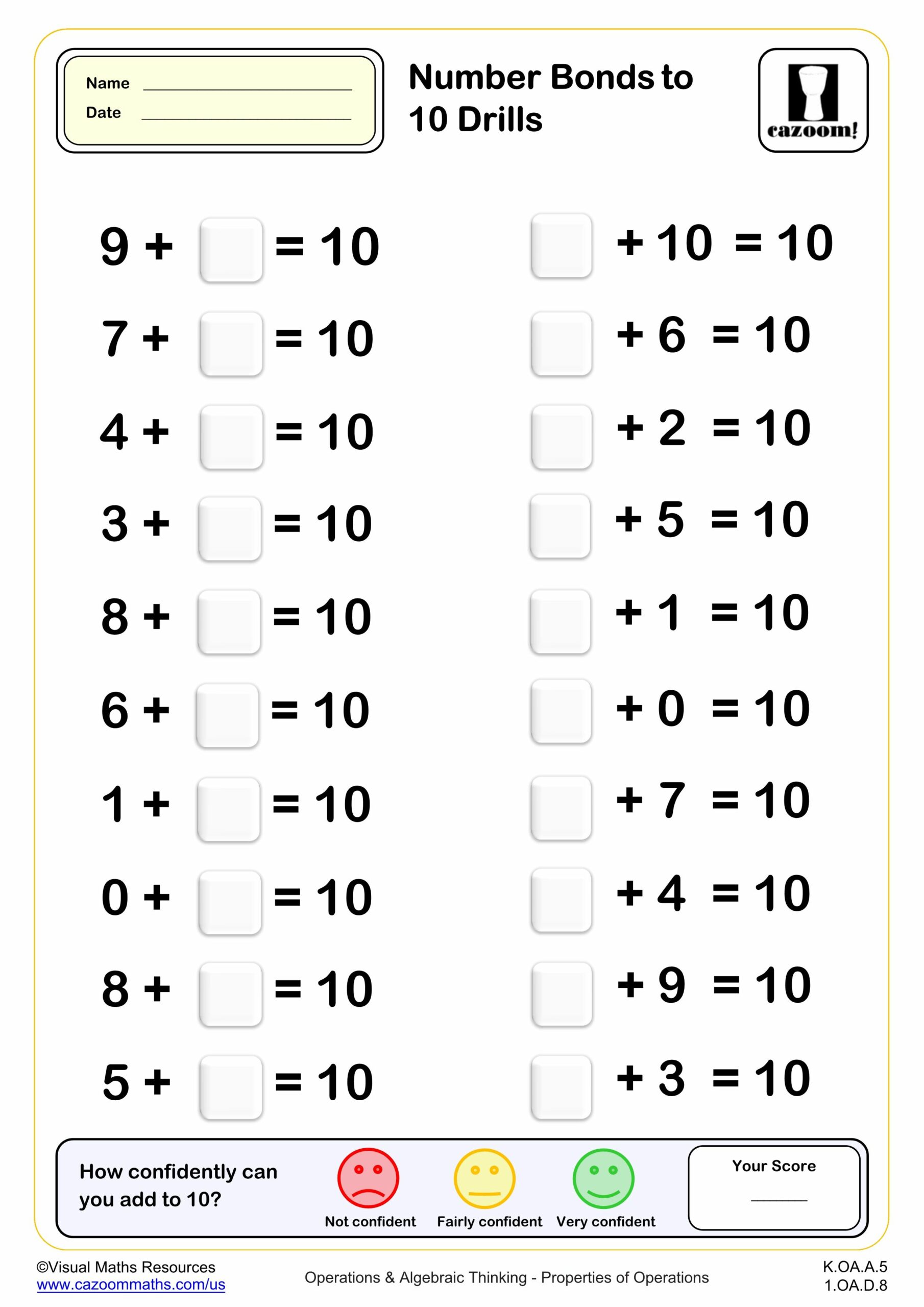
Number Bonds to 10 drills (20 questions)
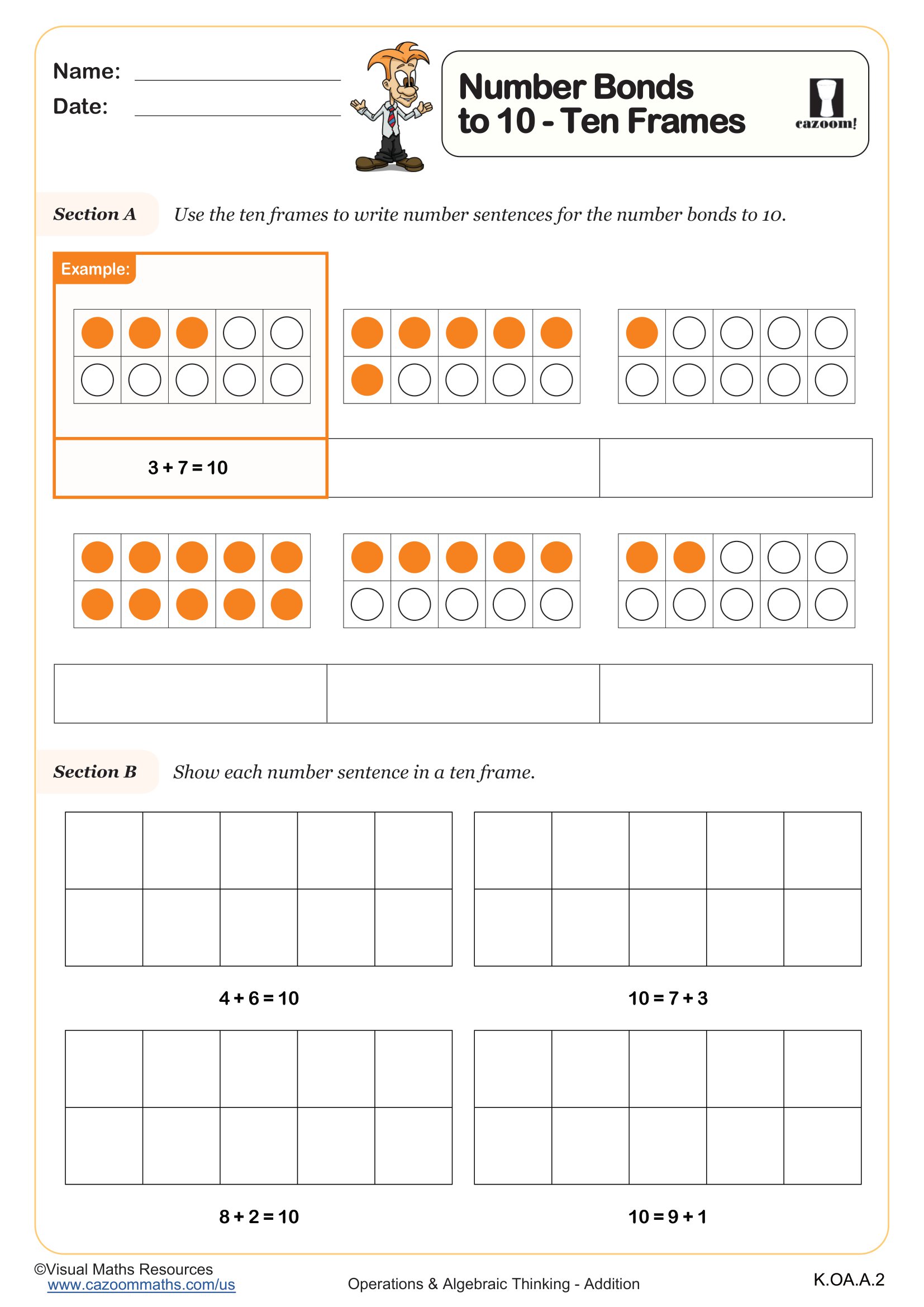
Number Bonds to 10 Ten Frames
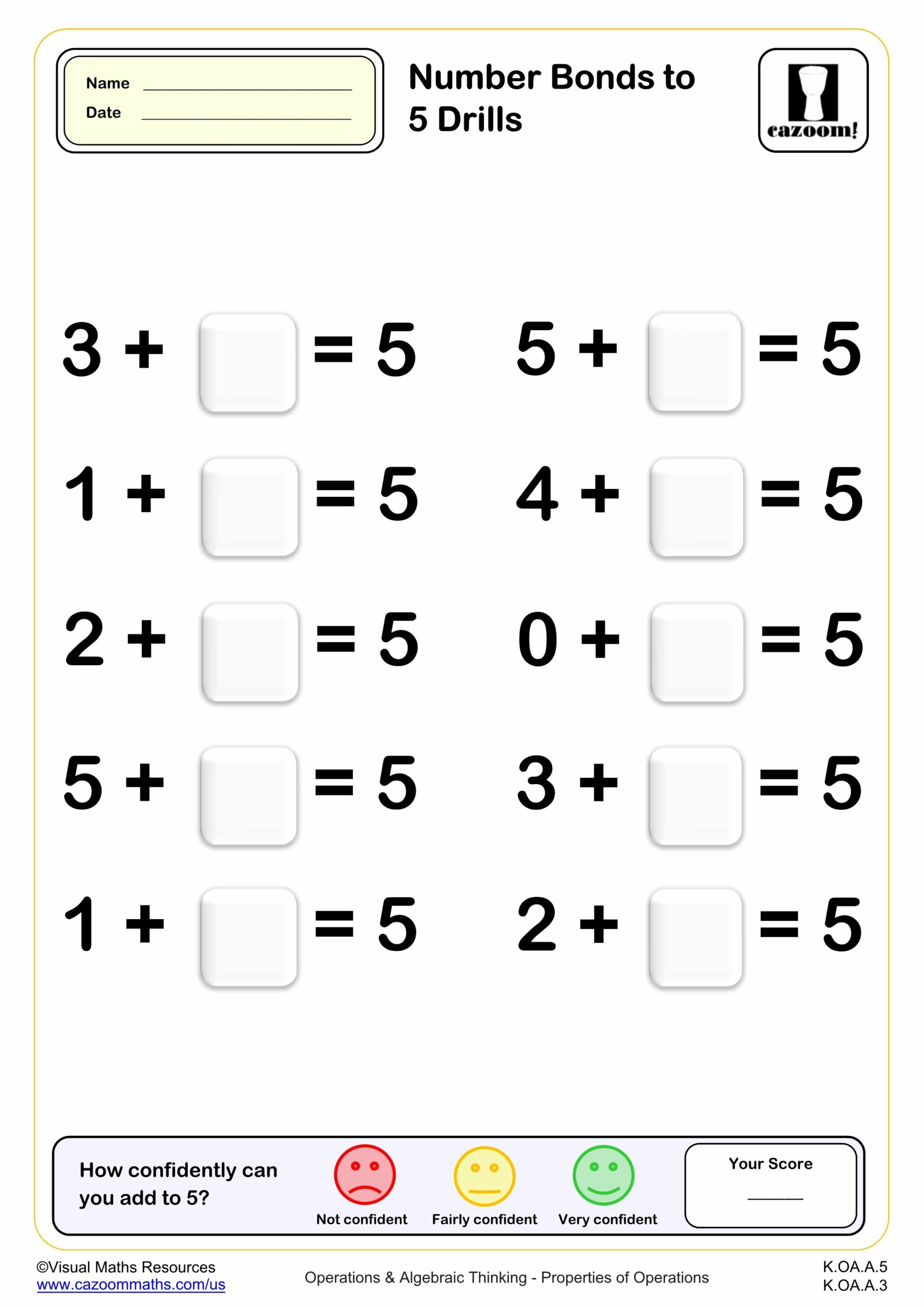
Number Bonds to 5 drills (10 questions)
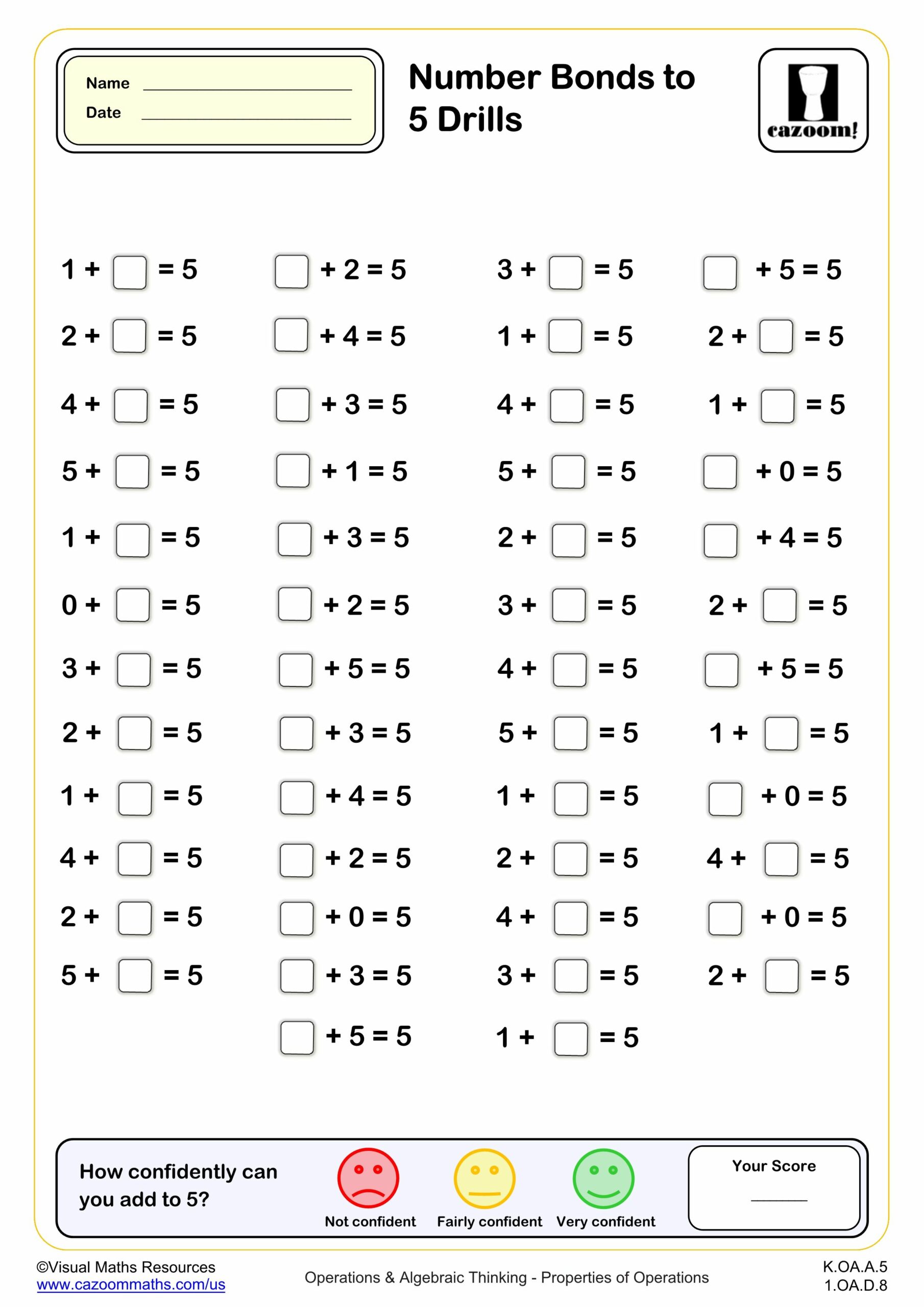
Number Bonds to 5 drills (20 questions)
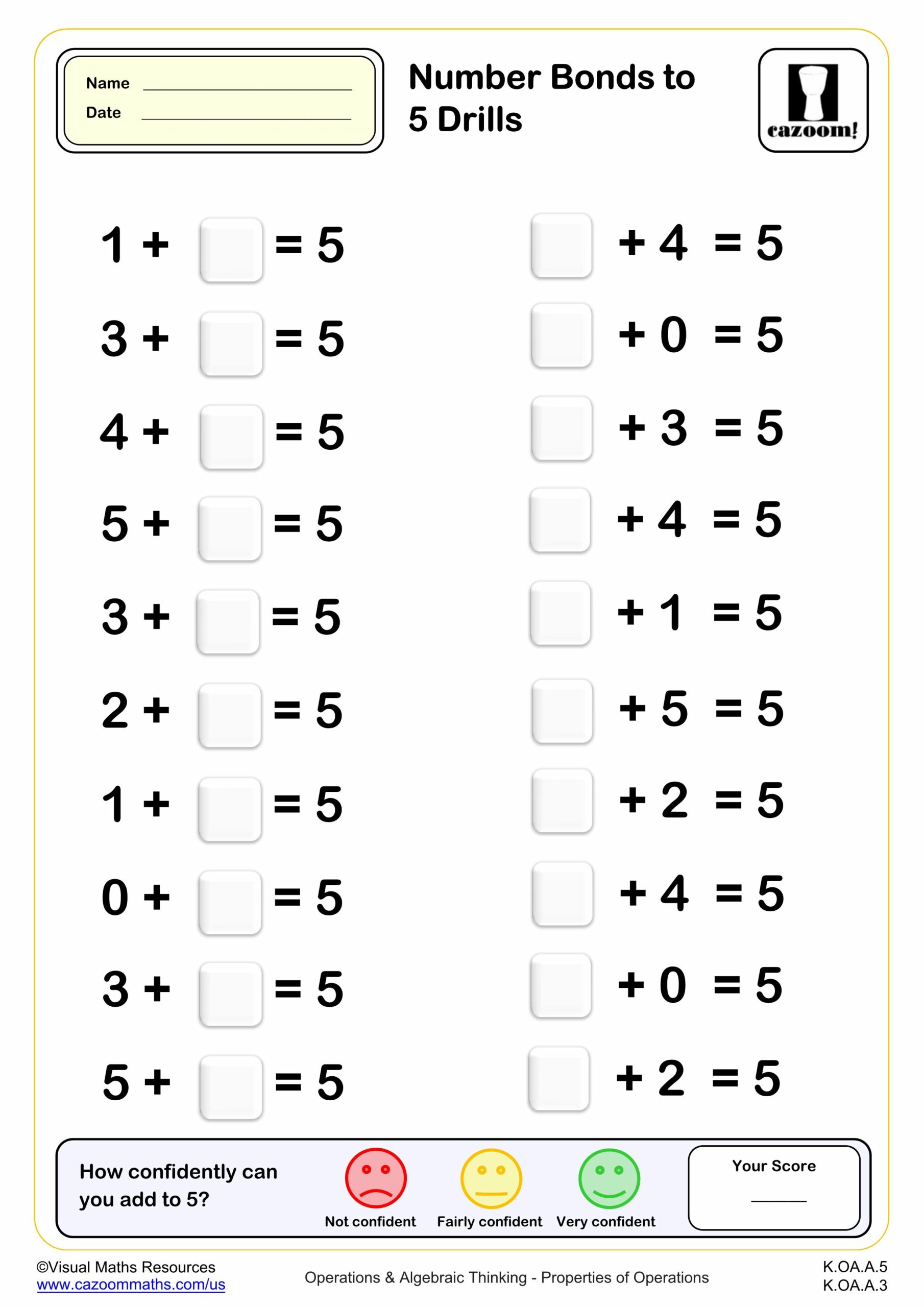
Number Bonds to 5 drills (50 questions)
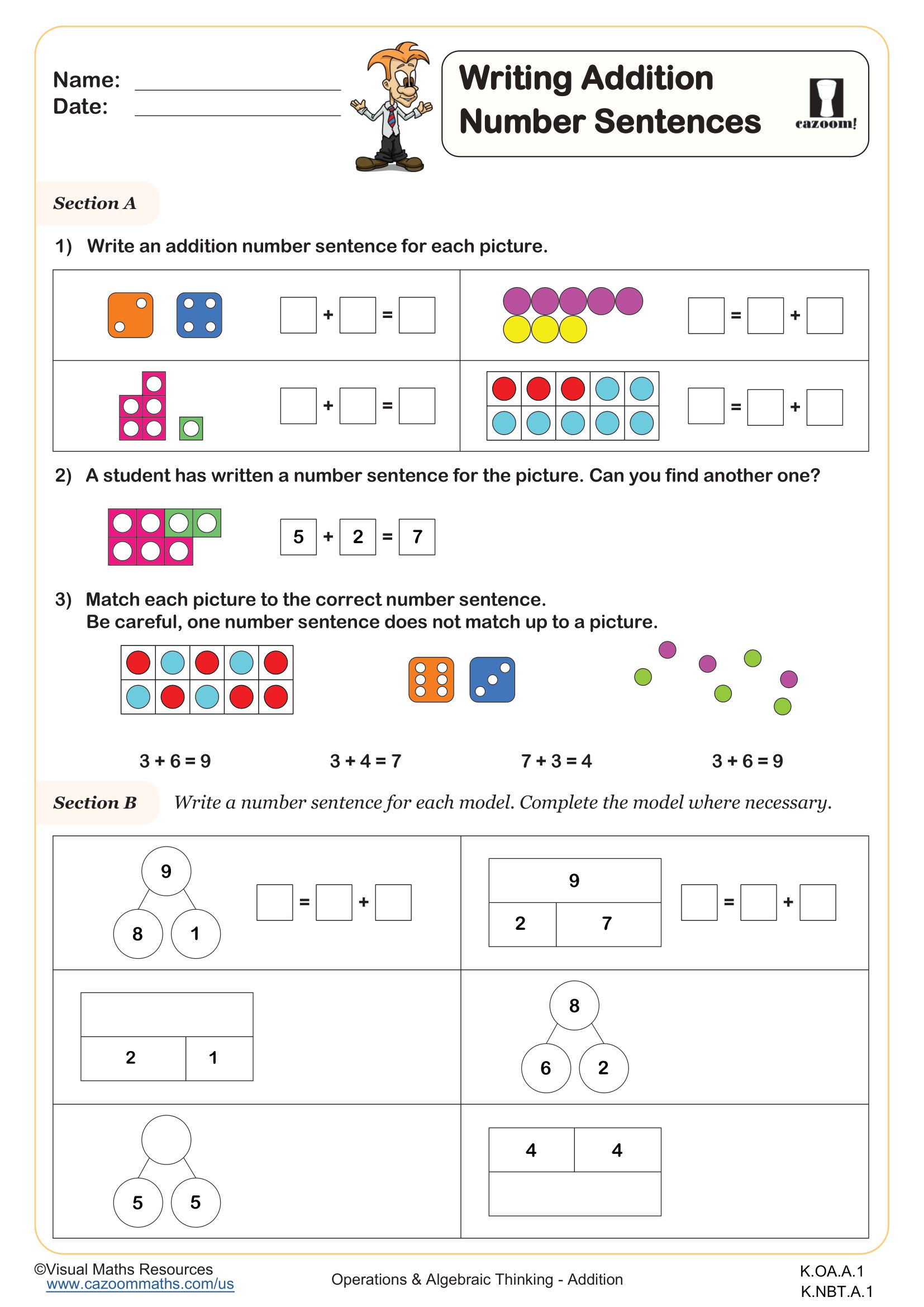
Writing Addition Number Sentences
All worksheets are created by the team of experienced teachers at Cazoom Math.
What Addition Skills Should Kindergarten Students Master?
Kindergarten addition focuses on sums within 10, with students learning to represent addition through pictures, objects, fingers, number lines, and simple equations. The Common Core State Standards (K.OA.A.1 and K.OA.A.2) expect students to solve addition word problems and decompose numbers in multiple ways, building flexibility with how numbers combine.
Teachers frequently notice that students who struggle with "how many in all" questions haven't yet internalized that the answer will be larger than both starting numbers. These worksheets address this by pairing visual models with equations, helping students see that 4 dots plus 3 dots creates a group of 7, not a smaller number. The progression from pictures to abstract symbols follows how young mathematicians naturally develop operational understanding.
How Does Kindergarten Addition Prepare Students for First Grade Math?
Kindergarten addition establishes the conceptual foundation students need before tackling first grade addition and subtraction within 20. Students should finish kindergarten recognizing addition as combining sets, understanding the equals sign means "the same as," and knowing basic addition facts within 5 fluently, with growing confidence in sums to 10.
This groundwork directly supports first grade standards where students solve two-digit addition and apply strategies like making ten and using related facts. Students who enter first grade without solid number bonds to 10 often struggle when problems become more abstract or involve larger numbers. The visual scaffolding in these kindergarten worksheets prevents gaps that create difficulties later, particularly when standardized assessments expect automatic recall of basic facts.
What Are Number Bonds and Why Do They Matter for Addition?
Number bonds show the part-whole relationship between numbers, illustrating how smaller numbers combine to make a target sum. For example, a number bond to 10 shows that 7 and 3 are partners that make 10, or that 6 and 4 also make 10. This visual model helps kindergarteners see that numbers can be broken apart and recombined in different ways.
Number bonds connect directly to real-world problem solving and early engineering thinking. When students understand that 8 can be made from 5 + 3 or 6 + 2, they're developing the flexible thinking needed to estimate quantities, share resources fairly, or figure out how many more items are needed to reach a goal. Many teachers find that students who master number bonds develop stronger mental math skills and approach multi-step problems with greater confidence.
How Can Teachers Use These Addition Worksheets Most Effectively?
These worksheets scaffold learning from concrete to abstract, starting with picture-based addition where students count visible objects, progressing to number lines that show the jumping motion of adding, and advancing to symbolic number bonds and equations. Teachers can differentiate by selecting worksheets that match each student's readiness level, using picture worksheets for students still developing one-to-one correspondence and number bond drills for those ready for fact fluency practice.
The worksheets work well for math centers where students practice independently while teachers pull small groups for targeted instruction. Many teachers use the answer keys for student self-checking during partner work, which builds metacognitive skills as kindergarteners compare their answers and discuss differences. The drills with 10 or 20 questions provide quick formative assessment data, helping teachers identify which addition facts individual students have mastered and which need more hands-on practice with manipulatives before worksheet reinforcement.